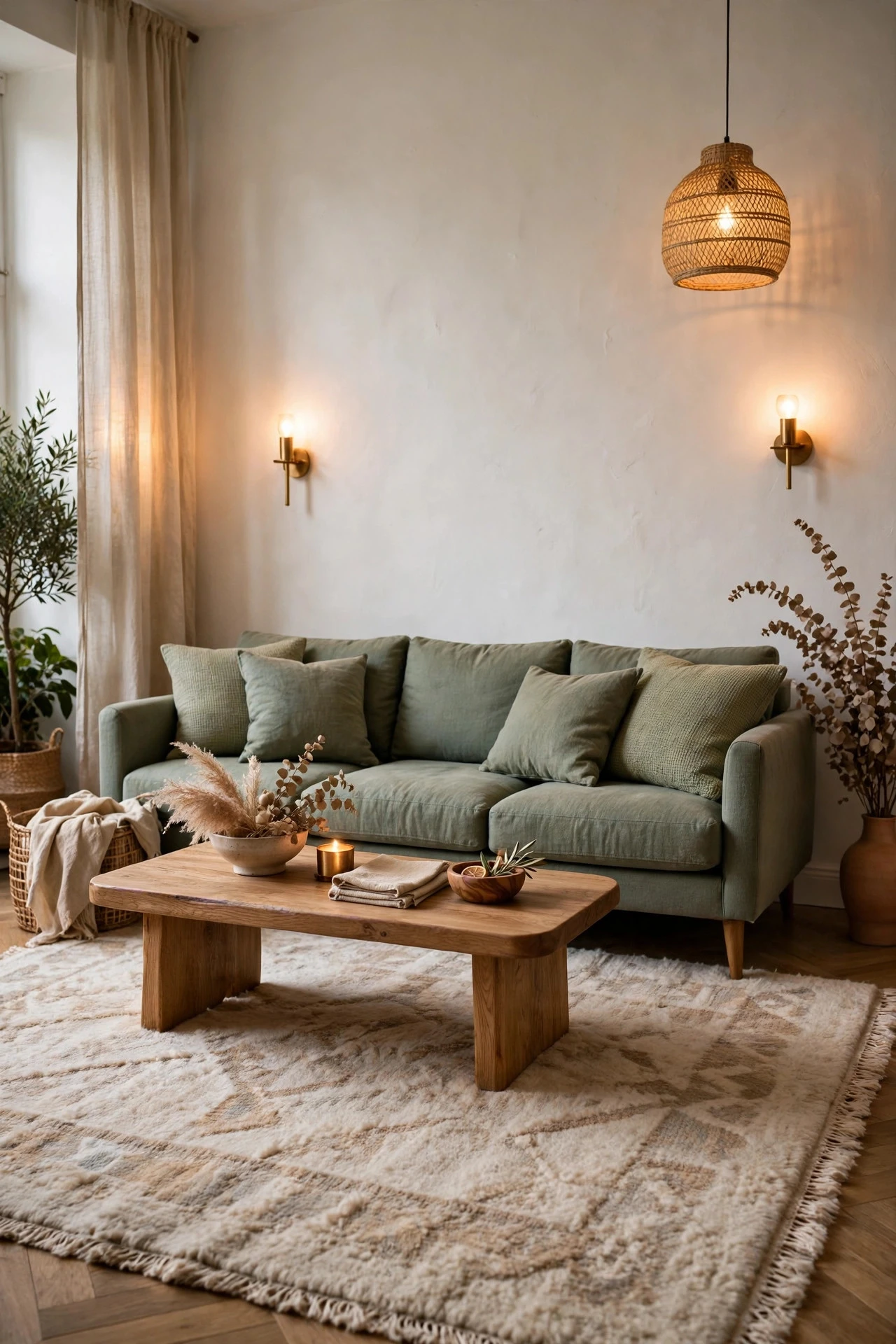
22 Living Room Decor Ideas That Make the Whole Room Work
A living room has to do more than look good in a photograph. It is where you watch films, host friends, read, work, and collapse at the end of the day — and most decorating advice treats it as a showroom. This guide is different: it starts with how the room is used, then works through layout, colour, light and storage, with real measurements, real paint colours and honest budgets at every step.
It is written for real living rooms, not ideal ones: rented flats, family rooms full of toys, awkward L-shapes, small boxes and open-plan spaces. Every idea works at more than one budget, and most of them cost nothing but a rearrangement.
Looking for more inspiration? Our Nest Decorz homepage gathers the latest home decor ideas, seasonal decorating guides and room-by-room styling tips in one place — start there and explore.
Quick answers
– Layout first, shopping second: place the seating before you buy anything else. – Rug rule: the front legs of every seat should sit on the rug — for most sofas that means 8 x 10 ft. – Colour by ratio: 60% dominant, 30% secondary, 10% accent, so the room never feels random. – Light in three layers: ceiling, task and accent, all warm at 2700K. – Budget honestly: a rearrangement costs nothing, a paint-and-textile refresh runs $300–$800, and a full furniture reset starts around $2,000–$5,000.
1. How Do You Lay Out a Living Room That Actually Works?
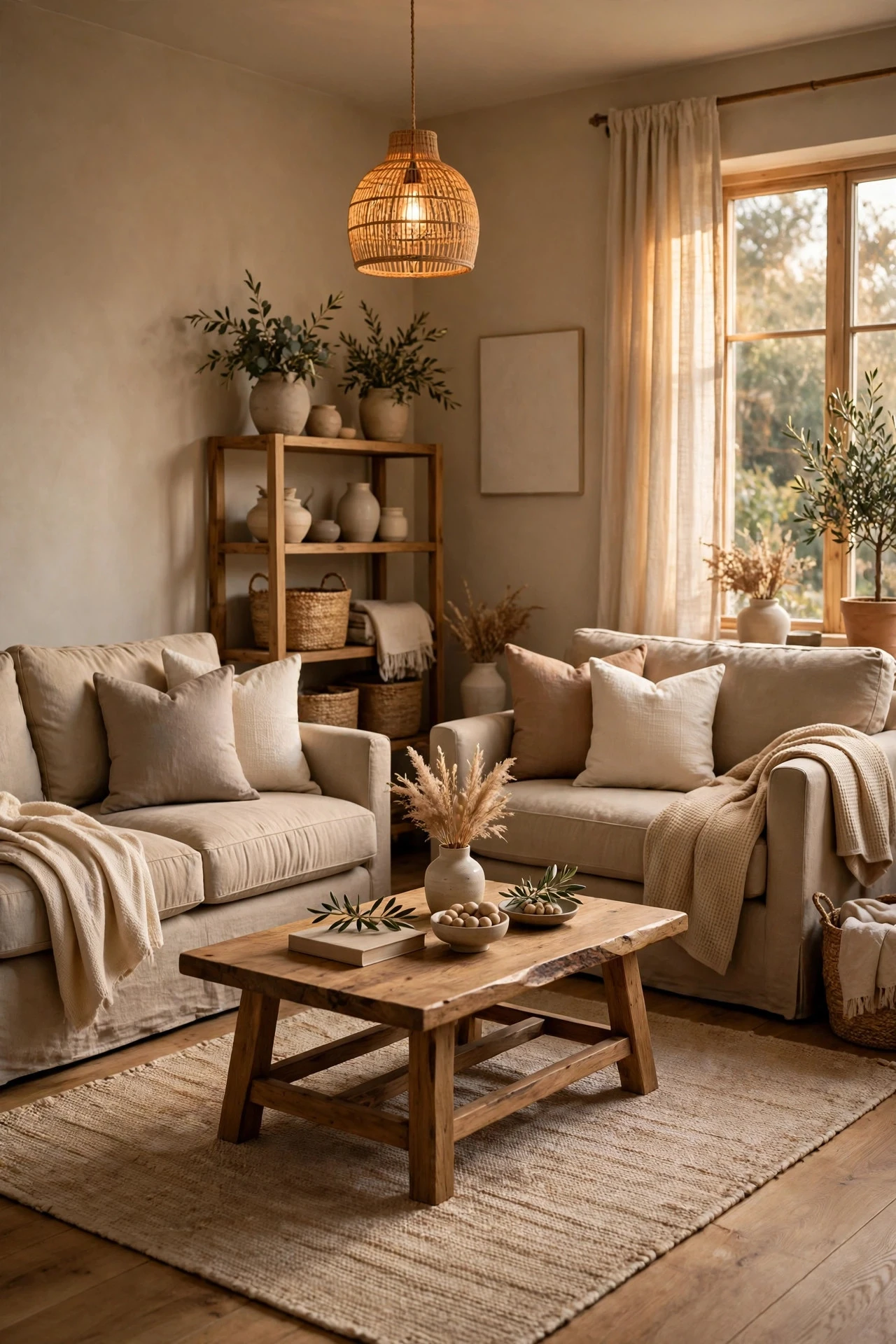
Start with the conversation, not the television. Arrange the main seating so people face each other across a distance of 4 to 8 feet, with the coffee table in the middle, and let the TV sit to one side rather than dictating the whole arrangement. This one decision makes the room feel sociable instead of like a cinema.
Float the sofa 6 to 12 inches off the wall where space allows — it makes the room feel larger and gives you room for a narrow console or a floor lamp behind it. Leave 30 to 36 inches of clear walkway on the main routes through the room, and 14 to 18 inches between the sofa and the coffee table so legs fit comfortably. Avoid pushing every piece of furniture against the walls; a room with a gap in the middle feels unfinished, while a defined seating group feels deliberate.
2. What Size Rug Should Sit Under Your Sofa?
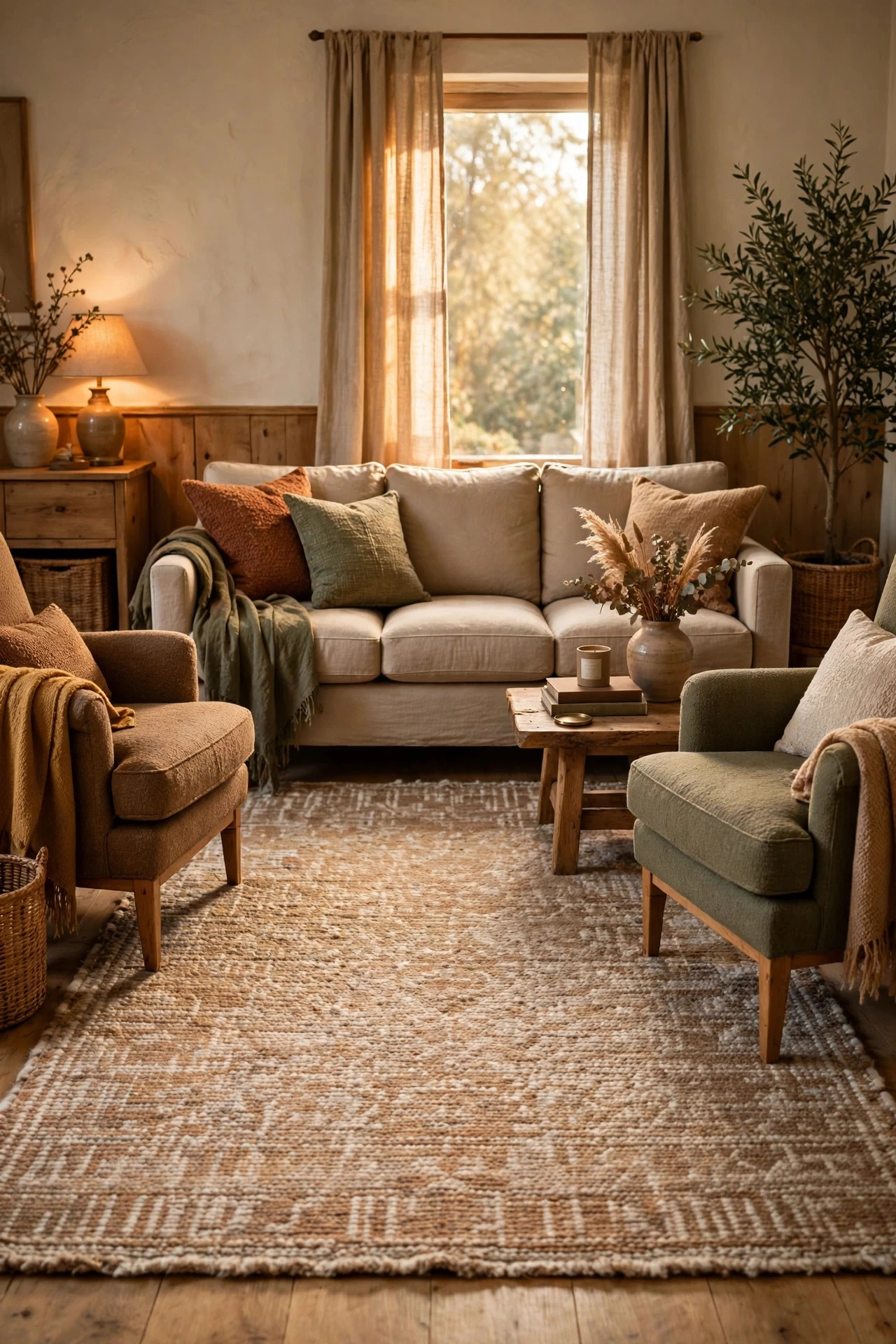
The right rug is bigger than you think. For a standard three-seater sofa, an 8 x 10 ft rug is the safe choice: the front legs of the sofa and chairs sit on it, the coffee table sits fully on it, and at least 6 inches of rug shows beyond the furniture on each side. A rug that only reaches the front legs looks like a mat.
Measure before you buy. Mark the outline on the floor with painter's tape and live with it for a day — you will see instantly whether the walkways feel pinched. For a full sizing method with diagrams for every sofa length, see these living room rug ideas. The Spruce's ultimate rug size guide confirms the same rule: the front legs of seating should sit on the rug, with 8 x 10 ft the most popular living-room size. Avoid a rug that stops halfway under the coffee table — it tilts, bunches and announces itself as too small.
3. How Do You Choose a Sofa That Fits the Room and Your Life?
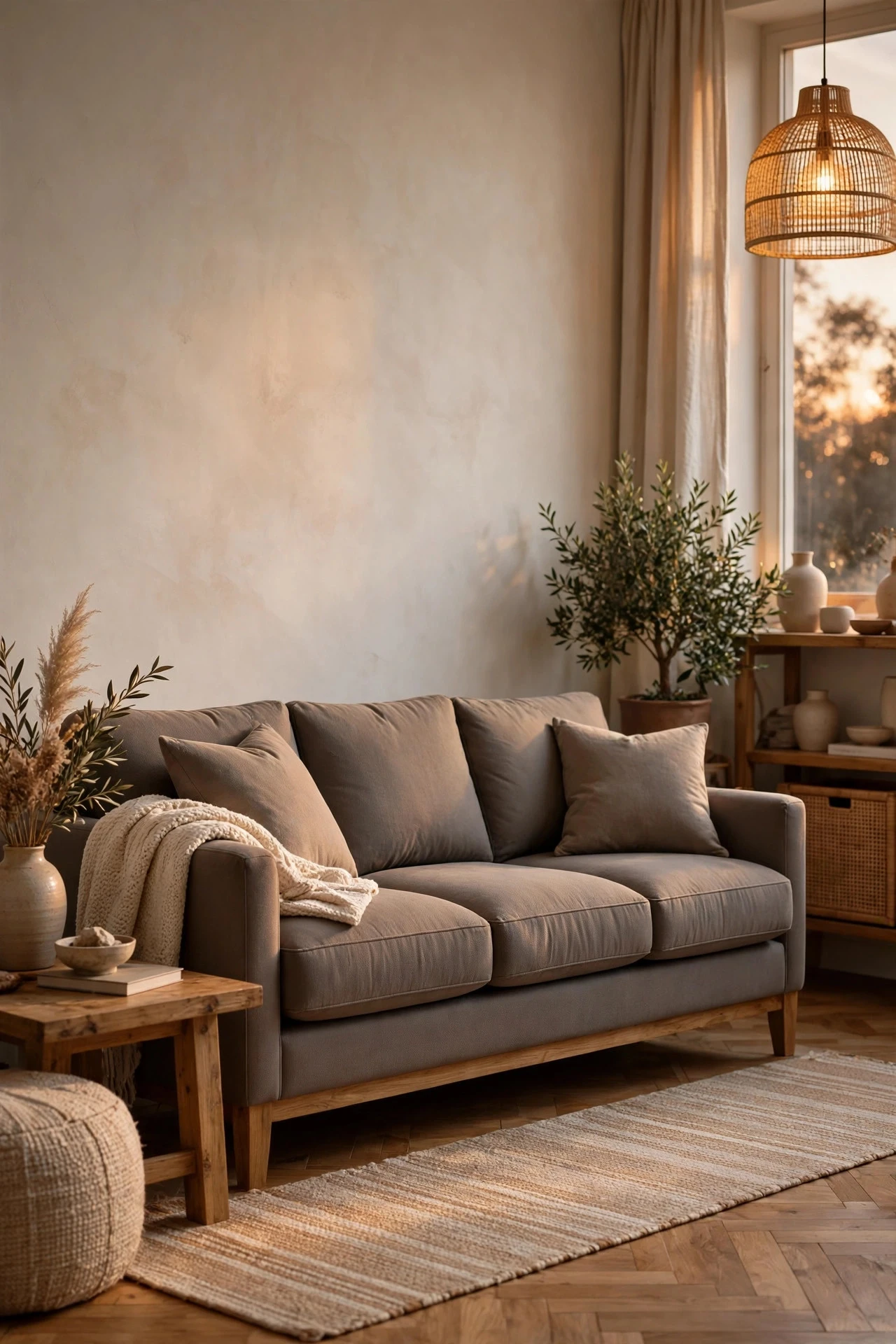
Choose the sofa by its measurements and its frame, not by how it looks in a showroom. Seat depth of 21 to 24 inches suits most people for sitting upright; 36 inches or more turns a sofa into a lounger. Check the overall length against your wall with tape: a three-seater is typically 84 to 96 inches long, and it needs at least 6 inches of breathing room on each side.
A kiln-dried hardwood frame with sinuous springs or eight-way hand-tied springs will outlast a pine-and-webbing frame by a decade — ask the retailer, because the label rarely volunteers it. For a full checklist on frames, fabrics and sizing, read how to choose a living room sofa. Avoid a sofa deeper than the room can take — if you cannot walk past it without turning sideways, it is too big.
4. What Is the 60-30-10 Colour Rule for a Living Room?
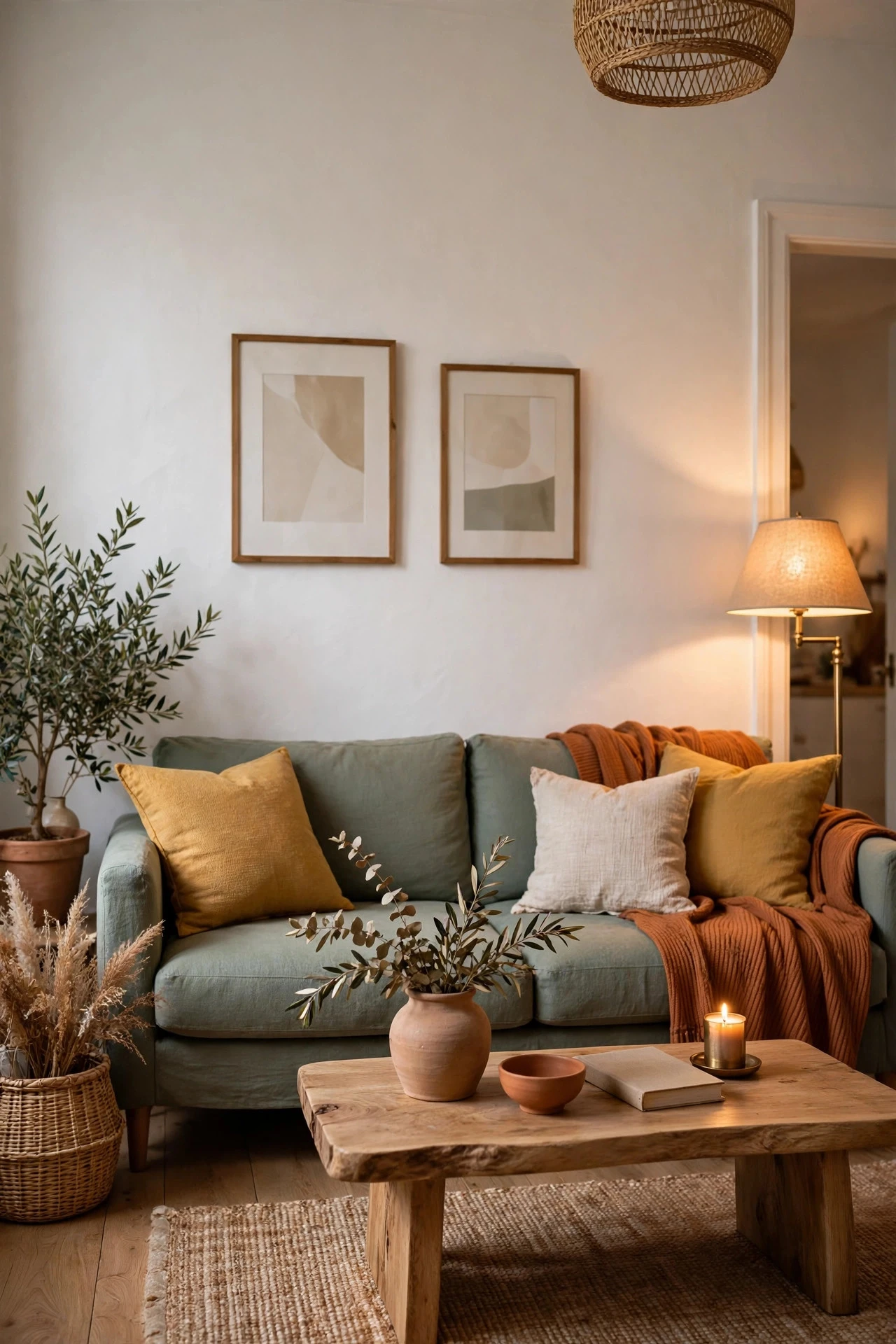
The 60-30-10 rule is the simplest way to stop a colour scheme from looking accidental. Sixty percent of the room is the dominant colour (usually walls and the largest furniture), thirty percent is the secondary colour (curtains, rug, a second large piece), and ten percent is the accent (cushions, art, a throw) that gives the room its personality.
A reliable starting palette is warm white walls, a mid-tone sofa in sage, navy or warm grey, and a single accent such as ochre, terracotta or deep teal. Try Farrow & Ball Wimborne White No. 239 or Benjamin Moore White Dove OC-17 on the walls — both stay warm under artificial light — with an accent wall in Farrow & Ball Hague Blue No. 30 or Sherwin-Williams Evergreen Fog SW 9130. Repeat the accent colour in at least three places so it looks deliberate.
5. How Many Light Sources Does a Living Room Need?
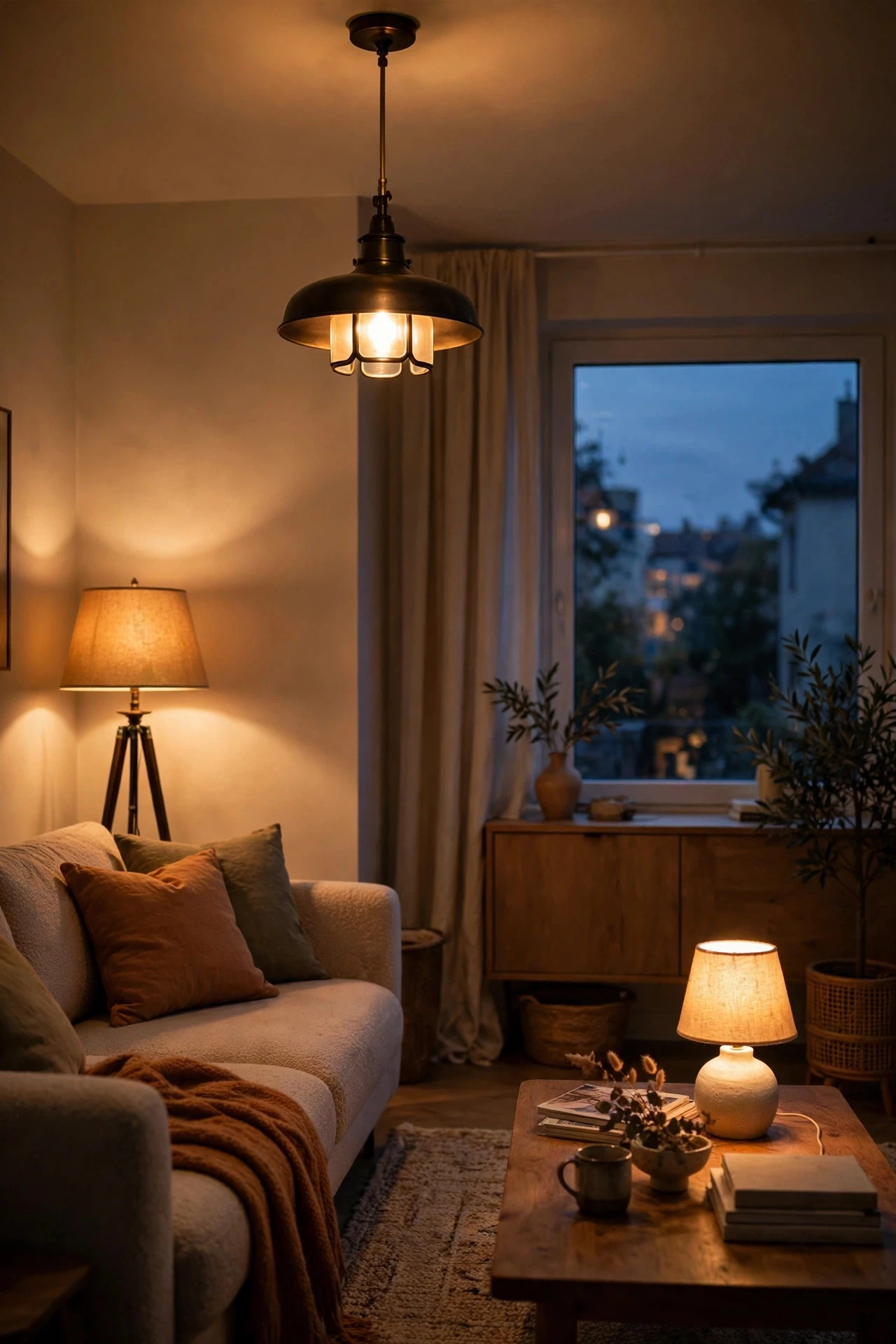
A living room needs at least three light sources at different heights, because one ceiling light flattens everything and leaves corners in shadow. Aim for a ceiling fitting or pendants for ambient light, a floor or table lamp beside the sofa for reading, and a small accent light — a picture light, a shelf light or a low lamp — to give the room depth after dark.
Keep every bulb at 2700K warm white and put the main lights on dimmers; mixing 2700K and 4000K bulbs in one room makes the colours fight. Budget $150–$400 for a good floor lamp and $80–$200 for a pair of table lamps. For fitting types, placement heights and dimmer advice, see these living room lighting ideas. Avoid a single bare-bulb ceiling fitting — it is the fastest way to make a well-decorated room look unfinished.
6. How Do You Create a Focal Point Without a Fireplace?
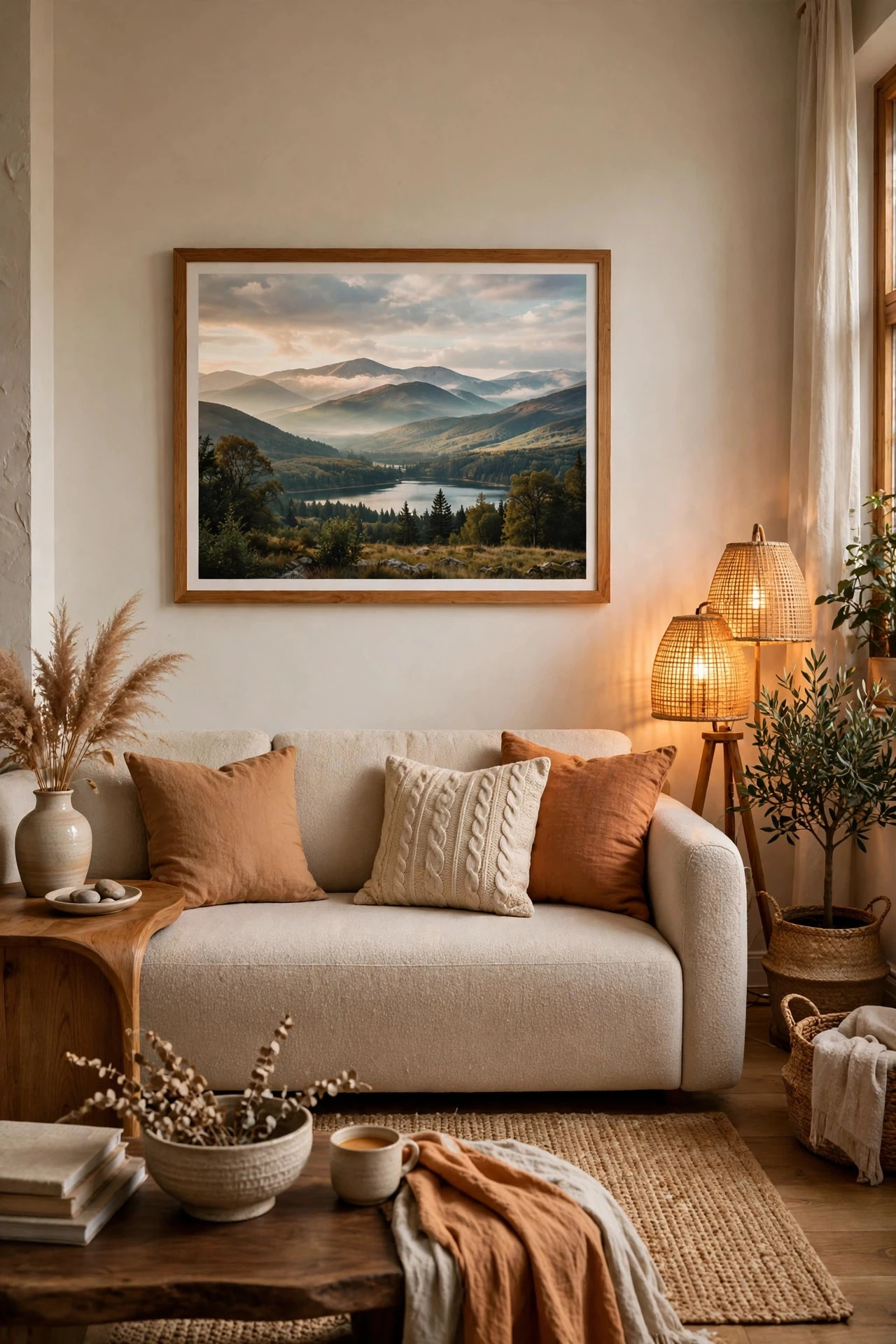
Every living room needs one place the eye lands first, and it does not have to be a fireplace. A large piece of art, a media unit with a styled shelf, a bold accent wall or a statement window can all do the job, as long as everything else in the room is arranged to support it rather than compete with it.
Pick one focal point and commit. Hang the art so its centre sits 57 to 60 inches from the floor, and size it to roughly two-thirds the width of the furniture beneath it — a 48-inch-wide print over a 72-inch sofa is about right. The reason this works is explained in the Wikipedia article on interior design, which covers focal points and visual balance. Avoid two focal points on opposite walls; the eye bounces between them and the room feels restless.
7. Which Accent Wall Idea Suits a Plain Living Room?
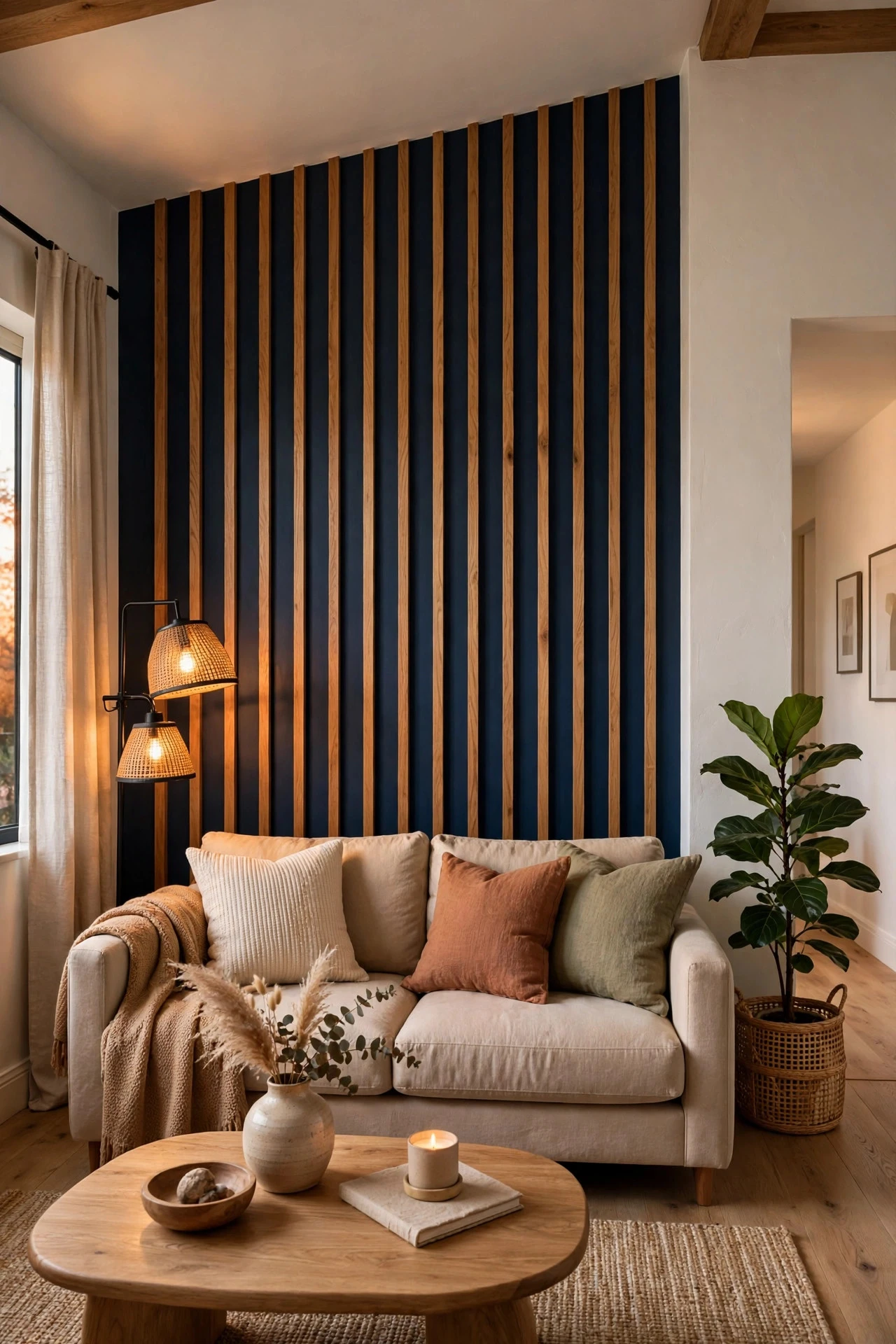
An accent wall works when it has a reason to exist — it marks the focal wall, usually behind the sofa or the television. Paint is the cheapest and most forgiving option: one wall in a deep, warm colour such as Farrow & Ball Inchyra Blue No. 289 or Benjamin Moore Hale Navy HC-154, with the other three walls in a warm white, instantly gives the room structure.
If paint feels too flat, try vertical timber battens spaced 2 inches apart, a limewash finish for soft movement, or a single panel of grasscloth wallpaper. A painted wall costs $60–$150 in paint and a weekend; battens run $200–$500 in materials. Paint the wall in a matt or eggshell finish — gloss highlights every bump. For paint, panelling, wallpaper and limewash options with step-by-step guidance, browse these living room accent wall ideas.
8. How Do You Hang Curtains So Windows Look Taller?
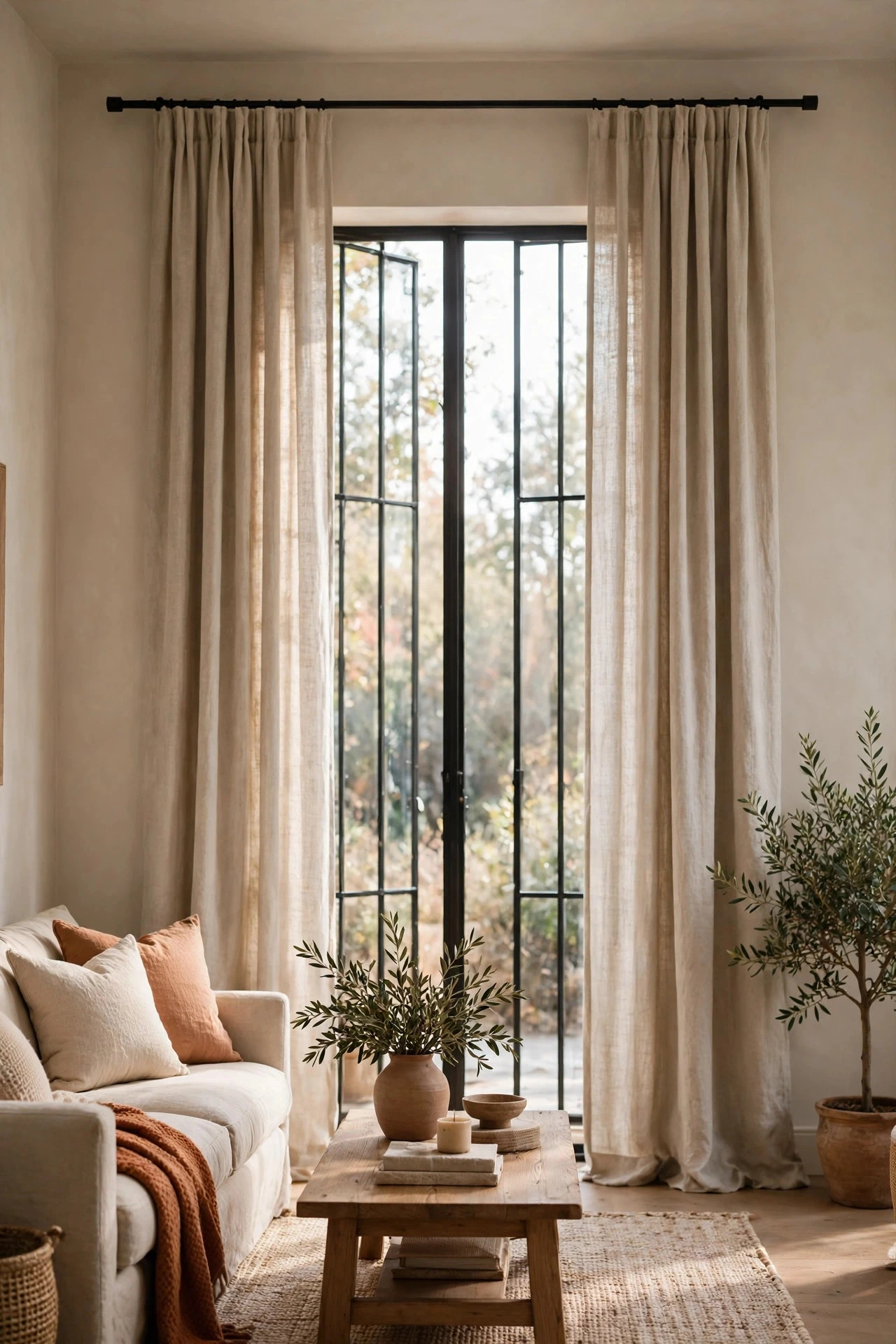
Hang the curtain rod high and wide, not on the window frame. Mount the rod 4 to 6 inches above the top of the window — or halfway between the window and the ceiling in a room with high ceilings — and extend it 8 to 12 inches beyond the frame on each side, so the curtains stack on the wall and the window looks wider.
Curtain length matters more than fabric. Floor-length curtains should just kiss the floor or puddle by an inch; anything that stops at the sill chops the wall in half. For fabric choices, heading styles and exact measuring steps, see these living room curtain ideas. Avoid sheer curtains alone on a street-facing window; layer them with a heavier pair so the room feels private at night and soft during the day.
9. What Coffee Table Size Works With Your Sofa?
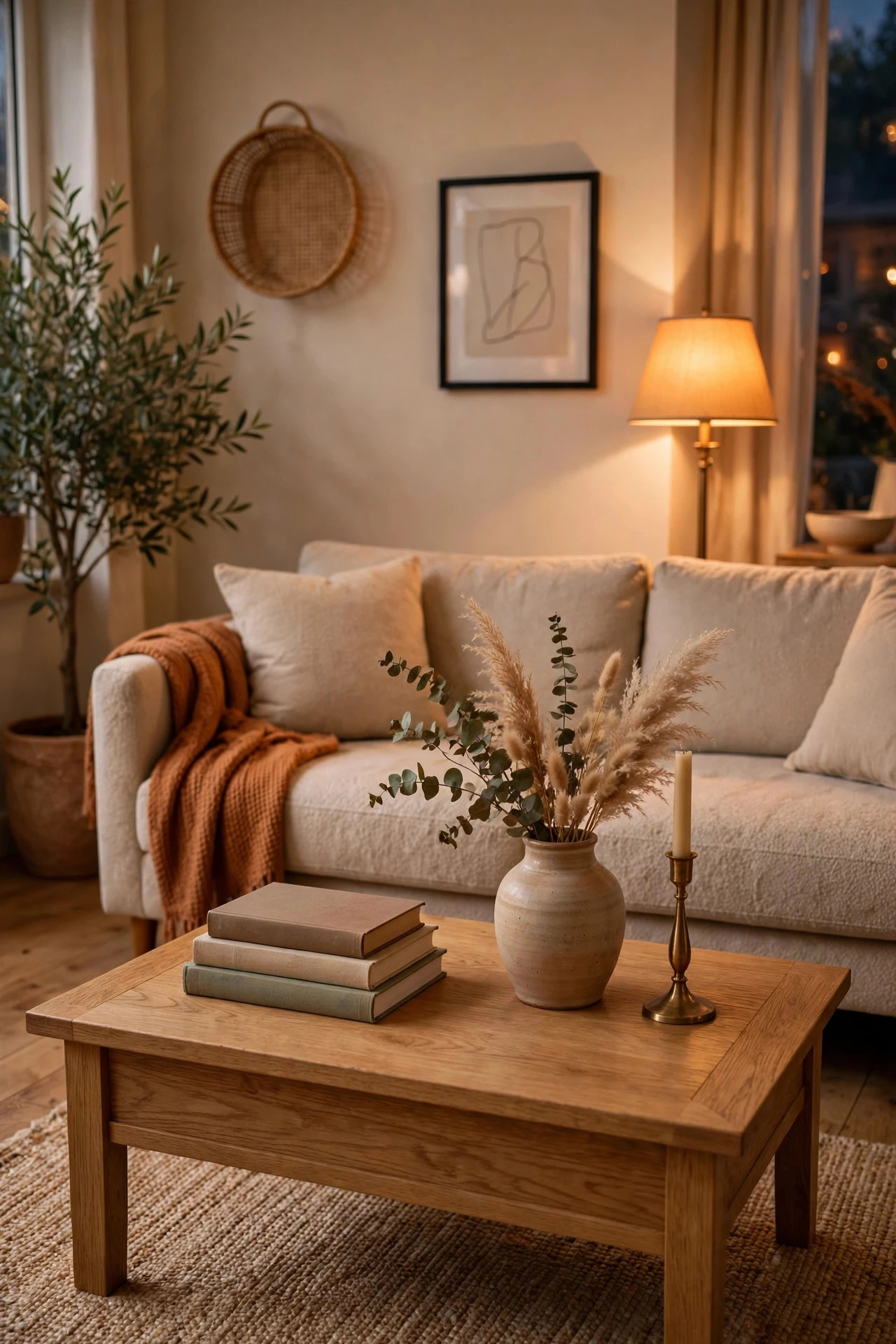
A coffee table should be about two-thirds the length of your sofa and sit at the same height as the seat cushions, or 1 to 2 inches lower. For a standard 84-inch sofa that means a table around 48 to 56 inches long, 18 to 20 inches deep, and 16 to 18 inches high, with 14 to 18 inches of clearance on every side you need to walk past.
Shape matters too. A rectangular table suits a long sofa; a round table softens a room full of straight lines and is kinder to small children and tight walkways. Budget $150–$600 for a solid wood or stone-topped table, and less for a good second-hand find. Style it with the rule of three: a low stack of books, a small vase or bowl, and one object with height, such as a candlestick.
10. How Do You Add Storage Without Making the Room Feel Boxy?
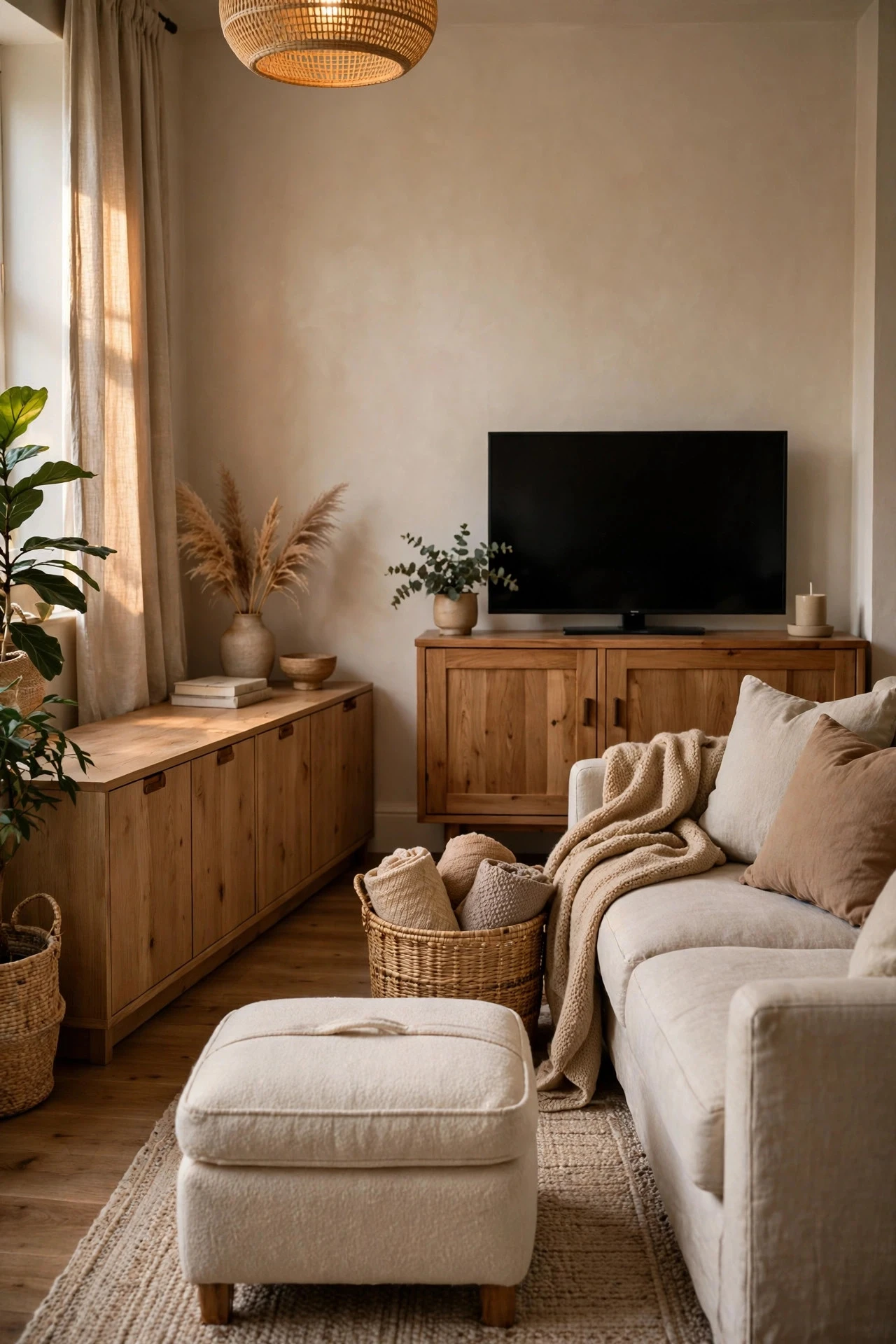
The trick is to spread storage around the room in low, closed pieces rather than stacking it in one tall unit. A media console with doors, a lidded ottoman, a low bookcase and a couple of baskets hide more clutter than a single towering cabinet, and they keep the eye at seating height where the room feels calm.
Give every category a home: remotes and chargers in a lidded box on the coffee table, throws in a basket beside the sofa, games and toys in the ottoman, books on the lowest shelf where they are actually reached. Expect $200–$600 for a decent media console and $80–$200 for a storage ottoman. Avoid open baskets of unsorted clutter on every surface; a basket only works as storage when what is inside it is genuinely contained and the lid or fold hides it.
11. How Do You Hang a Gallery Wall That Looks Intentional?
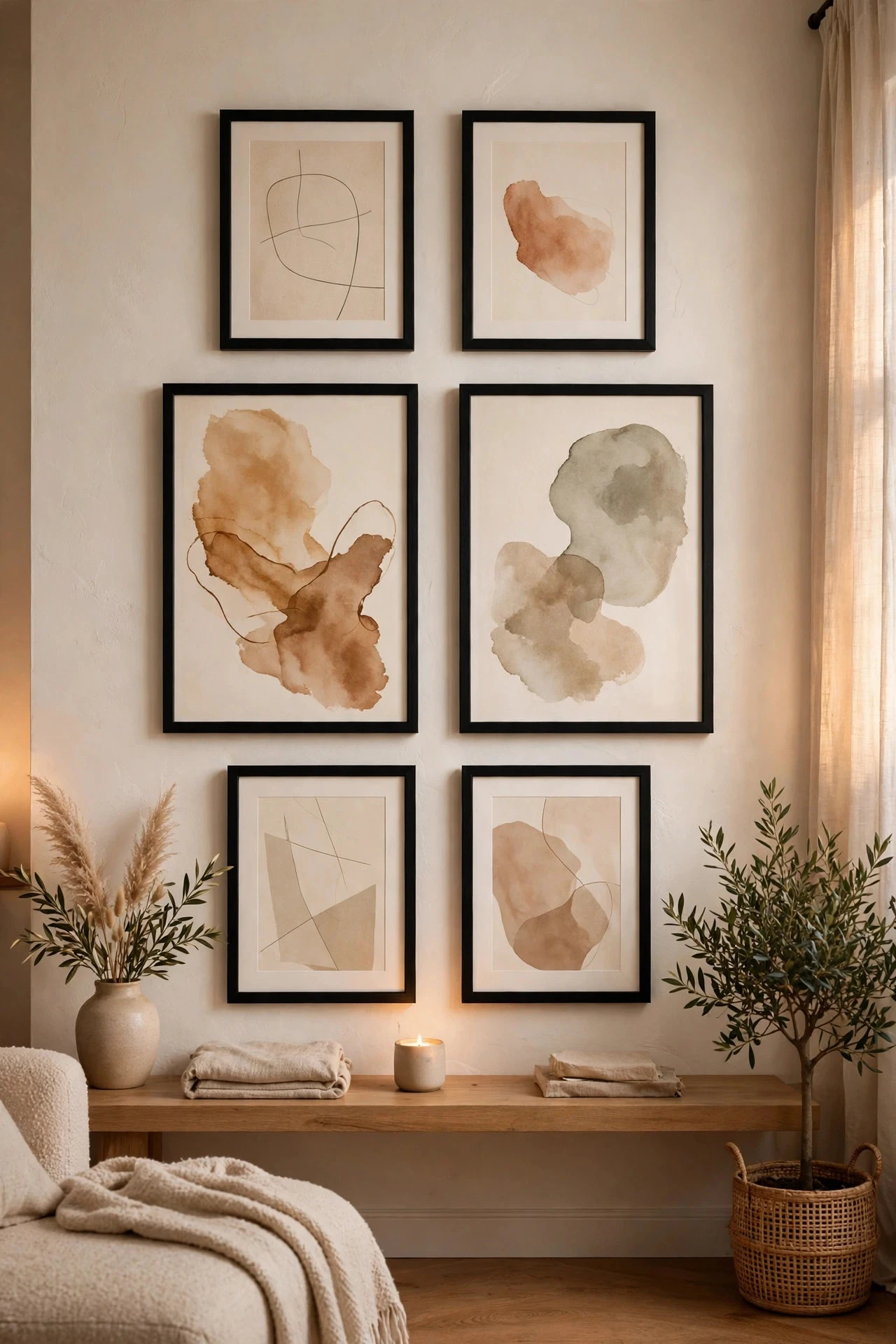
A gallery wall looks intentional when it is planned on the floor first and hung as one composition, not added to one frame at a time. Lay the frames on the floor, keep 2 to 3 inches of consistent spacing between them, and build outward from one anchor piece — usually the largest frame — placed at eye level, 57 to 60 inches from the floor at its centre.
Mix sizes but keep one thing consistent: the same frame colour, the same mat width, or a single colour thread running through the art. A 5 x 7 ft wall suits six to nine frames; a smaller wall suits three. Budget $100–$300 for frames and prints if you mix shop-bought art with your own photographs. Avoid hanging frames in a straight row at different heights with no shared edge; the eye reads it as unfinished rather than eclectic.
12. Which Plants Actually Survive in a Living Room?
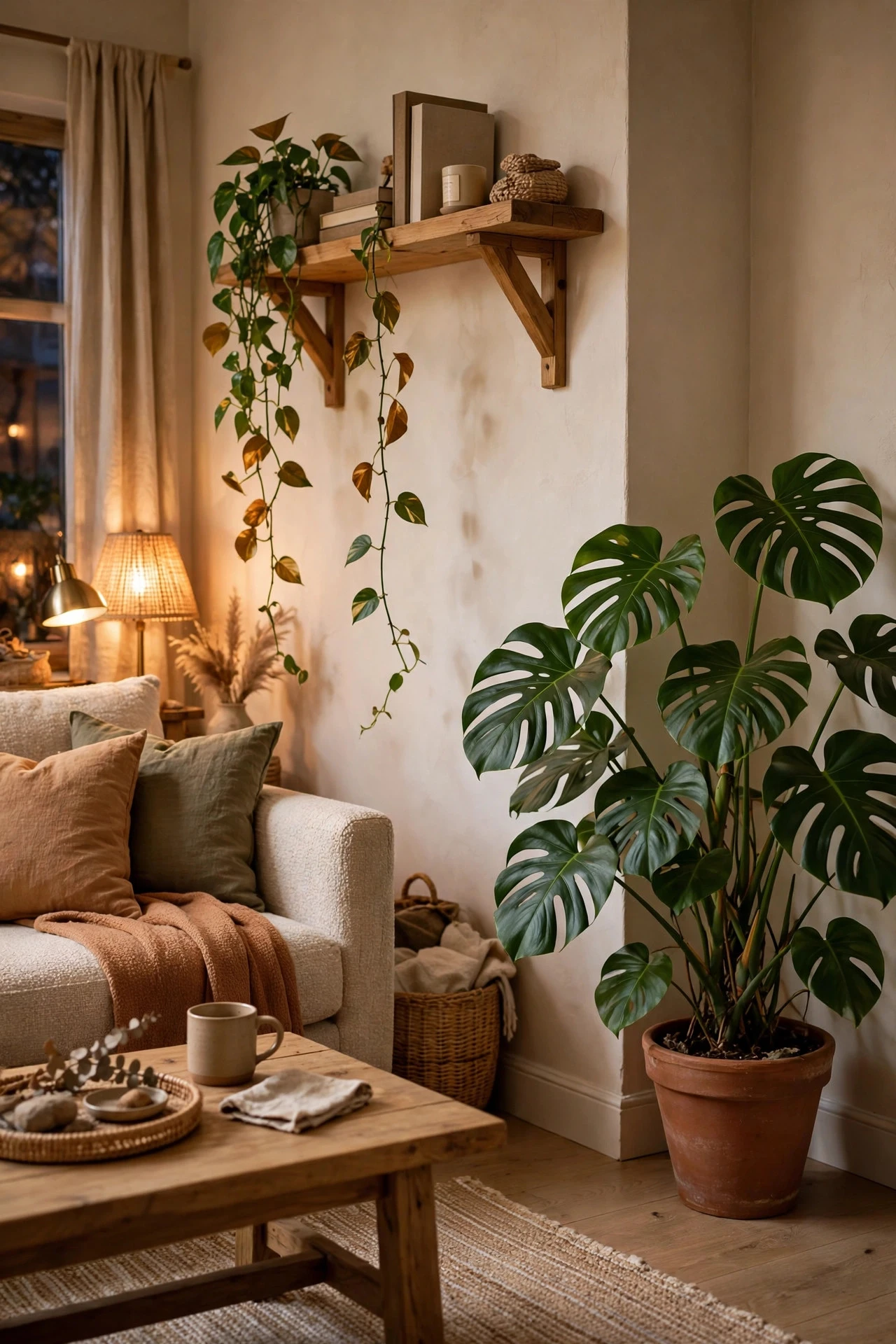
The plants that survive in a living room are the ones matched to your light, not the ones that photograph best. A snake plant, ZZ plant or pothos tolerates low light and forgiving watering, while a fiddle-leaf fig needs bright, indirect light and a stable spot it is never moved from. Choose by your window, not by the garden centre display.
Place one large floor plant in an empty corner — a 4 to 5 ft olive tree or monstera in a 12 to 14 inch pot anchors the room — and one trailing plant on a shelf or sideboard for softness. A realistic starter budget is $60–$150 for three plants with pots. Avoid a plant that needs daily misting unless you will actually do it; a dead plant is worse decoration than no plant at all, and a dusty fake plant fools nobody at close range.
13. How Do You Layer Texture So a Neutral Room Doesn't Feel Flat?
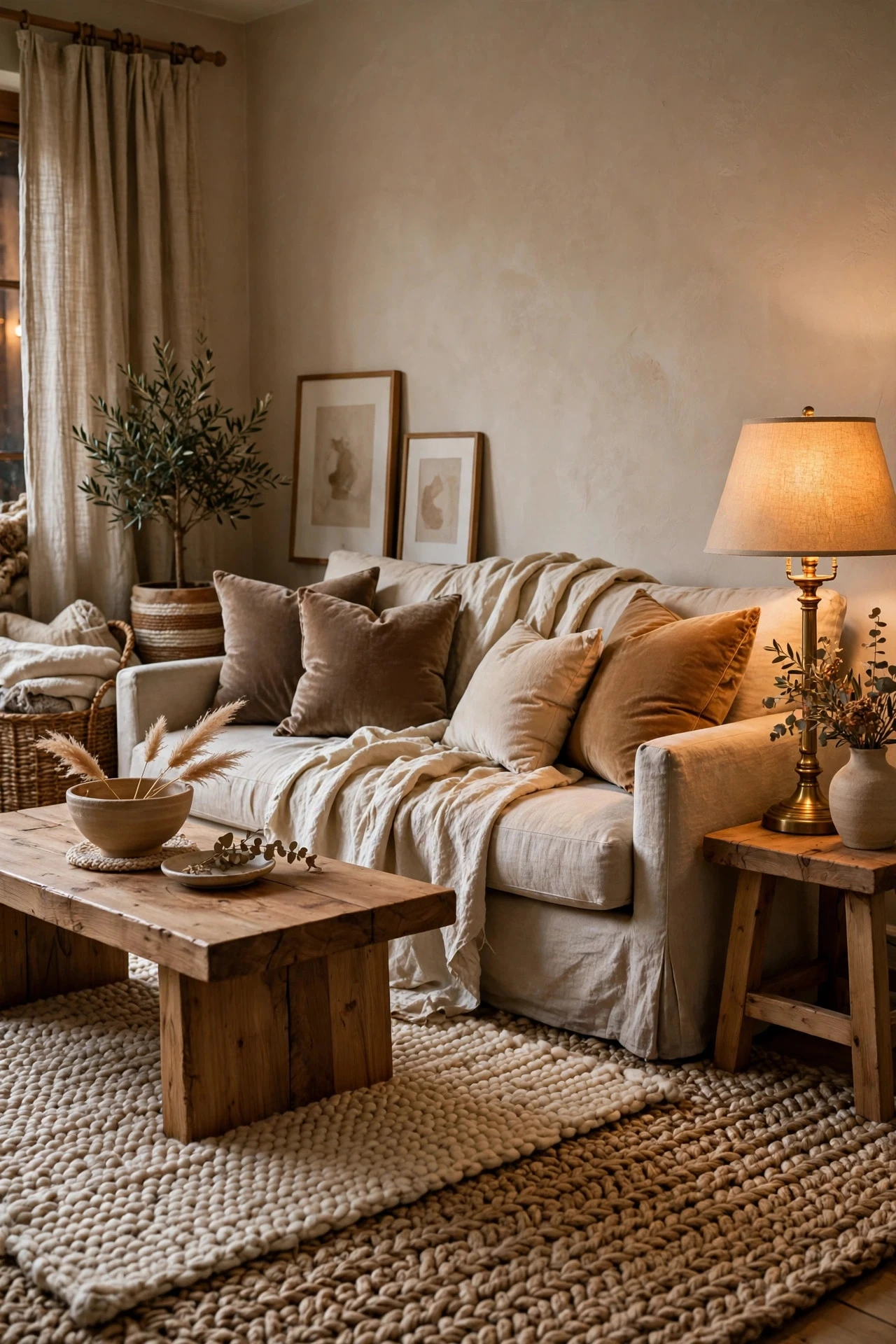
A neutral room feels flat when everything is the same finish, so layer texture instead of adding colour. Combine at least four textures in one seating area: a woven rug, a velvet or bouclé cushion, a linen throw, a timber table and something metallic or glass — the contrast between rough and smooth is what makes the eye linger.
Start with the largest surfaces. A jute or wool rug underfoot, a linen-look sofa, and a timber coffee table give you three textures before you buy a single cushion. Keep the palette to three neutrals plus one accent so the textures do the talking — the contrast between rough and smooth is the point, not the number of objects. Avoid shiny polyester cushions on a shiny sofa — two slick surfaces together read as cheap, while one matte texture beside them would have saved the whole arrangement.
14. How Do You Decorate a Small Living Room Without Shrinking It?
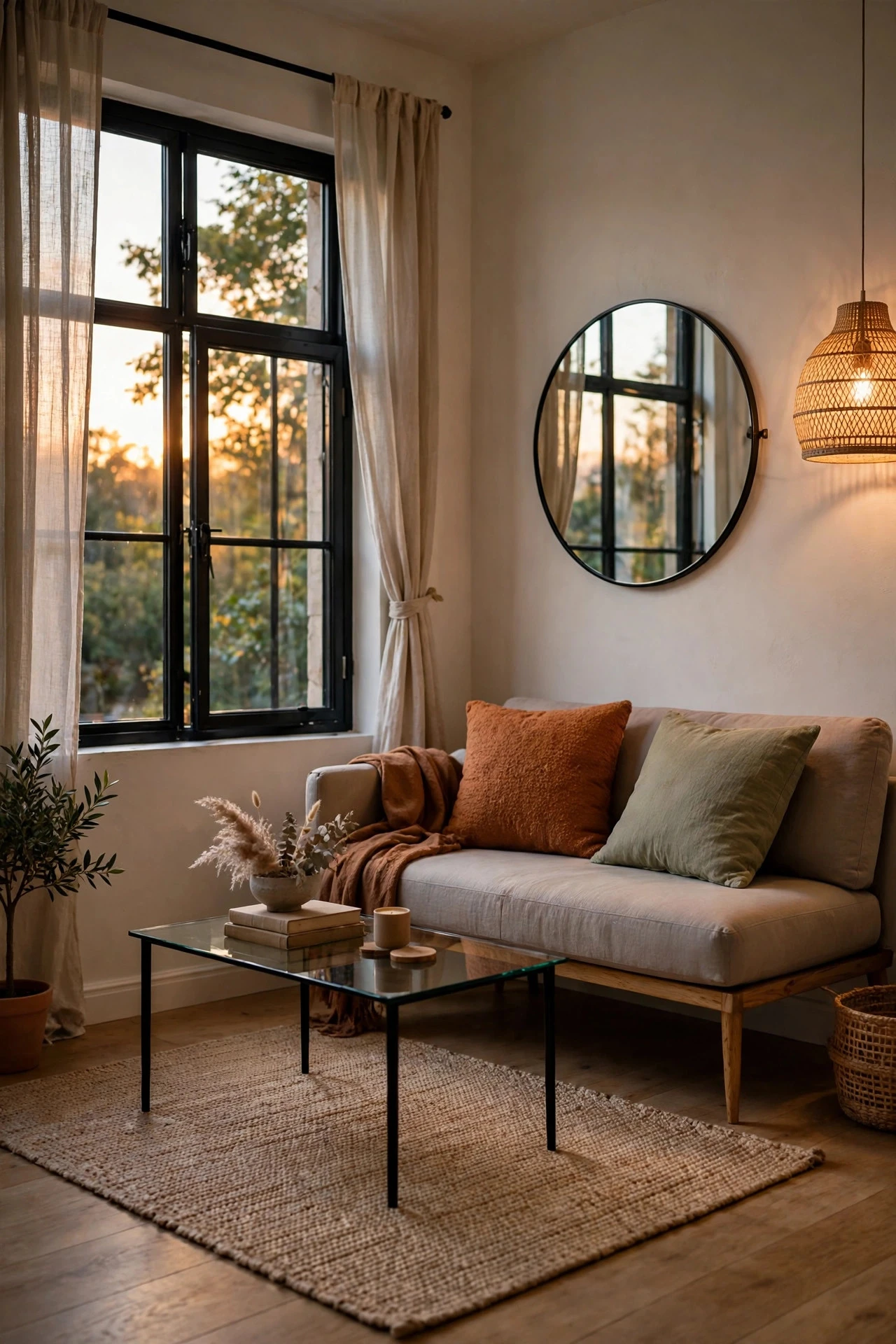
A small living room works when the furniture is scaled to it and the floor stays visible. Choose a sofa with slim arms and visible legs, a glass or open-frame coffee table, and a rug that leaves 6 to 12 inches of floor showing around its edges — the visible floor is what tells the eye the room is bigger than it is.
Use the walls, not the floor: a wall-mounted shelf, a picture light and a tall, narrow bookcase add storage without eating floor space. Budget $100–$300 for a well-placed mirror and $50–$150 for slim-legged side tables. Avoid a sectional that fills the room wall to wall, a dark rug that swallows the floor, and more than one oversized piece — in a small room, one statement is plenty and two is a crowd.
15. How Do You Style a TV Wall So It Doesn't Dominate?
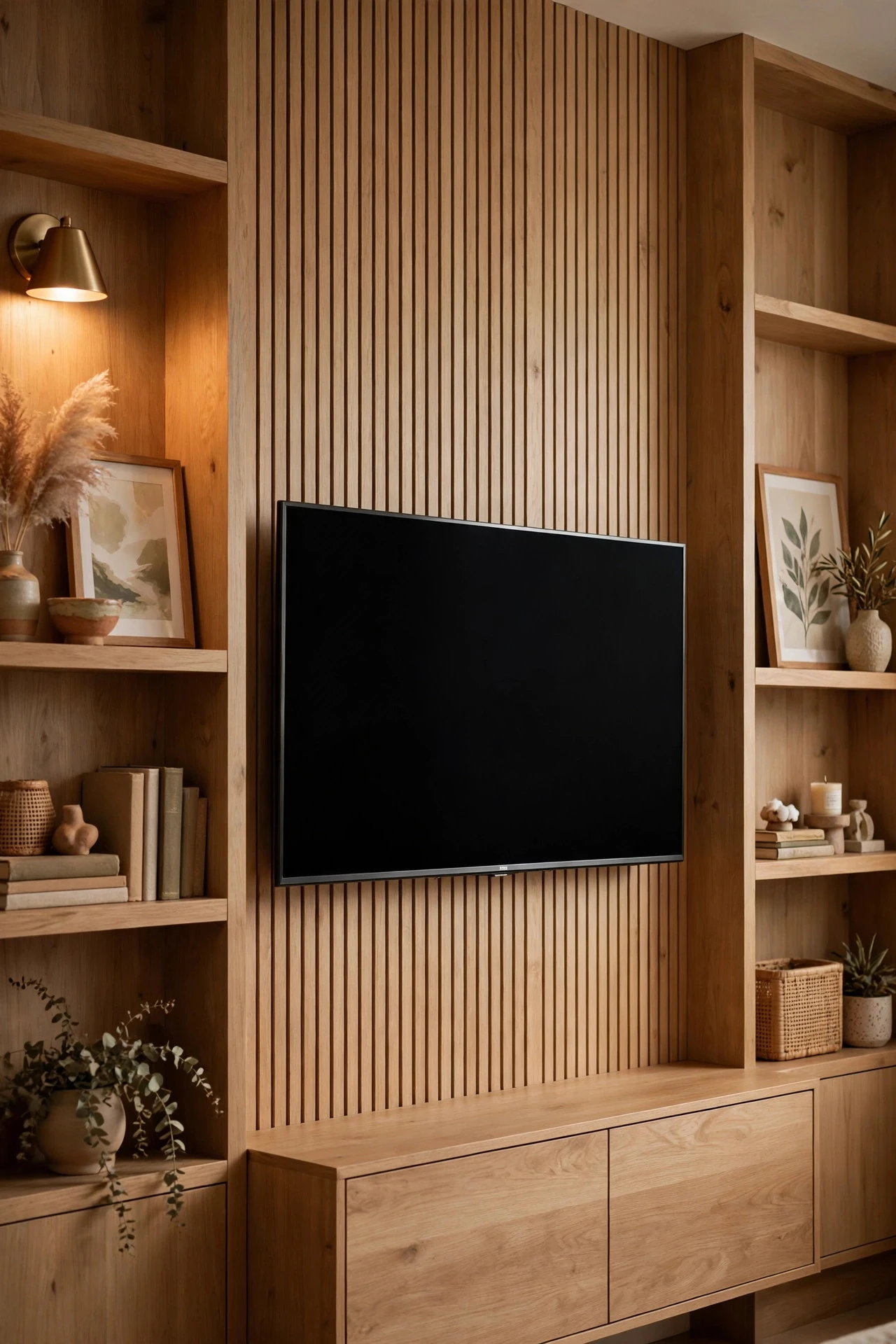
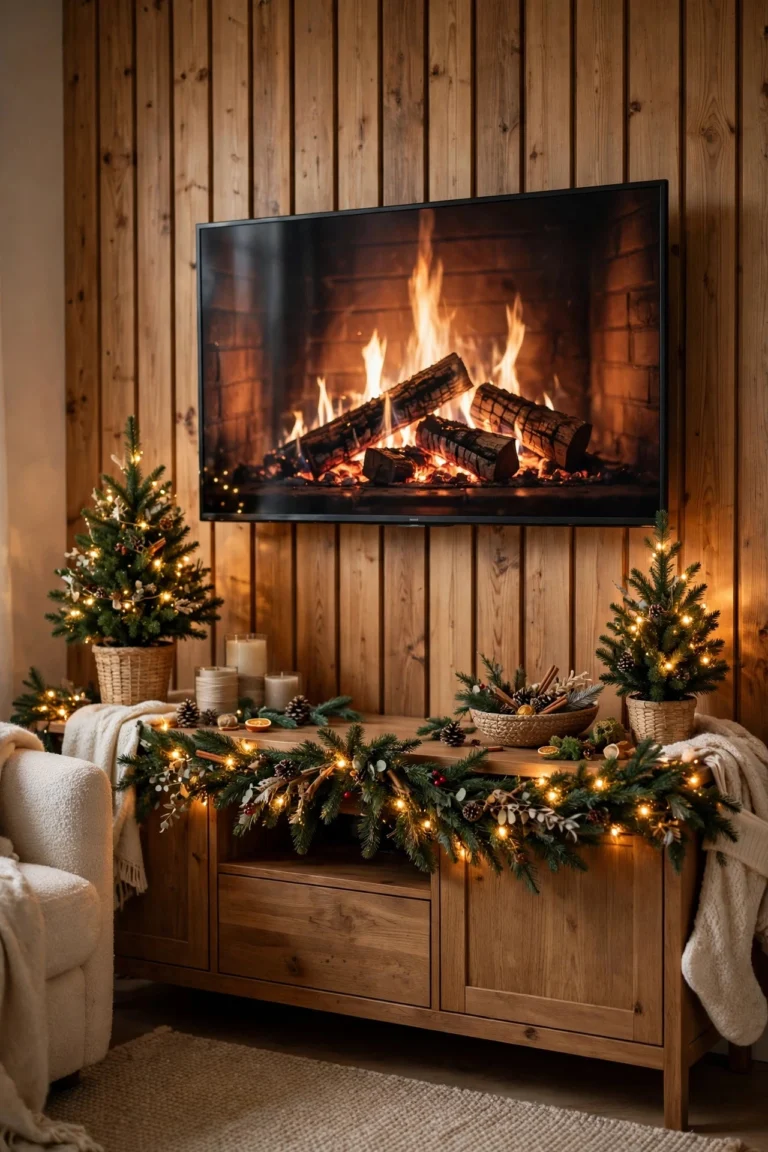
A TV wall stops dominating when the television is treated as one object among several rather than the room's shrine. Mount it at eye level when seated — the centre of the screen roughly 42 to 48 inches from the floor — and flank it with shelving, art or panelling so it reads as part of a composition instead of a black rectangle floating alone.
A low media console 6 to 12 inches wider than the TV grounds it, and a gallery of smaller frames or a pair of sconces on either side breaks up the black slab. Expect $100–$250 for a good tilting mount and $200–$600 for the console. Avoid mounting the TV above a fireplace — the viewing angle strains necks and the heat shortens the panel's life — and avoid a TV larger than the wall can comfortably hold.
16. How Do You Style a Fireplace Mantel Year-Round?
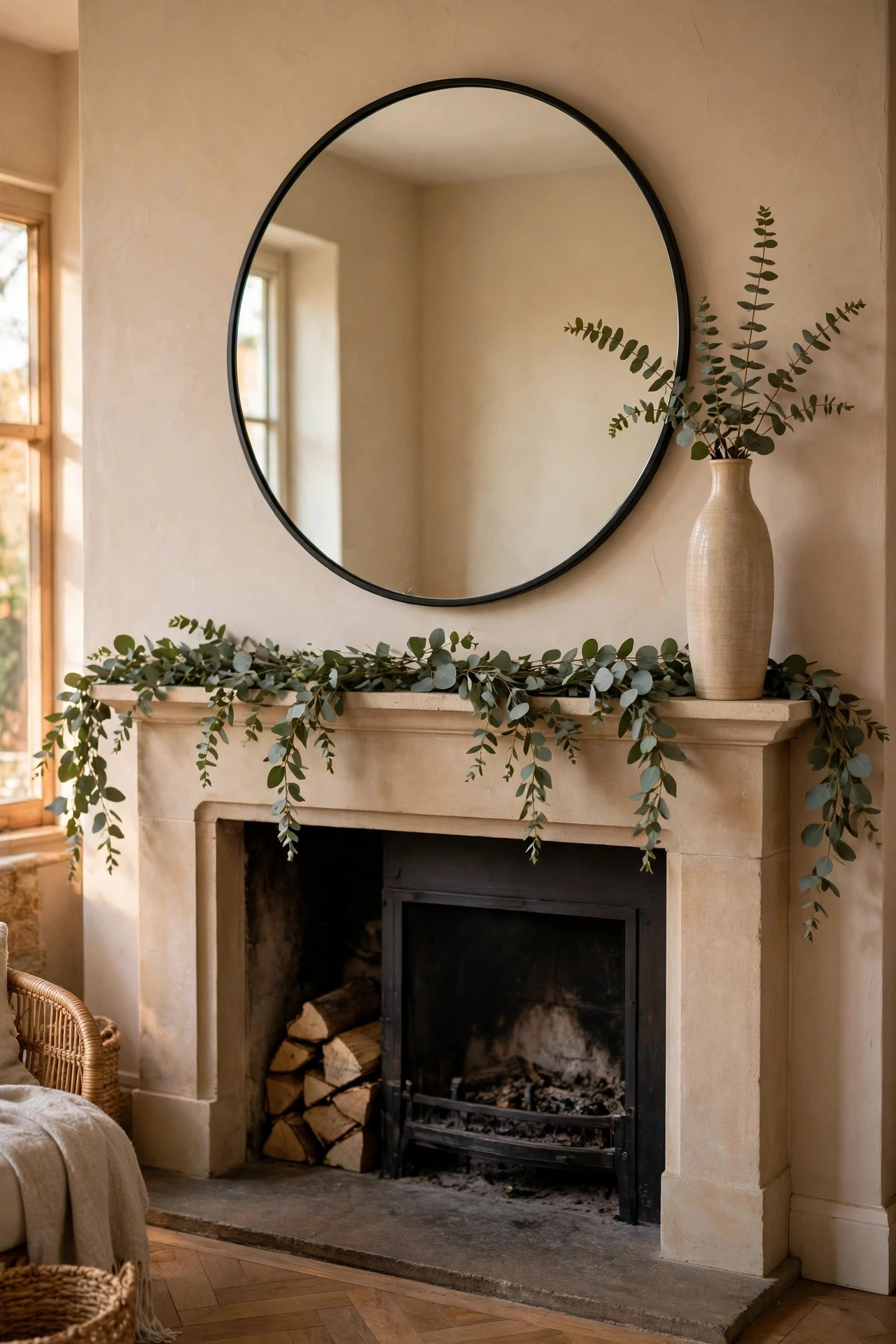
A mantel works year-round when it is styled in layers that can change with the room, not dressed for a single occasion. Start with one anchor — a large mirror or framed print, two-thirds the width of the mantel — then add a low, horizontal layer (a garland of greenery, a row of books, a long tray) and finish with two objects of different heights at the ends.
Keep the centre of the mantel calm and let the ends carry the interest: a tall vase on one side, a short stack of books or a candle cluster on the other. For mantel proportions, mirror sizing and styling combinations, see these living room fireplace decor ideas. Avoid lining up a dozen small objects in a row; they read as clutter from across the room, while three deliberate groupings read as design.
17. How Do You Carve Out a Reading Corner in a Busy Room?
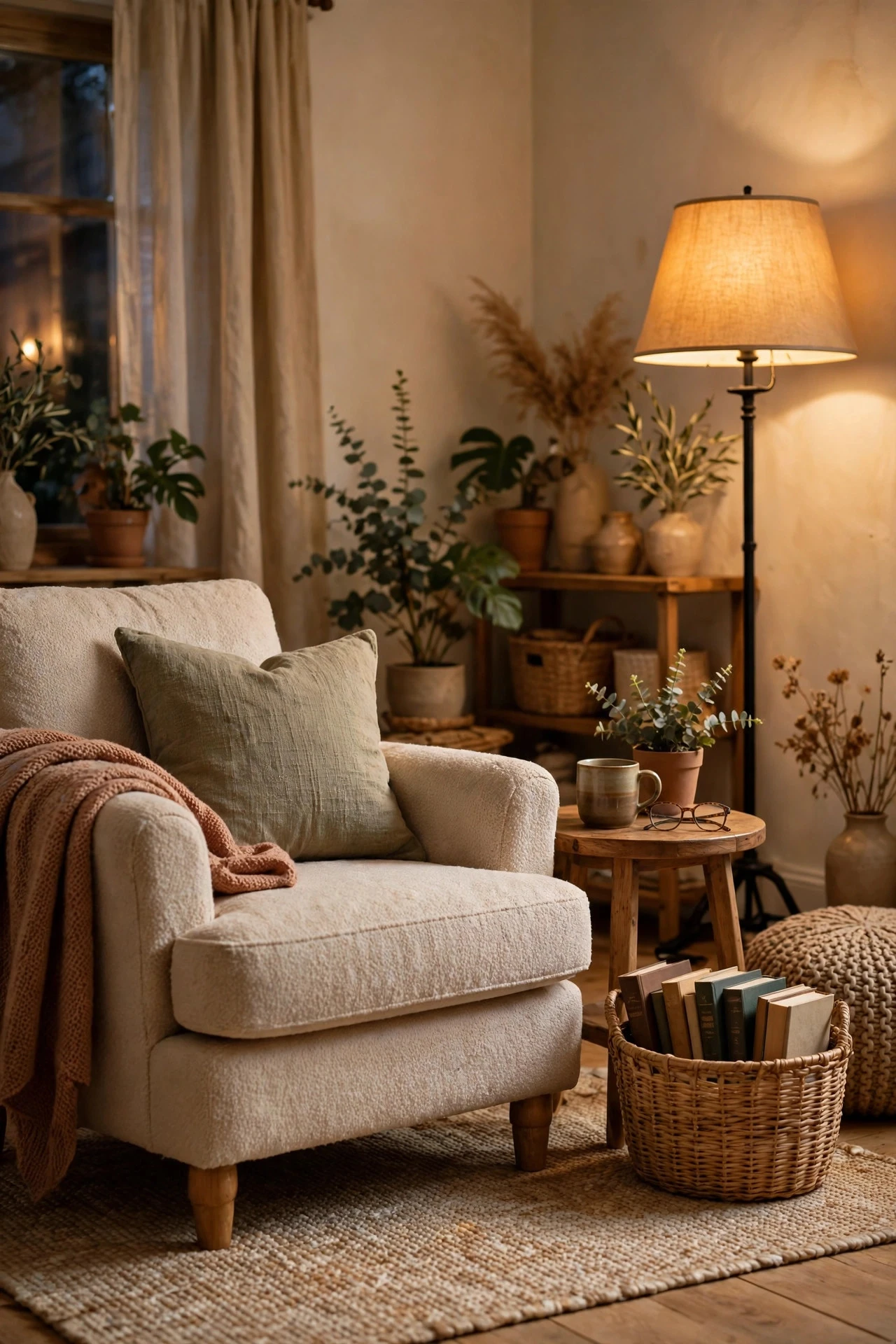
A reading corner needs only three things: a comfortable chair, good light, and a place to put a book down. An armchair with a seat height of 17 to 19 inches, a floor lamp with its shade at shoulder height when seated, and a side table within arm's reach turn any underused corner into a destination.
Angle the chair slightly toward the room rather than facing the wall — a chair turned 30 degrees feels inviting and keeps the corner connected to the rest of the space. A decent reading chair costs $300–$800, a floor lamp $100–$250. Avoid a chair so deep you need a cushion to sit upright, and avoid placing the lamp behind the chair where it casts your shadow over the page. If the corner has a window, put the chair beside it rather than in front of it so daylight falls over your shoulder.
18. What Can Renters Change Without Losing Their Deposit?
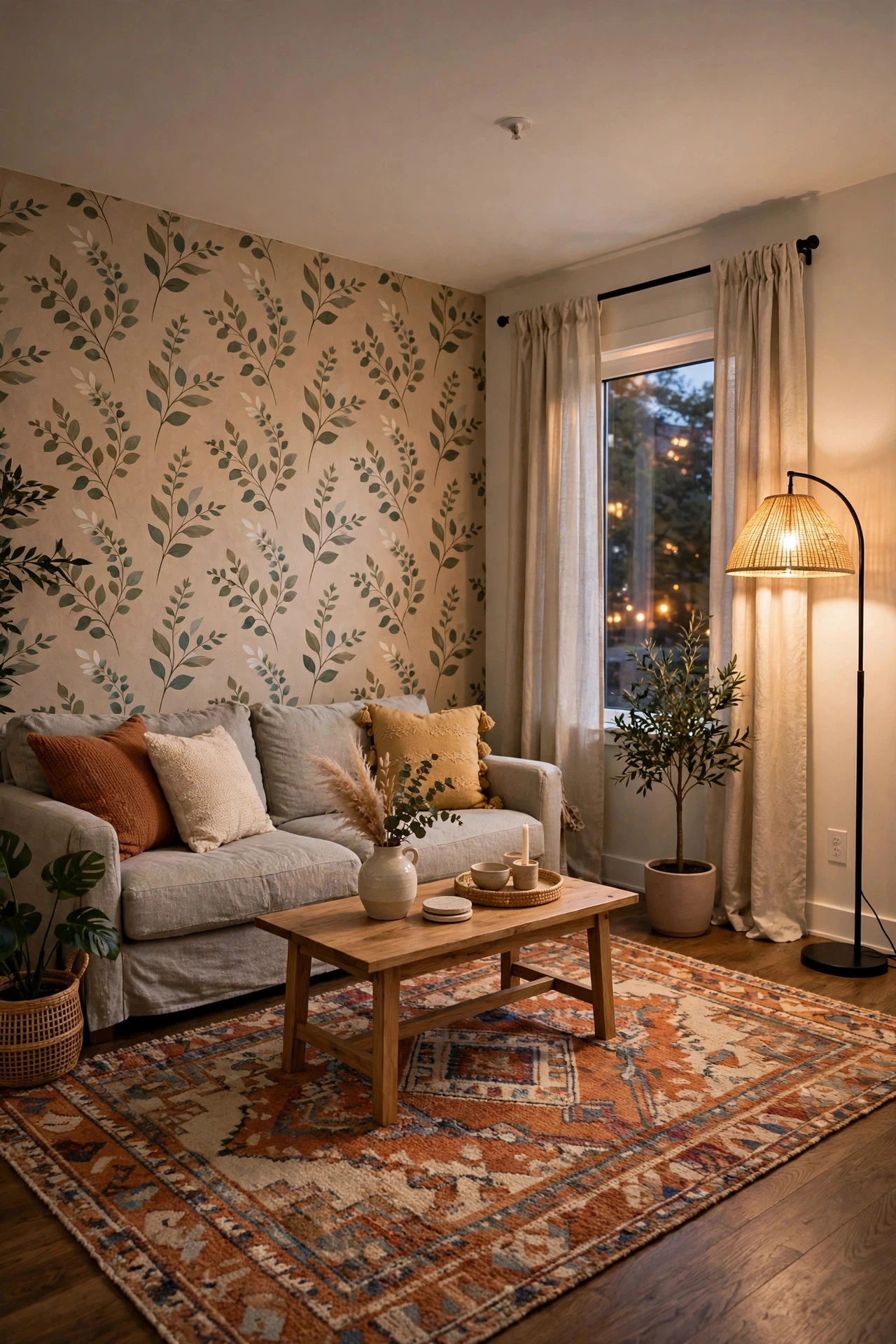
Renters can change almost everything that is not fixed to the walls. Peel-and-stick wallpaper on one wall, removable hooks, a new curtain rod on a tension mount, freestanding shelves, a large rug, new lampshades and swapped cushion covers all transform a room and come down cleanly — photograph everything before you change it and keep the originals in a labelled bag.
Start with the highest-impact reversible changes: a rug that covers tired carpet, curtains that replace vertical blinds, and a floor lamp that fixes bad overhead lighting. Removable wallpaper costs $60–$150 per roll and works best on smooth, clean walls; test a small piece first and never apply it to fresh paint. Avoid drilling into tile, painting without written permission, or sticking adhesive to textured walls — it will lift the finish and cost more than the change was worth.
19. How Do You Refresh a Living Room for Under $200?
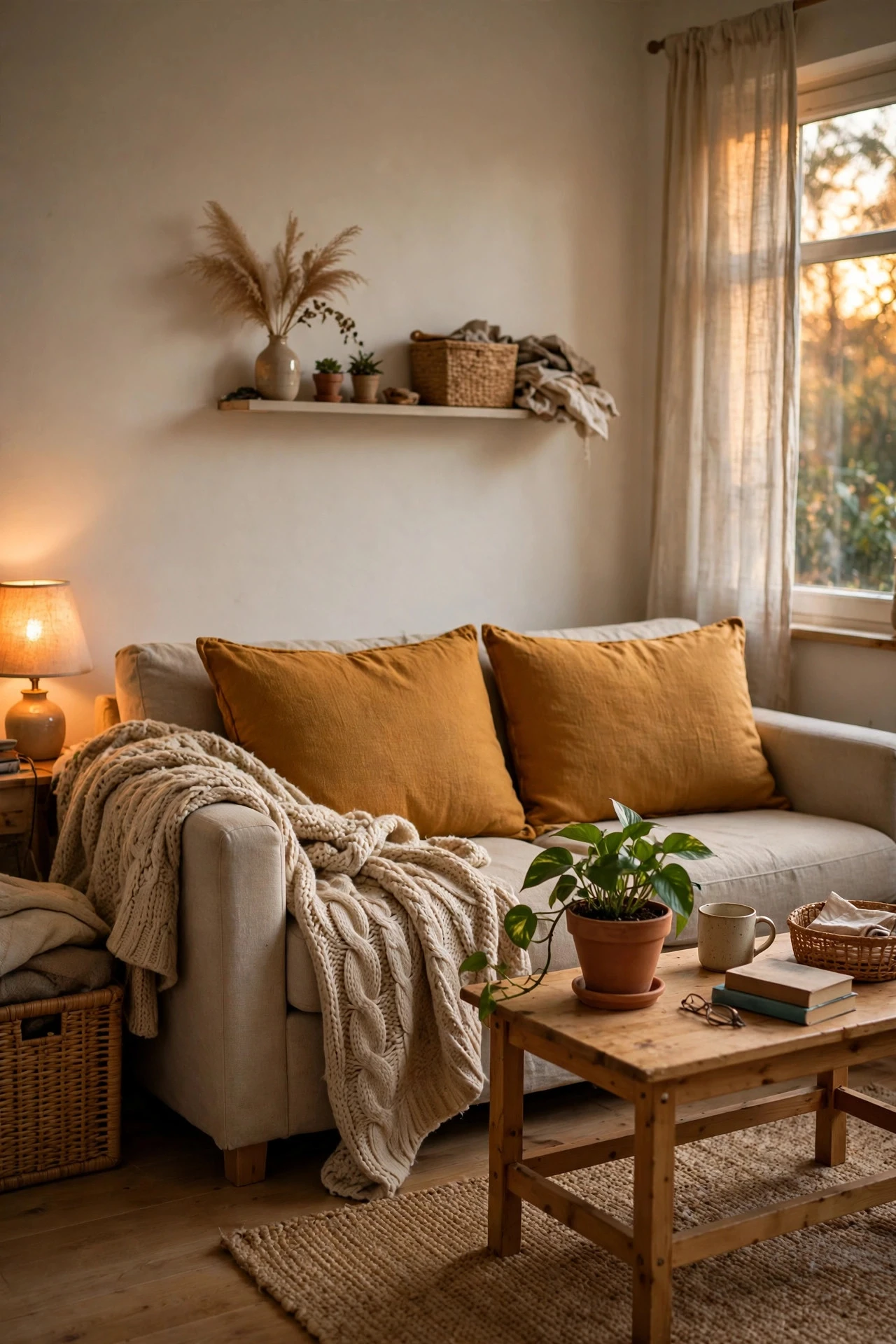
A $200 refresh works because it targets the things the eye notices first: textiles, light and clutter. New cushion covers ($40–$80 for four), a throw ($30–$60), a pair of lampshades ($30–$60) and a rearranged furniture layout change the room more than a single new piece of furniture ever will, and the rearrangement costs nothing.
Spend the rest on what the room is missing: a plant ($20–$40), a new coffee-table book or a thrifted vase, and a tin of paint for one small piece of furniture. Move the rug 90 degrees, swap the cushions between rooms, and take down one thing from every surface before you add anything new — editing is free and it is half the refresh. Avoid spending the whole budget on one trendy object; a single statement piece in an unchanged room looks like exactly what it is, while five small changes look like a new room.
20. How Do You Mix Styles Without the Room Looking Confused?
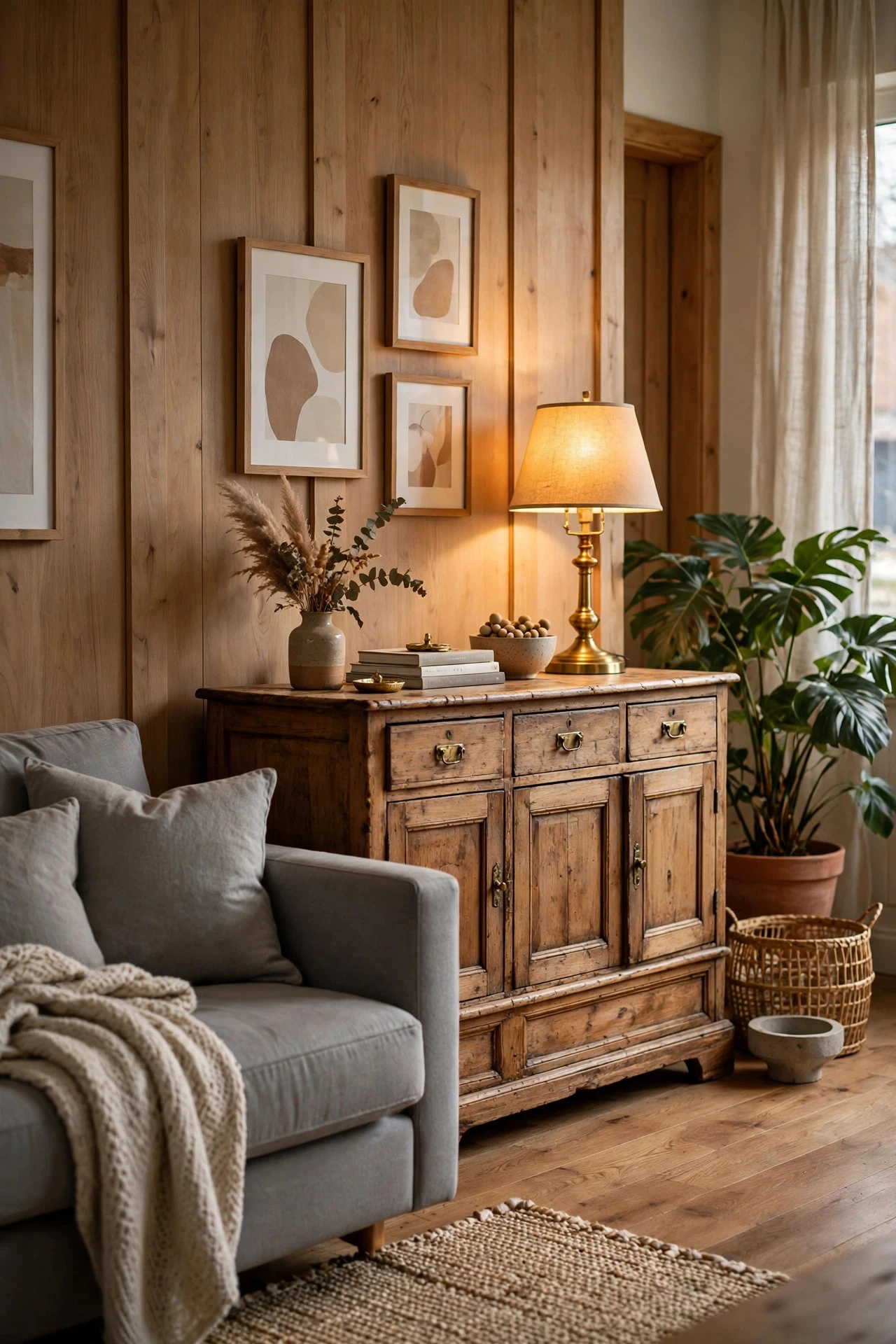
Mixing styles works when the pieces share something — a colour, a material, or a line — even if their eras differ. A mid-century chair beside a traditional sofa works when both are in the same warm timber or the same muted fabric; a modern lamp on a vintage sideboard works when the metal finish matches something else in the room.
Use the 80-20 rule: eighty percent of the room in one dominant style, twenty percent in the contrasting one. Repeat the connecting element at least twice so it reads as a decision. Avoid mixing three styles at once, and avoid a piece that shares nothing with anything else in the room — a lone object with no echo looks like a mistake rather than a choice.
21. How Do You Make a Living Room Feel Finished?
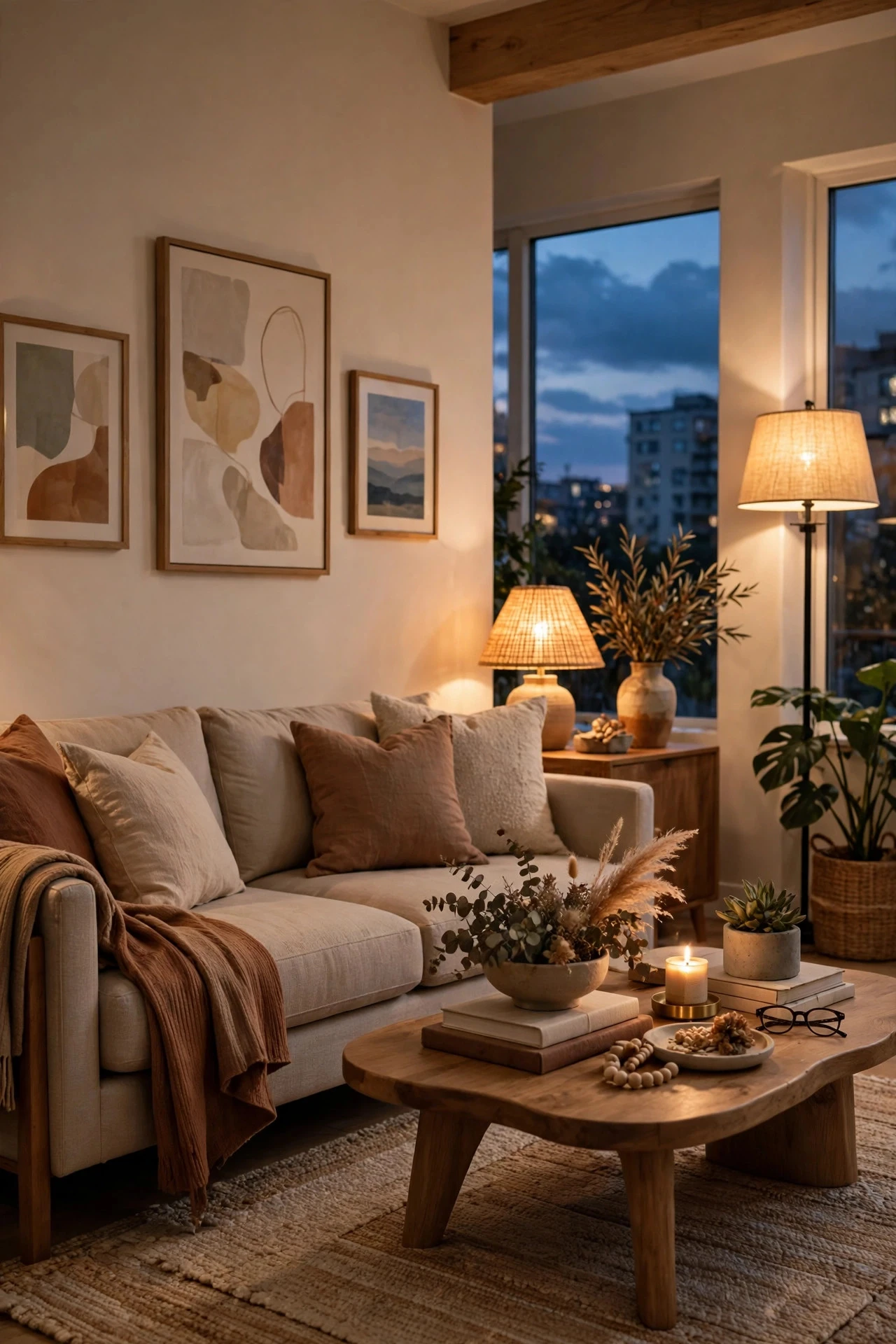
A room feels finished when the last layer is in place: the things that have no practical job but make the space feel personal. That means art on the walls at the right height, a lit lamp in the evening, a throw that is actually used, books with worn spines, and one or two objects that tell a visitor something about the people who live there.
Do a final walk-through at dusk, when the lamps are on. Look for bare walls at eye level, empty corners, a coffee table with nothing on it, and cables or clutter at ankle height — these are the gaps that make a room feel ninety percent done. Fill one gap at a time rather than buying a whole set of accessories at once; a room finished slowly looks collected, while a room finished in one shopping trip looks staged.
22. How Do You Keep a Living Room Looking Good Every Day?
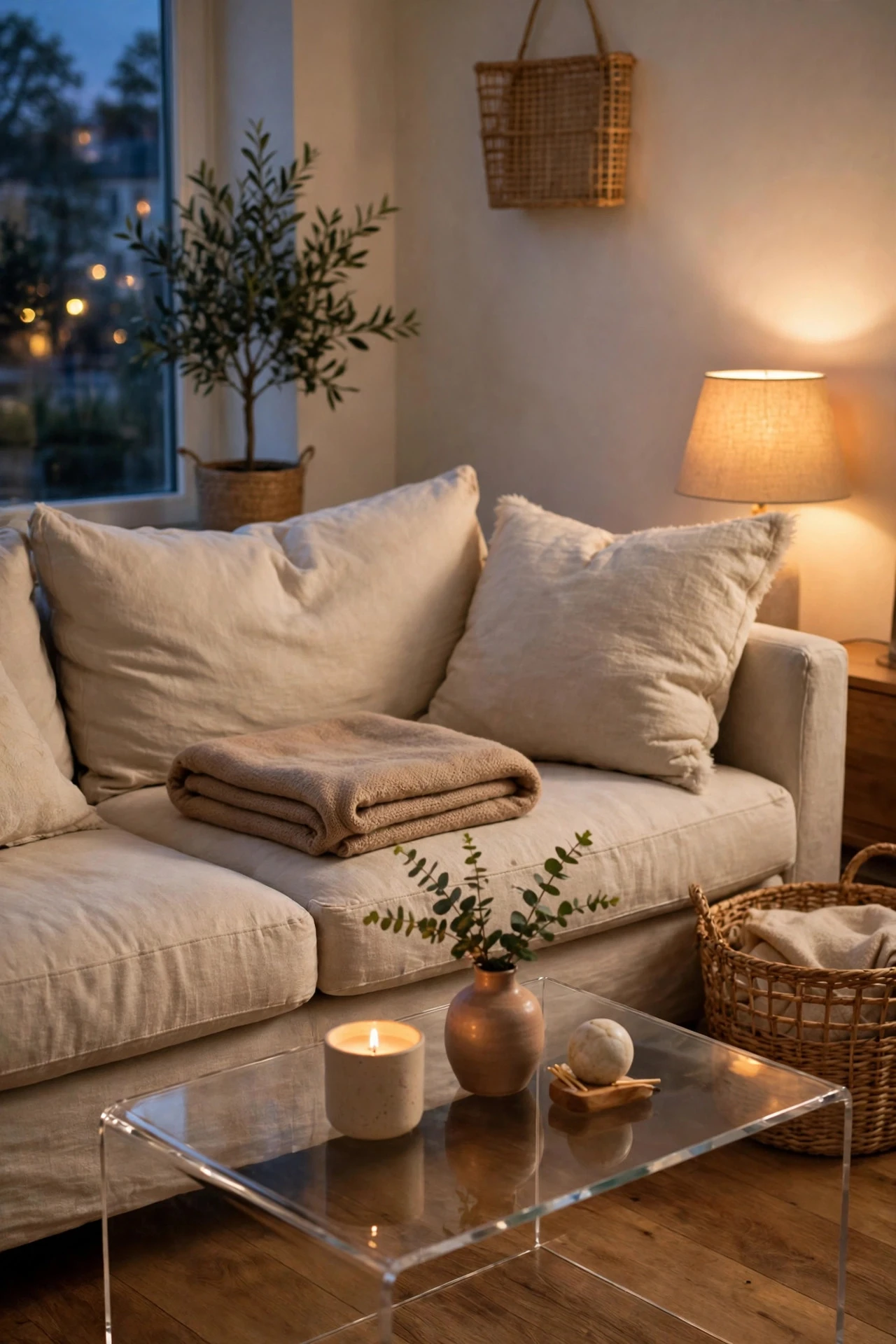
A living room stays looking good through a five-minute routine, not a weekend deep clean. Each evening, fluff the cushions, fold the throws, clear the coffee table to its three styled objects, and return anything that belongs in another room — the reset takes less time than finding the remote in the morning.
Build the room to make the routine easy: a basket by the sofa for throws, a lidded box for remotes and chargers, a tray on the coffee table that corrals the small things, and closed storage for everything else. Rotate the cushions monthly so they wear evenly, and wash the throws fortnightly. Avoid a system that depends on willpower alone — if the tidy-up takes more than five minutes, the storage is in the wrong place, not the family.
Practical tips for a living room
Measure before you buy anything. Tape the footprint of every large piece on the floor first. A sofa that fits the tape will fit the room; a sofa bought on hope will not, and returning furniture costs time and delivery fees.
Budget in the right order. Layout and lighting first (often free), then the rug and textiles, then one good piece of furniture. A $300 rug and $150 of lamps change a room more than a $1,000 sideboard does.
Light it warm and low. Keep bulbs at 2700K, put main lights on dimmers, and make sure at least one lamp sits at seating height. A room lit from above only will always feel like an office.
Edit before you add. Remove one thing from every surface before buying anything new. Most living rooms are not under-decorated; they are over-filled, and the fix is subtraction.
Final thoughts
A living room that works is not the most expensive room or the most fashionable one. It is the room where the seating faces the people you love, the light is warm at every hour, the rug is big enough, and everything has a place to go. Start with the layout, add colour and light in that order, and let the room earn its finishing touches one deliberate choice at a time.
Frequently Asked Questions
What size rug do I need for a standard three-seater sofa?
An 8 x 10 ft rug is the safe choice for a three-seater sofa: the front legs of the sofa and chairs sit on it, the coffee table sits fully on it, and at least 6 inches of rug shows beyond the furniture. Mark the outline with painter's tape before buying, and choose low-pile wool for a family room.
How far should a coffee table sit from the sofa?
Leave 14 to 18 inches between the sofa and the coffee table so you can sit down and stand up without shuffling sideways. The table should be about two-thirds the length of the sofa and level with the seat cushions, or 1 to 2 inches lower, so reaching a cup feels natural.
What is the 60-30-10 colour rule in a living room?
Sixty percent of the room is the dominant colour, usually the walls and largest furniture; thirty percent is the secondary colour, such as the rug and curtains; and ten percent is the accent, such as cushions and art. Repeat the accent in at least three places so it reads as a deliberate choice rather than an accident.
How many lamps does a living room need?
At least three light sources at different heights: a ceiling fitting for ambient light, a floor or table lamp beside the sofa for reading, and a small accent light for depth. Keep every bulb at 2700K warm white and put the main lights on dimmers so the room can shift from bright to cosy.
Can I mix a modern sofa with vintage furniture?
Yes, if the pieces share a colour, a material or a line. Use the 80-20 rule — eighty percent of the room in one dominant style and twenty percent in the contrast — and repeat the connecting element at least twice. A modern sofa and a vintage sideboard work together when their timber tones or metal finishes match.
How do I refresh my living room without buying new furniture?
Rearrange the layout first, then change the textiles: new cushion covers, a throw and new lampshades cost $100–$200 and change the room more than a new piece of furniture. Move the rug, swap cushions between rooms, and remove one item from every surface before adding anything new.