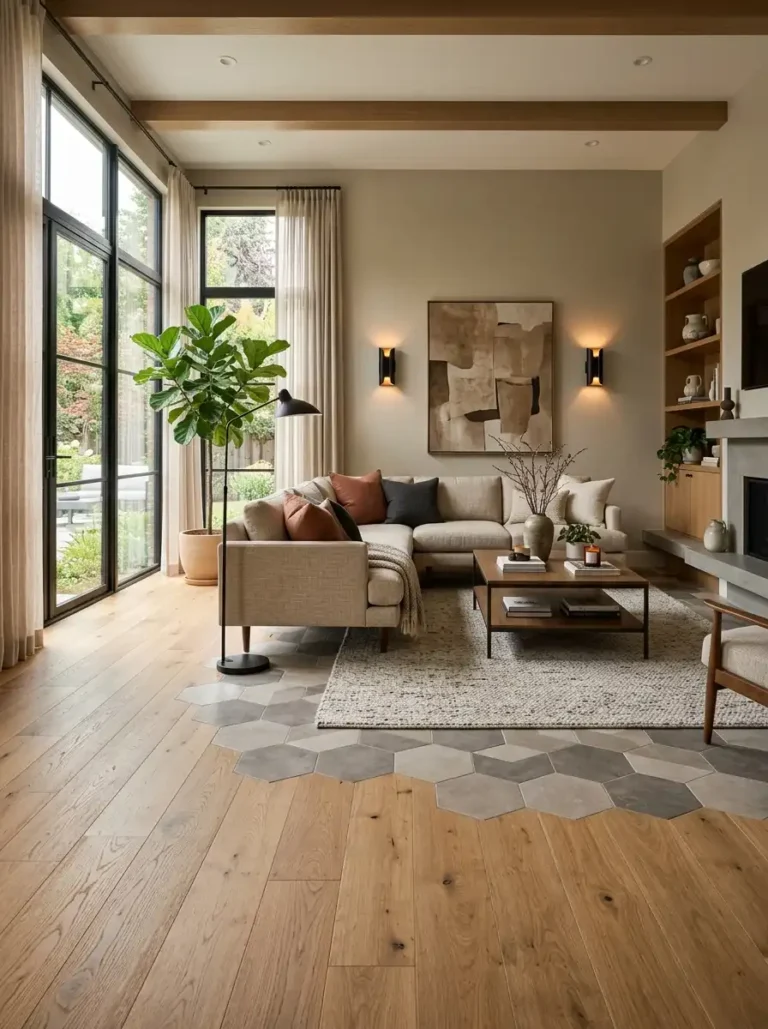
How to Choose a Living Room Sofa That Fits Your Room and Your Life
The sofa is the hardest-working piece of furniture in your home. It is where you drink your morning coffee, host your friends, stretch out with a book and fall asleep during a film. Yet most people choose one in a showroom in under an hour, guided by colour and price, and only discover the mistakes once it is squeezed through the front door. A sofa that is too deep, too wide or too soft will annoy you every single day.
Looking for more inspiration? Our Nest Decorz homepage gathers the latest home decor ideas, seasonal decorating guides and room-by-room styling tips in one place — start there and explore.
This guide flips the usual order: measure first, then choose. Below are 22 living room sofa ideas covering measuring, seat depth, styles, fabrics, frames, colours, layouts and styling — with exact numbers and the mistakes to avoid, so the sofa you buy fits your room, your body and your life.
Quick answers
– Measure before you shop — wall length, 30–36 inch walkways, and every doorway and stair turn on the delivery route, taped out on the floor. – Seat depth decides comfort — 22–24 inches suits most adults for sitting upright; deeper seats are for lounging, not for conversation. – Spend on the frame and fill first — kiln-dried hardwood and high-density foam outlast any fabric, and you cannot see quality until you sit on it. – A sofa should leave 6 inches of rug under its front feet and 16–18 inches to the coffee table — those two gaps are what make a seating group feel finished.
1. How Do You Measure Your Living Room Before Buying a Sofa?

Measure your living room before buying a sofa by taping the sofa's footprint on the floor with painter's tape, then checking three numbers: the wall it will sit against, the walkways around it, and the delivery route. A sofa that fits the wall but blocks the walkway will frustrate you every day.
Start with the wall: your sofa should span roughly two-thirds of it, leaving room at each end for a side table or lamp. Leave 30 to 36 inches of clear walkway in front of and beside the sofa so people can pass without turning sideways. Then measure every doorway, hallway corner and stair turn on the delivery route — the sofa must fit through them diagonally, packaging included. A common rule is that either the sofa's depth or its height must be smaller than the narrowest doorway width. Mark it all with tape and live with the outline for a day before ordering.
2. What Seat Depth Fits the Way You Actually Sit?
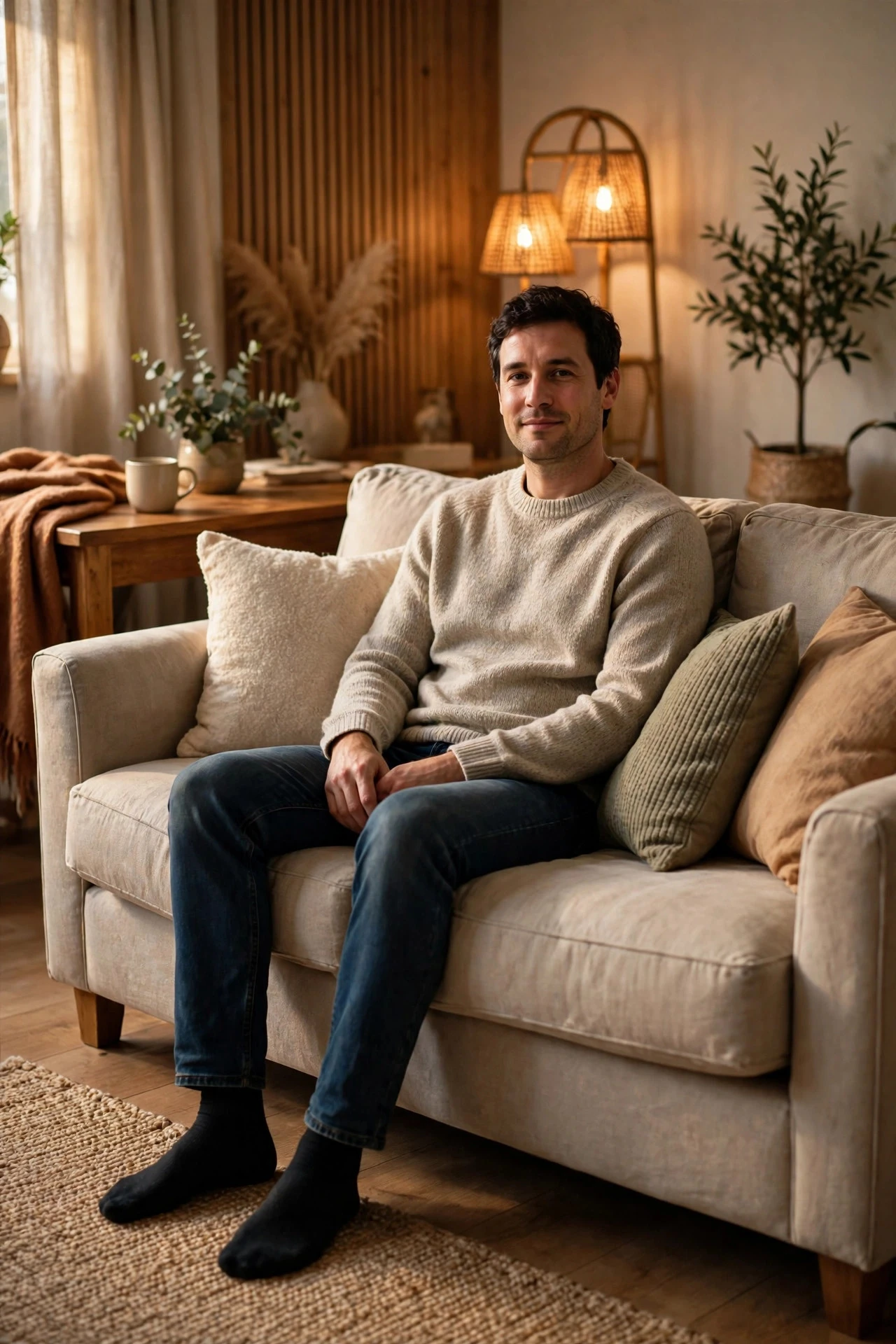
A seat depth of 22 to 24 inches fits most adults for upright sitting, because it lets your back rest against the back cushions while your feet stay flat on the floor. Deeper seats feel luxurious in the showroom but leave shorter sitters perched on the edge, unsupported and uncomfortable.
Think about how you actually use the sofa. If you sit upright to talk, read or watch television with your feet down, stay in the 22 to 24 inch range. If you curl up sideways, nap or lounge with your legs tucked under you, a deeper 26 to 28 inch seat works better — but pair it with back cushions you can pull forward when guests sit properly. Test it honestly: sit for ten minutes in your normal position, not just a quick bounce. Seat height matters too — 17 to 19 inches suits most adults, while taller people may prefer 19 to 20 inches.
3. Should You Choose a Sectional Sofa for Your Living Room?
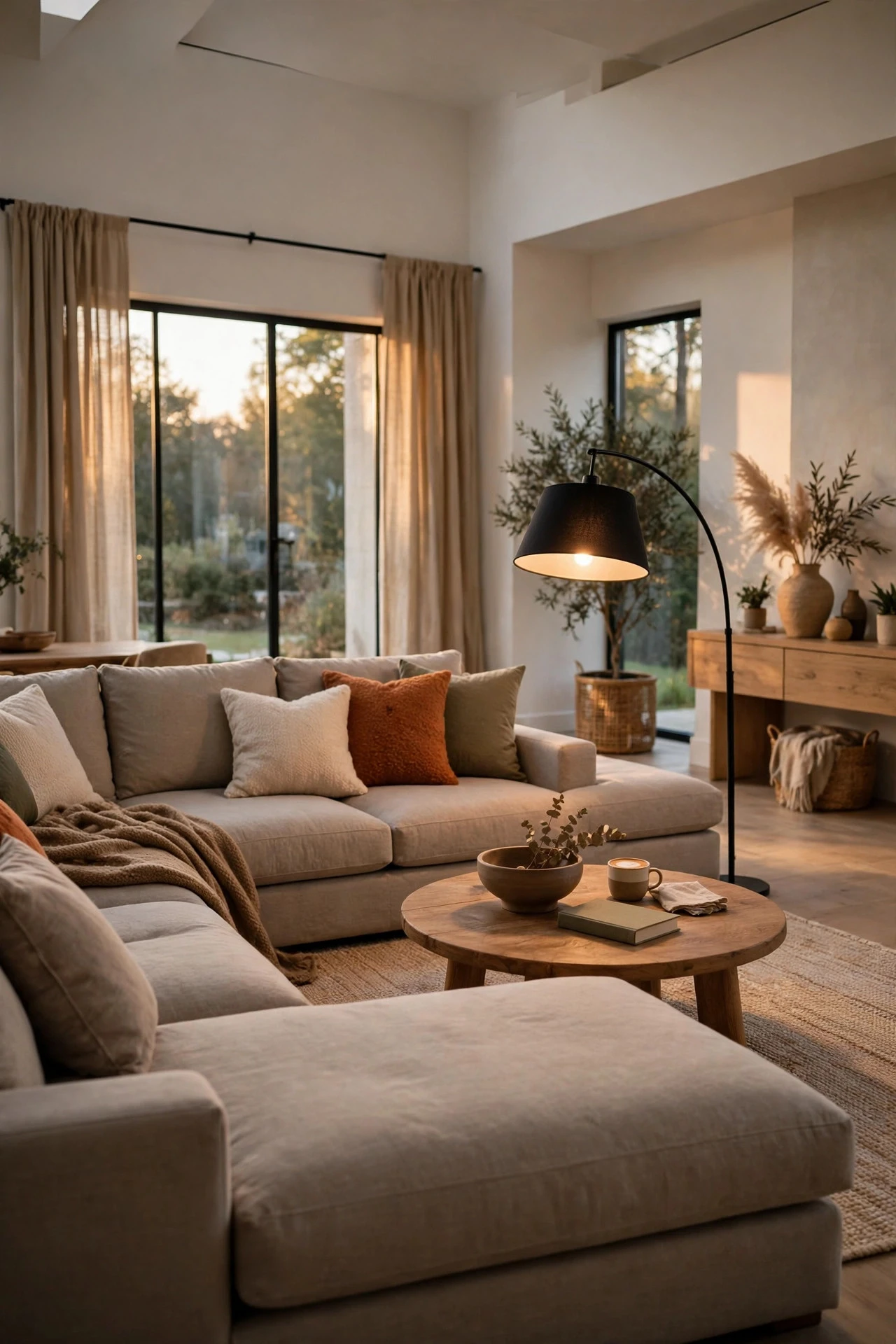
Choose a sectional sofa when your living room is large enough to give it a full wall or corner, and when you regularly seat four or more people at once. A sectional turns an empty corner into the room's main gathering place.
A standard three-seat sectional runs 100 to 120 inches wide, so measure carefully — a sectional that is too big will swallow a small room and leave no space for side tables or a rug. Choose the chaise side to match your traffic flow: the chaise should sit on the side furthest from the main walkway, never blocking the route to the kitchen or door. Avoid a sectional in a narrow room; two smaller sofas will seat the same people with far more flexibility.
4. What Makes a Curved Sofa Work in a Modern Living Room?

A curved sofa works in a modern living room when it has room to float, because its gentle bow turns sitters slightly toward each other and softens a room full of straight lines. Curved sofas suit open-plan spaces and conversation-first rooms far better than television-first rooms, where a straight sightline matters more.
Choose a gentle curve over a dramatic crescent: a softly bowed back or rounded ends give you the softness without the wasted floor space behind a deep arc. Keep the upholstery neutral and let the shape be the statement — a loud colour plus a loud shape is too much in one piece. Pair it with a round coffee table, which echoes the curve and is easier to walk around. Avoid pushing a curved sofa flat against a wall; it leaves awkward gaps and defeats the whole point of the shape.
5. Is a Chesterfield Sofa Right for Your Home?

A Chesterfield sofa is right for your home when you want a formal, structured statement piece with deep button tufting, rolled arms and a low back, all at the same height. Chesterfields bring instant character to traditional, moody and library-style living rooms.
Choose leather for the classic look — a rich cognac, oxblood or deep green — or velvet in emerald, navy or blush for a softer, more modern take. Because the back is low and the arms are high, a Chesterfield is better for upright sitting and conversation than for sprawling naps, so it suits a formal living room or a reading room more than a family television room. Check the tufting is genuinely deep-buttoned rather than glued-on, and budget £1,500 to £4,000 for a well-made one. Avoid it in a small room, where its visual weight can dominate everything else.
6. How Do Modular Sofas Adapt as Your Life Changes?

Modular sofas adapt as your life changes because they are built from separate seat, corner and chaise units that clip together, so you can rearrange them, add a seat when the family grows, or split them into two sofas when you move. A modular sofa is the only style that can change shape without being replaced.
Start with the configuration that fits your room today and buy extra units later rather than overbuying now. Check how the pieces connect: sturdy metal brackets hold the shape, while simple clips can drift apart on hard floors. The Spruce's best modular sofas show how much customization is now available, from armless seats to ottoman units that double as extra seating. Modular sofas arrive in boxes, which also solves the narrow-doorway problem that defeats one-piece sofas. Avoid cheap connectors and mismatched dye lots if you plan to add pieces later.
7. When Does a Sleeper Sofa Actually Make Sense?

A sleeper sofa makes sense when you host overnight guests four or five times a year but have no spare bedroom, because it gives you a real bed without dedicating a whole room to one. It suits a home office, a studio flat or a family living room — not a substitute for a daily bed.
Test the mechanism in the store: it should open and close smoothly with one person, and the mattress should be at least 4 to 5 inches thick, ideally with a memory-foam topper. A pull-out queen sleeper needs about 90 inches of clear floor in front of it when open, so measure that space too. Expect £800 to £2,500 for a good one — modern mechanisms are far better than the old bar-and-spring versions, but they still add weight and cost. Avoid the cheapest sleepers; a sagging mattress guarantees your guests will remember the night for the wrong reasons.
8. What Is the Best Sofa for a Small Living Room?

The best sofa for a small living room is an apartment sofa or a loveseat between 68 and 78 inches wide, with slim arms, visible legs and a low back, because it seats two comfortably without eating the room. Small rooms need sofas that show floor beneath them, which tricks the eye into reading more space.
Look for a seat depth of 21 to 22 inches and arms no wider than 5 to 6 inches — chunky rolled arms can steal 12 inches of seating width. A loveseat plus one accent chair seats three and keeps the layout flexible, while one oversized three-seater seats the same three and blocks the walkway. Keep the colour pale or mid-tone so the sofa recedes, and add interest with cushions instead. For the rest of the room, these 22 Scandinavian living room ideas for a calm cozy home show how pale palettes and slim-legged furniture open up small spaces. Avoid a sectional in a small room — it is the fastest way to make it feel cramped.
9. How Do You Choose Between Velvet, Linen and Leather?

Choose between velvet, linen and leather by matching the fabric to your household, not to a photograph: velvet is soft and glamorous but shows pressure marks, linen is relaxed and breathable but wrinkles, and leather is durable and wipes clean but feels cold in winter. The right fabric is the one that survives your actual life.
Velvet in cotton or polyester suits a formal living room and photographs beautifully, but it needs regular brushing and shows every seat mark. Linen — or a linen-blend with a little synthetic for strength — suits relaxed, coastal and Scandinavian rooms, and its wrinkles are part of its charm. Leather, especially top-grain or aniline, ages beautifully, resists spills and suits homes with pets, but it scratches and needs conditioning twice a year. Ask for the Martindale rub test — 25,000 rubs suits light use, 40,000-plus a family sofa — and always take a swatch home to test in your light.
10. Is Bouclé Worth the Hype — and the Upkeep?

Bouclé is worth it when you want a soft, sculptural, cloud-like sofa in a low-traffic living room, because its looped yarn texture adds instant warmth and visual softness that flat fabrics cannot match. Bouclé has moved from trend to staple, but it is a fabric with honest limits.
The looped pile catches dust, pet hair and crumbs, and it snags on jewellery, zips and pet claws, so it suits a calm adult living room far better than a busy family room with a dog. Choose a tight, dense boucle over a loose, shaggy one — it resists pulling and cleans more easily. Keep a lint roller nearby and vacuum with an upholstery attachment weekly. A bouclé sofa in cream or oatmeal looks stunning against oak and brass, but budget for professional cleaning once a year. If you have cats, skip boucle entirely; their claws and looped yarn are a bad combination.
11. What Is Performance Fabric, and Who Actually Needs It?
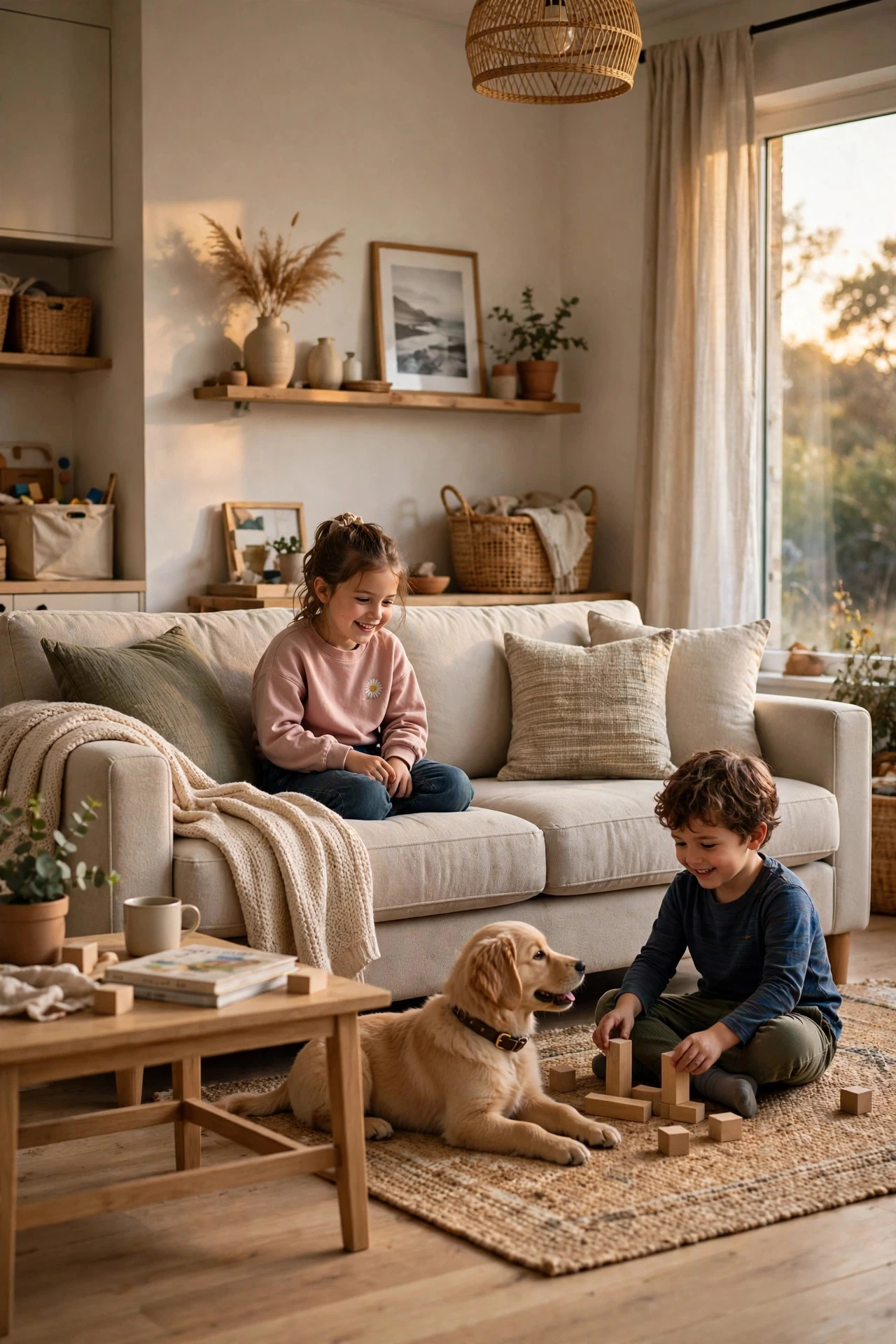
Performance fabric is a tightly woven, stain-resistant upholstery — usually a solution-dyed acrylic or a treated polyester blend — designed to repel liquids, resist fading and survive scrubbing without staining. Anyone with children, pets or a habit of eating on the sofa genuinely needs it, because it turns a spill from a crisis into a wipe.
Look for fabrics labelled stain-resistant, with a high double-rub count and removable, washable covers if possible. Most quality sofa makers now offer at least one performance option. Test it honestly: a splash of red wine or coffee should bead on the surface and blot away, not soak in. Performance fabrics have improved so much that they no longer look or feel plasticky — many now mimic linen, velvet and bouclé. Avoid assuming all light fabrics are performance fabrics; check the label, because an untreated cream linen will stain on first contact.
12. How Do You Judge a Sofa Frame Before You Buy?

Judge a sofa frame before you buy by lifting one front corner about six inches off the floor: a solid frame stays rigid, while a weak frame twists and creaks. This simple lift test reveals more about build quality than any sales label, and it takes ten seconds.
A good frame is kiln-dried hardwood — beech, oak or ash — joined with dowels, screws and corner blocks, never just staples and glue. Kiln-drying stops the wood warping or cracking, which is why quality makers offer 10 to 25 year frame warranties. The sofa has evolved from a simple bench into a engineered piece of furniture, and its frame is still the part that decides whether it lasts five years or twenty. Ask what the frame is made of and how it is joined; if they cannot answer, walk away. Avoid frames made from particleboard or soft pine, which loosen and squeak within a couple of years.
13. What Cushion Fill Lasts Longest — Foam, Down or a Blend?

A high-density foam core wrapped in a down blend lasts longest, because the foam holds the cushion's shape while the down layer adds softness that can be plumped back into place. Pure foam is firm and low-maintenance, pure down is luxurious but needs daily fluffing.
Look for seat foam with a density of 1.8 to 2.5 pounds per cubic foot — below that, cushions sag within a year or two. A foam core wrapped in a feather-down envelope, often called a foam-and-down or spring-down cushion, keeps its shape for years and still feels sink-in soft. Fluff down-blend back cushions weekly — thirty seconds keeps them full. Seat cushions should be reversible and flippable, so you can rotate them monthly for even wear. Avoid ultra-soft cushions with no core support; they feel wonderful for a week and look deflated within six months.
14. Which Sofa Colours Work Hardest in a Real Living Room?

Earth tones and warm neutrals work hardest in a real living room — sage green, warm greige, terracotta, oatmeal and mushroom — because they hide dust and pet hair, pair with almost any accent colour, and age gracefully. A sofa is a ten-year purchase, so its colour should be a background, not a trend.
Sage green is the most forgiving darker colour: it reads as a neutral and pairs with oak, brass and cream. Warm greige and oatmeal suit small rooms because they reflect light and make the sofa recede. Terracotta and rust add warmth without the risk of a bright red or orange. If you love colour, put it in the cushions, throws and art — a £40 cushion can be swapped in an afternoon, while a £1,200 sofa cannot. Avoid pure white in a household with children or pets, and avoid black, which shows every speck of dust and pet hair within hours.
15. Should Your Sofa Be the Bold Statement Piece?

Your sofa should be the bold statement piece when the rest of the room is calm and you want one unforgettable focal point — a deep emerald velvet, a rich burnt orange or a sculptural curved silhouette. One bold sofa works because the eye has a single place to land, and everything else in the room becomes its supporting cast.
Keep the walls, rug and curtains quiet — warm white, pale greige or soft stone — so the sofa owns the colour story. Balance the boldness with texture: a velvet sofa pairs beautifully with a wool rug, linen curtains and brass or oak accents. For more ways to let one piece lead the room, these 22 luxury living room decor ideas for an elegant home show how to add polish around a statement seat. Avoid two statement pieces competing in one room — a bold sofa plus a bold rug plus bold art is a shouting match, not a design.
16. How Do You Arrange Two Sofas Facing Each Other?

Arrange two sofas facing each other when you want a conversation-first living room, placing them 30 to 36 inches apart with a coffee table or ottoman between them, so people sit close enough to talk without raising their voices. Facing sofas create a symmetrical, formal seating group that works beautifully in square rooms and around a fireplace.
Centre the pair on the room's focal point — the fireplace, the window or the art wall — with the coffee table exactly midway, 16 to 18 inches from each sofa. Add a rug large enough to sit under both sofas' front feet, with a floor lamp at each end. These 22 living room fireplace decor ideas for a warm focal point show how to style the wall between facing sofas so the fireplace stays the star. This layout suits rooms where the television is elsewhere. Avoid facing sofas in a long narrow room, where they will feel like a corridor.
17. When Should a Sofa Float in the Middle of the Room?

A sofa should float in the middle of the room when you have an open-plan space and need the furniture to define the living zone without a wall, because a floating sofa creates a room within a room. Floating works in large living rooms, open-plan kitchen-diners and loft spaces where the sofa's back becomes the boundary.
Place the sofa with its back to the dining area or kitchen, leaving at least 36 inches of walkway behind it. Finish the back with a console table or low bookshelf behind the sofa, which hides the view and holds a lamp and books. These 22 living room lighting ideas for a warm layered glow show how to light a floating sofa from behind so it never sits in shadow. Anchor the group with a rug that extends at least 6 inches beyond the sofa on all sides. Avoid floating a sofa in a small room; it wastes the space behind it and makes the room feel smaller, not larger.
18. How Do You Place a Sofa in a Corner Without Wasting Space?

Place a sofa in a corner by pushing it tight against both walls and using the angle for a floor lamp, a tall plant or a small side table, so the dead space becomes useful rather than wasted. A corner placement suits rooms and L-shaped layouts, where it frees the centre of the room for a rug and coffee table.
Leave no more than an inch or two between the sofa back and the wall — a gap collects dust and lost cushions. If the corner has a window, hang curtains that frame the sofa, and place a slim side table in the corner angle for a lamp and a book. A corner sofa or a chaise sectional uses the corner most efficiently, since the chaise fills the angle that a straight sofa leaves empty. Avoid placing a straight sofa diagonally across a corner; the triangular gap behind it wastes floor space and makes the room look unsettled.
19. How Many Cushions Does a Sofa Actually Need?

A sofa actually needs three to five cushions, not the seven or nine that showrooms display, because too many cushions leave nowhere to sit and end up piled on the floor every evening. The right number is the one that styles the sofa without stealing its seats.
Use two 20-inch square cushions at the corners, one 22-inch square in the centre, and one lumbar cushion — 14 by 24 inches — in front of it, in a mix of textures: one velvet, one linen, one patterned. Buy inserts one size up from the covers for a full, plump finish. Keep the palette to three colours drawn from the rug and art, with one pattern and the rest plain. Avoid matching cushion sets in identical fabric; they read as a furniture-store display rather than a home.
20. How Do Throws and Texture Layering Finish a Sofa?

Throws and texture layering finish a sofa by adding the softness and colour that flat upholstery cannot, because a folded throw over one arm and a contrasting cushion instantly make a plain sofa look styled and inviting. Layering is the cheapest way to change a sofa's look with the seasons.
Drape a throw over one arm or across the back corner — never spread flat across the whole sofa, which looks like you are hiding a stain. Mix textures deliberately: a chunky knit throw on a smooth linen sofa, a velvet cushion on a cotton sofa, a leather tray on the arm for a cup. Swap a faux-fur or wool throw in winter for a light cotton one in summer. Choose throws in colours that echo the rug or art, so the layering feels connected. Avoid more than two throws on one sofa; beyond that, the sofa starts to look like a laundry pile.
21. What Size Rug Belongs Under Your Sofa?

The right rug for a standard three-seater sofa is 8 by 10 feet, because it is large enough for the front feet of the sofa and every chair in the group to sit on it. A rug that is too small is the most common living room mistake, and it makes even an expensive sofa look like it is floating.
Measure the seating group, not the room: the rug should extend 6 to 12 inches beyond the sofa on each side and at least 24 inches in front of it for the coffee table. For a sectional, step up to a 9 by 12 foot rug, which keeps the whole L-shape grounded. These 22 living room rug ideas to ground your seating area show sizing, layering and pattern combinations that work with real sofas. Avoid a rug that stops halfway under the sofa — half-on reads as a mistake, while fully under or fully in front both look deliberate.
22. How Far Should the Coffee Table Sit From the Sofa?
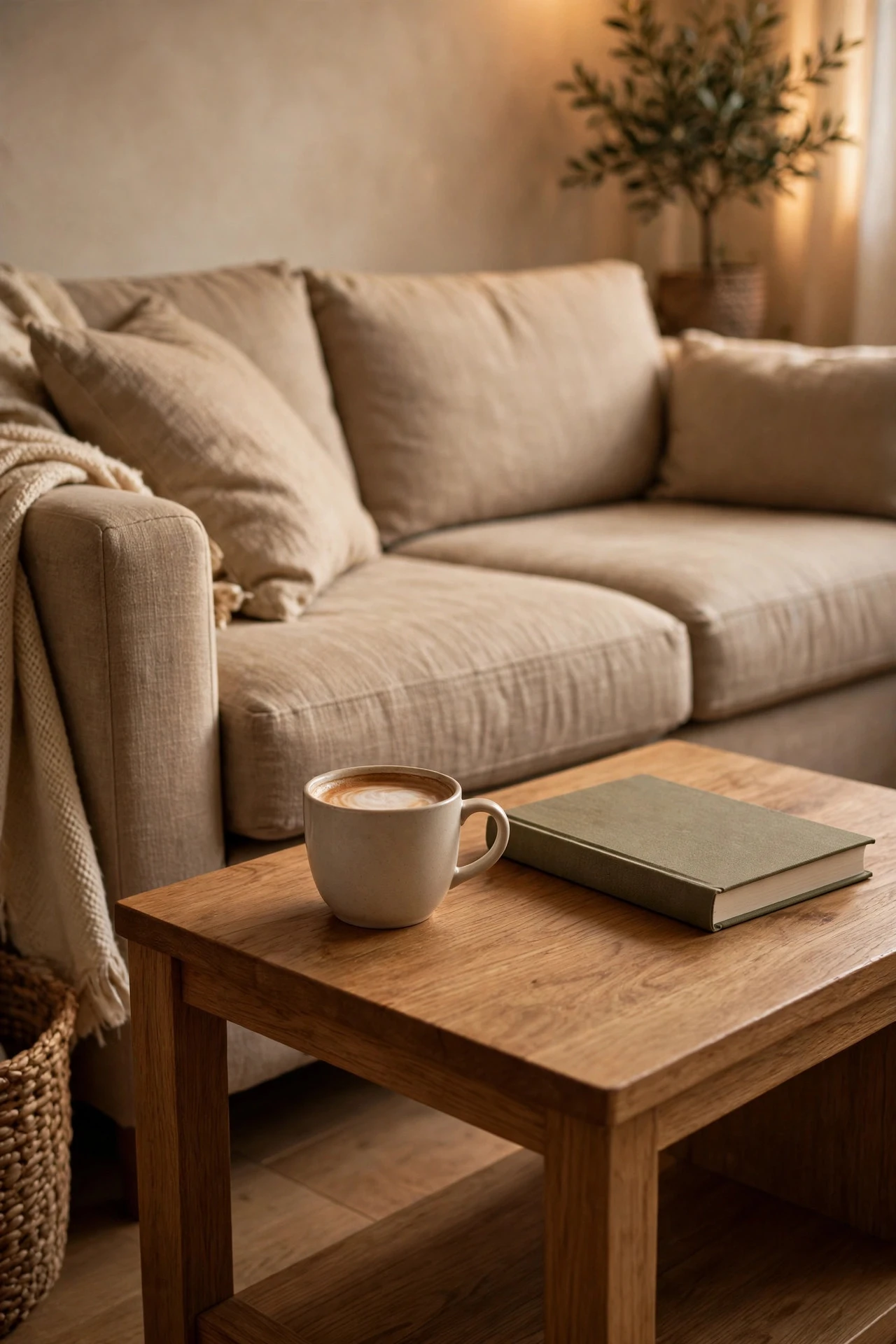
The coffee table should sit 16 to 18 inches from the sofa, because that gap is close enough to reach a cup without stretching and far enough to stand up and walk around the table comfortably. Any closer and your knees hit the table; any further and you have to lean forward to put a mug down.
Size the table to the sofa: it should be about two-thirds the sofa's length and the same height as the seat cushions, or one to two inches lower, so it never towers over the sitters. A rectangular table suits a three-seater; a round table suits a sectional or curved sofa, with no sharp corners to bump into. Leave at least 30 inches between the coffee table and the television or media unit for a clear walkway. Avoid a glass top with toddlers, and a table so low it forces everyone to stoop.
Practical Tips
Buy the sofa after you have measured the room, the doorways and the rug, not before — and sit on it for at least ten minutes in the store, in the position you actually use at home. Bring fabric swatches home and check them in morning and evening light, because showroom lighting flatters everything. Order the rug first if you can, since it is easier to match a sofa to a rug you love than to find a rug that fits a sofa you already bought.
Protect your investment once it arrives: rotate and flip the seat cushions monthly, vacuum weekly, and blot spills immediately rather than scrubbing. Keep the sofa out of direct sunlight, which fades fabric and dries leather, and use throws on the spots that get the most wear. A well-chosen sofa should last ten to fifteen years — the care you give it in the first year decides whether it does.
Final Thoughts
Choosing a living room sofa is not really about the sofa at all — it is about how you live. Measure first, test the seat depth with your own body, spend on the frame and fill you cannot see, and let the colour and cushions be the easy part. A sofa that fits your room and your life will quietly make every evening better, for a decade.
You may also like: our living room curtain ideas show how to dress the windows behind your sofa so the whole seating area feels finished.
Frequently Asked Questions
How do I measure for a new living room sofa?
Measure the wall the sofa will sit against, then tape its full footprint on the floor with painter's tape and leave 30 to 36 inches of clear walkway around it. Measure every doorway, hallway corner and stair turn on the delivery route too — either the sofa's depth or its height must be smaller than the narrowest doorway.
What is the best seat depth for a sofa?
A seat depth of 22 to 24 inches suits most adults for upright sitting, keeping feet flat on the floor with the back supported. Choose 26 to 28 inches if you mainly lounge, curl up or nap, and pair it with back cushions you can pull forward. Test any sofa for ten minutes before buying.
How big should a rug be under a sofa?
An 8 by 10 foot rug suits a standard three-seater sofa, with at least 6 inches of rug extending under the front feet and 6 to 12 inches beyond the sofa on each side. A sectional needs a 9 by 12 foot rug. Measure the seating group, not the room, and avoid a rug that stops halfway under the sofa.
What sofa fabric is best with kids and pets?
Performance fabric is the best choice with kids and pets, because its stain-resistant weave repels liquids and survives scrubbing without marking. Leather is the next best option — it wipes clean and ages well, though it can scratch. Avoid untreated linen, light velvet and boucle in busy family rooms.
How far should a coffee table be from the sofa?
Keep a 16 to 18 inch gap between the sofa and the coffee table, close enough to reach a cup without stretching and far enough to stand up comfortably. The table should be about two-thirds the sofa's length and level with the seat cushions or one to two inches lower.
How long should a good sofa last?
A well-made sofa with a kiln-dried hardwood frame and high-density foam cushions should last 10 to 15 years with normal use. Cheaper frames and low-density foam often sag within three to five years. Rotate cushions monthly, vacuum weekly, treat spills at once, and keep it out of direct sunlight.