22 Living Room Lighting Ideas for a Warm, Layered Glow
Living room lighting is the difference between a room that looks finished and a room that only looks furnished. One bright ceiling light flattens everything — faces, furniture, art, and colour all sit under the same harsh glare — while layered light gives the room depth, warmth, and choice: bright for cleaning and homework, soft for conversation, and low for a film. The secret is not buying more lights, but placing the right lights at different heights, on separate controls, so the room can shift its mood in seconds.
Looking for more inspiration? Our Nest Decorz homepage gathers the latest home decor ideas, seasonal decorating guides and room-by-room styling tips in one place — start there and explore.
Below are 22 living room lighting ideas covering the three layers every comfortable room needs — ambient, task, and accent — plus fixtures, placement, colour temperature, and smart controls, each with approximate US costs and one mistake to avoid. Start with the layer your room is missing, add dimmers before you add fixtures, and keep every bulb warm, because colour temperature shapes the room's feeling more than any single fitting.
1. Layer Three Lights, Not One
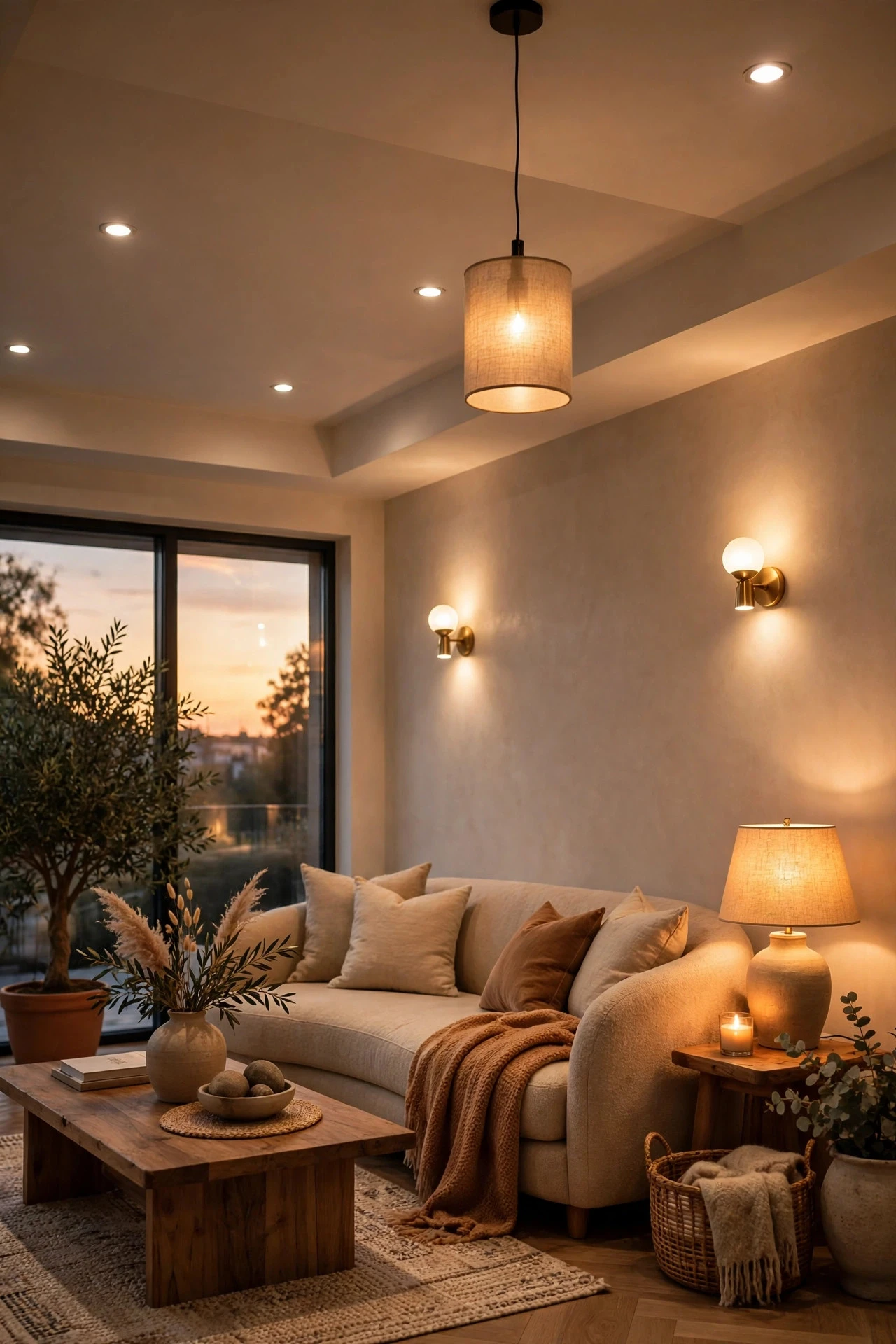
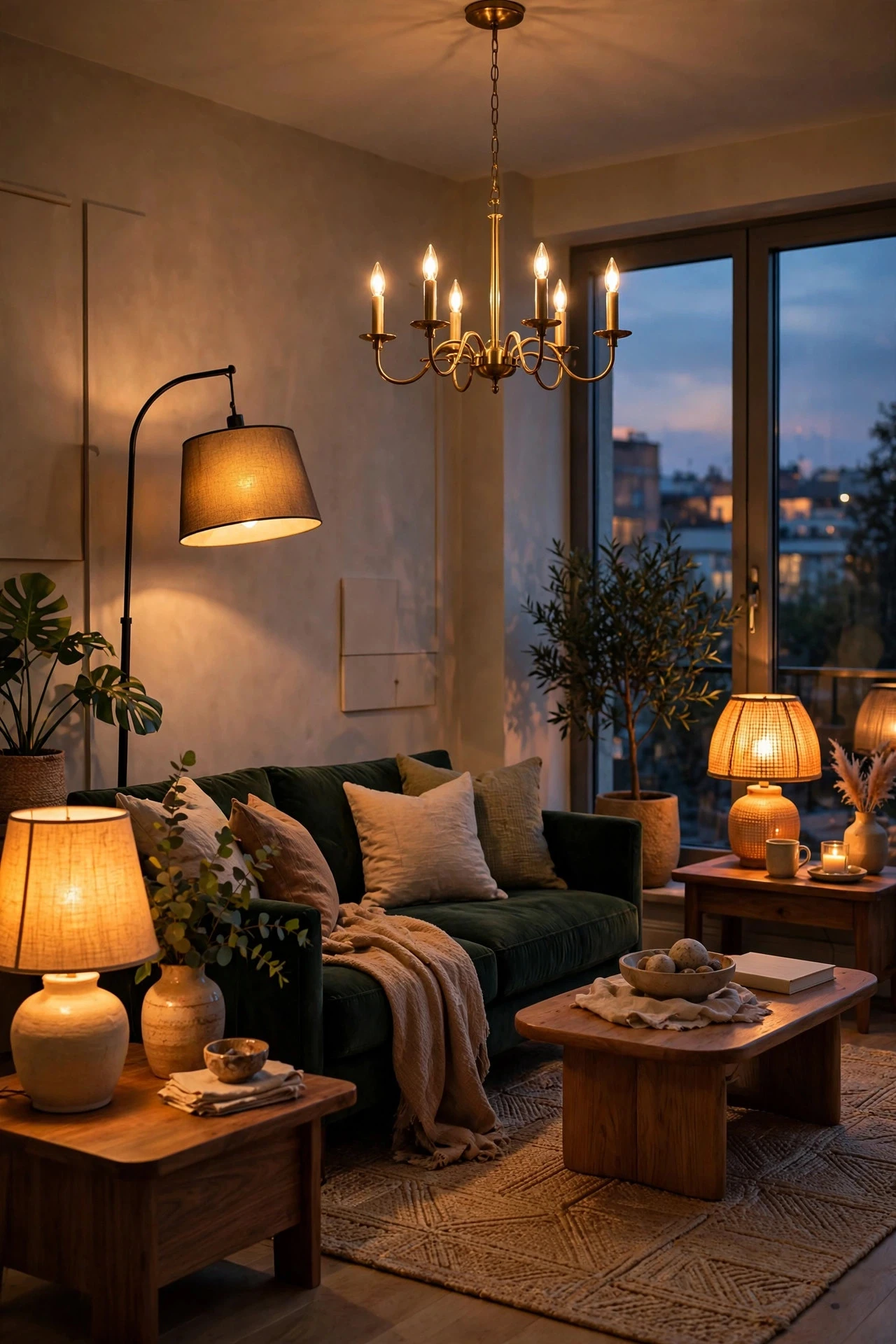
The foundation of good living room lighting is three layers used together: ambient light for general illumination, task light for reading and working, and accent light for art and architecture. A ceiling fixture or floor lamp gives ambient light, a table or floor lamp beside seating gives task light, and picture lights, sconces, or LED strips give accent light, ideally on separate switches or dimmers. The layers together cost $100 to $400 depending on what you already own. The mistake to avoid is relying on a single overhead fixture, which creates harsh shadows, flat light, and no flexibility for different times of day or activities.
2. Start With Warm Colour Temperature
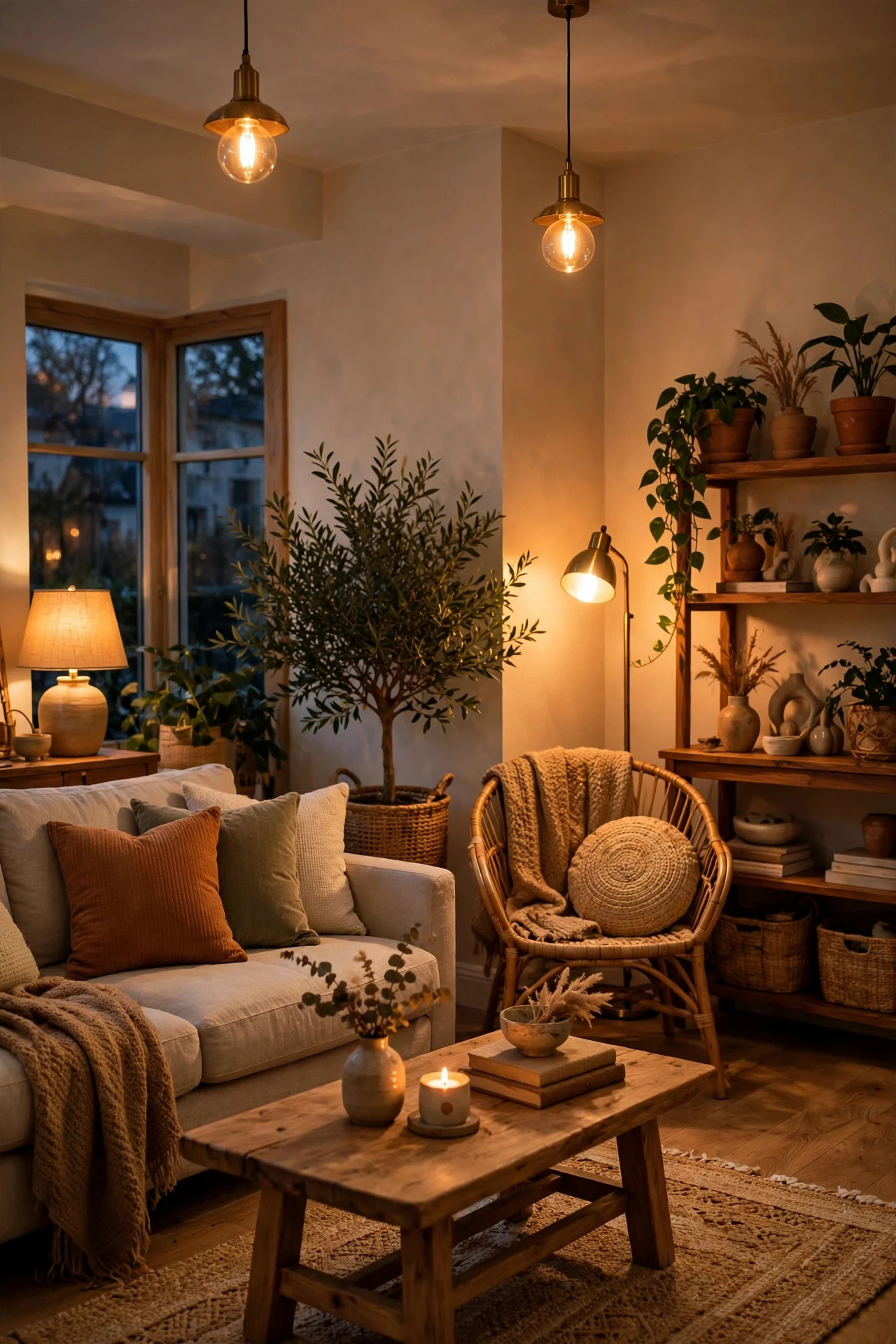
Colour temperature, measured in Kelvins, decides whether a room feels warm and relaxing or cool and clinical. For living rooms, warm bulbs at 2700K to 3000K flatter skin, wood, and textiles, and make the room feel calm in the evening, while cool daylight bulbs above 4000K suit task areas but feel harsh for relaxing. Keep every bulb in the room in the same warm range so the light feels consistent. Warm LED bulbs cost $5 to $12 each. The mistake to avoid is mixing warm and cool bulbs in one room, because the clash is visible — one lamp glows amber while another glows blue-white — and the room never feels settled.
3. Put Dimmers on Every Main Light
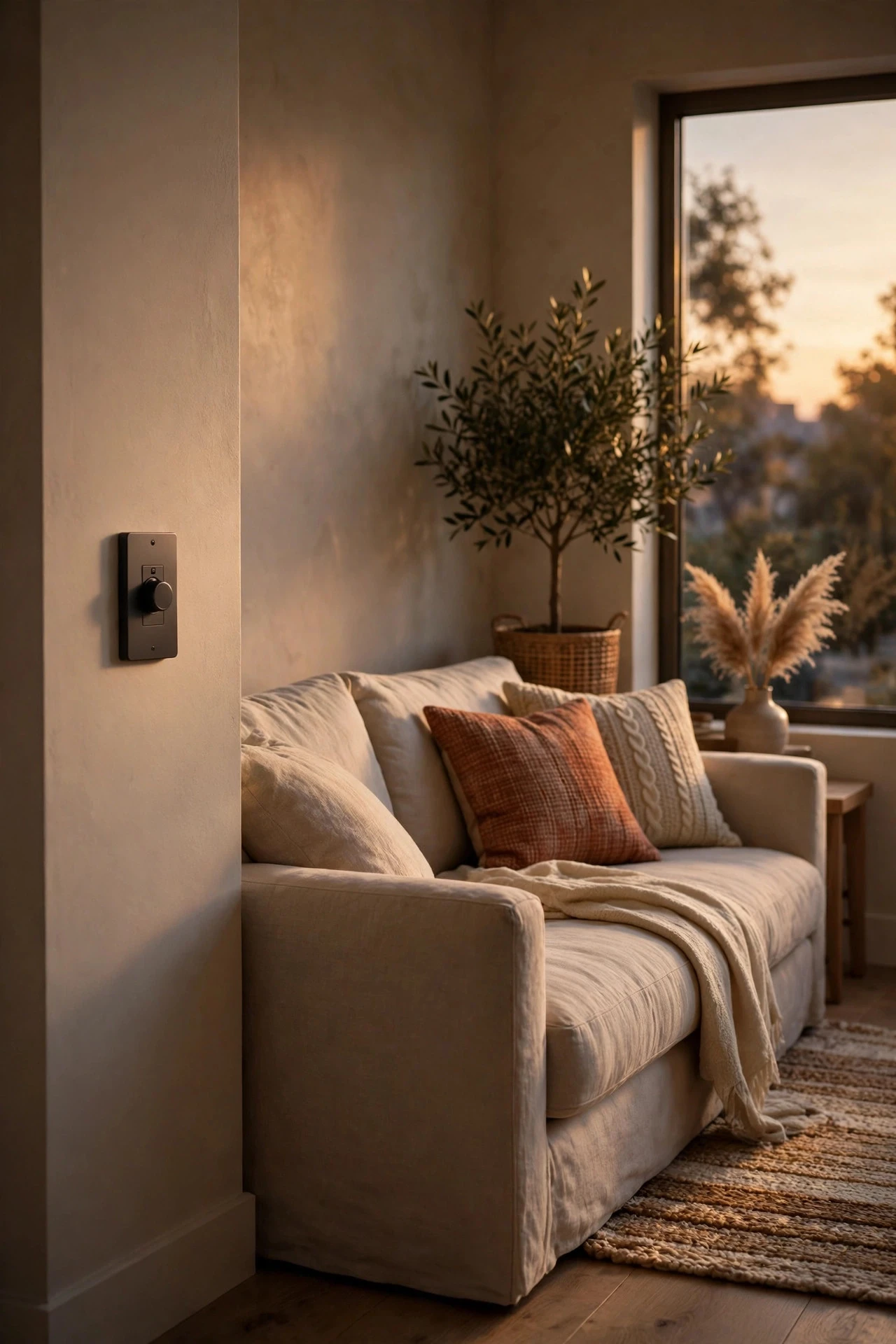
A dimmer is the cheapest lighting upgrade with the biggest effect, because it turns one fixed brightness into a whole range of moods. Fit dimmers to the main ceiling light and to any wall lights, check that the bulbs are dimmable LEDs, and use a separate dimmer for each layer so ambient, task, and accent light can be balanced independently. Dimmer switches cost $15 to $40 each, plus fitting. The mistake to avoid is fitting a dimmer with non-dimmable bulbs, which flicker, buzz, and fail early, so always check the bulb packaging for dimmable compatibility first.
4. A Statement Chandelier as the Centrepiece
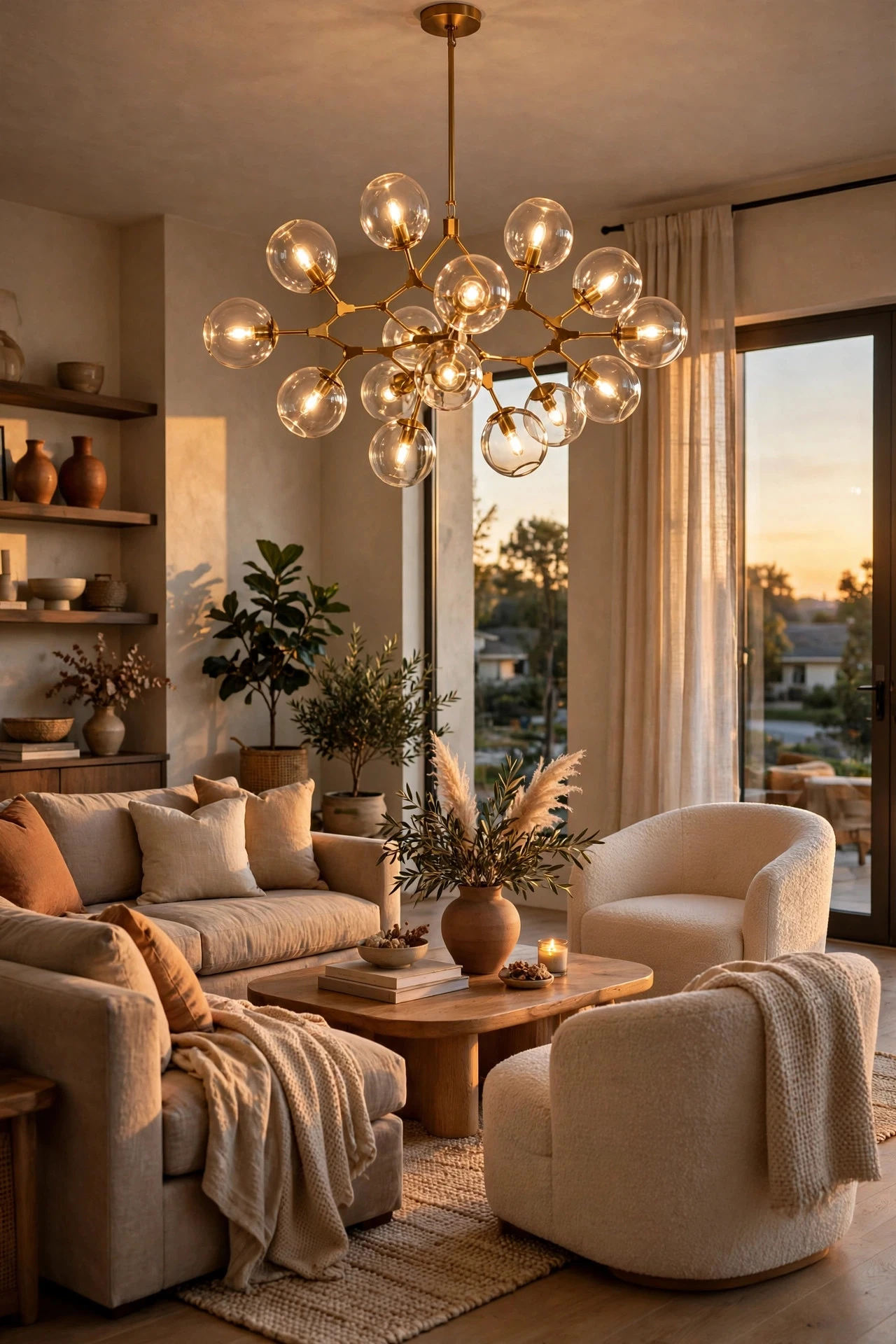
A chandelier gives a living room a focal point and a generous spread of ambient light, and it does not need a grand room to work — a smaller, sculptural chandelier suits a standard ceiling just as well as a large crystal one suits a tall one. Hang it so the lowest point sits at least seven feet above the floor in a walkway, centre it over the main seating group or coffee table, and keep the bulbs warm and dimmable. Chandeliers cost $120 to $500. The mistake to avoid is hanging a chandelier so low that tall guests duck under it, because a beautiful fixture becomes an obstacle the moment it interrupts how people move through the room.
5. A Cluster of Low Pendants Over the Coffee Table
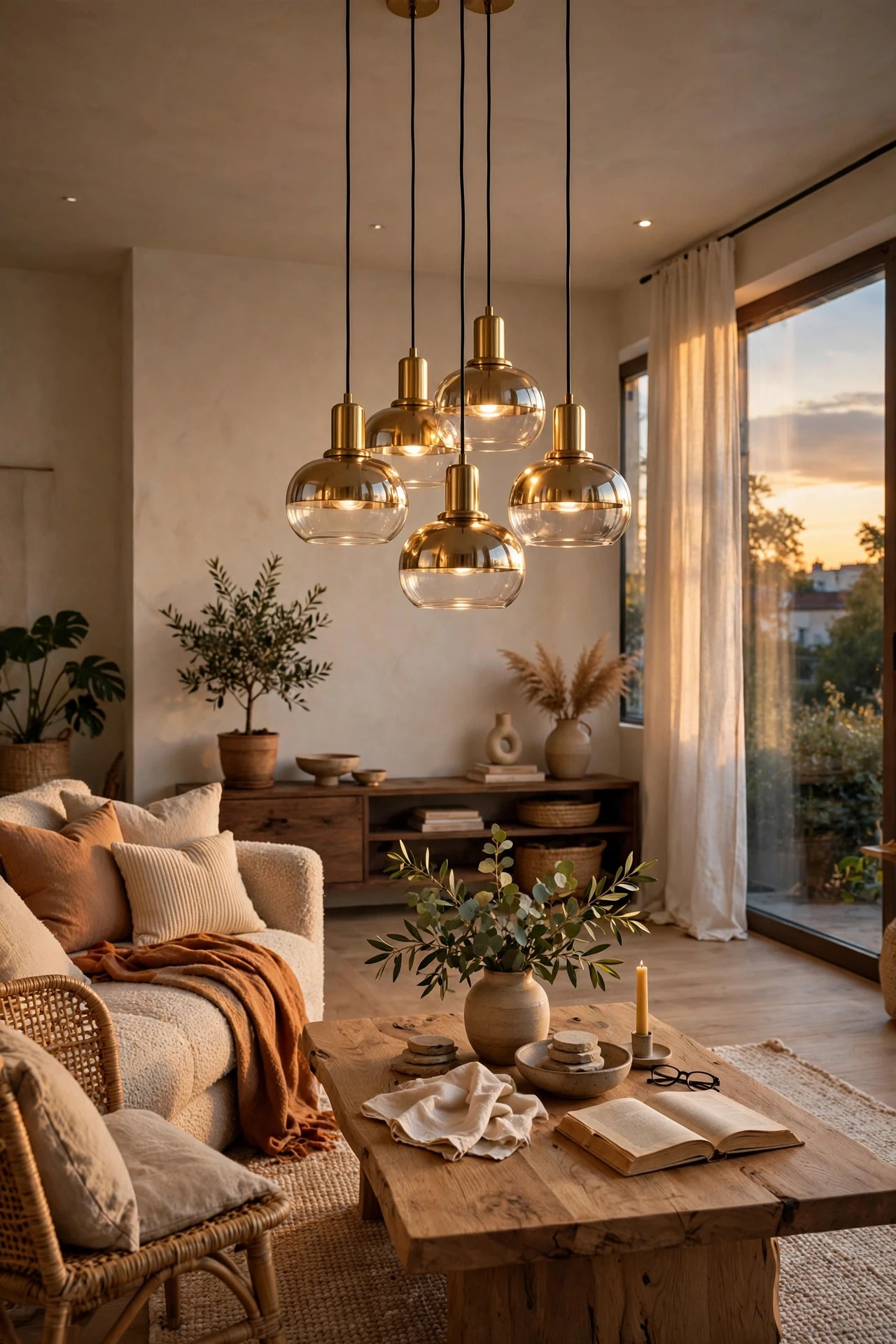
A cluster of two or three small pendants hung low over a coffee table or a reading nook defines a zone within an open-plan room and gives a pool of warm light exactly where people gather. Hang them at staggered heights for a relaxed look, keep the shades above eye level when seated, and use warm bulbs so the light feels intimate rather than interrogating. Pendant clusters cost $80 to $250. For a room refresh that pairs with new lighting, these refresh my living room ideas show how small changes transform the whole space. The mistake to avoid is hanging pendants over a walkway instead of over furniture, because people walk into them, and the zone the pendants were meant to define is lost.
6. Recessed Lights Done Right
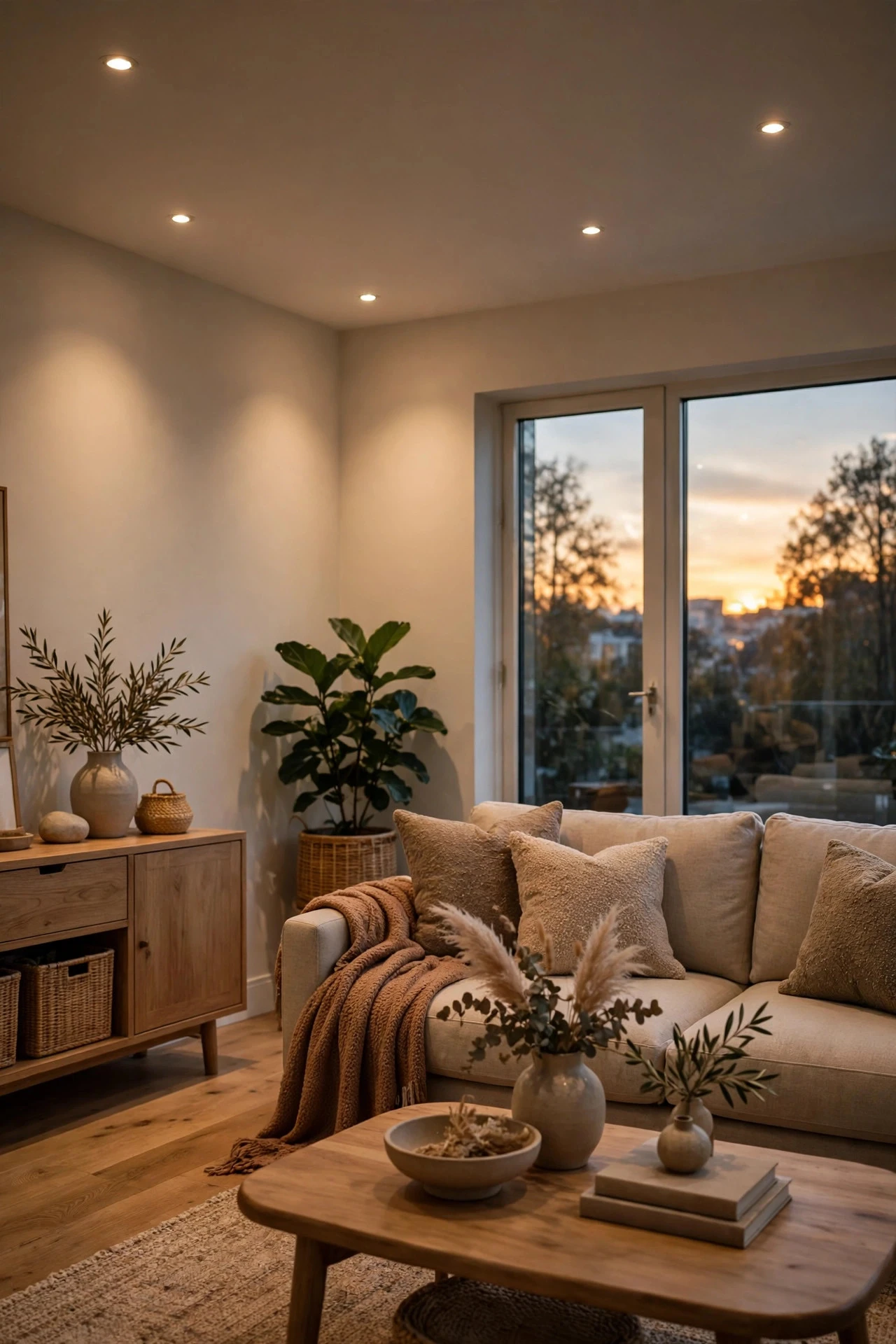
Recessed ceiling lights give even, discreet ambient light and suit low ceilings where a pendant would crowd the room, but they need planning to avoid a flat, airport-terminal effect. Space them evenly, aim some at walls and art rather than straight down, and put them on a dimmer so the room can go from bright to soft. Recessed lights cost $50 to $120 each fitted. The mistake to avoid is fitting a grid of recessed lights with no other layers, because the room ends up evenly lit and completely characterless, with no pools of warmth and no shadows to give it depth.
7. An Arc Floor Lamp Over the Sofa
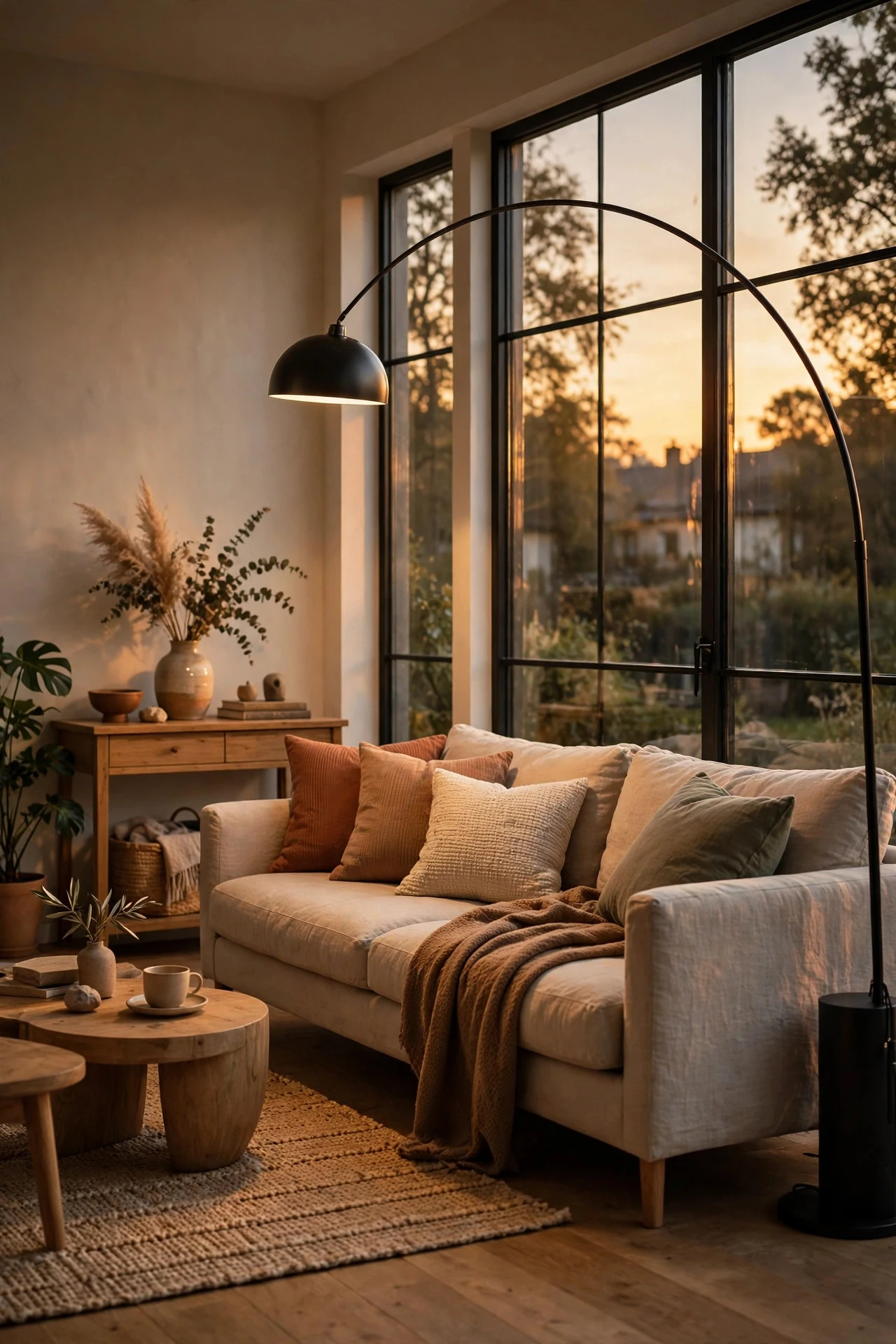
An arc floor lamp is the easiest way to add overhead light without wiring: its curved arm reaches over the sofa, its shade hangs at reading height, and its heavy base keeps it stable. It suits renters, rooms with no ceiling fixture, and seating groups that sit away from the walls, and a dimmable arc lamp doubles as both ambient and task light. Arc lamps cost $80 to $250. The mistake to avoid is choosing an arc lamp with a shade that hangs at head height for standing adults, because it becomes a hazard every time someone walks behind the sofa.
8. A Reading Floor Lamp Beside Every Armchair
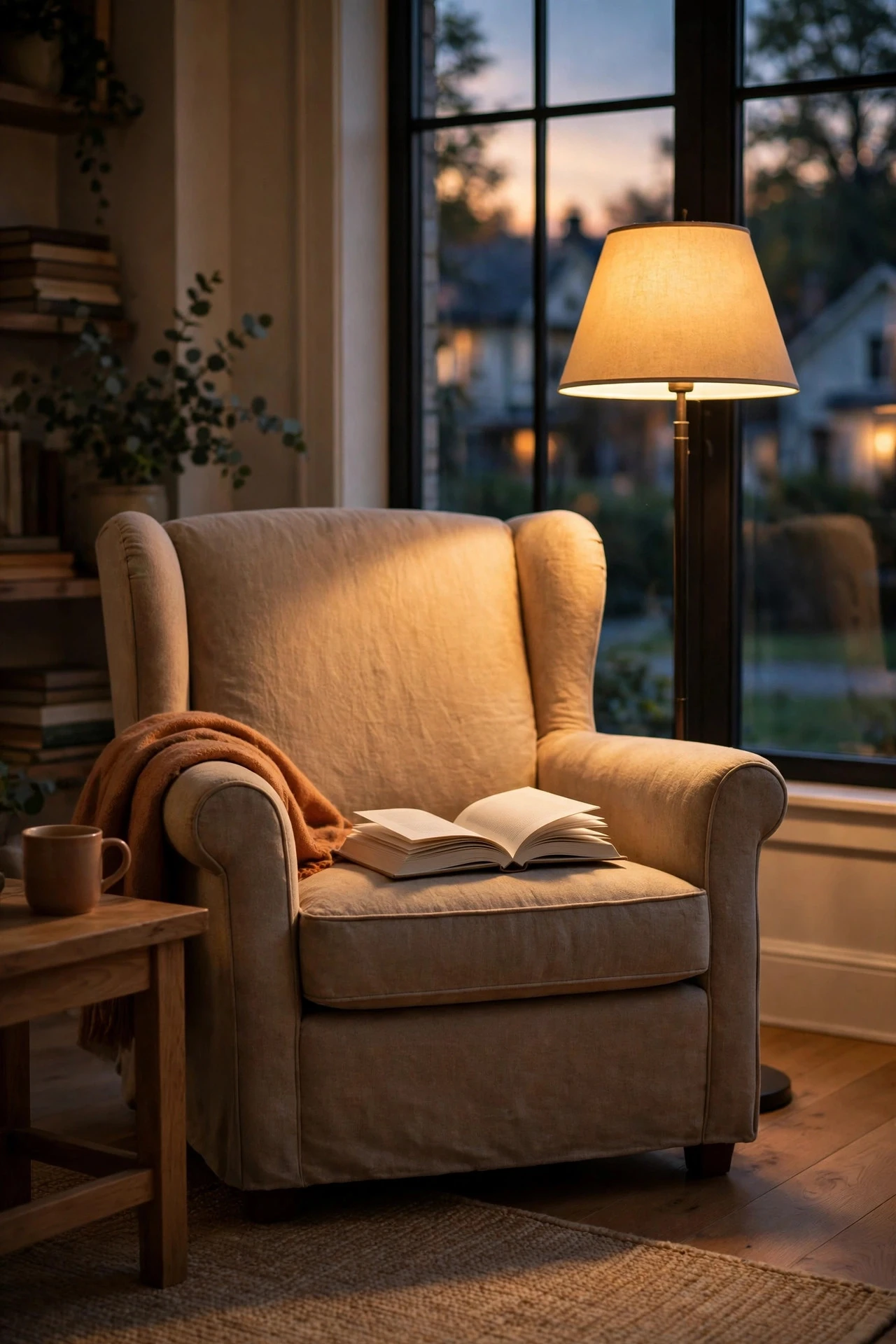
Every reading chair deserves its own light, and a dedicated floor lamp beside an armchair gives focused, comfortable light without lighting the whole room. Choose an adjustable arm or a swing-arm lamp so the light can be aimed at the book, keep the shade at shoulder height when seated, and use a warm bulb of 400 to 800 lumens for comfortable reading. Reading floor lamps cost $50 to $150. The mistake to avoid is placing the lamp behind the chair, where the reader's own shadow falls across the page, instead of beside or slightly in front of the shoulder.
9. Table Lamps in Pairs for Balance
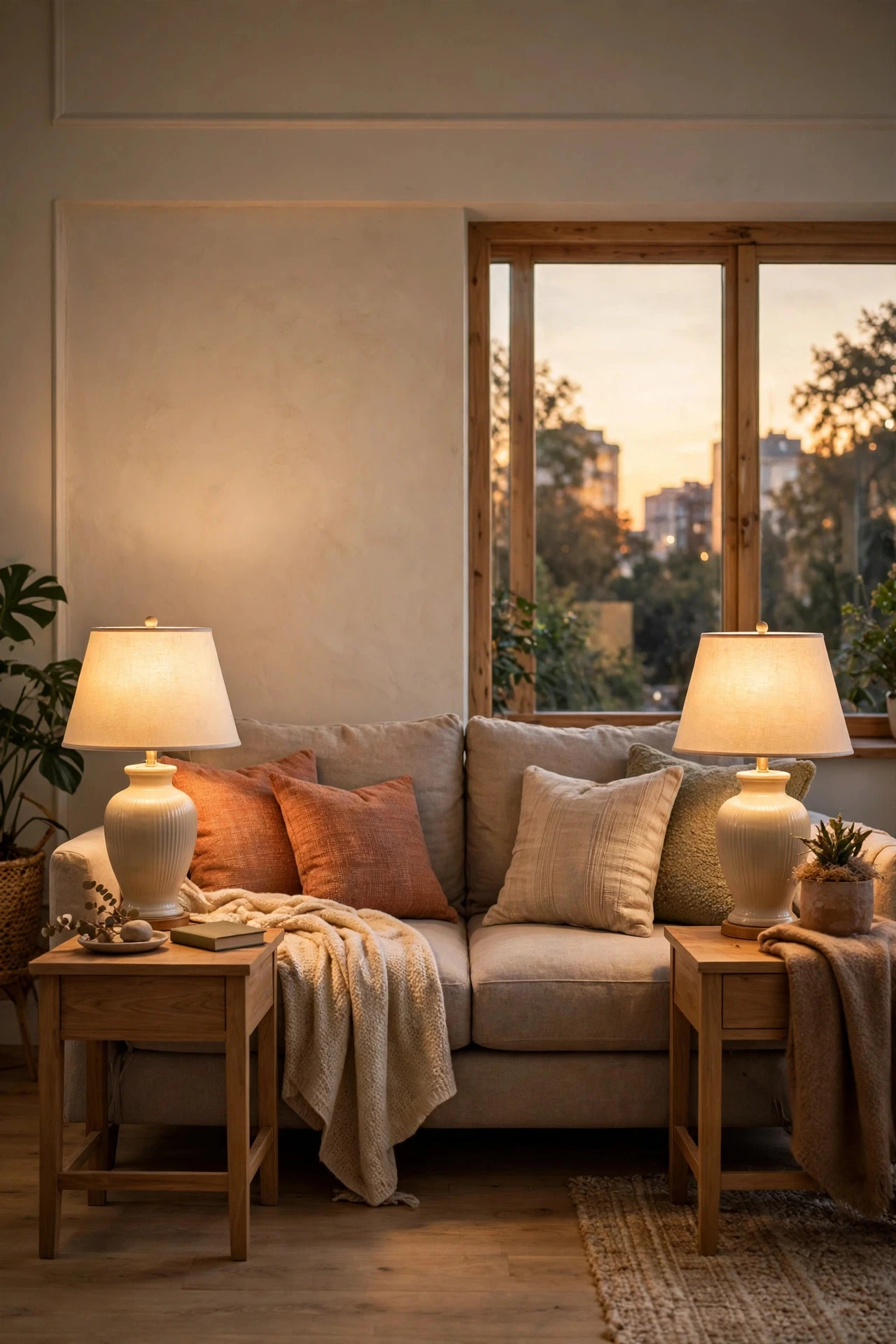
A pair of matching table lamps on a console, side tables, or either end of a sofa gives a living room symmetry, balance, and two pools of warm light at exactly the height where conversation happens. Matching lamps tie the room together, while lamps of different heights or styles can look accidental unless they share a colour or material. A pair of table lamps costs $60 to $200. The mistake to avoid is choosing table lamps so tall that the shade sits above eye level when seated, because the bare bulb glares directly into the eyes of everyone on the sofa.
10. Wall Sconces for Light Without Floor Space
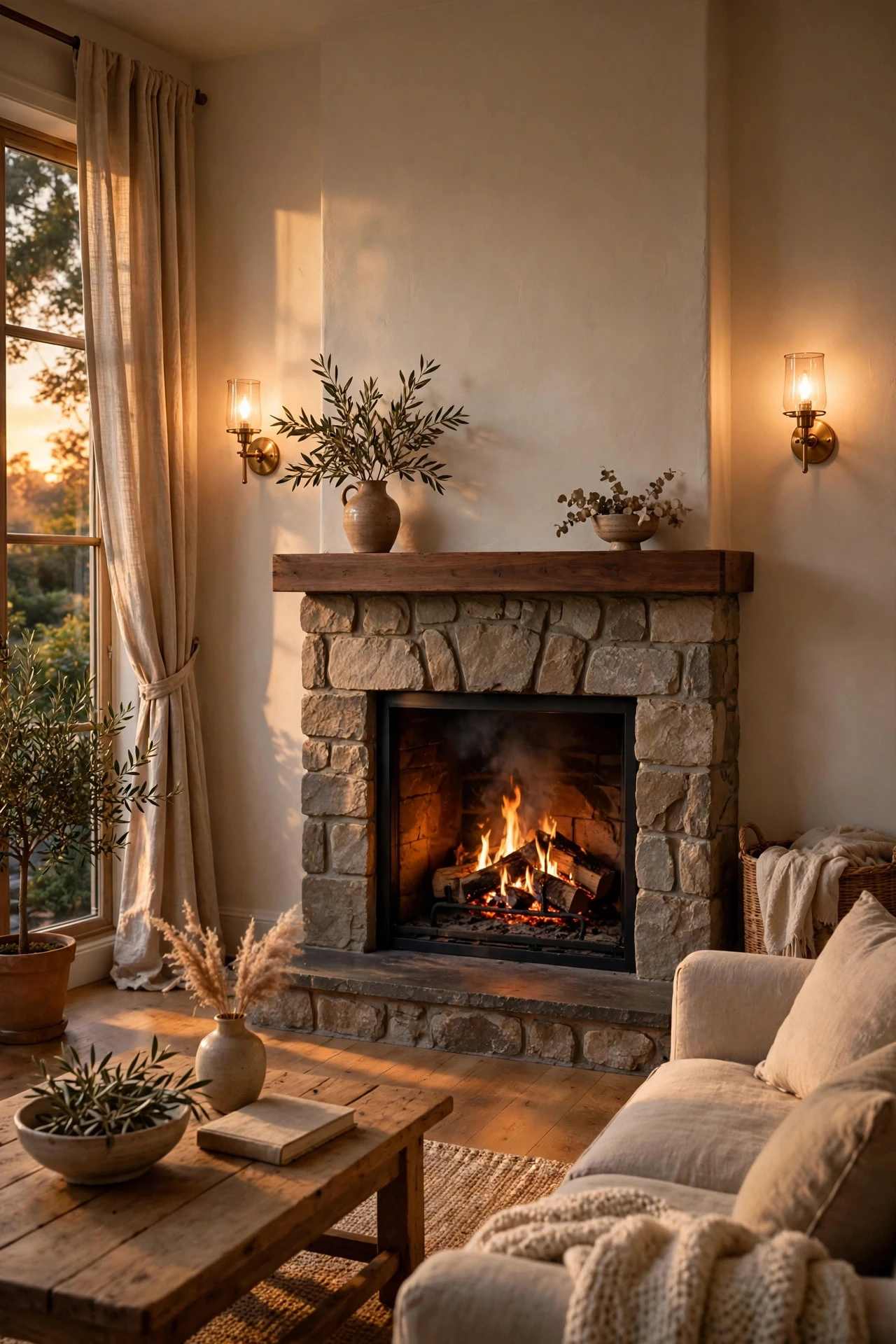
Wall sconces give light and style without using a single inch of floor or table space, which makes them ideal for small living rooms, narrow walls, and rooms where every surface is already used. Flanking a fireplace, a sofa, or a gallery wall with sconces creates rhythm and warmth, and plug-in or rechargeable sconces need no wiring at all. Sconces cost $40 to $120 each, with rechargeable versions at the lower end. The mistake to avoid is fitting sconces so high that they wash the ceiling and leave the seating area dark, so mount them at eye level or just above, where the light falls on people and furniture.
11. Picture Lights That Make Art Glow
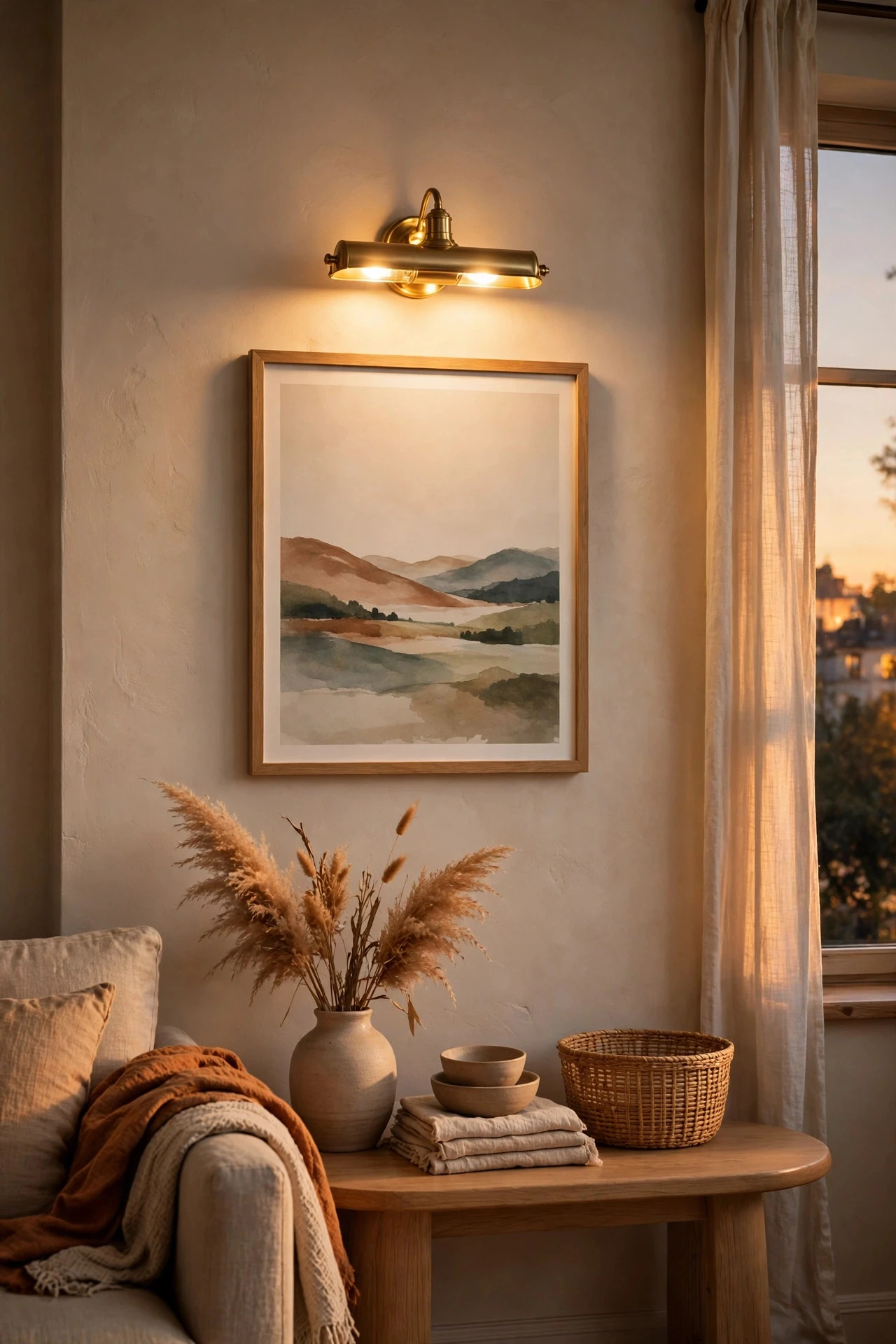
A picture light is a small, focused fitting that washes a painting, photograph, or gallery wall with warm light and turns art into a focal point after dark. Battery and rechargeable picture lights need no wiring, clip or mount above the frame, and give a gallery feel for very little money. Picture lights cost $30 to $90 each. The mistake to avoid is using a cool-white picture light over warm-toned art, because the colour clash makes the artwork look washed out and the light feels like a display case rather than a home.
12. LED Strips Behind Shelves and Cabinets
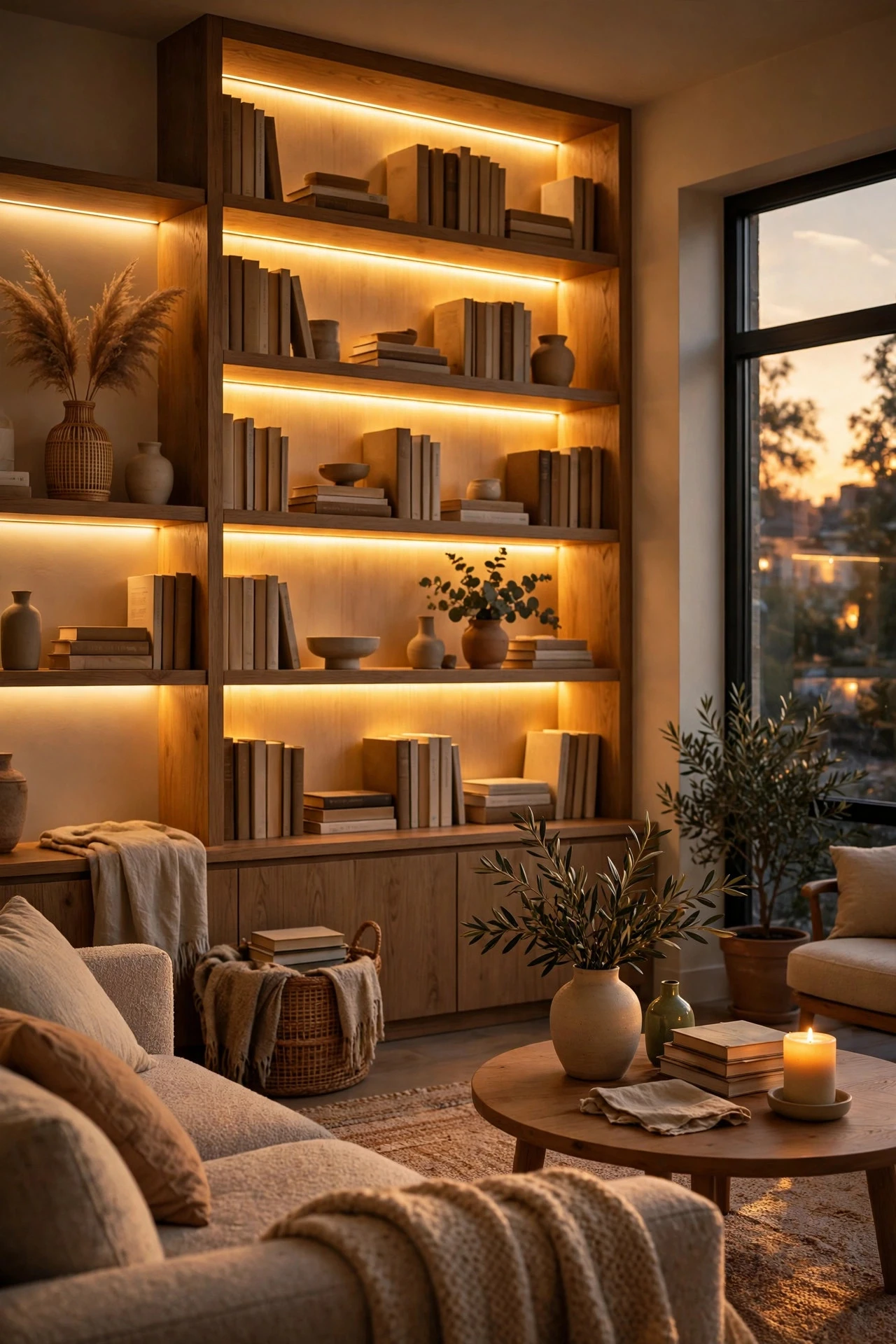
LED strips tucked behind a bookcase, under a floating shelf, or along the back of a media unit give a soft, indirect glow that makes the room feel larger and more finished. The light washes the wall, highlights objects, and adds depth without a visible fixture, and warm, dimmable strips can be cut to length and controlled by remote or app. LED strips cost $15 to $40 per run. For a calm, understated room where hidden light does the work, these quiet luxury home decor ideas show how restraint and warm light create elegance. The mistake to avoid is leaving the strip itself visible, because a bare line of dots looks unfinished and cheap, while the same strip hidden behind a lip or a shelf edge looks polished and intentional.
13. Bias Lighting Behind the Television
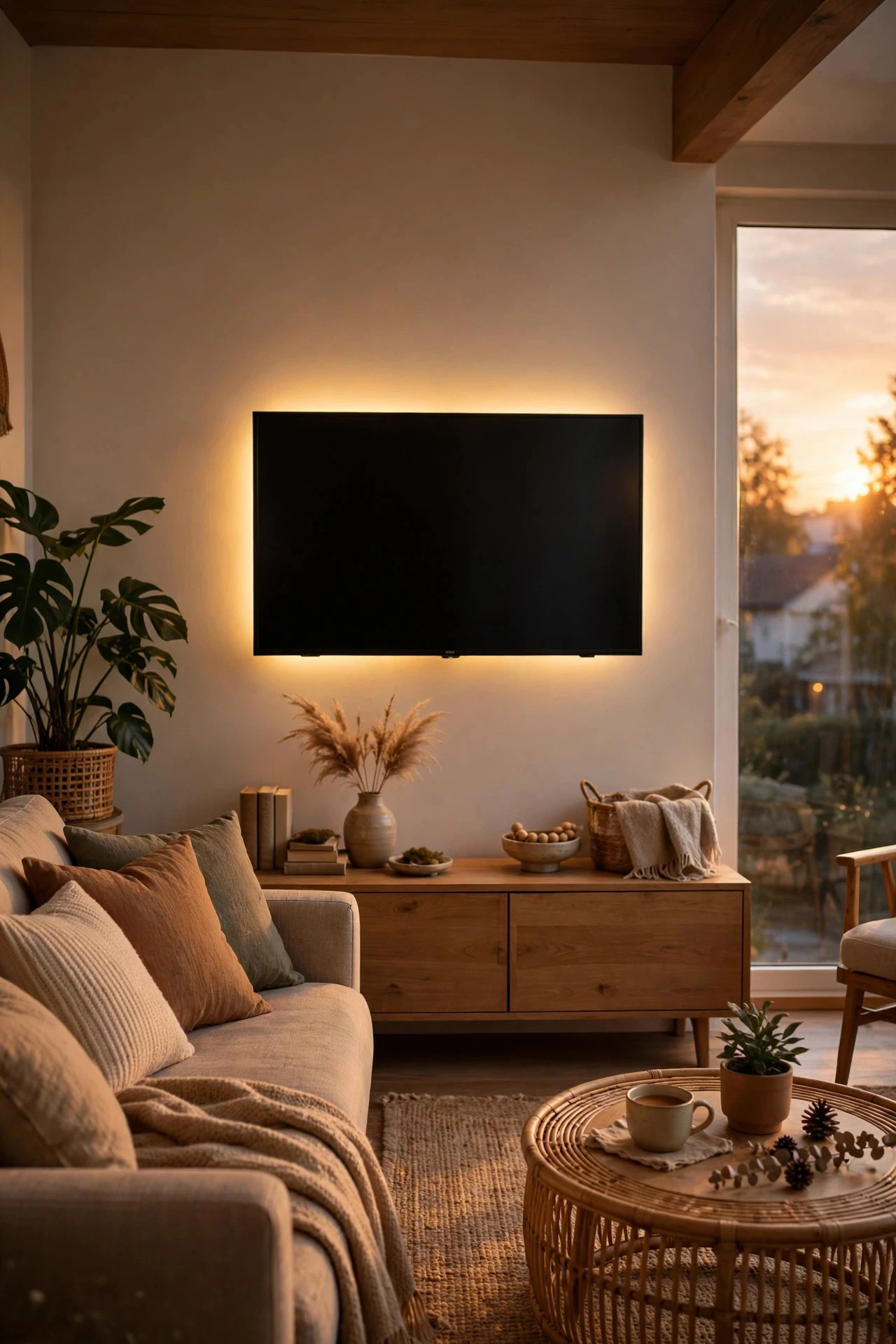
A soft strip of warm light behind the television — bias lighting — reduces eye strain, softens the contrast between a bright screen and a dark room, and makes film nights feel cinematic. Stick a warm LED strip to the back of the TV, keep the brightness low, and switch it on with the TV so the wall glows gently while the screen stays the focus. Bias lighting strips cost $15 to $35. The mistake to avoid is using bright, coloured bias lighting that distracts from the screen and reflects in the glass, when a low, warm glow is what actually rests the eyes.
14. A Sculptural Lamp as Functional Art
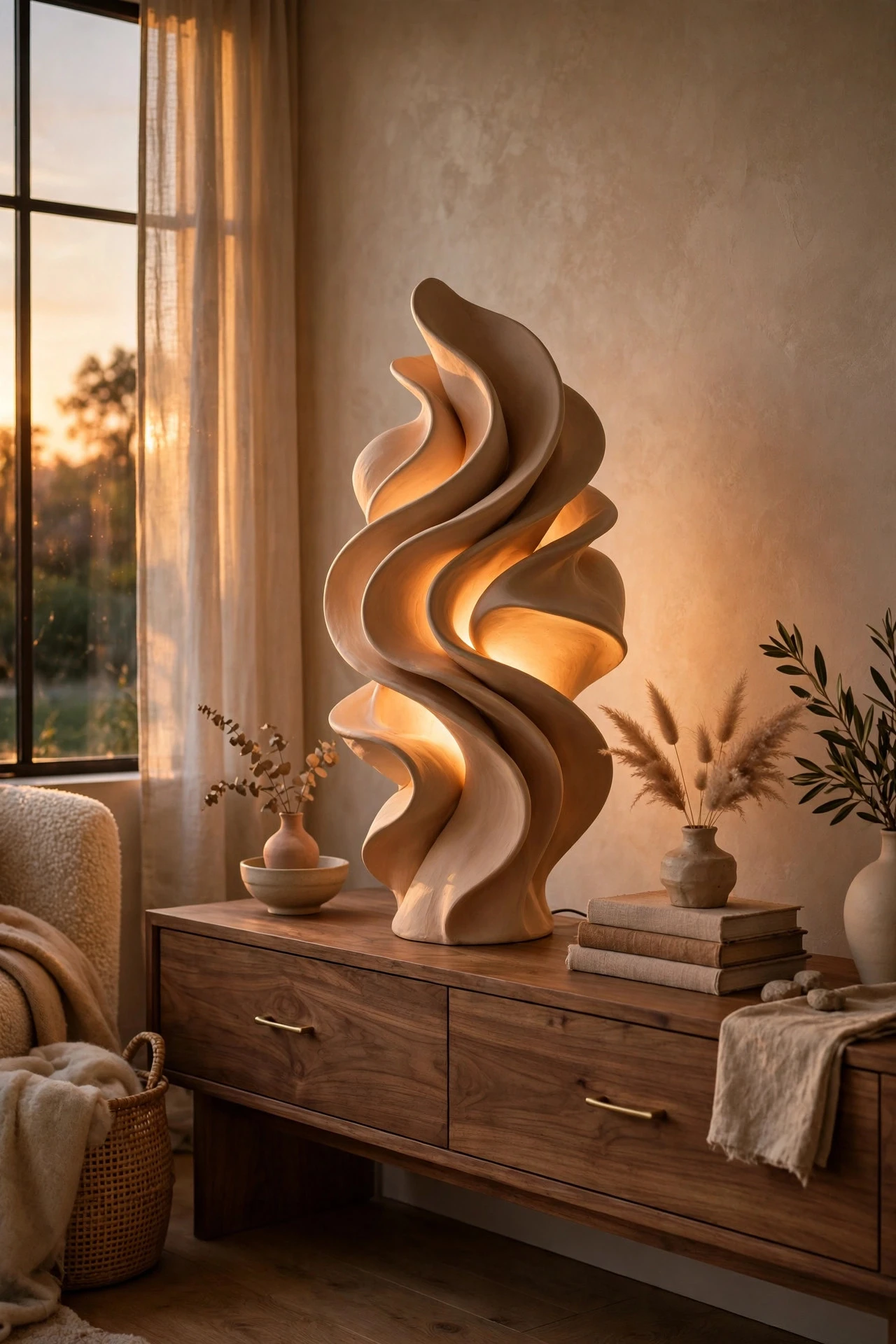
A sculptural lamp — a lamp whose shape is interesting even when it is switched off — lets lighting double as decoration, which suits modern and eclectic rooms where a plain lamp would disappear. Choose a lamp with a strong silhouette, a textured base, or an unusual shade, place it where it can be seen from the doorway, and keep the bulb warm so the sculpture glows rather than glares. Sculptural lamps cost $60 to $200. The mistake to avoid is choosing a sculptural lamp that gives almost no usable light, because a beautiful object that leaves its corner dark is a sculpture, not a lamp, and the room still needs a working light beside it.
15. Candles and Flameless Candles for the Lowest Layer
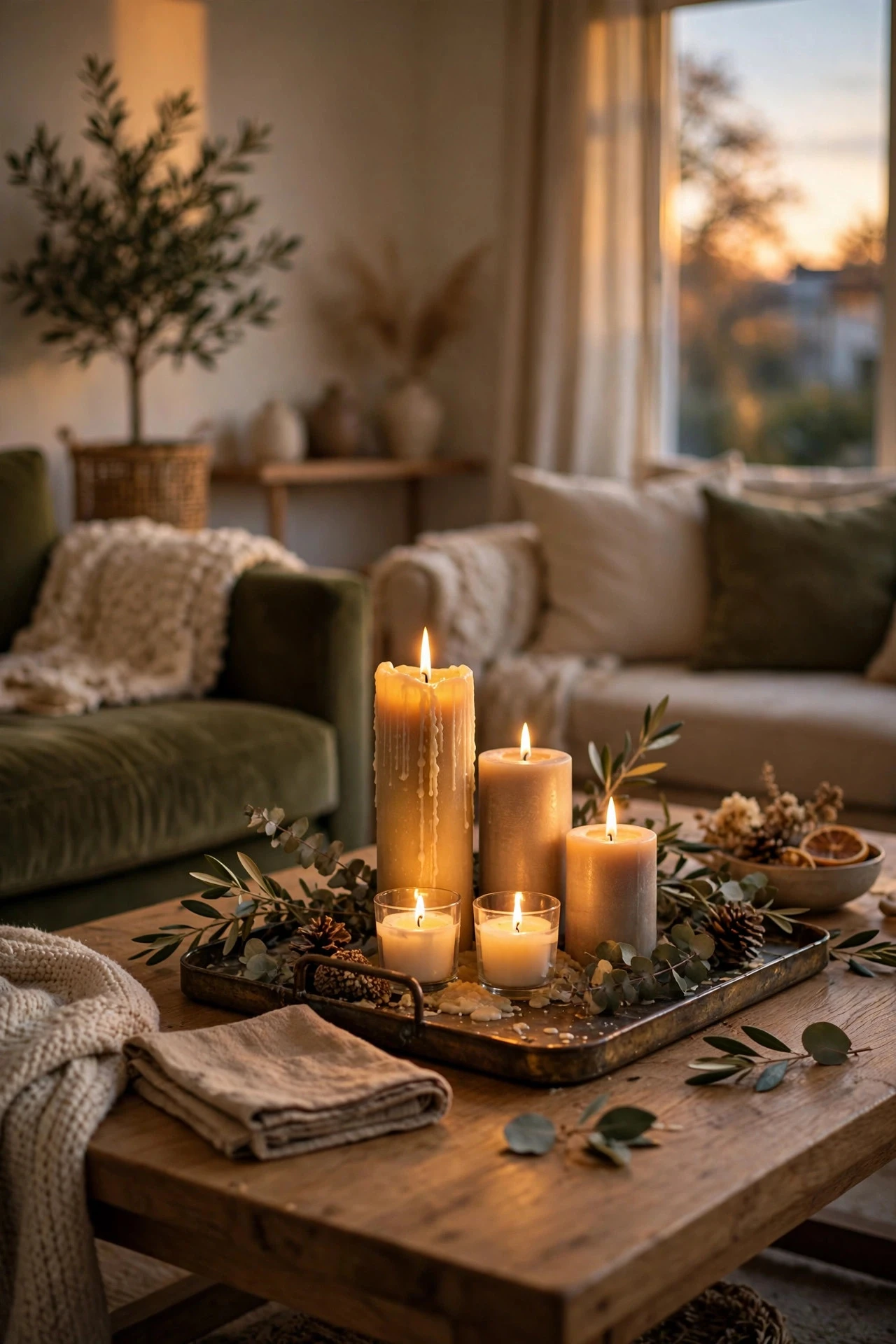
Candles give the lowest, warmest layer of living room light, and flameless LED candles give the same glow without flame, smoke, or risk around children and pets. Group candles of different heights on a tray, place them where their glow reflects in glass or a mirror, and use them as the final layer after the electric lights are dimmed. Real and flameless candles cost $10 to $40 per group. The mistake to avoid is leaving real candles burning unattended or beside curtains and soft furnishings, because the risk is real and the glow is not worth it when flameless candles look convincingly warm.
16. Zone an Open-Plan Room With Light
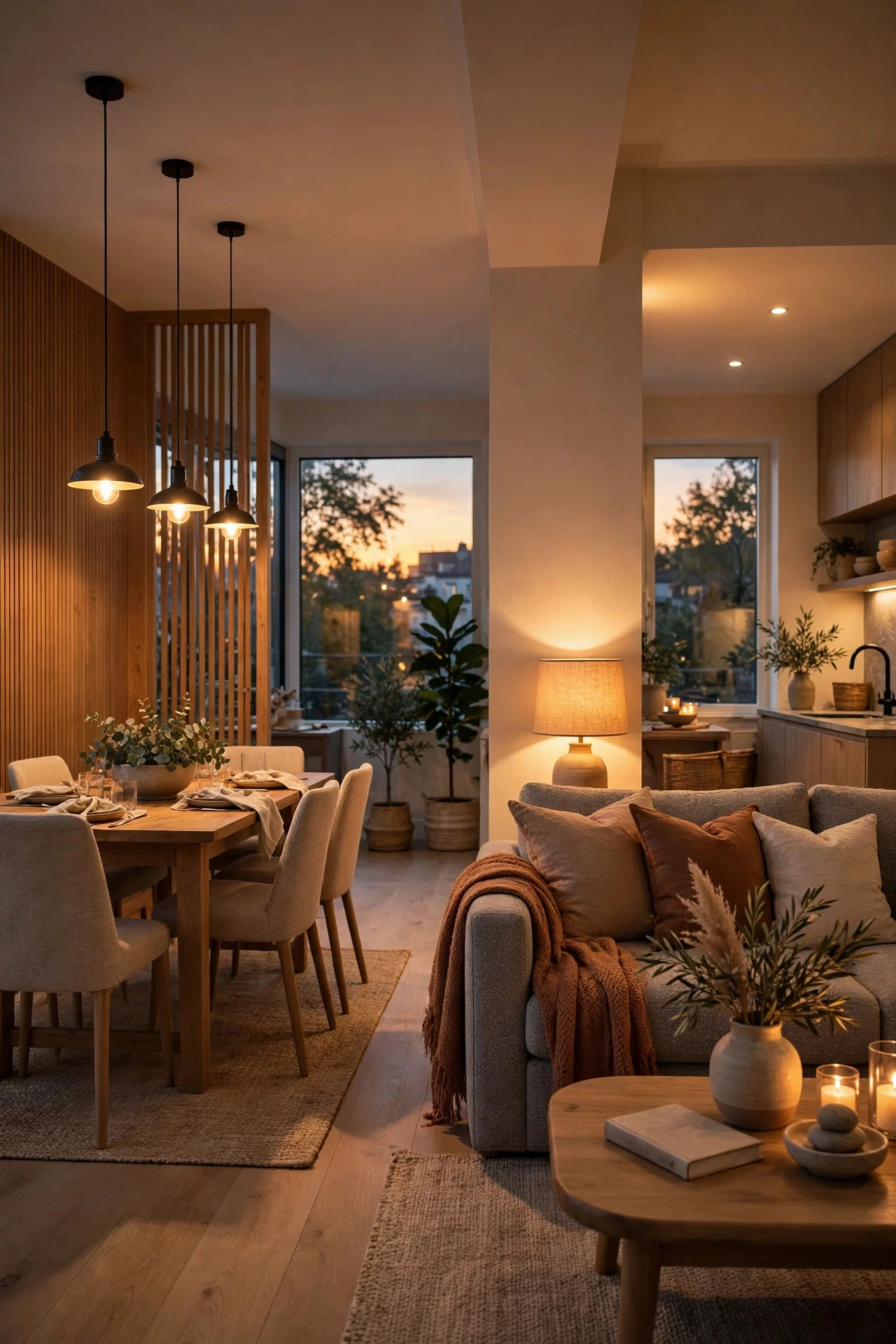
In an open-plan room, light can draw the boundaries that walls used to provide: a pendant over the dining table, a floor lamp by the reading chair, and a picture light over the sofa art each mark a different zone. Keep the zones on separate controls so the dining area can be bright while the sofa area stays low, and repeat one warm colour temperature across all zones so the room still feels like one space. Zoning with existing lights costs nothing; new zone lights cost $50 to $200 each. The mistake to avoid is lighting the whole open-plan room to one uniform brightness, because the room loses its sense of place and feels like a single, characterless hall.
17. Light the Corners to Make the Room Feel Larger
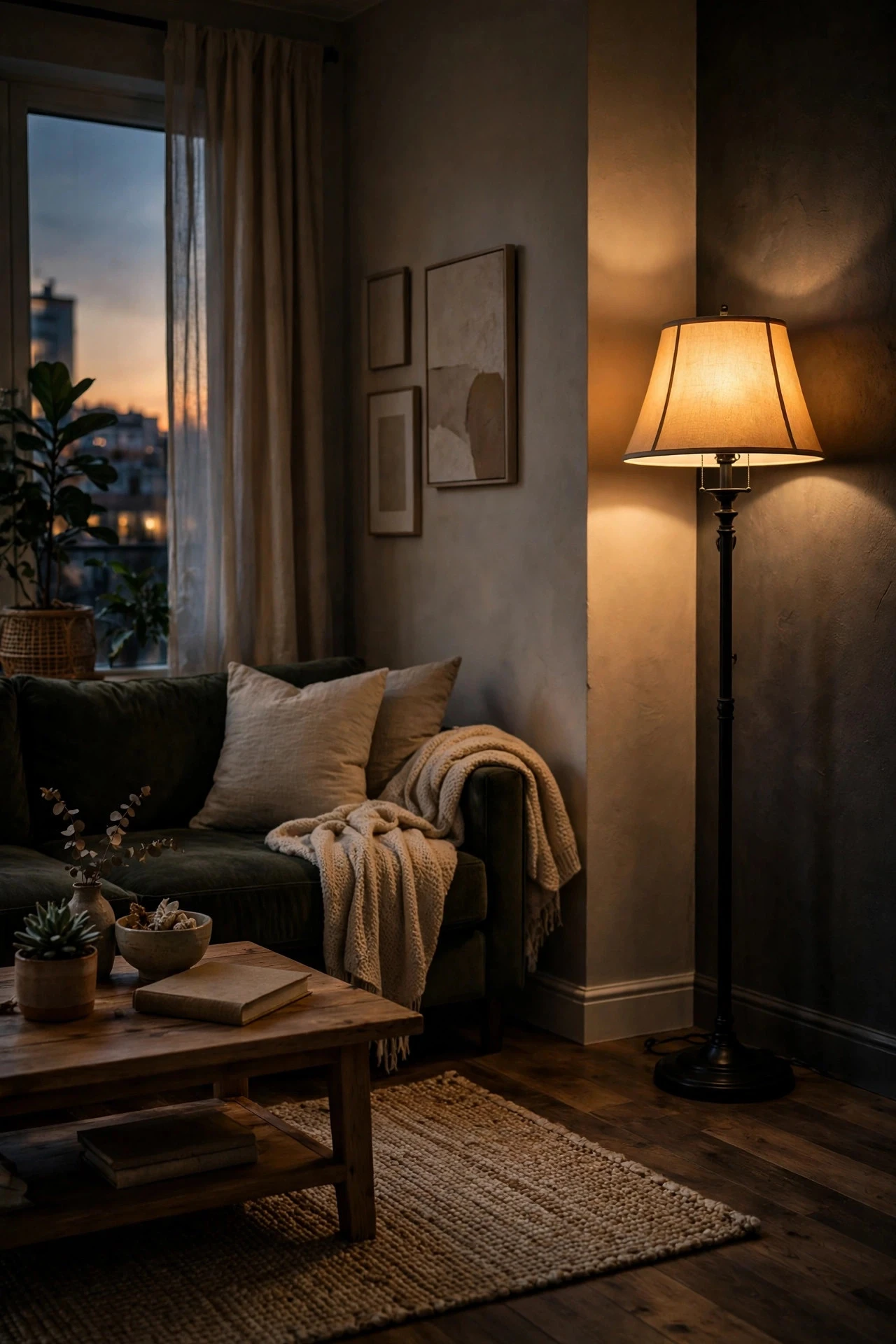
Dark corners make a room feel smaller, because the eye reads the room as ending where the light stops. A floor lamp, a small table lamp, or an uplight in each dark corner pushes the perceived walls outward and makes the whole room feel larger and more welcoming, especially in the evening. Corner lights cost $30 to $100 each. The mistake to avoid is leaving the corners dark while over-lighting the centre, because the bright centre and black edges make the room feel like a stage set rather than a place to sit.
18. Smart Bulbs and Scenes for Every Mood
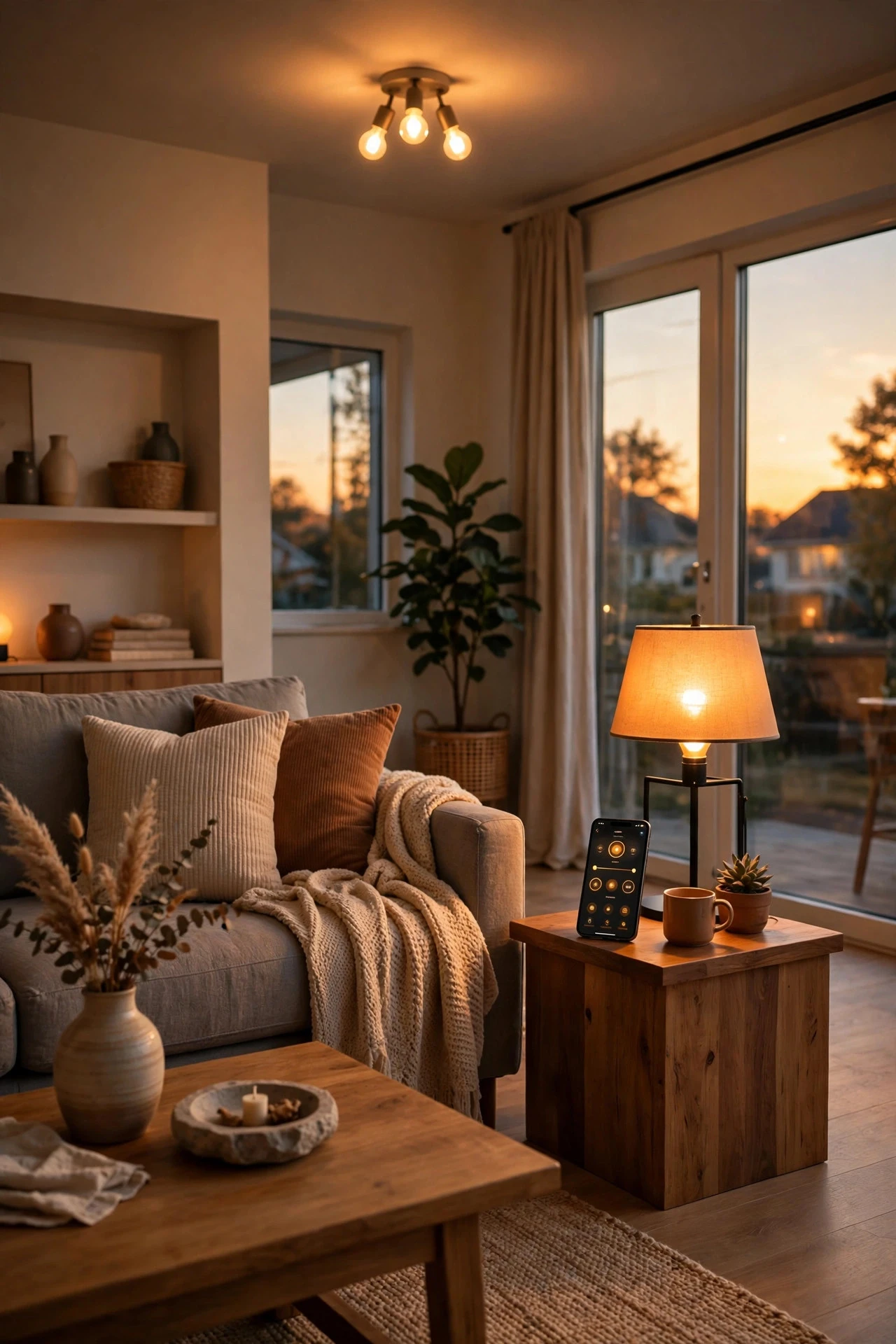
Smart bulbs let one room hold several lighting scenes — bright morning, relaxed evening, film night, reading — switched from a phone, a voice assistant, or a schedule, without rewiring anything. Set scenes by layer, keep the colour temperature warm in every scene, and use a physical switch or remote as well, so guests and family members are not locked out by an app. Smart bulbs cost $10 to $25 each. The mistake to avoid is automating every bulb and removing the ordinary switch, because the first time the Wi-Fi fails, the room is dark and nobody can turn the lights on.
19. Natural Light First: Sheers, Mirrors and Placement
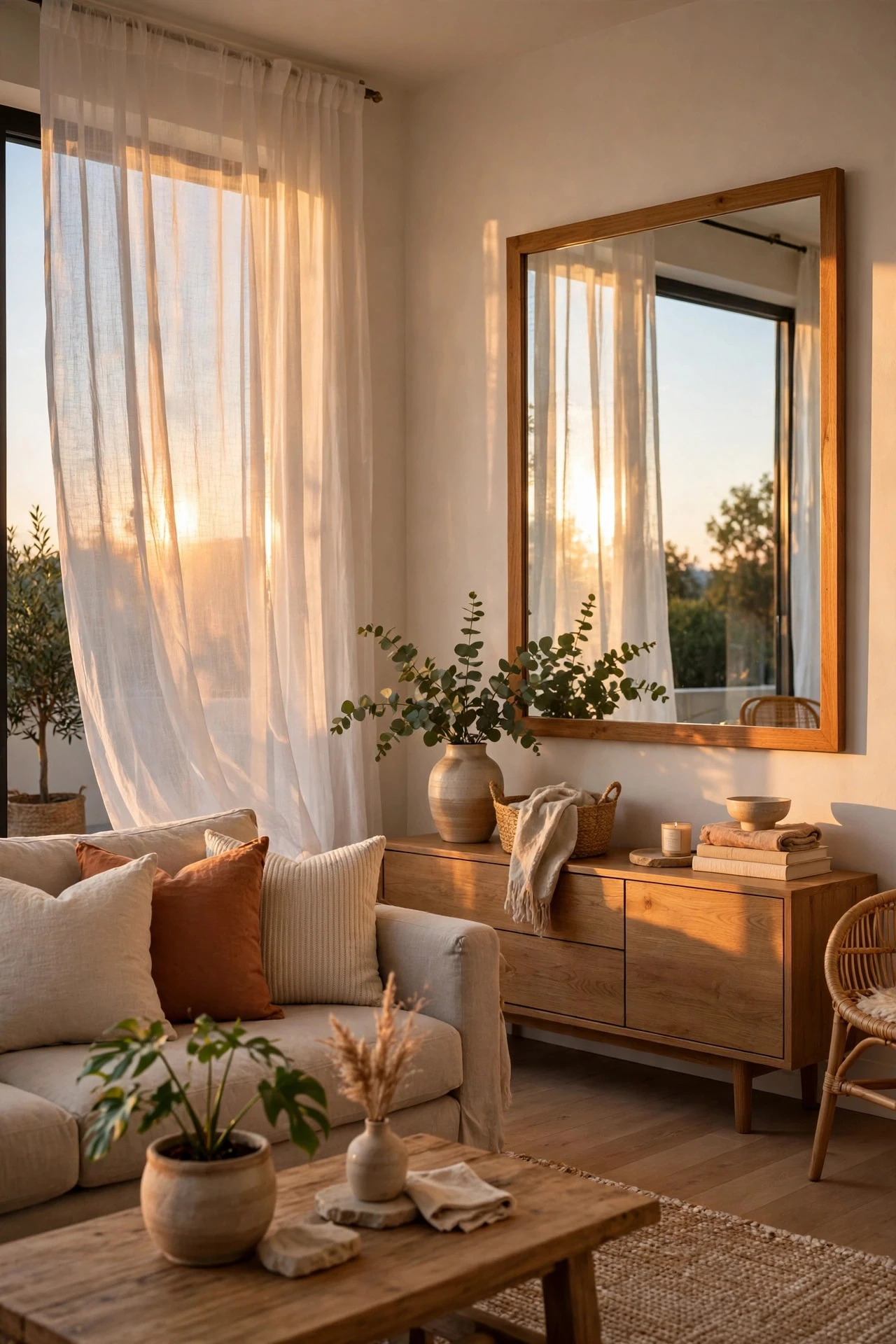
The best living room lighting is daylight, and the room should be arranged to use it before any electric light is switched on. Sheer curtains soften glare without blocking light, a mirror opposite or beside a window bounces daylight deeper into the room, and seating placed near the window gets the best reading light for free. Sheers and a mirror cost $40 to $150. The mistake to avoid is placing the television directly opposite a bright window, because glare ruins the picture all day and forces the curtains shut, losing the daylight the room was designed around.
20. Uplighting for Drama and Height
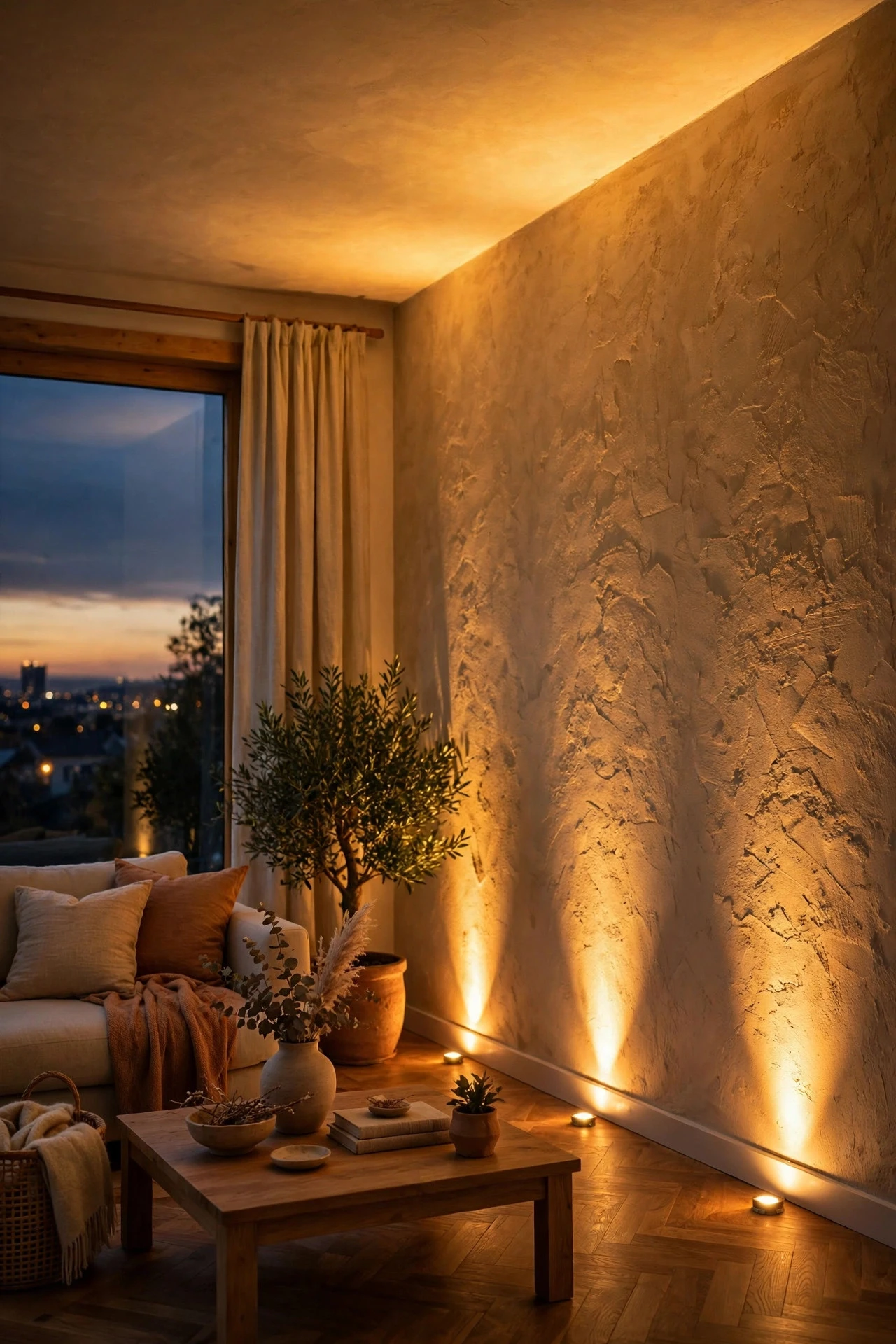
Uplights — floor lights that wash the ceiling and walls with light — make a low ceiling feel higher, highlight architectural details such as beams or a textured wall, and add drama without a visible fixture. Place uplights behind furniture, in corners, or beside a fireplace, and keep them dimmable so the effect stays soft. Uplights cost $30 to $90 each. For wall-focused styling that pairs with uplighting, these living room wall decor ideas show how light and art work together on a blank wall. The mistake to avoid is aiming an uplight directly at a ceiling stain, a crack, or an uneven surface, because uplighting highlights every flaw it touches.
21. A Fireplace Glow, Real or Electric
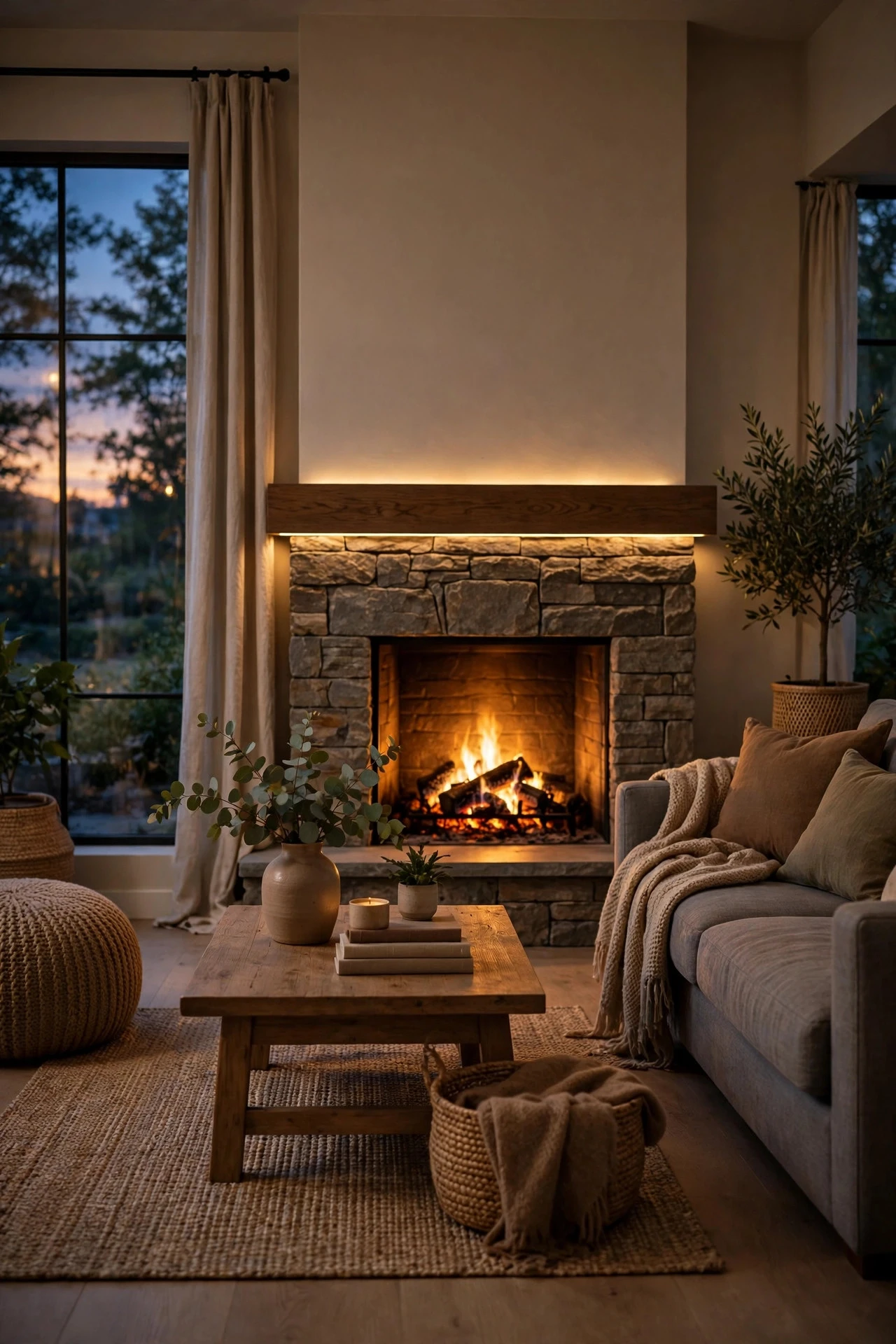
A fireplace — real, electric, or even a cluster of candles in a firebox — gives a living room a natural focal point and the warmest, most flattering light of all. Keep the mantel lighting low when the fire is lit, let the fire be the accent layer, and add a pair of sconces or a picture light above the mantel for times when the fire is off. Electric fireplaces cost $150 to $500. The mistake to avoid is fitting a bright overhead light directly above a lit fireplace, because the two light sources compete, the fire's glow is washed out, and the room loses the cosy focus the fireplace was meant to give.
22. The Evening Test and the Seasonal Reset
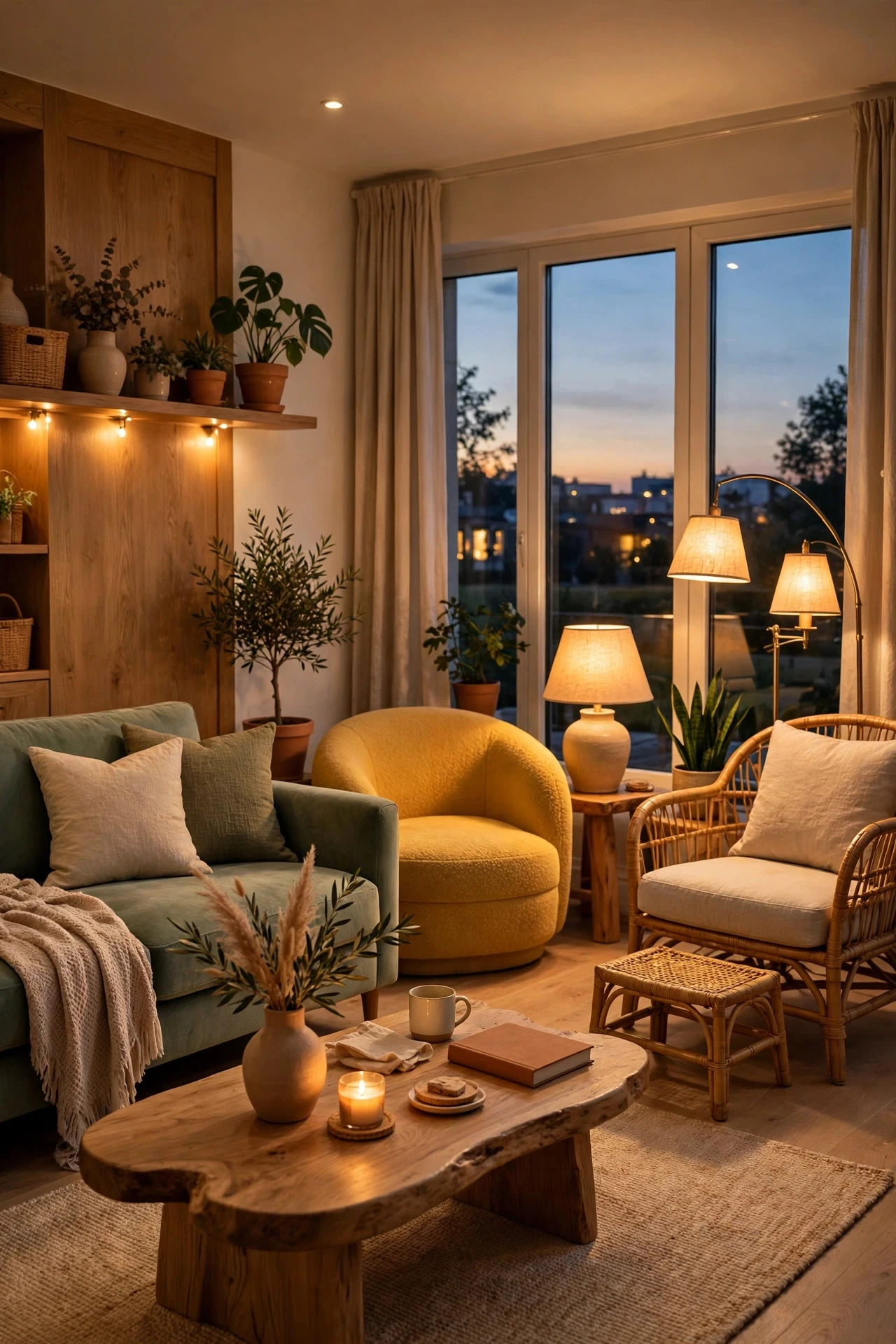
The final idea is a habit: test the lighting in the evening, when you actually use the room, and reset it with the seasons. Sit in each seat, check for glare, shadows, and dark corners, adjust shades and dimmers until every seat feels comfortable, and repeat the test when the clocks change, because winter evenings need more light and summer evenings need less. The cost is an evening's attention. The mistake to avoid is judging lighting at midday, when daylight hides every flaw, and then wondering why the room feels harsh, dark, or flat at eight in the evening.
Practical Tips
Plan lighting by activity, not by fixture count. List what happens in the room — reading, conversation, television, homework, entertaining — and give each activity its own light at the right height, on its own control, before buying anything new. A room with five well-placed lights beats a room with ten random ones, and a dimmer on each layer matters more than an expensive fitting. For broader guidance on layering ambient, task, and accent light, the lighting guides at Houzz show real living rooms with fixture plans and lumen recommendations.
Keep the colour temperature consistent and warm, and check it before you buy. Bulbs labelled 2700K to 3000K suit living rooms, dimmable LEDs suit dimmers, and smart bulbs suit scenes, but mixing ranges, mixing dimmable with non-dimmable, or mixing smart with ordinary in one fitting creates flicker, buzz, and colour clashes. Buy one bulb first, test it in the room at night, and then buy the rest, because a bulb that looks warm in the shop can look cold beside your sofa. For advice on choosing fixtures that suit a room's style and scale, Architectural Digest shows how designers balance statement fixtures with quiet, functional light.
Measure the room and the furniture before choosing a fixture. A chandelier's diameter should be roughly one-half to two-thirds the width of the table or seating group beneath it, a pendant should hang at least seven feet above a walkway, and a table lamp's shade should sit at eye level when seated. Those three measurements prevent the most common lighting mistakes — a fixture too large, too low, or too bright — and they cost nothing to check with a tape measure.
Final Thoughts
Warm, layered living room lighting is not about spending more; it is about placing light at different heights, keeping it warm, and giving each layer its own control so the room can change its mood in seconds. Start with the missing layer — often task light beside a chair or accent light on art — add dimmers, test the room in the evening, and let the light do the quiet work of making the room feel larger, calmer, and more welcoming. The living room that glows softly at night, with pools of warm light and gentle shadows, is the one people linger in, and it is built from layers, not from brightness.
You May Also Like: – 22 Living Room Wall Decor Ideas That Transform a Blank Wall – 22 Living Room Inspo Ideas for a Fresh, Lived-In Look – 22 Refresh My Living Room Ideas for an Instant New Look
Frequently Asked Questions
How many lights does a living room need?
Most living rooms need at least three layers — ambient, task, and accent — which usually means three to five sources: a ceiling fixture, a floor or table lamp for reading, and an accent light for art or architecture. The exact number depends on the room's size and layout, but one overhead light alone is never enough for a room.
What colour temperature is best for living room lighting?
Warm white at 2700K to 3000K is best for living rooms because it flatters skin, wood, and textiles and feels relaxing in the evening. Keep every bulb in the same warm range, avoid cool daylight bulbs above 4000K for general living room use, and use dimmers to adjust brightness without changing colour.
How do you layer lighting in a living room?
Layer lighting by combining ambient light for general illumination, task light for reading and working, and accent light for art and details, each on a separate control. Start with the ceiling fixture, add a floor or table lamp beside seating, add picture lights or LED strips for accents, and balance the layers with dimmers for different times of day.
Should living room lights be dimmable?
Yes, dimmers on the main ceiling light and wall lights let the room shift from bright and functional to soft and relaxed, and they save energy. Check that bulbs are dimmable LEDs before fitting a dimmer, because non-dimmable bulbs flicker and fail early, and keep each layer on its own dimmer for the most flexibility.
How high should a chandelier hang in a living room?
A chandelier should hang so its lowest point is at least seven feet above the floor in a walkway, and higher over a table where people do not walk. Centre it over the main seating group or coffee table, keep the bulbs warm and dimmable, and check the height from the doorway where the fixture is first seen.
What is the best lighting for a living room with no ceiling light?
A combination of floor lamps, table lamps, wall sconces, and LED strips can light a room with no ceiling fixture, especially with an arc floor lamp reaching over the sofa for overhead light. Plug-in and rechargeable sconces need no wiring, and smart bulbs on separate controls give the flexibility a ceiling fixture would normally provide.