22 Walk-In Closet Ideas That Make Getting Dressed Feel Luxurious
A walk-in closet should feel like the best room in the house, not a dark cupboard you rush through each morning. The difference between a closet you tolerate and one you love is rarely the size — it is the planning. Hanging heights, shelf depths, lighting temperature and drawer widths decide whether your clothes stay visible, reachable and wrinkle-free, or end up buried in a pile.
This guide gives you the exact numbers. You will find the standard measurements for double-hang and long-hang sections, the shelf depths that actually hold folded sweaters, the Kelvin range that makes colours look true, and honest budgets from a $300 DIY refresh to a $15,000 boutique build. Every idea is a real, buildable change, not a vague "add storage" tip.
Whether you are fitting out a spare bedroom or squeezing a walk-in into a 5-by-7-foot nook, these 22 ideas work in layers. Start with layout, fix the lighting, then add the finishing touches that make getting dressed feel like a small daily luxury.
Looking for more inspiration? Our Nest Decorz homepage gathers the latest home decor ideas, seasonal decorating guides and room-by-room styling tips in one place — start there and explore.
Quick answers
– Measure before you buy anything: double-hang rods sit at 40 and 80 inches, long-hang at 66–72 inches, and shelves work best at 14–16 inches deep. – Light it like a boutique: layered lighting at 2700K–3000K with a centre fixture, LED strips under shelves and a mirror light makes colours look true. – Go vertical and visible: open shelving, pull-out drawers and labelled baskets beat deep dark shelves every time. – Budget in tiers: a DIY refresh runs $300–$800, a mid-range modular system $2,000–$5,000, and a full boutique build $8,000–$15,000. – Keep the best 20% on show: display your favourite shoes, bags and jewellery like a shop window, and rotate the rest by season.
1. How Much Hanging Space Does a Walk-In Closet Really Need?
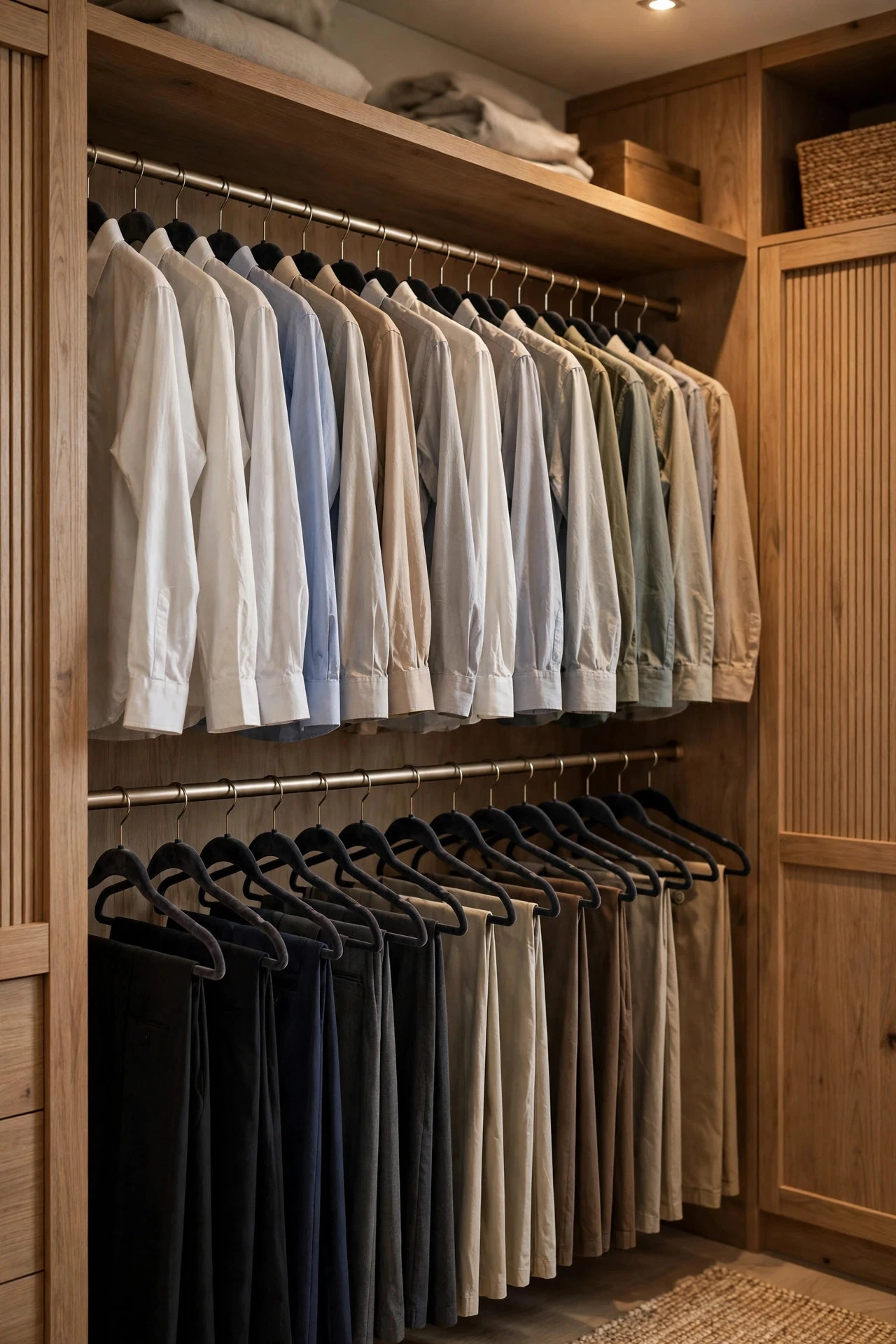
Most walk-in closets need 4 to 6 feet of double-hang space for shirts and trousers, plus 2 to 3 feet of long-hang for dresses and coats. A good rule is to count your garments first: one linear foot of rod holds roughly 8 to 10 shirts or 4 to 5 coats. Plan the split before you buy a single rod.
Start by sorting your wardrobe into short items (shirts, blouses, folded trousers) and long items (dresses, coats, gowns). Short items belong on double-hang rods stacked at 40 and 80 inches from the floor, which doubles your capacity in the same wall length. Long items need a single rod at 66 to 72 inches with at least 54 inches of clear space below it. Leave 24 inches of depth in front of every rod so hangers swing freely and clothes never brush the wall. Count hangers, not guesses: measure your wardrobe rail by rail before ordering, and leave one empty foot of rod for new purchases — a closet packed to 100% capacity wrinkles clothes and hides what you own, so leave that breathing room on purpose.
2. Which Layout Shape Works Best: L, U or Galley?
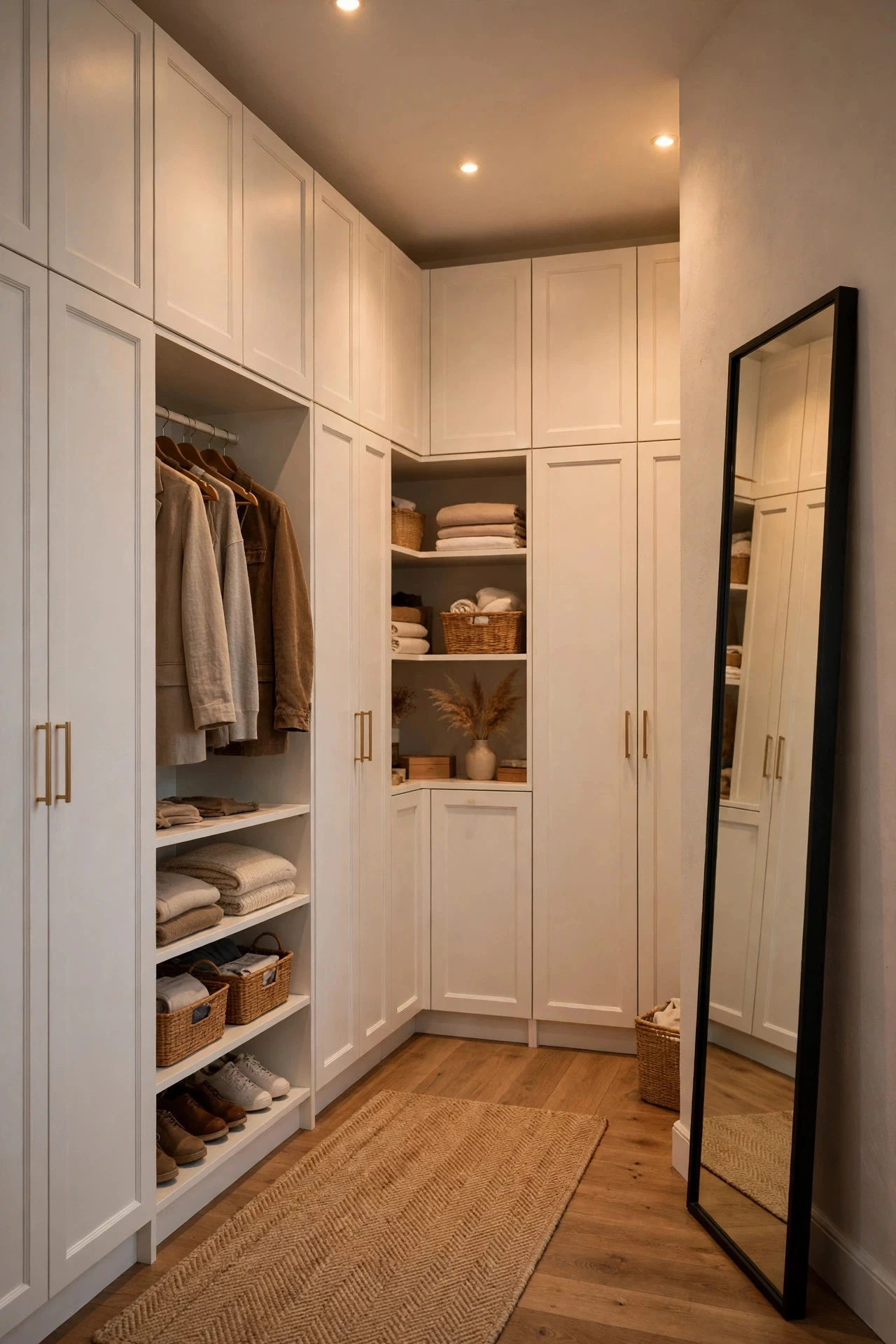
An L-shaped layout suits small walk-ins, a U-shape suits rooms of 7 by 9 feet or larger, and a galley layout works best in narrow rooms 4 to 5 feet wide. You need at least 36 inches of clear walking space in the middle, and 42 inches if two people dress at once.
The L-shape runs storage along two adjoining walls and leaves the third wall free for a mirror or a dresser. The U-shape wraps storage around three walls and gives the most capacity, but it only works when the room is wide enough to keep 36 inches clear in the centre — cramming a U into a small room makes it feel like a corridor. The galley layout puts storage on two parallel walls with a walkway between, which is perfect for converted hallways or long narrow rooms. Whichever shape you choose, keep the most-used items at eye level between 40 and 66 inches. Sketch the layout on paper before you buy anything — a scale drawing shows instantly whether the U-shape you love leaves enough room to actually walk.
3. Why Does Double-Hang Beat a Single Rod?
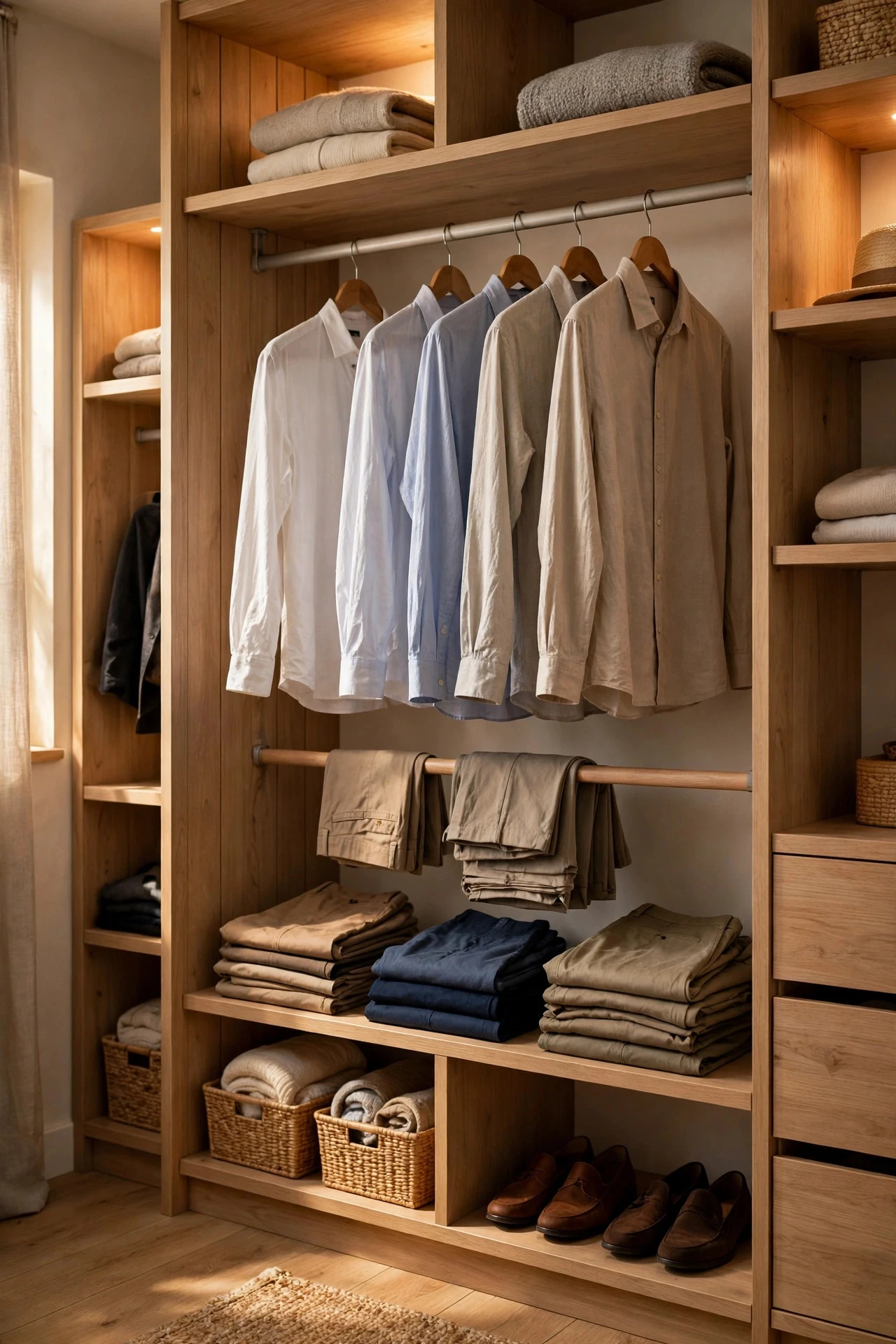
Double-hang doubles your hanging capacity in the same wall length by stacking two rods at 40 and 80 inches, and it works for everything shorter than a dress. Shirts, blouses, jackets and folded trousers all fit in the 40-inch zone, so a 6-foot double-hang section holds roughly the same as 12 feet of single rod.
Install the upper rod at 80 inches and the lower rod at 40 inches, leaving about 36 inches of vertical space between them — enough for a shirt to hang without its hem touching the rod below. Use slim velvet hangers to save another inch per garment and stop clothes sliding off. The lower rod at 40 inches leaves room for a row of shoe shelves or drawers underneath, so the space below the shirts earns its keep instead of gathering dust. Measure your longest shirt from hook to hem — most fall between 28 and 32 inches — and set the lower rod so hems clear the shelf or drawers below by at least 2 inches. Keep heavy jackets on the upper rod, where the extra height stops them dragging on the lower rail.
4. How Do You Plan Long-Hang Space for Dresses and Coats?
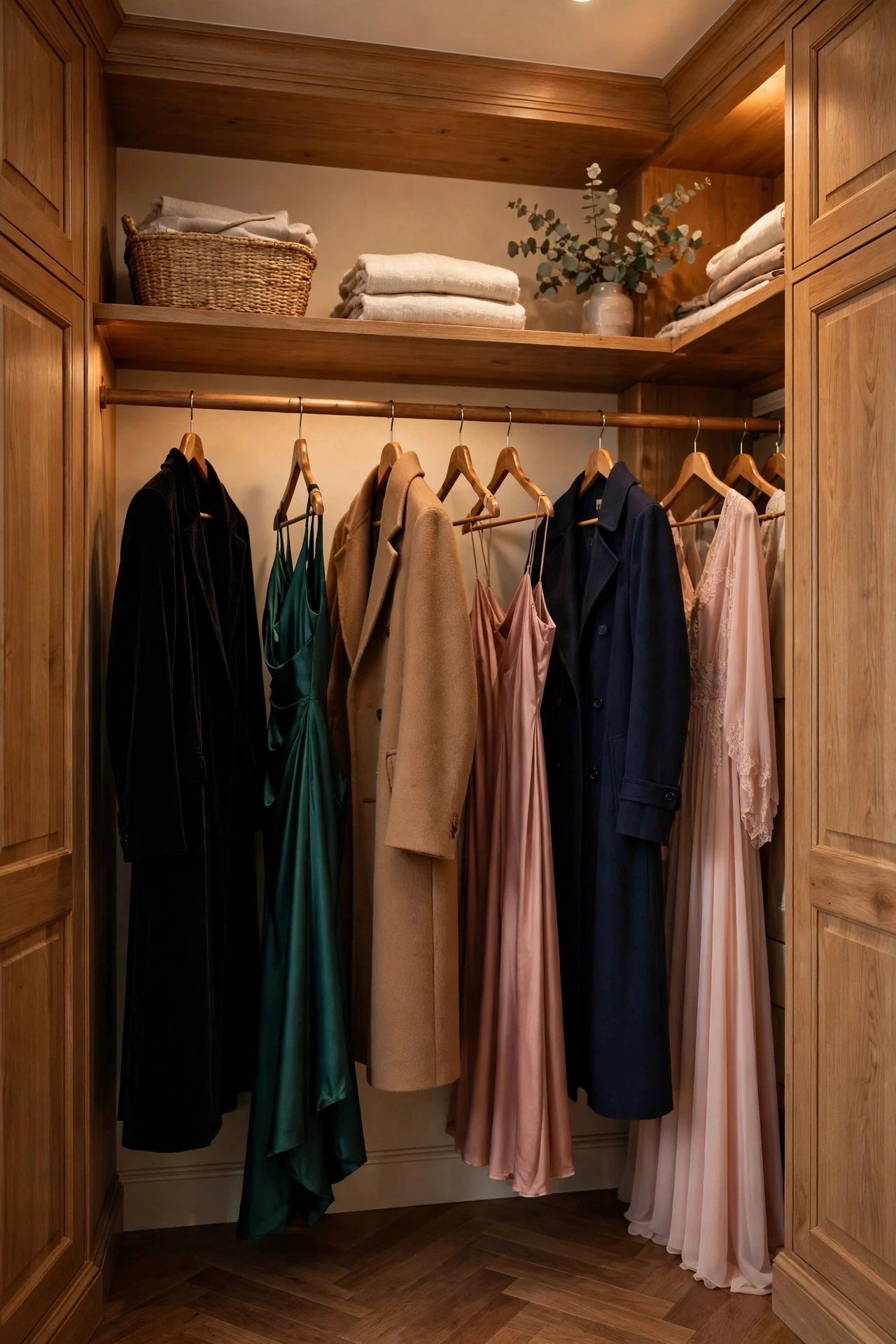
Reserve a dedicated long-hang section with a rod at 66 to 72 inches and at least 54 inches of clear space below it, allowing 3 to 4 inches of rod per garment. Plan 2 to 3 linear feet for a typical wardrobe, and 4 feet or more for many dresses or long coats.
Measure your longest garment first — a maxi dress or full-length coat can reach 58 to 60 inches from the hanger hook to the hem. The rod height plus that drop decides your layout, not the other way round. Add a valet rod nearby: a pull-out hook where you can hang tomorrow's outfit or a dry-cleaning bag. Hang long items with space between them — fabric needs air to avoid creasing, and crammed dresses are dresses you never wear. If you own only two or three long pieces, a single 2-foot section is enough; spend the saved wall on double-hang instead. Avoid storing heavy coats on wire hangers, which stretch shoulders out of shape; use wide wooden hangers for anything over a pound.
5. What Makes Open Shelving Work in a Closet?
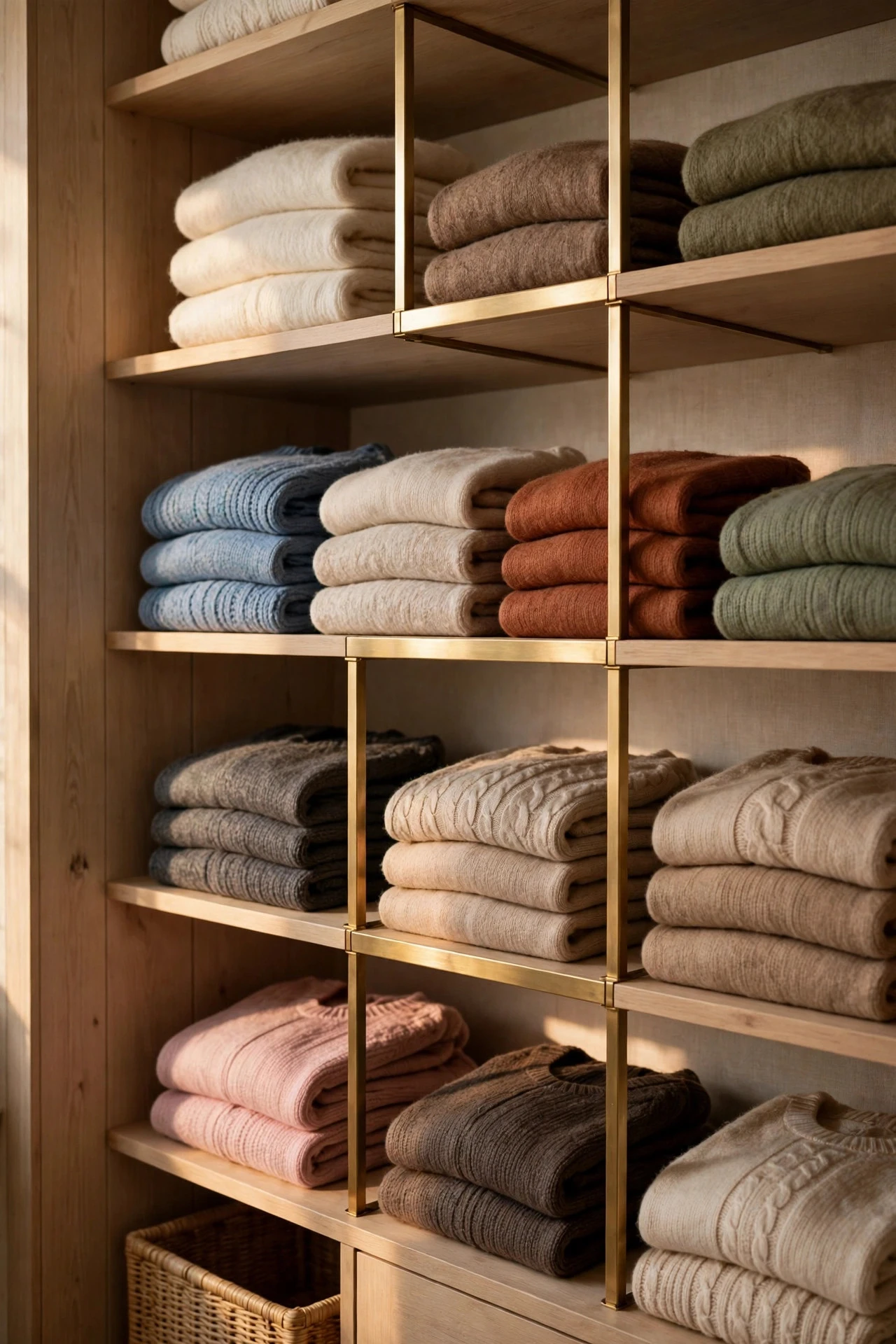
Open shelving works when shelves are 14 to 16 inches deep, spaced 12 to 15 inches apart, and kept to stacks of no more than 6 to 8 folded items. That depth holds a folded sweater without it overhanging, and the spacing keeps stacks low enough to see and reach without toppling.
Open shelves are best for items you fold: knitwear, T-shirts, jeans and linen. Fold each item to roughly 10 to 12 inches wide so two stacks fit per 24-inch bay, and use shelf dividers to stop stacks leaning into each other. A mix of open shelving for display and closed drawers for underwear and small items gives you both the boutique look and the tidy reality. The same shallow-shelf logic works in tiny wet rooms — see these small bathroom storage ideas that make every inch work. For more shelving inspiration, browse The Spruce's closet shelving ideas. Adjustable shelf brackets are worth the small premium: fixed shelves lock you into spacing that stops working the moment your wardrobe changes, while adjustable shelves move in minutes.
6. Should You Choose Drawers or Baskets for Small Items?

Use drawers for underwear, socks, jewellery and anything small that slides around, and baskets for bulkier soft items like scarves, workout clothes and off-season accessories. Drawers keep small things contained and dust-free; baskets make soft, shapeless items easy to grab and put back.
Plan for at least 4 to 6 drawers in a walk-in: two shallow drawers of 4 to 6 inches deep for jewellery and accessories, and two deeper drawers of 8 to 10 inches for folded underwear and T-shirts. Drawer widths of 18 to 24 inches are the sweet spot — wider drawers waste space and get messy. Baskets work best in open cubbies at waist height or below, in natural materials like seagrass, rattan or fabric, and always with a label. Avoid open baskets on the top shelf, where you cannot see what is inside them. The same basket-and-label logic keeps soft furnishings tidy elsewhere too — see these blanket storage solutions that keep throws tidy and within reach. Label every basket so the system keeps working when you are in a hurry.
7. How Should You Store Shoes So You Can Actually See Them?
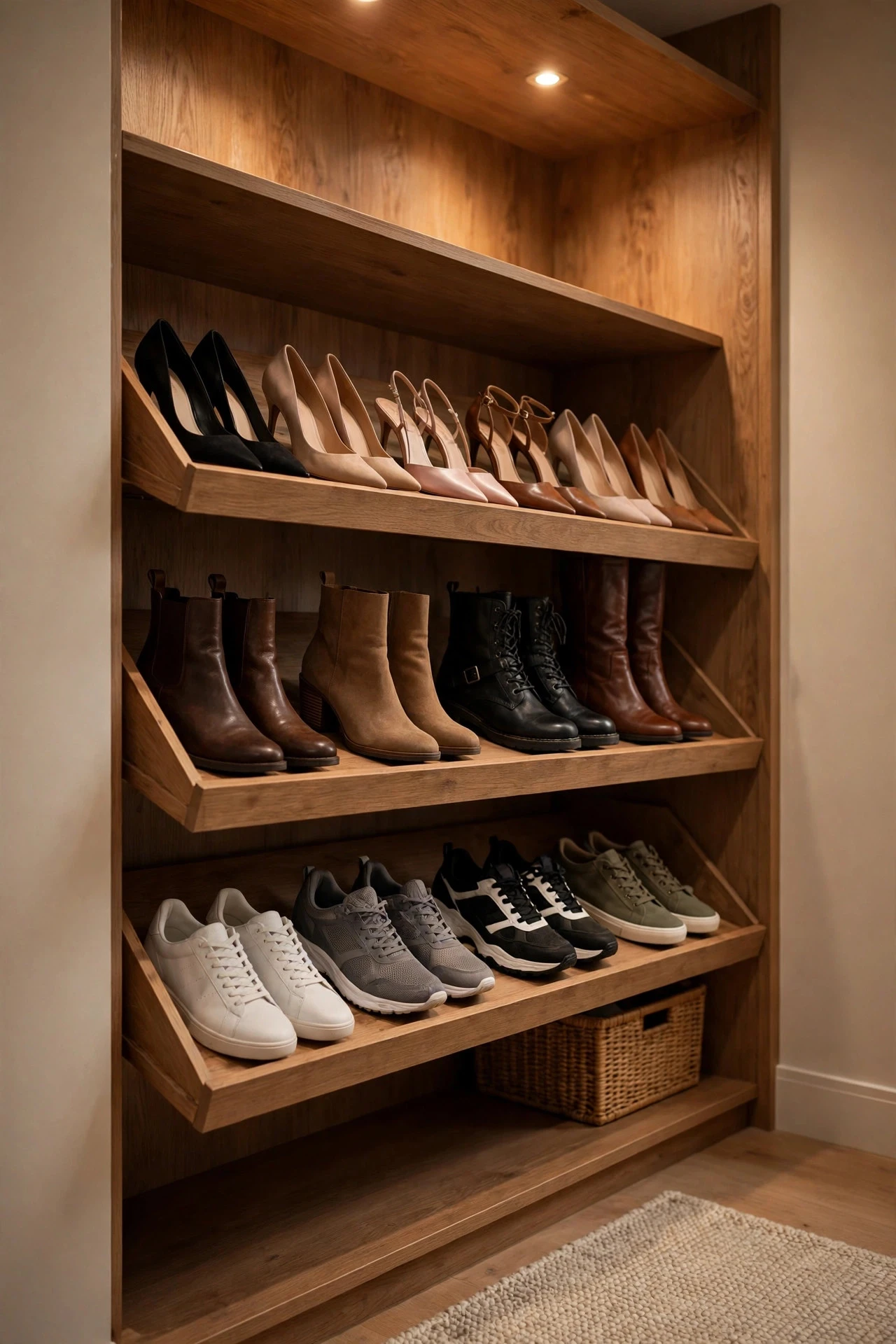
Store shoes on slanted shelves at a 20 to 30 degree angle with a lip, spaced 6 to 8 inches apart for flats and 10 to 12 inches for boots, so every pair is visible at a glance. Angled shelving shows the whole shoe, not just its toe — which is why boutiques use it.
A 24-inch-wide bay holds 3 to 4 pairs per shelf, so plan one full wall or a dedicated tower for shoes. Heels need 7 inches of vertical clearance, ankle boots 10 inches, and tall boots 16 to 18 inches, so mix shelf heights rather than spacing them evenly. Keep everyday shoes at waist height and special-occasion pairs higher up. Never store shoes in closed boxes on the floor — out of sight means out of mind, and the floor is where dust and scuffs collect. Leave one empty shelf in the shoe wall for new pairs, and keep a small brush and shoe spray on the lowest shelf so cleaning takes seconds, not a trip to another room — and rotate out-of-season shoes to the top shelf.
8. How Do You Display Accessories Like a Boutique?

Display accessories on open shelving, hooks and shallow trays at eye level, treating your favourite bags, hats and jewellery as decor rather than clutter. A boutique display works because it limits what is on show: pick your 8 to 12 best pieces, give each one breathing room, and store the rest behind closed doors.
Hang handbags on sturdy hooks or stand them upright on shelves with tissue stuffing so they keep their shape — never pile bags on top of each other. Use a wall-mounted jewellery organiser or a velvet-lined tray in a shallow drawer for necklaces, rings and watches, and hang scarves on a dedicated scarf rack or a row of hooks so colours are visible. The trick is editing: if everything is displayed, nothing stands out. Group accessories by colour on the display shelves — a row of neutral bags with one bold colour reads as curated, while a random mix reads as clutter, however expensive the pieces are. Rotate your display with the seasons and you get a fresh look four times a year for free.
9. Where Should the Mirror Go in a Walk-In Closet?

Put a full-length mirror on the wall opposite your main hanging section or on the back of the closet door, at least 14 inches wide and 48 inches tall, so you can see your outfit in one look. It should face your best light source, not a dark corner, or it will show you a shadow, not an outfit.
A leaner mirror works if wall space is tight, but a fixed mirror is better because it never wobbles or falls. Place it where you naturally stand to dress, with at least 3 feet of clear floor in front of it so you can step back. If your closet has a window, position the mirror to catch the daylight. Add a slim LED strip or a pair of sconces beside the mirror to eliminate shadows on your face and clothes. A single, well-placed mirror plus good lighting beats a wall of mirrors every time. A mirror with a slim frame in brass, black or wood reads as furniture rather than a fixture, and a frame that matches your hardware ties the whole closet together.
10. Is a Centre Island or Dresser Worth It in a Closet?

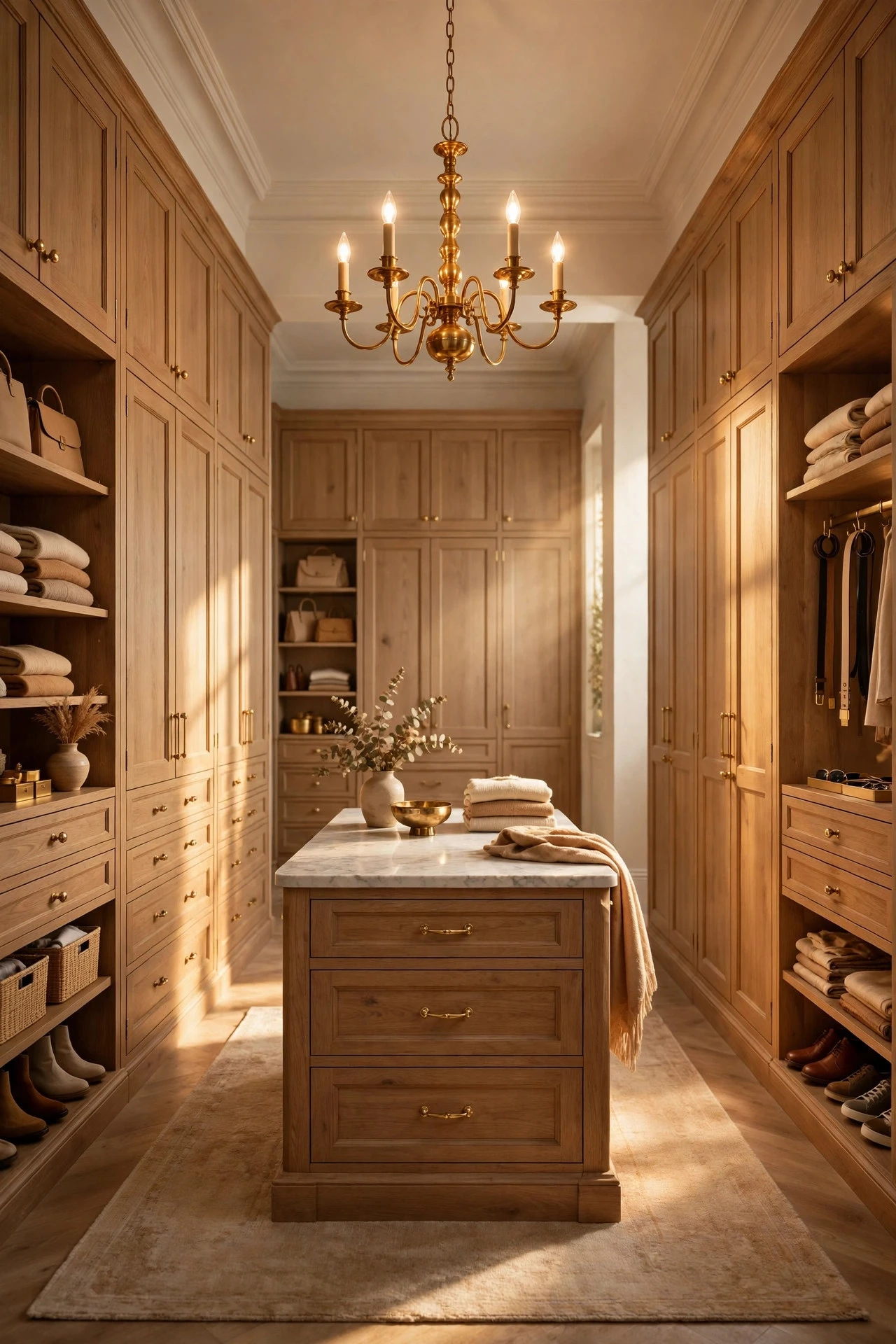
A centre island is worth it in closets of 8 by 10 feet or larger, where it adds drawer storage, a folding surface and a jewellery display without blocking the walkway. You need at least 36 inches of clear space on all sides, so skip the island in smaller rooms and use a slim dresser against the wall instead.
A good island is 24 to 30 inches deep and 36 to 48 inches long, with 3 to 4 drawers on each side and a glass top or a tray inset for jewellery. The top surface becomes your folding station and the place where you lay out tomorrow's outfit. Budget-wise, a ready-made island runs $400 to $1,200, while a custom-built one with soft-close drawers and a stone top runs $2,000 to $4,000. If space is tight, a narrow dresser of 18 inches deep against the end wall gives you the same drawer storage without eating the walkway. The same dresser-first thinking works in a spare room — these guest bedroom ideas to make visitors feel at home show a dresser anchoring the whole room. For more island inspiration, see The Spruce's closet island ideas.
11. What Seating Works Best in a Walk-In Closet?
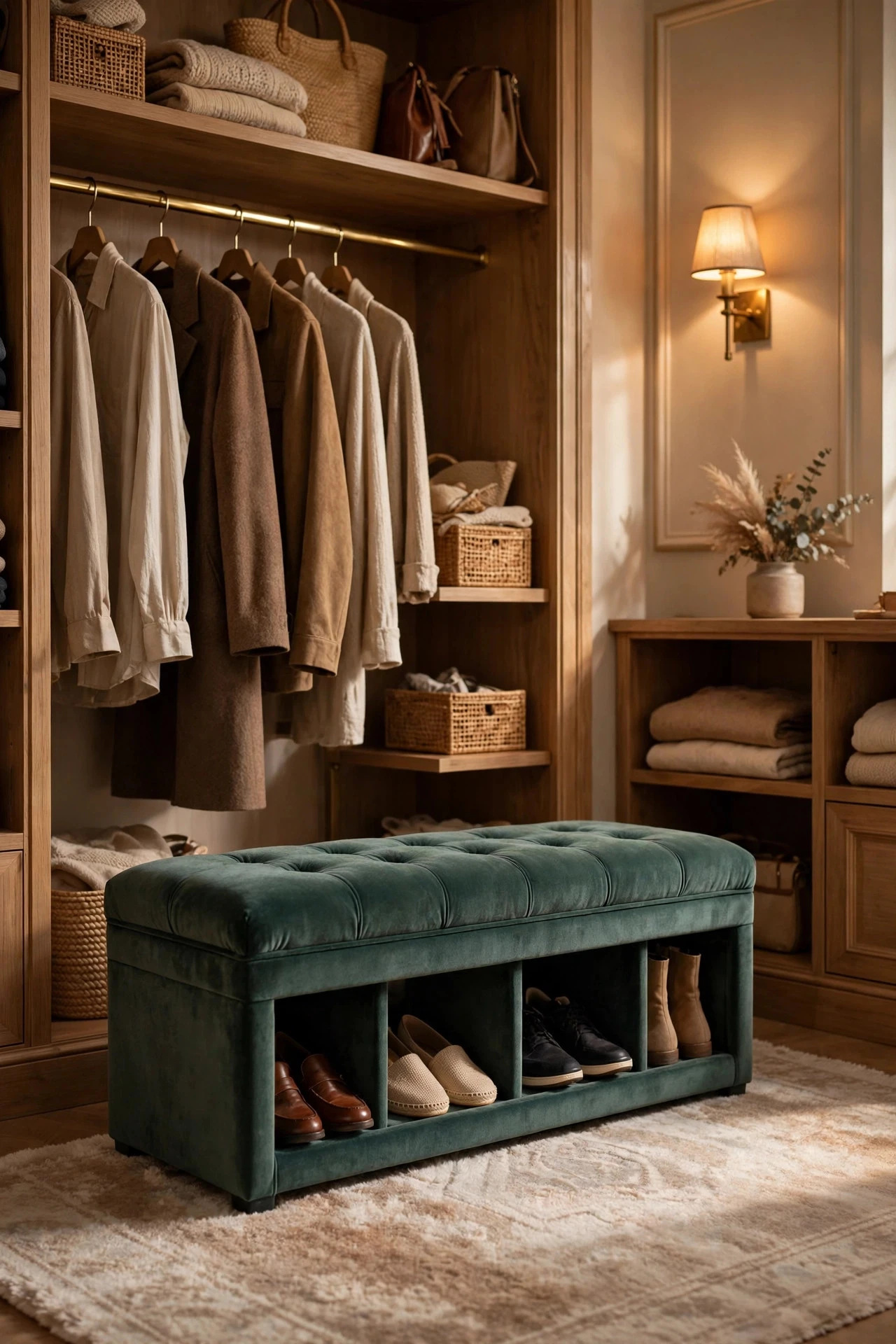
The best closet seating is a small upholstered bench or ottoman of 36 to 48 inches long and 16 to 18 inches high, placed where you naturally sit to put on shoes. It should be comfortable enough for a few minutes, easy to move, and upholstered in a fabric that survives daily use.
A bench with storage underneath — cubbies for shoes or a lift-up lid — earns its floor space twice over. Place the bench where you naturally sit — usually near the shoe wall or the mirror — not in the middle of the walkway, where it becomes an obstacle. If floor space is very tight, a wall-mounted fold-down seat gives you somewhere to perch without taking any floor at all. A bench in a washable fabric survives daily use far better than pale linen. Choose a performance fabric or leather that wipes clean, because closet seating collects dust, stray threads and the occasional makeup mark. Avoid a full armchair unless your closet is genuinely large; it eats 6 square feet and you will never sit in it long enough to justify it.
12. How Do You Layer Lighting in a Walk-In Closet?
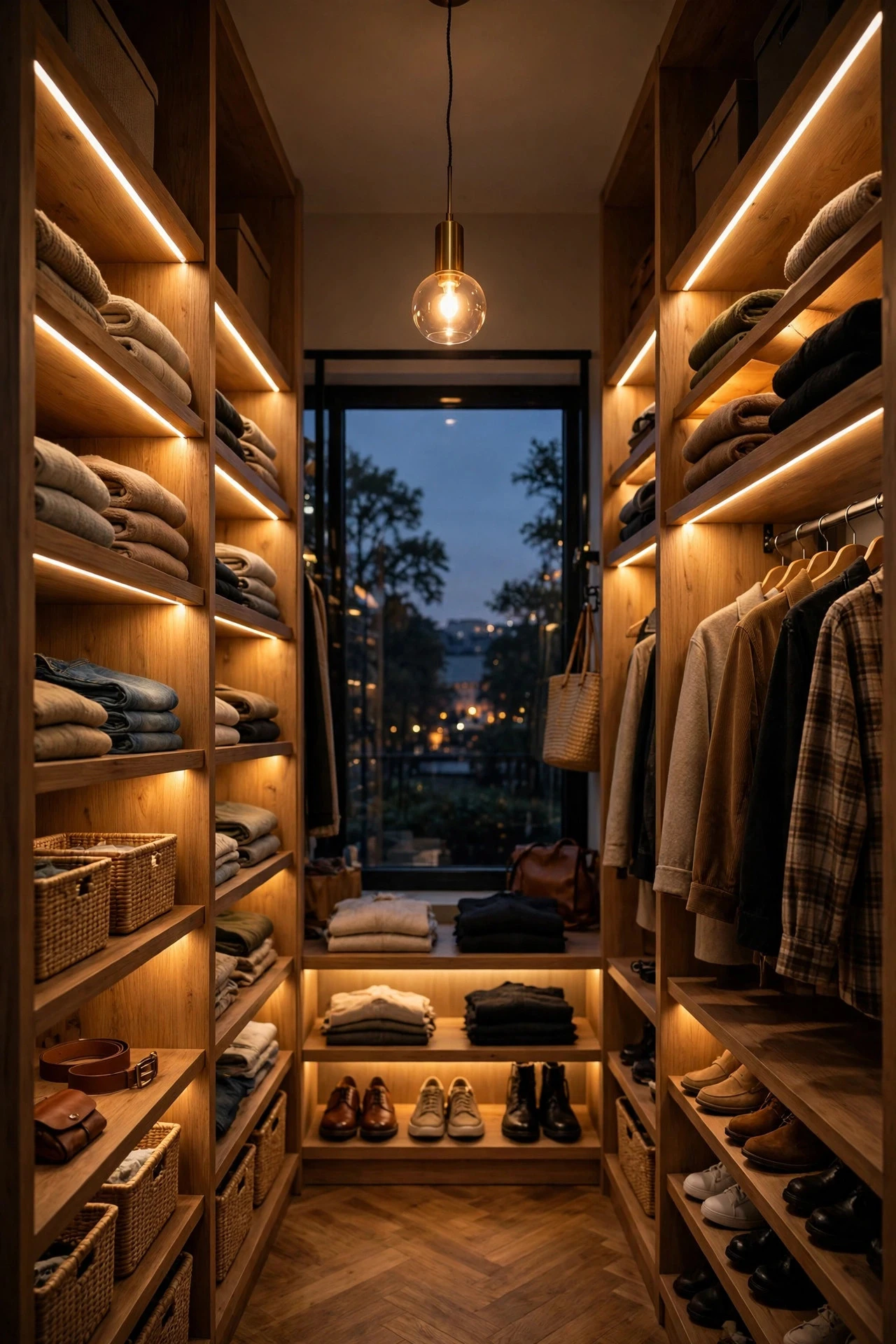
Layer three types of light: a central ceiling fixture for general brightness, LED strips under shelves and inside cabinets for task lighting, and a mirror light or sconces for true colour. Use warm white bulbs at 2700K to 3000K, which flatter skin tones and show fabric colours accurately, unlike cool daylight bulbs that make everything look blue.
Start with a statement ceiling fixture — a small chandelier, a flush-mount drum or a cluster of pendants — on a dimmer, so you can brighten the room for choosing outfits and soften it for a boutique mood. Then add LED strip lights under every shelf, tucked behind a lip so you see the glow, not the bulb. Avoid relying on a single bare bulb in the middle of the ceiling — it casts shadows on the shelves and makes the room feel like a storeroom. Budget $150 to $400 for a full LED strip kit and $200 to $800 for a good centre fixture. Test bulb temperatures before committing: buy one 2700K and one 3000K bulb, try each at night, and keep the one that makes your clothes look truest.
13. Which Paint Colours Make a Closet Feel Luxurious?
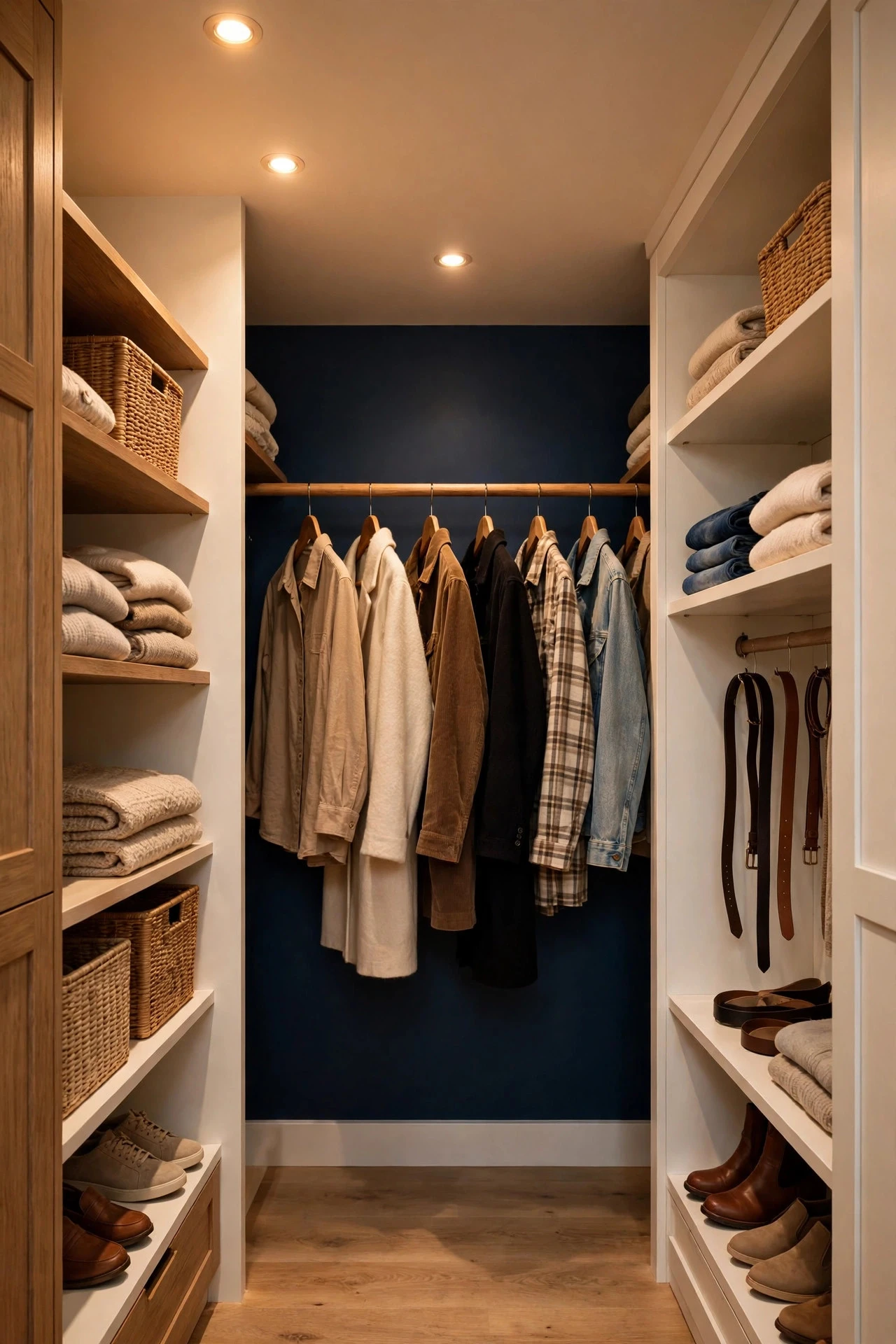
Soft, light-reflecting colours make a closet feel luxurious: warm white, pale greige, soft blush, sage green or a deep moody tone like navy or charcoal for a boutique feel. Light colours bounce the limited light around a small room, while a dark accent wall adds drama without shrinking the space if the lighting is strong.
Warm white (like a creamy off-white with a yellow undertone) is the safest choice — it flatters clothes, photographs well and never fights with your wardrobe's colours. Pale greige, a grey-beige blend, adds warmth without going yellow. If you want drama, paint the back wall a deep tone — navy, forest green or charcoal — and keep the other walls light, so the dark wall reads as a backdrop for your clothes rather than a cave. Avoid pure bright white, which looks stark under LED light and shows every scuff. A single painted wall plus matching built-ins in the same colour looks far more expensive than a rainbow of finishes. For a layered, collected feel, see how to style a boho bedroom that feels collected not cluttered.
14. Can Wallpaper Transform a Walk-In Closet?
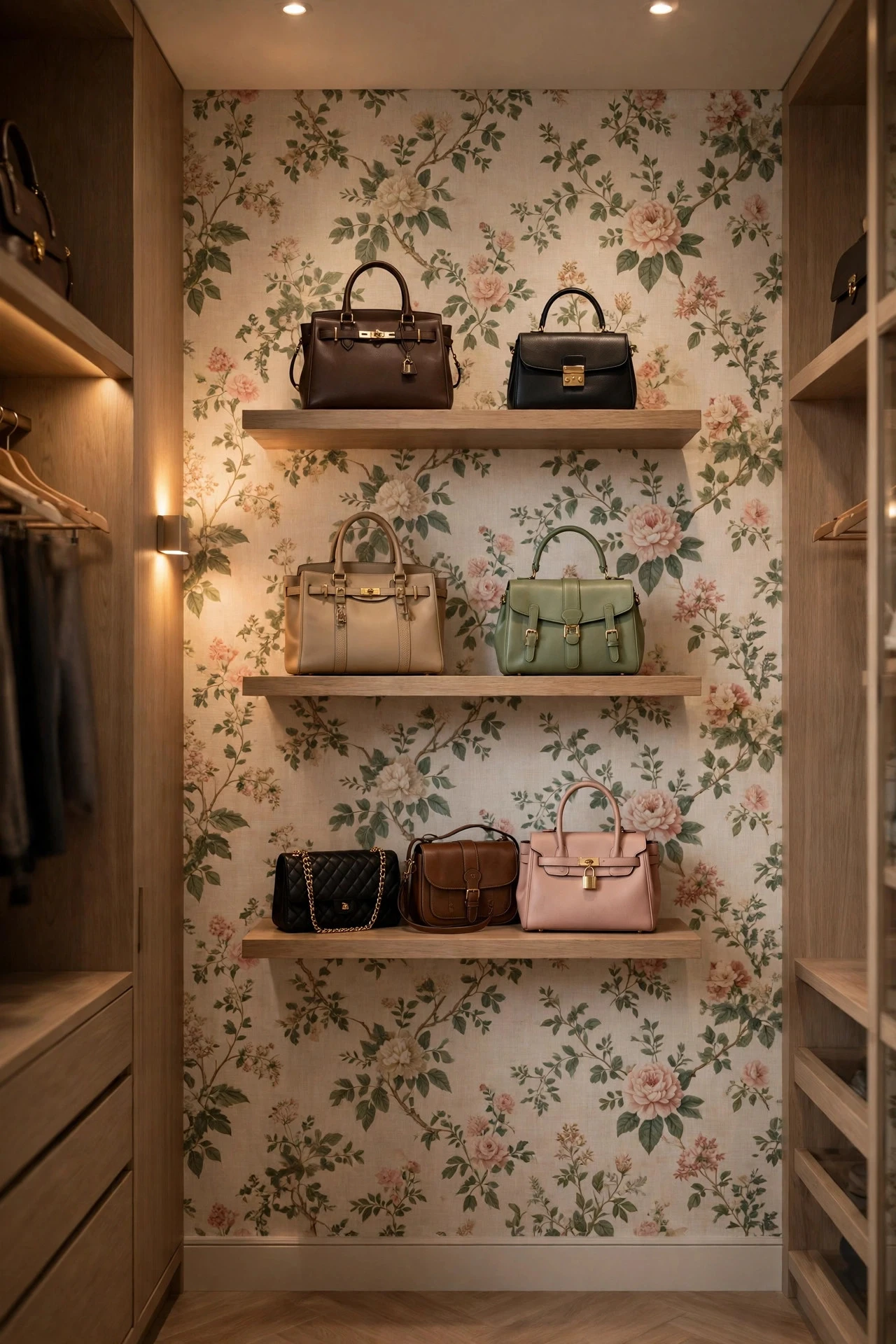
Yes, wallpaper can transform a walk-in closet for $100 to $400, and the back wall or the ceiling is the best place for it. A bold pattern on one wall turns a plain closet into a boutique dressing room, and because the room is small, you only need one or two rolls.
Choose a pattern that suits the scale of the room: large-scale florals or geometrics work on a full back wall, while small prints suit a narrow galley closet. Peel-and-stick wallpaper is the smart choice for renters or first-timers — it goes up in an afternoon and comes down without damage. Avoid wallpapering every wall in a small closet, which can feel overwhelming, and skip metallic or very dark papers in rooms with no natural light. Measure the wall and order 10% extra paper for pattern matching and mistakes — running short mid-wall is the most common wallpaper frustration. Keep the leftover roll for repairs, because dye lots change and the same pattern may not match next year. A grasscloth or linen-textured paper adds tactile luxury without a loud pattern.
15. How Do You Create a Boutique-Style Display Wall?

A boutique display wall combines open shelving, a statement mirror or artwork, and a few styled vignettes at eye level, with your best bags, shoes and jewellery arranged like a shop window. The formula is simple: group items in odd numbers, vary the heights, and leave 30% of the shelf empty so the eye can rest.
Start with one feature wall — usually the wall you face when you walk in. Mount two or three floating shelves at staggered heights, hang a round mirror or a framed print above them, and style each shelf with a mix of bags, folded knits, a small plant and a candle. The most common mistake is overfilling: a boutique shows 12 items beautifully, not 40 items crammed together. Edit ruthlessly, rotate the display seasonally, and the wall stays fresh all year. Photograph the display once it is styled, then look at the photo — the camera shows clutter and imbalance your eyes miss in the room. Adjust anything that draws the eye for the wrong reason, then enjoy a display that looks considered from every angle.
16. What Works for a Small Walk-In Closet?

A small walk-in closet works best with a single-wall or L-shaped layout, double-hang rods, shallow 12-inch shelves, and a full-length mirror to bounce light around. The goal is to use every inch of wall up to the ceiling while keeping the floor clear, because in a 5-by-7-foot closet, floor space is the scarcest resource.
Use the full height: rods at 40 and 80 inches, shelves up to 84 inches, and labelled boxes on the very top shelf for out-of-season items. Use the same paint colour on the walls and the built-ins so the room reads as one continuous space, which makes it feel larger than it is. A single colour also hides the join between wall and shelving. Shallow shelves of 12 inches deep hold folded clothes perfectly and leave more walking room than standard 16-inch shelves. A door-mounted organiser or a slim shoe rack on the back of the door adds storage without taking a single inch of wall. For more ideas on making compact rooms feel larger, see these small bedroom ideas that make a tiny room feel bigger.
17. How Do You Build a Closet on a Budget?

Build a closet on a budget with a modular DIY system, open shelving and baskets, upgrading in stages — a full refresh runs $300 to $800, and a solid mid-range system $2,000 to $5,000. Spend first on rods and lighting, which change how the closet works every day, and save the boutique extras for later.
Modular systems from home stores offer rods, shelves and drawers that you configure to your wall, and they install with basic tools in a weekend. Paint the walls and the inside of the shelves the same colour for a custom look on a DIY budget, and swap mismatched hangers for a single set of slim velvet hangers — a $40 change that makes the whole closet look twice as expensive. Add LED strip lights under the shelves and a peel-and-stick wallpaper accent wall for under $200 combined. The Spruce's DIY closet ideas show more weekend projects in the same spirit. Shop the sale seasons for modular systems — January and late summer clearances often cut prices by 20 to 30% — and buy all your hangers and baskets in one order so the finishes match.
18. Why Does Labelling Change Everything?

Labelling changes everything because it turns hidden storage into findable storage: a labelled box is used, an unlabelled box is forgotten. Labels cost almost nothing — a label maker, chalk tags or printed cards run $10 to $30 for the whole closet — yet they cut the time you spend hunting for things in half.
Label every closed box, basket and drawer front with what is inside and, for seasonal items, the season it belongs to: "Winter scarves", "Swimwear", "Evening bags". Use the same label style throughout — same font, same size, same position — so the closet looks intentional rather than improvised. The biggest win is the top shelf: without labels, out-of-season boxes become mystery boxes you never open. With labels, rotating your wardrobe takes twenty minutes instead of an afternoon. Photograph the contents of each labelled box with your phone and tape the photo to the front — you can see what is inside without opening it, which makes the system work even for the least organised person in the house, and saves a hunt through five identical boxes.
19. How Do You Rotate Clothes by Season?

Rotate clothes by season with a simple twice-a-year swap: move the current season's clothes to eye level and the off-season to labelled boxes on the top shelf or in under-bed storage. The swap takes about an hour, and it instantly makes your closet feel half as full and twice as usable.
In spring, move heavy coats, boots and thick knits into breathable fabric boxes — never plastic, which traps moisture — and bring out lighter layers, dresses and sandals. In autumn, reverse the process. Use the rotation as a natural edit: anything you did not wear last season and do not love gets donated before it goes back on the rail. Avoid storing off-season clothes in the prime eye-level zone — that space should always belong to what you are wearing now. Wash or dry-clean everything before it goes into storage — a stain left for six months sets permanently, and moths are drawn to body oils and food marks on unwashed fabric. Slip a cedar block into each box as cheap insurance.
20. What Storage Works for Handbags and Hats?
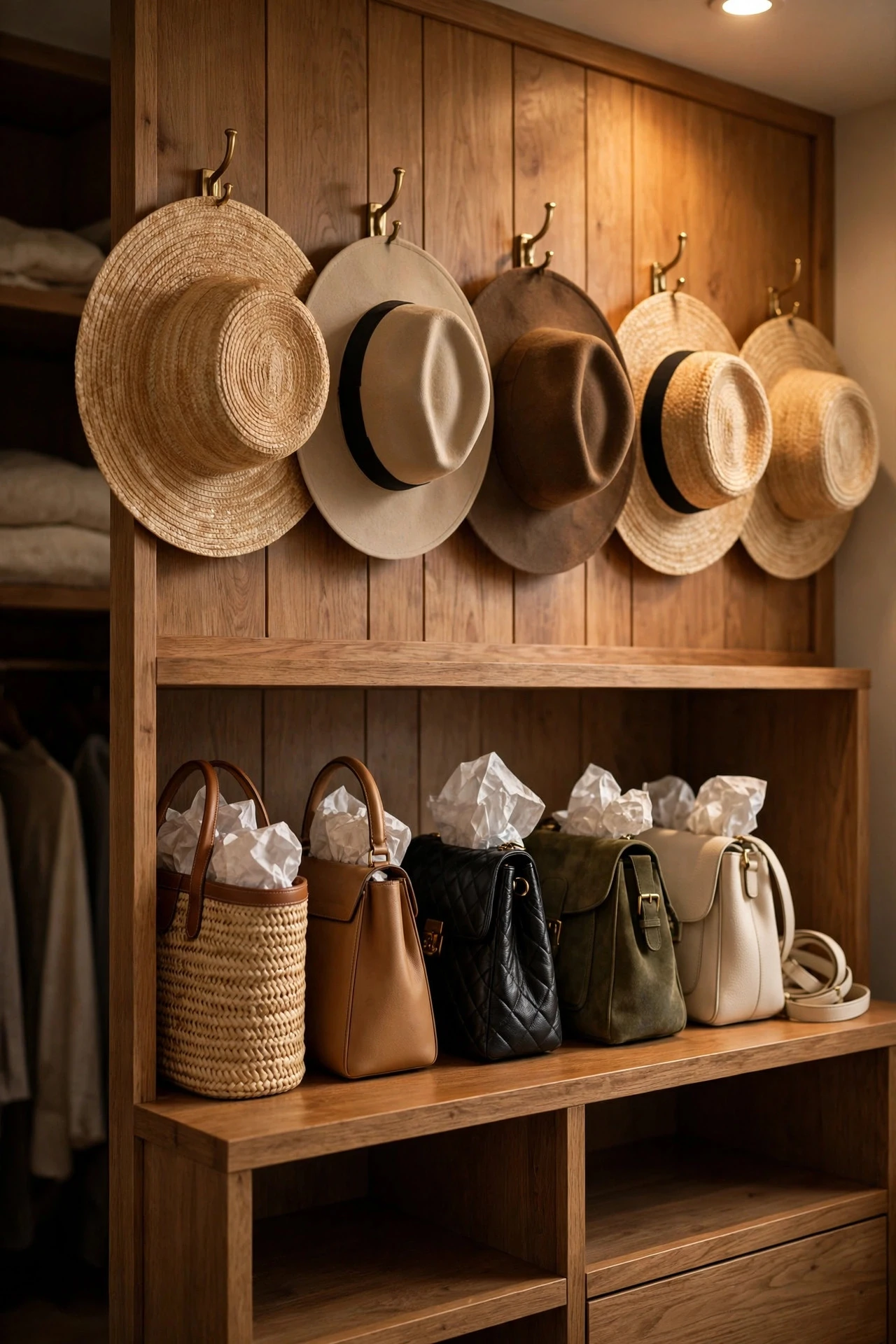
Handbags store best standing upright on shelves with tissue stuffing and a shelf divider between them, while hats store best on wall hooks, a dedicated hat shelf, or in hat boxes stacked no more than three high. Both need support to keep their shape, and both look better displayed than hidden.
Give each bag its own slot: shelf dividers or acrylic shelf separators stop bags leaning on each other and keep the display tidy. For hats, a row of wall hooks at eye level shows off a collection beautifully, while wide-brimmed hats need a flat shelf with a hat stand or a stack of hat boxes. Avoid hanging bags by a single thin hook, which stretches the handle, and never stack heavy bags on top of a structured handbag — it will lose its shape within weeks. Stuff structured bags with acid-free tissue when they are not in use, and keep dust bags on your best pieces — sunlight and dust fade leather faster than daily wear does. A bag stored properly looks new for years longer.
21. How Do You Keep a Walk-In Closet Ventilated and Fresh?
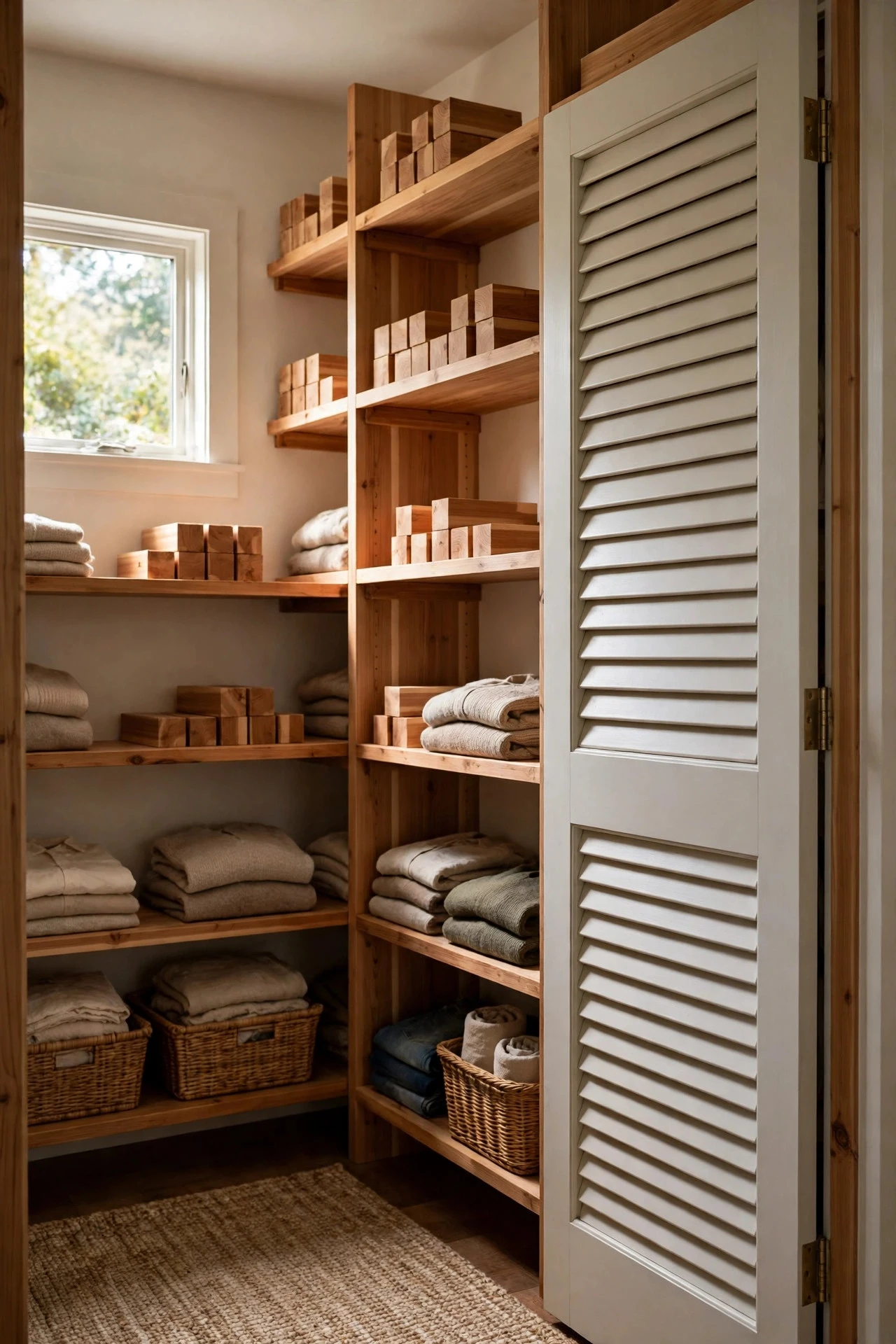
Keep a walk-in closet ventilated with a louvred or vented door, a small gap under the door, and air circulation from the room's heating or cooling — stagnant air is what makes closets smell musty. If the closet has no window, a louvred door or a vent grille in the door is the single most effective fix.
Clothes need air moving around them, especially natural fibres like wool and cotton. Leave a 1-inch gap under the door and avoid packing the rods so tightly that air cannot circulate between garments. Add cedar blocks or sachets in drawers and on shelves — cedar absorbs moisture and deters moths — and a small dehumidifier or moisture absorber if the room feels damp. Avoid solid doors that seal the closet shut in a humid home, and never store damp clothes or wet shoes in a closed closet. If your closet shares a wall with a bathroom, check that wall for damp twice a year — steam migrates through plaster, and a closet is often where the damage shows first. A small humidity monitor on a shelf costs under $15 and tells you the truth.
22. How Do You Make a Walk-In Closet Feel Like a Dressing Room?

Make a walk-in closet feel like a dressing room by combining the finishing touches: layered warm lighting, a full-length mirror, a small seat, a rug underfoot, and personal details like art, a scented candle and a jewellery tray. The dressing-room feel comes from treating the closet as a room to spend time in, not a cupboard to rush through.
Add a low-pile rug or runner in the centre — it softens the floor, quiets footsteps and makes the room feel finished. A small tray on the island or dresser holds the jewellery you reach for daily, and a framed print or a vase of dried flowers adds personality. The final touch is scent: a candle or a diffuser in a light, clean fragrance makes the room feel cared for. If you are extending the same hotel-like feeling into the bedroom itself, these luxury bedroom decor ideas for a five-star hotel feel pair beautifully with a boutique closet. Avoid over-decorating — three or four personal touches are enough; a dressing room should feel calm, not cluttered. Start with lighting and the mirror, then add the rug and the seat — the room earns its dressing-room feel in that order, and each layer makes the next one look better.
Practical tips for a walk-in closet that works
Measure twice, buy once. Sketch your walls to scale, mark the door swing, and measure your longest garment before ordering rods or shelving. A tape measure and an hour of planning saves a weekend of returns.
Light before paint. Choose your bulbs first — 2700K to 3000K warm white — then pick paint colours under that light, because the same paint looks different under cool and warm bulbs. Test a swatch on the closet wall, not in the shop.
Avoid the single-bulb mistake. One bare ceiling bulb creates shadows on every shelf. Layer a centre fixture with LED strips and mirror lighting, and put the main light on a dimmer.
Ventilate, always. A louvred door or a vent grille plus a gap under the door keeps air moving. If the closet smells musty, find the moisture source before masking it with fragrance.
Budget in tiers. Tier 1, $300–$800: paint, matching hangers, LED strips, baskets and labels. Tier 2, $2,000–$5,000: modular system, mirror, seating and a rug. Tier 3, $8,000–$15,000: custom built-ins, island, stone top and statement lighting.
Final thoughts
A luxurious walk-in closet is not about square footage or a five-figure budget — it is about measurements that fit your clothes, lighting that shows them truly, and storage that keeps everything visible and reachable. Pick the three ideas that solve your biggest frustration, build those first, and add the finishing touches as you go.
Frequently Asked Questions
How much does it cost to build a walk-in closet?
A DIY refresh with paint, matching hangers, LED strips and baskets costs $300 to $800. A modular system with a mirror, seating and a rug runs $2,000 to $5,000. A full custom build with built-ins, a centre island and statement lighting costs $8,000 to $15,000. Start with rods and lighting first, since those change how the closet works daily.
What is the minimum size for a walk-in closet?
A comfortable walk-in closet needs at least 5 by 7 feet, with 36 inches of clear walking space in the centre. Smaller rooms can work with a single-wall or L-shaped layout and shallow 12-inch shelves, but below 4 by 5 feet the room functions more like a large reach-in closet than a true walk-in.
What is the best lighting for a walk-in closet?
Layered warm white lighting at 2700K to 3000K works best: a central ceiling fixture on a dimmer, LED strips under the shelves, and a light beside the mirror. This combination shows fabric colours accurately, eliminates shadows on the shelves, and flatters skin tones far better than a single cool-white bulb.
How deep should walk-in closet shelves be?
Shelves should be 14 to 16 inches deep for folded clothes, which holds a folded sweater without overhanging. In small closets, 12-inch shelves work well and leave more walking room. Avoid shelves deeper than 18 inches, because items at the back disappear and the shelf becomes a dark cave.
How do I organise a walk-in closet on a budget?
Start with a modular DIY system and matching velvet hangers, then add baskets, labels and LED strip lights for under $200 combined. Paint the walls and shelves the same colour for a custom look, and upgrade one wall at a time, beginning with the wall you see first when you walk in.
Should a walk-in closet have a door?
Yes, a door keeps dust out and gives the room a finished feel, but choose a louvred or vented door so air can circulate. A solid door can trap humidity and make clothes smell musty. If you prefer an open feel, a curtain or a sliding barn door keeps the entrance clear while still defining the space.