22 Living Room Fireplace Decor Ideas for a Warm, Welcoming Focal Point
A fireplace does more to a living room than any single piece of furniture. It sets the temperature of the room, literally and visually, and it gives every other decision — where the sofa goes, where the light falls, where people naturally gather — a centre to work around. When the hearth is styled well, the whole room feels finished, even if the rest of the furniture is modest.
Looking for more inspiration? Our Nest Decorz homepage gathers the latest home decor ideas, seasonal decorating guides and room-by-room styling tips in one place — start there and explore.
Below are 22 ideas that build the room outwards from the fire: seating that faces the flames instead of the television, mantels styled with restraint, alcoves put to work, and the lighting, textiles and safety clearances that make it all liveable. Start with the layout, then layer the styling on top.
Quick answers:
– Face the fire first: arrange the main seating in an L or U around the hearth, with the TV off to one side — the room should work with the fire lit and the screen off. – Keep the mantel simple: group objects in threes, vary heights, and leave breathing room; one strong piece beats a crowded shelf. – Respect the clearances: keep furniture 12–18 inches from the surround and anything flammable at least 3 feet from the opening. – Layer warm light: combine ambient, task and accent lighting at 2700K warm white so the room glows even when the fire is unlit.
1. How Should You Arrange Sofas Around a Fireplace?
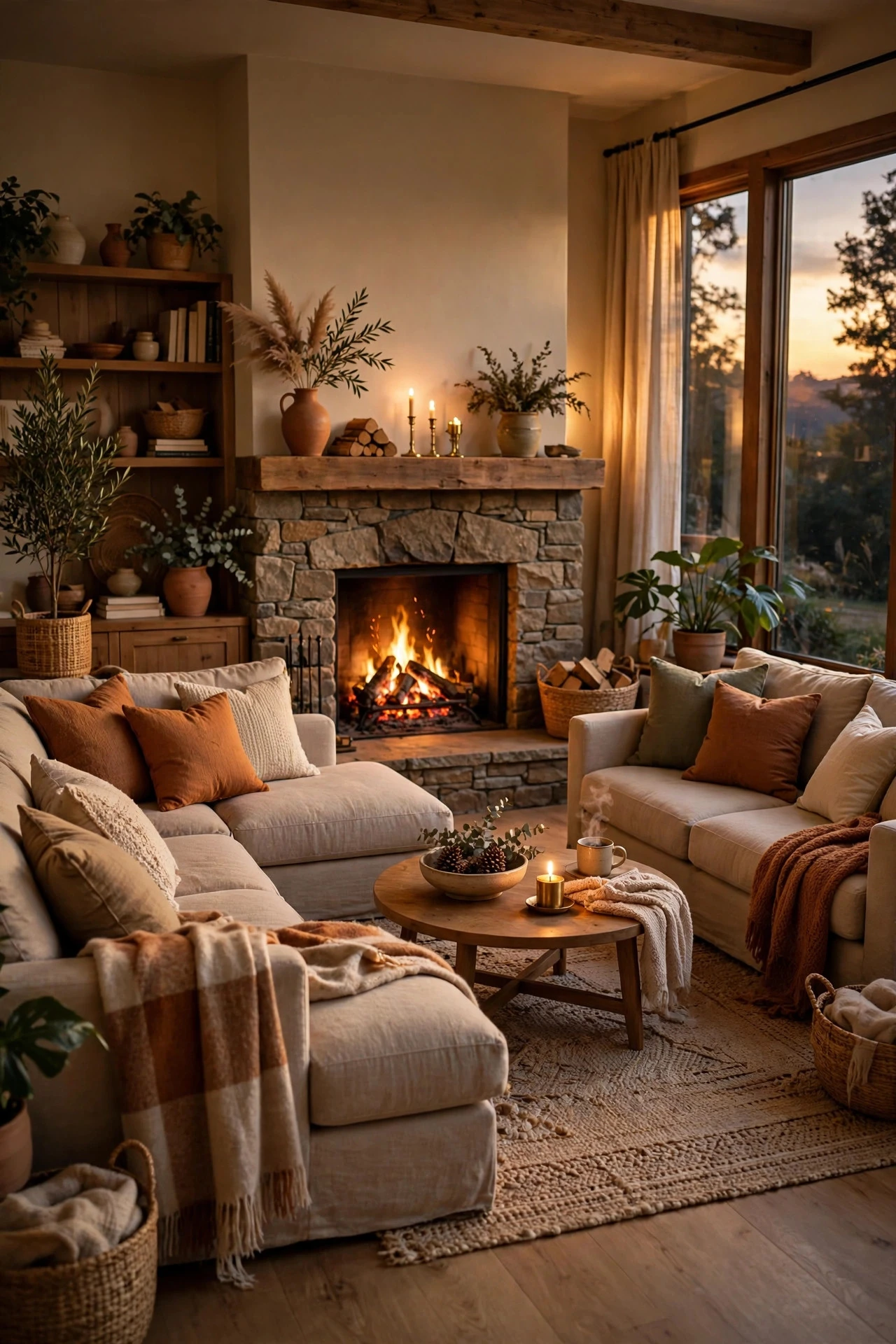
Place the main sofa facing the fireplace, or at a slight angle to it, with a second chair or loveseat forming an L or U shape. This arrangement makes the fire the room's focal point and creates a natural conversation circle, with everyone able to see both the flames and each other.
Keep the front legs of the seating 12–18 inches from the surround so the arrangement feels close without crowding the hearth. A rug anchoring the group should extend at least 30cm beyond the furniture on all sides. Budget £0 for a rearrangement of pieces you already own, or £400–£1,200 for a new two-seater to complete the shape. In a small room, use a loveseat and one swivel chair so the layout can turn toward the fire or the room. The mistake to avoid is lining every seat up facing the television and treating the fireplace as a backdrop.
2. What Is the Rule of Three for Mantel Styling?
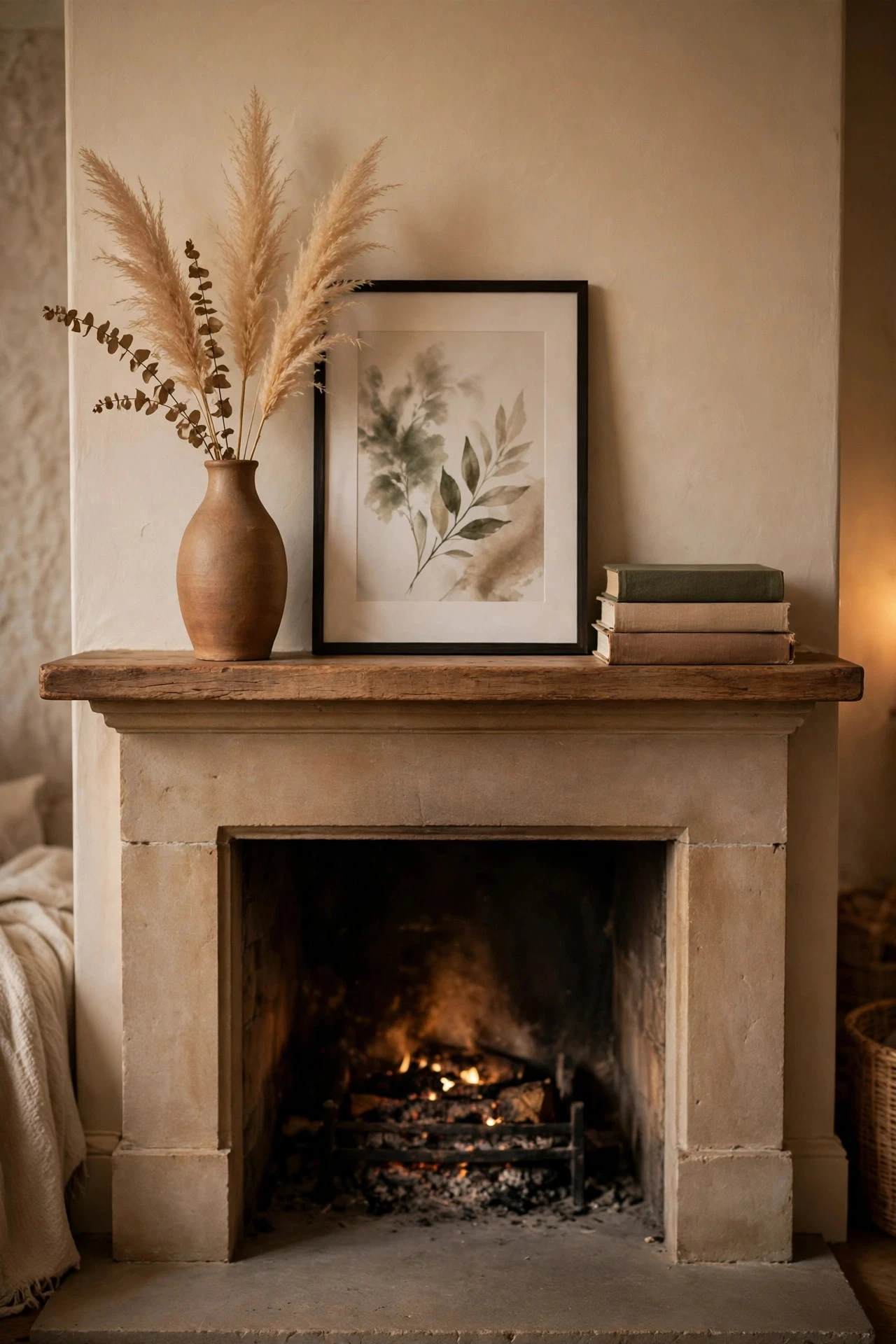
The rule of three means grouping mantel objects in odd numbers — three pieces, or clusters of three — because odd groupings look intentional and balanced to the eye. Vary the height of each piece, with the tallest at one end or in the centre, and leave empty space between groups.
A classic trio is a tall vase or candlestick, a medium framed print, and a low bowl or stack of books. Keep the total height of any object below a third of the wall space above the mantel so the arrangement does not fight with artwork hanging there. Budget £30–£90 for three thrifted or high-street pieces. In a rented home, use lightweight objects that need no fixing. The mistake to avoid is lining up a dozen small items in a row, which reads as clutter rather than styling.
3. Should You Hang Art or a Mirror Above the Fireplace?
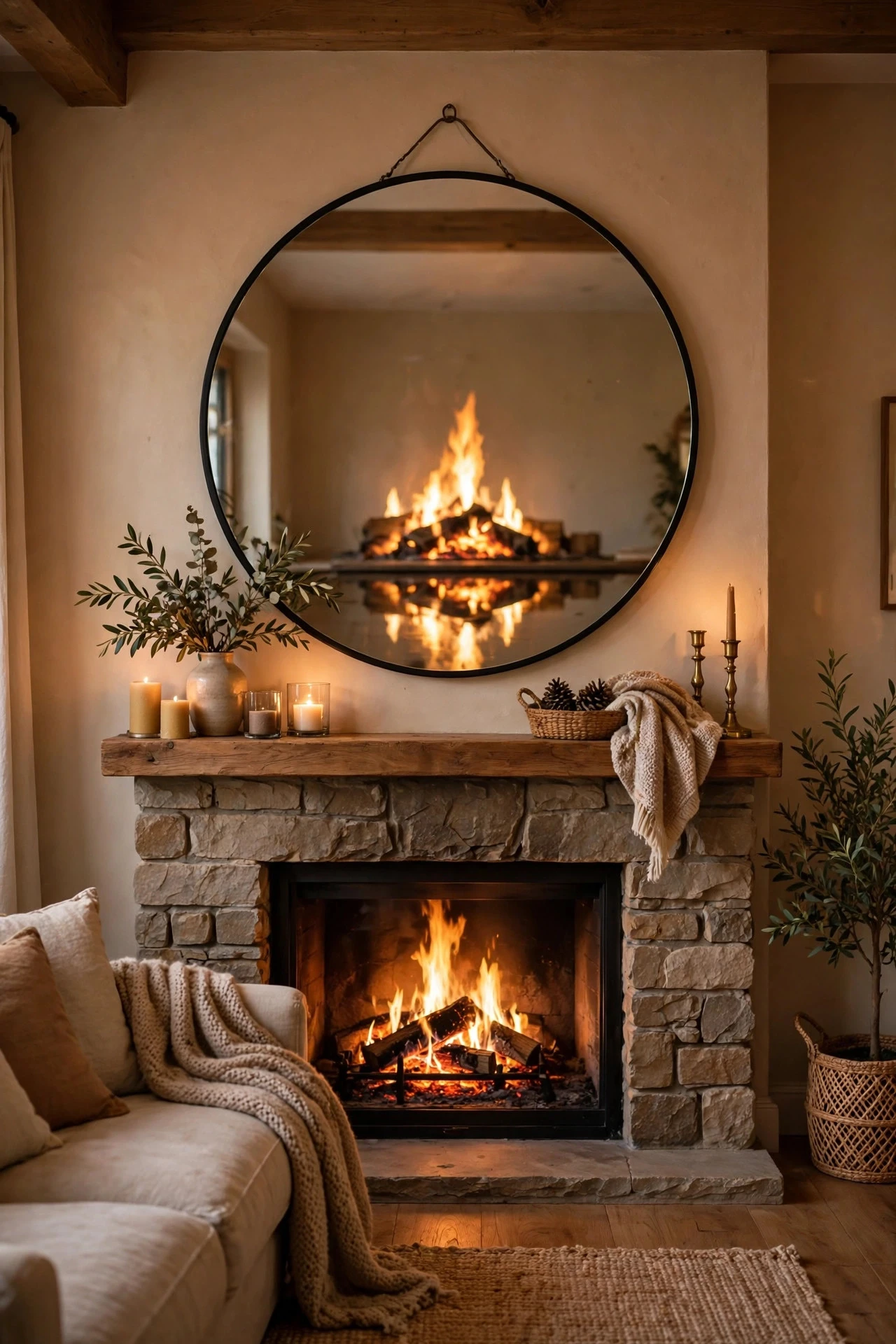
Hang one large piece — a mirror or a single artwork — above the fireplace rather than a gallery of small frames, because the chimney breast is a bold architectural feature that needs one confident response. A mirror doubles the firelight and makes the room feel larger, while art adds colour and personality.
Size the piece to roughly two-thirds the width of the mantel and hang it so its centre sits at eye level from the sofa, usually 15–25cm above the mantel shelf. Budget £60–£250 for a framed print or a good-quality mirror. In a small room, a mirror is the safer choice because it borrows light from the window. The mistake to avoid is hanging a small picture that looks lost on a wide chimney breast, or placing a candle directly beneath a valuable painting where heat and soot can damage it.
4. How Can Alcove Shelving Make a Fireplace Wall Work Harder?
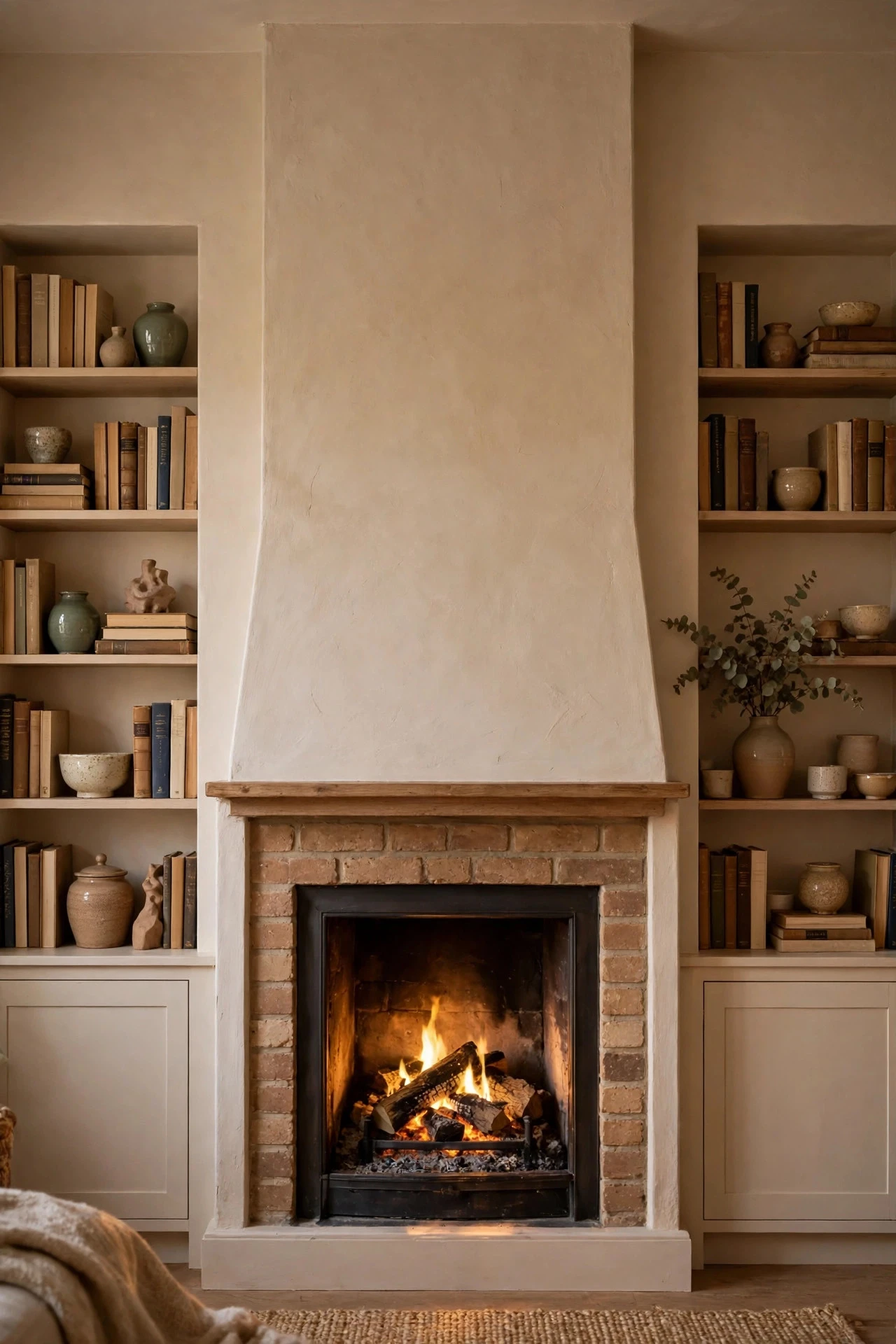
Alcoves on either side of a chimney breast are the room's best storage opportunity, so fit them with open shelves, a low cupboard, or a mix of both. Open shelves display books, ceramics and plants; cupboards below hide clutter and give the wall a built-in, furniture-like finish.
Paint the shelving the same colour as the chimney breast for a seamless look, or a contrasting deep tone for drama. Keep shelf spacing 30–35cm for books and leave one shelf partly empty so the display can breathe. Budget £150–£600 for fitted-look freestanding units, or £800–£2,000 for bespoke joinery. In a rented home, use tall freestanding bookcases that slot into the alcove without fixings. The mistake to avoid is filling every shelf edge to edge, which turns useful storage into visual noise.
5. What Does Colour Drenching a Chimney Breast Do?

Colour drenching means painting the chimney breast, mantel, alcoves and skirting in one deep colour, which makes the fireplace feel monumental and the room feel cocooning. Dark green, inky blue or warm charcoal all work, and the fire's glow looks richer against a dark backdrop.
Use a heat-resistant paint on the surround itself and a durable matt or eggshell emulsion on the breast, testing a swatch beside the fire in both daylight and firelight before committing. Budget £40–£120 for paint and brushes if you do it yourself. In a small room, choose a mid-tone rather than near-black so the wall recedes without swallowing the light. The mistake to avoid is painting only the breast and leaving white alcoves, which breaks the drenching effect and makes the wall look unfinished.
6. How Do You Style a Log Store as Decor?
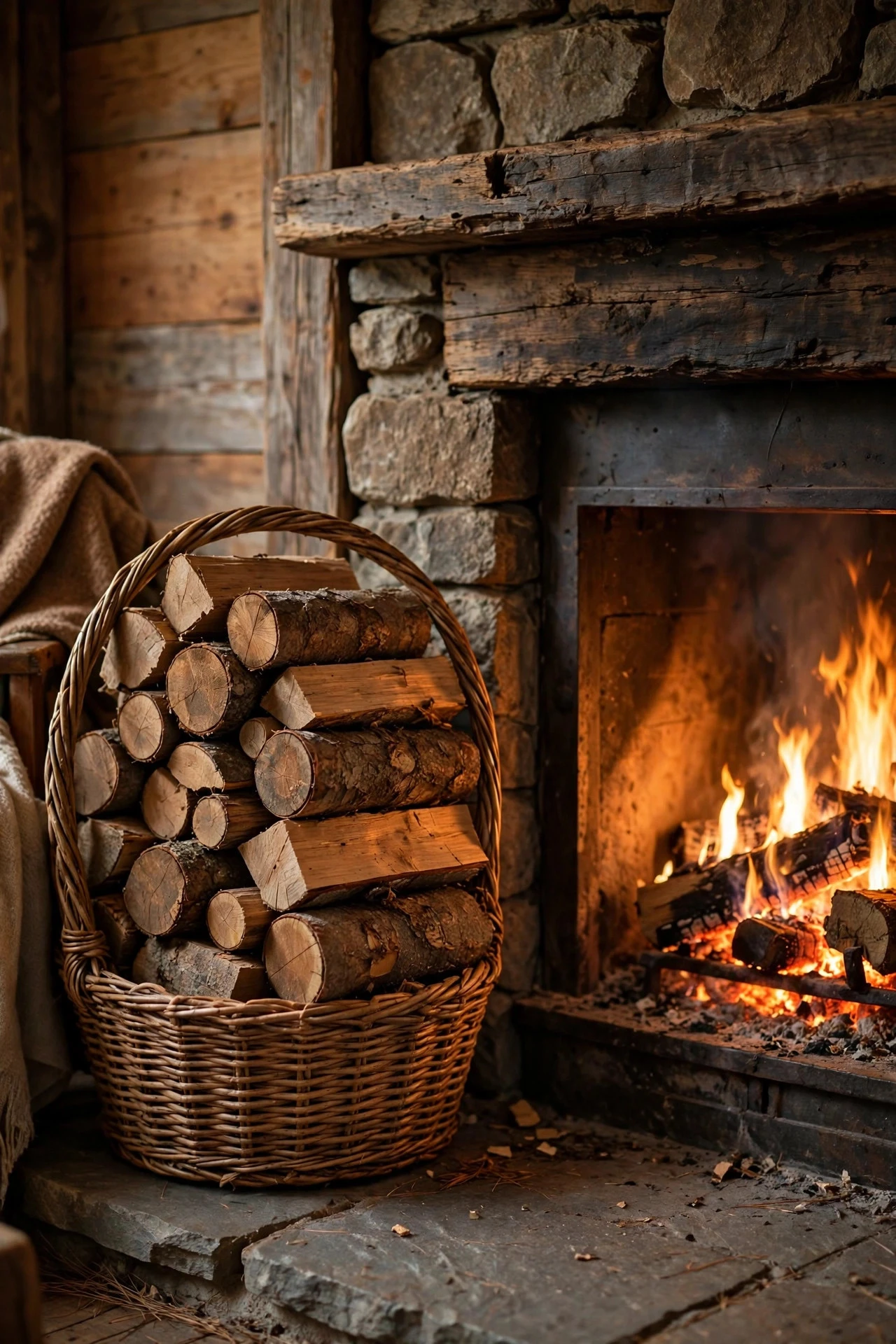
Stack logs neatly in a purpose-made basket, a recessed alcove niche, or a slim metal log holder beside the hearth, and treat the stack itself as a textural feature. The bark, the cut ends and the rhythm of the rows add a natural, rustic layer that no shop-bought ornament can match.
Keep the store at least 3 feet from the fire opening and only bring in a few days' worth of logs at a time, storing the rest outside or in a garage. A woven basket costs £25–£60, a metal holder £40–£120. In a home without a working fire, a log stack in the grate still gives the fireplace purpose and texture. The mistake to avoid is piling logs loosely against the wall, where they shed bark and look untidy instead of intentional.
7. How Should You Style the Hearth Itself?

Style the hearth as a low stage: a pair of andirons or a fire basket inside the opening, a set of fire tools to one side, and a single lantern or a small stack of books at the other end. Keep the centre of the hearth clear so the fire remains the star and the floor in front stays usable.
Choose fire tools in a finish that matches the surround — blackened steel for a traditional grate, brushed brass for a lighter scheme — and keep them compact. Budget £40–£150 for a good tool set and £30–£80 for a hearth rug or fire guard. In a small room, wall-mount the tools or choose a slim set so the hearth does not eat floor space. The mistake to avoid is covering the hearth with ornaments that must be moved every time the fire is lit.
8. How Do You Layer Lighting Around a Fireplace?

Layer three types of light: ambient light from a ceiling fitting or floor lamp, task light from a reading lamp beside the sofa, and accent light from picture lights or small lamps on the mantel. Use 2700K warm white bulbs throughout so the electric light matches the firelight instead of fighting it.
Add a dimmer to the main light so the room can drop to a glow once the fire is lit, and put mantel lamps on a separate switch or a smart plug. Budget £60–£200 for two warm lamps and a dimmer switch. In a rented home, plug-in picture lights and battery candles give the same layered effect without an electrician. The mistake to avoid is a single cold-white ceiling light, which flattens the room and kills the warmth the fire creates. For more on building this layered effect, see these living room lighting ideas for a warm layered glow.
9. What Rug Works Best in Front of a Fireplace?

Choose a wool rug large enough to sit under the front legs of the main seating, extending at least 30cm beyond the furniture on each side, and keep its edge a minimum of 60cm clear of the hearth opening. Wool is naturally flame-resistant, which makes it the safest and most practical choice for a fireside rug.
A low pile is easier to clean of ash and soot than a deep shag, and a pattern in warm tones hides the odd mark. Budget £80–£350 for a good wool rug in a standard living-room size. In a small room, a smaller rug that still reaches under the sofa's front legs defines the seating zone without crowding the hearth. The mistake to avoid is a rug that stops short of the furniture, which makes the seating group look as though it is floating. For sizing and placement detail, these living room rug ideas to ground your seating area cover the same ground.
10. How Do You Choose a Stone, Brick or Tile Surround?

Choose the surround to match the room's character: honed limestone or marble for a calm, elegant room, exposed brick for texture and warmth, and handmade-look tiles for colour and pattern. The surround frames the fire, so its material sets the tone for everything around it.
Keep the scale in proportion — a chunky stone surround suits a high ceiling, while a slim tiled frame suits a smaller room. Budget £200–£800 for a tiled or brick-slip surround, or £1,000–£3,000 for natural stone. In a rented home, a freestanding fire surround screen or a peel-and-stick tile panel gives the look without permanent change. The mistake to avoid is mixing three competing materials on one fireplace, which makes the focal point look indecisive. A fireplace surround in a single honest material always reads more expensive than a busy combination.
11. Are Modern Linear Fires Worth It in a Living Room?
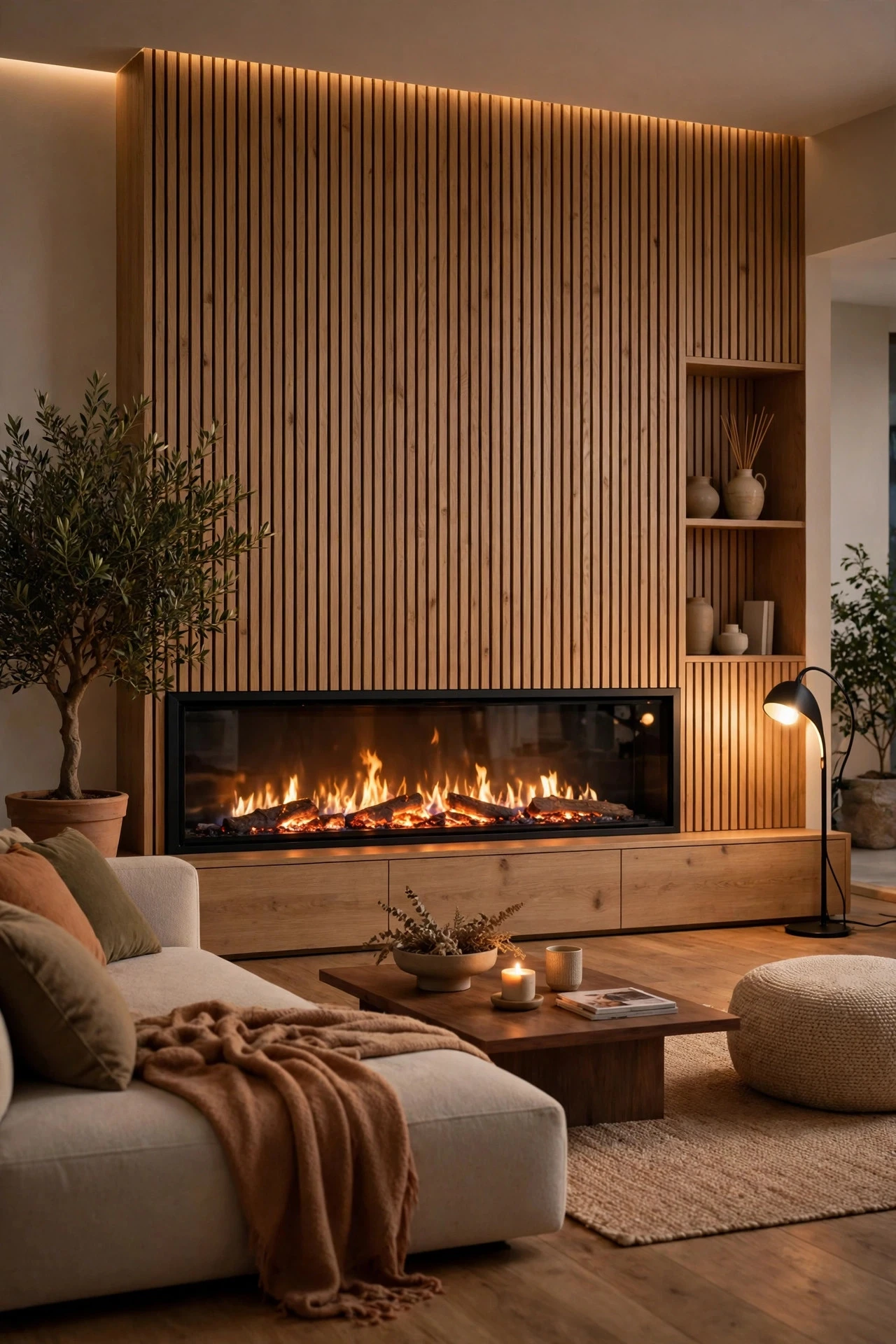
A modern linear fire — a long, low, flame-effect or bioethanol unit set into a media wall — suits contemporary rooms because its horizontal line echoes the television and the low furniture beneath it. It gives the warmth and movement of a fire without a chimney, a grate or ash.
Choose a flame width roughly two-thirds the width of the wall unit it sits in, and pair it with a simple plaster or panelled finish so the flame itself is the decoration. Budget £800–£3,000 for a quality electric or bioethanol linear fire, plus installation. In a small room, a linear fire set low in the wall saves the floor space a traditional hearth would take. The mistake to avoid is mounting the fire too high, which turns a relaxing glow into a glare at eye level.
12. Where Should the TV Go When There Is a Fireplace?

Put the television beside the fireplace, on the chimney breast's neighbouring wall or in an alcove, rather than above the mantel. Side placement keeps the screen at a comfortable viewing height, protects it from heat and soot, and lets the fireplace keep its role as the room's focal point.
Mount the TV so its centre is at seated eye level, about 100–110cm from the floor, and angle it slightly toward the main sofa if it sits in an alcove. Budget £30–£80 for a good wall bracket, or £150–£400 for a pull-out mount that adjusts for different seats. In a small room, a TV on a low stand in the alcove is the simplest solution and needs no fixing. The mistake to avoid is hanging the screen above the fire, where the viewing angle strains necks and the heat shortens the TV's life.
13. How Do Plants and Greenery Work Beside a Fire?
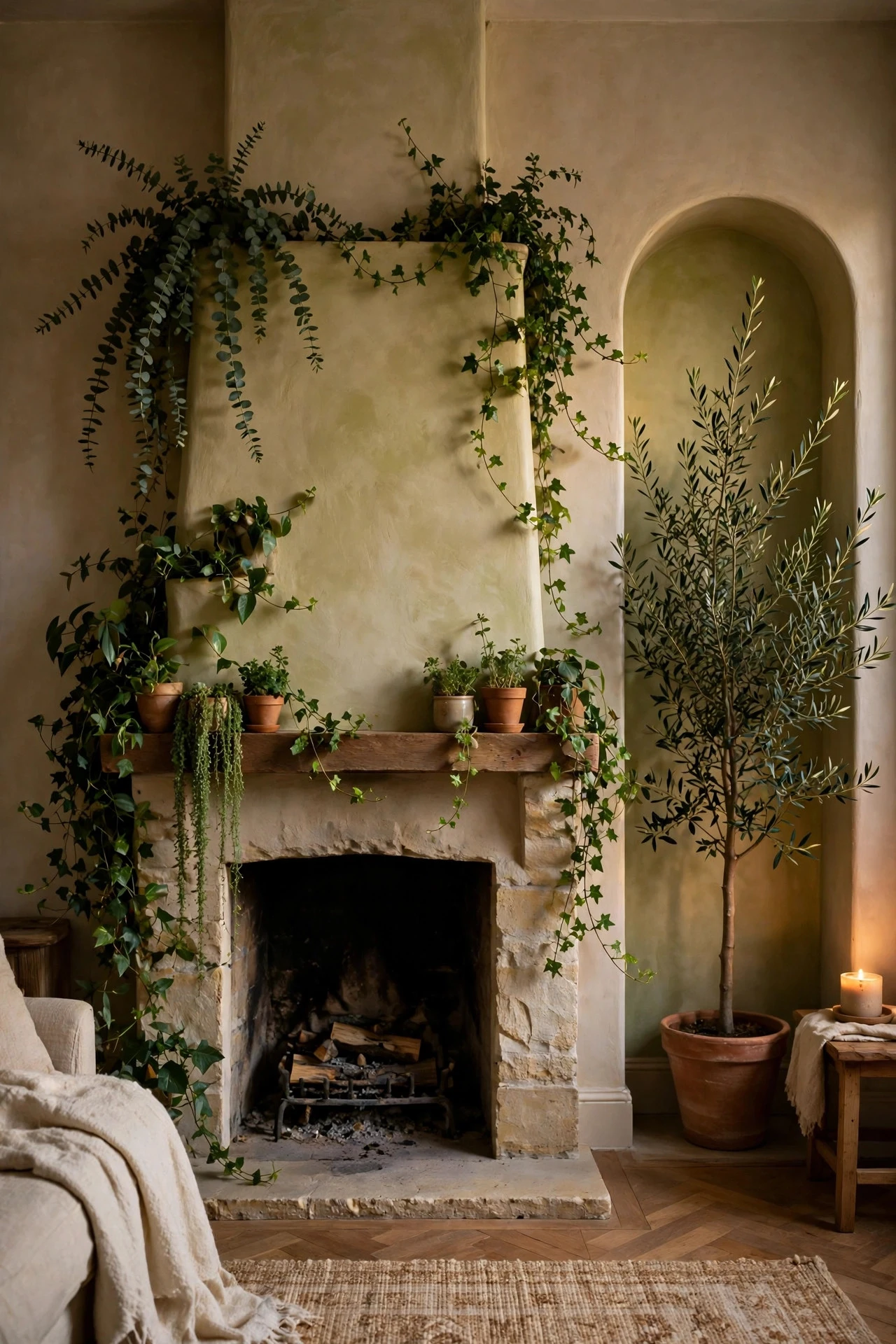
Use plants to soften the hard lines of a chimney breast: a tall olive or fiddle-leaf fig in one alcove, trailing pothos on a high shelf, and a small fern or eucalyptus sprig on the mantel. Greenery adds life and colour to a wall that is otherwise stone, paint and metal.
Keep plants at least 60cm from the fire opening and choose varieties that tolerate dry, warm air, watering more often in winter when the fire is in use. Budget £20–£80 for three plants in good pots. In a rented home, faux trailing greenery on a high shelf gives the same softening effect with no watering. The mistake to avoid is placing a plant on the mantel directly above a working fire, where rising heat will scorch the leaves within days.
14. What Safety Clearances Does a Fireplace Need?
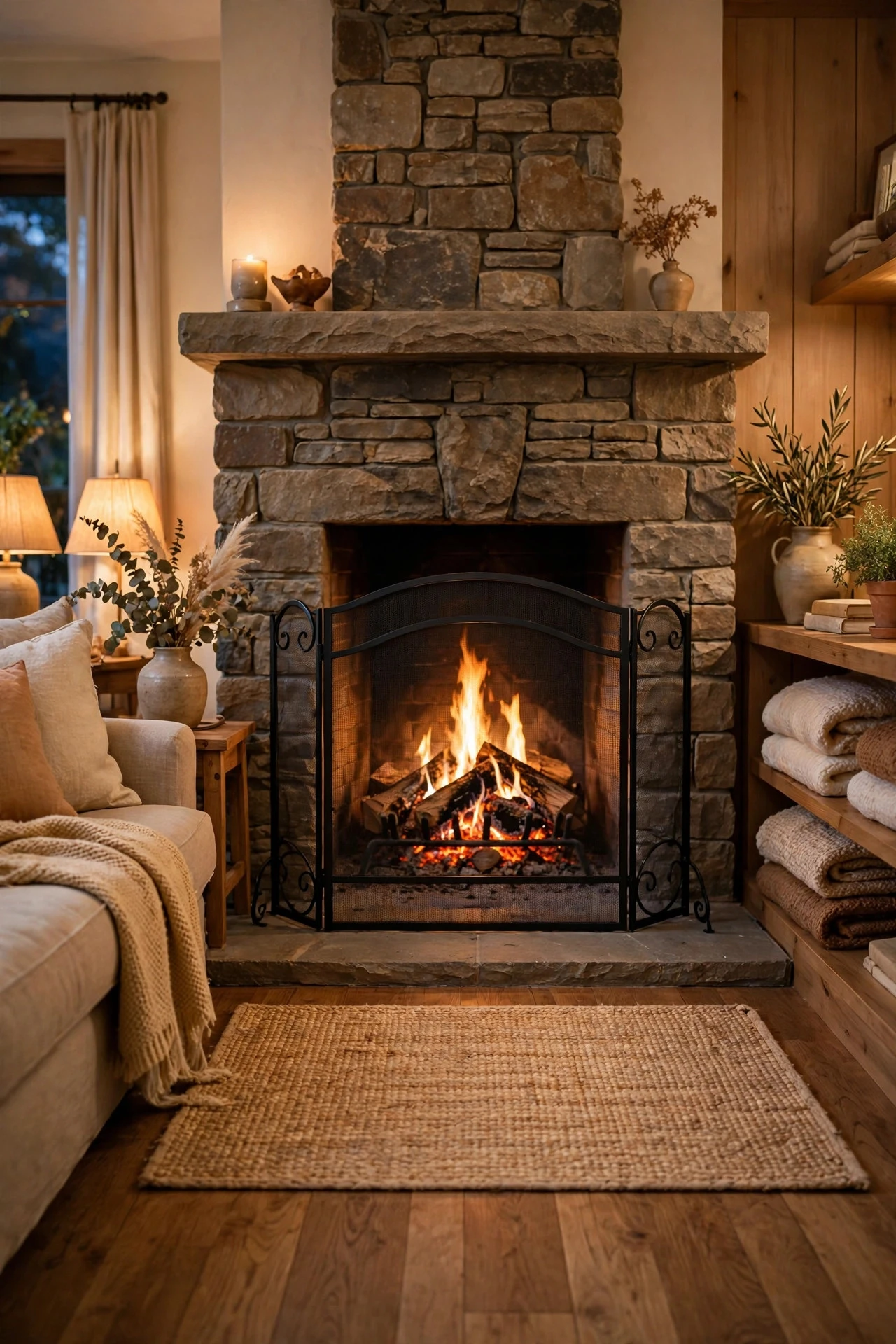
Keep furniture 12–18 inches from the surround, keep anything flammable — throws, cushions, paper, curtains — at least 3 feet from the fire opening, and never place real candles on or near the mantel of a working fire. Use LED candles near the fire instead, and fit a fire guard if children or pets use the room.
Check that the chimney is swept annually and that a carbon monoxide alarm sits in the room, tested monthly. Budget £30–£60 for an alarm and £50–£80 for an annual sweep. In a small room, choose a slim fire guard and wall-mounted storage so the clearances do not eat the whole floor. The mistake to avoid is treating clearances as optional decoration rules — they are the difference between a cosy room and a dangerous one.
15. How Do You Decorate a Small Living Room With a Fireplace?

In a small living room, let the fireplace do the decorating and keep everything else light: a slim mantel, one mirror above it, pale walls, and furniture with visible legs so the floor shows through. The fire is already the room's biggest feature, so it does not need competition.
Use an L-shaped arrangement with a loveseat and one chair, a rug that reaches the hearth's safe edge, and alcove shelves instead of freestanding bookcases. Budget £100–£400 for a mirror, a rug and a pair of slim lamps. In a rented home, a large leaning mirror and a freestanding shelf unit give the same effect without fixings. The mistake to avoid is a bulky corner sofa that blocks the fire and makes the room feel smaller than it is.
16. How Can a Non-Working Fireplace Still Be Decor?
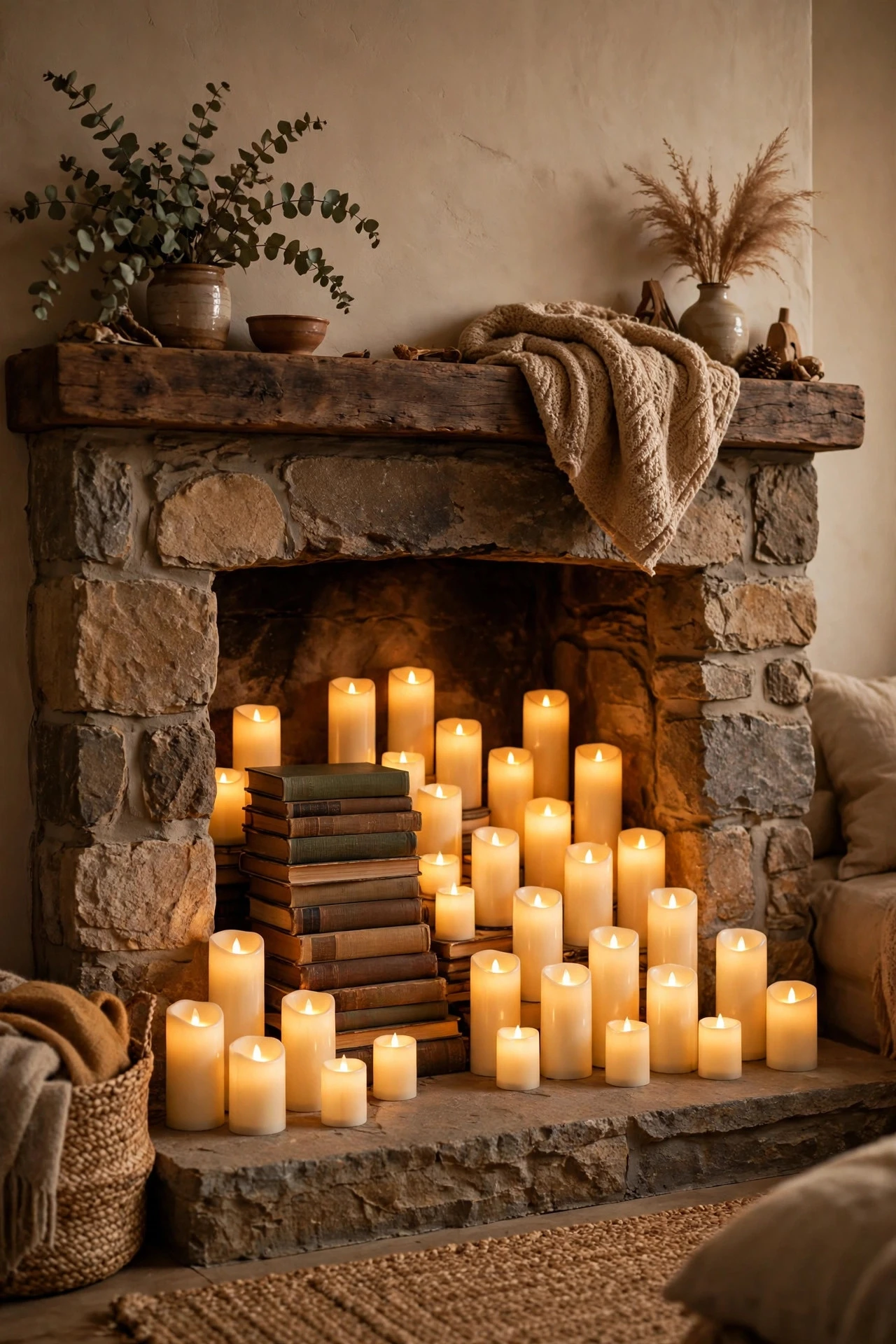
A non-working fireplace is a ready-made display niche: fill the opening with a cluster of LED candles, a stack of books, a large vase of dried stems, or a neatly arranged log pile. The opening's depth and dark interior make anything placed inside it look deliberate and framed.
Paint the inside of the firebox a deep colour or line it with a mirror to add depth, and keep the arrangement simple so the architecture shows. Budget £20–£70 for LED candles or a log stack. In a rented home, none of this needs permission, since nothing is fixed or altered. The mistake to avoid is leaving the opening empty and dusty, which makes the room's focal point look abandoned rather than styled.
17. How Do You Style a Fireplace for Each Season?
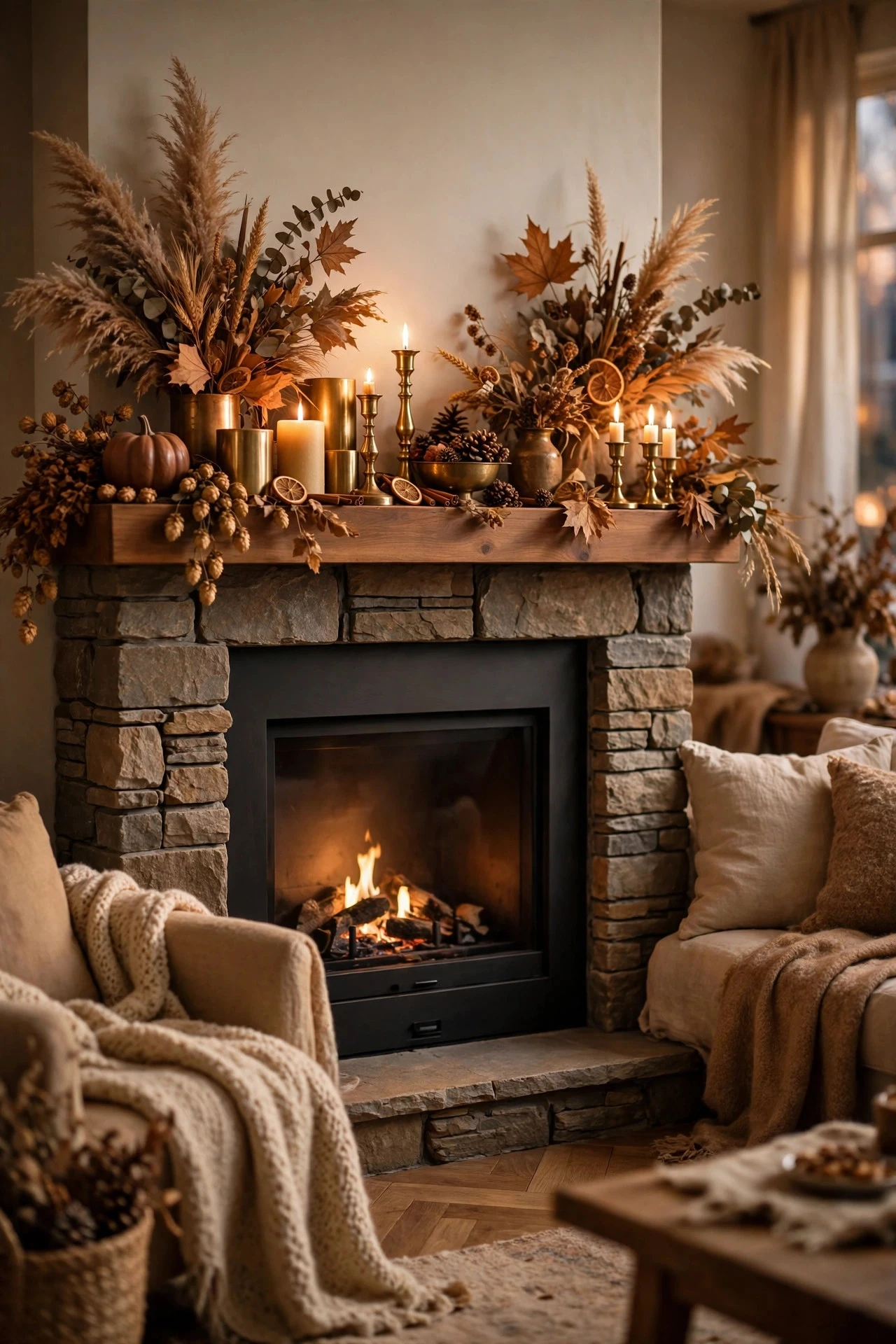
Change the mantel with the seasons and keep the structure the same: spring brings fresh greenery and pale ceramics, summer brings a large vase of stems and lighter textiles, autumn brings warm metals and dried foliage, and winter brings candles, evergreen and thicker throws. The mantel stays styled year-round; only the accessories rotate.
Store the off-season pieces in one labelled box so the swap takes twenty minutes. Budget £20–£50 per season for a few fresh stems or candles. In a small home, a single seasonal swap — one vase, one garland, one throw — is enough to mark the change. The mistake to avoid is buying a full set of themed ornaments every season, which fills cupboards and dates the room fast.
18. What Mantel Decor Suits a Luxury Living Room?
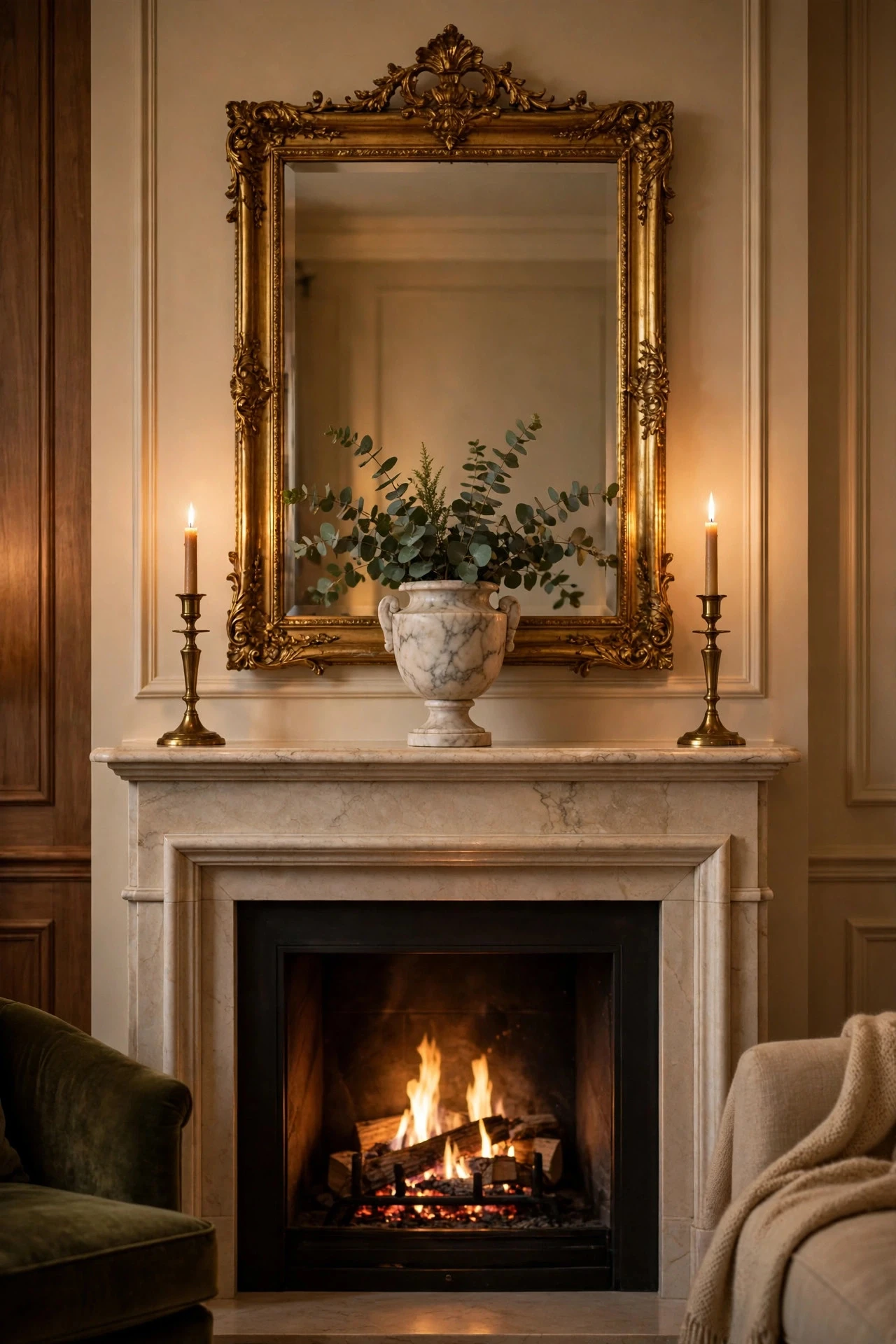
A luxury mantel uses fewer, better pieces: a large gilt or black-framed mirror, a pair of matching candlesticks in brass or marble, and one sculptural object such as a stone vessel or a carved box. Restraint is the luxury — each piece has space and the materials do the talking.
Match the metal finishes across the mantel, the fire tools and the lighting so the room feels considered rather than collected at random. Budget £150–£500 for three quality pieces bought over time. In a smaller room, one oversized mirror and a single pair of candlesticks is enough to carry the look. The mistake to avoid is filling a luxury mantel with small trinkets, which undermines the expensive materials around them. For the wider room, these luxury living room decor ideas for an elegant home pair well with a dressed mantel.
19. How Do You Add Texture Without Cluttering the Fireplace Wall?
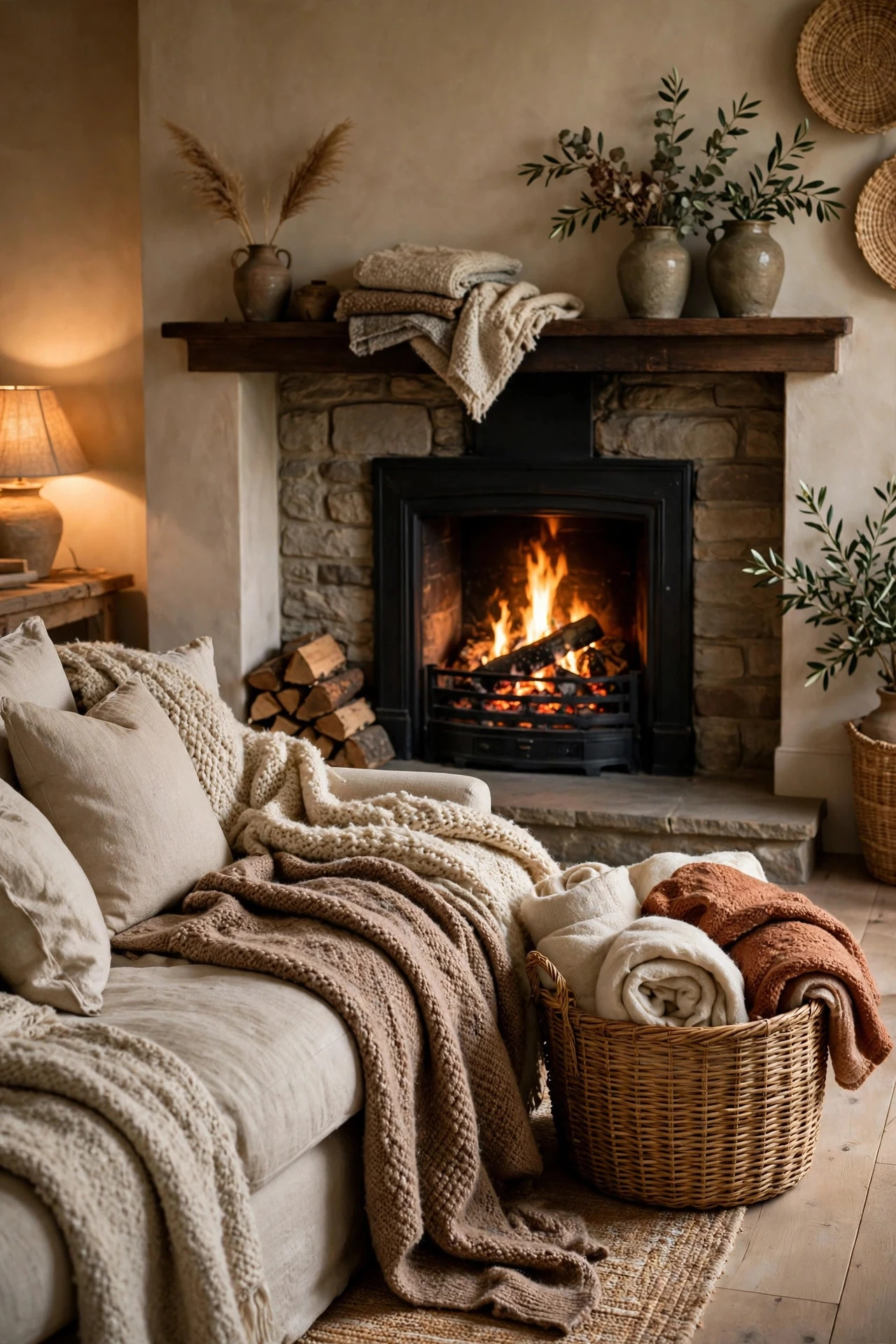
Add texture through materials rather than objects: a chunky wool throw over one sofa arm, a linen cushion, a woven basket beside the hearth, and a plaster or limewash finish on the chimney breast. Each texture is part of something useful, so the wall gains warmth without gaining clutter.
Limit the mantel to three objects and let the rug, the throws and the wall finish carry the texture instead. Budget £40–£120 for a wool throw and two linen cushion covers. In a rented home, throws, cushions and a basket are the easiest texture to add and the easiest to take away. The mistake to avoid is adding texture with more ornaments, which reads as clutter no matter how tactile the pieces are.
20. How Should Curtains and the Fireplace Work Together?
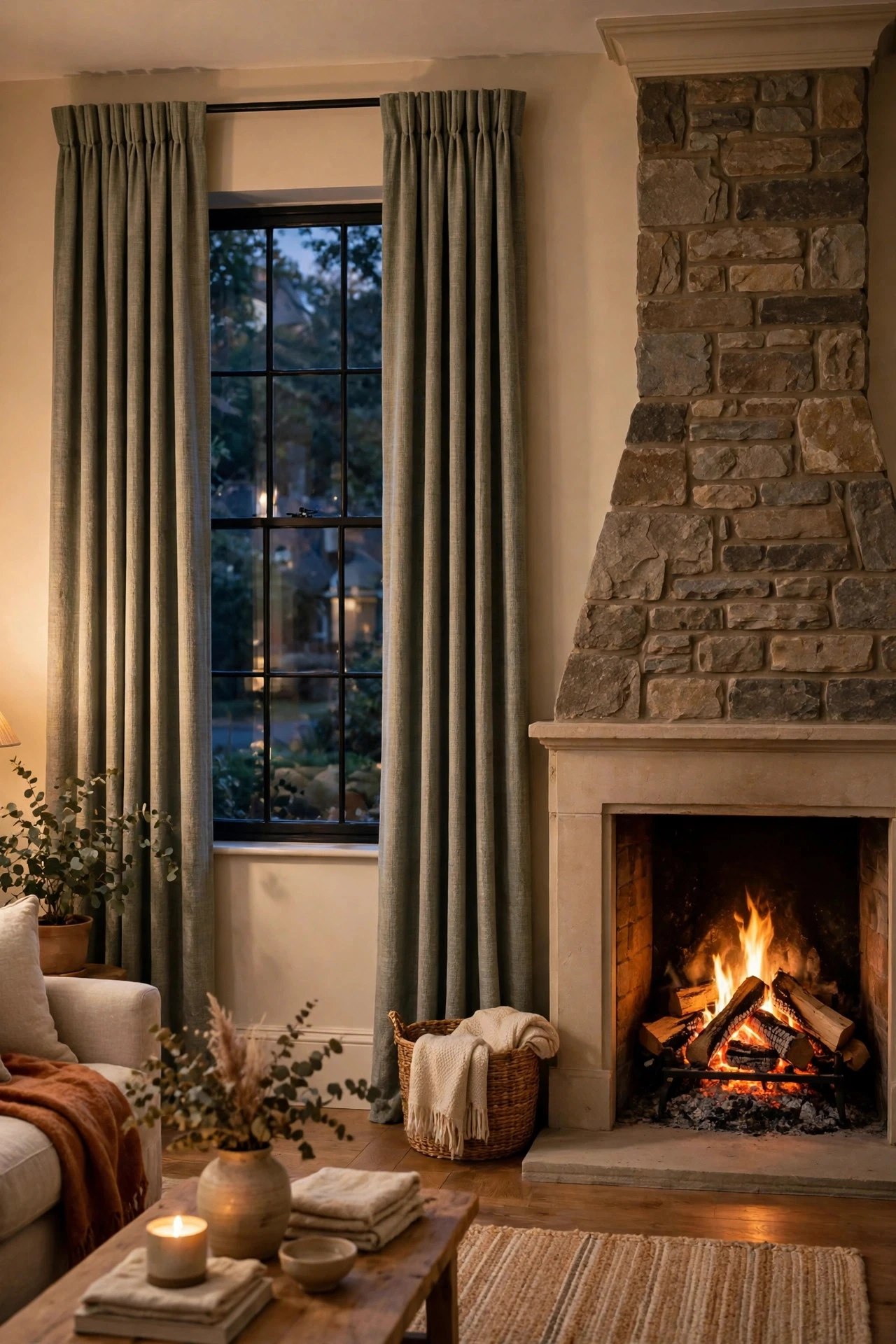
Choose curtains that frame the fireplace wall rather than compete with it: floor-length thermal curtains in a warm neutral, hung high and wide so they clear the radiator and the hearth. Thermal lining keeps the room warm, blocks draughts from the chimney, and helps the fire's heat stay in the room.
Hang the pole 10–15cm above the window frame and extend it 15–20cm beyond each side so the curtains stack clear of the glass. Budget £60–£250 for a ready-made thermal pair, or £200–£600 made to measure. In a small room, a single colour close to the wall colour keeps the window wall calm. The mistake to avoid is short curtains that end at the sill, which chop the wall in half and look unfinished beside a full-height chimney breast.
21. How Do You Make a Fireplace Wall the Room's Art?
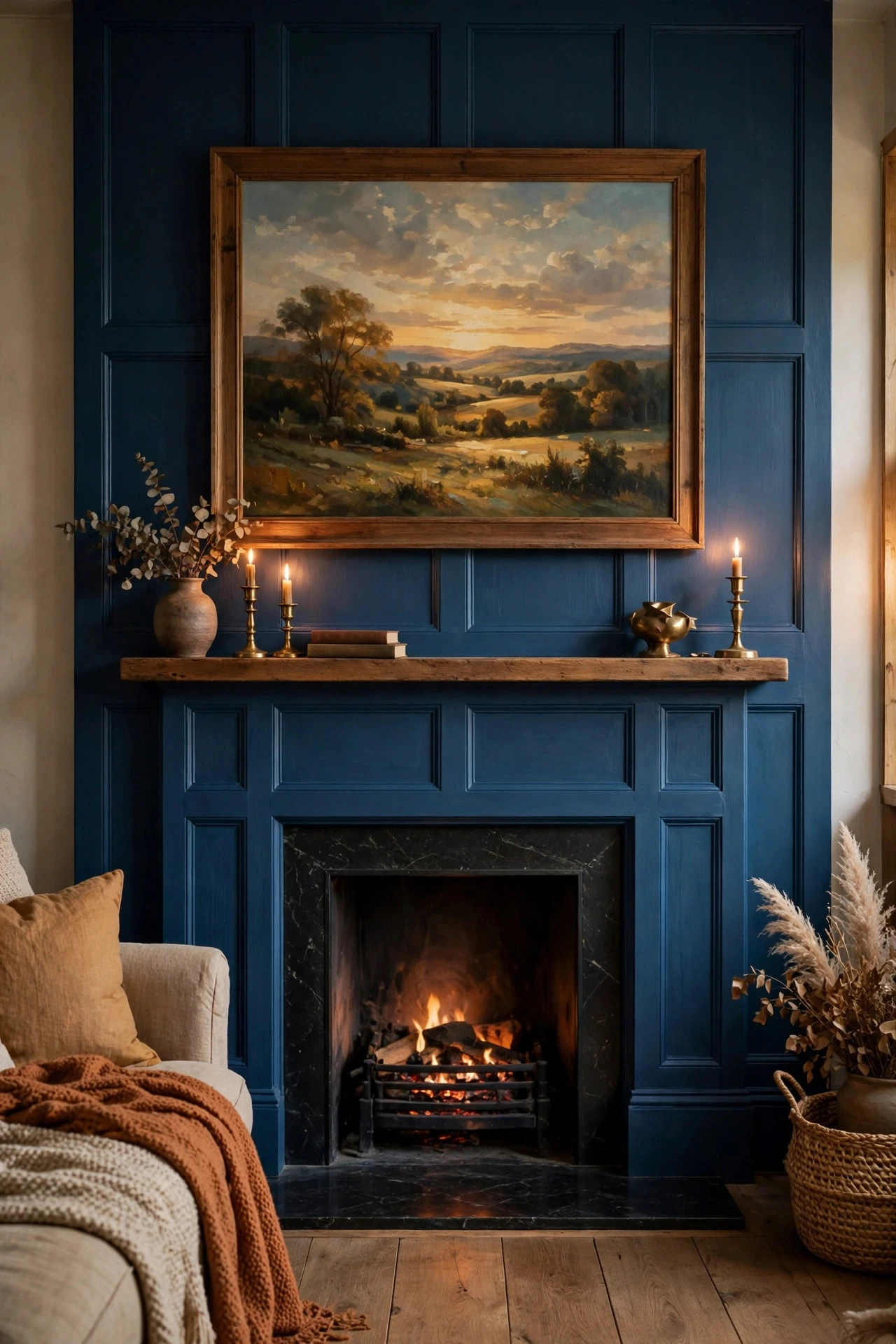
Treat the whole chimney breast as the artwork: panel it in simple shaker-style boards, paint it a deep colour, hang one large piece above the mantel, and flank it with matching sconces or picture lights. The wall itself becomes the feature, so it needs no gallery of small frames to justify it.
Keep the panelling shallow — 2–3cm deep — so it reads as detail rather than bulk, and align the panel joints with the mantel shelf for a tailored finish. Budget £150–£500 for DIY panelling and paint, or £800–£2,000 fitted. In a rented home, a large leaning artwork and two plug-in sconces give a similar framed effect without fixings. The mistake to avoid is panelling the breast and then covering it with a busy gallery wall, which hides the very feature you built. These living room wall decor ideas that transform a blank wall show the same principle on plainer walls.
22. What Finishing Touches Pull the Whole Fireplace Room Together?
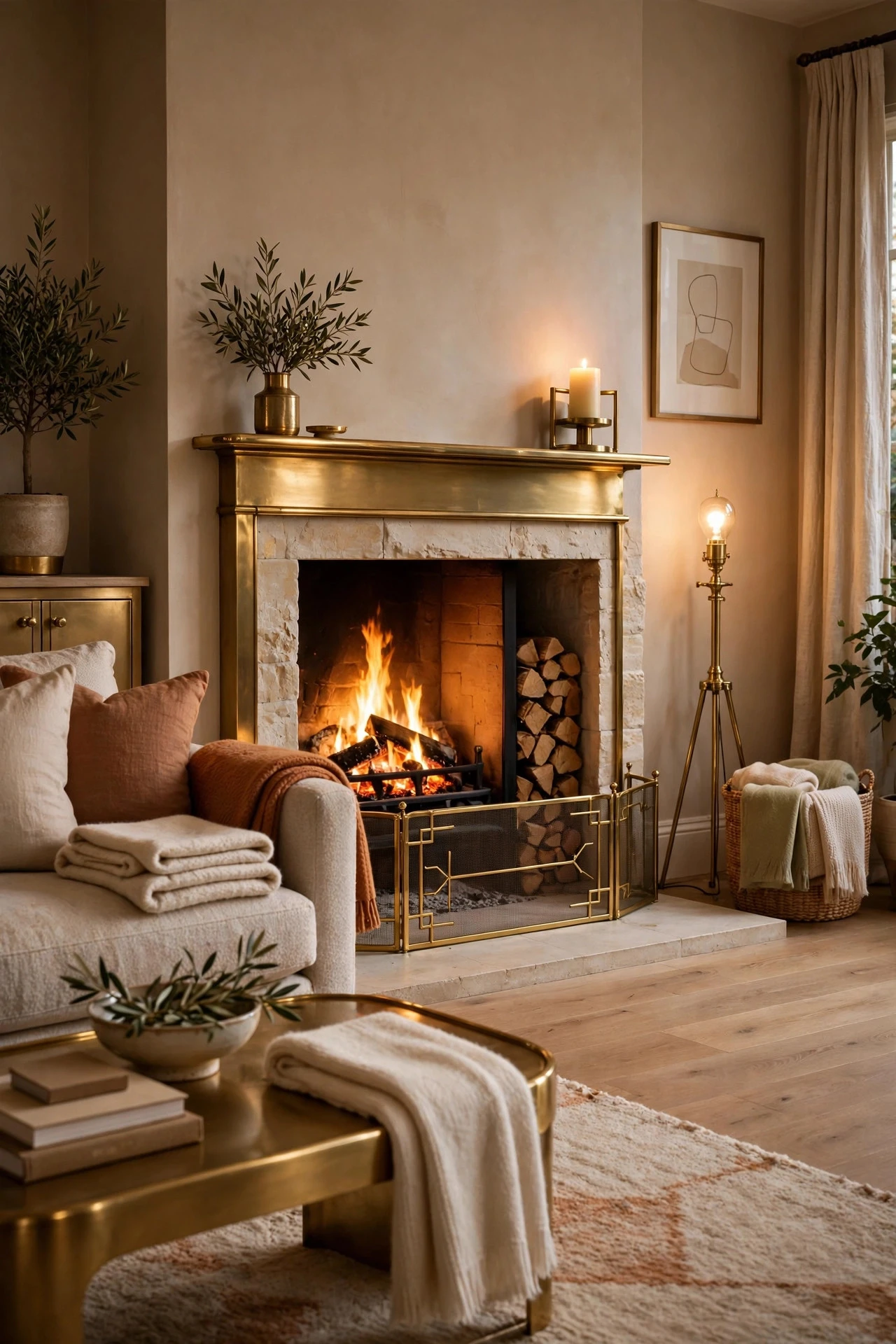
The finishing touches are the small consistencies: matching metal finishes, one scent from a candle or diffuser, throws folded the same way on each seat, and a clear hearth with nothing stray on it. None of these is dramatic alone, but together they make the room feel finished rather than assembled.
Do a final walk-through from the doorway: check the mantel reads as one composition, the rug sits straight, and no cable or clutter breaks the view of the fire. Budget £20–£60 for a candle, a diffuser and a basket to corral the fire tools. In a small or rented home, these low-cost touches are the fastest way to make the fireplace feel intentional. The mistake to avoid is adding one more object to a finished mantel — stop when the room feels calm, not when the shelf is full. A well-chosen fireplace mantel benefits from the same discipline: the shelf is a frame, not a storage surface.
Practical Tips
Test paint beside the fire before you commit: paint a large swatch on the chimney breast and look at it in daylight, in lamplight and with the fire lit, because warm firelight shifts every colour toward yellow. Buy sample pots rather than full tins, and live with the swatch for a week. Measure every clearance twice — furniture at 12–18 inches from the surround, flammables 3 feet from the opening, rug edges 60cm clear of the hearth — and mark them with masking tape while you arrange furniture so nobody drifts closer over time. Set a realistic budget in three bands: under £100 for styling swaps, £200–£600 for a rug, mirror and lighting, and £1,000-plus for a new surround or fitted alcoves, and finish one band before starting the next. Keep a small fireside kit in a basket: matches, a lighter, a brush and pan for ash, and a fire guard if children visit. Finally, sweep the chimney annually and test the carbon monoxide alarm monthly; no amount of styling matters if the fire itself is not safe. For a calmer, lighter take on the same room, these Scandinavian living room ideas for a calm cosy home show how restraint and pale timber work around a hearth.
Final Thoughts
A living room fireplace works hardest when the room is arranged around it rather than in spite of it: seating that faces the flames, a mantel styled with restraint, warm layered light, and clearances that keep everyone safe. Start with the layout, add one layer at a time, and stop when the room feels calm. You may also like our posts on living room rug ideas and living room lighting ideas to finish the seating area around your fire.
Frequently Asked Questions
How far should furniture sit from a fireplace?
Keep the front of sofas and chairs 12–18 inches from the fireplace surround so the seating feels close to the fire without crowding the hearth. Anything flammable, including throws, cushions and paper, should stay at least 3 feet from the fire opening. These clearances also leave room to tend the fire safely and keep heat from damaging upholstery over time.
What should I put on my fireplace mantel?
Style the mantel in groups of three, varying the heights: one tall piece such as a vase or candlestick, one medium piece such as a framed print, and one low piece such as a bowl or a stack of books. Leave empty space between groups so each piece can be seen.
Is it safe to hang a TV above a fireplace?
It is not recommended. Heat and soot rising from the fire can shorten a television's life, and the high mounting angle strains necks during viewing. Place the TV beside the fireplace instead, on the neighbouring wall or in an alcove, with its centre at seated eye level, roughly 100–110cm from the floor.
What is the best rug for a room with a fireplace?
A wool rug is the best choice because wool is naturally flame-resistant and hard-wearing. Choose a low pile that is easy to clean of ash, sized to sit under the front legs of the main seating and extend 30cm beyond the furniture. Keep the rug's edge at least 60cm clear of the hearth opening at all times.
How do I decorate a fireplace that does not work?
Fill the opening with LED candles, a neat stack of logs, a large vase of dried stems, or a stack of books, and paint the inside of the firebox a deep colour or line it with a mirror for depth. Keep the arrangement simple so the architecture shows. Never use real candles in a blocked or unvented firebox.
What colour should I paint a chimney breast?
Deep green, inky blue and warm charcoal all make a fireplace feel monumental and the firelight richer, while pale warm neutrals keep a small room feeling light. Test a large swatch beside the fire in daylight, lamplight and firelight before committing, and use heat-resistant paint on the surround itself rather than ordinary emulsion.