Living Room Curtain Ideas: How to Dress Windows That Make the Room
Curtains are the largest piece of fabric in most living rooms, and they do more work than any other single item: they soften hard daylight, add colour and texture to a plain wall, hide an ugly frame, and make a ceiling feel higher. Yet most living room curtains fail on the basics — hung too low, too narrow, or too short — so a room that should feel finished ends up looking improvised.
Looking for more inspiration? Our Nest Decorz homepage gathers the latest home decor ideas, seasonal decorating guides and room-by-room styling tips in one place — start there and explore.
Below you will find 22 living room curtain ideas covering sheers, linen, velvet, layered drapes, blackout, pleats, measuring rules, hardware, blinds pairings and sun-fading fabrics — with honest costs and exact sizes, so your windows look deliberate instead of guessed. Every idea works for a rented flat or a forever home.
Quick answers
– Hang the rod high and wide — 10–15 cm above the frame (or near the ceiling) and 15–25 cm past each side, so the window looks taller and wider. – Buy 2–2.5 times the window width in fabric — fullness is what makes budget curtains look expensive. – Let the hem just kiss the floor in busy family rooms; save puddling for formal, low-traffic spaces. – Layer sheers under drapes for daylight privacy by day and full cover at night.
1. How Do Sheer Curtains Change a Living Room?

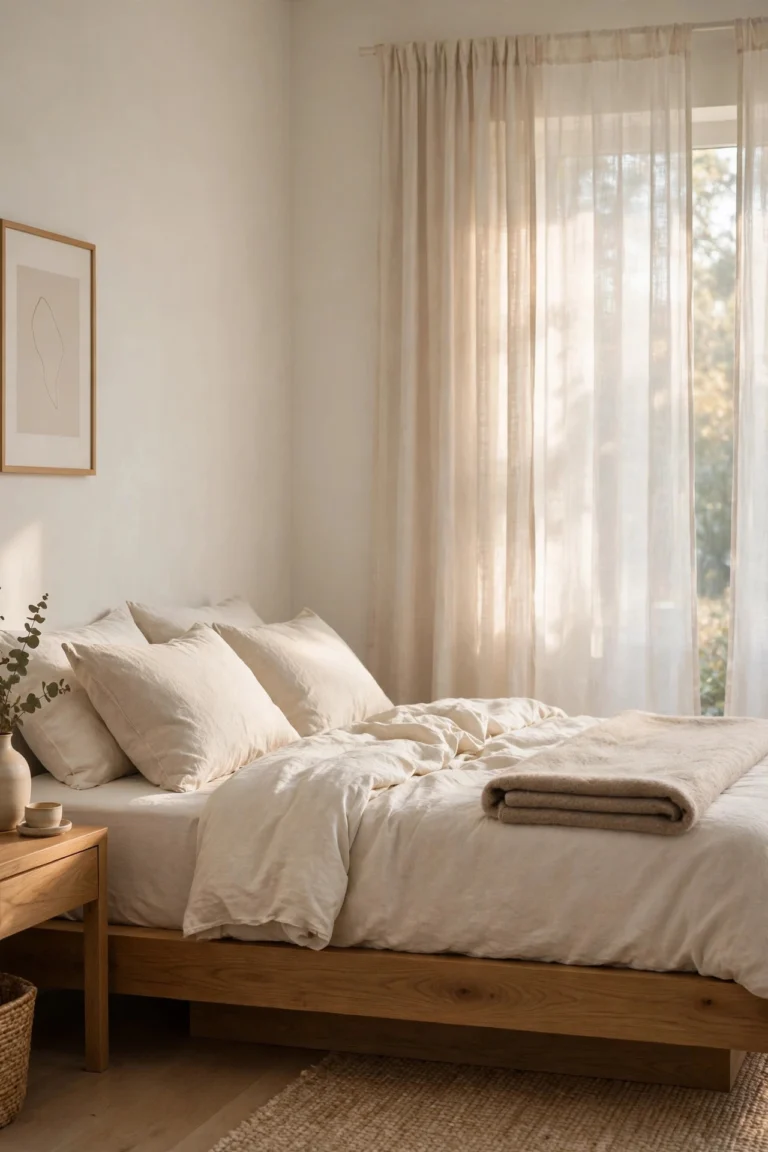
Sheer curtains change a living room by turning harsh daylight into a soft, even glow while keeping the view outside visible. A loosely woven voile or linen-blend sheer filters glare, adds gentle privacy during the day, and makes a bare window feel finished without the weight of full drapes.
Choose white, ivory or pale grey sheers for the brightest effect, and hang them on a slim rod or a second track behind your main drapes so you can use them alone by day and close the heavier layer at night. Sheers suit north-facing rooms and flats where neighbours are close, because they screen the view in while letting you see out. Budget £15–£40 per ready-made panel, and buy washable polyester voile if the window gets cooking smells or dust. Avoid sheers as your only layer on a street-facing ground-floor window at night — once the lights are on, they turn see-through.
2. Why Is Linen the Easiest Fabric for Living Room Curtains?
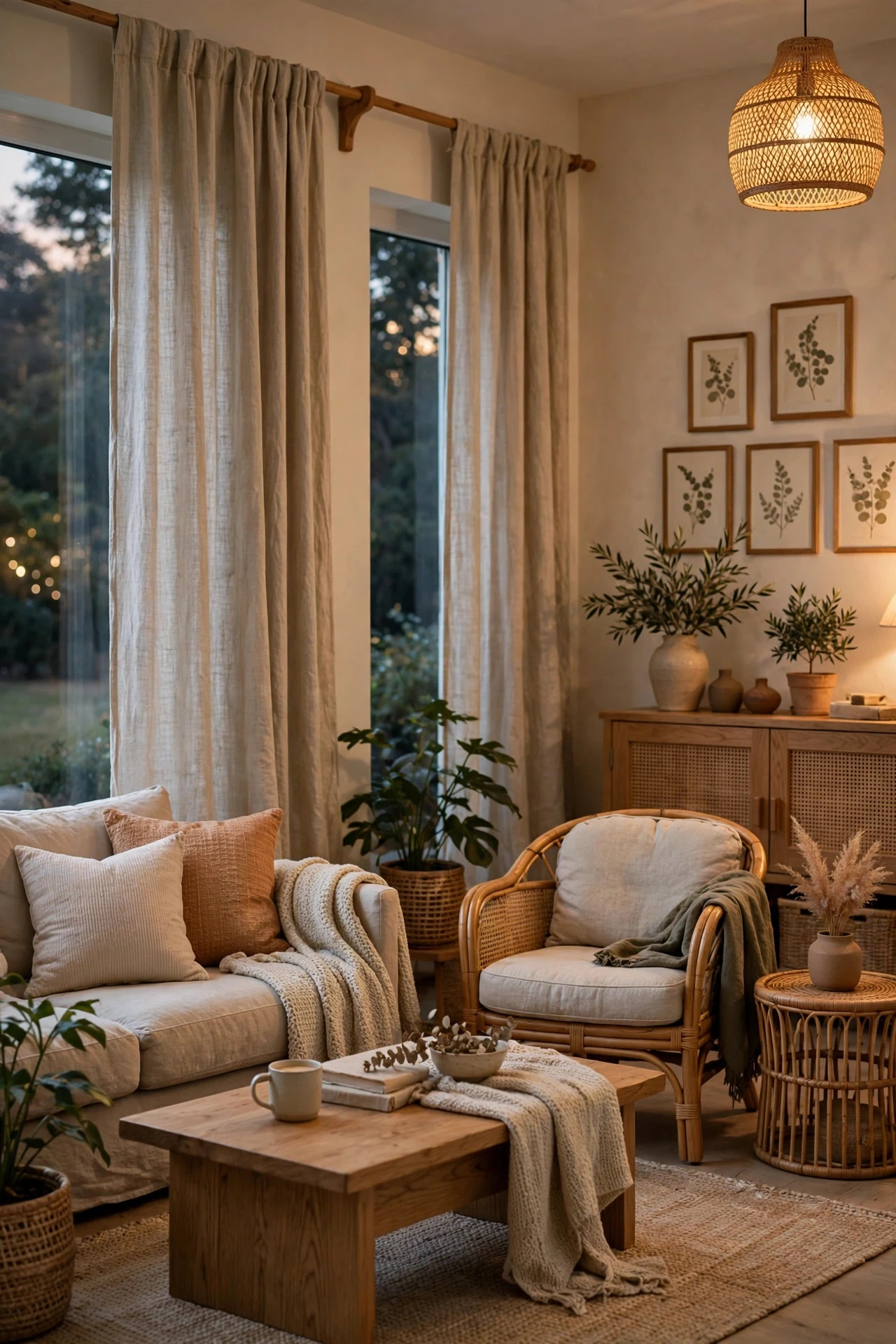
Linen curtains suit a living room because their natural slub texture and soft drape add warmth without formality, filtering light gently while keeping the room feeling relaxed. The fabric's slight wrinkles are part of its charm, so linen works best in casual, coastal, farmhouse and modern rooms where perfection is not the point.
Pure linen creases and shrinks if washed hot, so choose a linen-cotton or linen-polyester blend for easier care and a steadier hang, and line the panels if the window faces strong sun. Natural, oatmeal, stone and washed white are the safest colours, pairing with oak, rattan and bouclé. Expect £40–£90 per ready-made panel and more for made-to-measure. Avoid unlined pure linen on a south-facing window — it fades and weakens faster than any other natural fabric.
3. How Do Velvet Curtains Make a Living Room Feel Luxurious?

Velvet curtains make a living room feel luxurious because the dense pile absorbs light and sound, giving the room a quiet, cocooned depth that flat fabrics cannot match. Hung floor to ceiling in emerald, navy, rust or charcoal, velvet turns a plain window wall into the room's richest feature.
Velvet's weight means it needs a sturdy metal rod with centre support on wide windows, and pinch pleat or wave headings show off its fall best. It also blocks draughts and muffles street noise, so it suits rooms facing busy roads. Budget £50–£120 per panel for cotton velvet and dry-clean only to protect the pile. If a full velvet wall feels too heavy, use velvet on one window and lighter linen elsewhere. For the rest of the room, these 22 luxury living room decor ideas for an elegant home show how to balance rich fabrics with calm furniture.
4. How Do You Layer Sheers Under Full Drapes?
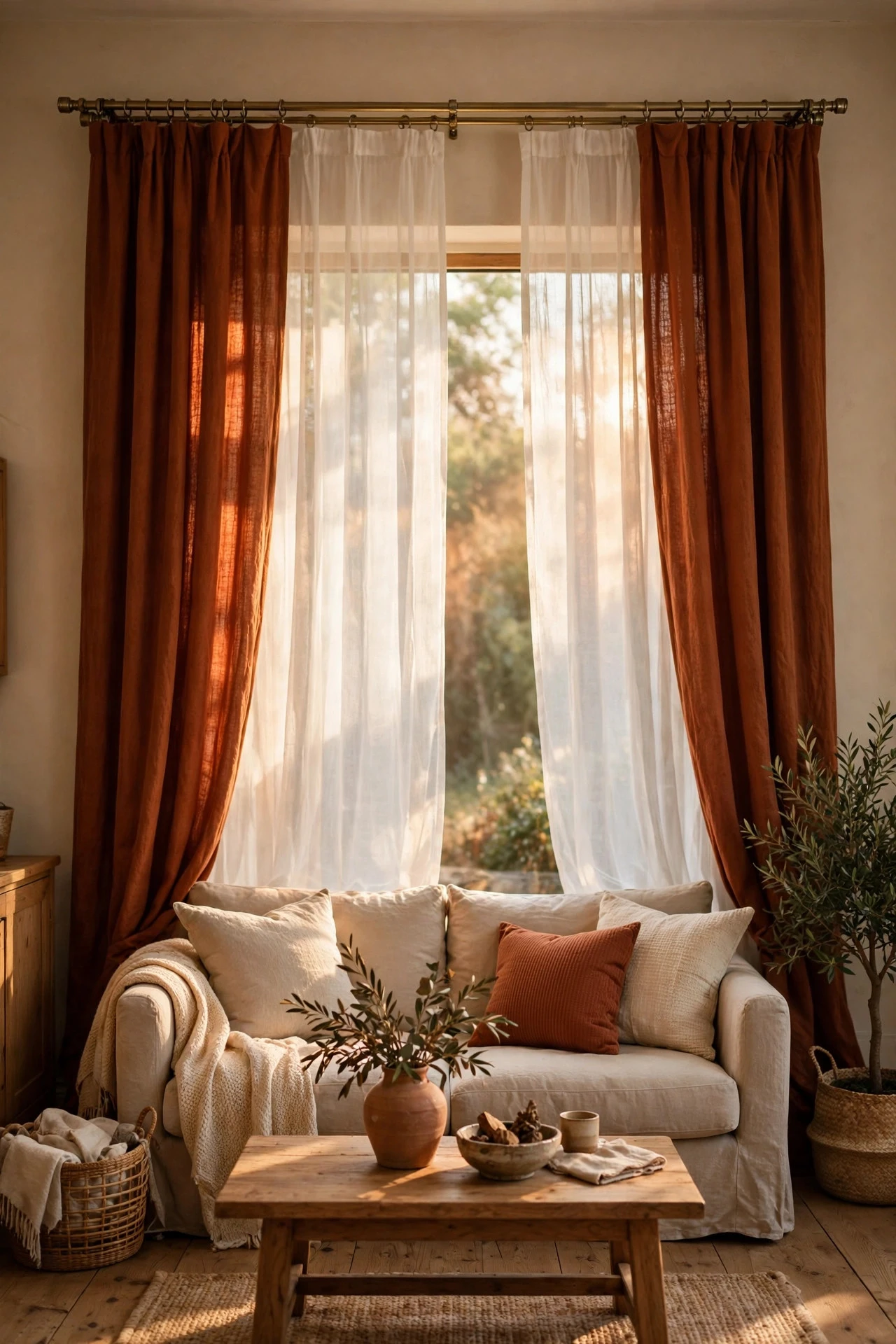
Layer sheer curtains under full drapes to get two rooms in one: soft filtered daylight when the drapes are open, and full privacy and darkness when they are closed. The sheer sits closest to the glass on its own rod or track, with the heavier drape in front.
Use a double rod or a ceiling track with two channels, keeping the sheer in white or ivory and the drape in a deeper tone pulled from the rug or sofa. The combination suits west-facing living rooms where afternoon sun is fierce but you still want daylight. Cost is roughly double a single layer, so budget £60–£150 per window for ready-made pairs. Avoid matching the two layers in the same colour — without contrast the layering reads as one thick curtain instead of a designed pair.
5. When Do Blackout Curtains Make Sense in a Living Room?

Blackout curtains make sense in a living room when the room doubles as a cinema, faces west into low evening sun, or needs to stay cool in summer. A 3-pass coated or fully lined panel blocks almost all light, cuts glare on the TV, and adds a layer of insulation against heat and cold.
Look for the lining, not just the label: true blackout uses a dense coated backing, while "dim-out" blocks only half the light. Heavy lined panels also hush echo in rooms with hard floors. Expect £35–£80 per panel and check the weight — a wide blackout pair needs a metal rod and strong brackets. Avoid blackout in a small north-facing room, where it can make daylight feel gloomy even when the curtains are open.
6. What Makes Pinch Pleat Curtains Look Tailored?

Pinch pleat curtains look tailored because the pleats are sewn permanently into the heading, so the folds fall in even, regular waves every time you open or close them. That built-in structure gives a formal, hotel-like finish that suits classic, traditional and elegant living rooms.
Pinch pleats hang from a pole with rings or from a track with hooks, and they need roughly two to two-and-a-half times the window width in fabric for proper fullness. Double pleats suit most rooms; triple pleats read more formal and work best in high-ceilinged spaces. Made-to-measure pinch pleats cost £80–£200 per pair, but ready-made versions now come in linen and velvet blends. Avoid pinch pleats on a lightweight rod — the sewn heading is heavy and will bow a thin pole.
7. Are Grommet Curtains Right for a Living Room?
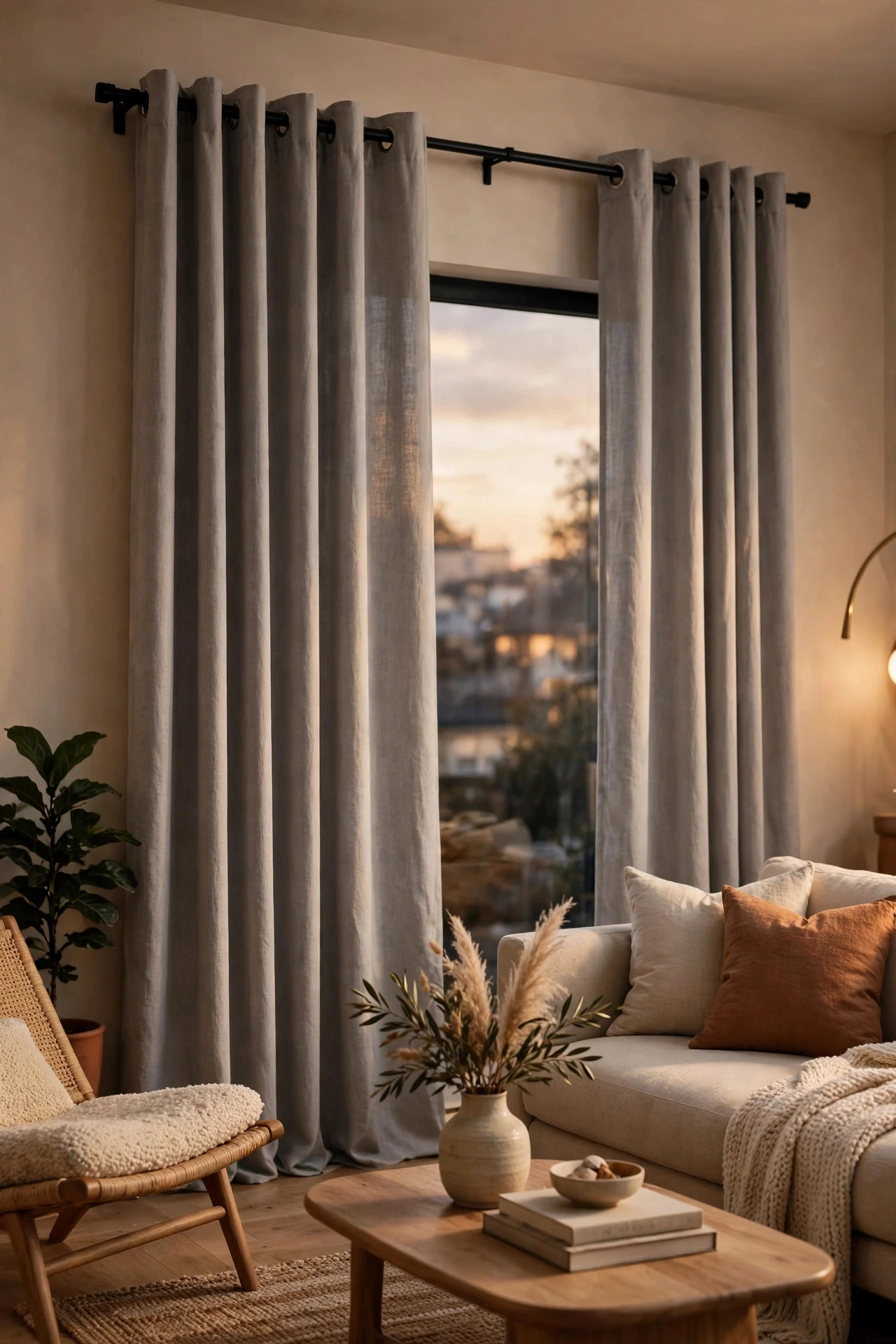
Grommet curtains suit a living room when you want a clean, modern look with soft, even waves and curtains that glide open with one pull. Metal eyelets threaded straight onto the rod create wide, regular folds, so the style works best in contemporary, Scandinavian and relaxed rooms.
Choose matte black, brushed nickel or brass eyelets to match your hardware, and keep the fabric mid-weight — linen blends, cotton duck and light velvet all hang well. Grommets need about twice the window width in fabric and a rod at least 2.5 cm in diameter. Budget £25–£60 per panel ready-made. The style has limits: grommets cannot run on a ceiling track, and the wide folds look untidy in very sheer fabric. The curtain guide lists grommet among the main modern heading styles, alongside pinch pleat and rod pocket.
8. How High Should You Hang the Curtain Rod?
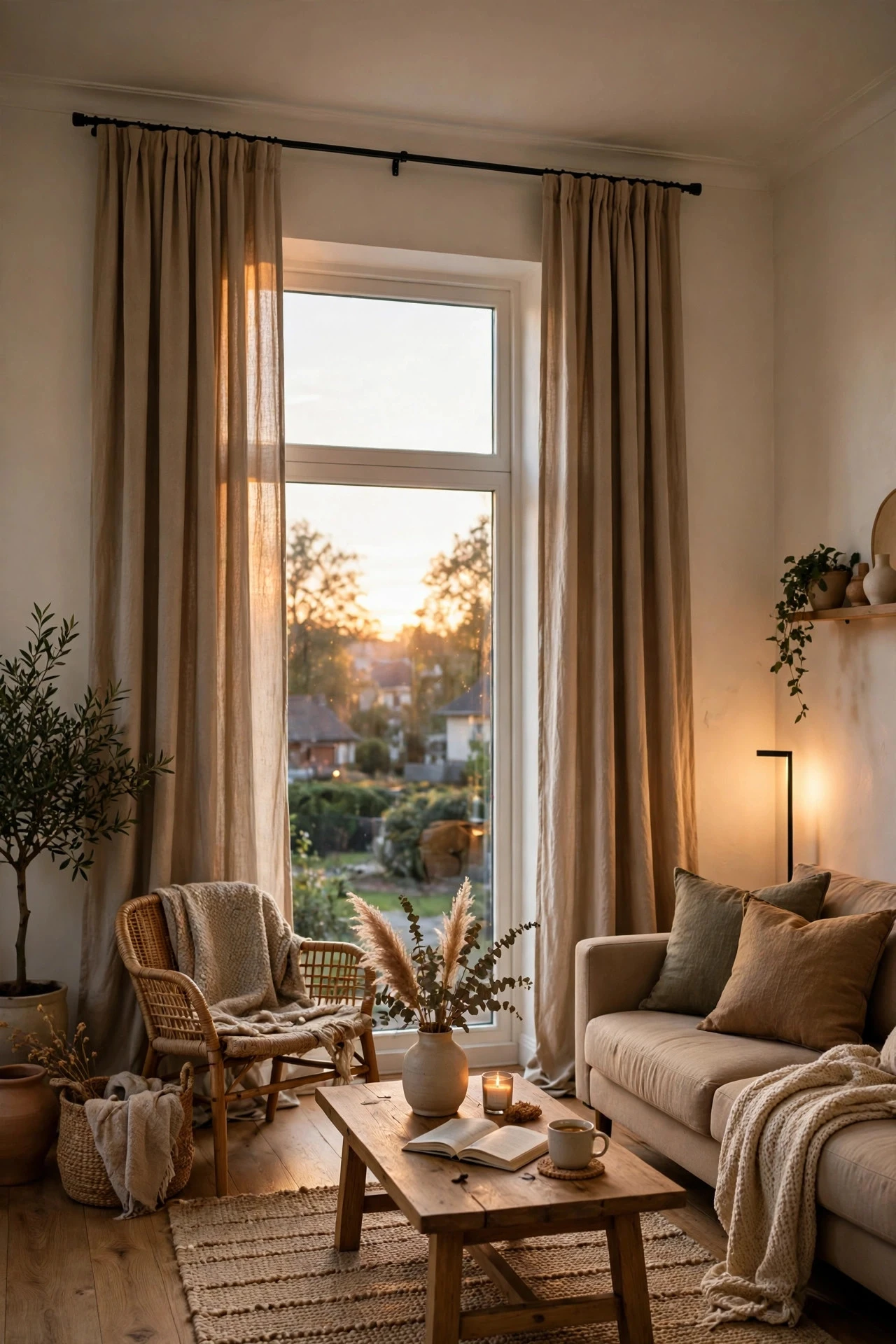
Hang the curtain rod 10 to 15 cm above the window frame, or as close to the ceiling as you can, to make the window and the whole room look taller. The extra fabric length draws the eye upward, and the window appears larger than it really is.
For standard 2.4 m ceilings, mounting the rod 5 cm below the ceiling with floor-length panels is the classic designer move. Extend the rod 15 to 25 cm beyond the frame on each side so the open curtains clear the glass and let in maximum light. Use a level and a stud finder — a rod that sags in the middle ruins the effect. Avoid mounting the rod directly on the frame, which is the single most common mistake: it chops the window in half visually and makes the ceiling feel lower.
9. How Wide Should Curtain Panels Be?
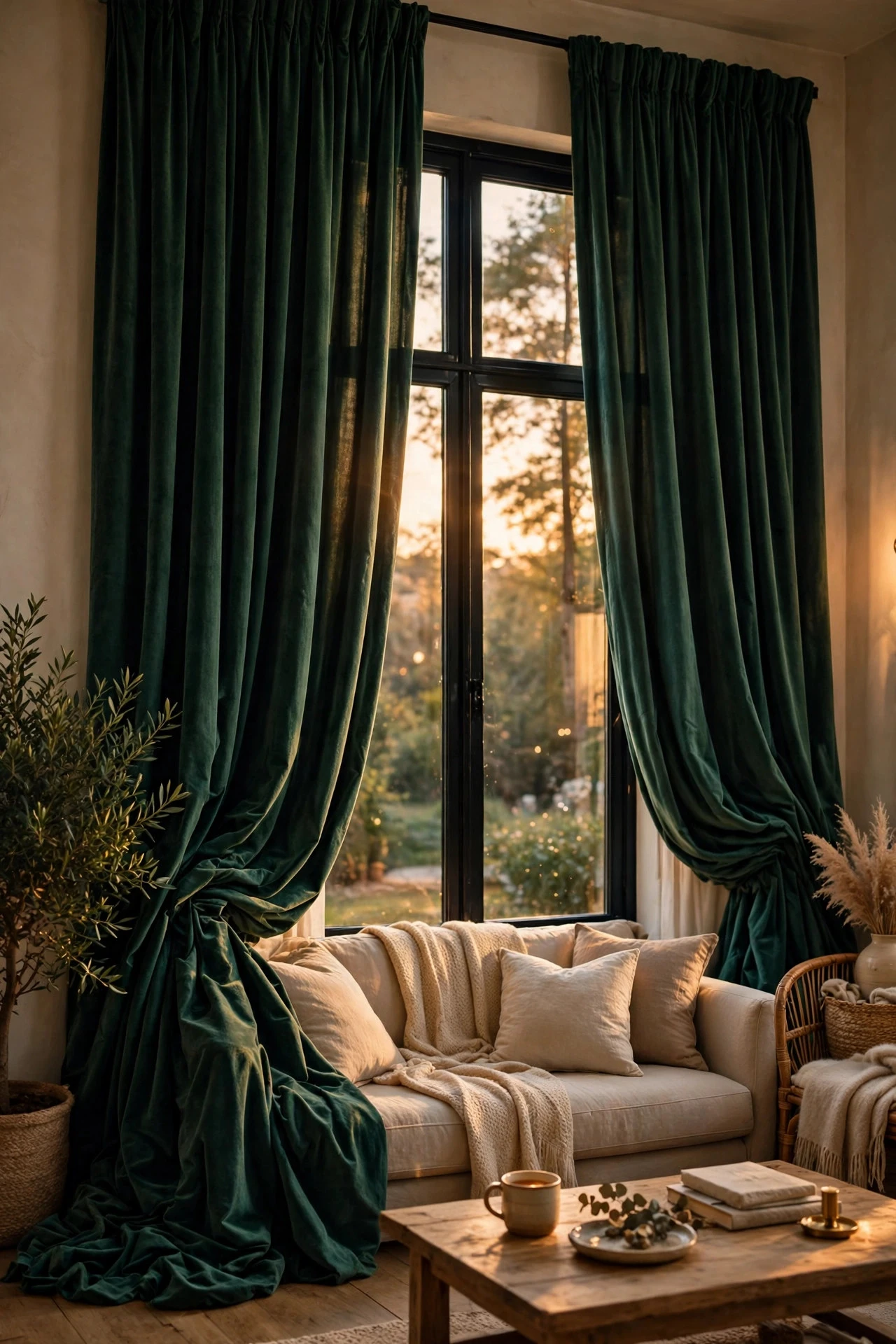
Curtain panels should total two to two-and-a-half times the width of the window, so the fabric still falls in full folds when the curtains are closed. A flat panel stretched tight across the glass looks cheap, while generous fullness looks expensive even in budget fabric.
A standard ready-made panel is about 137 cm wide, so a 150 cm window needs two panels for a 1.8 times fullness or three for a truly luxurious gather. On wide windows, use several narrower panels instead of two very wide ones — they stack back more neatly. Budget £20–£50 per panel and remember that fullness matters more than fabric price. Avoid buying a single panel per window to save money; one lonely panel is the fastest way to make new curtains look wrong.
10. Should Curtains Puddle, Break or Just Kiss the Floor?
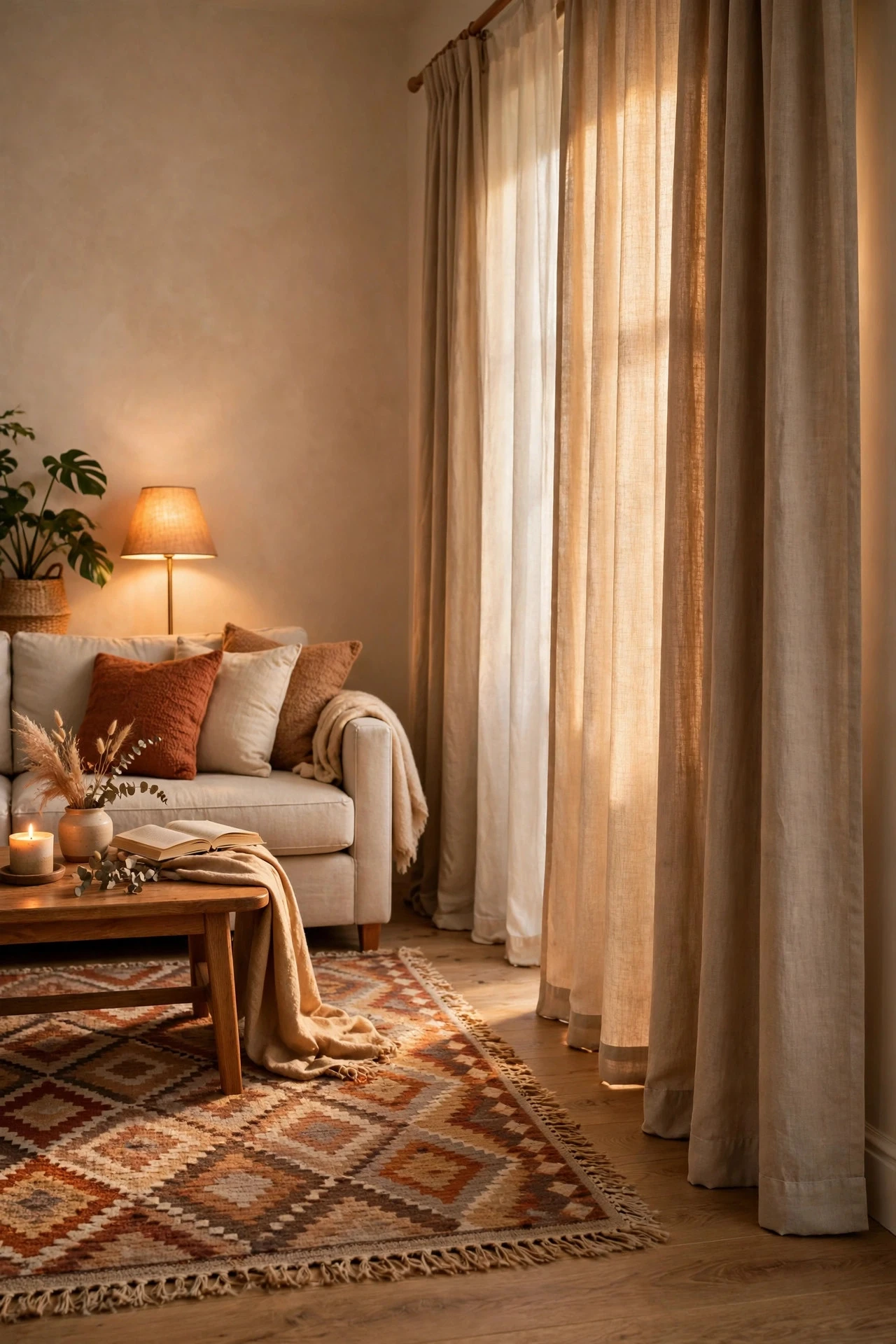
Curtains should just kiss the floor in a busy family living room, break 1 cm over it for a soft tailored look, and puddle 5 to 15 cm only in formal, low-traffic rooms. The right length depends on who walks past the window every day.
A kissing hem is the safest all-rounder: it looks finished, clears the vacuum, and survives children and pets. A 1 cm break adds a relaxed drape without tripping anyone, while a puddle reads romantic and luxurious but collects dust and pet hair. Measure from the rod to the floor, then add the extra length for a puddle — never guess. If your rug sits close to the window, keep the hem above the pile; heavy fabric pooling on a thick rug looks messy, so plan the window and the floor together. These 22 living room rug ideas to ground your seating area help you get both layers right.
11. How Do You Measure a Window for Curtains Without Mistakes?
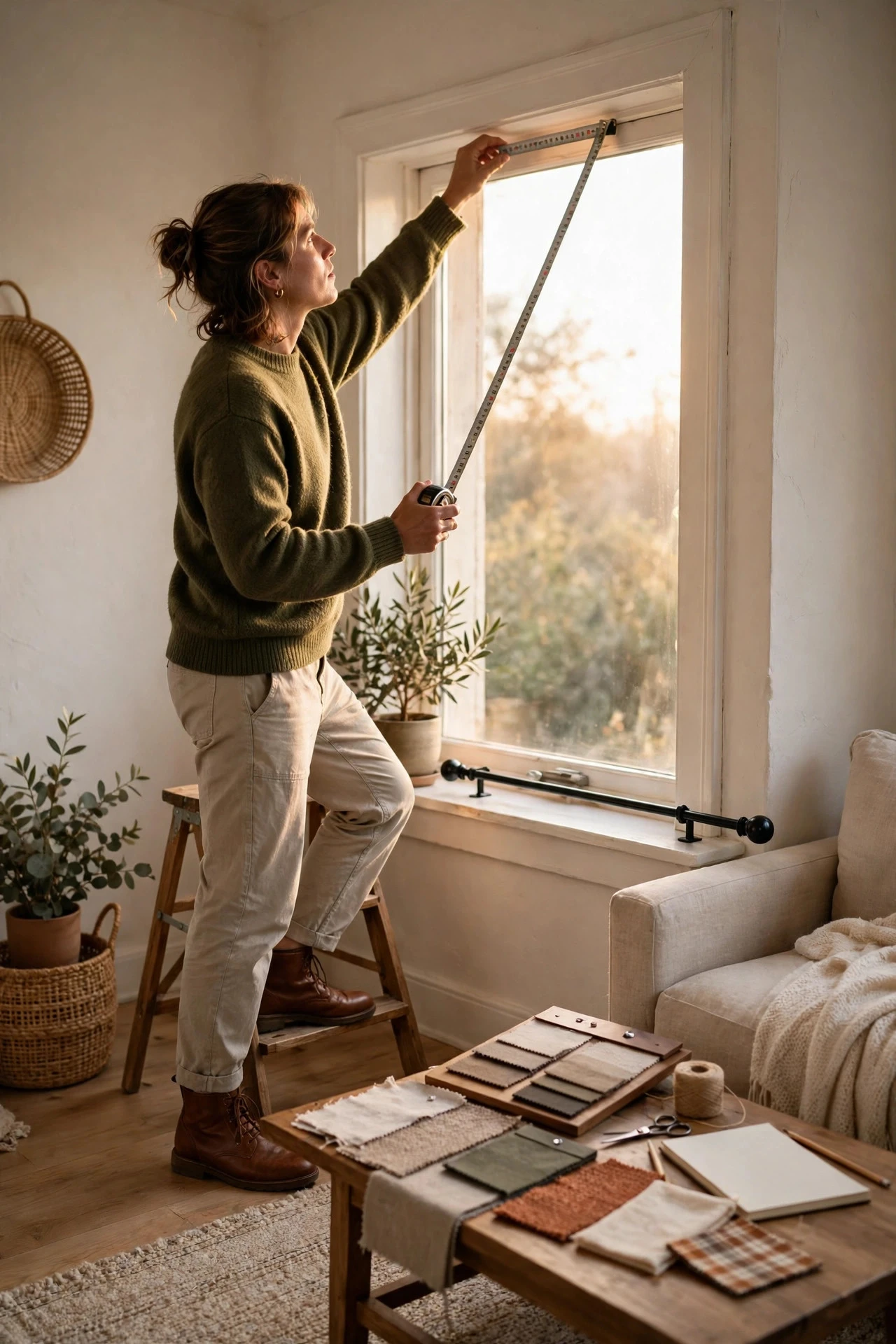
Measure a window for curtains with a steel tape, measuring the rod width first and the drop second, and write both numbers down before you shop. Measure the width at the rod, not at the glass, and the drop from the top of the rod to the floor — never from the frame.
Ready-made curtains come in standard drops of 137, 183, 213, 228, 274 and 305 cm, so match your drop to the next size up and hem down if needed. Measure each window separately — old houses are rarely square, and a 2 cm difference shows at the hem. Use a metal tape, not a fabric one, and measure twice on different days. Avoid ordering made-to-measure panels from a single quick measurement; a wrong drop wastes more money than any other curtain mistake.
12. What Curtain Hardware Actually Matters?
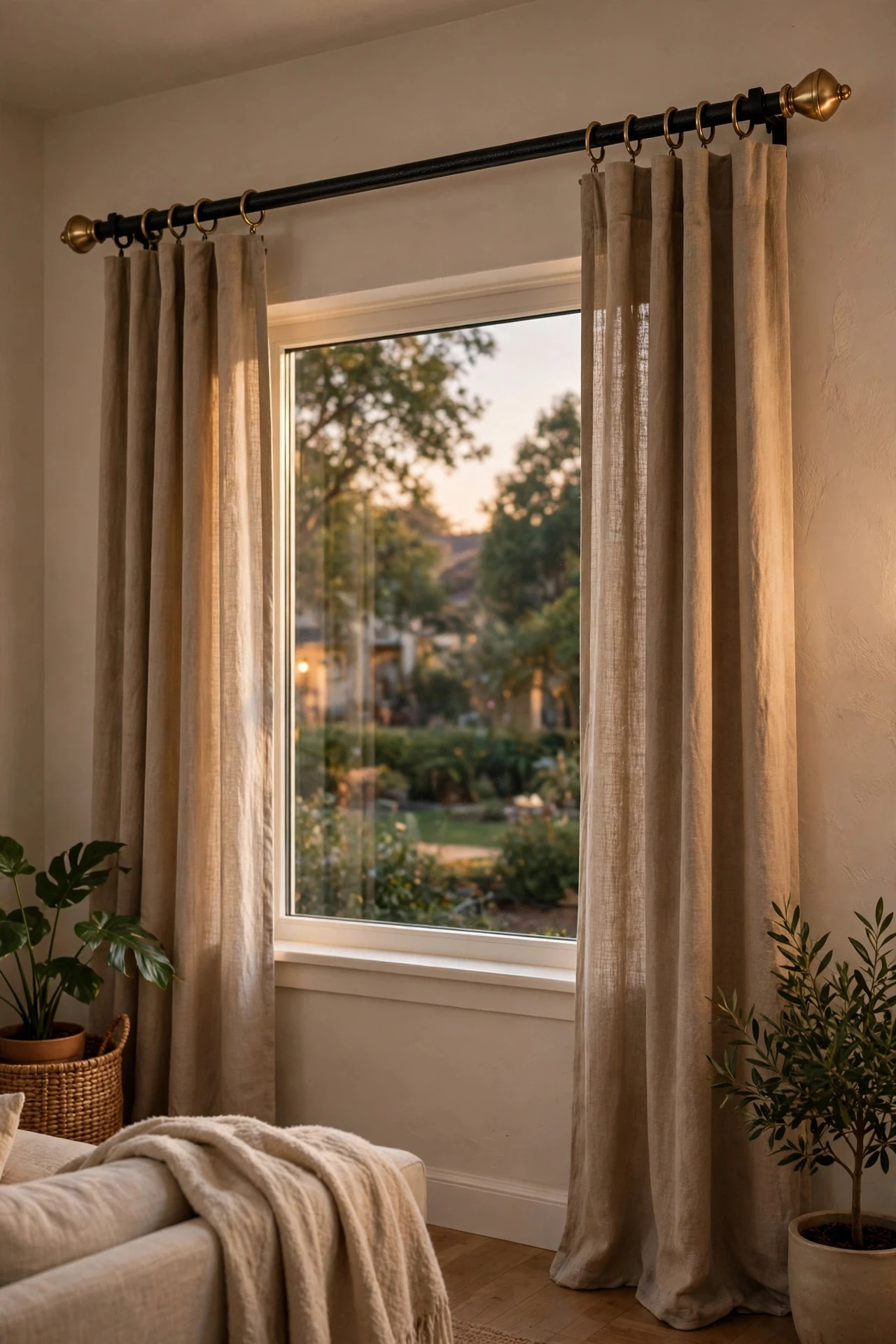
Curtain hardware matters because the rod, brackets and rings carry the full weight of the fabric and set the style of the whole window. A rod that bows, brackets that pull out of plasterboard, or rings that stick will ruin expensive curtains, so spend on hardware before you spend on fabric.
Choose a metal rod of at least 2.5 cm diameter for heavy velvet or lined panels, with a centre bracket on any span wider than 180 cm. Match the finish to the room — matte black for modern, aged brass for classic, pale wood for Scandinavian — and keep finials simple unless the room is very traditional. Ceiling tracks suit wide walls and bay windows where a rod cannot span. Budget £30–£80 for a good rod set. Avoid plastic brackets and hollow rods for anything heavier than sheers.
13. How Do You Pair Curtains With Blinds or Shades?
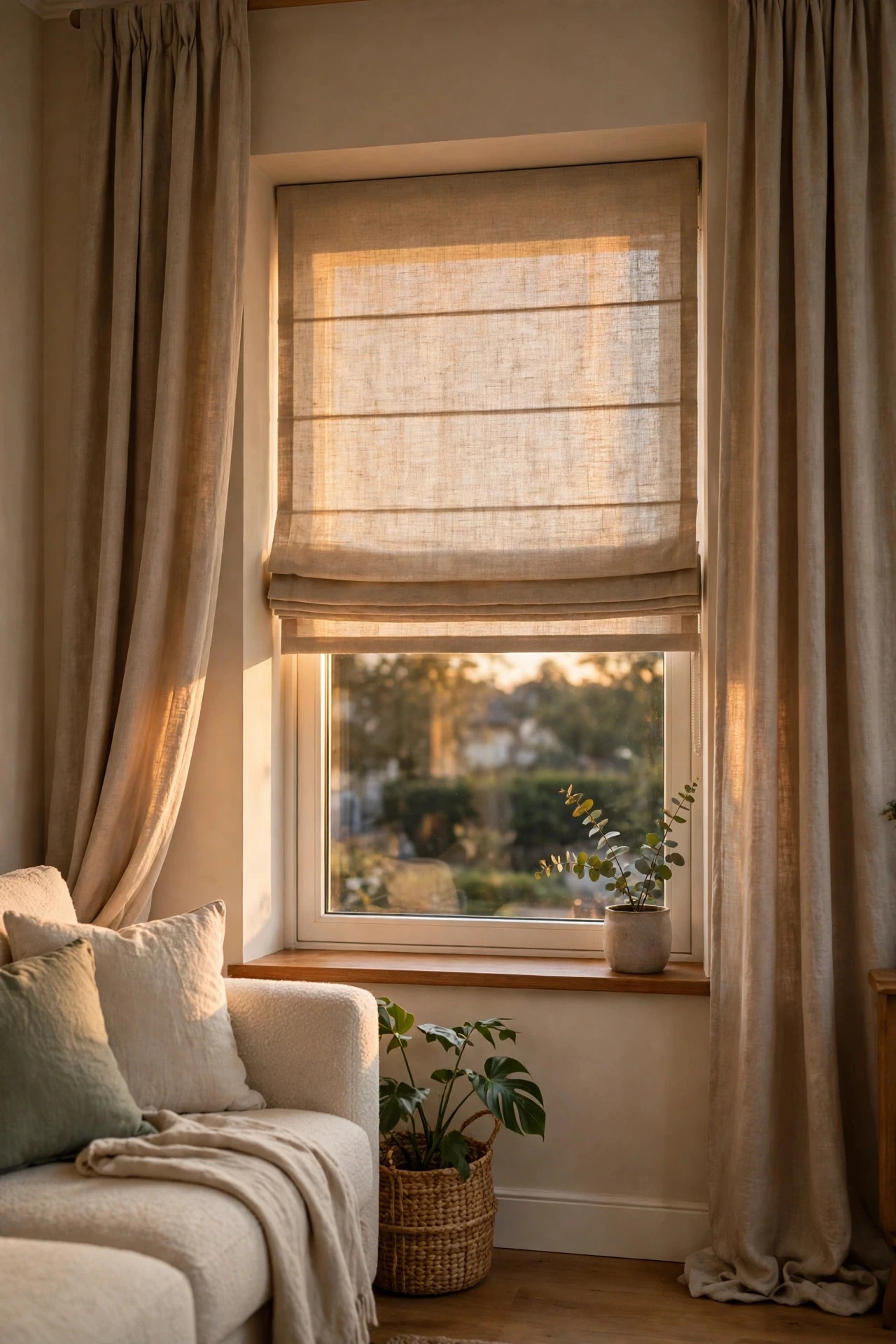
Pair curtains with blinds or shades by mounting the blind inside the window recess and the curtains outside it, so each layer does a different job. The blind controls light and privacy precisely, while the curtains add softness, colour and height to the wall.
Roman shades in linen, roller blinds in a light-filtering fabric, or wooden Venetians all work under drapes, and the combination suits rooms where the living area opens onto a garden. Keep the blind in a neutral tone close to the wall colour so the curtains stay the star. Budget £40–£120 per window for a made-to-measure blind plus the curtain cost. The range of coverings is wide — the window treatment overview lists blinds, shades, shutters and curtains side by side — so pick the blind for function first. For the glow after dark, these 22 living room lighting ideas for a warm layered glow show how layered light works with layered windows.
14. How Do You Dress a Wide Picture Window or Sliding Door?

Dress a wide picture window or sliding door with ceiling-mounted tracks or a long traverse rod and several narrow panels, so the fabric stacks back in slim folds and never blocks the glass or the walkway. One wide pair will always look heavy and get in the way.
Allow at least 30 cm of stack-back space on each side so the open panels clear the glass, and use a corded or wand-drawn track for doors you open daily — hand-drawing heavy panels wears the heading. Sheers on a separate track let you keep daylight while the door is closed. Budget £150–£400 per wide window for track and panels. Avoid floor-length puddles beside a sliding door; the hem catches on the track and trips anyone carrying a tray outside.
15. How Do You Dress a Bay Window With Curtains?
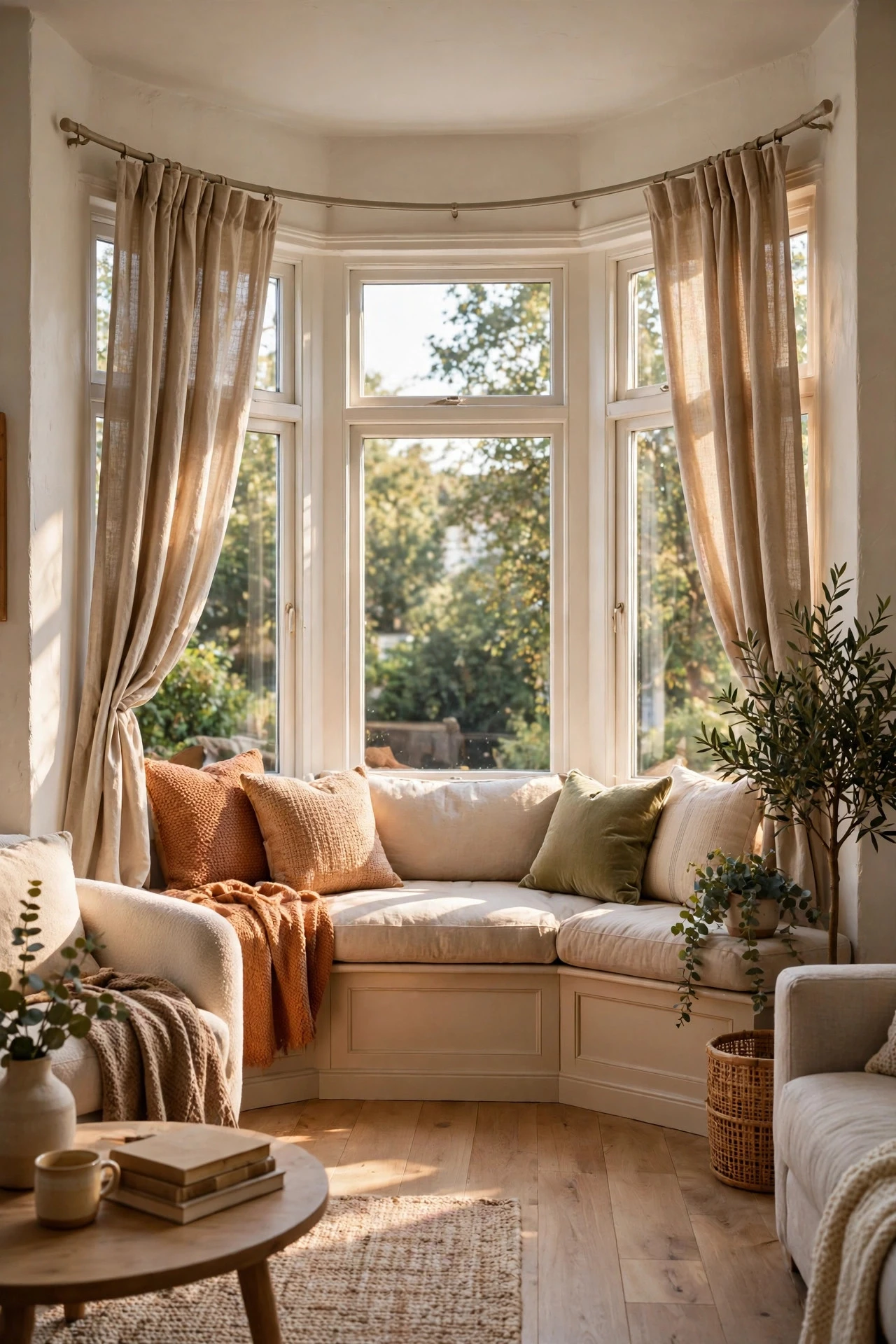
Dress a bay window with a flexible ceiling track that follows the angles of the bay, or with a separate short rod on each facet, so the curtains hug the shape instead of cutting straight across it. A single straight rod across a bay wastes the window's best feature — its depth.
Hang sheers on the inner track for daytime privacy and full drapes on the outer track for evenings, keeping both layers light so the bay still feels open. A window seat below the bay suits a sill-length Roman shade instead of full curtains, which would cover the seat. Budget £80–£200 for a bent track and panels. Avoid heavy velvet in a small bay; it eats the light and makes the seat feel like a cave.
16. What Colour Curtains Work With a Grey or Beige Sofa?
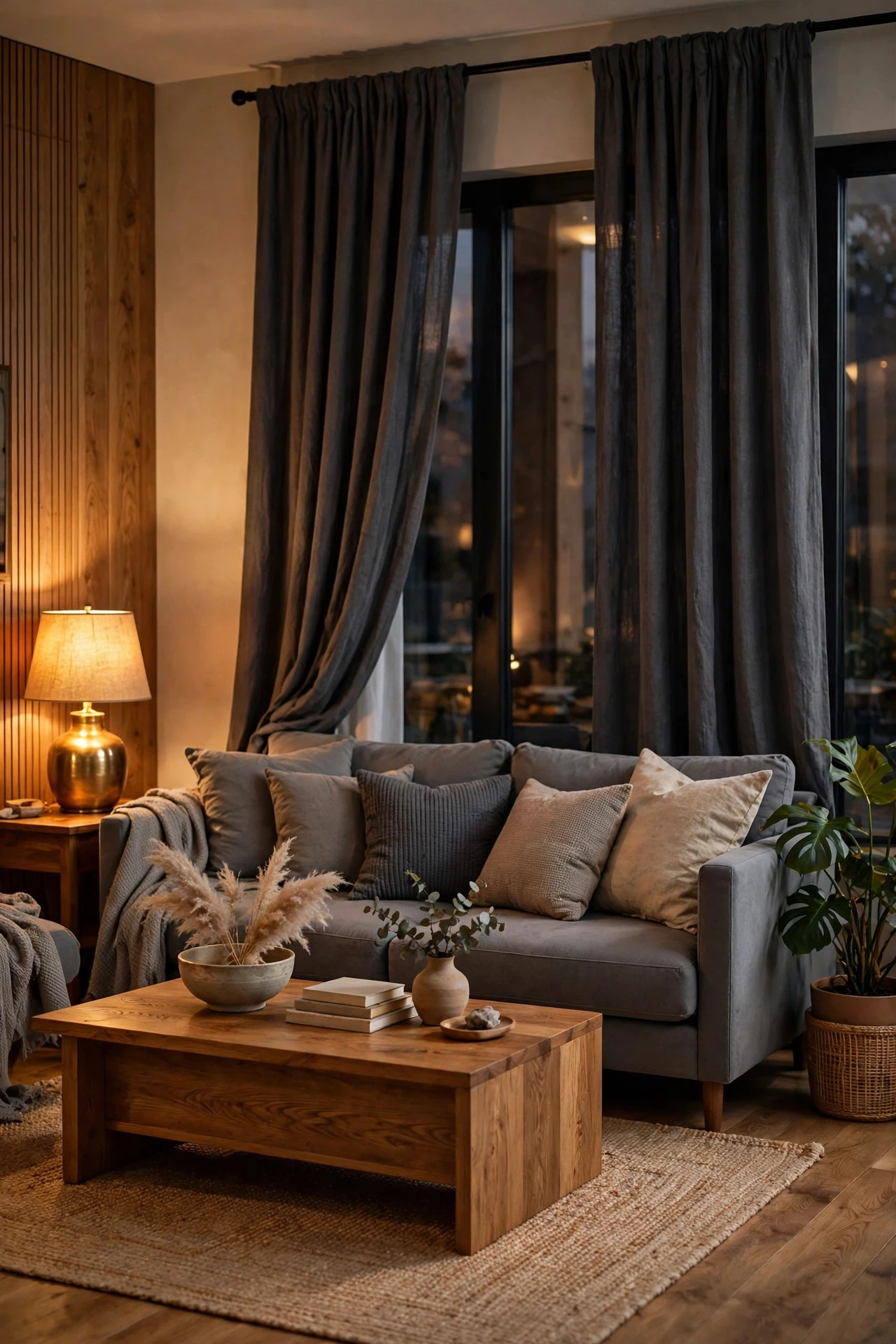
Choose curtain colours by matching the undertone of your sofa, not the exact colour — warm greys pair with warm creams and rusts, cool greys with blues and crisp whites. Curtains that share the sofa's temperature look designed, while a clash of warm and cool reads as a mistake.
For a grey sofa, try charcoal or slate curtains for drama, or pale stone for calm; for a beige sofa, try oatmeal, sage or terracotta. If the sofa is patterned, keep the curtains plain, and if the sofa is plain, the curtains can carry the pattern. Test a swatch against the sofa in daylight and lamplight before ordering. If the wall behind the sofa also needs attention, these 22 living room accent wall ideas that transform a plain wall show how to balance a bold wall with calm windows.
17. How Do Curtains Help With TV Glare?
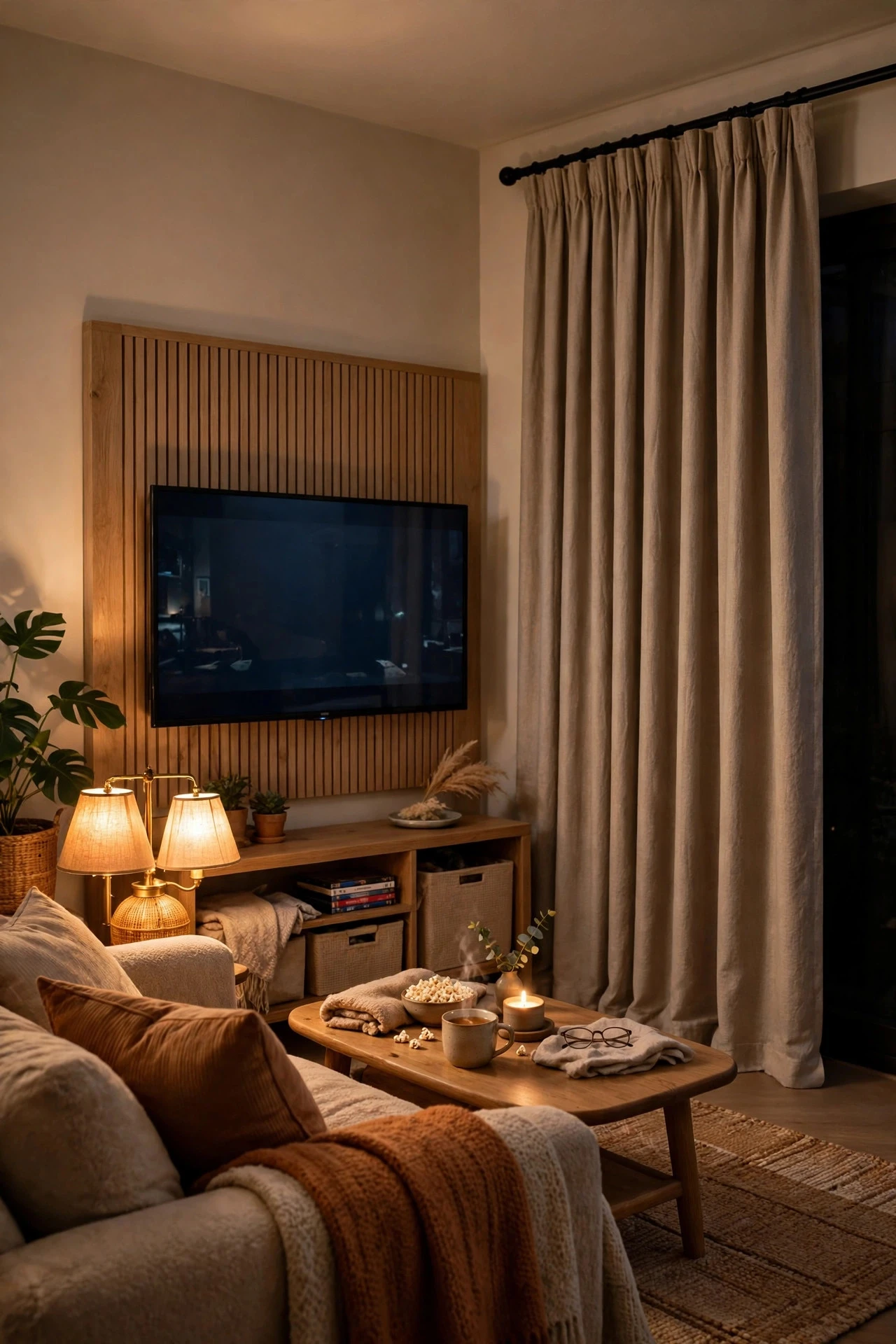
Curtains cut TV glare when they are lined or blackout-backed and hung so they fully cover the glass beside the screen, because even a thin strip of daylight beside a TV washes out dark scenes. Sheers alone will not fix glare — you need a solid layer you can close.
Mount the rod wide enough that the closed curtains cover the whole frame plus 15 cm each side, and choose a matte fabric — shiny satin reflects light back into the room. A lined linen or cotton drape is enough for most rooms; add a blackout lining only if the TV faces the window directly. Keep the curtains drawn during daytime viewing and open them again after, so the room never feels permanently dark. Avoid placing the TV directly opposite a west-facing window if you can move it — no curtain fully beats low evening sun.
18. Which Curtain Fabrics Fade in Strong Sun — and Which Don't?

Curtain fabrics fade fastest in strong sun when they are silk, bright cotton or unlined linen, because ultraviolet light breaks down natural dyes and weakens the fibres. Solution-dyed polyester, acrylic and olefin hold their colour far longer, so they are the safest choice for south- and west-facing living rooms.
A cotton lining behind the face fabric absorbs much of the UV before it reaches the colour, doubling the life of silk and linen panels. Rotate the panels end to end once a year so both edges fade evenly, and add a clear UV window film if the room gets sun all day. Expect unlined silk to show fading within two summers on a sunny window. Avoid deep reds and bright blues on unprotected sunny glass — they are the first colours to bleach.
19. How Do You Choose Curtain Patterns Without Overwhelming the Room?

Choose curtain patterns by scale: large prints suit large rooms and tall windows, while small prints and subtle textures suit compact living rooms where a bold pattern would dominate. One pattern in the room is enough — if the curtains carry it, keep the cushions and rug mostly plain.
Stripes make a low ceiling feel taller, botanicals soften a boxy modern room, and geometrics add structure to a soft, neutral scheme. Order a large swatch and tape it to the window for a full day, checking it in morning light and evening lamplight before you commit. Budget the same as plain curtains — pattern rarely costs more ready-made. Avoid mixing two bold patterns at the same scale; a big floral curtain with a big geometric rug will fight all day.
20. How Do Tiebacks and Holdbacks Change the Look?
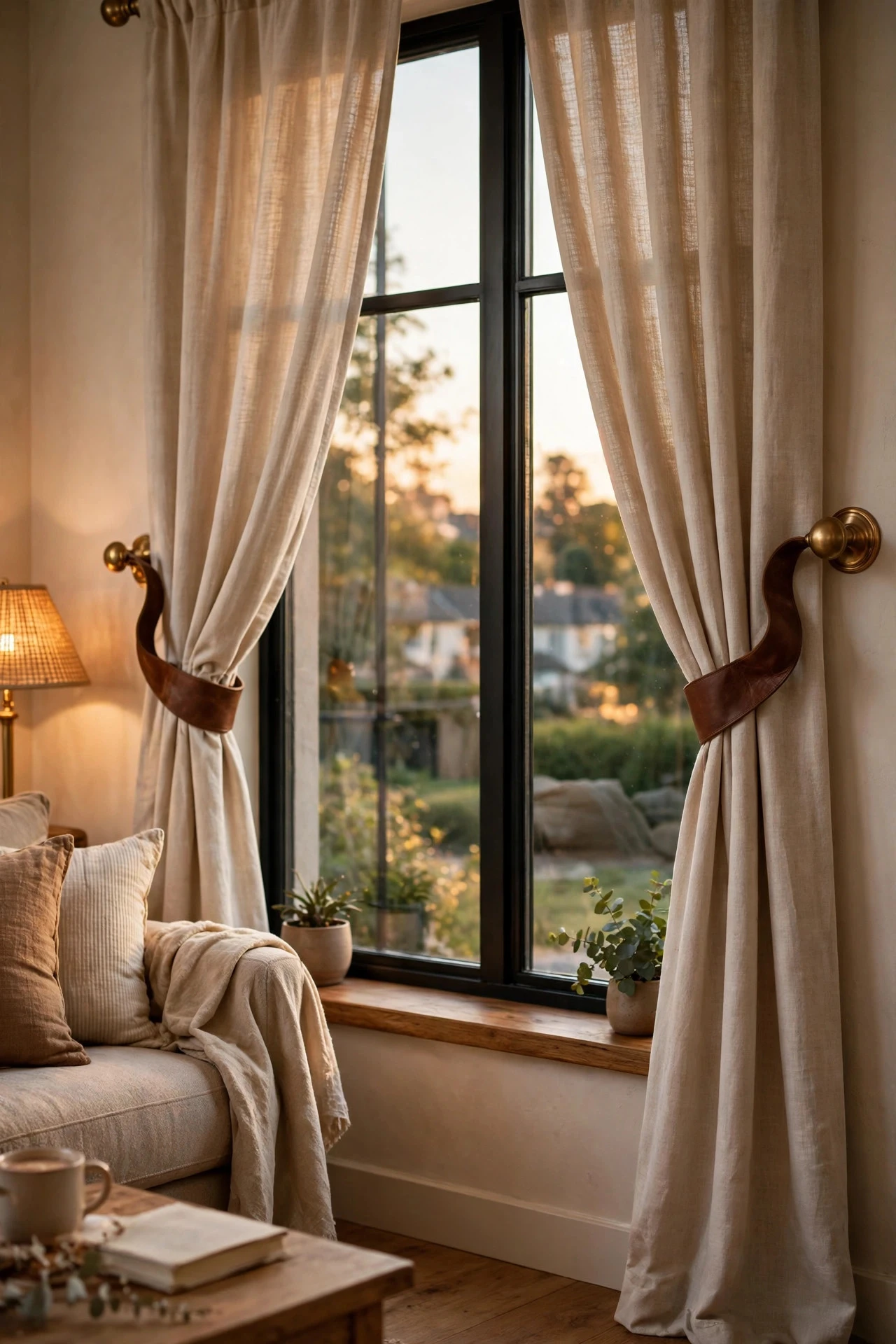
Tiebacks change the look of curtains by pulling the fabric into a soft S-curve that frames the window and lets in more light, turning a flat drape into a shaped feature. They work best placed about two-thirds of the way down the drop, never at the middle.
Leather straps suit modern rooms, tasselled rope suits classic rooms, and simple brass holdbacks suit minimal schemes — choose one and repeat it on every window. Tiebacks also protect the fabric from rubbing on the sofa or a radiator behind the curtain. Budget £10–£30 per pair, or use a matching fabric tieband from the same curtain range. Avoid tying the fabric too tightly; a pinched waist creases the folds and strains the heading.
21. How Do You Dress Curtains in a Small Living Room?
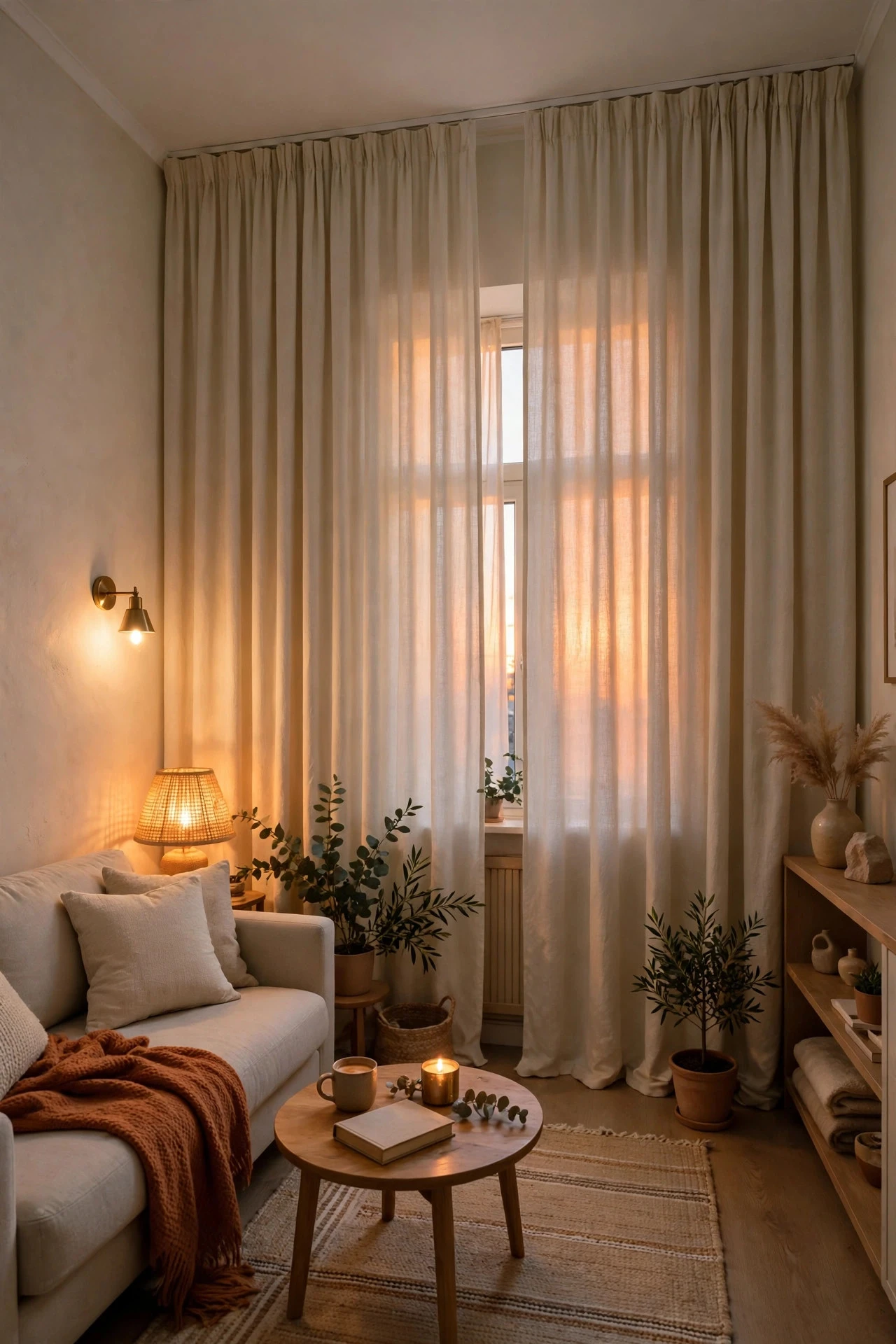
Dress a small living room with ceiling-height curtains in a colour close to the wall, hung wide so the open panels sit on the wall, not the glass. The tall, tone-on-tone line makes the walls look higher and the window look wider than it really is.
Light linen, voile or a pale cotton blend keeps the room bright, while heavy velvet or dark colours shrink it visually. Mount the rod at the ceiling and extend it 20 cm past the frame on each side, so the glass stays fully clear when the curtains are open. Keep the pattern small or plain, and let the hem just kiss the floor. Avoid short café curtains or sill-length panels in a small room — they chop the wall in half and make the ceiling feel lower.
22. How Do You Keep Living Room Curtains Clean and Looking New?

Keep living room curtains looking new by vacuuming them monthly with an upholstery brush, steaming out creases instead of ironing, and washing or dry-cleaning only as the label directs. Dust is what dulls curtains first, long before the fabric itself wears out.
Washable cotton and polyester panels can go in the machine on a gentle cold cycle, then hang back up while slightly damp so the weight pulls out the creases. Velvet, silk and lined drapes need professional dry cleaning once or twice a year. Check the heading and hooks each time you clean — a bent hook makes the whole panel hang crooked. Avoid tumble drying curtains; the heat shrinks the lining and sets creases that steam cannot remove.
Practical Tips
Measure twice and order once — then buy a single panel first to test the colour and drop in your own light before you commit to a whole room. Hang the rod before you order made-to-measure panels, because the finished drop depends on the rod's real position, not the plan on paper. Steam new curtains while they hang: the weight of the fabric pulls the folds straight, and most creases drop out in a day.
Keep a small curtain kit in a drawer: spare rings, hooks, a seam ripper and a fabric pen for marking hems. Check the brackets every year, especially on plasterboard walls, and tighten any that have worked loose before the rod sags. For storage, fold panels loosely in a cotton bag with a cedar block, never in plastic, which traps damp and can mildew a lining.
Final Thoughts
Living room curtains work hardest when they are hung high, cut generously and chosen for the light your room actually gets — sheers for soft daylight, linen for relaxed warmth, velvet for drama, and a solid lining wherever the sun or the TV demands it. Get the rod height, the width and the hem right first, and the fabric choice becomes the easy part.
You may also like: our 22 living room fireplace decor ideas for a warm focal point will help you style the wall opposite the windows, so the whole room feels balanced from every seat.
Frequently Asked Questions
How high should living room curtains hang?
Hang the rod 10 to 15 cm above the window frame, or as close to the ceiling as you can, to make the window and the room look taller. For a standard 2.4 m ceiling, mounting the rod 5 cm below the ceiling is the classic designer move, and it should extend 15 to 25 cm past each side.
How wide should living room curtain panels be?
Curtain panels should total two to two-and-a-half times the width of the window, so the fabric still falls in full folds when closed. A standard ready-made panel is about 137 cm wide, so a 150 cm window needs at least two panels, and three for a truly luxurious gather.
Should living room curtains touch the floor?
Living room curtains should just kiss the floor in a busy family room, break 1 cm over it for a soft tailored look, and puddle 5 to 15 cm only in formal, low-traffic rooms. A kissing hem is the safest choice because it looks finished, clears the vacuum, and survives children and pets.
What is the best fabric for living room curtains?
The best fabric depends on the room: a linen-cotton blend is the easiest everyday choice, velvet suits formal rooms and blocks draughts and noise, and sheer voile is best for soft daylight and daytime privacy. For sunny windows, choose solution-dyed polyester or add a cotton lining to protect the colour.
Do sheer curtains give privacy in a living room?
Sheer curtains give privacy during the day, when daylight makes it hard to see in from outside while you can still see out. At night they turn see-through once the room lights are on, so sheers need a heavier drape or blind behind them for evening privacy on street-facing windows.
How do I stop my living room curtains fading in the sun?
Stop fading by choosing solution-dyed polyester or acrylic for sunny windows, adding a cotton lining behind silk or linen panels, and fitting a clear UV window film. Rotate the panels end to end once a year so both edges fade evenly, and avoid deep reds and bright blues on unprotected sunny glass.