22 Blanket Storage Solutions That Keep Throws Tidy and Within Reach
Blankets are the one home essential that never has a proper home. They migrate from the sofa arm to the floor, pile up on the guest bed, and end up folded in a heap on the bedroom chair that was supposed to be for clothes. Most homes own six to ten throws and blankets, yet almost none of them has a dedicated place to put them — so the living room always looks one blanket away from tidy, no matter how often you fold them.
Blanket storage solutions fix that by giving every throw a place that is both easy to reach and easy to return to. The best systems mix display storage — a ladder, a basket, a sofa arm — for the two or three blankets you use every day, with proper closed storage — a trunk, an ottoman, a closet shelf — for the rest. Below are 22 blanket storage solutions organised by room, storage type and blanket material, with real measurements, basket and ladder sizes, and the care rules that keep wool, cotton, linen and down fresh for years. Most ideas cost under $40 each, and a whole-house system comes together for $100 to $200.
Looking for more inspiration? Our Nest Decorz homepage gathers the latest home decor ideas, seasonal decorating guides and room-by-room styling tips in one place — start there and explore.
Quick answers
– Store daily throws where you use them — one ladder or basket beside the sofa and one at the foot of the bed covers 90% of blanket trips, so nothing ends up on the floor. – Fold loosely and never compress wool or down — tight folding and vacuum bags crush loft and trap moisture; roll or fold loosely and let fibres breathe. – Match the storage to the material — wool needs cedar and air, cotton needs a dry shelf, linen needs room to breathe, and down needs a big breathable bag, never a vacuum seal. – Clean and fully dry every blanket before long-term storage — a blanket stored even slightly damp will smell of mildew within weeks, and moths find dirty wool first. – Budget $100 to $200 for a whole-house system — one ladder, two baskets and one trunk or ottoman cover the living room and both bedrooms.
1. How Do You Store Blankets on a Blanket Ladder?
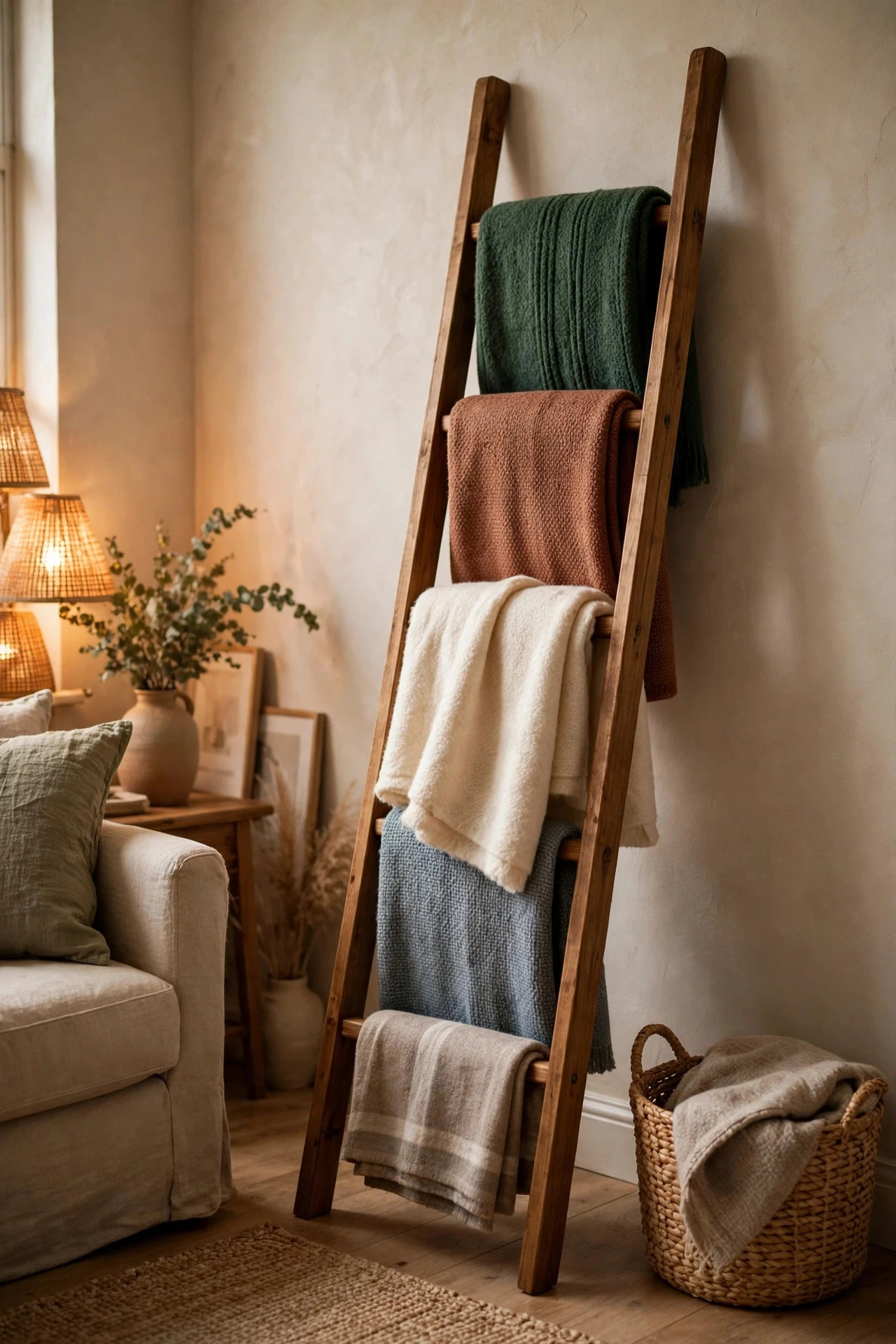
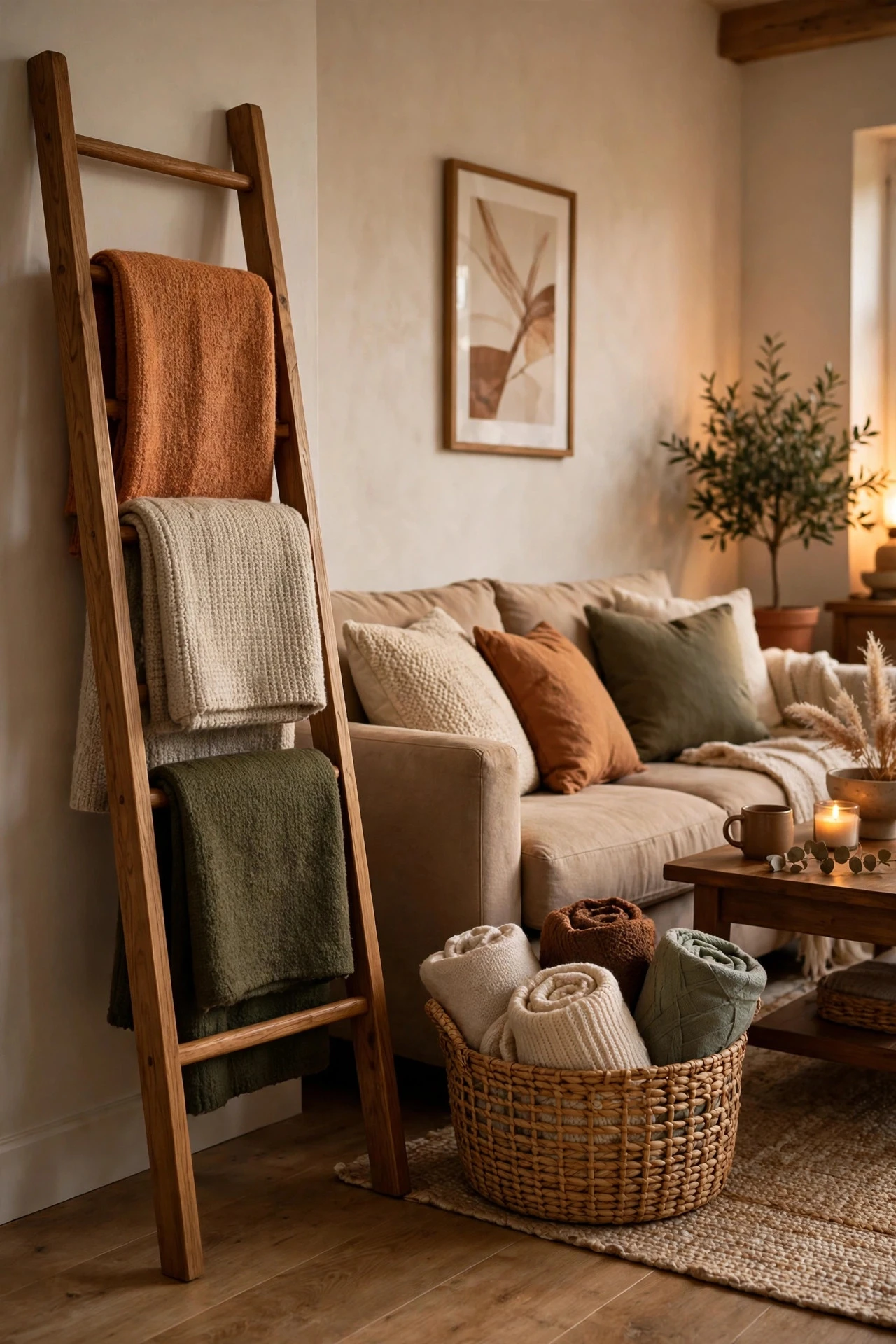
Store blankets on a blanket ladder by draping one throw, folded in thirds, over each rung, with the heaviest blanket on the lowest rung. A standard ladder is 120 to 150 cm tall and 45 to 60 cm wide, holds four to five throws, and leans against the wall at a slight angle so nothing slides off.
Choose a ladder with rungs 5 to 8 cm apart in depth — round rungs 3 cm thick grip fabric best, while flat rungs let silk and linen throws slide. Place the ladder beside the sofa, 15 to 20 cm from the arm, so you can reach a blanket without standing up. Hang the blanket you use most on the second rung from the top, at hand height, and reserve the top rung for the lightest throw, because a heavy wool blanket on the top rung pulls the ladder forward. Keep the bottom rung empty if you have pets or small children, since blankets hanging to the floor collect fur and get stepped on. A wooden ladder in oak, walnut or matte black costs $30 to $60 and suits any room; metal ladders look sharper in modern rooms but feel cold against bare skin in winter.
2. How Do You Store Blankets in a Woven Basket?

Store blankets in a basket by rolling each throw into a cylinder and standing the rolls upright, like books, so you can grab one without unfolding the rest. A basket 45 to 55 cm wide and 40 to 50 cm tall holds three to four throws, and upright rolls use space better than a flat stack.
Pick a basket with a wide mouth — seagrass, rattan, water hyacinth or cotton rope — and a sturdy base, because a full blanket basket weighs 3 to 5 kg. Line a seagrass basket with a cotton liner if you store light-coloured throws, since raw fibres can snag and shed onto pale wool. Place the basket beside the sofa or the reading chair, within arm's reach, and keep the two most-used blankets on top or at the front. If the basket lives on a hard floor, add felt pads underneath so it does not scratch wood or tile when you pull it out. These 22 cozy home decor ideas for a warm inviting home show how a basket of throws becomes part of the room's texture, not just storage, so choose a weave and colour that matches the rug and cushions.
3. How Do You Use a Storage Ottoman for Blankets?
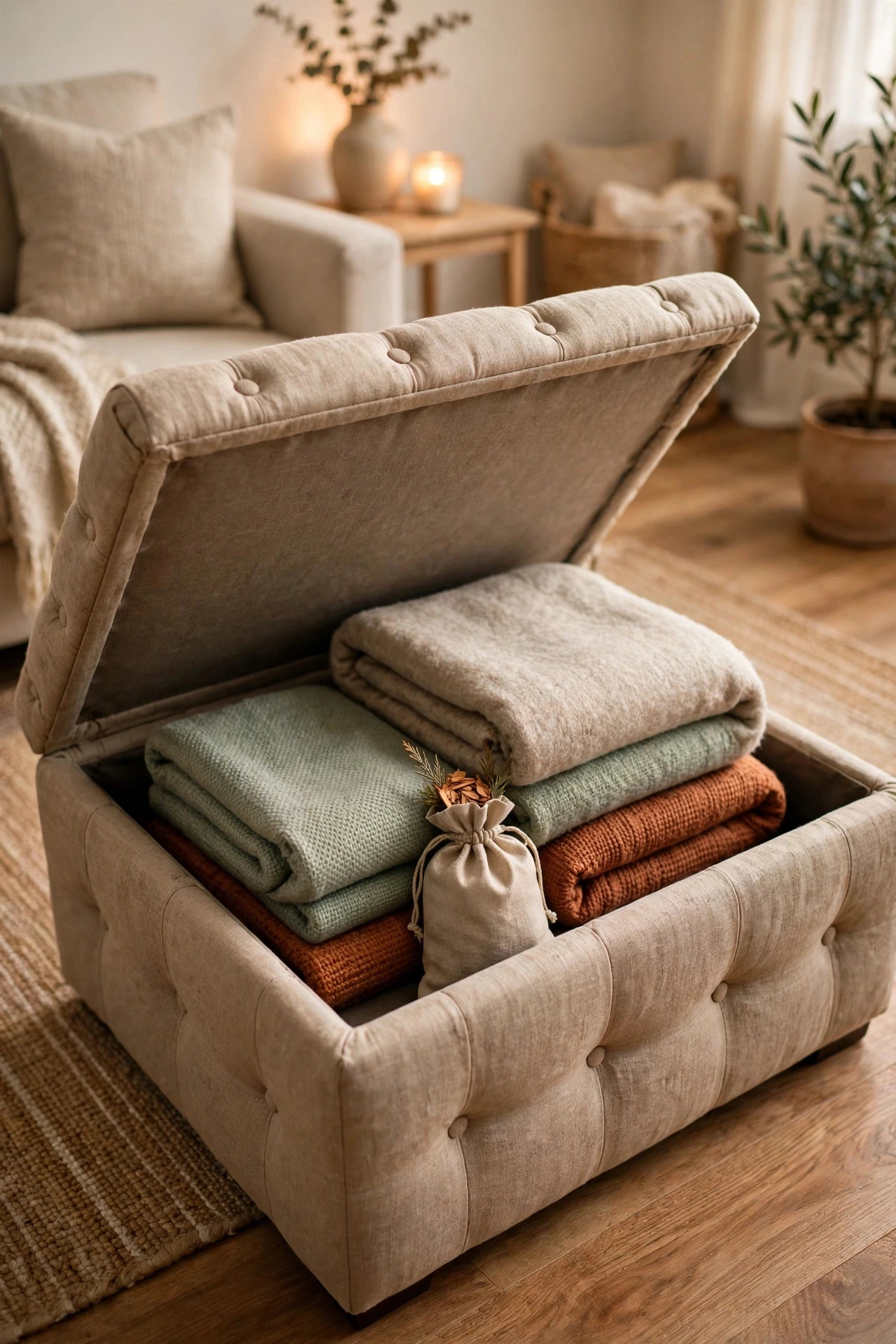
Use a storage ottoman for blankets by folding two to three throws flat and stacking them inside, largest at the bottom, with a cedar sachet tucked between layers. An ottoman is 75 to 100 cm long, 40 to 45 cm wide and 40 cm deep, and holds two blankets plus two throws — the capacity of a coffee table.
Choose an ottoman with a hinged lid that stays open on its own, so you can pull a blanket out with one hand while holding a cup of tea in the other. A lift-off lid is cheaper but ends up on the floor every evening. Upholstered ottomans in boucle or velvet double as extra seating, while a leather or faux-leather top wipes clean if a drink spills. Keep the ottoman at the foot of the sofa or bed, 20 to 30 cm out from the furniture, so the lid opens fully without hitting anything. Never store a damp blanket in an ottoman — closed upholstered storage traps moisture, and a blanket that goes in even slightly damp will smell musty within a week. Air the ottoman out once a month by leaving the lid open for an hour.
4. How Do You Store Blankets in a Trunk or Chest?
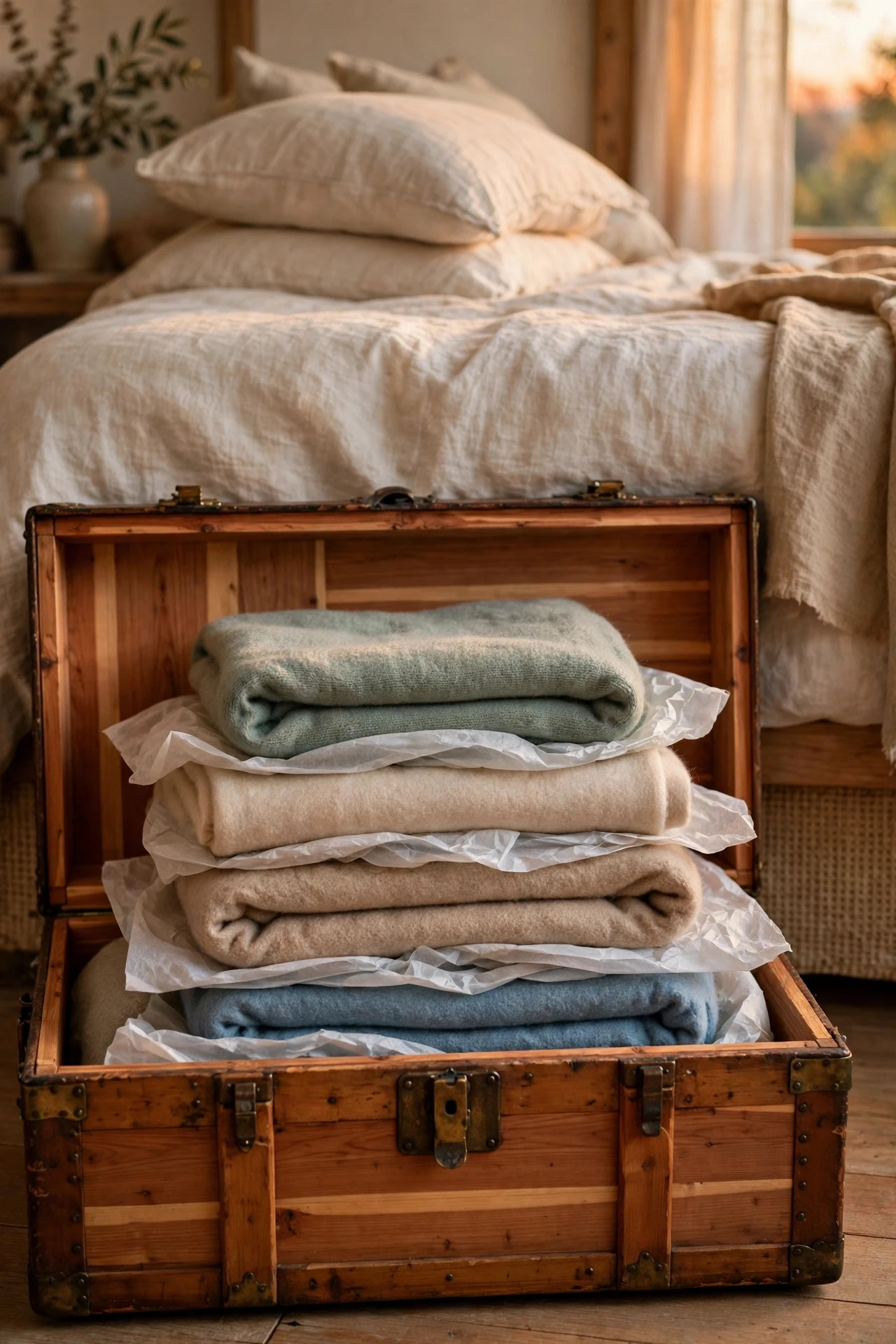
Store blankets in a trunk or chest by folding each blanket loosely, stacking no more than four high, and placing a cedar block between layers. A chest 90 to 120 cm long and 45 to 55 cm deep holds four to six blankets, and a cedar-lined chest is the gold standard for wool, because cedar repels moths.
Line an old wooden trunk with acid-free tissue paper before loading it, so the wood's oils and old varnish never touch the fabric. Keep the heaviest blanket at the bottom and the lightest on top, and never overfill — if you have to press the lid down, the bottom blankets will crease permanently and lose loft. A trunk at the foot of the bed doubles as a bench for putting on shoes, while a trunk in the living room works as a side table with a tray on top. Check a stored trunk every two to three months: open it, refold the blankets a different way to avoid permanent crease lines, and replace the cedar sachets once a year. If the trunk has a musty smell, wipe it inside with a cloth dampened with white vinegar and leave it open in the sun for a day before refilling it.
5. How Do You Use Under-Bed Storage for Blankets?
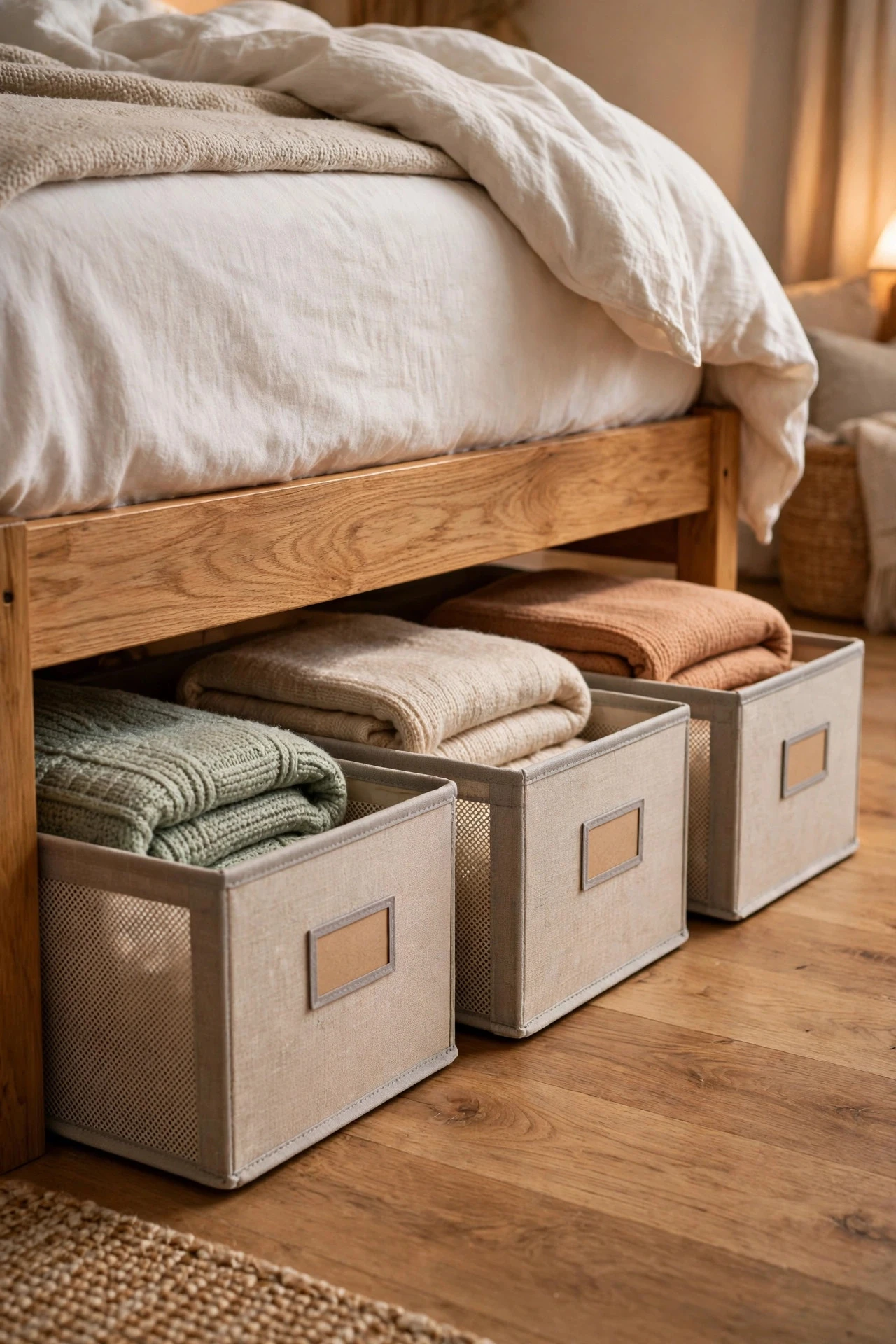
Use under-bed storage for blankets by sliding flat, breathable fabric boxes under the bed, each holding one or two folded blankets, with a label on the end. A standard under-bed box is 60 to 80 cm long, 40 to 45 cm wide and 15 to 18 cm tall, and fits under most beds with 15 cm of clearance.
Measure the gap under your bed before buying — a box 2 cm too tall will not slide in, and forcing it tears the fabric. Choose boxes with clear or mesh lids so you can see which blanket is inside without pulling every box out, and pick rigid-sided boxes over soft ones, because soft boxes collapse when half empty. Roll rather than fold blankets for under-bed boxes: a rolled throw takes up 20% less width and unrolls without creases. Keep out-of-season blankets under the bed and daily blankets elsewhere — under-bed storage is for the blankets you reach for weekly, not nightly, because pulling a box out every evening gets old fast. Vacuum the floor under the bed before sliding boxes in, and wipe the boxes down every season so dust never builds up around the blankets.
6. How Do You Organise Blankets on Closet Shelves?
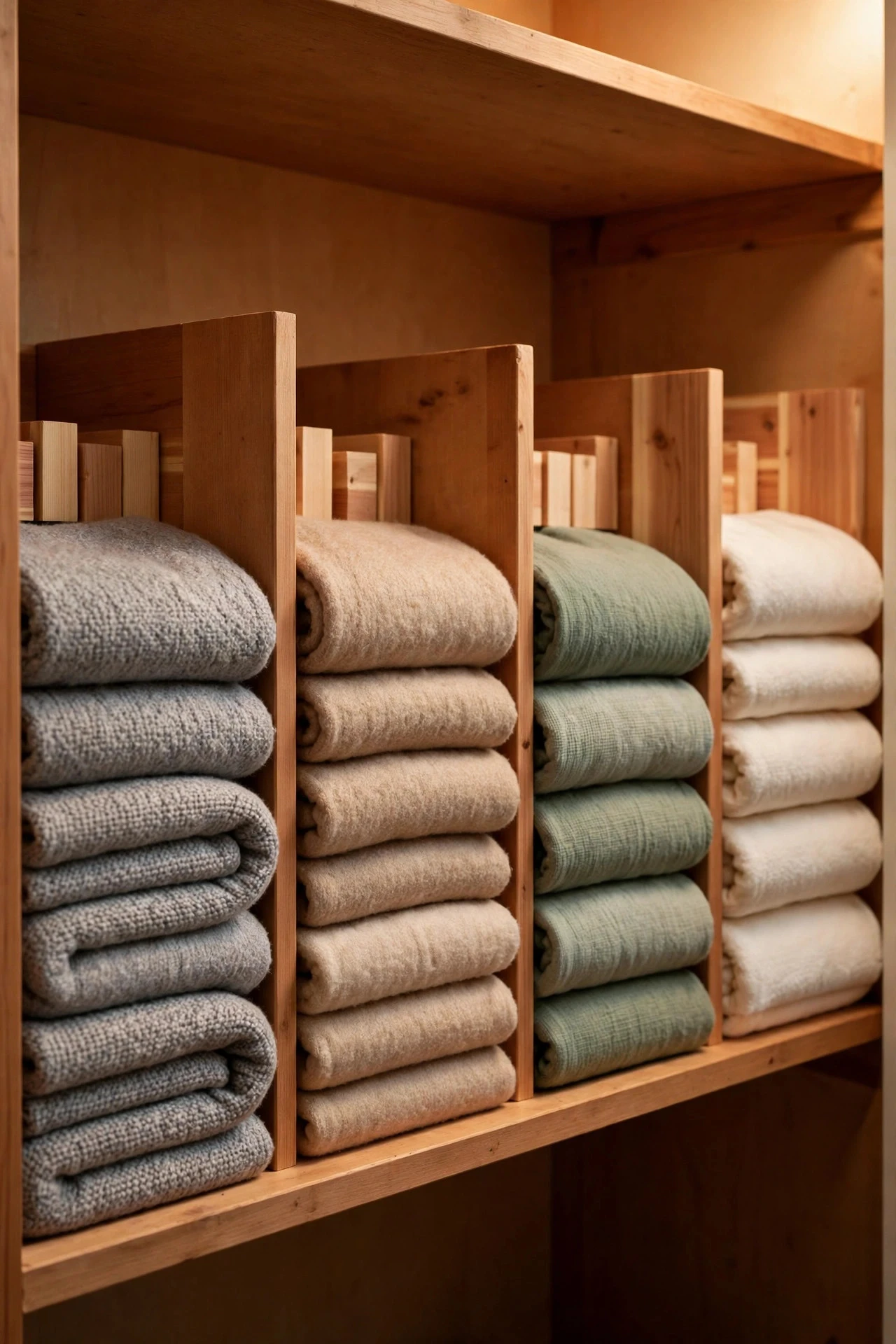
Organise blankets on closet shelves by giving each blanket its stack, folded to the shelf depth, with the fold facing out and a 5 cm gap above each stack, so one lifts out cleanly. A closet shelf is 30 to 40 cm deep, so fold blankets into rectangles 28 to 35 cm wide and stack no more than three high.
Sort by season and material: heavy wool and down on the top shelf for winter, light cotton and linen at eye level for everyday use, and guest blankets on their own shelf so visitors can help themselves. Use shelf dividers — simple acrylic or wooden uprights costing $10 to $15 a pair — to stop stacks leaning into each other, which is what turns a tidy closet into a landslide. Never stack blankets directly against an outside wall in a closet, because condensation forms there in winter and dampens the bottom blanket first. Leave a 3 cm gap behind each stack for air, and place a small cedar block or a sachet of dried lavender at the back of each shelf. If your closet has no shelf, add one: a single melamine shelf 60 cm wide costs under $20 and doubles blanket capacity overnight.
7. When Should You Use Vacuum Bags for Blankets — and When Not?
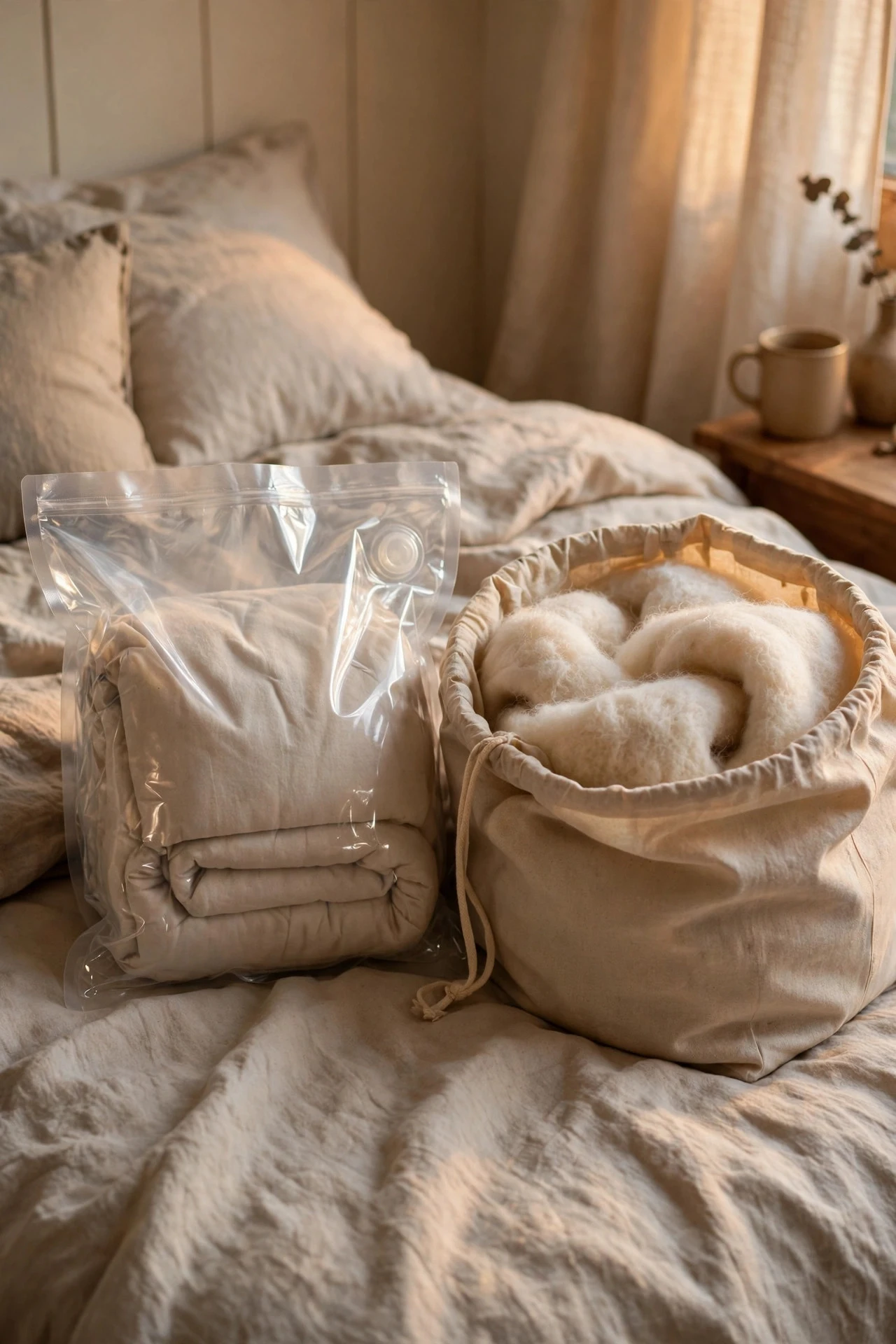
Use vacuum bags only for bulky synthetic and cotton blankets you need to store for months in a small space, and never for wool, down, silk or linen. A vacuum bag shrinks a cotton blanket to about a third of its volume, but it crushes wool fibres and down clusters so badly they may never fully recover their loft.
If you do use vacuum bags, wash and fully dry the blanket first, fold it loosely, seal the bag, and vacuum out only about 80% of the air — leaving a little air in the bag protects the fibres from being crushed flat. Store vacuum bags flat, never standing on edge, and open them every three months to let the blanket breathe for a day, then reseal. For wool and down, use a large cotton storage bag instead: it keeps dust and moths out while letting the fibres breathe, and the blanket keeps its loft for years. The blanket has been made from wool for centuries precisely because wool fibres spring back after compression — but repeated vacuum sealing breaks that spring, so reserve the bags for synthetics and cotton only, and label every bag with its contents and the date it went in.
8. Should You Roll or Fold Blankets for Storage?

Roll blankets when space is tight and you want crease-free throws; fold them for a visible shelf or trunk where a neat stack matters. Rolling a throw into a loose cylinder 25 to 30 cm long saves about 20% of space, and avoids the hard crease lines folding leaves across a blanket.
To roll, lay the blanket flat, fold it in half lengthways, then roll from one short end to the other, keeping the roll loose — a tight roll stretches the weave. Rolling works best for cotton, fleece and acrylic throws, and for baskets and under-bed boxes where you can stand rolls upright. Folding works best for wool and linen, which hold a crease if left folded too long in the same place, so refold them differently every two to three months. Never hang a heavy blanket over a hanger for storage: the weight stretches the weave at the fold and leaves a permanent line. For display, fold in thirds and drape over a ladder rung or sofa arm; for storage, roll or fold loosely and give the blanket room to breathe.
9. How Do You Keep Moths Away from Stored Wool Blankets?
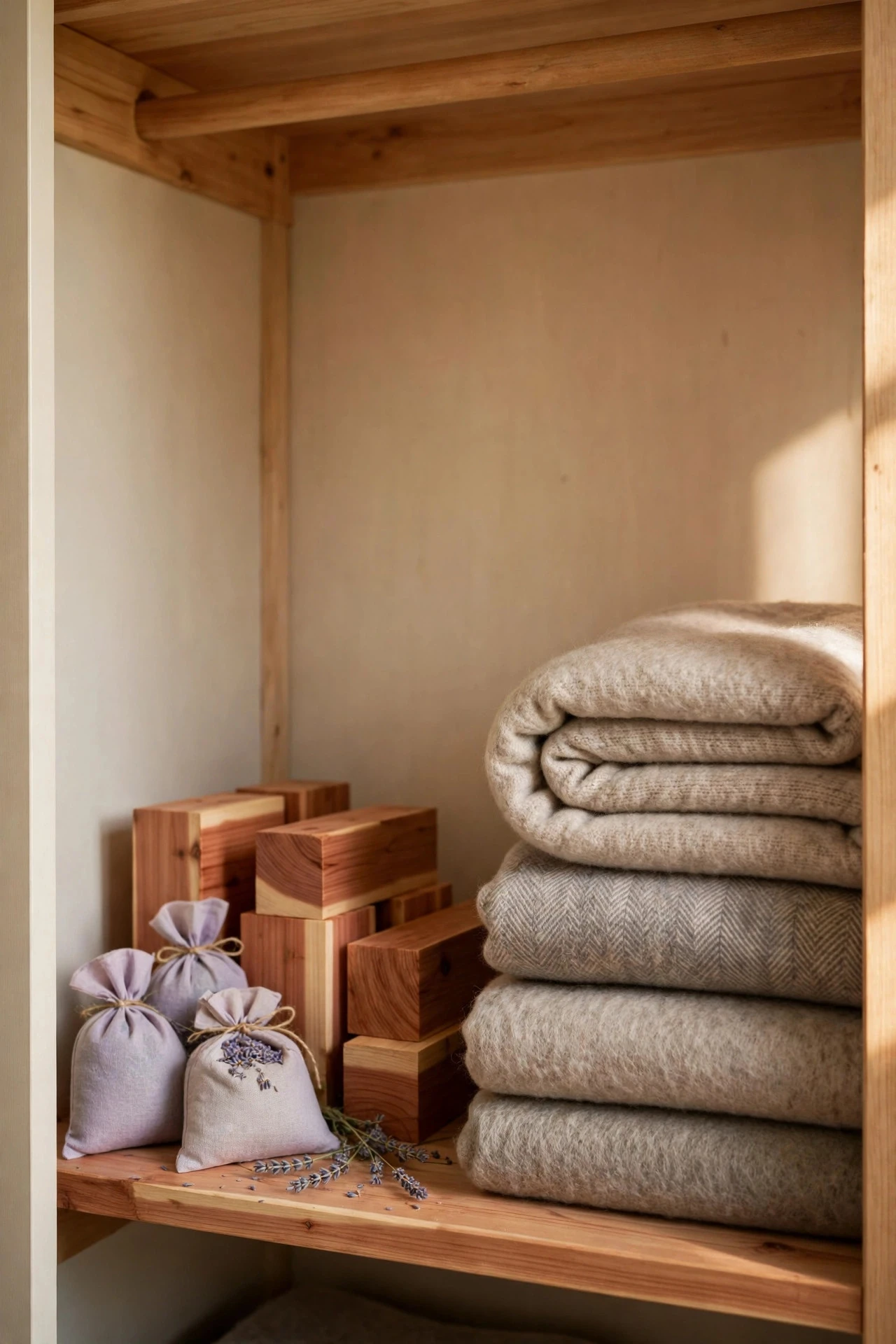
Keep moths away from stored wool blankets by cleaning every blanket before storage, sealing it in a breathable cotton bag with cedar blocks, and checking it every two months. Moths are drawn to the body oils and food stains left in dirty wool — a washed blanket is far less attractive to them than one stored straight off the sofa.
Use cedar blocks, rings or sachets rather than mothballs: cedar repels moths without the chemical smell, and a block costs $1 to $2 and lasts a year if you sand it lightly every few months to refresh the scent. Place one cedar block per blanket, or one sachet per shelf, and never let cedar oil touch the fabric directly — wrap blocks in tissue first. Lavender sachets work too, and they make the closet smell better, but they need replacing every three to four months. Check stored wool in spring and autumn, when moths are most active, looking for tiny holes or larvae along the folds. If you find damage, isolate that blanket in a sealed bag, wash it hot if the care label allows, and freeze smaller throws for 48 hours to kill any eggs before returning them to storage.
10. How Do You Store Blankets in a Small Living Room?

Store blankets in a small living room with one piece — an ottoman as a coffee table, or a ladder as wall decor — and keep only two throws out, the rest in the bedroom closet. Under 200 square feet, a basket plus a ladder plus a trunk reads as clutter, while one piece reads as intentional.
Use vertical storage: a ladder against the wall takes zero floor space beyond its 15 cm footprint, and a basket tucked beside the sofa arm uses dead space that nothing else fits in. Choose light colours and open weaves so the storage does not visually weigh the room down — a dark trunk in a small room looks like a second sofa. Fold throws in thirds and drape one over the sofa arm for instant access, so the basket only holds the spare. These 22 living room rug ideas to ground your seating area show how a rug defines the seating zone, and blanket storage belongs inside that zone, not scattered around the room. Measure twice: a basket 5 cm too wide blocks a walkway, and a ladder 10 cm too tall hits the picture rail.
11. Where Should Blankets Live in the Bedroom Versus the Living Room?
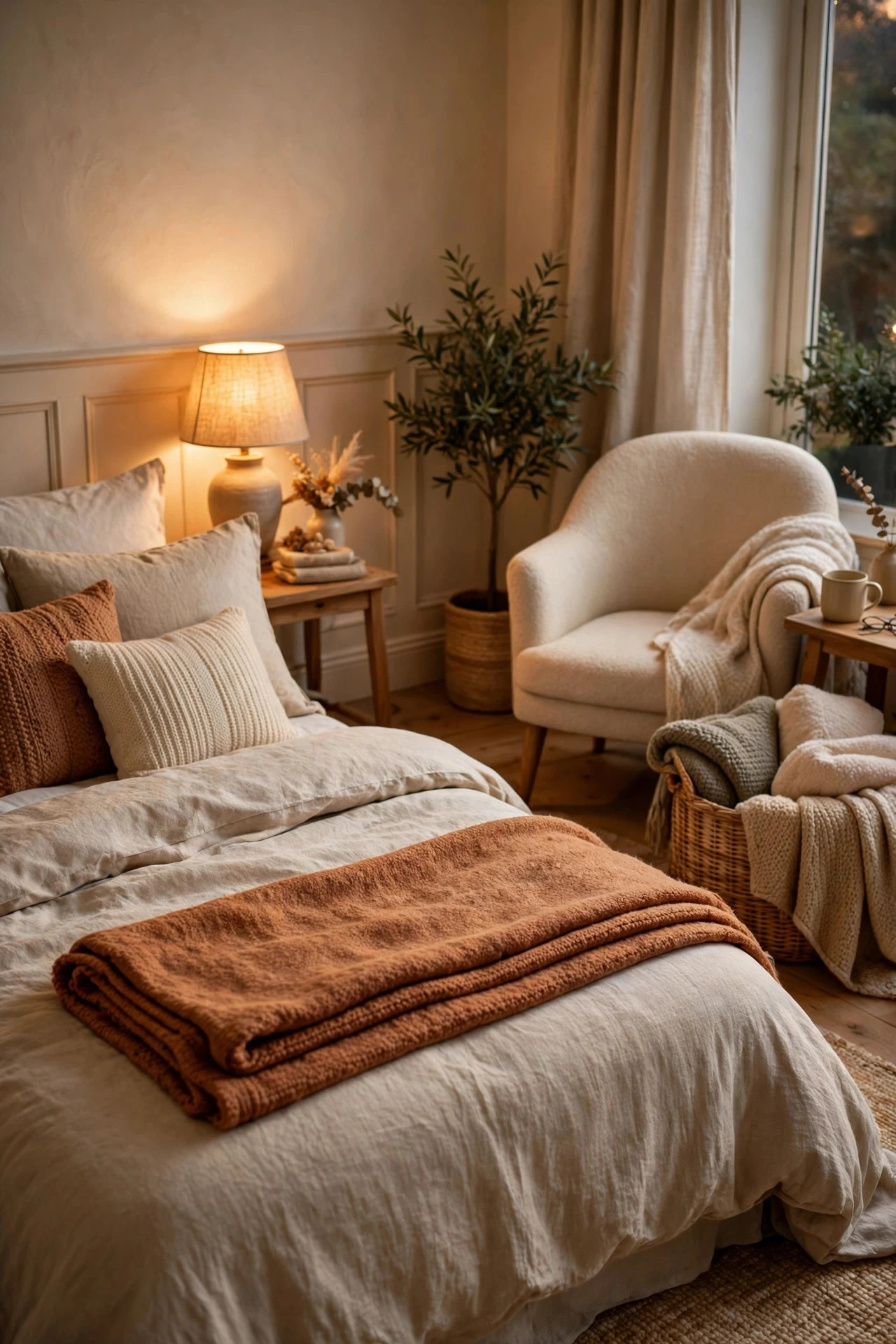
Keep throws in the living room and sleeping blankets in the bedroom, with one spare in each room, so nobody carries a blanket up and down the stairs every night. The living room holds the two or three throws you reach for on the sofa; the bedroom holds the blanket for the bed and one for the reading chair.
In the bedroom, store the spare bed blanket folded at the foot of the bed, in a bench or trunk, so it is there when the temperature drops at 2 am. In the living room, keep throws within arm's reach of the sofa — a basket or ladder 30 to 50 cm from the sofa arm is ideal, while a basket across the room might as well be in another house. Guest blankets live in the guest room closet or on the guest bed itself, folded at the foot, so visitors never have to ask. These 22 guest bedroom ideas to make visitors feel at home show how a folded throw at the foot of the bed signals welcome before a word is said. Label the boundary: if a living-room throw keeps migrating to the bedroom, buy a second one rather than moving the same blanket back and forth, because the moving blanket is the one that ends up on the floor.
12. How Do You Store Wool Blankets Properly?
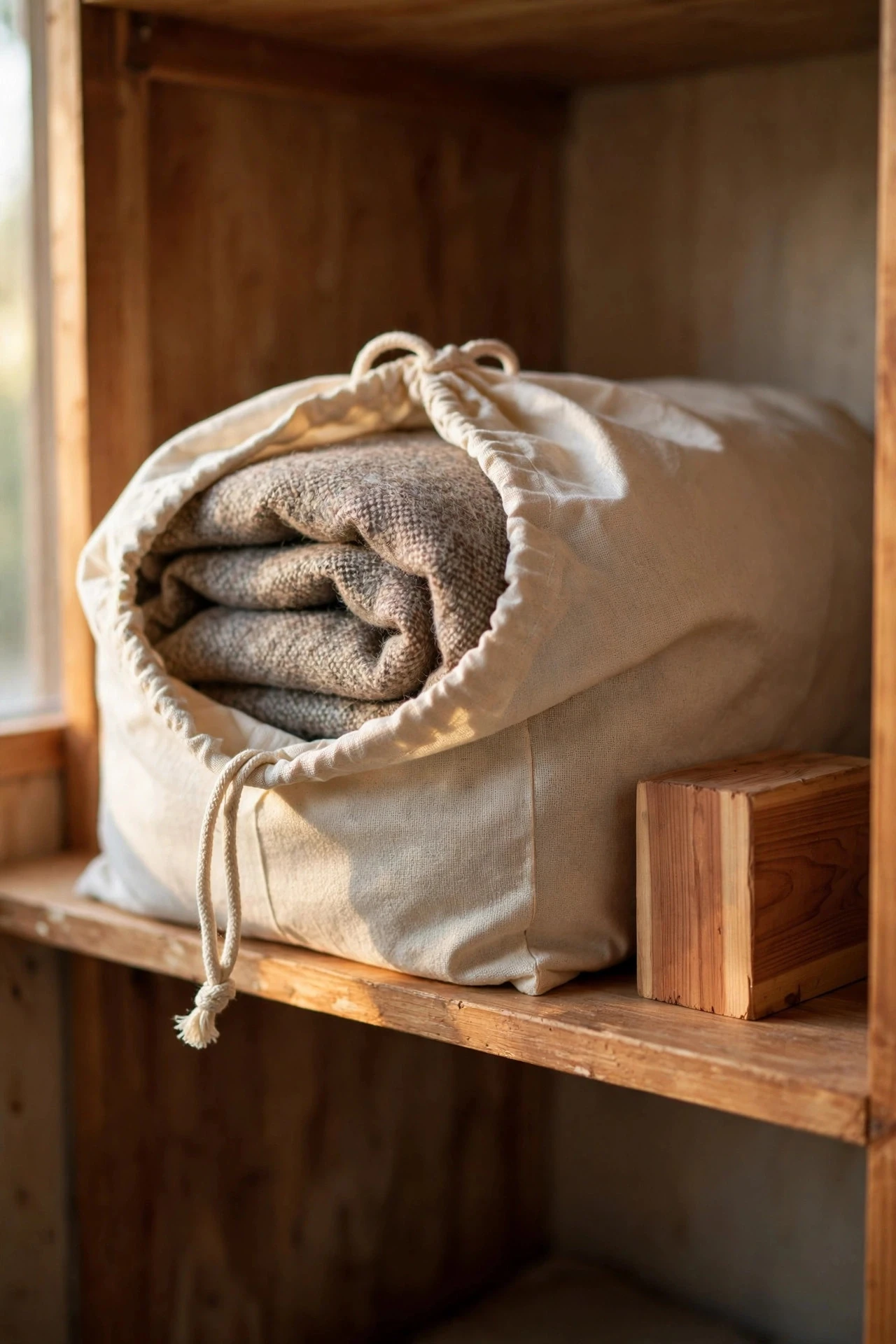
Store wool blankets by washing or airing them first, folding them loosely with tissue paper between the folds, and keeping them in a breathable cotton bag or cedar chest with cedar blocks. Wool is a living fibre: it needs air, it hates damp, and it holds a crease if folded tightly in the same place for months.
Never store wool in plastic bags or airtight containers, because trapped moisture invites mildew and moths — wool can absorb up to 30% of its weight in water without feeling wet, which means a blanket can be damp enough to mildew while feeling dry to the touch. Fold wool blankets loosely, refold them a different way every two to three months, and store them in the coolest, driest part of the house, away from radiators and outside walls. Wool fibres have a natural lanolin coating that repels dirt and odours, so most wool throws only need airing outside on a dry day rather than a full wash — hang them over a line for two hours, out of direct sun, and they smell fresh again. Keep wool away from direct sunlight in storage, because UV fades the colour unevenly and weakens the fibres over time.
13. How Do You Store Cotton Blankets?

Store cotton blankets by washing them, drying them completely, folding them flat, and stacking them on a closet shelf or in a fabric box. Cotton is the easiest blanket material to store: it tolerates washing, resists moths, and does not lose loft when folded, which is why most everyday throws are cotton or a cotton blend.
Dry cotton blankets fully before storage — cotton holds moisture longer than any other common blanket fibre, and a blanket that feels dry on the outside can still be damp in the middle of the fold. Tumble dry on low or line dry until the centre of the fold is warm and dry to the touch, then let it cool for an hour before folding. Store cotton in a cotton storage bag or an open basket, never in a vacuum bag for more than a season, and keep it away from direct sunlight, which fades cotton faster than wool. Cotton blankets are the one material that survives vacuum storage well, so if space is tight, cotton is the blanket to compress. Wash stored cotton blankets once a season even if they look clean, because cotton absorbs household odours — cooking smells, dust, pet scent — and a quick wash restores them completely.
14. How Do You Store Linen Blankets?
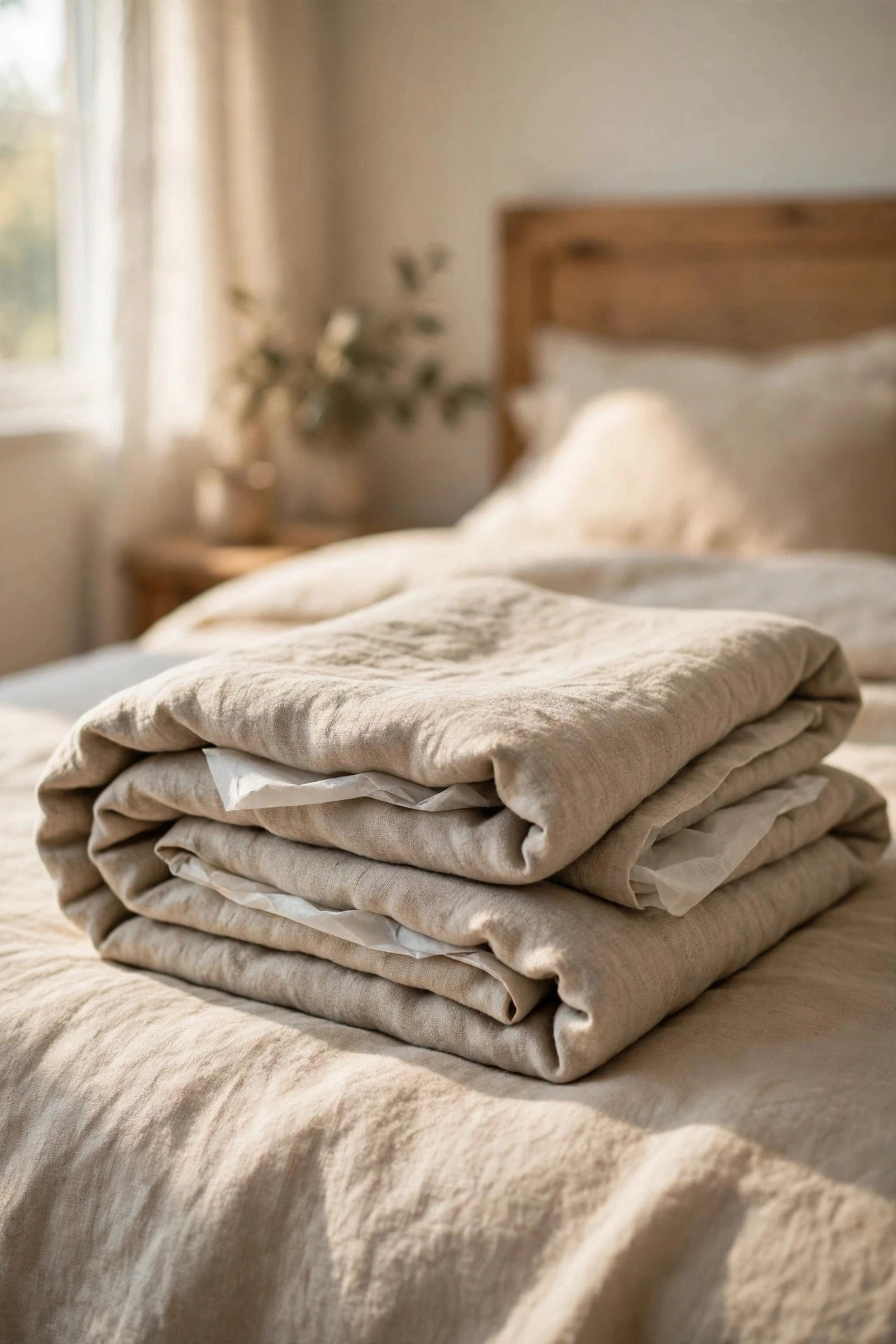
Store linen blankets loosely folded in a breathable cotton bag on a shelf with plenty of air around them, and never press them flat under heavy blankets. Linen is a strong, breathable fibre that softens with use, but it creases deeply and permanently if folded tightly or crushed under weight for months.
Fold linen throws in thirds rather than quarters, so the fold lines are fewer and softer, and place a sheet of acid-free tissue between folds to prevent the creases setting. Keep linen away from direct sunlight in storage, since UV weakens flax fibres faster than it weakens cotton or wool, and store it in the driest part of the closet — linen absorbs moisture quickly and dries slowly. Never vacuum-seal linen: the compression crushes the fibre structure and leaves creases that no amount of ironing fully removes. Air linen blankets outside on a dry, breezy day once a season, and they will smell fresh without washing. If a linen throw does crease in storage, mist it lightly with water and tumble dry on low with two dryer balls for ten minutes, which relaxes the fibres.
15. How Do You Store Down Throws and Duvets?
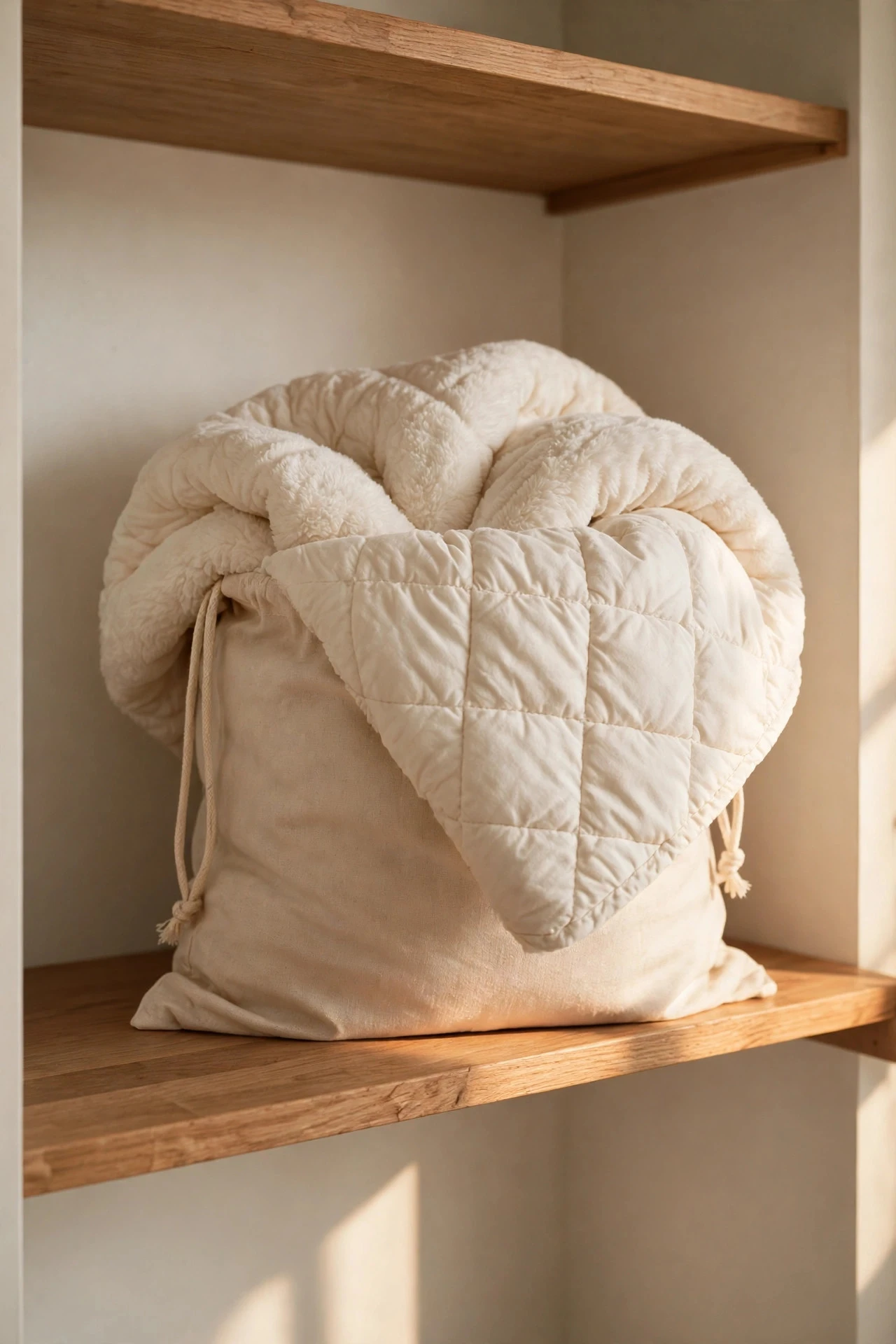
Store down throws in a breathable cotton bag at least twice the size of the folded throw, with room for the down to stay lofty, and never in a vacuum bag. Down is clusters of feathers that trap air — that trapped air is the warmth — and compressing it for months breaks the clusters and flattens the throw.
Fold a down throw loosely, place it in the bag without pressing it down, and store the bag on a high closet shelf where nothing sits on top of it. Add a cedar sachet for moth protection, but keep it in a small cloth pouch so the cedar oil never touches the down. Shake the throw out once a month during storage, or at least once a season, to redistribute the down and keep it from clumping. If a down throw has been stored compressed, revive it by tumbling it on low heat with three clean tennis balls or dryer balls for 20 minutes — the balls break up the clumps and restore most of the loft. Never store down in a damp room or a plastic bin, because down plus trapped moisture equals mildew within weeks, and mildew in down is almost impossible to remove completely.
16. How Do You Display Throws on a Sofa Arm?

Display throws on a sofa arm by folding the throw in thirds lengthways and draping it over the arm, with 30 to 40 cm hanging down the outside. One throw on the arm is decoration and storage at once: it is the blanket you reach for first, and it adds colour and texture to the sofa.
Choose the throw that matches the room's accent colour, and fold it so the prettiest side faces out — if the throw has a patterned side and a plain side, show the pattern. Keep the drape neat: a throw tossed over the arm reads as mess, while a throw folded in thirds reads as styling. These 22 living room curtain ideas for windows that make the room show how fabric layers soften a room, and a throw on the sofa arm does the same work at a smaller scale, tying the curtain colour to the sofa. Rotate the arm throw weekly with one from the basket, so no single blanket gets faded by sun or worn thin on one side. If the sofa arm is narrow, use a smaller throw — a full-size blanket draped over a narrow arm slides off every time someone sits down.
17. How Do You Use a Storage Bench at the Foot of the Bed?
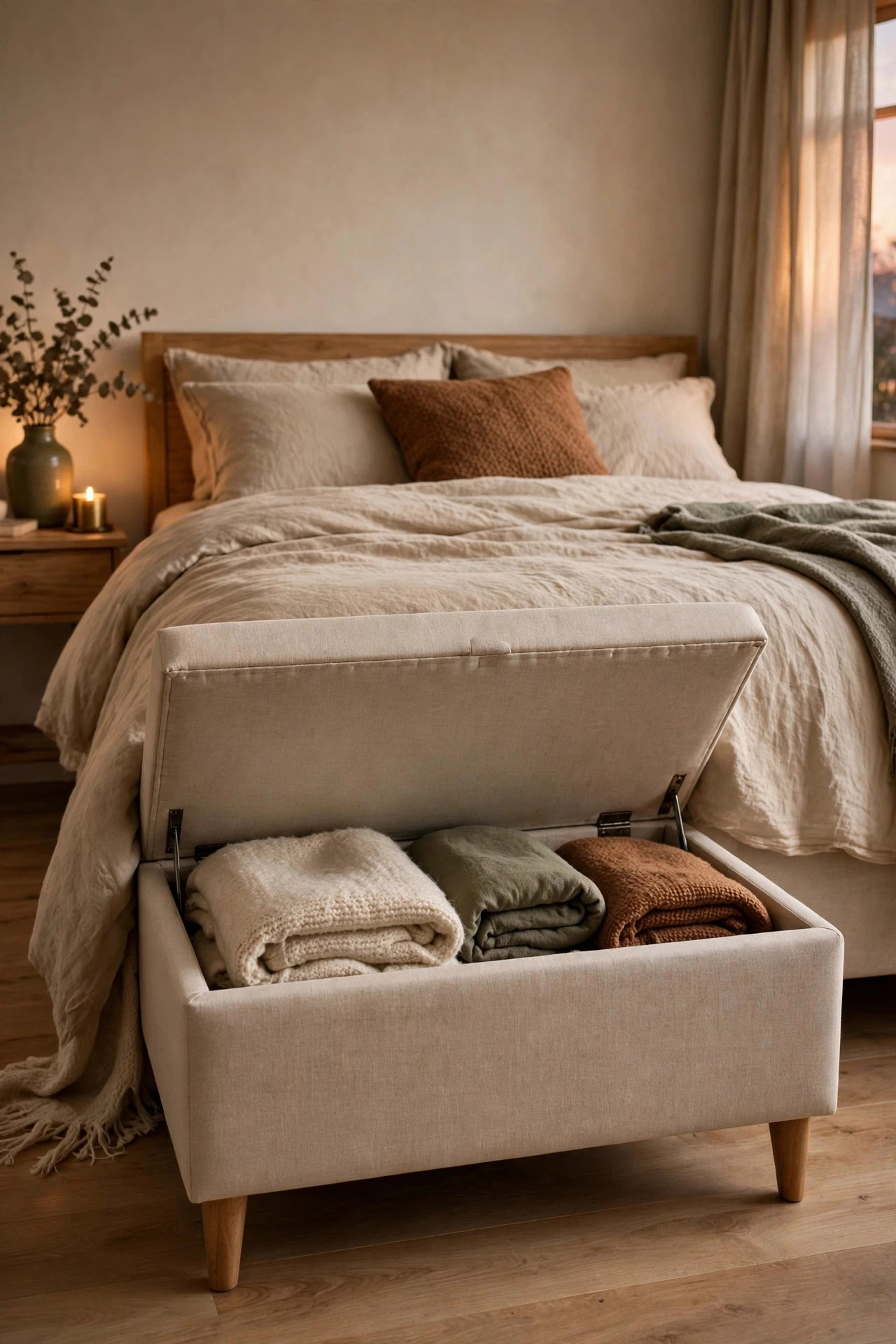
Use a bench at the foot of the bed by folding the blanket and two throws inside it, largest at the bottom, with the night blanket on top. A bench 100 to 120 cm long, 40 to 45 cm deep and 45 cm tall holds two blankets and two throws, and doubles as a seat for putting on shoes.
Choose a bench with a hinged lid and a soft-close mechanism, so it never slams shut at midnight, and check that the lid opens fully without hitting the bed frame — a bench pushed tight against the bed often cannot open. Keep the bench 10 to 15 cm out from the foot of the bed for that reason. Upholstered benches in linen or boucle suit bedrooms best, while a wooden bench with a lift-up seat works in a guest room where it also holds spare pillows. These 22 bedroom accent wall ideas to make your bed the star show how the foot of the bed anchors the room, and a bench there finishes the look while hiding the blankets. Air the bench out monthly and refold the blankets inside, because a closed bench in a warm bedroom traps humidity, and a blanket stored damp in a bench will smell musty by morning.
18. How Do You Store Blankets in a Reading Nook or by the Fireplace?
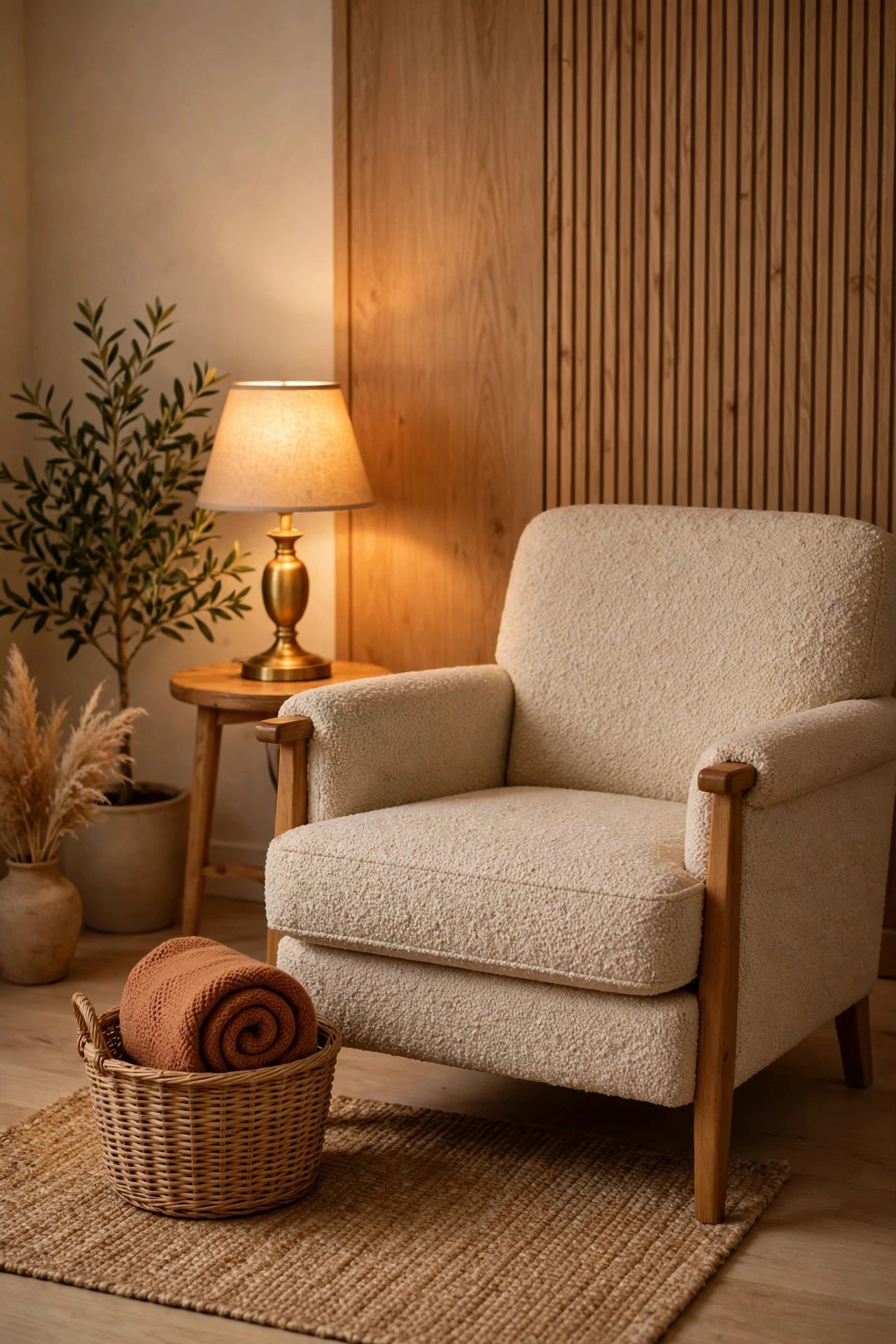
Store blankets in a nook with a basket beside the chair, holding one throw, so the blanket is there when you sit down and back in its place when you stand up. A nook needs one blanket, not five — a basket 35 to 40 cm wide holding one throw is enough, and a second throw lives in the basket.
By a fireplace, keep the blanket basket at least 90 cm from the firebox or the heater, because sparks, embers and radiant heat dry out fibres and are a fire risk with loose fabric. Use a metal or ceramic basket near a fireplace rather than seagrass or wicker, which can scorch, and never drape a blanket over the fireplace surround. Choose a throw in a warm, deep colour for the nook — rust, forest green, burgundy — because it photographs beautifully against a chair and a lamp, and it hides the odd tea stain better than cream. Keep the nook blanket separate from the sofa blankets, and wash it on its own schedule, since a reading blanket gets used daily and picks up body oils faster than the spare in the trunk.
19. How Do You Keep Stored Blankets Smelling Fresh?
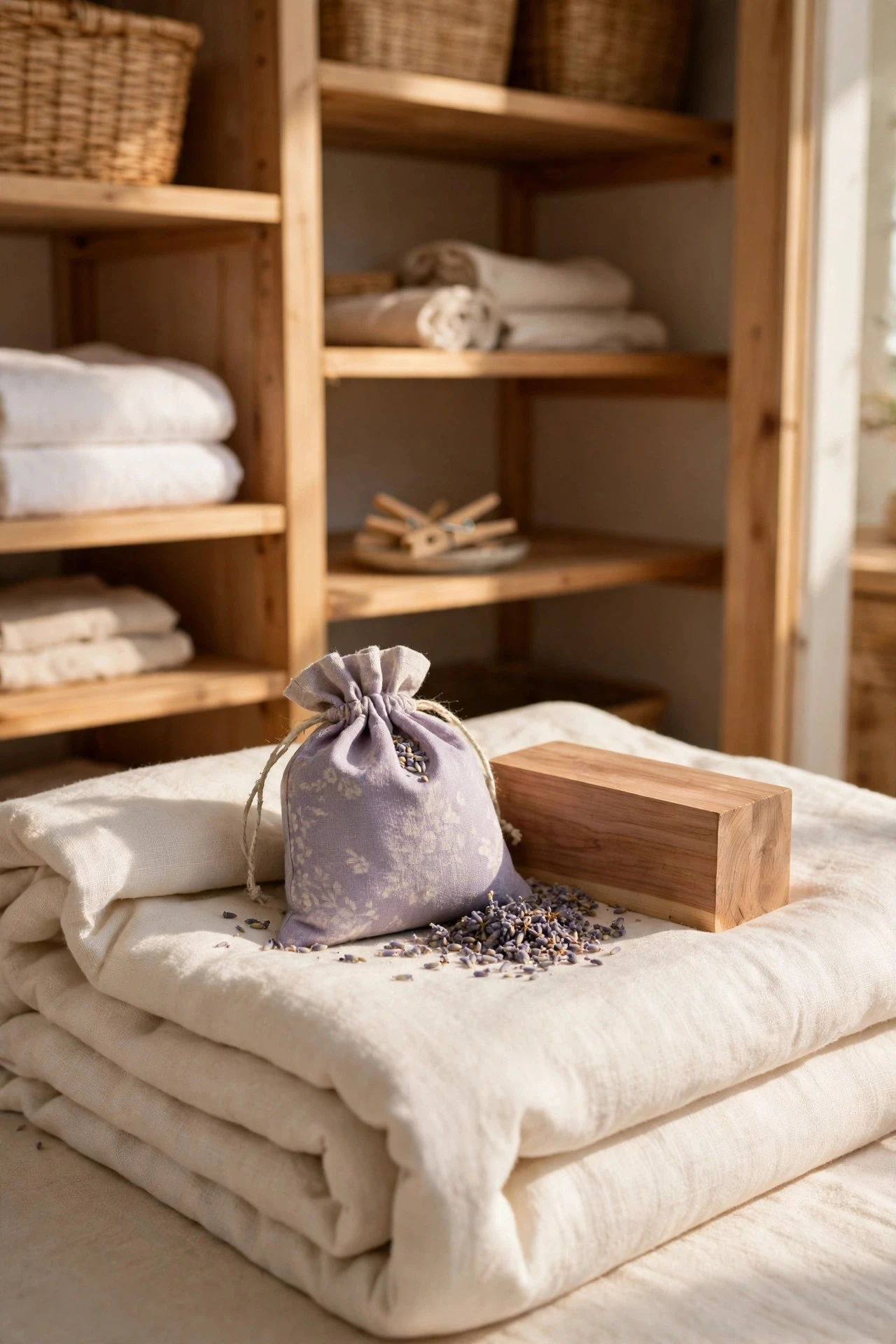
Keep stored blankets smelling fresh by washing them before storage, drying them completely, and adding a natural scent — a lavender sachet or a cedar block — between the folds. Freshness starts with clean and dry: no sachet can fix a blanket stored damp or dirty, and the smell only gets worse in a closed space.
Air stored blankets every two to three months by taking them out, shaking them, and leaving them in fresh air for an hour, then refolding them a different way. If a blanket smells musty, wash it with half a cup of white vinegar in the rinse cycle, which neutralises mildew odour without perfume, then dry it fully in the sun if the care label allows. Never spray perfume or fabric freshener directly on a stored blanket — the scent fades in days and leaves a sticky residue that attracts dust. Keep the storage area itself fresh: wipe shelves with vinegar water once a season, vacuum the closet floor, and leave a small bowl of bicarbonate of soda at the back of the closet to absorb odours. A blanket that smells fresh is a blanket you will actually use, and a blanket you use stays fresh because it gets washed.
20. How Do You Organise Blankets by Season?
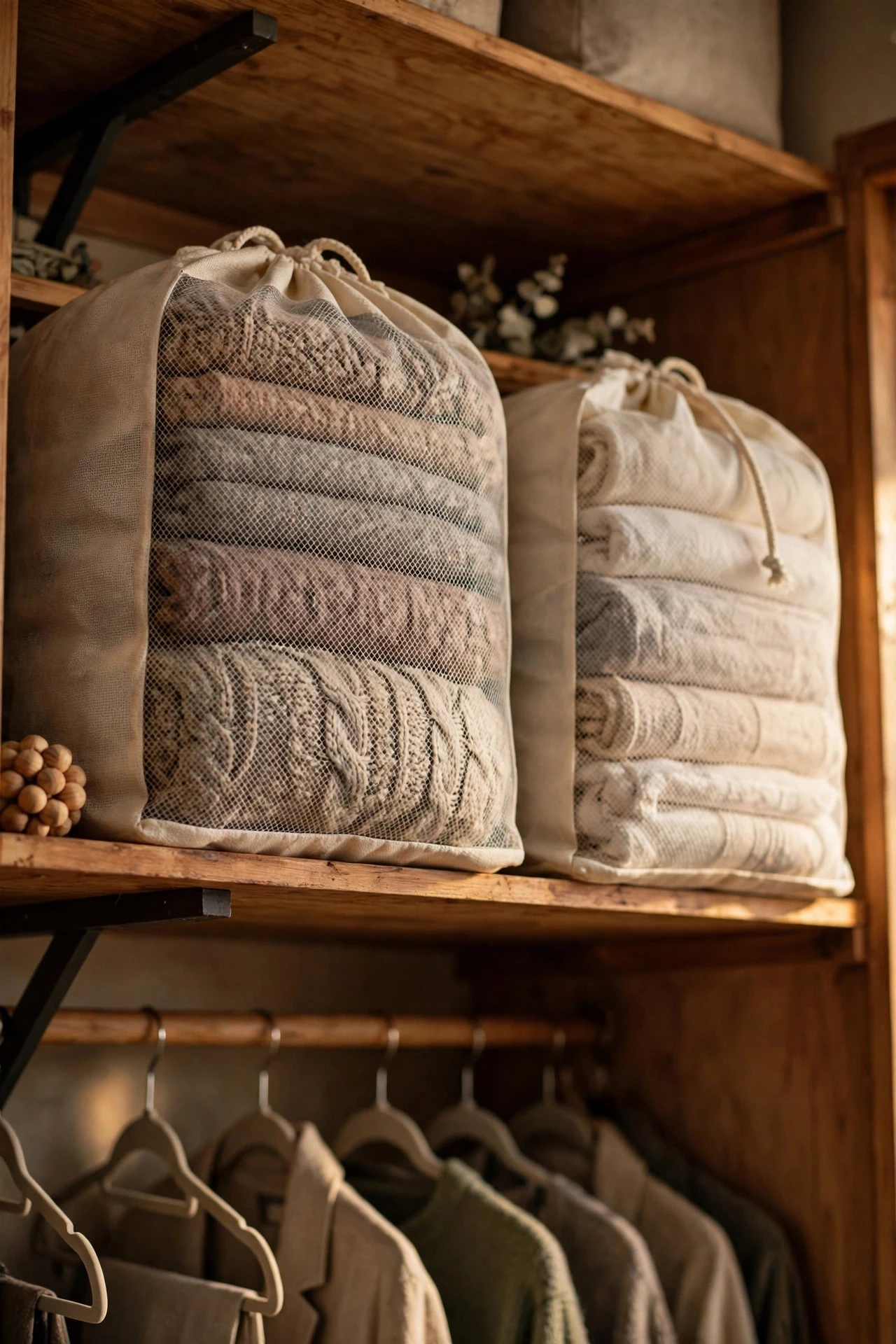
Organise blankets by season by keeping the season's throws out on display — ladder, basket, sofa arm — and the off-season blankets in breathable bags on a closet shelf or under the bed. Rotate twice a year: heavy wool and down come out in autumn, light cotton and linen in spring, and the swap takes twenty minutes.
Label every bag with the season and the contents — "Winter: 2 wool, 1 down" — so the swap never involves opening five bags to find one blanket. Wash off-season blankets before they go away, not when they come out, because a clean blanket stores well and a dirty one stores badly. Use the seasonal swap to inspect each blanket: check for moth holes, loose threads and stains, repair what you can, and retire anything threadbare. Keep one all-season throw out all year — a medium-weight cotton throw in a neutral colour — so the living room never looks bare during the swap. These 22 small bathroom storage ideas that make every inch work use the same rotate-and-label logic in a smaller space, and the principle is identical: the things you use now stay out, the things you use later stay labelled and out of the way.
21. How Do You Store Blankets in a Guest Room?
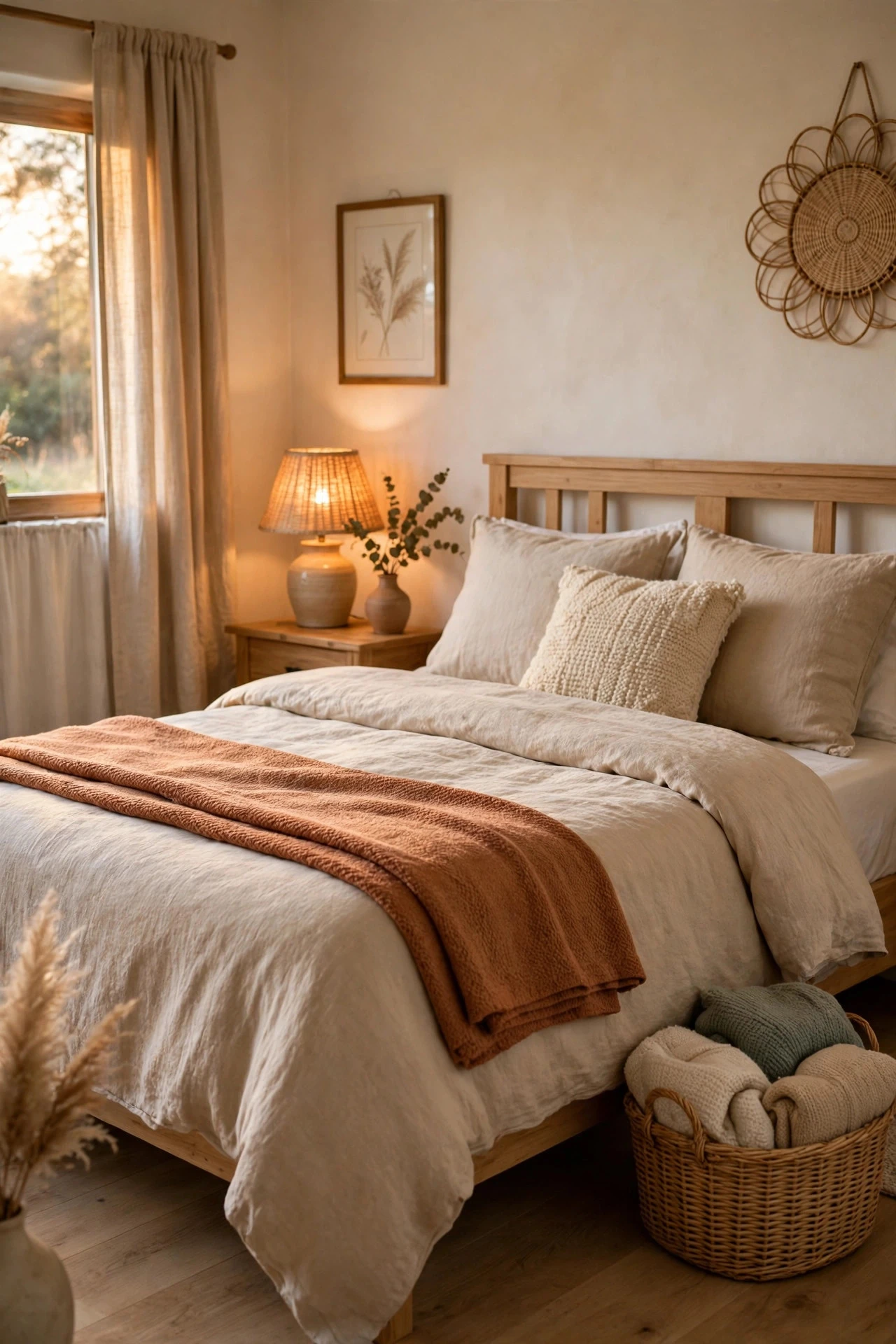
Store blankets in a guest room by folding one spare blanket at the foot of the bed and keeping a second in the closet or a small basket beside the bed, so guests can help themselves without asking. Guests will not open your linen closet at midnight, so the blanket has to be visible and reachable from the bed.
Fold the foot-of-bed blanket in thirds and place it across the bottom third of the bed, with a small card or a note on the bedside table saying where the spare is — "Extra blankets in the closet, top shelf" — which guests actually read. Choose guest blankets in washable cotton or acrylic, not wool or down, because guest blankets need a hot wash after every stay and wool will not survive that. Keep the guest basket small, 35 to 40 cm wide, with one rolled throw and a spare pillow, and wash both after every guest leaves. If the guest room doubles as an office or a child's room, keep the spare blanket in a lidded ottoman or a trunk that also serves the room's other purpose, so the room never looks like a storage cupboard between visits.
22. How Do You Build a Blanket Storage System That Stays Tidy?
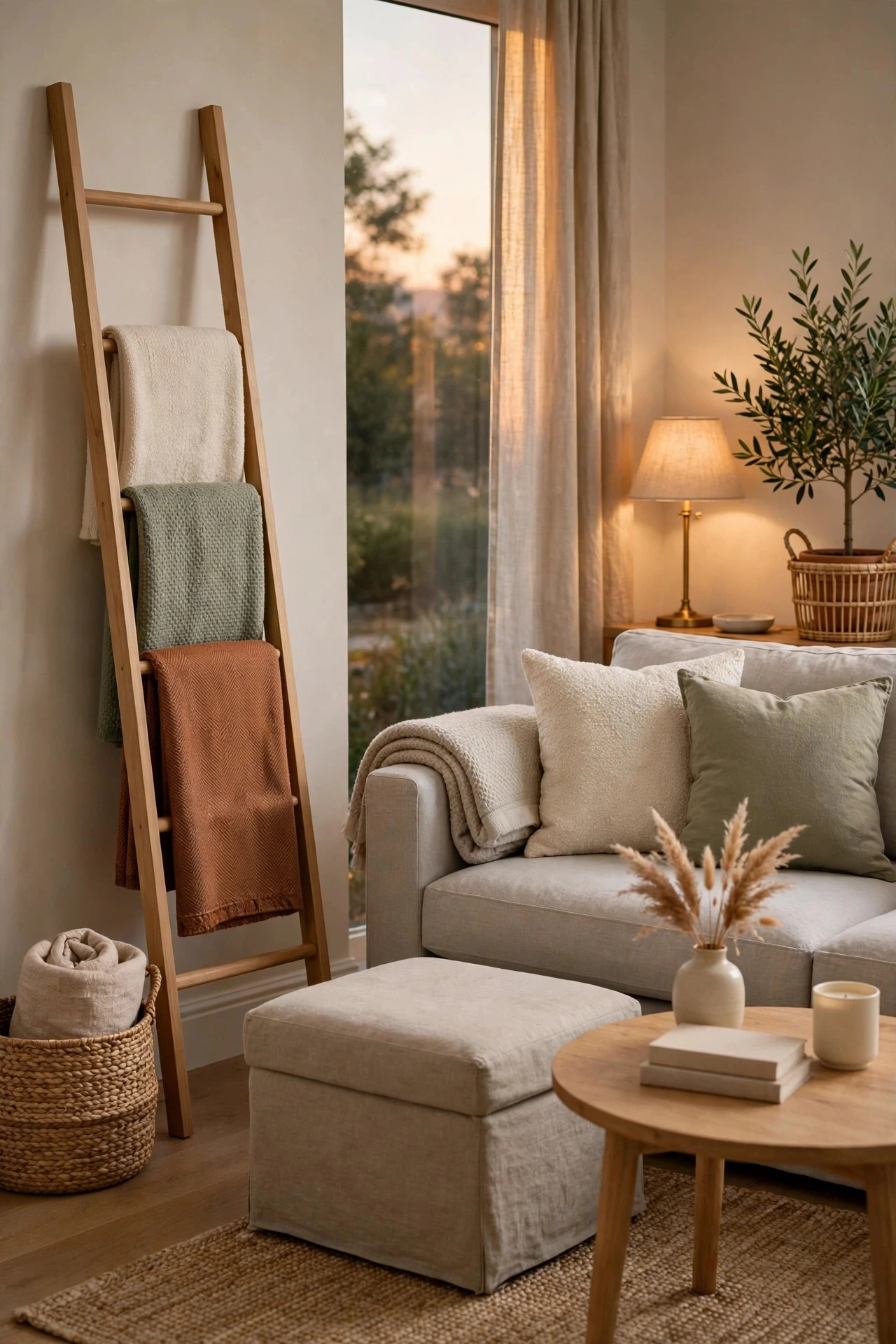
Build a blanket system that holds by giving each blanket one home, limiting throws out to three per room, and making the return as easy as the grab. A system fails when the blanket's home is across the room or behind a door — people drop the blanket on the sofa arm instead, and the system collapses in a week.
Start with a count: gather every blanket in the house, count them, and decide how many you actually use — most homes keep six to ten but use three. Donate or store the rest, then assign homes: ladder for the favourite, basket for the second, ottoman or trunk for the spares, closet shelf for the off-season. Write the rule on a small label inside the basket or on the closet shelf if the household needs it, and do a two-minute reset every evening — fold the throws, return them to their homes, and the system holds. The same discipline applies at room scale: one zone, one job, everything with a place. A tidy blanket system is not about buying more storage — it is about owning fewer blankets than your storage can hold, and putting each one back where it belongs.
Practical Tips
Clean and dry every blanket before it goes into storage, because dirt and damp are what ruin blankets, not time. Wash cotton and acrylic on a normal cycle, air wool outside on a dry day, and dry everything until the middle of the fold is warm and dry to the touch — a blanket that feels dry on the outside can still be damp inside, and damp plus dark plus closed storage equals mildew in weeks.
Give fibres room to breathe: never store wool, down, silk or linen in plastic bags or vacuum bags, and never stack more than four blankets high, because the bottom blanket loses its loft and takes on permanent crease lines. Refold stored blankets a different way every two to three months, check for moth damage in spring and autumn, and replace cedar blocks once a year by sanding them lightly to refresh the scent. Keep blankets away from direct sunlight, radiators and outside walls, and never hang a heavy blanket on a hanger — the weight stretches the weave and leaves a permanent line at the fold.
Final Thoughts
Blanket storage is not about hiding blankets away — it is about keeping the ones you love within reach and the ones you need later in good condition. One ladder, one basket and one trunk cover most homes, and the care rules are simple: clean, dry, breathe, and check. Do that, and every throw will be fresh, tidy and exactly where your hand expects it, every evening, for years.
You may also like: our 22 cozy home decor ideas for a warm inviting home and our 22 small bathroom storage ideas that make every inch work carry the same tidy, lived-in warmth from the living room into every corner of the house.
Frequently Asked Questions
How many blankets should you keep out in the living room?
Keep two to three throws out in the living room — one on the sofa arm, one in the basket and one on the ladder — and store the rest elsewhere. More than three out at once looks cluttered and the extras end up on the floor, while fewer than two means someone is always fetching one from another room.
What is the best way to store blankets long term?
The best long-term blanket storage is a clean, fully dry blanket folded loosely in a breathable cotton bag or a cedar chest, kept in a cool, dry place away from sunlight. Wash the blanket first, add a cedar block or lavender sachet, and refold it a different way every two to three months so creases never set permanently.
Can you store blankets in vacuum bags?
You can store cotton and synthetic blankets in vacuum bags, but never store wool, down, silk or linen in them, because vacuum sealing crushes the fibres and destroys their loft. Leave about 20% of the air in the bag, open it every three months to let the blanket breathe, and use a breathable cotton bag instead for wool and down.
How do you keep stored blankets from smelling musty?
Keep stored blankets from smelling musty by washing and fully drying them before storage, adding a lavender sachet or cedar block between the folds, and airing them every two to three months. If a blanket already smells musty, wash it with half a cup of white vinegar in the rinse cycle and dry it completely in the sun.
Where is the best place to store blankets in a small home?
The best blanket storage in a small home is one multi-purpose piece — an ottoman as a coffee table or a ladder against the wall — holding only the two throws you use daily, with the rest in labelled bags on a closet shelf or under the bed. Vertical storage costs no floor space and keeps the room looking calm.
How do you stop moths eating stored wool blankets?
Stop moths eating stored wool blankets by washing the blanket before storage, sealing it in a breathable cotton bag with cedar blocks, and checking it every two months, especially in spring and autumn. Moths target dirty wool, so a clean blanket with cedar is far less attractive to them than one stored straight off the sofa.