22 Small Bathroom Storage Ideas That Make Every Inch Work
A small bathroom fails in one specific way: everything you need is in it, but nothing has a place to live. Toothbrushes crowd the sink edge, towels pile on the floor, and the cleaning spray hides behind the toilet. Small bathroom storage is not about buying more boxes — it is about giving every item a measured, reachable home, using the walls, the door, the space above the toilet and the dead corners most bathrooms waste.
Looking for more inspiration? Our Nest Decorz homepage gathers the latest home decor ideas, seasonal decorating guides and room-by-room styling tips in one place — start there and explore.
Below are 22 small bathroom storage ideas organised by zone — vanity, over-toilet, shower and bath, door and wall, under-sink, linen and towels, and hidden storage — with real dimensions, capacities, materials and prices. Most ideas cost under $40, most need no drilling, and none require a remodel. Every measurement here fits a standard small bathroom of roughly 1.5 by 2.4 metres.
Quick answers
– Start with the walls, not the floor — a small bathroom has almost no spare floor, so shelves, hooks and over-door racks add the most storage per square centimetre. – Measure before you buy — a shelf 15 to 20 cm deep clears the tap and the toilet tank; anything deeper blocks the room. – Closed storage beats open storage in damp rooms — cabinets and lidded baskets keep spare loo rolls, medicines and linens dry and dust-free. – Renter-friendly storage works — freestanding over-toilet units, adhesive hooks, tension rods and over-door racks add real capacity with no drilling. – One home per item — storage only stays tidy when every bottle, brush and towel has a single named spot and nothing is doubled up.
1. How Do You Use the Wall Above the Vanity for Storage?
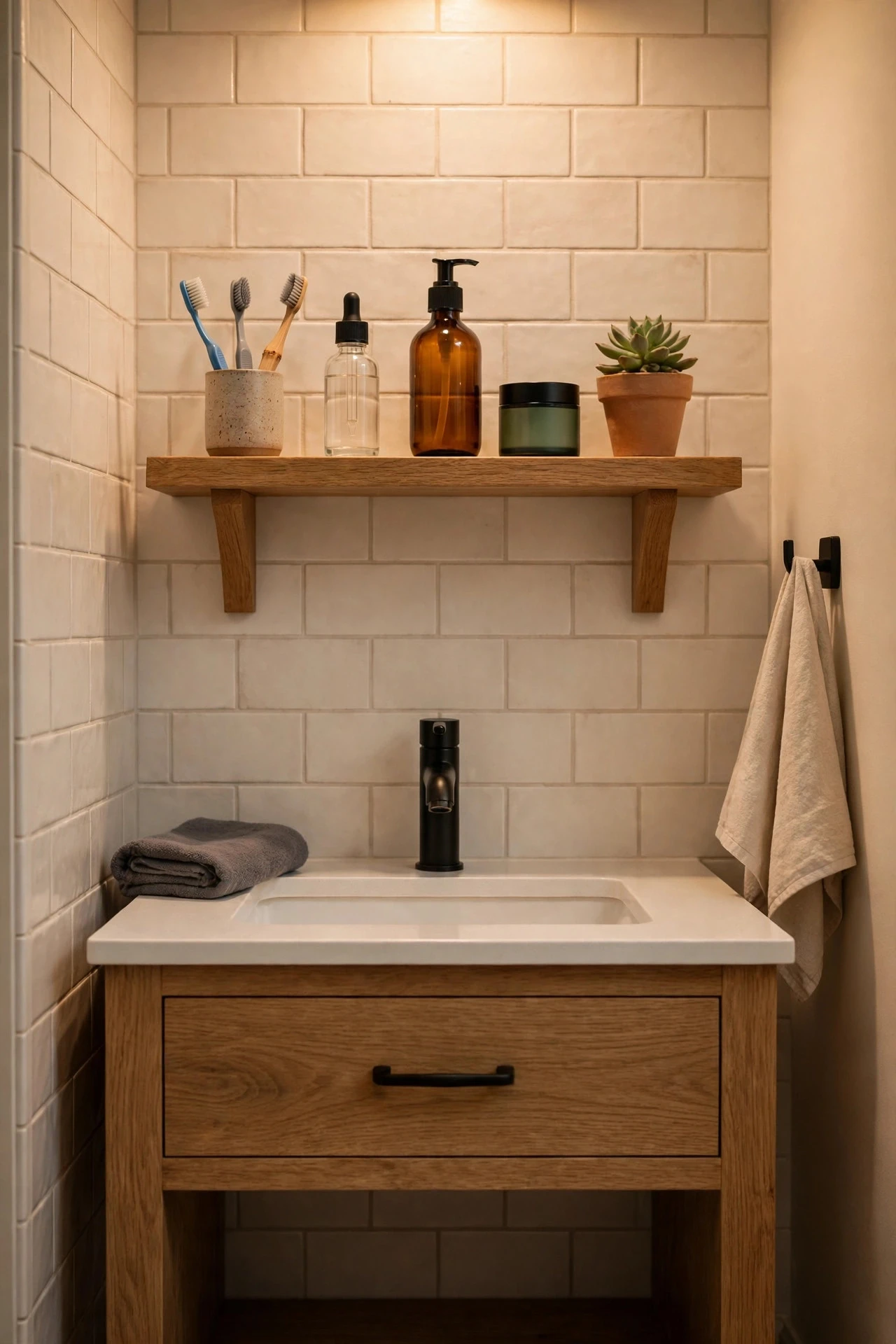
Use the wall above the vanity for storage with a floating shelf 15 to 20 cm deep, mounted 30 to 40 cm above the splashback so it clears the tap and the mirror. A 60 cm shelf holds daily items — toothbrushes, skincare, a small plant — without touching the counter, and two stacked shelves double the space.
Choose a moisture-resistant material: solid oak sealed with a waterproof finish, powder-coated steel, or moisture-resistant MDF. Avoid raw pine and untreated chipboard, which swell in steam within months. Fix into a wall stud or use proper wall plugs rated for the load — a shelf holding toiletries weighs 3 to 5 kg when full, and a cheap plug will pull out of plasterboard. A single shelf costs $15 to $25, a pair $30 to $45, and fitting takes about twenty minutes. These 22 bathroom mirror ideas for a brighter, bigger-looking room show how the shelf and mirror work together without crowding each other.
2. What Belongs in a Vanity Drawer Organiser?
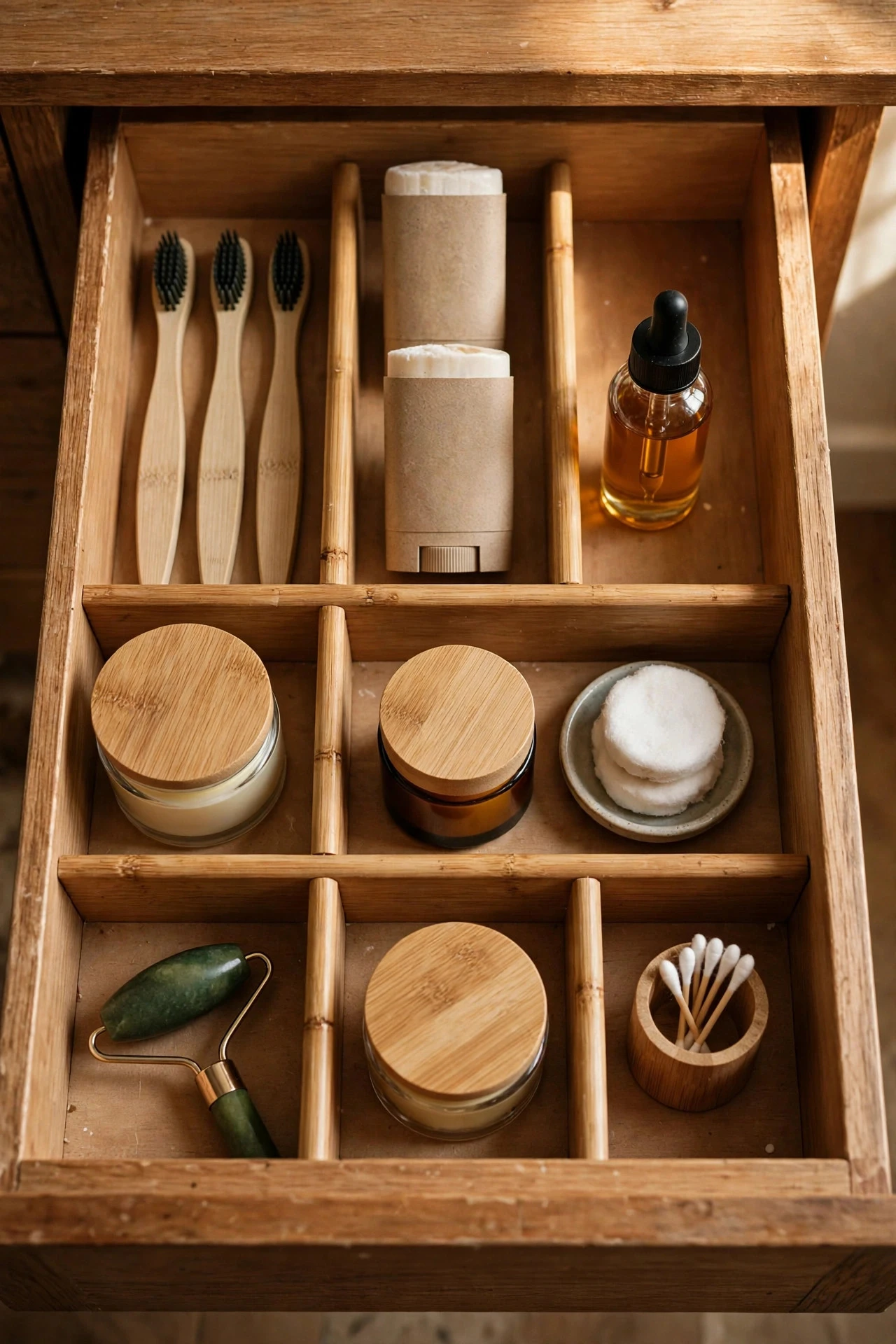
A vanity drawer organiser belongs to daily items only: toothbrushes, toothpaste, deodorant, moisturiser, hairbrush and medication you take every day. Everything else — spares, travel sizes, seasonal products — lives elsewhere. An acrylic or bamboo tray with 4 to 6 compartments turns one messy drawer into a small map you can read at a glance.
Measure the drawer first: most bathroom vanity drawers are 40 to 50 cm wide and 35 to 40 cm deep, so a 30 by 35 cm tray leaves room for a hairdryer beside it. Bamboo trays suit warm, natural bathrooms and cost $12 to $20; clear acrylic trays suit white vanities, show dirt sooner so you clean them, and cost $10 to $18. The rule that keeps it working: if an item has not been used in two weeks, it moves out of the drawer and into a backup basket.
3. Can a Pull-Out Vanity Tower Replace a Cabinet?
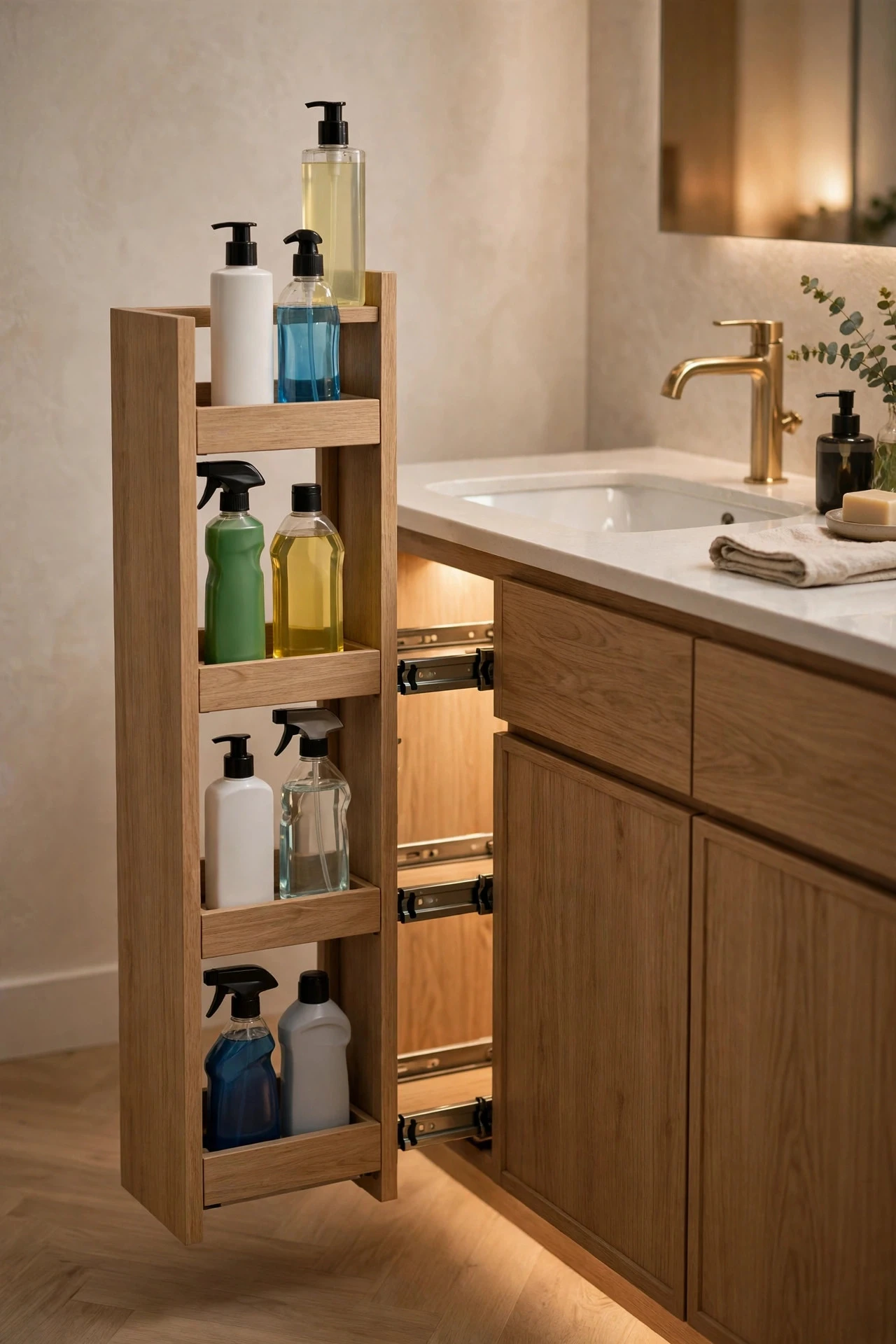
A pull-out vanity tower can replace a wall cabinet in a small bathroom because it uses a gap you already have: a 15 to 20 cm wide sliver beside the vanity. The tower slides out on full-extension runners and holds tall bottles upright in two or three tiers, about 8 to 12 bottles in total.
Look for a tower with a 10 kg runner rating and a soft-close mechanism, so it does not slam shut on wet fingers. Freestanding towers cost $35 to $60 and need no fitting; fitted pull-outs cost $60 to $120 plus installation and suit a vanity refit. Keep heavy bottles at the bottom tier so the tower stays stable, and wipe the runners dry once a month.
4. Is an Over-Toilet Shelf Unit Worth It in a Tiny Bathroom?
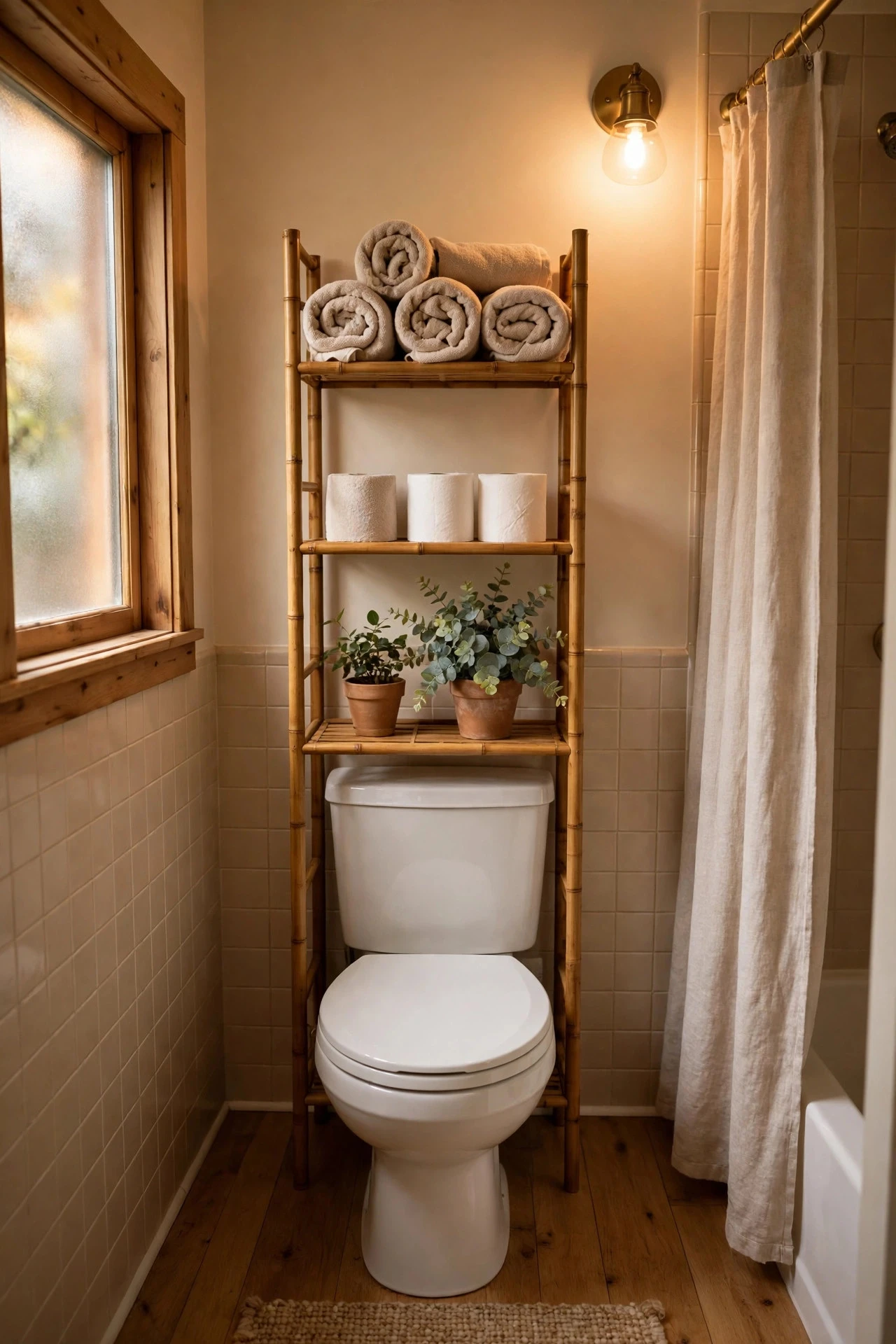
An over-toilet shelf unit is worth it in a tiny bathroom because it uses the most wasted space in the room: the wall above the cistern, which is roughly 60 cm wide and 150 cm tall and holds nothing. A freestanding unit with three shelves adds about 0.3 square metres of storage without touching the floor plan or the plumbing.
Choose a unit 60 cm wide and 15 to 20 cm deep so it clears the cistern lid — you must still be able to lift the lid off for repairs. Freestanding steel or bamboo units cost $25 to $50, need no drilling, and move with you if you rent. Keep spare loo rolls, a small plant and a lidded basket on the shelves; never store heavy glass jars above a toilet. These 22 small bathroom ideas that make a tiny bathroom feel bigger show how over-toilet storage fits into the whole small-bathroom plan without making the room feel boxed in.
5. What Should You Keep in an Over-Toilet Cabinet?
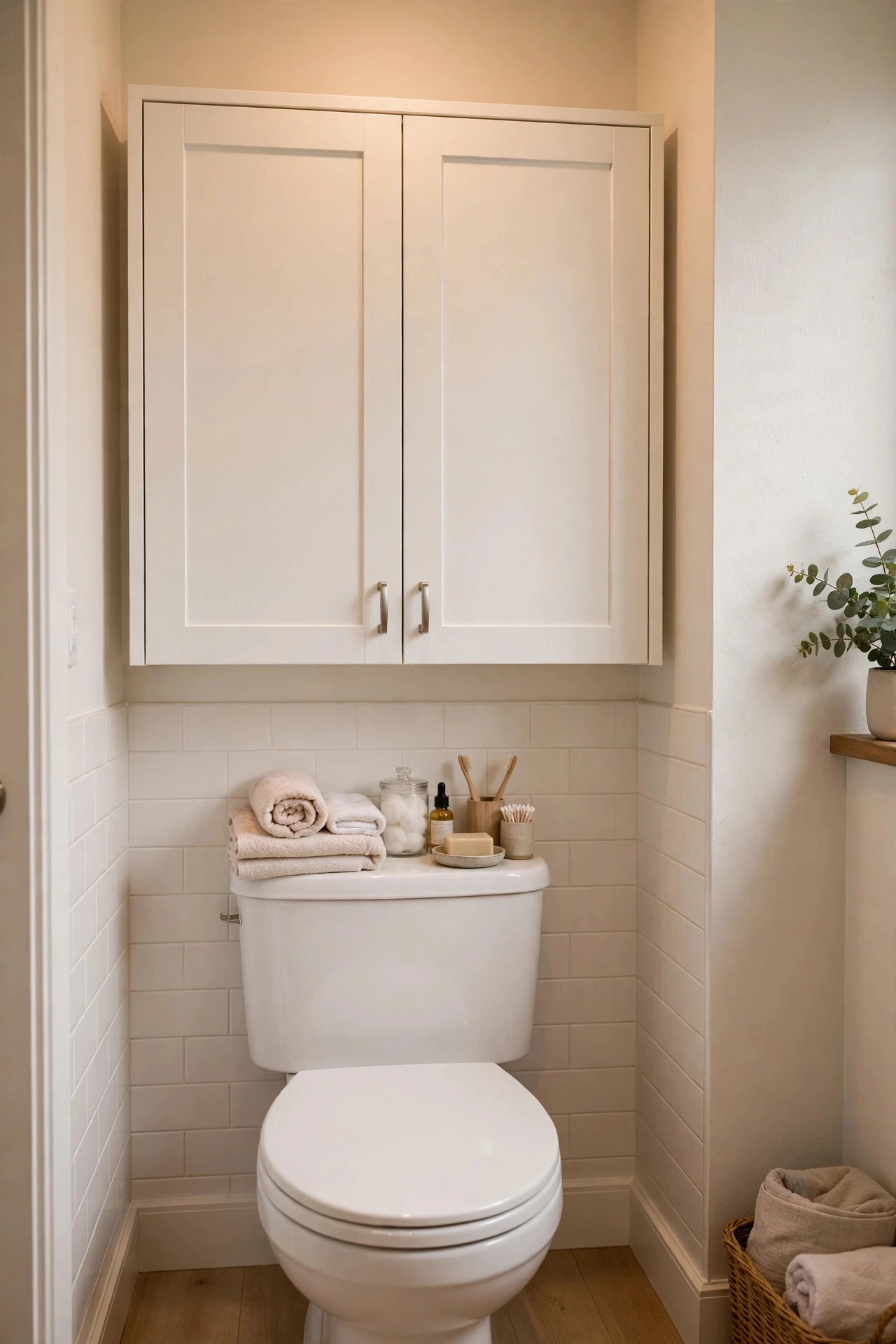
Keep in an over-toilet cabinet the things you need weekly but not daily: spare toilet rolls (4 to 6 fit on one shelf), medicines, first-aid supplies, spare hand towels and cleaning cloths. Daily items stay at the vanity; the cabinet is your backup store, and keeping it closed protects everything inside from steam and dust.
A cabinet with doors beats open shelves here because the top shelf sits at head height above a toilet — anything open collects dust and gets splashed. Look for a cabinet 60 cm wide, 60 to 70 cm tall and 15 to 18 cm deep, with adjustable shelves so tall bottles fit. Moisture-resistant MDF with a sealed finish costs $40 to $80; solid wood costs more but lasts longer in steam. Wipe the inside monthly to stop musty smells.
6. How Do You Stop a Shower Caddy From Rusting or Falling?
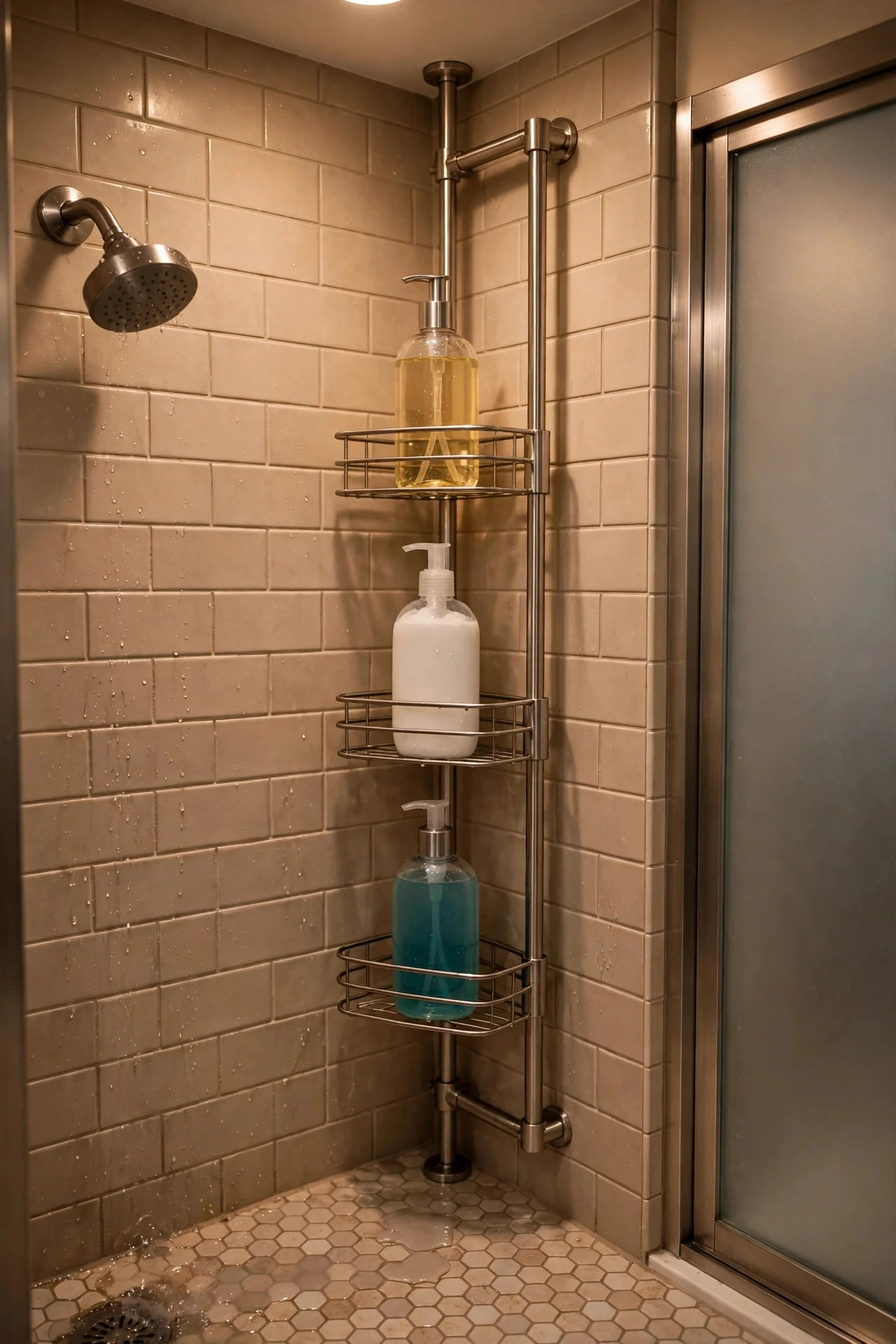
Stop a shower caddy from rusting or falling by choosing stainless steel or coated aluminium, never chrome-plated wire, and mounting it from a fixed point, not suction alone. A tension-pole caddy holds up to 10 kg and never falls; a suction caddy holds 2 to 3 kg and needs a clean, flat tile to grip.
A corner tension pole with three or four baskets costs $20 to $35 and holds a family's shampoo, conditioner, body wash and razors in one vertical column. If you rent, a tension pole is the best option because it leaves no marks at all. Avoid overloading the top basket: weight at the top makes the pole lean and slide down.
7. Is a Recessed Shower Niche Better Than a Caddy?
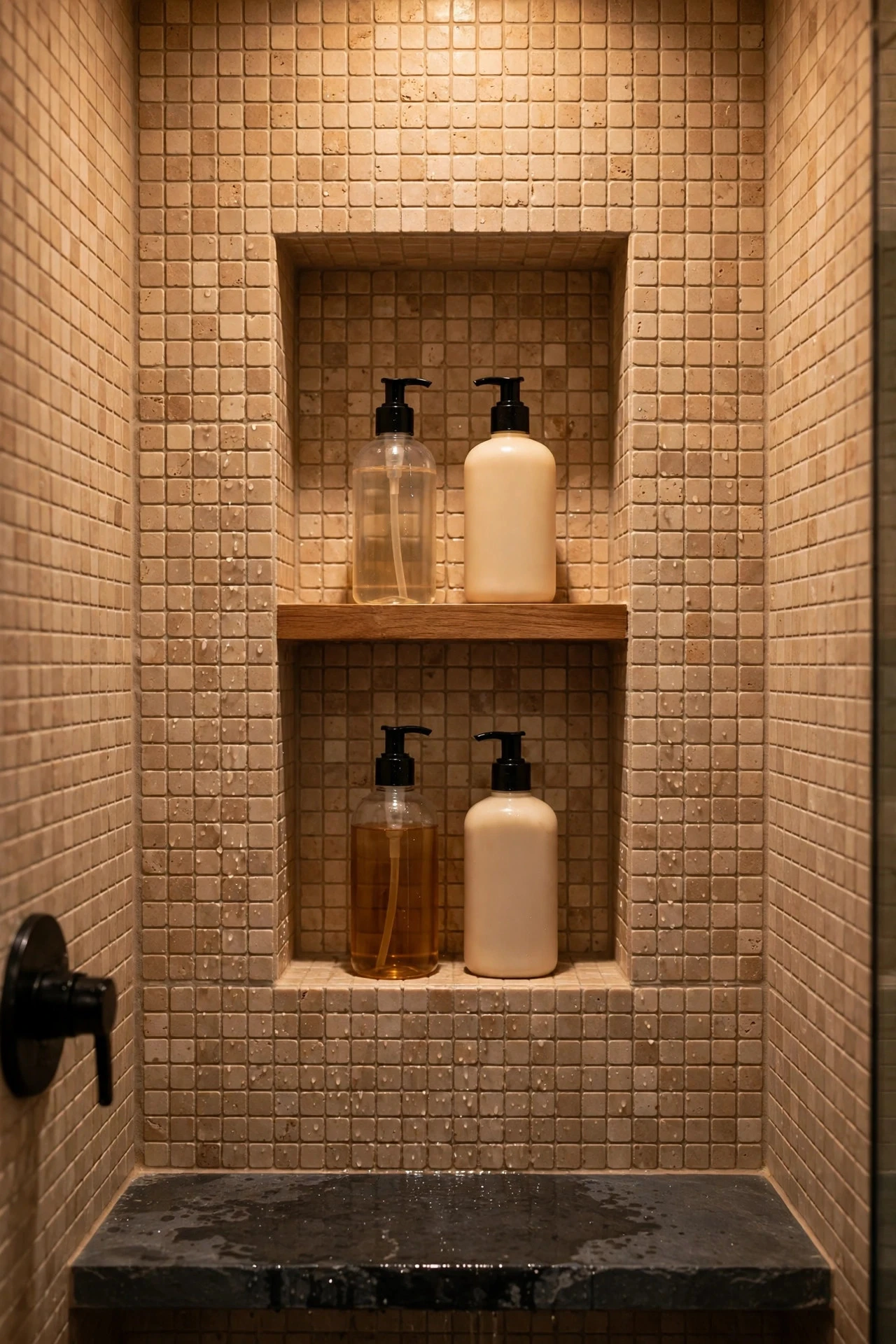
A recessed shower niche is better than a caddy in a small bathroom because it stores bottles inside the wall, so nothing hangs into the shower space. A standard niche is 30 cm wide and 40 cm tall with two shelves, holding 6 to 8 bottles at chest height.
A niche only works during a re-tile or a remodel, because it is cut between the wall studs and tiled in — budget $150 to $400 including labour and tiles. Slope the niche shelves 2 degrees toward the shower so water drains off instead of sitting. The Spruce's small bathroom storage ideas also recommend niches as the cleanest way to clear a shower ledge. These 22 modern bathroom tile ideas for a spa-like bathroom show how a tiled niche becomes part of the design instead of an afterthought.
8. What Fits on a Bathtub Caddy Without Cluttering the Bath?
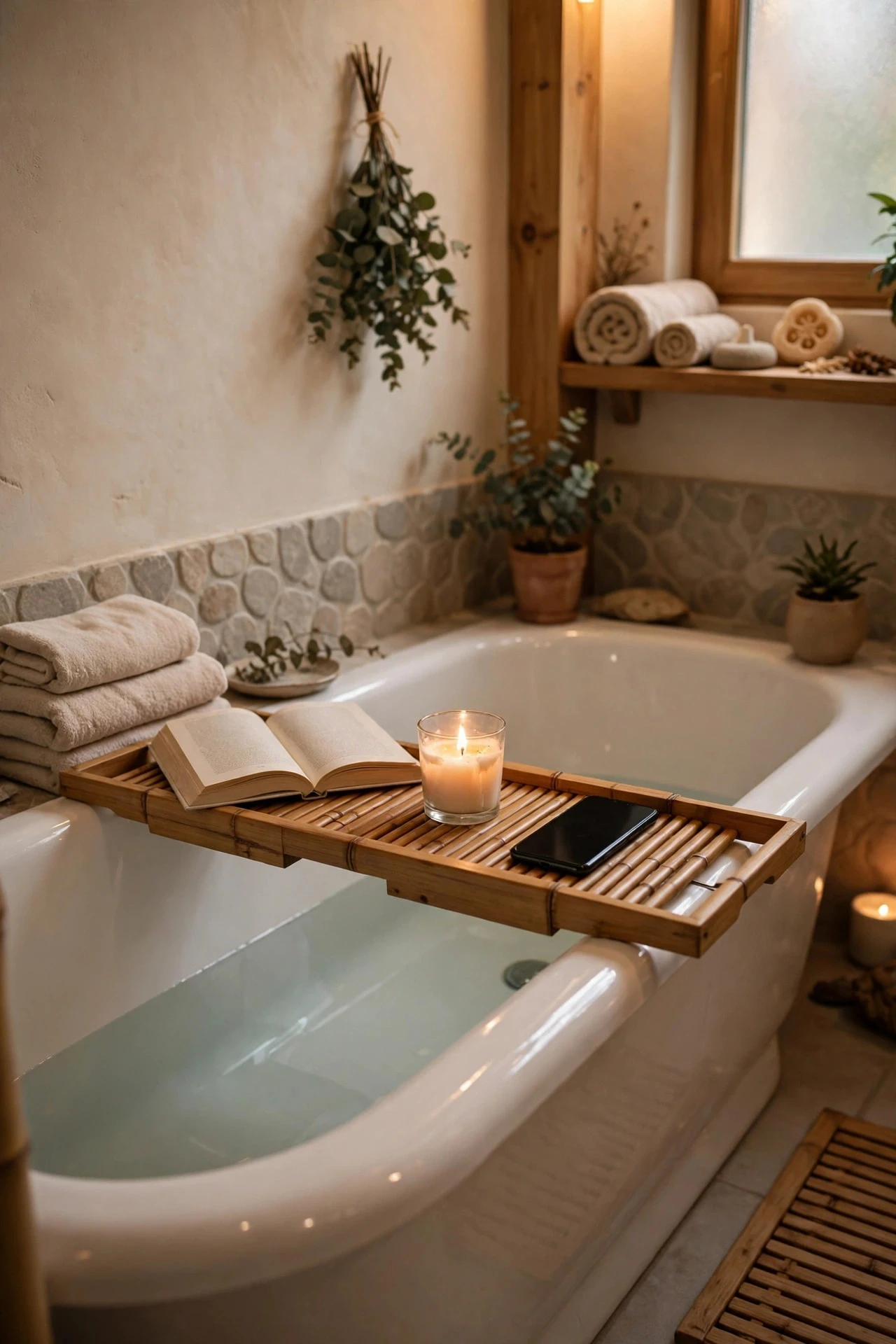
A bathtub caddy fits a book, a candle, a phone and one or two bottles — and nothing else. A bamboo or teak tray 70 to 80 cm long spans a standard bath, with a phone slot and a small book rest, and it lifts everything off the bath rim where bottles breed mould.
Bamboo trays cost $20 to $35 and suit warm bathrooms; teak costs $40 to $60 and resists water better. Never leave a candle burning unattended on a caddy, and never store the caddy across the bath between uses, because trapped steam warps wood and stains the enamel.
9. How Much Storage Does a Behind-the-Door Rack Really Add?
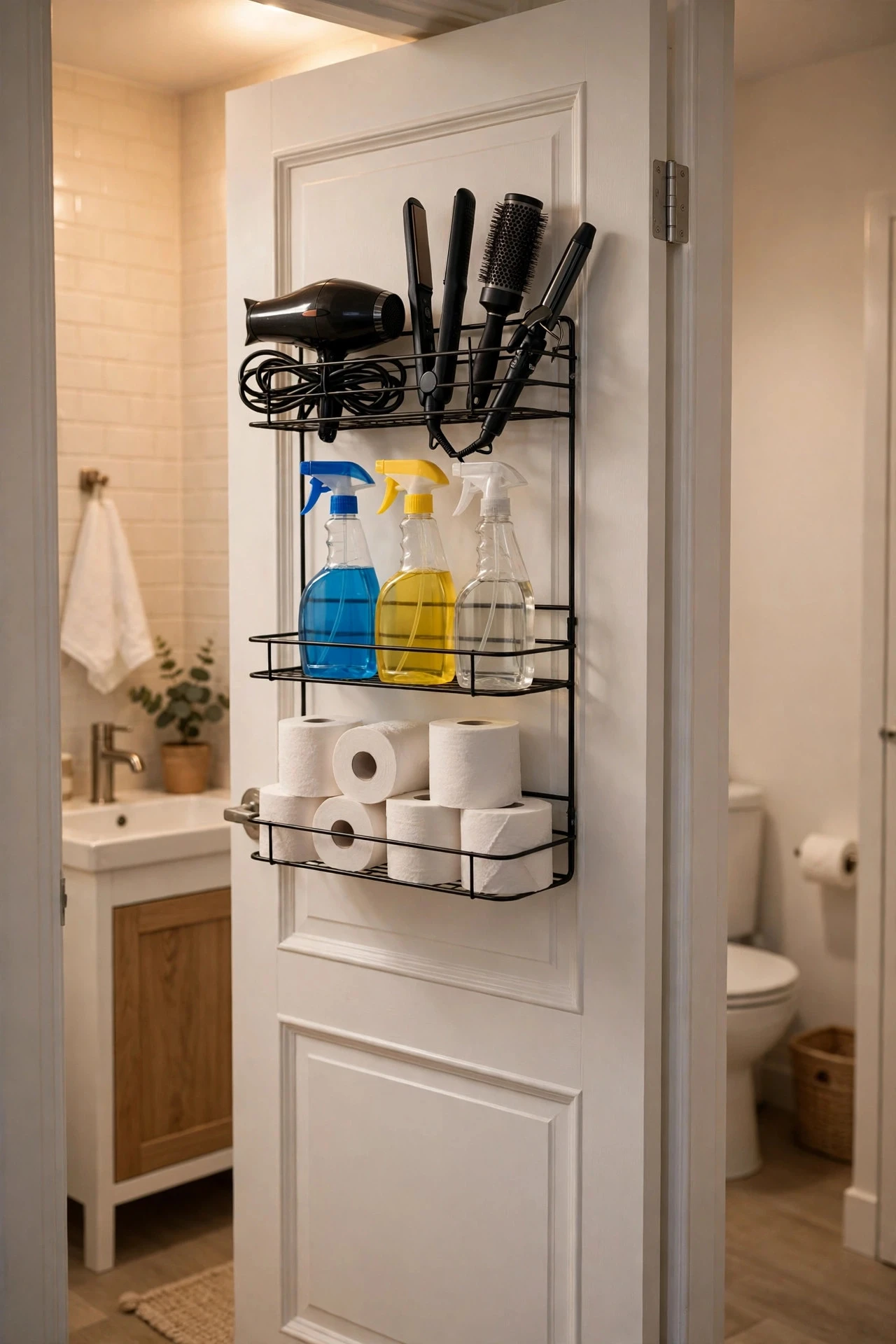
A behind-the-door rack really adds three to four shelves of storage — roughly 8 to 12 items — to a bathroom with zero spare wall. An over-door rack hangs on two hooks over the door top, needs no drilling, and holds hair tools, cleaning sprays, spare loo rolls and towels in a space that was doing nothing.
Measure the door gap first: most internal doors have 2 to 3 mm of clearance above the frame, and a rack with hooks thicker than that will stop the door closing. Slim wire racks cost $15 to $25; sturdier steel racks with baskets cost $25 to $40 and hold up to 5 kg. Use it for plastics, cloths and tools, and keep glass at the vanity — a swinging door drops anything fragile.
10. Why Is a Mirrored Medicine Cabinet the Best Hidden Storage?
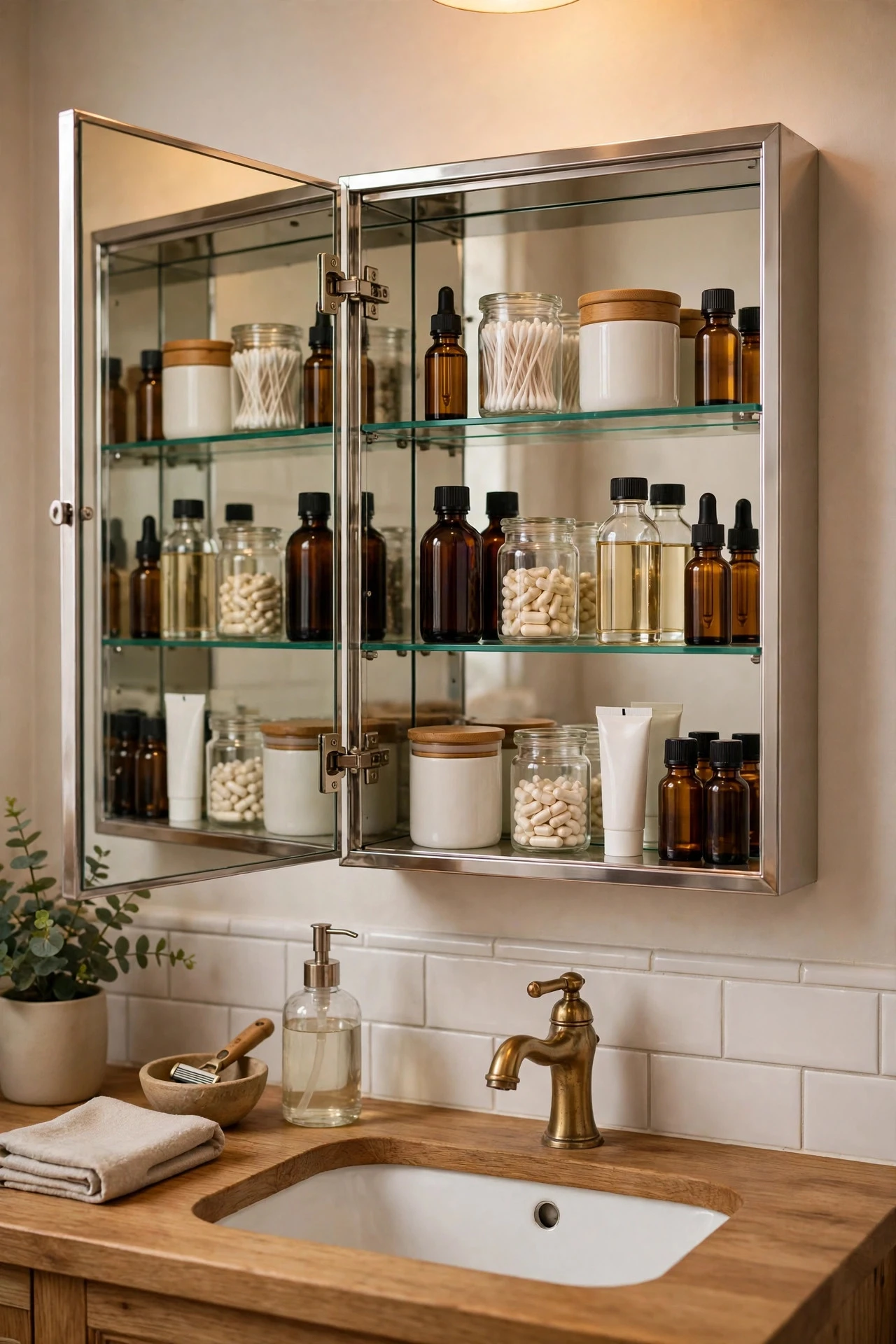
A mirrored medicine cabinet is the best hidden storage in a small bathroom because it stores 20 or more bottles behind a surface the room already needs: the mirror. A cabinet 50 to 60 cm wide and 12 to 15 cm deep holds toothbrushes, medicines, skincare and contact-lens supplies at eye level, and the mirror still does its job.
A medicine cabinet is a small cabinet, usually with a mirrored door, mounted above a bathroom sink for storing toiletries and medicines. Surface-mounted cabinets cost $40 to $120, fit in an hour, and hold the same amount as recessed ones. Choose adjustable glass shelves, a soft-close door, and a cabinet at least 12 cm deep, because 8 cm cabinets only fit flat tubes. These 22 luxury bathroom decor ideas for a spa-like retreat show how a mirrored cabinet can look like a design feature rather than a storage box.
11. Can Towel Bars and Hooks Count as Real Storage?
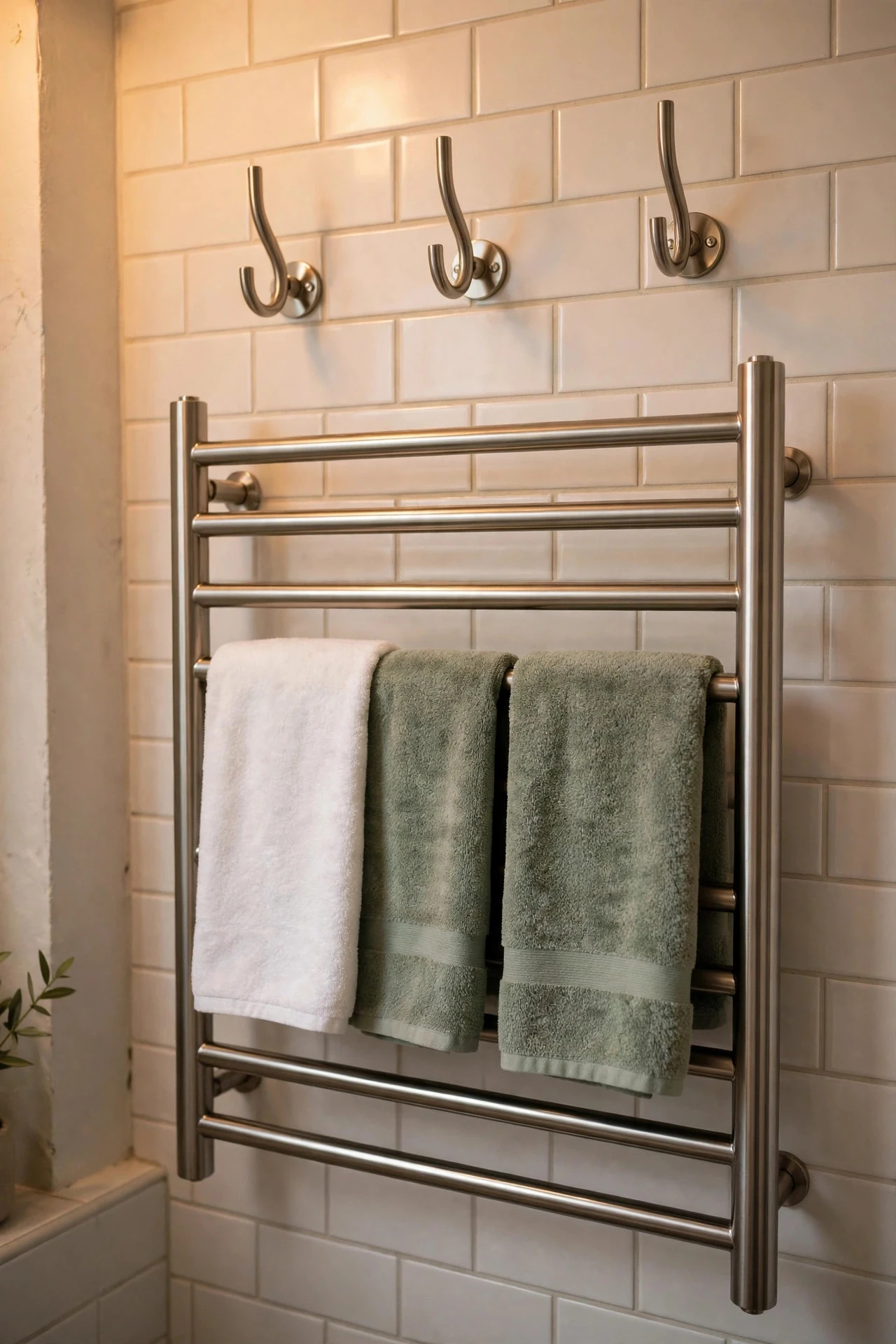
Towel bars and hooks count as real storage because towels are the bulkiest thing a bathroom stores — a family of four needs four bath towels, four hand towels and four face cloths. Two double hooks and one heated towel rail hold a full set in about 60 cm of wall.
A heated towel rail costs $60 to $150, dries towels in two to three hours and stops the musty smell that comes from towels left folded wet. Stainless steel hooks cost $5 to $10 each and hold 2 kg; adhesive hooks hold 1 kg and suit renters, but check the rating before hanging a heavy wet towel.
12. How Do You Organise Under the Sink Around the Pipes?
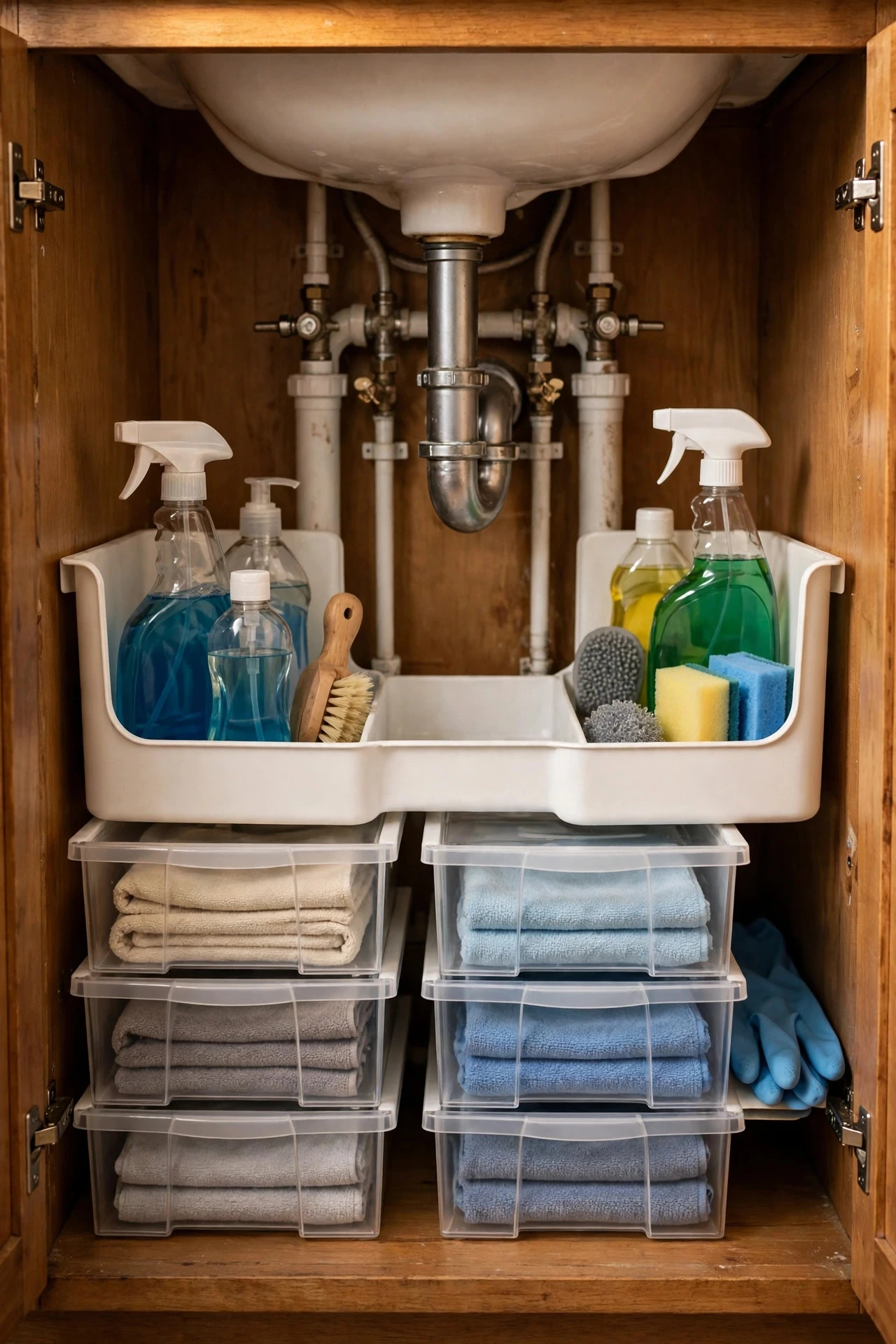
Organise under the sink around the pipes with a U-shaped organiser or stackable drawers that leave a cut-out for the trap and waste pipe. Most vanity cabinets are 50 to 60 cm wide and 40 to 45 cm deep, with the trap taking the middle 20 cm.
Stackable plastic drawers cost $15 to $30 for a set of two and hold cleaning products, spare sponges and bin bags. Keep cleaning products upright and grouped by job — one basket for the toilet, one for glass, one for floors — and put a waterproof tray underneath to catch leaks from the trap. Never store medicines or anything you swallow under the sink, because a slow leak can contaminate them. Measure first and group by job: that is the approach that turns under-sink chaos into a system you can keep up.
13. What Does a Tension Rod Do Under the Bathroom Sink?
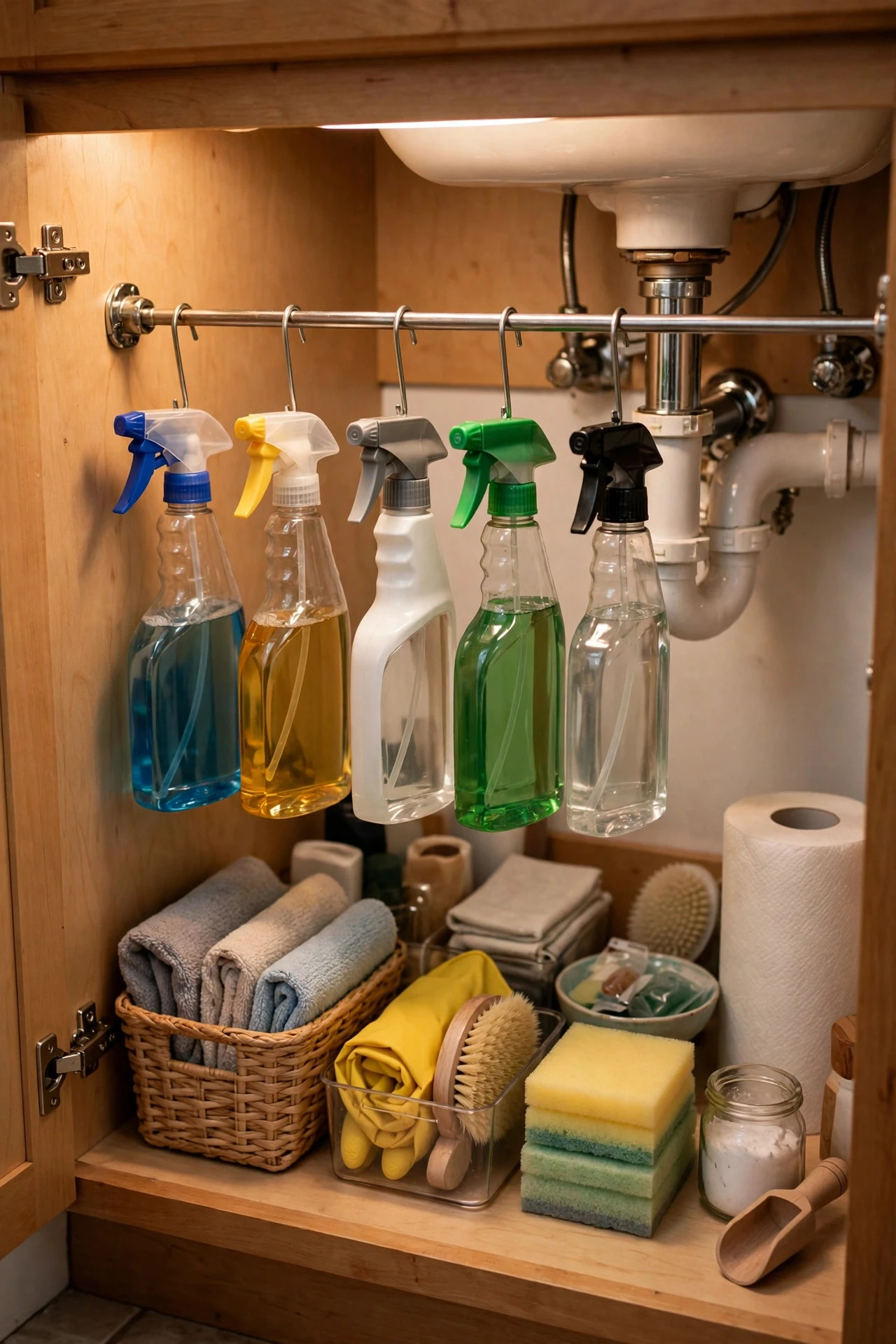
A tension rod under the bathroom sink turns dead air into hanging storage: a spring-loaded rod wedged across the cabinet lets you hang spray bottles by their triggers, freeing the whole cabinet floor for boxes and baskets. One rod costs $5 to $10 and holds 4 to 6 spray bottles, which is half the cleaning clutter in most bathrooms.
Measure the cabinet's inside width — usually 45 to 55 cm — and buy a rod that extends 5 cm beyond it so the spring holds firmly. A second rod higher up holds a small basket of cloths. This trick only works in cabinets with flat side walls; curved or moulded vanity interiors will not grip a rod. Wipe the rod dry once a month, because steam rusts cheap chrome rods.
14. Are Pull-Out Bins Better Than Fixed Shelves Under the Sink?
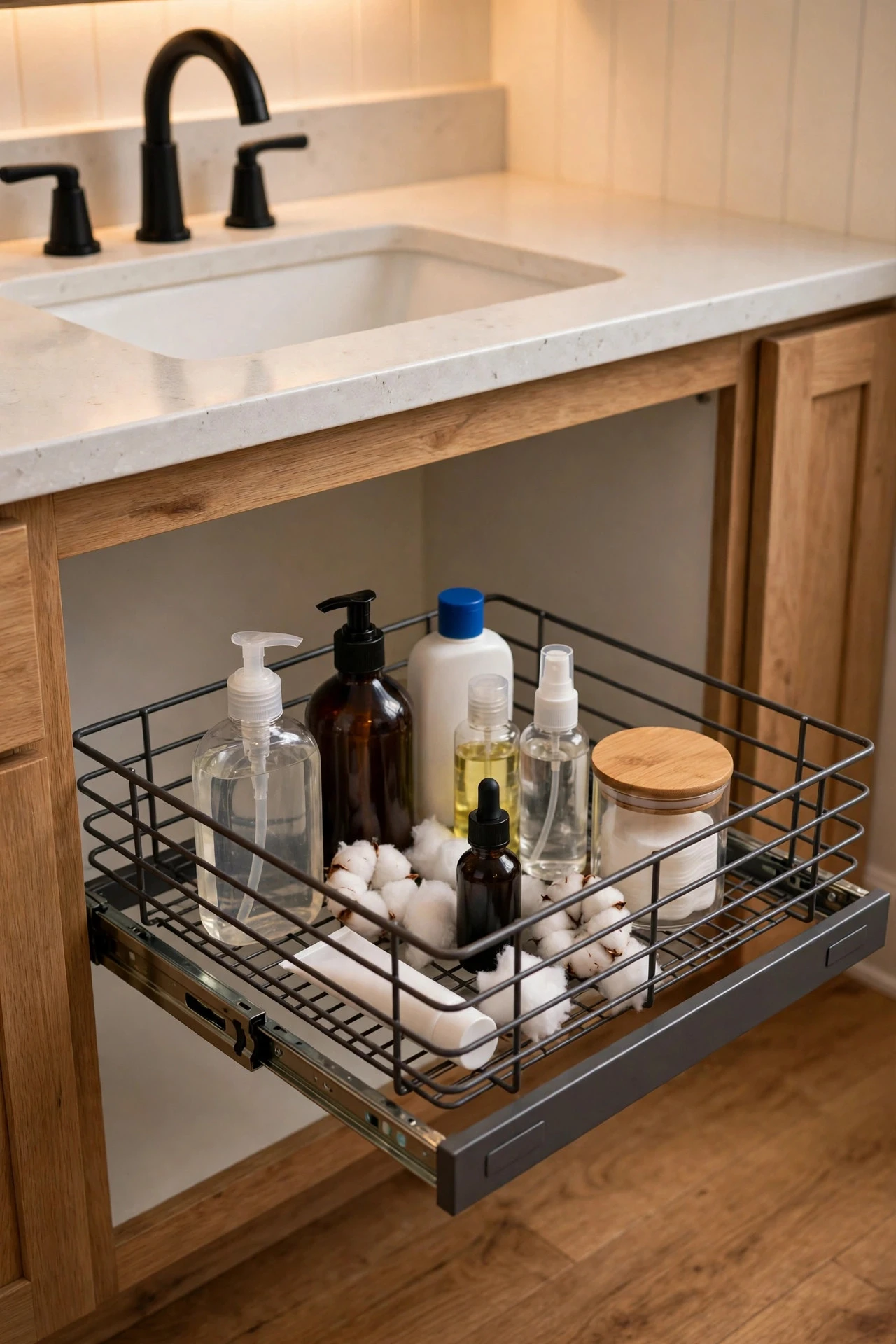
Pull-out bins are better than fixed shelves under the sink because a fixed shelf in a 45 cm deep cabinet hides everything behind the front row, while a pull-out brings the back row to you. A pull-out caddy 30 cm wide on full-extension runners holds 8 to 10 bottles.
Plastic caddies cost $20 to $35; coated steel ones cost $35 to $55 and resist cleaning chemicals better. Measure the cabinet opening, not the cabinet interior — the caddy must pass through the door frame, which is usually 2 to 3 cm narrower than the inside. Keep one pull-out for cleaning products and one for spare toiletries, and label the front edge so everyone in the house puts things back in the right place.
15. How Do You Store Towels When There Is No Linen Closet?
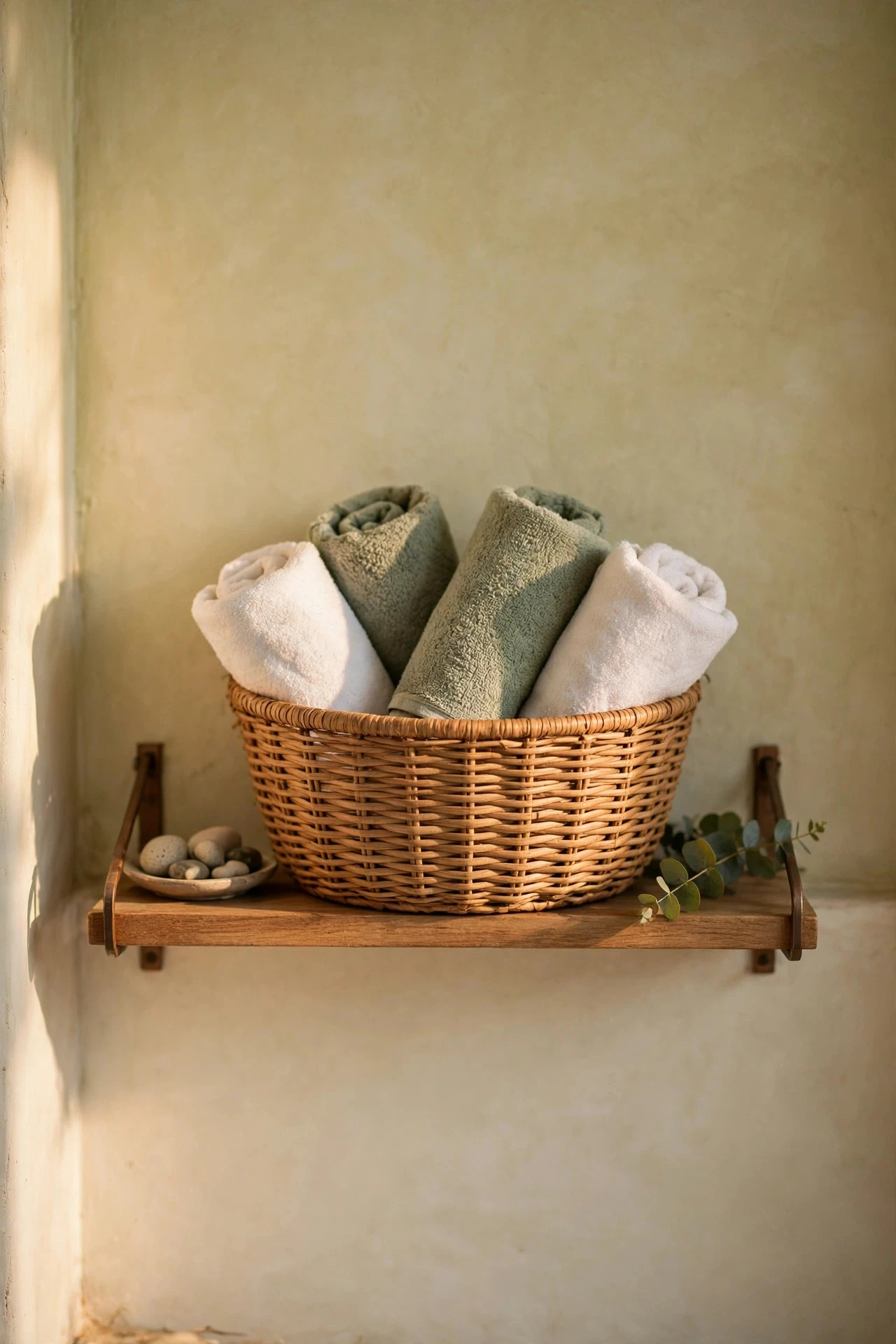
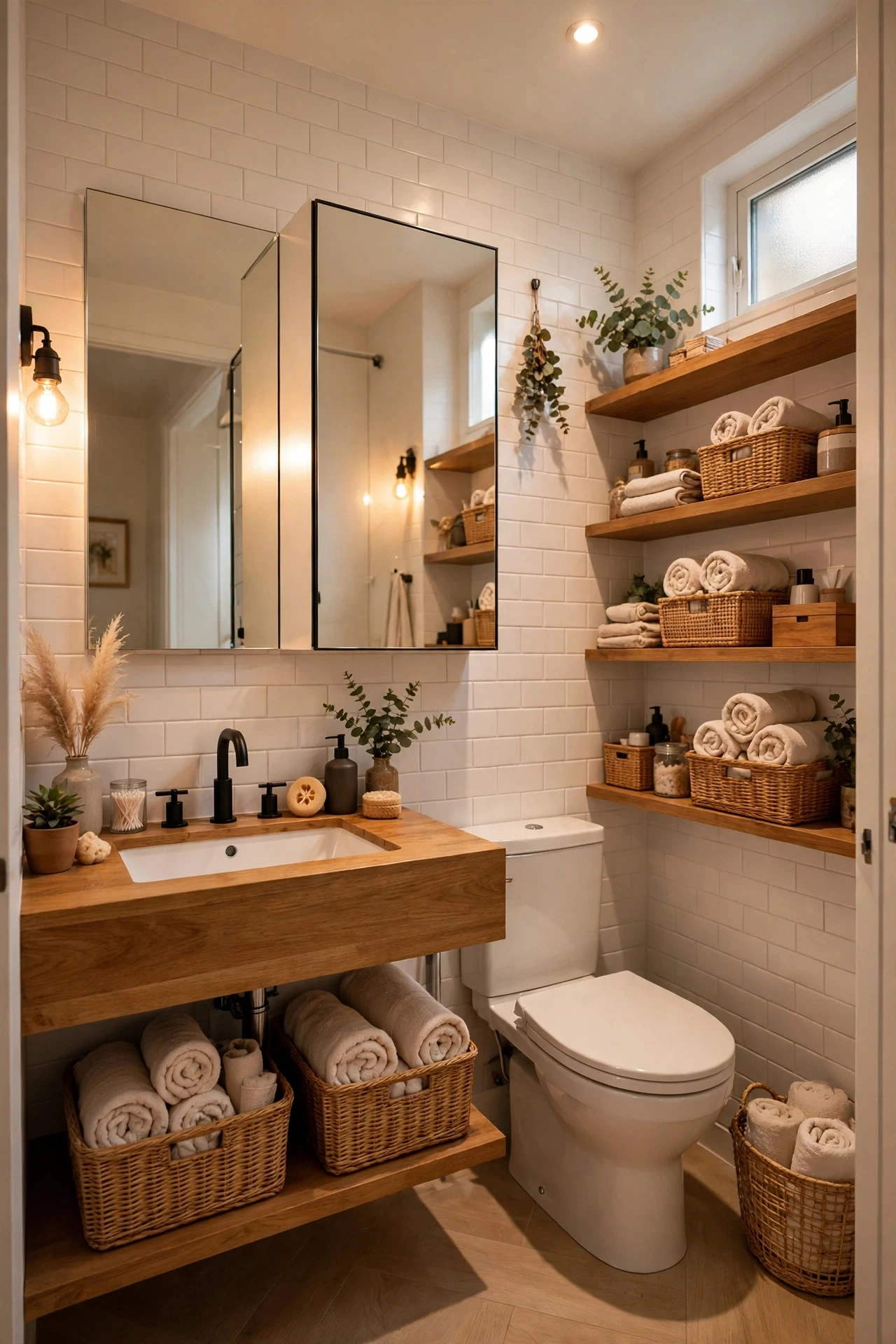
Store towels without a linen closet by rolling them instead of folding them: a rolled bath towel takes about half the shelf space of a folded one, and a 30 cm wide basket holds 4 to 6 rolled towels. Rolling also shows the towel edges, so the stack becomes a small display.
Keep the towels in the driest corner of the room — never above the bath, where steam keeps them damp. Seagrass and woven cotton baskets cost $15 to $30 and suit warm bathrooms; powder-coated wire baskets cost $10 to $20 and dry faster. Keep two towels per person in the bathroom and store the rest elsewhere in the house — a small bathroom cannot hold a family's whole linen supply, and pretending it can is how shelves collapse. The same roll-and-basket system shows up in real small bathrooms again and again, because it works with any basket and any towel colour.
16. Where Does a Tall Linen Tower Fit in a Small Bathroom?
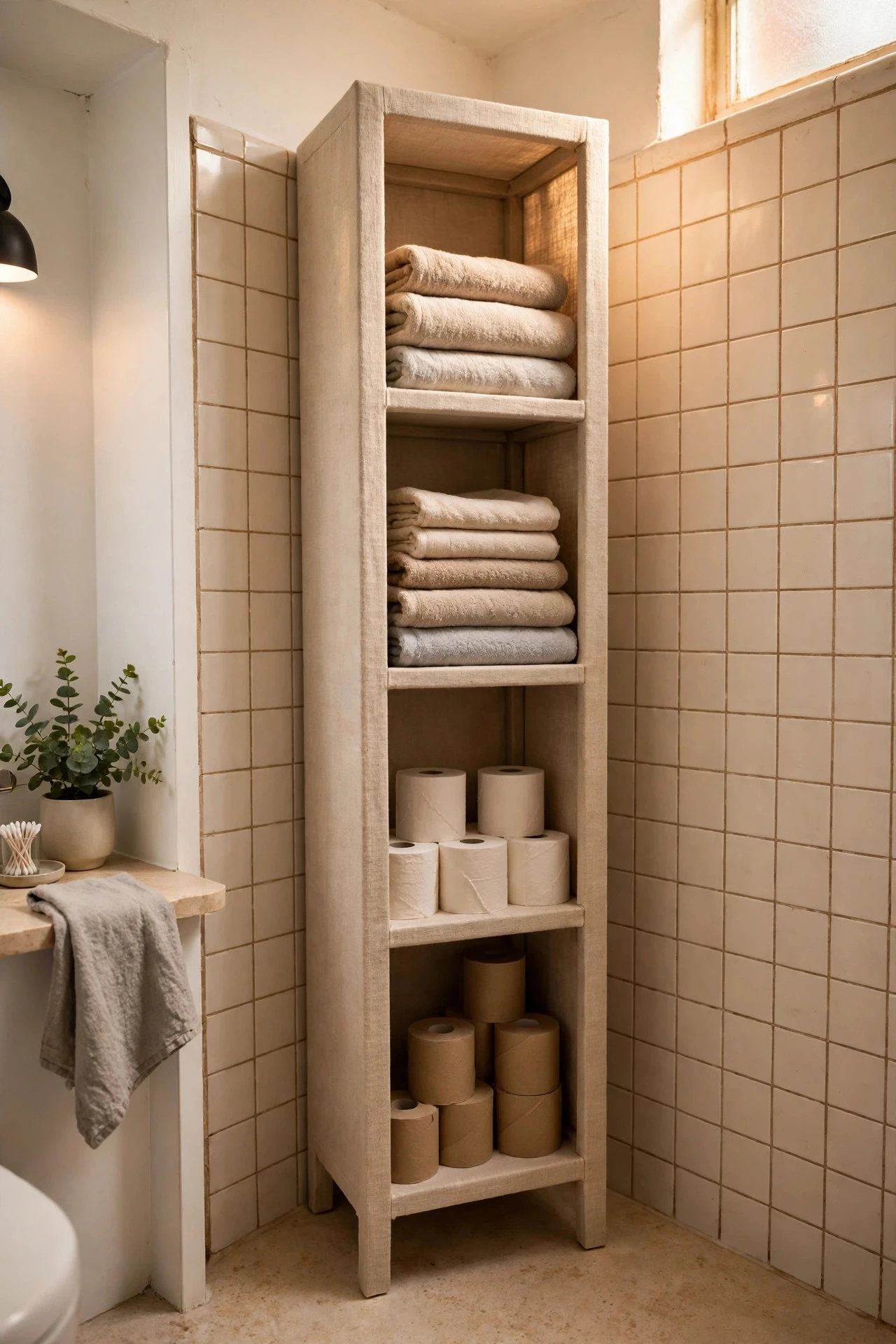
A tall linen tower fits in the one spot most small bathrooms waste: the narrow gap between the vanity and the wall, or the corner beside the door. A tower 30 cm wide and 150 to 180 cm tall holds towels, spare loo rolls and toiletries on four or five shelves.
Anchor the tower to the wall with an anti-tip strap — a loaded tower weighs 15 to 20 kg and a child pulling a towel can topple it. Freestanding towers cost $50 to $100 in moisture-resistant MDF or bamboo; a fitted tower costs more but matches the vanity. These 22 retro bathroom decor ideas that bring back the charm show how a tall cabinet in a warm wood finish can anchor a small bathroom's whole look.
17. How Do Labelled Baskets Keep a Small Bathroom Tidy?
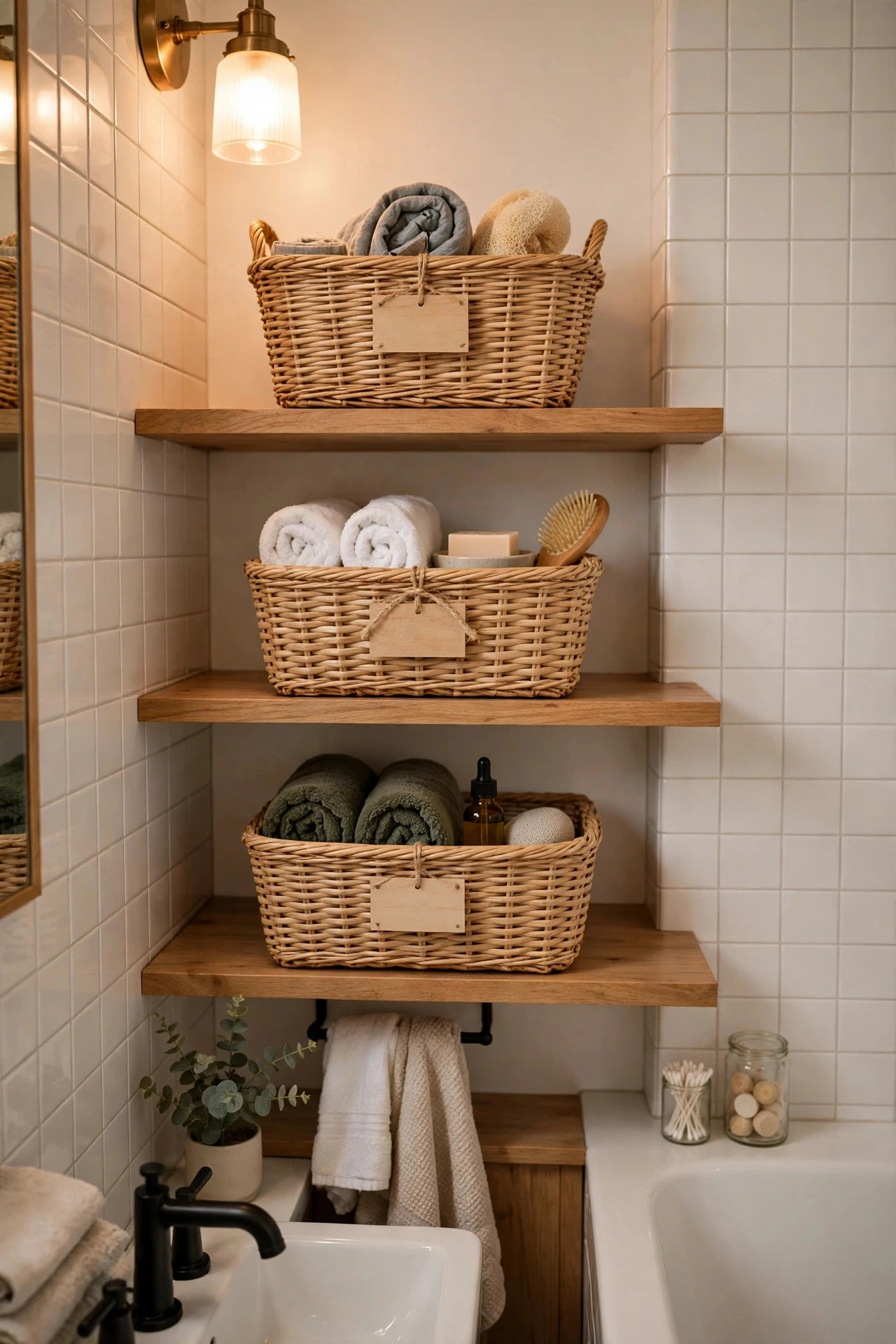
Labelled baskets keep a small bathroom tidy because they turn a shared shelf into named territory: one basket per person, one per job, and nothing loose. A basket 25 to 30 cm wide holds one person's daily kit — toothbrush, deodorant, hairbrush, medication — and the label tells everyone else to leave it alone.
Wooden or leather labels cost $5 for a pack and survive steam better than paper ones; a label maker works too, but wipe the labels monthly or they peel. The system only works if you audit the baskets monthly: pull everything out, throw away empties and expired products, and put back only what each person actually used that month. One basket per person, no exceptions, is the rule that stops the shelf creeping back to chaos.
18. Can You Cut a Recessed Niche Into Any Bathroom Wall?
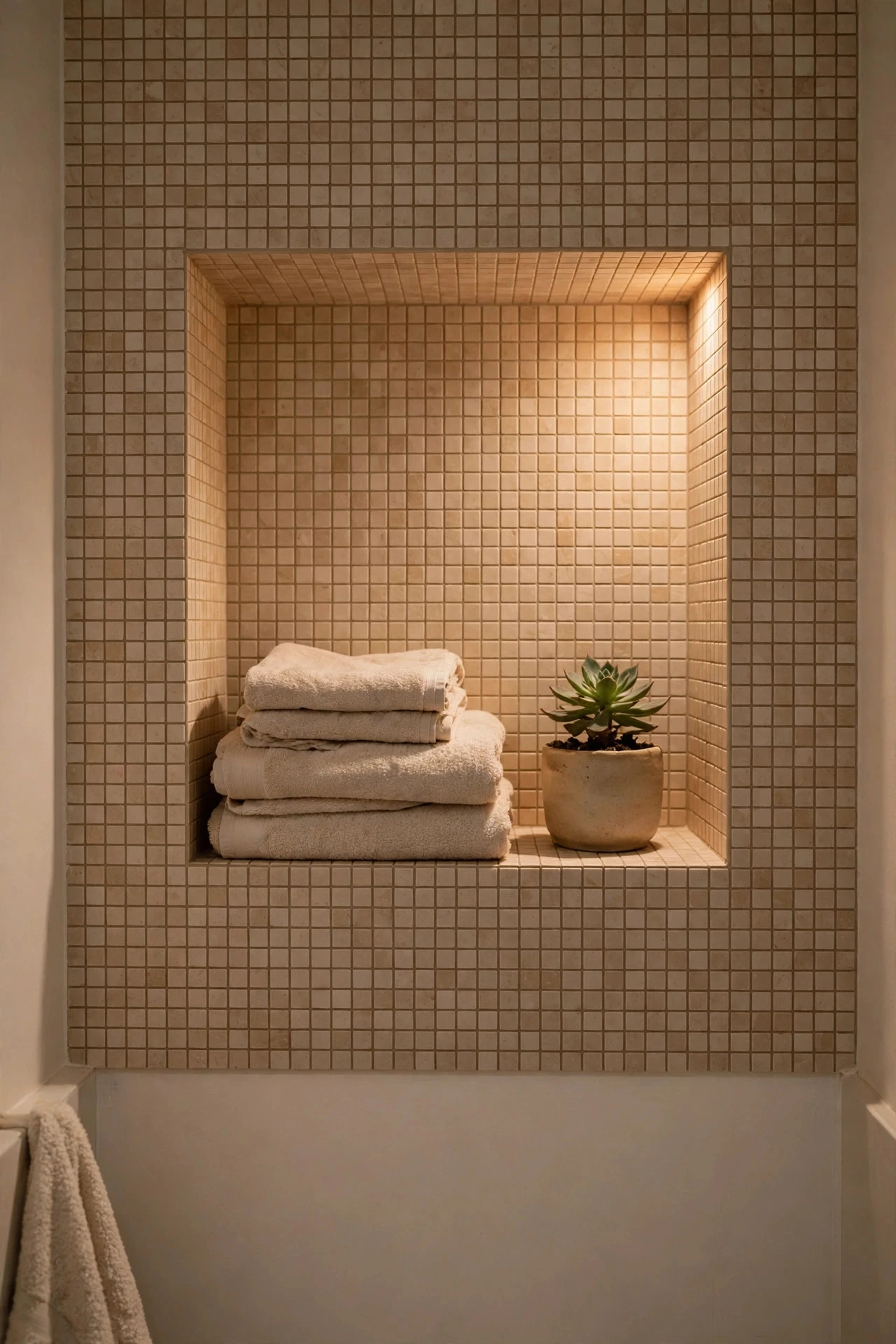
You cannot cut a recessed niche into any bathroom wall — it only works in a stud wall with a free bay between two studs, usually 35 to 40 cm wide, with no plumbing, wiring or load-bearing structure inside. A niche in the wrong wall is a job for a professional, not a first DIY project.
A tiler or builder checks the wall with a stud finder and a pipe detector, cuts the opening, lines it with waterproof board, and tiles it in — budget $200 to $500 depending on tile and access. If your walls are solid brick or block, skip the niche entirely and use a slim wall-mounted cabinet instead — it gives you the same storage with no cutting, no dust and no risk. Houzz's guide to getting more from a small bathroom shows recessed niches done properly in real remodels.
19. How Does a Vanity Drawer With a Power Outlet Work?
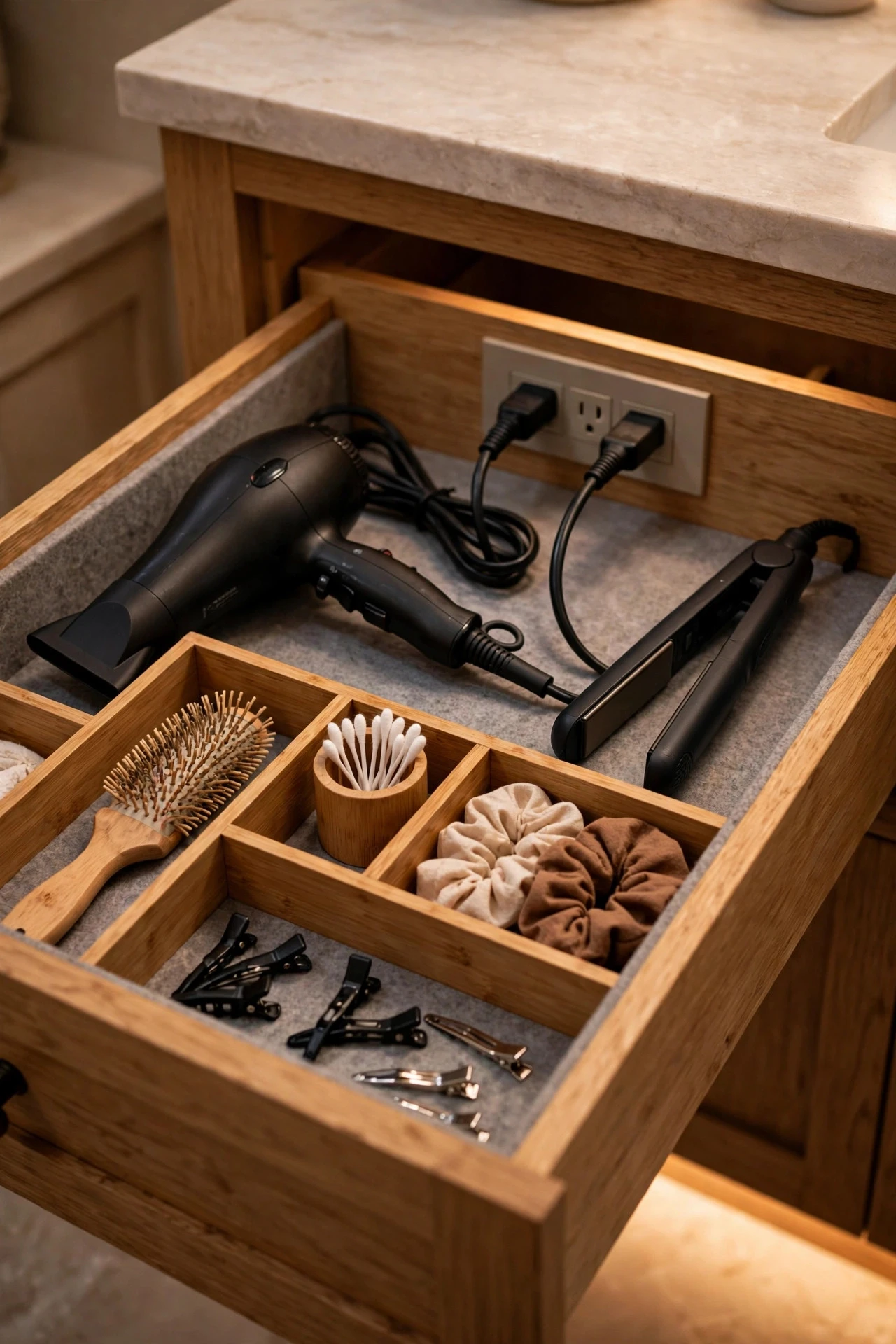
A vanity drawer with a power outlet works by moving the hairdryer and straighteners off the counter and into a drawer fitted with a built-in socket, so styling tools plug in and cool down inside the drawer. The drawer has a heat-resistant lining and a socket wired to a GFCI-protected circuit.
A retrofit kit costs $40 to $80 and fits a standard vanity drawer 40 to 50 cm wide; an electrician should wire it, because bathroom electrics must meet local codes and a DIY socket near water is a real hazard.
20. Is the Space Above the Bathroom Door Usable Storage?
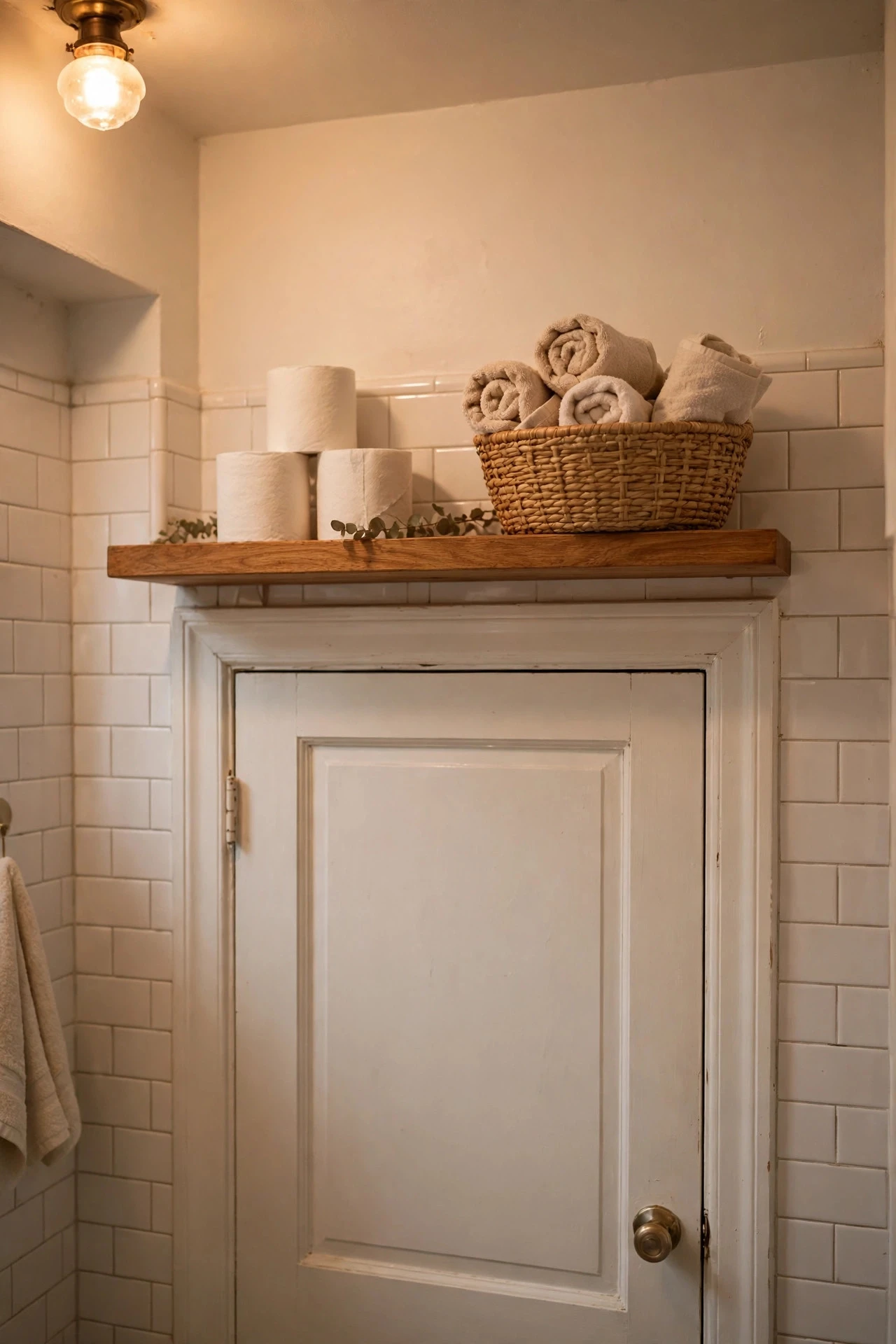
The space above the bathroom door is usable storage because it is a shelf 80 to 90 cm wide and 20 cm deep that nobody looks at and nobody bumps into. A floating shelf mounted 10 cm above the door frame holds spare loo rolls and a basket of guest towels.
Keep only light, non-breakable items up there — paper goods, folded towels, a plastic plant — never glass jars or heavy bottles. The rule is simple: if you need it daily, it does not live above the door; if you need it weekly, it does. Restock it when you restock the over-toilet cabinet, so the two backup stores run on the same weekly rhythm.
21. Can a Storage Stool Earn Its Floor Space in a Tiny Bathroom?
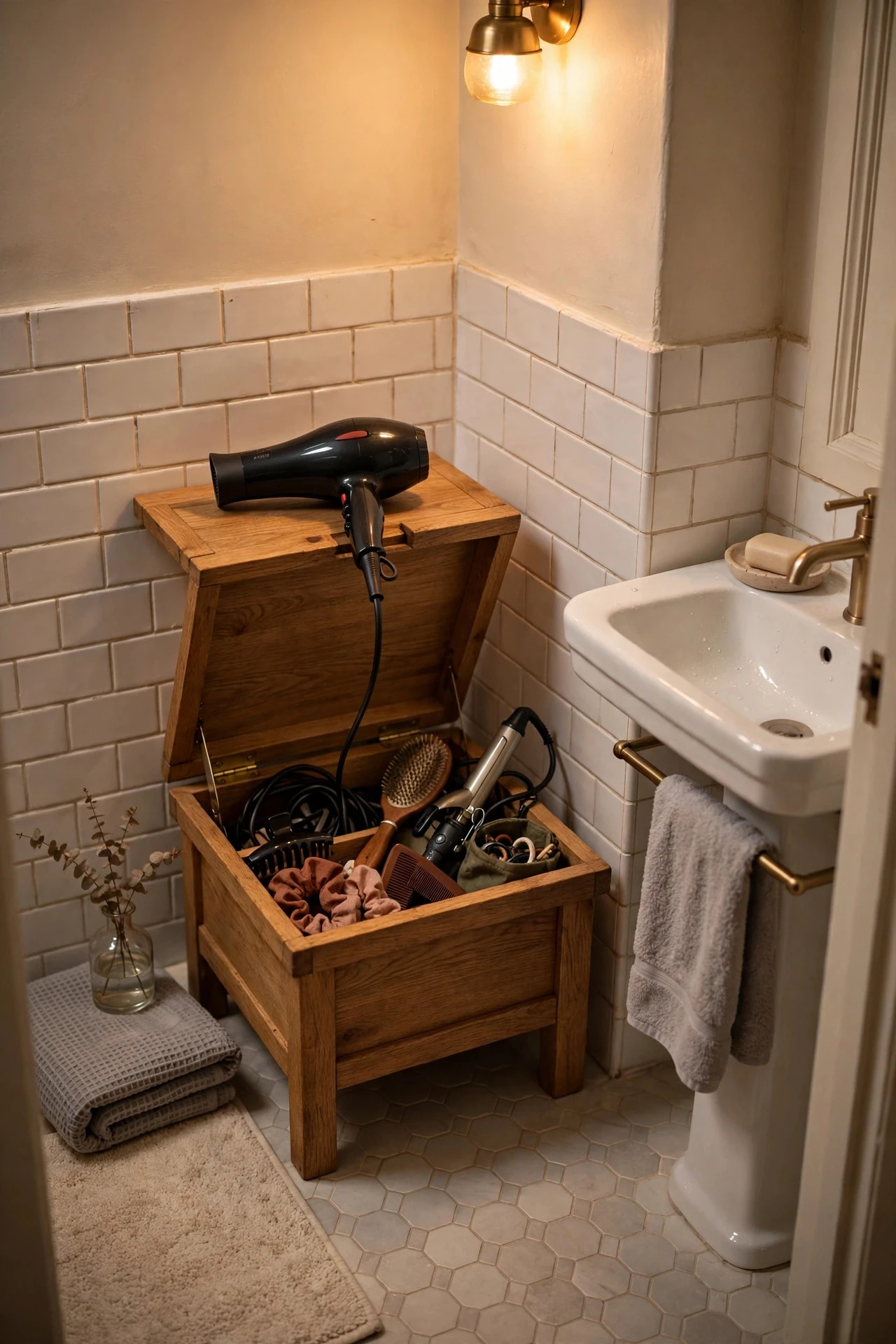
A storage stool earns its floor space in a tiny bathroom only if it does two jobs: it seats you while you dry your hair, and it stores the tools you use while sitting there. A stool 35 cm square with a lift-up seat holds a hairdryer, straighteners and brushes inside.
A storage stool costs $30 to $60; a folding version costs $25 to $45 and hangs on a hook when not in use. Keep the stool's contents to the tools you use sitting down, and keep the total weight under 5 kg so it is easy to move. The test is honest: if you have not sat on it in a week, it does not belong in the room.
22. How Do You Keep Small Bathroom Storage Working Long Term?
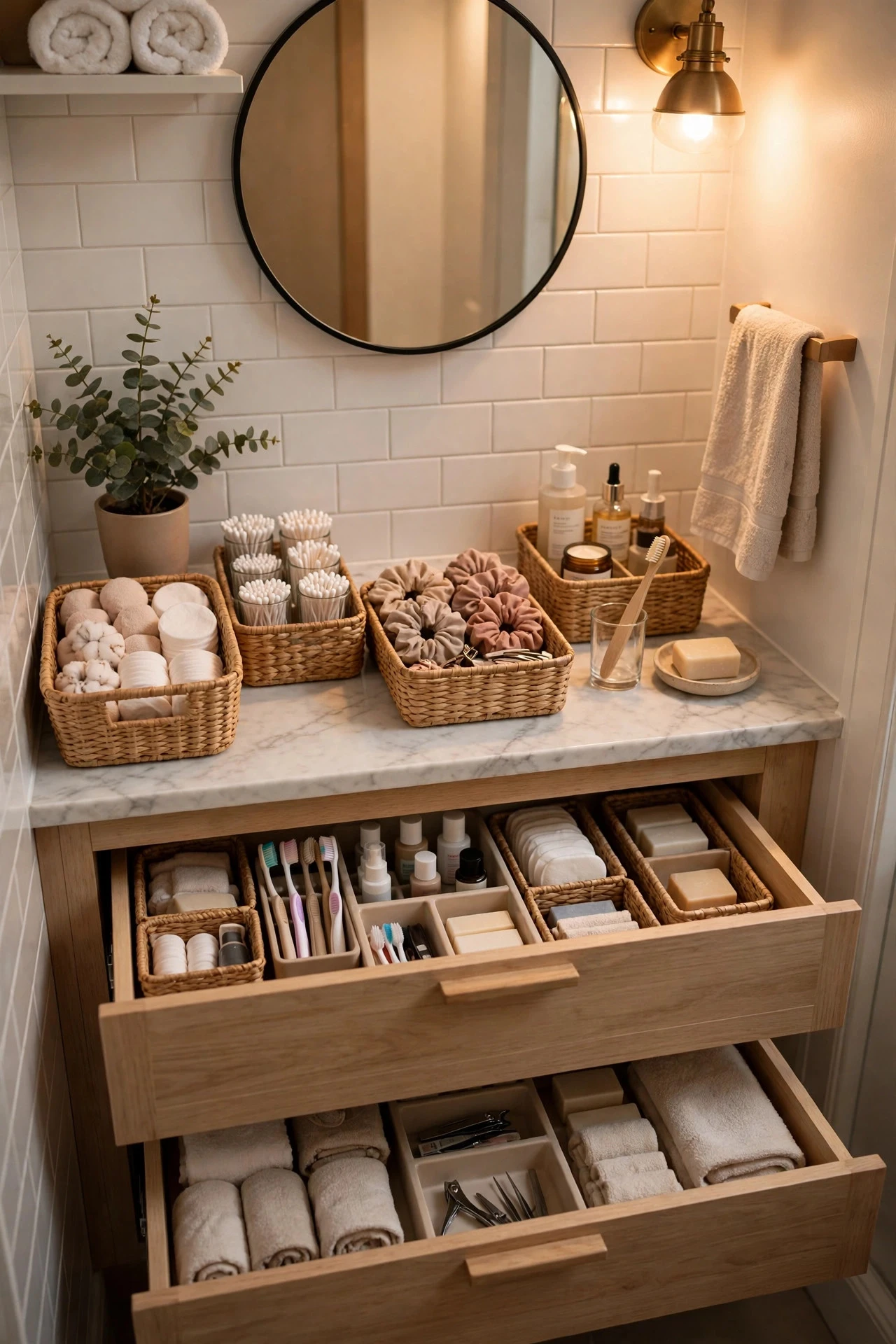
Keep small bathroom storage working long term with a three-month audit and a one-in-one-out rule: every three months, pull everything out, throw away empties and expired products, and only put back what was actually used. When a new bottle comes in, an old one goes out.
The audit takes twenty minutes and saves the slow creep that turns organised bathrooms back into cluttered ones. Re-label baskets when the contents change, and photograph the organised shelves once so you have a reference for what "tidy" looks like in your bathroom. Storage is a system, not a shopping trip: the baskets and shelves are the easy part, and the ten minutes of maintenance every season is what makes them last.
Practical Tips
Measure everything before you buy anything, and write the numbers on your phone: the vanity drawer width, the gap beside the toilet, the clearance above the cistern lid, the cabinet's inside depth. Most small-bathroom storage fails because a shelf is 2 cm too deep or a basket is 3 cm too wide, and returns waste the weekend you meant to spend organising. Buy one piece, fit it, live with it for a week, then buy the next.
Protect everything from steam. Bathroom storage lives in the dampest room in the house, so choose stainless steel over chrome, sealed wood over raw wood, and lidded baskets over open ones for anything you want to stay dry. Wipe shelves and caddies once a week when you clean the room, and keep a small moisture absorber in any closed cabinet. Finally, keep the floor clear: if something can hang, hook or stack, it should.
Final Thoughts
Small bathroom storage is not about how much you can cram into a tiny room; it is about how well a few measured choices fit the room, the people using it and the damp air it lives in. Start with the wall above the vanity, add the over-toilet shelf, and give every item one named home — your bathroom will feel bigger, cleaner and calmer, and it will stay that way.
You may also like: our bathroom shelf decor ideas show how to style shelves that work hard so the storage you add looks as good as it works.
Frequently Asked Questions
How do I add storage to a small bathroom without a remodel?
Add storage without a remodel by using the walls, the door and the space above the toilet: a floating shelf above the vanity, an over-toilet unit, a behind-the-door rack and hooks. These four pieces add roughly a square metre of storage for under $100, need no drilling, and fit in a weekend. Measure first, buy second.
What is the best storage for over the toilet?
The best over-toilet storage is a freestanding unit 60 cm wide and 15 to 20 cm deep with three shelves, or a closed cabinet of the same size if you want dust-free storage. Keep spare loo rolls, medicines and towels there, never heavy glass jars. The bottom edge must clear the cistern lid by at least 5 cm.
How do I keep bathroom storage dry and mould-free?
Keep bathroom storage dry by choosing stainless steel, sealed wood and lidded baskets, wiping shelves weekly, and running the extractor fan for twenty minutes after every shower. Never store towels above the bath or medicines under the sink, and put a moisture absorber inside any closed cabinet to stop musty smells.
What storage works in a rented bathroom?
Rented bathrooms suit freestanding over-toilet units, over-door racks, tension-pole shower caddies, adhesive hooks and stackable under-sink drawers. All of these add real capacity with no drilling and no marks. Check your tenancy agreement before using adhesive hooks, and test one hook in a hidden spot first.
How much does small bathroom storage cost?
A small bathroom can be fully organised for $100 to $200: $25 for an over-toilet unit, $20 for a vanity shelf, $15 for drawer organisers, $25 for a shower caddy and $20 for baskets. Start with the piece that solves your biggest daily annoyance, then add one piece at a time until every item has a home.
How do I store towels in a bathroom with no linen closet?
Store towels without a linen closet by rolling them into a 30 cm basket or a wall shelf in the driest corner of the room. A rolled towel takes half the space of a folded one, and one basket holds 4 to 6 towels. Keep two per person in the bathroom and store the rest elsewhere.