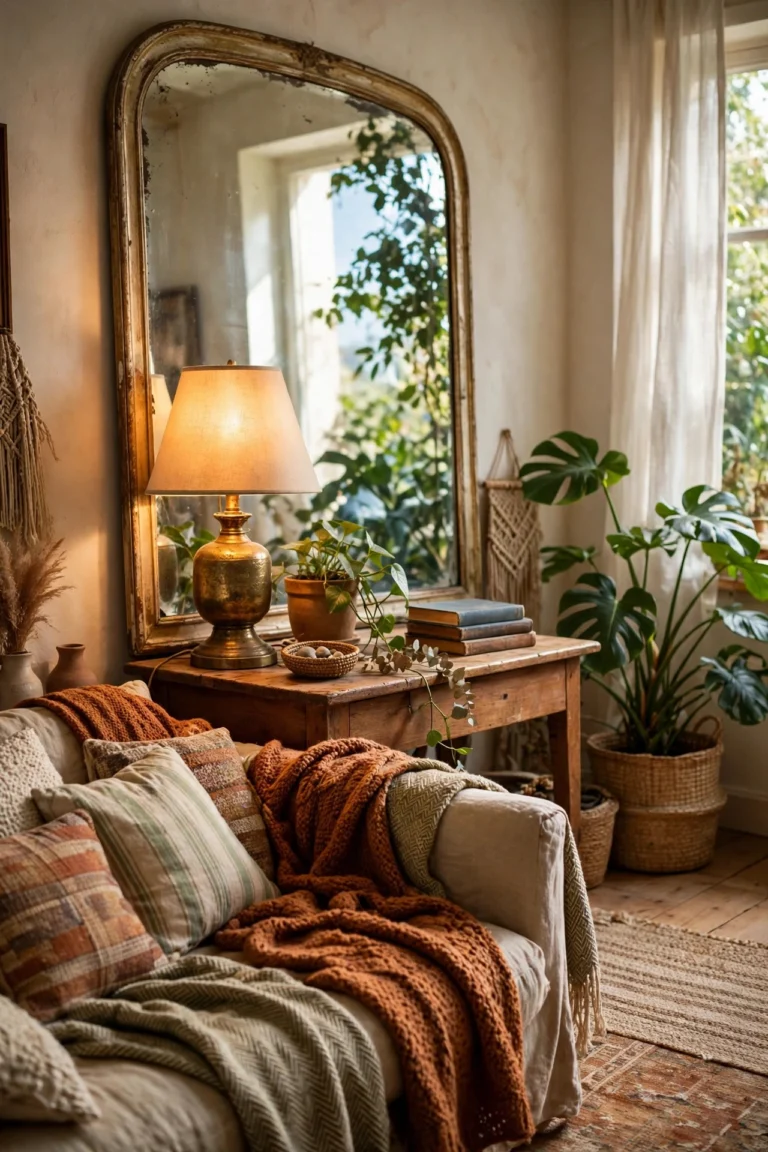
22 Cozy Home Decor Ideas for a Warm, Inviting Home
A cozy home is not a style you buy in one shopping trip. It is a feeling built up in layers — warm light at eye level, something soft within reach, a rug under bare feet, a scent that says you are home. Cozy home decor works in any house, because it is about how a room behaves, not how much it cost. The same principles apply in a living room, a bedroom, a kitchen and a bathroom, just with different materials.
These 22 cozy home decor ideas cover the whole home through five lenses: light, textiles, texture, scent and layout. Each gives exact colour temperatures, measurements, materials and prices, so you can start with one room this weekend. Most ideas cost under $60, and several cost nothing at all.
Looking for more inspiration? Our Nest Decorz homepage gathers the latest home decor ideas, seasonal decorating guides and room-by-room styling tips in one place — start there and explore.
Quick answers
– Warm light is the fastest win — swap cool bulbs for 2700K warm white and add lamps at eye level, and a room feels cozy before you buy anything else. – Layer textiles, don't scatter them — one rug, one throw and two cushions per seating area beat a dozen small accessories spread thin. – Texture does the heavy lifting — bouclé, wool, velvet, linen and warm wood together make a room feel inviting even in a plain colour palette. – Coziness is room by room — the living room needs soft seating and low light, the bedroom needs layered bedding, and the kitchen and bathroom need warmth underfoot and at the touchpoints. – Budget first, investment second — spend on the pieces you touch daily (a good rug, a real wool throw), and save on the pieces you only look at.
1. How Do You Layer Lighting to Make a Living Room Feel Cozy?

Layer lighting by combining three sources at different heights: a dimmable ceiling light, two table or floor lamps at seating level, and one small accent light such as a candle or a picture light. Use warm-white bulbs at 2700K throughout, because cool white light reads as an office, while warm light reads as evening at home.
Start with the lamps, not the ceiling fitting. Place a floor lamp behind one end of the sofa and a table lamp on a side table at the other end, both with fabric shades that soften the glow. Keep the ceiling light dimmed to about half, or switch it off entirely in the evening. A living room is where a household relaxes and receives guests, so its lighting should invite sitting down, not working. These 22 living room lighting ideas for a warm layered glow show how to place each layer so no corner stays dark.
2. What Colour Temperature Makes a Home Feel Warm?
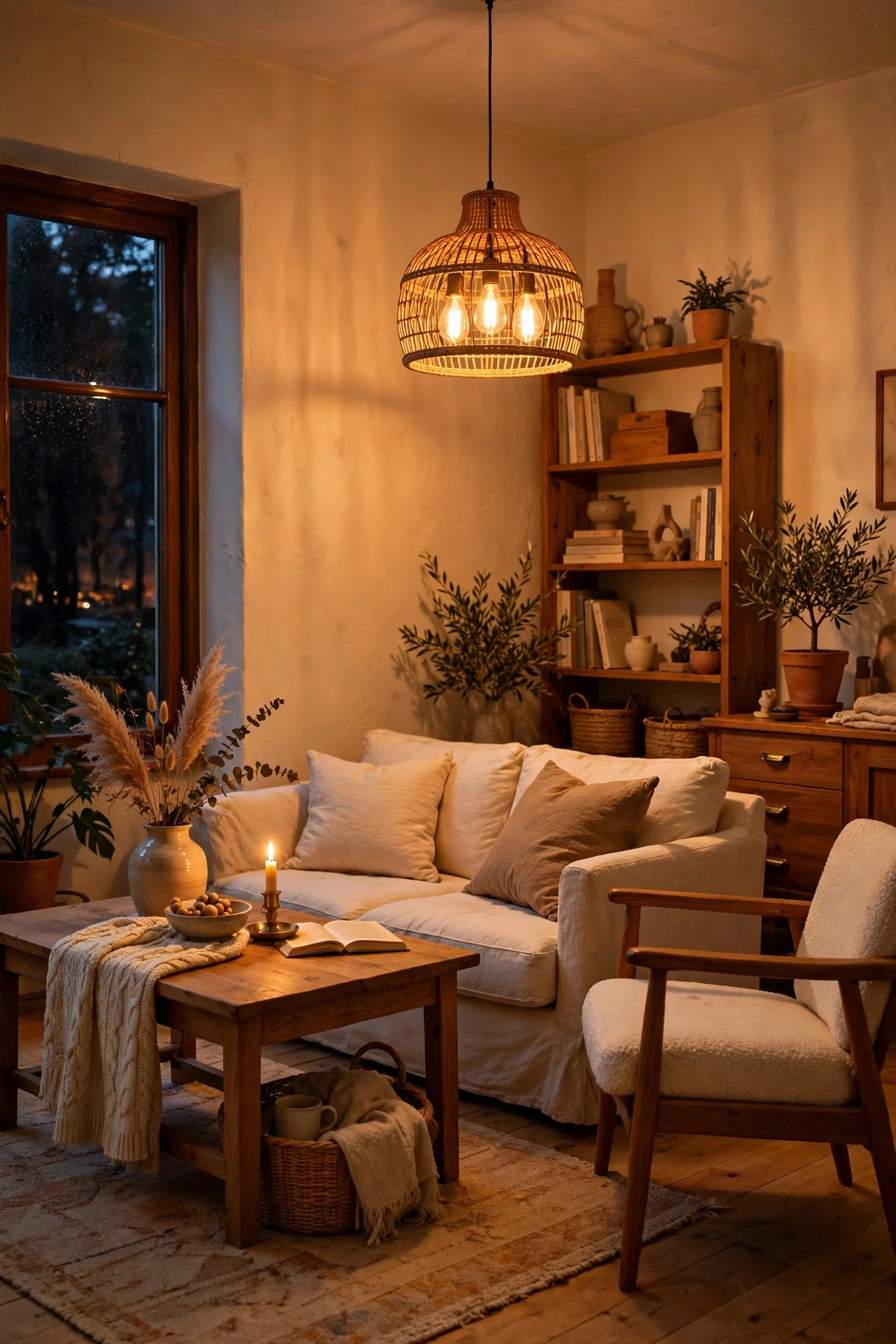
A colour temperature of 2700K makes a home feel warm, because it matches the amber glow of candlelight and late-afternoon sun. Bulbs labelled 2700K to 3000K are warm white; anything above 4000K is cool white and will make soft furnishings look grey and flat, however cozy they are.
Check the box before you buy, because most bulbs sold as "daylight" are 5000K or higher. Replace the bulbs in the rooms where you relax first — living room, bedroom and bathroom — and leave cooler light only where you need detail, such as a kitchen worktop. Smart bulbs that dim to 2200K in the evening are worth the extra $10 to $15 each, because one bulb can shift a whole room from bright morning light to a soft, candle-like evening glow without changing a single fitting.
3. How Do Throws and Blankets Make a Room Instantly Cozier?
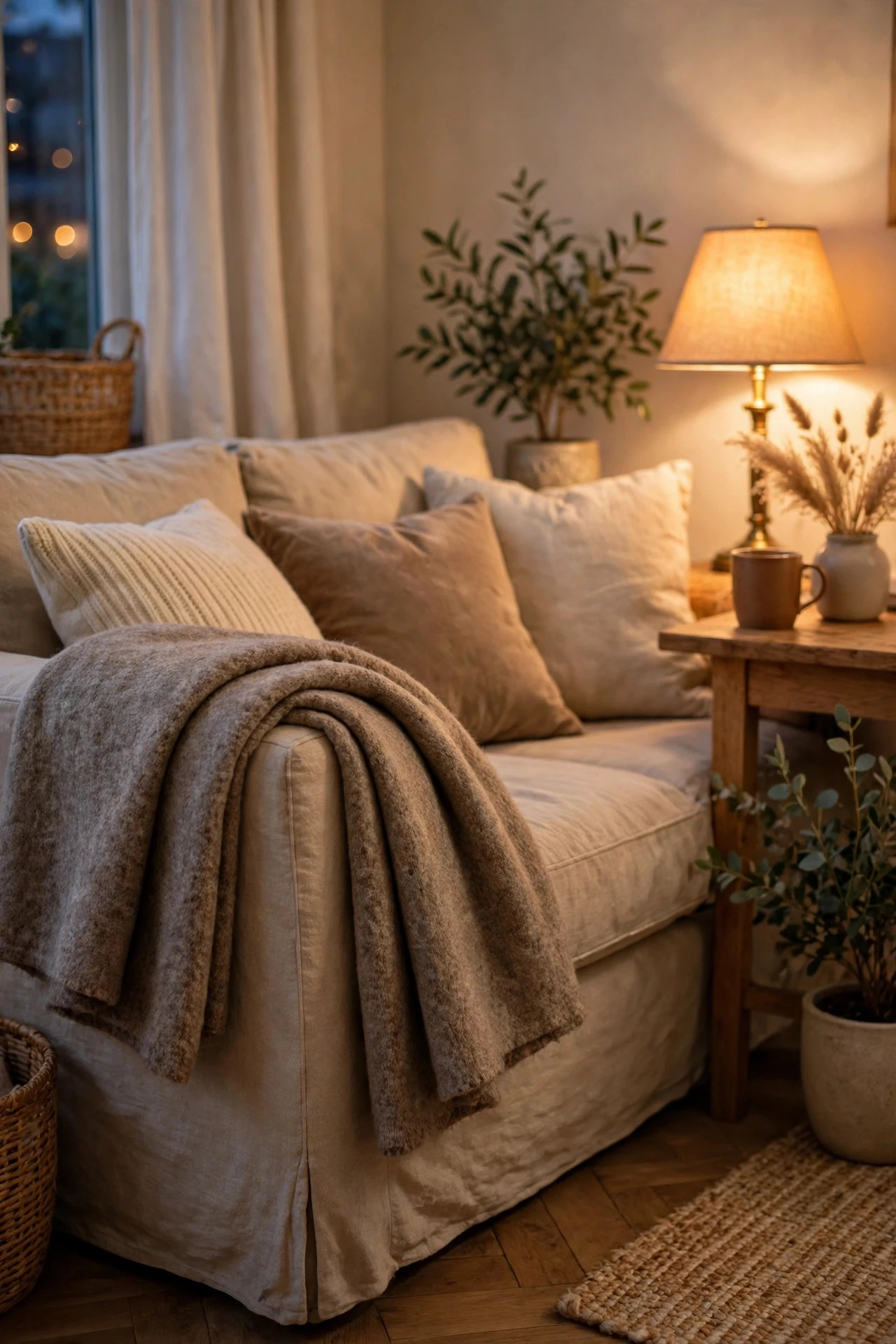
Throws make a room instantly cozier because they add visible softness and a clear invitation to sit down, even before anyone touches them. Drape one throw over the arm of a sofa or fold one across the foot of a bed, and the room reads as lived-in and welcoming rather than staged for a photograph.
Choose natural fibres where you can: wool and cotton breathe, while cheap polyester throws pill after a few washes. A good wool-blend throw costs $40 to $80 and lasts for years; a cotton waffle throw costs $25 to $40 and survives the washing machine. Fold, do not bunch — a throw folded in thirds across a sofa arm looks intentional, while a crumpled throw looks like laundry. Keep one throw per seating area, in a colour repeated elsewhere in the room.
4. Which Rug Size Makes a Living Room Feel Grounded and Warm?
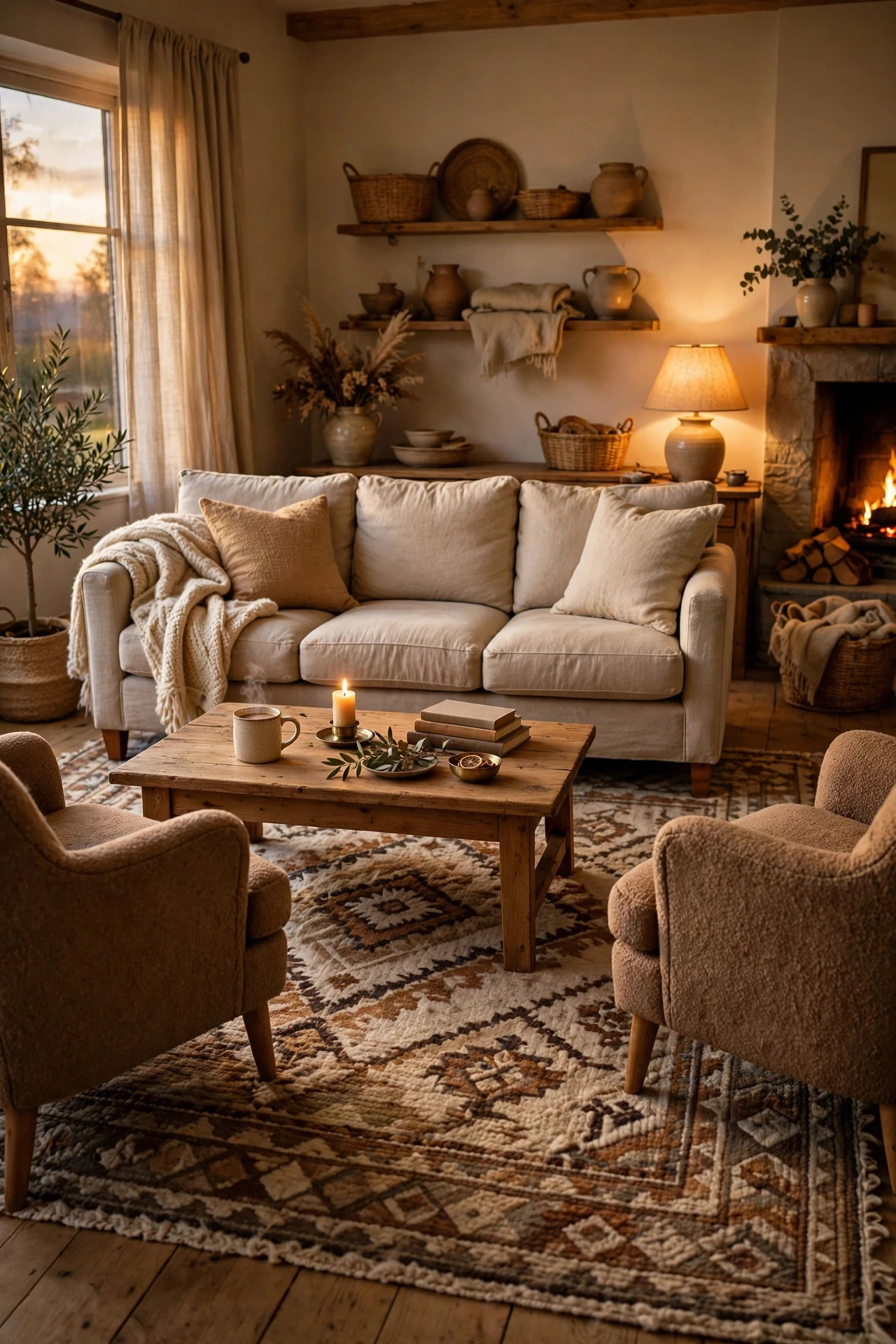
A rug that fits under the front legs of every seat in the arrangement makes a living room feel grounded and warm. For a standard three-seat sofa and two chairs, that usually means a rug at least 240 cm by 300 cm; a rug that only sits under the coffee table floats in the middle of the room and makes the seating feel disconnected.
Measure before you buy, because a rug that is too small is the most common cozy-home mistake. Leave 15 to 20 cm of bare floor between the rug edge and the skirting board. Choose a low-pile wool or wool-blend rug: it feels warm under bare feet, deadens echo, and hides dust better than a flat weave. These 22 living room rug ideas to ground your seating area explain how rug size, pile and pattern work together.
5. How Do You Mix Textures Without Making a Room Look Messy?
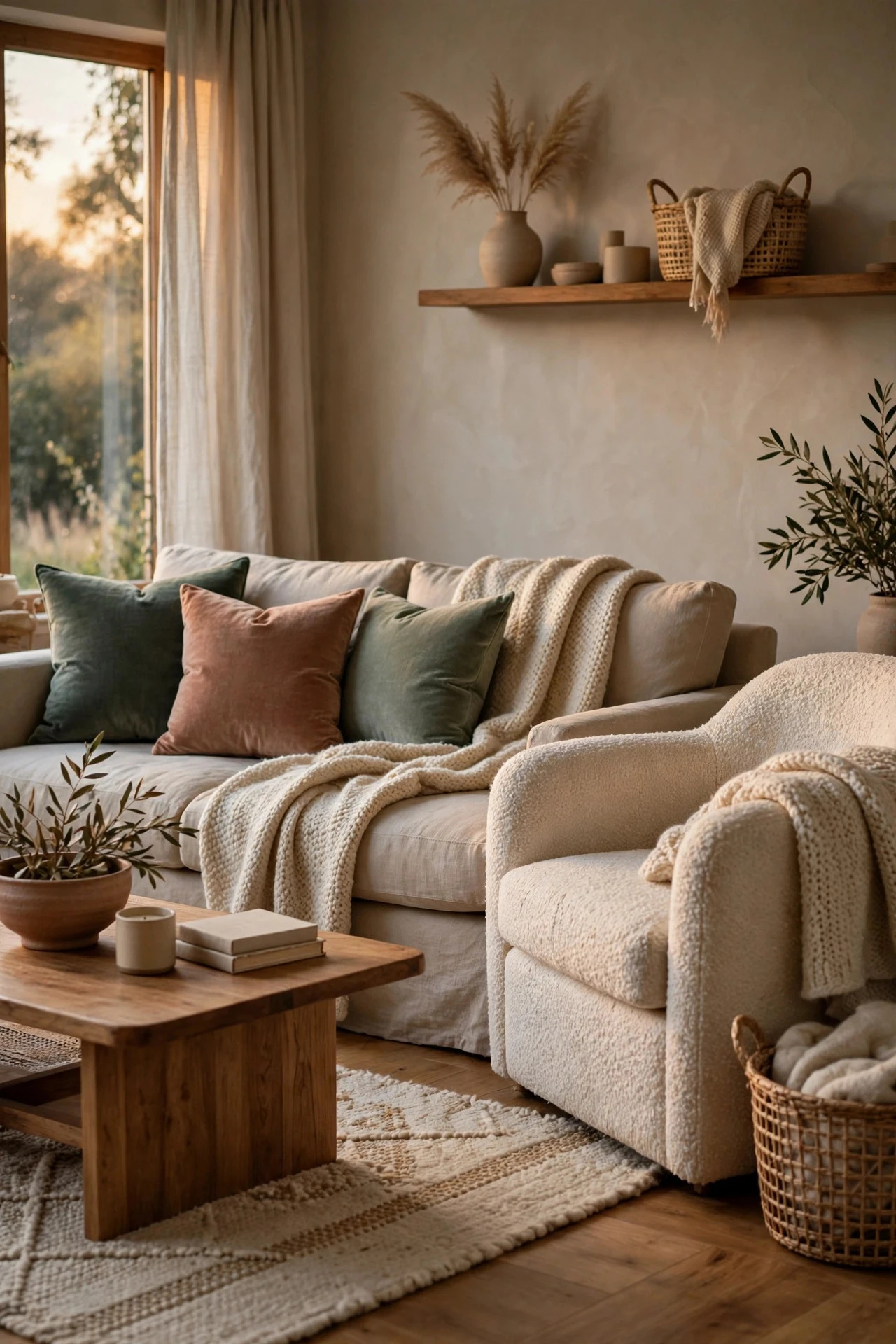
Mix textures by repeating each one at least twice and keeping the colour palette narrow, so the room feels rich rather than random. Pair a smooth surface with a rough one — velvet cushions against a linen sofa, a wool throw on a leather chair — and limit yourself to three main textures per room plus one accent.
Start with the largest surfaces: the sofa fabric, the rug and the curtains set the texture story, and cushions and throws echo it. Bouclé, a looped wool fabric with a soft nubby surface, works best as one statement piece — an armchair or a pair of cushions — rather than on every seat. Add warm wood, rattan or woven baskets for a natural counterpoint, because a room of only soft fabrics can feel flat.
6. What Is the Best Cozy Colour Palette for a Whole Home?
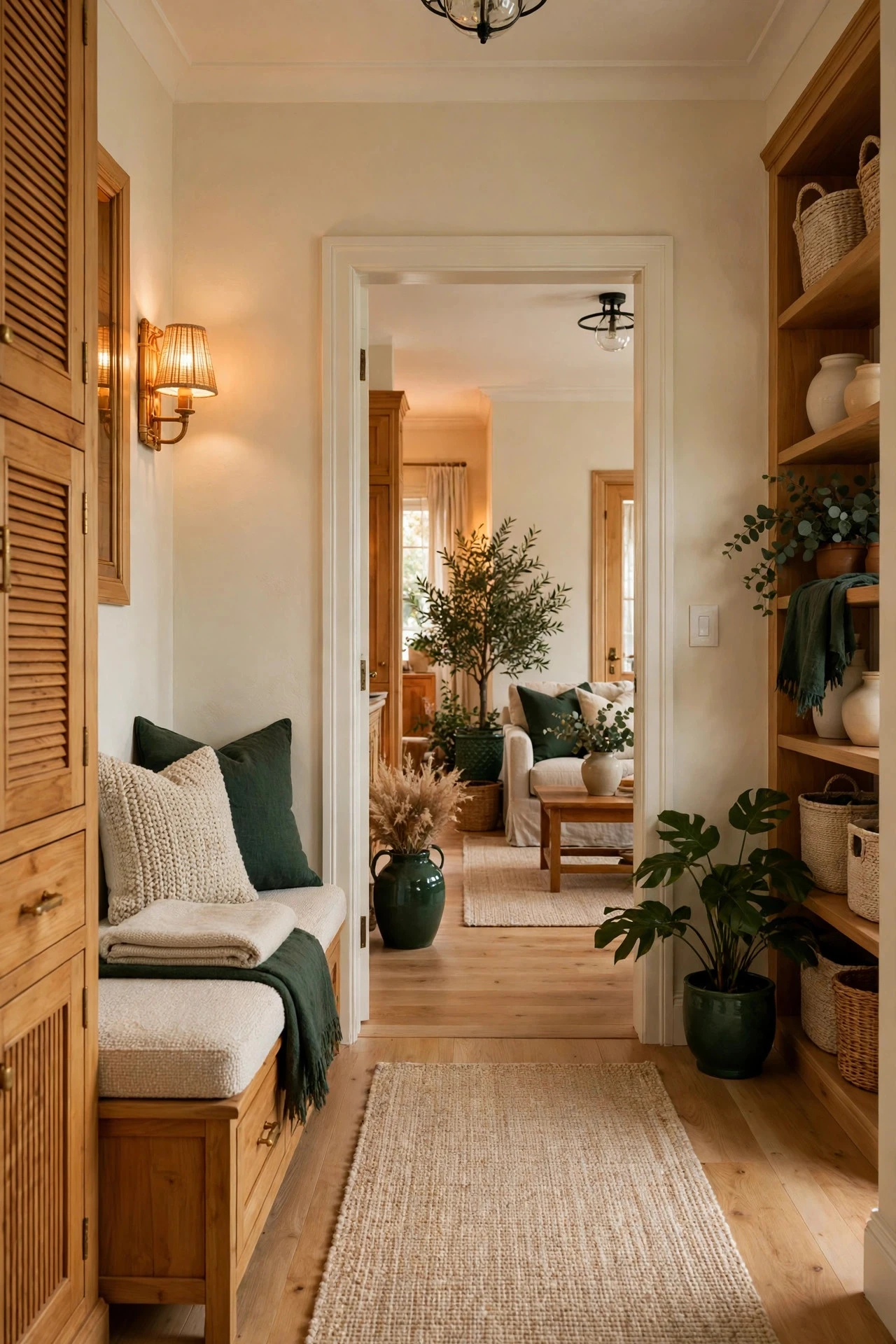
The best cozy colour palette for a whole home is warm neutrals with one deep accent colour repeated in every room. Think warm white walls, honey or walnut wood, oatmeal and cream textiles, and a single deep tone — forest green, terracotta, navy or plum — carried through in cushions, art and one painted wall per room.
Warm neutrals flatter skin, wood and lamplight, while cool greys turn warm light muddy. Test paint in the evening under your lamps, not just in daylight, because a cream that looks fresh at noon can look yellow at 2700K. Keep the accent colour to about 10 percent of each room. If you love colour, go deeper rather than brighter: a deep terracotta cushion feels cozier than a bright orange one.
7. How Do You Make a Bedroom Feel Like a Retreat Every Night?

Make a bedroom feel like a retreat by layering the bed the way you layer a living room: a fitted sheet, a duvet, a second lighter blanket, and a throw folded across the foot. Add blackout-lined curtains in a heavy fabric, a bedside lamp with a warm bulb, and nothing on the bedside table except what you use at night.
The bed is the room's largest surface, so its bedding sets the mood. Choose cotton percale or washed linen sheets — they breathe and soften with every wash — and a duvet in a natural fill or a good down alternative. Keep the palette quiet: two colours plus white is enough. These 22 bedroom lighting ideas for a warm restful glow show how low, warm bedside light helps you wind down. Clear the floor, make the bed every morning, and the retreat feeling survives the day.
8. Why Does Layered Bedding Feel Warmer Than One Thick Duvet?
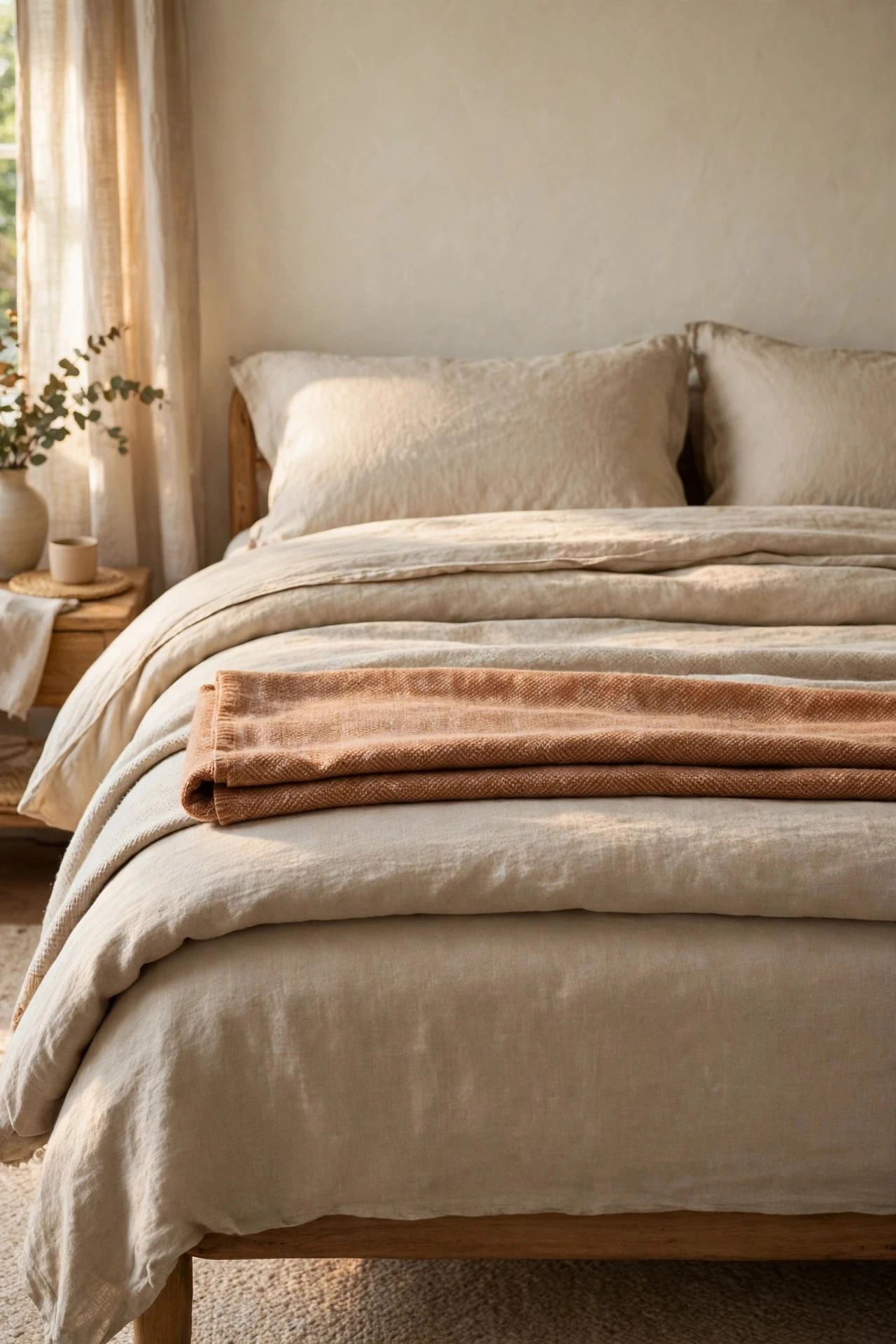
Layered bedding feels warmer than one thick duvet because each layer traps a thin pocket of air, and you can add or remove a layer as the night changes instead of waking up too hot or too cold. A sheet, a light blanket and a duvet together also look softer and more inviting than a single flat cover.
Build the layers from light to heavy: a fitted sheet, a flat sheet or light cotton blanket, then the duvet, then a folded throw at the foot. In summer, drop the duvet and keep the blanket and throw; in winter, add a wool blanket between the sheet and the duvet. Choose a duvet cover in a natural fibre so it does not trap heat. Turn the top 30 cm of the duvet and sheet back together, and the bed looks made by a hotel.
9. How Do You Add Warmth to a Kitchen Without a Renovation?

Add warmth to a kitchen without a renovation by changing the touchpoints and the light: a washable runner rug in front of the sink, wooden chopping boards left on display, open shelving with warm ceramics, and under-cabinet lighting at 2700K. These small changes soften hard surfaces — stone, steel and tile — that make kitchens feel cold.
Start underfoot, because a cold tile floor is what you notice first thing in the morning. A flat-weave cotton runner, about 60 cm wide and 180 cm long, costs $30 to $60, washes easily, and stops the kitchen echoing. Swap one row of upper cabinets for open shelves filled with wooden bowls, stoneware mugs and a few cookbooks. Add a linen tea towel over the oven handle — the cheapest cozy signal in the house.
10. How Can a Bathroom Feel Cozy Instead of Cold and Clinical?
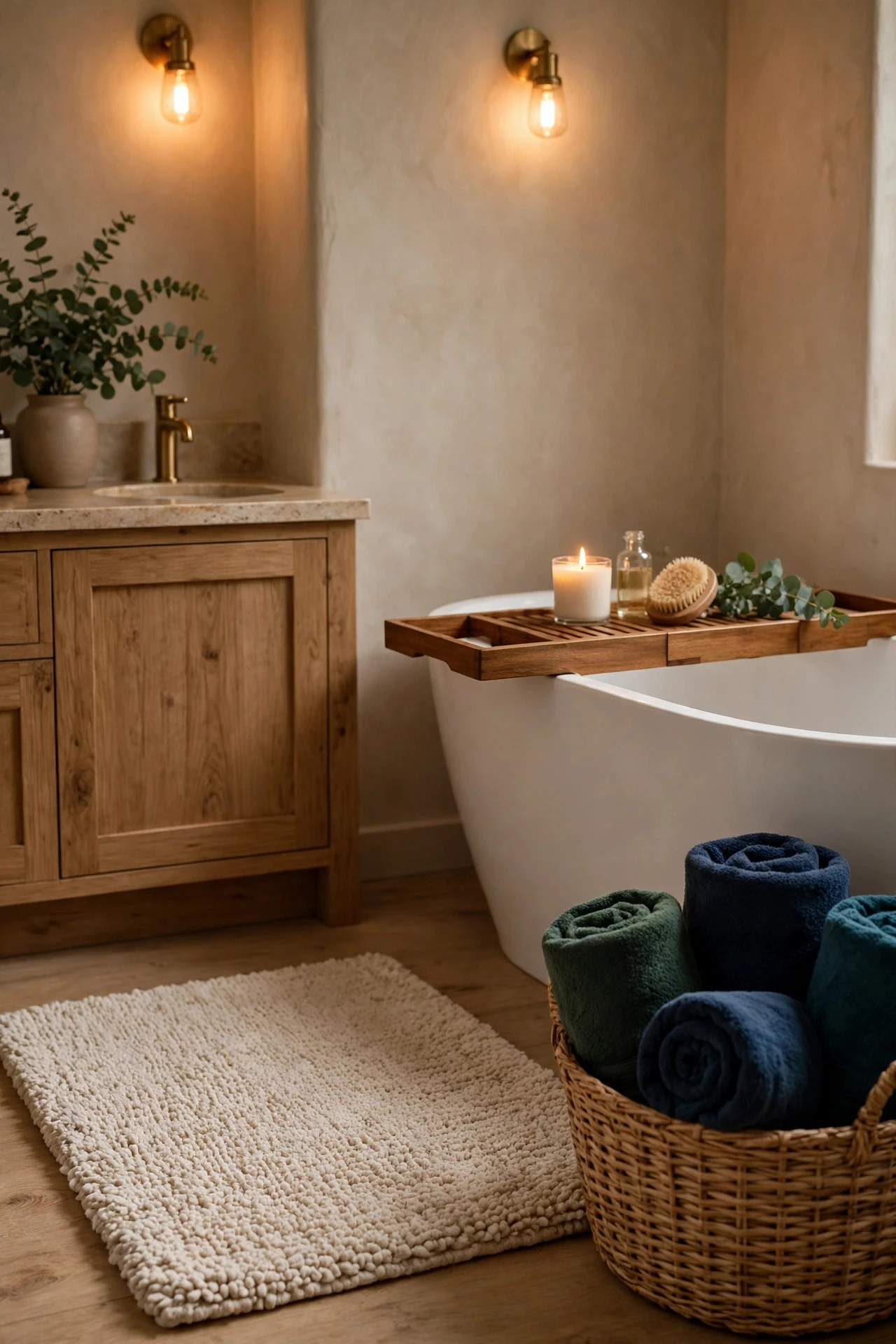
A bathroom feels cozy when its hard surfaces are balanced with soft, warm ones: a thick cotton bath mat, a wooden bath tray, warm 2700K lighting, and towels in a deep, warm colour instead of clinical white. The goal is a spa feeling, not a showroom — somewhere you want to linger, not rush through.
Start with the floor, because cold tile is the bathroom's biggest enemy. A plush bath mat at least 50 cm by 80 cm, in cotton or bamboo, costs $20 to $35 and changes the whole room. Add a wooden stool or tray for candles and a book, and swap a harsh overhead light for a dimmable one or a wall light beside the mirror. Keep towels rolled in a basket, and choose one scent for the soap and diffuser. The Spruce's guide to bathroom design shows how lighting, storage and textiles work together in small wet rooms.
11. What Makes an Entryway Feel Welcoming the Moment You Walk In?
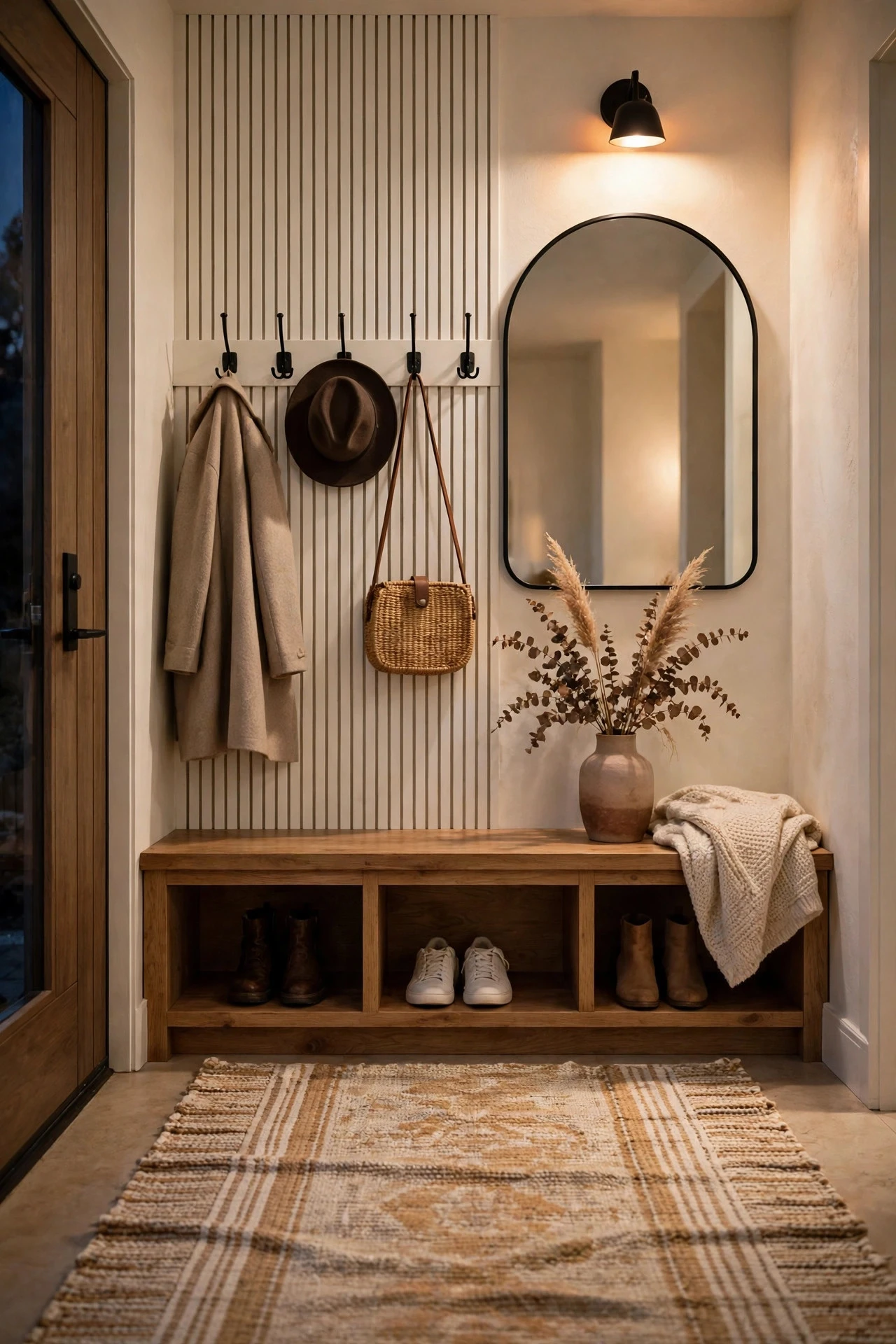
An entryway feels welcoming when it answers three needs in the first five seconds: somewhere to put your shoes, somewhere to hang your coat, and something warm to look at. A bench, a row of hooks, a rug and one lamp or candle achieve that in even a narrow hallway, and they stop clutter from spilling into the living room.
Choose a bench about 90 to 120 cm wide with storage underneath for shoes, and hooks at two heights — 170 cm for adults and 120 cm for children. Lay a runner rug that covers the main walking line, in a dark, hard-wearing pattern. Add a small console with a mirror above it, because a mirror doubles the light in a hallway with no window, and a bowl for keys. One framed print or a vase of dried stems finishes the welcome.
12. How Do You Arrange Seating So People Actually Talk?

Arrange seating so people actually talk by pulling chairs close enough that knees are about 120 to 150 cm apart, facing each other or angled at 45 degrees, with a small table between them. A sofa pushed against the wall and chairs scattered around the edges of a room makes conversation feel like a meeting; a tight, inward-facing group makes it feel like a gathering.
Start by pulling the sofa off the wall by 15 to 20 cm and angling one armchair toward it, so the two seats form a loose L. Put a coffee table or side table within arm's reach of every seat, because people relax when they have somewhere to put a cup. Add a floor lamp behind the reading chair and a throw on the sofa arm. In a small room, two armchairs facing the sofa beat a second sofa, because they keep the circle small.
13. Why Do Curtains Change the Feel of a Room More Than Paint?
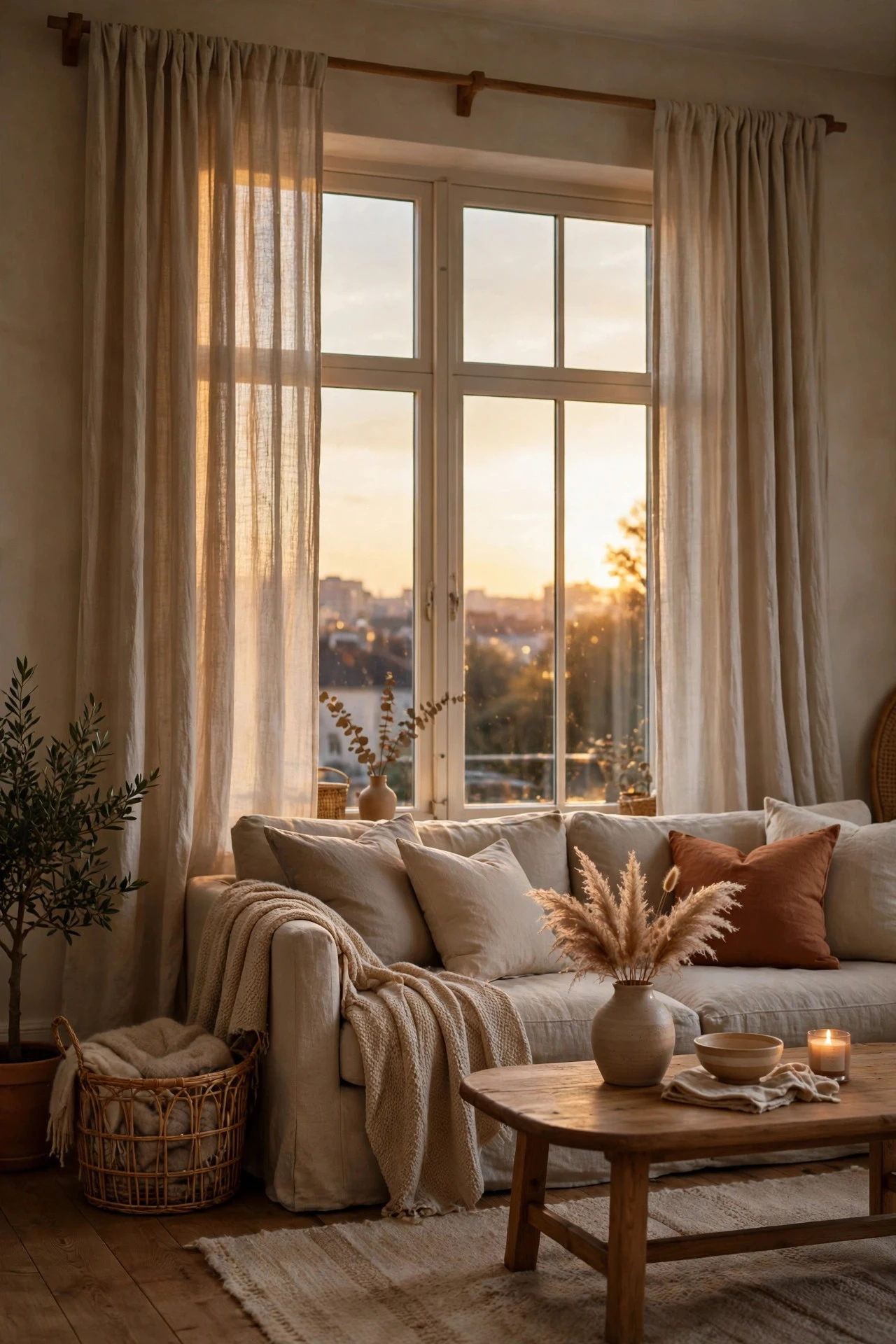
Curtains change the feel of a room more than paint because they control the light, soften hard window edges, add a huge area of texture, and make a room feel finished in a way a wall colour never can. Floor-length curtains in a heavy fabric can make a plain room feel warm in an afternoon, while bare windows leave even a painted room feeling unfinished.
Hang the rod 10 to 15 cm above the window frame and 15 to 20 cm wider on each side, so the curtains frame the window rather than covering it, and let them just kiss the floor. Choose linen for a relaxed feel, velvet for drama and warmth, or a heavy cotton for a family room. Line them if you can: lining adds weight, blocks draughts, and makes cheap fabric hang like expensive fabric.
14. How Do You Use Scent to Make a Home Feel Cozy?
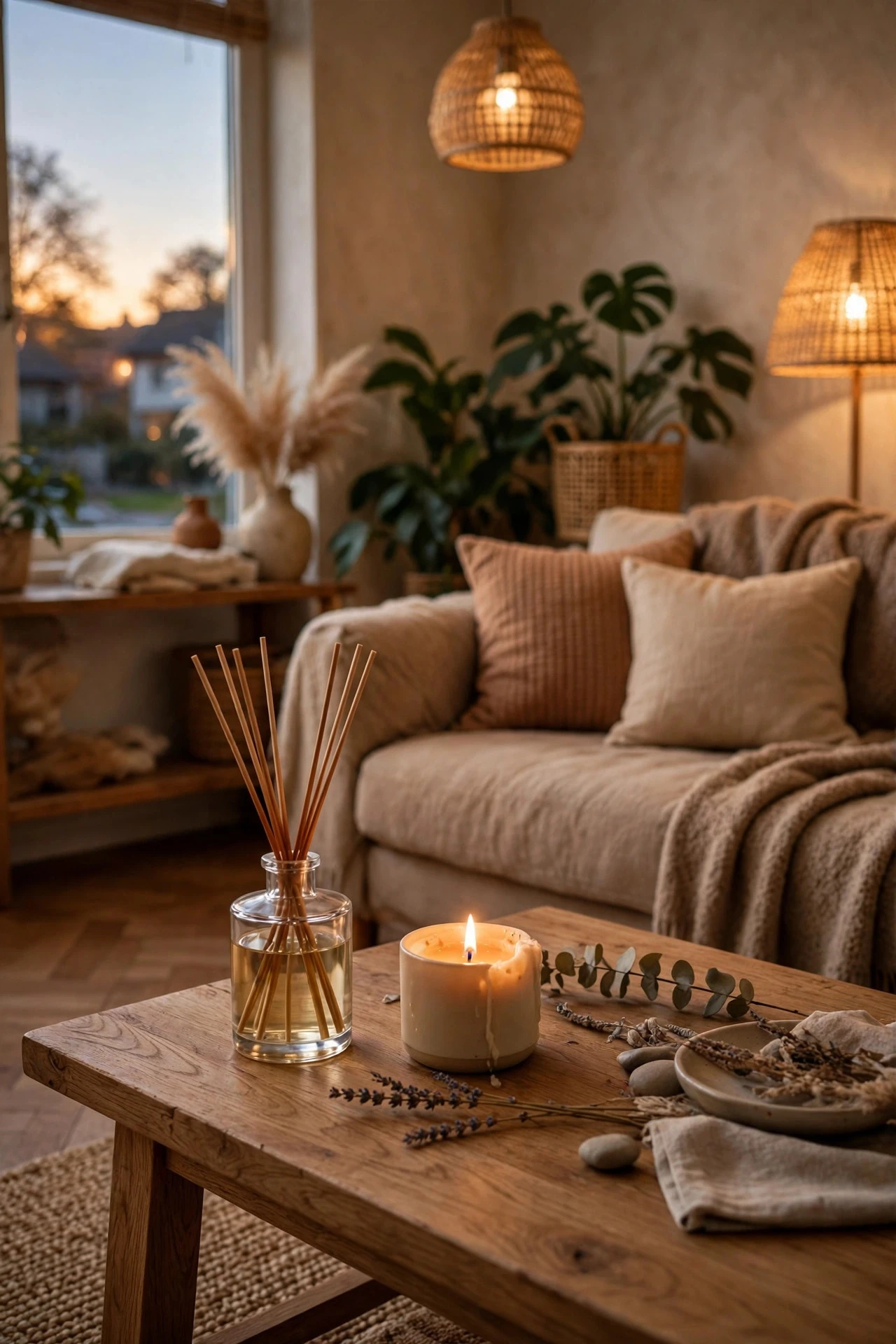
Use scent to make a home feel cozy by choosing one signature scent per home and repeating it quietly in every room, rather than a different candle in each space. Cedar, sandalwood, vanilla, cinnamon or pine all read as warm; citrus and mint read as clean and bright, which is the opposite of cozy in the evening.
A reed diffuser in the hallway sets the tone when you walk in, and it lasts four to six weeks for $15 to $25. In the living room, one candle in a glass jar, burned for an hour before guests arrive, is enough. In the bedroom, a linen spray or a sachet in the wardrobe is safer than a candle. Keep the scent subtle: if you can smell it from the doorway, it is too strong.
15. What Is the Difference Between Cozy and Cluttered?
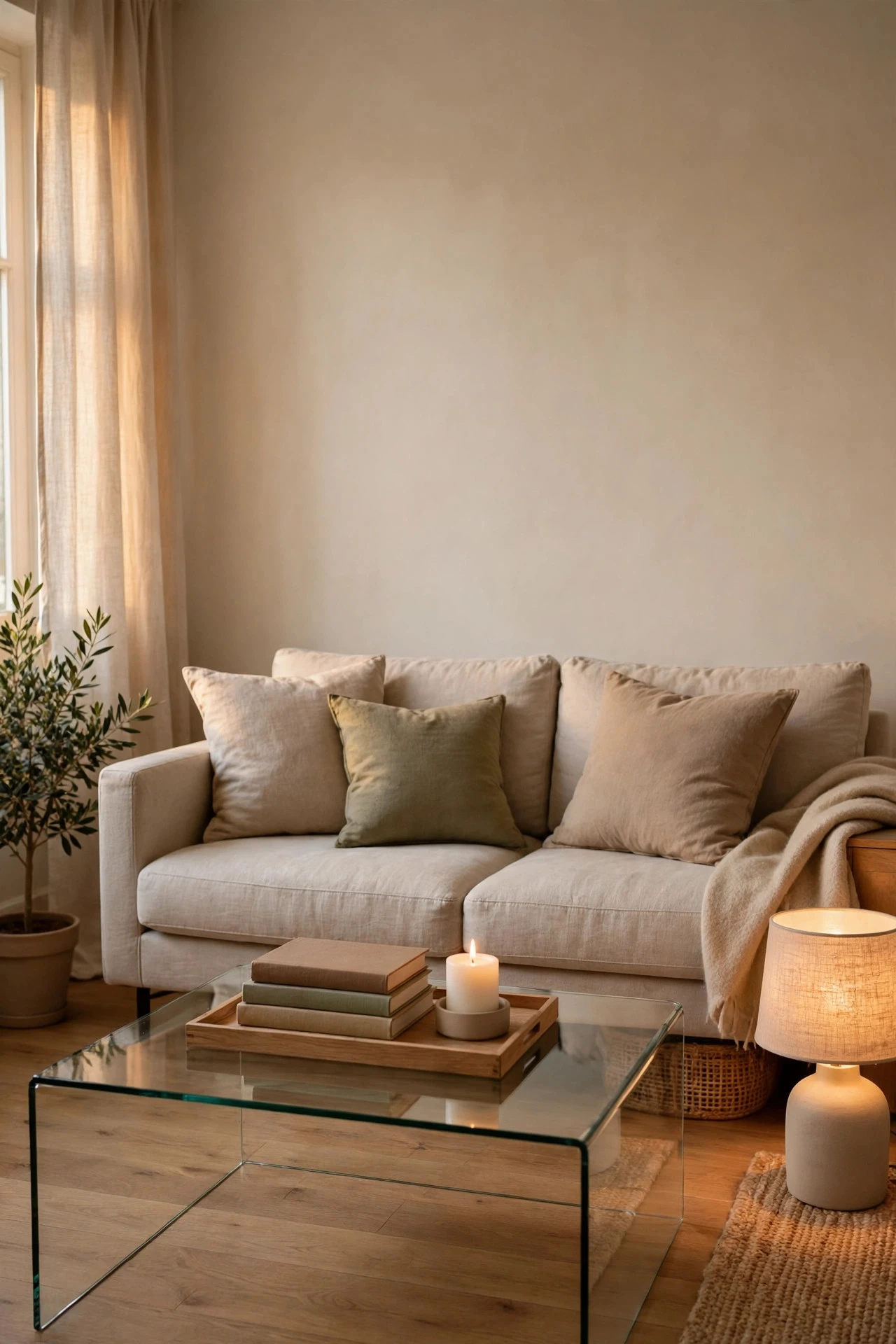
The difference between cozy and cluttered is intention: cozy is a few loved things with space around them, while clutter is many things with nowhere to rest. A cozy room has empty surfaces — a clear coffee table, a bare stretch of wall — while a cluttered room has every surface covered, so the eye has nowhere to settle.
Test it with the tray rule: group small objects on one tray, and if they do not fit, something has to go. Keep books in stacks of three, candles in odd numbers, and cushions to three or four per sofa. Give every object a home — a basket for throws, a bowl for keys, a shelf for books. If you remove a piece for a week and do not miss it, it was clutter.
16. How Do You Style a Reading Nook That Gets Used Every Day?

Style a reading nook that gets used every day by giving it the four things readers actually need: a comfortable chair with arms, a light at shoulder height, a small table for a cup, and a throw within reach. A nook fails when any one of those is missing, because the reader has to get up to fetch it.
Pick a chair you can sit in for an hour — an armchair at least 70 cm wide with a seat height of about 45 cm — and place it near a window or a lamp, angled toward the room rather than facing a wall. Add a floor lamp with a 2700K bulb behind the chair's shoulder, a side table about 40 cm wide, and a basket with books and a folded throw beside it. Keep the nook free of work: no laptop, no post, no charging cables.
17. Which Investment Pieces Are Worth Paying More For?
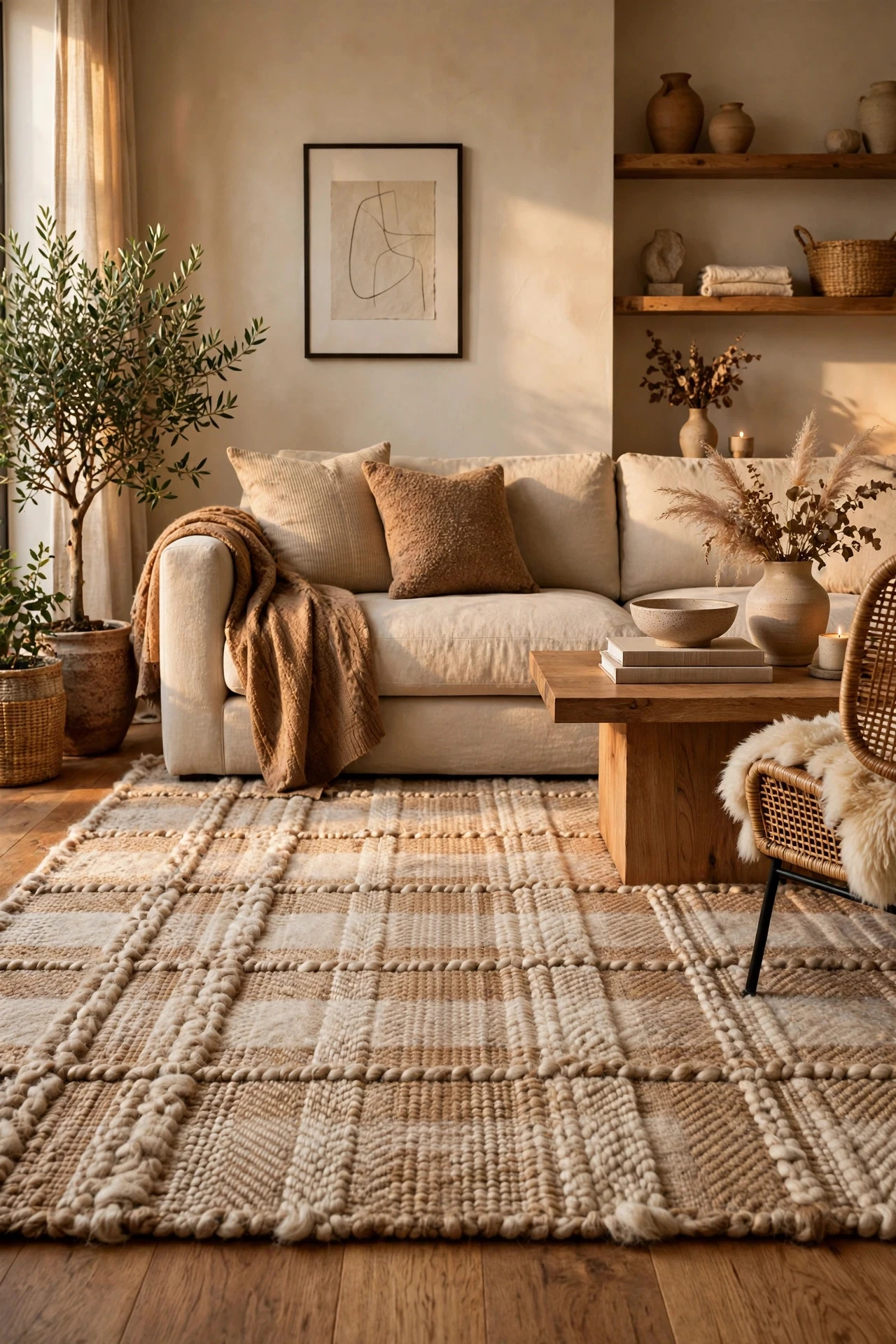
The investment pieces worth paying more for are the ones you touch every day: a good rug, a solid sofa, a real wool throw, and quality bedding. These are the pieces that set the cozy feeling, and cheap versions of them wear out, pill, sag or feel cold within a year, costing more in replacements than the good version cost once.
Spend on the rug first, because it covers the largest area and takes the most wear — a hand-knotted or good machine-made wool rug at $300 to $800 will last a decade, while a $60 synthetic rug will flatten within a year. Next, the sofa: a hardwood frame and high-resilience foam cost more upfront but keep their shape. Save on cushions, candles, vases and art, because those are easy to swap. Buy the investment pieces in neutral colours and let the cheap pieces carry the trend.
18. How Do You Make a Small Home Feel Cozy, Not Cramped?
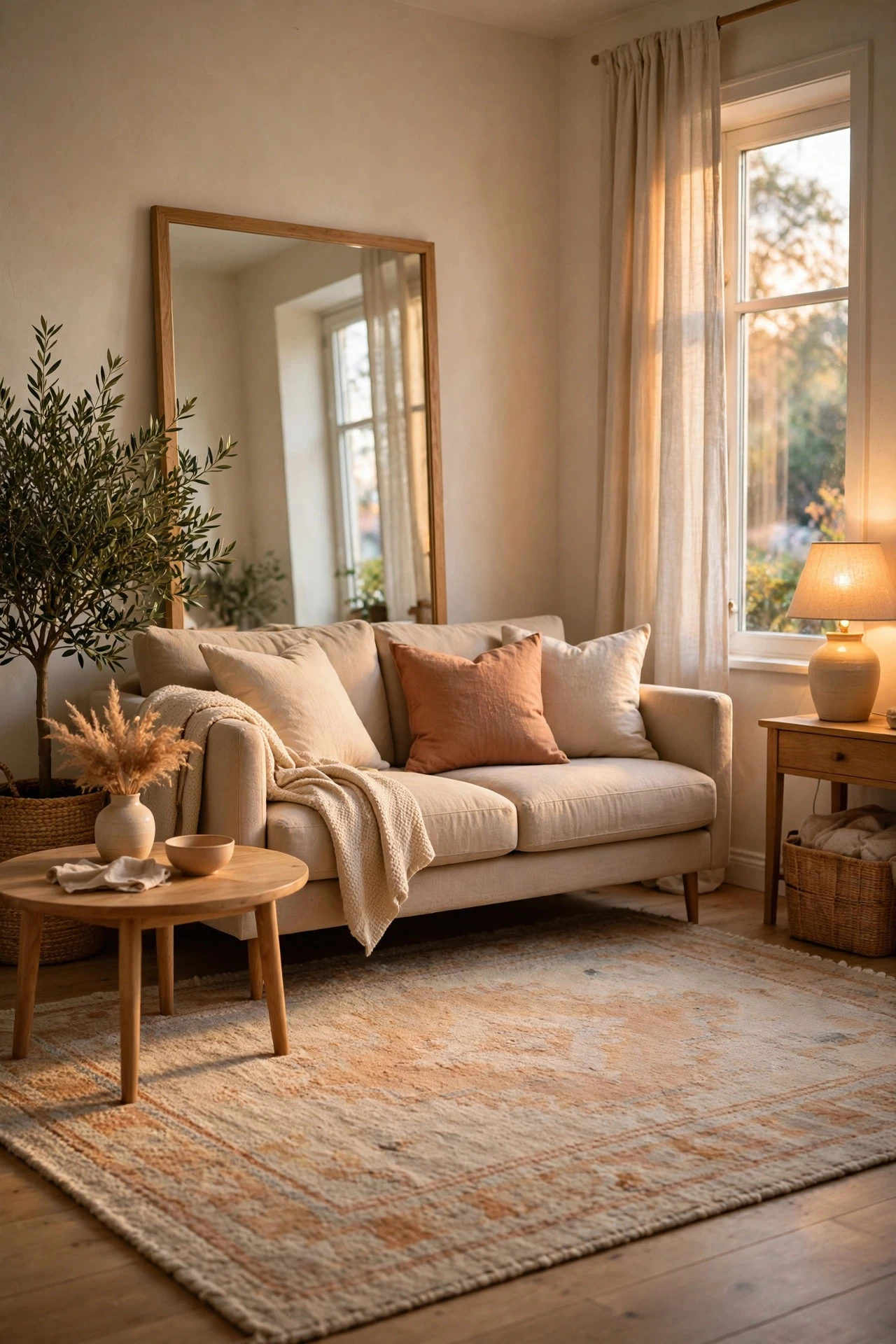
Make a small home feel cozy, not cramped, by choosing fewer, larger pieces and keeping the palette light and warm. One large rug, one generous sofa and one floor lamp beat five small pieces that chop the room into fragments, because the eye reads large pieces as calm and small pieces as clutter.
Use the same flooring and wall colour through connected rooms so the home reads as one space, and keep the rug size generous — at least 200 cm by 290 cm in a small living room. Choose furniture with legs, so you can see floor beneath it, and hang one large mirror or piece of art instead of a gallery of small frames. These 22 Scandinavian living room ideas for a calm cozy home show how light wood, white walls and soft textiles make small rooms feel open and warm.
19. How Do Fireplaces, Candles and Faux Flames Add Warmth?

Fireplaces, candles and faux flames add warmth because the eye reads flickering light as heat, even when the room temperature has not changed. A real fire, a cluster of LED candles or a faux fireplace with a flame effect all create a focal point that draws people toward it, which is exactly what a cozy room needs.
If you have a working fireplace, make it the centre of the seating arrangement and keep the mantel simple — one mirror or piece of art, two candlesticks, and nothing else. If you do not, a group of three LED pillar candles of different heights on the hearth or a coffee table gives the same flicker with no smoke and no risk. Electric flame-effect stoves cost $150 to $400 and work well in flats where a real fire is impossible. Keep flames at eye level when seated.
20. How Do You Bring Nature Indoors for a Warmer Home?
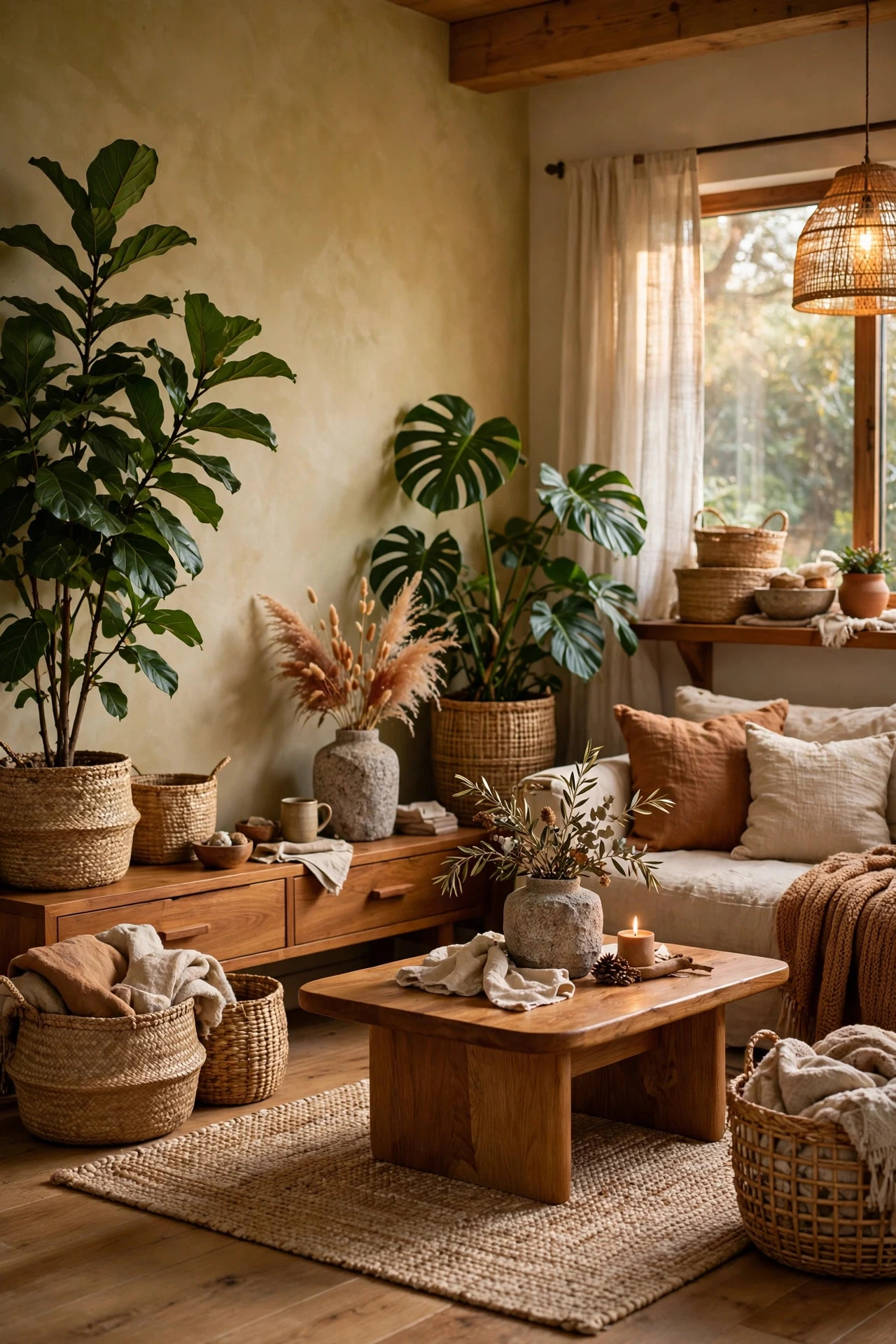
Bring nature indoors by adding three kinds of natural material in every room: living plants, warm wood, and stone or clay. Plants soften corners and clean the air, wood adds warmth under hand and foot, and stone or clay grounds a room that would otherwise feel too soft and too pale.
Start with plants that survive real life: a snake plant, a pothos or a fiddle-leaf fig in the living room, and a small herb pot in the kitchen. Place one large plant, about 90 to 120 cm tall, in an empty corner rather than five tiny plants scattered on shelves, because one strong plant reads as design. Add wood through a coffee table or a woven basket, and stone through a vase or a coaster. Biophilic design — connecting interiors with nature — works because our brains relax around natural materials.
21. What Budget Cozy Upgrades Give the Biggest Impact for Under $50?
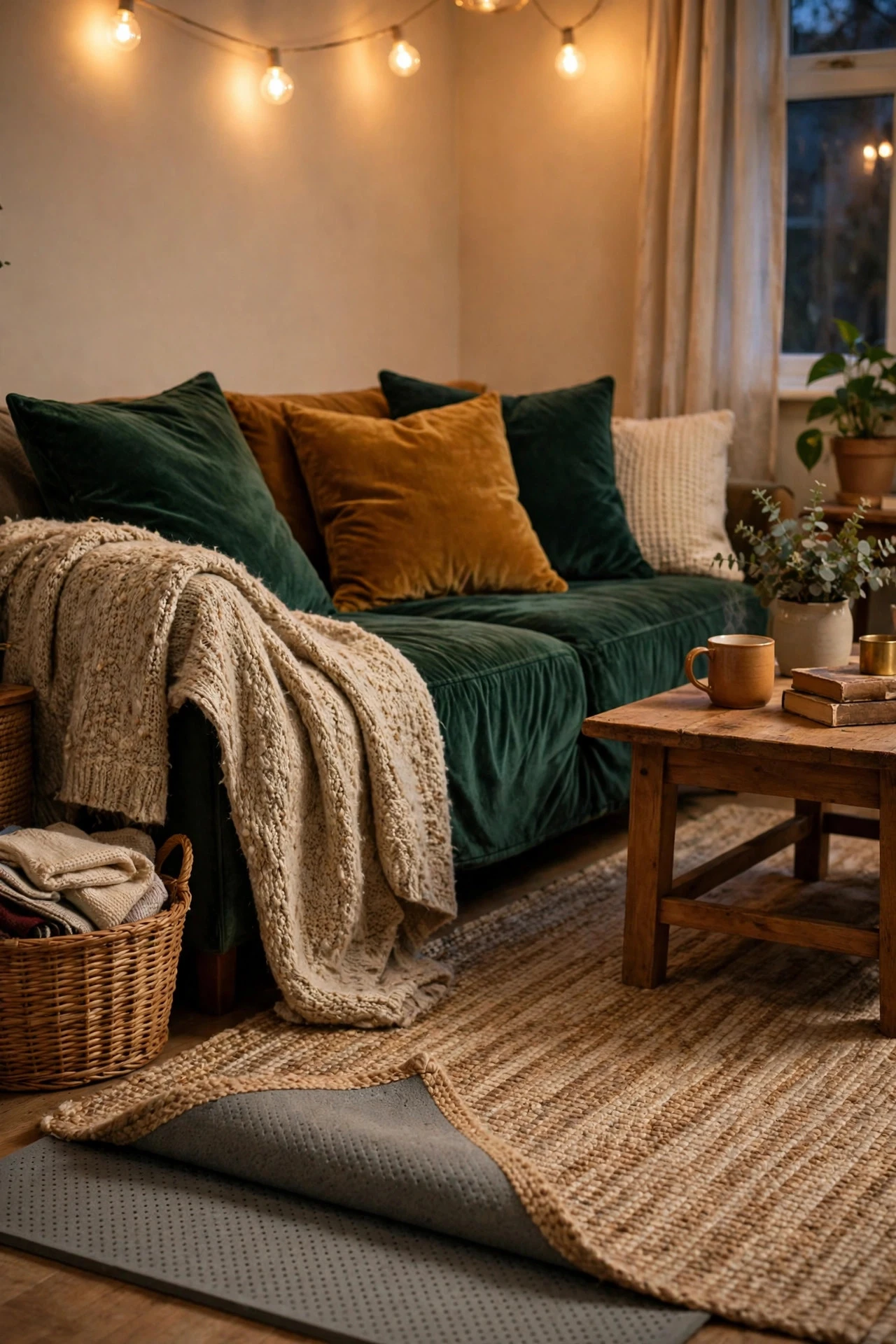
The budget cozy upgrades with the biggest impact for under $50 are a warm bulb swap, a new cushion cover set, a thrifted throw, and a rug pad under an existing rug. Each costs less than a takeaway for two, and together they change how a room feels more than a single $200 purchase.
Swap every cool bulb in the living room and bedroom for 2700K warm white — about $15 for a pack of four — and the room warms up that evening. Add two cushion covers in velvet or bouclé, $12 to $20 each. Hunt a wool throw at a charity shop for $15 to $25. Finally, put a felt rug pad under your existing rug for $20 to $30: it makes the rug feel thicker and warmer, and stops it sliding. House Beautiful's cozy home ideas shows the same low-cost swaps used by designers in real homes.
22. How Do You Keep a Cozy Home Feeling Fresh Through the Seasons?

Keep a cozy home feeling fresh through the seasons by swapping only the top layer — cushion covers, throws, scent and one or two accessories — while the base layers stay the same all year. The rug, the curtains, the sofa and the lighting do not change; the throw on the sofa, the colour of the cushions and the scent in the diffuser do.
In spring, swap a heavy wool throw for a light cotton one and change the scent to something green. In summer, remove one cushion per sofa and open the curtains wide. In autumn, bring back the wool throw, add a deep cushion, and switch the scent to cedar. In winter, add a second throw and light the candles earlier. These 22 luxury bedroom decor ideas for a five-star hotel feel show how a calm, layered base lets you change the season with a single swap, and these 22 Christmas room decor ideas for every room in your home show the same idea for a festive season. Store off-season textiles in a labelled basket.
Practical Tips
Start with light, because it costs the least and changes the most. Walk through your home at 7 p.m. and note every room that still feels like an office — those need a lamp, a warmer bulb or a dimmer first. Buy the bulbs before the cushions, and test one room before you commit to the whole house.
Measure twice, buy once. A rug that is 30 cm too small or curtains that are 20 cm too short look like mistakes, while the right size looks like design. Keep your room measurements on your phone, and check them in the shop, not at home.
Finally, live with a change for a week before you add the next one. Coziness builds in layers, and a room changed all at once usually ends up over-decorated. Add the lamp, live with it, then add the throw, then the rug.
Final Thoughts
A warm, inviting home is not bought in a day; it is built one layer at a time — warm light, soft textiles, honest textures, a quiet scent and seating that faces the people you love. Start with the room you use most, make one change this week, and let the rest follow.
When one room feels right, move to the next with the same method: light first, textiles second, texture third. The bedroom and Scandinavian guides linked above are a good place to start the next room.
Frequently Asked Questions
What is the cheapest way to make a home feel cozy?
Swap cool bulbs for warm 2700K bulbs, add one throw per seating area, and put a rug pad under an existing rug. Those three changes cost under $50 together and transform how a room feels the same evening. Add two cushion covers in a warm colour next, before considering larger purchases.
How many cushions should a cozy sofa have?
A cozy three-seat sofa needs three or four cushions, not seven. Use two larger cushions at the ends and one or two smaller ones in the middle, mixing two textures such as velvet and linen. More cushions than that leave nowhere to sit, and they end up on the floor every evening.
What colour temperature is best for cozy lighting?
Warm white at 2700K is best for cozy lighting, because it matches candlelight and late-afternoon sun. Use 2700K to 3000K in living rooms, bedrooms and bathrooms, and keep cooler light only where you need detail. Dim the lights in the evening for an even warmer glow.
Can a small home feel cozy without feeling cluttered?
Yes, a small home feels cozy without clutter when you choose fewer, larger pieces and give every object a home. One large rug, one generous sofa and one floor lamp beat five small pieces, and trays, baskets and hooks keep surfaces clear. If you remove an object for a week and do not miss it, it was clutter.
Which textiles make a home feel warmest?
Wool, velvet, bouclé and linen make a home feel warmest, because each adds a different kind of softness. Wool throws and rugs feel warm under hand and foot, velvet cushions add depth, bouclé adds a soft nubby surface, and linen curtains soften light. Mix two or three of them in each room, keeping the palette narrow.
How do I make my home smell cozy without candles?
Use a reed diffuser in the hallway with a warm scent such as cedar, sandalwood or vanilla, and repeat it quietly in other rooms. A linen spray on bedding and a sachet in the wardrobe add scent without flame. Keep it subtle: if you can smell it from the doorway, use fewer reeds.