22 Reading Nook Ideas for a Corner You Will Never Leave
A reading nook is not a room. It is a decision: one corner of your home, claimed for reading and nothing else. The best nooks are rarely the biggest or the most expensive. They are the ones where the seat fits your body, the light lands on the page instead of in your eyes, and the next book is within arm's reach
This guide is built on numbers, not vibes. You will find the seat depth that stops your legs going numb, the lumens and Kelvin range that make evening reading comfortable, the shelf depths that hold paperbacks without wasting space, and honest budgets from a $150 chair-and-lamp corner to a $4,000 built-in window seat.
And these nooks live everywhere, not just in bedrooms. A window seat, a landing, a hallway, an under-stairs alcove or a converted closet — this guide covers the whole house, so you can find your spot wherever the empty space already is.
Looking for more inspiration? Our Nest Decorz homepage gathers the latest home decor ideas, seasonal decorating guides and room-by-room styling tips in one place — start there and explore.
Quick answers
– Every nook needs three things: a seat, a 400–800 lumen light at 2700K–3000K, and a book within reach — miss one and the nook goes unused. – Seat depth decides comfort: 20–22 inches deep for an armchair, 18–20 inches for a window-seat cushion, and a seat height of 17–19 inches so your feet rest flat. – Look beyond the bedroom: window seats, landings, hallways, under-stairs alcoves and converted closets borrow light the bedroom never gets. – Budget in tiers: a freestanding corner nook runs $150–$500, a built-in bench with shelves $1,500–$4,000, and a full window-seat wall with storage $3,000–$6,000. – Define the spot: a rug, a sconce or an accent wall tells your brain this corner is for reading.
1. What Is the 3-Part Formula Every Reading Nook Needs?
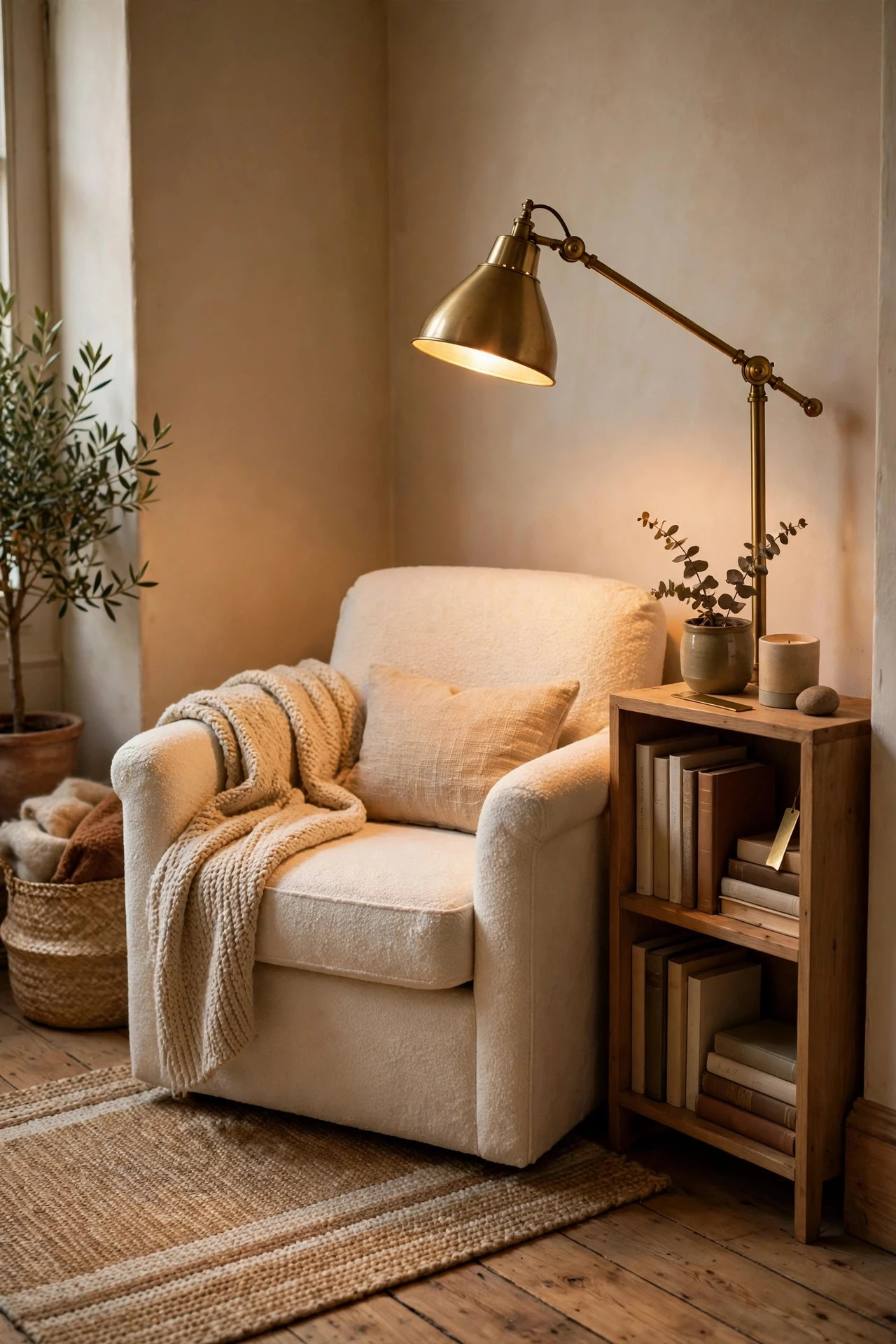
Every reading nook that actually gets used has three parts: a comfortable seat, a dedicated reading light, and a book within arm's reach. Miss one and the nook fails — a beautiful chair with no light becomes a laundry pile, and a lit corner with nowhere to put the book you are not reading becomes a storage shelf.
Start with the seat, because it decides everything else. The light goes on your reading side — right-handed readers want it on the left, so the hand holding the book does not cast a shadow — and the book spot goes on the other side, a shelf, a side table or a basket within 24 inches. A nook built on this formula works in a hallway, a landing or a living-room corner alike, because the formula is about the body, not the room.
2. How Do You Build a Window Seat That Doubles as a Nook?
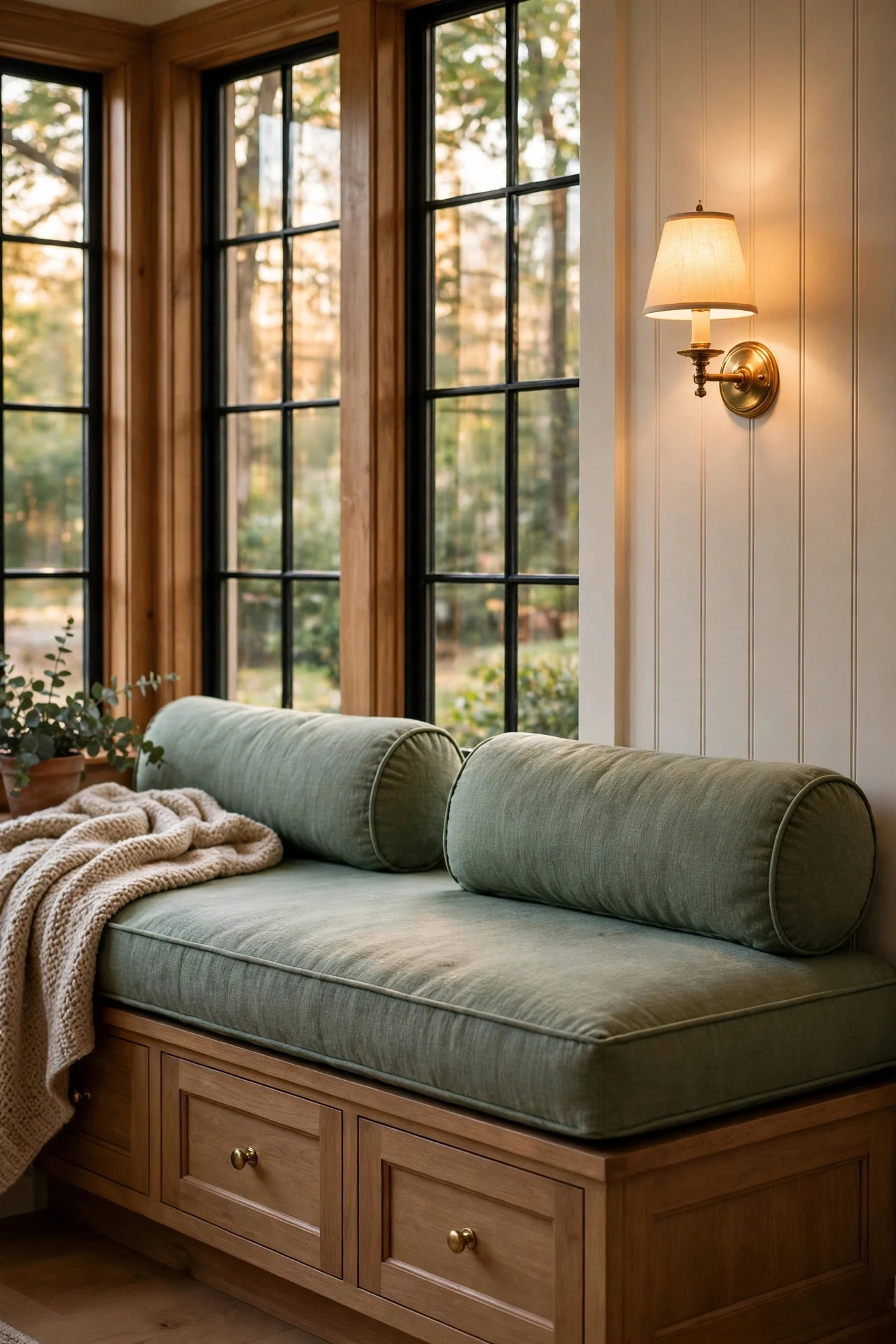
A window seat becomes a reading nook when the cushion is 18–20 inches deep, 3–4 inches thick, and paired with side storage and a reading light. Natural light does the daytime work, and a wall sconce or clip-on lamp takes over after dark — so the seat earns its keep from morning coffee to midnight chapters.
Build the base 18–20 inches high with drawers or lift-up lids underneath for blankets and out-of-season books. The Spruce's window seat ideas show how the same base works in living rooms, dining rooms and offices. A cushion in high-density foam (at least 2.5 lb density) holds its shape for years, while cheap foam flattens within months. Add a bolster or two throw pillows against the window frame so you can sit sideways with your knees up — the classic window-seat pose needs back support on both sides. Avoid sheer curtains that glare onto the page at midday; linen or light-filtering blinds soften the light without darkening the seat. Measure the window width first — a seat shorter than 36 inches fits one reader, while 48 inches or more fits two.
3. Why Pair a Built-In Bench With Bookshelves?
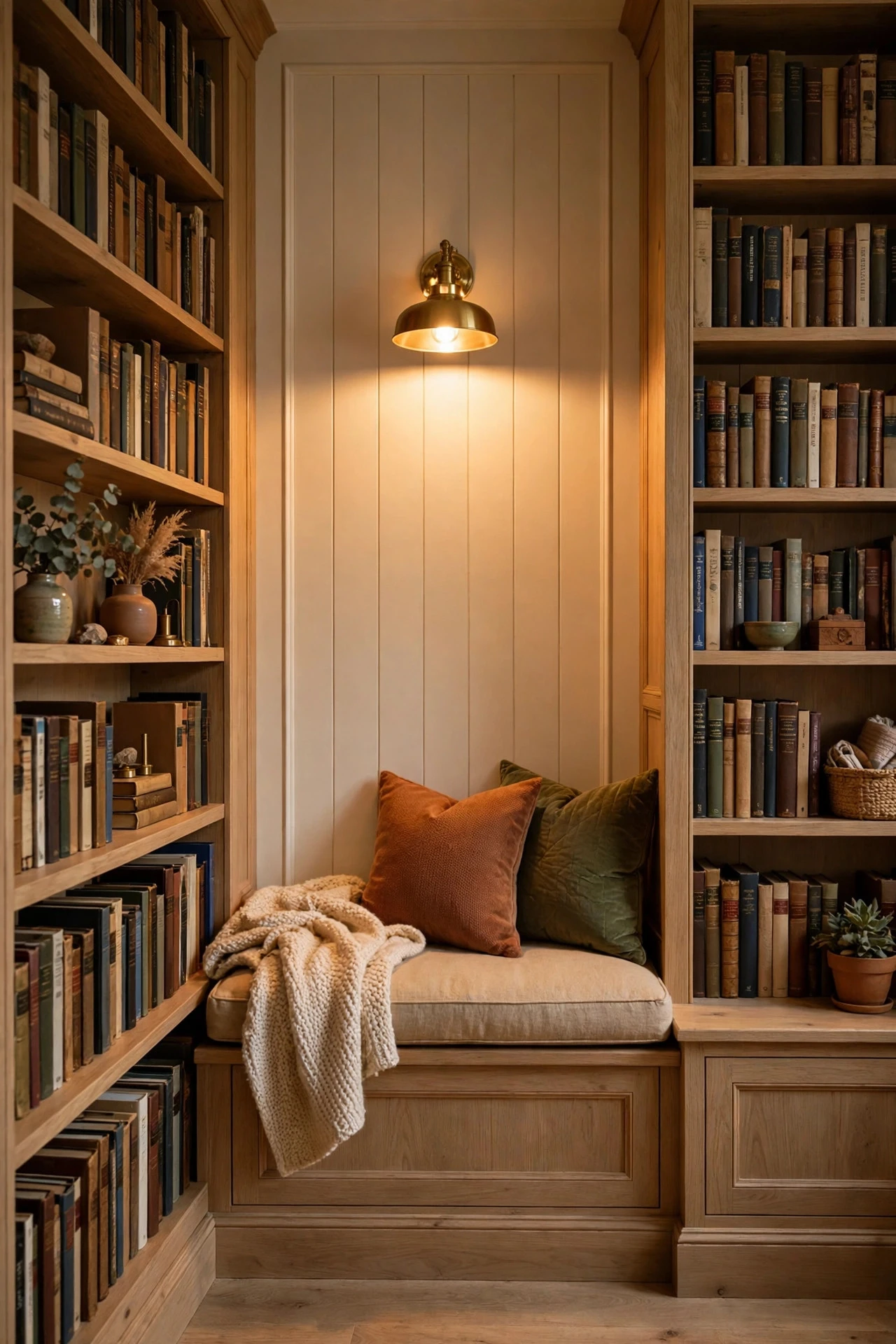
A built-in bench flanked by bookshelves works because it puts the seat and the library in one piece of furniture: you never leave the nook to choose the next book. Shelves 10–12 inches deep hold paperbacks upright, and a bench 18 inches high with a 20-inch-deep cushion gives you a proper seat, not a ledge.
Run the shelves from bench height to the ceiling on both sides, or along the full wall behind the bench if the room allows. Mix open shelves for display with a couple of closed cabinets at the bottom for clutter. A reading light mounted on the shelf upright — a small picture light or a plug-in sconce at 48–54 inches from the floor — washes the page without a floor lamp eating floor space. Budget honestly: a carpenter-built bench and shelf wall runs $1,500–$4,000 depending on timber and finish, while a DIY version from stock bookcases and a plywood bench base costs $400–$900.
4. Can the Space Under the Stairs Become a Reading Nook?

Yes, the space under the stairs makes one of the best reading nooks in the house, because it is already enclosed on three sides. A bench 16–18 inches high, a cushion 3 inches thick, and a wall sconce or LED strip turn the dead triangle into a destination.
Measure the headroom first: you need at least 48 inches of clear height where you sit, and 60 inches or more if you want to stand up inside it. Low headroom near the narrow end is fine for book storage — build shallow shelves or cubbies there, 8–10 inches deep, for paperbacks and children's books. The Spruce's under-stair storage ideas include under-stairs reading nooks with exactly this bench-and-shelf layout. Avoid a floor lamp here — there is no room for its base, and a wall-mounted light at shoulder height is both safer and better aimed.
5. How Do You Turn a Hallway Into a Reading Nook?

A hallway becomes a reading nook with a slim bench or chair, a wall-mounted light and a narrow shelf — you need only 24–30 inches of depth from the wall. Hallways are wasted space in most homes, and a nook gives them a purpose beyond getting from one room to another.
Choose a bench no deeper than 18 inches so the walkway stays at least 36 inches clear — building code and common sense agree that a hallway must stay passable. A plug-in wall sconce at 54 inches from the floor, on the side opposite your reading hand, gives focused light without a lamp base in the walkway. The same slim-bench logic makes small entrances feel grand — see these small entryway ideas that make a tiny entrance feel grand. Avoid a deep armchair here — it blocks the path and turns the hallway into an obstacle course.
6. What Makes a Landing the Perfect Nook Spot?

A landing works as a reading nook because it is usually the brightest, quietest square of floor in the house — upstairs light, away from the television, with nobody walking through except on their way to bed. A compact armchair, a floor lamp and a small stack of books turn it into the home's best-kept secret.
The landing's main constraint is size: most landings are 36–48 inches wide, so choose a chair no wider than 30 inches and a side table no deeper than 12 inches. If the landing sits outside a home office, the same chair can serve as a reading break spot between work sessions — and if that office needs its own refresh, these home office decor ideas show how to design a workspace you actually love. Safety first: keep the chair and lamp at least 12 inches from the stair edge and the balustrade, and never let a throw or a book stack spill onto the walking line.
7. How Do You Convert a Closet Into a Reading Nook?
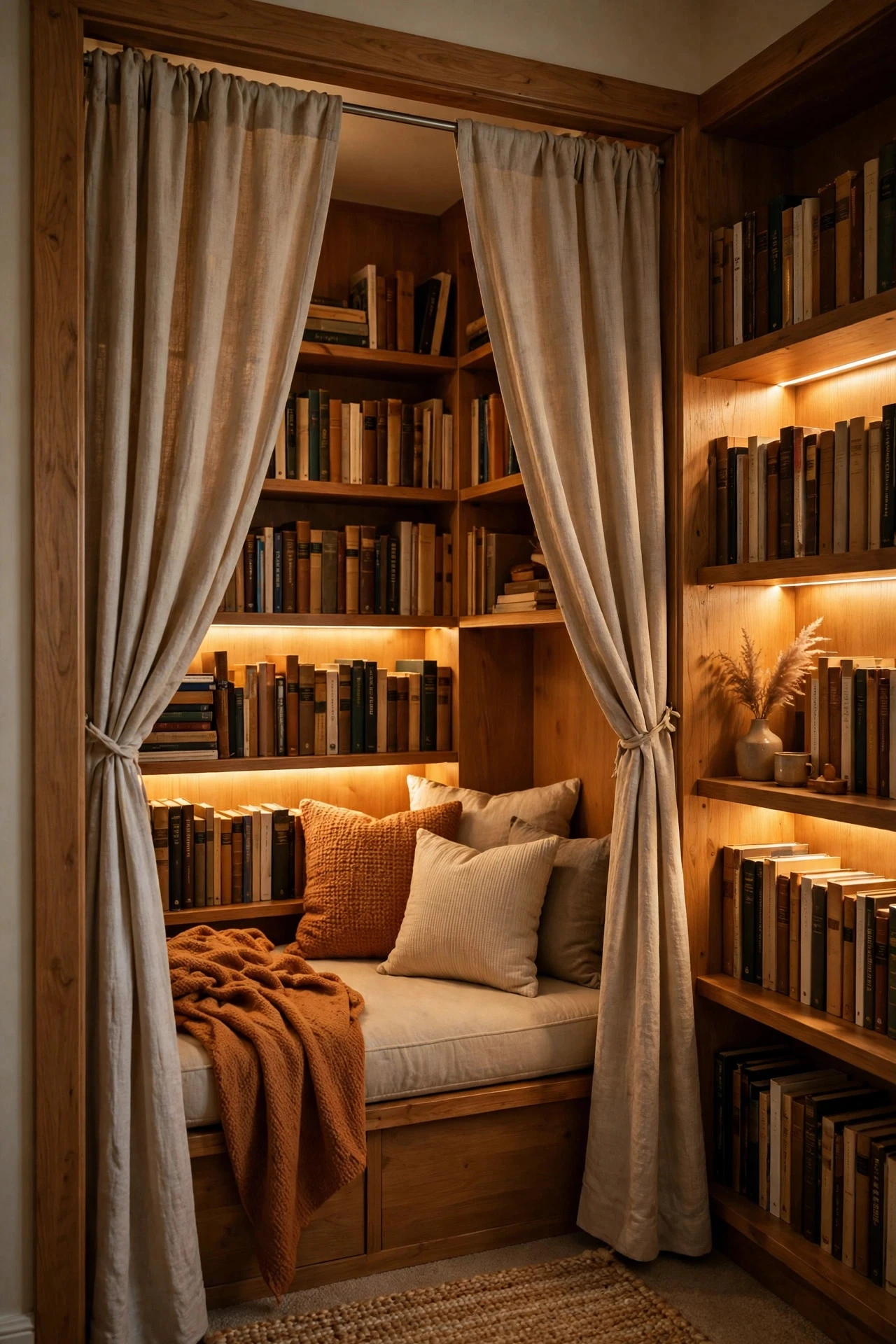
Converting a closet into a reading nook means removing the door, adding a bench across the back, shelves on the sides, and a light — and the result is the cosiest nook in the house, because four walls of enclosure make it feel like a secret room. A standard reach-in closet of 4–5 feet wide is already the right size.
Remove the doors and the hanging rod, then build or fit a bench 18 inches high and 18–20 inches deep across the full width. Line the side walls with shelves 10 inches deep, and mount a sconce or LED strip on the back wall at 48 inches high. Paint the interior a warm, light-reflecting colour — soft cream, pale sage or dusty blue — because a dark closet interior swallows light. If you are converting a walk-in closet, the same built-in logic applies on a grander scale — see these walk-in closet ideas that make getting dressed feel luxurious for shelving and lighting that translate directly.
8. How Do You Make an Empty Corner With Just an Armchair?
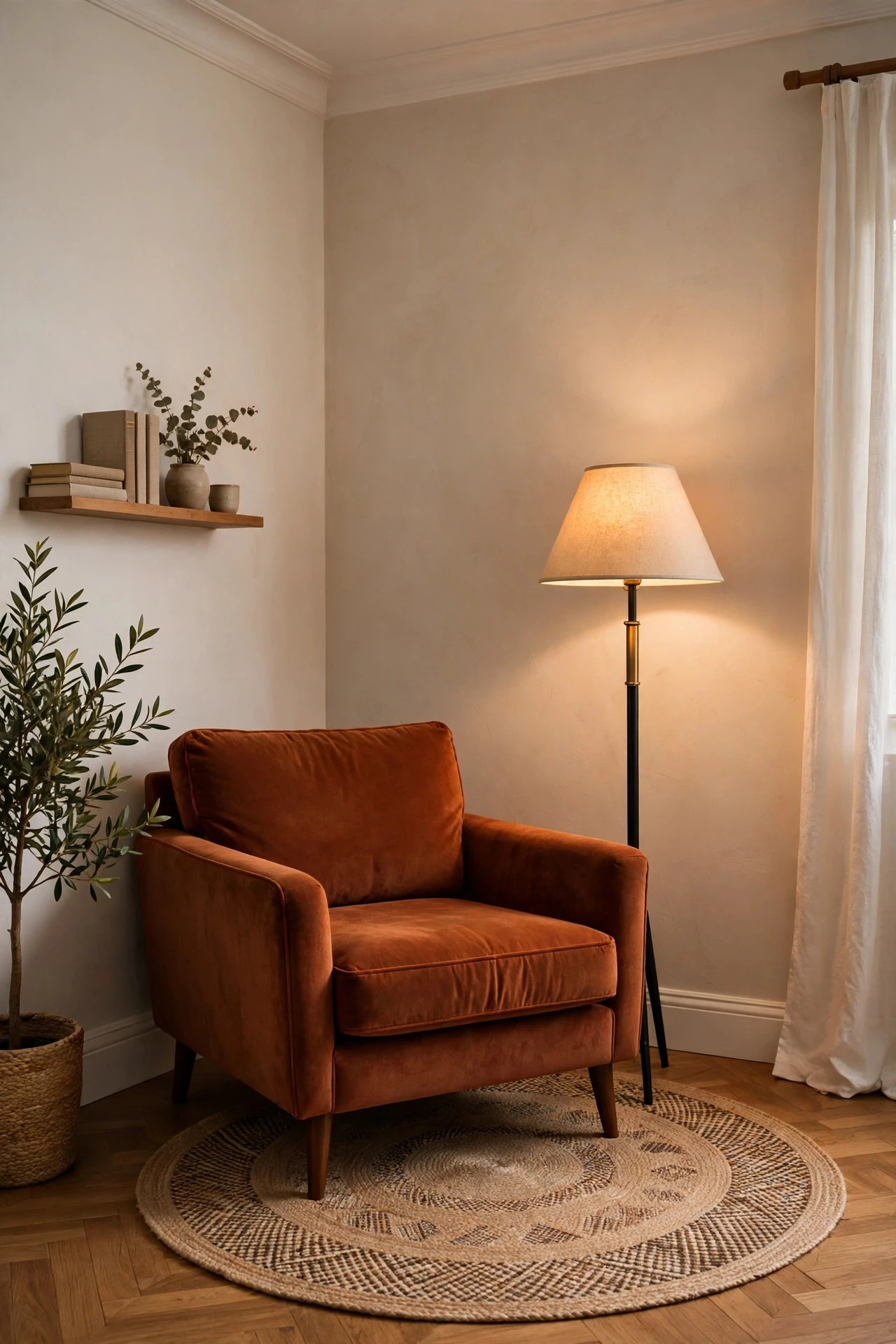
An empty corner becomes a reading nook with one good armchair, one lamp and one small table — no building required, and the whole setup costs $150–$500. Angle the chair at 45 degrees to the walls, pull it 6–12 inches out from the corner, and let a rug define the floor beneath it.
Choose an armchair with a seat depth of 20–22 inches and a seat height of 17–19 inches, with arms low enough to rest a book on and high enough to support your elbows. A side table 16–18 inches round holds a mug, a pair of glasses and the book you are not reading. This corner formula works in living rooms, bedrooms and even dining rooms — a bedroom corner is the classic version, and these bedroom reading nook ideas for a cozy quiet corner show it done properly.
9. Is a Daybed the Most Versatile Nook Seat?

A daybed is the most versatile nook seat because it works as a reading sofa by day, a nap spot in the afternoon and a guest bed at night — three functions from one piece of furniture. A twin-size daybed, 38 by 75 inches, fits against any wall and seats two readers comfortably side by side.
Dress it like a sofa, not a bed: a firm mattress, a tailored cover, and a row of cushions along the back wall so you sit upright rather than sinking. A bolster at each end creates armrests and stops books sliding off. Daybeds shine in living rooms and sunrooms, where they read as furniture, and in a spare room, where they justify the space year-round. If the room already feels warm and layered, these cozy home decor ideas for a warm inviting home show how to carry that feeling through the whole space.
10. Should You Hang a Chair or Swing Seat for Your Nook?
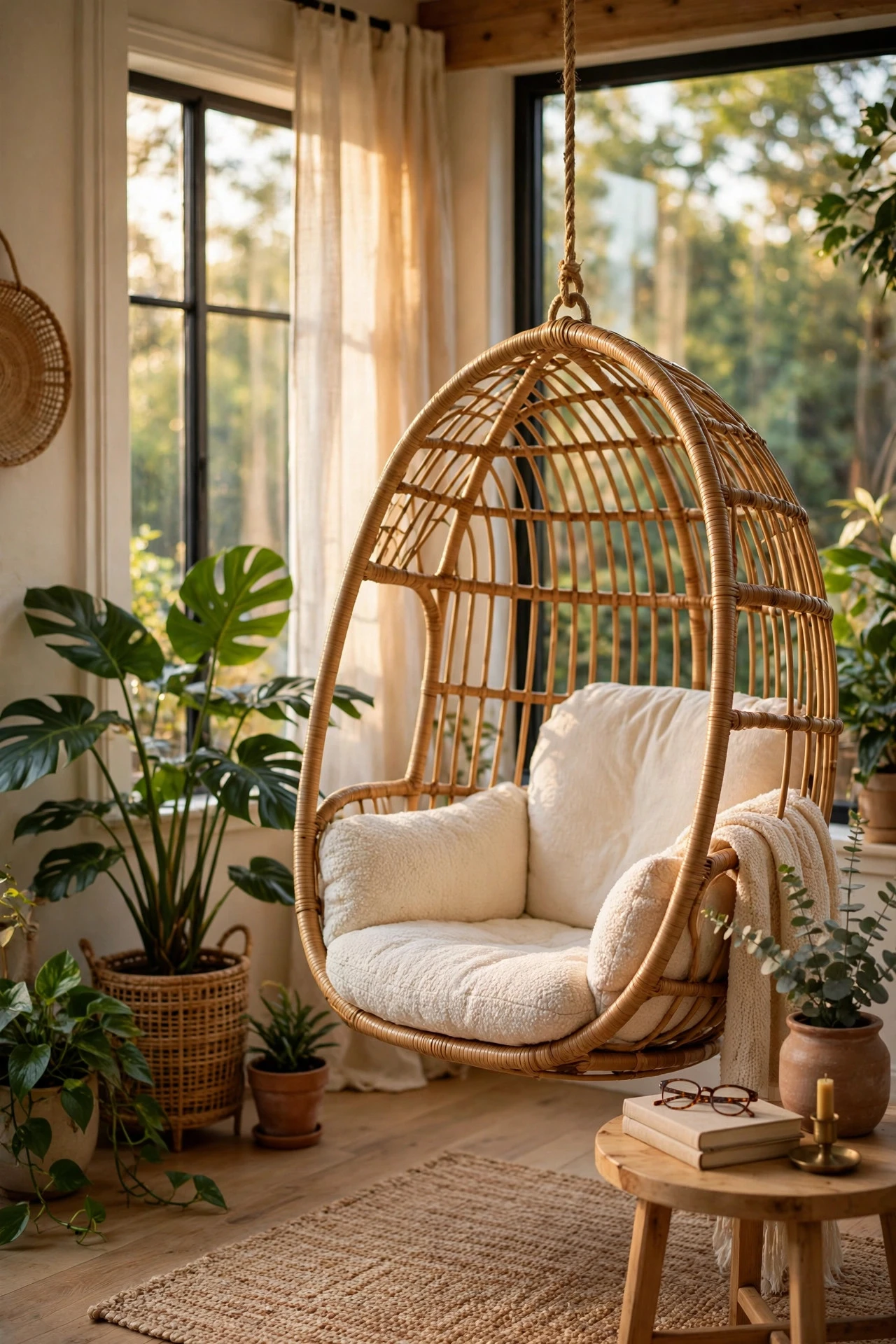
A hanging chair or swing seat makes a nook feel playful and private at once — the gentle movement and the wraparound shape shut out the room around you. It suits living rooms, sunrooms and covered porches, and it needs only a ceiling joist or a freestanding frame to work.
Check the ceiling first: a hanging chair needs a solid joist or beam rated for at least 250 lb of dynamic load, plus 36 inches of clear swing space in every direction. Freestanding frames cost $100–$250 and solve the ceiling problem entirely, though they take up 40–48 inches of floor. Choose a chair with a seat depth of at least 18 inches and a cushion thick enough to sit on for an hour — the pretty open-weave chairs look wonderful and feel terrible without a proper cushion. Avoid placing it where it will swing into a wall, a window or a shelf; measure the full arc before you drill anything.
11. How Do You Build a Reading Nook Kids Will Actually Use?
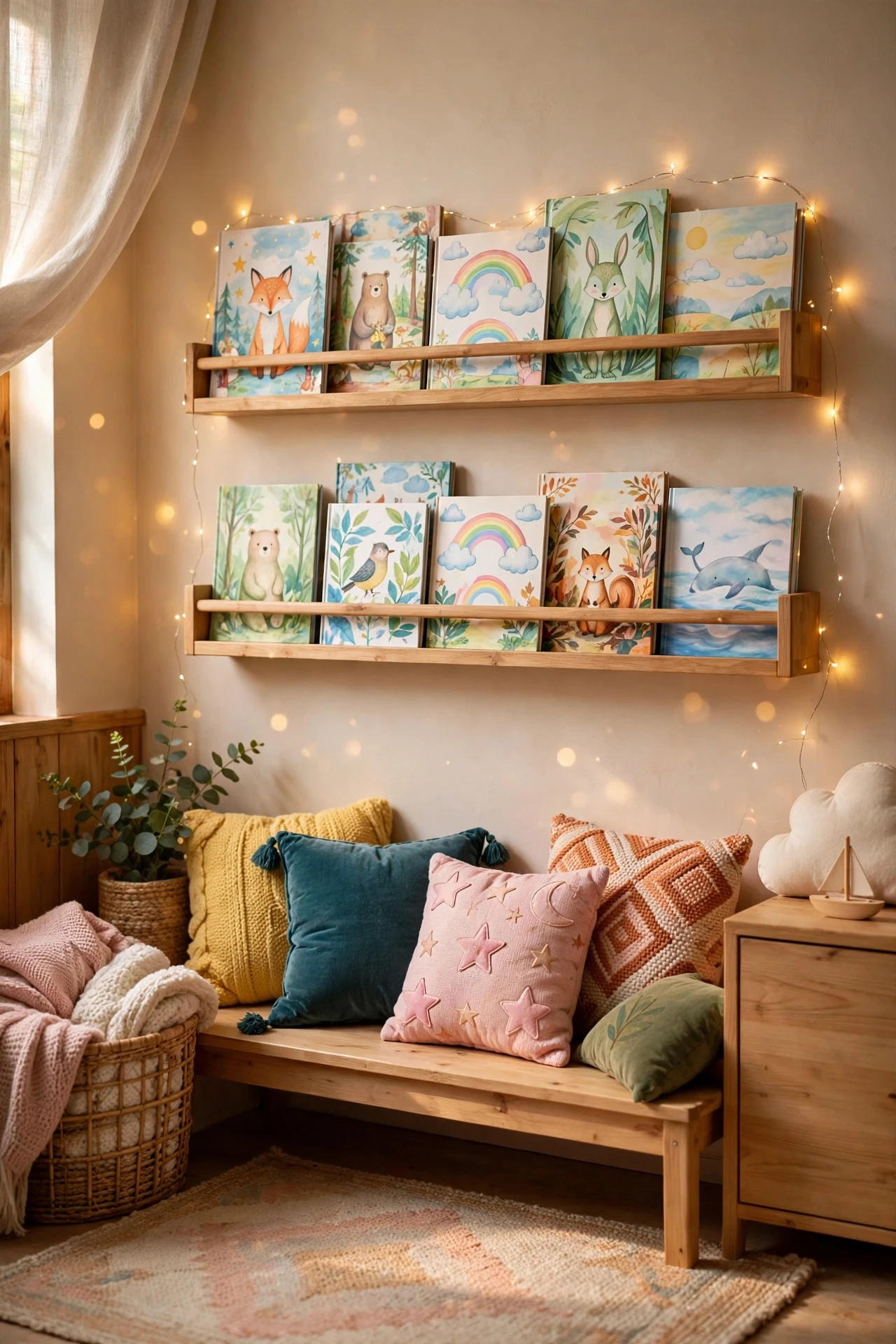
A kids' reading nook works when it is sized for children, not shrunk from an adult design: a seat 12–14 inches high, shelves at their eye level, and books facing forward so the covers invite them in. The Spruce's cozy reading nook ideas include several kid-sized corners built on this low-shelf, forward-facing logic.
Build a low bench or a floor cushion pile in a corner of the playroom, living room or their bedroom, with forward-facing book bins or a picture ledge at 24–30 inches from the floor. Keep it safe: anchor any shelving to the wall, choose a battery light over a plug-in one for toddlers, and avoid small loose cushions that slide underfoot. Rotate the books monthly so the selection feels fresh — ten books on display beat fifty crammed on a shelf, because a child chooses from what they can see.
12. Can a Reading Nook Work Outdoors?
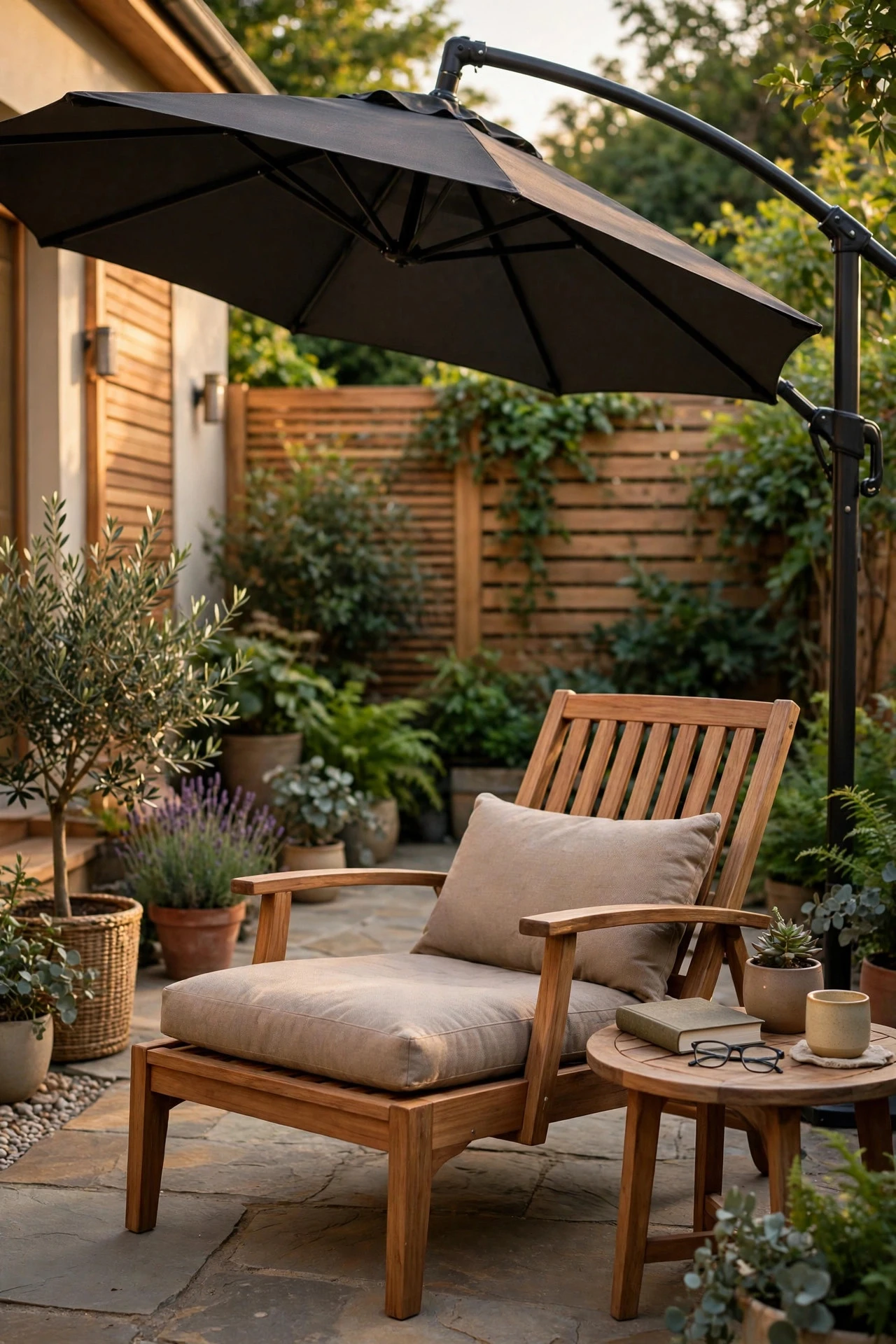
Yes, a reading nook works outdoors — a garden chair, a porch swing or a balcony lounger becomes a nook the moment you add a weatherproof cushion, a side table and shade. Outdoor reading is best in the morning and late afternoon, when the light is warm and the sun sits low enough to read by without squinting.
Choose furniture rated for outdoor use: teak, powder-coated aluminium or all-weather wicker, with cushions in solution-dyed acrylic that resists fading and rain. A cantilever umbrella or a pergola gives shade without blocking the breeze, and a small side table 16 inches round holds a drink and a book. On a balcony, a folding chair and a wall-mounted shelf use almost no floor space — the nook appears when you sit down and disappears when you fold it away. A potted plant or two at the nook's edge softens the boundary between the seat and the garden, and a citronella candle keeps evening insects at bay.
13. How Small Can a Reading Nook Be?
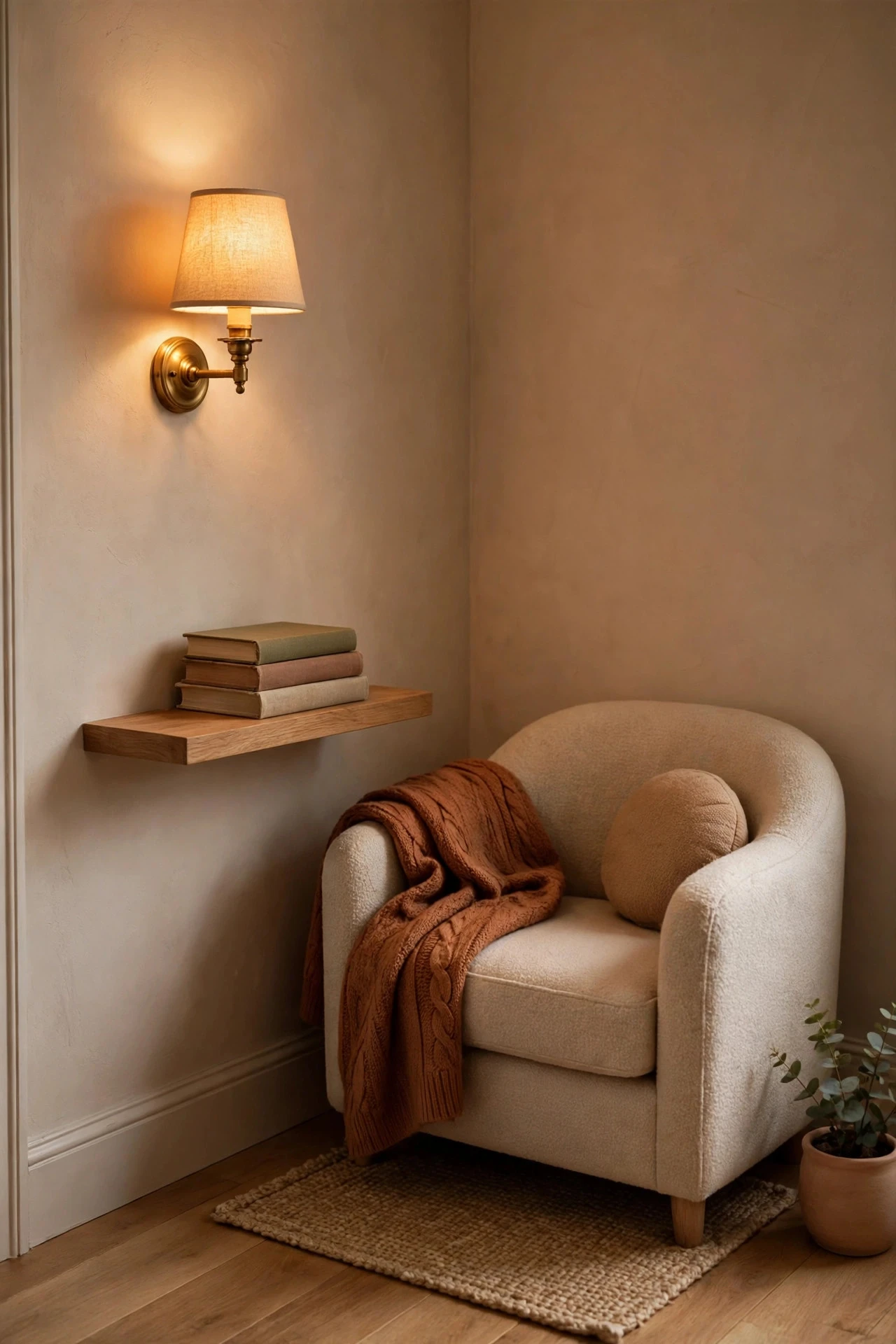
A reading nook can work in as little as 3 by 3 feet — one chair, one wall-mounted light and one floating shelf. The minimum is set by the chair: a compact armchair needs about 30 inches of width and 30 inches of depth, and the rest is light and book storage, which both mount on the wall.
In a truly tiny spot, skip the side table and use a floating shelf 8–10 inches deep at elbow height, or a chair with a built-in side pocket for the book. A wall sconce replaces the floor lamp entirely, and a cushion on a deep windowsill — at least 16 inches deep — is a nook with zero floor footprint. Measure the spot with masking tape on the floor before you buy — outline the chair, the rug and the walking path, and live with the tape for a day. If you keep stepping over the tape, the chair is too big.
14. How Much Light Does a Reading Nook Really Need?
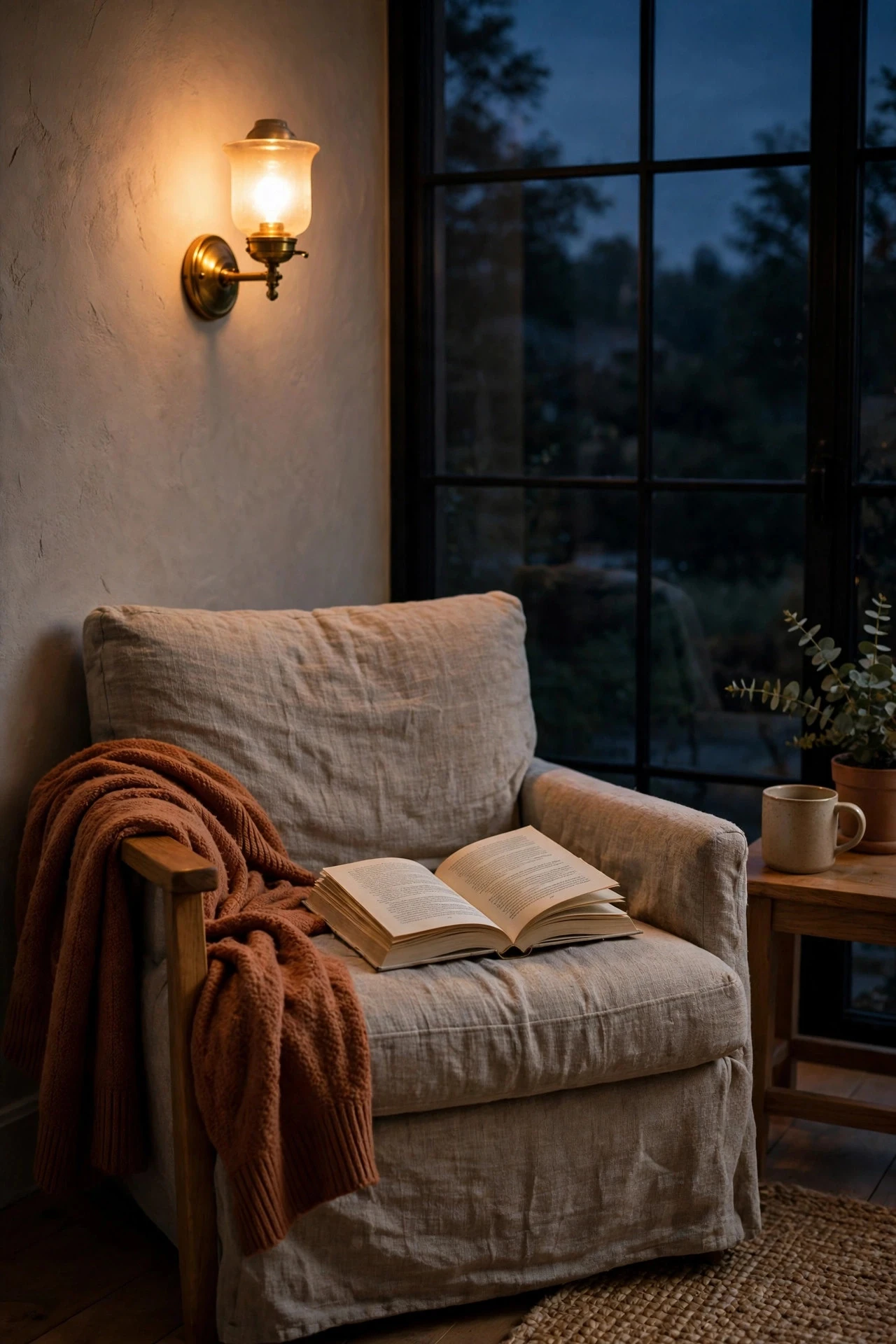
A reading nook needs 400–800 lumens of focused light on the page, at 2700K–3000K warm white, from a source positioned behind and above your shoulder on your non-reading side. That is roughly one 40–60-watt-equivalent LED bulb, aimed at the book rather than at the room.
For evening reading, a wall sconce beats a floor lamp in tight nooks because it frees the floor, and an adjustable-arm lamp beats a fixed one because you can aim it precisely. The Kelvin rule matters: 2700K feels like candlelight and relaxes you, 3000K is a clean warm white that keeps you alert, and anything above 4000K feels like an office and fights the cosy mood. Put the reading light on a dimmer or a smart bulb so you can drop it to 200 lumens for a bedtime chapter and raise it to 800 for a reference book with small print.
15. Which Textiles Make a Nook Feel Cosy?
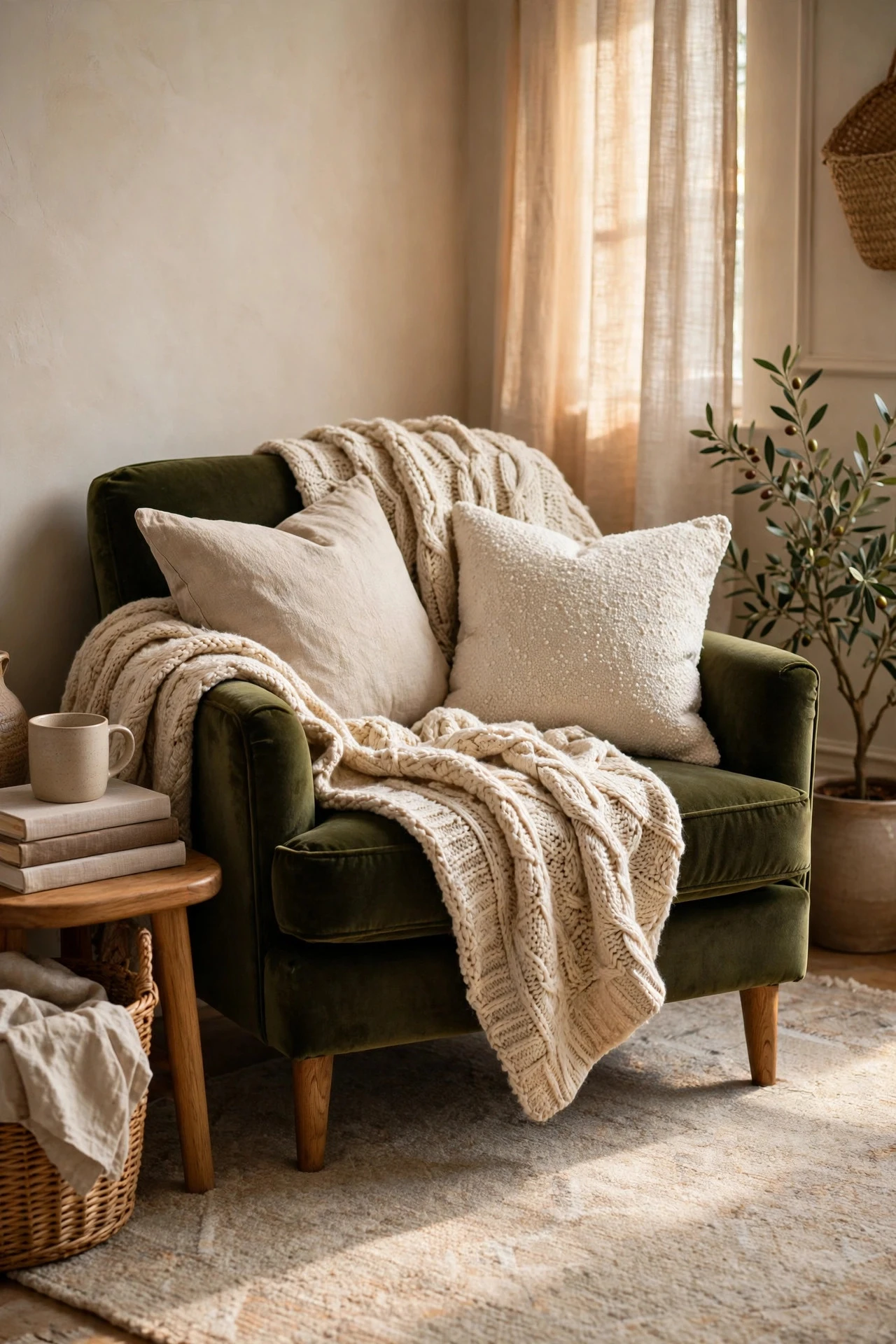
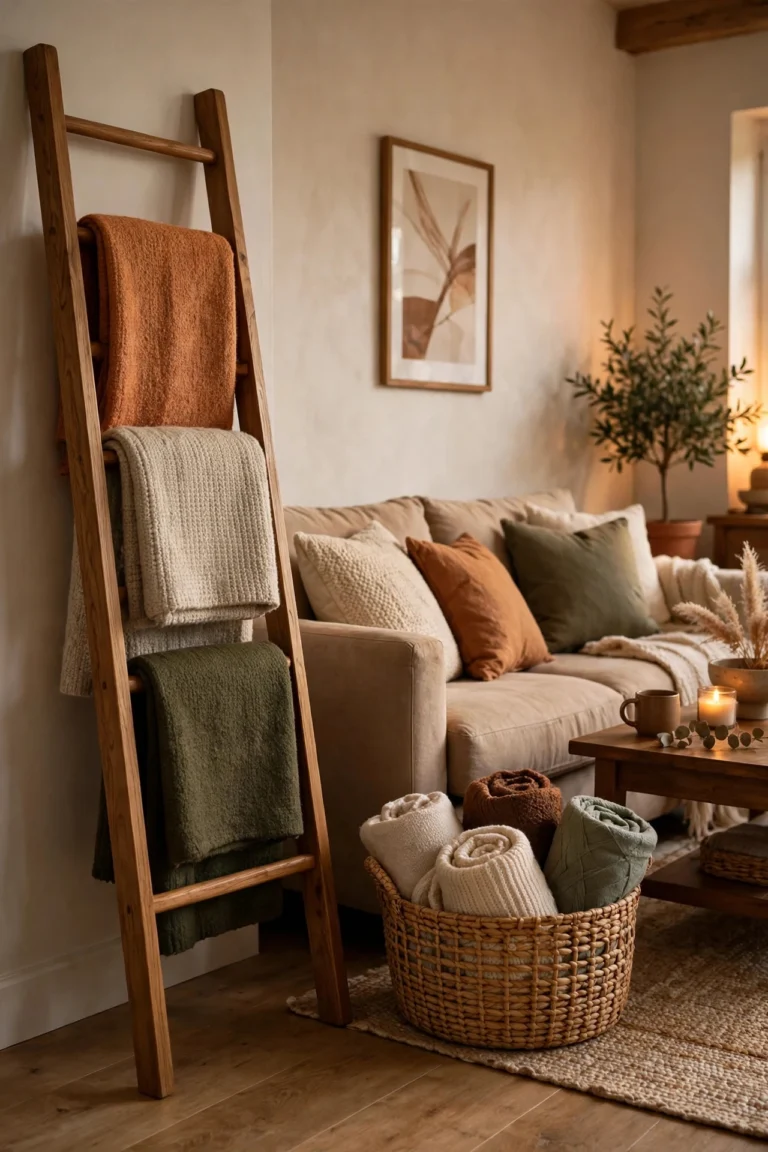
Textiles make a nook feel cosy because they soften hard edges and add warmth your body can feel: a throw, two cushions and a rug are the minimum, and they cost less than any single piece of furniture. The rule is layering — three textures, not three of the same fabric.
Add a throw in wool, chunky knit or fleece, draped over the chair arm so it is always within reach. Choose two cushions in different textures — one velvet, one linen or boucle — in colours pulled from the room, not from a matching set. Washability is the hidden spec: choose throws and cushion covers you can machine-wash, because a nook's textiles collect tea, dust and the occasional ink mark. Avoid silk or dry-clean-only fabrics in a nook you use daily; they look luxurious for a week and then live in fear of a spill.
16. Where Do You Put the Book, the Mug and the Glasses?
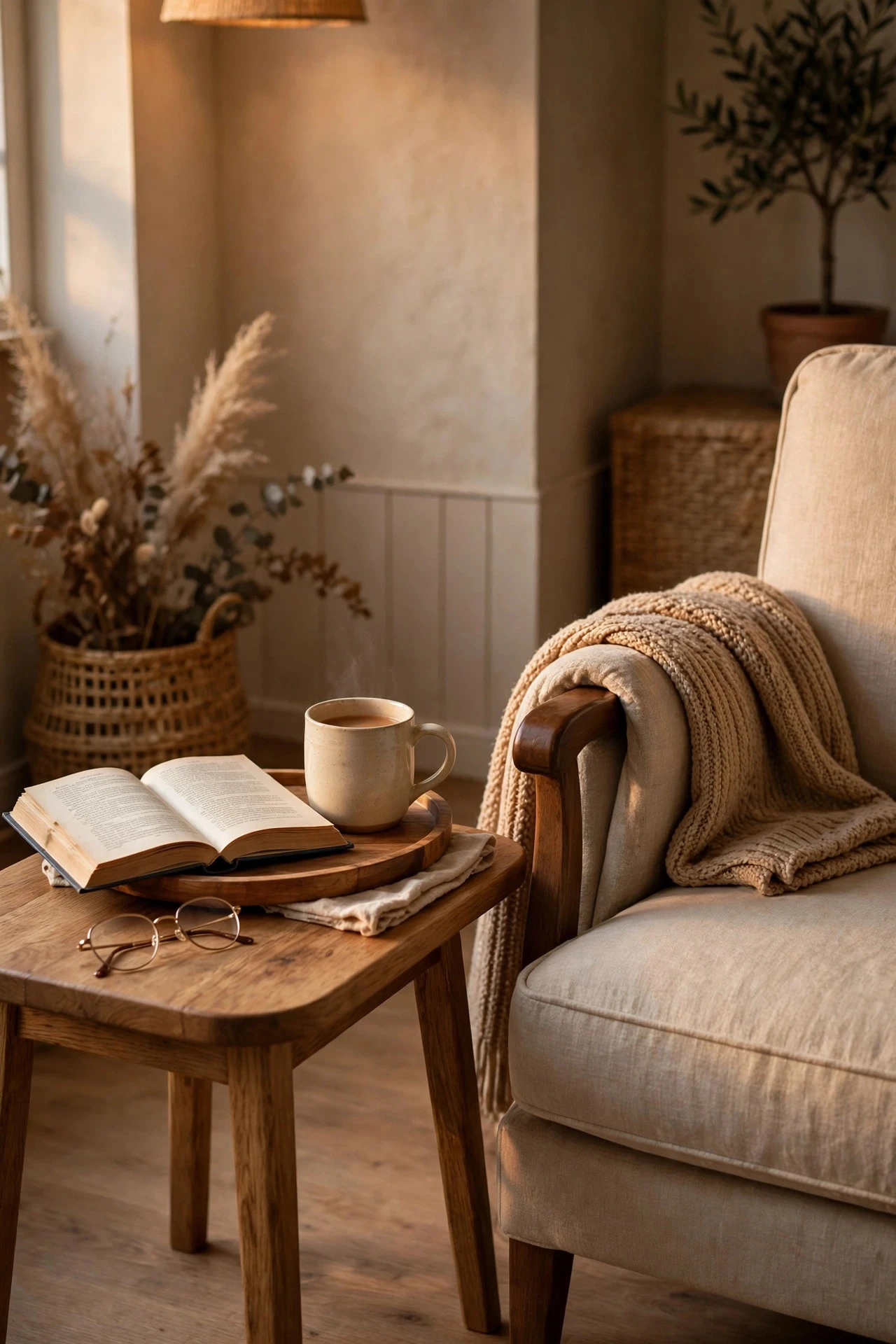
A reading nook needs a landing spot within 24 inches of the seat for the book you are reading, a mug and your glasses A side table, a book cart or a floating shelf all work, as long as the surface is at or just below elbow height when seated.
A round side table 16–18 inches across is the classic choice: no corners to bruise your shins, and big enough for a mug, a book and a phone. A rolling book cart — a three-tier trolley, $40–$100 — is the flexible alternative: it holds the current book, the next three, and a blanket, and it wheels away when you need the floor. A wall-mounted shelf 10 inches deep at 24 inches from the floor does the same job in a nook with no floor space to spare.
17. How Do You Use Wallpaper or an Accent Wall to Define a Nook?
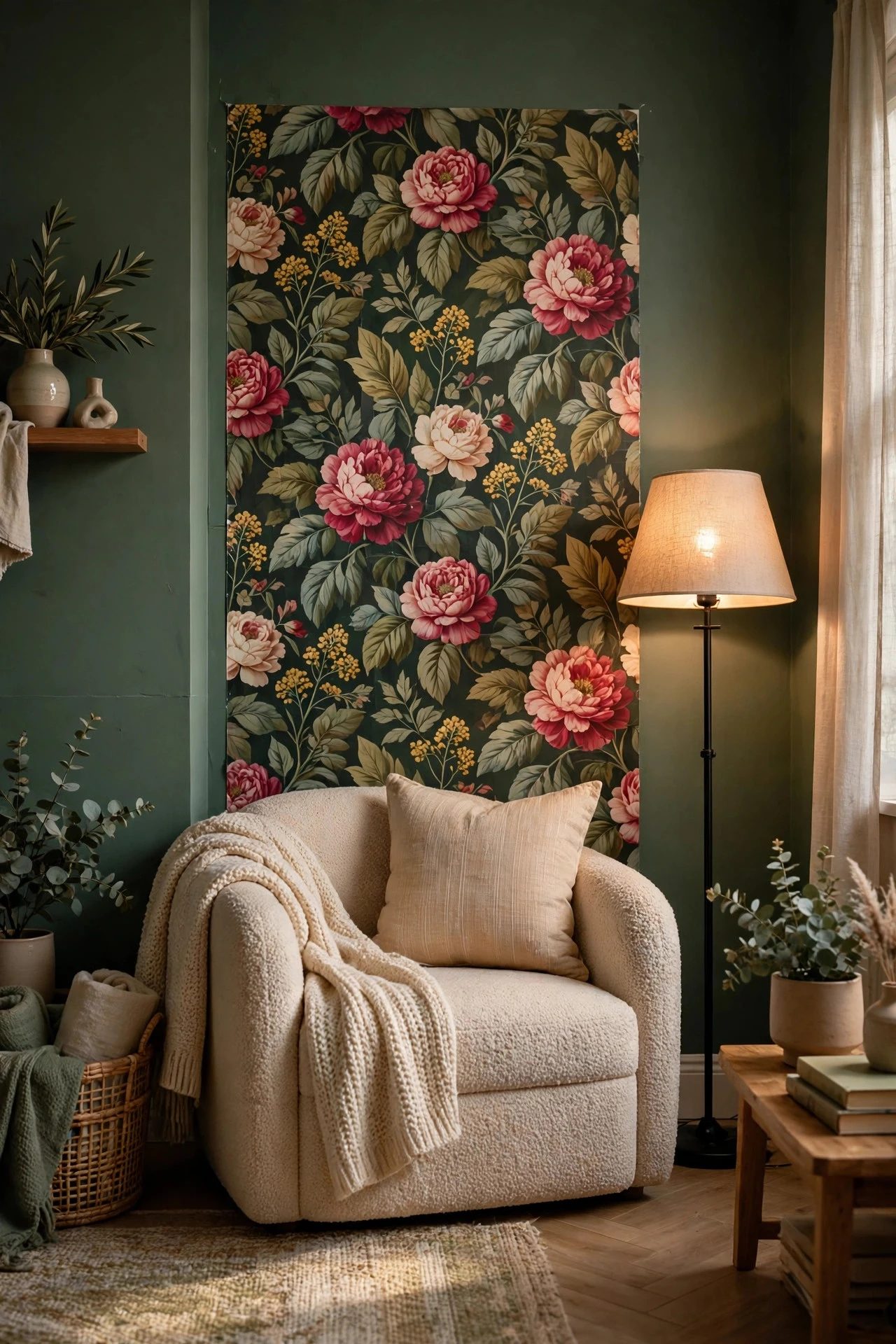
An accent wall defines a reading nook by giving the eye a boundary: one wall in a deeper colour or a bold pattern tells the brain that this corner is a separate place, even in an open-plan room. It costs $50–$300 and takes an afternoon, yet it does more than any single piece of furniture.
Paint the wall behind the seat two or three shades deeper than the room — a deep sage in a cream room, a dusty navy in a grey one — and the chair suddenly looks placed rather than parked. Peel-and-stick wallpaper is the renter-friendly version: a bold floral, a stripe or a bookish toile on one wall, applied in an afternoon and removed without damage. Match the cushion or throw to one colour in the wallpaper and the whole corner looks designed in one move.
18. How Do You Store Books in a Nook Without Clutter?
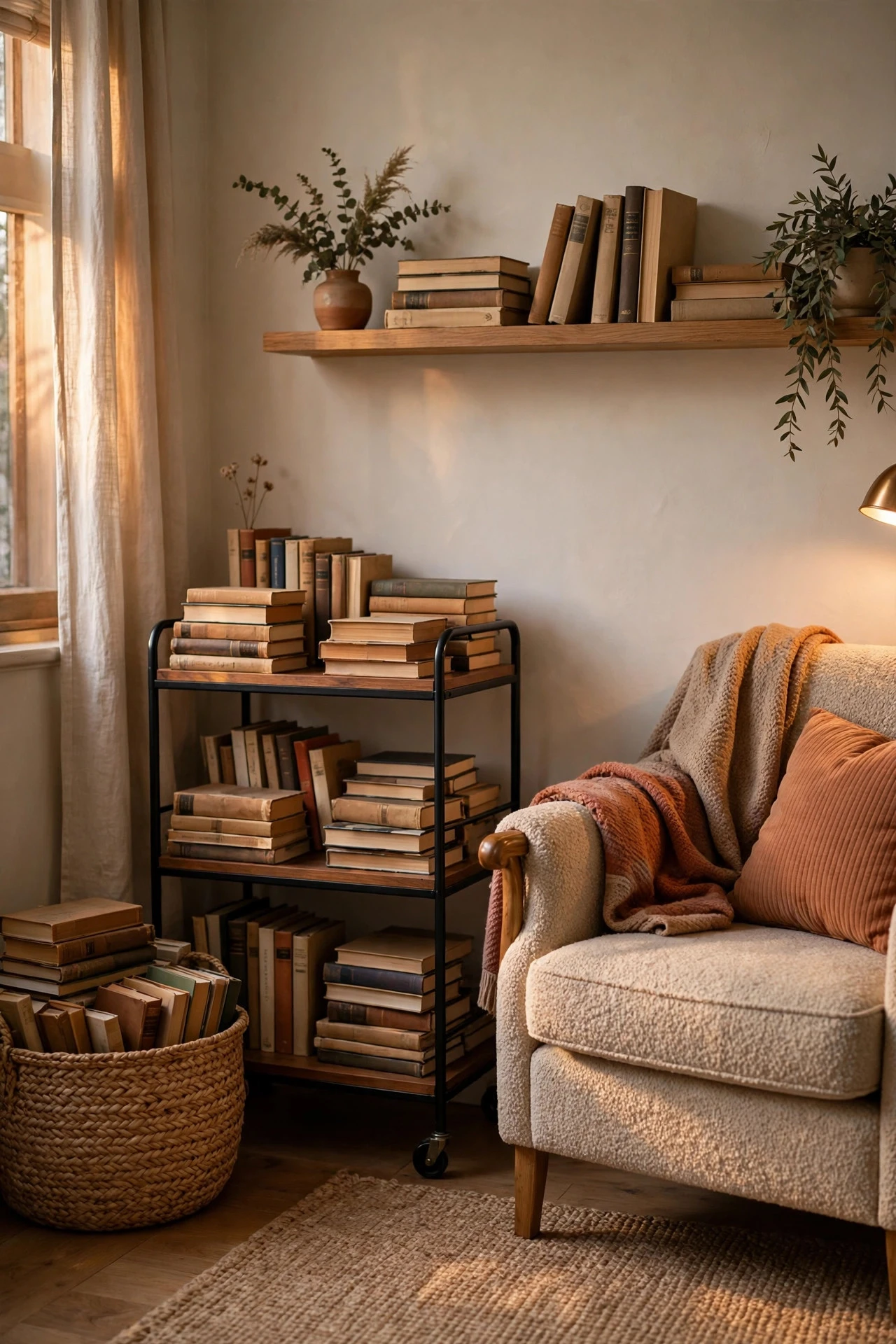
Book storage in a nook works when it holds the books you are actually reading — the current book, the next two or three, and a few favourites A stack of 10–15 books on a shelf or in a basket keeps the nook inviting; a wall of 200 makes it a library.
Use the storage that fits the spot: a floating shelf above the seat for the next book, a basket beside the chair for the current stack, a narrow bookcase for a landing nook, and under-seat drawers for a window seat. The tidy rule is one in, one out: when a new book joins the nook, a finished one leaves it for the main shelves. A book cart with two or three tiers, parked beside the chair, holds a month of reading in a footprint smaller than a side table, and it wheels out of the way when you vacuum.
19. What Seat Depth and Height Actually Feel Comfortable?
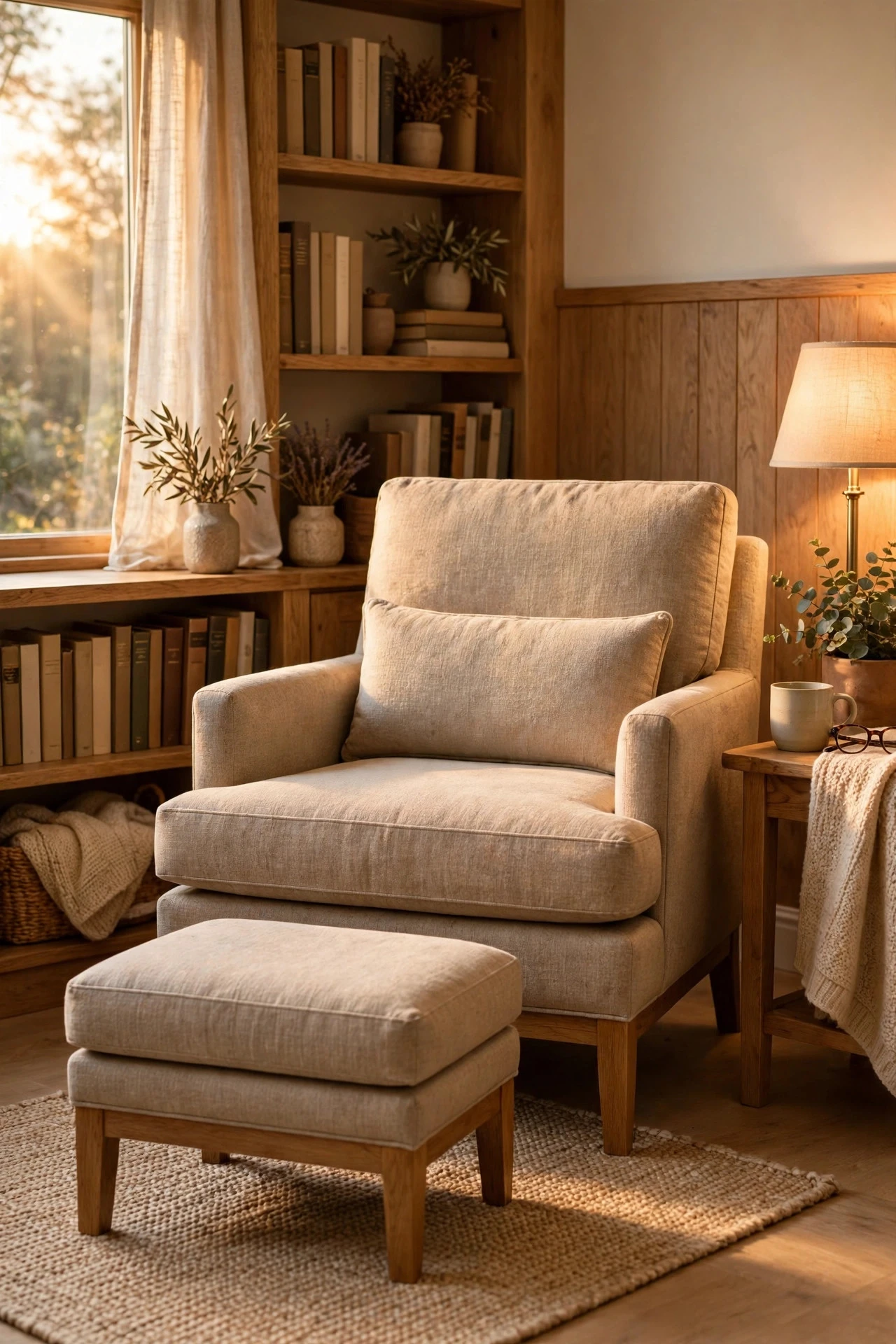
A reading chair feels comfortable when the seat is 20–22 inches deep, 17–19 inches high, and wide enough for you to tuck one leg up — roughly 24–28 inches between the arms. Those numbers come from how bodies actually sit to read: knees bent at about 90 degrees, feet flat or on a footstool, back supported at a slight recline.
Test the depth with the sit test: sit all the way back and check that two to three fingers fit between the back of your knee and the seat edge. Too deep and your lower back gets no support; too shallow and your thighs hang unsupported and go numb. For more on choosing the right seat for the room, see how to choose a living room sofa that fits your room and your life — the same fit-first logic applies, just at armchair scale.
20. How Do You Build a Nook in a Rental Without Losing Your Deposit?
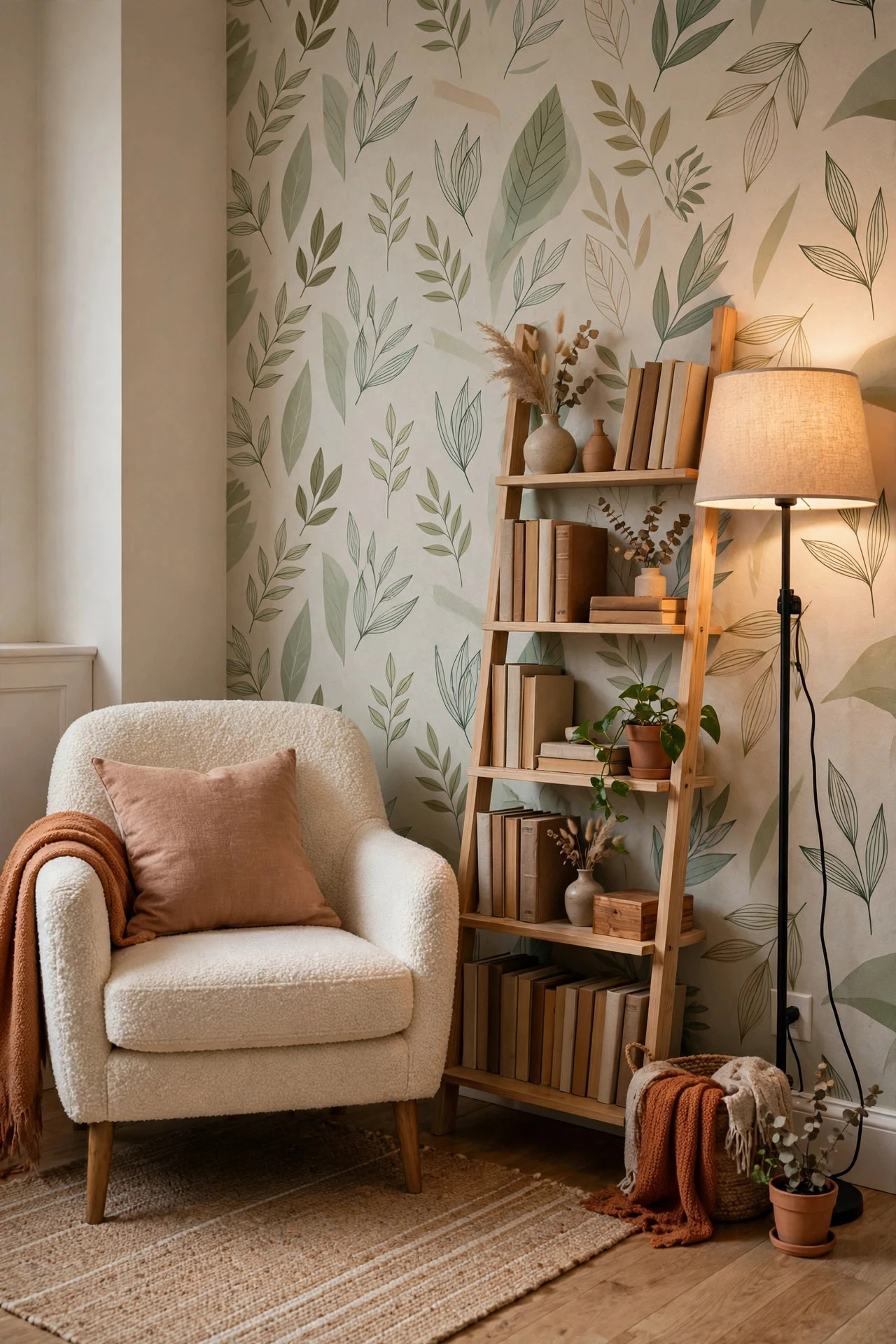
A rental-friendly nook uses nothing that marks the walls: a freestanding chair, a plug-in floor lamp, a leaning bookshelf and peel-and-stick wallpaper, all removable in an afternoon. The rule is simple — if it needs a drill, find a version that does not.
Use a plug-in wall sconce on a hook, or a floor lamp with an adjustable arm, instead of hardwiring anything. Peel-and-stick wallpaper and removable wall decals define the nook wall and peel off cleanly — test a corner first, because old paint can lift with the paper. A freestanding chair, a rug, a floor lamp and a book cart give you a complete nook for $150–$400, and every piece moves with you to the next home. Keep the original light fittings and take photos of the room before you move in, so any dispute has a baseline.
21. What Does a Reading Nook Cost at Every Budget?
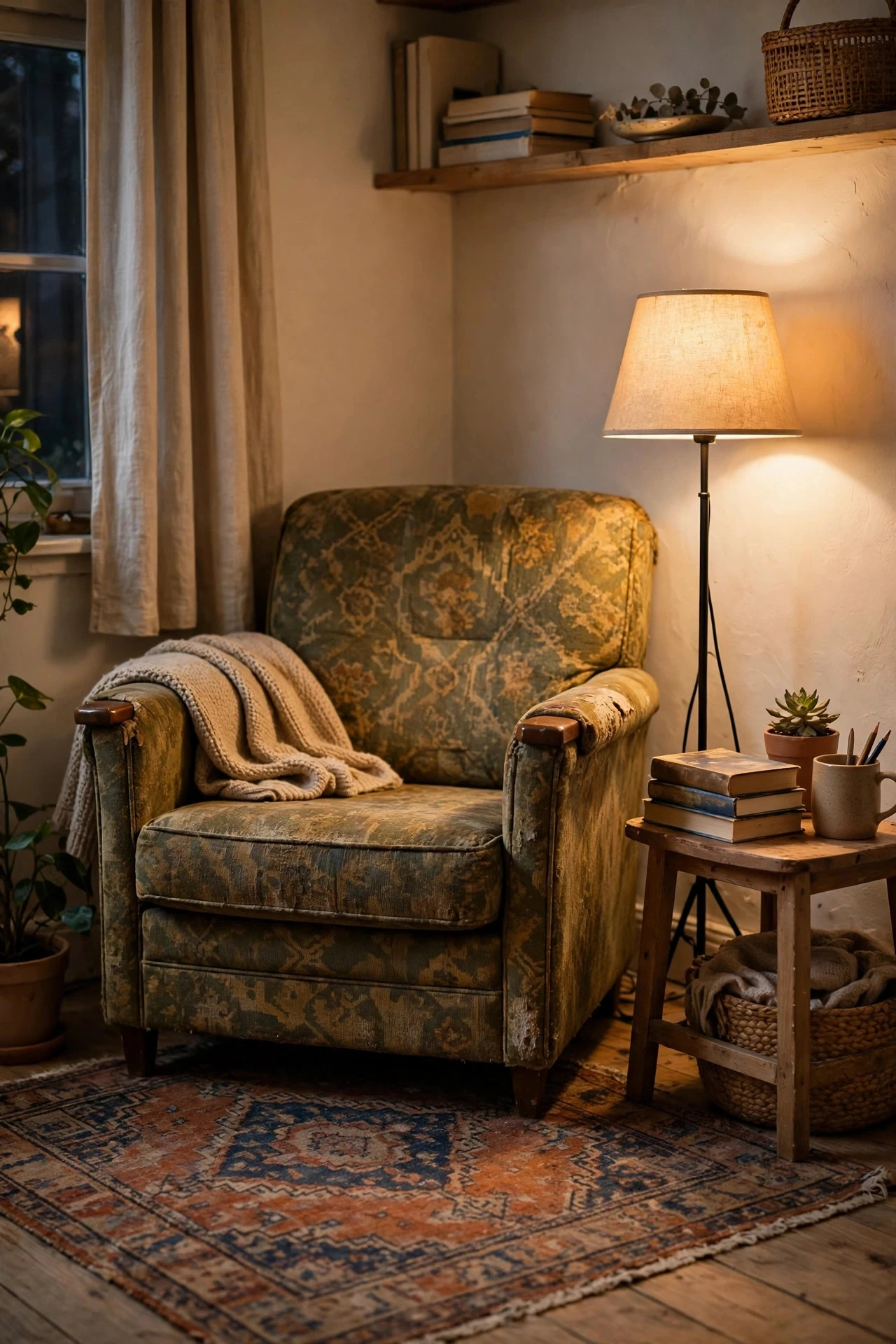
A reading nook costs $150–$500 at the budget tier, $800–$2,000 at the mid tier, and $3,000–$6,000 at the built-in tier — and the reading experience at the budget tier is nearly as good, because comfort comes from the chair and the light, not the carpentry. Spend on the seat first, the light second, and the built-ins last.
At the budget tier, a good second-hand armchair ($50–$150), a floor lamp ($40–$80), a side table ($30–$60) and a rug and throw ($50–$100) make a complete nook. The mid tier adds a new quality armchair ($400–$900), a proper reading sconce ($100–$250), a bookcase or cart ($150–$300) and layered textiles. The built-in tier is a carpenter's window seat or bench with shelving, $3,000–$6,000, and it adds storage and resale value rather than reading comfort.
22. How Do You Keep a Reading Nook Tidy for Good?
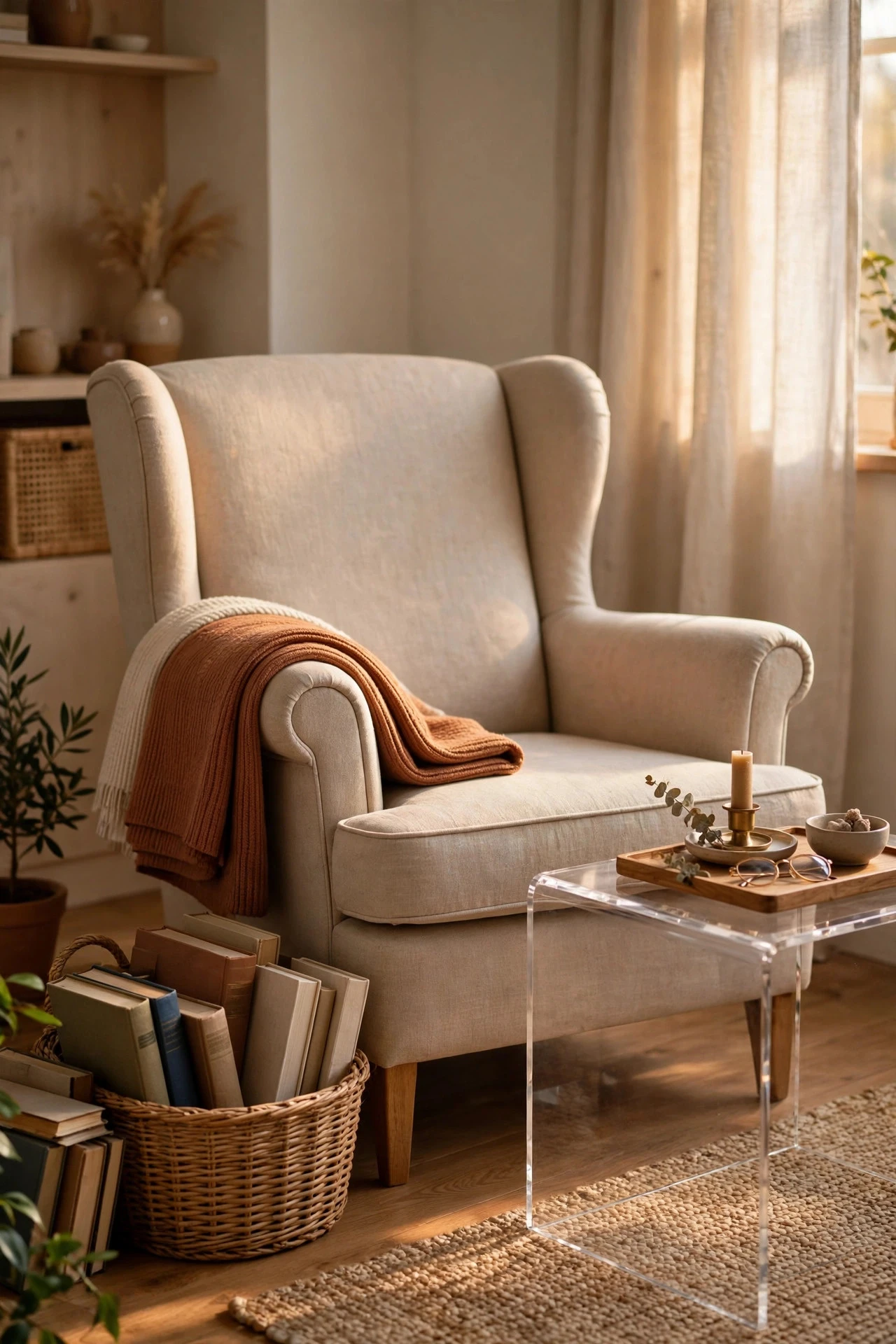
A reading nook stays tidy when everything in it has a home and the rule is one book in, one book out. The nook fails the moment it becomes a dumping ground — the chair collects clothes, the side table collects mail, and the books stack on the floor. The fix is a two-minute reset, not a deep clean.
Build the reset into the habit: when you finish reading, the book goes back on the shelf or in the basket, the mug goes to the kitchen, and the throw gets folded over the chair arm. A basket beside the chair holds the current stack and nothing else, and a small tray on the side table corrals the mug, glasses and phone. A nook that takes two minutes to reset gets used daily; a nook that needs a weekend clean gets avoided.
Practical tips for a reading nook
Sit-test before you buy. Spend ten minutes in any chair with a book before you commit. The sit test beats every review, and it is free.
Light the page, not the room. Aim the reading light at the book from behind your non-reading shoulder. A dimmable warm-white bulb at 2700K–3000K covers every reading mood from morning to midnight.
Measure the spot with tape. Outline the chair, rug and walking path in masking tape and live with it for a day. If you keep stepping over the tape, the furniture is too big.
Buy the chair first, the decor last. A comfortable seat and a good light are the nook; the rest is garnish.
Keep the stack small. Ten books on display beat fifty crammed on a shelf. One in, one out keeps the nook inviting instead of overwhelming.
Final thoughts
A reading nook is the smallest room in the house and the one you will use the most — if you build it around your body instead of a picture. Pick the spot you already walk past, give it a chair that fits, a light that lands on the page, and a book within reach, and the corner you never noticed becomes the corner you never leave.
Frequently Asked Questions
How much space do I need for a reading nook?
You need as little as 3 by 3 feet for a basic nook: one compact armchair, a wall-mounted light and a floating shelf for books. Measure the spot with masking tape before buying anything. A compact armchair needs about 30 inches of width and depth, so tape the outline on the floor and live with it for a day first.
What is the best lighting for a reading nook?
Aim for 400–800 lumens of warm white light at 2700K–3000K, from a lamp or sconce positioned behind your non-reading shoulder so the light falls on the page without glare. A dimmer lets you drop to 200 lumens for a bedtime chapter and raise it to 800 for small print.
How deep should a reading nook seat be?
An armchair seat should be 20–22 inches deep and 17–19 inches high, so your knees bend at about 90 degrees and your feet rest flat or on a footstool. A window-seat cushion should be 18–20 inches deep and 3–4 inches thick in high-density foam.
Can I build a reading nook in a rental?
Yes, build it with freestanding furniture only: a chair, a plug-in floor lamp, a leaning bookshelf and a rolling book cart, plus peel-and-stick wallpaper to define the wall. Nothing needs a drill, so the whole nook packs up in an afternoon and your deposit stays safe.
Where is the best place for a reading nook if I have no spare room?
Look at the spaces you walk past daily: a landing, a hallway, the triangle under the stairs, a deep windowsill or a converted closet. A hallway nook needs only 24–30 inches of depth from the wall. A deep windowsill of 16 inches or more works as a nook with zero floor space.
How do I keep a reading nook from becoming a clutter magnet?
Give everything in the nook a home — a basket for the current book stack, a tray on the side table for the mug and glasses — and follow the one-in, one-out rule for books. A two-minute reset after each session keeps the nook inviting.