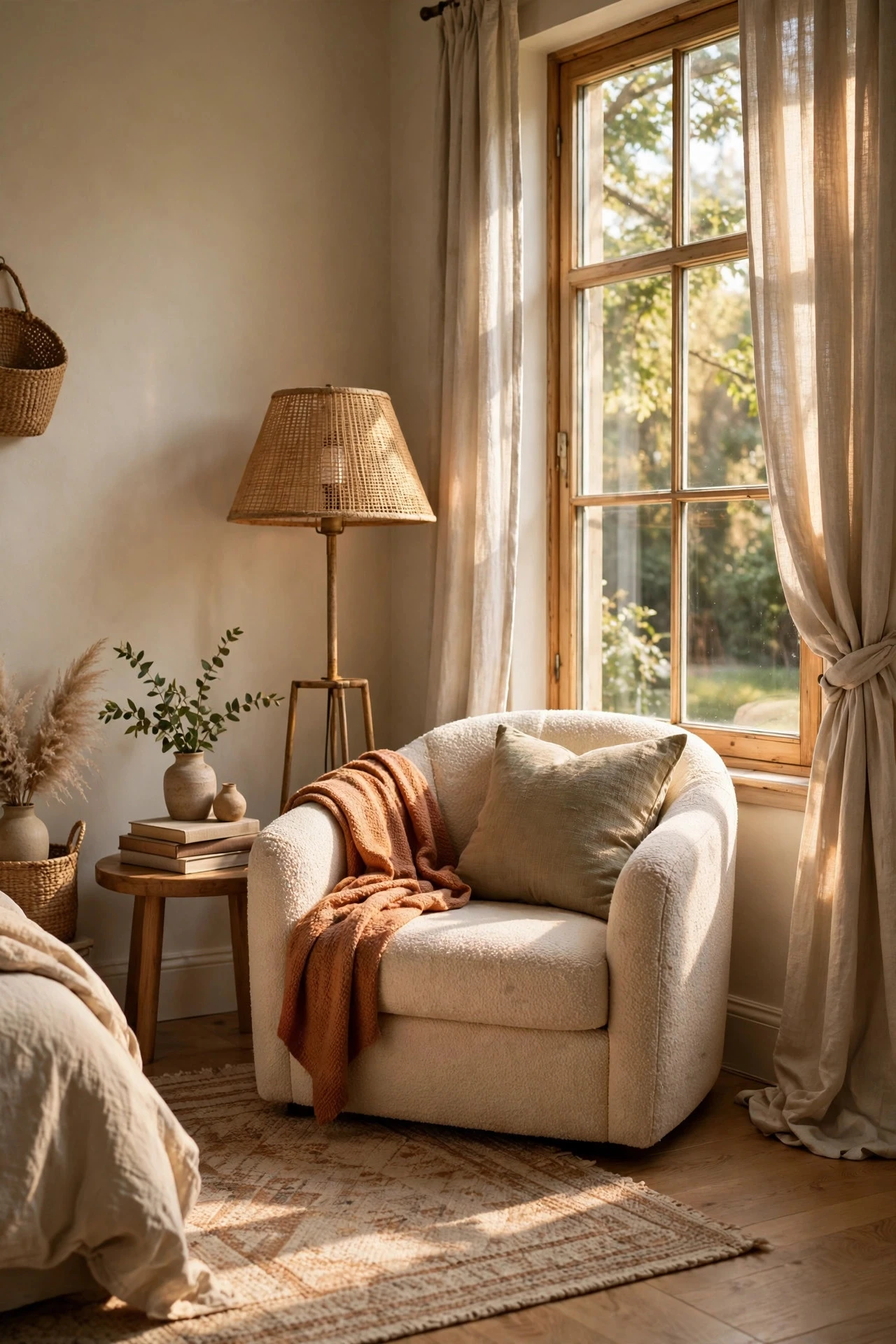
22 Bedroom Reading Nook Ideas for a Cozy Quiet Corner
A bedroom reading nook does not need a spare room or a big budget — it needs a corner that is claimed, a seat that invites a long sit, and light that falls on the page without glare. The best nooks feel separate from the rest of the bedroom even when they share the same four walls, because a rug defines the zone, a lamp defines the hour, and a stack of books within reach defines the purpose. When those three things are right, reading stops competing with a phone and a to-do list, and starts having a home of its own.
Looking for more inspiration? Our Nest Decorz homepage gathers the latest home decor ideas, seasonal decorating guides and room-by-room styling tips in one place — start there and explore.
Below are 22 bedroom reading nook ideas, from window seats and converted closets to corners in the smallest bedrooms, each with the seating, lighting, and storage detail that makes it work, plus the mistake that spoils it. Measure your corner before buying anything — most nooks need only 3 to 4 feet of width — and start with the seat and the light, because everything else is decoration around those two decisions.
1. Claim the Overlooked Corner With One Good Chair
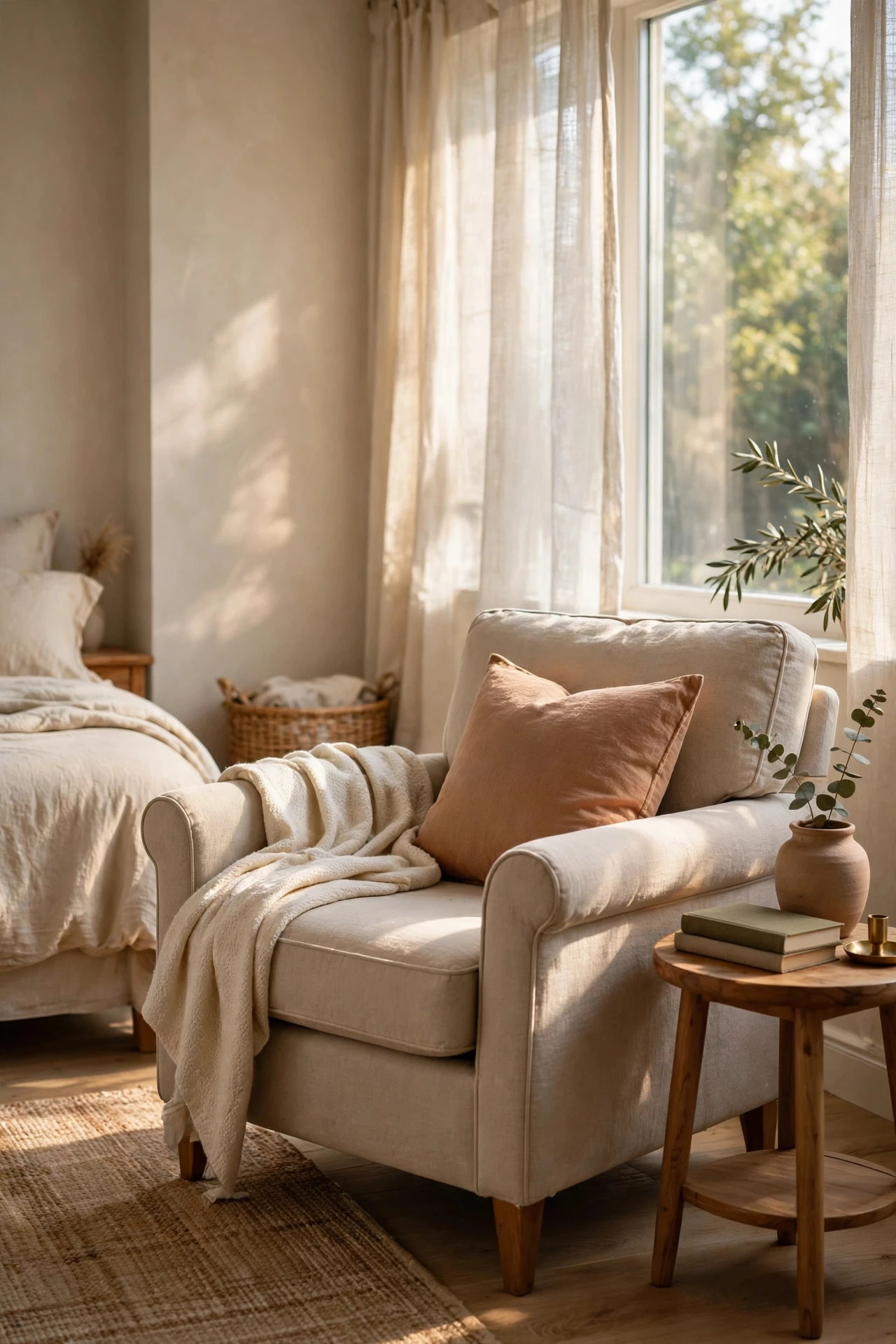
Most bedrooms have a corner that collects laundry or sits empty, and that corner is the easiest reading nook of all. Clear it completely, angle a comfortable armchair slightly toward the room so the space feels open rather than boxed in, and define the zone with a small round or rectangular rug under the chair. Add a slim side table within arm's reach for a mug and the current book, and the corner becomes a destination in an afternoon. Choose a chair with a seat height of 17 to 18 inches and a back that supports the head for long reads, and keep the footprint under 36 inches wide in a small room. The mistake to avoid is pushing the chair flat against both walls, which traps the reader in a corner and makes the nook feel like a punishment, not a retreat.
2. Turn a Bay Window Into a Built-In Seat
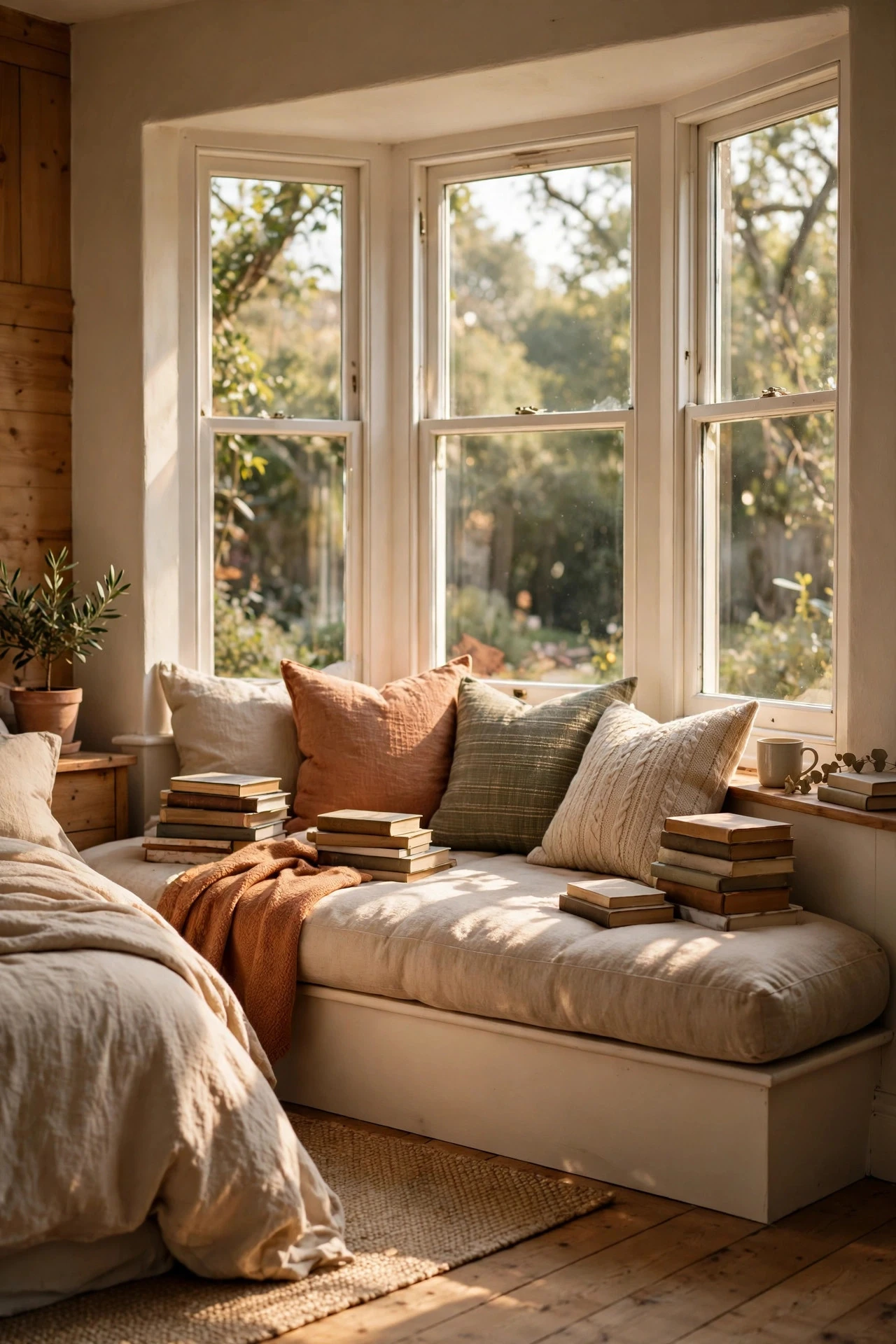
A window seat is the classic reading nook because natural daylight is the best reading light there is, and a bay or deep-set window is already half-built. Add a built-in or freestanding bench with a thick, high-density foam cushion, a stack of throw pillows for back support, and lift-up lids or drawers beneath the seat for blankets and books. Layer a sheer curtain or a blind that softens glare without blocking the view, and keep a small shelf or basket beside the seat for the books in progress. A window seat needs a cushion at least 4 inches thick to be comfortable for more than twenty minutes. For bedroom window ideas that balance light, privacy, and storage, these bedroom inspiration ideas show how awkward windows become the best feature of a room. The mistake to avoid is building a beautiful window seat with a thin cushion and no back support, which looks inviting and feels punishing within half an hour.
3. Layer Lighting: Task Light First, Ambience Second
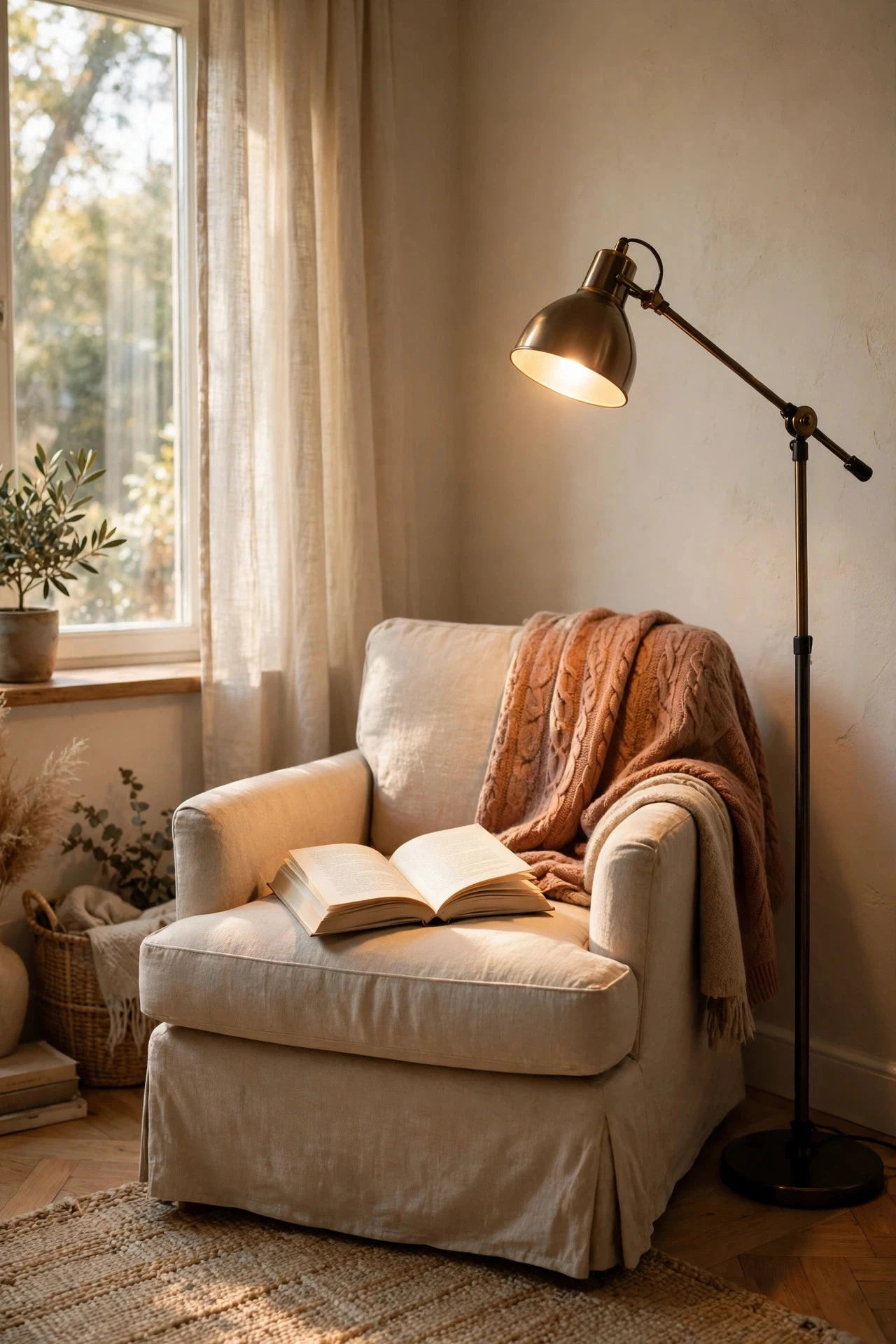
Once the sun sets, lighting makes or breaks a reading nook, and the rule is task light first, ambience second. Place an adjustable floor lamp or a wall-mounted swing-arm sconce slightly behind and to the side of the reading shoulder, so light falls on the page without shadows or glare, and choose a warm bulb around 2700K with a dimmer for evening reading. Add a second, softer light — a small table lamp or a candle-style LED — for the moments between chapters, and keep the overhead bedroom light off while reading. A swing-arm sconce saves floor space and keeps the light exactly where the reader needs it as the chair moves. The mistake to avoid is relying on the bedroom ceiling light, which lights the whole room, glares on the page, and destroys the intimate mood a nook exists to create.
4. Pile On Textiles Until the Chair Feels Like a Hug
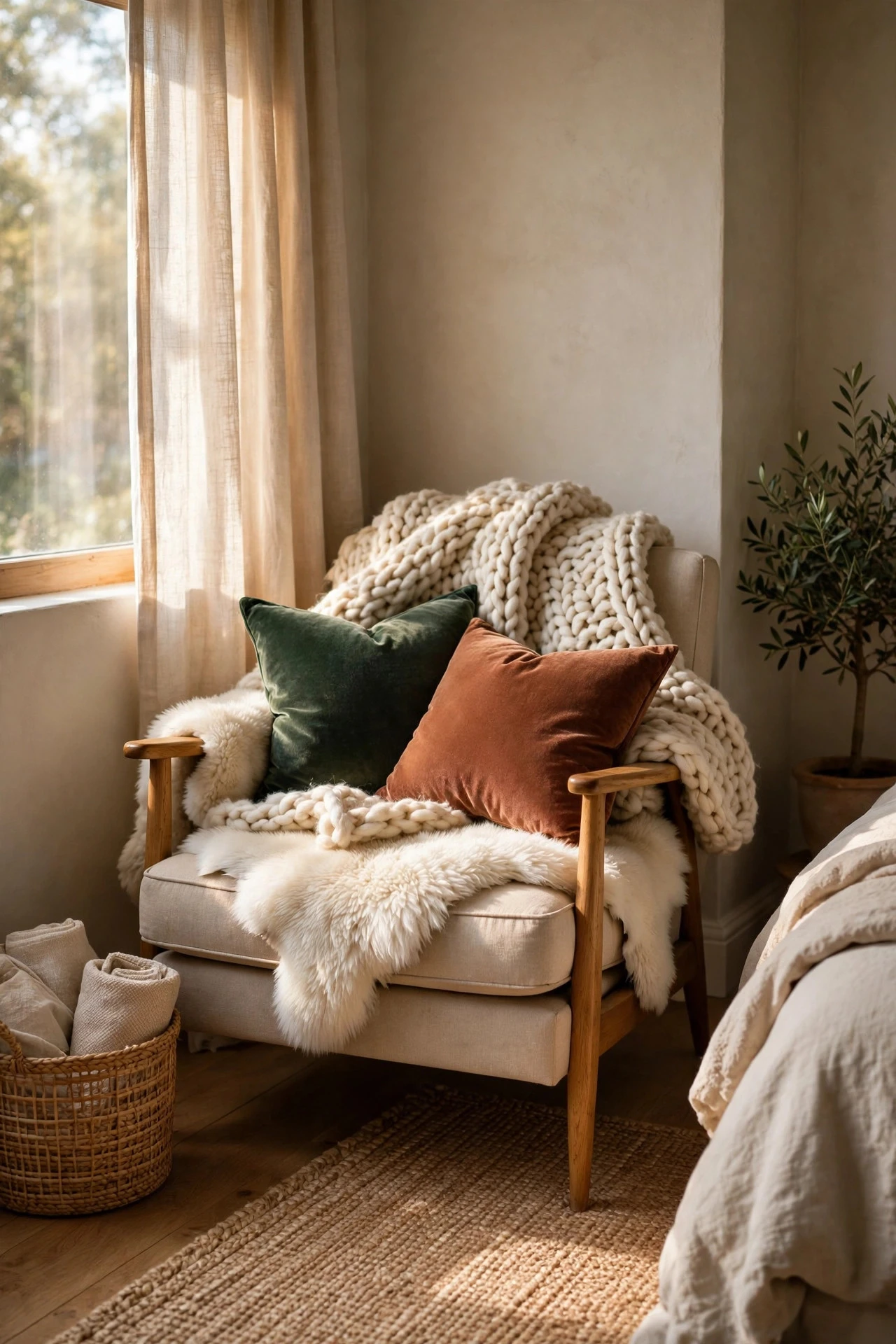
Texture is what makes a nook feel like a hug, and it is the cheapest layer to add. Drape a chunky knit or wool throw over the chair arm, add a velvet or bouclé cushion for lumbar support, consider a sheepskin on the seat, and put a soft rug underfoot so the first step into the nook feels warm. Stick to a tight palette of three colours — warm cream, one deep tone such as forest green or terracotta, and one natural wood or rattan — so the corner feels intentional rather than cluttered. Washable throws matter in a bedroom nook, because tea, pets, and daily use all leave their mark. The mistake to avoid is piling on textiles in five competing patterns, which makes the nook look like a bedding sale rather than a calm retreat.
5. Build Book Storage Vertically, Not Outward
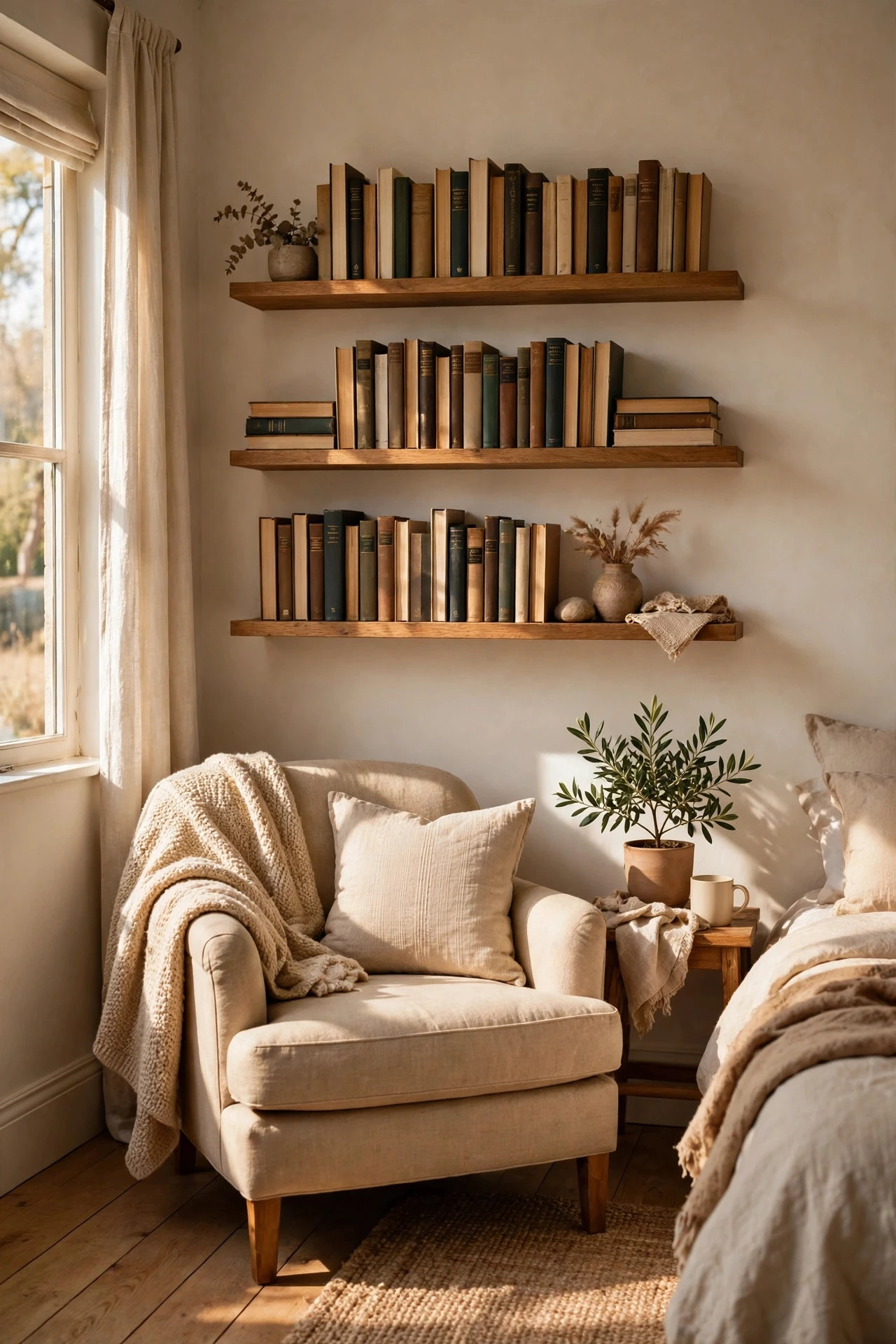
A reading nook feels complete when the books live right beside it, and vertical storage keeps them close without eating floor space. Mount floating shelves above and beside the chair, add a narrow ladder shelf, or frame a window with slim built-in bookcases, keeping the most-read books at arm's height and the display books higher up. Limit each shelf to books plus one small object, and leave a little empty space so the shelves breathe. A single shelf of 24 inches holds roughly 15 paperbacks, which is a generous to-be-read stack for most readers. The mistake to avoid is building a full library wall around a nook in a small bedroom, which overwhelms the corner and turns a retreat into a bookshop.
6. Convert an Unused Closet Into a Secret Nook
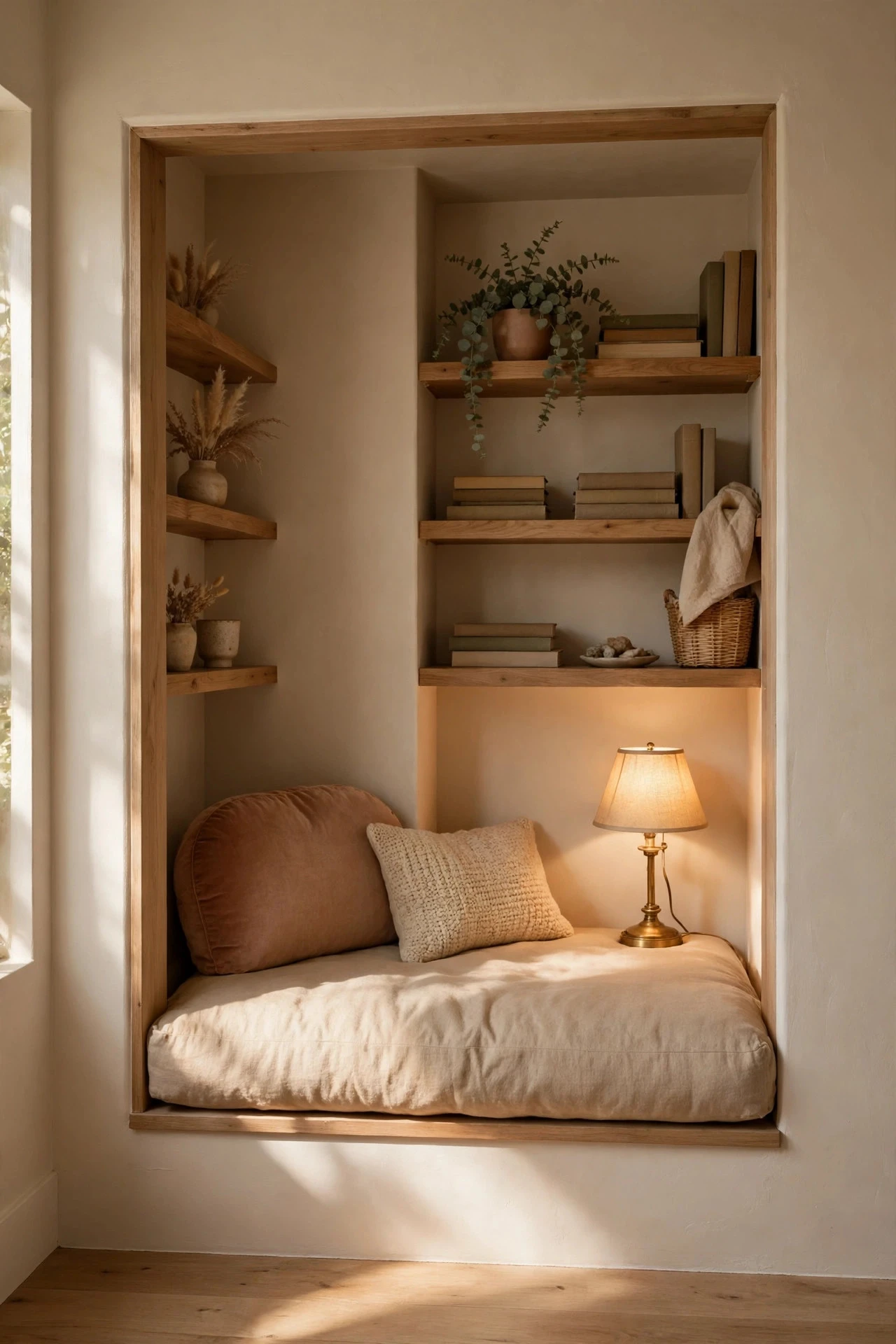
Taking the doors off an underused closet and fitting a slim cushion, a small lamp, and a stack of shelves is one of the most consistently satisfying reading nooks, and it reverts to a closet in an afternoon if it ever needs to. Measure the closet first — 30 inches of depth is enough for a cushion and a reader sitting cross-legged or with knees up — add a battery or plug-in light, paint the back wall a deep, cocooning colour, and keep the opening clear with a curtain that can be drawn for privacy. Renters should use freestanding shelves and a removable cushion rather than built-ins. The mistake to avoid is converting a closet that is still needed for storage without a plan for the clothes, which creates a nook and a wardrobe crisis in the same weekend.
7. Use the Foot of the Bed as a Reading Perch
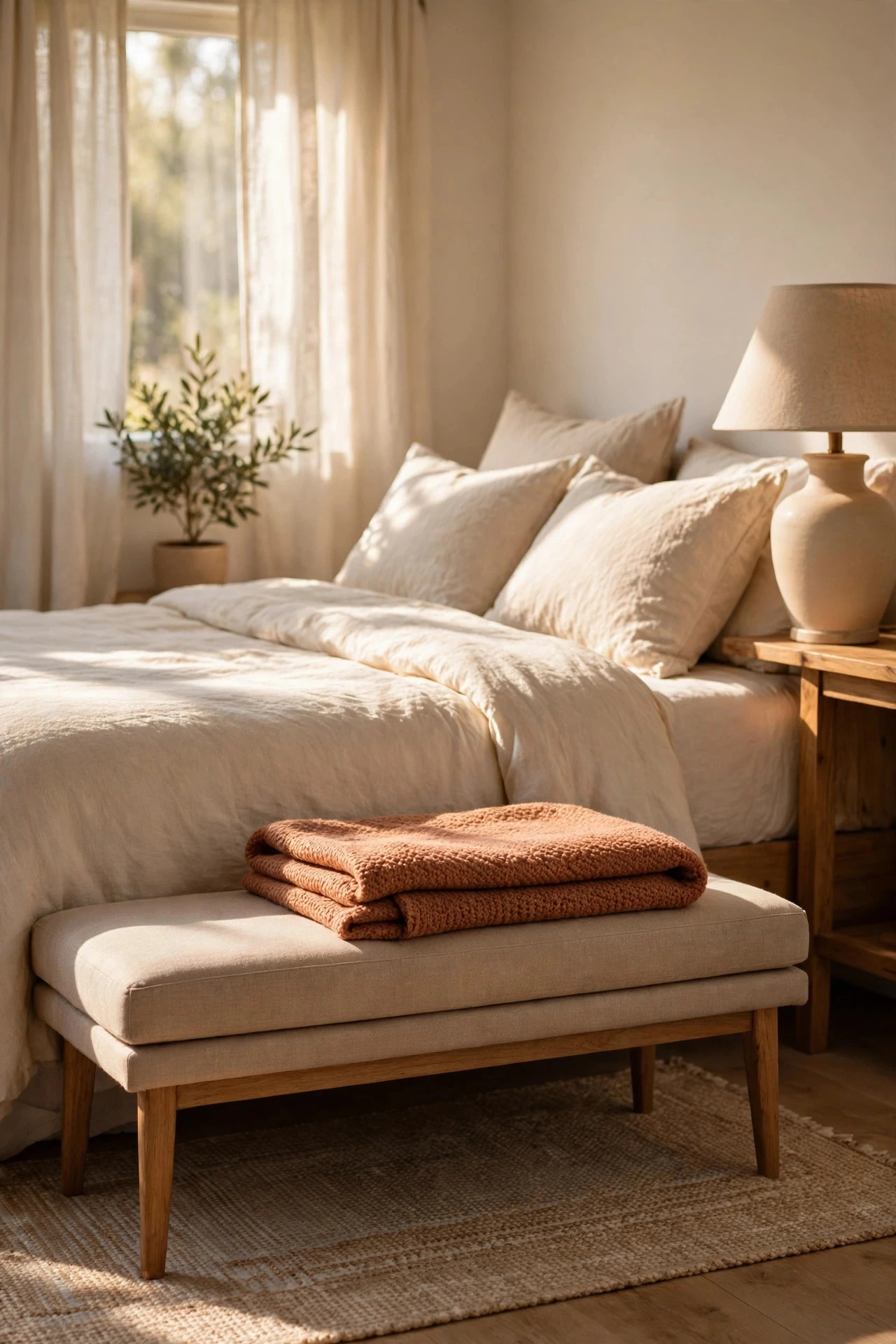
A slim bench, 12 to 16 inches deep, placed at the foot of the bed doubles as extra seating and a proper reading perch, particularly in bedrooms too tight for a separate chair. Add a folded chunky knit throw and a single low lamp on a nearby dresser for task light, and the bench becomes a reading spot that also serves as a valet for clothes and a landing place for a book at night. Choose a bench with a firm, upholstered top rather than a hard wood seat, and keep the height level with or just below the mattress so sitting feels natural. For bedrooms where every piece must earn its floor space twice, the foot-of-bed perch is the lowest-risk nook to try first. The mistake to avoid is choosing a bench so deep it blocks the walkway around the bed, turning a reading perch into an obstacle at 2 a.m.
8. Try the Built-In Bed Nook With Pillows and a Shelf
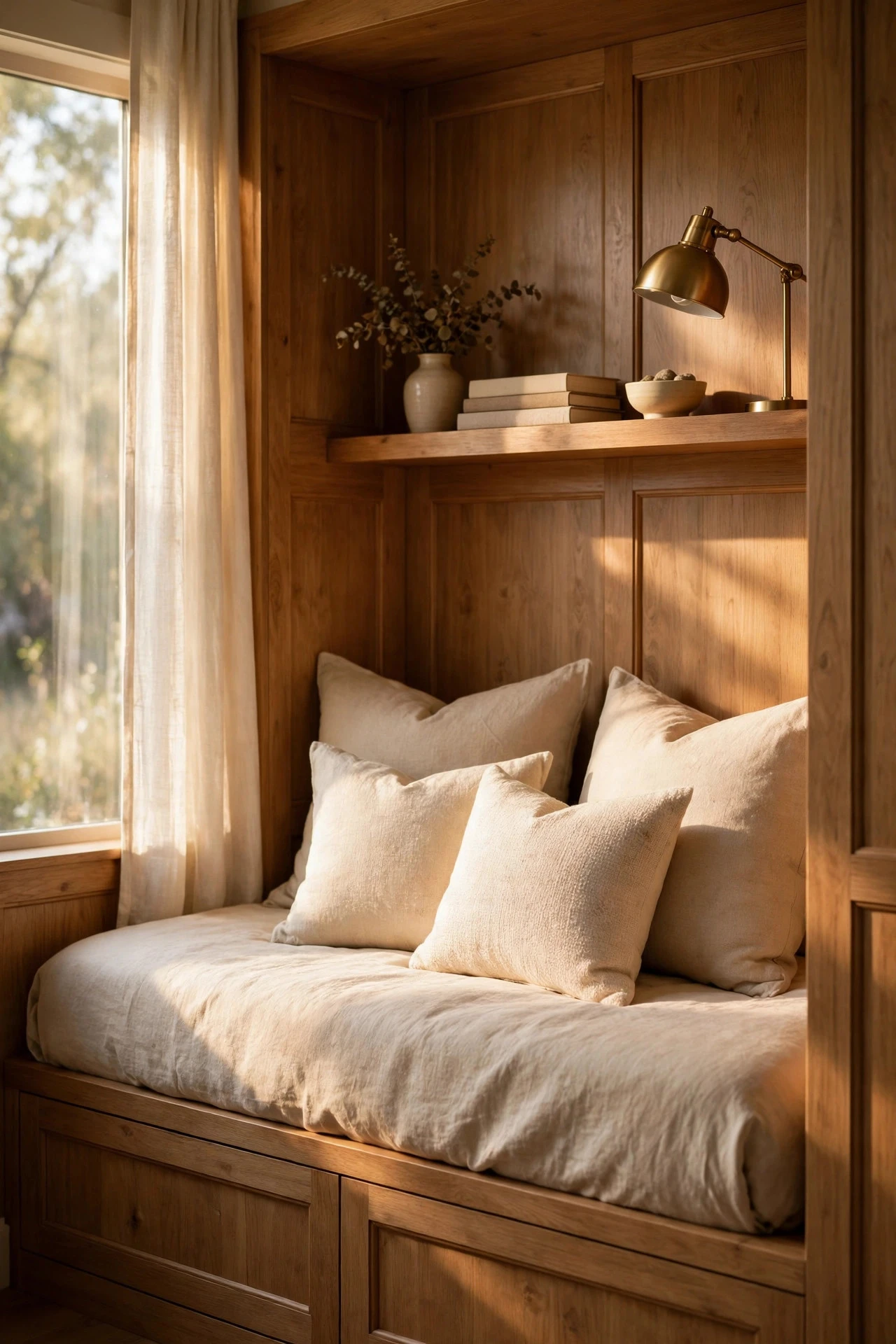
If the bedroom already has a built-in or platform bed, the cheapest reading nook of all is the bed itself, styled for reading rather than sleeping. Prop two or three firm pillows vertically against the headboard, add a slim side table or a wall-mounted floating shelf within reach for tea and a book, and clip a small reading light to the headboard or mount a sconce above it. A wedge pillow or a reading pillow with arms supports the back far better than a stack of soft sleeping pillows, which collapse within minutes. Try this version for a week before spending anything, because it reveals how much of a proper nook is actually needed. The mistake to avoid is reading flat in bed with a stack of soft pillows and no task light, which strains the neck, the eyes, and the sleep that follows.
9. Hide a Nook in a Walk-In Wardrobe Corner
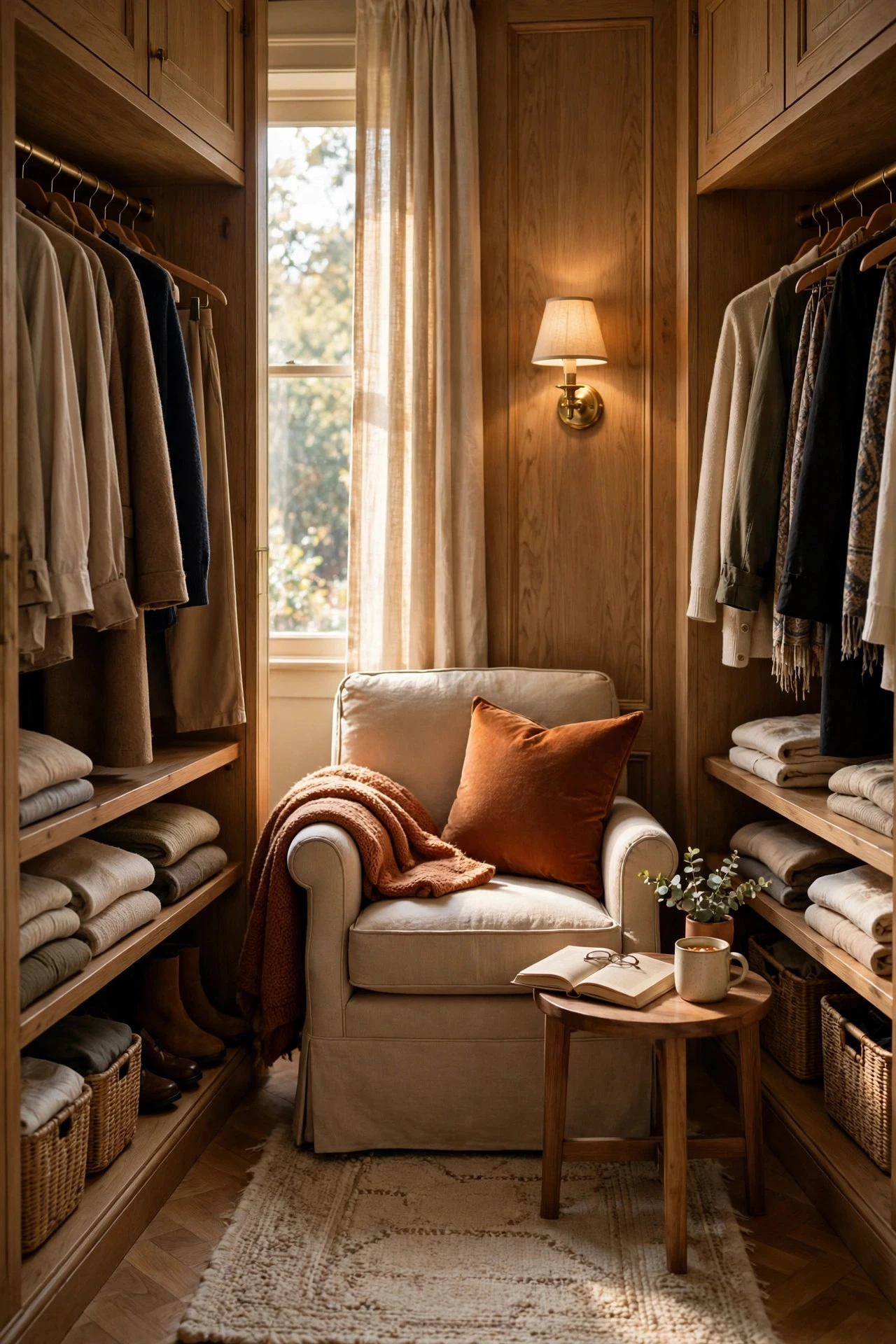
In larger bedrooms with a walk-in wardrobe going spare, a single slipper chair and a plug-in wall sconce turn an otherwise underused corner into a genuinely private reading spot, ideal for anyone sharing a bedroom who wants to read without disturbing a partner already asleep. Keep the chair slim-armed and the light warm and directional, add a small basket for books, and use the wardrobe's own shelving for the to-be-read stack. The privacy is the point: a door that closes, a light that stays local, and a seat that faces away from the bed. The mistake to avoid is filling the wardrobe nook with storage boxes and laundry, which quietly reclaims the corner within a week.
10. Paint the Nook Wall a Deep, Cocooning Colour
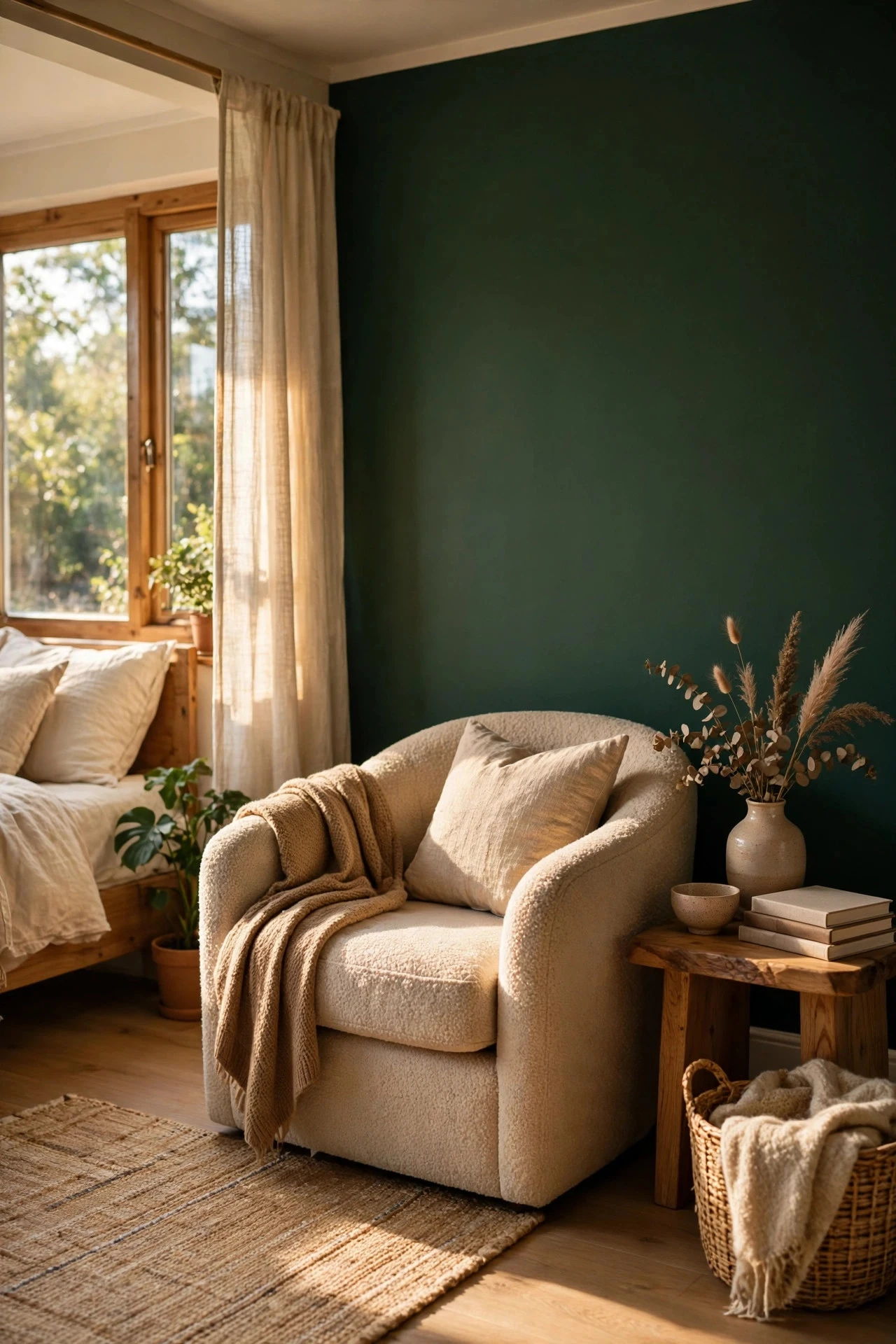
Colour subtly signals that a space is meant for slowing down, and painting just the nook wall in a deep, cocooning shade — forest green, terracotta, inky blue, or warm charcoal — sets the corner apart from the rest of the room without repainting the bedroom. The dark wall absorbs light, makes the lamp glow warmer, and frames the chair like a portrait, especially when the rug and textiles stay light against it. Use a matte or eggshell finish, which hides wall imperfections and softens the light, and carry one accent from the dark wall into a cushion or throw so the corner connects to the room. A single accent wall costs one tin of paint and an afternoon. For calm, cocooning bedroom palettes that stay elegant, these master bedroom decor ideas show how deep colour and soft texture work together. The mistake to avoid is painting the whole bedroom dark for the sake of one corner, which can make a small room feel smaller and harder to wake up in.
11. Hang a Rattan Swing Chair for a Playful Nook
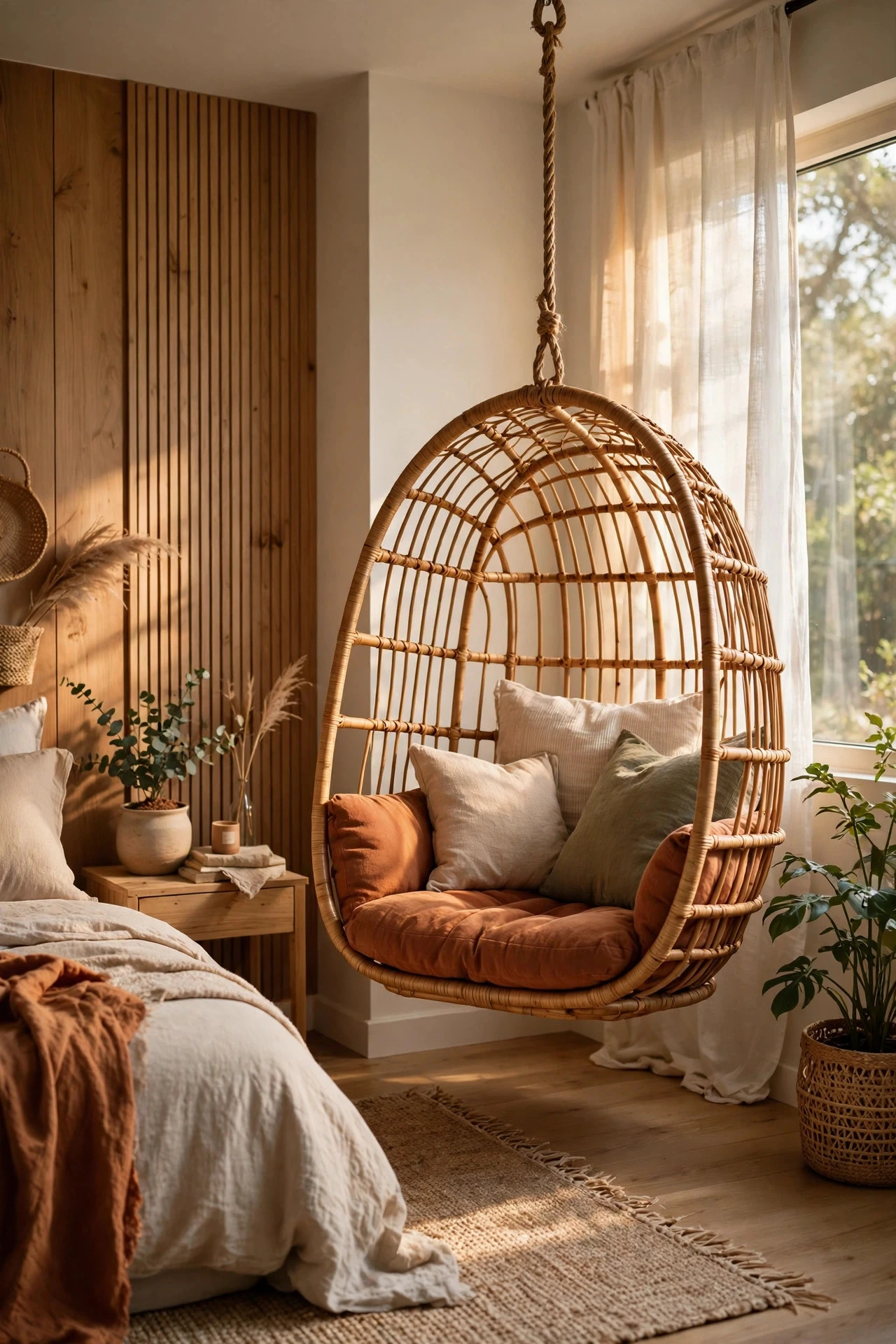
A hanging rattan or macramé swing chair adds a playful, floating element to a bedroom nook, and it suits bohemian, coastal, and eclectic rooms beautifully. Anchor it securely to a ceiling joist — never to plasterboard alone — with hardware rated for well above the reader's weight, hang it in a corner with clear swing room on all sides, and add a small cushion and a throw so the seat is comfortable for an hour, not just a photograph. A floor lamp beside the swing, rather than a table lamp, keeps the light stable as the chair moves. The mistake to avoid is hanging a swing chair from an unrated hook or a curtain rod, which is a genuine safety risk, or placing it where it swings into a wall or a dresser.
12. Squeeze a Nook Into a Small Bedroom With Slim Furniture
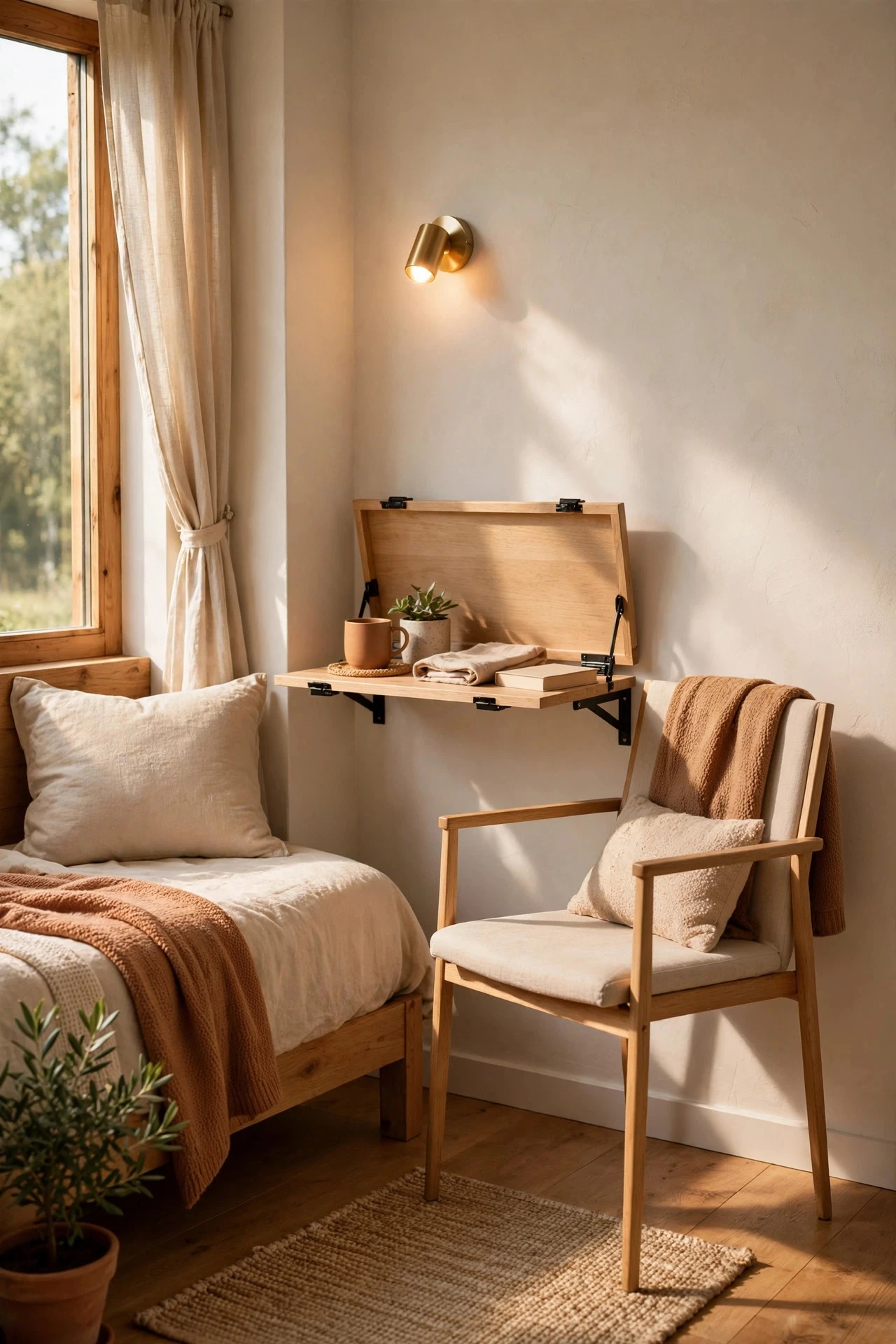
Even a tiny bedroom can host a reading spot with slim, disciplined furniture choices. Try a compact accent chair with slim arms, a wall-mounted fold-down shelf instead of a side table, or a cushioned storage ottoman at the foot of the bed, and keep the footprint to a single 3-by-3-foot zone. Wall-mounted lighting is essential in a small nook, because a floor lamp eats the very space the chair needs, and a narrow ladder shelf holds books without a bookcase. Measure the door swing and the wardrobe doors before placing anything, because a nook that blocks either will be resented within days. The mistake to avoid is buying a full-size armchair for a small bedroom and then living around it, when a slim chair and a fold-down shelf give the same reading pleasure in half the space.
13. Build an Alcove Nook With a Curtain for Privacy
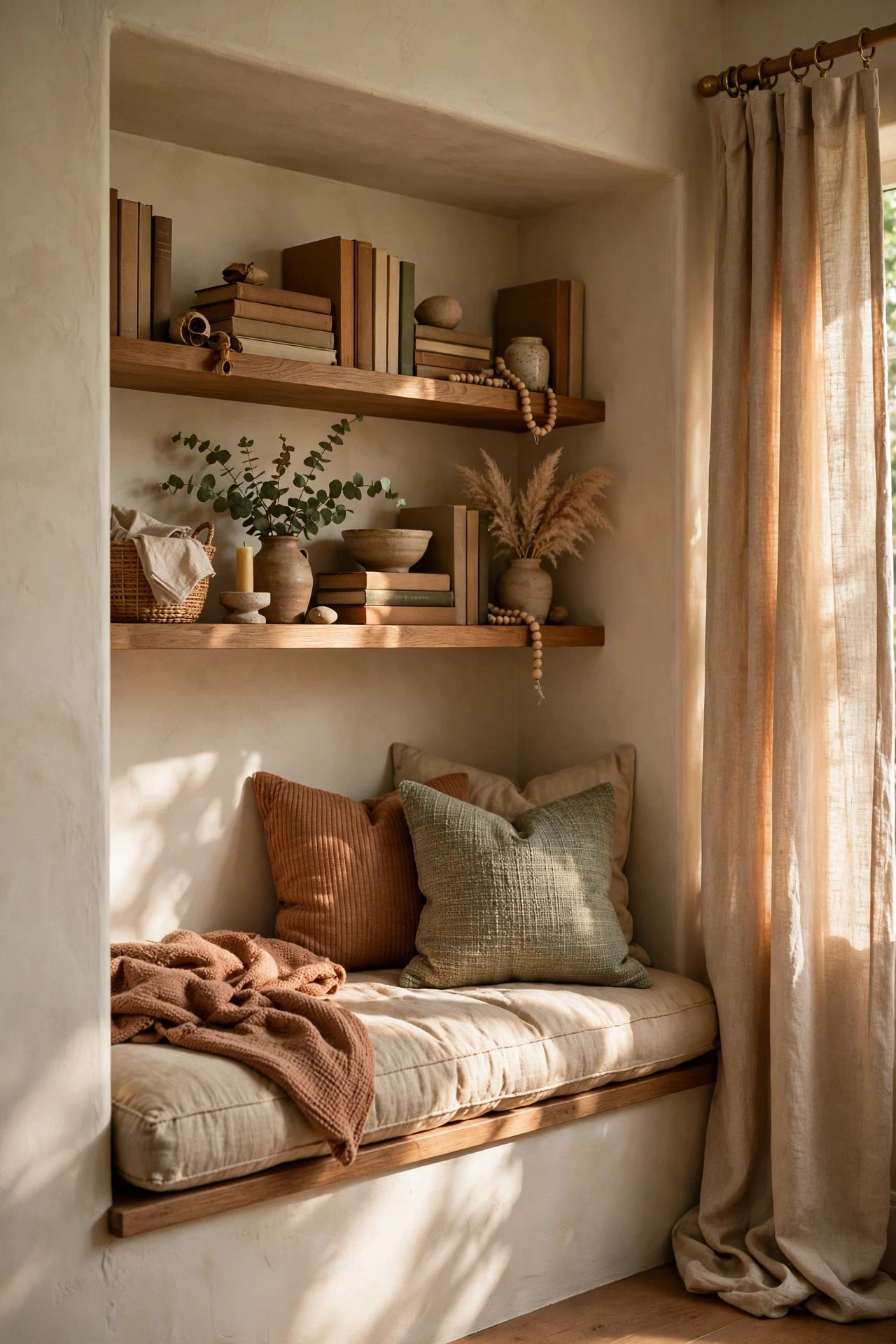
An alcove, a recess, or the space beside a chimney breast is a ready-made reading nook, and a curtain turns it into a private room-within-a-room. Fit a slim bench or a deep cushion into the alcove, add a shelf above for books, a wall light inside the recess, and a curtain on a simple rod or track that can be drawn closed. A curtain in a heavy linen or velvet, in the bedroom palette, softens sound as well as sight, which is why alcove nooks feel so quiet. Keep the curtain clear of the light and any heater, and choose a curtain that hangs to the floor so the enclosure feels complete. The mistake to avoid is filling the alcove with storage so the curtain hides clutter rather than enclosing a retreat, which defeats the purpose of the privacy.
14. Add a Canopy or Draped Fabric Over the Chair
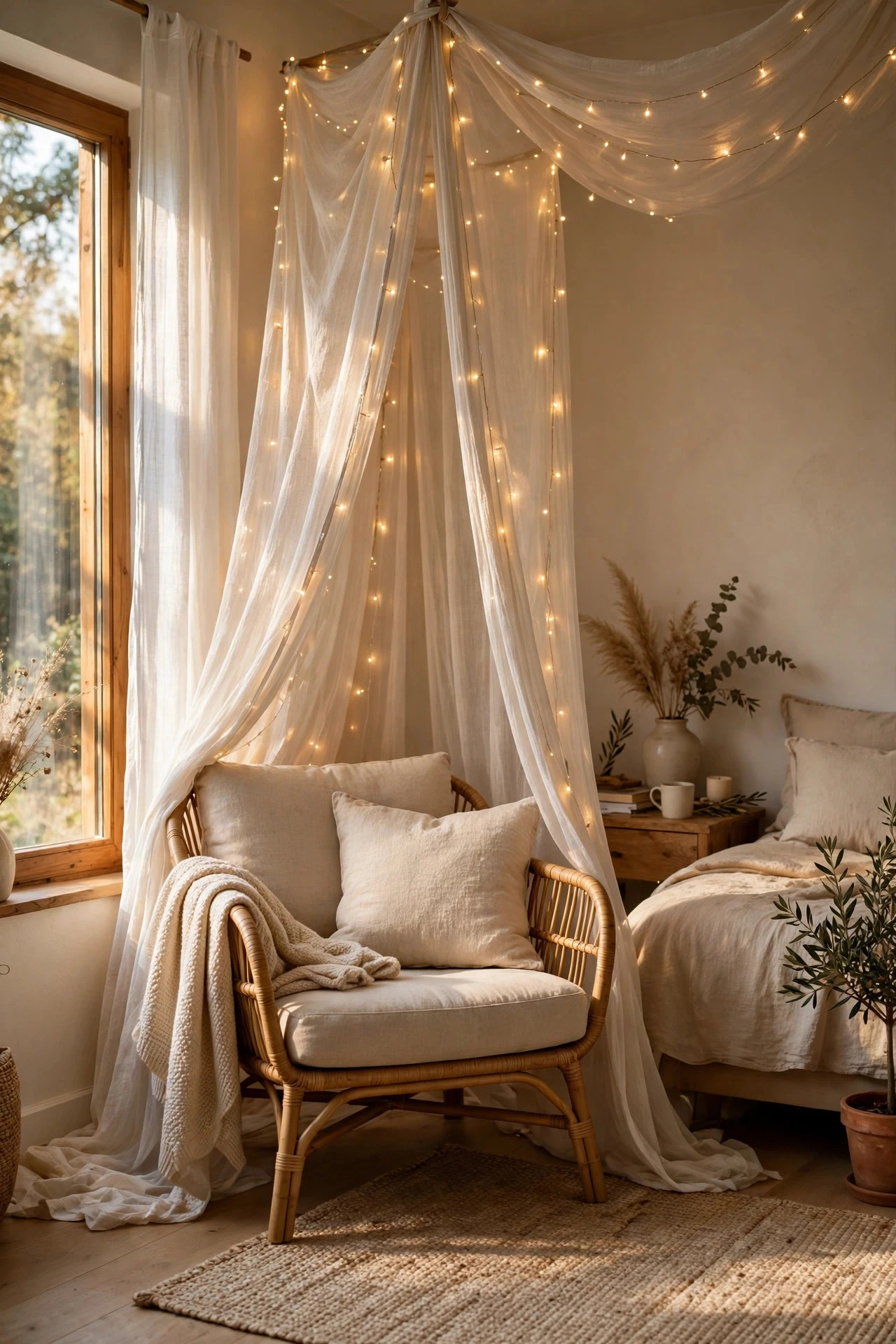
A canopy or draped fabric over a reading chair creates a tent-like, storybook feeling that suits children, romantics, and anyone who reads to escape. Hang a sheer curtain panel or a lightweight canopy from a ceiling hook or a wall-mounted arm above the chair, letting the fabric fall behind and to one side so light still enters, and add fairy lights woven through the top edge for evening glow. Keep the fabric clear of lamps and candles, use flame-retardant or LED light only, and choose a fabric light enough to move gently rather than hang like a tent wall. The mistake to avoid is enclosing the chair completely in heavy fabric, which blocks the reading light, traps heat, and turns a canopy into a cave.
15. Style a Nook for Two: A Loveseat and Shared Light
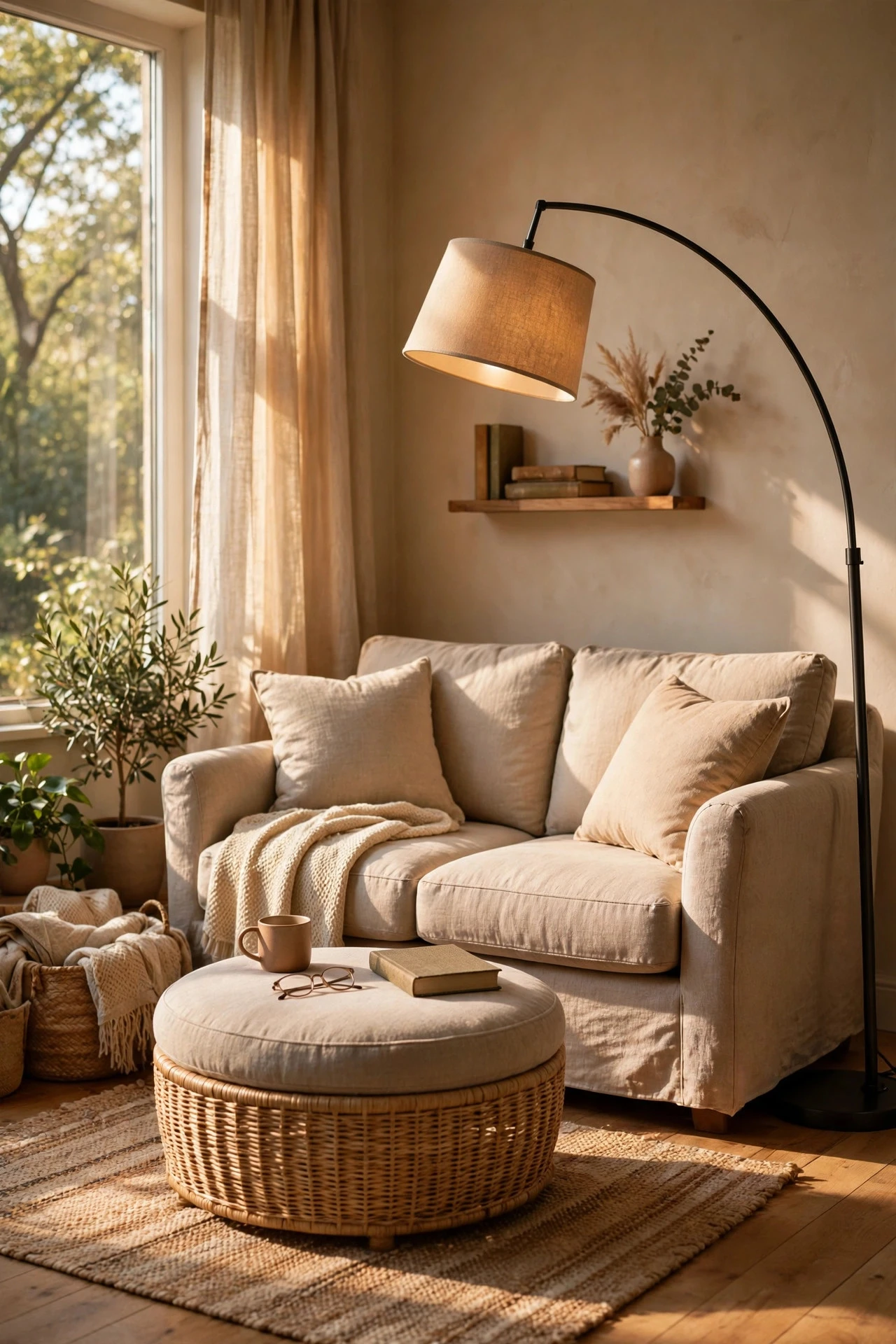
A reading nook for two — partners reading together, a parent and child, or two friends — needs a loveseat or two chairs angled toward each other, a shared side table, and a light that serves both readers without glare for either. Place a small loveseat or a pair of slim chairs at a slight angle, with a shared ottoman for feet, a single arc floor lamp centred between the seats, and a basket of books both readers can reach. Keep the seating firm enough for two people to sit upright comfortably, and add individual throws so each reader controls their own warmth. The mistake to avoid is placing two chairs facing each other across a table, which is a conversation layout, not a reading layout, and leaves both readers craning for light.
16. Make a Seasonal Nook That Changes With the Year
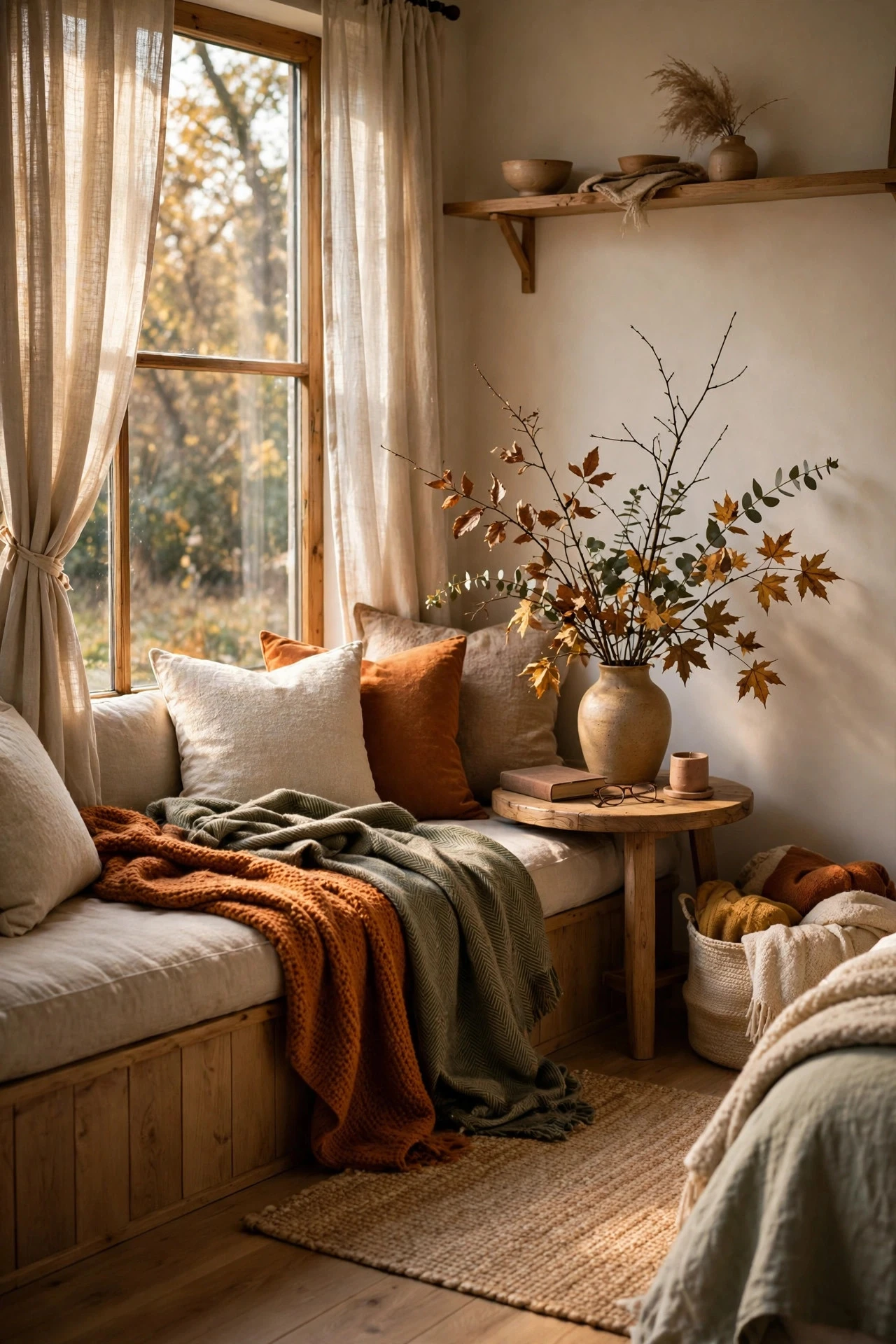
A reading nook that changes with the seasons stays loved all year, because the corner is refreshed before it can go stale. Swap the throw and cushions seasonally — light linen and pale colours in summer, wool and deep tones in winter — change the scent, rotate the books on display, and add one seasonal touch, such as a small vase of branches in spring or a string of fairy lights in December. Keep the furniture and lighting constant, so the nook always works, and let only the textiles and small objects change. A seasonal refresh costs little and takes under an hour, yet it makes the nook feel newly made four times a year. The mistake to avoid is redecorating the nook completely every season, which costs more, stores worse, and loses the familiarity that makes a nook comforting.
17. Keep the Nook Screen-Free and Phone-Free by Design
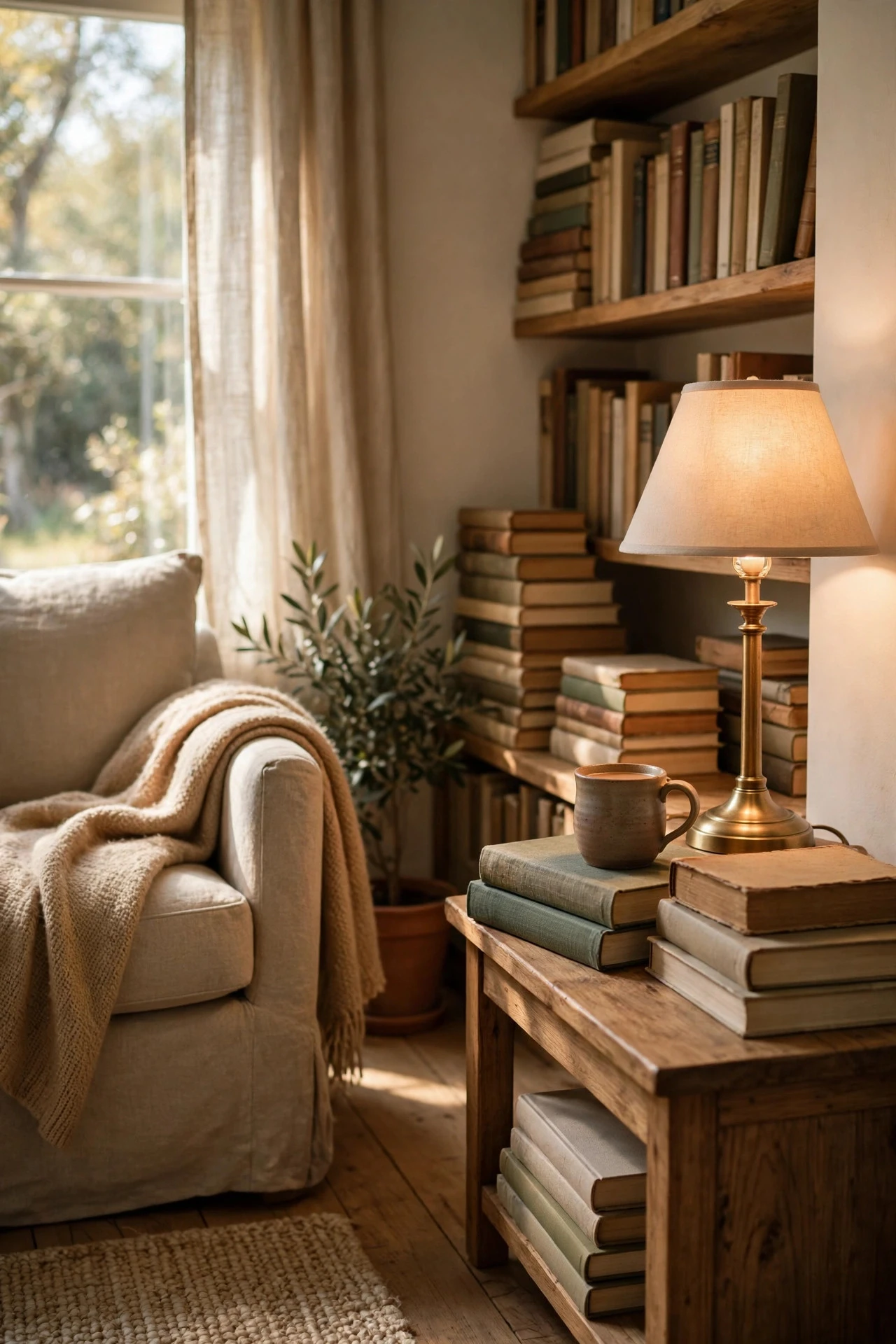
A reading nook works best when it is designed to be screen-free, because the corner's purpose is slow attention, not another feed. Keep the phone charger in another part of the room, add a small basket or tray where a phone can be parked at the door of the nook, and furnish the corner with only reading things: books, a bookmark, a mug, a lamp, and a blanket. A visible clock, rather than a phone, keeps time without notifications, and a notebook beside the chair catches thoughts without opening an app. The habit follows the design: when the nook holds nothing that buzzes, reading becomes the easiest thing to do there. The mistake to avoid is placing the nook next to the television or the charging station, which invites the very distractions the nook exists to escape.
18. Choose Seating for How You Actually Read
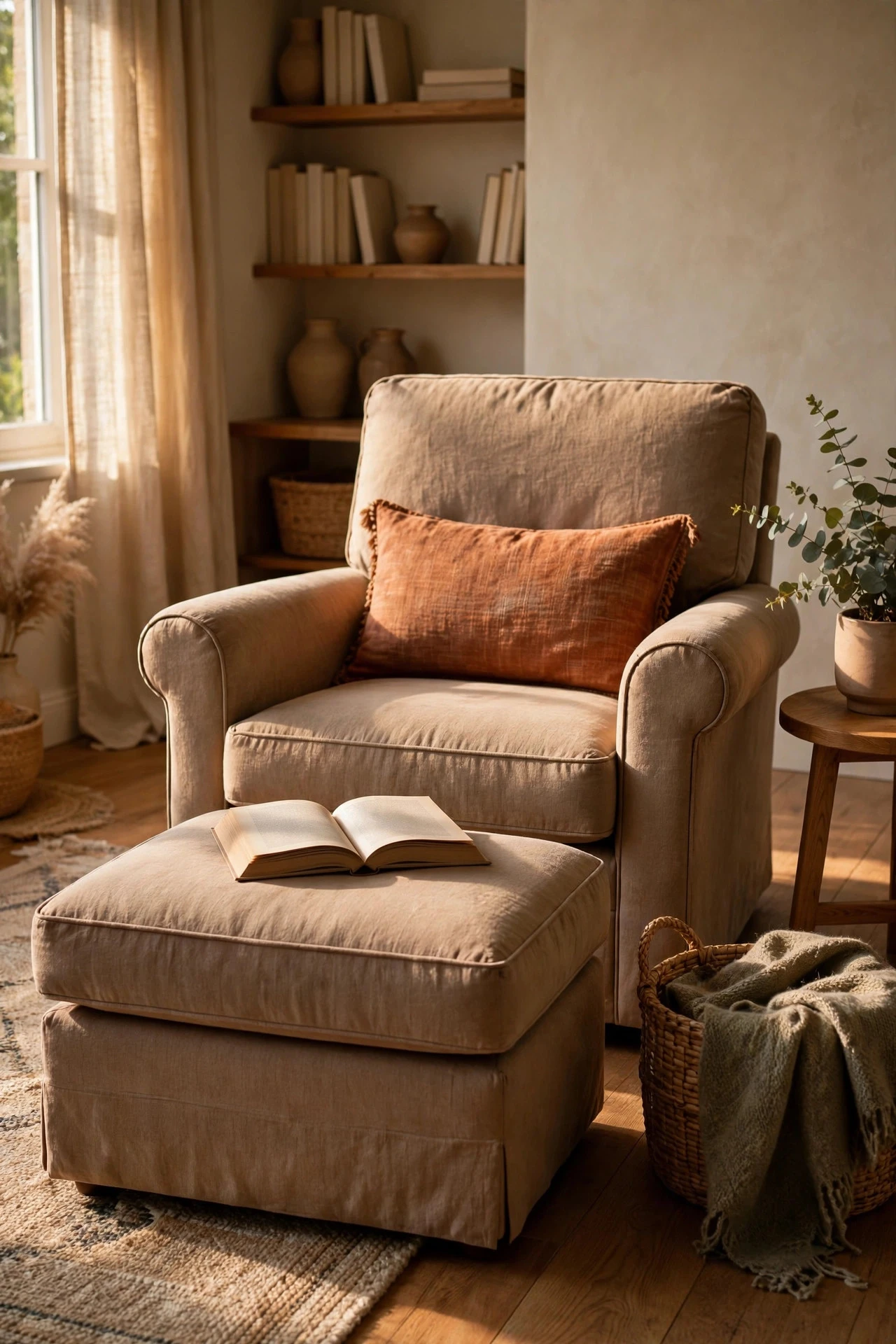
Seating should match the reader's actual posture, not the chair that photographs best. Readers who sit upright need a firm chair with good lumbar support and armrests at elbow height; readers who curl up need a deep chair with room to tuck feet and a soft ottoman; readers who stretch out need a chaise or a daybed with a long, flat seat. Test a chair by sitting in it for twenty minutes with a book before buying, checking that the head, neck, and lower back are all supported without effort. A chair that forces a slouch will end every reading session early, however beautiful it looks. For luxury bedroom seating that stays comfortable for hours, these luxury bedroom decor ideas show how hotel-style chairs balance elegance with long-sit comfort. The mistake to avoid is buying a sculptural chair that looks wonderful and feels terrible after ten minutes, which is the fastest way to abandon a nook.
19. Add Sound Softening So the Nook Feels Quiet
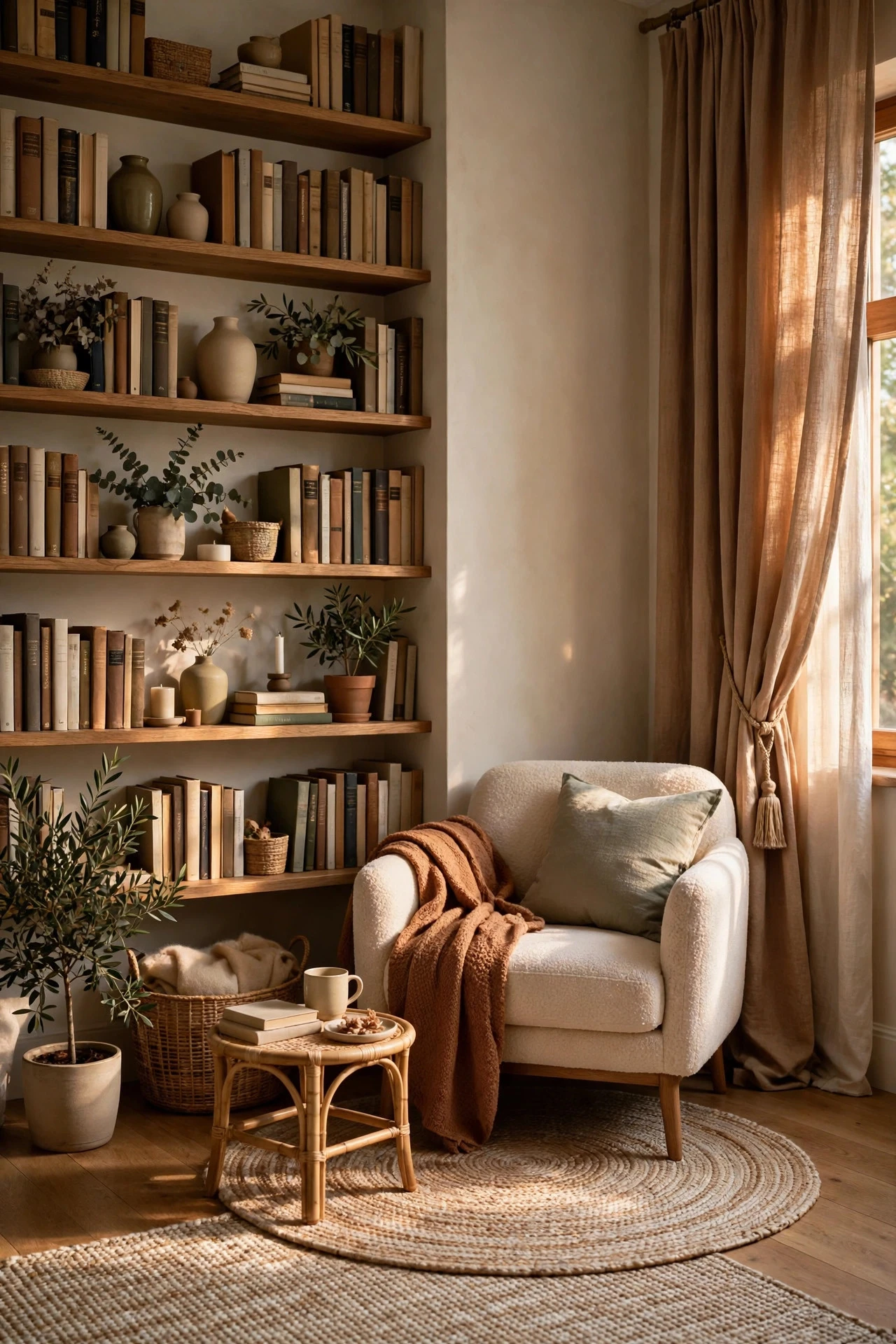
A reading nook feels quiet when the room's hard surfaces are softened, because echo and household noise break concentration faster than poor light. Add a rug under the chair, a heavy curtain on the nearest window, upholstered furniture rather than hard chairs, and a fabric wall hanging or a bookshelf full of books, all of which absorb sound. A white-noise machine or a small fan, set low, can mask household noise without becoming a distraction, and a door that closes — even a curtain — signals to the household that the nook is in use. The mistake to avoid is placing a nook on bare hard floors beside a busy hallway, where every footstep and conversation competes with the book.
20. Build a Renter-Friendly Nook With No Holes
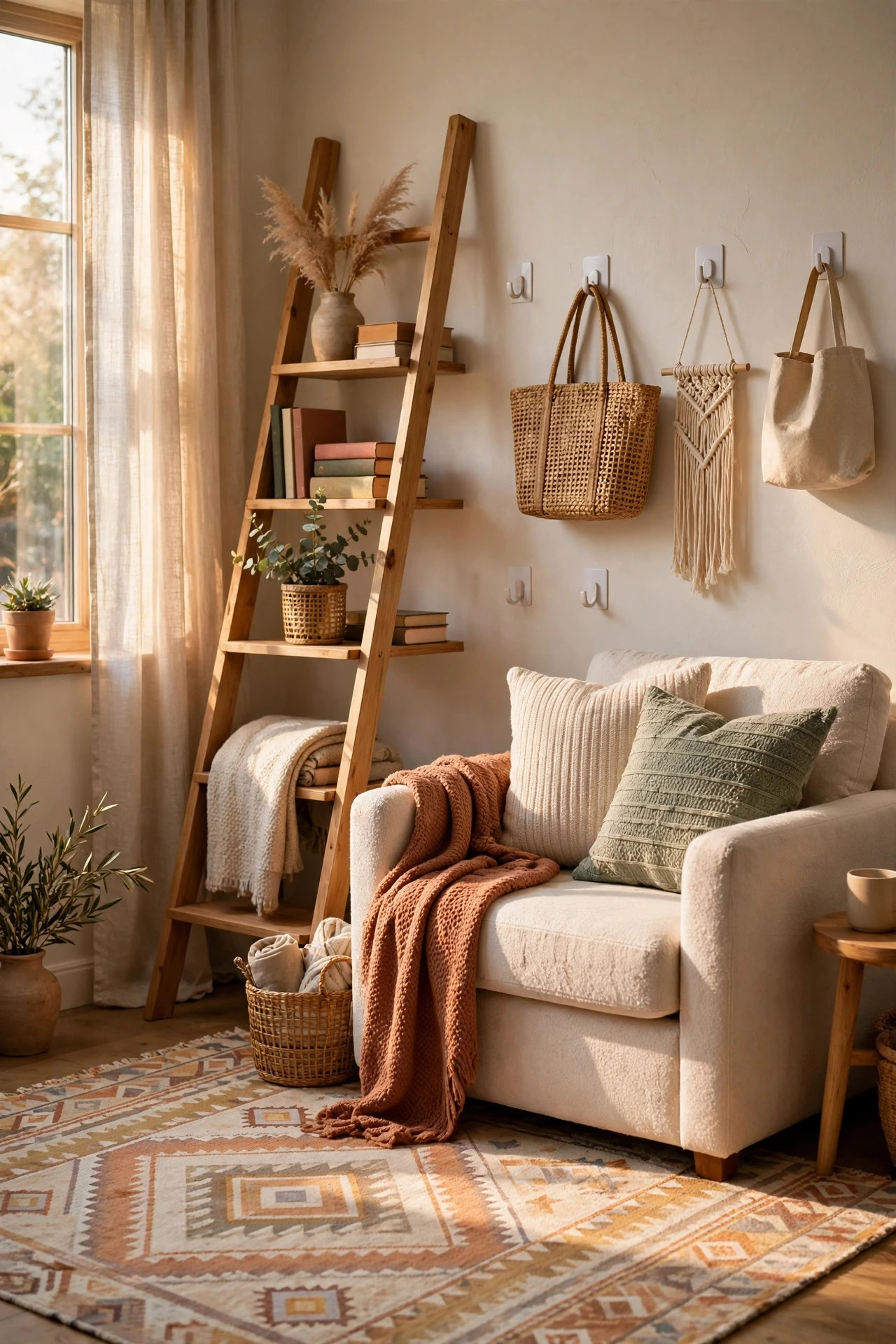
Renters can build a full reading nook with no drilling, no painting, and no permanent change, using freestanding and removable pieces. Use a freestanding chair and side table, a floor lamp rather than a sconce, removable hooks for fairy lights or a curtain, a large rug to define the zone, and a leaning ladder shelf that needs no wall fixings. Define the nook with a removable wallpaper panel or a large fabric hanging on a tension rod, which gives the cocooning colour effect without paint. Photograph the room before and after, and keep every fixing removable so the deposit is protected. The mistake to avoid is drilling for a sconce or a shelf in a rental without permission, when a floor lamp and a leaning shelf give the same result with zero risk.
21. Budget the Nook in Three Tiers, Starting at Zero
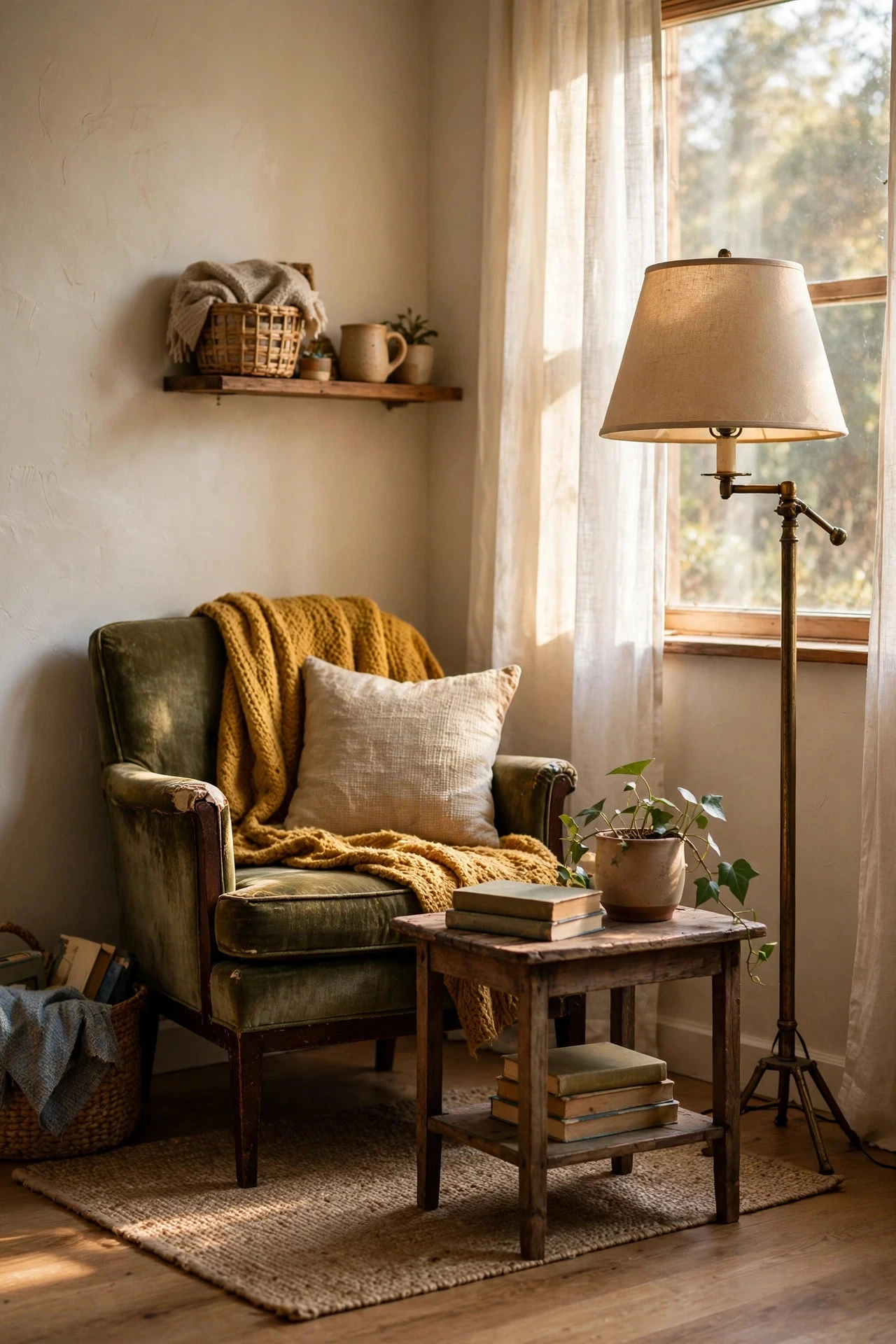
A reading nook can be built at almost any budget, and the tiers differ in furniture, not in feeling. At zero cost, use the bed, existing pillows, and a clip light, and claim a corner with a rug already owned. At $50 to $100, add a secondhand armchair, a thrifted side table, and a warm bulb in a floor lamp. At $200 to $400, buy a new chair, a swing-arm sconce, a rug, and a ladder shelf, and the nook becomes a permanent feature of the room. Spend first on the seat and the light, then on storage, and last on textiles, because a comfortable chair and a good lamp make reading possible, while cushions only make it prettier. The mistake to avoid is spending the whole budget on cushions and fairy lights before buying a chair worth sitting in.
22. Keep the Nook Alive With a Weekly Reset
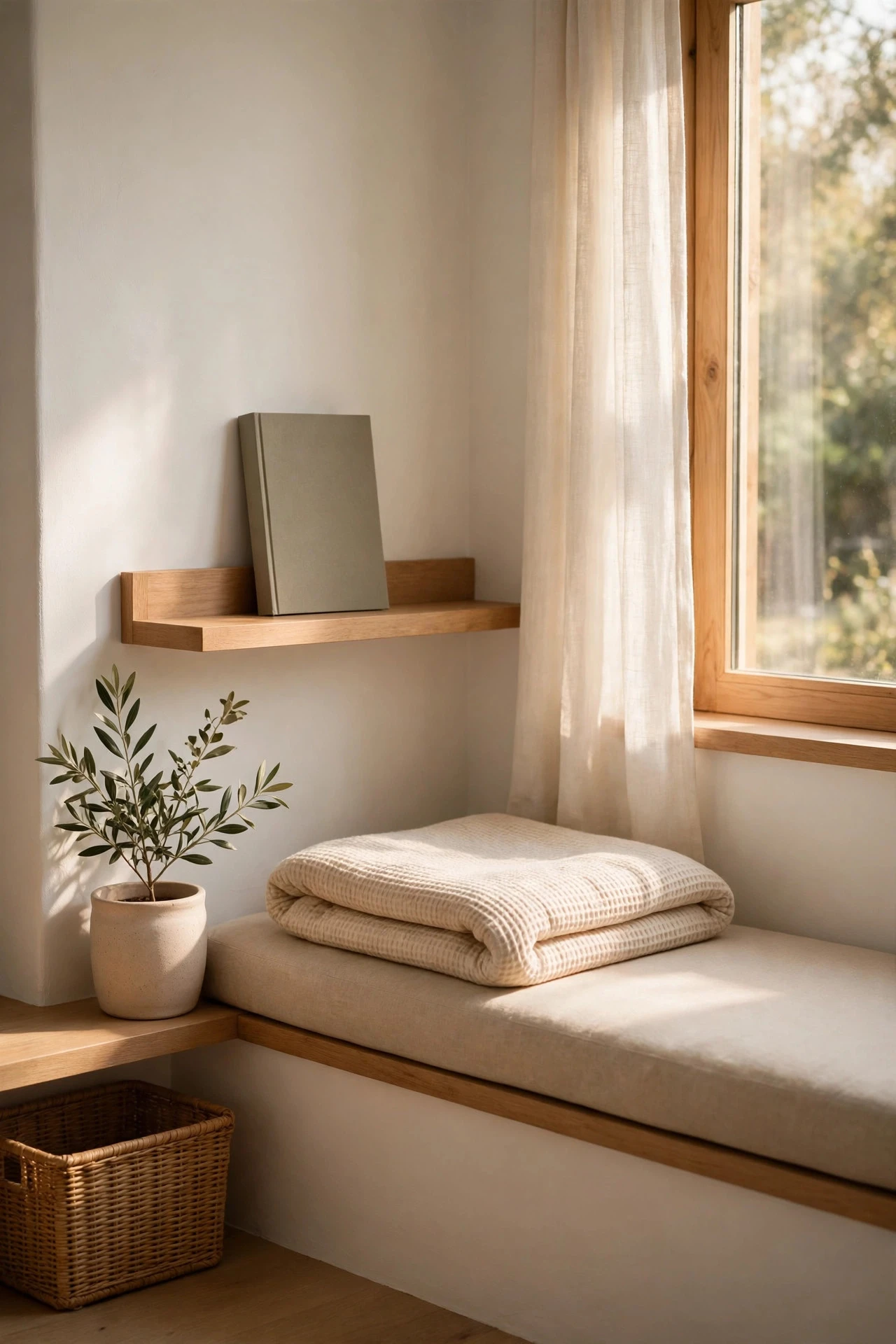
The final idea is a habit: reset the nook weekly, for five minutes, so it stays inviting instead of slowly becoming a laundry chair. Return books to the shelf, fold the throw, clear the side table, replace the bookmark, and put one new book face-out on the shelf as the next read. A weekly reset keeps the corner defined, the rug clear, and the habit alive, and it takes less time than one scroll through a phone. Pair the reset with a small ritual — a fresh mug, a lit candle, a chosen book — so the nook is associated with pleasure, not chores. The mistake to avoid is letting the nook become the room's dumping ground for clothes, bags, and unsorted laundry, which kills the reading habit faster than any design flaw.
Practical Tips
Build the nook in the order that matters: seat, light, storage, then textiles and decoration. Sit in the chair with a book for twenty minutes before committing, checking head, neck, and lower-back support, and test the light at the actual reading hour — evening light behaves very differently from showroom light. Keep the reading light at 2700K, dimmable, positioned behind and to the side of the shoulder, and add a second soft light for ambience. Measure the corner, the door swings, and the wardrobe doors before buying, and keep at least 24 inches of clear walkway around the chair. For broader guidance on bedroom lighting layers and how task, ambient, and accent light work together, the lighting guides at The Spruce explain placement and colour temperature clearly.
Choose materials for daily, close contact: washable throws, a rug that can be cleaned, a side table with a stable base that will not tip when a mug is set down, and book storage that keeps the current reads within arm's reach. Keep a small basket for the to-be-read stack, a bookmark tray or a dish for glasses, and a coaster on the side table, because the details that make a nook easy to use are the details that keep it used. For bedroom styling that balances comfort with a polished, hotel-like finish, House Beautiful shows how texture, colour, and light layer in a bedroom without clutter.
Rotate the nook seasonally and reset it weekly, and treat the book display as part of the decor: one book face-out, a small stack of two or three, and the rest spine-out on the shelf. Keep the nook screen-free by parking the phone elsewhere, and protect the habit by keeping the corner clear of laundry, bags, and work papers. A nook that is easy to enter, comfortable to sit in, and clear of clutter will be used daily; a nook that requires clearing before every read will be abandoned within a month.
Final Thoughts
A bedroom reading nook is one of the smallest rooms a home can gain and one of the most loved, because it gives reading a place, a light, and a time of its own. Claim a corner, choose a chair worth sitting in, light the page properly, and keep the books within reach — the rest is texture, colour, and habit. The best nooks are not the most decorated ones; they are the ones that are used, every evening, by someone who found a quiet corner and made it theirs.
You May Also Like: – 22 Small Bathroom Ideas That Make a Tiny Bathroom Feel Bigger – 22 Quiet Luxury Home Decor Ideas for an Understated, Elegant Home – 22 Living Room Lighting Ideas for a Warm, Layered Glow
Frequently Asked Questions
How much space do you need for a bedroom reading nook?
A reading nook needs about 3 to 4 feet of width and 3 feet of depth for a slim chair, a small side table, and a floor lamp, with 24 inches of clear walkway around it. Smaller corners work with a fold-down shelf and a wall light, while window seats and closet nooks use space already built in.
What is the best lighting for a reading nook?
Use a warm, dimmable task light around 2700K, placed slightly behind and to the side of the reading shoulder, lighting the page without glare or shadows. Add a soft second light for ambience, keep the overhead light off, and choose an adjustable arm so the light follows the chair.
How do you make a reading nook in a small bedroom?
Use slim furniture: a compact chair with slim arms, a wall-mounted fold-down shelf, a wall sconce instead of a floor lamp, and a narrow ladder shelf. Define a 3-by-3-foot zone with a rug, keep the footprint tight, and measure door and wardrobe swings before placing anything.
What chair is best for a reading nook?
Match the chair to how you read: firm with lumbar support for upright readers, deep with an ottoman for curl-up readers, long and flat for stretch-out readers. Test any chair for twenty minutes with a book, checking head, neck, and lower-back support before buying.
How do you keep a reading nook from becoming cluttered?
Reset the nook weekly for five minutes: return books, fold the throw, clear the side table, and put one new book face-out. Limit the corner to reading things only, keep laundry and work papers elsewhere, and use vertical shelves so books stay beside the chair.
Can renters build a bedroom reading nook?
Yes. Renters can use a freestanding chair, a floor lamp, removable hooks, a large rug, and a leaning ladder shelf, with no drilling or painting. A tension rod with fabric or removable wallpaper gives the cocooning colour effect, and every fixing stays removable to protect the deposit.