22 Small Home Office Ideas That Make a Tiny Corner Work Hard
# 22 Small Home Office Ideas That Make a Tiny Corner Work Hard
A small home office is not a smaller version of a corporate cubicle — it is a corner, a closet, a landing or a bedroom nook that has to earn its floor space every single day. When the footprint is tight, desk depth, chair clearance and lighting all decide whether the space works or frustrates you.
This guide is built for genuinely small spaces, not spare rooms pretending to be small. Every idea below comes with real measurements, a realistic budget and a clear warning about what to avoid, so you can plan a setup that works for eight-hour days rather than just looking good in a photo.
Looking for more inspiration? Our Nest Decorz homepage gathers the latest home decor ideas, seasonal decorating guides and room-by-room styling tips in one place — start there and explore.
Quick Answers
– Minimum workable desk: 100 cm wide × 50 cm deep for a laptop, 120 cm × 60 cm if you use a monitor and keyboard. – Chair clearance: leave at least 75 cm behind the desk so you can push back and stand up comfortably. – Best small-space desk types: floating desks, fold-down desks and corner desks, because they free floor space or use dead corners. – Video-call fix: face a window or place a daylight lamp behind the camera, and keep a plain, tidy backdrop behind you. – Budget range: most ideas cost $40–$300; a full ergonomic setup lands around $400–$700.
1. How Do You Fit a Desk Into a Corner That Feels Wasted?
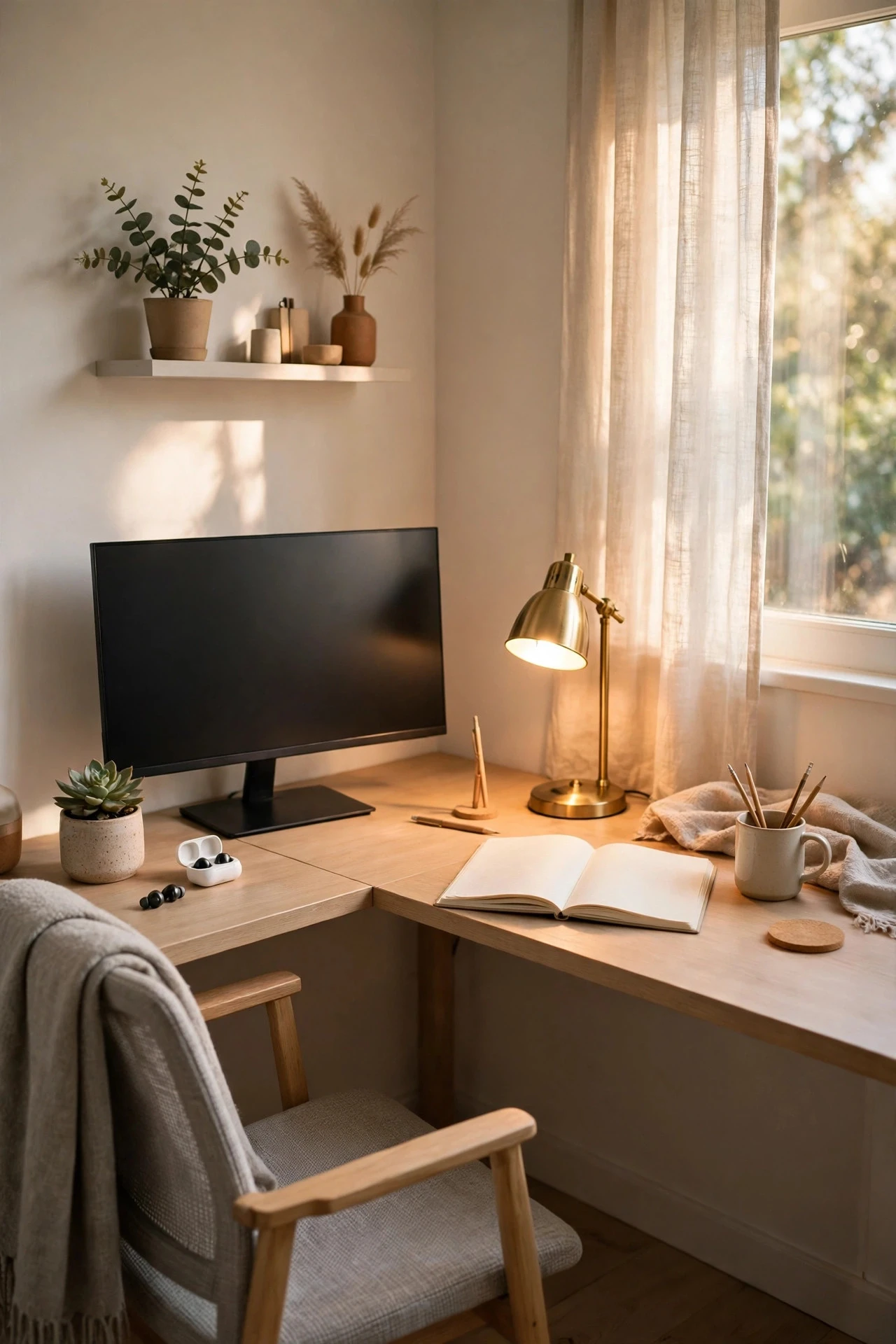
A corner desk turns the most awkward spot in a room into your most productive one, because two walls give you support, privacy and a natural boundary between work and rest. Choose an L-shaped or triangular corner desk with a 120 cm return on each side and at least 50 cm depth, which fits a 24-inch monitor, a keyboard and a notebook without crowding. Position the monitor in the corner itself so the screens angle toward you and glare drops. Budget $120–$250 for a compact laminate or solid-wood corner desk, and add a small monitor riser to lift the screen to eye level. Avoid deep executive corner desks over 70 cm — they swallow the room and leave no legroom. Pair it with a chair that tucks fully under the desk, and clip cables to the desk edge.
2. Can a Floating Desk Really Hold a Full Workday?
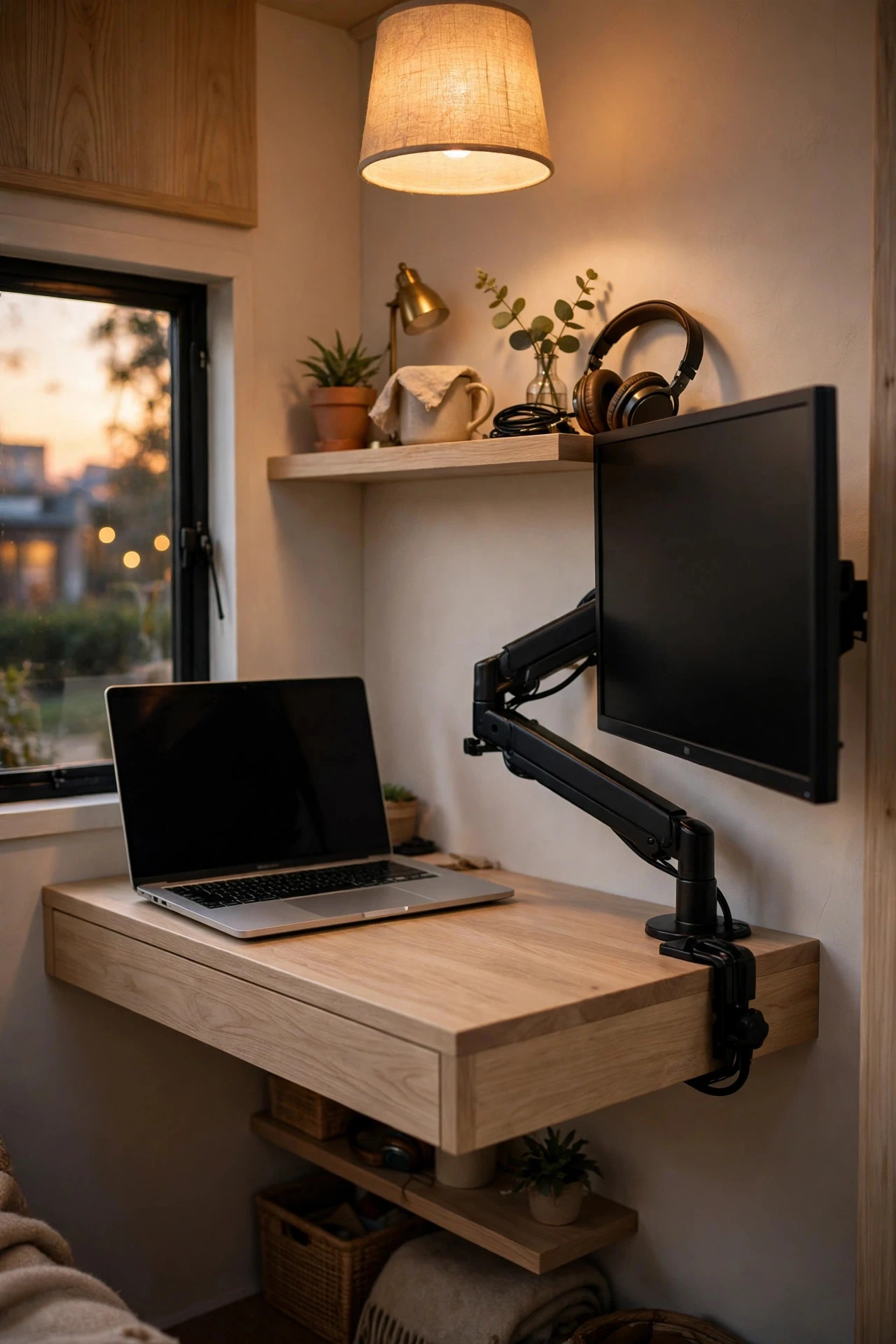
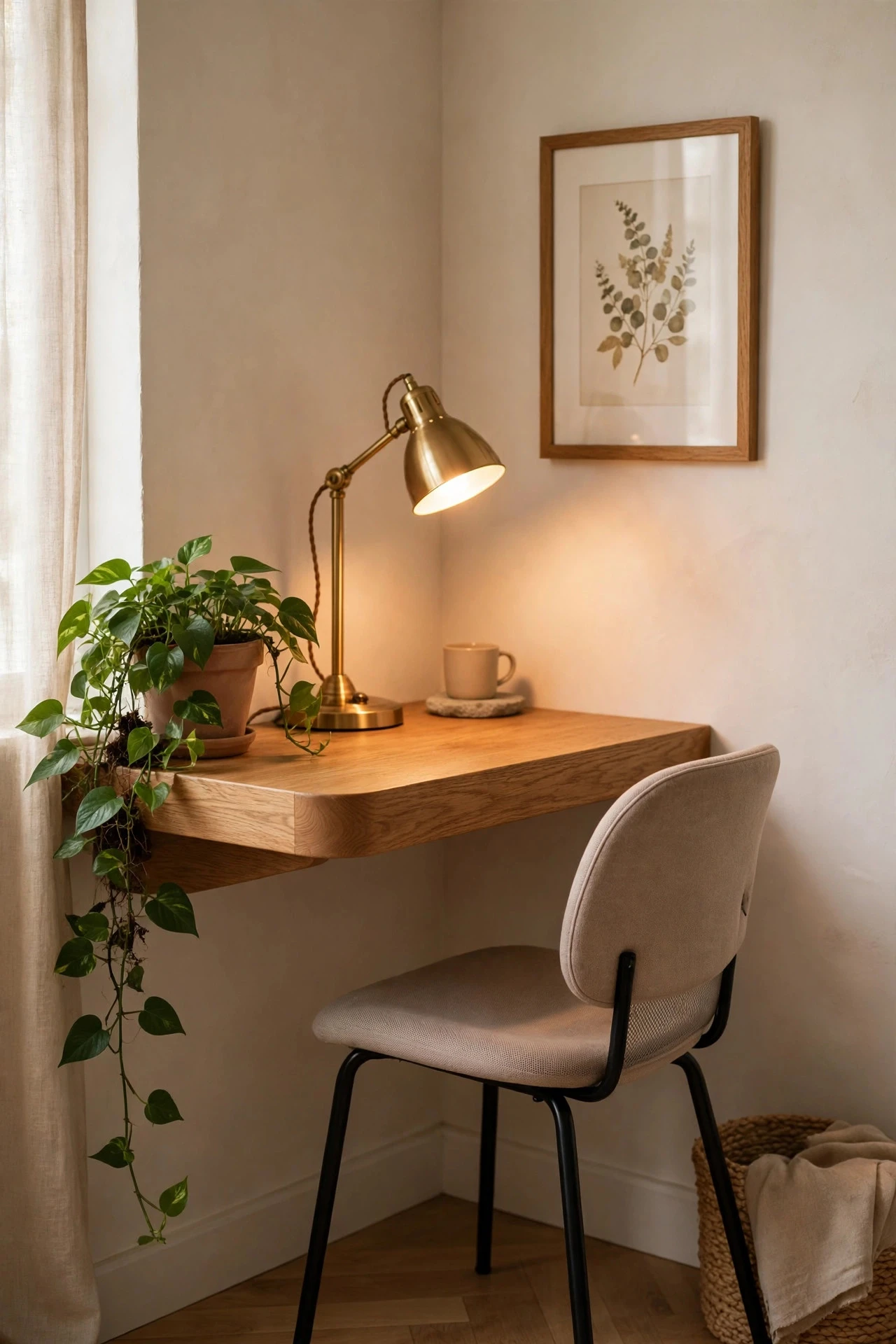
A floating desk works brilliantly in a small home office because it frees the floor underneath, making the room feel larger while still giving you a solid work surface for everyday work. Mount a wall-hung desk 74 cm high, at least 100 cm wide and 45–50 cm deep, into wall studs with heavy-duty brackets rated for 30 kg or more — never rely on plasterboard fixings alone. A 120 cm oak or walnut floating desk costs $80–$200 plus brackets, and it holds a laptop, a monitor on an arm and a small lamp comfortably. Keep the load light: a single monitor arm clamped to the back edge saves space and avoids wobble.
3. What Is a Cloffice, and How Do You Build One in a Closet?
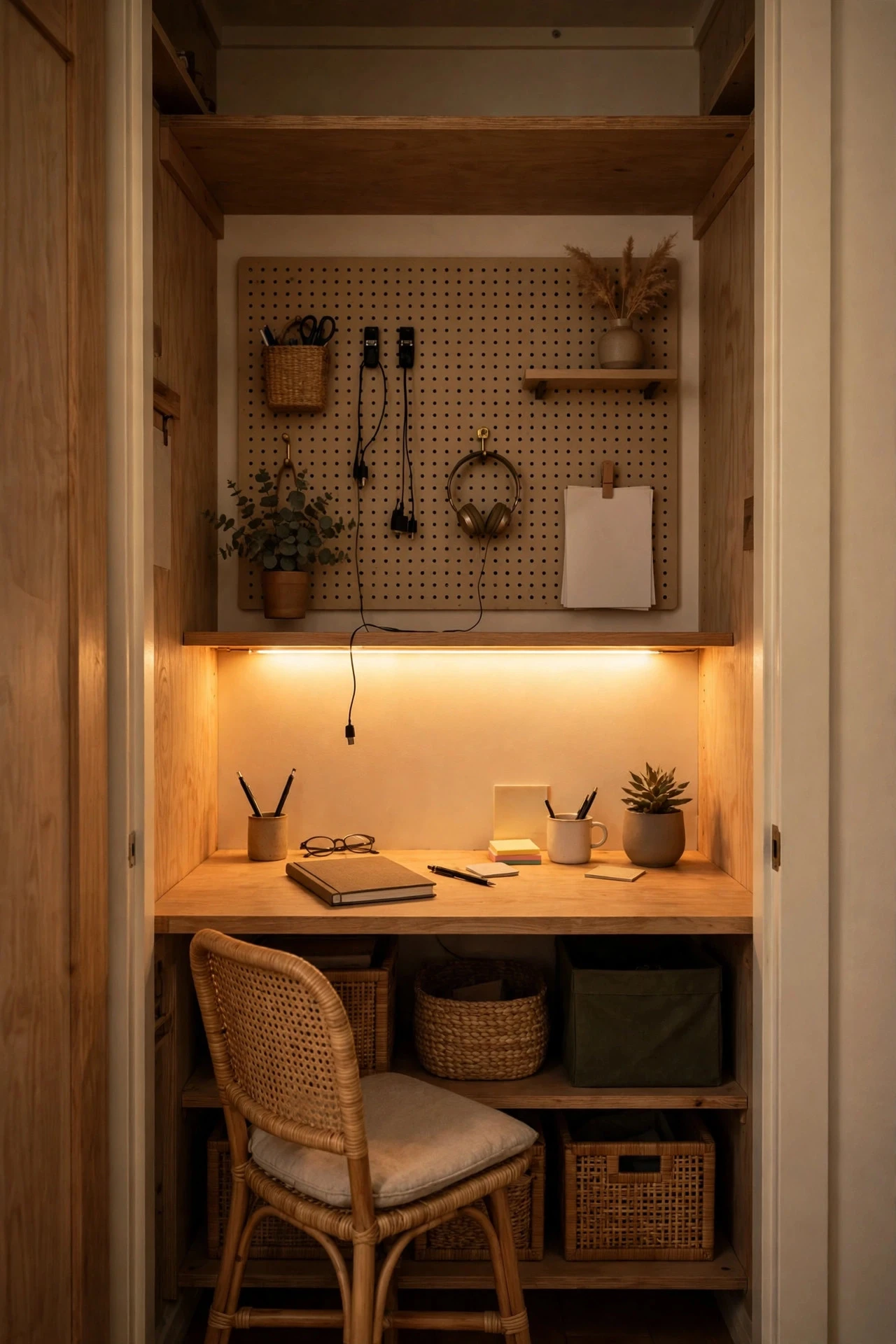
A cloffice — a closet converted into an office — is the smartest use of a spare closet, because the doors close and the workday disappears at 6 p.m. Remove the closet rod and door if needed, then fit a desk shelf 74 cm high across the closet width, usually 90–120 cm wide and 50 cm deep. Add a shelf above at 140 cm for books and a task light, plus a power strip mounted inside the frame. Budget $100–$300 for the shelf, paint, lighting and a slim chair that slides in fully. Paint the interior a light warm white or pale sage to bounce light around, and add a peel-and-stick wallpaper accent on the back wall for personality. Avoid cramming a deep chair into a shallow closet — measure the depth first, and if it is under 60 cm, use a stool or a perch chair instead.
4. How Small Can a Home Office Desk Be Without Hurting Your Posture?
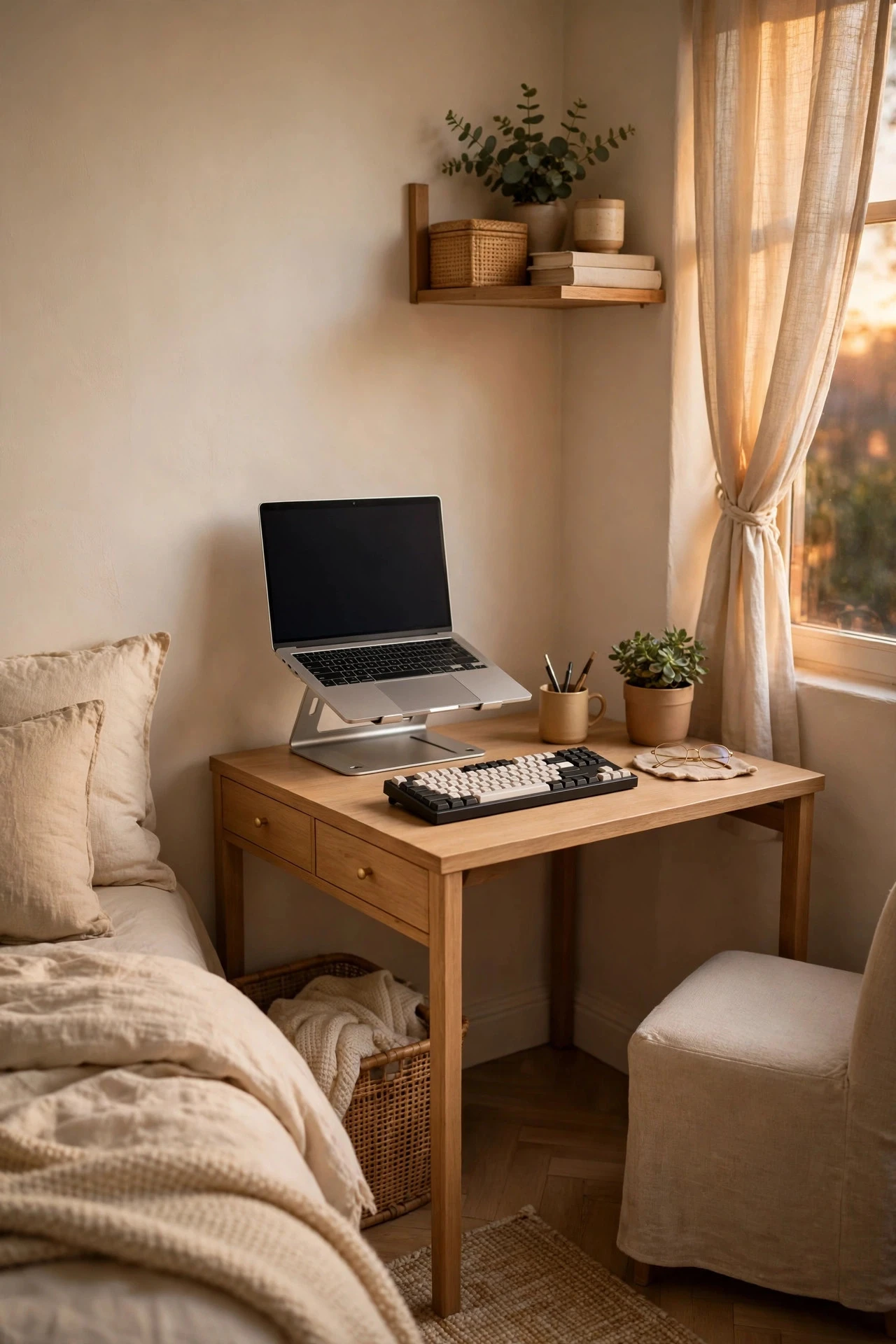
The smallest desk that still protects your posture is 100 cm wide and 50 cm deep for laptop work, or 120 cm by 60 cm if you add an external monitor. A slim console-style desk at 40 cm deep looks elegant but forces you to hunch, so reserve it for short sessions only. Budget $60–$180 for a slim writing desk with a modesty panel, and pair it with a laptop stand that raises the screen to eye level plus a separate keyboard. Avoid desks under 70 cm high or over 78 cm high — both force your shoulders up or your wrists down. If the desk is fixed height, adjust your chair instead and add a footrest so your feet stay flat.
5. Where Should You Put a Desk in a Bedroom Without Ruining Sleep?
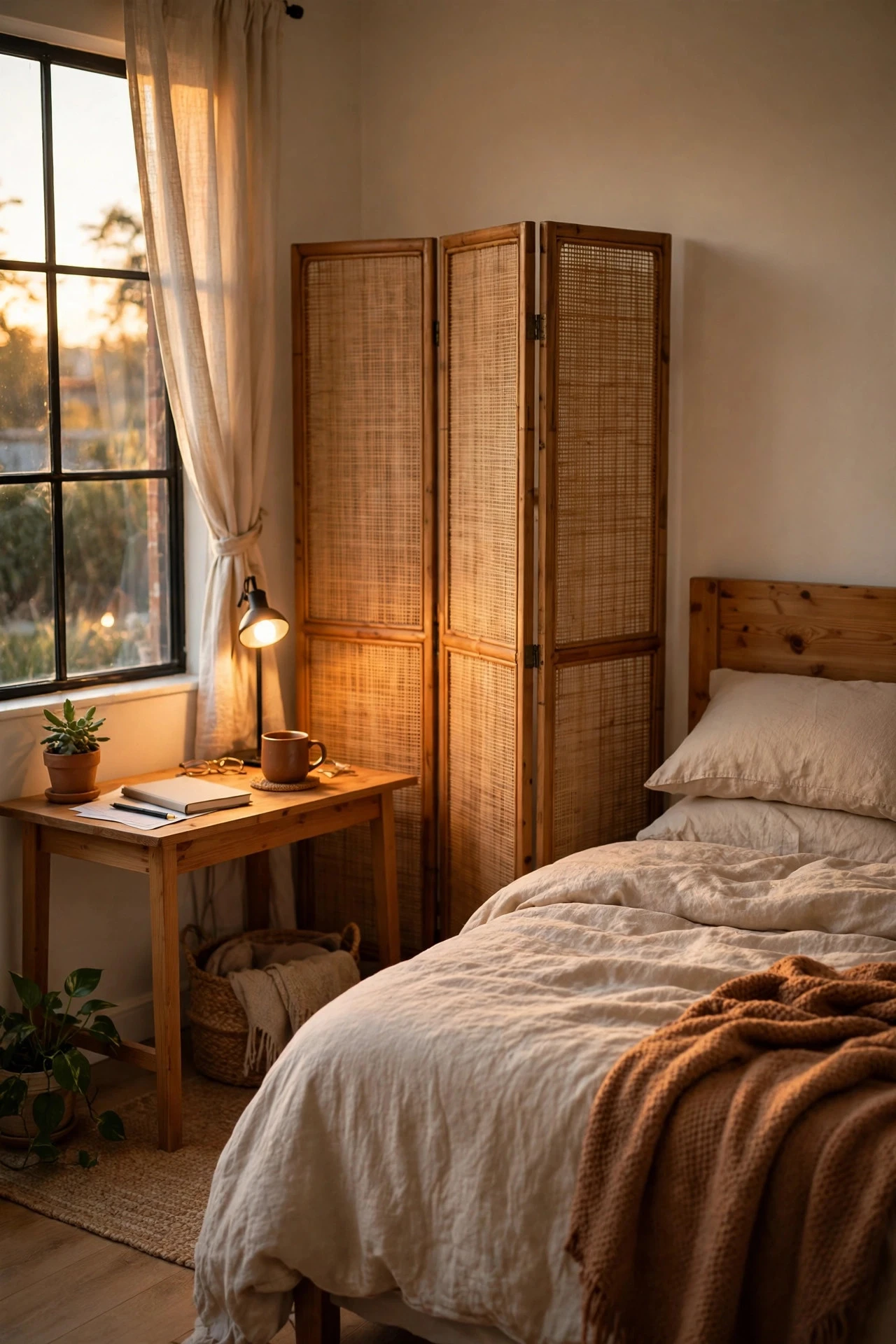
Place a desk in a bedroom near the window and facing into the room, not facing the bed, so work and sleep stay visually separate even in one small room. A 100 cm desk tucked beside the wardrobe or at the foot of the bed works well, with a room divider, curtain or tall plant marking the boundary. Keep the desk surface clear at night — a closed laptop and a tidy tray signal that work is finished. Budget $80–$220 for the desk plus a $30–$60 folding screen or curtain rail. The same zoning trick that makes a bedroom reading nook feel calm and separate works here: a defined corner, a single task light and one comfortable chair. Avoid placing the desk where you can see it from the bed, because glowing screens and paperwork keep your brain in work mode. A small rug under the desk also anchors the zone and softens the transition.
6. Can a Fold-Down Desk Give You a Real Office in Zero Floor Space?
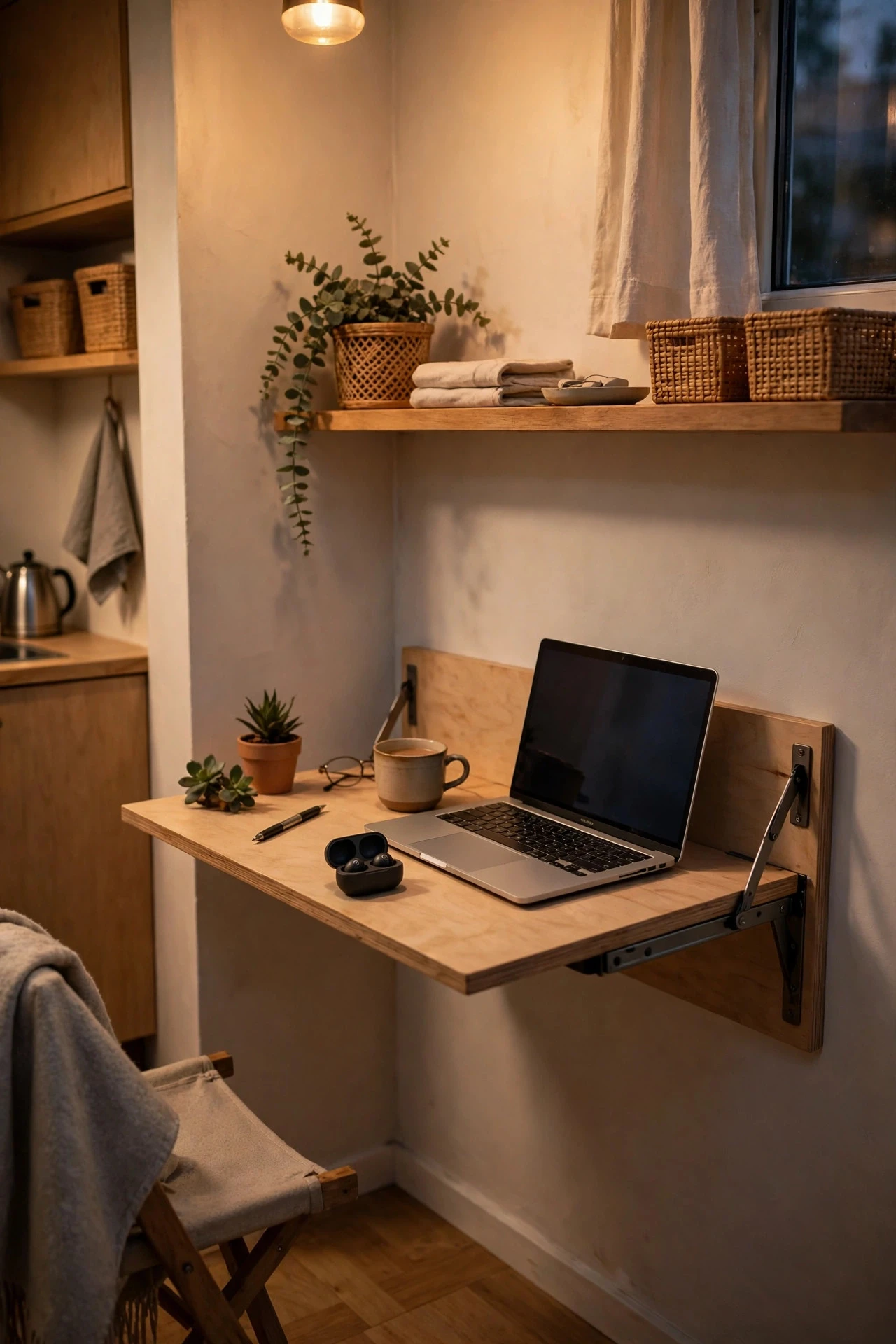
A fold-down desk is the best option when you have literally no spare floor space, because it folds flat against the wall when the workday ends. Choose a wall-mounted drop-leaf desk 80–100 cm wide and 45–55 cm deep when open, mounted at 74 cm height with sturdy hinges and a locking stay. Budget $70–$180 for a good fold-down unit, and add a wall-mounted shelf above for a lamp and supplies. Avoid cheap hollow-core fold-down desks that sag under a monitor — solid wood, plywood or metal frames hold up far better. The trade-off is discipline: you must clear the desk to fold it away, which is actually a gift, because it forces a daily shutdown routine. Pair it with a folding chair or a stool that hangs on a wall hook.
7. How Do You Choose a Chair That Fits a Tiny Office?
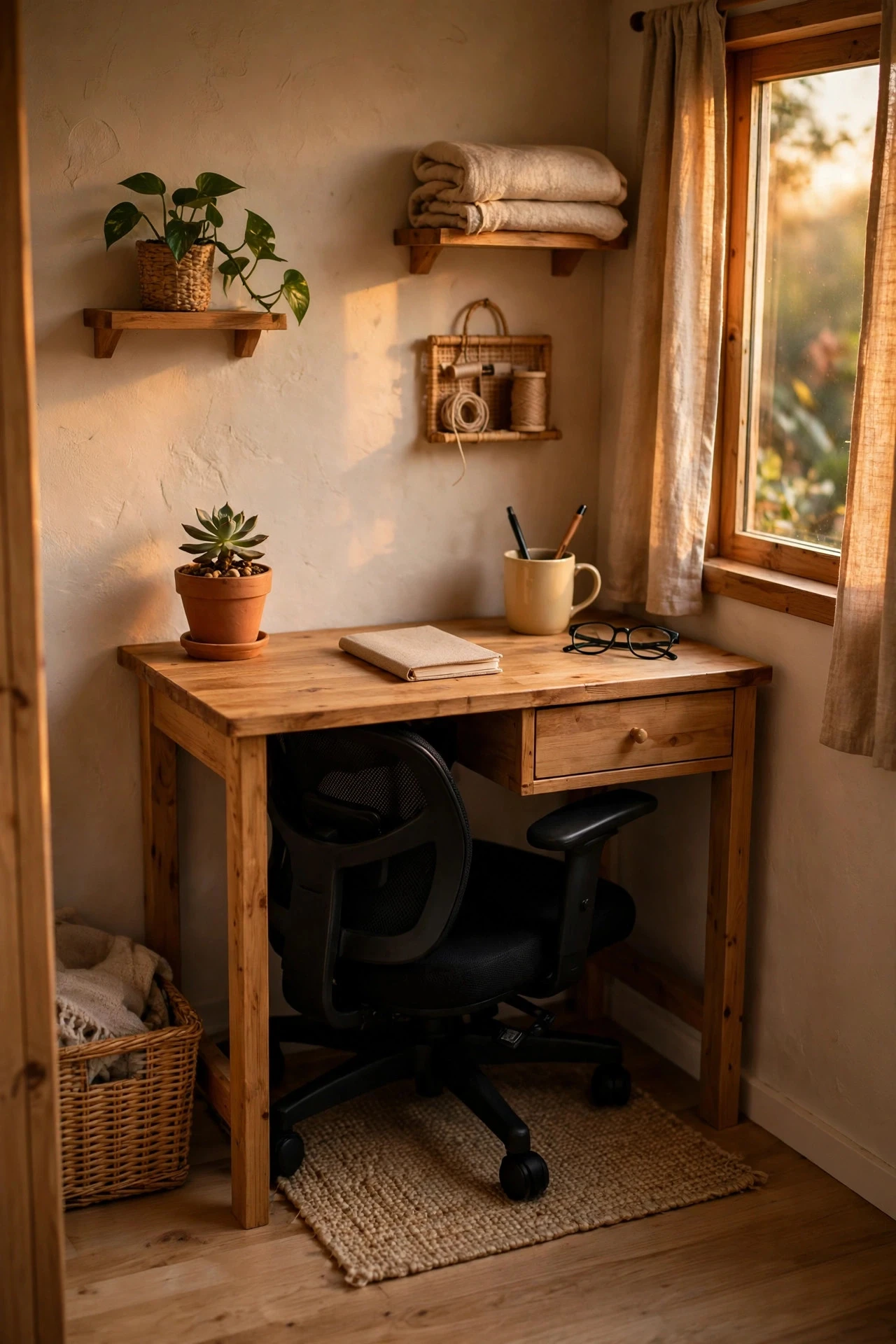
Choose a chair by its footprint first and its looks second, because a beautiful chair that blocks the doorway is useless. Measure the space: you need roughly 60 cm width for the chair and 75 cm clearance behind the desk to roll back and stand. Look for a compact task chair with adjustable seat height (42–52 cm), lumbar support and armrests that slide under the desk — armless chairs save 10–15 cm and suit very tight corners. Budget $120–$300 for a decent ergonomic task chair; cheaper chairs without lumbar support cost more in back pain within weeks. Avoid bulky executive chairs with wide bases in small rooms, and avoid dining chairs for full-time work — they lack height adjustment and lumbar support. If space is extremely tight, a kneeling chair or a balance stool works for short sessions, but keep a proper task chair for long days.
8. What Vertical Storage Actually Works Above a Small Desk?
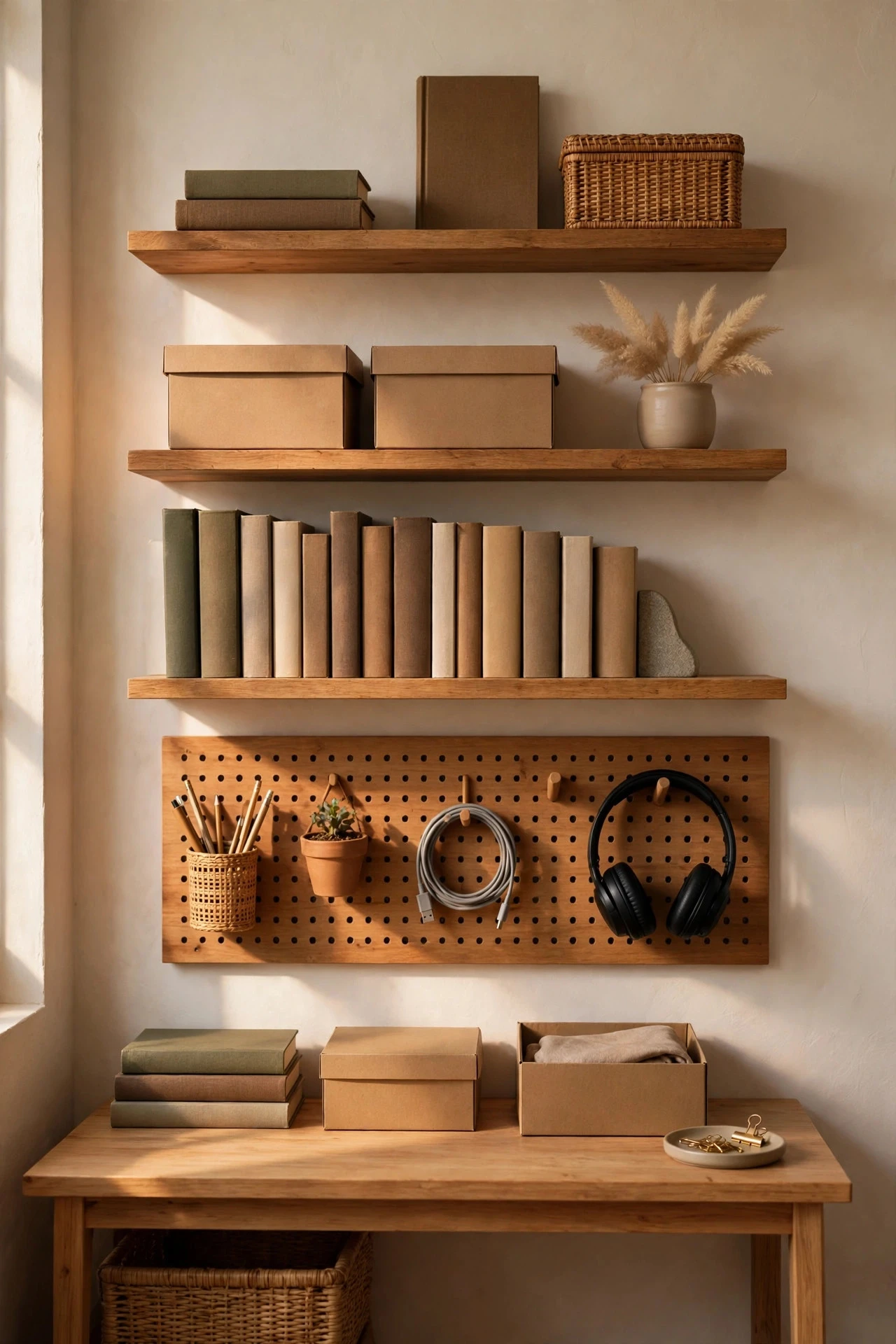
Vertical storage works when it uses the wall above your desk instead of the floor beside it, and the rule is simple: keep daily items within arm's reach and archive the rest higher up. Fit one shelf 40 cm above the desk for a lamp and phone, and a second shelf at 70–80 cm above the desk for books and boxes — both 20–25 cm deep so they never loom over your head. Add a pegboard or a rail with hooks for headphones, cables and scissors. Budget $40–$120 for the shelves and pegboard, using brackets rated for the load. Avoid open shelves crammed edge to edge, which look cluttered on video calls and collect dust. A single closed box or basket per shelf keeps the wall calm. For more small-space storage thinking, the same vertical approach that makes tiny bedrooms feel bigger applies here: go up, not out.
9. How Do You Light a Small Office for Video Calls and Late Work?
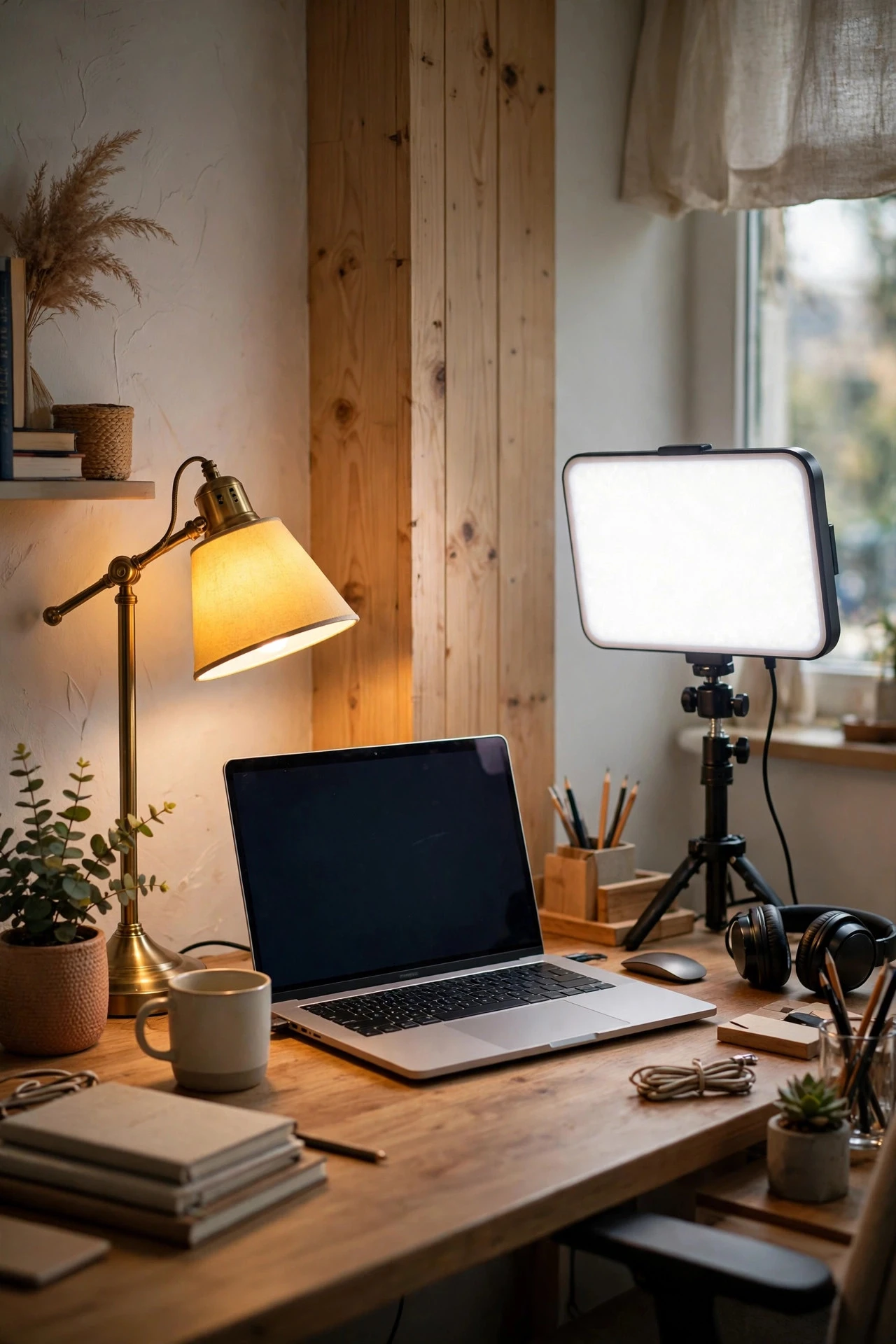
Light a small office in layers: daylight or a daylight lamp for your face, a warm desk lamp for tasks, and a soft ambient glow so the room never feels like an interrogation room. For video calls, face the window or place a 5600K daylight lamp behind your camera at eye level, about 60 cm away — never put a bright window behind you, or you become a silhouette. A good LED desk lamp with adjustable colour temperature costs $30–$70, and a small ring light costs $25–$50. Avoid a single harsh overhead bulb, which casts shadows under your eyes and flattens the room. If your office is a windowless cloffice, add an LED strip under the shelf at 3000–4000K for warm, even light, and paint the walls light to bounce it around.
10. What Makes a Good Video-Call Backdrop in a Small Room?
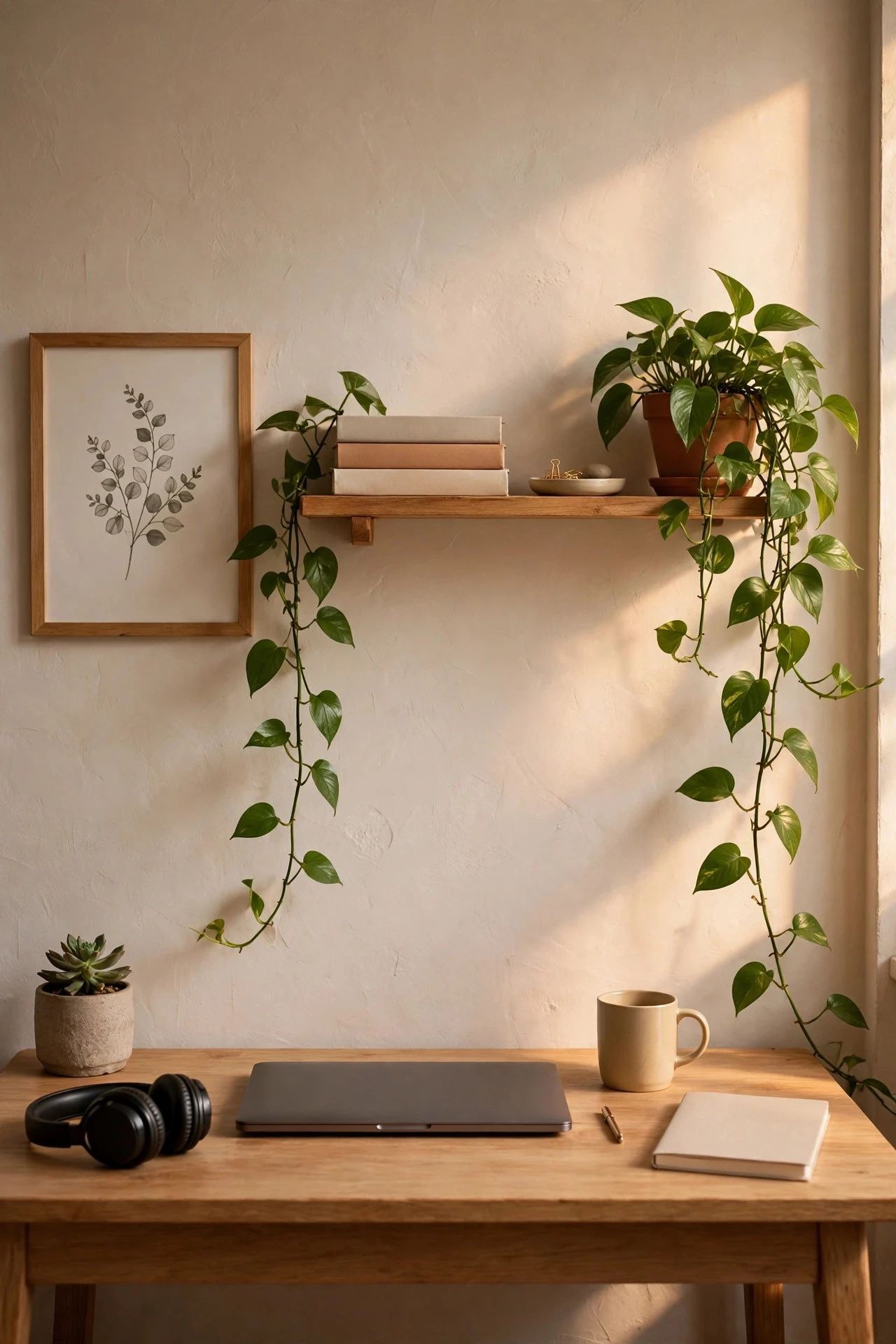
A good video-call backdrop is tidy, calm and personal without being distracting — one framed print, a plant and a shelf tell a better story than a blank wall or a messy bookshelf. Position your desk so the camera sees a plain wall or a styled shelf, not your bed, kitchen or a doorway with people walking past. A 60 cm wide backdrop zone is enough: a small floating shelf, one piece of art and a trailing plant like pothos. Budget $30–$80 for a frame, a plant and a shelf if you do not already own them. Keep colours muted and avoid bright patterns, mirrors or anything that moves in the background. If the room behind you is genuinely chaotic, a simple fabric room divider or a curtain on a tension rod costs $40–$90 and hides it instantly.
11. How Do You Hide Cables in a Small Office Without a Big Budget?
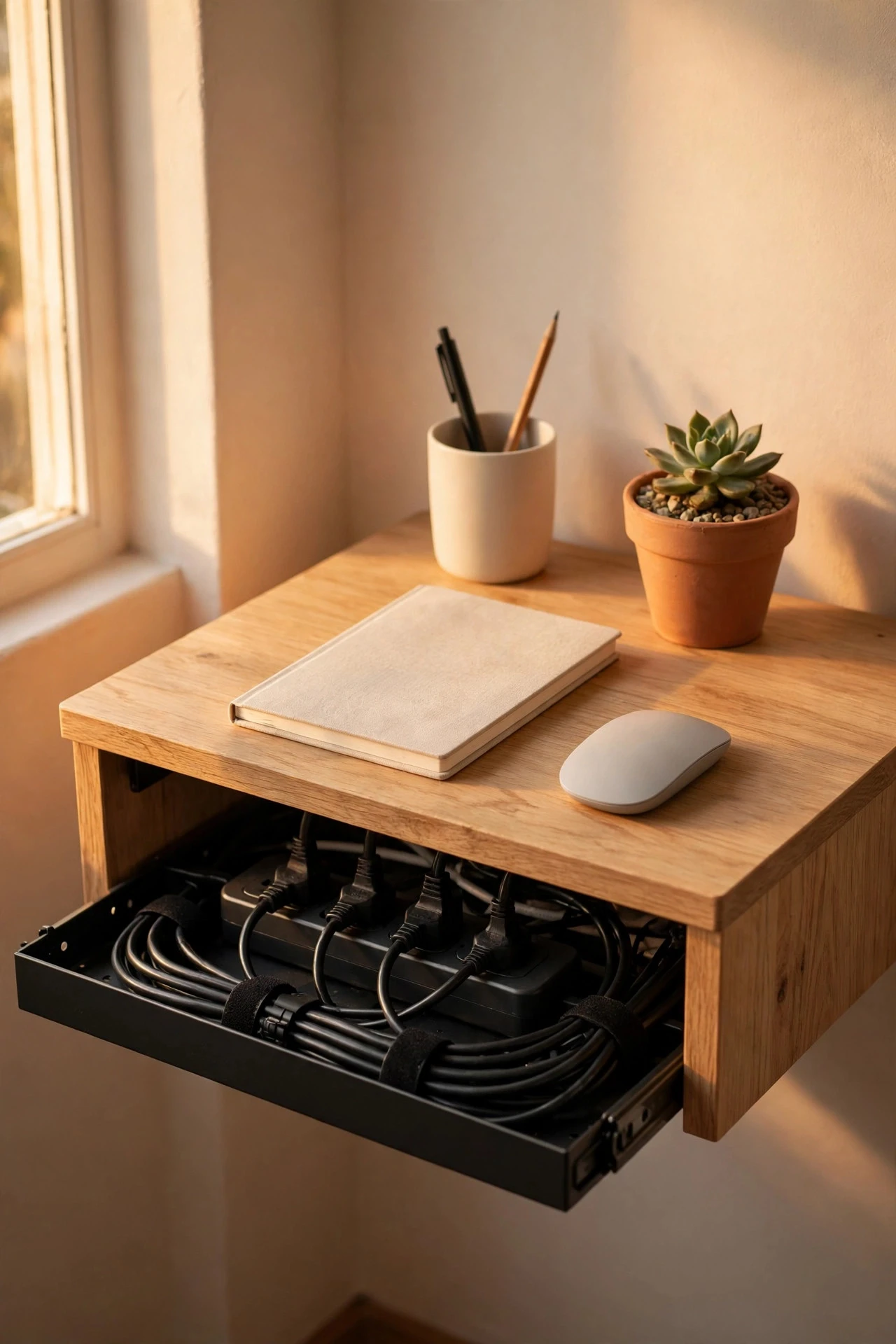
Hide cables by giving every cable a short, fixed route from device to power, because loose cables are the fastest way a small office looks messy. Start with a power strip mounted under the desk with adhesive or screws, then run cables through a $10–$20 cable tray or a fabric cable sleeve. Use velcro ties, not zip ties, so you can rearrange things later, and label each plug with masking tape. A cable grommet hole in the desk — about 60 mm wide — lets monitor and lamp cables drop straight down instead of draping over the edge. Budget $20–$50 for a tray, sleeve, ties and a strip. Avoid running cables across walkways, which is a trip hazard, and never overload one strip with heaters, printers and chargers. If your desk is floating, a slim cable channel painted the wall colour hides the vertical drop neatly. The result is a desk that photographs well and a floor you can actually clean.
12. Can a Landing, Hallway or Under-Stair Nook Become an Office?
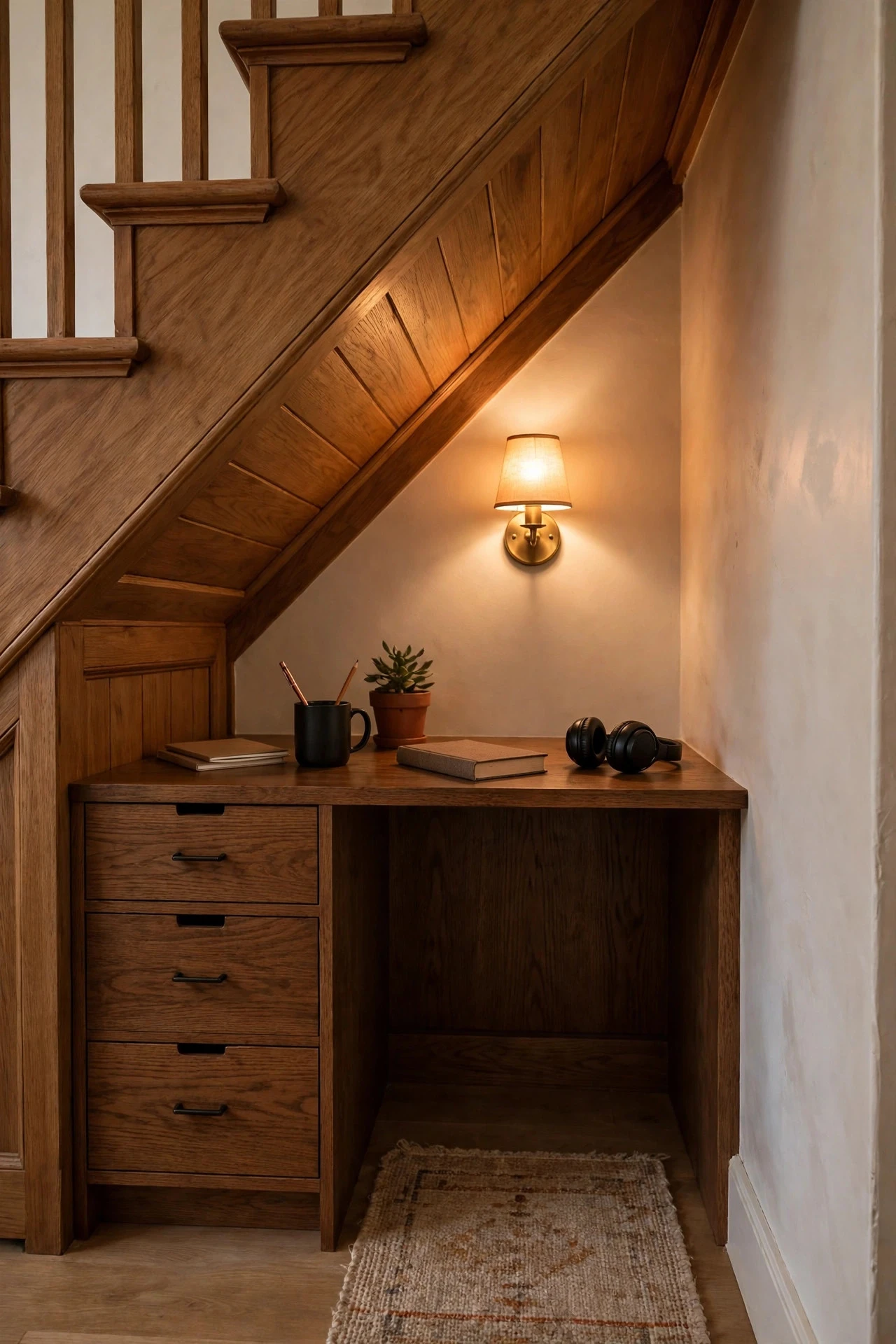
A landing, hallway or under-stair nook becomes a workable office when you treat it as a defined zone with a desk, light and a clear edge, rather than a laptop balanced on a shelf. Under stairs, fit a desk 100–120 cm wide into the tallest section and use the lower, sloping side for drawers or shelves — you need at least 140 cm of headroom where you sit. On a landing, a 90 cm floating desk plus a wall light uses dead space without blocking the walkway, which needs 80 cm clear. Budget $100–$250 for the desk and lighting, plus a slim chair that tucks away. Avoid placing a desk where it blocks a fire exit, a doorway or the only route to a bathroom. Noise is the main drawback, so add a rug, soft furnishings and noise-cancelling headphones for focus calls.
13. How Do You Add Plants to a Small Office Without Losing Desk Space?
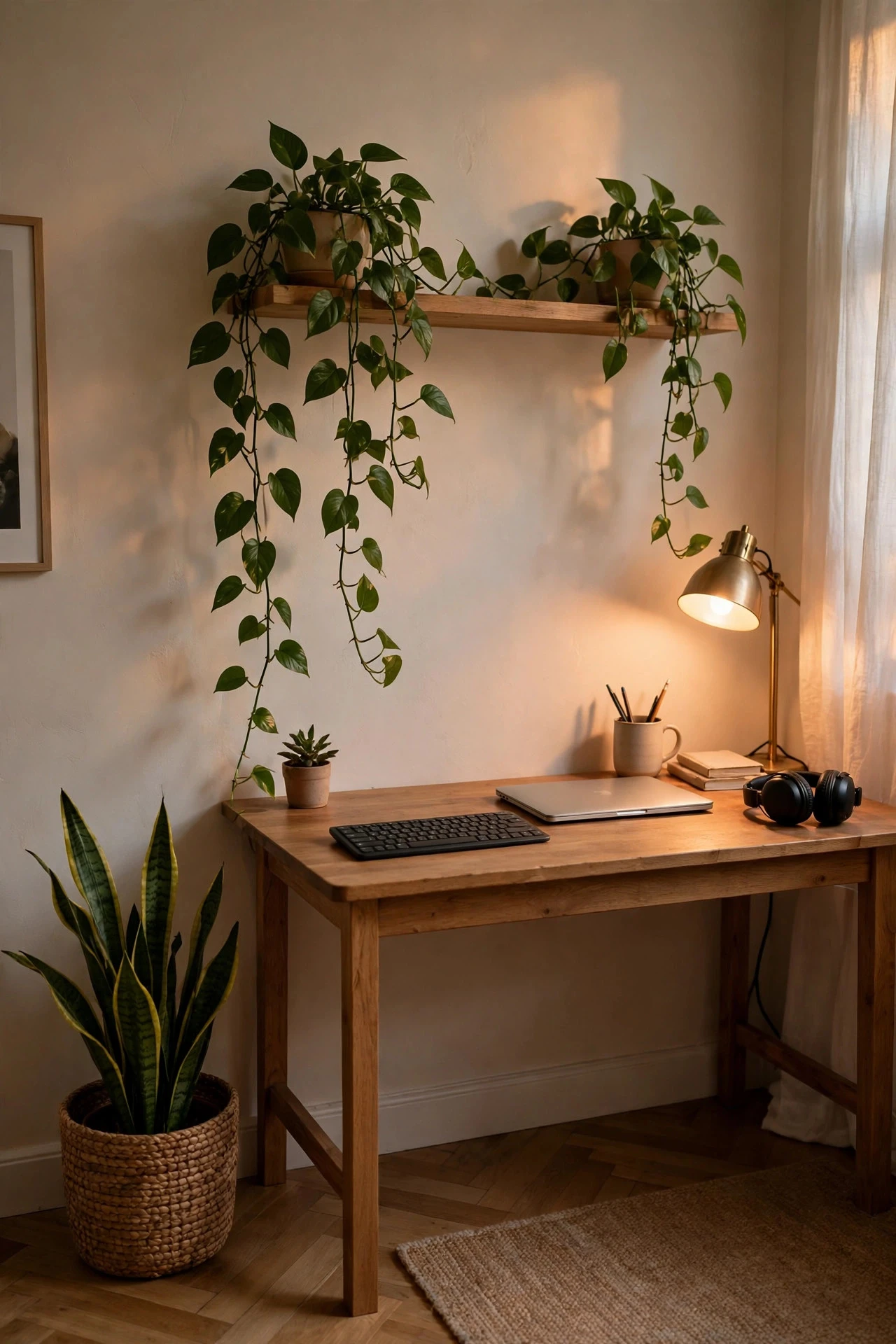
Add plants to a small office on walls, shelves and hanging planters, never on the desk surface you need for work. A trailing pothos on a shelf above the desk, a small snake plant on the floor beside it and a hanging planter near the window give you greenery without sacrificing a single centimetre of worktop. Snake plants and ZZ plants tolerate low light and irregular watering, while pothos thrives in bright indirect light. Budget $20–$60 for three small plants and pots. Avoid large floor plants in a tiny office — they eat the legroom and make the space feel cramped. According to The Spruce, low-maintenance plants like snake plants and pothos are among the best choices for workspaces because they tolerate neglect and low light. One plant at eye level is enough to soften a video-call backdrop too.
14. What Is the Best Monitor Setup for a Small Desk?
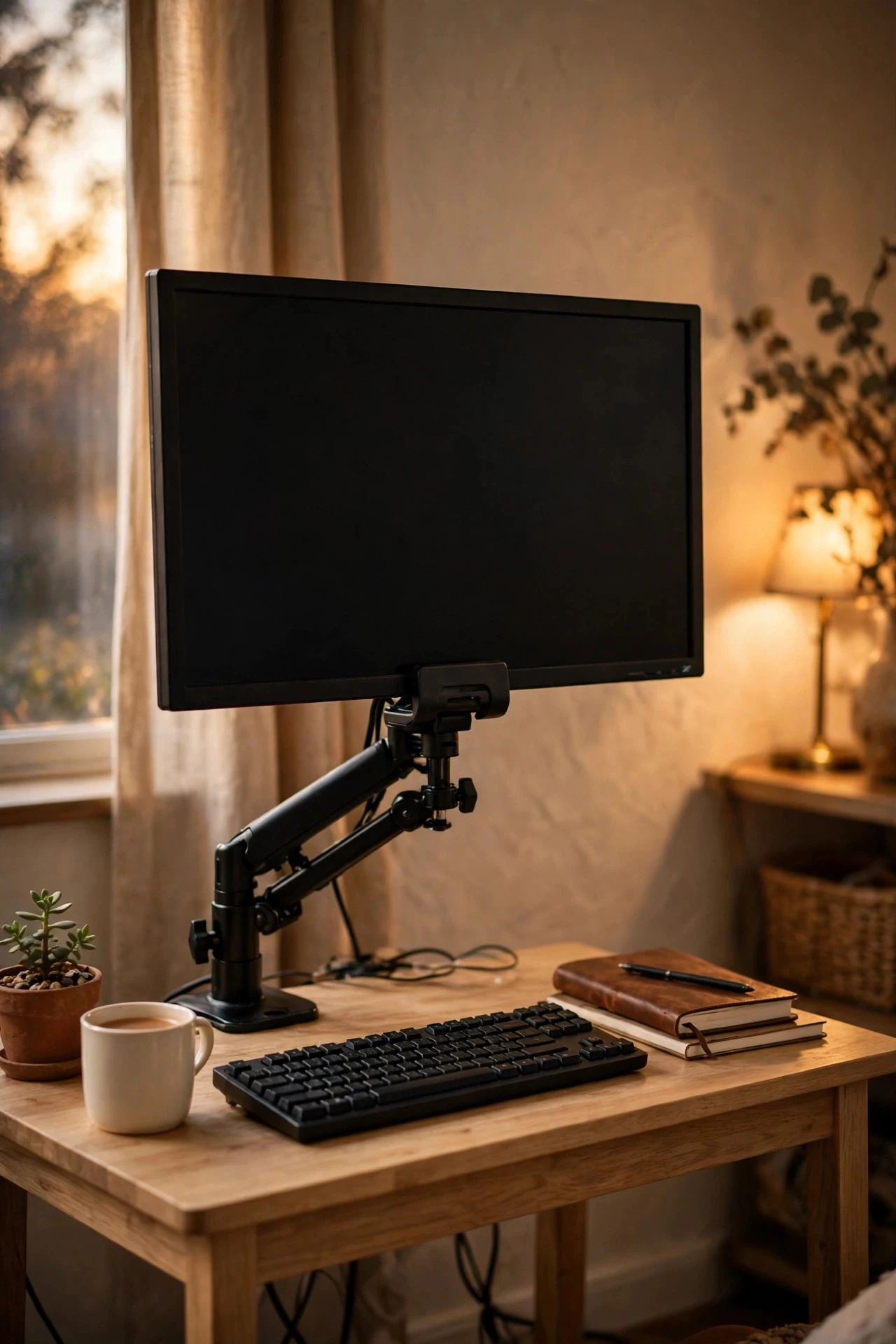
The best monitor setup for a small desk is a single 24–27 inch monitor on an arm, because it lifts the screen off the desk and frees the surface underneath. Clamp a monitor arm to the back edge of the desk — it needs only a 5 cm lip — and position the screen 50–70 cm from your eyes with the top of the screen at or just below eye level. A 24-inch monitor suits a 100 cm desk, while a 27-inch monitor needs 120 cm of width to avoid dominating the space. Budget $120–$250 for a good monitor and $30–$70 for a single arm. Avoid dual monitors on a desk under 120 cm wide, which forces neck-twisting all day; a single ultrawide is kinder in tight spaces. If you use a laptop as your main screen, a stand plus a separate keyboard is non-negotiable for posture. Keep the monitor cable routed through the arm or a sleeve so it never dangles.
15. How Do You Create Privacy in an Open-Plan Small Home?
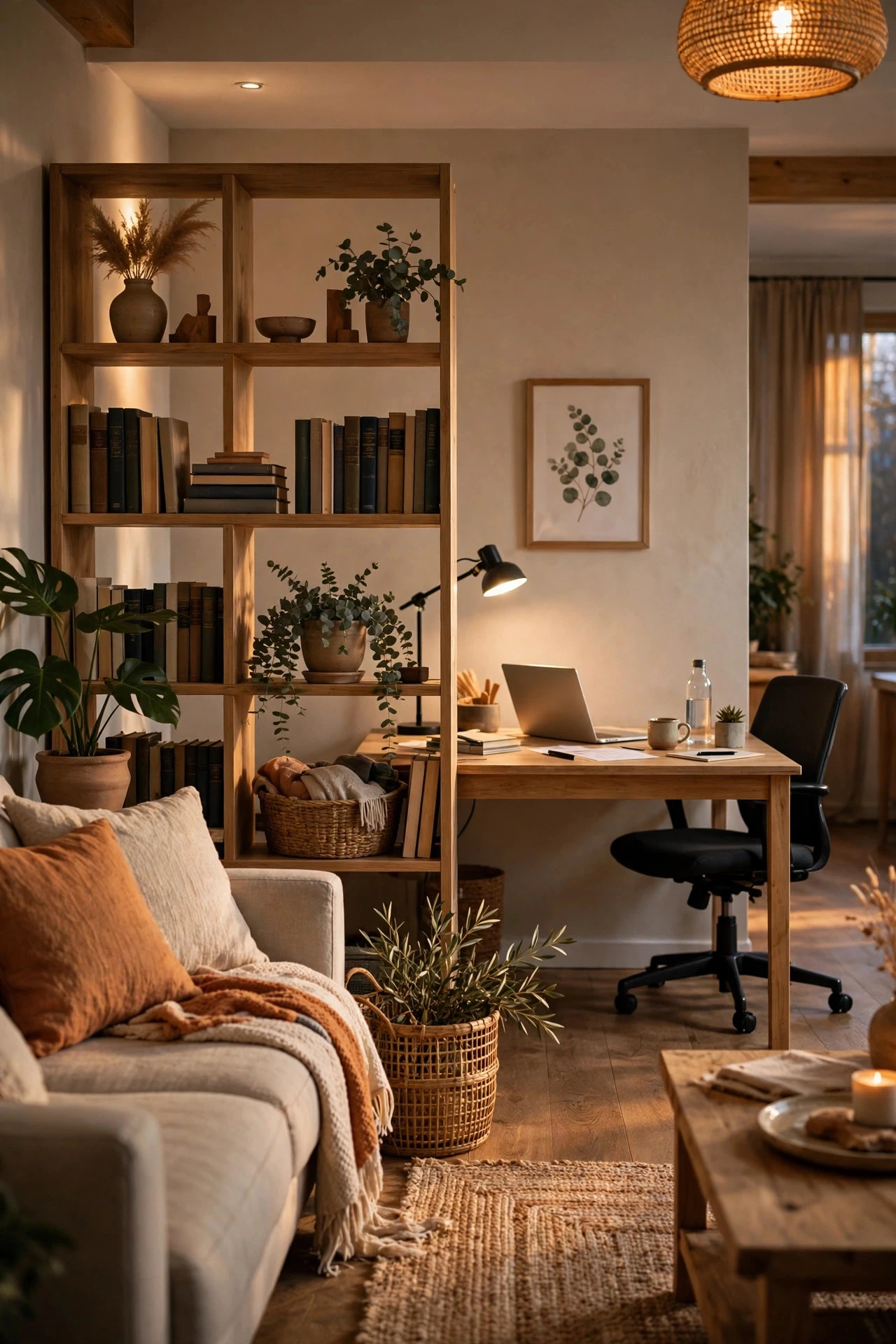
Create privacy in an open-plan home with a visual boundary and a sound buffer, because a small office without edges never feels like a workplace. A 120 cm high bookshelf, a folding screen or a curtain on a ceiling track marks the zone without building a wall, and a rug underneath it reinforces the boundary underfoot. Add a pair of noise-cancelling headphones ($60–$200) and a small white-noise machine or app for focus time. Budget $50–$150 for a screen or shelving divider, and agree household quiet hours for calls. Position your desk with your back to a wall and your screen facing away from the room, so passers-by cannot read your work and you are not distracted by movement behind the screen. Avoid tall, solid dividers in a small room — they block light and make the space feel boxed in. Open shelving, sheer curtains or slatted panels divide the space while letting light through.
16. How Do You Organise Paper, Pens and Supplies in a Tiny Office?
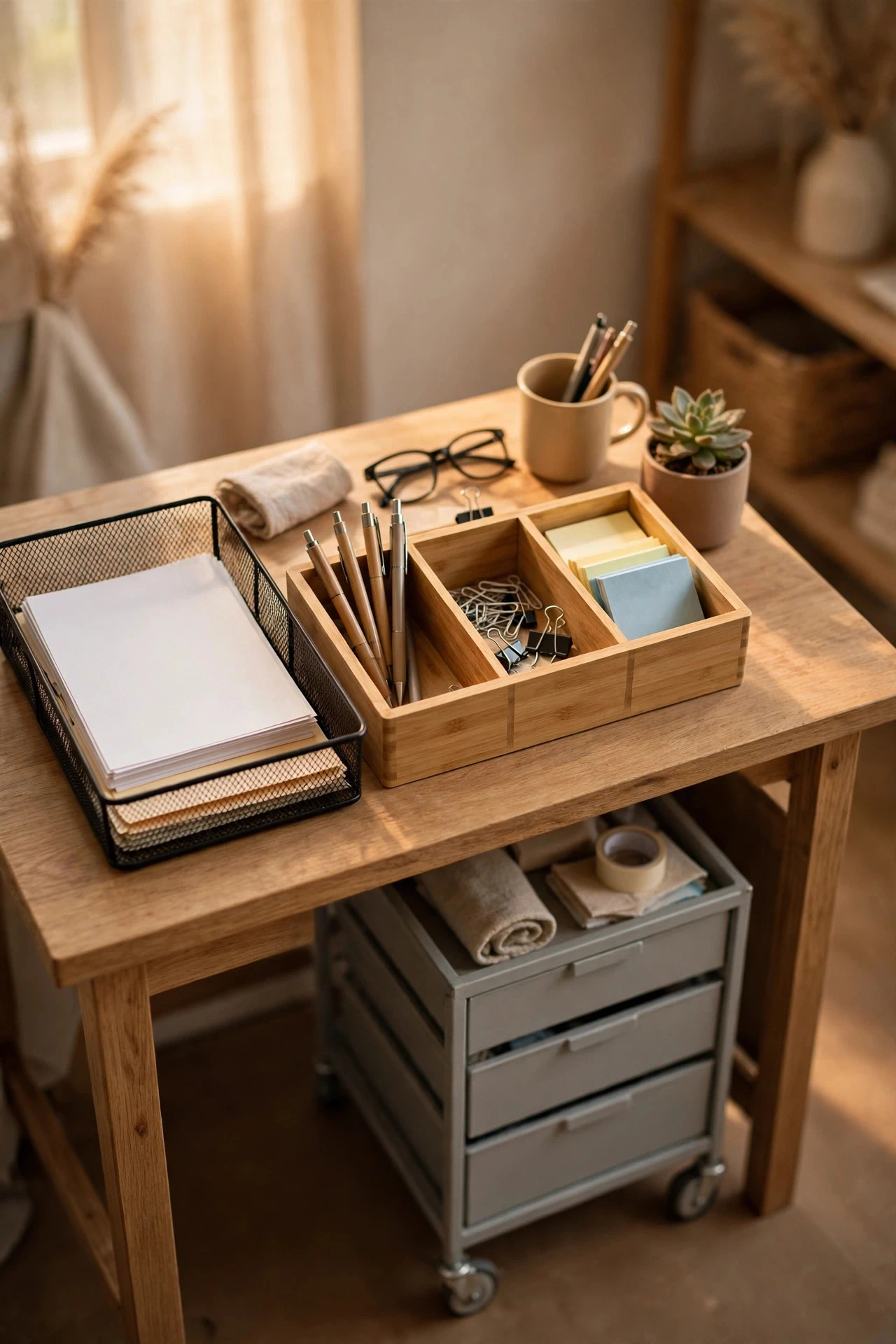
Organise supplies by the rule of one home per item, because a tiny office has no room for a junk drawer that swallows everything. Use a desk organiser with three compartments for pens, clips and sticky notes, a single in-tray for incoming paper, and a small drawer unit or rolling cart (30–40 cm wide) that slides under the desk for the rest. Digitise what you can: scan paper the day it arrives and shred the original if you do not legally need it. Budget $30–$80 for an organiser, tray and cart. Keep only this week's papers on the desk; archive the rest in a labelled box on a high shelf. Avoid buying storage before decluttering — measure what you actually keep, then buy containers to fit it, not the other way round. The same discipline that keeps small bathrooms feeling bigger — fewer items, each with a place — works just as well at a desk.
17. What Colours Make a Small Home Office Feel Bigger and Calmer?
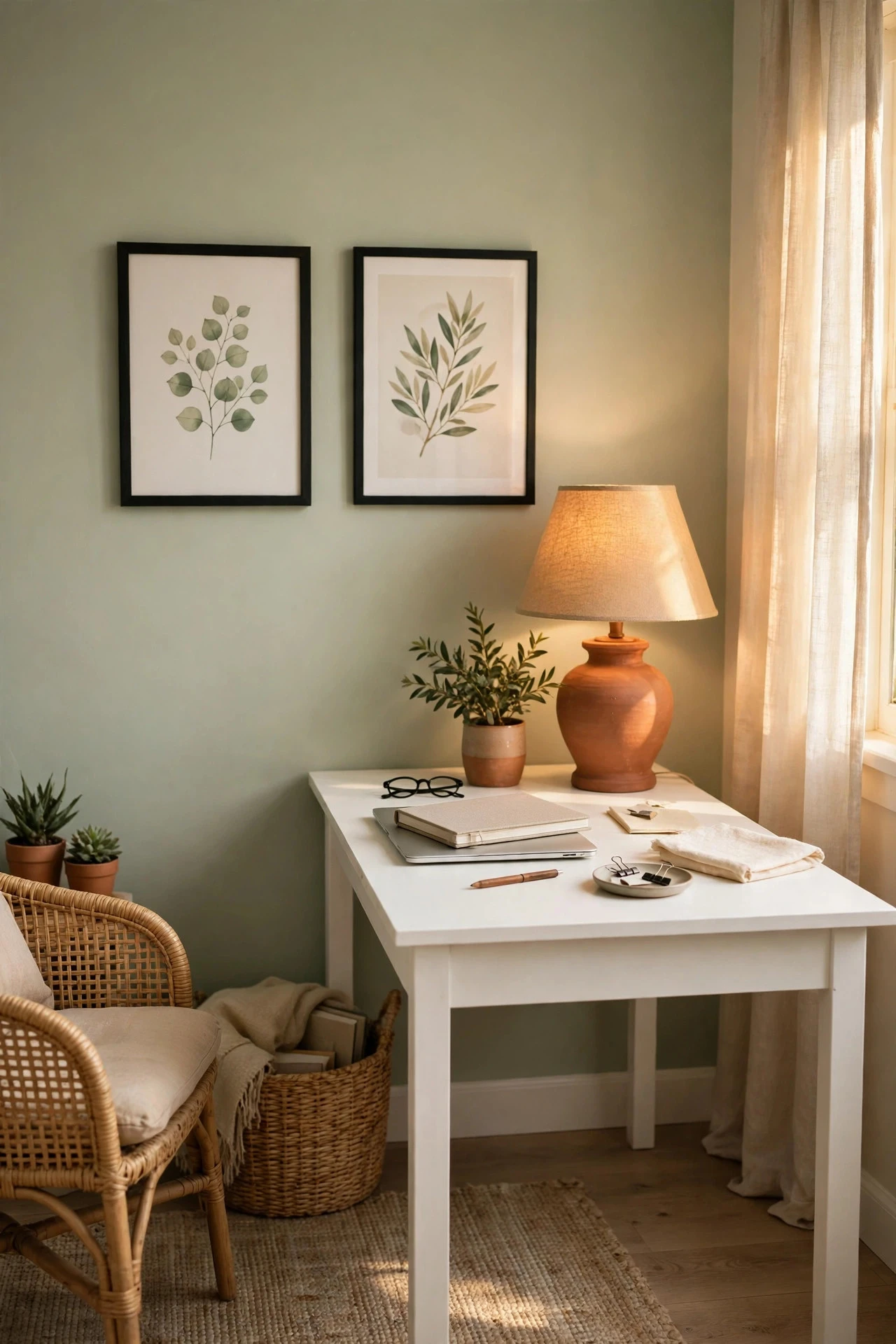
Colours make a small office feel bigger when the walls, desk and storage share one light, cohesive palette with a single accent. Warm white, pale sage, soft greige or light blue-grey on the walls reflect light and recede visually, while a desk in pale oak or white blends in rather than dominating. Add one accent — a terracotta lamp, a navy chair cushion or a framed print — so the room has personality without visual noise. Budget $30–$80 for a tin of paint and a cushion or two; painting just the office wall or alcove is enough. Avoid dark walls on all four sides of a tiny office, which shrink the space and demand much more light. Matte paint hides wall imperfections better than gloss in small, close-up spaces.
18. How Do You Soundproof a Small Office on a Budget?
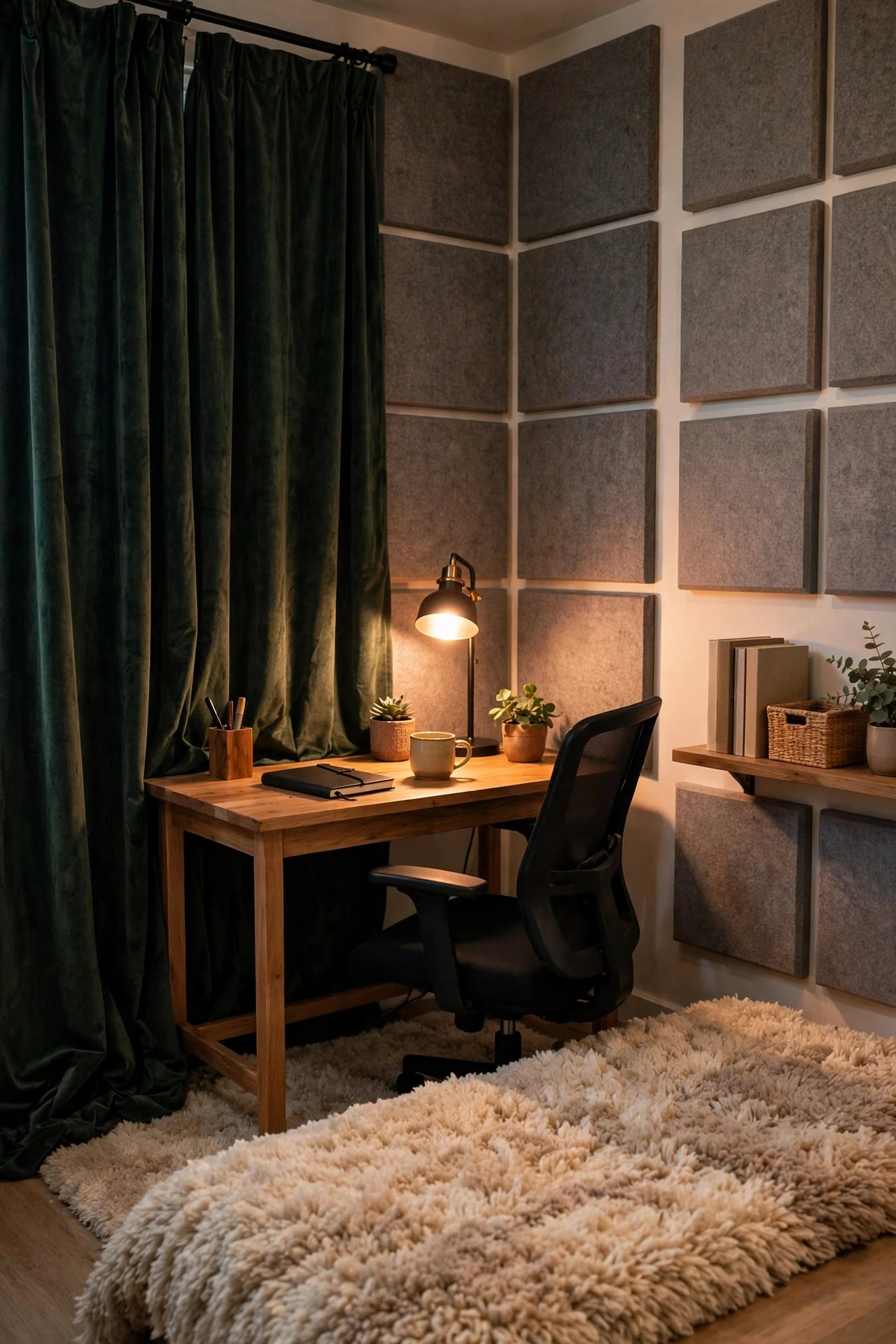
Soundproof a small office by softening hard surfaces and sealing gaps, because most home-office noise is echo and leakage, not volume. Add a thick rug or rug pad under the desk, heavy curtains over the window, and soft furnishings like a cushion or upholstered chair to absorb sound. Seal the gap under the door with a $10–$20 draught excluder, and hang acoustic panels or thick fabric wall hangings on the wall behind you. Budget $50–$150 for a rug, excluder and two acoustic panels. For calls, a headset with a noise-cancelling microphone ($40–$120) does more than any wall treatment. Avoid egg-box foam or thin stick-on tiles marketed as soundproofing — they barely dent real noise. Real soundproofing needs mass and sealing, so focus on the door gap, the window and soft surfaces first. If the office shares a wall with a noisy room, a freestanding bookshelf filled with books against that wall adds mass and muffles sound surprisingly well.
19. Can You Work From a Small Office and a Dining Table Without Chaos?
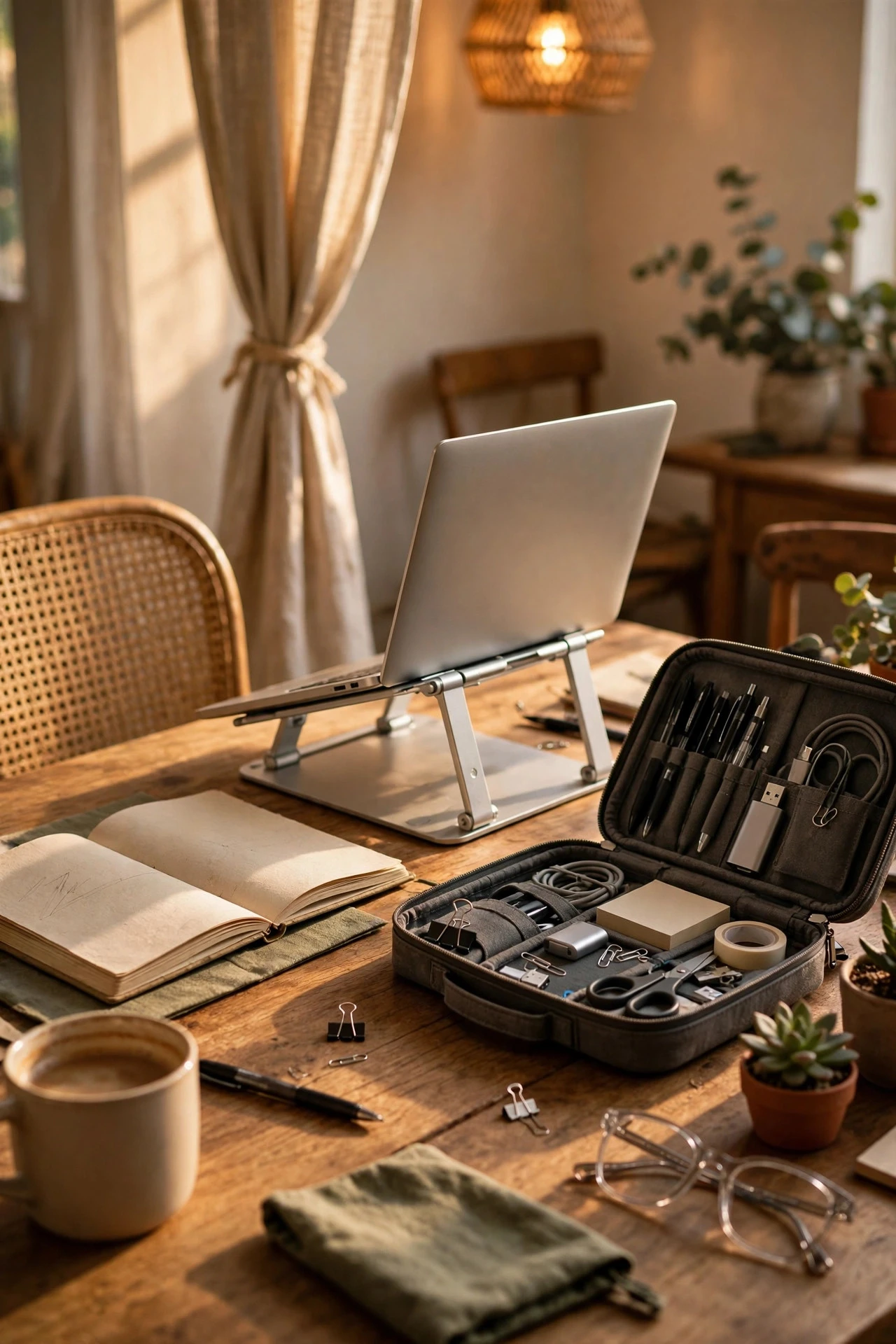
You can share a dining table with work if you use a portable office kit that packs away in five minutes, because the chaos comes from half-packed work, not from sharing the table. Keep a laptop bag, a cable pouch and a document wallet ready, and set up the same way each time: laptop stand, keyboard, notebook and water bottle in the same spots. Budget $50–$100 for the kit, and agree a clear start and finish time so the table returns to family use. The trick is a shutdown ritual: pack the kit, wipe the table and put the chair back, every single day. Avoid leaving chargers, papers or a monitor permanently on the dining table — that is how a shared table becomes a permanent office nobody enjoys. If you work from home full-time, though, even a tiny dedicated corner beats a shared table within weeks, because the mental switch matters as much as the furniture.
20. How Do You Add a Second Workstation for a Partner or Child?
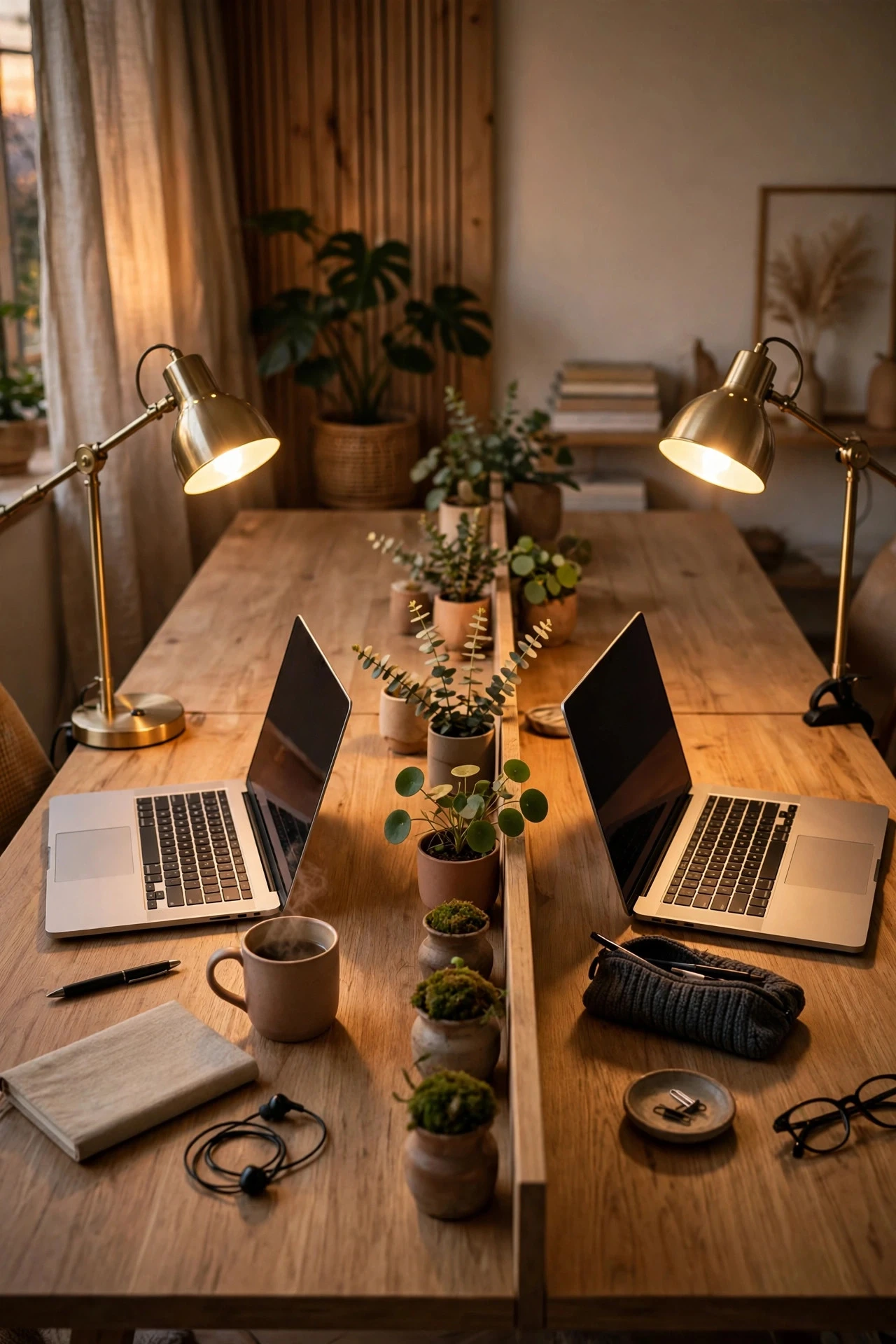
Add a second workstation by sharing one long desk rather than squeezing in two separate desks, because a single 180–200 cm desk along one wall serves two people with far less wasted space. Give each person 90–100 cm of width and their own task light, storage cubby and cable route, and mark the midpoint with a small plant or divider. A back-to-back or side-by-side layout works; facing each other suits collaboration but doubles the distraction. Budget $200–$400 for a long desk plus two compact chairs, or $150–$250 if you build the desktop from a kitchen worktop on legs. Use headphones as the house rule during calls, and agree call hours in advance. Avoid two full monitor arms and two printers in a small room — share the printer on a trolley and keep one monitor each. If space allows only one desk, stagger schedules so each person gets focused hours, and use a fold-down second desk for the overflow worker.
21. What Should Your Daily Shutdown Routine Look Like in a Small Office?
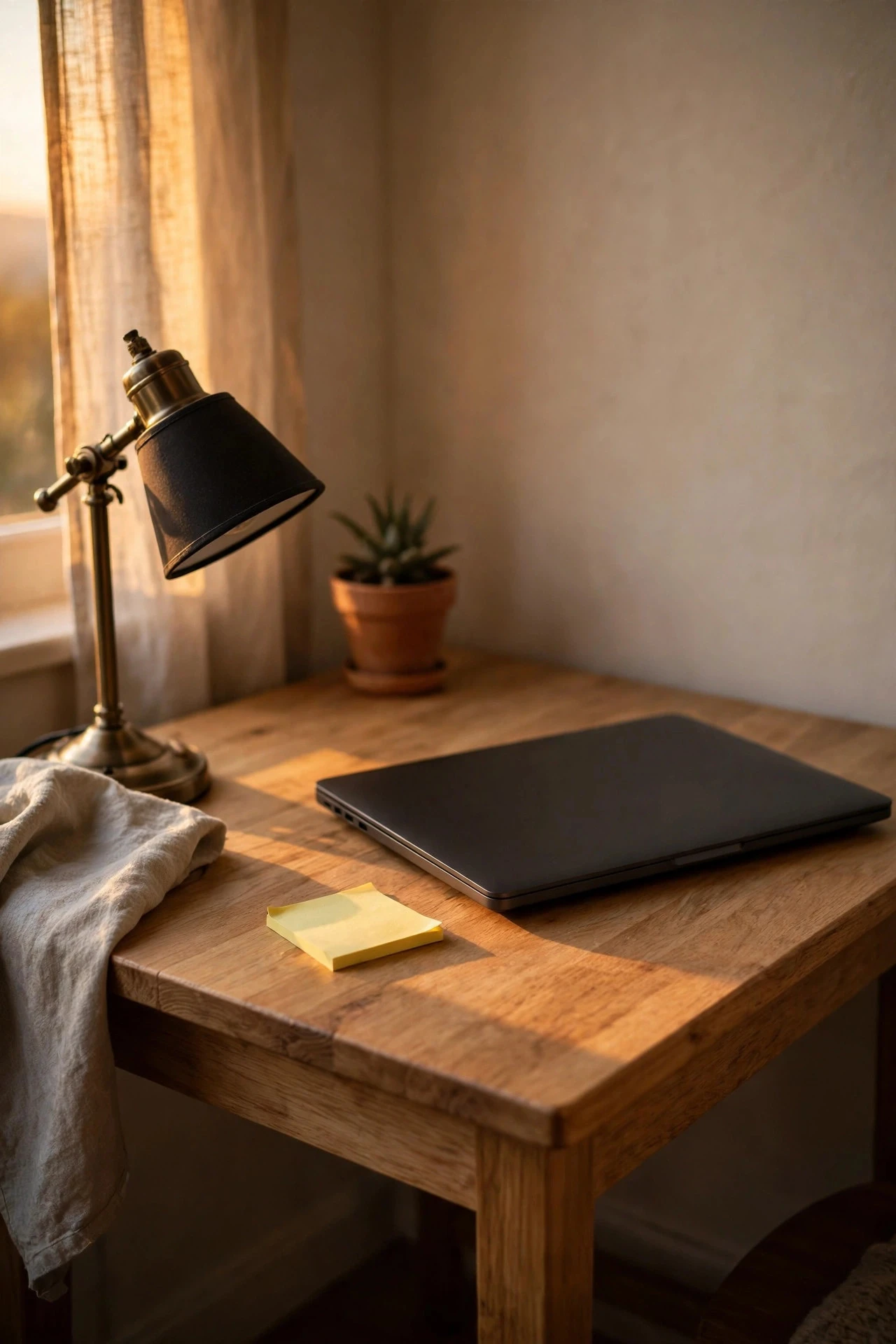
A shutdown routine is the habit that makes a small office sustainable, because the room is also your home and work must visibly end. Spend five minutes at the end of each day: clear the desk to just the monitor and lamp, file today's papers, write tomorrow's top three tasks on a sticky note, close the laptop lid and switch off the power strip. If you have a cloffice, close the doors; if you have a fold-down desk, fold it away; if you share a table, pack the kit. Budget $0 — this idea costs nothing but consistency. The routine matters more in a small space than in a big one, because clutter accumulates faster and there is nowhere to hide it. Avoid the trap of "just one more email" after shutdown, which erases the boundary the routine creates.
22. How Do You Style a Small Office So It Feels Like a Real Room, Not a Cupboard?
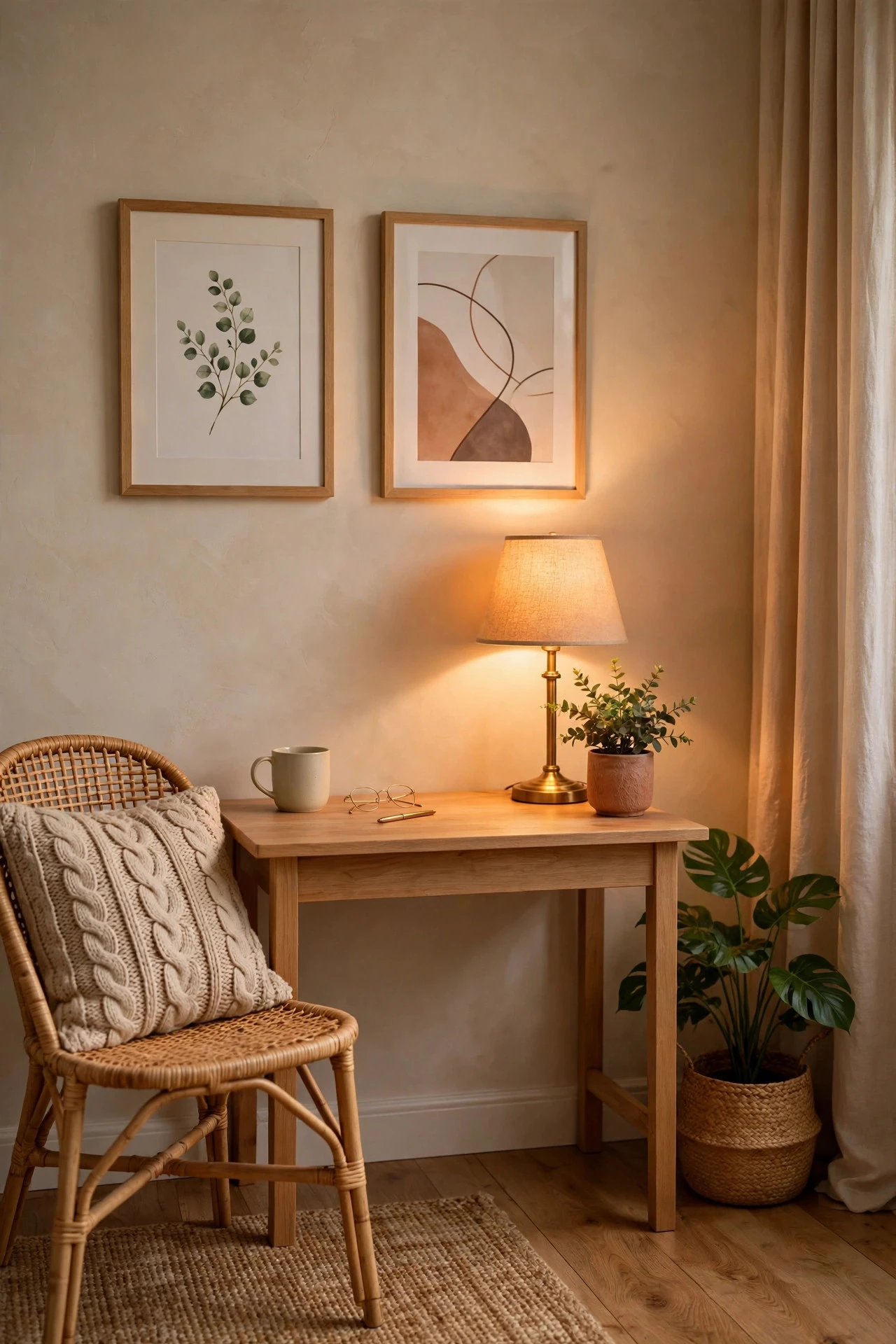
Style a small office like a real room by layering texture, art and light, not by adding more furniture. Choose one framed print or a small gallery of three frames above the desk, a textured cushion on the chair, a warm desk lamp and a plant — four elements are enough. Keep the desk surface 70% clear so the styling reads as intentional rather than cluttered. Budget $50–$120 for a frame, cushion, lamp shade and plant pot in one cohesive palette. Match metals and woods: if the desk is oak, choose brass or black accents consistently, not a mix of chrome, brass and copper. The same layering that gives a living room a fresh, lived-in look — texture, one focal point, warm light — works at desk scale too. Avoid themed desk accessories in bulk, motivational posters in every corner and anything that needs dusting daily.
Practical Tips
Ergonomics first. Set your chair so your feet rest flat and your knees sit at roughly 90 degrees, with the screen top at eye level and 50–70 cm away. Take a short standing or stretching break every 45–60 minutes, and keep a water bottle on the desk so hydration does not require a trip across the house. A footrest costs $20–$40 and fixes the most common small-desk complaint: dangling feet.
Light for the task, not just the room. Use a daylight lamp behind the camera for calls, a warm desk lamp for reading, and avoid working with your back to a bright window. If your eyes feel tired by mid-afternoon, the lamp is probably too dim or too cool — try 4000K and a larger shade. Architectural Digest notes that layered lighting and a considered desk position transform even the smallest workspaces.
Cables and noise. Route every cable through a tray or sleeve, mount the power strip under the desk, and label plugs so you can unplug one device without tracing a tangle. For noise, a rug, curtains and a door draught excluder do more than expensive foam, and a noise-cancelling headset is the single best purchase for shared homes. Keep a pair of headphones on a wall hook, not on the desk, so they never compete for space.
Final Thoughts
A small home office works when every choice earns its place: a desk that fits your body, a chair that supports long days, light that flatters you on camera, and storage that keeps the surface clear. Start with the desk and chair, add light and cable control, then style the backdrop last — in that order, a tiny corner becomes a workspace you actually want to sit in.
Frequently Asked Questions
How much space do you need for a small home office?
You need a minimum footprint of about 100 cm wide by 60 cm deep for the desk, plus 75 cm of clearance behind the chair so you can stand up. That is roughly 1.5 square metres in total. A corner, closet or landing can work if it meets those dimensions, and a floating or fold-down desk reduces the footprint further.
What is the best desk size for a small home office?
The best desk size is 120 cm wide by 60 cm deep for most people, because it fits a monitor, keyboard and notebook without crowding. If you work from a laptop only, 100 cm by 50 cm is enough. Avoid desks narrower than 90 cm or shallower than 45 cm for full-time work.
Can you work full-time from a closet office?
Yes, you can work full-time from a closet office if the closet is at least 90 cm wide and 60 cm deep, with a desk at 74 cm height, good lighting and ventilation. Add a shelf above the desk, a power strip inside, and a slim chair that slides fully in. Leave the doors open while working.
How do I make my home office look good on video calls?
Face a window or place a daylight lamp behind your camera, keep a tidy backdrop with one framed print and a plant, and sit 60–80 cm from the lens. Avoid bright windows behind you, messy shelves and moving backgrounds. Test the camera view before important calls and adjust the lamp height until your face is evenly lit without harsh shadows.
What is the cheapest way to set up a small home office?
The cheapest workable setup is a 100 cm floating or second-hand desk ($60–$100), a basic adjustable task chair ($80–$150), a daylight desk lamp ($30–$50) and a cable tray ($15). That totals roughly $200–$300. Spend the most on the chair, since poor seating causes back pain, and add shelves, plants and styling gradually rather than all at once.
How do I keep a small home office tidy?
Keep a small office tidy with a daily five-minute shutdown: clear the desk, file papers, write tomorrow's top three tasks and close the laptop. Give every item one home, keep only this week's papers on the desk, and digitise the rest.