22 Snowman Door Ideas That Turn Your Front Door Into a Winter Welcome
# 22 Snowman Door Ideas That Turn Your Front Door Into a Winter Welcome
A snowman on the front door is the friendliest greeting in Christmas decorating. It needs no explanation and no expensive materials — just three circles, a carrot nose, and a smile big enough to see from the street. Children point at it, neighbours photograph it, and delivery drivers remember your house because of it. Whether you build it from paper plates, wreaths, pallet wood, or a full door wrap, a snowman door turns an ordinary entrance into the warmest spot on the street.
Looking for more inspiration? Our Nest Decorz homepage gathers the latest home decor ideas, seasonal decorating guides and room-by-room styling tips in one place — start there and explore.
Quick Answers
– Easiest snowman door: a classic paper snowman face — white paper circles, a carrot nose, and a hat, stuck on with painter's tape, for under $10 in about 30 minutes. – Best for outdoors: wreath snowmen and pallet-wood snowmen, because greenery and sealed wood survive rain, wind, and frost far better than paper. – Renter-friendly pick: removable vinyl decals, static-cling snowmen, or magnetic pieces — all come off cleanly with no holes and no paint damage. – Longest-lasting idea: build the snowman in neutral winter colours — white, grey, and silver — and it stays up happily from December through February.
1. How Do You Make a Classic Snowman Face Door?

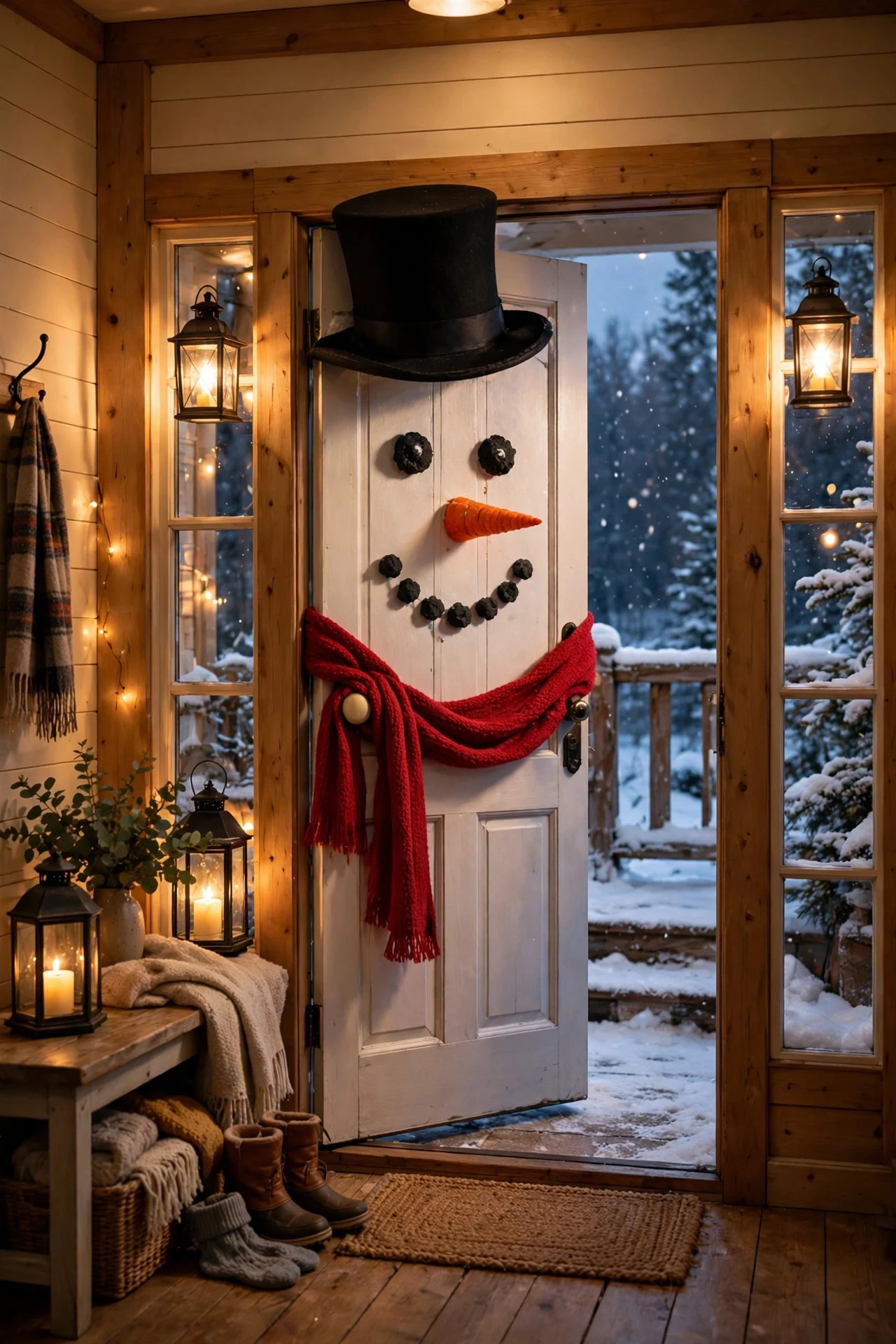
A classic snowman face door turns the whole door into the snowman's head: cover it in white paper or a white door wrap, add two big black circle eyes, a carrot-orange triangle nose, a wide smile of small black circles, and a black top hat across the top. Place the eyes about two-thirds of the way up and make the smile at least 18 inches wide, so the face reads clearly from the pavement.
Use white butcher paper or a plastic tablecloth as the base, cut the features from black and orange card, and fix everything with painter's tape or removable mounting putty so the paint stays safe. A standard 36 x 80 inch door needs about three yards of paper. Tilt the hat slightly for charm, add pink paper cheeks, and never use thin tissue paper outdoors — one shower turns it to pulp.
2. What Is a Wreath Snowman Door?
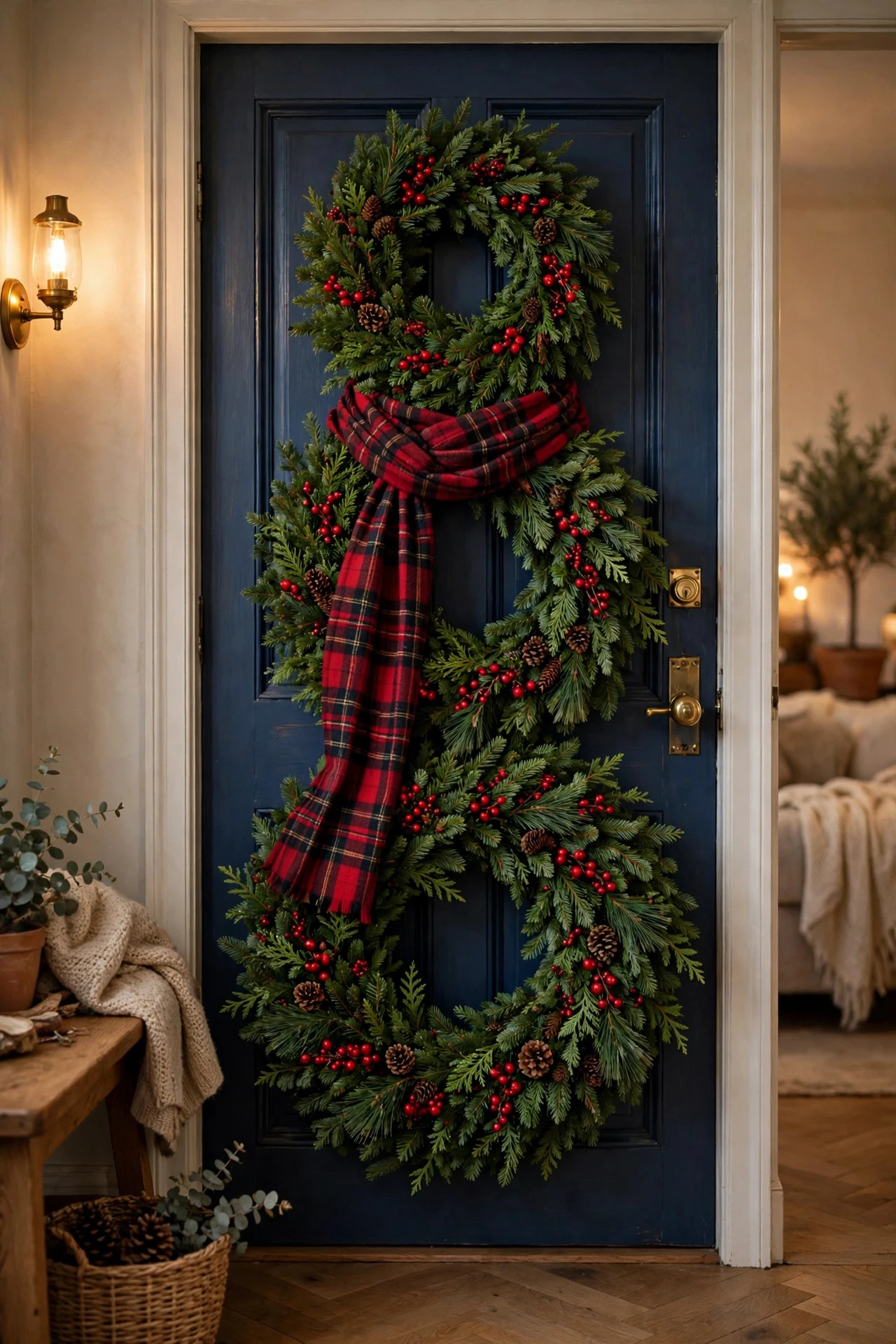
A wreath snowman stacks three green wreaths of decreasing size vertically on the door — large at the bottom, medium in the middle, small on top — to form a snowman's body from greenery. Add a carrot nose and coal eyes to the top wreath, a plaid scarf around the join between the middle and bottom wreaths, and red berries or pinecones for colour.
Hang wreaths of 24, 18, and 12 inches from separate over-door hooks so the weight spreads evenly, and fluff the greenery outward so the three circles touch and read as one figure. A wreath snowman handles rain and frost far better than paper, and the greenery smells wonderful every time the door opens. Avoid fresh-cut wreaths in a hot climate — they dry out fast; artificial greenery lasts the whole season.
3. How Do You Build a Pallet-Wood Snowman for the Door?
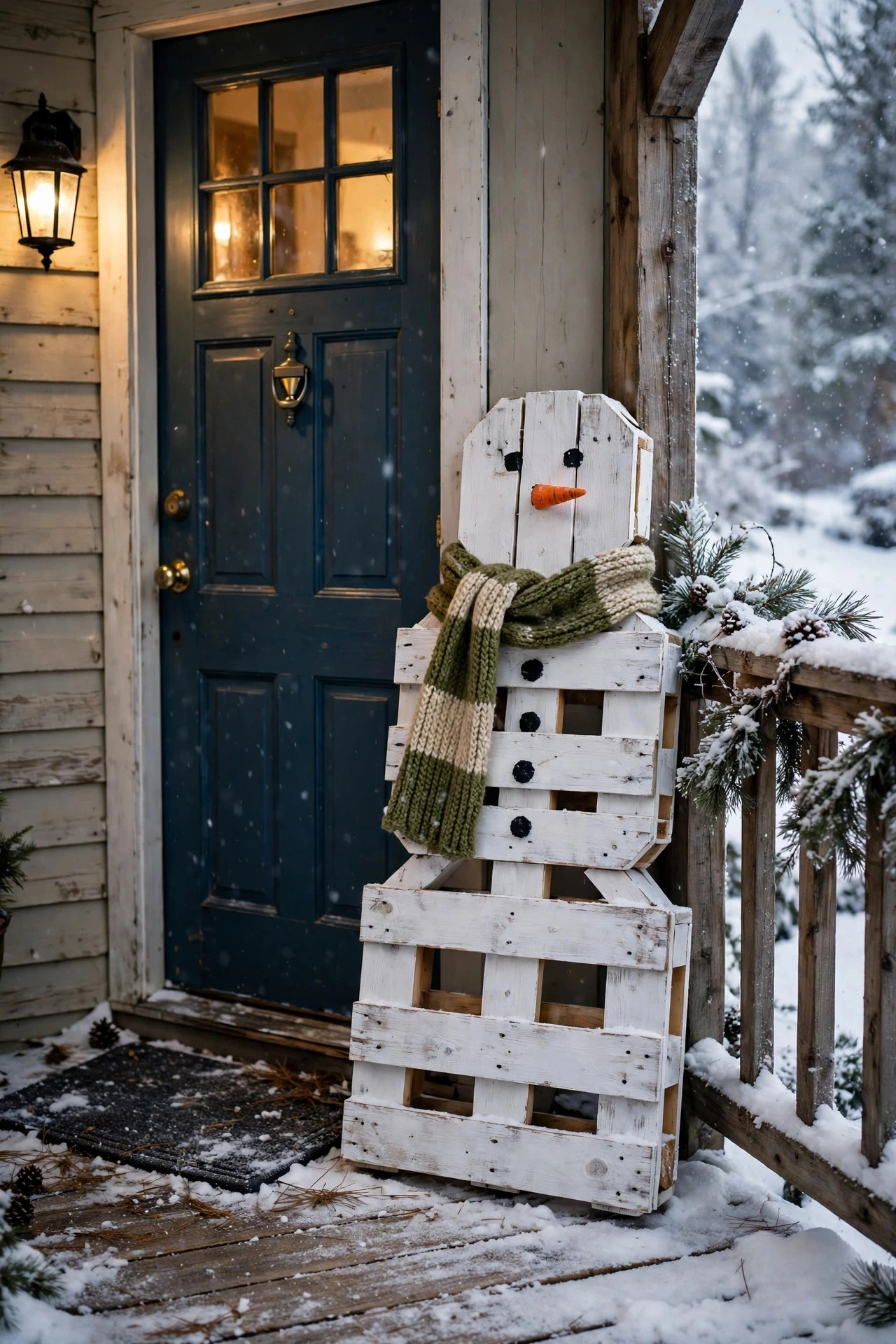
A pallet-wood snowman is a freestanding figure of three stacked wood rounds or pallet planks, painted white, that leans against the wall beside the front door. Paint the planks white, join them with a cross-brace on the back, add black button dots, an orange triangle nose, and a real knitted scarf, then finish with a wooden top hat cut from a spare board.
Sand the wood smooth, prime it, and paint with outdoor acrylic so rain never lifts the finish. A figure about 36 inches tall suits most porches; taller than 48 inches and it starts to block the doorbell. Seal the finished piece with clear outdoor varnish for a second winter of use, and add a small wooden foot at the back so wind cannot topple it onto the path.
4. Can Kids Make a Paper Snowman Door?
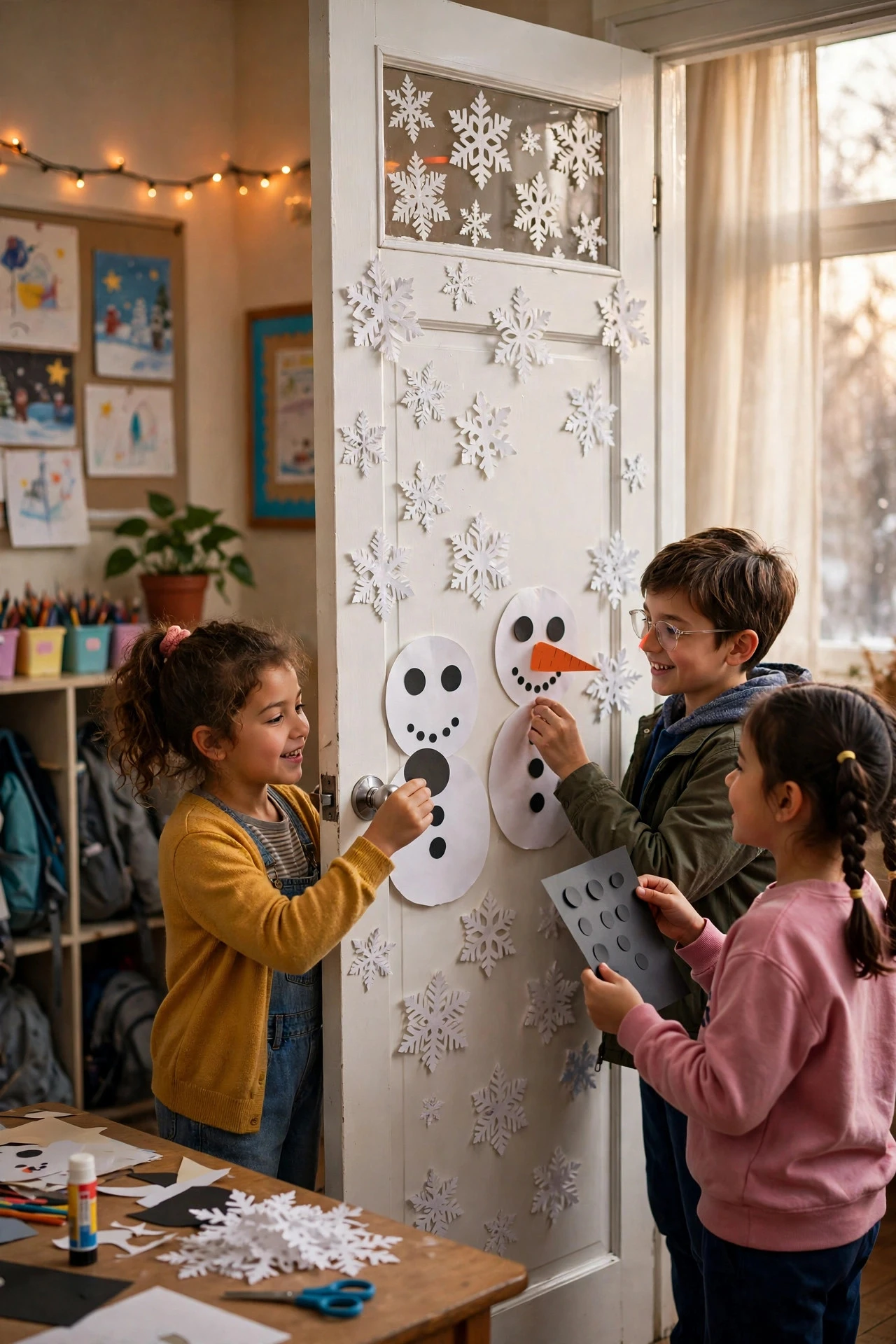
A paper snowman door is the perfect classroom or family craft: cover the door in white paper, then let children cut and stick the features themselves — black paper eyes, an orange paper carrot, a smile of small circles, paper mittens, and a hat decorated with stickers and glitter glue. Give each child one feature to own, and the door becomes a group project everyone is proud of.
One door takes a single afternoon and costs almost nothing. Use thick card for the features, because little hands crease thin paper fast, and fix everything with painter's tape at child height so small arms can reach. Add paper snowflakes around the edges for a finished look, and pre-cut shapes for younger children so they only do the sticking. Keep it on an interior door — paper features belong in a classroom or bedroom, not on an exposed front door.
5. How Do You Make a Cotton-Ball Snowman Door?
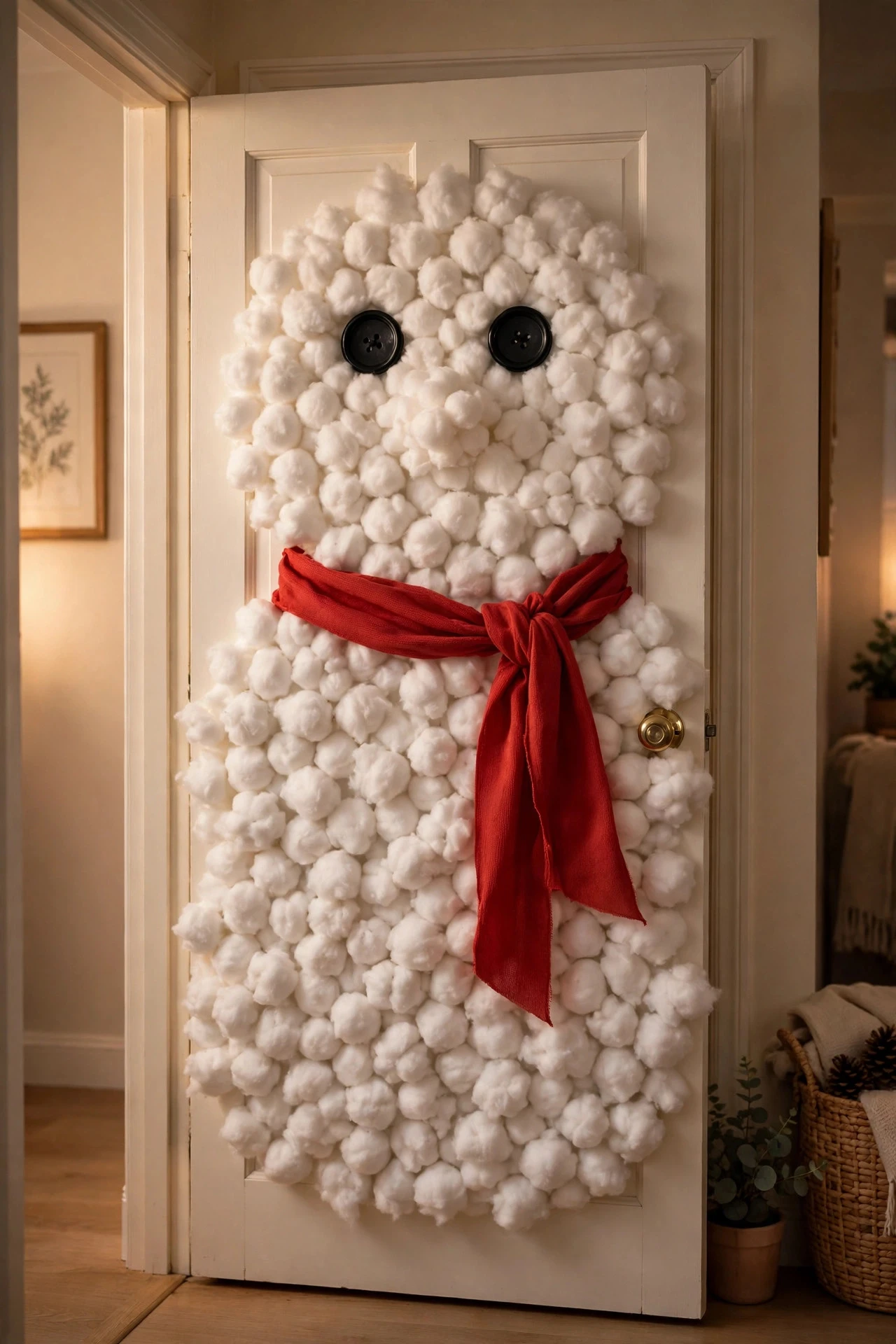
A cotton-ball snowman door covers the snowman's body shapes in fluffy cotton balls, so the door feels soft and snowy to the touch. Cut three circles from white card — large, medium, and small — glue cotton balls edge to edge across each one, then add black button eyes, a felt carrot nose, and a red ribbon scarf. From a few feet away it looks like freshly fallen snow.
Work in sections and let the glue dry fully before hanging, or cotton balls slide off in clumps. A hot-glue gun holds best on card; use white school glue if children are helping. A full door needs roughly four to five bags of cotton balls, so buy in bulk. Keep it on an interior door or a sheltered porch — rain soaks cotton balls instantly, and they take days to dry.
6. What Is the Best Renter-Friendly Snowman Door?
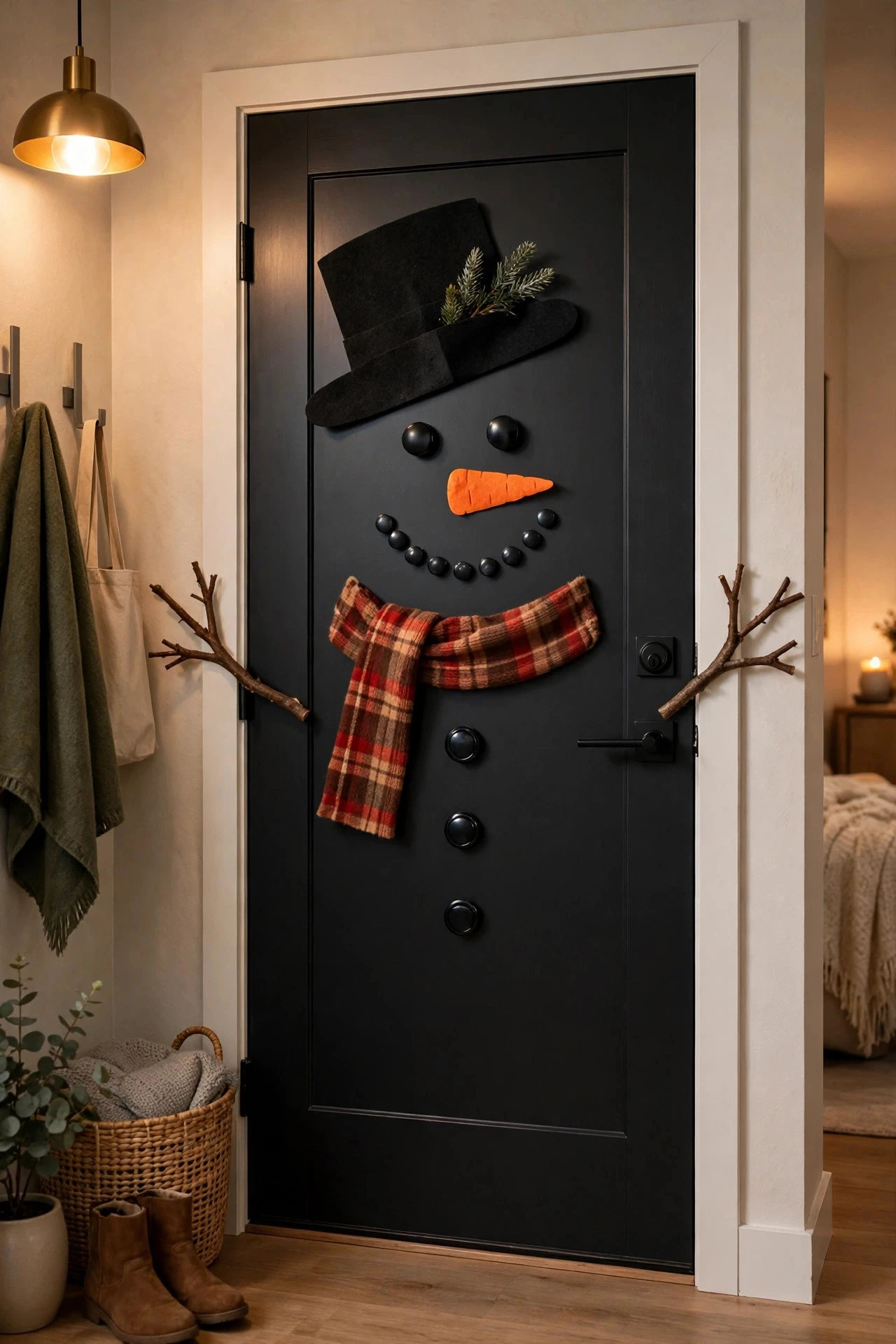
A renter-friendly snowman door uses nothing that marks the paint: static-cling snowman decals, removable vinyl stickers, or magnetic snowman pieces on a metal door. Static clings are the simplest — peel, press onto a clean door, smooth out the bubbles, and peel off in January with no residue at all. All three options cost under $20 and take about ten minutes.
Clean the door with a damp cloth first and let it dry completely, or clings will not grip. In cold weather, warm the cling with a hairdryer on low so it moulds to the door. Magnetic pieces work brilliantly on steel doors and let you rearrange the face whenever you like. Avoid foam tape and hot glue on rented doors — both can lift paint on removal — and if decorating is restricted, put the snowman on the inside of the door instead.
7. How Do You Build a Snowman Porch Scene Around the Door?
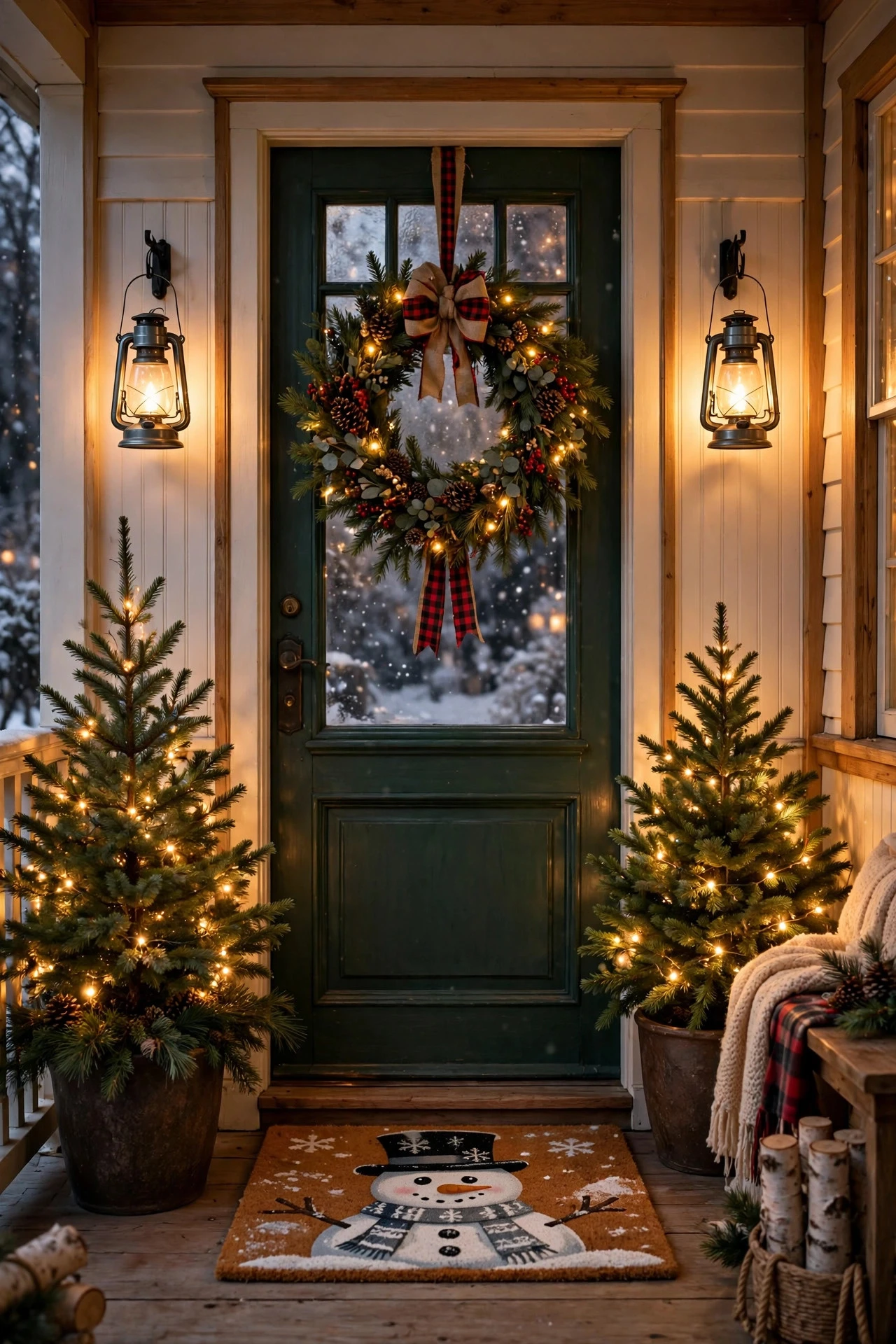
A snowman porch scene treats the door as the centre of a little winter village: the snowman face on the door, flanked by two lanterns with battery candles, a coir doormat with a snowman print, a small potted evergreen on each side, and warm-white fairy lights framing the doorway. The door is the star, but the porch makes it a scene. For the wider porch plan, pair it with our Christmas porch decorating ideas so the door and the porch share one colour story.
Keep the palette tight — white, green, and one accent like red or plaid — so the scene looks designed, not crowded. Use battery candles outdoors; real flames and winter wind do not mix. Leave the path clear and the mat flat so nobody trips on the way in. A scene like this costs $60 to $120 depending on what you already own, and most pieces — lanterns, pots, lights — work again next year.
8. How Do You Make a Snowman Door Hanger With Tulle and Fairy Lights?
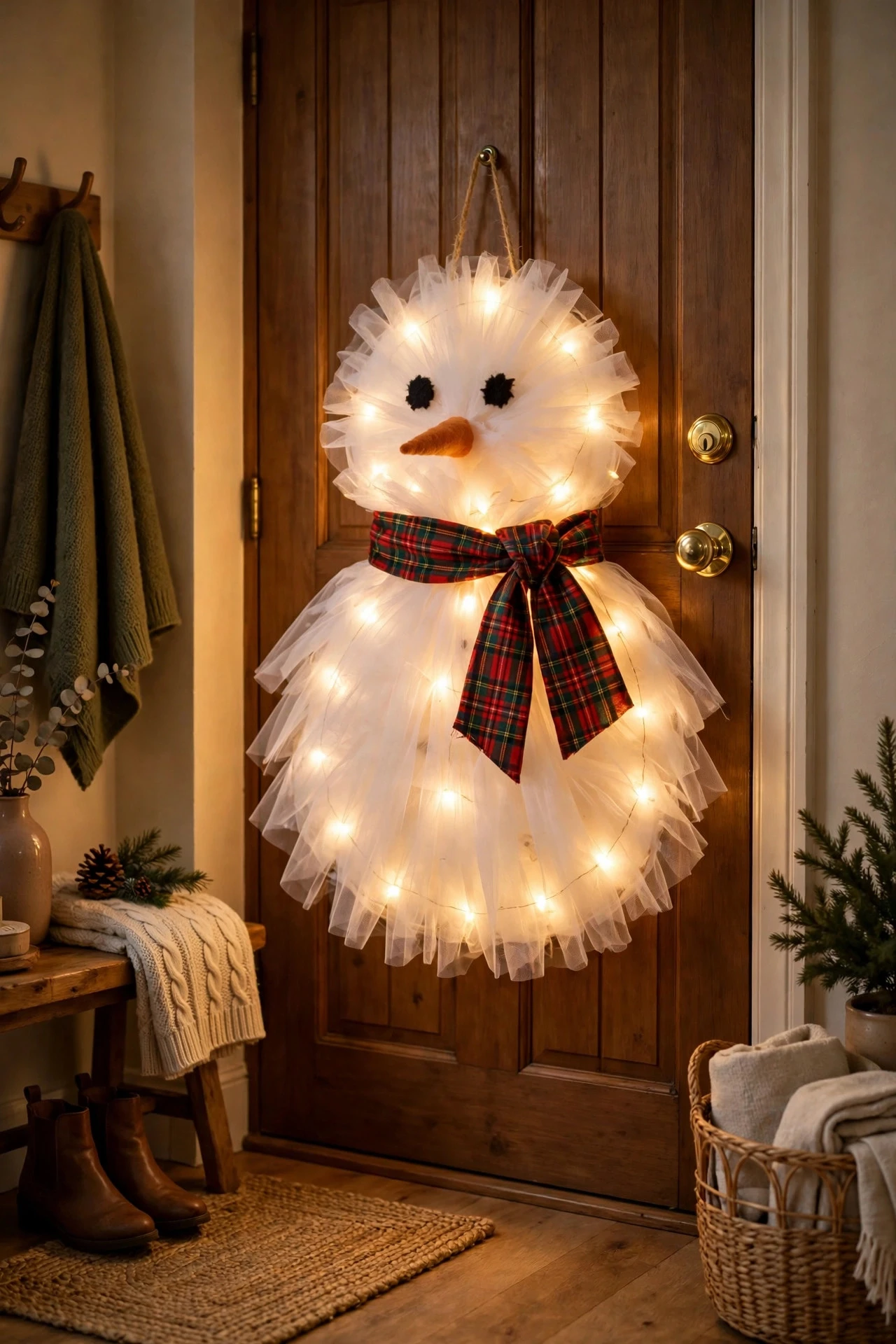
A snowman door hanger with tulle and fairy lights is a soft, glowing wreath-style snowman: wrap a wire wreath frame in white tulle, shape three stacked circles, tuck a battery fairy-light string through the tulle so the whole snowman glows, then add felt eyes, a carrot nose, and a plaid ribbon scarf. Hang it from a wreath hook, and it lights up the entrance every evening without a single nail.
Use two to three yards of tulle per circle and a 20-light warm-white fairy string on a timer, so it switches itself on at dusk. Tuck the battery pack behind the hanger out of the rain, and choose LED lights, which stay cool against fabric. A finished hanger measures about 24 inches tall and weighs almost nothing. Never use real candles near tulle — even a small flame is a fire risk with fabric.
9. What Does a Pink and Modern Snowman Door Look Like?

A pink and modern snowman door swaps the traditional red scarf and black hat for blush pink, rose gold, and white: a white snowman face with a blush-pink felt hat, a rose-gold scarf, pink paper cheeks, and eyelashes drawn in black marker for a touch of personality. The effect is fresh and pretty, and very much at home on a modern house with a grey or white door.
Match the porch to the same palette — blush doormat, silver lantern, white fairy lights — so the door never clashes with traditional red garland. Metallic rose-gold card catches winter light beautifully and photographs well. It suits flats and new-build homes, where a rustic plaid snowman would look out of place. Avoid going fully pastel in a snowy climate, where pale pink disappears against real snow; a deeper rose or metallic accent keeps the face visible from the street.
10. How Does a Full Snowman Door Wrap Work?

A full snowman door wrap is a printed vinyl or fabric cover that fits over the entire door like a fitted sheet, printed with a complete snowman scene — face, scarf, buttons, and often a snowy background with falling flakes. You slide it over the door, smooth it flat, and the transformation takes about five minutes with no cutting, gluing, or taping.
Wraps come sized for standard 36 x 80 inch doors, and most are printed on weatherproof vinyl that shrugs off rain. Measure your door, including its thickness, before ordering — too tight wrinkles, too loose flaps in the wind. Choose a wrap with a reinforced top edge so it never tears on the corners. The downside is originality, so personalise yours with a real scarf or a handmade hat. A good wrap costs $25 to $45 and stores flat in a drawer. See our Christmas door decorating contest ideas if you want a wrap bold enough to win a neighbourhood contest.
11. How Do You Weatherproof a Snowman Door?
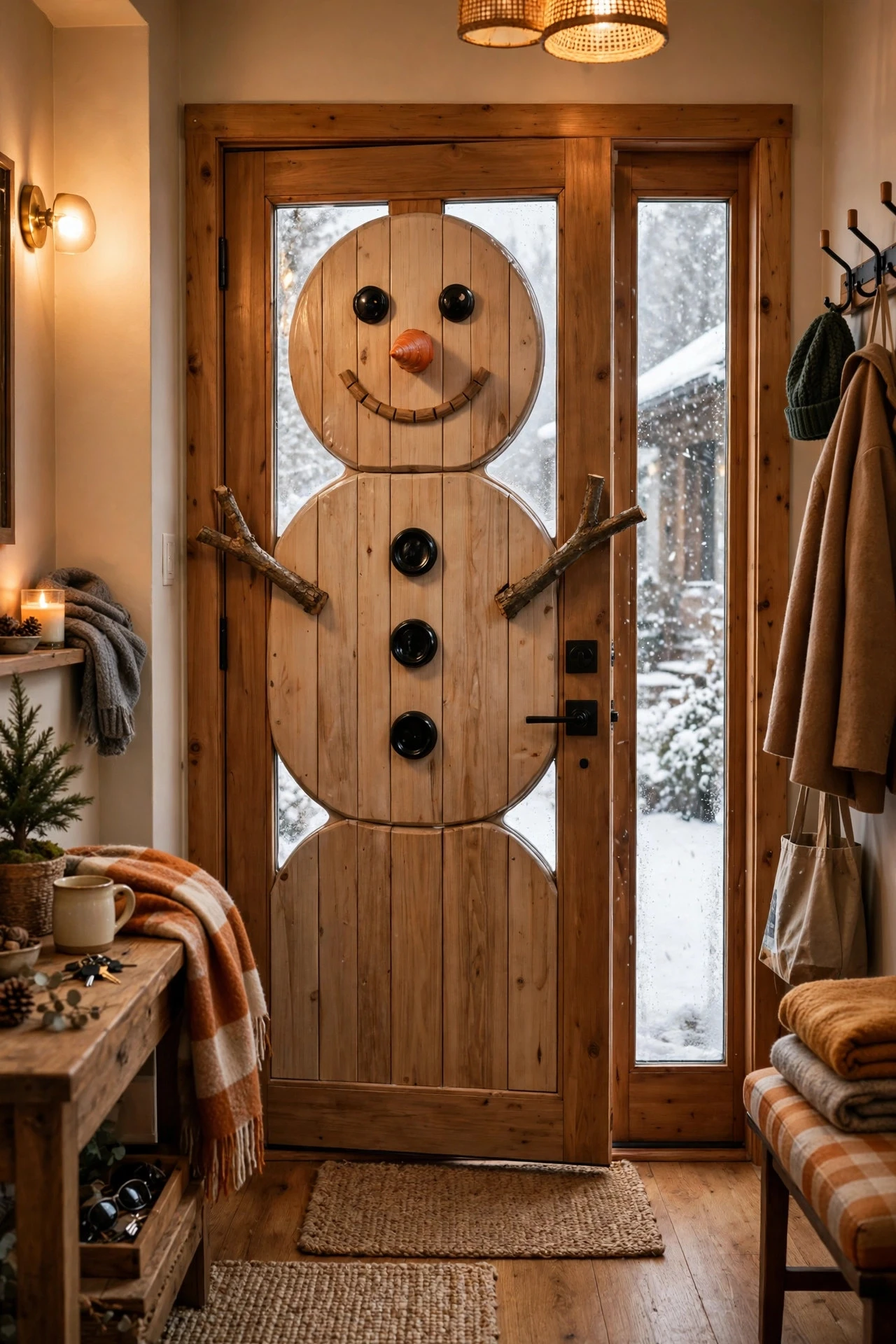
Weatherproofing a snowman door means choosing materials that survive rain, frost, and wind: seal painted wood with outdoor varnish, use vinyl or laminated card instead of plain paper, fix features with outdoor mounting tape rather than school glue, and cover the design with a clear plastic door cover on the wettest nights. A snowman that survives December looks loved; one that sags and peels by mid-month looks abandoned.
First check which way your door faces — a south-facing door takes far more rain and sun than a sheltered one. Laminate paper features with clear contact paper, which costs a few dollars a roll and doubles their life outdoors. Check the door every few days after storms and press down lifting edges before they tear. Avoid felt and cotton outdoors entirely; both soak up water and go grey. On a fully exposed porch, choose a wreath or wood snowman over paper every time.
12. How Do You Keep the Same Snowman Door Past Christmas?
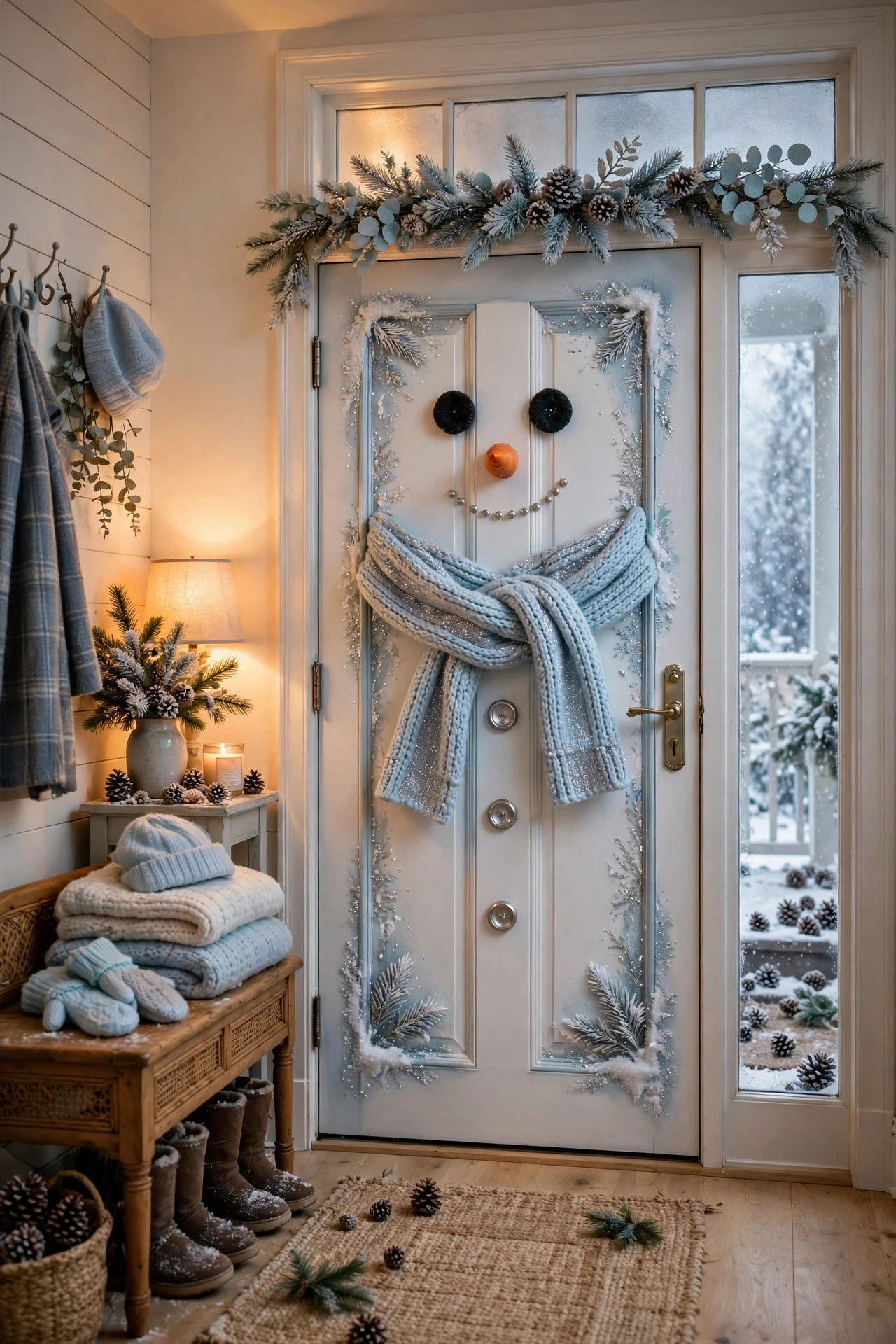
Keeping the snowman door past Christmas is simply a matter of removing the Christmas-only details: take off the Santa hat, the "Merry Christmas" sign, and any red-and-green garland, and leave the snowman itself in neutral winter colours — white, silver, grey, and pale blue. A snowman is a winter figure, not a Christmas-only one, so with the festive extras gone it reads as a January welcome instead of a leftover decoration.
Swap the red scarf for a pale blue or silver one, and replace Christmas baubles on the porch with pinecones or bare branches. The door then works happily through January and February — one decoration doing two months of work. Pair the indoor side of the entrance with our Christmas entryway table decor ideas in winter colours, so the hallway matches the door. Take the snowman down when the first spring bulbs appear, or it starts to look forgotten.
13. How Do You Make a Snowman Family Door?
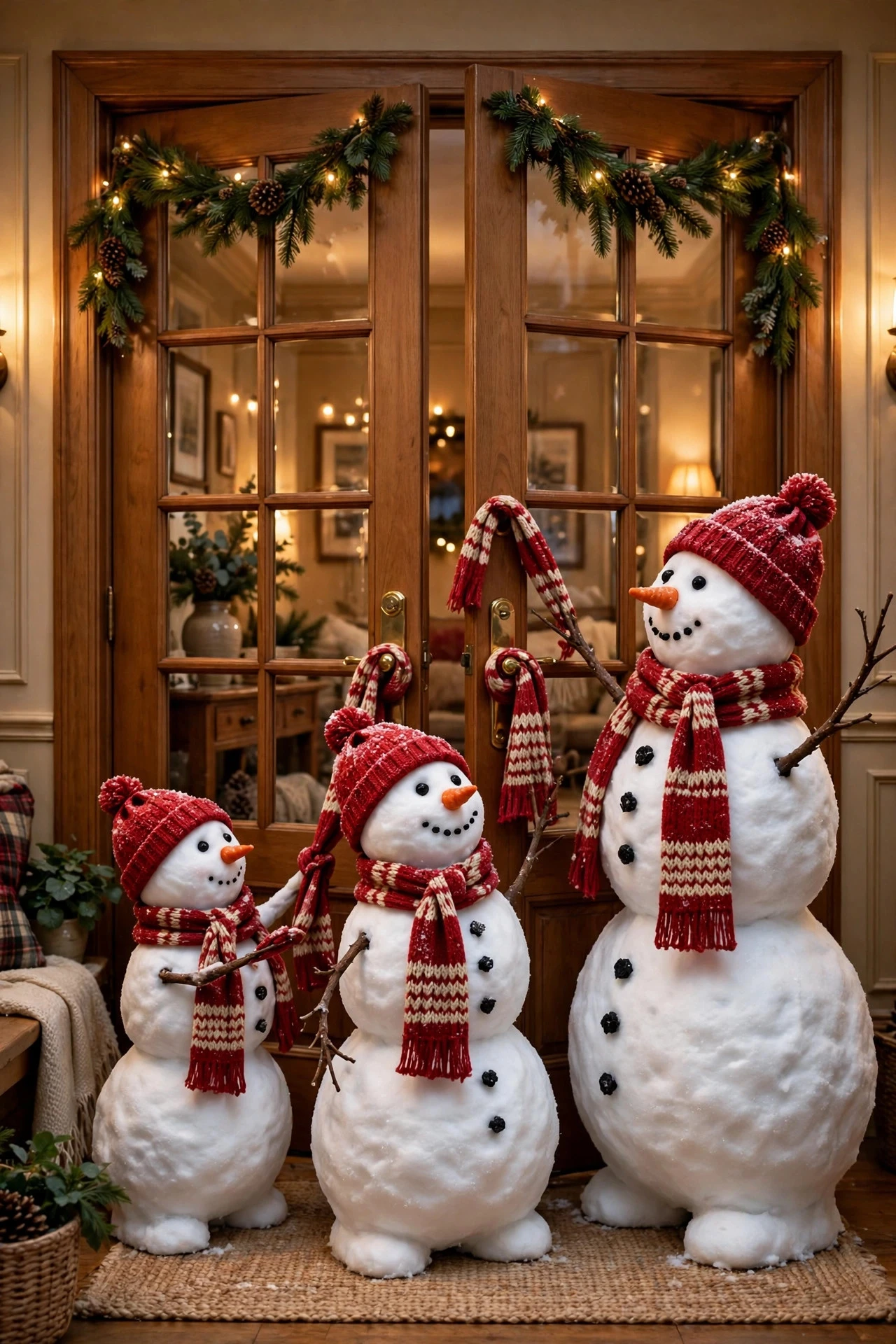
A snowman family door puts three snowmen side by side across a wide door or double doors — a tall "dad," a medium "mum," and a small "child" — each with its own face, hat, and scarf in matching or coordinating colours. It is a lovely way to personalise the door for your household, and children love spotting which snowman is theirs. On double doors, give each door its own snowman.
Give each snowman a different hat — top hat, beanie, bow — so they read as individuals, and keep the faces consistent: same eyes, same smile, different scarves. Budget about $25 to $35 for paper and card, or reuse last year's pieces with new scarves. On a door under 32 inches wide, two snowmen are plenty. For the outdoor styling around them, borrow ideas from our outdoor Christmas decor ideas to tie the door into the garden and path.
14. What Is a Rustic Burlap and Plaid Snowman Door?
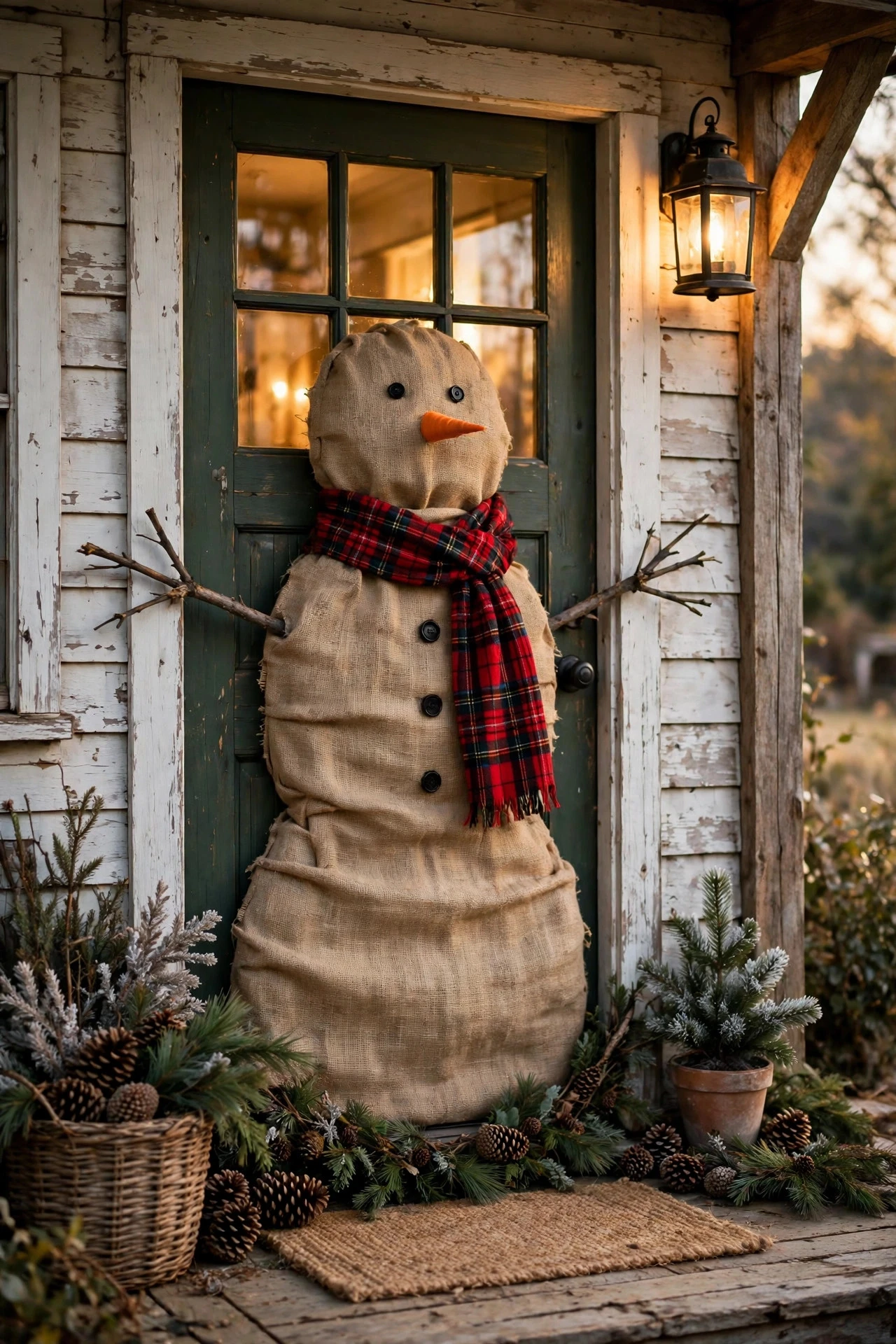
A rustic burlap and plaid snowman door dresses the snowman in country textures: a burlap scarf with frayed edges, a plaid flannel hat, twig arms sticking out from the sides of the door frame, and buttons made from real wooden discs. The door itself stays white, but every accessory is natural — hessian, wood, pinecones, and a sprig of dried orange.
Cut the burlap scarf about 8 inches wide so the frayed edge shows, and tie it in a loose knot for a relaxed look. Fix twig arms to the door frame with removable hooks, not the door itself, so they never catch when it opens. Real pinecones wired to the scarf add scent and texture for pennies. Avoid burlap outdoors in wet weather, as it holds damp and can mark paint; on an exposed door, use a plaid fabric scarf instead and keep the burlap inside.
15. How Do You Add a 3D Scarf and Hat to a Snowman Door?
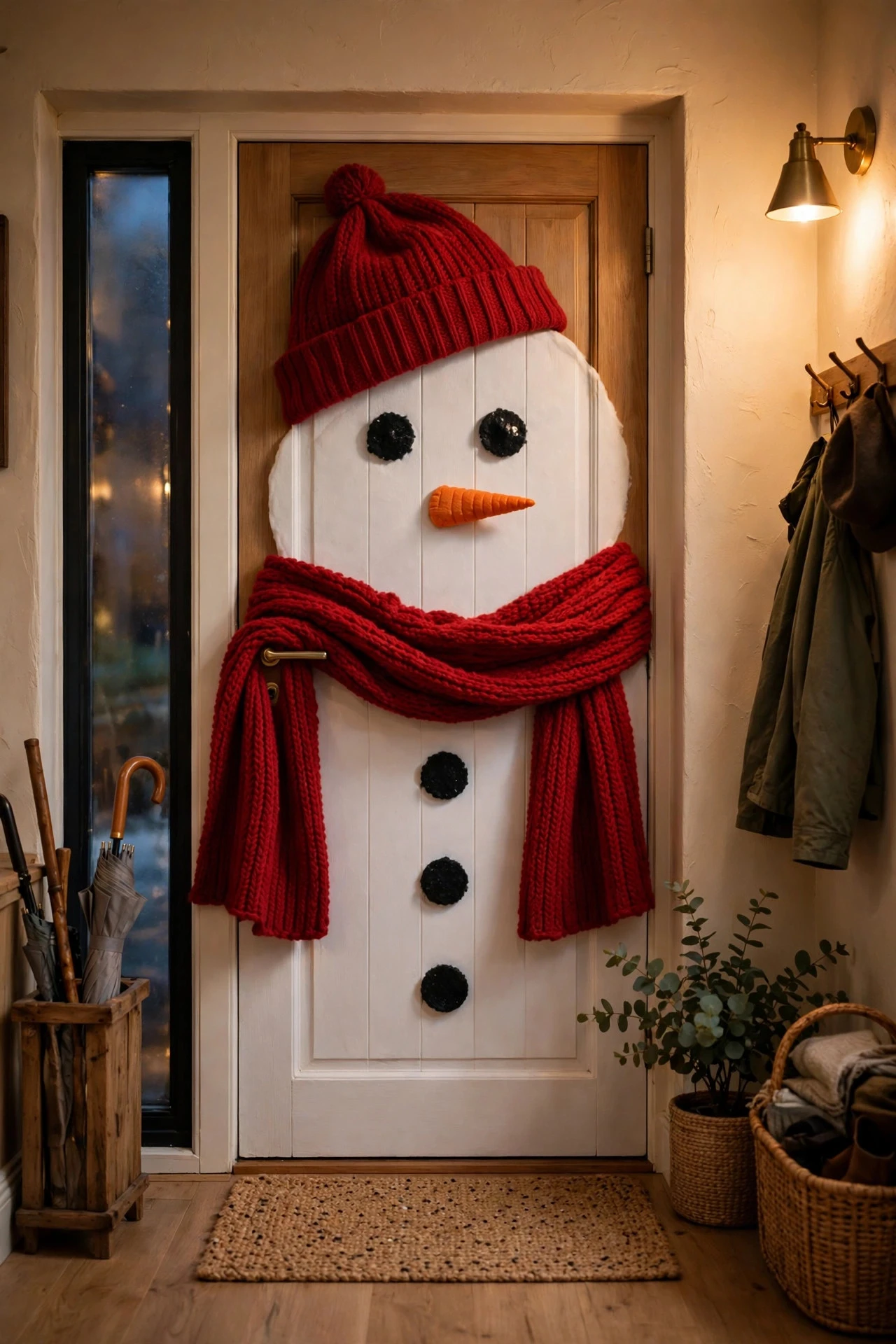
A 3D scarf and hat turn a flat snowman face into something you can touch: hang a real knitted scarf across the door at neck height, draped over a removable hook, and fix a real beanie or small top hat to the top of the door with a wreath hanger. The fabric moves slightly in the breeze, the texture catches the light, and the snowman suddenly feels like a person standing behind the door.
Choose a bold scarf — red, green, or plaid — so it reads from the street, and keep it short enough not to cover the smile. A child's outgrown scarf is the perfect size for a door snowman. In wet weather, swap wool for acrylic, which dries faster and never sags when damp. Fix the hat with a hook rather than tape so its weight never drags it down overnight, and never let the scarf trail near the handle, where it can catch fingers.
16. Can You Make a Magnetic Snowman Door?
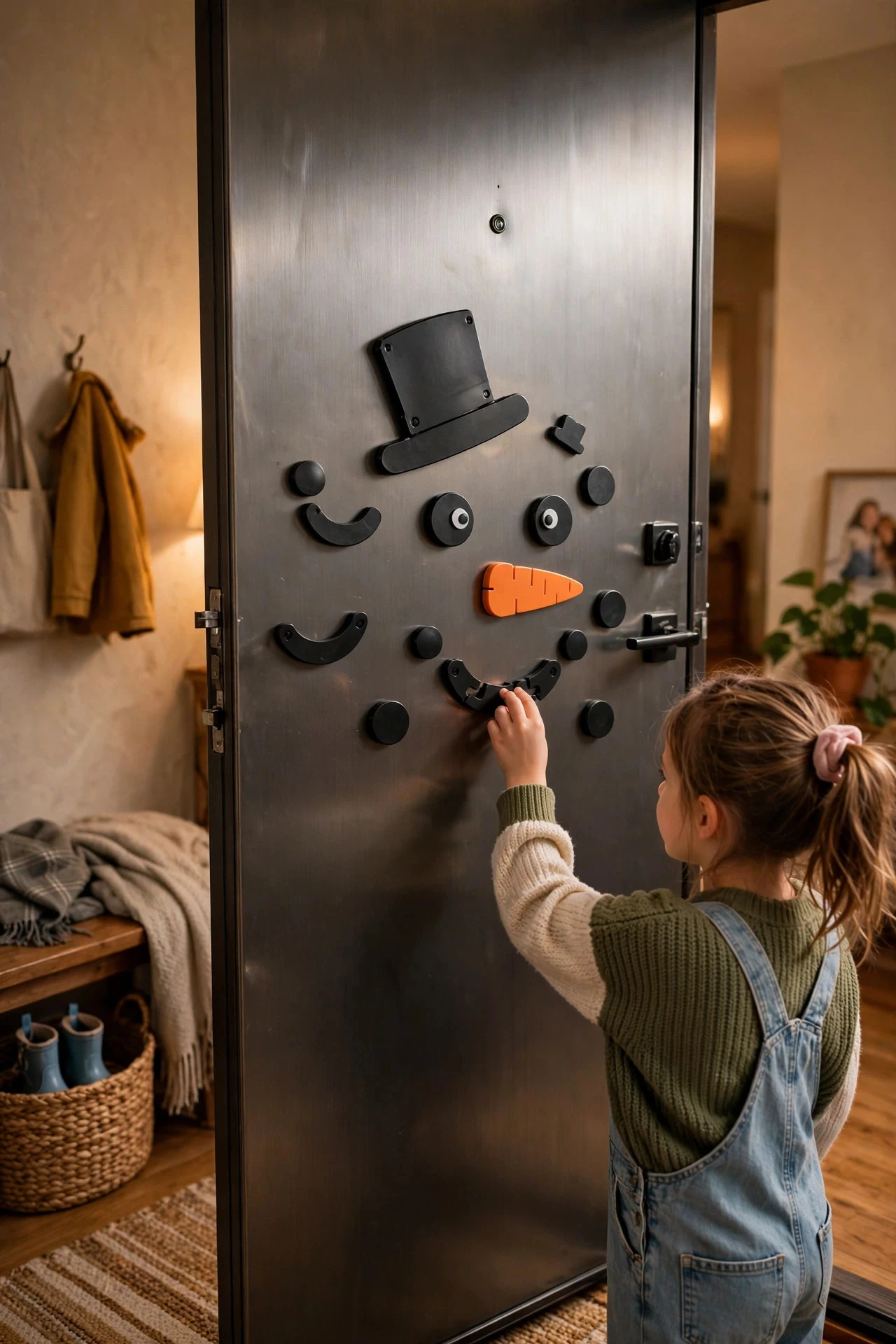
A magnetic snowman door uses a set of magnetic snowman pieces — eyes, nose, smile, buttons, hat, and scarf — that stick directly to a steel front door and can be moved, swapped, or rearranged in seconds. It is the most interactive snowman idea here: children rearrange the face every morning, guests play with it while they wait, and you can change the expression from happy to surprised with one moved piece.
Magnetic sets cost $10 to $20, last for years, and leave no mark at all. Test your door with a fridge magnet first — wood, fibreglass, and aluminium doors will not hold magnets, and thick coatings weaken the grip on steel doors. If the grip is weak, choose stronger neodymium-backed pieces. Store the pieces on the inside of the door or the fridge in January so they are ready next year, and avoid tiny pieces if toddlers visit often, as they can be a choking hazard.
17. How Do You Decorate Double Doors With a Snowman?
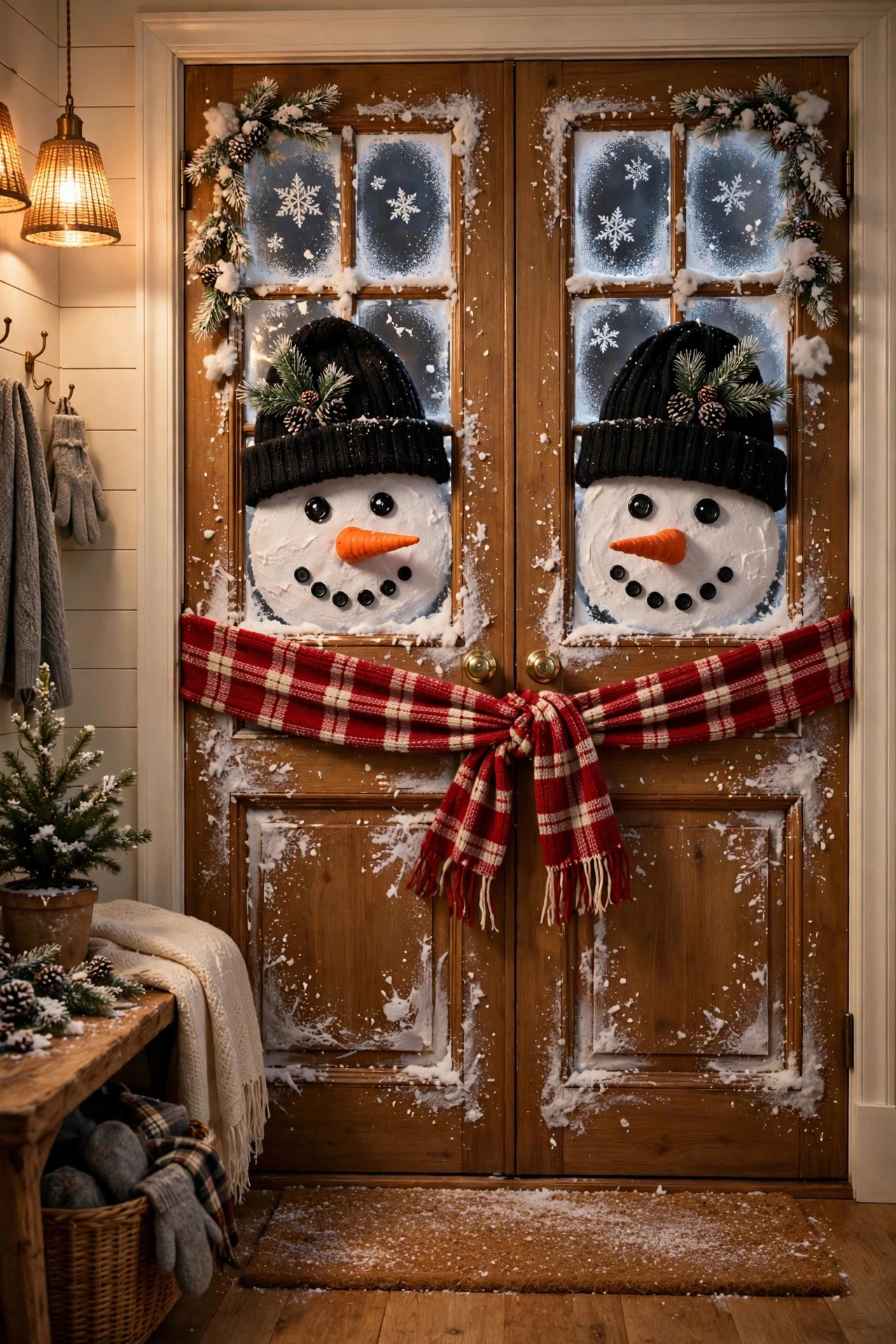
Double doors give you twice the canvas, so the snowman can be bigger and better: put the head on one door and the body on the other, or give each door its own complete snowman so the pair greets visitors together. The seam between the doors becomes part of the design — run the scarf across the join so the two doors read as one figure when closed.
Measure both doors together, because the design must still look right when only one door opens. Keep the split simple — a face on one door and buttons down the other — because a complicated design across the seam falls apart the moment a door opens. Use removable hooks on each door so each half hangs independently, and avoid a single long smile across the join; it looks crooked within a day. Coordinate the glass with our Christmas window decorations so the door glass and windows share the same snowy theme.
18. How Do You Make a Light-Up Snowman Door?
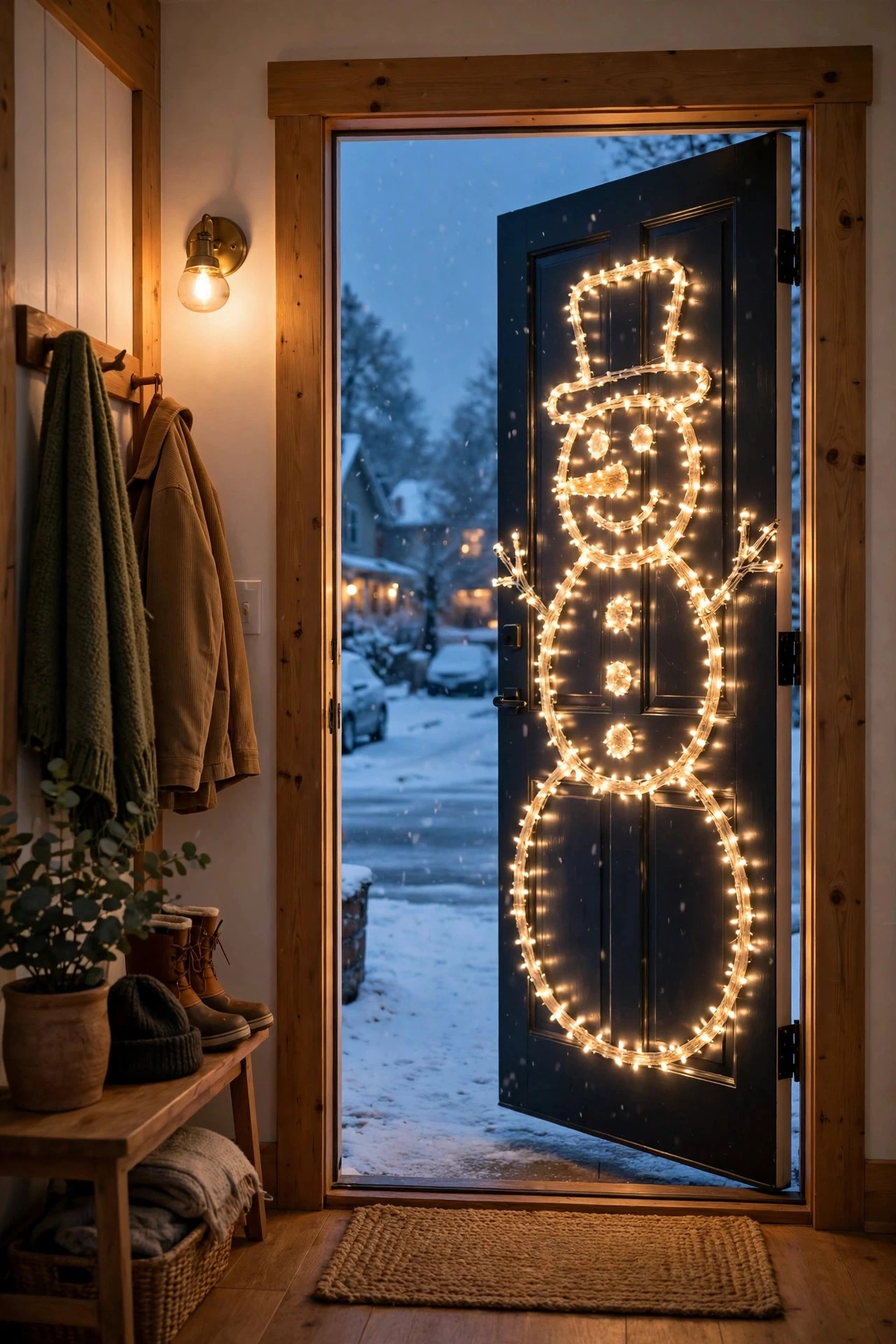
A light-up snowman door outlines the snowman's shape in warm-white fairy lights, so the figure glows after dark and the house stands out on a dark street. Run a battery fairy-light string around the edge of each circle, or trace the outline of the face — eyes, smile, and hat — with a light string fixed by clear removable clips. The effect is magical at dusk: a smiling snowman in lights visible from the end of the road.
A 100-light string is usually enough for one door. Use LED fairy lights on a timer — on at dusk, off at bedtime — so the batteries last the season, and fix the string with clear command clips every 6 inches so the outline stays crisp. Keep the battery pack in a waterproof pouch or behind the wreath. The snowman has a long history as a winter folk figure — the snowman on Wikipedia traces how snow figures became part of winter celebration — and lights are the modern version. Avoid mains-powered lights on a door that opens and closes; the cable is a trip and pinch hazard.
19. How Do You Add a Letters-to-Santa Pocket to a Snowman Door?

A letters-to-Santa pocket turns the snowman door into a postbox: fix a small red fabric pocket or a decorated envelope to the snowman's belly, labelled "Letters to Santa" in bold lettering, and let children post their wish lists into it. It gives the decoration a job beyond looking pretty, and children check it daily to see if their letter has "gone." A pocket of red felt, about 8 x 10 inches and sewn or glued at three sides, holds a folded letter easily.
Mount the pocket about 36 inches from the ground so small children can reach it, and check it every evening so letters never get wet or blow away. Reply with a short note from "Santa" tucked back into the pocket — a moment children remember for years. Keep the pocket on a sheltered porch or inside the door in wet weather, as paper letters and rain do not mix, and never block the real letterbox slot with it, or the postman's deliveries get stuck.
20. What Is a Minimalist Scandinavian Snowman Door?
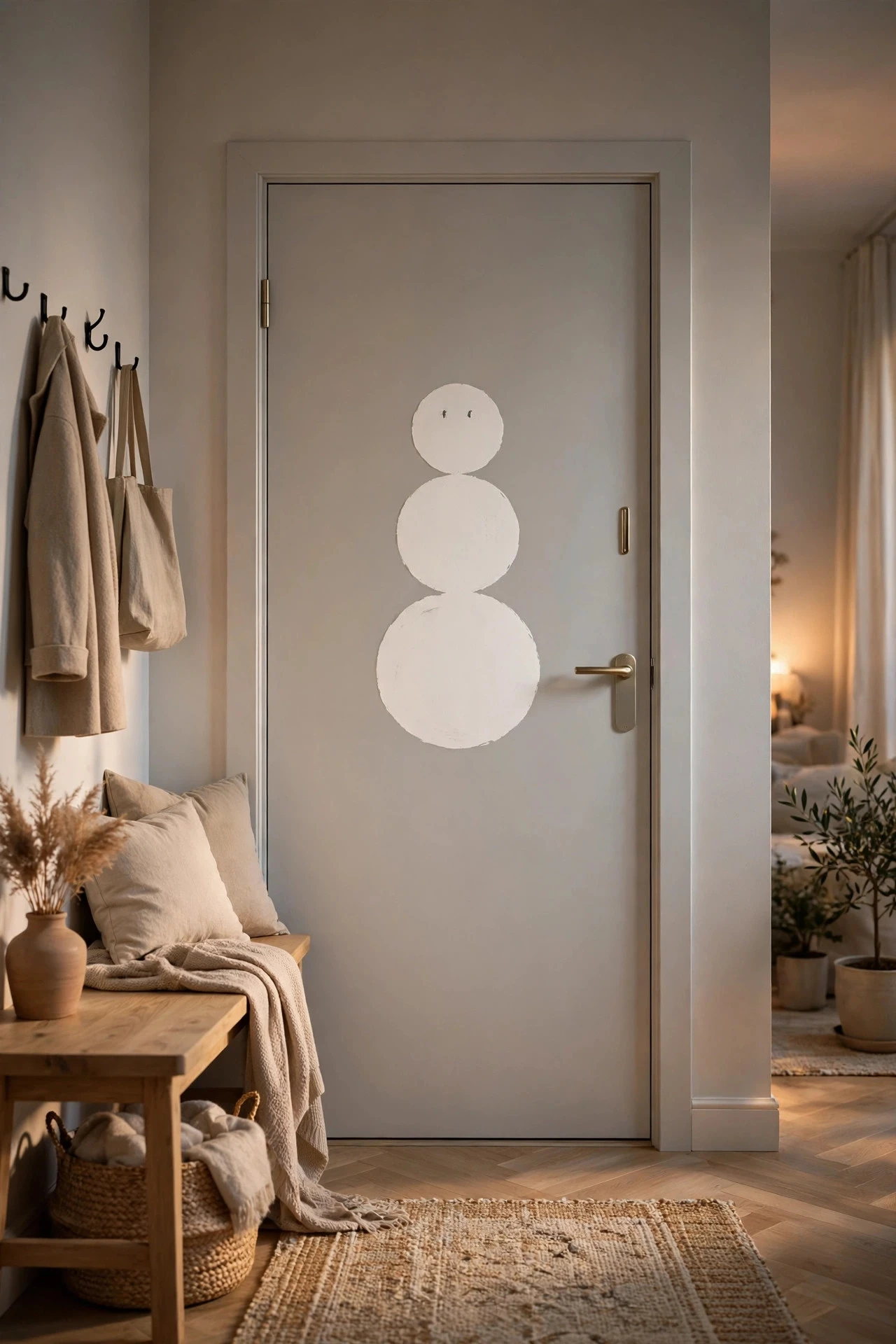
A minimalist Scandinavian snowman door strips the snowman back to its simplest shapes: three white paper circles, two small black dot eyes, a tiny orange triangle nose, and nothing else — no scarf, no hat, no buttons, no glitter. The door stays pale and calm, the snowman is a quiet graphic rather than a character, and the whole entrance feels serene rather than busy.
It suits white, grey, and pale-wood doors, and homes where the rest of the Christmas decor is already simple — white candles, bare branches, and natural linen. The discipline is in what you leave out: one extra detail breaks the minimal look, so resist cheeks, eyelashes, and scarves. Use matte white card so the circles never shine, and space the features generously so the face breathes. Avoid this look on a dark door, where pale shapes vanish; if the door is dark, paint the circles soft grey for contrast.
21. How Do You Make a Snowman Door for Under $20?
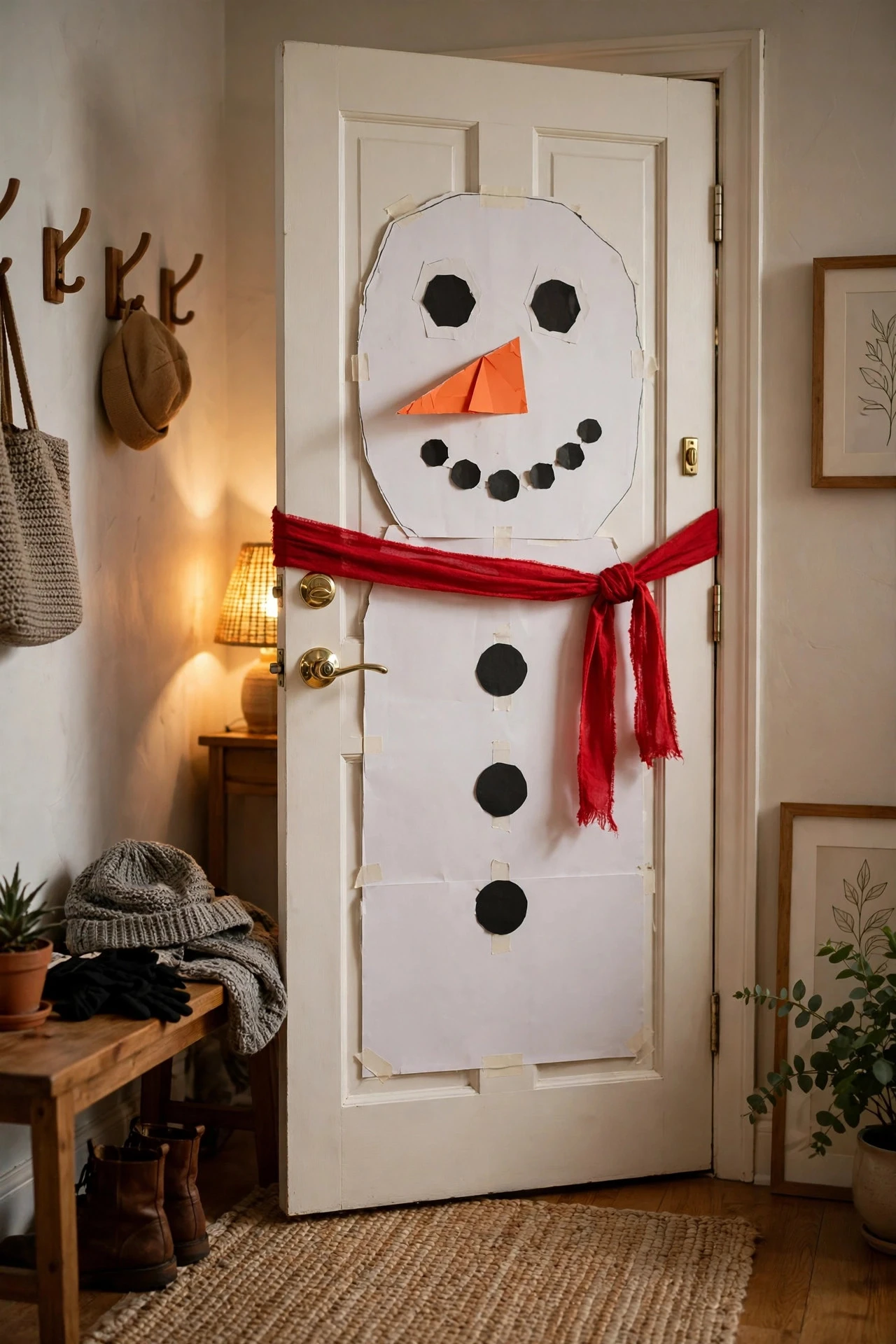
A snowman door for under $20 starts at the dollar store: white poster board for the face, black and orange card for the features, a roll of painter's tape, and a red ribbon for the scarf — all for about $8 to $12. Cut the circles from the poster board, the eyes and smile from black card, the nose from orange card, and fix everything with painter's tape. The result looks just as cheerful from the street as a $50 version.
Buy white poster board, not cream, so the snowman reads as snow. Cut the features large — eyes at least 4 inches across — because small features vanish from the pavement. Reuse last year's ribbon and hat, and use tape only, so the paint stays perfect. Spend the remaining budget on a string of battery fairy lights to frame the door at night. Avoid thin tissue paper, which tears while you cut it and sags in damp air; poster board is worth the extra dollar. A budget snowman proves the best door on the street is rarely the most expensive one.
22. How Do You Decorate a Small or Apartment Snowman Door?
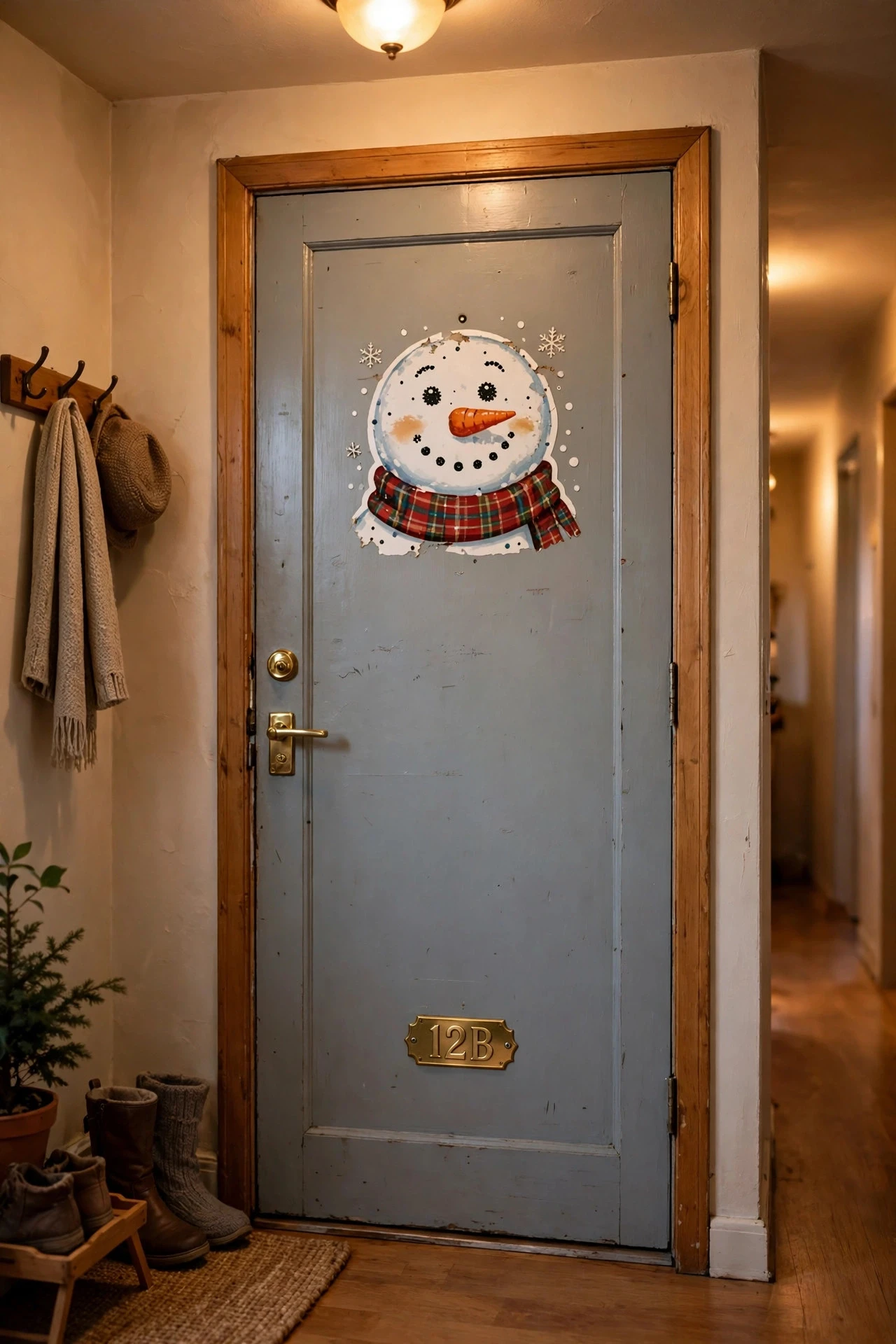
A small or apartment snowman door scales the idea down without losing the charm: use a half-size snowman face — one big circle for the head, eyes, nose, and smile — on the upper half of the door, leaving the lower half clear for the door number and handle. A 12-inch paper plate makes a perfect head template, and the whole design fits a 30-inch flat door, a bedsit door, or even a cupboard door.
It also suits a child's bedroom door, where a full-size face would overwhelm the room. Keep the features bold and few — two eyes, a nose, a smile, and a small paper hat — because a small door has no room for extras. Use removable mounting putty rather than tape, as tape can mark a smooth flat-door finish. If building rules ban door decorations, put the snowman on the inside of the door instead; you still see it every time you come home. For more small-space seasonal ideas, Better Homes & Gardens' Christmas decorating guides offer fresh inspiration each year.
Practical Tips
Choose the material for the door's exposure. Paper and cotton belong on interior doors or sheltered porches; wreaths, pallet wood, vinyl wraps, and laminated card survive rain and frost. Check which way your door faces before you build — a south-facing door takes far more weather than a sheltered one.
Size the face for the street, not the hallway. Eyes at least 4 inches across, a smile at least 18 inches wide, placed high enough to read from the pavement. A snowman that only looks right from two feet away is a decoration for you, not your visitors.
Fix it so it stays, and so it comes off cleanly. Painter's tape and removable putty protect paint; outdoor mounting tape and wreath hooks hold weight in wind. Test adhesive on a hidden corner first, and never use hot glue or foam tape on a painted or rented door.
Plan the second life before you build. Build in neutral winter colours, keep Christmas-only extras separate, and the same door works through January and February. Store paper pieces flat between card sheets, and coil fairy lights loosely for next December.
Final Thoughts
A snowman door works because it is the simplest welcome in Christmas decorating — three circles, a smile, and a hat, scaled to your door and your budget. Start with the classic face if you have never made one, try a wreath or pallet-wood snowman when you want something that survives the weather, and keep the neutral winter version up into January so one afternoon's work warms your entrance for two months. The best snowman door on the street is not the most expensive one; it is the one with the biggest smile, made with care and still standing proud on Christmas morning.
Frequently Asked Questions
How much does a snowman door cost to make?
A paper snowman door costs $8 to $15 using poster board, card, and painter's tape from a dollar store. A wreath snowman costs $40 to $70 for three wreaths, while a printed door wrap costs $25 to $45 and a pallet-wood snowman costs $20 to $30 in materials.
Can I put a snowman door on a rented home?
Yes — use static-cling decals, removable vinyl stickers, or magnetic snowman pieces, all of which come off cleanly with no holes or paint damage. Avoid foam tape and hot glue, clean the door first, and put the design inside the door if your landlord allows only interior decorating.
Will a paper snowman door survive rain?
No — plain paper and cotton balls soak up rain and sag within hours, so they belong on interior doors or sheltered porches. For an exposed front door, use laminated card, vinyl, a wreath snowman, or a pallet-wood figure, and seal painted surfaces with outdoor varnish.
How do I keep my snowman door up after Christmas?
Remove the Christmas-only details like Santa hats and festive signs, swap a red scarf for pale blue or silver, and leave the snowman in neutral winter colours. It then reads as a January winter welcome and can stay up happily through February.
What size should a snowman door design be?
The face should fill the door so it reads from the street: eyes at least 4 inches across, a smile at least 18 inches wide, and features placed high on a standard 36 x 80 inch door. On small or apartment doors, use a half-size face on the upper half only.
What is the easiest snowman door for kids?
A paper snowman door is easiest for kids: cover the door in white paper, pre-cut the eyes, nose, smile, and hat from card, and let children stick the features on with painter's tape. Cotton-ball and magnetic snowman doors are also simple, hands-on options for younger children.