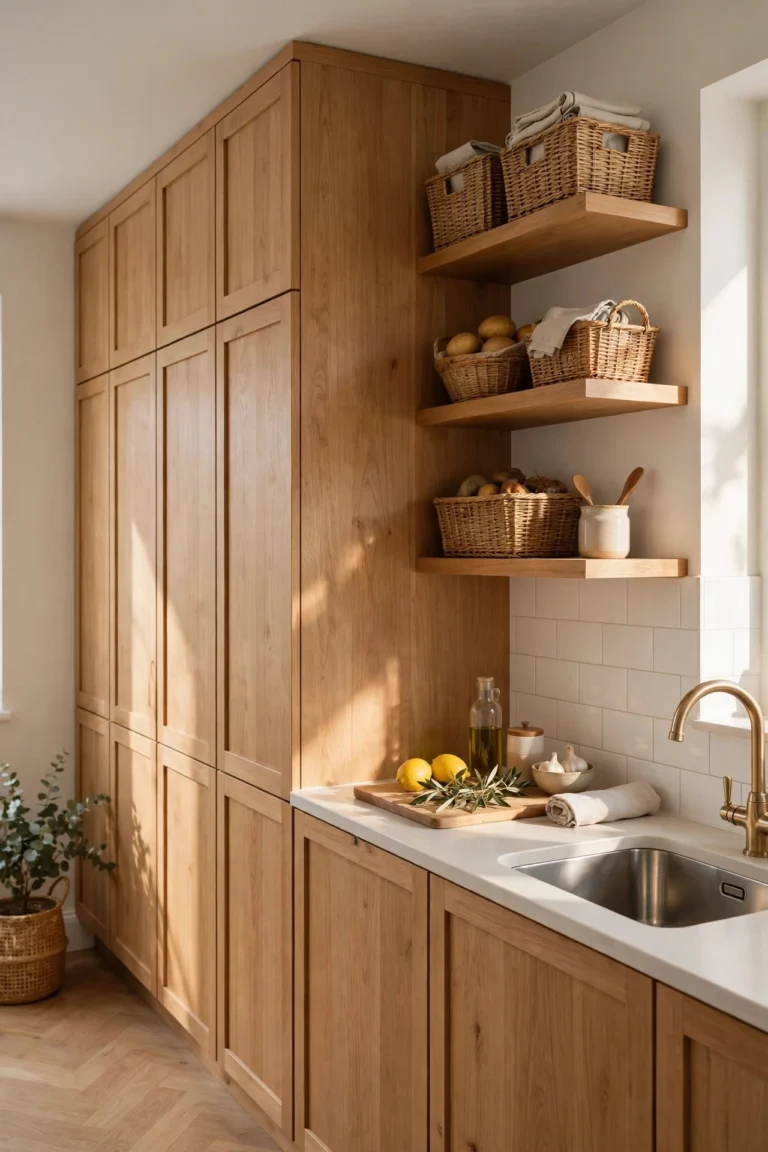
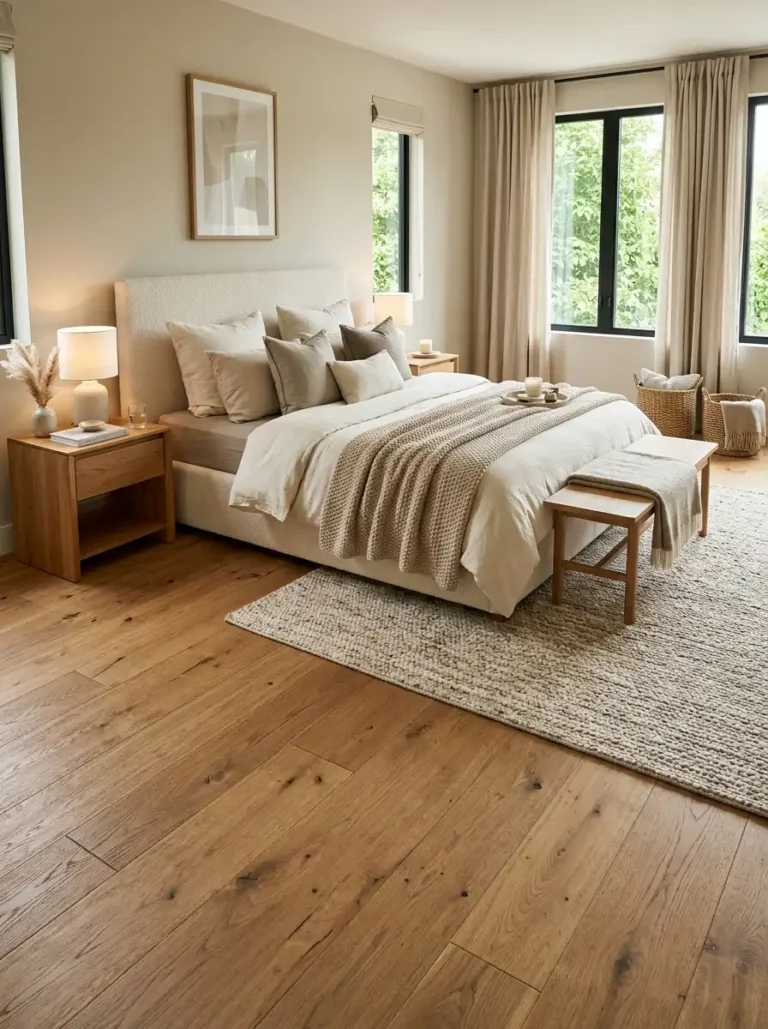
Small Bedroom Ideas: How to Make a Tiny Room Feel Bigger
A small bedroom is a layout problem, not a style problem. When a room measures 3 by 3.5 metres, every piece of furniture has to earn its floor space, every centimetre of wall has to work, and every visual choice either opens the room up or closes it in. Small bedrooms reward smart decisions: one well-placed bed, one honest storage system and one calm colour palette can make a tiny room feel genuinely spacious.
Looking for more inspiration? Our Nest Decorz homepage gathers the latest home decor ideas, seasonal decorating guides and room-by-room styling tips in one place — start there and explore.
Below are 22 small bedroom ideas that work in real rooms, not showrooms — bed placement, hidden storage, colour, light, rug sizing and budget swaps, with exact measurements to check against your own room before you spend anything. Several are renter-friendly, and most cost less than a single new piece of furniture.
Quick answers:
– Best first move: push the bed against the longest wall and leave at least 60 cm of clear walking space on one side. – Biggest storage win: a storage bed or under-bed boxes add roughly 0.5 cubic metres of hidden storage with no extra floor taken. – Colour rule: keep walls, bedding and the largest furniture within two tones so the eye reads one calm space. – Mirror rule: hang a mirror opposite or beside a window, never opposite a cluttered wall — it doubles light, not mess.
1. How Do You Place a Bed Against the Longest Wall?
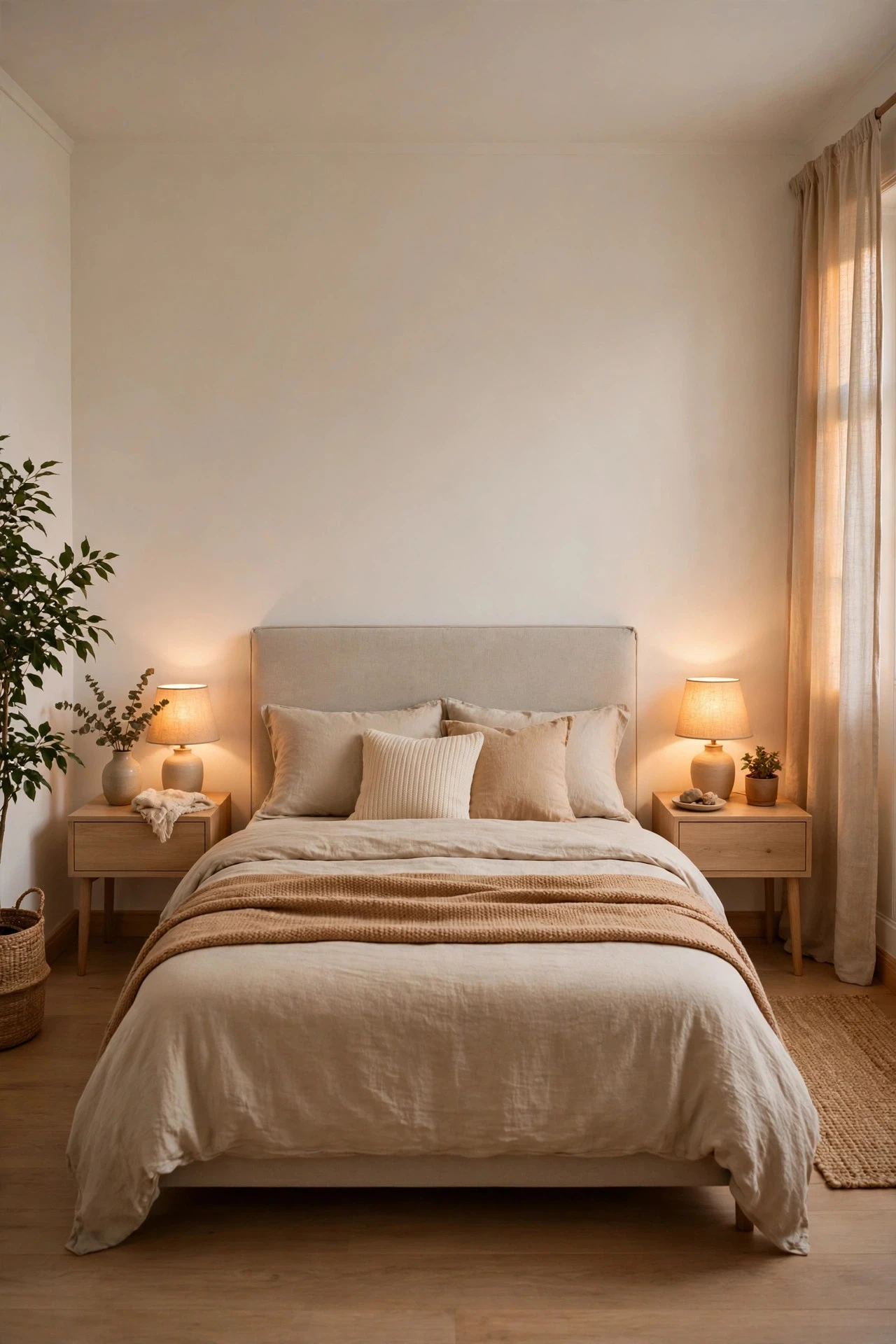
Put the headboard flat against the room's longest wall, centred if you can, and leave at least 60 cm of clear floor on the side you get out of bed. This single move frees the most floor area in a small bedroom because the bed's longest side runs parallel to the room's longest side, so walkways stay straight.
Measure first: a double is 135 by 190 cm, a queen 150 by 200 cm and a king 180 by 200 cm. In a 3-metre-wide room a queen leaves about 75 cm on each side; a king leaves 60 cm, the minimum for dressing without shuffling sideways. Never float the bed mid-room — it wastes the space behind it.
2. Why Does Pushing the Bed Into a Corner Work So Well?

Pushing the bed into a corner frees up to 30 percent more usable floor than centring it, because one long side and the headboard both sit against walls and need no walkway at all. It suits rooms under 10 square metres, single sleepers and children's rooms, and it frees floor for a desk, a wardrobe or simply room to breathe.
Use a low headboard on the wall side and a slim 30 cm shelf on the open side for a phone, book and water. Dress the bed with a duvet you can shake out from the open side, since making the far side is the classic corner-bed complaint. Daybed variation: bolsters along the wall turn it into a sofa by day. Choose a frame with at least 15 cm of clearance underneath for cleaning.
3. Is a Loft or Raised Bed Worth It in a Small Bedroom?
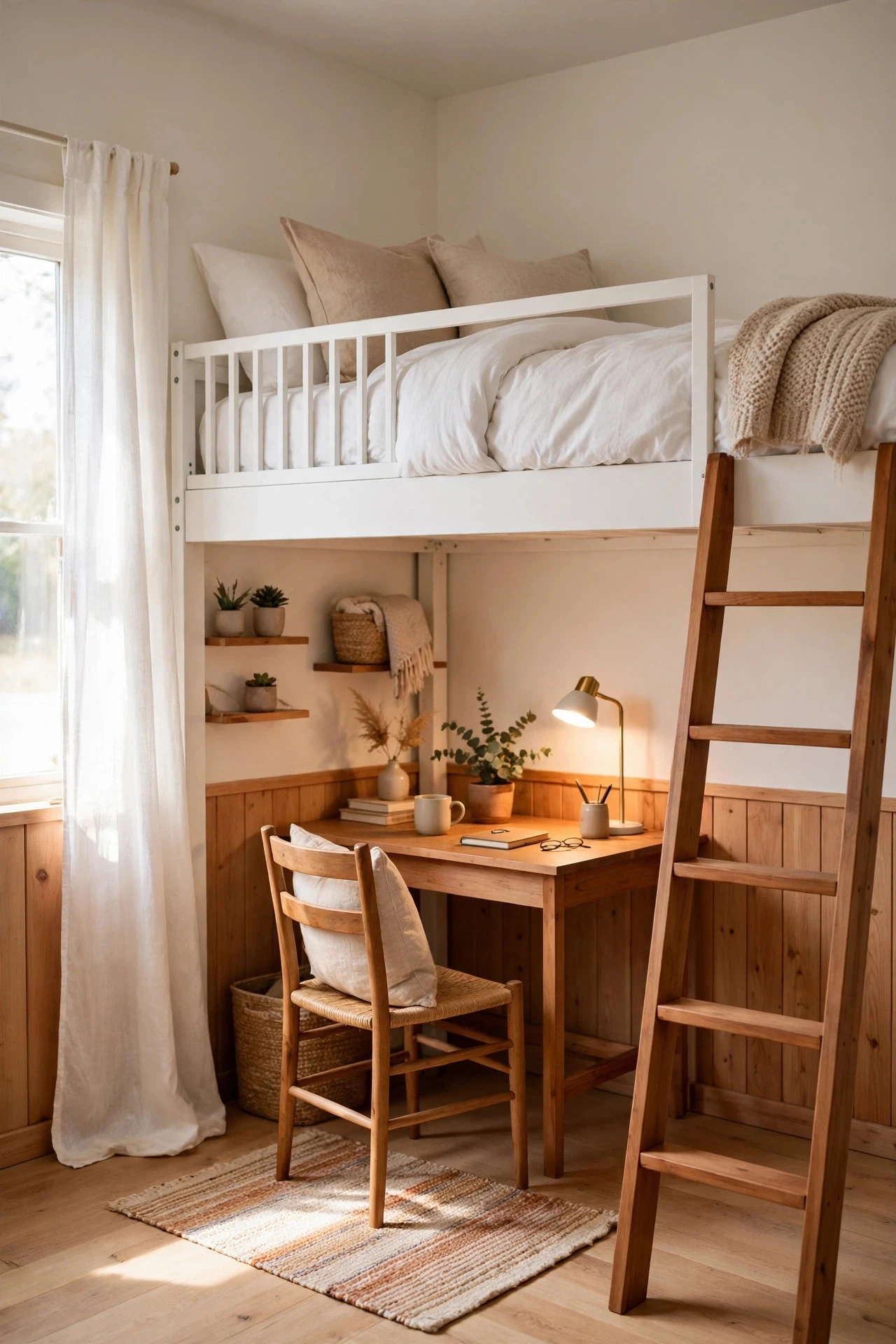
A loft bed is worth it when your ceiling is at least 2.7 metres high, because it turns the 3 to 4 square metres under the bed into a desk, wardrobe or reading zone. Standard frames lift the mattress to 150–170 cm, leaving 110–130 cm underneath for a desk and chair, or 160 cm for a low wardrobe rail.
You need 75 cm of sitting headroom above the mattress, so a 2.4-metre ceiling only works with a mid-sleeper at 110–120 cm high. Buy a frame rated for at least 150 kg, bolt it to studs, and fit a guard rail at least 16 cm above the mattress. Renters: a mid-sleeper with drawers underneath needs no wall fixings. Avoid lofts under ceiling fans or low pendant lights.
4. Should You Consider a Murphy or Wall Bed?

A Murphy bed is the strongest space saver here: folded up, it returns the bed's entire footprint — about 2.7 square metres for a double — to the room. Modern wall beds use piston mechanisms one person can fold down in under ten seconds, rated for 10,000-plus cycles — roughly 25 years of daily use.
Learn more about how they work from the Murphy bed entry, which explains the counterbalance system. Budget £800–£2,500 for a quality cabinet bed with a mattress at least 15 cm thick — thin folding mattresses are why old wall beds felt uncomfortable. Installation needs a solid wall — plasterboard alone will not hold the load. Budget option: a fold-down wall desk plus a sofa bed. Never buy a wall bed without lying on the exact mattress first.
5. How Much Storage Does a Storage Bed Really Add?
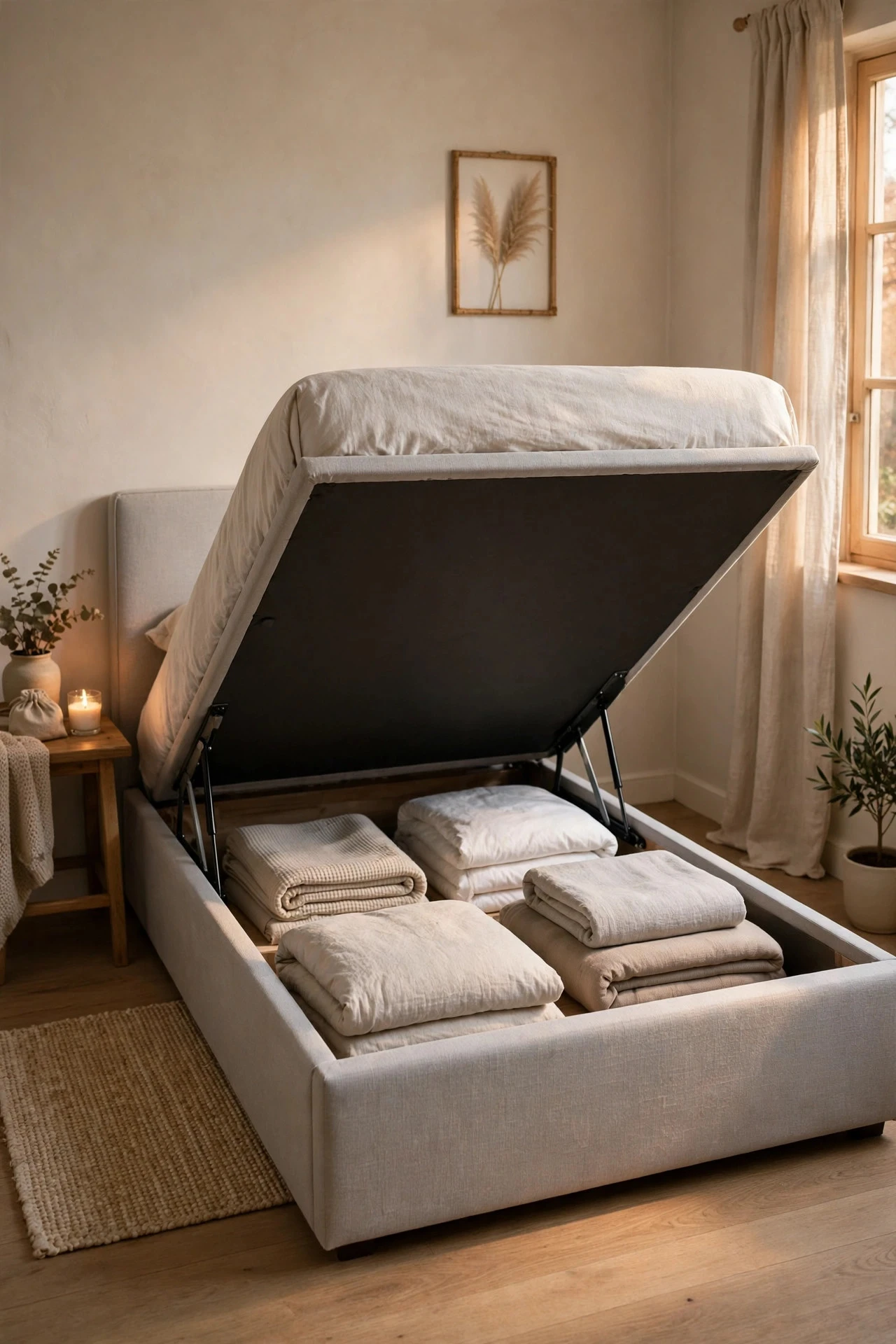
A storage bed adds roughly 0.4 to 0.6 cubic metres of hidden storage — enough for two duvets, four sets of bedding and a season of out-of-season clothes — without taking any extra floor space. Ottoman beds lift the whole mattress on gas struts for the biggest compartment; drawer beds give smaller compartments but open without lifting the mattress.
Choose an ottoman with struts rated for the mattress weight (a heavy double can weigh 40 kg) and a base at least 30 cm deep. Keep heavy items at the foot end and store bedding in vacuum bags. For calm, uncluttered styling that pairs well with hidden storage, see these 22 luxury bedroom decor ideas for a five-star hotel feel. Label boxes by season and clear the compartment out twice a year — never let it become a junk drawer.
6. What Is the Smartest Way to Use Under-Bed Storage?
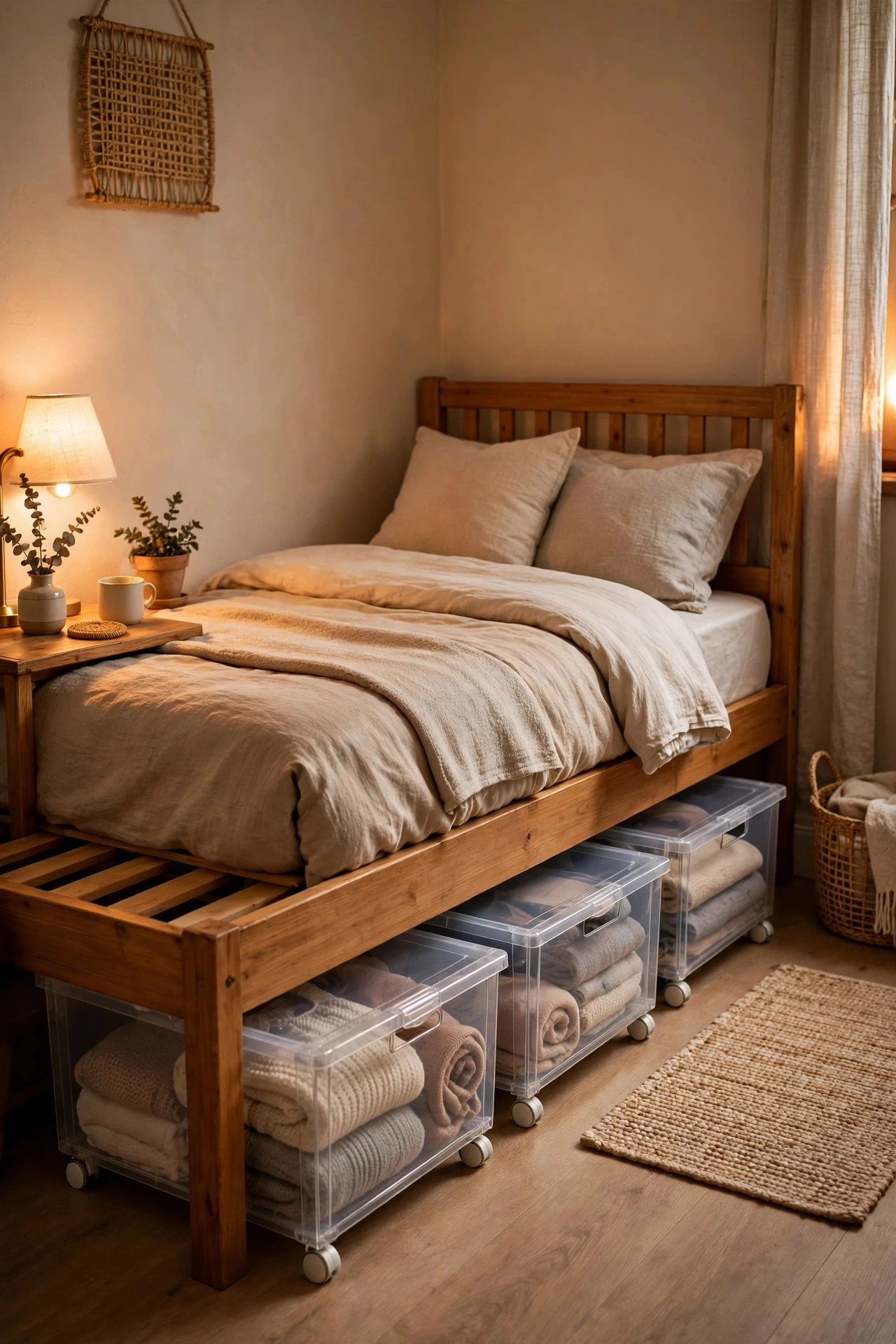
Under-bed storage works when boxes are shallow, labelled and on wheels — 15 cm boxes slide under most frames and hold clothes, shoes or bedding without becoming a dust trap. Measure first: a frame with 20 cm of space fits 15 cm boxes with room to spare, while a low platform bed with 10 cm needs flat 8 cm boxes.
Use clear boxes or photo labels on the visible end, so you never pull out three boxes to find one jumper. Vacuum bags compress duvets to a third of their volume. Keep everyday items in the box nearest the open side, seasonal items at the far end. Bed risers lift a frame by 10–15 cm for about £20 and create a new storage layer. Avoid open baskets under the bed — they collect dust and look messy.
7. How Do You Build Vertical Storage Without Cluttering the Walls?
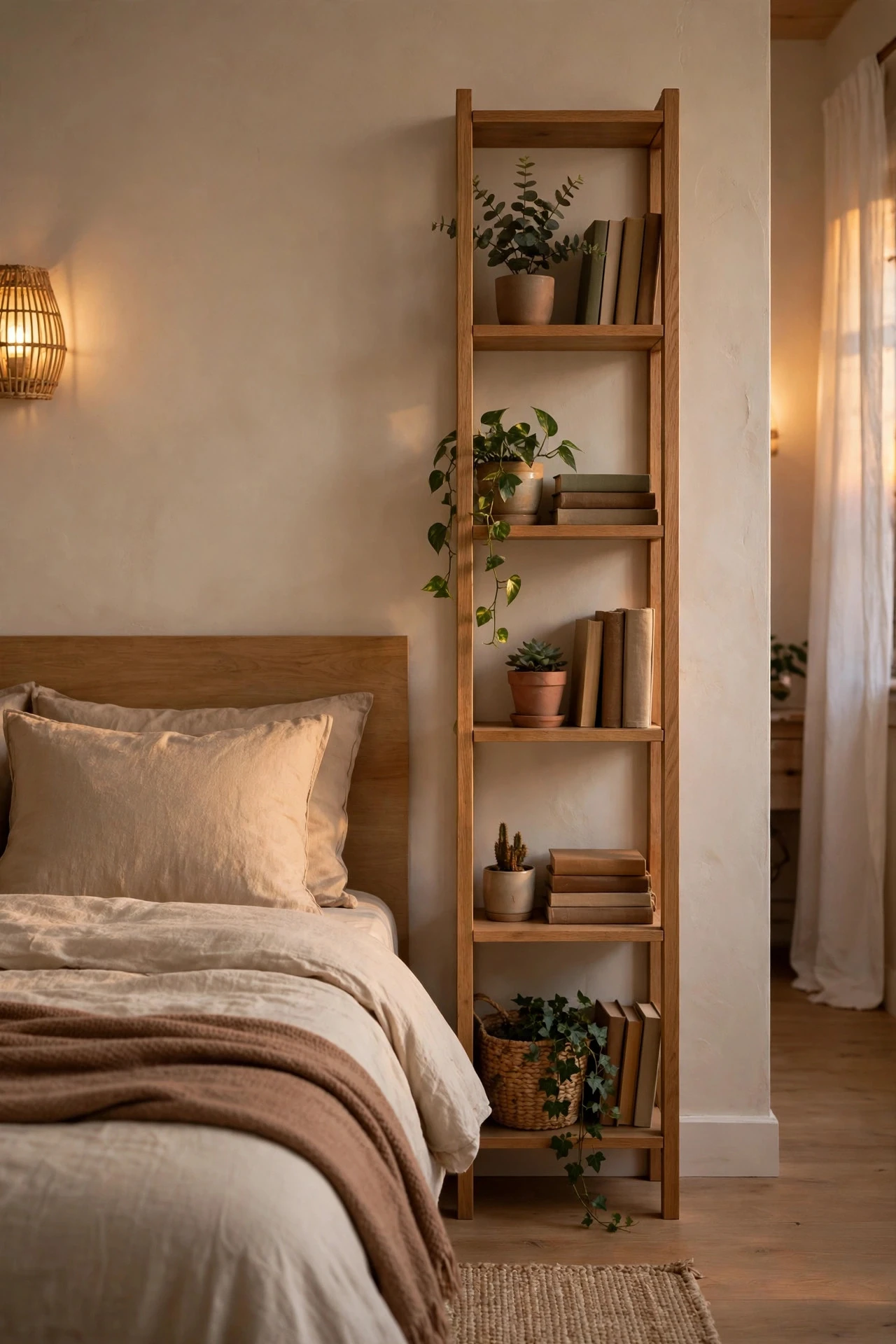
Vertical shelving works when it goes up in one disciplined column — a single tall unit or a stack of three shelves — instead of spreading small shelves across every wall. One 40 cm wide, 180 cm tall shelf unit holds as much as a 120 cm wide chest of drawers while using a third of the floor.
Mount floating shelves 140–150 cm from the floor, 180 cm for the top shelf, so nothing sits at eye level. Use brackets rated for 15 kg per shelf, heaviest items lowest. Style each shelf with the rule of three — tall, medium, small — and leave 20 percent empty so the wall reads as storage, not clutter. Renters: a leaning ladder shelf needs no drilling. Avoid shelves above the bed — stored items feel heavy overhead and collect dust you breathe at night.
8. Why Swap Bedside Tables for Floating Nightstands?
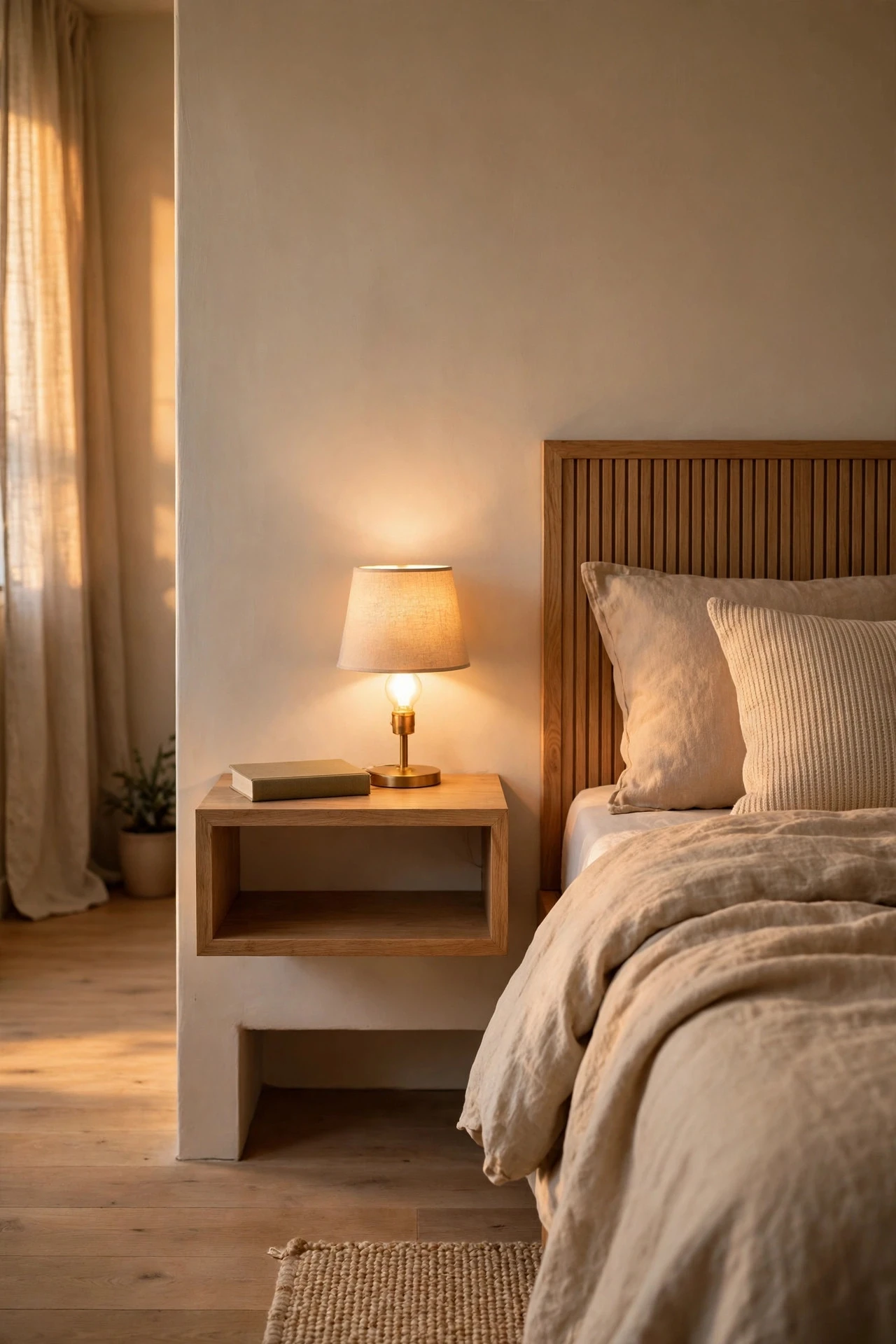
Floating nightstands free the floor underneath, which makes a small bedroom look bigger and makes vacuuming a two-minute job instead of a furniture-moving exercise. A wall-mounted shelf 40 cm wide and 30 cm deep holds a lamp, phone and book — everything a bedside table holds — while the visible floor beneath reads as more space.
Mount the top surface 5–10 cm above mattress height, about 60–65 cm from the floor for a standard bed, so you can reach a glass of water without sitting up. Fix into studs or use 20 kg toggle bolts in plasterboard; add a small drawer for chargers. Tightest rooms: a 20 cm deep ledge holds just a phone and a glass. Avoid sharp corners at hip height in narrow walkways; choose a curved front edge.
9. How Do Wall-Mounted Lights Free Up Space?

Wall-mounted lights remove the lamp from the bedside surface, freeing roughly 900 square centimetres per side — enough for a book, phone and glass of water. Swing-arm sconces at 140–150 cm, 30–40 cm to the side of the headboard, give focused reading light and fold flat when not in use.
Choose warm-white bulbs (2700K) at 400–500 lumens for reading, and put them on a dimmer so the same light works for winding down. Hardwired sconces look cleanest; plug-in versions with a cord cover are renter-friendly and under £40 each. Or mount a picture light or LED strip behind the headboard to wash the wall with light. Never mount sconces directly above the pillow — always offset them to the side.
10. Where Should You Place Mirrors to Double the Light?

Hang a mirror opposite or at a right angle to the window, never opposite a cluttered wall — a mirror doubles whatever it faces. A 60 by 90 cm mirror, centre at eye level (about 150 cm), opposite a window bounces daylight deep into the room and can make it feel a full metre wider.
A tall leaning mirror, 50 by 160 cm, beside the wardrobe doubles as a dressing mirror and reflects the brightest corner. Choose a thin or frameless edge so the mirror reads as a window, and keep the glass clean — smudges dull the light it should double. Mirrored wardrobe doors reflect the whole room and visually erase a bulky wardrobe, but need wiping weekly. Avoid a mirror opposite the bed if morning light will wake you.
11. What Is Colour Drenching and Does It Work in a Small Room?

Colour drenching means painting walls, ceiling, skirting and door the same colour; it works in small bedrooms because removing contrast lines stops the eye measuring the room's edges. Deep green, navy or warm terracotta makes the walls recede and the room feel cocooned rather than cramped — the opposite of what most people expect.
Choose a mid-tone around LRV 20–30 — rich without going cave-like — in matt or eggshell, which hides wall imperfections better than gloss. Paint the ceiling the same colour in a flatter finish, and keep bedding and curtains a lighter tone of the same family. Renters: removable wallpaper on one wall plus matching bedding gives most of the effect. Avoid drenching rooms with no natural light — deep colours need layered lighting or the room feels like a box.
12. How Do Light Colour Schemes Make a Room Feel Bigger?
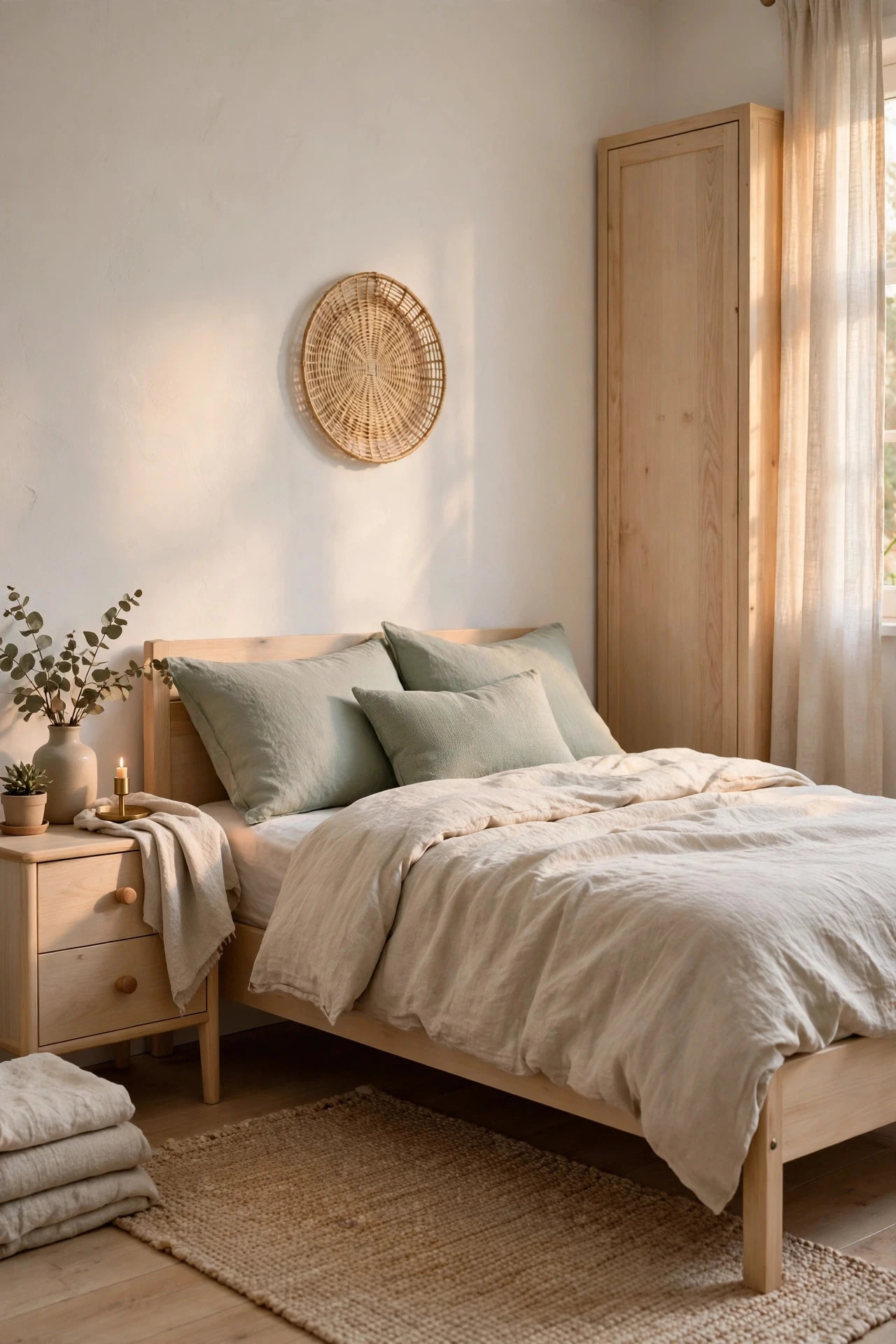
Light colour schemes make a small bedroom feel bigger because pale, low-contrast surfaces reflect more daylight and blur the boundaries between wall, ceiling and floor. Choose a palette within two tones — warm white walls (LRV 80+), pale oak and oatmeal bedding — so the eye travels without stopping at a sharp contrast line.
Keep the largest surfaces the lightest: walls, bedding and wardrobe doors, then add depth with smaller items in one mid-tone, such as sage cushions or a walnut tray. Cool whites suit north-facing rooms; warm whites soften harsh sun in south-facing rooms. Paint the ceiling a shade lighter than the walls, not stark white, so the join disappears. Colour lovers: one soft mid-tone accent wall behind the bed, everything else pale. Avoid pure white everywhere — it reads clinical; warm wood or natural linen keeps the room lived-in.
13. Why Hang Curtains From Floor to Ceiling?
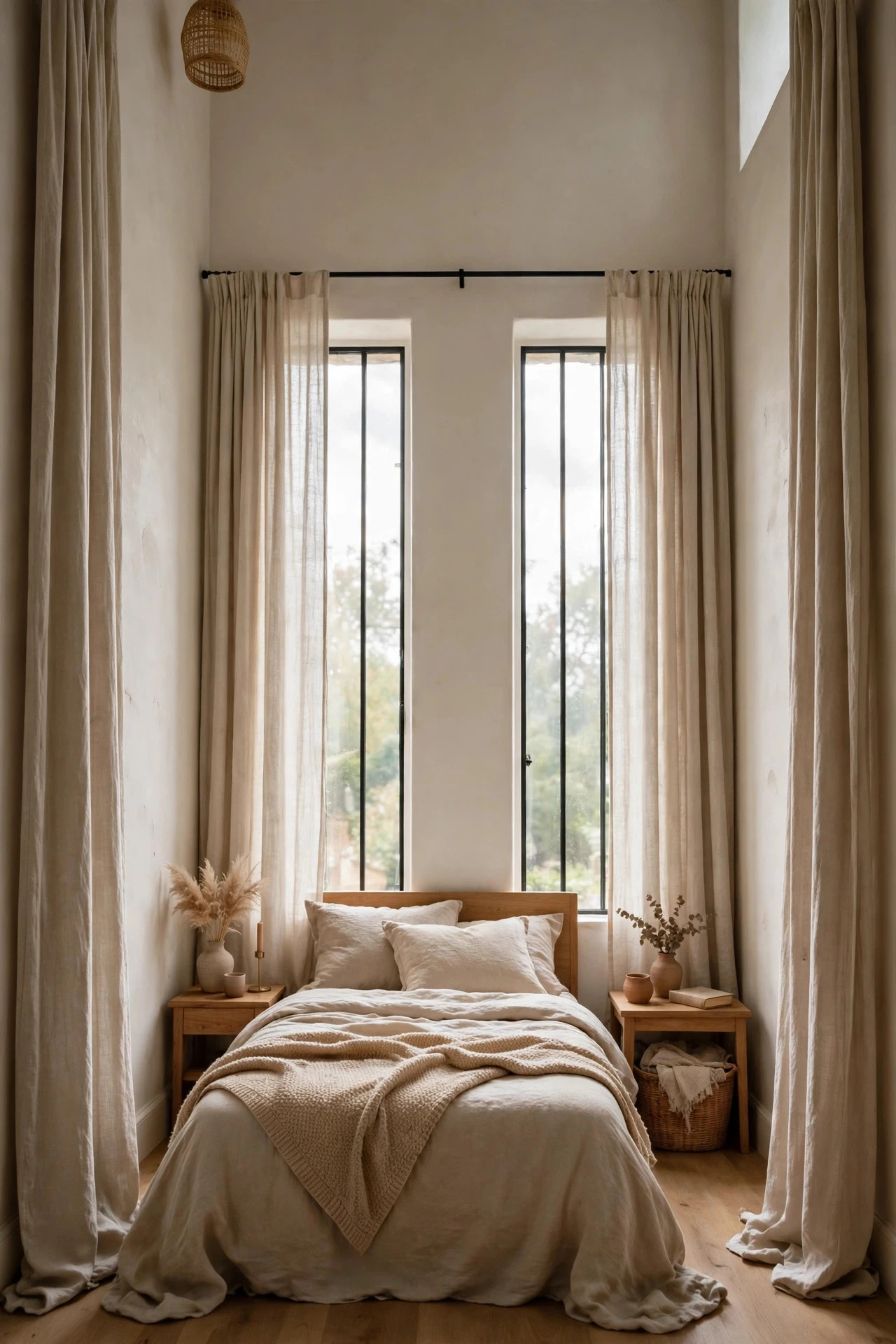
Floor-to-ceiling curtains make a small bedroom feel taller because the eye follows one unbroken vertical line from the floor to the ceiling instead of stopping at the window frame. Hang the rod 10–15 cm below the ceiling and extend it 15–20 cm past the window on each side, so curtains stack clear of the glass and the window looks wider.
Let the drop pool 2–3 cm on the floor for a soft look, or end exactly at the floor for easy cleaning. Light-filtering linen lets daylight through while keeping privacy; one wide panel per side looks calmer than several narrow ones. For awkward rooms, these 22 bedroom inspiration ideas for small and awkward rooms show how tall curtains rescue low windows and sloped ceilings. Renters: a tension rod inside the window recess. Never mount the rod at window height with sill-length curtains — it chops the wall in half.
14. When Does Transparent Furniture Actually Help?

Transparent furniture helps in a small bedroom because acrylic and glass pieces let light pass through them, so the eye reads the floor and wall behind them and the room feels less filled. A clear acrylic chair, glass-topped side table or ghost-style stool occupies almost no visual space while doing a real job.
Choose acrylic at least 8 mm thick for chairs and 12 mm for tables so the piece feels solid, and check the weight rating — a good acrylic chair holds 120 kg. Glass tops need tempered panels at least 10 mm thick; a weekly wipe keeps them invisible, not smudged. Use transparent pieces sparingly: one or two per room is the sweet spot, because a room full of clear furniture looks like a showroom. Slim-legged furniture shows the floor beneath for a similar airy effect. Avoid it with small children or pets — invisible edges get bumped.
15. Which Multi-Functional Furniture Pieces Earn Their Place?

Multi-functional furniture earns its place when one piece does two jobs well — a storage ottoman genuinely comfortable to sit on, or a bed that converts to a sofa without a daily wrestling match. Best pieces: a storage ottoman (seating plus 0.1 cubic metres), a folding wall desk, and a bed with a pull-out trundle.
A fold-down desk needs 60 cm of clear floor when open and zero when closed — but the chair still needs a home, so hang a folding chair on a wall hook. Budget £150–£400 for a storage ottoman and £200–£600 for a fold-down desk; test the mechanism in the shop — if it takes more than ten seconds to convert, you will stop using the second function. Renters: a bench with a lift-up lid at the foot of the bed multi-tasks without fixings. Never buy a sofa bed as your main bed — most are too firm or too thin for nightly sleep.
16. How Do You Organise a Wardrobe So It Holds Twice as Much?

A wardrobe holds twice as much when you sort by frequency, not type: everyday clothes at eye level, weekly items just above and below, seasonal items on the top shelf. A rail needs 100 cm for dresses and 60 cm for shirts, so a double-rail setup (rails at 180 and 100 cm) doubles shirt and trouser capacity.
Add shelf dividers every 30 cm, a hanging shoe organiser inside the door for 10–12 pairs, and slim velvet hangers — swapping 40 saves roughly 20 cm of rail. Keep a "maybe" box on the top shelf; unopened after six months, donate it. No wardrobe doors? A curtain on a tension rod hides clutter and softens the room. Measure the wardrobe interior before buying boxes — a 5 cm mismatch jams the system.
17. What Can You Store Above the Door?
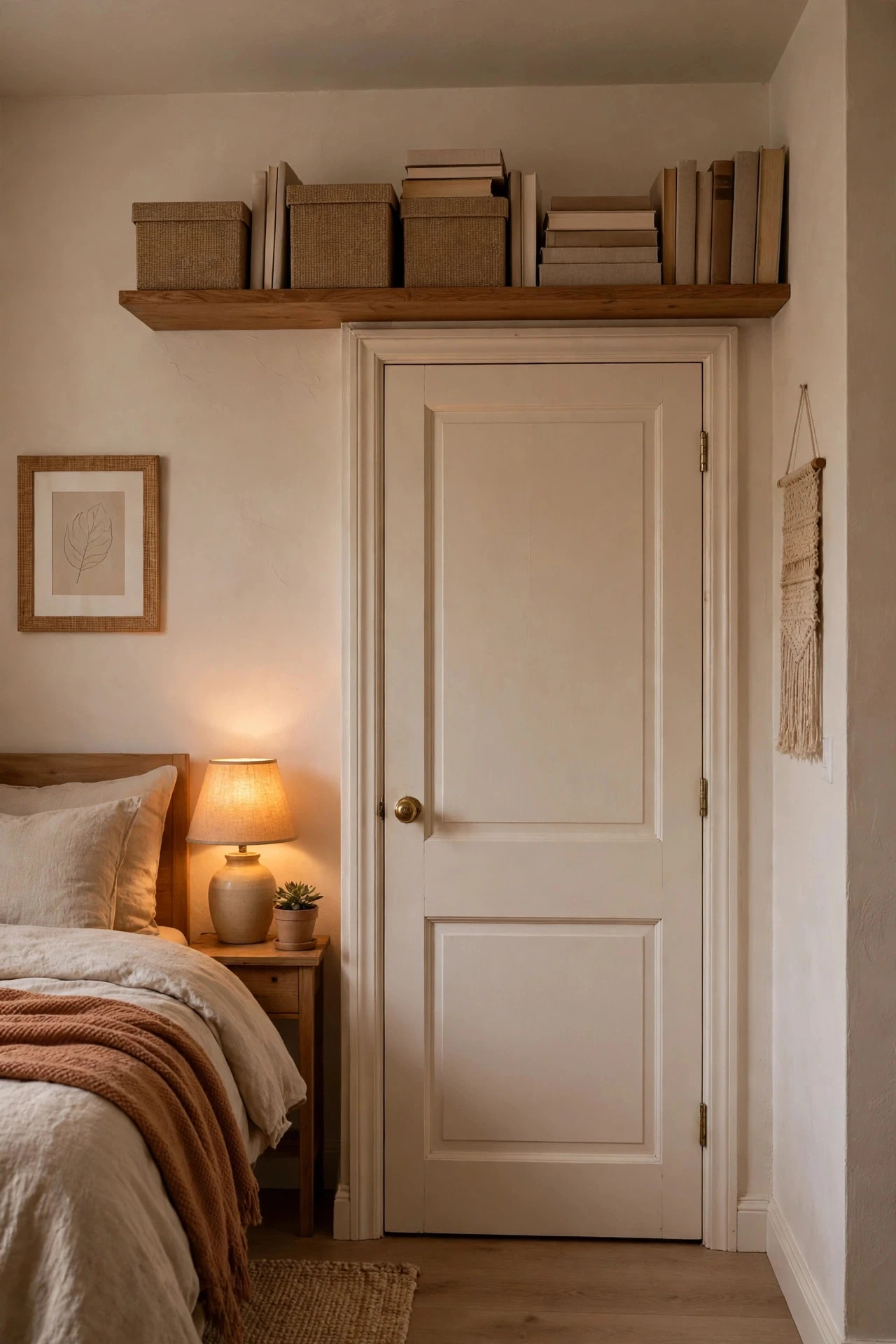
The space above a bedroom door — a shelf 20–30 cm deep across the 80–90 cm door frame — holds books, albums, spare bedding or boxes you reach for yearly. Mount one shelf 15–20 cm above the frame, fixed into studs or with 20 kg fixings, and keep the load under 15 kg so it never sags.
Use matching boxes so the shelf reads as a design feature, and keep the tallest item under 25 cm. This is dead space in almost every bedroom, and it works because you never walk through it — unlike floor space, which you use every day. Or fit a shallow picture ledge above the door for photos or plants — personality without storage weight. Never store weekly items up there — climbing on a chair for pyjamas gets old fast.
18. How Do You Fit a Workspace Into a Small Bedroom?

A workspace fits when it is 80–100 cm wide, 45–55 cm deep, and folds away or doubles as something else — a drop-leaf desk that closes to a 10 cm shelf, or a console doubling as a dressing table by day. Place it near the window, with 70 cm of chair clearance and a chair that slides fully underneath.
Mount a small shelf above the desk at 140 cm and clip cables to the wall so the floor stays trip-free. A laptop, notebook and mug are the realistic load for a 90 cm desk — two monitors and a printer mean the bedroom is the wrong office. For ideas on carving a quiet corner that works for both reading and working, see these 22 bedroom reading nook ideas for a cozy quiet corner. Renters: a C-shaped laptop table slides over the bed. Never face the desk toward the bed — you will work from the bed within a week, and your sleep will suffer.
19. Can You Really Fit a Reading Nook in a Tiny Bedroom?
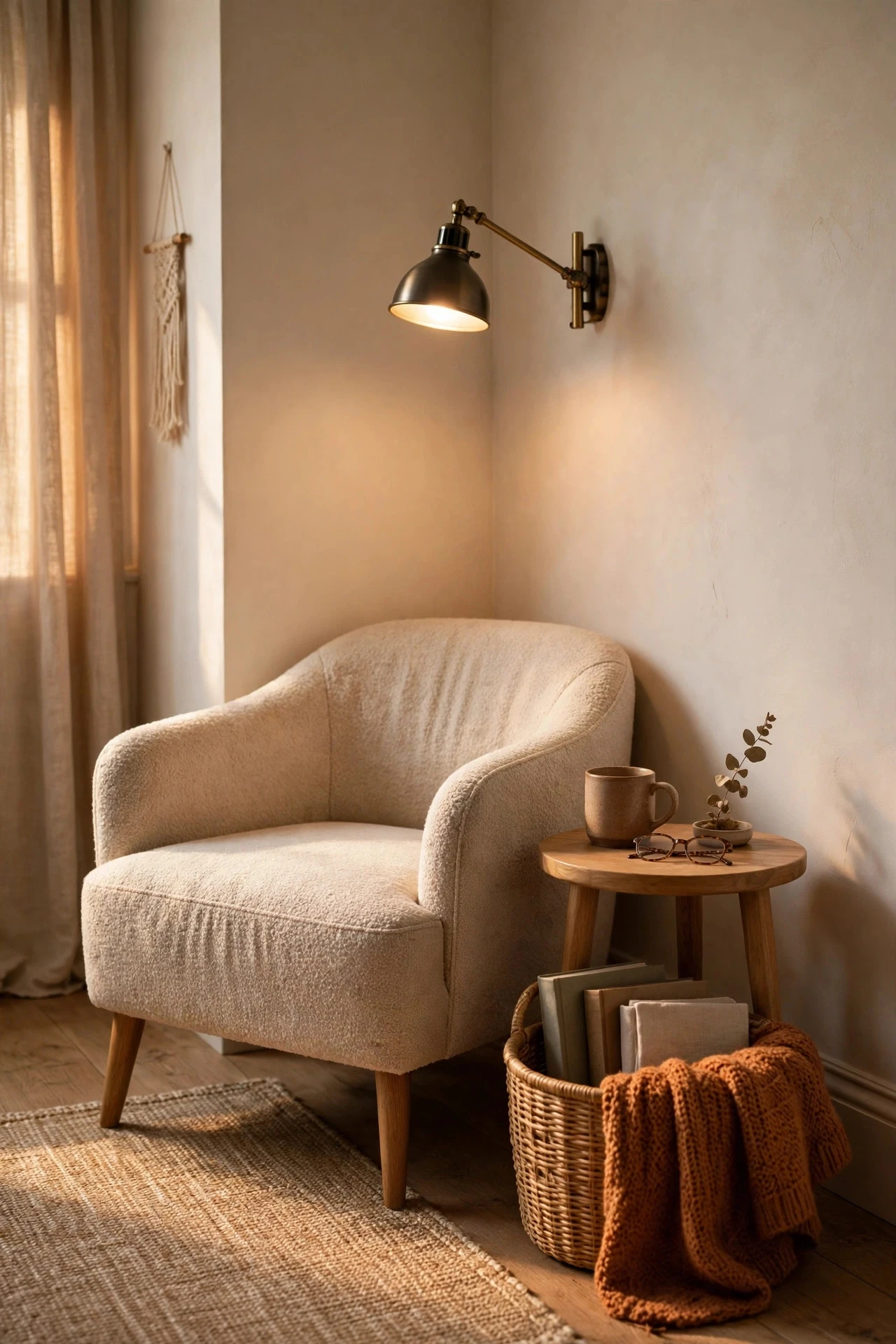
A reading nook fits in as little as 90 by 90 cm of corner — a compact armchair or floor cushions, a small side table and a focused light are all it takes. Choose a chair under 70 cm wide with a 40–45 cm seat height, angled 45 degrees into the corner so it feels intentional.
A wall-mounted light at 140 cm frees the side table for a book and tea; a basket beside the chair holds the current book and a throw. With zero floor space, a window seat works: a 40 cm cushion on a sill at least 35 cm deep, with no radiator directly underneath. Children's rooms: a floor-level nook with a teepee and cushions needs no furniture. Never place the nook where it blocks the wardrobe door or the walkway.
20. How Big Should Artwork Be on a Small Bedroom Wall?

Artwork should be two-thirds to three-quarters the width of the furniture beneath it — above a 135 cm double bed, the art should span 90–100 cm, hung with its centre 140–150 cm from the floor. One large piece beats a scatter of small frames, because a single confident image gives the eye one place to rest.
For a gallery, use three or four frames in matching mounts with 5–8 cm gaps on one horizontal line, within the two-thirds rule. Choose art with a light background or plenty of negative space, hung on hooks rated for double the frame's weight. Renters: a leaning frame on the dresser or a washi-tape grid needs no holes. Never hang art too high — centring it on the wall leaves a gap above the bed that feels unfinished.
21. What Size Rug Works in a Small Bedroom?

A rug works when it extends 45–60 cm beyond the bed, so your feet land on softness — for a queen, roughly 240 by 300 cm, or 200 by 290 cm if tight. If a full-size rug is too big, use two 60–75 cm runners along the sides instead — same warm landing, less floor covered.
Choose low pile (under 10 mm) so doors clear it, plus a thin anti-slip underlay. A light, plain rug reads as one calm surface; a busy pattern chops a small floor into pieces. Check the door swing first — a rug that stops the door is a daily annoyance. Renters: a washable rug handles spills and goes in the machine. Never buy a rug narrower than the bed — it looks like a mat that shrank in the wash.
22. Which Budget Swaps Make a Small Bedroom Look Expensive?

The budget swaps that make the biggest difference cost under £100 each: matching bedding in one calm colour, a £30 pair of full-length curtains, and a £20 bedside lamp with a warm bulb. Swap mismatched bedding for a single-colour duvet set in washed linen or percale, and the bed — the largest object in the room — instantly looks deliberate.
Swap a cluttered bedside table for a floating shelf and tray, a bare bulb for a shaded lamp, and a faded rug for a plain low-pile one. Paint is the cheapest transformation of all: one tin of paint (£25–£40) and a weekend repaints a small bedroom completely. For wall inspiration that costs little and changes a lot, browse these 22 bedroom wall decor ideas for a calm personal retreat. Thrifted frames painted one colour and hung as a group look curated for under £30. Never spend the budget on one expensive statement piece while bedding, curtains and lighting stay mismatched — a room looks expensive when everything agrees.
Practical Tips
– Measure before you buy anything. Sketch the room to scale, mark doors, windows, radiators and sockets, and cut paper templates for the bed, wardrobe and desk. A 5 cm error decides whether a drawer opens. – Keep 60 cm of clear walking space on at least one side of the bed and 45 cm in front of wardrobes and drawers. Anything less turns daily routines into a shuffle. – Follow one-in-one-out: every new item means one old item leaves. Small rooms have no spare capacity, and this rule keeps them calm months after the makeover. – Layer the lighting: one ceiling light, one bedside light and one low lamp. Three small sources at different heights make a room feel deeper than one bright ceiling light. – Declutter weekly: ten minutes every Sunday clearing surfaces. A small bedroom shows clutter faster than a big one, so the reset matters more here. – Keep the floor visible: choose furniture on legs, hang things on walls, and resist filling every empty corner. – Test layouts with painter's tape: outline the bed and wardrobe on the floor and live with it for a day. It costs nothing and prevents a sore back.
Final Thoughts
A small bedroom needs decisions, not a bigger budget. Pick the bed position first, solve storage second, and let colour and light do the rest. Start with one idea this weekend, live with it for a week, then add the next.
You May Also Like:
– 22 master bedroom decor ideas for a calm elegant retreat – 22 luxury bedroom decor ideas for a five-star hotel feel – 22 small bathroom ideas that make a tiny bathroom feel bigger
Frequently Asked Questions
How can I make a small bedroom feel bigger without renovating?
Start with the bed position, then colour and light. Push the bed against the longest wall, keep walls and bedding within two tones, hang floor-to-ceiling curtains, and add a mirror opposite the window. These four changes cost little, need no building work, and make most small bedrooms feel noticeably larger.
What is the best bed for a small bedroom?
A storage bed is the best all-round choice, adding roughly half a cubic metre of hidden storage without taking extra floor. If you need daytime floor space, a Murphy bed wins. For renters, a standard double with 20 cm of under-bed clearance plus rolling boxes gives most of the benefit with no installation.
How much walking space do I need around a bed?
Leave at least 60 cm of clear floor on the side you get out of, and 45 cm in front of wardrobes and drawers so they open fully. In very tight rooms 45 cm beside the bed works for one sleeper, but below that you will turn sideways every morning, which gets old fast.
What colours make a small bedroom look bigger?
Pale, low-contrast colours reflect the most light: warm white, pale grey, soft sage and light oatmeal. Keep walls, bedding and the largest furniture within two tones so the eye reads one calm space. Add depth with one mid-tone accent, such as cushions or a throw, rather than a dark feature wall.
Where should I put a mirror in a small bedroom?
Hang a mirror opposite or at a right angle to the window, centre about 150 cm from the floor, so it bounces daylight deep into the room. A tall leaning mirror beside the wardrobe doubles as a dressing mirror and light reflector. Never hang a mirror opposite a cluttered wall — it doubles the mess, not the light.
How do I add storage to a small bedroom without it looking cluttered?
Use hidden storage first: a storage bed, under-bed boxes and wardrobe organisers keep things out of sight. Then add one disciplined vertical unit, such as a single tall shelf, rather than shelves on every wall. Keep 20 percent of each shelf empty, use matching boxes, and follow the one-in-one-out rule.