22 Bathroom Mirror Ideas for a Brighter, Bigger-Looking Room
A bathroom mirror is the hardest-working feature in the room. It is where you shave, apply makeup, check an outfit and brush teeth, yet it also controls how large, bright and finished the whole bathroom feels. A well-chosen mirror bounces daylight around a windowless room, opens up a tight cloakroom and turns a plain vanity into a considered focal point.
Looking for more inspiration? Our Nest Decorz homepage gathers the latest home decor ideas, seasonal decorating guides and room-by-room styling tips in one place — start there and explore.
The right choice depends on more than shape alone. Size, height, frame, lighting and steam resistance all decide whether a mirror flatters the room or fights it. This guide covers 22 bathroom mirror ideas with the measurements, materials and placement rules that make each one work, plus the mistakes that leave a mirror too small, too high, fogged or damaged by steam.
– Choose a mirror two-thirds to three-quarters as wide as the vanity, hung with its centre at eye level. – Match the frame metal to taps and handles, or choose frameless glass for a calm, modern wall. – Add backlit or side lighting for even, shadow-free task light at the face. – In steamy bathrooms, favour sealed frames, demister pads and good extraction. – Fix every mirror to wall fixings rated for its weight, especially heavy glass and stone-framed designs.
1. Round Mirror to Soften a Rectangular Vanity

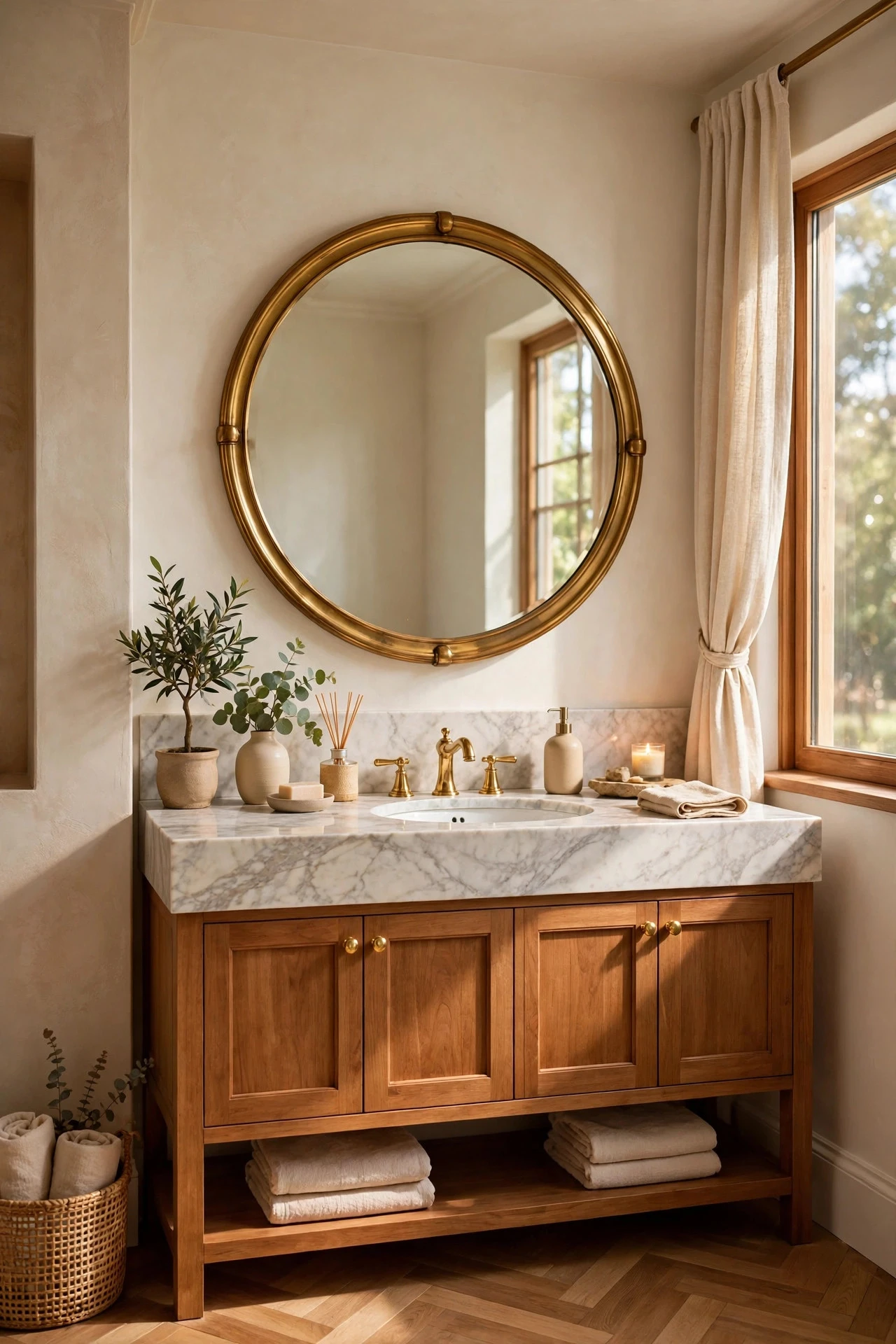
A round mirror softens a rectangular vanity because its curve breaks the straight lines of the basin, worktop and cabinetry, making the wall feel calmer and less boxy. Choose a diameter of 24 to 36 inches for a single vanity, keeping the mirror narrower than the vanity top so it reads as a deliberate feature rather than crowding the wall. A thin brass, black metal or wood frame adds definition, while a frameless round mirror keeps a small bathroom feeling open and uncluttered. Hang the centre at eye level, about 60 inches from the floor, and leave a clear gap of 4 to 6 inches above the splashback or tap. The mistake to avoid is choosing a round mirror so small that it floats lost above a wide vanity, leaving the wall unbalanced and the reflection cramped at face height.
2. Arched Mirror for Height and Softness

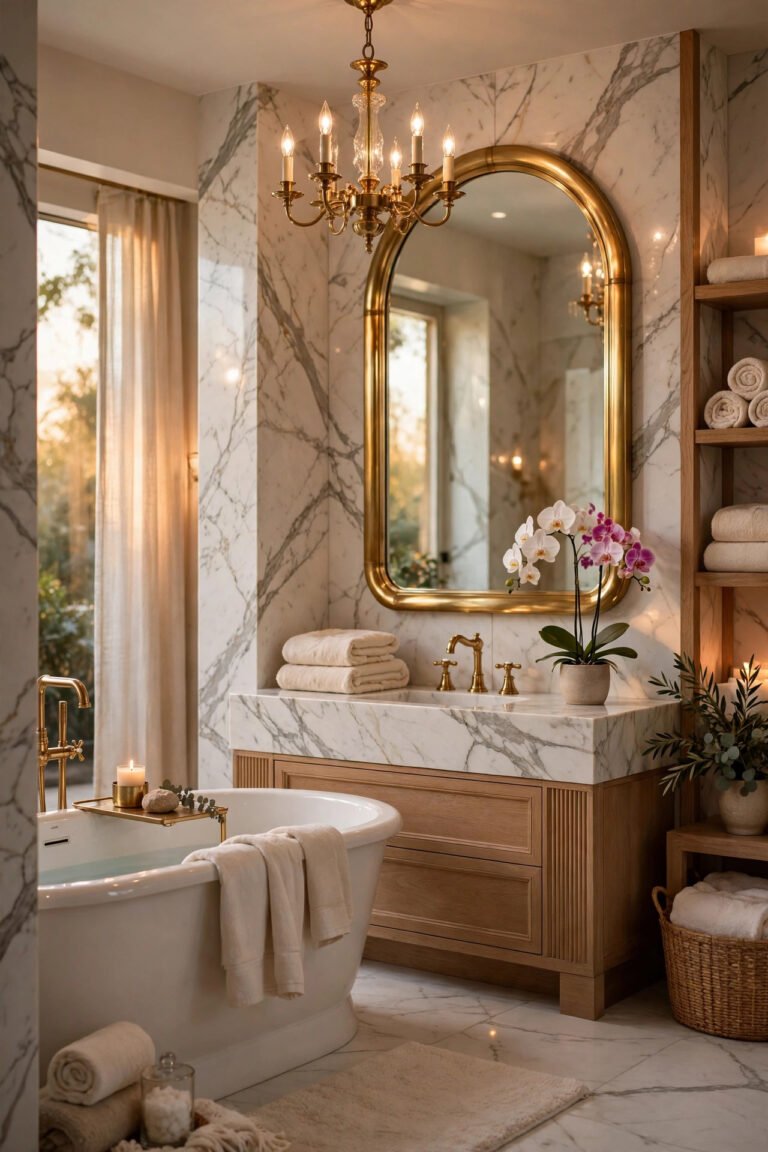
An arched mirror adds height and softness because its curved top draws the eye upward while echoing doorways, windows and classic bathroom architecture. It suits tall, narrow walls and bathrooms with low ceilings, where a rectangular mirror can emphasise a short, squat shape. Choose an arch 24 to 30 inches wide and 36 to 48 inches tall for a single vanity, and keep the frame slim — brass, blackened steel or pale wood — so the arch shape stays the focus. Arched mirrors pair beautifully with marble, fluted panelling and luxury bathroom decor ideas in warm, spa-like schemes. For a modern twist, try a flat-bottomed arch with a simple black frame against plain white tiles. The mistake to avoid is placing the arch so high that its curve disappears above normal sightlines, wasting the shape that makes it special.
3. Backlit LED Mirror for Even Task Light

A backlit LED mirror gives even task light because light glows from behind the glass and around its edge, washing the face without the harsh shadows a single ceiling light creates. Choose a colour temperature of 2700K to 3000K for warm, flattering light that matches bathroom downlights, and look for a dimmer and a colour-temperature switch so morning makeup and evening winding down need different settings. Sizes from 24 to 48 inches suit most vanities, and frameless backlit designs keep the wall calm in contemporary bathrooms. Check the IP rating for the bathroom zone, and have the mirror wired by a qualified electrician following the maker's guidance. The mistake to avoid is fitting a cool, bluish LED above a warm-toned bathroom, because the clash makes skin look washed out and the whole room feel clinical rather than relaxing.
4. Hollywood-Style Mirror with Side Lights

A Hollywood-style mirror with side lights works because bulbs placed down both sides light the face evenly from left and right, removing the under-chin shadows that overhead lights create. It is ideal for makeup, grooming and detailed skincare, and it brings a dressing-room glamour that suits larger bathrooms and dressing areas. Choose warm-white exposed bulbs or frosted globes, spaced evenly, with a dimmer so the light can drop to a soft evening glow. Keep the mirror at least 24 inches wide so the bulbs do not crowd the reflection, and pair the frame with brushed brass or matte black taps for a polished finish. The mistake to avoid is using bare, high-glare bulbs without dimming in a small bathroom, because the brightness overwhelms the room and reflects harshly off glossy tiles.
5. Double Mirrors Over a Double Vanity

Double mirrors over a double vanity work because each person gets a centred, correctly sized reflection with their own lighting and storage, instead of sharing one stretched mirror that suits neither position. Choose two identical mirrors, each two-thirds the width of its basin, hung at the same height with an equal gap between them and the same gap to each side wall. Round, arched or slim rectangular mirrors all work, provided the pair matches exactly in shape, frame and finish. Leave the centre gap for a small sconce, a piece of art or a tall vase, but keep the wall uncluttered so the symmetry stays clear. The mistake to avoid is hanging two mirrors at slightly different heights or with mismatched frames, because the eye catches the unevenness immediately and the vanity looks carelessly finished.
6. Medicine Cabinet Mirror with Hidden Storage

A medicine cabinet mirror with hidden storage solves the bathroom clutter problem because everyday bottles, medicines and grooming tools sit behind the mirror, leaving the worktop clear and the room calmer. Choose a recessed cabinet where the wall depth allows it, or a slim surface-mounted model 4 to 6 inches deep where it does not, and check that the door swings clear of taps, lights and neighbouring walls. Look for adjustable glass shelves, soft-close hinges and an interior mirror, and favour a cabinet with a mirrored front that matches the vanity width. Some models add lighting, a shaver socket or a demister pad, but every electrical feature must follow the maker's guidance and bathroom zone rules. The mistake to avoid is choosing a cabinet so deep that it juts over the basin and crowds the face, or so shallow that tall bottles will not stand upright inside.
7. Frameless Mirror Against Patterned Wallpaper

A frameless mirror against patterned wallpaper works because the plain glass edge lets the wallpaper pattern run right up to the reflection without a frame competing for attention. It suits bold botanical, geometric and vintage-style wallpapers, where a heavy frame would cut the pattern awkwardly and make the wall feel fussy. Choose a large, clean-edged mirror with polished or bevelled edges, fixed flush to the wall, and keep the glass at least 24 inches wide so the reflection holds its own against the pattern. In bathrooms with patterned tiles, the same calm logic applies, and modern bathroom tile ideas pair well with a frameless mirror that does not fight the tile design. The mistake to avoid is using a frameless mirror on a wall with peeling or damp wallpaper, because steam will lift the paper edges around the glass and spoil the clean finish.
8. Brass-Framed Mirror Matched to Tapware

A brass-framed mirror matched to tapware pulls a bathroom together because the repeated warm metal links the mirror, taps, handles and shower fittings into one deliberate scheme. Choose the same brass tone throughout — brushed, aged or polished — because mixed brass finishes clash under bathroom lighting and make the room look pieced together. A slim brass frame suits round, arched and rectangular mirrors alike, and it warms cool white tiles, marble and pale stone without overwhelming them. Keep the brass lacquered or sealed where the maker advises, and wipe water spots promptly so the finish stays even. For budget projects, a brass-look frame in aluminium or coated steel gives the same warmth at a lower price. The mistake to avoid is pairing a yellow-toned brass mirror with rose-gold or copper taps, because the competing warm metals confuse the scheme and neither finish looks intentional.
9. Black Metal Frame for a Modern Bathroom

A black metal frame gives a bathroom a modern, graphic edge because its strong outline defines the mirror against pale tiles and creates a clear focal point above the vanity. Matte black suits contemporary, industrial and monochrome bathrooms, and it pairs naturally with black taps, shower frames and cabinet handles. Choose a slim profile, about half an inch to one inch wide, so the frame reads as a crisp line rather than a heavy border, and keep the glass large enough that the dark frame does not shrink the reflection. Black frames also work well in small bathrooms, where the defined shape stops the mirror blending into a white wall. The mistake to avoid is mixing a matte black mirror frame with shiny chrome taps and warm brass lights, because three competing metal finishes leave the bathroom looking unsettled instead of modern and controlled.
10. Wood-Framed Mirror for Warmth

A wood-framed mirror adds warmth because natural grain softens hard tiles, porcelain and glass, making a bathroom feel more like a living room and less like a washroom. Choose oak, walnut or teak-style frames with a sealed, moisture-resistant finish, and match the wood tone to the vanity, shelving or flooring so the room feels connected. A chunky reclaimed-wood frame suits rustic and farmhouse bathrooms, while a slim oak frame suits Scandinavian and Japandi schemes with pale tiles and linen textures. In a steamy bathroom, the frame must be sealed on all sides, including the back, and the room needs good extraction to protect the wood over time. The mistake to avoid is hanging an unsealed, raw-wood frame directly over a steamy shower area, because moisture will swell, warp and stain the timber within months.
11. Scalloped-Edge Mirror in a Powder Room
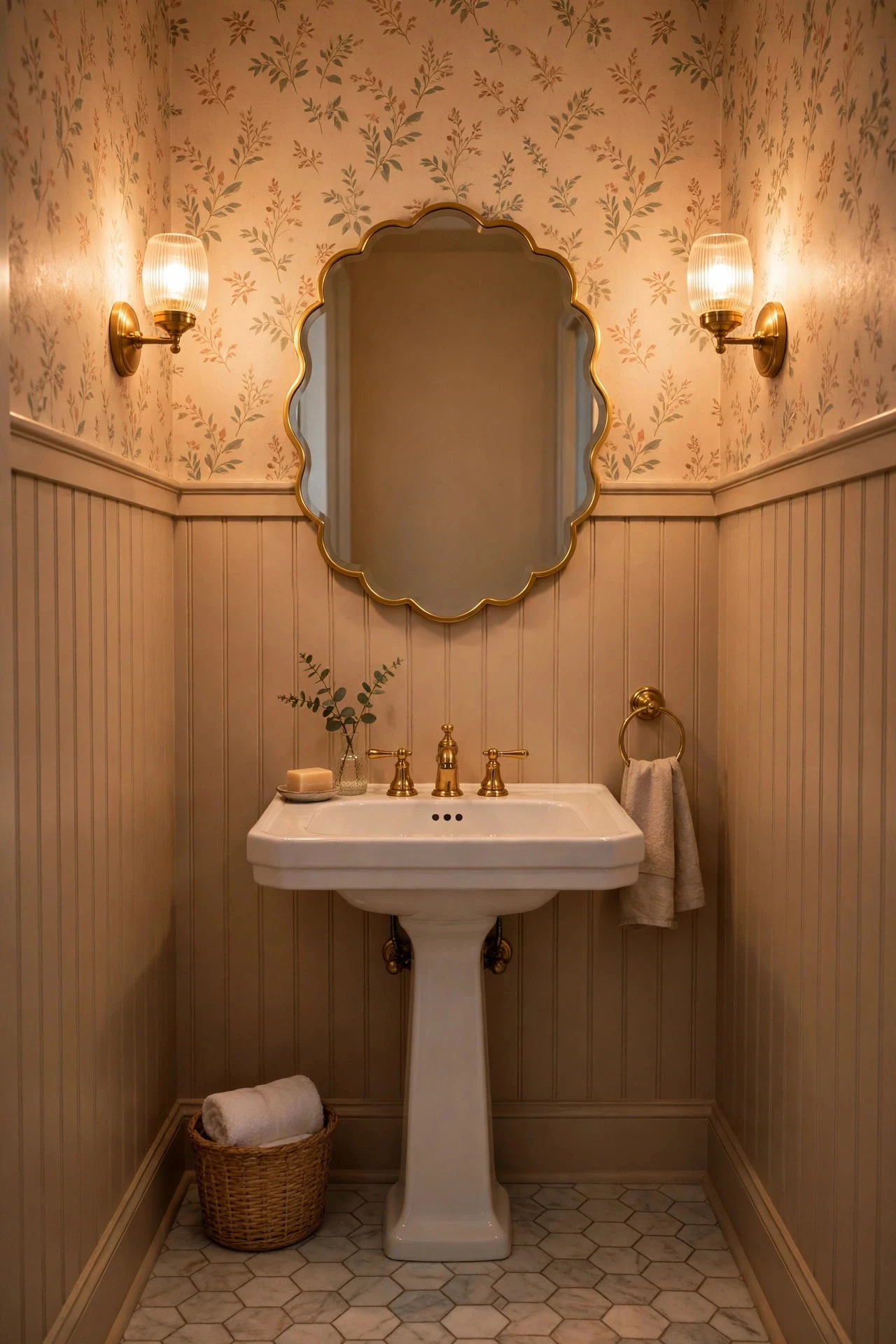
A scalloped-edge mirror suits a powder room because its soft, decorative outline adds charm and personality to a small space that guests see briefly and remember clearly. The gentle curves echo vintage dressing tables and classic French styling, and they soften the hard lines of a pedestal basin and tiled wall. Choose a scalloped mirror 20 to 28 inches wide, with a slim gold, brass or painted frame that picks up the room's taps or lighting, and hang it above a small basin where its shape can be appreciated at close range. Keep the surrounding wall calm — plain paint, soft wallpaper or simple tiles — so the scalloped edge stays the star. The mistake to avoid is pairing a scalloped mirror with another strong scalloped or ornate feature in the same small room, because two competing decorative shapes make the powder room feel fussy rather than elegant.
12. Pill and Capsule Mirrors
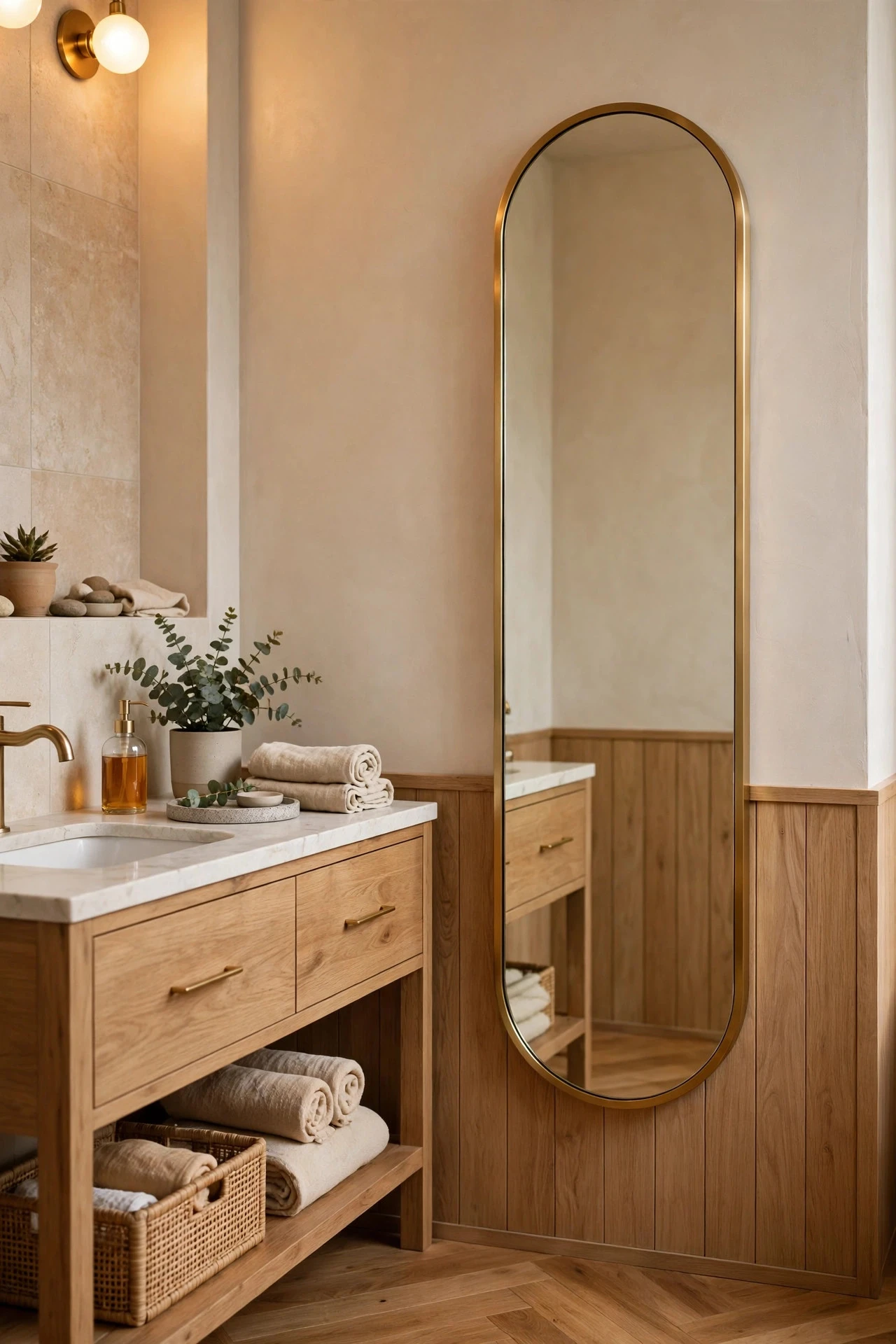
Pill and capsule mirrors, with their tall, rounded oblong shape, suit modern bathrooms because the soft vertical form adds height while avoiding the hard corners of a standard rectangle. They work well above narrow vanities, in cloakrooms and beside a bath, where a full-width mirror would crowd the wall. Choose a capsule 20 to 24 inches wide and 36 to 48 inches tall, hung so its centre sits at eye level, and favour a slim frame in brass, black or frameless glass for a clean finish. The elongated shape reflects more of the body than a round mirror of the same width, which helps with outfit checks in a dressing area. Pair a capsule mirror with a slim wall light on one side for balanced illumination. The mistake to avoid is hanging a capsule mirror too high in an effort to emphasise height, because the lower curve then sits above the basin and the reflection cuts off at chest level.
13. Oversized Mirror to Double a Small Bathroom

An oversized mirror doubles a small bathroom visually because it reflects the opposite wall, window light and floor, making a tight room feel wider, taller and far less cramped. Choose the largest mirror the wall can safely hold, ideally spanning most of the vanity width and running from just above the splashback to near the ceiling, and fix it to wall fixings rated for its full weight. A frameless or slim-framed design keeps the effect seamless, while a large mirror opposite a window bounces daylight deep into a windowless room. This trick works especially well in cloakrooms and en suites, and it pairs naturally with small bathroom ideas that use pale tiles and clear glass. The mistake to avoid is fitting an oversized mirror that reflects clutter, an open toilet or a messy shelf, because doubling the mess makes the room feel worse, not bigger.
14. Three Slim Mirrors Over a Long Vanity
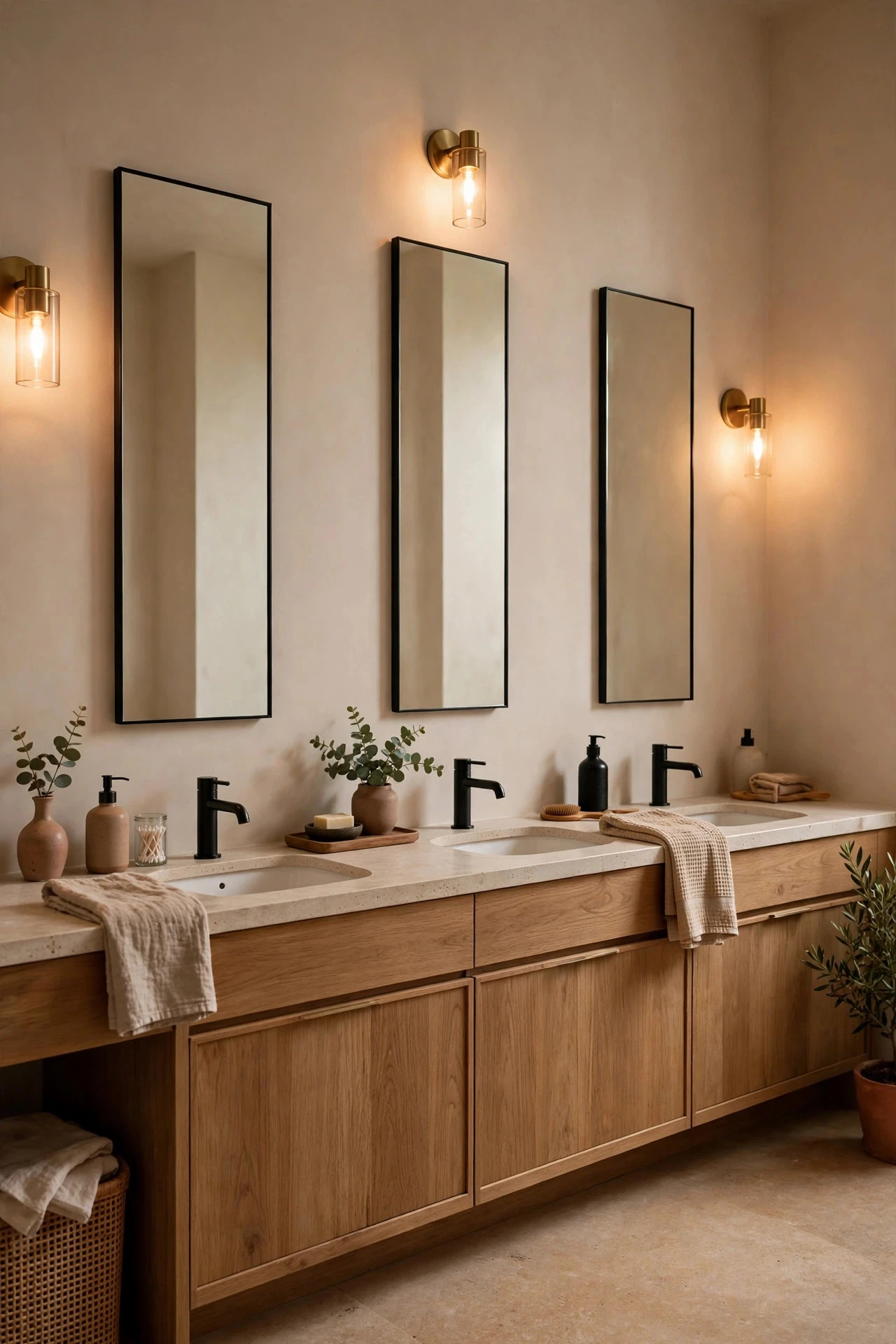
Three slim mirrors over a long vanity work because they break a wide, featureless wall into a balanced rhythm, giving each basin or seat its own centred reflection while keeping the whole run feeling designed. Choose three identical vertical mirrors, each 16 to 20 inches wide, spaced evenly with equal gaps between them and to the side walls, and hang them at exactly the same height. Slim rectangular, arched or capsule shapes all suit this arrangement, provided the frames match. Place a small sconce or a trailing plant in the gaps only if the spacing stays generous, and keep the worktop styling minimal so the trio remains the focus. The mistake to avoid is using three mirrors of slightly different widths or hanging them with uneven gaps, because the asymmetry is obvious across a long wall and the vanity looks badly measured.
15. Antique and Vintage Mirror, Sealed for Steam

An antique or vintage mirror adds character because aged glass, foxing and an ornate frame bring a sense of history that new mirrors cannot imitate. It suits traditional, French-style and eclectic bathrooms, where a gilded, carved-wood or distressed-metal frame becomes the room's talking point. Before hanging one in a bathroom, check that the frame is sealed against steam, the silvering is stable and the glass is fixed securely, and keep it away from direct shower spray and constant damp. Hang antique mirrors with fixings rated for their often considerable weight, and consider a professional conservator's advice for valuable pieces. A vintage mirror pairs beautifully with marble, freestanding baths and classic brass fittings. The mistake to avoid is placing an unsealed antique mirror in a steamy, poorly ventilated bathroom, because moisture will lift gilding, tarnish the frame and cloud the silvering beyond repair.
16. Rattan and Rope-Wrapped Mirrors for Coastal Bathrooms
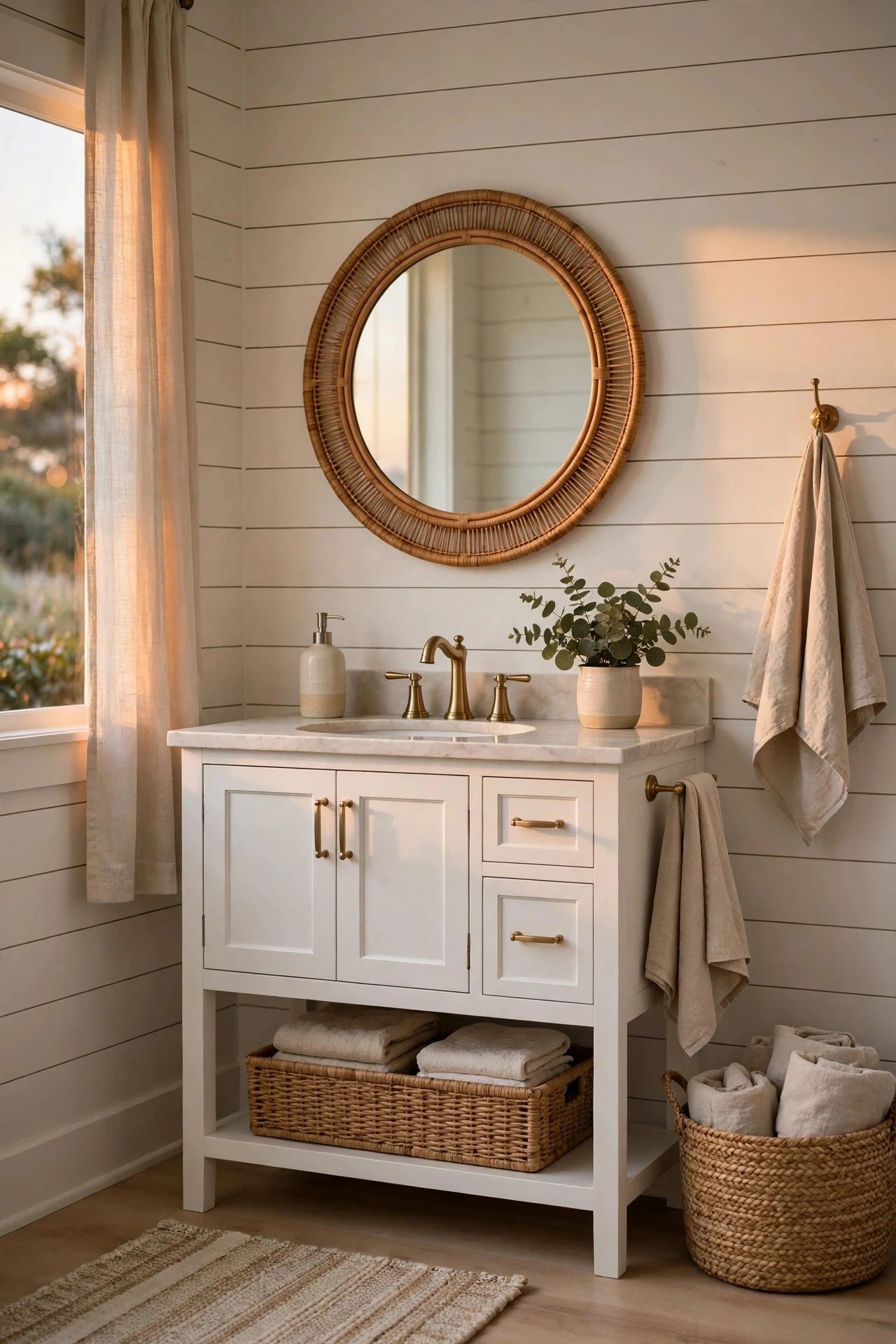
Rattan and rope-wrapped mirrors suit coastal bathrooms because their natural texture and sandy tones echo beach houses, woven baskets and driftwood, bringing warmth without formality. Choose a round or arched mirror with a rattan, cane or thick rope frame, sized 24 to 32 inches for a single vanity, and pair it with white shiplap, pale blue tiles, linen towels and light wood shelving. The woven frame softens a plain white bathroom and adds the layered, collected feel that defines coastal styling. Because natural fibres absorb moisture, keep the mirror away from direct shower spray, ensure good ventilation and wipe the frame dry after steamy showers. The mistake to avoid is using a rattan mirror in a constantly damp bathroom with no extraction, because the fibres will darken, loosen and develop mildew where steam settles.
17. Mosaic-Tile Frame Around the Mirror
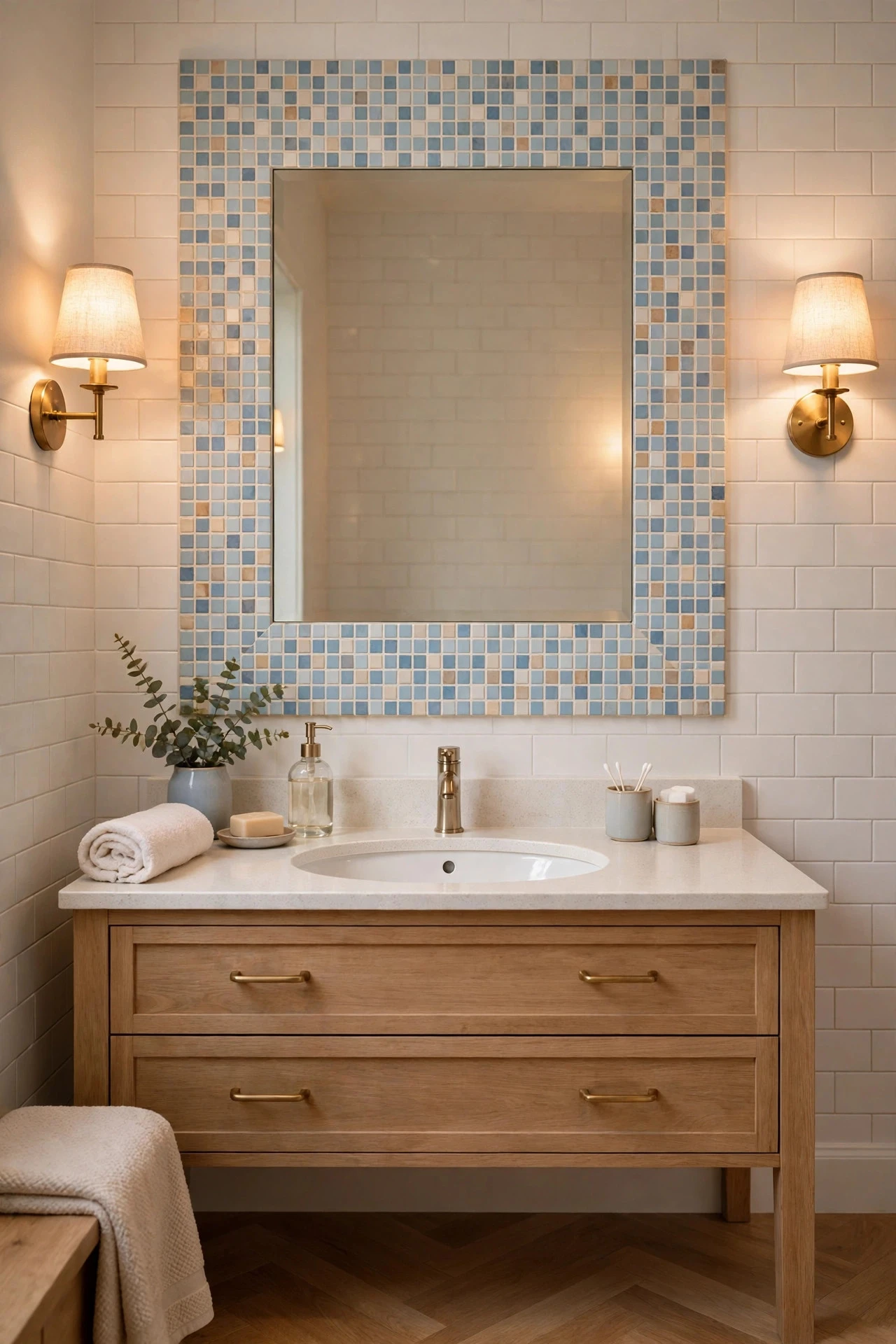
A mosaic-tile frame around the mirror creates a bespoke, handcrafted border because small tiles in glass, stone or ceramic can be arranged in a pattern that no ready-made frame can match. Build the frame from penny rounds, herringbone strips or tiny square mosaics in colours drawn from the floor or wall tiles, and keep the border 3 to 6 inches wide so it frames the glass without overwhelming it. This idea suits Mediterranean, Moroccan and eclectic bathrooms, where a tiled mirror surround ties the vanity wall to the rest of the room. Grout must be sealed, and the mirror must be fixed before tiling so the mosaic sits flush and secure. The mistake to avoid is choosing a mosaic frame with a busy, high-contrast pattern that fights a patterned wall tile, because the two patterns clash and the mirror loses its calm focal-point role.
18. Suspended Mirror Hung from Rods or Chains

A suspended mirror hung from rods or chains adds drama because the floating glass, held by slim rods, leather straps or black chains from the ceiling, breaks the usual wall-fixed arrangement and suits high ceilings and statement vanities. It works best in larger bathrooms and boutique-hotel-style en suites, where the suspension becomes a design feature rather than a space-saving trick. Choose a mirror 24 to 30 inches wide, hung so its centre stays at eye level, and ensure the ceiling fixing, rods and wall fixings are all rated for the mirror's weight, installed following maker guidance. Pair suspended mirrors with pendant lights at matching heights for a layered, intentional look. The mistake to avoid is hanging a suspended mirror where it can swing into a tap, light or neighbouring wall, or using a decorative chain that was never rated to carry glass safely.
19. Mirror with Built-In Demister Pad

A mirror with a built-in demister pad stays clear after a hot shower because a thin heating pad behind the glass gently warms the mirror surface, preventing condensation from forming where you need to see. It is the most practical solution for a steamy family bathroom or an en suite without a window, and it removes the daily wipe-down that leaves streaks. Choose a demister pad sized to the central viewing area, not the full mirror, and have it wired by a qualified electrician, linked to the light switch or a timer so it runs only when needed. Demister pads suit frameless and LED mirrors best, and they work alongside good extraction rather than replacing it. The mistake to avoid is fitting a demister pad to a mirror hung where the maker advises against heating, or wiring it without following bathroom electrical zone rules, which risks both damage and safety.
20. Corner Mirror for an Awkward Layout
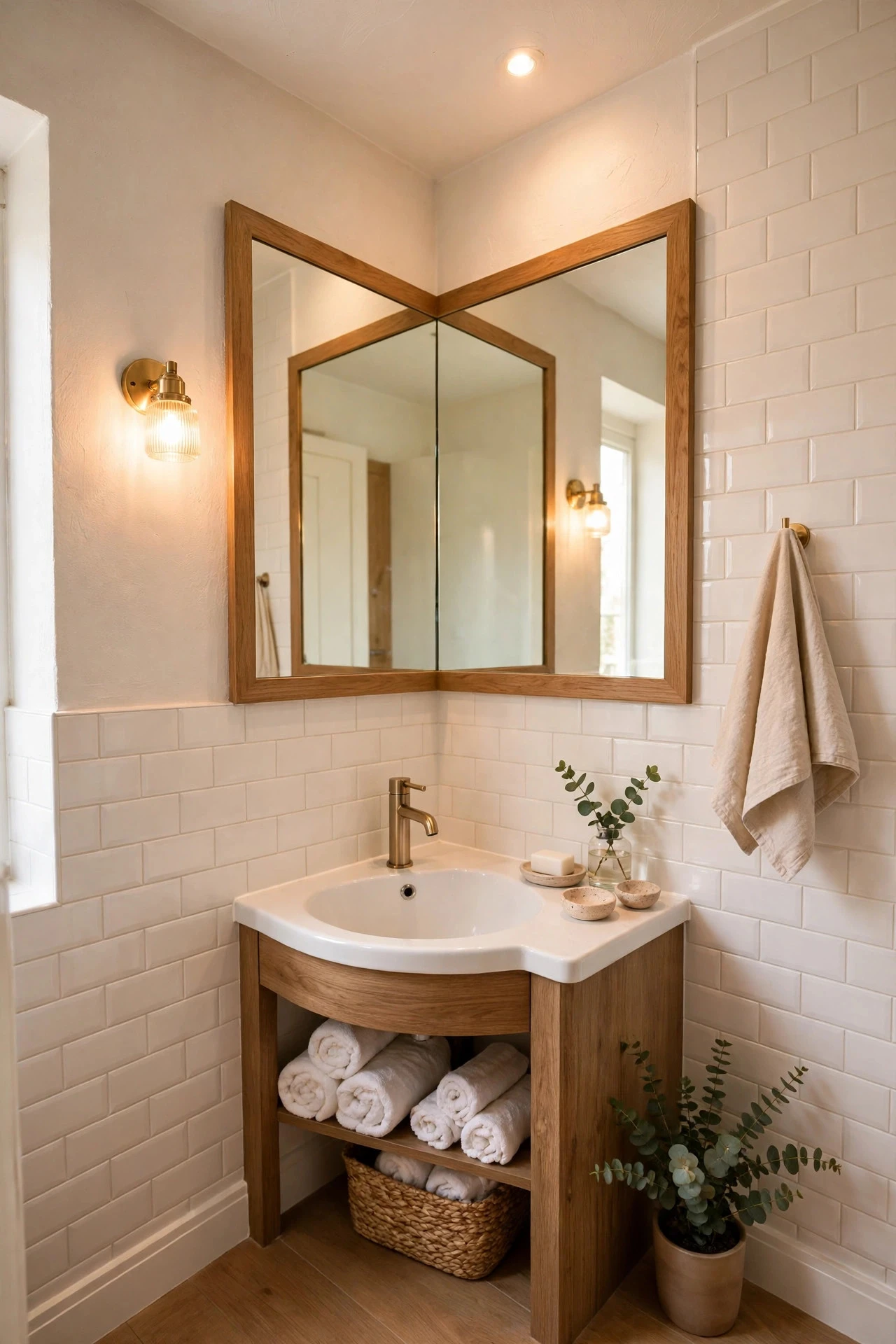
A corner mirror solves an awkward layout because it turns a dead corner into a useful grooming spot, reflecting light into a part of the bathroom that a flat wall mirror cannot reach. It suits L-shaped bathrooms, cloakrooms with a corner basin and rooms where a door, window or storage unit blocks the obvious mirror wall. Choose a mirror shaped or hinged to sit across the corner, or two slim mirrors meeting at the corner with a neat joint, and fix each panel to a solid fixing in its own wall. A corner mirror also helps in a bathroom with a sloping ceiling, where a standard height mirror would cut into the slope. Keep the corner well lit with a small sconce or an LED strip so the reflection stays useful. The mistake to avoid is placing a corner mirror where it reflects the toilet or clutter from an awkward angle, because the doubled view draws attention to exactly what should stay discreet.
21. Mirror Height and Placement: Eye-Level Rules

Correct mirror height matters because a mirror hung too high or too low forces you to stoop or stretch, and it cuts off the reflection at exactly the wrong place. Hang the mirror so its centre sits at average eye level, about 57 to 65 inches from the floor, with the bottom edge 4 to 6 inches above the splashback and clear of tall taps. For a household with a large height range, centre the mirror on the average height and favour a taller mirror, 36 to 48 inches high, so everyone sees their face comfortably. Above a double vanity, keep both mirrors at the same centre height, and check the position by standing at the basin before fixing. The mistake to avoid is hanging a mirror to suit the tallest person only, or aligning it with a tile line instead of the people who use it, because a beautiful mirror at the wrong height is useless every day.
22. Cleaning and Steam Care for Bathroom Mirrors

Cleaning and steam care keep a bathroom mirror clear because steam, toothpaste spray, hairspray and hard-water marks build up daily, dulling the glass and damaging frames if left unchecked. Wipe the mirror with a soft microfibre cloth and warm water with a drop of washing-up liquid, then buff dry, and avoid abrasive pads, ammonia-heavy cleaners and sprays that run into the frame edges and damage silvering. Run the extractor fan during and after showers, open a window where possible, and wipe the bottom edge and frame dry so moisture does not sit against wood, rattan or antique gilding. For hard-water areas, dry the glass after use rather than letting droplets evaporate. The mistake to avoid is spraying cleaner directly onto the mirror and letting it pool at the bottom edge, because liquid seeps behind the glass and leaves dark, irreversible edge damage over time.
Practical Tips
Measure twice before you buy, and record the vanity width, the height from worktop to ceiling, the position of taps, lights and sockets, and the wall construction behind the mirror. A heavy mirror needs a solid wall or a stud, with fixings rated for its weight, while a plasterboard wall needs proper cavity fixings rather than a single screw. Check the maker's weight and fixing guidance before drilling, and ask a professional fitter where the wall type is unclear. For general measuring and planning guidance, The Spruce offers clear, practical room guides that help you check sizes before you commit.
Plan lighting and electrics together, because a mirror, its lights and a demister pad must suit the bathroom zone they sit in. Keep all LED and demister wiring to the maker's guidance and have the work done by a qualified electrician, never run a flex across a wet area or fit a mirror that blocks access to a socket or switch. Warm-white light at 2700K to 3000K flatters skin, side lighting beats a single overhead light for grooming, and a dimmer lets one mirror serve both bright mornings and soft evenings. For design and layout inspiration, Houzz shows thousands of real bathrooms with mirror sizes, lighting positions and material notes that make it easier to brief an electrician clearly.
Protect frames and glass from steam from day one, by running extraction during showers, sealing wood and antique frames where the maker advises, and keeping mirrors clear of direct shower spray unless the maker says the design suits a wet area. Wipe frames dry after steamy showers, re-seal natural materials on the maker's schedule, and keep spare fixings and the mirror's care instructions stored safely. For ongoing care and cleaning ideas, Better Homes and Gardens covers practical bathroom maintenance in plain, room-by-room guides that suit busy households.
Final Thoughts
The best bathroom mirror is one that fits the vanity, sits at the right height, lights the face evenly and survives steam without fuss, so let size, placement and durability guide the choice as much as shape and frame. Pick one idea that suits your room, measure carefully, fix it safely and protect it from moisture. Done well, a single mirror will make the whole bathroom feel brighter, larger and far more considered every day.
You May Also Like: – retro bathroom decor ideas – white bathroom ideas – Christmas bathroom decor ideas
Frequently Asked Questions
What size bathroom mirror should I choose for a single vanity?
Choose a mirror two-thirds to three-quarters as wide as the vanity, so a 36-inch vanity suits a 24 to 27-inch mirror and a 48-inch vanity suits a 32 to 36-inch mirror. Keep the height between 30 and 42 inches, with the centre at eye level, and leave 4 to 6 inches above the splashback.
How high should a bathroom mirror hang above the vanity?
Hang a bathroom mirror with its bottom edge 4 to 6 inches above the splashback or worktop, and its centre 57 to 65 inches from the floor, which suits most adults. Check the height by standing at the basin before fixing, and favour a taller mirror where household heights vary widely.
Are LED bathroom mirrors worth it?
Yes, LED bathroom mirrors are worth it where even, shadow-free light matters for makeup, shaving and skincare, because backlit or front-lit designs light the face far better than a single ceiling light. Choose warm-white 2700K to 3000K light with a dimmer, and have the mirror wired by a qualified electrician.
Can I put a wood-framed or antique mirror in a steamy bathroom?
Yes, you can put a sealed wood-framed or antique mirror in a steamy bathroom, provided the frame is sealed on all sides, the mirror stays clear of direct shower spray, and the room has good extraction. Keep the frame dry after showers, and avoid unsealed wood or valuable antiques in constantly damp rooms.
How do I stop a bathroom mirror fogging up?
Stop a bathroom mirror fogging up by running the extractor fan during and after showers, opening a window where possible, and fitting a demister pad behind the mirror for the viewing area. A demister pad gently warms the glass and prevents condensation, but it works best alongside extraction, not instead of it.
How do I clean a bathroom mirror without streaks?
Clean a bathroom mirror without streaks by wiping it with a soft microfibre cloth dampened with warm water and a drop of washing-up liquid, then buffing dry with a second clean cloth. Avoid spraying cleaner directly onto the glass, and keep liquid away from frame edges so it cannot seep behind the mirror.