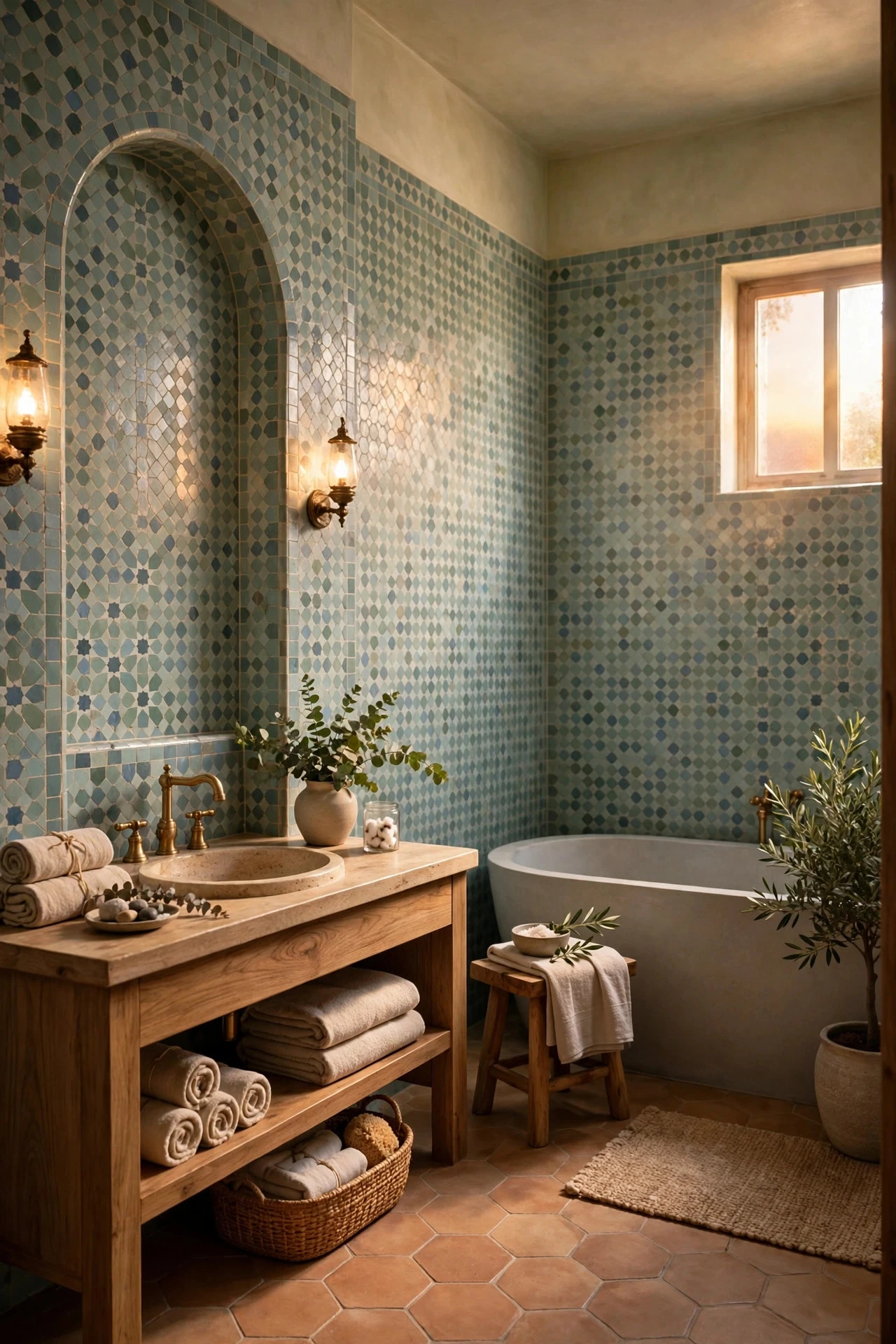
22 Modern Bathroom Tile Ideas for a Spa-Like Bathroom
Modern bathroom tile does more than keep water out. It sets the mood, decides whether a small space feels calm or cramped, and carries a spa-like feeling daily. In 2026 the strongest looks are tactile and warm: handmade surfaces, deep texture, generous formats, and earthy colour. The ideas below suit renovations and refreshes alike.
Looking for more inspiration? Our Nest Decorz homepage gathers the latest home decor ideas, seasonal decorating guides and room-by-room styling tips in one place — start there and explore.
Before you order, decide where tile will do the heavy lifting. A shower wall, floor, and feature wall each need different sizes, finishes, and slip resistance. Choose one hero surface first, use these ideas as a menu, and repeat one tile twice for a calm, expensive-looking result.
1. Glossy Zellige Tiles in Soft White
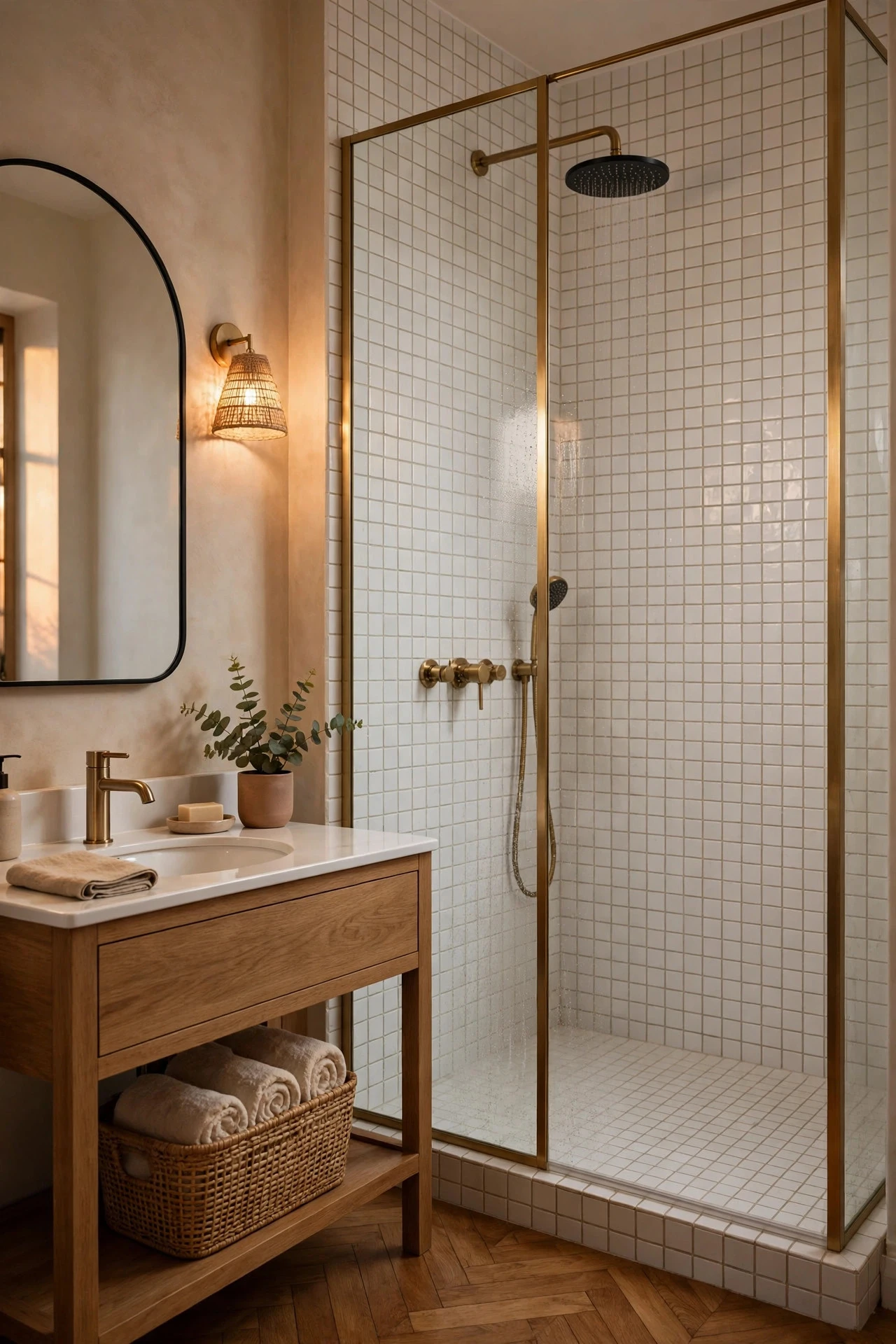
Zellige tiles bring instant soul to a modern bathroom because no two pieces are exactly alike. Their uneven glaze catches light differently, so a plain shower looks handmade and warm rather than flat. Use small square or rectangular zellige on a shower wall, keep the layout simple and stacked, and let the variation do the work. Real zellige costs from around $25 per square foot, so a budget version at $6 to $12 per square foot in a zellige-effect glazed ceramic gives a similar glow for a fraction of the price. Avoid mixing real and imitation zellige on the same wall, because the difference in depth becomes obvious side by side. Seal cement-based grout, wipe splashes promptly, and enjoy a surface that softens hard modern lines beautifully.
2. Tile Drenching in One Warm Colour
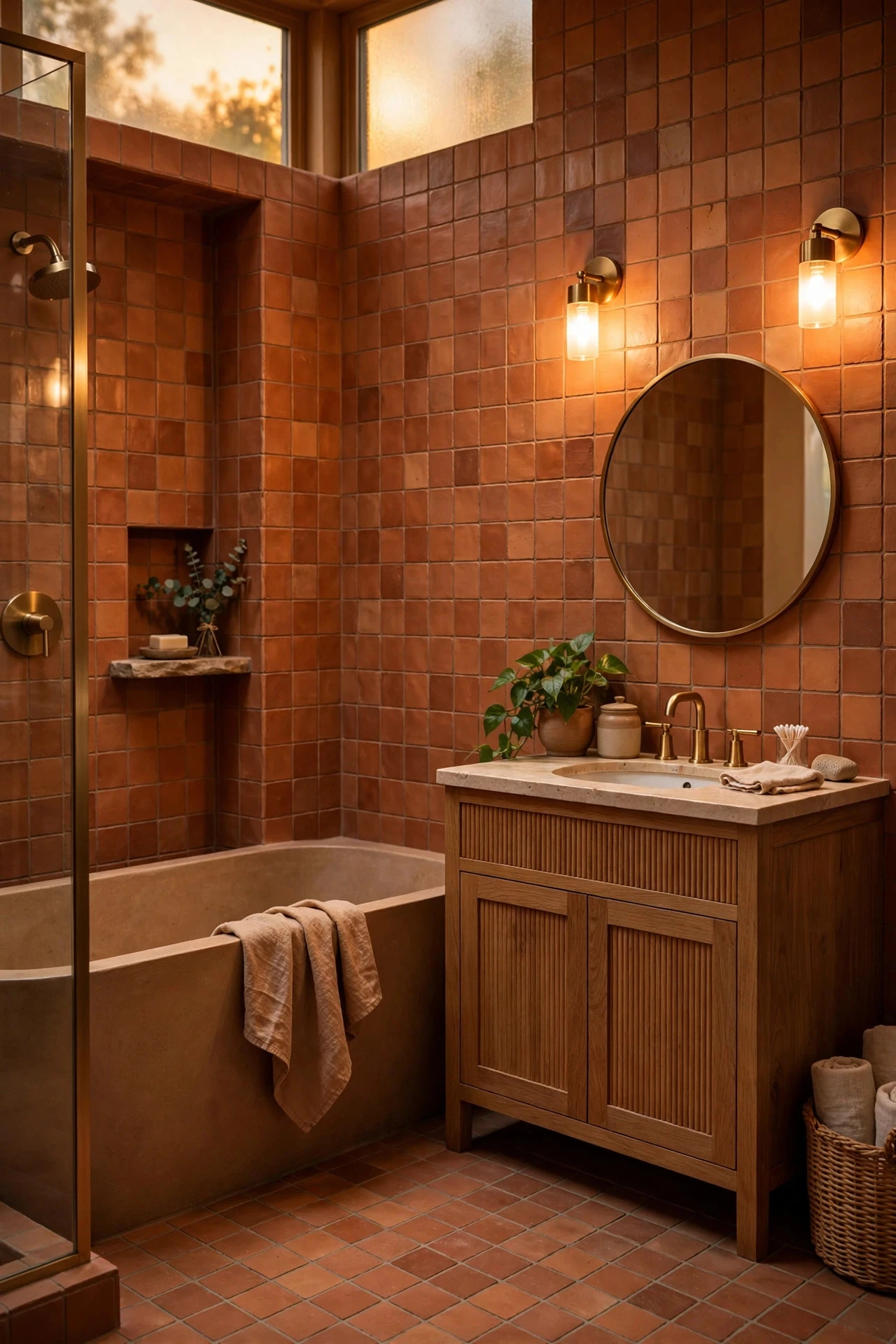
Tile drenching means taking one tile, and one colour, across walls and floor for a fully wrapped, cocooning effect. It works best in a warm mid-tone such as clay or soft sage, where the room feels enveloping rather than dark. Use the same tile in a larger format on the floor and a smaller format on the walls, or keep one size everywhere and vary only the layout. The trick is to break the expanse with texture, so pair matte field tile with a ribbed niche, a wooden stool, or brushed brass fittings. Avoid drenching a windowless room in a very dark colour unless the lighting is generous. Done well, this look hides awkward junctions, makes a boxy bathroom feel intentional, and delivers the spa calm people want in 2026.
3. Fluted and Reeded Three-Dimensional Tile
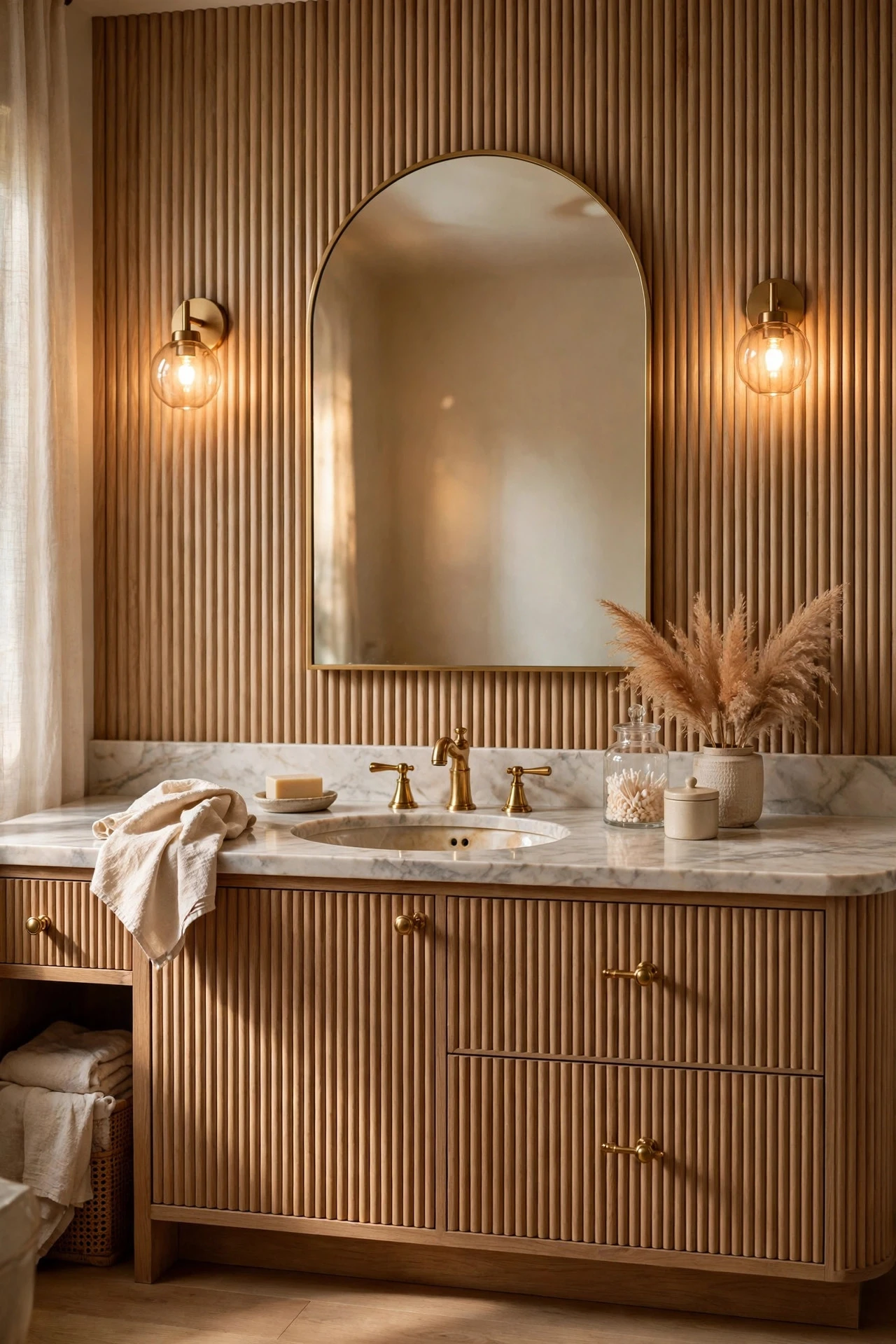
Fluted tile adds shadow and rhythm without adding colour, which makes it ideal for a calm modern bathroom. The narrow vertical ribs catch morning light, stretch the wall visually, and give a flat vanity wall a crafted, architectural feel. Use fluted tiles behind a floating vanity, inside a shower, or as a full feature wall, and keep the rest of the room quiet so the texture stays the star. Choose a matte glaze in warm white, stone, or olive for the softest effect, and use a matching grout so the ribs read as one sculpted surface. Avoid fluted tile on a floor, where the grooves trap dirt, and avoid busy patterns nearby. Wipe with a soft cloth, and the relief will stay crisp for years.
4. Stacked Vertical Subway Tile

Stacked vertical subway tile is the modern update to the classic brick bond, and it suits tall, narrow bathrooms especially well. Running standard subway tiles upright, in straight vertical stacks, draws the eye upward and makes a low ceiling feel taller. Use a handmade-look glaze in warm white, pale green, or soft blue, with a grout only slightly darker than the tile so the grid stays subtle. In a shower, run the stacks from floor to ceiling for a clean, contemporary column effect, and keep fittings slim and straight to echo the lines. Avoid a contrasting dark grout here, because it chops the vertical rhythm into a grid. This layout is affordable, easy to cut, and forgiving around niches and windows.
5. Large-Format 24×48 Porcelain Slabs
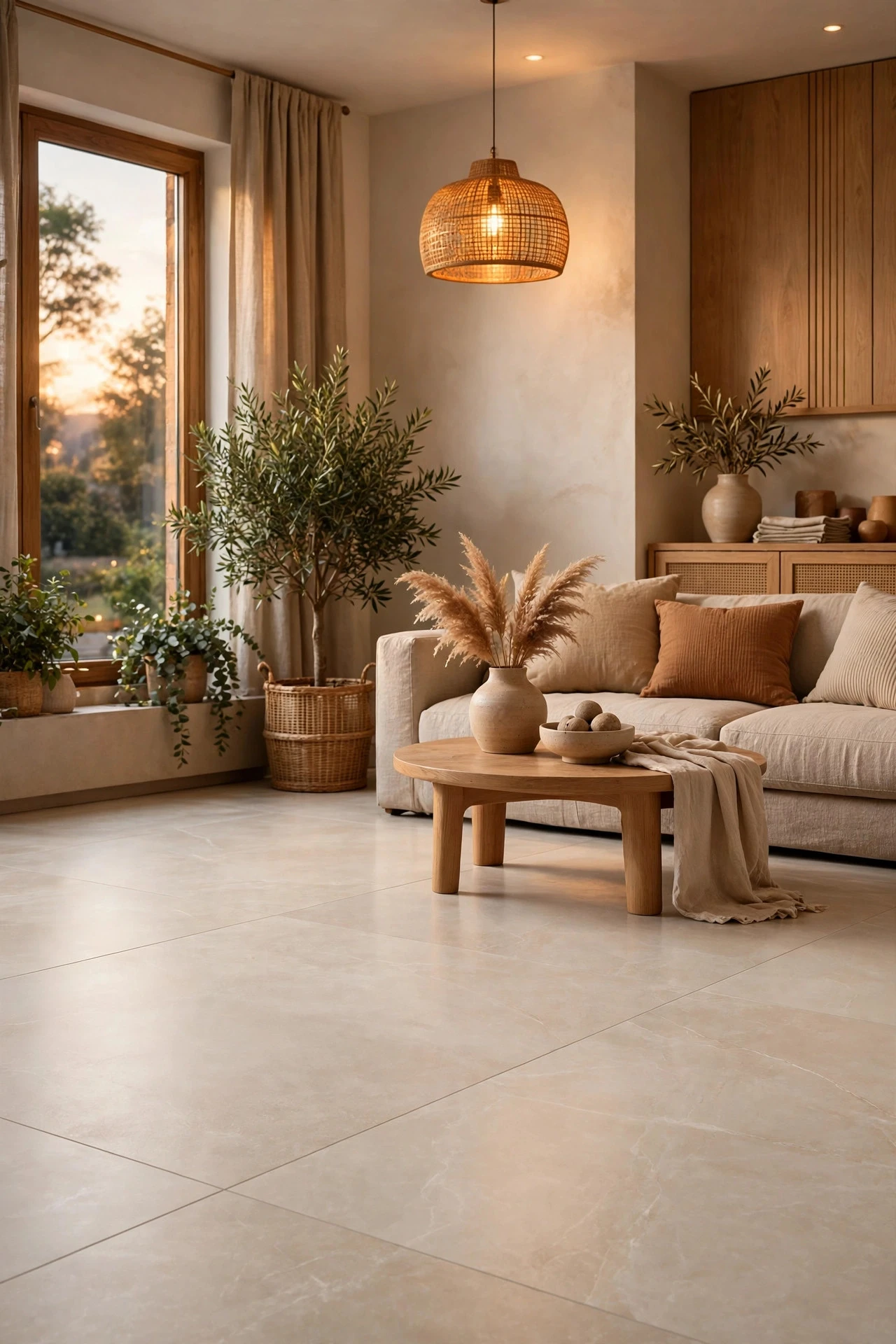
Large-format 24-by-48-inch porcelain gives a bathroom the seamless calm of stone without the sealing and upkeep. Fewer grout lines mean fewer places for mould and soap to collect, and a large tile makes even a modest floor read as one continuous surface. Choose a matte, stone-effect or warm concrete-effect porcelain with a slip rating suitable for wet floors, and ask your tiler about levelling clips, because large tiles punish an uneven substrate and show lippage clearly. Lay them with a narrow, rectified joint and a grout close to the tile colour for the most expensive look. Avoid glossy large-format tile on a wet floor, and avoid cutting large slabs around too many obstacles. The result is quiet, generous, and easy to clean.
6. Clay and Terracotta Warmth
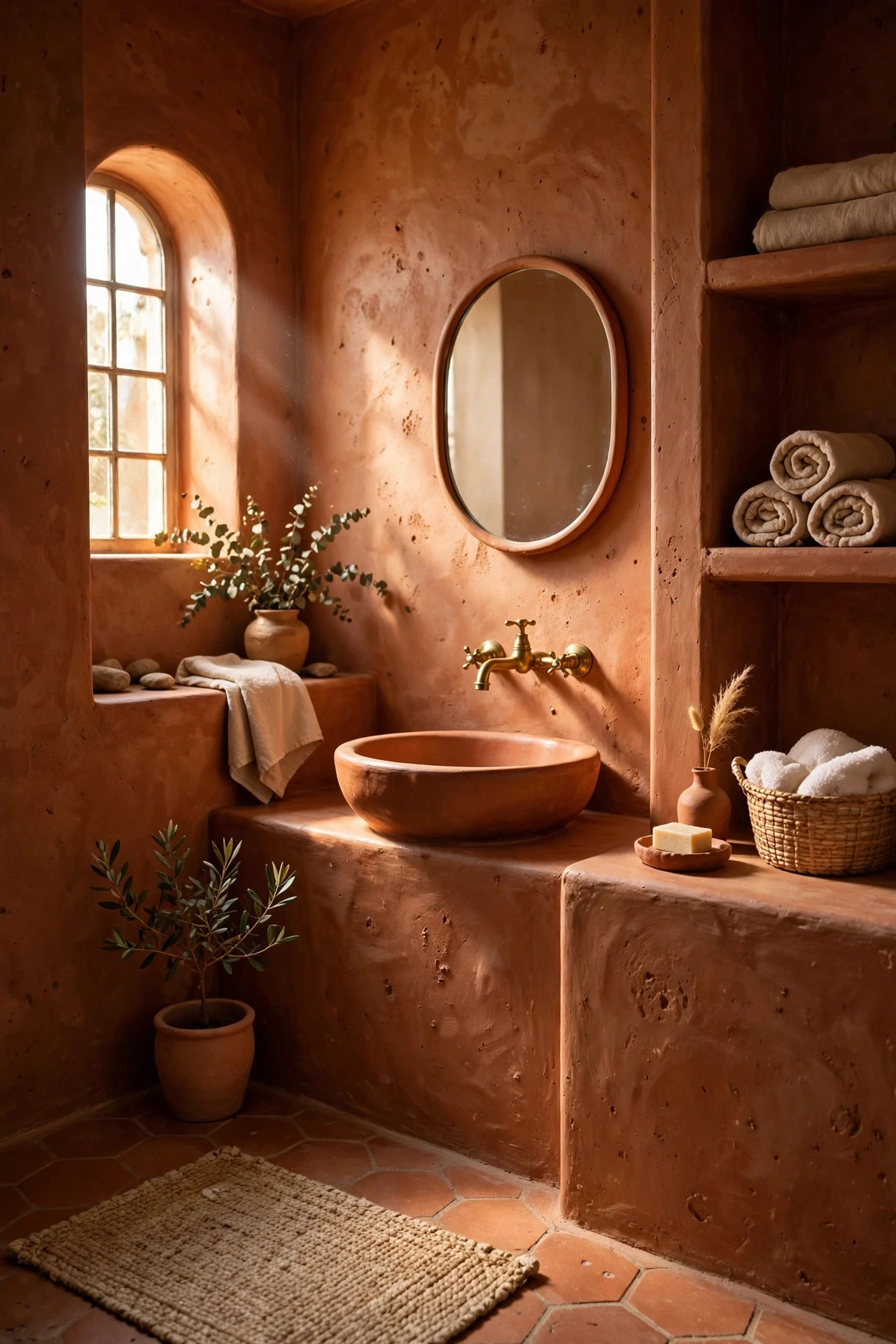
Clay and terracotta tiles warm a modern bathroom instantly, especially when the rest of the scheme is white, oak, and brushed brass. Their rosy, sun-baked tones suit floors, shower floors in small formats, and low feature walls, and they pair beautifully with cream walls and linen towels. Use sealed terracotta-look porcelain on floors for easy, low-maintenance daily use, reserving real terracotta for low-splash areas unless you are happy to reseal it regularly. Keep grout warm and sandy rather than stark grey, and repeat the clay tone in a vase, a stool, or towels so the tile feels deliberate. Avoid pairing terracotta with cool blue-grey walls, which can make it look muddy. This is real warmth you can feel underfoot every day.
7. Olive Green Tile for a Calm Retreat
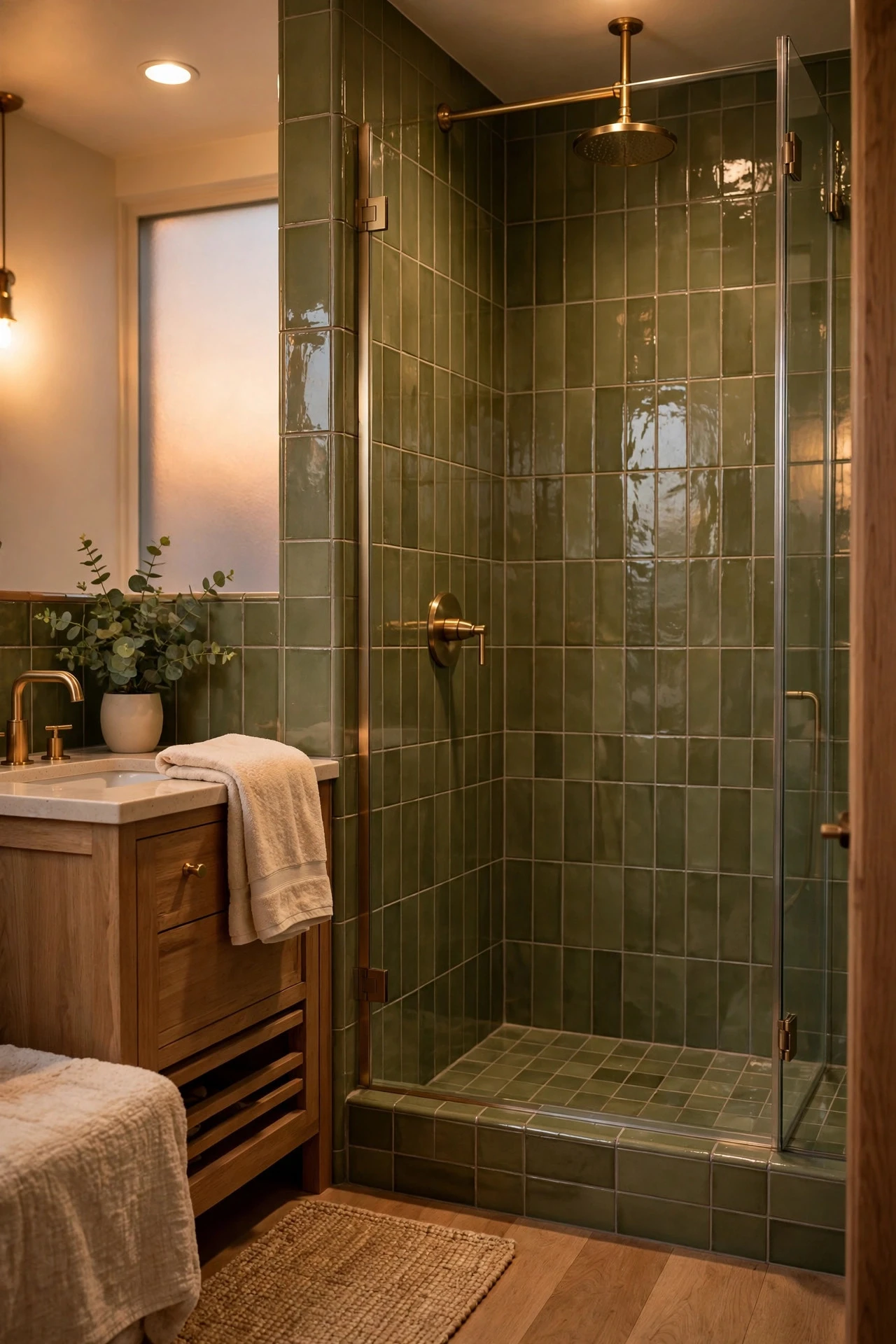
Olive green is the quiet colour hero of 2026 bathrooms, sitting between sage and forest without feeling themed. A soft olive subway, square, or fluted tile on a shower wall creates a leafy, restful backdrop that flatters warm wood, cream stone, and aged brass. Use olive on one wall only if the room is small, and carry a paler version of the same green onto the floor or into towels to keep the palette connected. Matte glazes feel more modern than high gloss here, and a warm white grout keeps the green soft rather than stark. Avoid olive with cold chrome and icy white, which can turn it dull. Pair it with plants, natural textures, and warm light for a bathroom that feels like a retreat.
8. Ochre and Golden Honey Tones
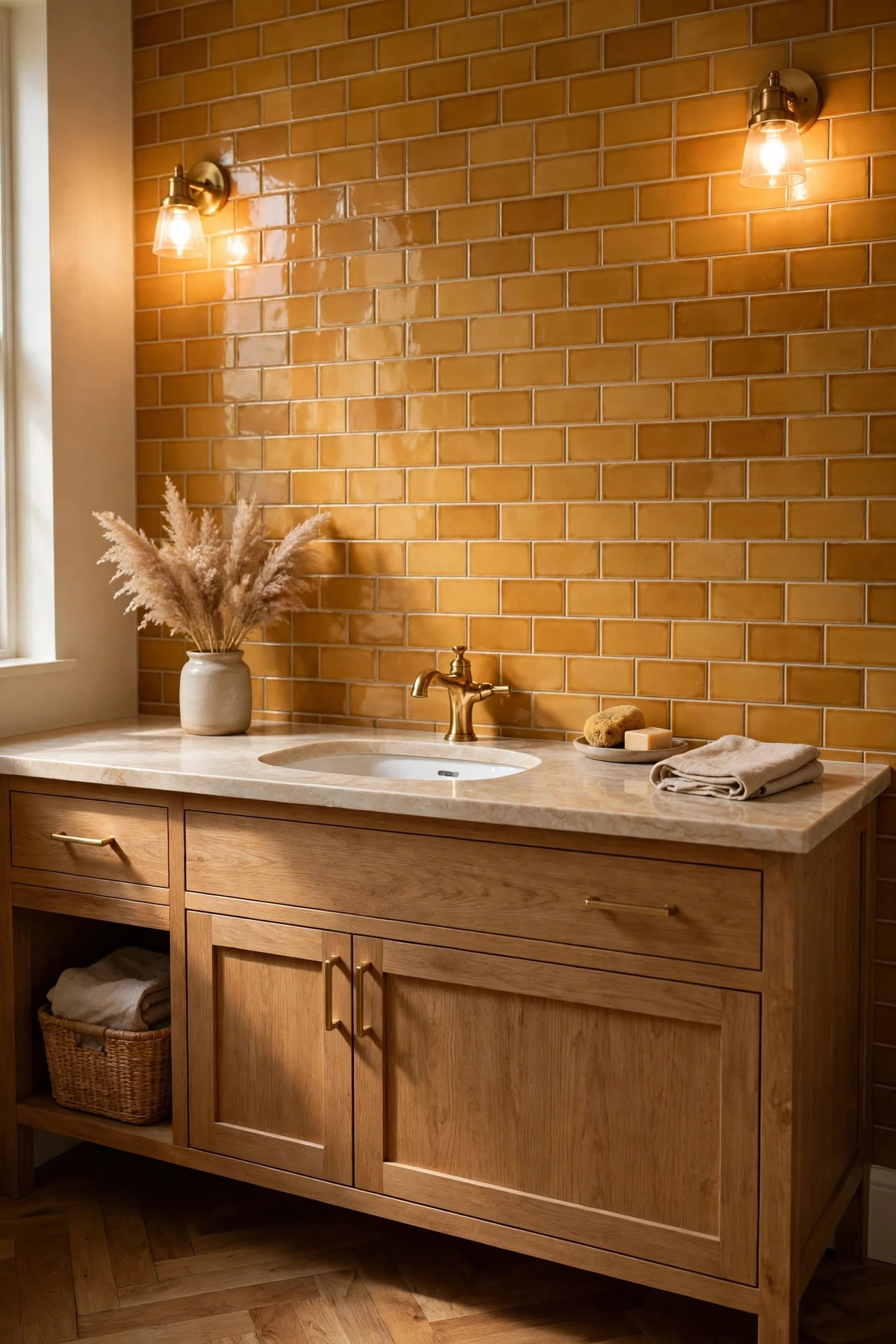
Ochre brings sunshine to a bathroom without shouting, and it works surprisingly well in both bright and low-light rooms. A honey-toned square or scallop tile on a vanity wall glows beside warm white walls, while a deeper ochre on a shower wall feels rich against walnut and black fittings. Keep the ochre contained to one surface and balance it with plenty of cream, stone, or pale wood, so the room stays calm rather than saturated. Matte and satin finishes suit ochre best, because high gloss can look brash in a strong colour. Avoid pairing ochre with orange towels or busy patterns, which compete for attention. Use it as the warm accent in an otherwise neutral scheme, and the whole room will feel sunnier.
9. Oxblood and Deep Burgundy Drama
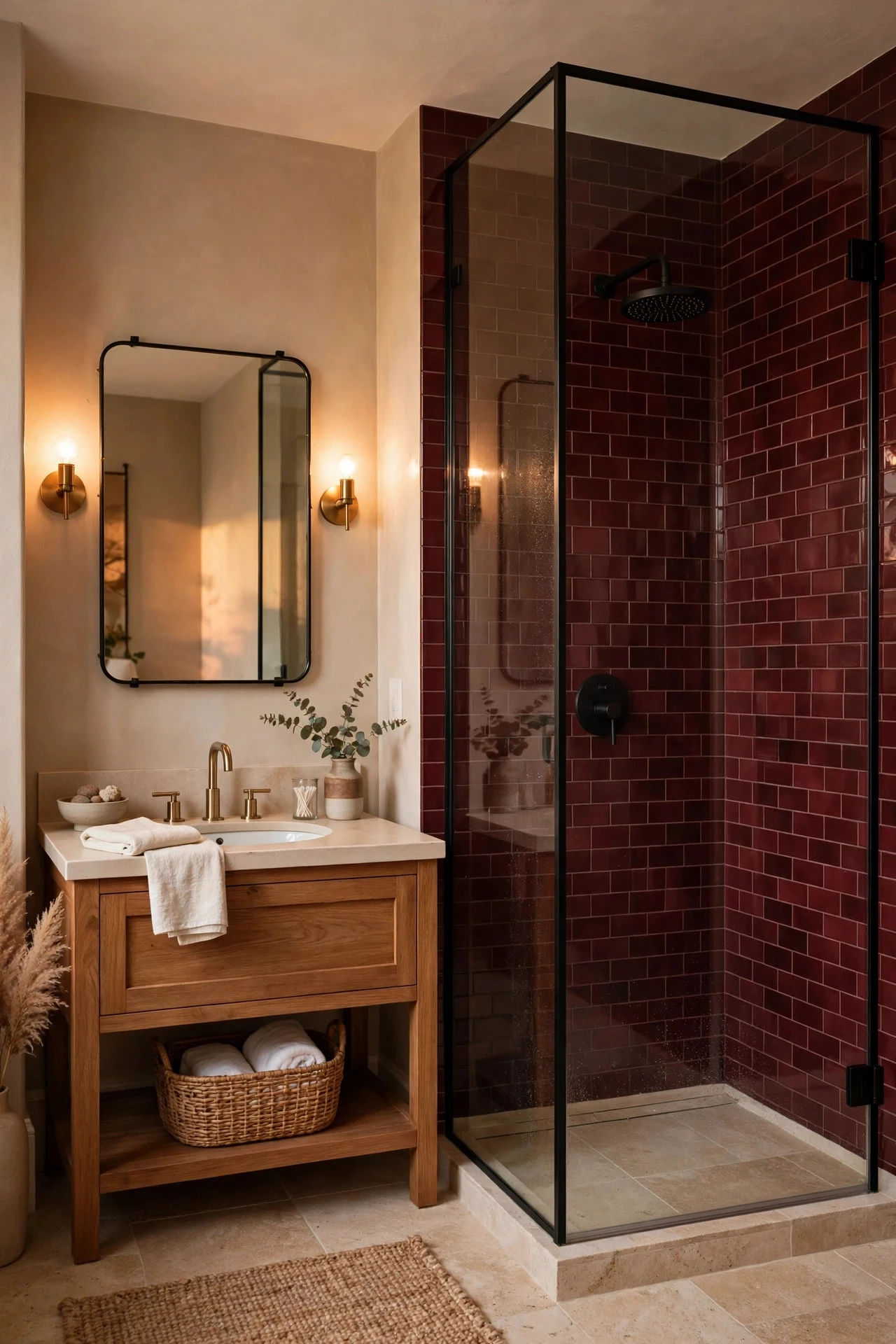
Oxblood tile is for bathrooms that want drama without darkness for its own sake. A deep burgundy glaze on a shower wall or behind the bath reads luxurious beside cream marble-effect tile, warm brass, and soft lighting, and it photographs beautifully. Use oxblood in a small or medium format, such as a square or a Kit Kat strip, so the colour feels rich rather than overwhelming, and keep the floor pale to lift the room. Glossy oxblood reflects light and suits a shower, while matte oxblood feels more velvety on a dry feature wall. Avoid oxblood on every surface, and avoid pairing it with bright red accessories. One confident wall is enough to make the whole bathroom feel considered and grown-up.
10. Forest Green with Warm Brass

Forest green tile paired with warm brass is a classic combination that feels fresh again in 2026, especially in a marble or cream surround. Use deep green subway, square, or scallop tiles in the shower, and let brass taps, a brass mirror frame, and warm lighting pick up the richness. Keep walls pale and the floor light, so green reads as a deliberate accent rather than a cave. A soft white or warm grey grout keeps the tilework crisp, while dark grout makes the wall feel heavier and more traditional. Avoid forest green with silver fittings, which can look cold against the depth of the colour. Add wood, linen, and a plant, and the bathroom will feel like a boutique hotel.
11. Classic Checkerboard, Modern Colours

Checkerboard tile no longer means only black and white. In 2026 the freshest versions use cream and sage, warm white and terracotta, or soft grey and forest green, laid in large squares for a calm, graphic floor. A checkerboard floor anchors a modern bathroom, hides wear well, and pairs beautifully with plain walls and simple fittings. Use a matte or satin finish underfoot for grip, keep the squares large in a generous room and smaller in a compact one, and align the pattern carefully from the doorway so the first view is symmetrical. Avoid tiny checkerboard on a large floor, where it can look busy, and avoid glossy checkerboard in a wet area. This is a playful pattern with grown-up manners.
12. Kit Kat and Finger Tiles
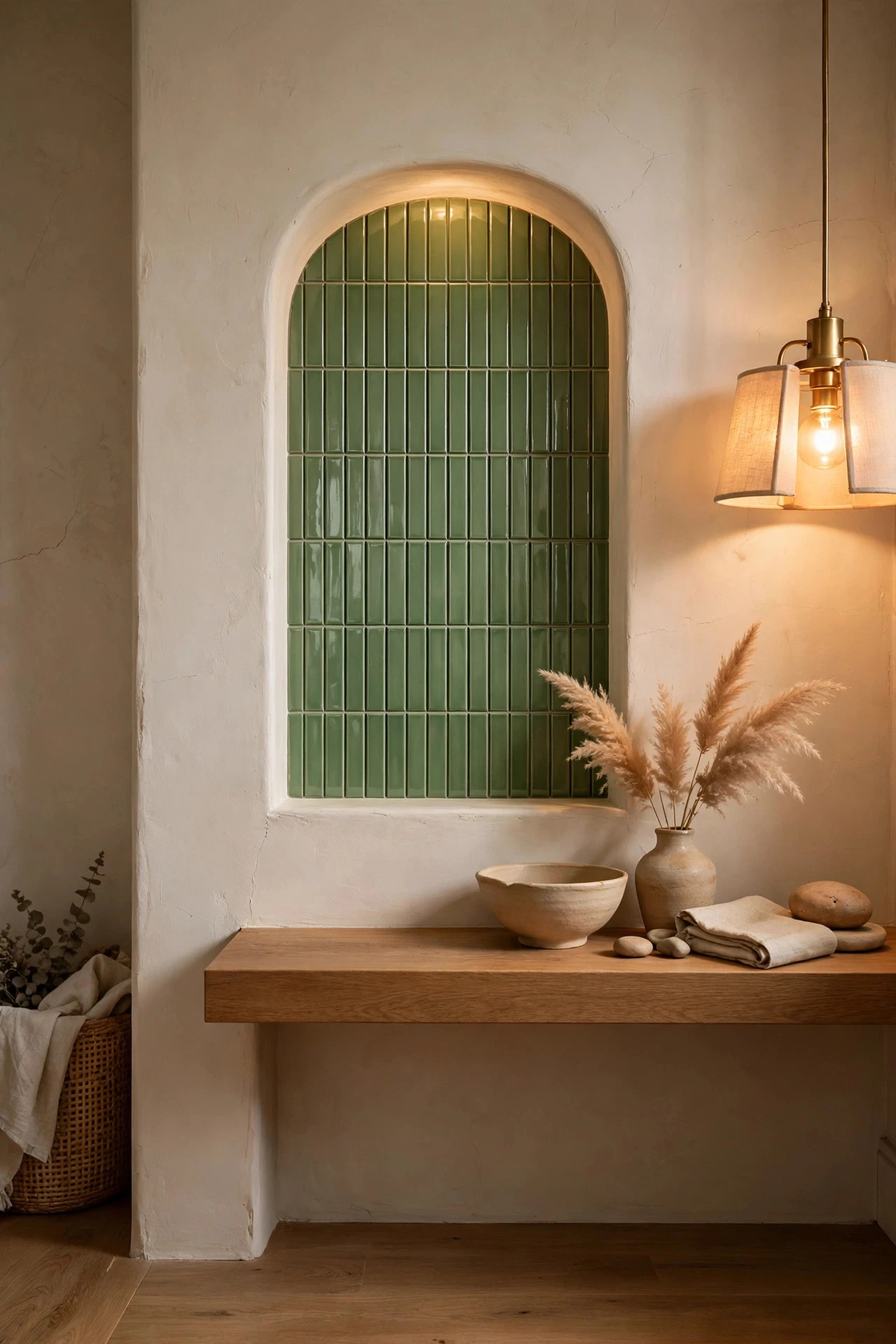
Kit Kat tiles, also called finger tiles, are slim vertical strips grouped on mesh sheets, and they add fine texture with very little fuss. They suit curved shower walls, vanity splashbacks, and niche backs, where their narrow profile bends gently and catches light in stripes. Use them in a warm neutral, soft green, or deep blue, running vertically to stretch the wall, and keep grout close in colour so the strips read as ribbed texture. They are excellent for a small feature area because the scale stays delicate, and they hide small imperfections in a wall better than large tiles. Avoid Kit Kat tile on a main floor, where the many grout lines are hard to keep clean. Seal grout well in wet zones.
13. Scallop and Fish Scale Tile
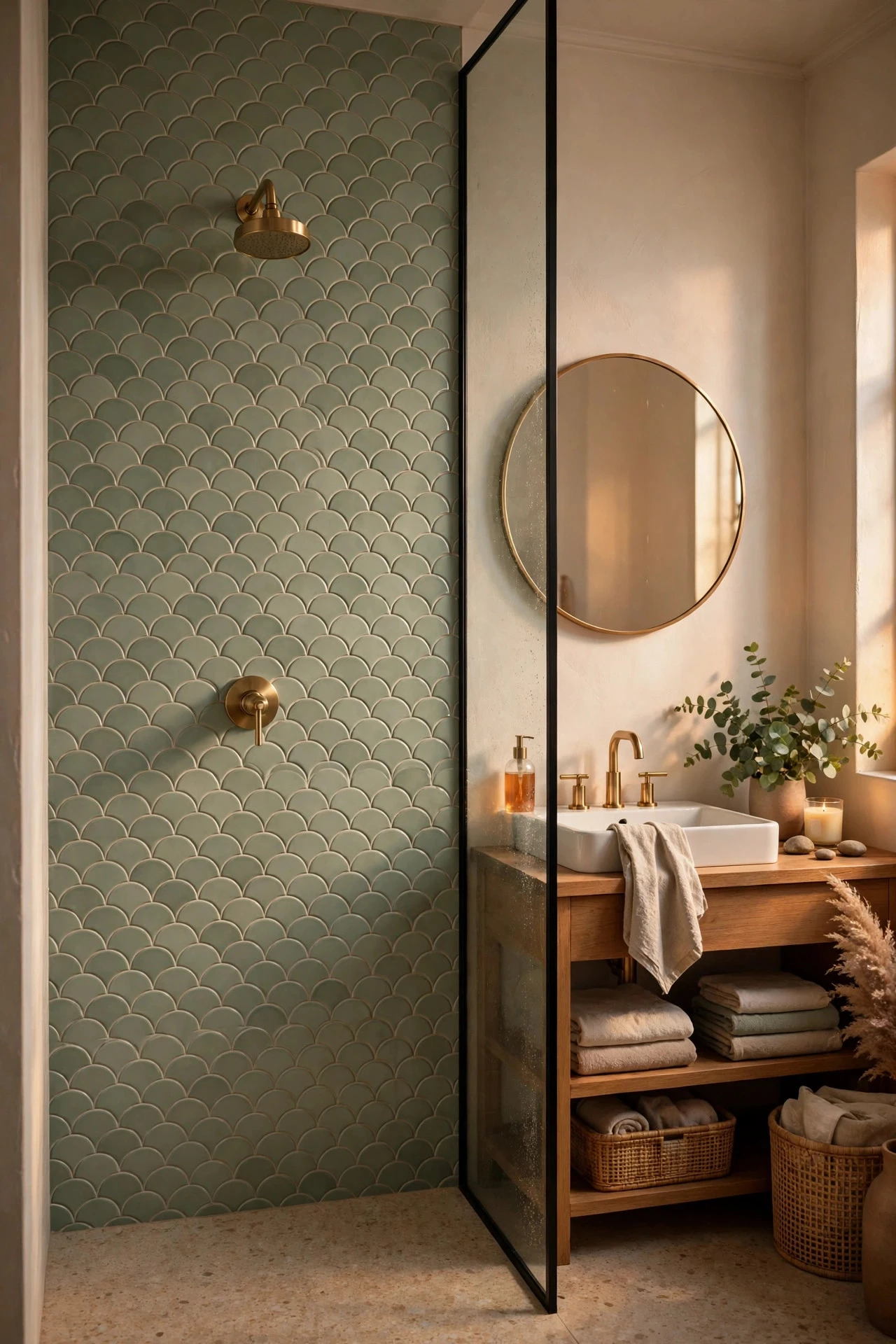
Scallop tile, often called fish scale, softens a modern bathroom with gentle curves that contrast beautifully with straight vanities and rectangular mirrors. Use scallops on a shower wall or on a vanity splashback in a single colour, letting the overlapping pattern create shadow and movement without extra decoration. Pale sage, warm white, and soft blush scallops feel calm and spa-like, while deep green or navy scallops make a bolder feature. Keep grout matching the tile so the scale shape stays clean, and use a straight tile at edges and corners for a tidy finish. Avoid mixing scallops with any other curved pattern nearby, which can feel fussy. One scalloped wall, in a single committed colour, is a memorable, timeless focal point.
14. Hexagon Tile for Floors and Features
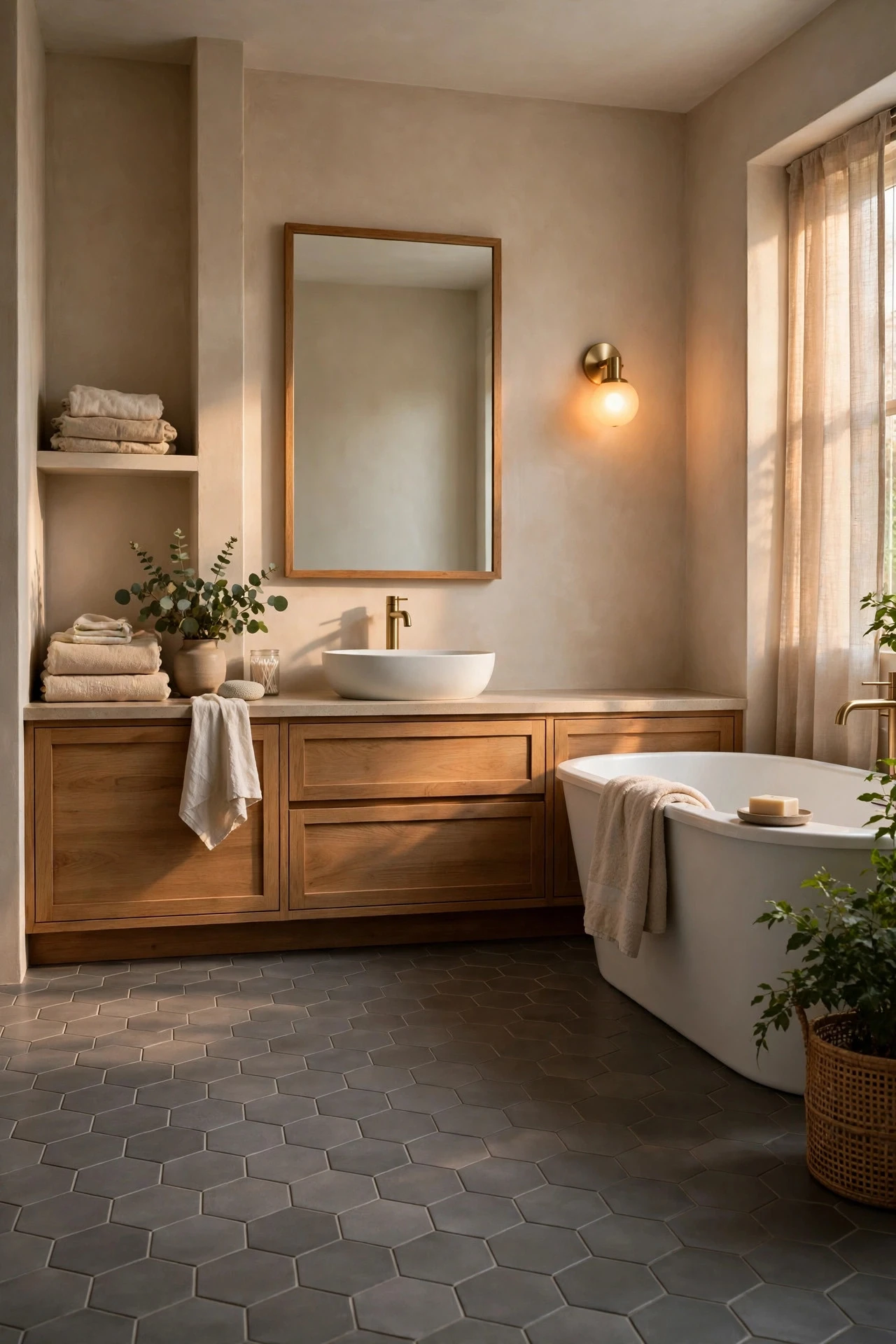
Hexagon tile bridges classic and modern, working equally well as a bathroom floor, a shower floor, and a feature wall. Small hexagons on a shower floor give excellent grip because the many grout lines add traction, while larger hexagons on a main floor feel graphic and contemporary. Use a matte porcelain hexagon in warm white, stone, or soft grey on floors, checking the slip rating before you buy, and reserve glossy hexagons for walls. A single-colour hexagon layout is the most versatile, but a subtle blend of two close tones adds depth without pattern overload. Avoid hexagon tile with a high-contrast grout on a large floor unless you want the pattern to dominate. Keep fittings simple and let geometry lead.
15. Marble-Effect Porcelain
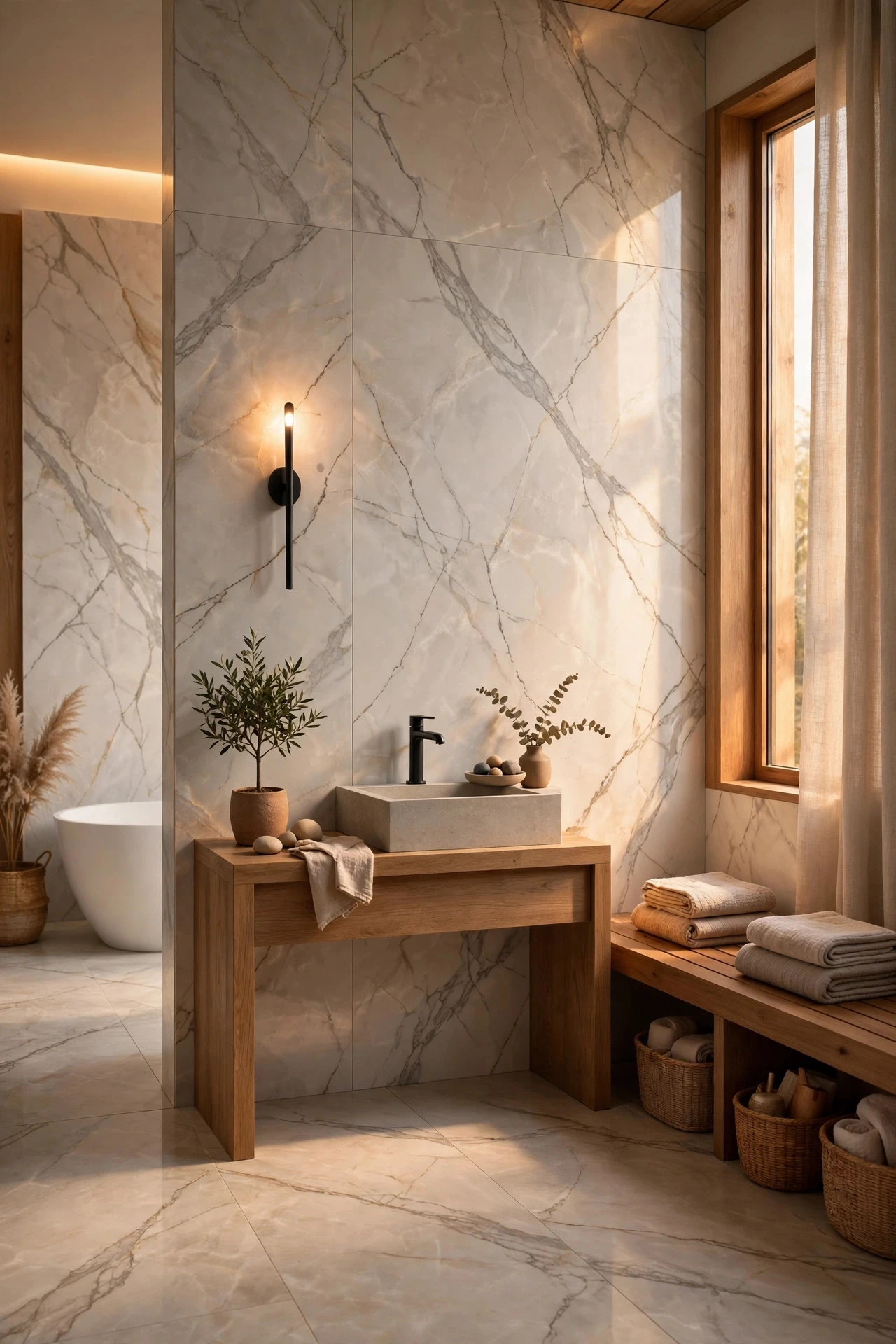
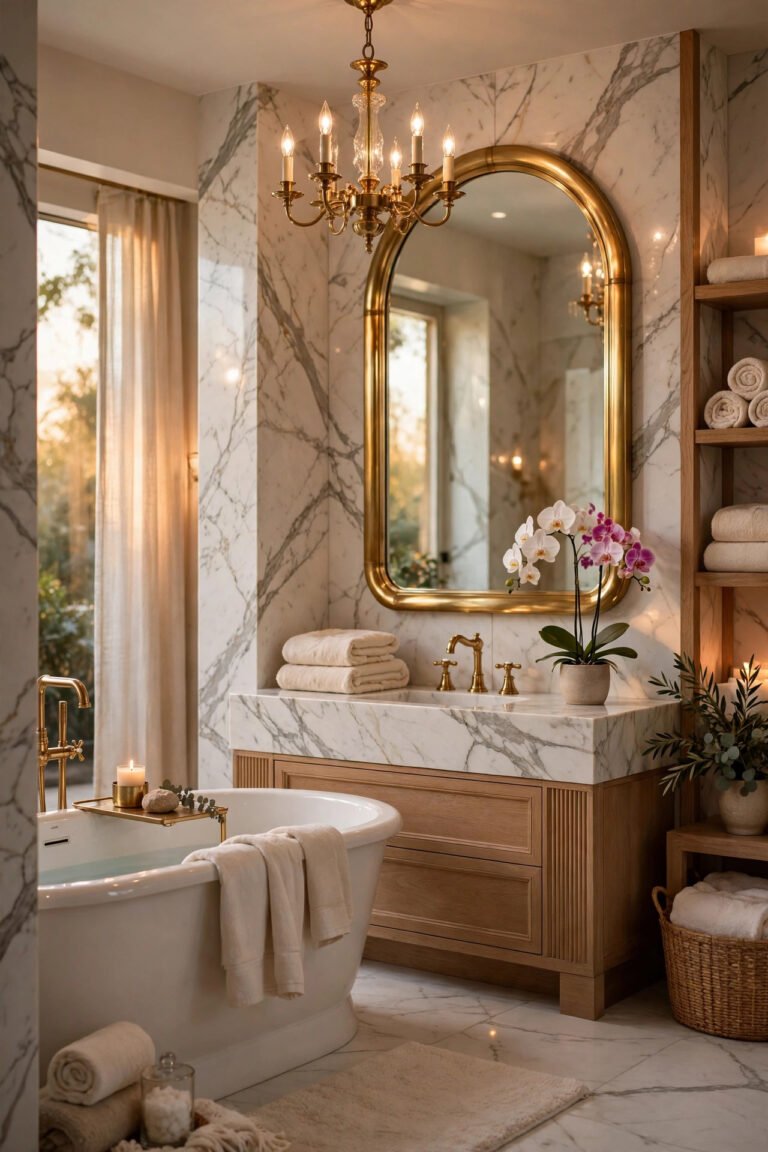
Marble-effect porcelain delivers the veined luxury of marble with the practicality modern bathrooms need. Porcelain is denser and less porous than ceramic, so it resists stains and water far better, while ceramic suits walls where foot traffic and impact are lower. Natural stone, by contrast, needs regular sealing and can etch or stain, so choose it only if you love the upkeep. Use large marble-effect slabs on walls and floors, book-matching veins across a shower wall if your budget allows, and keep grout pale and minimal. Avoid pairing strong marble veining with another busy stone pattern, and avoid polished marble-effect tile on wet floors. The result is bright, timeless, and far easier to live with day to day than real marble.
16. Terrazzo with Warm Speckles

Terrazzo brings playful speckles and a warm, crafted feel to a modern bathroom, and the 2026 versions favour cream, clay, and sage bases with soft flecks. Use terrazzo-effect porcelain on the floor for durability, or as a vanity top and splashback for a coordinated look, and keep walls plain so the speckles can breathe. Real terrazzo needs sealing and careful cleaning, while porcelain terrazzo-effect tile needs only routine washing, so match the material to how much maintenance you will actually do. Pair terrazzo with warm wood, matte black or brass fittings, and simple white towels. Avoid terrazzo in a very small room in a loud, high-contrast mix, which can overwhelm. A calm speckle mix feels joyful and welcoming without ever shouting.
17. Penny Tile for Shower Floors

Penny tile, small round mosaic tile, is the practical hero of shower floors because its dense grout network gives grip exactly where you need it. Use matte porcelain penny tile in warm white, soft grey, or sage on a shower floor, and carry the same colour in a larger format on the walls for a calm, connected scheme. The small rounds also conform neatly to a sloped shower tray, which large tiles cannot do without awkward cuts. Choose epoxy or well-sealed grout, because penny tile has many joints, and clean with a pH-neutral cleaner to protect the grout. Avoid glossy penny tile on a floor, and avoid dark grout that shows soap residue quickly. It is charming, safe, and quietly retro.
18. Herringbone That Feels Tailored

Herringbone tile feels tailored and expensive, whether it is laid in classic subway rectangles or in longer planks on a wall or floor. On a shower wall, herringbone in a warm white or pale stone creates movement without colour, while on a floor it adds pattern that still reads as calm. Use a rectified tile for crisp joints, plan the pattern from the centre line outward so cuts are balanced, and budget ten to fifteen percent extra for offcuts, because herringbone wastes more tile than a straight stack. Keep grout close to the tile colour for a subtle effect, or slightly darker for a more defined weave. Avoid herringbone on a very uneven wall, where the angled joints highlight bumps. It rewards careful setting out.
19. Grout Colour as a Design Decision

Grout colour is not an afterthought; it decides whether tile reads as a single surface or a bold grid. Matching grout, close to the tile colour, makes handmade tile look seamless and lets texture lead, while contrasting grout turns simple subway tile into a graphic pattern. Warm grey and greige grouts suit most 2026 palettes better than stark white, which can yellow, or jet black, which shows every splash. In wet zones, choose a grout rated for showers, consider epoxy grout for stain resistance, and seal cement grout as directed. Avoid choosing grout from a dry sample alone; wet a test patch and view it in the room light. The right grout quietly makes even the most expensive tile look noticeably better.
20. Small-Bathroom Tile Tricks
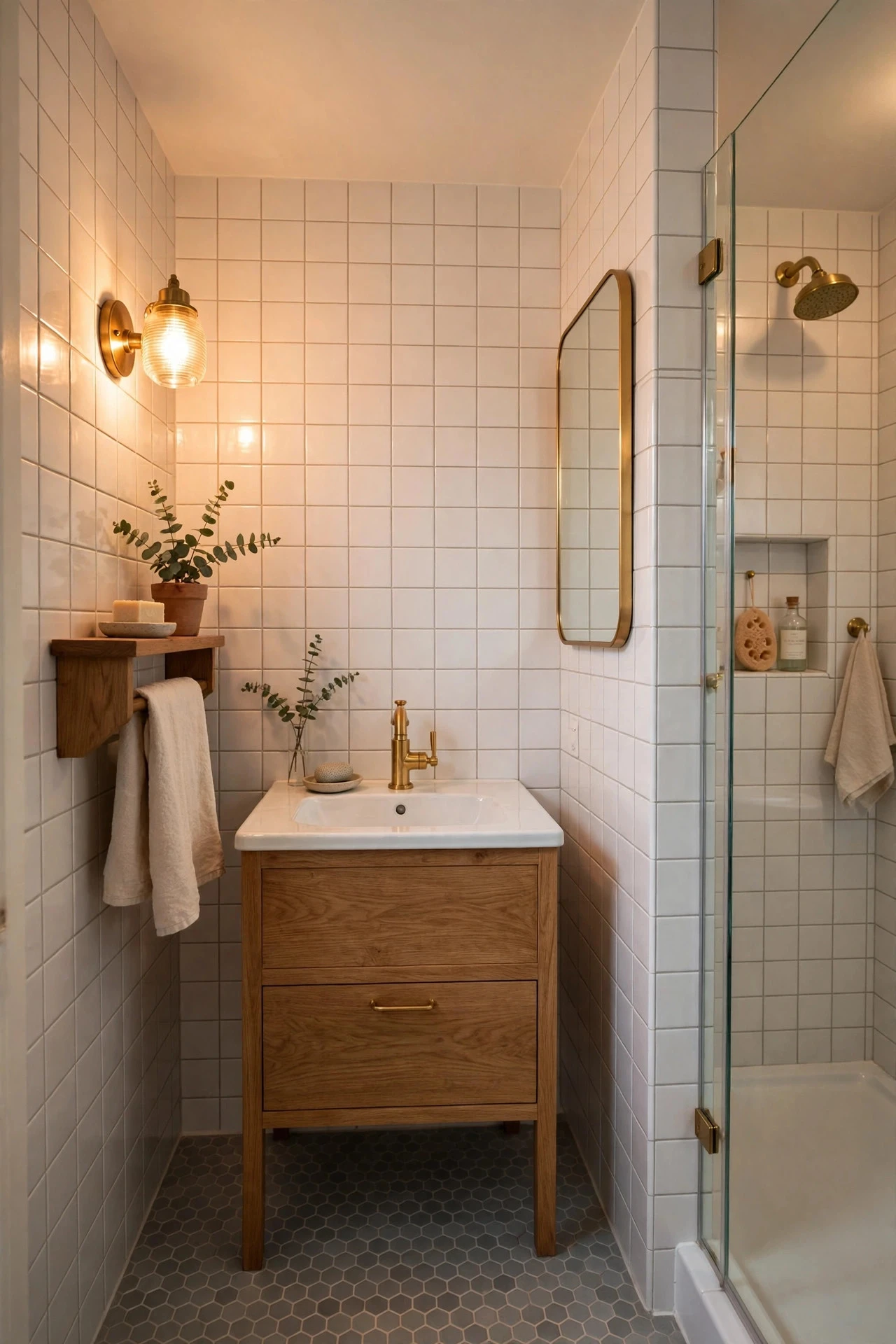
Small bathrooms benefit most from calm, clever tile choices that stretch the eye rather than chop the room. Use large-format tile on the floor with minimal grout lines, run wall tile to the ceiling, and keep grout close to the tile colour so walls read as one surface. A light, warm palette with one darker accent wall adds depth without shrinking the room, and vertical stacks or tall rectangles make the ceiling feel higher. If you need more ideas for compact rooms, these small bathroom ideas show how layout, mirrors, and storage work with tile to open up a tight space. Avoid small mosaic tile on every surface, avoid dark grout grids, and avoid stopping wall tile at dado height, which cuts the room in half visually.
21. Tiled Shower Niches That Earn Their Keep

A tiled shower niche should be planned before the first tile goes up, not cut in as an afterthought. Line the niche in a contrasting tile, such as Kit Kat strips, scallops, or a deep colour, so it reads as a deliberate feature, and slope the base slightly toward the shower so water drains instead of pooling. Keep the niche at a comfortable reach height, align its edges with tile joints where possible, and use waterproofing and grout suited to constant wetting. Avoid a niche that is too deep for bottles to reach easily, and avoid unsealed natural stone inside a niche, where shampoo and soap sit daily. A well-tiled niche adds storage, pattern, and a hotel-like finish in one small rectangle.
22. Behind-Bath Feature Walls and Wet Rooms
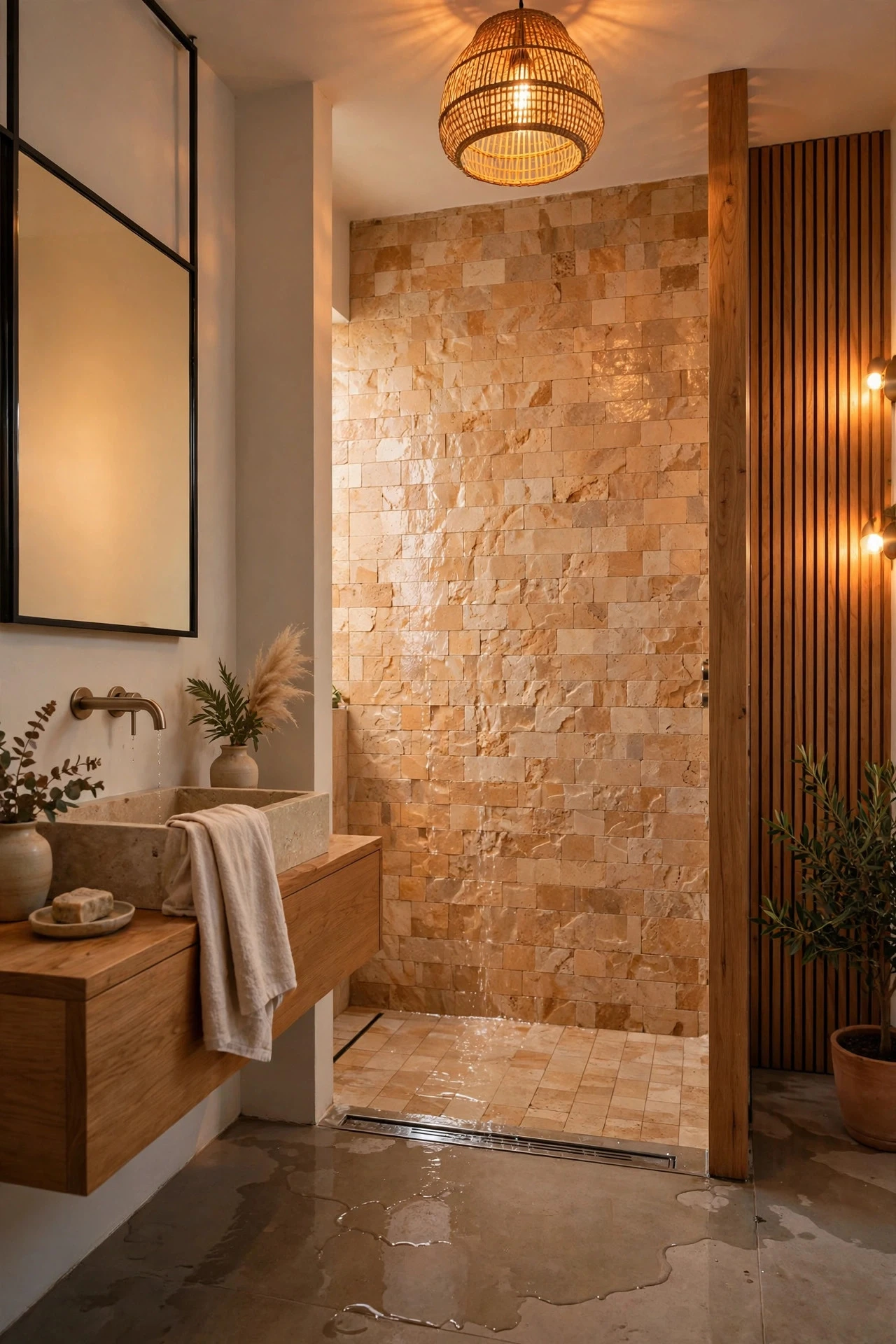
A feature wall behind a freestanding bath turns the bath into a sculpture. Use fluted tile, large marble-effect slabs, or a warm zellige wall behind the bath, keep the bath and fittings simple, and let the tile carry the drama. In a wet room, the same principle extends further: tile walls and floor continuously, choose a slip-rated matte floor tile, plan drainage falls carefully, and use a frameless screen or no screen at all for an open spa feel. Wet-room tile must be tanked and waterproofed beneath the surface, so use an experienced installer and never rely on tile and grout alone. Avoid a feature wall in a gloss finish that reflects bath water glare. This final idea ties the whole room together.
Practical Tips
Measure twice and order once, allowing ten to fifteen percent extra for cuts, breakages, and herringbone waste, and check that all boxes share the same batch and shade number. Mix tiles from several boxes, and keep one spare box. For background on tile types, see the overview of ceramic tile basics, which explains how clay bodies, glazes, and firing affect durability in wet rooms.
Budget by square footage plus labour, not by tile price alone, because setting, waterproofing, and grout often cost as much as the tile. Zellige-effect ceramic at $6 to $12 per square foot keeps a feature wall affordable, while real zellige from $25 per square foot suits a shower wall. Ask for an itemised quote covering preparation, tanking, adhesive, grout, and sealing. The bathroom tile guidance from The Spruce is a useful second check when comparing finishes and price bands.
Maintain tile with routine care rather than harsh chemicals, sweeping floors first, washing with a pH-neutral cleaner, and rinsing shower walls to limit soap film. Seal natural stone and cement grout as your installer recommends, resealing sooner in a busy family shower, and avoid acidic cleaners on stone surfaces. Check grout yearly, repair cracks promptly, and browse bathroom tile photos on Houzz for layouts that keep grout lines easy to clean.
Final Thoughts
Modern bathroom tile in 2026 is about warmth, texture, and calm confidence rather than cold perfection. Choose one hero surface, repeat its colour sparingly, respect slip ratings and sealing, and let grout, layout, and light do the quiet work. Whether you choose real zellige or a convincing effect tile, the room will feel spa-like when every choice serves the same relaxed mood.
You May Also Like: – luxury bathroom decor ideas – retro bathroom decor ideas – master bedroom decor ideas
Frequently Asked Questions
What tile is best for a bathroom floor?
Porcelain is usually the best bathroom floor tile because it is dense, water-resistant, and hard-wearing. Choose a matte finish with a DCOF slip rating of 0.42 or higher, use smaller formats or more grout lines in wet areas, and keep grout sealed and clean for lasting safety.
Is zellige tile practical in a shower?
Yes, zellige tile works well in a shower when it is installed with suitable waterproofing and grout. Expect natural variation in colour and surface, use epoxy grout or sealed cement grout, wipe the wall after showering, and consider a zellige-effect ceramic if budget or upkeep is a concern.
How do I choose a grout colour for modern tile?
Match grout closely to the tile for a calm, seamless look that lets texture lead, or contrast it for a graphic grid. Warm grey and greige suit most modern palettes, so test a wet sample in room light, and use shower-rated grout in wet zones.
Do large-format tiles work in a small bathroom?
Yes, large-format tiles often make a small bathroom feel larger because fewer grout lines break up the floor and walls. Use 24-by-48-inch porcelain where cutting allows, keep grout close to the tile colour, run wall tile to the ceiling, and choose a slip-rated matte finish.
Porcelain vs ceramic vs natural stone: which should I choose?
Choose porcelain for floors and wet areas because it is dense and stain-resistant, ceramic for walls where wear is lower, and natural stone only if you accept sealing and careful cleaning. Porcelain stone and marble effects give the luxury look with far simpler maintenance.
How much should I budget for modern bathroom tile?
Budget $6 to $12 per square foot for good zellige-effect and ceramic tiles, $25 or more for real handmade zellige or premium stone-effect porcelain, plus labour, waterproofing, grout, and sealing. Allow ten to fifteen percent extra tile for cuts and waste, and keep a spare box.