22 Modern Dining Room Ideas for Effortless Everyday Elegance
A modern dining room earns its keep at breakfast on a Tuesday, not just at a dinner party twice a year. The rooms that feel effortless are the ones designed around daily life: a table that fits homework and laptops as easily as a roast, chairs you can sit in for an hour without shifting, lighting you can dim for dinner and brighten for bills. When the everyday works, the special occasions take care of themselves.
The secret is measurements, not money. A pendant hung at the right height, 24 inches of elbow room per diner, a rug that extends far enough for chairs to stay on it — these small numbers are what separate a dining room that looks good in photos from one that actually gets used three times a day. The ideas below cover every decision, from table shapes and chair mixes to storage and centrepieces that survive real life, with budgets for each.
Looking for more inspiration? Our Nest Decorz homepage gathers the latest home decor ideas, seasonal decorating guides and room-by-room styling tips in one place — start there and explore.
Quick Answers
– Hang pendants 30–36 inches above the table: Low enough to feel intimate, high enough that nobody bumps their head or blocks the view across the table. – Allow 24 inches of width per diner: A 72-inch table seats six comfortably; anything tighter turns elbows into a negotiation. – Leave 36 inches of clearance: Chairs need room to pull out, and people need room to walk behind them — 42 inches if the chair backs face a walkway. – Choose a rug that extends 24 inches beyond the table: Chairs stay on the rug when pulled out, so nothing wobbles or snags on the edge. – Spend on the table and chairs, save on decor: A solid table and comfortable chairs last a decade; centrepieces, placemats and art can be swapped for under $100.
1. How High Should a Pendant Light Hang Above a Dining Table?
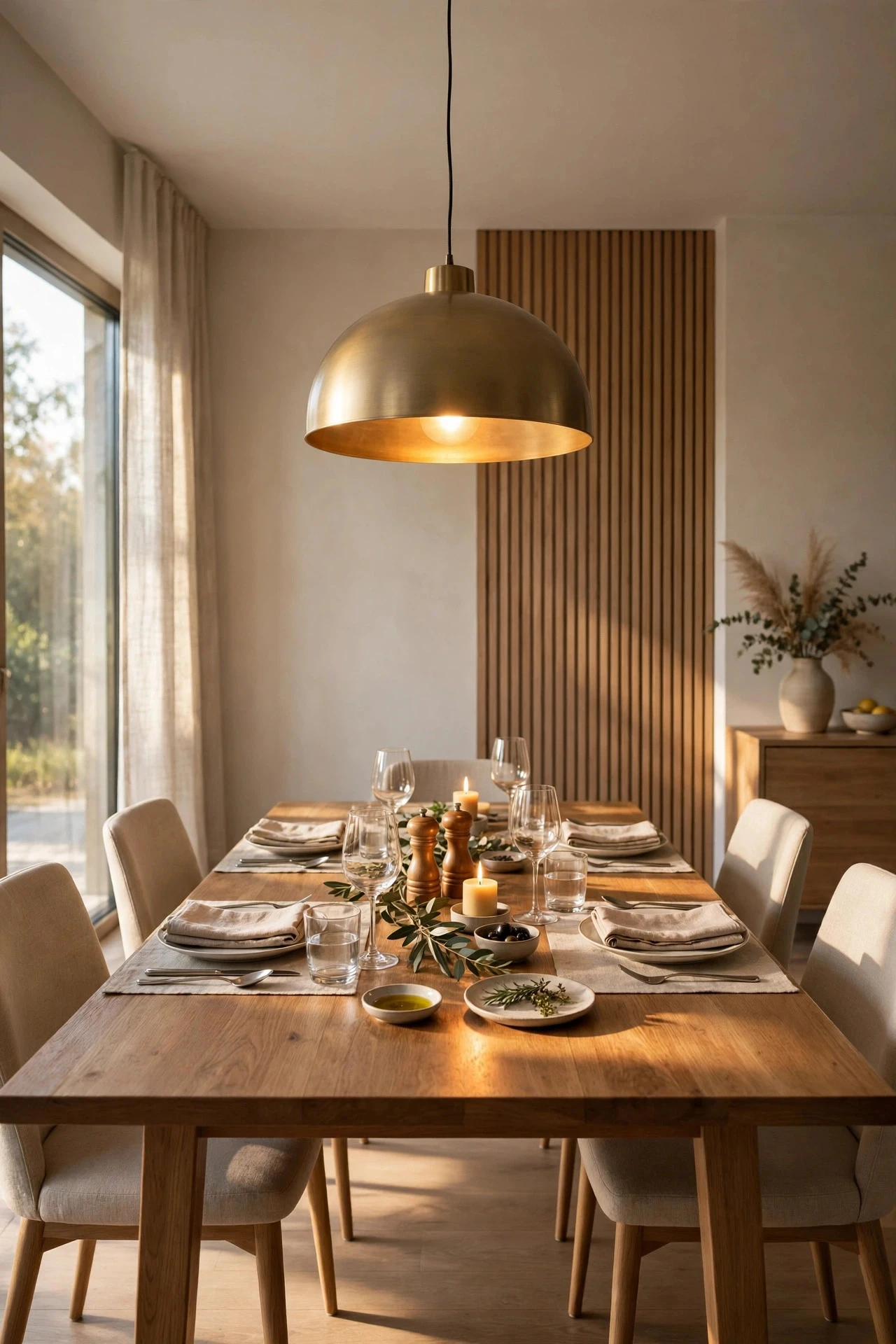
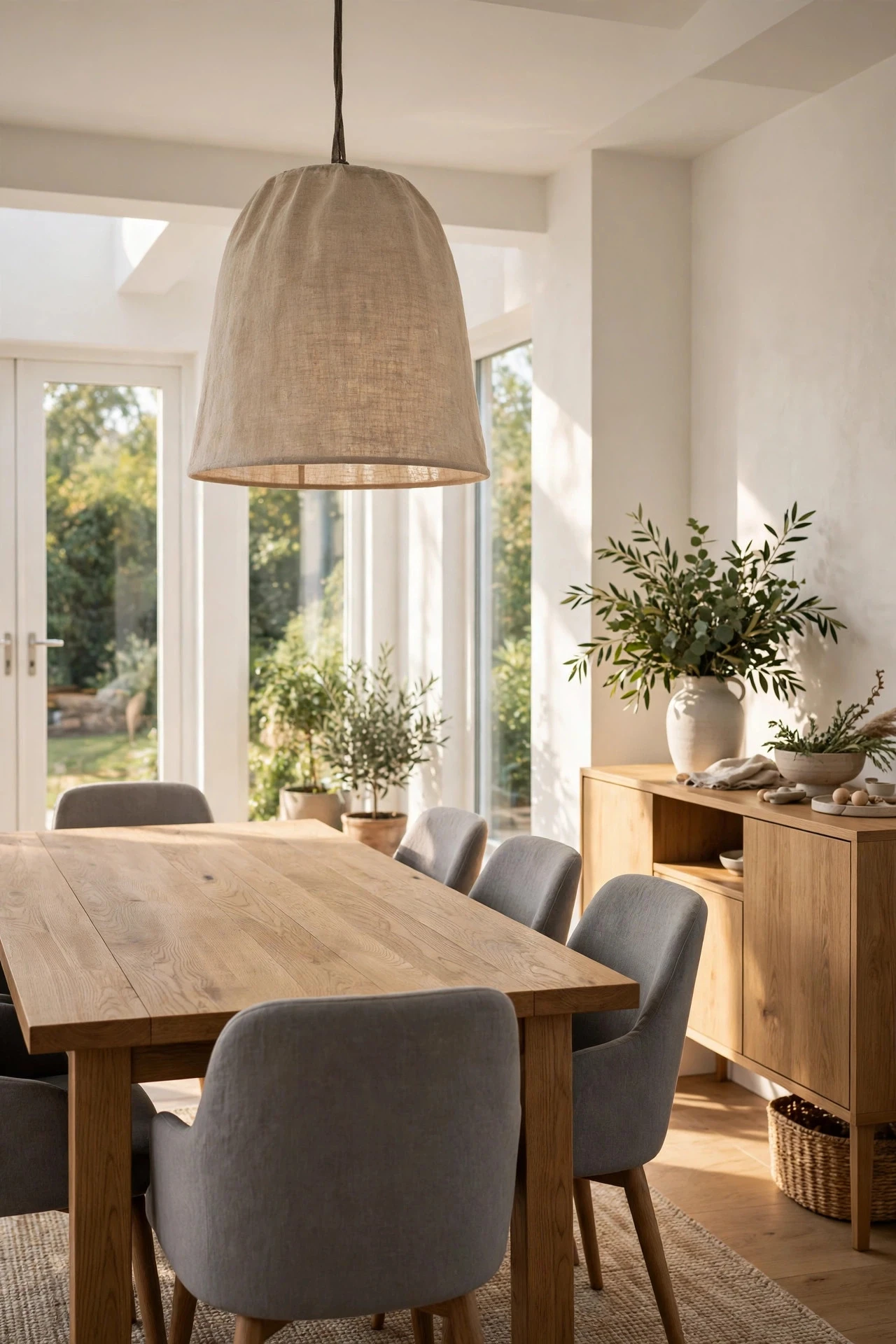
Hang your pendant 30 to 36 inches above the tabletop, measured from the table surface to the bottom of the fixture. This is the height that makes the light feel intimate without blocking sightlines across the table, and it is the single most common mistake in modern dining rooms — pendants hung too high read as ceiling lights, while pendants hung too low become a hazard for anyone standing up.
A single large pendant suits tables up to 60 inches long; longer tables need two or three smaller pendants spaced 24 to 30 inches apart. Always put the fixture on a dimmer, since the same light that needs to be bright for homework should be soft for dinner. Budget $150–$600 for a quality pendant, plus $100–$200 for an electrician if new wiring is needed.
2. How Much Table Space Does Each Person Really Need?
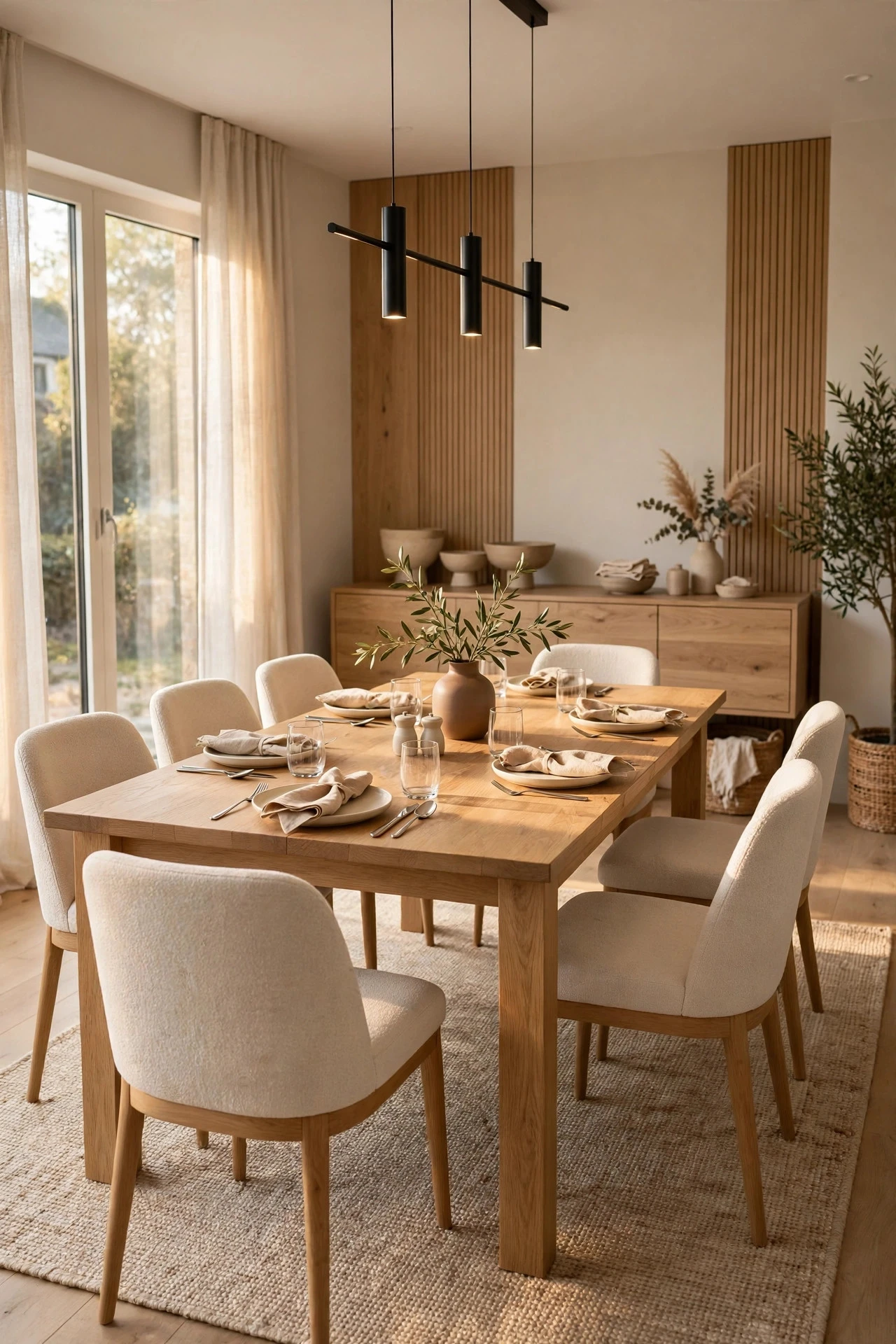
Each diner needs 24 inches of table width and about 15 inches of depth to eat comfortably without elbowing a neighbour. This is the sizing rule that determines whether your table actually seats the people you invite: a 60-inch table seats four, a 72-inch table seats six, and an 84-inch table seats eight, assuming chairs sit on the long sides only.
If your room is tight, a pedestal base buys you an extra seat at each end, since there are no legs to work around. Measure your room first, then subtract 36 inches of clearance on every side that needs a walkway, and the remaining footprint is your maximum table size. A solid oak or walnut table in the 72-inch range typically costs $800–$2,500 and will outlast three sets of chairs.
3. Why Does 36 Inches of Clearance Matter Around a Dining Table?
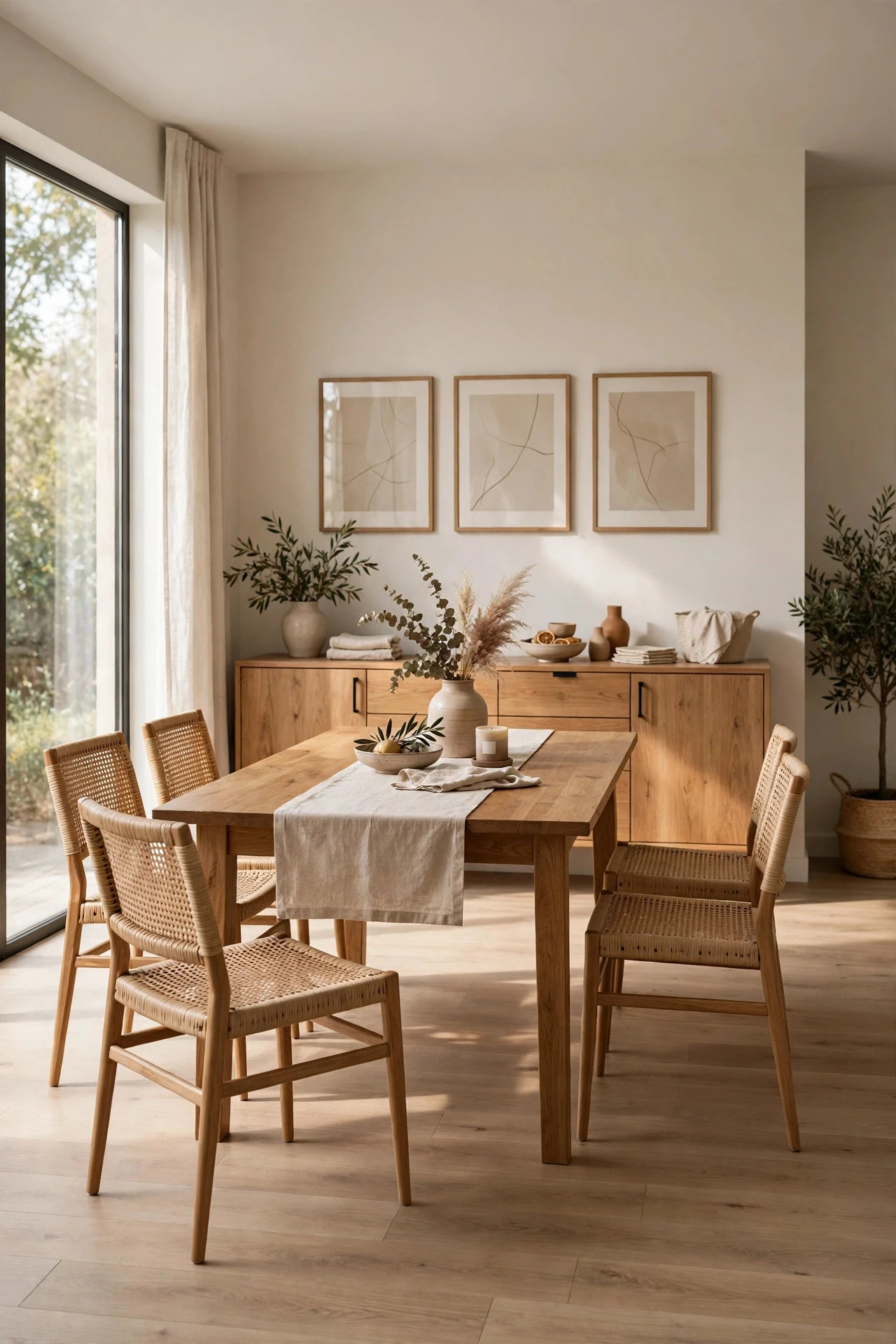
Thirty-six inches of clearance between the table edge and the wall or nearest furniture is the minimum for a chair to pull out and a person to stand up without a shuffle. Without it, diners wedge themselves in, chairs scrape the wall, and the room feels cramped even when it is not small. If the space behind a chair is also a walkway, stretch that clearance to 42 or even 48 inches.
This number should drive your table choice more than any style preference. In a 10-by-12-foot room, for example, a 72-inch table with 36 inches of clearance on all sides is the comfortable maximum. Before ordering anything, tape the table's footprint on the floor with painter's tape and live with it for a weekend — walk around it, pull out a chair, carry a plate through. The tape test costs nothing and has saved countless returns.
4. Should You Choose a Round or Rectangular Dining Table?

Choose a round table for small rooms and sociable meals, and a rectangular table for large rooms and big gatherings. A round table seats more people per square foot, eliminates the awkward head-of-table hierarchy, and lets everyone see each other, which is why a 48-inch round comfortably seats four and a 60-inch round seats six. It also has no sharp corners for children or hips to catch.
A rectangular table is the better choice when you regularly host eight or more, since it extends naturally and lines up against a wall when not in use. For more everyday styling, dining room decor ideas for everyday gatherings show how the same table can shift from weekday breakfasts to weekend hosting. Expect $600–$2,000 for a quality round table and $800–$3,000 for a rectangular one.
5. Is an Extendable Dining Table Worth It for Everyday Use?
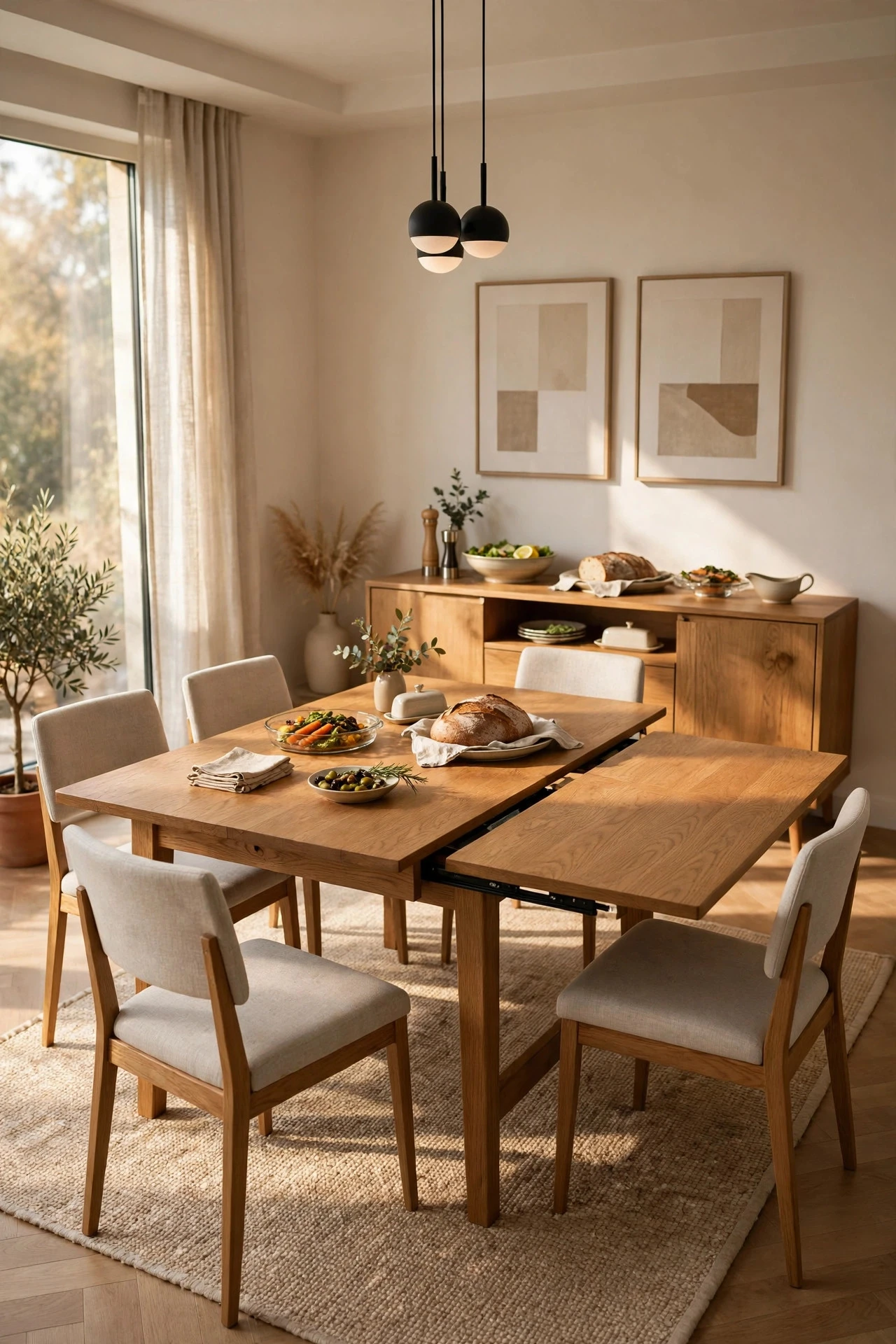
An extendable dining table is worth it if you host more than six people even a few times a year, because it lets you live with a right-sized table every day and a big table when you need one. The best mechanisms are the butterfly leaf, which folds away inside the table, and the drop-leaf, which folds down at the ends — both can be opened by one person in under a minute.
A pedestal base works best for extendable designs, since it keeps the legs out of the way of the extra seats. Budget $1,000–$3,000 for a well-made extendable table in solid wood, and store the leaves flat in a dry place so they do not warp. Measure the extended length against your room's clearance too — a table that seats ten needs roughly 42 inches of open space behind every chair when fully open.
6. How Do You Mix Dining Chairs Without It Looking Messy?
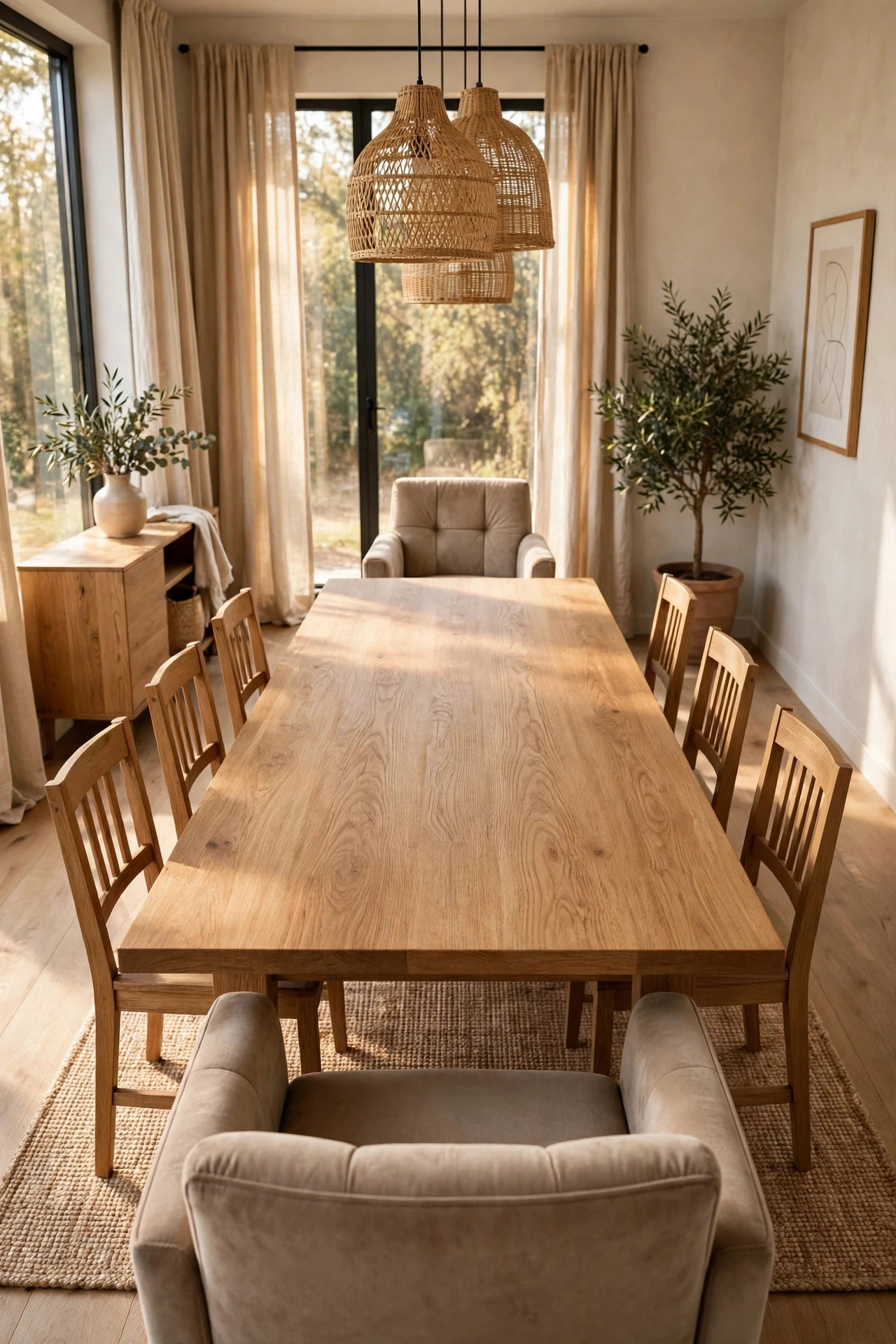
Mix dining chairs by keeping one element consistent — the same wood tone, the same seat height, or the same colour family — and varying the rest. The classic formula is upholstered host chairs at the ends and simple wooden or metal side chairs along the sides, which gives the table a designed look without the stiffness of a matching set.
Keep all seat heights within an inch of each other, ideally 18 inches from the floor, so nobody sits noticeably higher or lower than their neighbour. If you mix colours, limit the palette to two: a neutral for most chairs and one accent for the hosts. Avoid mixing more than two chair styles in a small room, where the variety reads as clutter rather than curation. A full set of six new chairs typically costs $600–$1,800, while a mixed set built from two styles often costs less and looks more intentional.
7. Does Bench Seating Actually Work for Everyday Dining?
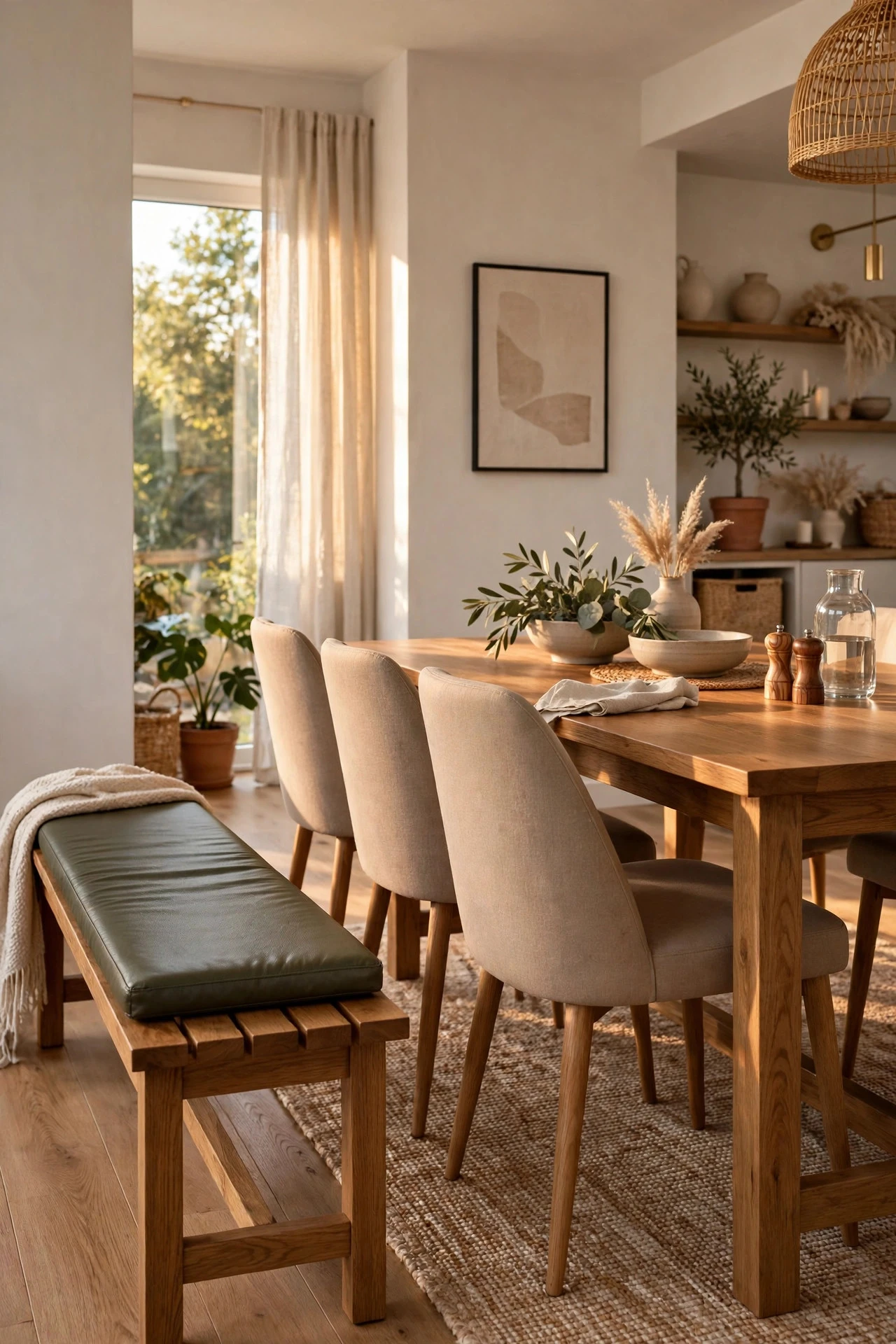
Bench seating works beautifully for everyday dining in family homes, because it seats more people in less space and slides neatly under the table when not in use. A 60-inch bench seats three children or two adults comfortably, and it doubles as a perch for homework, board games and morning coffee.
The trade-off is back support: benches suit short meals and busy households, but anyone with a bad back will miss a chair after forty minutes. The fix is a bench on one side and proper chairs on the other, so every meal has both options. Add a thin cushion in a wipeable fabric — performance linen or outdoor-grade canvas — and the bench becomes as comfortable as a chair. A matching bench usually costs $200–$500, far less than two extra chairs, and it keeps the room's footprint tight. Keep the bench's seat height at 18 inches, exactly matching your chairs, so the table height works for everyone.
8. What Size Rug Goes Under a Dining Table?
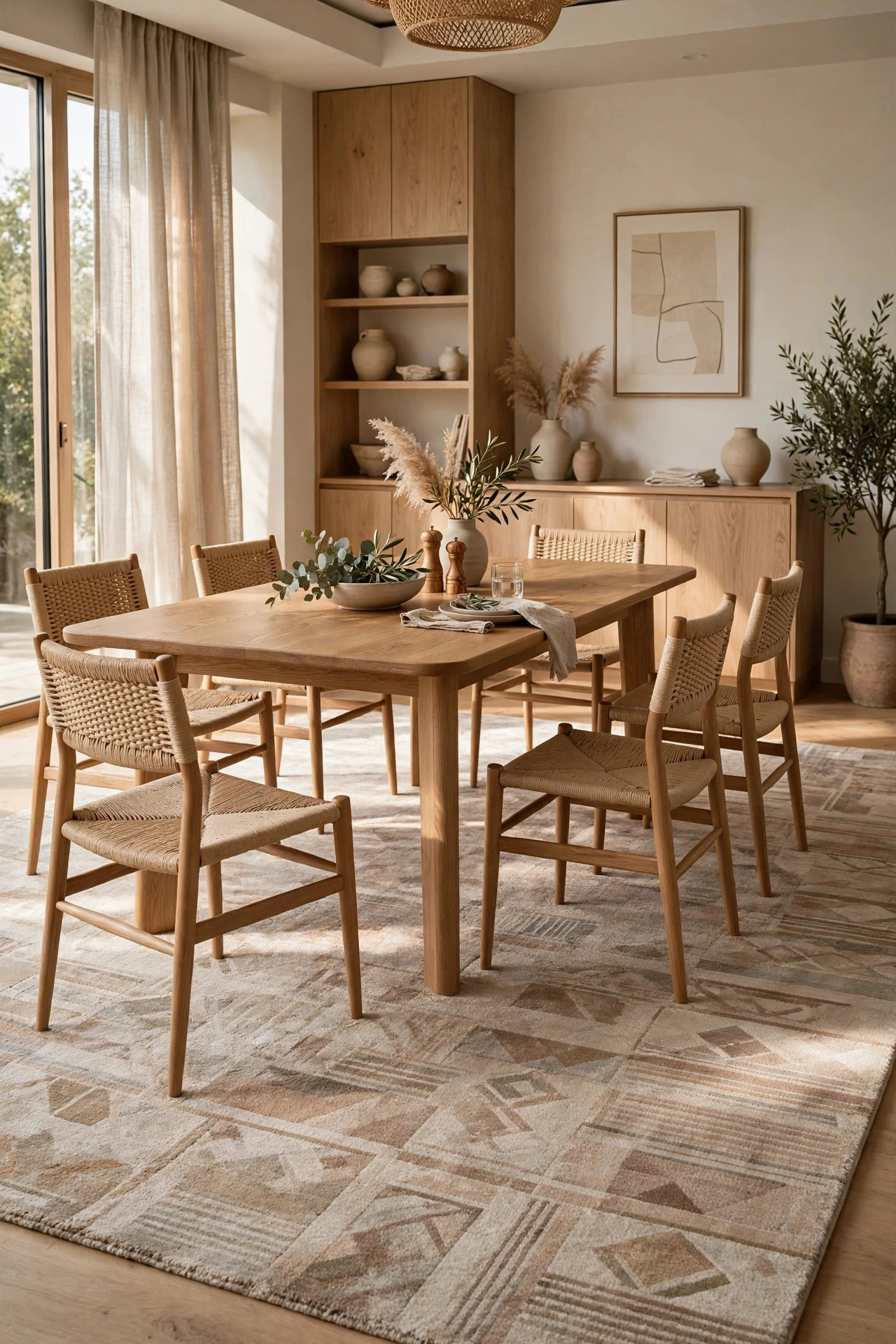
A dining room rug should extend at least 24 inches beyond the table on every side, so chairs stay fully on the rug even when pulled out. A 72-inch table needs a rug roughly 9 by 12 feet; a 48-inch round table needs an 8-foot round rug. Anything smaller creates a wobbling edge where chair legs catch, and the rug will curl and wear unevenly within months.
Choose a low-pile, flatweave or indoor-outdoor rug, because high-pile rugs trap crumbs and make chairs hard to move. Wool flatweaves are the most durable and clean well, while washable rugs are the practical choice for homes with small children — many can go straight in the machine. For rug sizing and placement principles, living room rug ideas to ground your seating area cover the same 24-inch rule in a seating context. Budget $200–$800 for a quality dining rug in the right size.
9. Should a Dining Room Have a Rug at All?
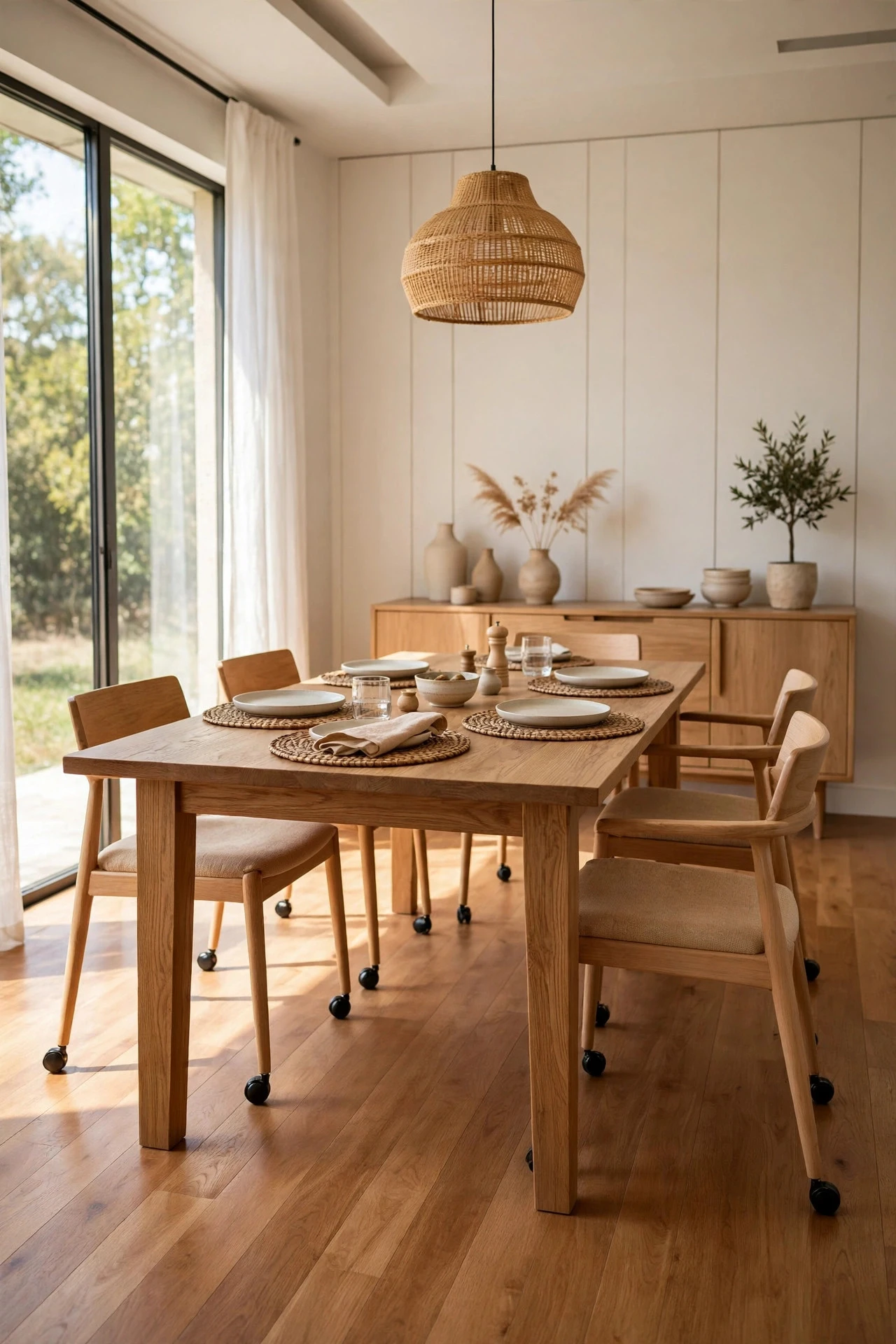
A dining room does not need a rug, and in a busy family home bare floors are often the smarter choice. Hardwood, tile or luxury vinyl wipes clean in seconds, chairs glide without catching, and there is no fabric to absorb spills.
If you love the warmth a rug brings, compromise with a washable rug or a low-pile flatweave in a dark, forgiving pattern, and keep a small handheld vacuum nearby for crumbs. Another option is a rug under only the table's centre — no, that never works; the rug must cover the chair zone or be skipped entirely. In homes with underfloor heating, a rug also insulates the floor and reduces the warmth underfoot, so bare floors win again. The honest test is your own habits: if your family eats at the table three times a day, skip the rug and spend the money on better chairs instead.
10. How Do You Layer Lighting in a Modern Dining Room?
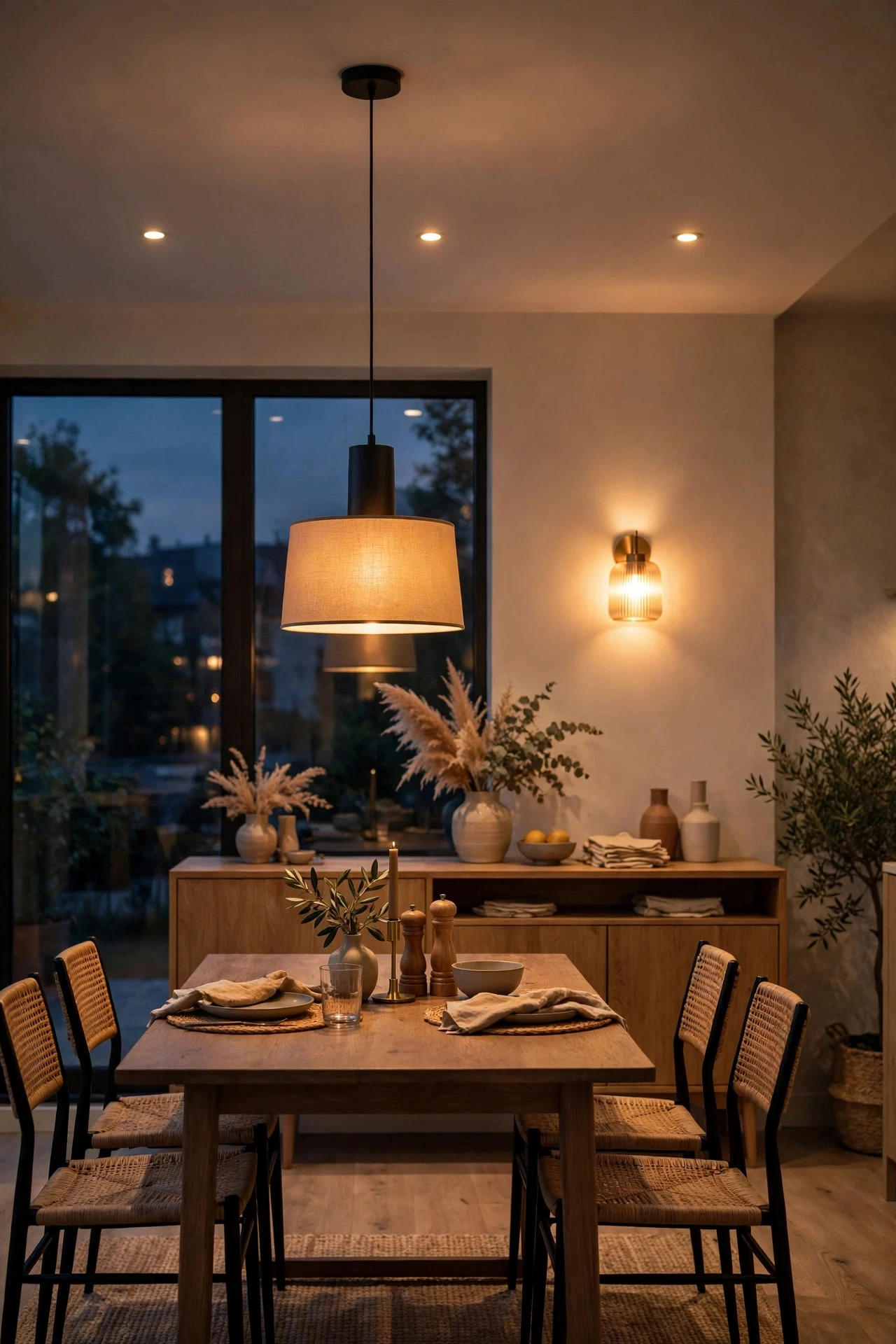
Layer dining room lighting in three parts: a pendant or chandelier over the table for the focal glow, dimmable overhead or recessed lights for everyday brightness, and a low lamp or wall sconce for ambient warmth. The pendant handles atmosphere, the overheads handle homework and cleaning, and the low light stops the room from feeling like a cafeteria after dark.
Put every layer on its own dimmer so you can shift the room from bright morning to soft evening in seconds. Warm bulbs at 2700K suit dining rooms best, since they flatter food and skin tones; anything above 3000K feels clinical over a meal. For layered lighting principles that work across rooms, living room lighting ideas for a warm, layered glow explain the same three-layer approach. Budget $300–$900 for a full layered lighting setup.
11. What Storage Does a Modern Dining Room Actually Need?
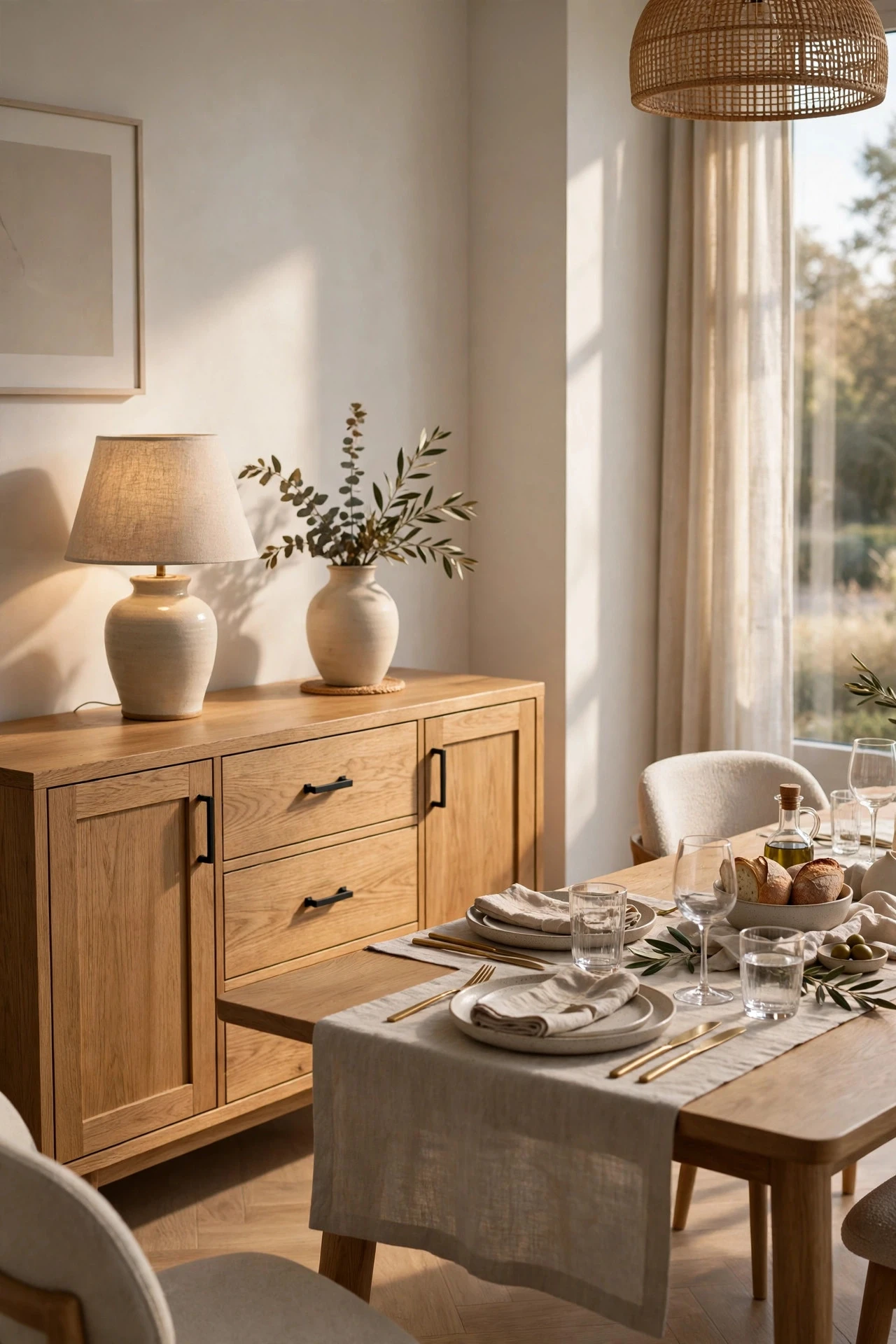
A modern dining room needs one good sideboard, and almost nothing else. A sideboard holds table linens, placemats, serving dishes, candles and the board games that live at the table, keeping the surface clear for actual meals. Choose one 60 to 72 inches long with a mix of drawers for small items and cupboards for platters, and keep the top clear except for one lamp and one decorative object.
If space is tight, a slim console or a wall-mounted cabinet does the same job in half the depth — 12 to 14 inches deep is enough for folded linens and serving ware. Avoid open shelving in the dining room unless you genuinely enjoy dusting display pieces weekly; closed storage looks calmer and hides the clutter of real life. A quality sideboard costs $500–$1,500, and secondhand mid-century pieces in solid wood are often the best value, since they were built to hold heavy crockery.
12. What Centrepiece Survives Everyday Use on a Dining Table?
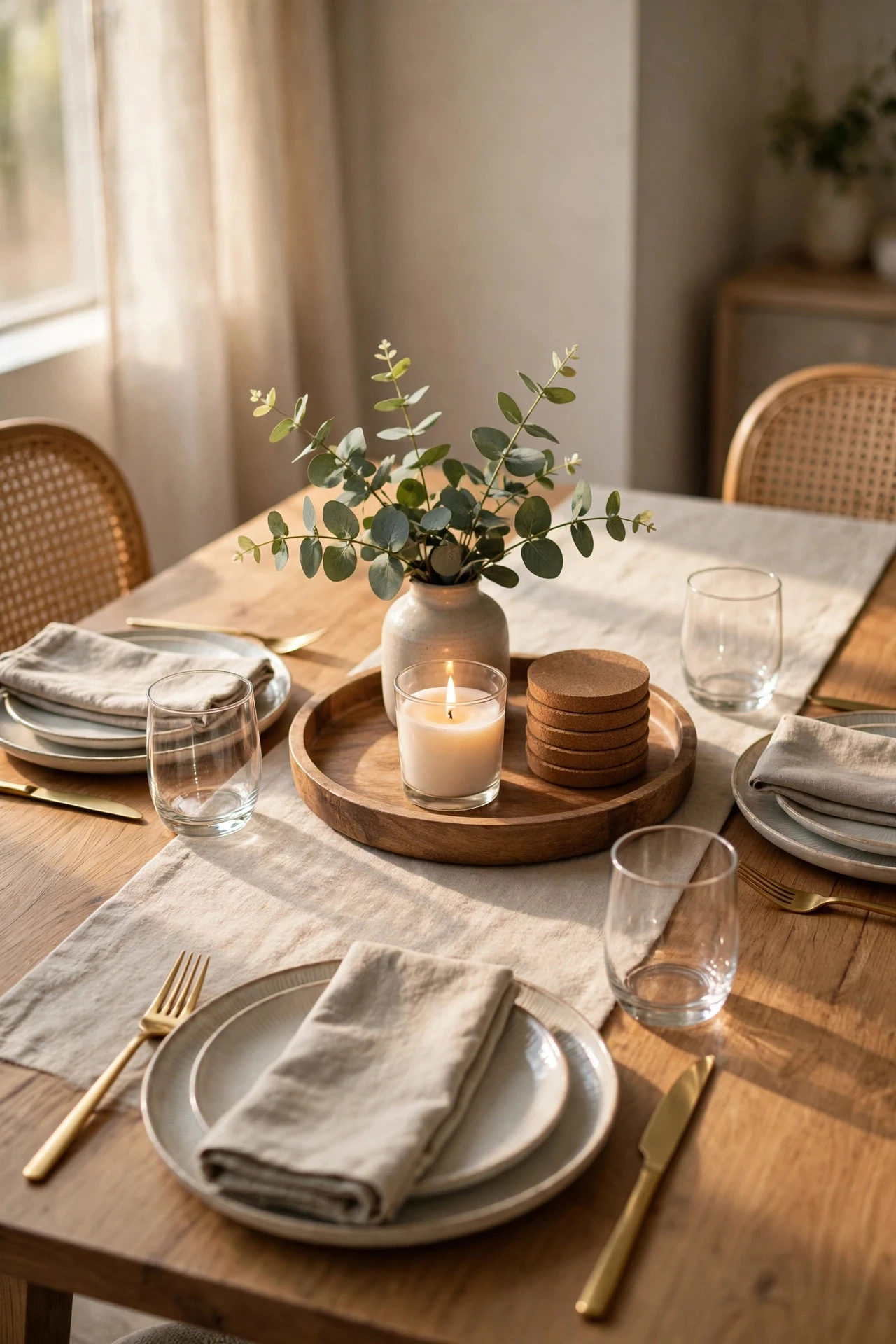
The best everyday centrepiece is low, sturdy and easy to move: a wooden tray holding a small vase of greenery, a candle and a stack of coasters. At under 12 inches tall, it never blocks conversation, and the tray means the whole arrangement lifts off the table in one motion when it is time to eat. Fresh eucalyptus or olive branches last two weeks in water and cost a few dollars, while a potted herb — rosemary or thyme — doubles as a cooking ingredient.
Avoid tall vases, candelabras and anything fragile on a table that gets used three times a day; they will be knocked over, and they make the table feel like a display rather than a workspace. Rotate the contents with the seasons — citrus in a bowl in winter, fresh herbs in summer — and the table feels cared for without any extra effort. A good tray costs $30–$80, and the greenery inside it costs almost nothing.
13. Placemats, Tablecloth or Bare Wood — Which Is Best for Daily Meals?

For daily meals, placemats on bare wood are the best choice, because they protect the table where it matters and take seconds to wipe or shake out. A full tablecloth looks formal and needs laundering after every spill, while a bare table shows every ring and scratch within a month. Placemats give you the protection without the fuss.
Choose woven vinyl or cork-backed placemats for everyday use — both wipe clean, resist heat, and cost $5–$15 each. Keep a tablecloth for dinner parties and holidays, when the formality is the point, and store it folded in the sideboard so it is ready in a minute. A table runner down the centre is a good middle ground: it protects the middle of the table, looks dressed, and launders easily. Buy eight placemats, not six, so there are always clean spares.
14. How Do You Pick Dining Chairs You Can Sit In for an Hour?
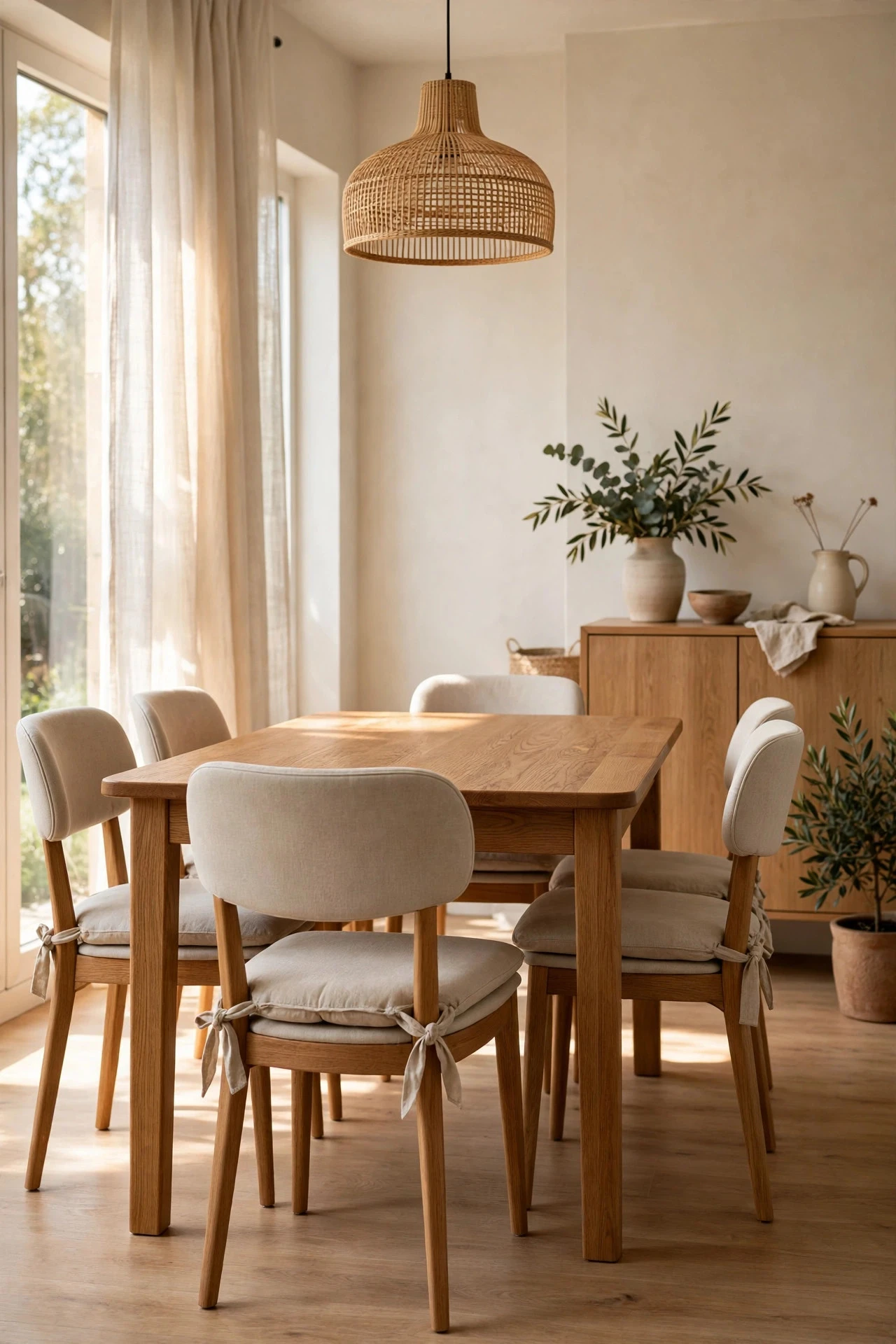
Pick dining chairs with an 18-inch seat height, a seat depth of 16 to 18 inches, and a backrest that supports your shoulder blades — then sit in them for ten minutes before buying. Comfort is the one dining room feature you cannot judge from a photo, and the chairs that look sleekest are often the ones that hurt after twenty minutes. A slightly curved backrest and a seat with a gentle waterfall edge, where the front curves down, make a real difference over a long meal.
Upholstered seats in performance fabric are the most comfortable and the most forgiving, since the padding absorbs pressure and the fabric resists stains. Avoid chairs with a seat narrower than 17 inches or a backrest that ends below your shoulder blades. Test chairs with the table you own, not the showroom table, since a one-inch height difference changes the whole experience.
15. What Colour Palette Makes a Modern Dining Room Feel Calm?
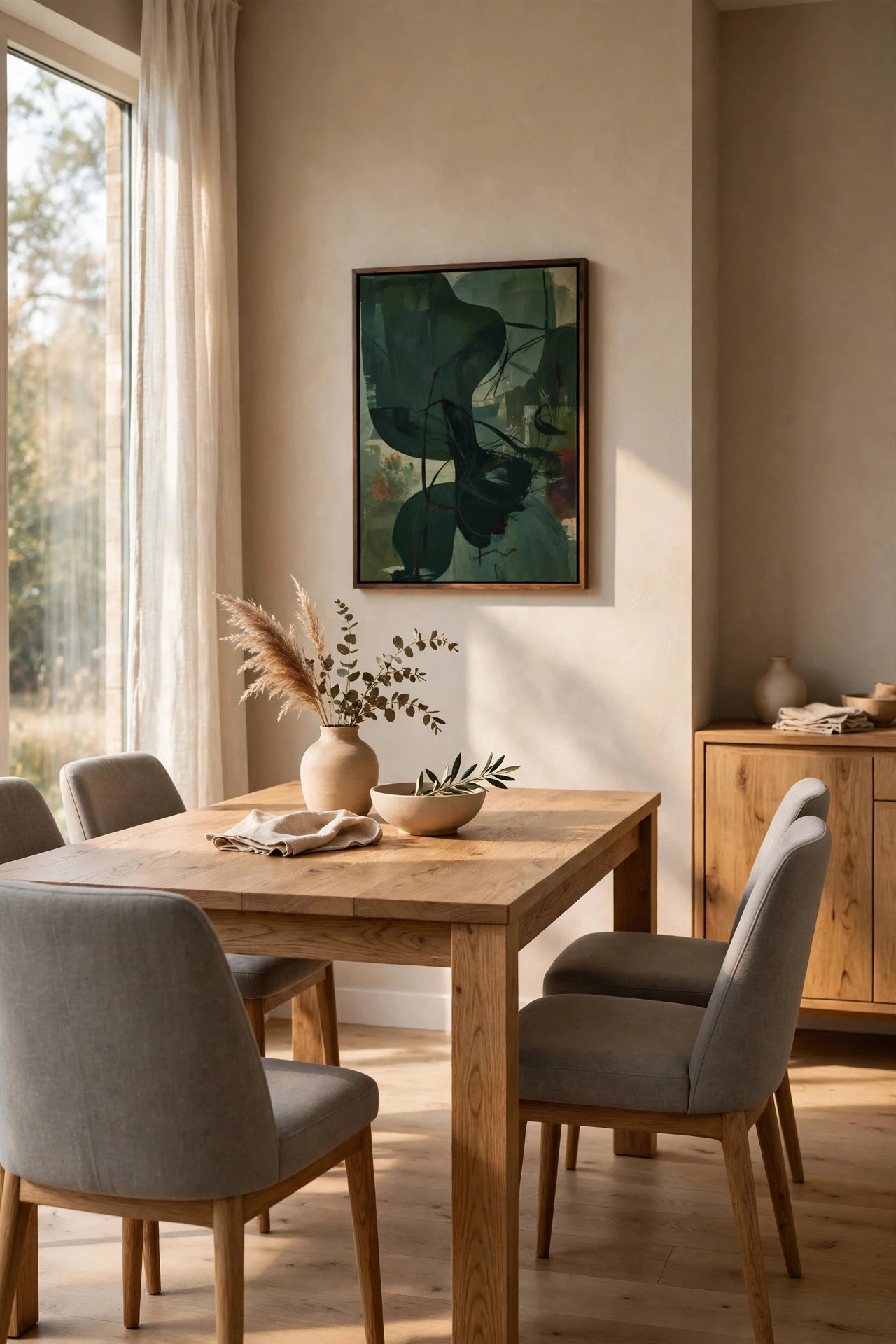
A calm modern dining room palette starts with warm neutrals — soft white walls, natural oak, warm grey or greige upholstery — and adds one restrained accent, such as deep green, navy or terracotta, in small doses. The neutrals keep the room light and flexible, while the single accent gives it character without demanding attention at every meal. This is also the palette that ages best, since it does not depend on a trend that will date.
Paint the walls a warm white rather than a stark one; cool whites turn grey and flat under evening light, while warm whites glow. Bring the accent in through chair upholstery, a rug or artwork, never through the table itself, so you can change it for under $200 when you fancy a refresh. Natural materials — oak, linen, stone, brass — add the texture that stops a neutral room from feeling bland.
16. Where Should Art and Mirrors Go in a Dining Room?
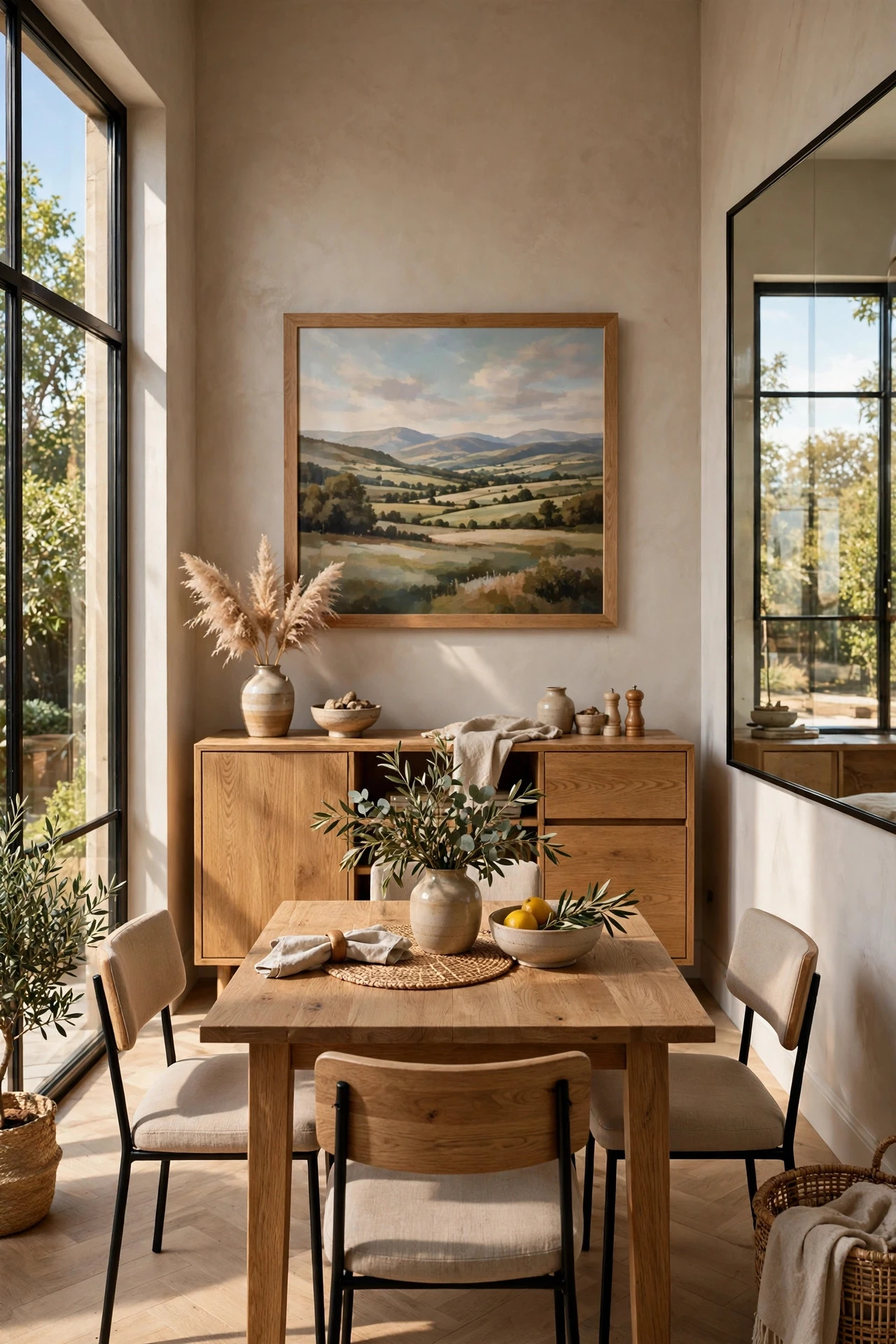
Hang dining room art at eye level — the centre of the piece about 57 to 60 inches from the floor — on the wall you face while eating, so it rewards the people sitting at the table. One large piece works better than a cluster of small ones in a dining room, since the table already supplies visual busyness and a gallery wall competes with it. A mirror opposite a window doubles the daylight and makes a small dining room feel twice as large, but never hang a mirror where it reflects clutter or the kitchen sink.
Keep art simple and food-friendly: landscapes, abstracts and botanical prints suit a dining room, while anything too busy or too dark makes the room feel heavy. A single oversized canvas, roughly two-thirds the width of the table, is the safest proportion. Budget $100–$400 for a quality framed print, and remember that a dining room needs less art than a living room — one strong piece is enough.
17. How Do You Zone a Dining Area in an Open-Plan Room?
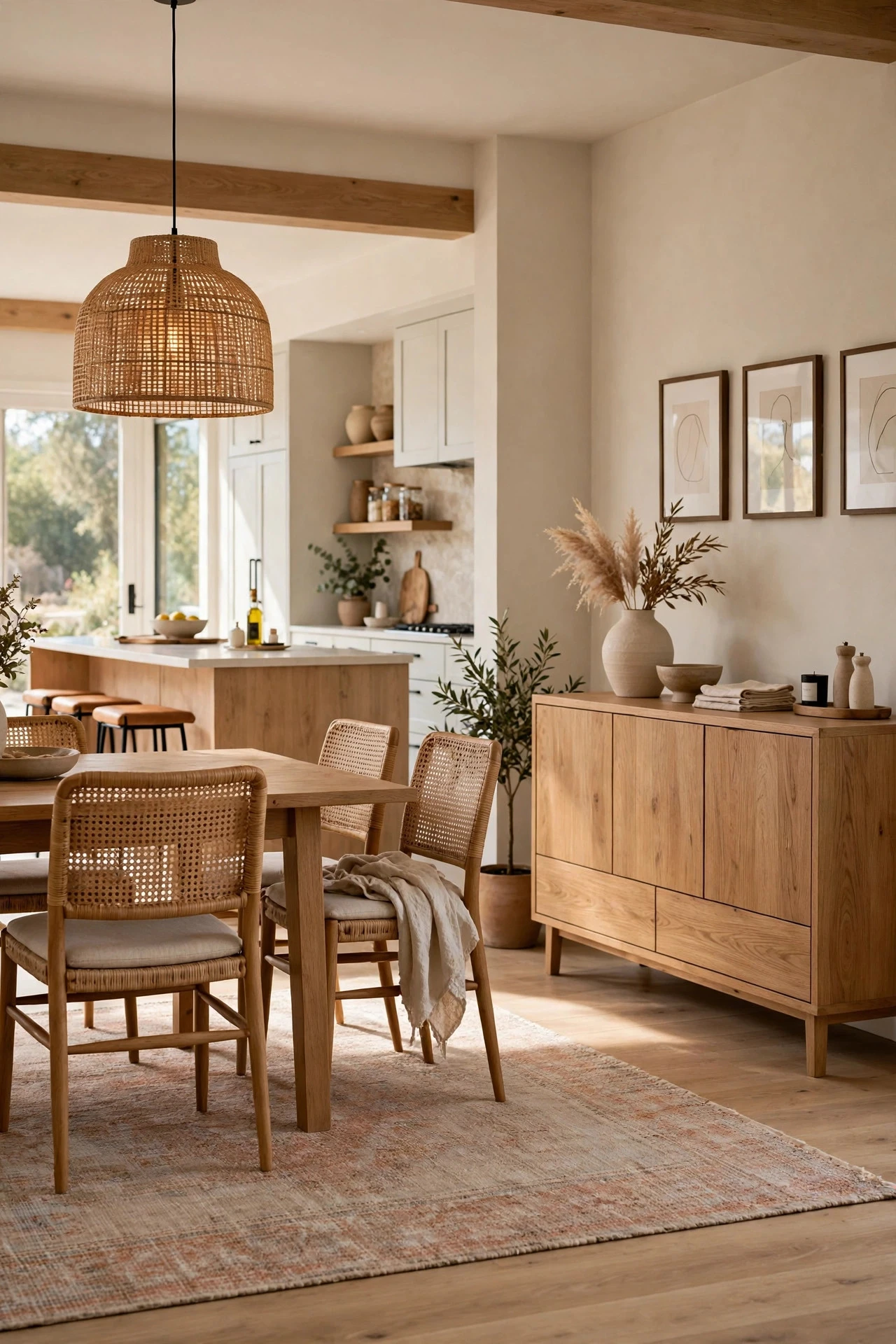
Zone an open-plan dining area with a rug, a pendant and a sideboard, which together draw a clear boundary without a single wall. The rug defines the floor area, the pendant marks the ceiling, and the sideboard anchors one edge — three signals that tell the eye where dining ends and living or cooking begins. This is the same zoning logic that makes a kitchen island feel separate from the rest of the room, and kitchen island decor ideas for a stylish, functional kitchen show how one piece of furniture can anchor an open space.
Keep the dining furniture in a consistent material — oak, for example — that differs slightly from the living room's palette, so the zone reads as its own area. The dining zone should feel connected to the kitchen, since food travels between them constantly, and a clear path of at least 36 inches between the table and the kitchen counter keeps that journey easy.
18. Is a Built-In Banquette Worth It in a Modern Dining Room?
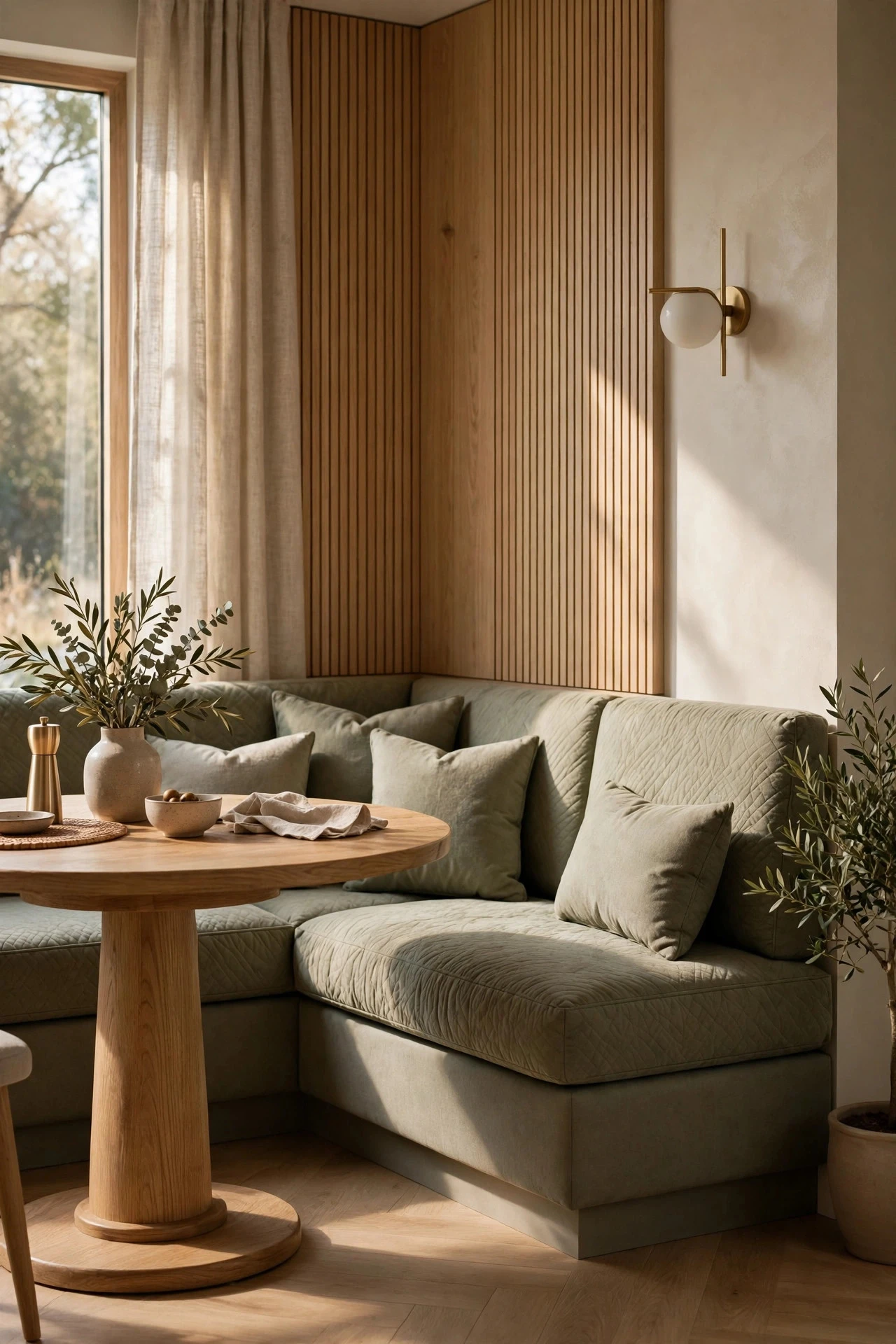
A built-in banquette is worth it if your dining area is small or awkwardly shaped, because it tucks seating against the wall, saves up to 18 inches of floor space, and adds hidden storage under the seat for linens and board games. A banquette also turns a dead corner into the cosiest seat in the house, which is why families with children love them — kids slide in, and nobody pulls a chair out into the walkway.
Build the seat 18 inches high and 18 to 20 inches deep, with a backrest angled slightly or cushioned, and upholster it in a wipeable performance fabric or leather, since food will land on it. A custom banquette costs $1,500–$4,000, which is more than freestanding chairs, but it solves a space problem nothing else can. If you rent or may move, a freestanding bench gives you most of the benefit for a tenth of the price.
19. Which Table Materials Survive Daily Family Life?

Solid oak and walnut survive daily family life best, because they can be sanded and re-oiled when scratched, and their grain hides small marks. A white oak table with a hardwax oil finish is the most forgiving combination — spills wipe off, heat rings are rare, and a light sanding every few years restores it to new. Stone tops, such as quartz or marble, look stunning but stain and chip; marble etches the first time lemon juice lands on it, so it suits careful adults rather than family dinners.
Glass tops show every fingerprint and crumb, and need wiping after every meal. Veneer tables are the budget option, but they cannot be refinished, so a single deep scratch is permanent. If you buy veneer, choose a dark finish that hides wear and always use placemats. For material and durability guidance, The Spruce compares table materials and finishes for busy households.
20. How Do You Style a Dining Room That Never Feels Dated?
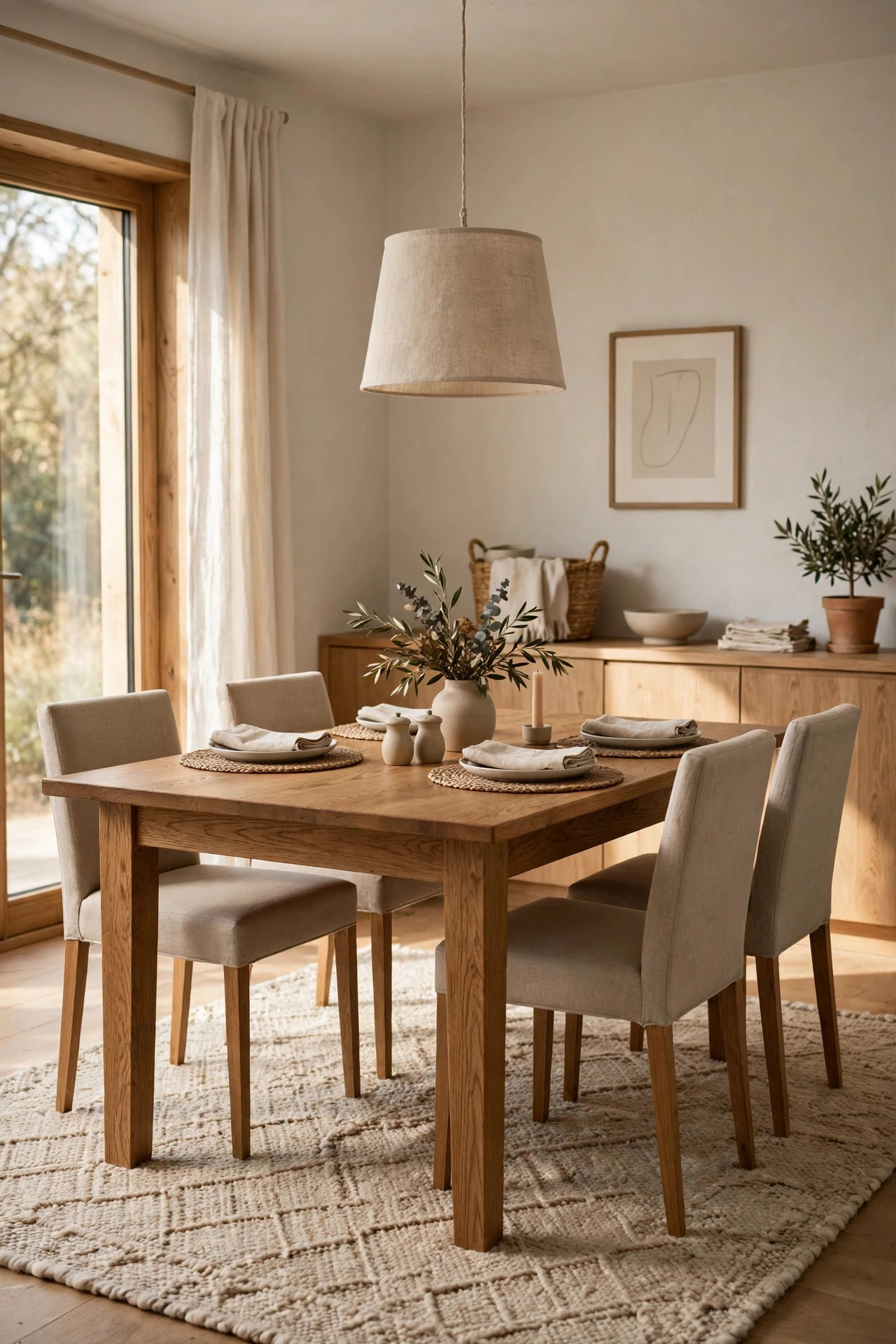
Style a dining room that never feels dated by investing in classic shapes and changing only the small things. A rectangular oak table, simple upholstered chairs and a linen-look pendant are timeless; the centrepiece, placemats, art and chair cushions are the seasonal layer, and swapping them costs under $100 a year. This two-layer approach means the room never needs a full redesign, only a refresh.
Avoid matching furniture sets, which date faster than mixed pieces, and avoid trendy finishes — a brass pendant will outlast a matte black one, and natural oak will outlast a painted trend colour. Keep the room's bones neutral and let texture do the work: linen, wood grain, woven placemats and a wool rug give the eye plenty to enjoy without a single fashionable colour. A room built on classics and refreshed with small swaps stays elegant for a decade, while a room built on trends needs replacing every three years.
21. How Do You Fit a Dining Table Into a Small Room?
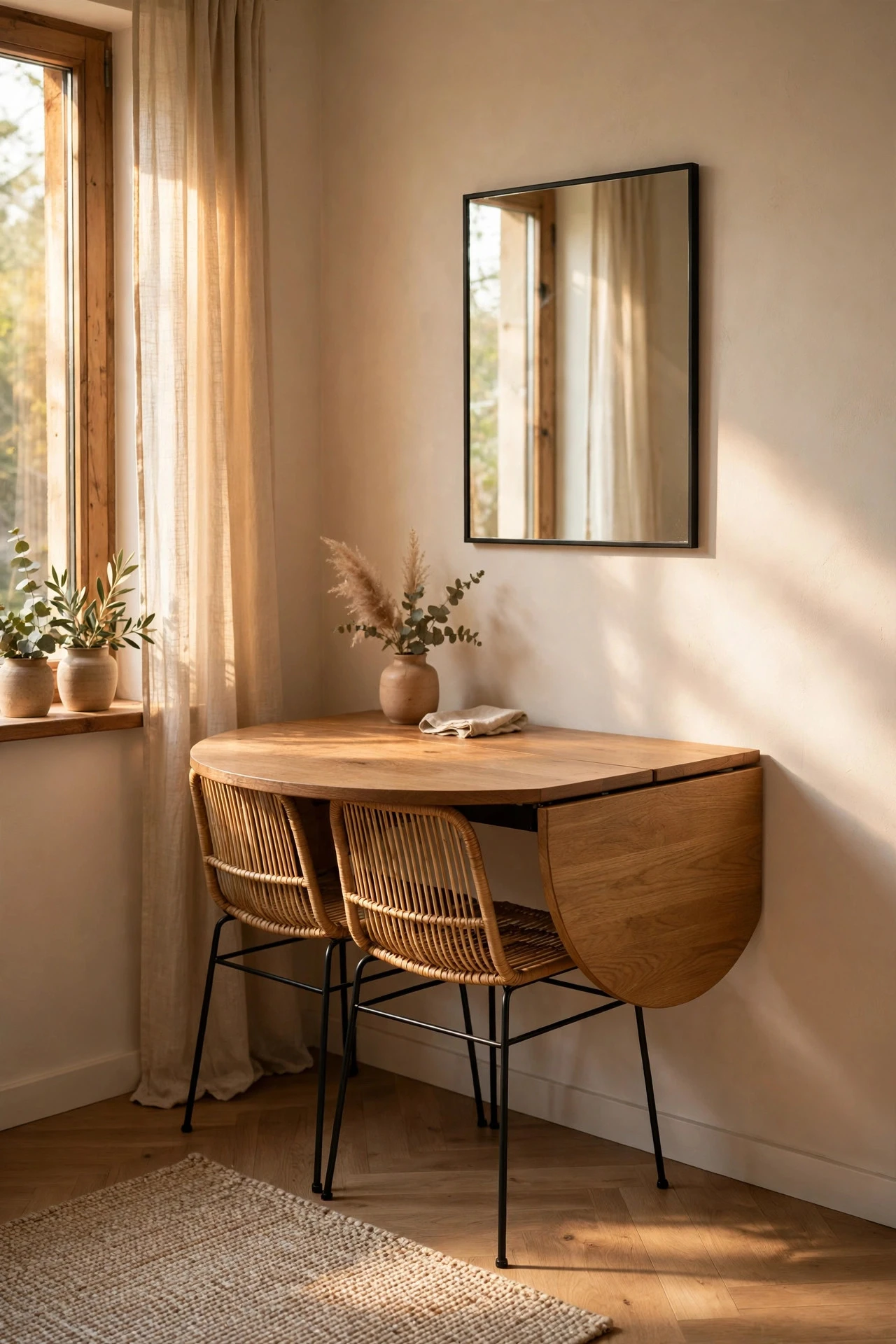
Fit a dining table into a small room by choosing a round or drop-leaf table, a bench on one side, and chairs that tuck fully under the table. A 36-inch round table seats four in a space a rectangular table cannot, and a drop-leaf table folds to console depth against the wall on weekdays, then opens for guests.
Keep the colour palette light, hang a mirror to double the sense of space, and skip the sideboard — a slim console or a wall shelf holds the essentials in a fraction of the depth. Choose chairs with open backs and slim legs, which read as less visual bulk than solid chairs. For a full small-space plan, how to style a small dining room that seats everyone in style covers layouts, measurements and furniture picks for tight rooms. A well-planned small dining room costs no more than a large one — the savings come from buying less furniture, not cheaper furniture.
22. Where Should You Spend and Where Should You Save in a Dining Room?
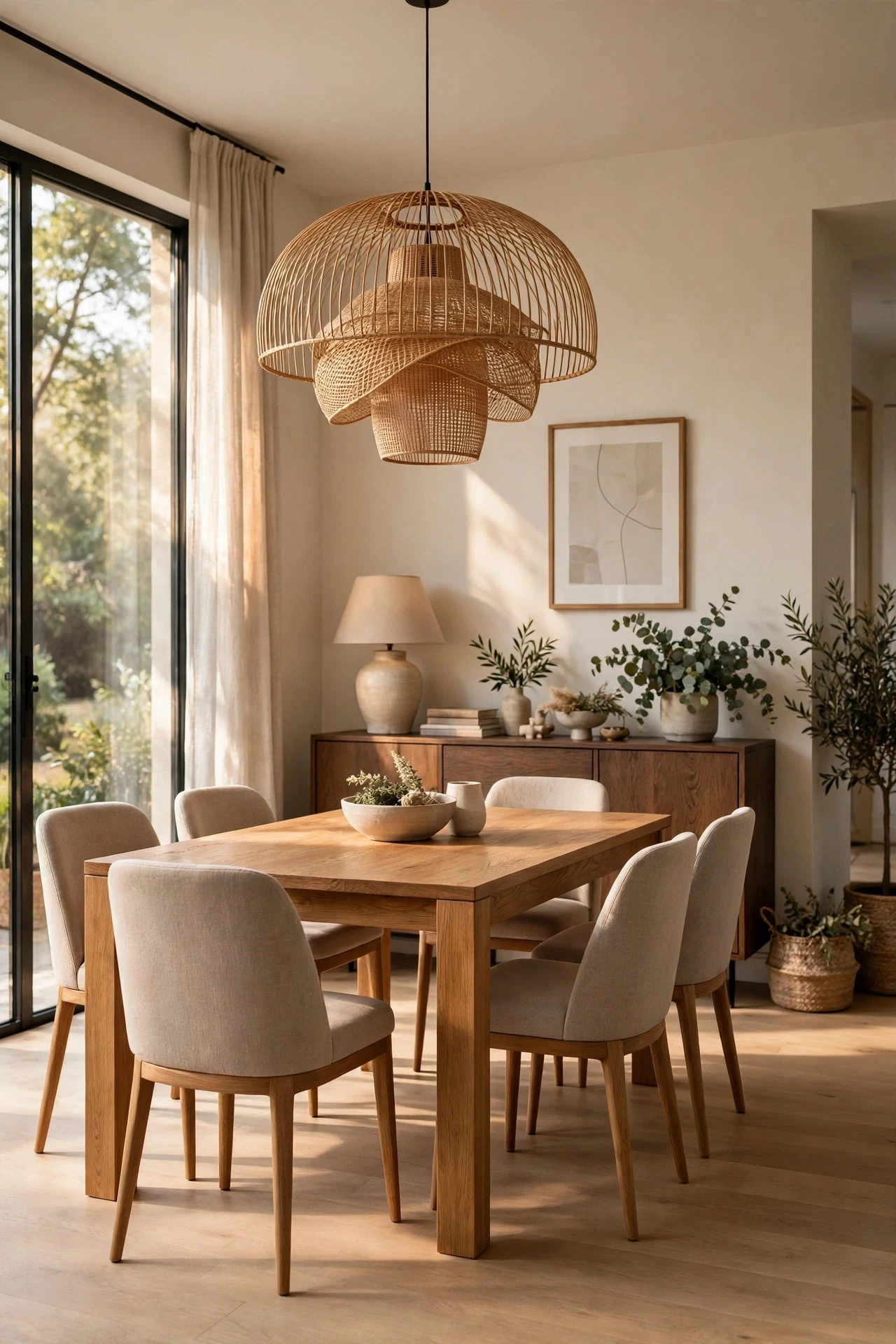
Spend on the table, the chairs and the lighting, and save on everything else. The table is the room's workhorse and should be solid wood, the chairs determine whether anyone enjoys sitting there, and the lighting sets the mood every single evening. These three items are used daily and are expensive to replace, so buy the best you can afford and keep them for a decade.
Save on placemats, centrepieces, art, cushions and the rug, all of which can be swapped cheaply and wear out faster anyway. A $50 tray and $30 of greenery look as good as a $300 centrepiece, and a $200 rug can be replaced in three years without regret. A realistic budget is $1,500–$3,000 for the table, $600–$1,800 for six chairs, $300–$900 for lighting, and $200–$500 for everything else.
Practical Tips for Modern Dining Rooms
Start with measurements, not shopping. Tape the table footprint on the floor, check the 36-inch clearance on every side, and sit in the chairs before you buy them. A dining room planned on paper always looks bigger than it feels in real life, and the tape test catches mistakes that cost hundreds to fix.
Set a budget in three tiers: table, chairs and lighting first, then storage, then decor. Shop secondhand for sideboards and tables, where solid wood sells for a fraction of new prices.
Plan the room for its busiest use, not its prettiest. If the table hosts homework, laptops and crafts as well as meals, choose a hardwax oil finish that wipes clean and a centrepiece that lifts off in one motion. For general room dimensions and layout rules, Wikipedia's dining room overview gives a useful summary of how dining spaces have evolved, and Houzz covers current dining room layouts and storage ideas.
Final Thoughts
A modern dining room that works for everyday meals is built on measurements, comfort and honest materials — the right pendant height, enough elbow room, chairs you can sit in for an hour, and a table that survives real life. Get those four things right, and the elegance takes care of itself.
Frequently Asked Questions
What is the ideal pendant height above a dining table?
Hang pendants 30 to 36 inches above the tabletop, measured from the table surface to the bottom of the fixture. For ceilings above 9 feet, add about 3 inches per extra foot of ceiling height. Always use a dimmer, so the same light works for bright weekday meals and soft evening dinners alike.
How big should a dining table be for six people?
A 72-inch rectangular table seats six comfortably, allowing 24 inches of width per diner along the long sides. A 60-inch round table also seats six. Leave 36 inches of clearance around the table so chairs can pull out and people can walk behind them.
How far should a rug extend beyond a dining table?
A dining room rug should extend at least 24 inches beyond the table on every side, so chairs stay on the rug when pulled out. For a 72-inch table that means a rug roughly 9 by 12 feet. Choose a low-pile flatweave or washable rug that handles crumbs and spills.
What is the best dining table material for a family?
Solid oak or walnut with a hardwax oil finish is the best choice for family dining, because it resists spills, hides small marks and can be sanded and re-oiled when scratched. Avoid marble, which etches from citrus, and veneer, which cannot be refinished after damage.
How much clearance do you need behind dining chairs?
Allow 36 inches between the table edge and the wall or nearest furniture as a minimum, so chairs can pull out and diners can stand. If the space behind the chairs is also a walkway, increase the clearance to 42 or 48 inches for comfortable passage.
Are mixed dining chairs a good idea?
Yes, mixed chairs look intentional when one element stays consistent, such as the same wood tone, seat height or colour family. Try upholstered host chairs at the ends with simpler side chairs along the sides, keeping all seat heights at 18 inches so everyone sits level.