22 Nostalgic Christmas Tree Ideas for a Classic Holiday Home
A nostalgic Christmas tree is not about buying the newest decorations — it is about bringing back the trees you grew up with. The Shiny Brite baubles on your grandmother's tree, the paper chains you made at school, the ceramic tree glowing on the sideboard: these are the details that make a tree feel like home rather than a shop window.
Looking for more inspiration? Our Nest Decorz homepage gathers the latest home decor ideas, seasonal decorating guides and room-by-room styling tips in one place — start there and explore.
Below you will find 22 nostalgic Christmas tree ideas organised era by era — Victorian, 1940s handmade, 1950s Shiny Brite pastels, 1960s aluminium, 1970s earth tones and 1990s maximalism — plus heirloom ornaments, popcorn garlands, mercury glass, ceramic trees, toppers, tree skirts and memory trees, with honest budgets in pounds and practical advice on sourcing vintage pieces safely.
Quick answers
– Mix 60–70% vintage with reproductions — genuine old pieces give the soul, new pieces fill the gaps safely. – Never put wired lights on a metal or aluminium tree — use a colour wheel or battery lights instead. – Handle vintage glass with cotton gloves — old baubles are thin, fragile and irreplaceable. – Budget £40–£120 for a full nostalgic tree, depending on how much genuine vintage you buy.
1. How Do You Build a Victorian Christmas Tree?
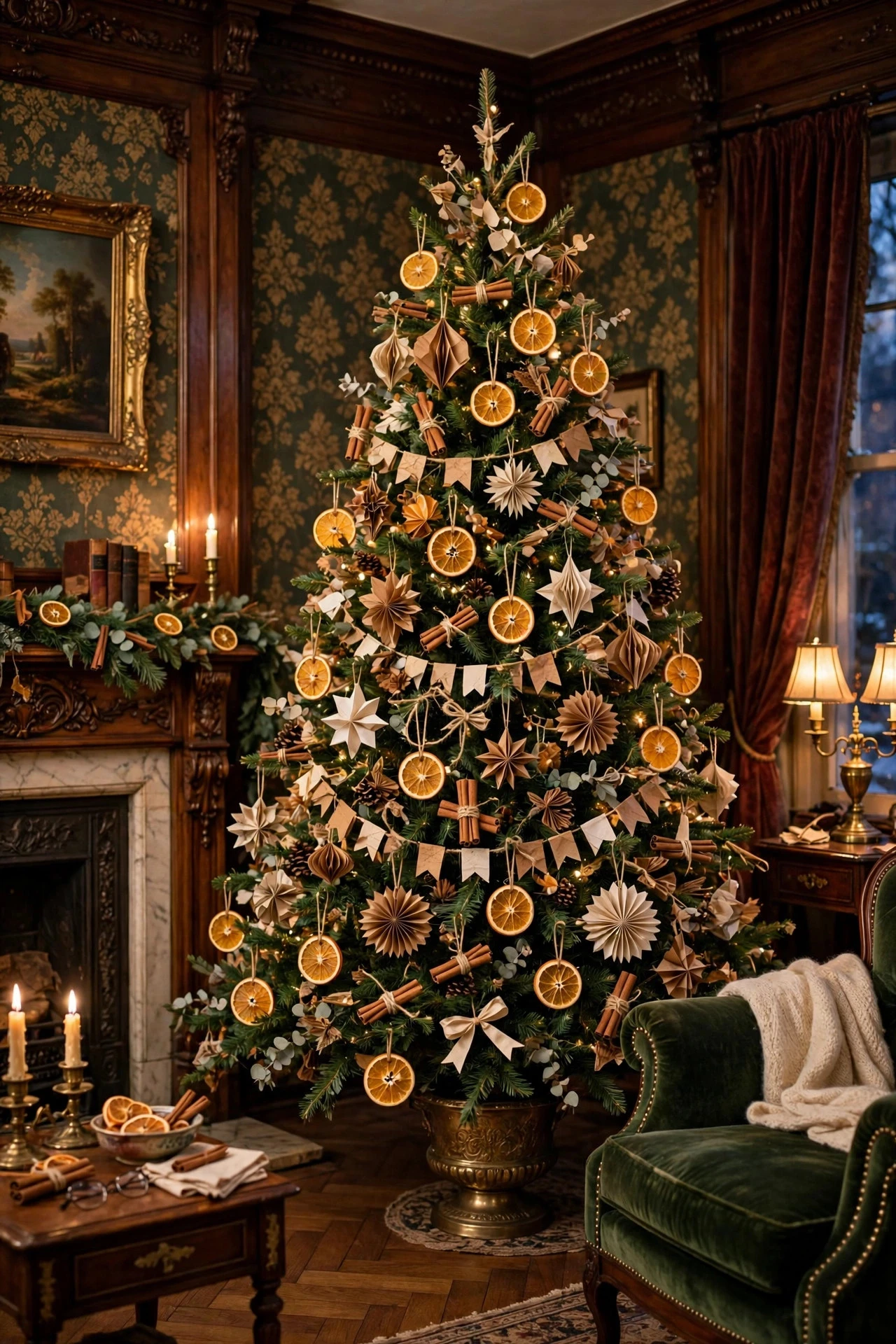
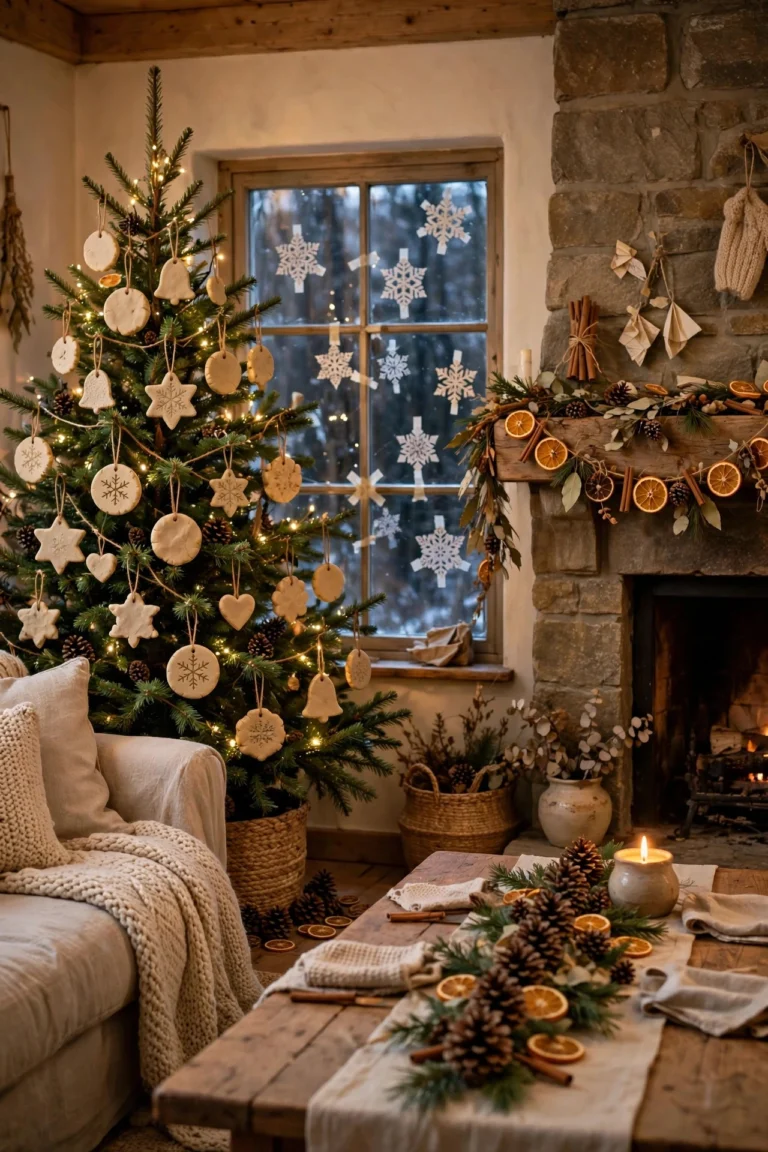
A Victorian Christmas tree is built from natural, handmade decorations: dried orange slices, cinnamon sticks, paper ornaments, wax or LED candles, and small wrapped gifts tied to the branches. The palette is deep red, forest green and gold, and nothing on the tree should look shop-bought or plastic.
Start with a real or realistic green tree, 6–7 ft for a living room, and hang decorations in clusters rather than spreading them evenly. Dried orange slices cost £3–£5 a bag to make at home, and paper ornaments are free if you cut them from old Christmas cards. Use battery candles only — real flames were the Victorian way, but they are far too dangerous on a dry tree. The mistake to avoid is mixing in modern plastic baubles: one glossy ornament breaks the whole illusion, so keep every piece natural or handmade.
2. What Does a 1940s Handmade Wartime Tree Look Like?
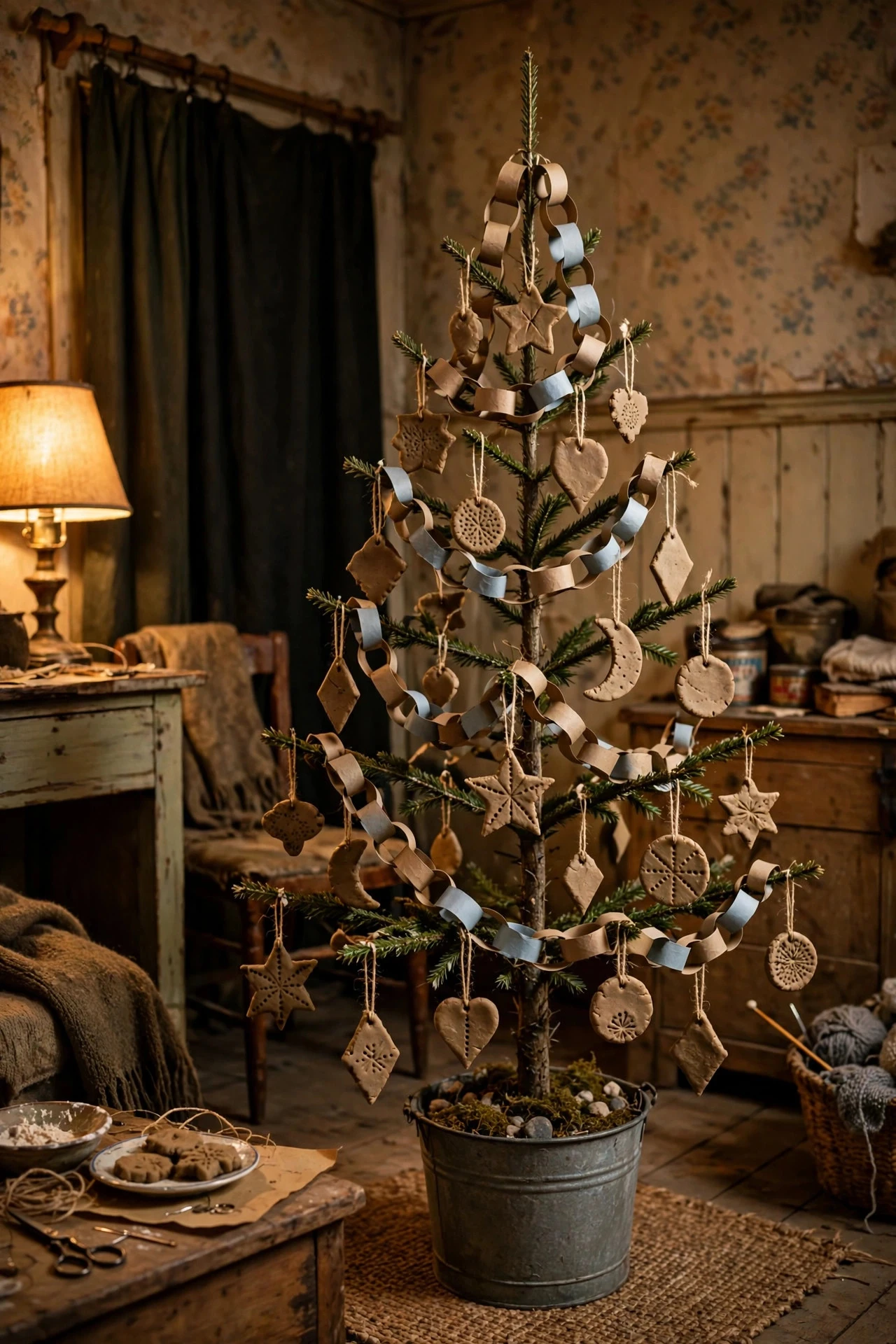
A 1940s wartime tree looks modest and homemade, because shop-bought decorations were scarce: paper chains, salt-dough ornaments, cotton-wool snow, foil stars cut from sweet wrappers, and a few treasured glass baubles saved from before the war. The charm is in the imperfection, not the polish.
This is the cheapest nostalgic look to recreate — most of it can be made at home for under £15. Make paper chains from old wrapping paper or newspaper, string popcorn and cranberries, and bake salt-dough stars with the children. A 5–6 ft tree suits the look, since wartime trees were often smaller and thinner than today's. Keep the palette simple: red, green and cream, with silver foil accents. The mistake to avoid is over-decorating — a wartime tree had gaps, and those gaps are part of its story.
3. How Do You Style a 1950s Shiny Brite Pastel Tree?
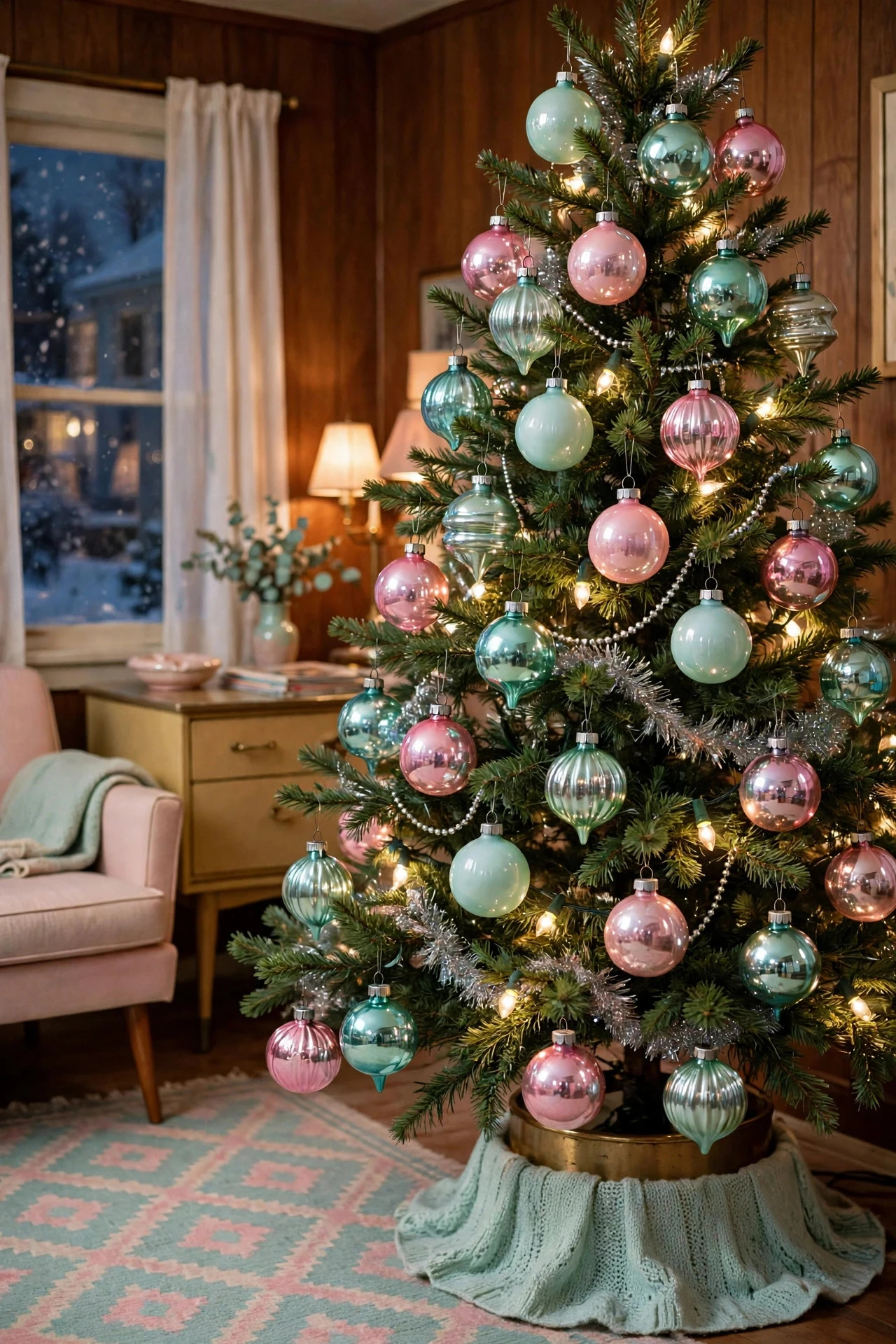
A 1950s Shiny Brite pastel tree is styled with delicate glass baubles in pink, mint, aqua and pale gold, hung on a slim green tree with tinsel icicles and a simple star topper. The look is light, pretty and optimistic — the post-war living room at its most cheerful.
Genuine Shiny Brite baubles are the centrepiece, and they are fragile, so hang them near the trunk where branches are strongest. A set of six vintage baubles typically costs £15–£30 on the second-hand market, while good reproductions cost £8–£15 a box. Pair them with silver tinsel icicles (£3–£5 a pack) and a white or cream tree skirt. If you want a fuller tree, these 22 Christmas tree ideas for a warm, stylish home show how pastel palettes work on modern trees too. The mistake to avoid is mixing pastels with deep jewel tones — the two palettes clash and the tree loses its soft 1950s glow.
4. Can You Still Use a 1960s Aluminium Tree Safely?
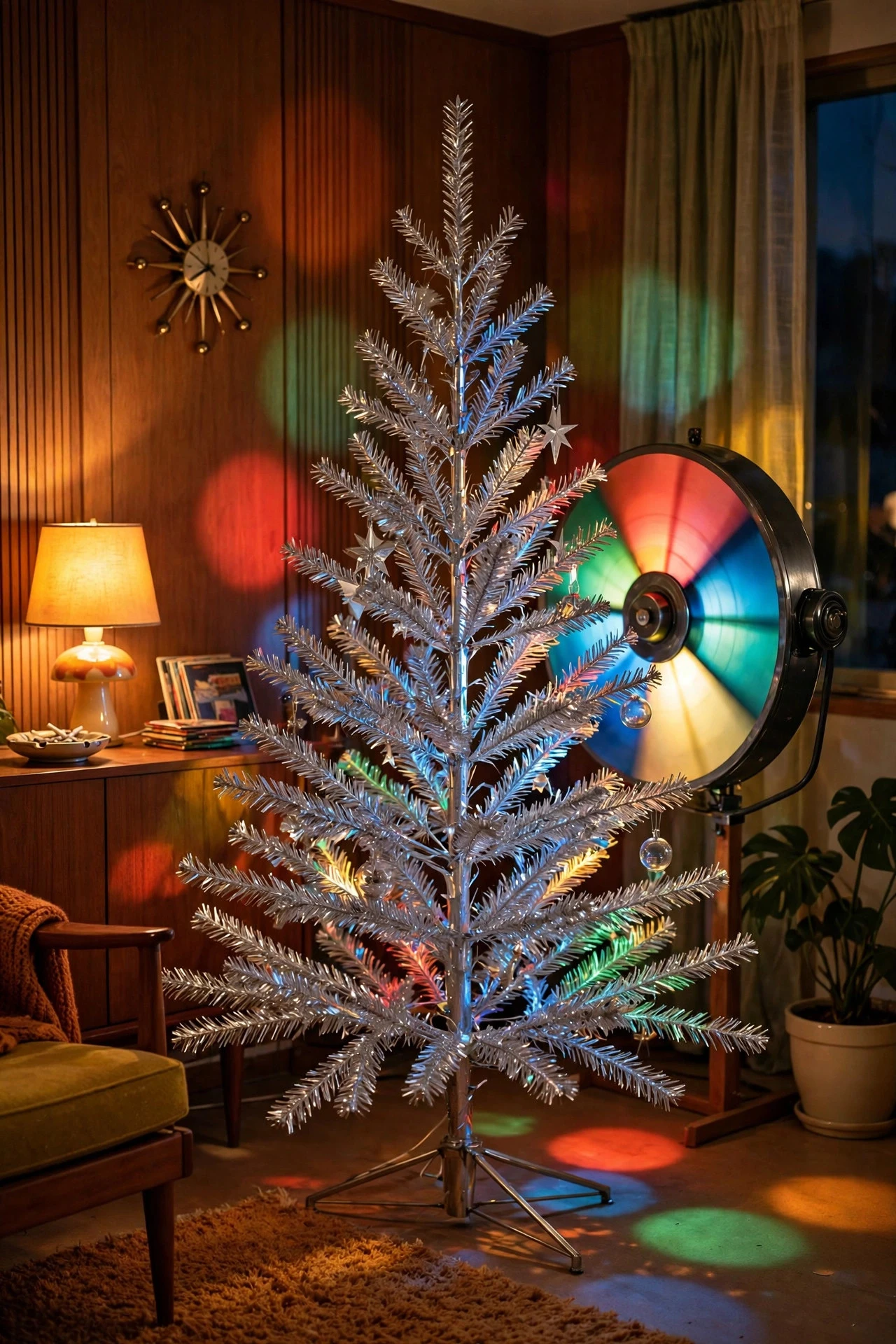
Yes, a 1960s aluminium tree is safe to use as a display piece, provided you never put wired electric lights on it and you light it with a colour wheel instead. Aluminium conducts electricity, so mains string lights are a genuine shock risk — the colour wheel was invented precisely because of this.
Genuine vintage aluminium trees usually come in silver, pink or gold, and cost £80–£200 in good condition; reproductions cost £30–£60. A modern LED colour wheel costs £20–£40, runs cool, and gives the classic rotating red, green and blue glow. Place the wheel about a metre from the tree, angled slightly upward, and keep ornaments light — a handful of glass balls hung near the trunk is enough. The mistake to avoid is buying a vintage tree with bent or missing branches and trying to force it straight: foil creases permanently, so inspect every branch before you pay.
5. What Defines a 1970s Earth-Tone Christmas Tree?

A 1970s earth-tone Christmas tree is defined by its palette — burnt orange, avocado green, harvest gold and warm brown — with macramé ornaments, wooden beads, dried flowers and a woven tree skirt. It is the cosiest of the retro eras, and it suits homes with wooden furniture and warm lighting.
Start with a green tree and swap bright baubles for wooden, felt and ceramic ornaments in earthy shades. A set of wooden bead garlands costs £5–£10, and macramé ornaments are easy to make or buy for £2–£4 each. Add a rattan or seagrass tree collar (£15–£25) and warm-white lights for a soft, low glow. A 6 ft tree in this palette feels grounded rather than glittery, which is exactly the point. The mistake to avoid is adding silver or chrome — cool metallics fight the warm 1970s palette and make the tree look confused.
6. How Do You Recreate a 1990s Maximalist Christmas Tree?
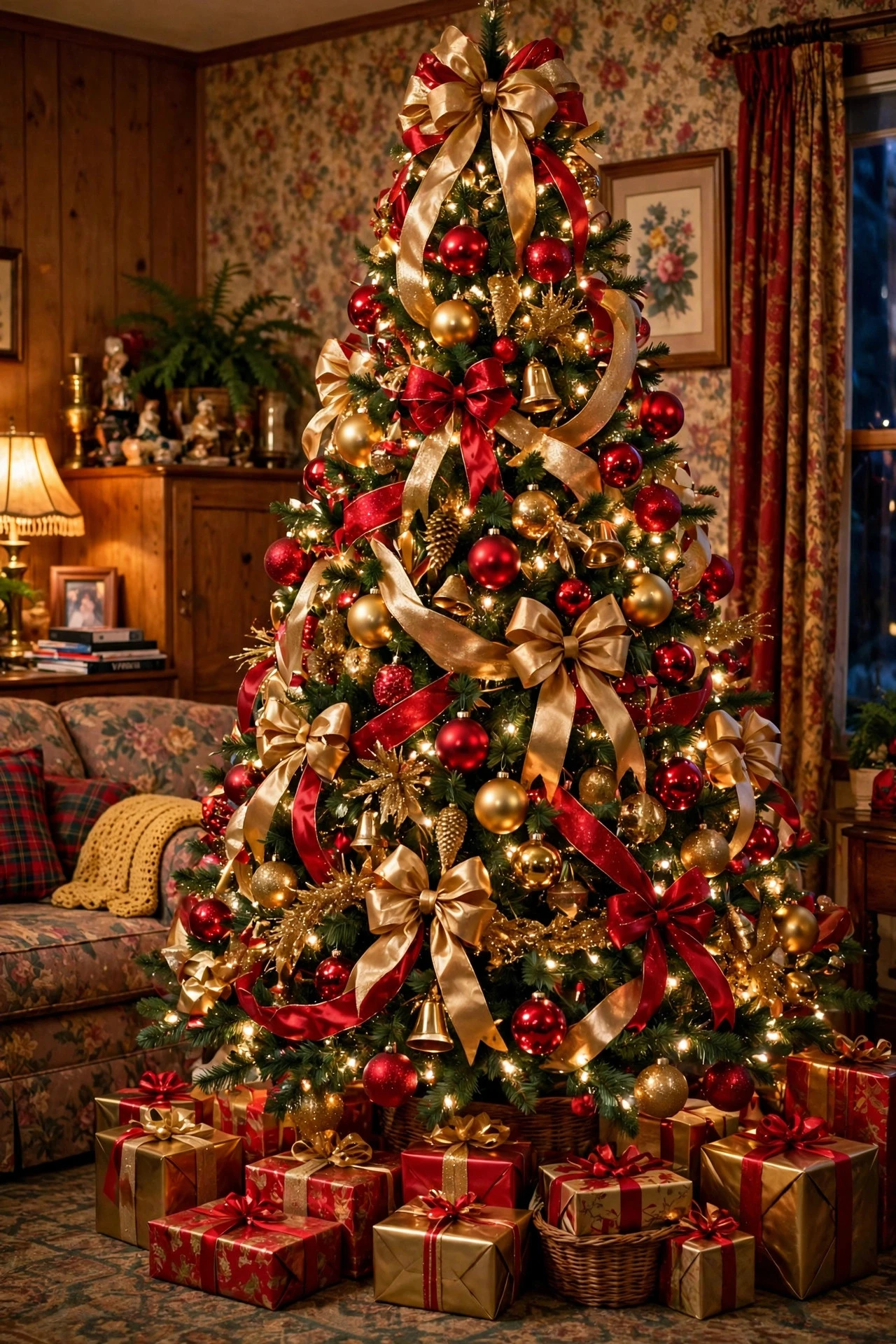
A 1990s maximalist tree is recreated by layering everything: big shiny baubles, ribbon garlands, bows, picks, tinsel, and ornaments in red, gold and green all at once. The 1990s rule was simple — if there is an empty branch, fill it, and if the tree still looks bare, add more.
This is the most forgiving nostalgic style, because it hides gaps and uses inexpensive decorations well. Budget £30–£50 for baubles in bulk packs, £5–£10 for wide wired ribbon, and £5–£8 for tinsel garlands. A full 7 ft tree suits maximalism best, since a small tree gets overwhelmed quickly. Work from the inside out: lights first, then garland, then large baubles near the trunk, then smaller ones on the tips. The mistake to avoid is using only one size of bauble — maximalism needs a mix of large, medium and small ornaments to look layered rather than cluttered.
7. How Do You Display Heirloom Glass Ornaments Without Breaking Them?
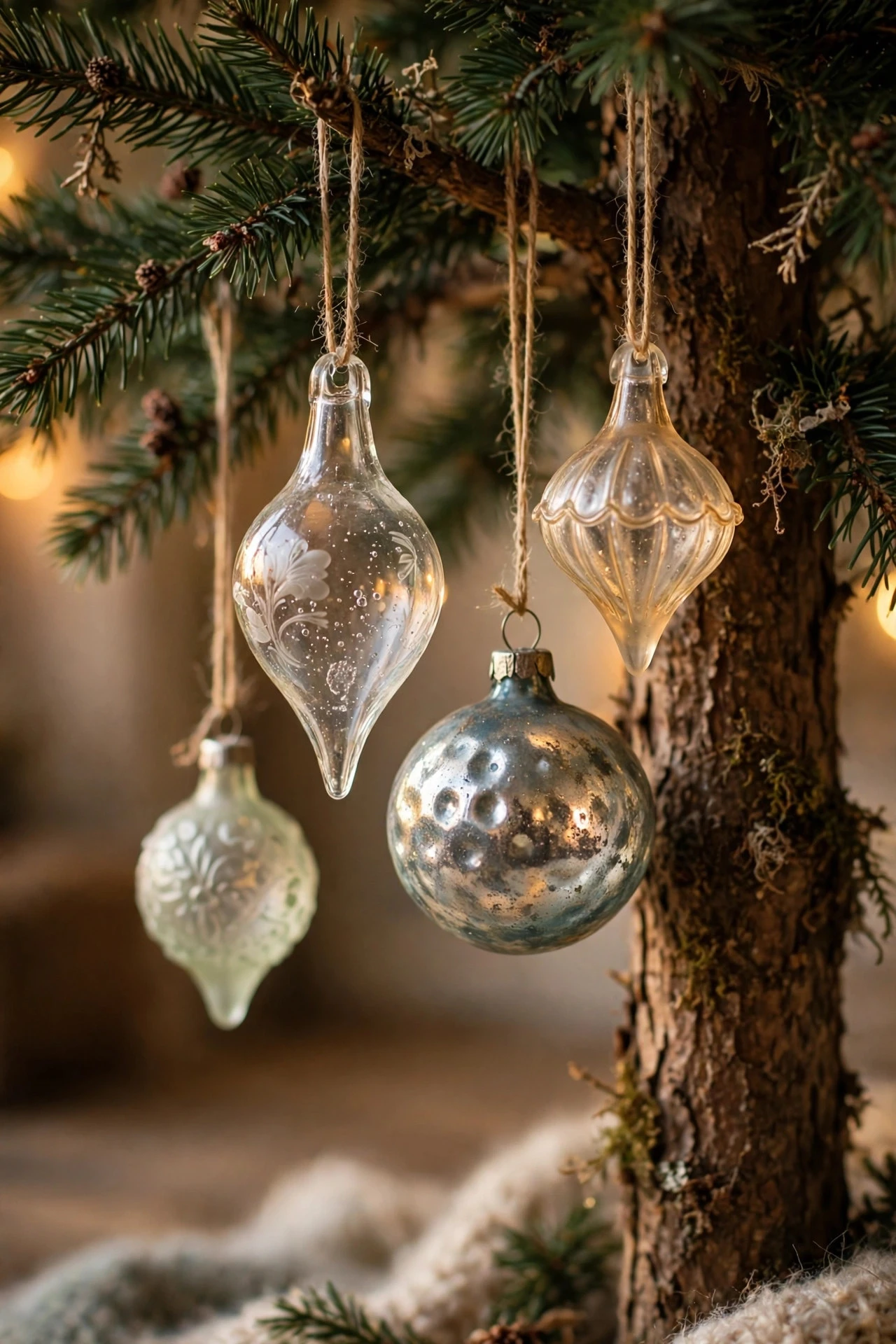
Display heirloom glass ornaments by hanging them low and close to the trunk, where branches are strongest and the ornaments are least likely to be knocked off. Handle each one with clean, dry hands or cotton gloves, and never hang a heavy old bauble from a thin branch tip.
Vintage glass is thinner and more fragile than modern baubles, and a broken heirloom cannot be replaced. Use short ornament hooks rather than long strings, so pieces sit snugly against the branch. If an ornament is too precious to hang, display it in a glass bowl or cloche on the mantel instead — it still tells its story. Budget nothing for the ornaments themselves if they are family pieces, but spend £5–£10 on proper ornament hooks and a padded storage box. The mistake to avoid is letting children or pets near the lowest branches without supervision: one curious tug can shatter three generations in a second.
8. How Do You Make Popcorn and Cranberry Garlands?
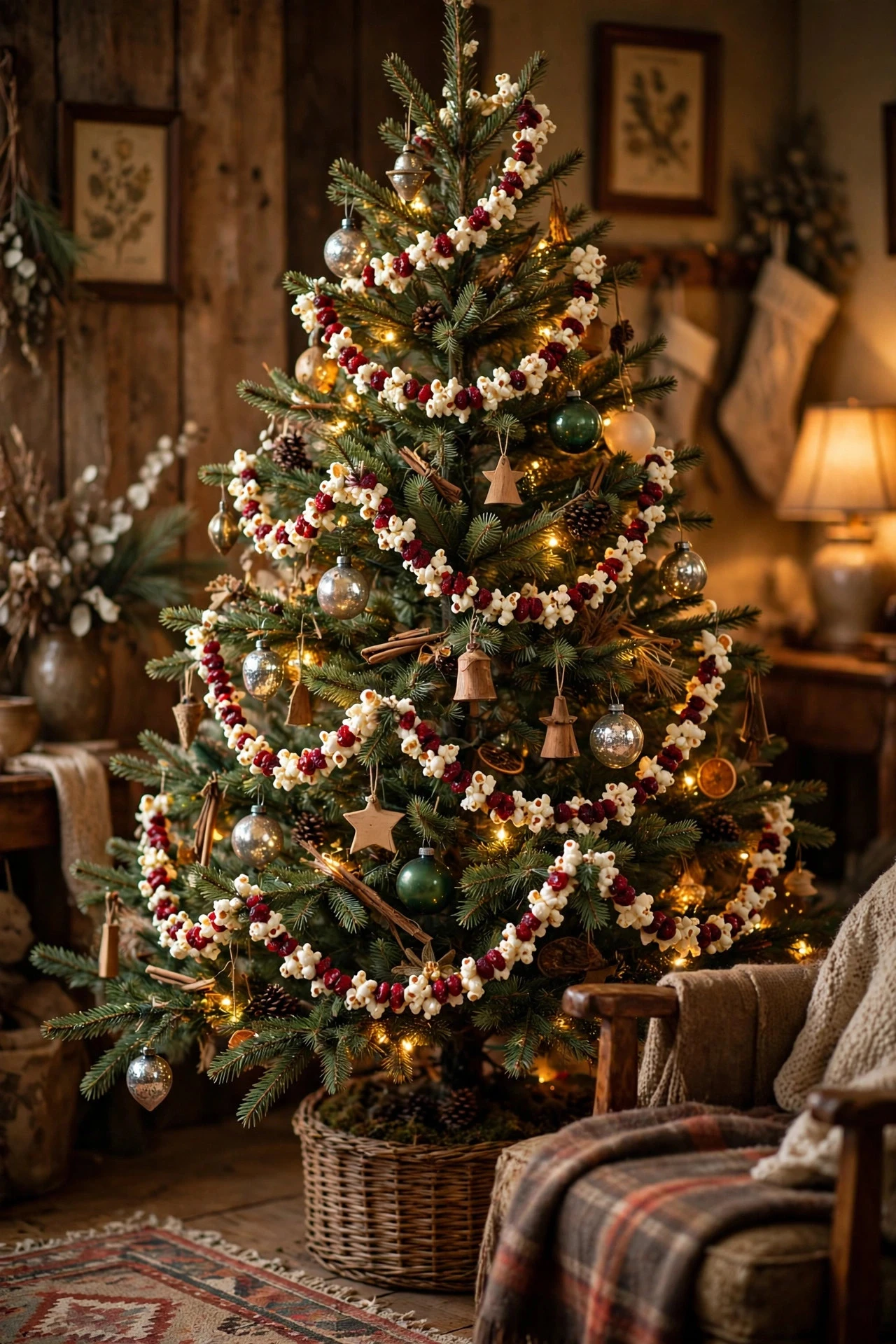
Make popcorn and cranberry garlands by threading air-popped popcorn and fresh cranberries onto strong cotton thread with a blunt needle, alternating three pieces of popcorn with one cranberry. A 2-metre garland takes about an hour to make and costs under £5 in materials.
Popcorn garlands are one of the oldest American Christmas traditions, and they look wonderful draped loosely over a nostalgic tree. Use plain, unsalted popcorn — buttered popcorn goes stale and attracts pests. Fresh cranberries last about a week on the tree, so make the garland a few days before Christmas and compost it afterwards. For a longer-lasting version, use wooden cranberry beads (£4–£7 a strand) and dried orange slices instead. These tinsel Christmas tree ideas for a sparkling holiday home pair beautifully with a popcorn garland for a mid-century feel. The mistake to avoid is stringing the garland too tightly — it should drape in soft swags, not pull the branches inward.
9. What Makes Mercury Glass Ornaments So Special?

Mercury glass ornaments are special because of their silvered, slightly cloudy finish, made by coating the inside of the glass with a reflective silvering solution. The effect is a soft, antique mirror glow that no modern shiny bauble can copy, and it is why collectors prize them.
Genuine vintage mercury glass ornaments cost £5–£15 each, while good reproductions cost £2–£4 each and look convincing from a normal viewing distance. Mix mercury glass with matte ornaments in the same colour family — silver mercury glass with cream and pale gold works beautifully. Hang them where lamplight catches them, since their beauty comes from reflected light. The mistake to avoid is cleaning vintage mercury glass with water or polish: moisture damages the silvering from the inside, so dust them gently with a dry cloth only.
10. How Do You Style a Ceramic Christmas Tree?
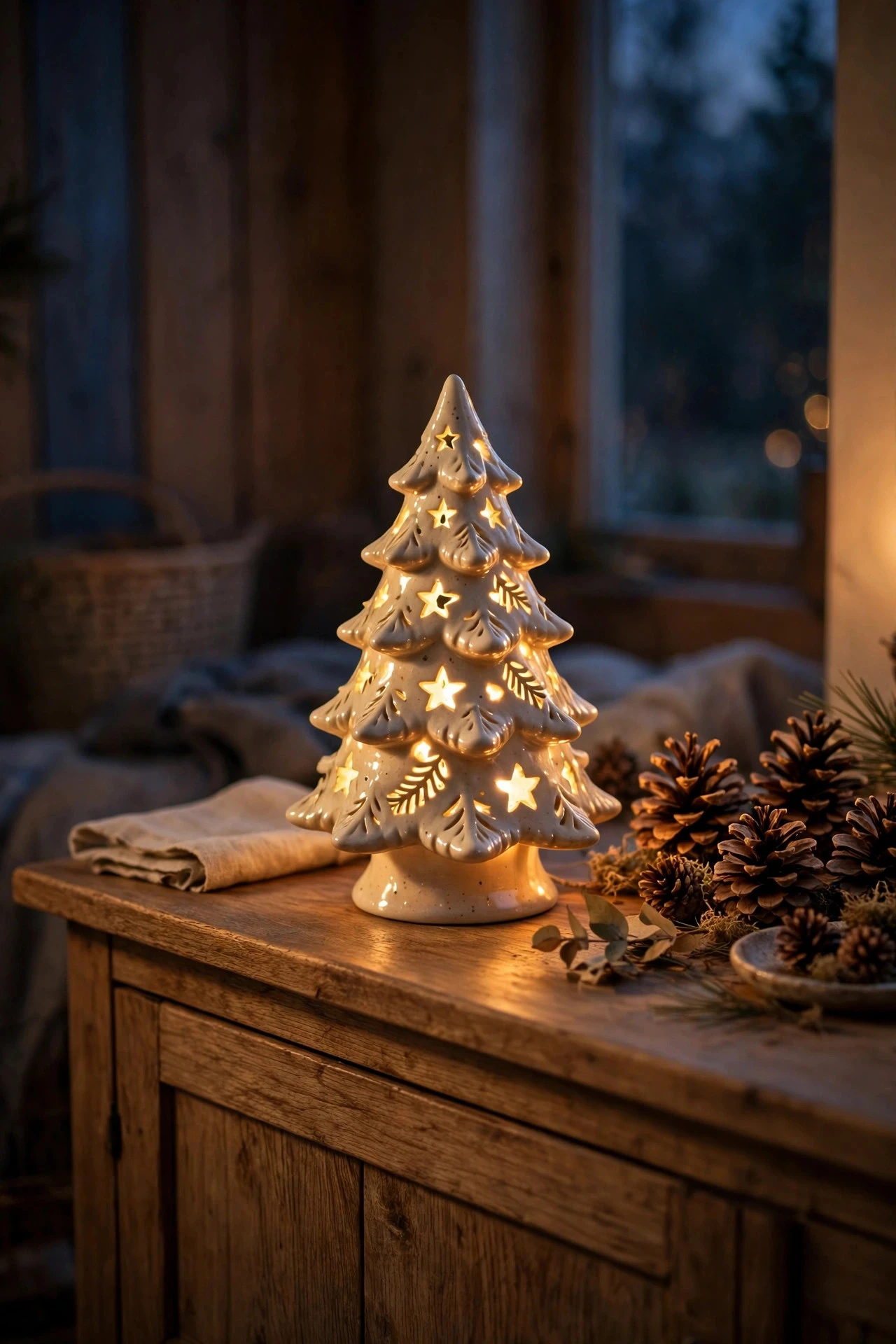
Style a ceramic Christmas tree by placing it where its glow can be seen — a sideboard, mantel or hallway console — and letting it be the only light in that corner in the evening. The classic ceramic tree is a small tabletop piece, 30–45 cm tall, with coloured plastic lights and a star on top.
Original 1970s ceramic trees sell for £40–£100 second-hand, while new reproductions cost £15–£35 and are sturdier for homes with children. Choose green ceramic with warm-white or multicoloured lights, and pair it with a small vintage-style village scene or a few pine cones. A ceramic tree works best in a room that already has a full-size tree, as a second nostalgic accent. The mistake to avoid is placing it in bright daylight and judging it there — ceramic trees come alive at dusk, when the little lights glow through the glaze.
11. How Do You Layer Tinsel on a Nostalgic Tree?
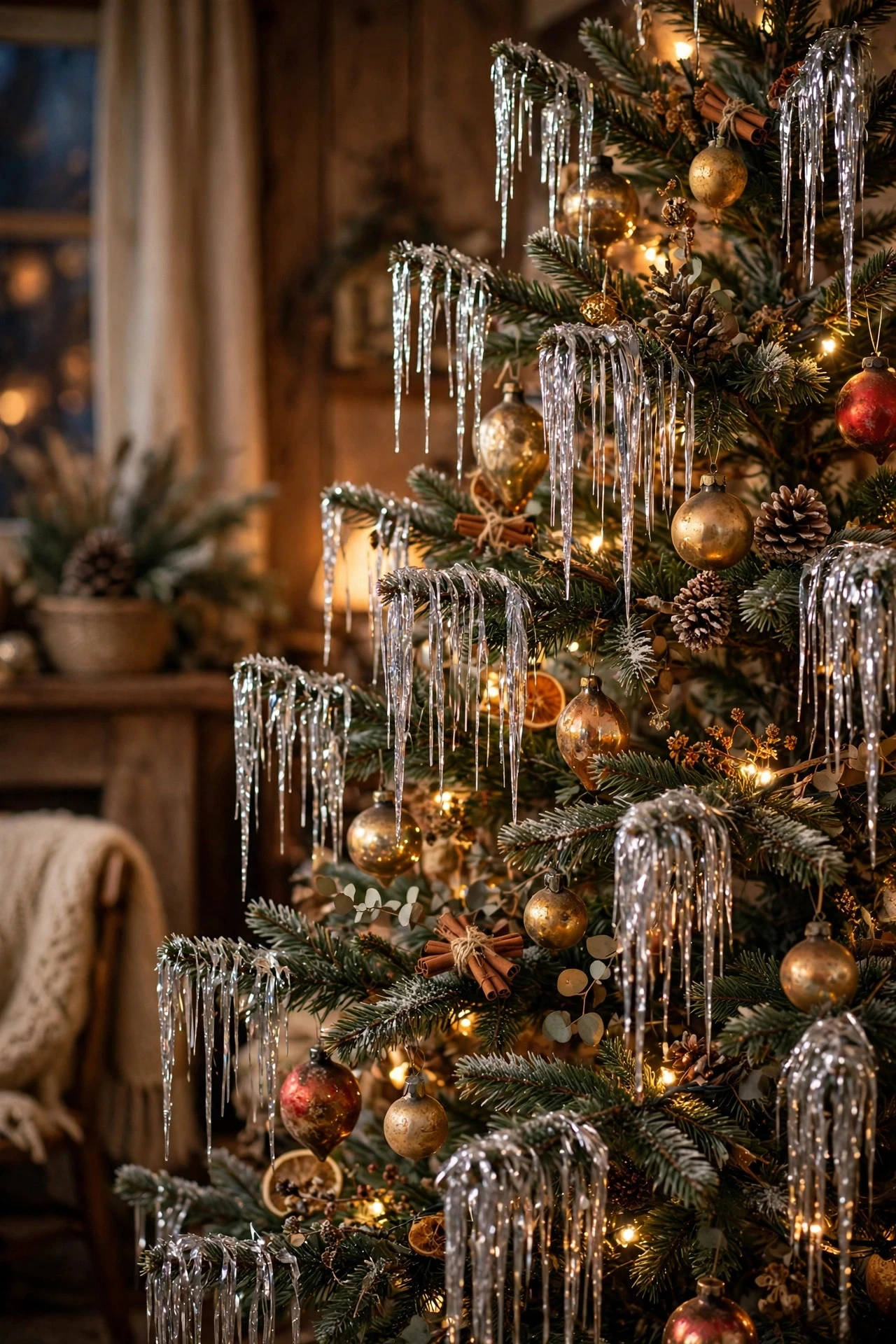
Layer tinsel on a nostalgic tree by using it sparingly: drape one or two strands of silver tinsel icicles over the branch tips, or wind a single tinsel garland loosely around the tree, rather than covering every branch. Tinsel is an accent, not a blanket — the ornaments and the tree itself should still show.
Silver tinsel suits 1950s and 1960s trees, while gold tinsel warms up Victorian and 1990s displays. A pack of tinsel icicles costs £3–£5, and a garland costs £4–£8. Hang icicles in short strands of 10–15 cm so they catch the light without tangling, and remove them before storing the tree or they will knot into a mess. For a fuller vintage look, these red and white Christmas tree ideas for a classic look show how tinsel and ribbon work together on traditional trees. The mistake to avoid is using tinsel in a home with cats: foil strands are dangerous if swallowed, so sweep up fallen pieces daily and keep cats away from the tree.
12. Which Topper Suits a Nostalgic Christmas Tree?

A lightweight star, angel or finial suits a nostalgic tree best, because vintage toppers were made from thin glass, spun cotton or foil. Choose a topper that matches your era: a glass star for the 1950s, a spun-glass angel for the Victorian tree, a simple foil star for the 1960s aluminium tree.
Vintage toppers cost £8–£25 second-hand, while reproductions cost £5–£12 and are safer on a tree with children nearby. Measure the top branch before you buy — a topper with a wide base will wobble on a slim tree. If your topper is heavy, wire it to the branch with florist wire rather than balancing it and hoping it stays. The mistake to avoid is buying a big modern LED topper for a vintage-style tree: the bright light and plastic finish clash with every other decoration on the tree.
13. What Tree Skirt Works Best for a Vintage-Style Tree?
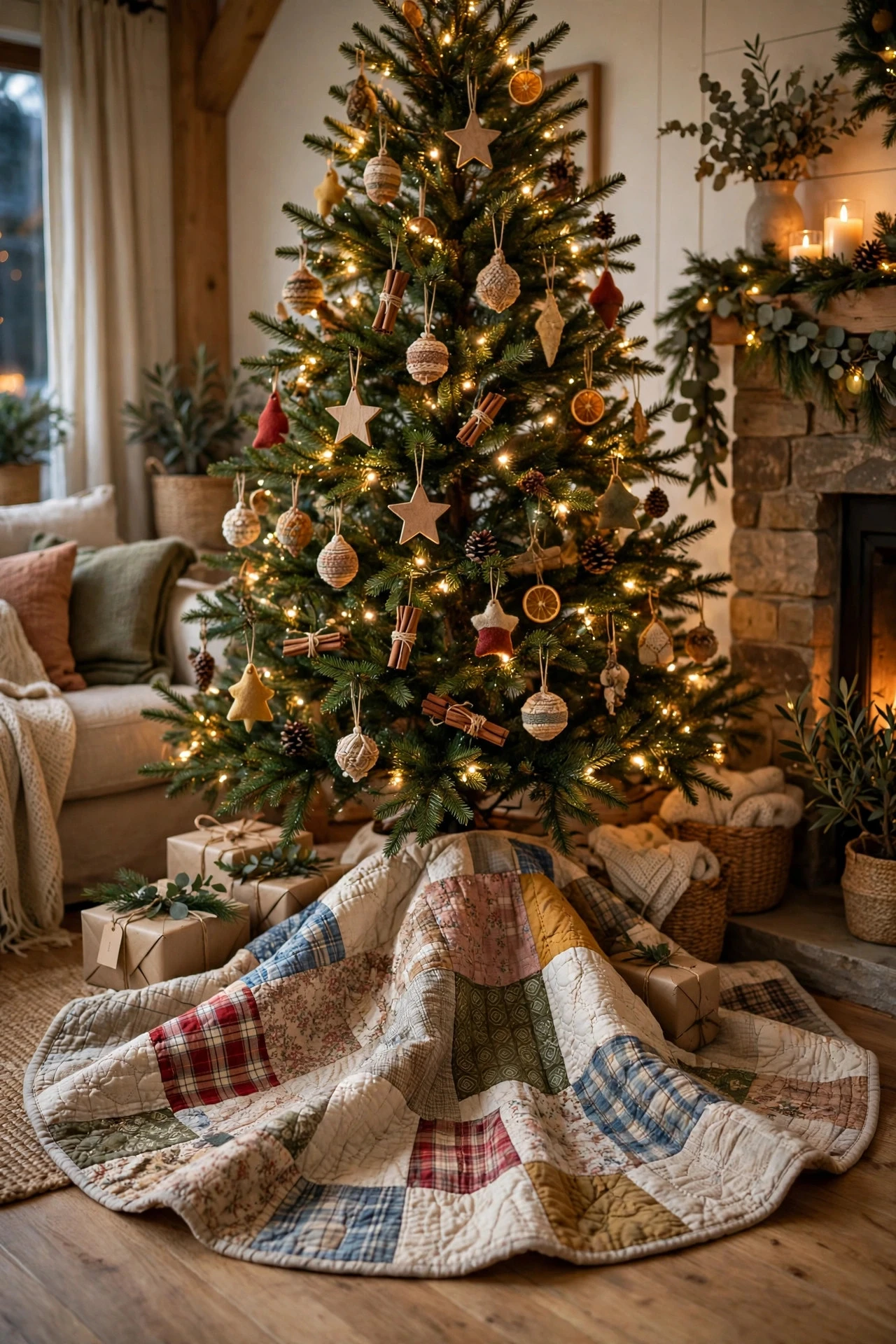
A quilted, crocheted or vintage-fabric tree skirt works best for a nostalgic tree, because it continues the handmade story of the decorations above it. A patchwork quilt skirt, a crocheted circle or a piece of old tartan fabric all look more authentic than a shiny shop-bought skirt.
A handmade-style skirt costs £15–£30 new, or nothing if you repurpose an old quilt, blanket or tablecloth. Choose a skirt in a colour that grounds the tree — deep red, cream or tartan for Victorian and 1940s trees, white or pale pink for 1950s pastels. Make sure the skirt is wide enough to cover the stand completely, usually 120 cm across for a 6–7 ft tree. The mistake to avoid is choosing a skirt in the same metallic finish as your ornaments: a silver skirt under a silver tinsel tree disappears, and the base looks unfinished.
14. How Do You Make a Kids' Memory Tree?
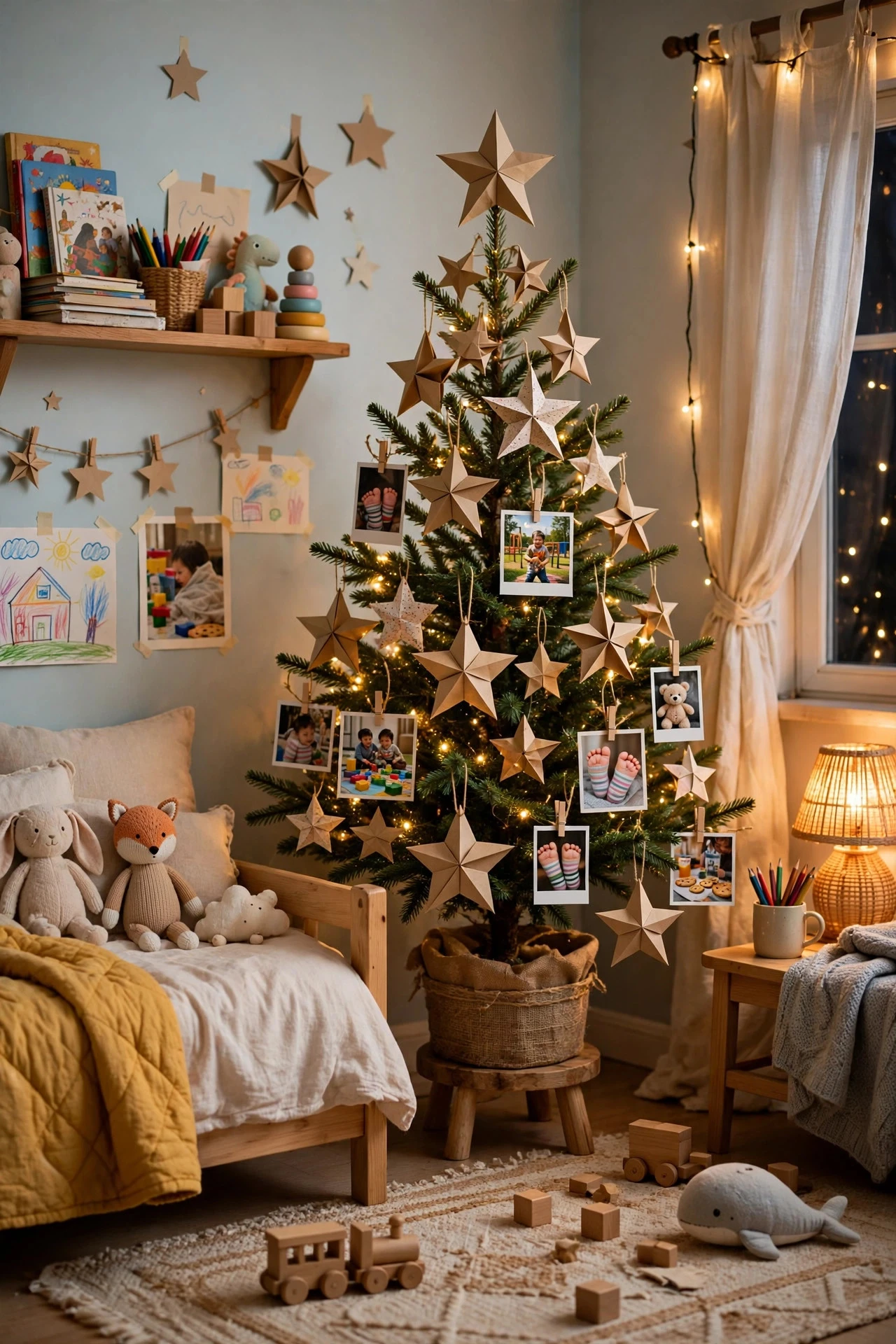
Make a kids' memory tree by giving each child their own small tree — 3–4 ft tall — and letting them hang one new ornament each year, with the year written on it. Over time the tree becomes a visual diary of their childhood, and the tradition matters more than the style.
Use shatterproof ornaments for the lower branches and save the fragile heirlooms for the top, out of reach. Salt-dough ornaments, paper stars and photos in small frames all work well, and each one costs pennies to make. A small tree costs £10–£20, and the ornaments accumulate year by year, so the budget stays tiny. Photograph the tree every Christmas so the memories survive even if an ornament breaks. The mistake to avoid is buying a matching set of ornaments for a memory tree: the charm is in the mismatch, and a uniform set defeats the whole purpose.
15. How Do You Fit a Nostalgic Tree Into a Small Space?
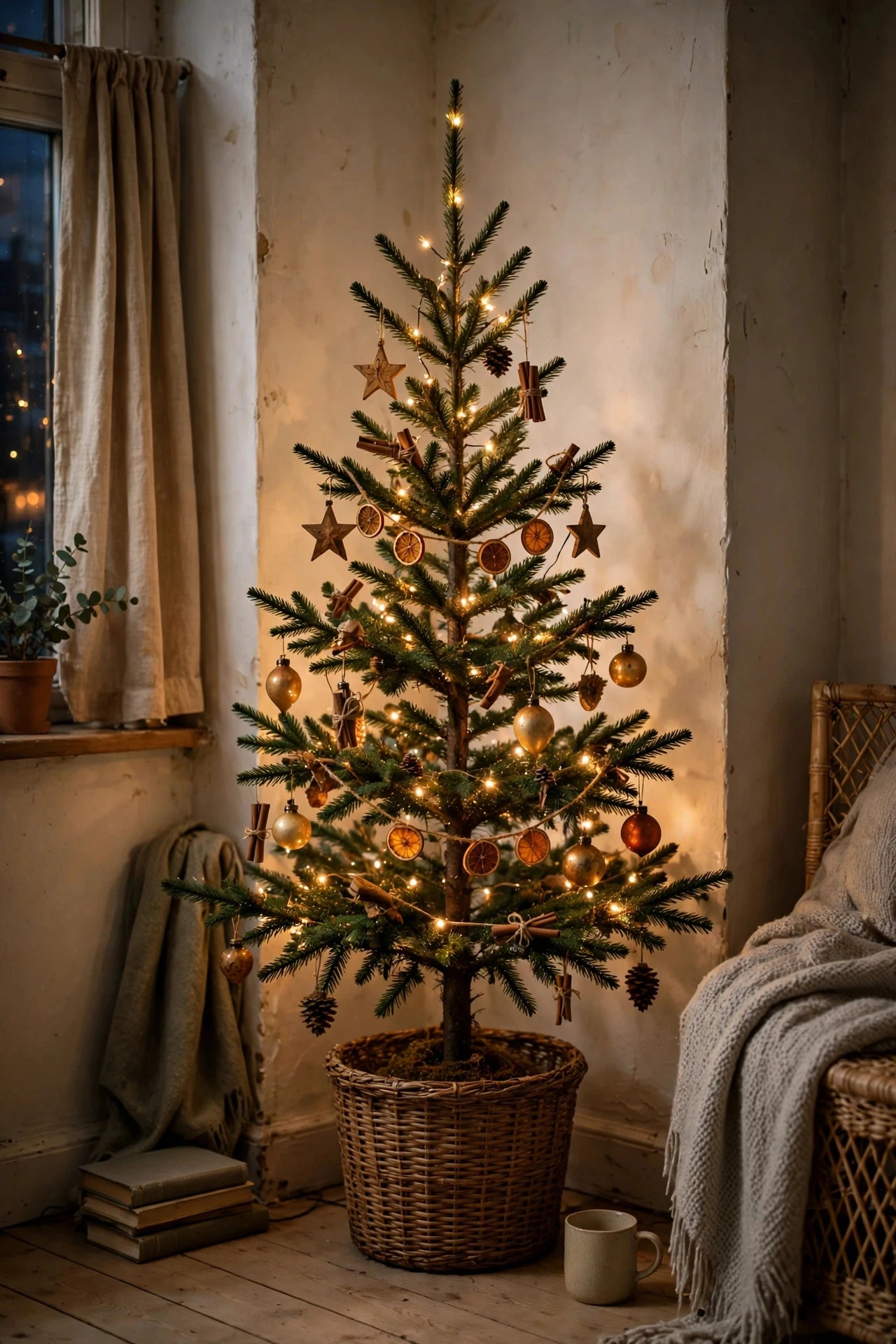
Fit a nostalgic tree into a small space by choosing a slim 4–5 ft tree, or a 2–3 ft tabletop tree on a sideboard, and decorating it with fewer, better ornaments. A small tree with ten beautiful vintage pieces looks far more convincing than a large tree crowded with reproductions.
Tabletop trees cost £8–£20, and a slim floor tree costs £25–£45. Hang the heaviest ornaments near the trunk, keep the palette to two colours, and use a small woven basket as a base instead of a wide skirt. A pencil tree — narrow and tall — is ideal for flats and corners, since it needs only 40–50 cm of floor space. For more small-space inspiration, these whimsy Christmas decor ideas for a playful holiday home show how a little tree can still make a big impression. The mistake to avoid is using full-size ornaments on a mini tree: they overwhelm the branches and drag them down, so buy a dedicated set of small baubles.
16. How Do You Mix Vintage and Reproduction Ornaments?

Mix vintage and reproduction ornaments by following a simple ratio: 60–70% genuine vintage pieces and 30–40% reproductions to fill the gaps. Put the real vintage pieces where people look first — eye level and the front of the tree — and use reproductions higher up and at the back.
The eye cannot tell a good reproduction from a vintage bauble at a distance, so spend your vintage budget on the pieces that sit closest to viewers. A box of reproduction Shiny Brite-style baubles costs £8–£15, while the same number of genuine pieces might cost £30–£60. Keep the colours consistent across both groups so the mix reads as one tree. The mistake to avoid is buying reproductions that are obviously plastic and shiny next to soft, aged glass — the contrast exposes the fakes, so choose reproductions with a matte or mercury-glass finish.
17. Where Should You Source Vintage Christmas Pieces?

Source vintage Christmas pieces from charity shops, flea markets, car boot sales and reputable online sellers, and always inspect each piece before you buy. Charity shops are the cheapest source — boxes of baubles often sell for £2–£5 — while specialist vintage sellers charge more but grade their stock honestly.
When buying online, ask for close-up photos of every bauble, check the seller's returns policy, and avoid listings that describe fragile glass as "good condition" without showing the damage. At flea markets, arrive early for the best pieces and carry a small torch to check for cracks and flaking silvering. Budget £20–£40 for a starter collection of a dozen good pieces. The history of the Christmas tree explains why so many of these decorations survive: families kept them for generations, and that is exactly what makes them worth hunting for. The mistake to avoid is buying a whole job lot sight unseen — half the pieces are usually broken, and you will pay for ornaments you can never use.
18. How Do You Add Family Photos to a Christmas Tree?
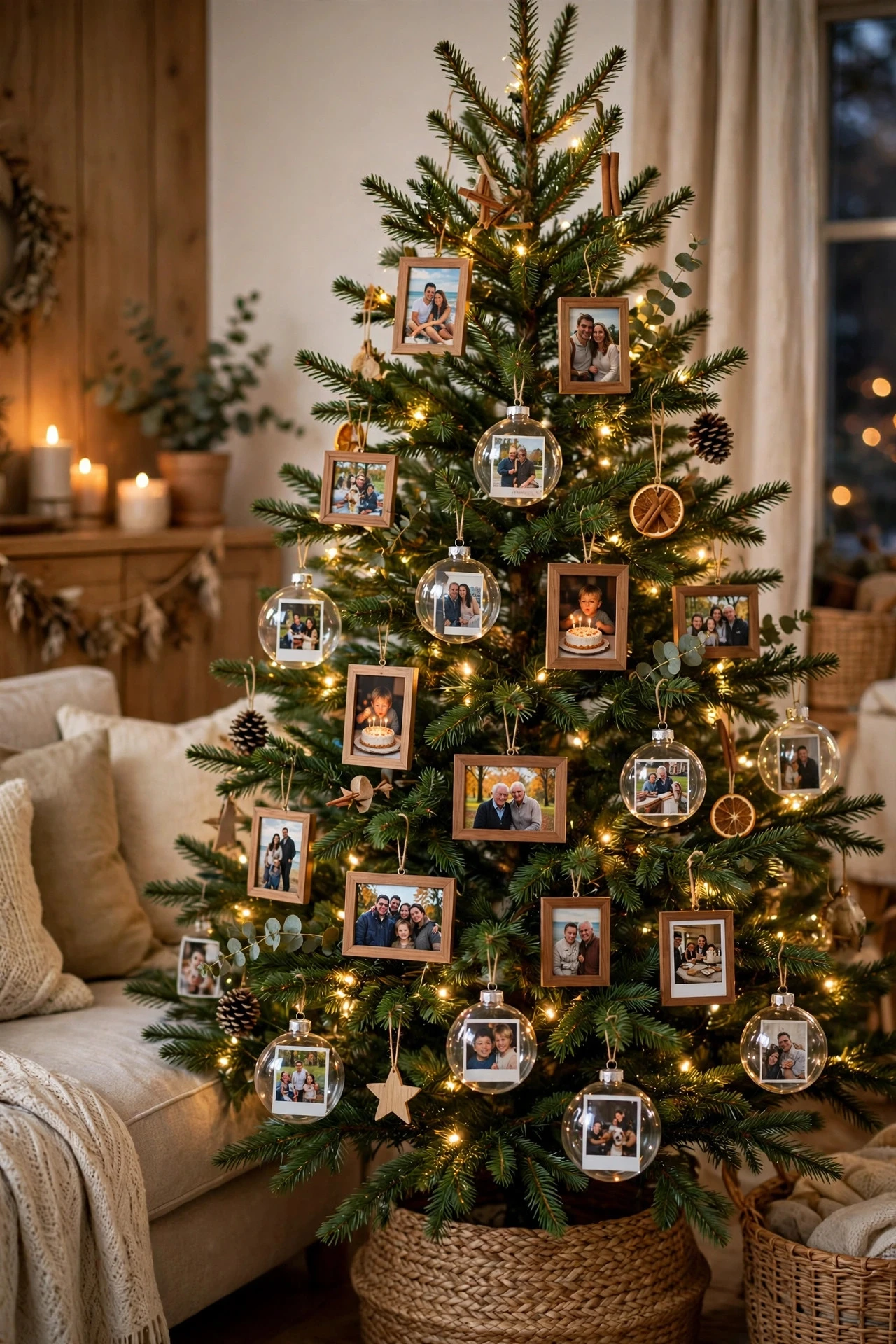
Add family photos to a Christmas tree by printing small copies — 5 x 7 cm is ideal — and mounting them in lightweight frames, on card, or inside clear baubles. Photos turn a tree into a family archive, and they cost almost nothing to make.
Print photos on matte paper so they do not glare under the lights, and laminate them if the tree is near a fireplace or a damp window. Hang one photo per family member per year, or choose a theme — holidays, childhood Christmases, grandparents — and build the tree around it. A pack of small frames costs £5–£10, and clear fillable baubles cost £1–£2 each. The mistake to avoid is hanging original prints: always use copies, because tree lights, heat and curious hands will damage them over the season.
19. How Do You Use Vintage Ribbon and Bows on a Tree?

Use vintage ribbon and bows by choosing one ribbon — wide velvet, satin or grosgrain in a single colour — and winding it loosely around the tree in a spiral, tucking it behind branches rather than wrapping it tightly. Then add a few large bows at intervals for punctuation.
Velvet ribbon in deep red or forest green suits Victorian and 1990s trees, while pale pink or gold ribbon suits 1950s pastels. A 5-metre roll of wide velvet ribbon costs £6–£12, and you need two or three rolls for a 6 ft tree. Tie bows by hand rather than buying pre-made ones: handmade bows look softer and more authentic. These Christmas decorations for 2026 and the fresh trends to try include ribbon ideas that pair well with a vintage palette. The mistake to avoid is mixing three ribbon colours on one tree: one ribbon, used generously, always looks more expensive than three competing ones.
20. Can a Nostalgic Tree Work Outside the Living Room?

Yes, a nostalgic tree works beautifully outside the living room — a small vintage-style tree in a bedroom, hallway or kitchen feels more personal than a second full-size tree, and it lets you enjoy a different era in each room. A bedroom tree might be 1950s pastels, while the hallway gets a small 1940s handmade tree.
Choose a 2–4 ft tree for bedrooms and hallways, and keep the decoration simple so the tree reads as a welcome rather than an obstacle. A bedroom tree costs £15–£30 all-in, and a hallway tree needs only a dozen ornaments and a small collar. Battery lights are essential in bedrooms, where mains cables are a trip hazard. For whole-house ideas, these Christmas room decor ideas for every room in your home show how to carry one nostalgic theme through every room. The mistake to avoid is putting a fragile vintage tree in a busy hallway where coats and bags brush past it daily — use sturdy reproductions there and save the heirlooms for quieter rooms.
21. What Lighting Makes a Nostalgic Tree Glow?

Warm-white lights make a nostalgic tree glow, because every era before the 2000s used warm candlelight or warm incandescent bulbs. Choose warm-white fairy lights at 2200–2700K, and avoid cool-white or blue-toned LEDs, which make vintage glass look cold and modern.
For a 6 ft tree, use 200–300 warm-white lights, weaving them from the inside out so the glow comes from within the branches. Battery-operated lights are best for small trees and for any tree with metal branches, since they remove the shock risk entirely. A set of 200 warm-white LED lights costs £8–£15 and lasts for years. The Spruce's guide to Christmas tree lights is a useful reference for choosing the right count and colour temperature. The mistake to avoid is mixing warm and cool lights on the same tree: the two temperatures fight each other, and the tree ends up looking patchy instead of glowing.
22. How Do You Store Fragile Vintage Ornaments?

Store fragile vintage ornaments by wrapping each one individually in acid-free tissue paper, then placing them in a rigid box with cardboard dividers so no two pieces touch. Never pile glass baubles loose in a bag — they will chip each other within a single season.
A proper ornament storage box costs £10–£20 and lasts for decades, while tissue paper costs £2–£3 a pack. Label each box by era or colour so you can find pieces quickly next December, and store boxes upright in a dry cupboard, never in a damp garage or loft. Keep the most precious heirlooms in a separate, clearly labelled box so they are never mistaken for everyday decorations. The mistake to avoid is rushing the pack-away on Boxing Day: ten careful minutes wrapping each ornament saves you from opening a box of broken glass next Christmas.
Practical Tips
Set a total budget before you shop — tree, ornaments, lights, topper and skirt — and stick to it. A lovely nostalgic tree can be built for £40–£60 using mostly reproductions, while a collection with genuine vintage pieces runs £80–£150. Buy vintage in January, when prices drop after Christmas, and check charity shops year-round for unexpected finds.
Safety comes first with old decorations. Never put wired mains lights on a metal or aluminium tree, keep the tree away from radiators and open flames, and handle vintage glass with care — old baubles can have sharp edges where the silvering has flaked. Store fragile pieces individually wrapped, keep the tree upright in a dry place, and photograph your finished tree each year so you can recreate the layout next December.
Final Thoughts
A nostalgic Christmas tree is not about perfection — it is about the stories hanging on its branches. Whether you choose a Victorian tree of dried oranges and paper stars, a 1950s pastel tree of Shiny Brite glass, or a 1960s aluminium tree glowing under a colour wheel, the rules stay the same: mix real vintage with good reproductions, keep the palette honest to its era, handle old glass gently, and let the memories do the decorating.
Frequently Asked Questions
How do I start a nostalgic Christmas tree on a budget?
Start with reproductions and handmade decorations, and add genuine vintage pieces one or two at a time. A slim tree, a box of reproduction baubles, a tinsel garland and some paper ornaments can be built for £40–£60. Hunt charity shops and car boot sales year-round, and buy vintage in January when prices fall after Christmas.
Are vintage glass ornaments safe to hang on a tree?
Yes, vintage glass ornaments are safe to hang if you place them low and close to the trunk, where branches are strongest, and use short hooks so they sit snugly against the branch. Handle them with clean, dry hands or cotton gloves. Keep the most precious pieces in a display bowl instead, and keep children and pets away from the lowest branches.
Can I put lights on a vintage aluminium Christmas tree?
No — never put wired mains lights on an aluminium or metal tree, because metal conducts electricity and a damaged cable could become a shock risk. Use a colour wheel instead, or place battery lights on nearby furniture so the glow reflects off the foil. Modern LED colour wheels run cool and give the classic rotating-colour effect safely.
How do I tell a genuine vintage bauble from a reproduction?
Check the weight, the glass thickness and the cap: genuine vintage baubles are lighter and thinner, with a metal cap that often shows age, while reproductions are heavier with a brighter, more uniform finish. Look for slight imperfections in the silvering and hand-painted details. Buy from sellers who show close-up photos and accept returns.
What is the best era to copy for a first nostalgic tree?
The 1950s pastel look is the easiest first era, because Shiny Brite-style baubles are widely available as reproductions, the palette is forgiving, and the decorations are light and safe. A 5–6 ft tree with pastel baubles, tinsel icicles and a simple star topper costs £40–£70 and looks convincing immediately, even with no genuine vintage pieces.
How do I store a nostalgic tree so it lasts for years?
Take ornaments off first and wrap each vintage piece individually in acid-free tissue, then store them in a rigid box with dividers so nothing touches. Collapse the tree gently from the bottom up, keep it upright in a dry cupboard, and never stack heavy boxes on top of it. Label every box by era so next December's setup is quick.