Luxury Bathroom Vanity Ideas: How to Choose a Five-Star Vanity
A bathroom vanity is the piece you touch every single morning, so it deserves more thought than most people give it. It holds your toothbrush, frames your mirror, sets the tone of the whole room, and quietly decides whether your mornings feel rushed or calm. A cheap, badly sized vanity can make even a beautiful bathroom feel awkward, while a well-chosen one makes the entire space feel considered and expensive.
Looking for more inspiration? Our Nest Decorz homepage gathers the latest home decor ideas, seasonal decorating guides and room-by-room styling tips in one place — start there and explore.
Below you will find 22 luxury bathroom vanity ideas, from floating double vanities to furniture-style conversions, each with honest sizes, real costs and the mistakes to avoid. What makes a vanity truly luxurious is not the price tag alone: it is solid materials, thoughtful construction, and a fit that suits your room, your routine and your household.
Quick answers
– Measure twice: a double vanity needs 60–72 inches of width and 30–36 inches between sink centres, or two people will elbow each other every morning. – Marble is beautiful but needy: seal it every 6–12 months, or choose quartz for the same look with almost no upkeep. – Float it for space: a wall-hung vanity with 30–36 inches of counter height makes a small bathroom feel bigger and cleans up in seconds. – Storage wins mornings: drawer dividers, in-drawer outlets and a tall cabinet beat a pretty vanity that cannot hold your clutter.
1. How Wide Should a Double Vanity Be for Two People?

A double vanity should be 60 to 72 inches wide, with sink centres 30 to 36 inches apart, so two people can stand side by side without bumping elbows. Below 60 inches the basins crowd together and the shared space feels cramped, no matter how lovely the finishes are.
For a shared family bathroom, 72 inches is the sweet spot: each person gets roughly 36 inches of elbow room, plus a central drawer stack for shared items. In a smaller room, a 60-inch unit with offset bowls works if you keep the taps slim and the mirror wide. The mistake to avoid is buying the vanity before measuring the door swing and the clearance in front of it — you need at least 30 inches of clear floor space. In rented homes, a freestanding 60-inch double vanity in a pale oak finish gives the look without any wall work.
2. Why Do Floating Vanities Make a Bathroom Feel Bigger?

Floating vanities make a bathroom feel bigger because the open floor beneath them lets your eye travel uninterrupted, tricking the brain into reading more square footage. That gap also bounces light around and makes mopping effortless, which matters in a room that gets wet daily.
Set the counter at 30 to 36 inches high — the standard is 32 to 34 inches for comfortable use. The critical detail is anchoring: a floating unit must be screwed into wall studs or a solid blocking panel, never just plasterboard, because a stone top plus two full drawers is heavy. Expect to pay £800–£2,500 for a quality floating unit with a stone top. The mistake to avoid is floating a vanity on a weak wall; if your wall cannot take the load, a plinth-style unit gives a similar look safely.
3. What Size Single Vanity Fits a Small Bathroom?

A single vanity between 24 and 48 inches wide fits most small bathrooms, with 30 to 36 inches being the most versatile size for a standard cloakroom or en-suite. A 24-inch unit works in a genuinely tiny room, but go wider if you can — the extra counter space changes daily life.
For a small bathroom, choose a wall-hung 30-inch vanity with one deep drawer and an open shelf beneath; it stores the essentials without swallowing the floor. Pair it with a round mirror to soften the tight angles, and keep the basin shallow so the counter stays usable. The mistake to avoid is a 48-inch unit squeezed into a room that cannot spare the width — it blocks the door swing and makes the room feel smaller, not grander. Renters can swap in a slim freestanding unit in the same footprint.
4. Vessel or Undermount: Which Sink Suits a Luxury Vanity?

An undermount sink suits a luxury vanity best for everyday use, because the counter wipes clean straight into the bowl and there is no rim to trap grime. Vessel sinks look sculptural and dramatic, but they sit high, splash more, and eat into counter space.
Choose undermount for a family bathroom or a shared vanity where practicality rules; save the vessel bowl for a guest bathroom or a powder room where looks lead. An integrated sink, where basin and counter are one moulded piece, is the easiest of all to clean and suits minimalist designs beautifully. Expect £150–£600 for a good ceramic undermount bowl, and £200–£800 for a statement vessel in stone or glass. The mistake to avoid is pairing a tall vessel with a standard-height vanity — the rim ends up at chest height and splashing becomes a daily annoyance.
5. Marble or Quartz: Which Vanity Top Is Worth the Money?

Quartz is worth the money for most households because it looks like marble, resists stains and etching, and needs no sealing. Marble is the more romantic choice — its veining is genuinely one of a kind — but it demands sealing every 6 to 12 months and will etch if toothpaste, perfume or citrus sits on it.
If your heart is set on marble, choose a honed finish, which hides etching better than a polished one, and keep a tray under your toiletries. Quartz costs roughly £400–£900 for a standard vanity top, while marble runs £600–£1,400 for the same size. The mistake to avoid is installing marble in a busy family bathroom and then resenting the upkeep; in that case quartz gives you 95 percent of the look with none of the anxiety. For the full story on stone, see marble.
6. How Can an Antique Dresser Become a Bathroom Vanity?

An antique dresser becomes a bathroom vanity by cutting the top drawer backs to fit the plumbing, sealing every surface against moisture, and fitting a vessel or drop-in basin on top. The result is a one-off piece with a patina no factory-made unit can match.
Start with a solid wood dresser — oak, walnut or mahogany — and have a joiner seal it with marine varnish inside and out, because bathroom humidity will warp unprotected wood within a year. Keep the original hardware if it suits the room, or swap in aged brass pulls. Budget £300–£900 for the dresser plus £400–£800 for conversion and plumbing. The mistake to avoid is using a veneered or MDF piece; it will swell and peel. In a rented home, a freestanding converted sideboard with a vessel bowl gives the same charm without touching the plumbing.
7. What Makes a Flat-Front Vanity Look So Expensive?

A flat-front vanity looks expensive because its clean, handleless slabs read as architectural rather than furniture-like, and the absence of visual clutter lets the material speak. The look depends entirely on precision: gaps must be even, edges crisp, and the finish flawless.
Choose slab fronts in matte lacquer, pale oak veneer or fluted wood, and use push-to-open or recessed channel handles so nothing breaks the line. A stone top with a thin profile — 20mm rather than 40mm — keeps the silhouette sleek. Expect £1,200–£3,000 for a well-made flat-front unit. The mistake to avoid is cheap slab doors with visible gaps or wavy edges; the style has nowhere to hide poor workmanship. Pair it with modern bathroom tile ideas for a fully contemporary scheme.
8. How Do You Add a Makeup Station to a Vanity?

You add a makeup station to a vanity by dropping a section of the counter to sitting height — around 26 to 28 inches — and leaving knee space beneath it, with a mirror and flattering light directly in front. It turns a corner of the bathroom into a proper dressing table.
Place the station at the end of a double vanity or in the middle of a long single run, and add a small drawer for brushes and a hidden outlet for a hairdryer. A backlit mirror at eye level gives the even light makeup needs, far better than a single ceiling bulb. Budget £200–£600 extra over a standard vanity for the lowered section and lighting. The mistake to avoid is putting the station where the door swings or where steam from the shower fogs the mirror constantly. In small homes, a fold-down shelf and a wall mirror create a mini version.
9. Where Should Vanity Lighting Go for the Best Effect?

Vanity lighting should go at face height on both sides of the mirror, or as a backlit mirror, because light from the sides eliminates the shadows a single overhead light casts under your chin and eyes. This is the single biggest upgrade you can make to how you look in the mirror.
Wall sconces at roughly 60 to 66 inches from the floor, flanking a mirror 24 to 36 inches wide, give the most flattering result. Alternatively, an LED strip behind a floating mirror washes the wall with a soft glow and doubles as night lighting. Choose warm white (2700–3000K) and dimmable fittings. Budget £100–£400 for sconces or a backlit mirror. The mistake to avoid is a single downlight directly above the mirror — it ages everyone by ten years. For mirror inspiration, browse bathroom mirror ideas.
10. How Do You Plan Vanity Storage That Actually Works?

Vanity storage works when every item has a labelled home: deep drawers with dividers for daily products, a tall pull-out for bottles, and an in-drawer outlet so hot tools disappear while charging. Shallow drawers near the top hold the things you reach for first.
Plan around your real routine, not a showroom fantasy: count your bottles, your hair tools and your medicines, then choose drawer depths to match. U-shaped drawers that wrap around the plumbing trap reclaim the space most vanities waste. Expect £150–£400 extra for quality dividers, pull-outs and in-drawer power. The mistake to avoid is a vanity full of cupboard doors with no internal organisation — everything ends up in one jumbled pile at the back. Renters can add stackable drawer organisers to any existing unit.
11. Which Bold Colour Works on a Luxury Vanity?

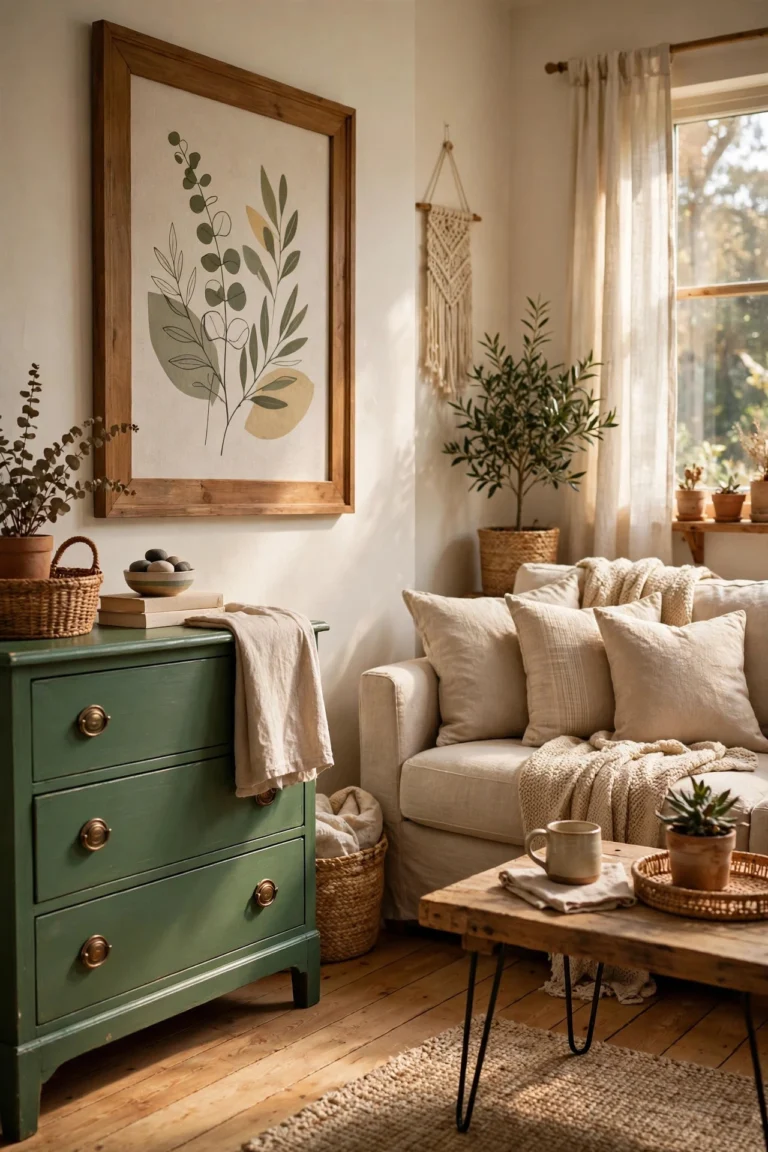
Deep green, inky navy and charcoal work beautifully on a luxury vanity because they read as confident and jewel-like against pale stone and brass, and they hide water marks far better than white. A bold colour turns the vanity into the room's statement piece.
Paint the vanity in a moisture-resistant lacquer or a durable cabinet paint, and keep the walls and floor calm so the colour has room to breathe. Sage green suits traditional rooms; navy suits modern ones; black works when the room has plenty of light. A painted vanity costs roughly £100–£300 more than a standard finish. The mistake to avoid is a trendy colour you will tire of in a year — test a large swatch in the room's actual light before committing. If you love colour but fear commitment, try a bold vanity in a guest bathroom first.
12. Brass or Chrome: Which Tap Finish Lasts Longer?

Chrome lasts longer with less effort, because it resists tarnish and water spots and suits almost any style. Brass — especially unlacquered brass — develops a living patina that many people love, but it needs occasional polishing and costs more upfront.
For a luxury look with low maintenance, choose brushed brass or brushed nickel: they hide fingerprints and water marks far better than polished finishes. Match the tap finish to the mirror frame, the light fittings and the cabinet pulls for a pulled-together look, but keep it to two metals maximum. Budget £150–£500 for a quality basin tap, and £300–£900 for a matching set. The mistake to avoid is mixing three or four different metals, which makes even an expensive bathroom look accidental.
13. How Do You Pair a Mirror With a Vanity?

Pair a mirror with a vanity by matching its width to roughly two-thirds to three-quarters of the vanity's width, hanging it so its centre sits at eye level — about 60 inches from the floor. The mirror should feel like it belongs to the vanity, not like an afterthought.
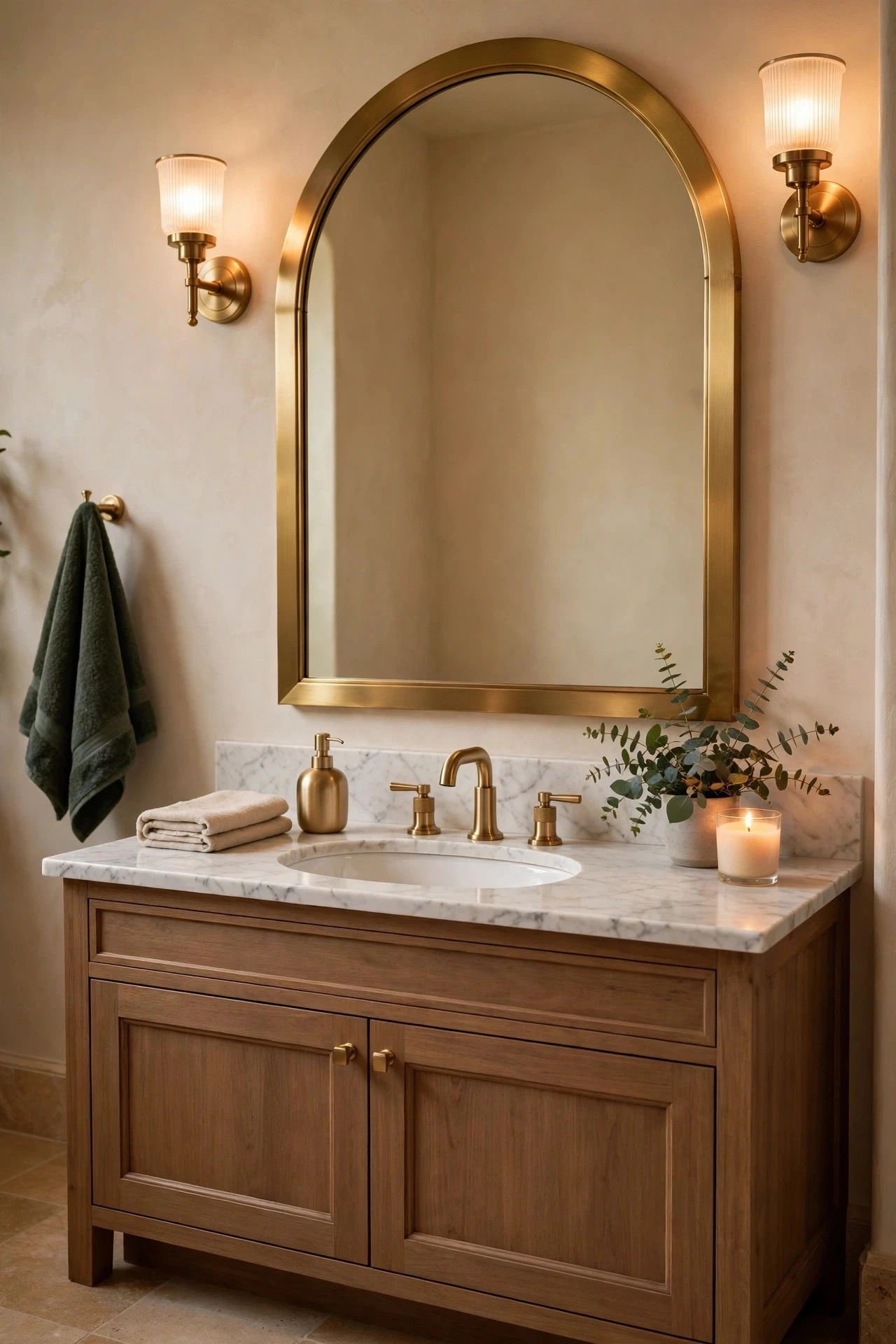
An arched mirror softens a rectangular vanity; a tall rectangular mirror suits a floating unit; a round mirror works beautifully over a single vanity in a small room. For a double vanity, either one long mirror or two matching mirrors both work — two mirrors give each person their own zone. Budget £80–£400 for a good mirror, more for backlit or anti-fog models. The mistake to avoid is a mirror narrower than half the vanity, which looks lost, or hung so high you see the ceiling instead of your face.
14. What Is the Best Vanity for a Tiny Bathroom?

The best vanity for a tiny bathroom is a wall-hung unit 24 to 30 inches wide with a shallow depth of 16 to 18 inches, a light finish and an open shelf below. It gives you storage and counter space while leaving the floor visible, which is what makes the room feel larger.
Choose a corner vanity if the room's layout allows it, or a pedestal-style unit with a small drawer stack if plumbing is tight. A large mirror above it and a pale wall colour multiply the effect. Expect £300–£900 for a quality small vanity. The mistake to avoid is cramming in a standard-depth 22-inch unit that leaves no room to move — shallow is better than wide in a tiny space. For more small-space tricks, see small bathroom ideas.
15. Freestanding or Built-In: Which Vanity Suits Your Bathroom?

A freestanding vanity suits most bathrooms because it is easier to install, easier to replace, and lets you bring in a beautiful furniture-style piece. A built-in vanity suits awkward spaces because it can be made to fit wall to wall, with no gaps and maximum storage.
Choose built-in when your bathroom has an alcove, a sloped ceiling or an unusual width — a joiner can fill every inch. Choose freestanding when you rent, when you may remodel later, or when you want a statement piece. Built-in units typically cost £1,500–£4,000 fitted; freestanding units run £500–£2,500. The mistake to avoid is a built-in that blocks access to the plumbing — always leave a removable panel or access hatch behind the unit.
16. Which Smart Features Are Worth Adding to a Vanity?

The smart features worth adding to a vanity are an anti-fog mirror, a dimmable LED mirror light, and an in-drawer outlet with USB charging. They solve real daily annoyances — a fogged mirror after a shower, harsh light, and cables trailing across the counter.
Add a motion-sensor light under a floating vanity for gentle night lighting, and a Bluetooth speaker mirror only if you genuinely listen to music while getting ready. Skip touchless taps in a home bathroom; they belong in commercial spaces and frustrate at home. Budget £200–£600 for the useful trio of anti-fog, lighting and power. The mistake to avoid is loading a vanity with gadgets that need apps, updates and batteries — a bathroom should be calm, not another device to manage.
17. What Plumbing Checks Must Come Before Installing a Vanity?

Before installing a vanity, check the waste pipe position, the hot and cold supply locations, and whether the wall can carry the unit's weight. These three checks decide whether your chosen vanity fits at all, and they are far cheaper to fix before ordering than after.
Measure the waste centre height — usually around 18 to 20 inches from the floor — and confirm your vanity's trap will clear the drawers. Check that the supplies sit within the unit's footprint and that shut-off valves are accessible. If you are moving the vanity, budget £300–£800 for a plumber to reroute pipes. The mistake to avoid is ordering a vanity with deep drawers that collide with the waste trap, forcing you to cut the drawer backs on installation day. Always confirm measurements with your plumber before you buy.
18. How Do You Keep a Luxury Vanity Looking New?

You keep a luxury vanity looking new by wiping the top daily, sealing stone on schedule, and keeping toiletries on a tray so nothing sits directly on the surface. Small daily habits matter far more than occasional deep cleans, and they cost almost nothing.
Use a soft cloth and a pH-neutral cleaner on stone; never use vinegar or bleach-based sprays on marble or lacquered wood. Tighten handles and hinges twice a year, and touch up paint chips promptly before moisture gets in. A quick weekly wipe of the drawer interiors stops the slow build-up of spilled products. Budget £20–£40 a year for sealant and gentle cleaners. The mistake to avoid is leaving wet bottles and hair tools on the counter — the rings and heat marks they leave are the fastest way to age a beautiful vanity.
19. Why Does a Furniture-Style Vanity Feel More Luxurious?

A furniture-style vanity feels more luxurious because it reads as a crafted piece of furniture rather than a bathroom fixture, with legs, turned details or a shaped apron that give it character. It brings the warmth of a bedroom dresser into the bathroom.
Look for turned legs, a shaped apron, panelled doors or bun feet, in walnut, oak or painted hardwood. A furniture-style vanity suits traditional, transitional and French-inspired bathrooms best, and it pairs beautifully with a framed mirror and classic taps. Expect £900–£2,800 for a quality piece. The mistake to avoid is a furniture-style unit with legs so short you cannot clean beneath it — leave at least 4 inches of clearance, or choose a plinth base. For the broader spa-like look, explore luxury bathroom decor ideas.
20. How Can a Vanity Anchor a Luxury Bathroom Scheme?

A vanity anchors a luxury bathroom scheme when it is the largest, most detailed piece in the room and everything else echoes it — the mirror frame, the tap finish and the lighting all repeat its material or colour. It becomes the visual centre of gravity.
Start with the vanity, then choose the mirror, taps and lighting to match its tone: warm wood with brass, pale stone with chrome, dark lacquer with matte black. Keep the walls and floor quiet so the vanity holds attention. A statement vanity with a veined marble top and a backlit mirror can carry an entire scheme on its own. Budget £1,500–£3,500 for a true anchor piece. The mistake to avoid is a vanity that fights the rest of the room — a rustic wood unit in a stark white modern bathroom will always look like a mistake rather than a statement.
21. What Vanity Details Signal Real Craftsmanship?

Real craftsmanship shows in soft-close drawers that glide silently, dovetailed drawer boxes in solid wood, mitred stone edges with no visible seams, and hardware that feels weighty in the hand. These are the details you notice every day, long after the first impression fades.
Check the drawer boxes: solid wood sides with dovetail joints beat stapled MDF every time. Look for full-extension runners so drawers open completely, and for a stone top with a finished, sealed underside. Open and close everything in the showroom before buying. A well-made vanity costs £1,200–£3,500, and the difference from a £400 unit is visible within a year. The mistake to avoid is judging a vanity by its front alone — always open the drawers, check the joints and look underneath before you pay.
22. How Do You Style a Vanity Without Cluttering It?

You style a vanity without cluttering it by limiting the counter to three things: a tray holding your daily products, one small plant or vase, and a folded hand towel. Everything else lives in a drawer, and the counter stays clear enough to actually use.
Choose a tray that matches the room's metal — brass, chrome or matte black — and keep bottles grouped on it so they read as one intentional arrangement rather than a spill. A small eucalyptus stem or a single orchid adds life without demanding care. Rotate a scented candle or a tiny piece of art seasonally for freshness. Budget £30–£100 for a tray, a vase and a plant. The mistake to avoid is displaying every product you own; a vanity is a workspace first, and a clear counter is the most luxurious look of all. For a nostalgic twist, retro bathroom decor ideas show how vintage styling can stay tidy.
Practical Tips
Measure the room before you fall in love with a vanity. Note the width, the depth, the door swing, the waste position and the distance to the toilet and shower — the NKBA recommends at least 30 inches of clear space in front of a vanity and 15 inches from its centre to any side wall or fixture. Sketch it on paper; a vanity that looks right in a showroom can overwhelm a real bathroom.
Order early. The modern bathroom is a hardworking room, and a custom or semi-custom vanity can take 6 to 10 weeks to arrive, with stone tops often cut to order, so build that lead time into your renovation schedule. Seal natural stone before first use and again every 6 to 12 months. Set a realistic budget: a good vanity with a stone top and quality hardware typically runs £1,000–£3,000, and spending a little more on the drawers and the top is money you will feel every single day. Finally, confirm the plumbing with a professional before ordering — a £300 plumber visit now saves a £1,000 mistake later.
Final Thoughts
A luxury vanity is not about the highest price or the trendiest finish; it is about a piece that fits your room, survives your routine and makes every morning a little calmer. Choose the size first, the material second and the styling last, and you will end up with a vanity you love for years rather than one you regret by Christmas. You may also like our guide to luxury bathroom decor ideas for the full spa-like look.
Frequently Asked Questions
How wide should a double vanity be?
A double vanity should be 60 to 72 inches wide, with sink centres 30 to 36 inches apart. This gives two people enough elbow room to use the basins at the same time. Below 60 inches the sinks crowd together, and above 72 inches you may struggle to fit the unit through the door or into the room.
Is marble or quartz better for a vanity top?
Quartz is better for most households because it resists stains and etching and needs no sealing, while looking very much like marble. Marble is more beautiful and unique, but it must be sealed every 6 to 12 months and can etch from toothpaste, perfume or citrus left sitting on the surface.
How high should a bathroom vanity be?
A bathroom vanity counter should sit 30 to 36 inches high, with 32 to 34 inches the most comfortable for most adults. Vessel sinks add height, so a vanity with a vessel bowl is usually built slightly lower. A makeup station section should drop to 26 to 28 inches for comfortable seated use.
Can a floating vanity hold a heavy stone top?
Yes, a floating vanity can hold a heavy stone top, but only when it is anchored into wall studs or a solid blocking panel behind the wall. Never fix a floating vanity to plasterboard alone. If your wall cannot take the load, choose a plinth-style or furniture-style unit instead for the same look with safe support.
How do I stop my vanity drawers getting cluttered?
Use drawer dividers, a tall pull-out for bottles, and U-shaped drawers that wrap around the waste trap to reclaim wasted space. Give every item a labelled home and keep hot tools on an in-drawer outlet so cables stay out of sight. A quick weekly tidy of the drawer interiors stops clutter building up again.
What is the best vanity for a small bathroom?
The best vanity for a small bathroom is a wall-hung unit 24 to 30 inches wide with a shallow depth of 16 to 18 inches, a light finish and an open shelf below. It leaves the floor visible, which makes the room feel bigger, while still giving you storage and counter space for daily essentials.