22 Bedroom Headboard Ideas for a Bed That Looks Designed
A headboard is the single fastest way to make a bed look designed rather than assembled. It anchors the bed to the wall, gives the room a focal point, and turns a plain mattress and frame into a piece of furniture with intention. Without one, even expensive bedding can look unfinished; with the right one, a modest bed reads like a boutique hotel suite.
Looking for more inspiration? Our Nest Decorz homepage gathers the latest home decor ideas, seasonal decorating guides and room-by-room styling tips in one place — start there and explore.
Below you will find 22 bedroom headboard ideas covering upholstered, wood, rattan, metal and DIY options, with exact sizing rules, honest budgets and small-bedroom solutions — so your headboard fits the wall, the bed and the way you actually use the room. Every idea works for a master bedroom, a guest room or a rental, and each one includes what to avoid.
Quick answers
– Size first, style second — match the headboard to your mattress width, then pick the material and height. – Upholstered headboards are the most forgiving — soft to lean on, easy to fit in any style, and available in every budget. – A headboard should sit 60–75 cm above the mattress for a standard look, and higher only when the ceiling can carry it. – Renters can still have a headboard — wall panels, painted shapes and freestanding boards need no drilling into the bed frame.
1. How Wide Should a Headboard Be for Your Bed?
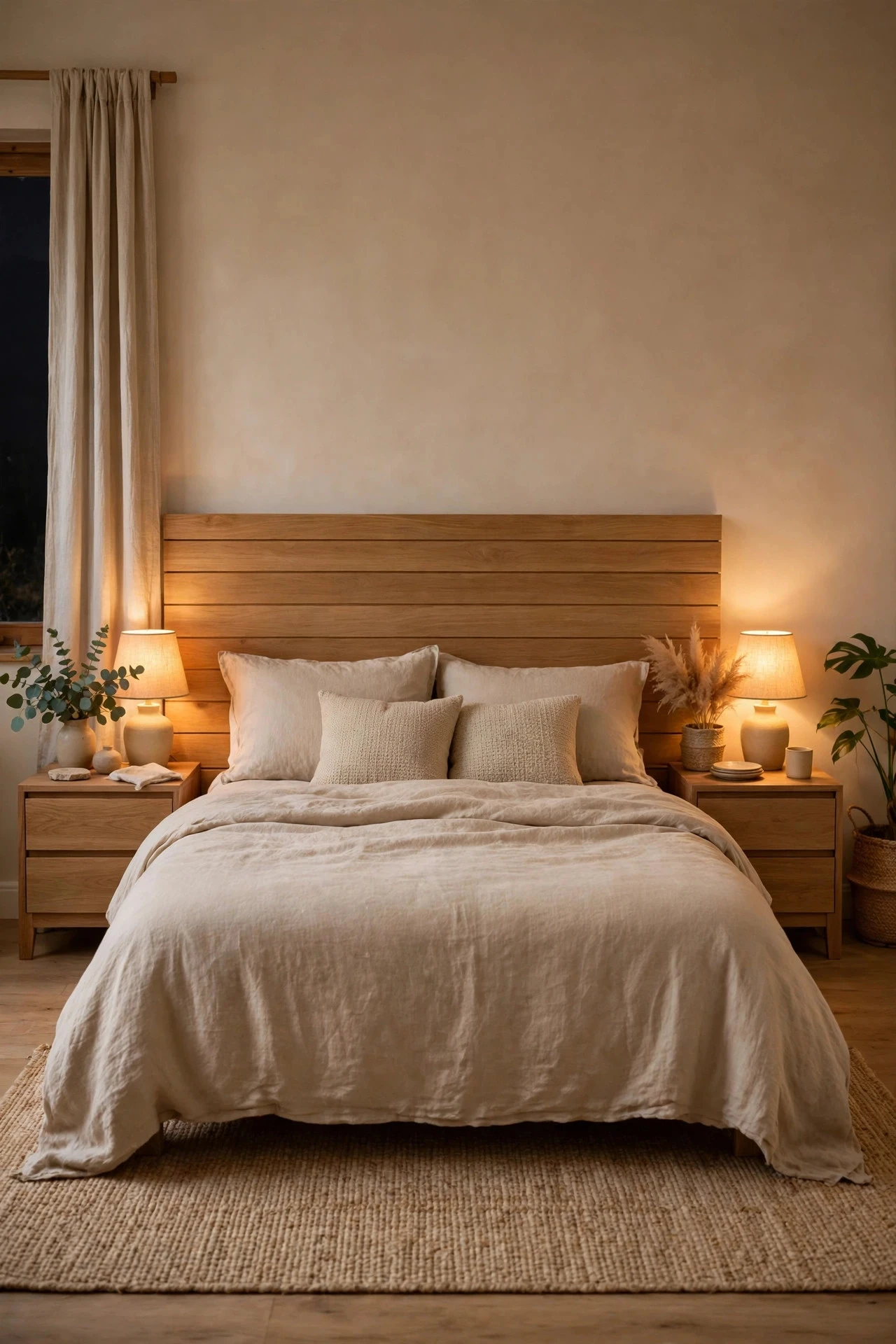
A headboard should match your mattress width or extend 5–10 cm beyond it on each side — a queen bed (152 cm wide) needs a headboard 152–172 cm wide, and a king (193 cm) needs 193–213 cm. A headboard narrower than the mattress looks like a mistake, while one much wider swallows the bedside tables.
Measure the mattress, not the frame, because frames vary by 5–10 cm and the mattress is the visible edge. If your bedside tables sit close to the bed, choose a headboard that ends flush with the mattress so the tables stay usable; if the tables stand apart, a wider panel can bridge the gap and make the whole wall feel designed. The headboard has been part of bed design for centuries, originally to insulate sleepers from cold walls, and the width rule has not changed: it should frame the bed, never fight it.
2. How Tall Should a Headboard Be Above the Mattress?

Aim for 60–75 cm above the top of the mattress for a standard headboard, which puts the top edge roughly 120–140 cm from the floor on a typical bed. Tall statement headboards run 90–120 cm above the mattress, and floor-to-ceiling panels suit ceilings of 2.7 m or more.
Height changes how the room feels: a low headboard keeps a small room airy and lets artwork breathe above it, while a tall one adds drama and suits high ceilings and large bedrooms. Before you buy, tape the outline on the wall with painter's tape and live with it for a day — a headboard that looked right in the shop often feels too tall once it is behind your pillows. Leave at least 15 cm of wall visible above a statement panel so the ceiling line stays clean.
3. Why Is a Linen Upholstered Headboard the Safest Choice?
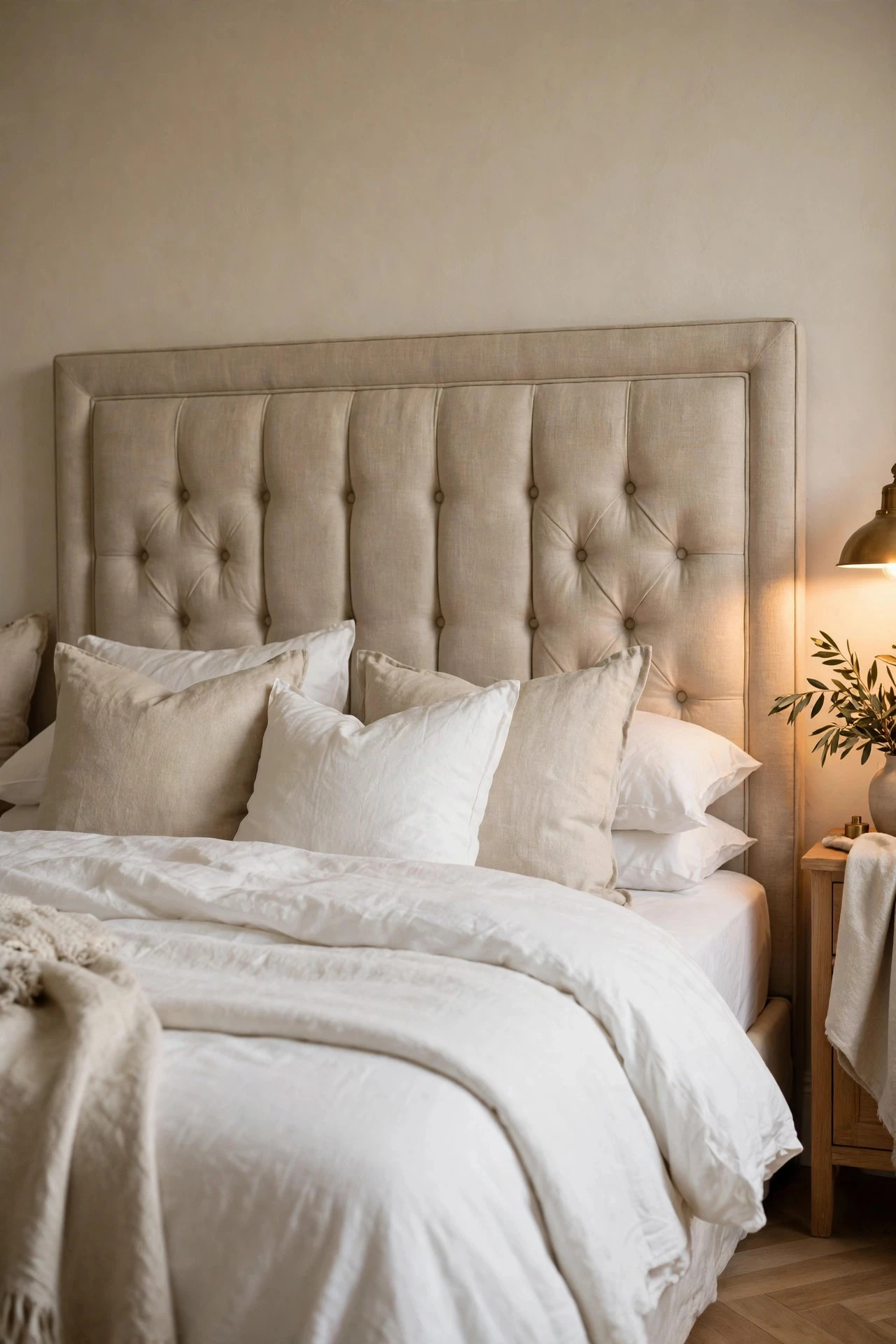
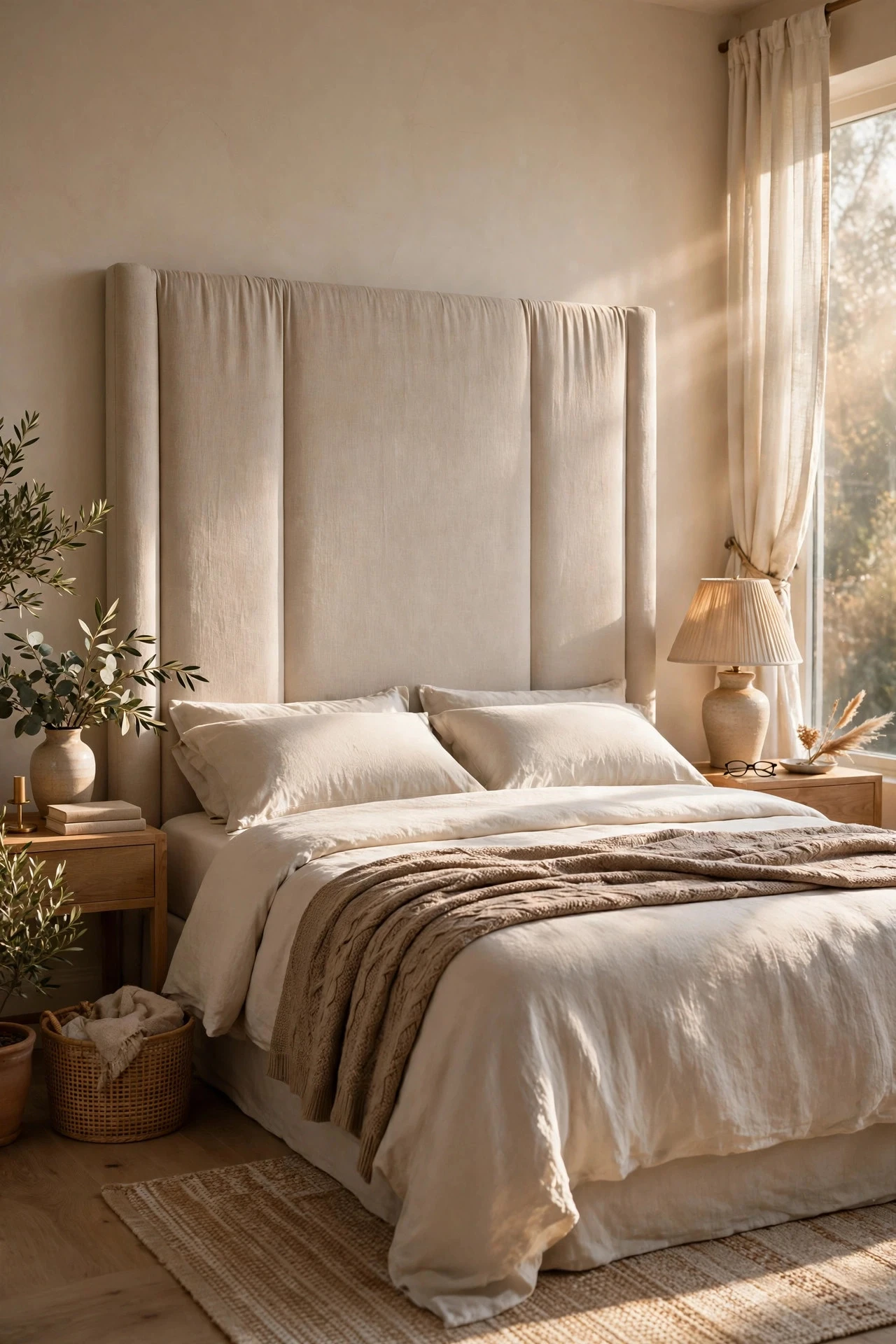
A linen upholstered headboard is the safest choice because it is soft to lean against, suits almost every bedroom style, and forgives imperfect walls — the padded surface hides bumps and uneven plaster that a hard headboard would expose. Natural linen in oatmeal, stone or warm grey works with wood, metal and painted furniture alike.
Choose a removable slipcover if you can: it washes, it swaps with the seasons, and it lets you change the room's colour without buying a new headboard. A mid-weight linen over 5 cm of foam gives a plush backrest for reading in bed without the deep-pile look of velvet. Budget £120–£350 for a good quality upholstered headboard, and avoid very pale linen in a home with pets — it shows every mark. For a calm, layered bedroom built around a soft headboard, these 24 cosy bedroom design ideas for a peaceful and stylish retreat show how texture and bedding complete the look.
4. How Do You Style a Channel-Tufted Velvet Headboard?
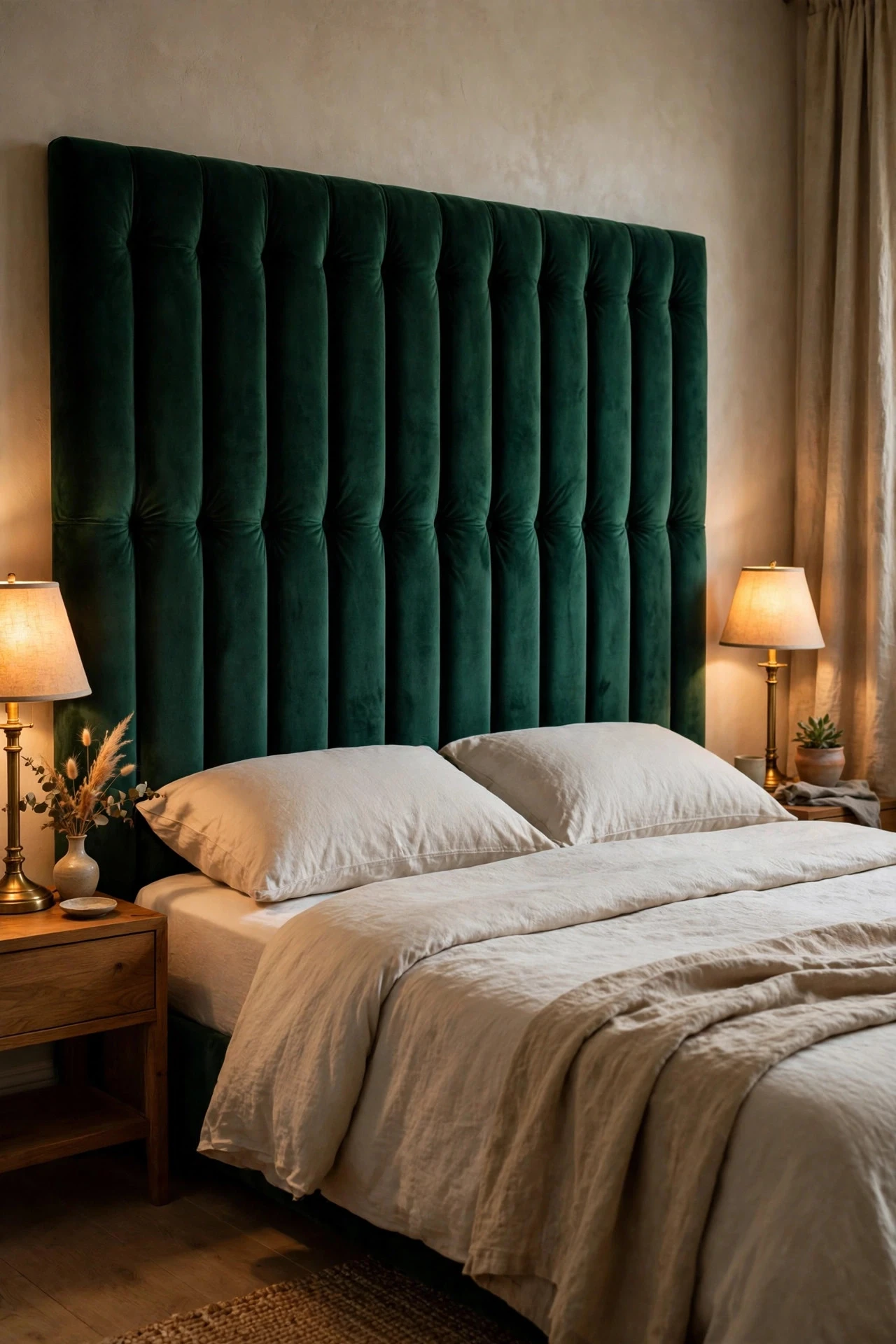
Style a channel-tufted velvet headboard by letting its vertical lines do the talking: keep the bedding plain, the wall colour quiet, and the pillows few. The deep vertical channels already give the bed a hotel-suite rhythm, so busy patterns on top of it turn the wall into noise.
Channel tufting suits emerald, navy, rust and blush velvet best, because the folds catch light and shadow along each channel. Pair it with brass or black metal bedside lamps and a plain linen duvet, and keep the headboard height generous — 75–90 cm above the mattress — so the channels read as architecture rather than trim. Expect to pay £250–£600 for a quality velvet channel headboard, and brush the pile monthly so it does not flatten where you lean. Avoid velvet in a very sunny room; the colour fades unevenly across the channels.
5. What Makes a Button-Tufted Headboard Feel Classic?
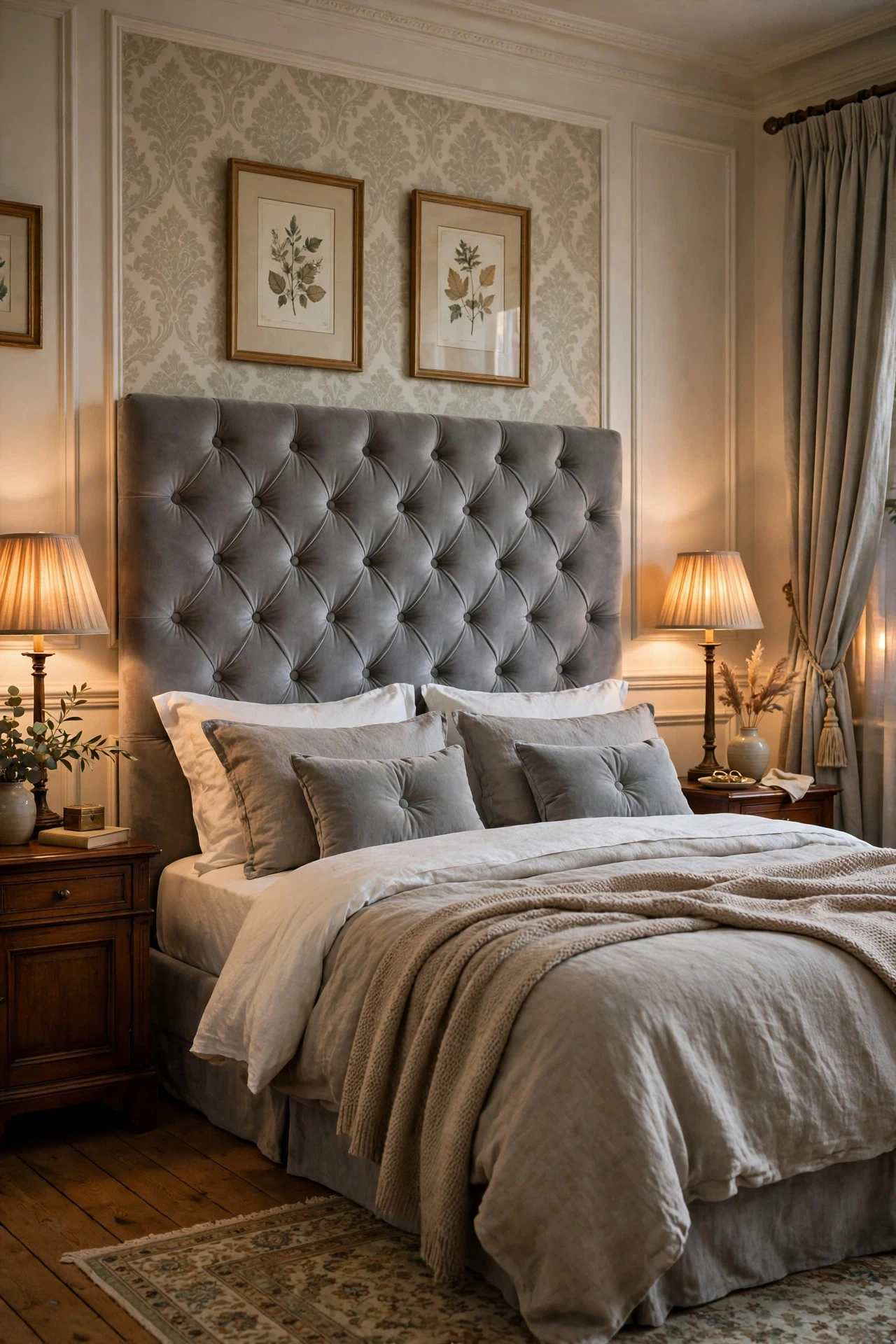
A button-tufted headboard feels classic because the diamond pattern has dressed grand bedrooms for two centuries, from Chesterfield sofas to boutique hotels. Deep buttons pulled into the padding create a quilted surface that reads as luxury even in a plain room, and it works in leather, velvet or crisp linen.
Button tufting suits traditional and transitional bedrooms best, especially with a wooden bed frame and panelled walls. The downside is practical: dust collects in the buttons, and a spill is harder to clean than on a flat panel, so choose a darker fabric or a stain-resistant finish if you eat or drink in bed. A queen-size button-tufted headboard costs £200–£500; cheaper versions use shallow tufting that flattens within a year, so check the depth of the buttons before you buy.
6. How Does a Curved Bouclé Headboard Soften a Bedroom?
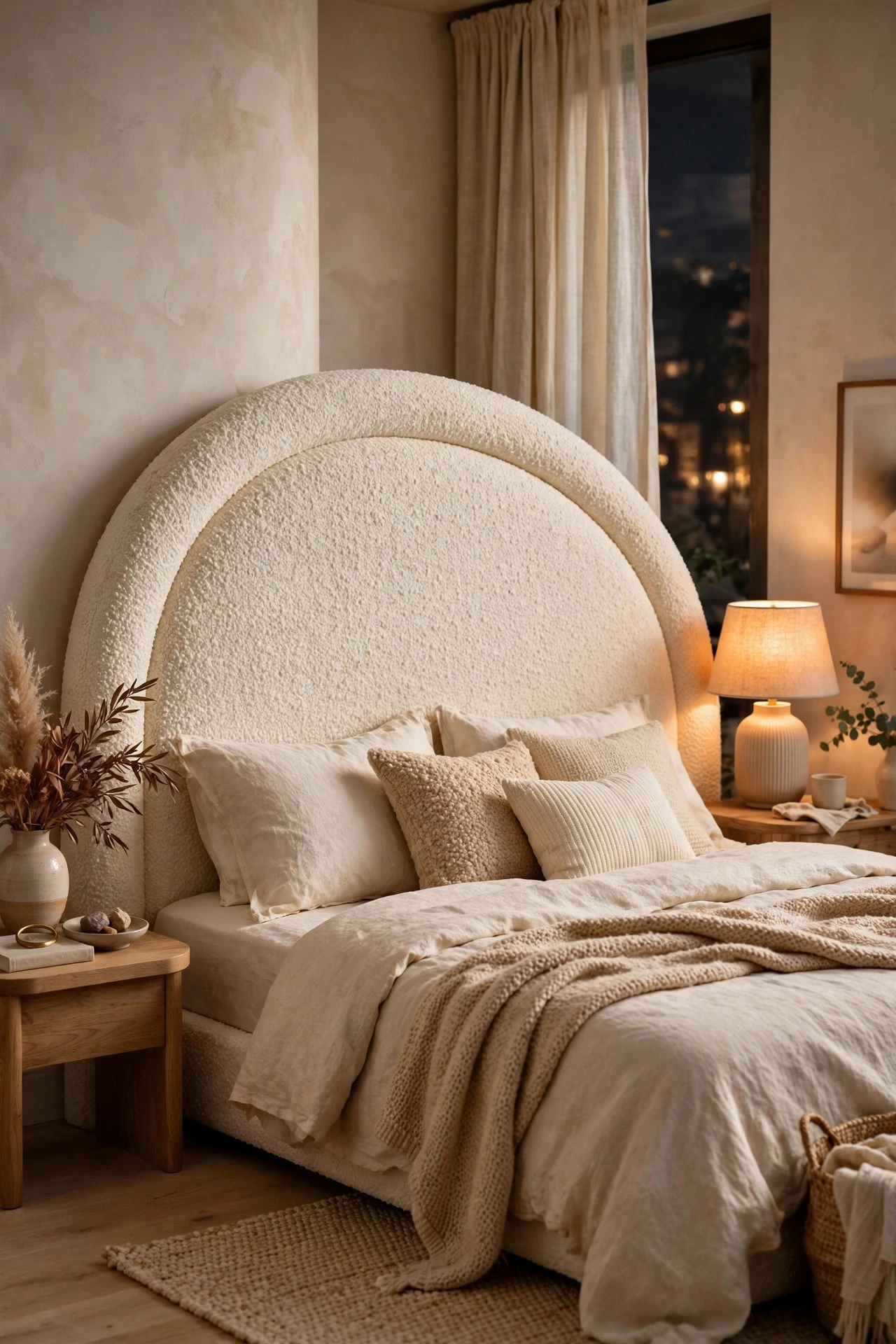
A curved bouclé headboard softens a bedroom because its rounded corners and nubby cream fabric remove every hard edge from the bed wall. Bouclé — the looped, cloud-like textile — is the most contemporary headboard fabric of recent years, and its softness makes a stark modern room feel liveable.
Curved bouclé works best in rooms with straight, angular furniture, where the rounded top breaks up all the rectangles. Keep the rest of the palette warm and pale — cream, oat, soft sage — and avoid heavy patterns that fight the texture. A curved bouclé headboard costs £250–£550, and the fabric needs regular vacuuming with an upholstery head, since the loops trap dust. Avoid bouclé in a home with cats: claws catch the loops and pull them.
7. How Do You Choose a Wood Slat Headboard?

Choose a wood slat headboard by matching the slat direction to the room: vertical slats make a low ceiling feel taller, while horizontal slats widen a narrow wall and suit a Scandinavian or mid-century bedroom. Oak, walnut and teak are the classic choices, and the gaps between slats keep the wall feeling light.
Slat headboards are easy to live with — they wipe clean, they never sag, and they age gracefully. The gap between slats matters: 2–3 cm gaps read as designed, while wider gaps show the wall behind and collect dust. A solid oak slat headboard costs £150–£400, and a DIY version from hardwood battens runs £40–£80 in materials. Avoid very dark stained slats in a north-facing room; they absorb what little light the room gets.
8. Why Is Reclaimed Wood the Warmest Headboard Material?
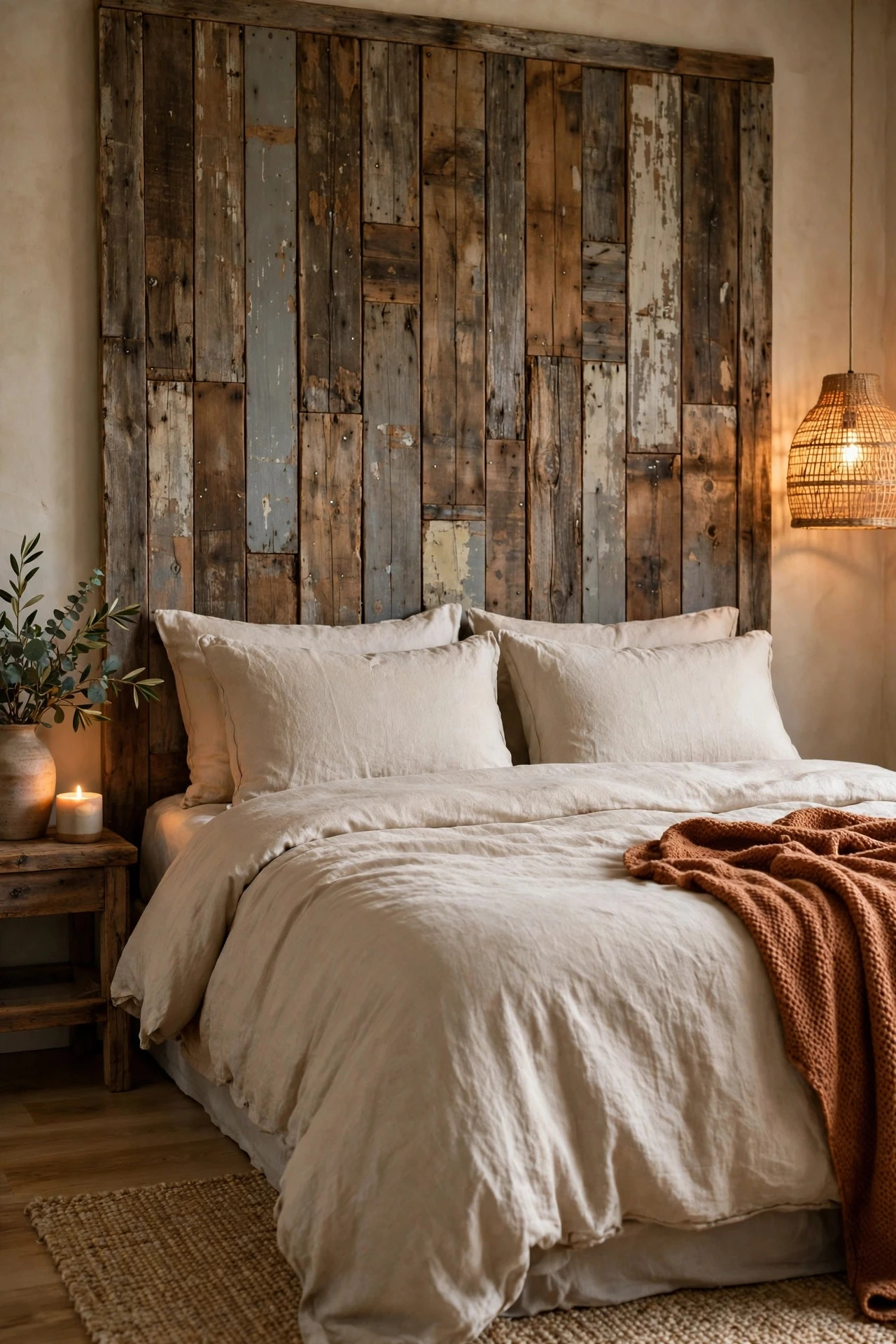
Reclaimed wood is the warmest headboard material because every board carries its own history — nail holes, saw marks, colour variation — and that imperfection makes a new bedroom feel settled on day one. Barn wood, old floorboards and salvaged planks all work, and the patina no new timber can imitate is the whole point.
Source reclaimed boards from a salvage yard and check for rot, woodworm and old paint, especially lead paint on pre-1970s boards. Seal the wood with a clear matte finish so it does not shed splinters onto the bedding, and mount it on a plywood backing so the boards stay flat. A reclaimed wood headboard costs £100–£350 ready-made, or £50–£120 as a DIY build. Avoid reclaimed wood in a damp room; the boards move with humidity and can warp.
9. How Does a Rattan or Cane Headboard Change a Room?
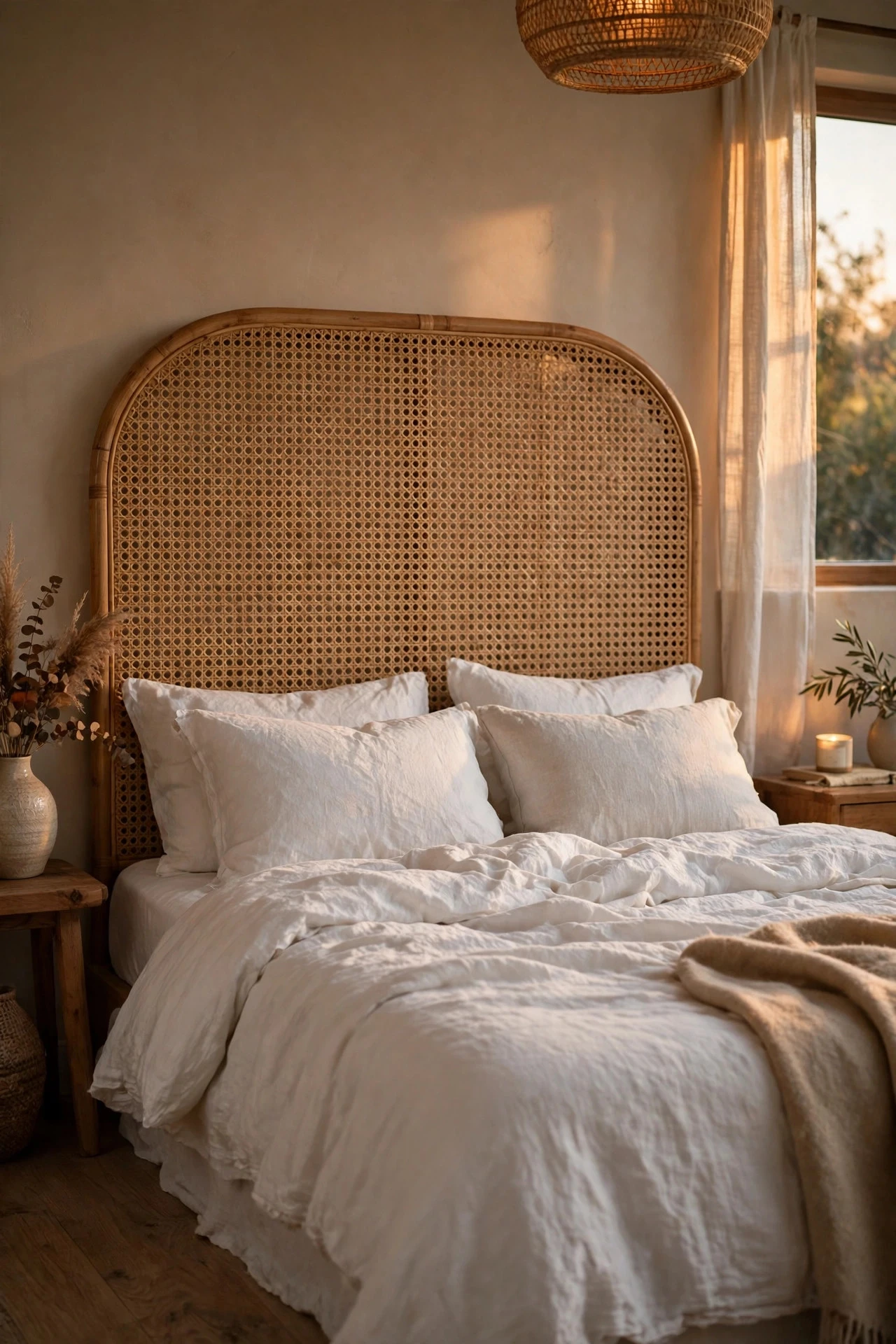
A rattan or cane headboard changes a room by adding texture and light at once: the woven openwork lets the wall colour show through, so the headboard feels present without weighing the wall down. It is the natural choice for coastal, boho and relaxed modern bedrooms, and it pairs beautifully with white linen and pale wood.
Cane webbing is the most durable option — the tight hexagonal weave holds its shape for years — while loose rattan poles suit a more rustic look. A rattan headboard costs £120–£350, and vintage ones turn up in charity shops for £30–£60 if you are patient. Keep it out of direct sun and damp, which dry and crack the fibres, and dust it with a soft brush rather than a cloth, which snags on the weave. Avoid rattan in a very formal bedroom; its casual texture fights tailored bedding.
10. How Do You Get the Arched Headboard Look Right?
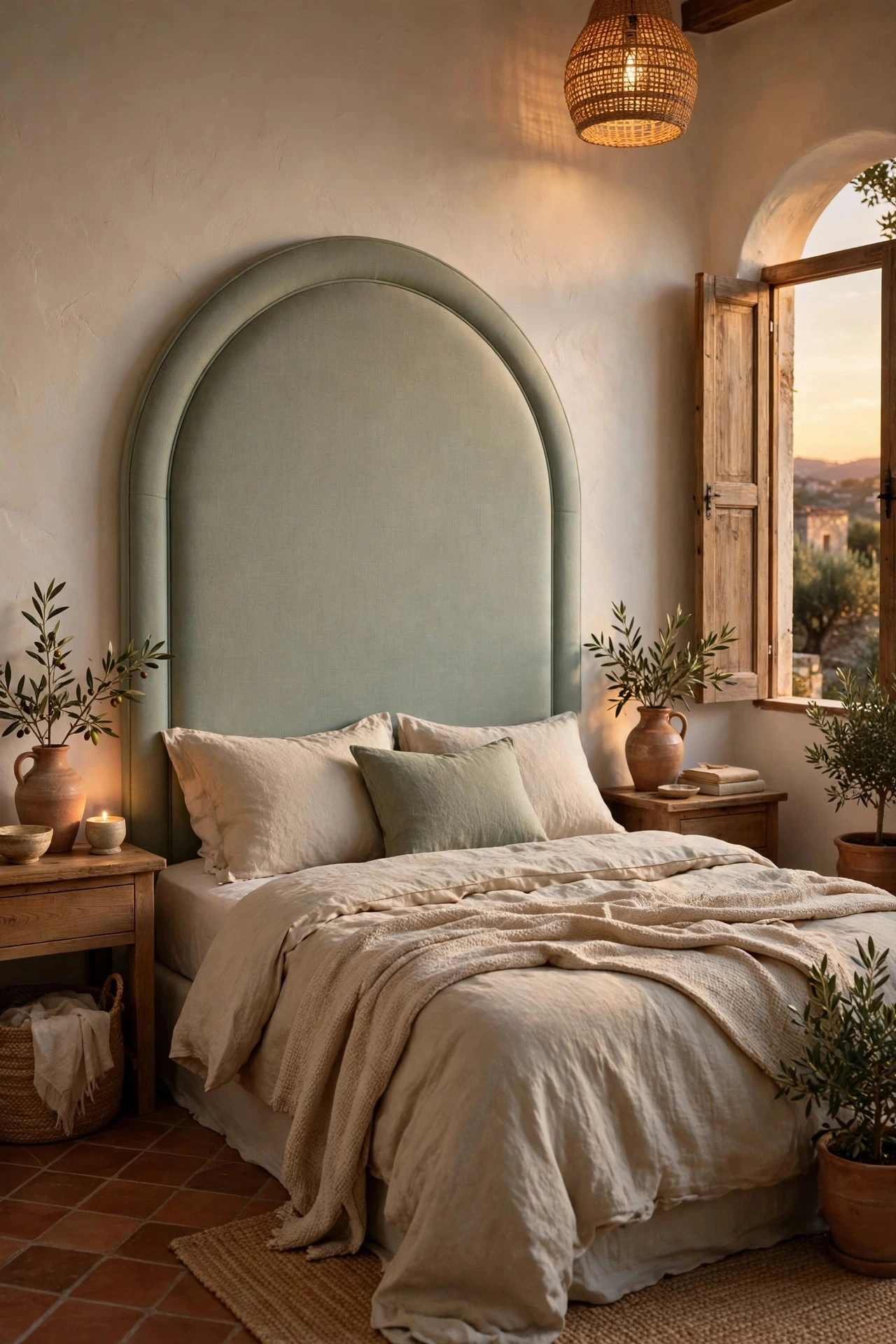
Get the arched headboard look right by letting the arch be the room's only curve — pair it with straight-lined bedding, rectangular bedside tables and square artwork, so the arch reads as a deliberate focal point. The arch shape, borrowed from Mediterranean and Moroccan doorways, adds softness without any extra decoration.
Arched headboards work in upholstered velvet, painted wood and rattan, and the arch height matters: the curve should start at about two-thirds of the headboard's height, so the shape reads as an arch rather than a rounded rectangle. A ready-made arched headboard costs £180–£450, and a painted arch on the wall behind the bed costs under £20 in paint. The lighting around an arch matters too — a pair of wall lights or a soft glow above the bed makes the curve stand out at night, as these 22 bedroom lighting ideas for a warm, restful glow show. Avoid an arch that is wider than the bed; the overhang looks like a mistake.
11. When Is a Wingback Headboard Worth the Space?
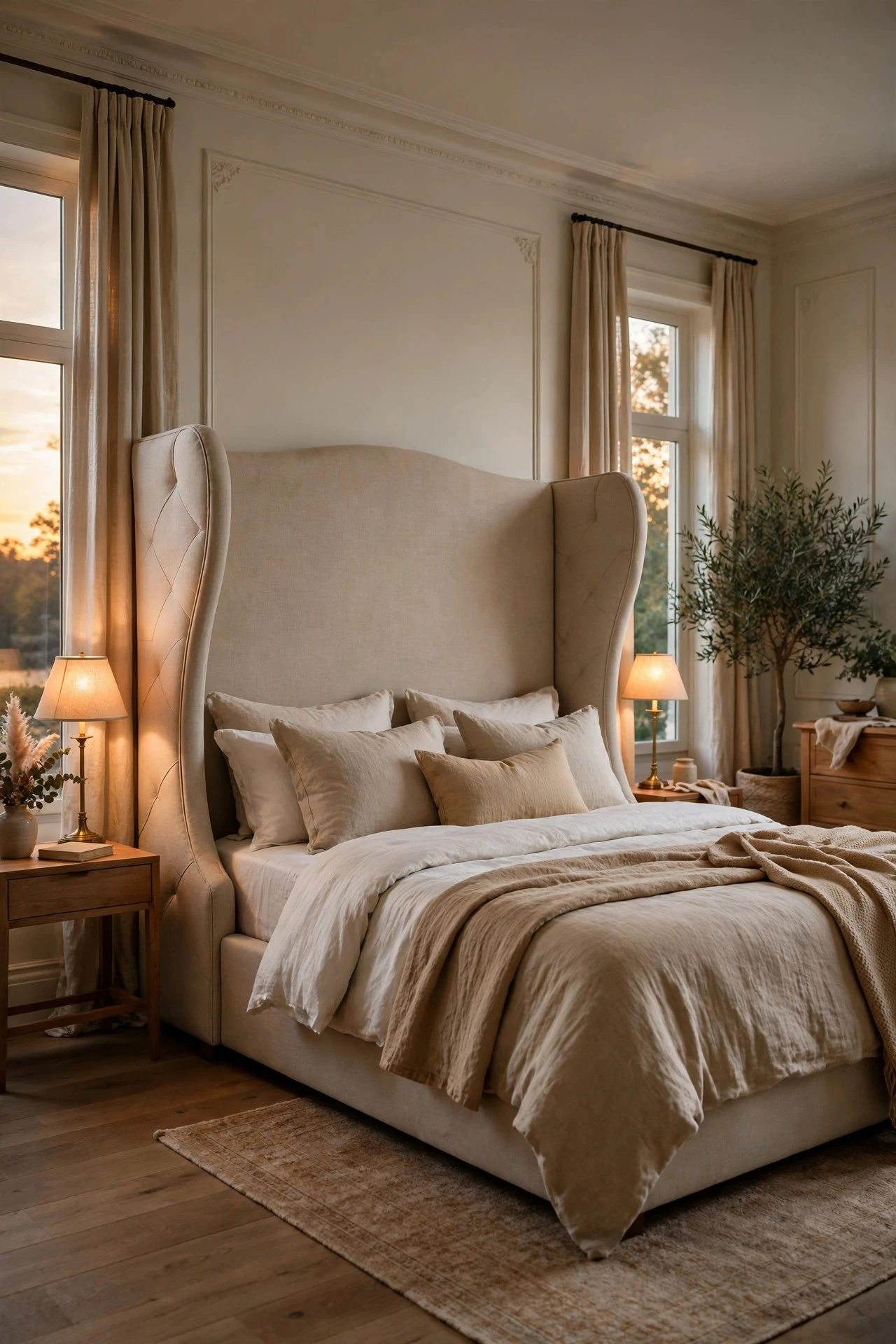
A wingback headboard is worth the space when you read in bed every night and want a cocoon: the side wings block draughts, muffle sound and give your shoulders somewhere to rest. Wingbacks suit large master bedrooms, where their 15–20 cm of extra width on each side is affordable.
Choose wings that angle slightly forward rather than standing straight — they wrap the bed without blocking the bedside lamps. Upholstered wingbacks in linen or velvet cost £300–£700, and they need a room at least 3.5 m wide so the bedside tables do not end up squeezed. Avoid wingbacks in a small bedroom or a guest room; the wings eat floor space, block the windows if the bed sits near them, and make the bed hard to make in the morning.
12. Is a Leather Headboard Practical for Everyday Use?
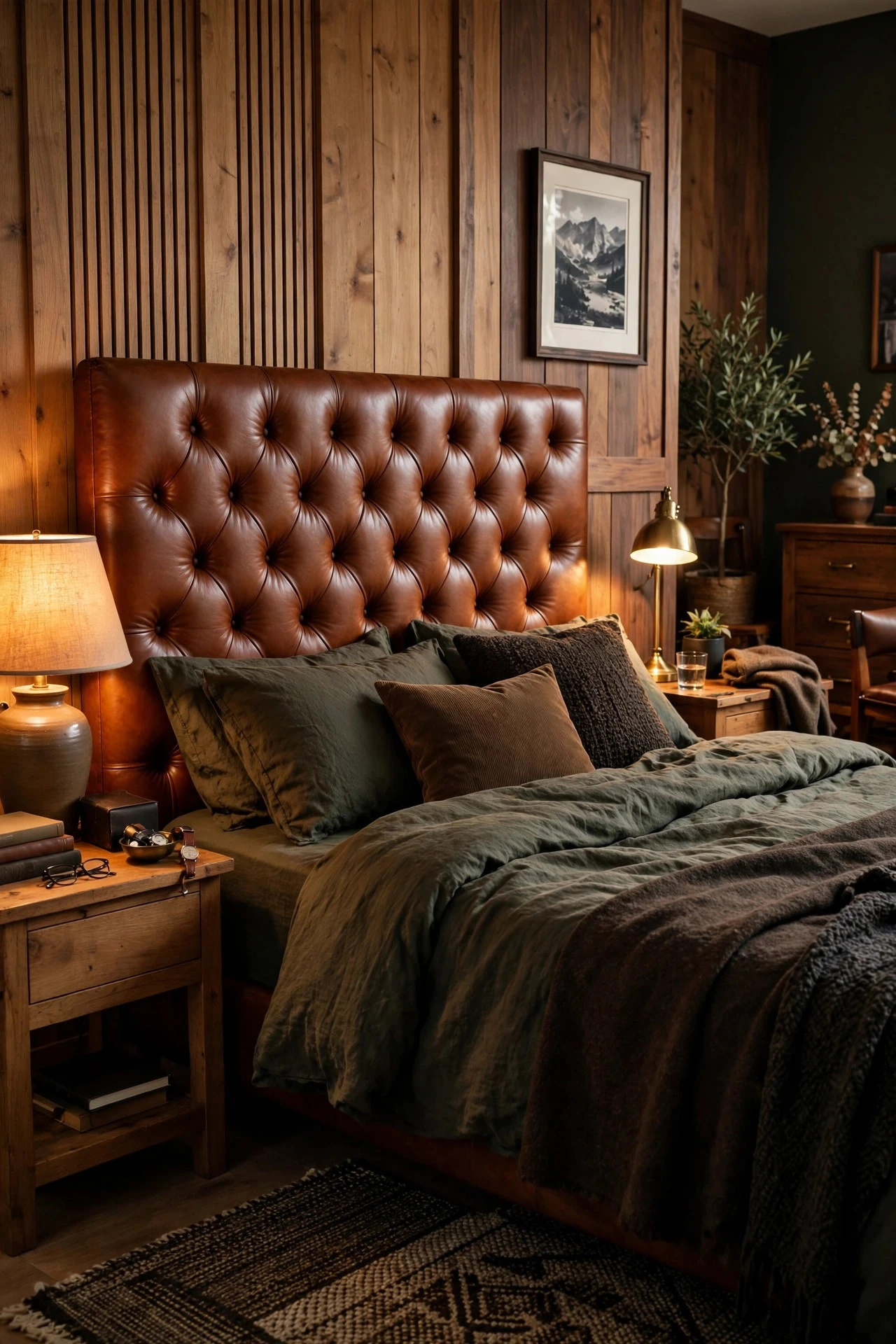
A leather headboard is practical for everyday use if you choose the right leather: full-grain or top-grain leather wipes clean, ages with a rich patina, and survives children, pets and coffee in bed far better than fabric. It suits masculine, industrial and classic bedrooms, and a cognac or chestnut tone warms a cool grey room instantly.
Faux leather costs half as much — £150–£350 against £400–£900 for real leather — but it peels within a few years in a warm room, so it is a false economy for a headboard you lean on daily. Keep real leather out of direct sun, condition it twice a year, and avoid black leather in a small room; it reads as a slab. If you like the look but not the price, a leather-look panel in a single wide slab gives the same effect for less.
13. How Do You Style a Metal Headboard Without It Feeling Cold?
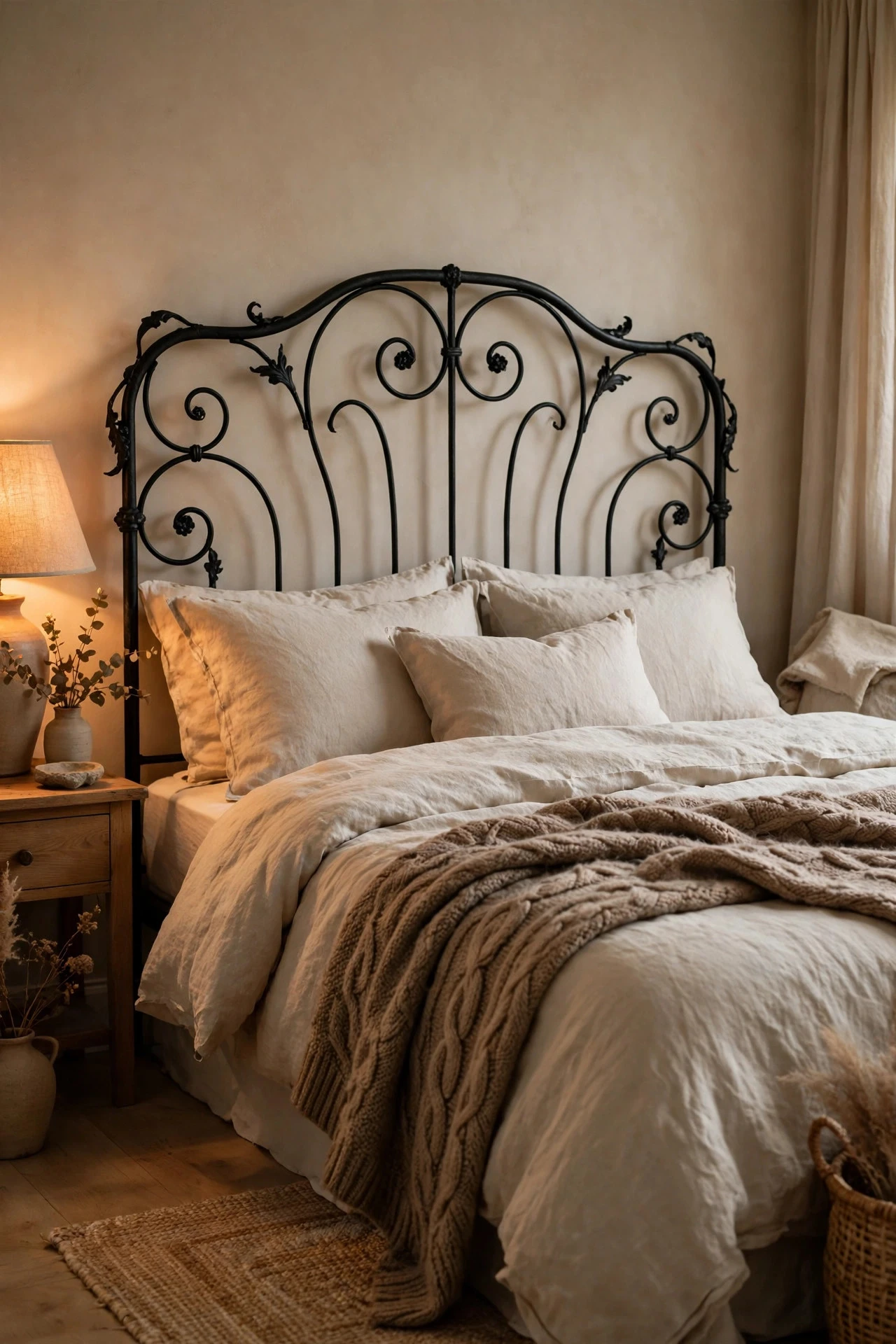
Style a metal headboard without it feeling cold by layering softness against it: linen bedding, a wool throw draped over the pillows, and warm wood bedside tables. Black iron and brass are the two best choices — iron for farmhouse and industrial rooms, brass for classic and glamorous ones.
Metal headboards are the lightest and cheapest option, from £60–£200, and they suit rooms where an upholstered headboard would be too bulky. The trick is the finish: matte black iron reads as intentional, while shiny chrome reads as a hospital bed. Choose a design with curved details rather than straight bars, which look like a fence, and keep the metal away from the wall by 2–3 cm so it does not mark the paint. Avoid metal in a cold, north-facing room unless you add plenty of textiles to balance it.
14. How Do You Paint a Headboard Shape on the Wall?
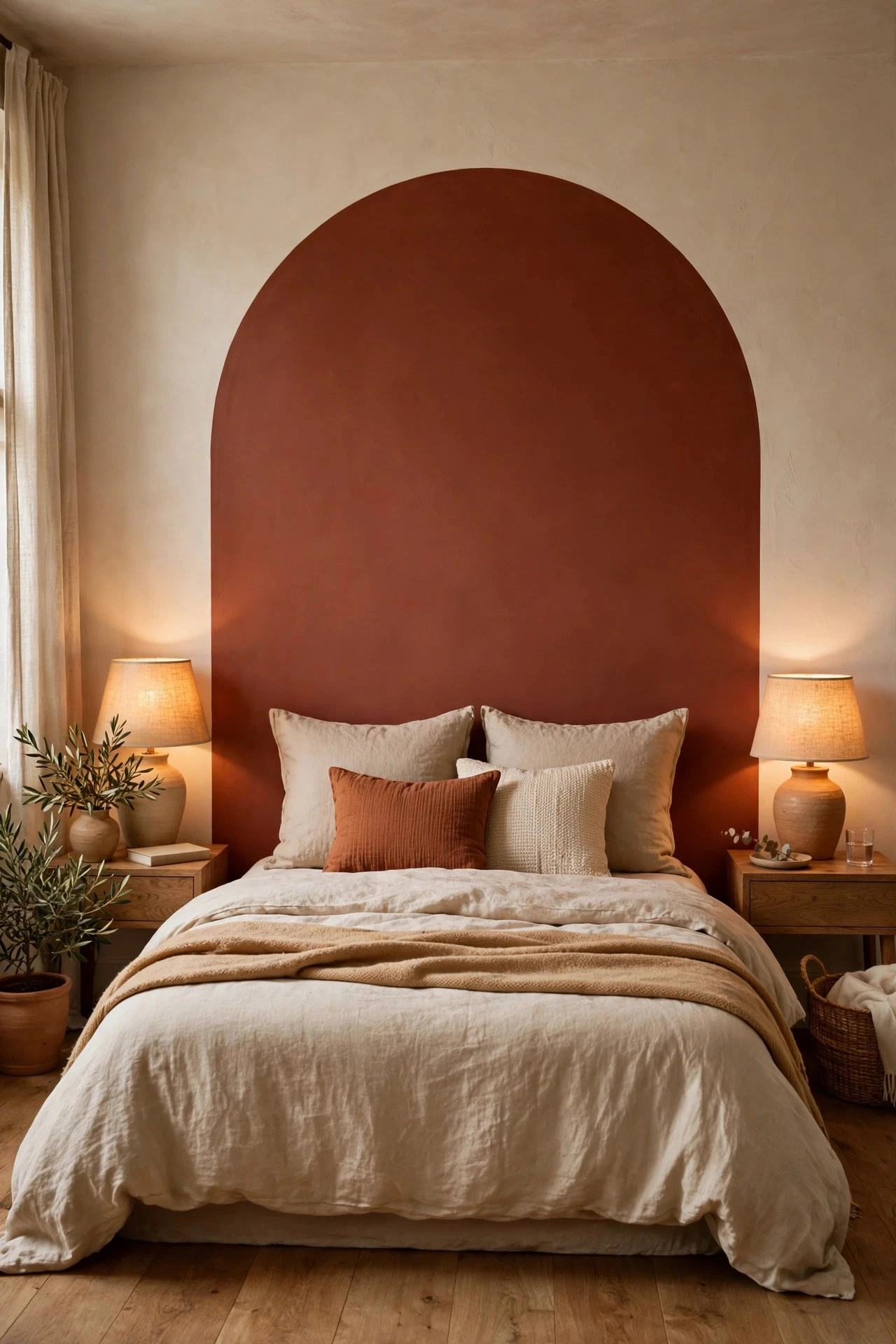
Paint a headboard shape on the wall by marking the outline with painter's tape — an arch, a rectangle or a tall panel — and filling it with a colour 2–3 shades deeper than the wall. The painted shape costs under £20, takes an afternoon, and gives a bed the same focal point as a real headboard.
Measure the shape to the mattress width plus 5 cm on each side, and take the top to 120–140 cm from the floor for a standard look. Use a matte or eggshell finish so the shape reads as a flat panel rather than a glossy patch, and paint a thin border in a contrasting colour if you want a framed effect. The painted shape suits renters who can repaint on moving out, and it works behind any bed frame. Avoid painting over textured wallpaper; the edges bleed and the tape will not seal.
15. How Does a Wallpaper Panel Behind the Bed Work as a Headboard?
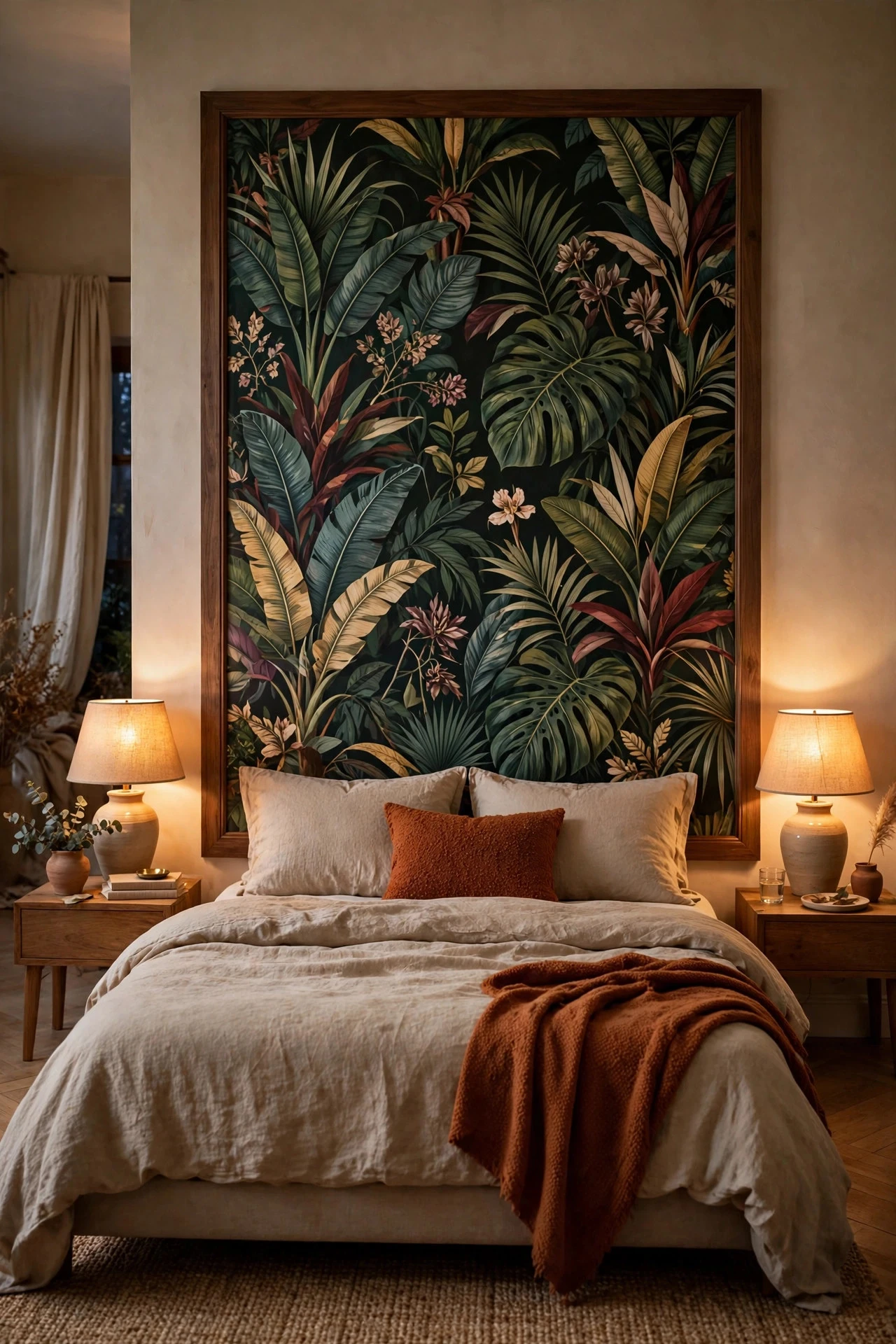
A wallpaper panel behind the bed works as a headboard by turning the wall itself into the feature: a single framed panel of bold wallpaper, 10–20 cm wider than the mattress and running from the bed base to 150 cm high, gives the bed a backdrop without any furniture. It is the cheapest way to get a designer look.
Choose a large-scale botanical, geometric or mural pattern, because small patterns disappear behind the pillows. Mount the paper on a plywood board first, so you can take it with you when you move. A panel costs £40–£120 and pairs well with a low upholstered headboard. This guide to using a headboard for decorative impact shows how pattern and a plain headboard balance each other. Avoid busy wallpaper with a busy headboard; one must stay quiet. These 22 bedroom wall decor ideas for a calm, personal retreat show how to dress the wall around it without competing with the bed.
16. When Does a Built-In Storage Headboard Make Sense?
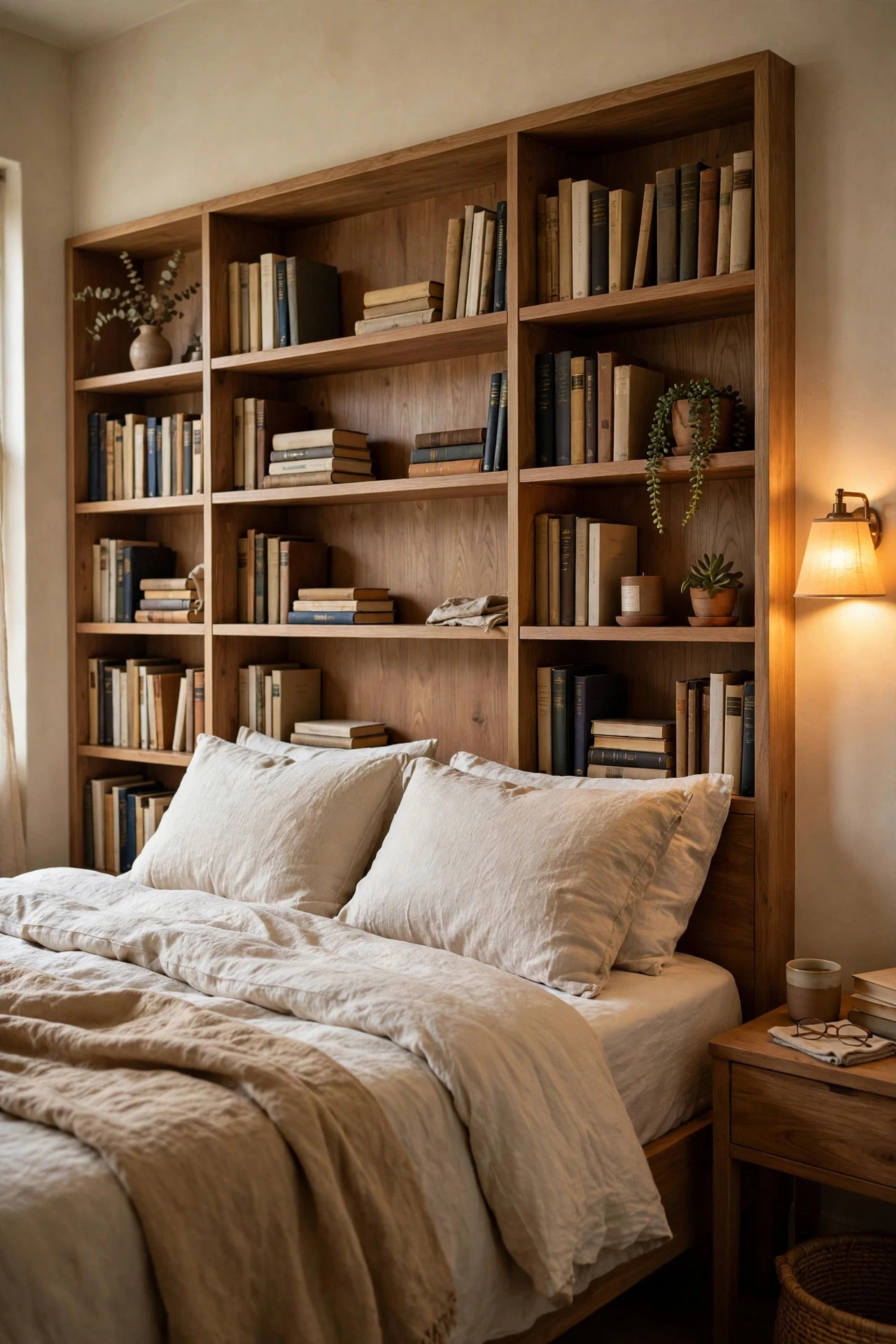
A built-in storage headboard makes sense when the bedroom has no room for bedside tables: a panel 25–30 cm deep with open shelves, closed cupboards or a ledge replaces both tables and gives books, glasses and a phone a home. It suits small bedrooms, guest rooms and children's rooms best.
Design the storage at arm's reach — shelves 40–60 cm above the mattress — and keep the top of the unit below 150 cm from the floor so it does not loom over the sleeper. Include a cable channel for phone chargers and a reading light, because a storage headboard without power quickly becomes a clutter shelf. A joiner-built storage headboard costs £400–£1,200, while a flat-pack version runs £150–£400. Avoid deep cupboards above the bed; anything deeper than 30 cm feels like a cupboard over your head and collects dust.
17. How Do You Add Floating Shelves Above a Headboard?

Add floating shelves above a headboard by fixing one long ledge 25–30 cm above the top of the headboard, deep enough for books and a small vase but shallow enough — 12–15 cm — that nothing can fall on a sleeper. The ledge turns the wall above the bed into a display without crowding it.
Fix the shelf into studs with brackets rated for double the load, and keep the objects on it light: framed prints, a small plant, a candle in a jar. Two short shelves flanking the headboard work better than one long shelf across it, because they leave the centre clear for artwork. A floating ledge costs £20–£60, and it is the easiest way to add personality to a plain headboard. Avoid heavy objects, glass vases or anything with a sharp edge directly above the pillows — if it falls, it falls on you.
18. How Do You Build a DIY Plywood Panel Headboard?
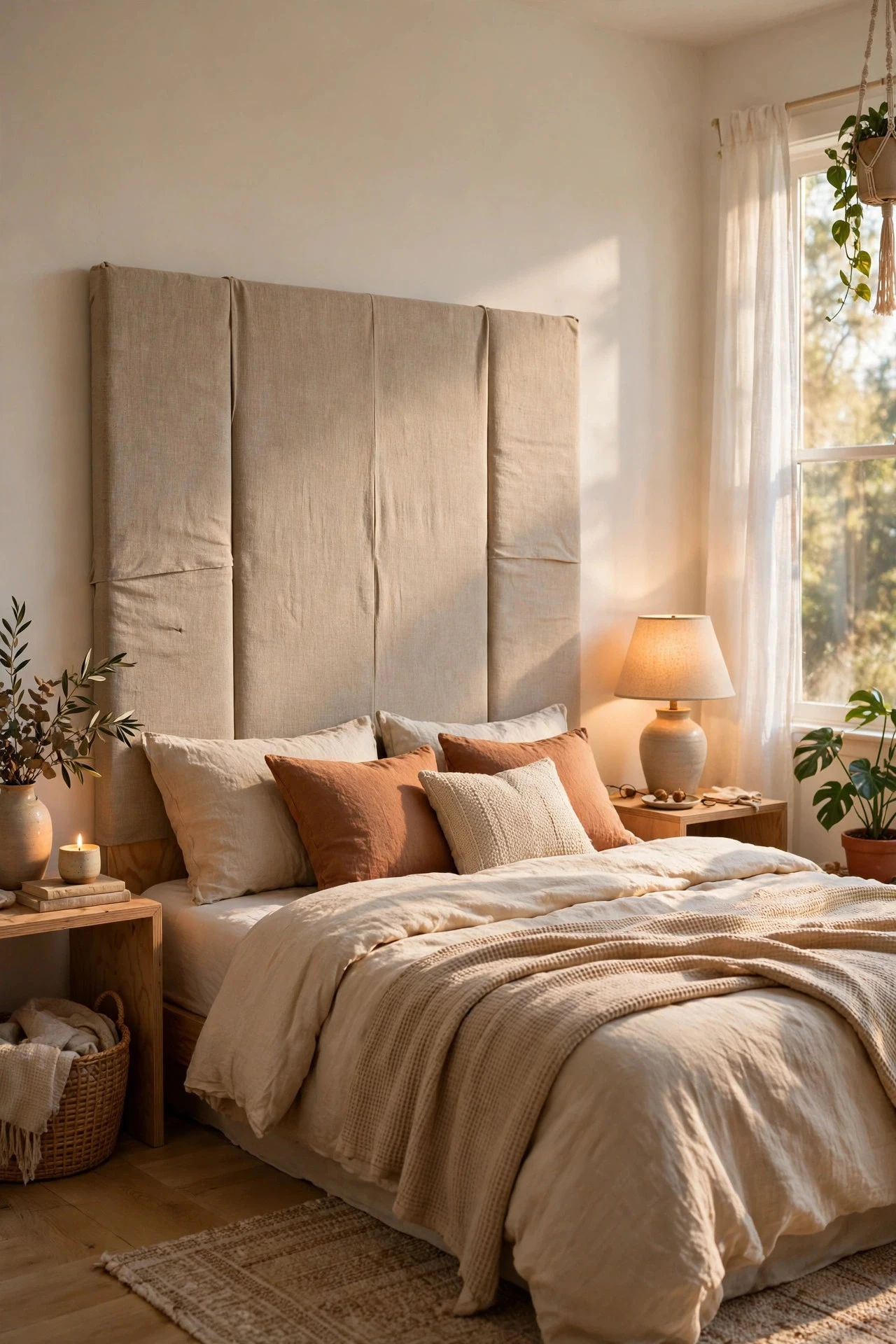
Build a DIY plywood panel headboard by cutting a sheet of 18 mm plywood to the mattress width, wrapping it in 2 cm foam and batting, and stapling your chosen fabric over the back. The whole build takes a weekend afternoon, costs £60–£120, and looks indistinguishable from a shop-bought upholstered headboard.
Cut the panel 10 cm taller than your target height so you can trim it after the fabric is on, and use a French cleat to hang it — it holds the weight and keeps the panel flush to the wall. Choose a fabric with some stretch, such as a cotton-linen blend, because stiff fabrics crease at the corners. For more inventive starting points, from salvaged doors to book spines, these 11 inventive headboards show how far a simple panel can go. Avoid MDF for a large panel; it is heavier than plywood, sags over time, and does not hold staples as well.
19. How Do You Style a Floor-to-Ceiling Headboard Panel?
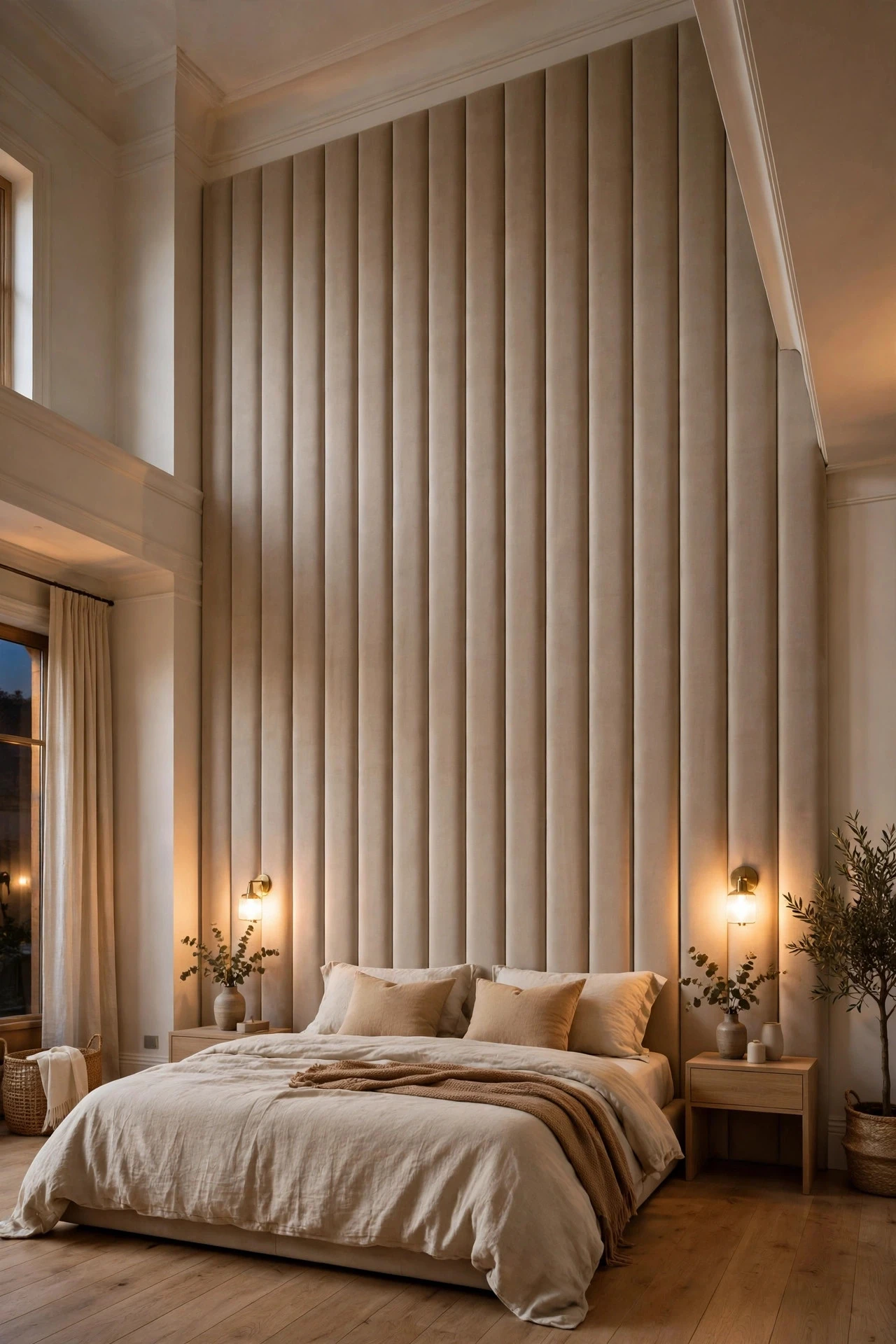
Style a floor-to-ceiling headboard panel by treating it as a wall, not a headboard: upholster it in a single fabric or clad it in wood, run it the full width of the bed wall, and keep everything else in the room quiet. The panel makes a standard-height room feel like a suite, and it hides uneven walls completely.
Floor-to-ceiling panels suit ceilings of 2.7 m or more; in a lower room they press down on the bed. Build the panel in sections so it can be moved, and leave a 5 cm gap at the ceiling for expansion if you use wood. An upholstered floor-to-ceiling panel costs £500–£1,500 professionally made, or £200–£400 as a DIY build in fabric-covered plywood sections. Avoid a floor-to-ceiling panel in a room with a ceiling fan or a pendant light near the bed — the panel competes with the fitting and the room feels crowded.
20. What Headboard Works Best in a Small Bedroom?
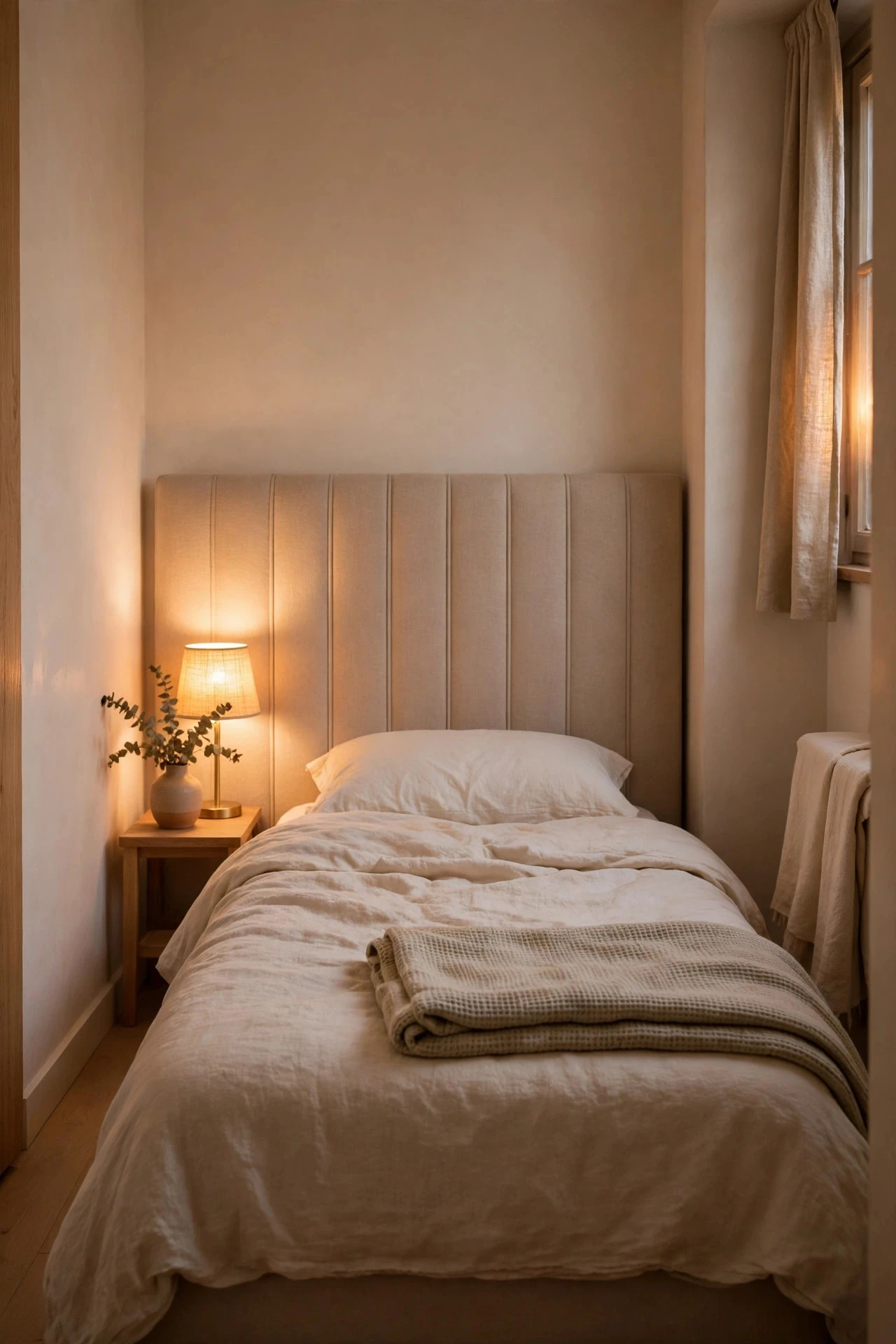
The best headboard for a small bedroom is a slim upholstered panel, a cane panel or a painted wall shape — all three add style without depth. A padded panel only 5–8 cm thick gives a soft backrest and takes no floor space, while a painted arch costs almost nothing and leaves the room feeling larger.
In a small room, keep the headboard the same width as the mattress, not wider, and keep the height modest — 60 cm above the mattress is enough. A low, wide panel with a shelf ledge can replace a bedside table on one side, freeing up floor space. A slim panel costs £80–£250, and a painted shape costs under £20. For more ways to make a tight room feel generous, these small bedroom ideas that make a tiny room feel bigger cover layout, storage and light alongside the headboard. Avoid deep wingbacks, storage headboards and tall statement panels in a small room; each one eats space the room cannot spare.
21. What Are the Best Renter-Friendly Headboard Options?

The best renter-friendly headboard options need no drilling into the bed frame and no damage to the walls: a freestanding headboard that leans against the wall, a fabric wall hanging, a painted arch, or a lightweight plywood panel hung on removable hooks. All four move with you and leave nothing behind.
A freestanding upholstered headboard simply stands on the floor behind the bed, held in place by the bed's weight, and costs £100–£300. A large tapestry or macramé hanging gives the same focal point for £30–£80 and weighs almost nothing. Check your tenancy agreement before painting, and use removable hooks rated for the panel's weight — never stick heavy boards with adhesive strips. Avoid screwing anything into the bed frame in a furnished rental; the landlord will charge for the holes.
22. How Do You Finish a Headboard With Pillows and Lighting?

Finish a headboard with pillows and lighting by layering in threes: two sleeping pillows flat against the headboard, two Euro squares in front of them, and one small lumbar cushion — then add a pair of wall lights or bedside lamps at the headboard's top corners. The layers give the headboard a frame, and the light makes it glow at night.
Keep the pillow colours drawn from the headboard itself — one shade from the fabric, one from the wall, one accent — so the bed reads as one composition. Wall lights mounted 15 cm above the headboard's top edge wash the fabric with light and free the bedside tables. A finished headboard needs no more than three pillow layers; more than that and the bed becomes a chore to make every morning. A quiet corner to enjoy the finished bed is the final touch, and these 22 bedroom reading nook ideas for a cosy, quiet corner show how to carve one out beside the bed.
Practical Tips
Measure twice before you order: mattress width, ceiling height and the distance to the bedside tables decide the headboard, not the catalogue photo. Tape the outline on the wall and live with it for a day before you commit. Buy the headboard before the bedding, because the bedding must work with the headboard's colour and texture, not the other way round.
Clean according to the material — vacuum fabric weekly, wipe wood and metal with a damp cloth, condition leather twice a year — and keep the headboard 2–3 cm off the wall if it is not wall-mounted, so air circulates and damp never builds up behind it. Budget £60–£150 for a simple metal or painted headboard, £150–£400 for a good upholstered or wood one, and £500 or more for a custom floor-to-ceiling panel. Store spare fabric and touch-up paint with the headboard's receipt, so a repair takes minutes rather than a new purchase.
Final Thoughts
A headboard is the cheapest way to make a bed look designed: get the width and height right, choose a material that suits how you live, and let the bedding and lighting finish the job. Whether you pick a soft linen panel, a rattan weave or a painted arch, the right headboard turns the bed into the room's centrepiece.
You may also like: our 24 cosy bedroom design ideas for a peaceful and stylish retreat will help you carry the same calm, layered feeling from the headboard across the whole bedroom.
Frequently Asked Questions
How wide should a headboard be compared to the bed?
Match the mattress width or go 5–10 cm wider on each side. A queen mattress is 152 cm wide, so choose a headboard 152–172 cm wide; a king is 193 cm, so aim for 193–213 cm. Anything narrower than the mattress looks undersized, and anything far wider crowds the bedside tables.
How tall should a headboard be?
Aim for 60–75 cm above the mattress for a standard headboard, which puts the top roughly 120–140 cm from the floor. Tall statement headboards run 90–120 cm above the mattress, and floor-to-ceiling panels suit ceilings of 2.7 m or more. Leave at least 15 cm of wall visible above the panel so the room can breathe.
Can you put a headboard on any bed frame?
Most bed frames accept a headboard through standard bolt holes at the head end, and freestanding or wall-mounted headboards work with any frame, including platform and divan beds. Check the bolt spacing before buying, and measure the frame height so the headboard sits level. If your frame has no holes, a wall-mounted panel is the simplest fix.
What is the best headboard material for a small bedroom?
Slim upholstered panels, cane and rattan, and painted wall shapes work best in a small bedroom because they add style without depth. A padded panel only 5–8 cm thick gives a soft backrest and takes no floor space, while rattan adds texture without visual weight. Avoid deep wingbacks and thick storage headboards, which eat 15–20 cm of room length.
How do you attach a headboard to the wall?
Hang a wall-mounted headboard on a French cleat or heavy-duty hooks fixed into wall studs, never into plasterboard alone. Mark the centre line above the bed, fix the cleat level, and lift the headboard onto it. For panels over 10 kg, use two studs and fixings rated for double the weight, and bolt freestanding headboards to the bed frame.
Are upholstered headboards hard to keep clean?
Upholstered headboards need only light upkeep: vacuum with an upholstery attachment every two weeks and blot spills immediately with a damp cloth. Performance fabrics and removable slipcovers make life easier in homes with children or pets, while velvet needs a soft brush to keep the pile even. Avoid dark velvet in sunny rooms, where fading shows fastest.