How to Style a Ralph Lauren Kitchen That Feels Classic and Collected
A Ralph Lauren kitchen is not really about a brand at all. It is about a feeling: a room that looks like it has been lived in, loved and slowly collected over decades, rather than bought in one afternoon. Think deep navy cabinetry, warm brass that has aged a little, worn leather bar stools, a plaid cushion on a window seat, and a shelf of mismatched china that somehow all belongs together. It is preppy without being precious, and traditional without feeling stiff.
This guide is about the Ralph Lauren look — inspired by it, not endorsed by the brand — and how to build it in a real kitchen. Every idea includes real paint colours, real materials, measurements and honest budgets, plus rental-friendly and budget versions so you can get the look without buying the label. You will not find a shopping list of designer pieces here; you will find the rules that make the style work, whichever pieces you own.
Looking for more inspiration? Our Nest Decorz homepage gathers the latest home decor ideas, seasonal decorating guides and room-by-room styling tips in one place — start there and explore.
Quick answers
– The palette: navy, cream, warm brass and cognac leather, with one plaid or tartan accent per zone. – The cabinets: deep navy or hunter green in a satin finish, with unlacquered brass knobs and cup pulls. – The rule that matters most: mix old and new — one antique or vintage piece in every zone, never a matching set. – The budget: $800–$1,500 transforms a kitchen with paint, hardware and textiles; a full rework runs $15,000–$30,000. – The trap to avoid: buying everything labelled with the look at once — the style only works when it looks collected over time.
1. How Do You Get the Navy Cabinet Colour Right?

The navy in a Ralph Lauren-inspired kitchen is deep, muted and slightly grey, never bright or royal blue. Good starting points are Farrow & Ball Hague Blue, Benjamin Moore Hale Navy (HC-154) and Sherwin-Williams Naval (SW 6244) — all read as inky navy in daylight and almost black in the evening, which is exactly the mood you want.
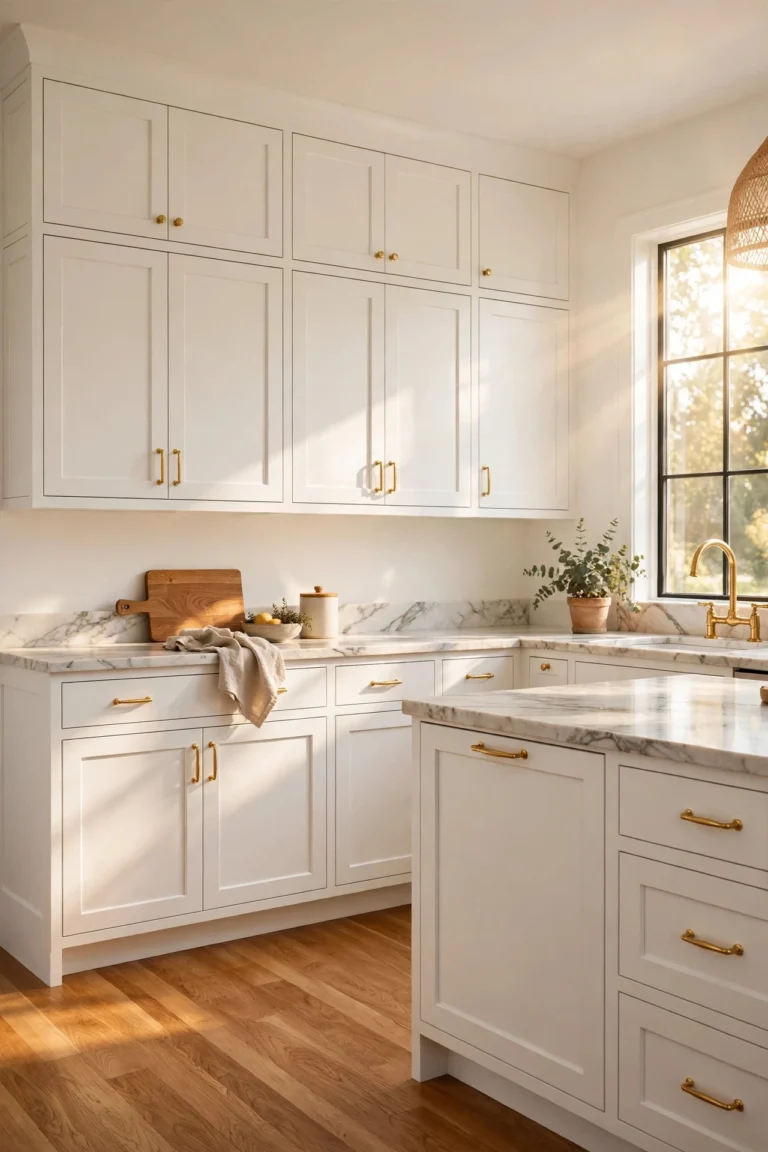
Paint the perimeter cabinets navy and keep the island or the upper cabinets in a warm cream, such as Farrow & Ball Wimborne White, so the room does not go dark. Use a satin or eggshell finish, not high gloss; the look is soft and lived-in, and gloss shows every fingerprint. Order sample pots and paint a 12-inch swatch on a cabinet door, then check it at morning, noon and night before committing. Avoid pairing navy with cool grey walls — the combination turns flat and cold, and the warmth of the brass and leather cannot rescue it.
2. What Brass Finish Works Best in This Kitchen?
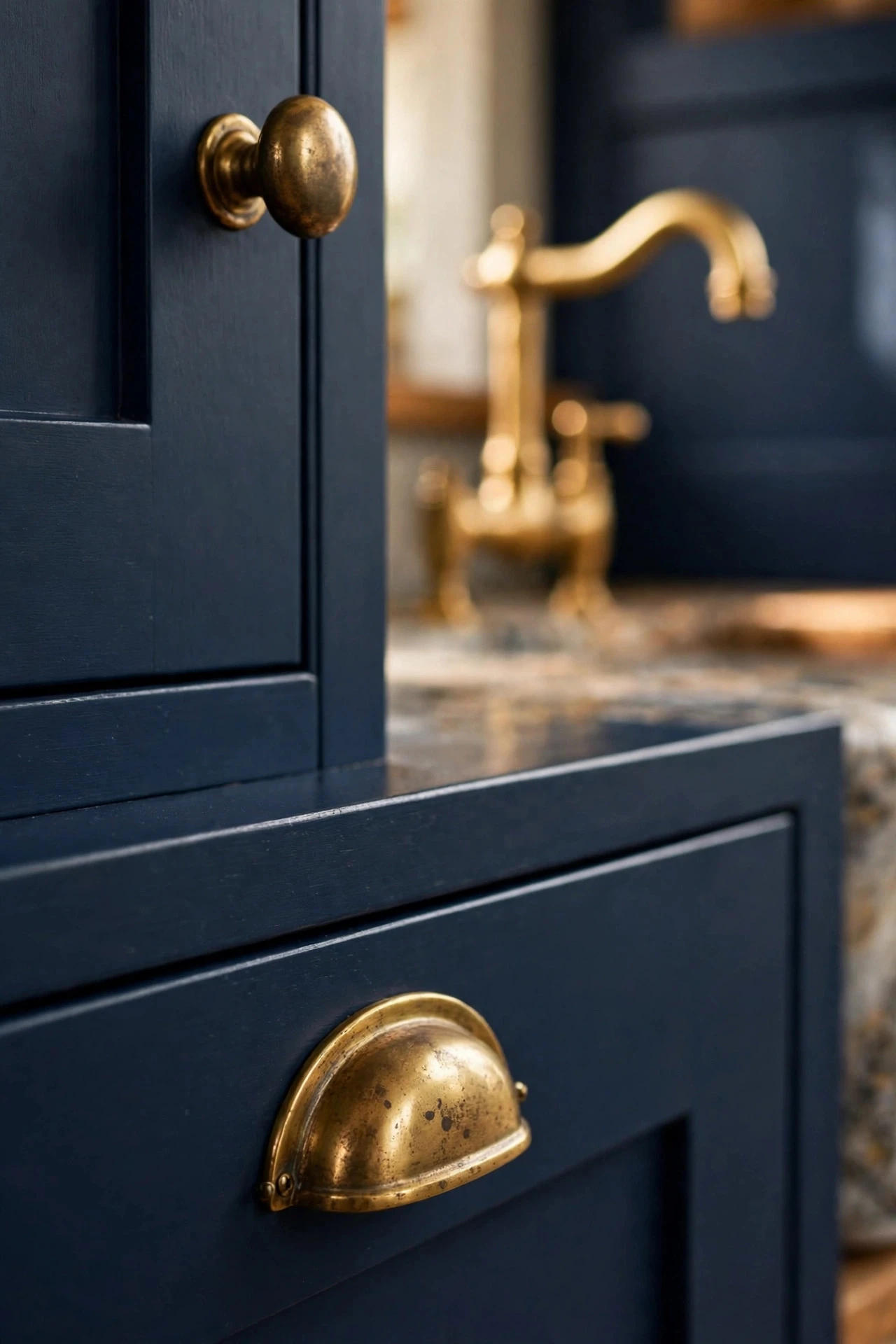
Unlacquered brass is the right finish here, because it ages. It starts bright and slowly develops a soft patina on the spots hands touch most, which is precisely the collected, not-new look this style depends on. Polished chrome reads too cold and too modern, and matte black reads too industrial for a classic room.
Use brass for the cabinet knobs, cup pulls, tap, pendant lights and even the hinges if you are replacing them. A standard knob costs $6–$15 and a cup pull $12–$25, so re-hardware a 20-door kitchen for roughly $300–$600. Keep the finish consistent across the room — one brass, not three — and let the patina develop naturally rather than polishing it weekly. Avoid lacquered brass that stays shiny forever; it looks like a hotel bathroom, and the whole point of this kitchen is that nothing looks brand new.
3. How Do You Choose Marble That Looks Collected, Not Showroom?
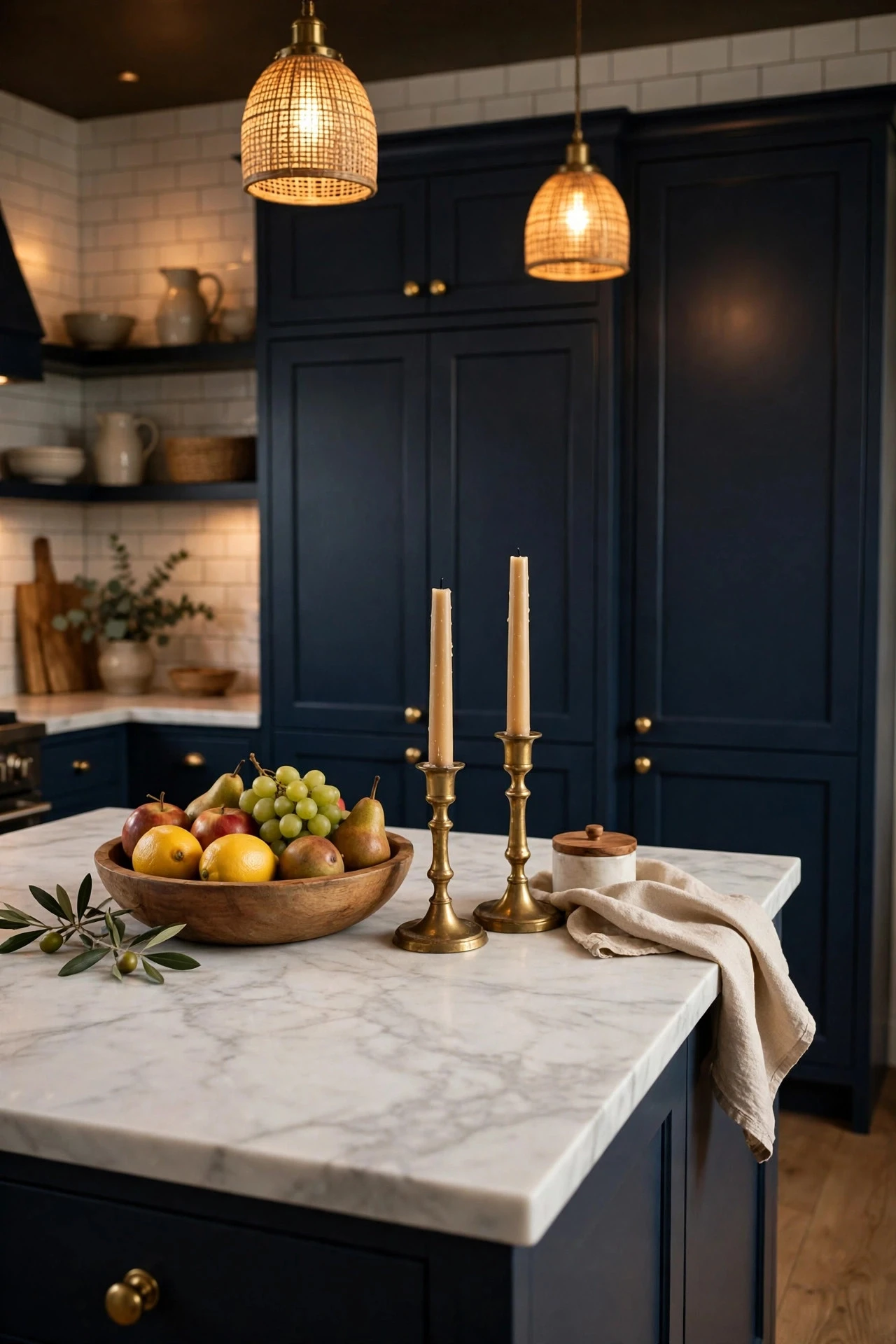
Marble in a Ralph Lauren-style kitchen should look like it has a history. Honed Carrara or Calacatta marble, with soft grey veining on a warm white ground, suits the look far better than a dramatic, high-contrast slab that shouts for attention. A honed finish is matte, hides etching better than polished stone, and feels older the moment it is installed.
Budget $60–$100 per square foot installed for Carrara, and $80–$130 for Calacatta. If that is too much, use marble on the island only and a warm butcher block or a quartz that mimics honed marble on the perimeter — nobody will notice the difference once the room is dressed. Seal honed marble every 6 to 12 months and accept that a ring from a coffee cup is part of the story, not a disaster. For more dramatic dark-stone ideas that still sit happily beside navy and brass, browse these moody kitchen ideas. Avoid pure white quartz with no veining; it reads as a laboratory bench and fights the warmth of everything else.
4. How Do You Style Leather Bar Stools the Ralph Lauren Way?

Leather bar stools are the single fastest way to bring this look into a kitchen. Choose cognac, saddle or chestnut leather — warm browns with visible grain — over black leather, which turns the island into a boardroom. A counter stool is 24 to 26 inches high for a 36-inch counter; a bar stool is 28 to 30 inches for a 42-inch bar.
Look for a low back or a backless saddle seat with a brass foot rail, and let the leather crease and darken with use. Good leather stools cost $250–$600 each, so budget $750–$1,800 for three; convincing faux leather versions start at $120 each and work well if the grain looks natural up close. Space stools 24 to 30 inches apart, centre to centre, so elbows have room. Avoid matching the stools to the dining chairs exactly — the Ralph Lauren look mixes seating the way a real house accumulates it, and a perfect set kills the effect.
5. Where Does Plaid Belong in a Ralph Lauren Kitchen?

Plaid is the signature textile of this look, but it works only when it is used sparingly. One plaid per zone is the rule: a tartan roman shade at the window, a plaid cushion on the banquette, or a plaid tea towel folded over the oven handle — never all three in the same sightline. Classic choices are a navy and green Black Watch tartan, a red and navy Royal Stewart, or a muted brown glen plaid.
Keep the scale of the check in proportion to the piece: a large check on a window seat cushion, a small check on a tea towel. A ready-made plaid roman shade costs $80–$200; a pair of plaid cushions costs $40–$90. Washable cotton or wool-blend fabrics are practical in a kitchen, and they soften with every wash. Avoid plaid wallpaper across a whole wall — it overwhelms the room and turns a classic kitchen into a theme park — and avoid mixing two different tartans in one view.
6. How Do You Add Equestrian Touches Without Overdoing It?

Equestrian details are the heritage heart of the Ralph Lauren look, but they should whisper, not shout. One or two references per room is enough: a framed vintage horse print above the coffee station, a brass snaffle-bit pull on a drawer, a leather-bound book on the shelf, or a pair of old riding boots by the back door used as a vase holder.
A framed equestrian print costs $30–$120 at a thrift shop or print seller, and a snaffle-bit pull costs $15–$30. Hang the print at eye level, 57 to 60 inches from the floor, and keep it in a simple dark wood or brass frame so the image, not the frame, does the work. The rest of the room should stay a kitchen, not a stable. Avoid a saddle draped over a chair, horseshoes nailed to the wall, or a full wall of horse portraits — three equestrian pieces in one room crosses the line from collected to costume.
7. How Do You Display Collected Antiques on Open Shelving?
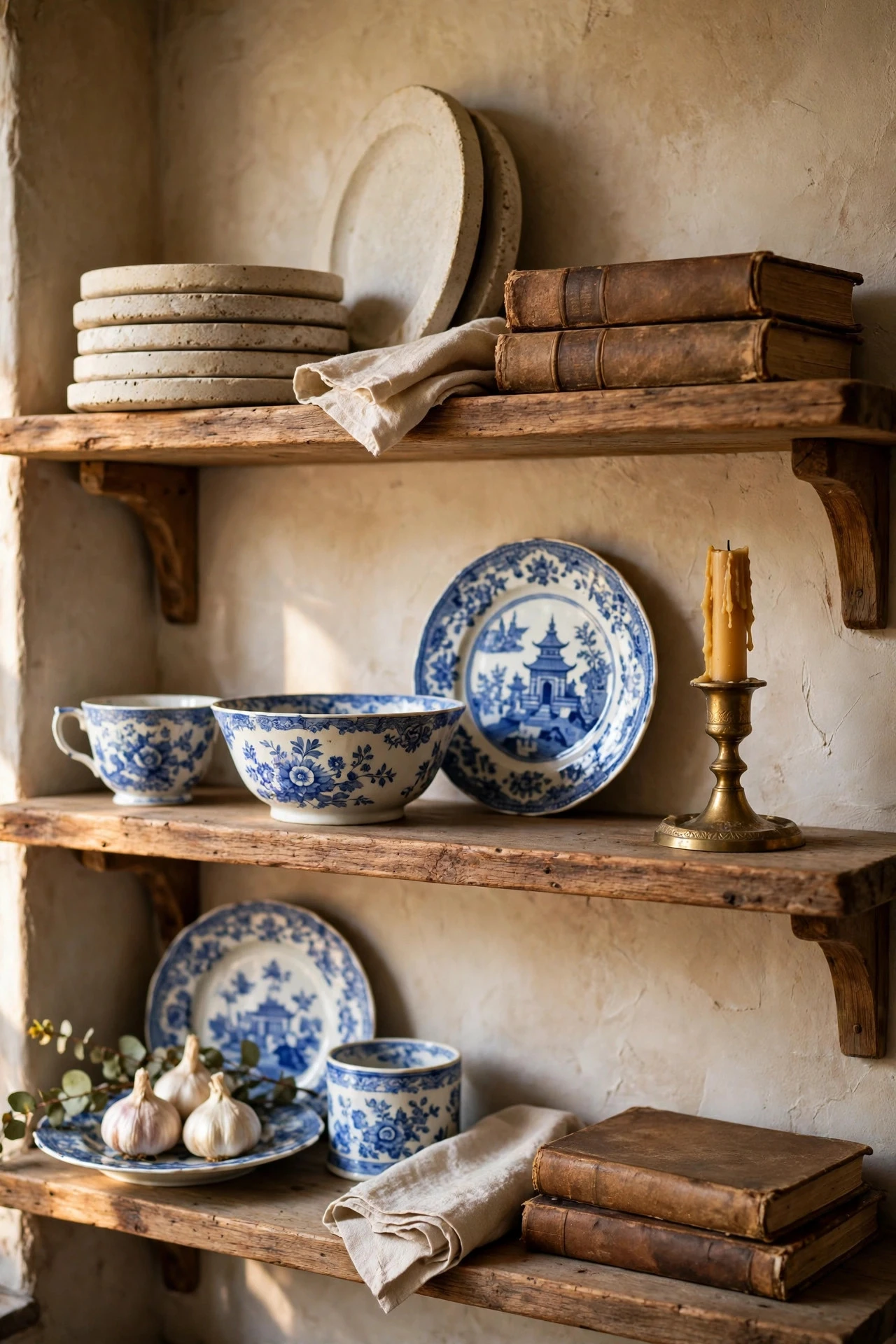
Open shelving is where a Ralph Lauren kitchen earns its "collected" feeling, because it shows the pieces you actually use and love. Style two or three shelves with a mix of ironstone plates, a stack of old cookbooks, a brass candlestick, a wooden bowl and one piece of blue-and-white china — grouped in odd numbers, with breathing space between groups.
Hang shelves 18 to 20 inches above the counter, and keep the top shelf within easy reach so the pieces get used, not just dusted. Style shelves by colour and height: tall items at the back, low stacks at the front, and one empty stretch of shelf so the display can breathe. A pair of solid wood shelves costs $80–$200 installed. For shelf styling that looks curated rather than cluttered, see these kitchen open shelving ideas. Avoid filling every inch of shelf with matching sets; a row of identical mugs is a shop display, not a collection.
8. What Wood Tones Warm Up a Navy Ralph Lauren Kitchen?

Warm wood is what stops navy cabinetry from feeling cold. Choose medium, honeyed tones — white oak, walnut or warm pine — for the floor, the island counter, a butcher-block section, or a farmhouse table pulled up to the island. The wood should look oiled and worn, not lacquered and shiny.
A white oak floor costs $8–$15 per square foot installed, and a butcher-block island top runs $400–$900. If new flooring is out of reach, add warmth lower down: a walnut chopping board left out on the counter, oak stools, or a pine shelf. Keep the wood tones in the same warm family — mixing honey oak, grey-washed pine and dark mahogany in one room looks accidental rather than collected. Avoid cool grey wood floors with navy cabinets; the two cold tones together flatten the room and fight the brass and leather.
9. How Do You Style the Island Like a Ralph Lauren Room?

Treat the island as a piece of furniture, not a workstation. Dress it the way you would a sideboard: a low wooden bowl of fruit, a stack of two cookbooks, a small brass lamp or a candlestick, and a linen runner down the centre. Everything on it should be useful or beautiful — ideally both — and nothing should block the view across the room.
Keep the styling to one end of the island if you cook there daily, leaving the other end clear for prep. A runner 12 to 14 inches wide and 36 to 48 inches long suits a standard 8-foot island, and a bowl 12 to 14 inches across anchors the display without dominating it. Swap the fruit and the books with the seasons — apples in autumn, lemons in summer — so the island always looks alive. For more island layouts and styling combinations, see these kitchen island decor ideas. Avoid a tall vase of flowers in the middle of the island; it blocks conversation and gets knocked over the first time someone reaches for the salt.
10. What Lighting Makes a Ralph Lauren Kitchen Glow?

Lighting is what makes this kitchen feel warm at 6 p.m. in winter. Choose lantern-style pendants with clear glass and brass frames over the island — two pendants for an island up to 6 feet, three for anything longer — hung 30 to 36 inches above the countertop so they light the work surface without blocking sightlines.
Layer the light: pendants for the island, a small brass wall sconce or two by the sink or the range, and warm under-cabinet strips at 2700K so the counters glow. A pair of brass lantern pendants costs $150–$500, and under-cabinet LED strips run $30–$80 per run. Put the pendants on a dimmer, because the same kitchen needs bright light for chopping and low light for dinner. Avoid cool-white bulbs anywhere in the room; at 4000K and above, navy turns grey, brass turns yellow, and the whole warm palette falls apart.
11. How Do You Style the Range and Hood?
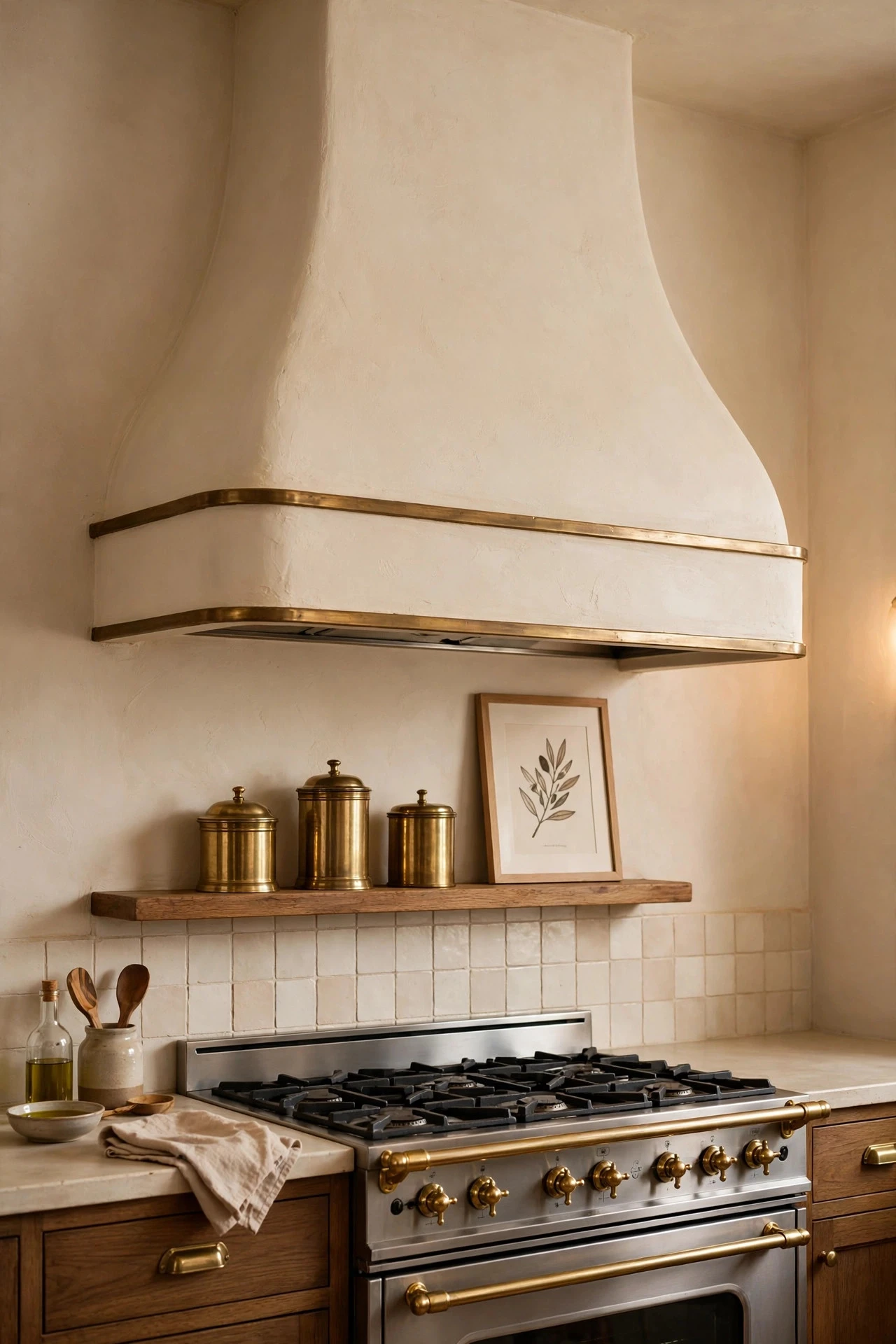
The range wall is the focal point of a Ralph Lauren kitchen, so give it presence. A plaster, shiplap or panelled chimney hood in warm cream, with a brass trim strip or a wooden mantel shelf, anchors the room far better than a stainless steel box. A 36-inch range suits most family kitchens; a 30-inch range works in a smaller room and leaves more counter space.
Style the mantel shelf with a row of small brass canisters, a framed print, and a wooden spoon jar — useful things, displayed rather than hidden. Keep the splashback simple behind a statement hood: a plain white subway tile or a honed marble slab, so the hood stays the star. A custom plaster hood costs $1,500–$4,000; a ready-made wooden hood runs $800–$2,000. Avoid a hood that is narrower than the range below it — it looks like a mistake — and avoid a mirrored splashback, which fights the soft, matte character of the rest of the room.
12. Which Backsplash Suits a Classic Ralph Lauren Kitchen?
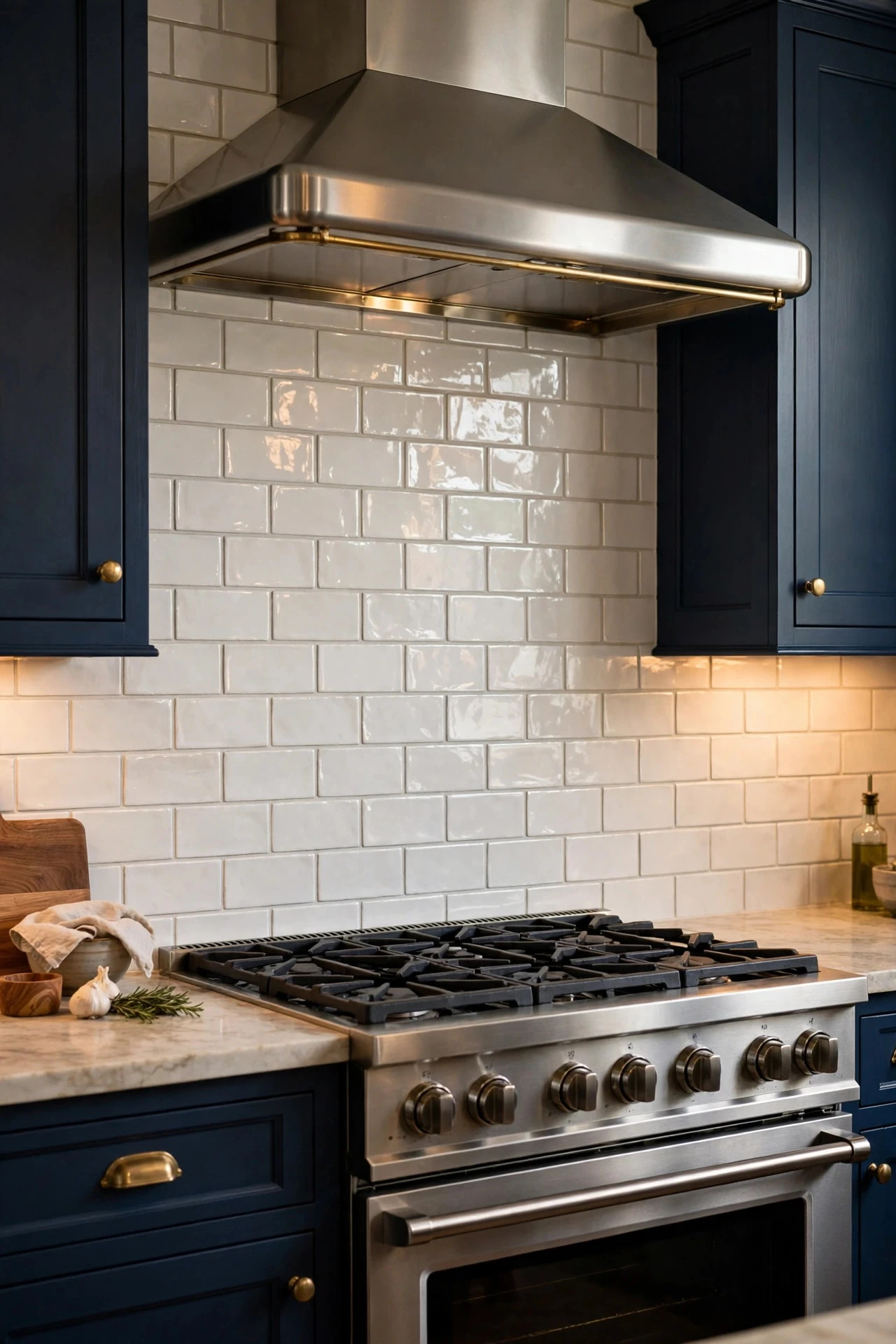
A backsplash in this kitchen should be quiet, classic and slightly handmade. Glossy white subway tile in a brick pattern is the safest choice: it bounces light around a navy room, it never dates, and it costs $8–$15 per square foot installed. Handmade-look tiles with a slightly uneven glaze add the patina this style loves, and a marble mosaic in soft grey and cream works beautifully behind a cream range wall.
Run the tile to the underside of the upper cabinets, or take it all the way to the ceiling behind the range for a statement. Use a warm white grout, not bright white or dark grey — the grout line should disappear, not draw a grid across the wall. A full backsplash in a medium kitchen costs $800–$2,000 installed. Avoid patterned encaustic tiles across the whole run; one patterned stretch behind the range is charming, but a full wall of pattern competes with the plaid, the brass and the navy all at once.
13. How Do You Build a Pantry That Feels Like a Larder?
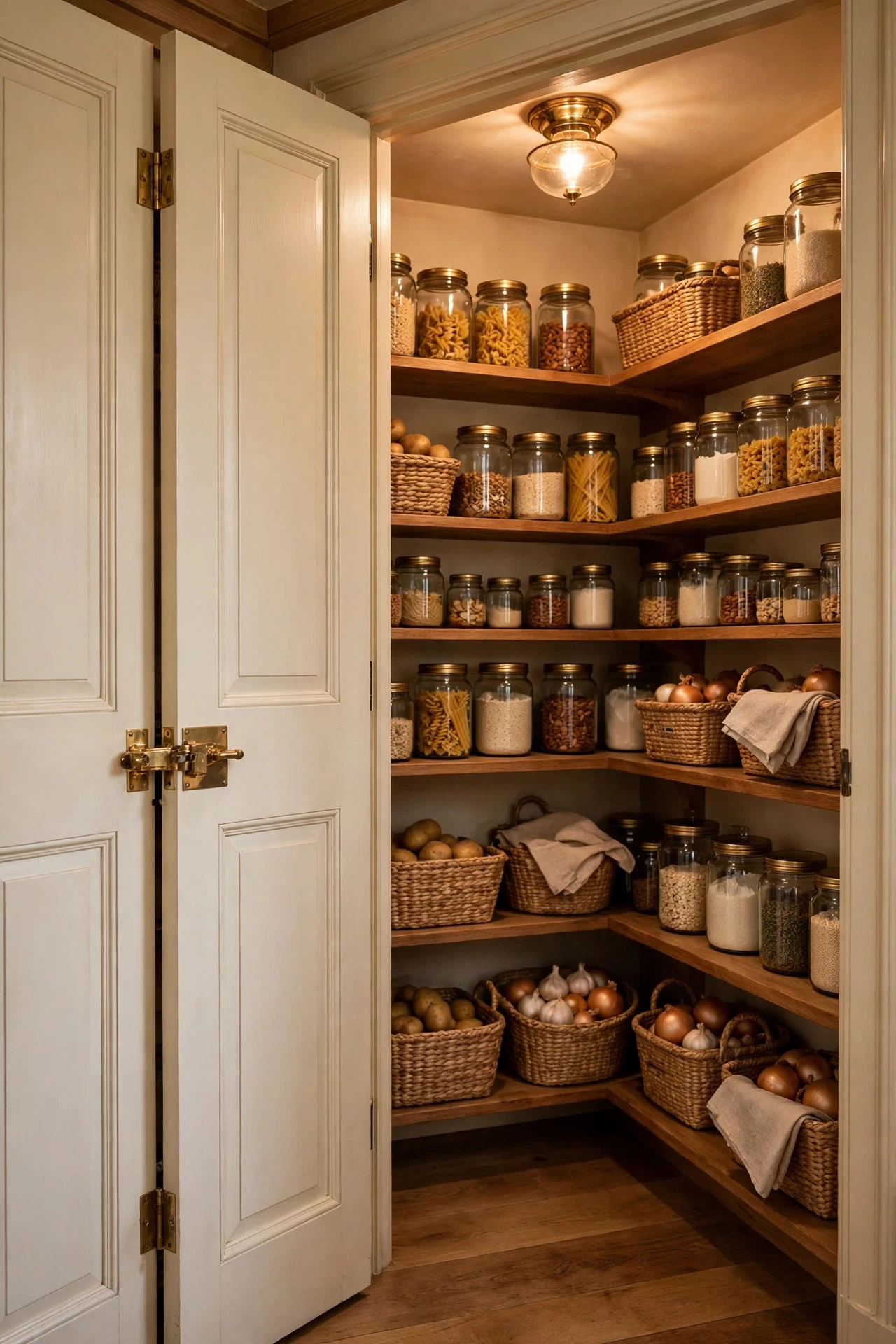
A Ralph Lauren kitchen hides its modern life behind old-fashioned storage. A walk-in pantry or a tall larder cupboard with panelled doors, brass latches and wooden shelves feels like it has always been there, and it keeps the counters clear — which is half the look. Inside, use open wooden shelves, glass jars with brass lids, and woven baskets for dry goods.
If a walk-in pantry is not possible, convert one tall cupboard: paint the inside cream, add three adjustable oak shelves, and fit a brass rail for hanging measuring cups. A larder cupboard conversion costs $300–$800; a full walk-in pantry fit-out runs $2,000–$5,000. Label jars with simple paper tags tied with twine, not printed plastic labels. For more vintage storage ideas that suit a classic kitchen, browse these apothecary kitchen ideas. Avoid wire shelving and clear plastic tubs inside a pantry you show off; they read as a garage, not a larder.
14. What Sink and Tap Complete the Look?
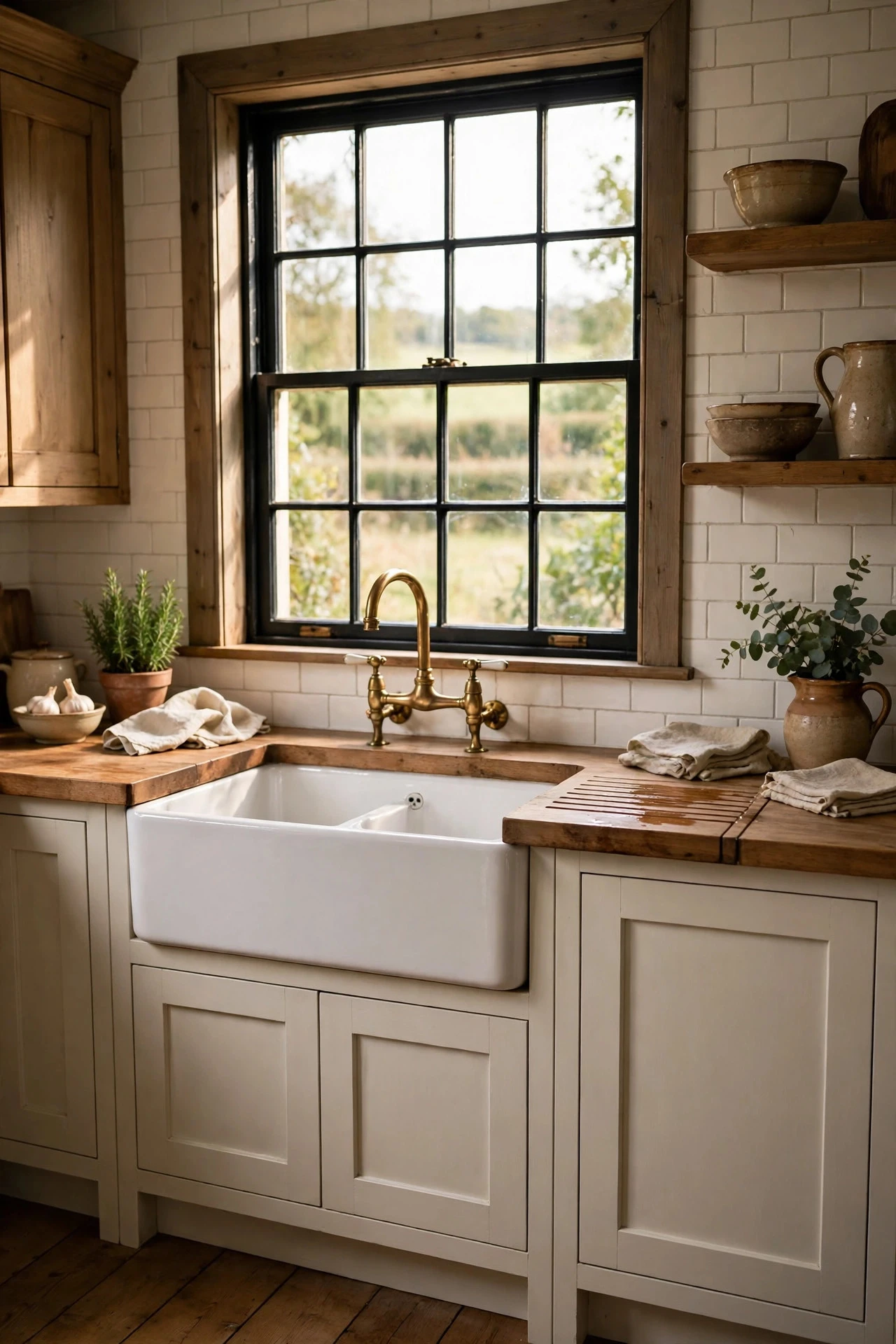
The sink should look like it belongs in a country house: a fireclay or ceramic Belfast sink with an apron front, 30 to 33 inches wide for a standard kitchen, set into the counter so the apron shows. Fireclay is heavy and hard-wearing, it does not stain the way enamelled steel does, and it costs $400–$900 for the sink itself.
Pair it with a bridge tap in unlacquered brass — two handles joined by a horizontal bar — rather than a single-lever modern mixer. A good brass bridge tap costs $300–$800. Add a brass soap dispenser and a small wooden draining board, and keep the window above the sink clear so daylight falls on the brass. Avoid a black composite sink with navy cabinets; the two dark tones merge into a hole in the counter, and the brass tap loses its contrast. The Spruce's guide to kitchen sink styles explains the practical differences between fireclay, stainless steel and composite before you commit.
15. How Do You Create a Cosy Dining Nook?

A banquette or a small farmhouse table at the end of the kitchen is the heart of a Ralph Lauren home — the place where breakfast actually happens. Build a banquette 18 inches deep and 18 inches high, with a cushion 3 to 4 inches thick in a washable plaid or a striped ticking fabric, and a table 30 inches wide so plates and elbows fit.
A built-in banquette costs $1,500–$3,500; a freestanding farmhouse table with two benches runs $600–$1,500. Hang a small brass pendant or a lantern 30 inches above the table, and add a cushion in a contrasting plaid so the nook feels layered rather than matched. Keep a basket under the bench for placemats and a small shelf above for books. Avoid a glass-top table in this corner; it reads as a showroom, and the whole point of the nook is that it is the most sat-in seat in the house.
16. What Art Works on a Ralph Lauren Kitchen Wall?
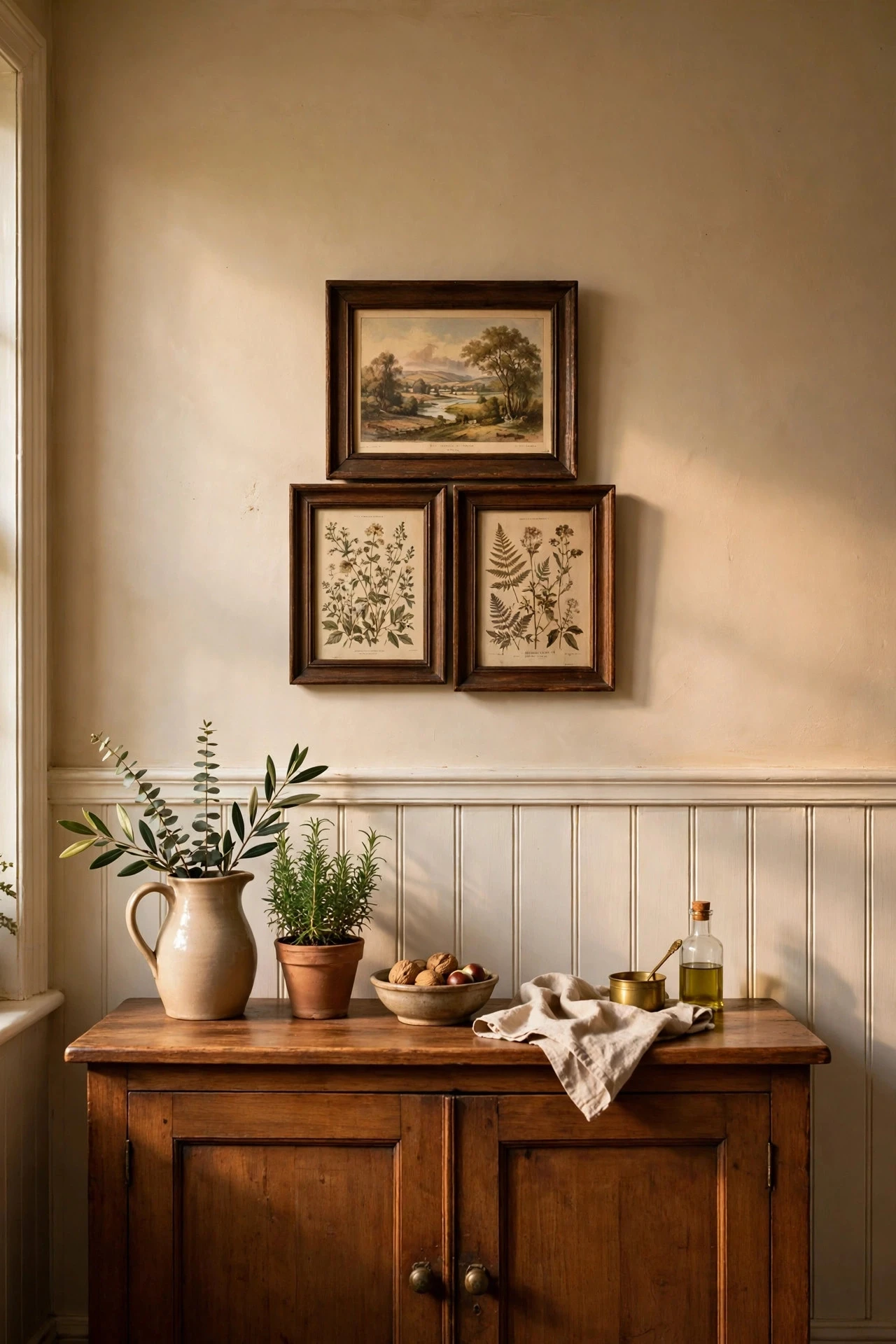
Art in this kitchen is small, framed and personal, never a giant canvas. Good choices are a vintage landscape print, an old botanical engraving, a framed menu from a favourite restaurant, or a black-and-white photograph of the countryside — each in a dark wood or brass frame, hung in a loose cluster or a single row above a sideboard.
Hang one picture 57 to 60 inches from the floor at its centre, and leave 2 to 3 inches between frames in a cluster. A framed vintage print costs $25–$100, and a set of three small prints makes a better display than one large one. Choose images with the room's colours in them — navy, green, cream, brass — so the art ties the palette together. Avoid modern abstract prints with bright colours; they fight the heritage mood and pull the eye away from the cabinetry. Ralph Lauren himself built a fashion empire on exactly this heritage imagery, as the Wikipedia profile of Ralph Lauren traces from his early tie business to the full lifestyle brand.
17. How Do You Dress the Windows?
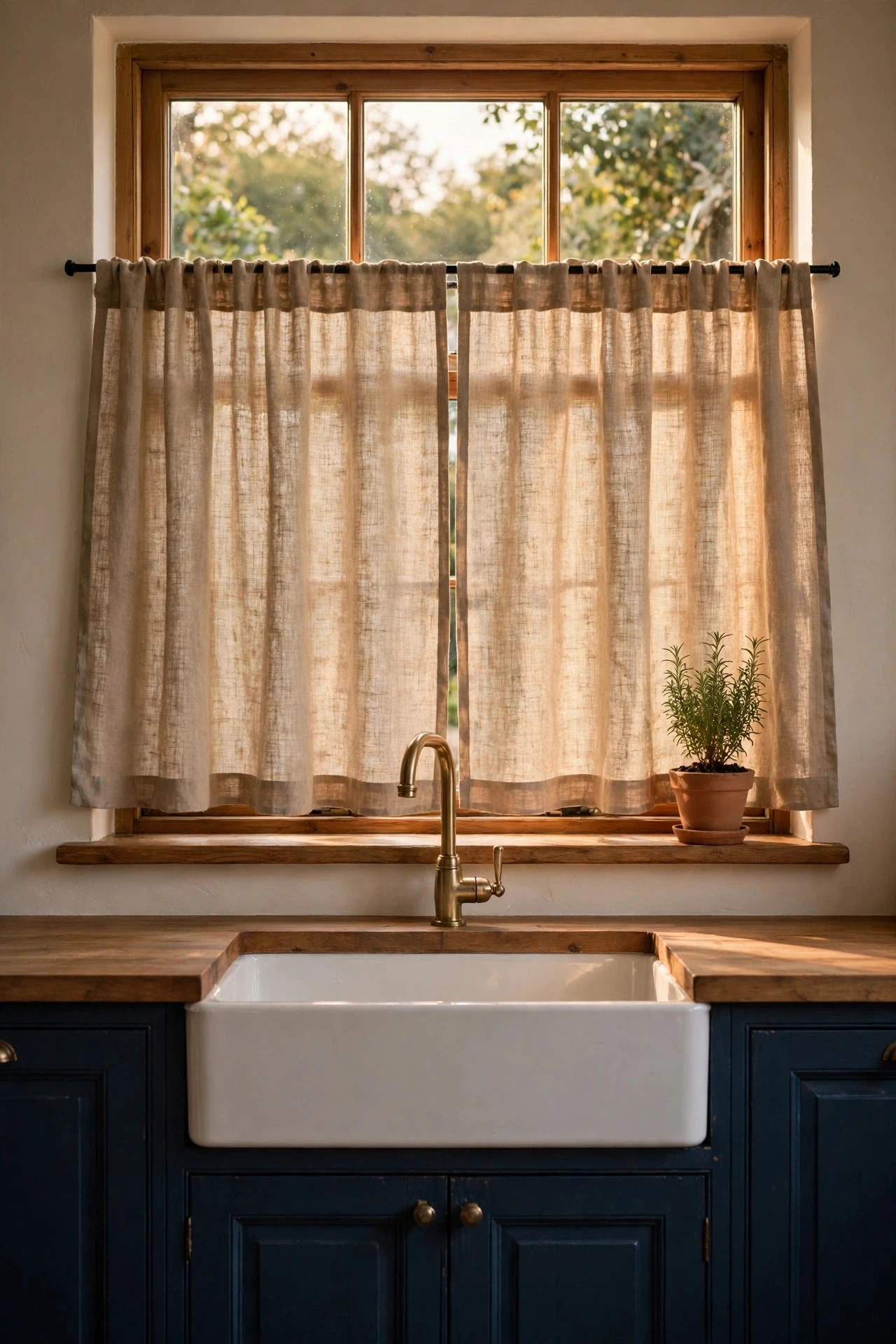
Windows in a Ralph Lauren kitchen wear simple, tailored treatments: a roman shade in a muted plaid or a navy-and-cream stripe, a cafe curtain in natural linen, or plain shutters painted cream. The treatment should frame the light, not block it, and it should be washable — kitchen windows collect grease.
A made-to-measure roman shade costs $120–$300 per window; ready-made linen cafe curtains run $40–$90 a pair. Mount the shade inside the frame for a clean look, or outside it to make a small window look larger. If the window sits above the sink, keep the fabric short — a shade that ends at the sill, not puddling on the counter. Avoid heavy velvet curtains in a kitchen; they absorb cooking smells, they are impossible to wash, and they turn a working room into a stage set.
18. How Do You Style the Countertops Like a Collected Home?
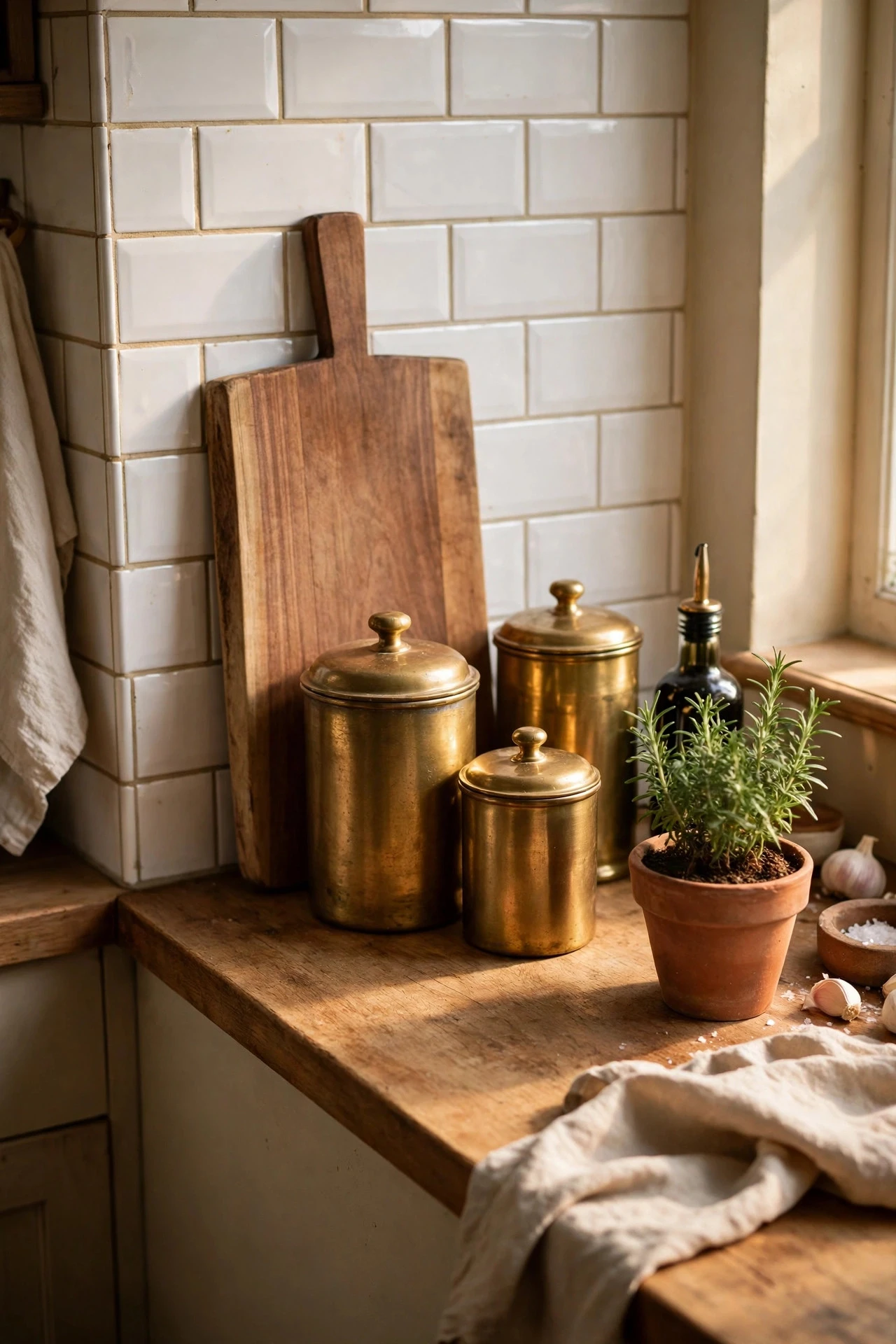
Countertops in this kitchen are styled, not cleared to nothing. The rule is three groups, each with a job: a wooden chopping board leaning against the splashback, a brass or ceramic canister set for tea and coffee, and a small potted herb in a terracotta or brass pot. That is enough — the counter should still look like a place where cooking happens.
Group items in odd numbers and vary the heights: a tall board, a medium canister, a low herb pot. Keep the groups 18 to 24 inches apart so the counter reads as calm, not crowded, and corral small items on a wooden tray so they look intentional. A set of three canisters costs $40–$120, and a good chopping board $30–$80. Wipe the styling down to one group when you cook a big meal, then put it back — the ritual keeps the kitchen looking lived in rather than staged. Avoid a counter covered end to end with appliances and gadgets; a Ralph Lauren kitchen hides the toaster and the blender in a cupboard.
19. What Colours Work Beyond Navy?
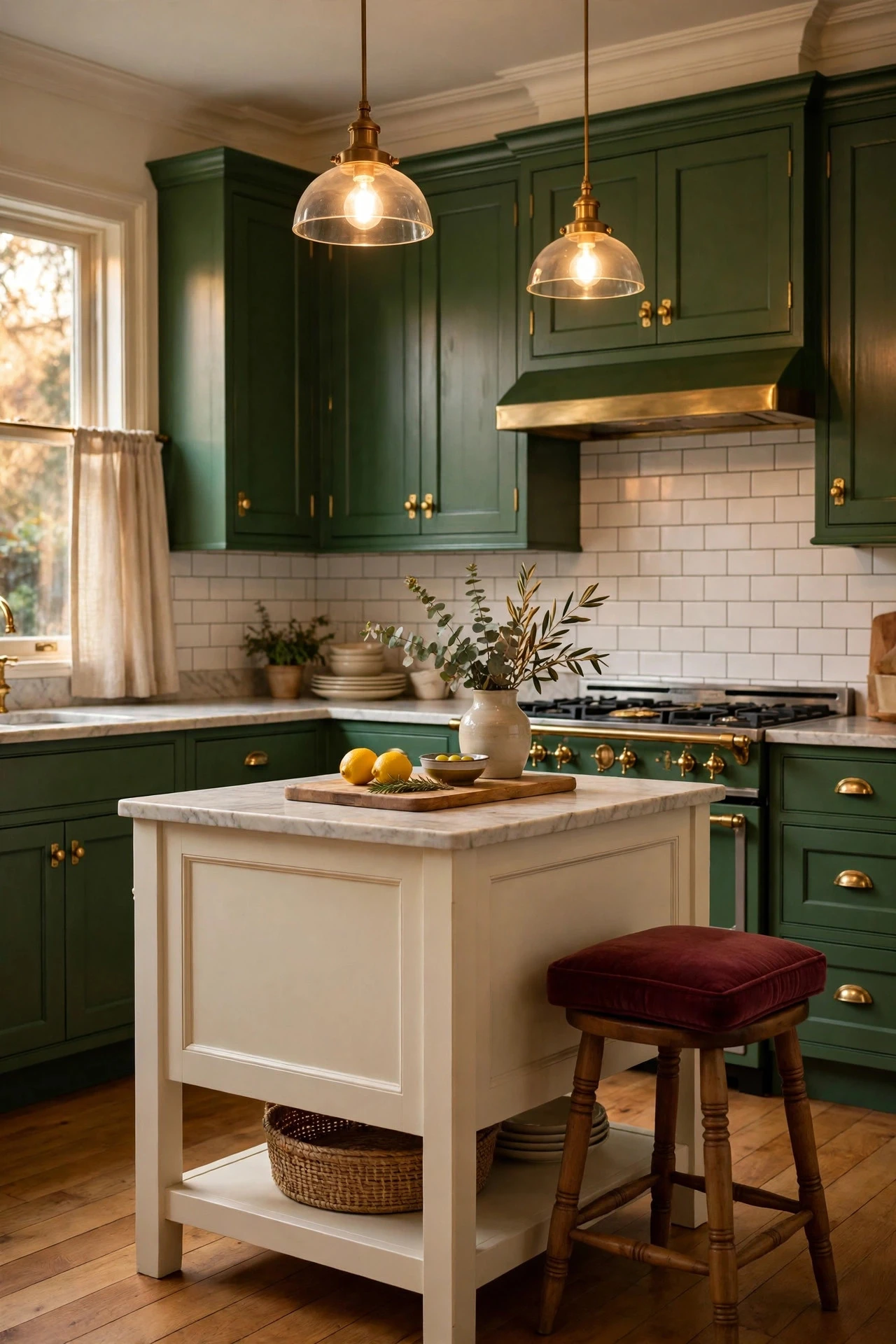
Navy is the signature, but the Ralph Lauren palette is wider than one colour. Hunter green cabinets — Farrow & Ball Studio Green or Benjamin Moore Essex Green — give the same depth with a country-house feel, and warm cream cabinets with navy walls suit a smaller kitchen that cannot take dark joinery. Burgundy or oxblood accents, in a cushion or a rug, add warmth without shouting.
Use the 60-30-10 rule: 60 percent of the room in the main colour (navy or cream), 30 percent in a supporting tone (warm wood, brass), and 10 percent in an accent (plaid red, hunter green, leather brown). In a small kitchen, flip the ratio: cream cabinets, navy island, brass hardware. For bright, warm cream-cabinet ideas that balance a dark island, see these white kitchen ideas. Avoid adding a fourth strong colour — navy, green, red and yellow in one room is a flag, not a palette.
20. Should the Floor Be Checkerboard?

A checkerboard floor is the boldest move in this style, and it works beautifully in the right room. Black-and-white marble or honed limestone tiles, 12 inches square, laid in a true checkerboard, give a kitchen instant heritage character — the look has been used in country houses for a century. Budget $12–$25 per square foot installed for marble, or $6–$12 for porcelain that mimics it convincingly.
Use it in a kitchen with a clear floor plan and keep the rest of the room calm: cream cabinets, simple hardware, no patterned backsplash competing with the floor. In a small or busy kitchen, a checkerboard overwhelms, so use it only in the entryway or the pantry instead. If a full floor is too much, a checkerboard rug runner, 2 feet wide and 6 to 8 feet long, gives the same nod for $80–$200. Avoid a checkerboard in two colours other than black and white or cream and charcoal; coloured checks turn a classic floor into a diner.
21. How Do You Get the Look in a Rental Kitchen?
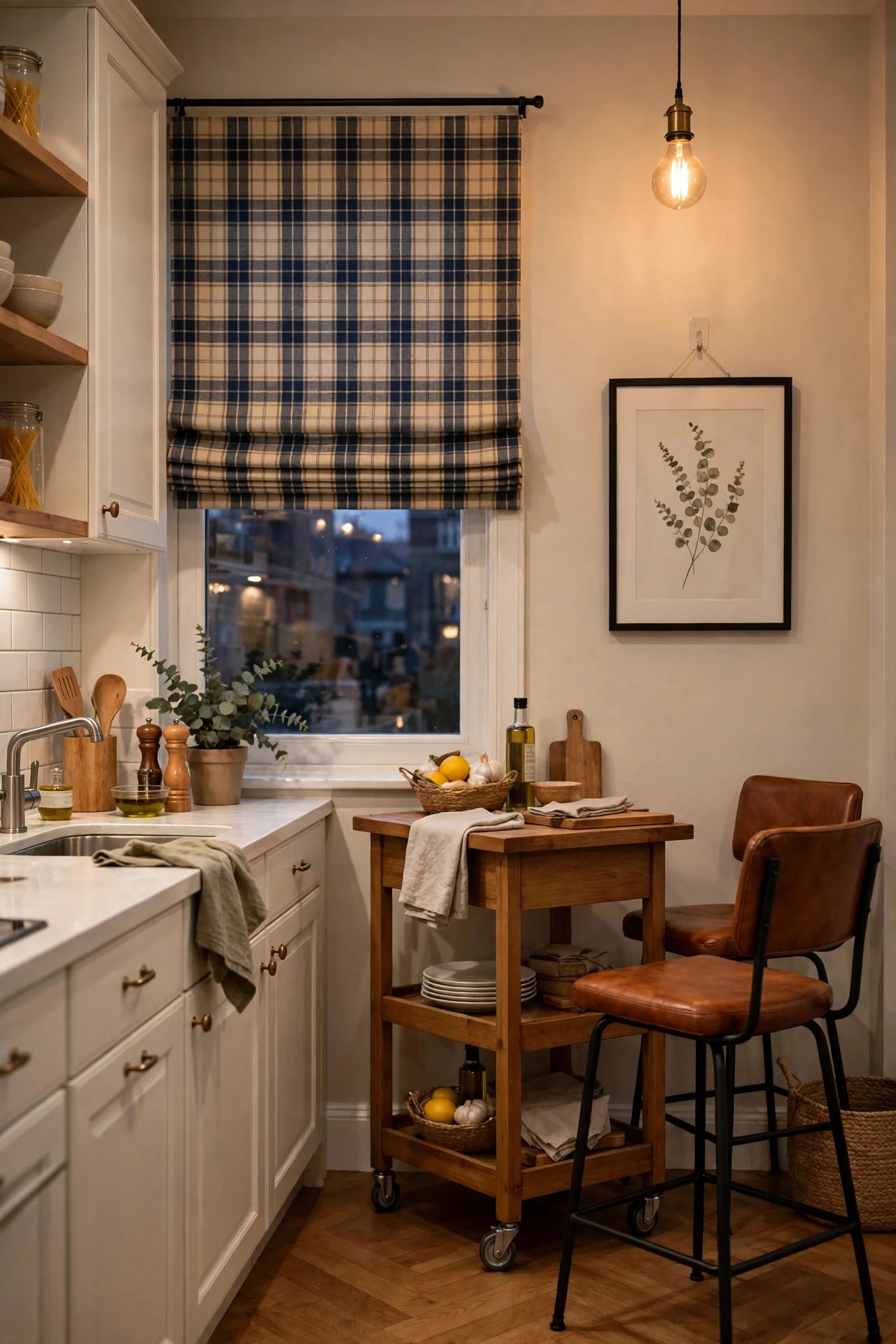
Renters can get most of this look without touching a cabinet. Start with the pieces that move with you: leather bar stools, a plaid roman shade on a tension rod, brass hardware swapped in and stored safely, a wooden chopping board, brass canisters, and a framed equestrian print hung on a removable hook. None of these need a landlord's permission.
Removable brass-look contact paper on a shelf edge, a freestanding wooden island trolley ($150–$400), and a navy linen runner on the counter add colour without paint. Keep the original hardware in a labelled bag and photograph the kitchen before you change anything, so the deposit is safe. A full rental version costs $400–$900 and almost all of it moves to the next home. Avoid peel-and-stick navy cabinet wraps unless you have tested a corner; cheap vinyl bubbles in kitchen heat and can lift the finish underneath when you remove it.
22. How Do You Get the Look on a Budget?
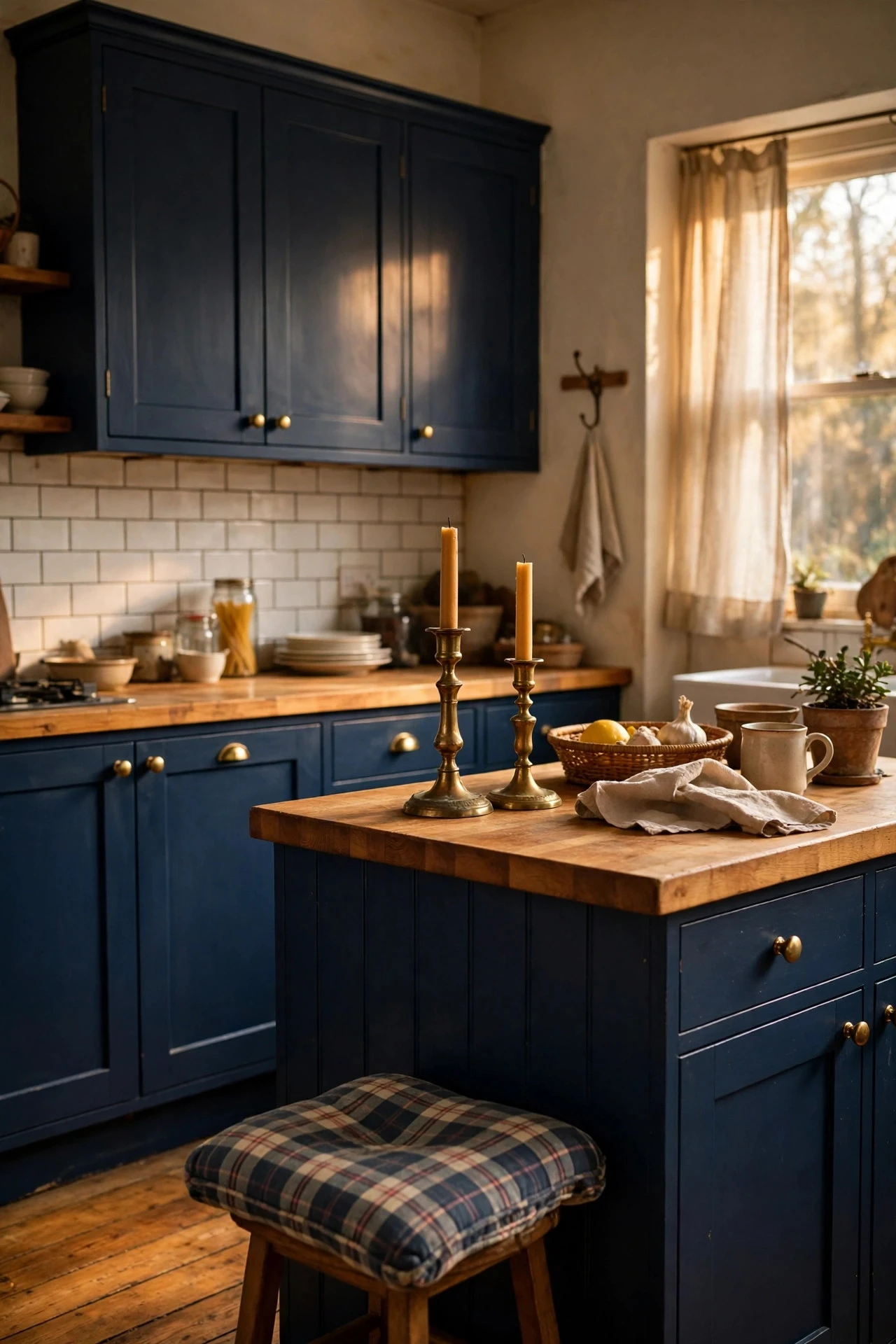
The budget version of this kitchen spends money where the eye lands and saves everywhere else. Paint is the cheapest transformation: a tin of navy cabinet paint costs $40–$60, a roller and brushes $20, and a weekend of work turns plain cabinets into the signature look. Swap the hardware next — brass knobs and cup pulls for $200–$400 — then add textiles: a plaid cushion, a linen runner and a tea towel for under $100.
Buy the antiques last, and buy them second-hand: a brass candlestick for $5 at a thrift shop, a stack of old cookbooks for $10, a framed print for $15. A convincing version of the whole look costs $800–$1,500 all in, against $15,000–$30,000 for a full rework. Spend on the things you touch every day — hardware, tap, stools — and save on the things that sit still. For playful, low-cost kitchen updates that prove a room can change without a renovation, browse these funky kitchen ideas. Avoid buying a full matching set of "Ralph Lauren-style" accessories in one shop; the collected look is built one thrifted piece at a time, and a matching set is the one thing that gives the game away.
Practical tips for a ralph lauren kitchen
Start with paint and hardware, not furniture. Navy paint and brass knobs change the room for under $500, and everything else — stools, textiles, antiques — layers on top. If you buy the furniture first, you may find it fights the cabinets.
Buy one antique per zone, not ten at once. A brass candlestick on the island, a framed print by the coffee station, an old wooden bowl on the shelf. One piece per zone looks collected; ten pieces in one afternoon looks like a shop.
Keep the brass unlacquered and let it age. Polish it once when it arrives, then leave it alone. The patina on the spots you touch is the whole point — it is what makes the kitchen look like it has been lived in for years.
Wash the textiles, use the shelves, sit on the stools. A Ralph Lauren kitchen is not a museum. The leather should crease, the plaid should soften, the shelves should hold the plates you actually eat from. Use is what makes the style believable.
Photograph the room before you start. A before photo keeps you honest about the budget and the change, and it is the best record of which paint colour and which hardware finish you chose when you come to touch them up.
Final thoughts
A Ralph Lauren kitchen works when it feels collected rather than decorated: navy or green cabinets, warm brass that has aged a little, worn leather, one plaid per zone, and a handful of old things mixed in with the new. Get the paint colour right, keep the palette narrow, and let the room accumulate slowly — that patience is the difference between a kitchen that looks like the look and a kitchen that actually feels like it.
Frequently Asked Questions
What paint colours give a Ralph Lauren kitchen its navy look?
Farrow & Ball Hague Blue, Benjamin Moore Hale Navy (HC-154) and Sherwin-Williams Naval (SW 6244) are the most reliable choices, because they read as deep, muted navy in daylight and almost black in the evening. Pair navy perimeter cabinets with a warm cream island so the room stays bright, and always test a 12-inch swatch at three times of day before committing.
Is a Ralph Lauren kitchen expensive to create?
A full rework costs $15,000–$30,000, but the look itself is affordable: navy cabinet paint, brass hardware and plaid textiles transform a kitchen for $800–$1,500. Spend on the pieces you touch daily — hardware, tap and stools — and buy antiques second-hand, one piece at a time, so the room looks collected rather than bought in one trip.
Can I use plaid in a small kitchen?
Yes, if you keep it to one plaid per zone and choose the scale carefully. A small check on a tea towel or a roman shade suits a compact kitchen, while a large check belongs on a bigger piece like a banquette cushion. Avoid plaid wallpaper and two different tartans in one view, because a small room has no space to absorb that much pattern.
What is the best brass finish for a Ralph Lauren kitchen?
Unlacquered brass is the right choice, because it develops a soft patina on the spots hands touch most, which is exactly the aged, collected character this style needs. Keep one brass finish across the whole room — knobs, tap, pendants and hinges — and avoid lacquered brass that stays shiny forever or chrome that reads too cold.
How do I get the Ralph Lauren look in a rental?
Use pieces that move with you: leather bar stools, a plaid roman shade on a tension rod, swapped-in brass hardware stored safely, framed prints on removable hooks, and a freestanding wooden island trolley. Keep the original hardware in a labelled bag and photograph the kitchen first, so your deposit is safe and the whole look travels to your next home.
Does a Ralph Lauren kitchen have to be navy?
No. Hunter green cabinets give the same depth with a country-house feel, and warm cream cabinets with a navy island suit a smaller kitchen that cannot take dark joinery. The style is defined by the combination — deep colour, warm brass, leather, plaid and collected antiques — not by navy alone, so choose the deep colour your room can carry.