How to Decorate a Balcony and Patio for the Holidays Without Overdoing It
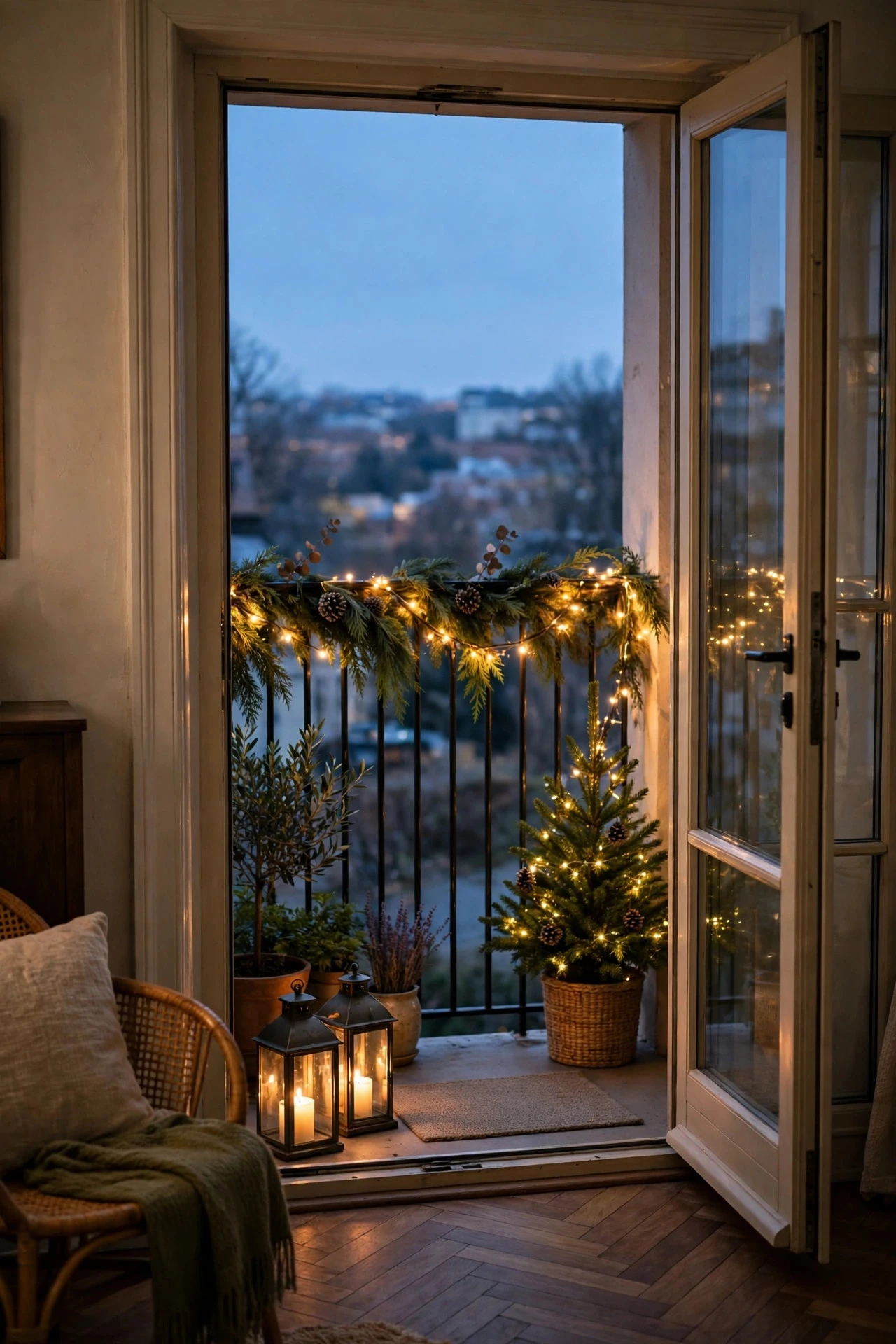
A balcony or patio is the smallest stage in your home, and that is exactly why it photographs so well at the holidays. One glowing railing, one small tree, one warm seat is enough — the eye reads a few deliberate pieces as festive, while a dozen crowded ones read as clutter from the street below.
This guide gives you 22 practical ways to decorate a balcony or patio for the holidays, built for small outdoor spaces, winter weather and renter-friendly rules. Every idea keeps walkways clear, survives rain and wind, and comes off cleanly in January.
Looking for more inspiration? Our Nest Decorz homepage gathers the latest home decor ideas, seasonal decorating guides and room-by-room styling tips in one place — start there and explore.
Quick answers
– Start with light, then greenery, then one cozy layer: a lit railing plus a small tree and a blanket-covered chair reads festive without filling the floor. – Outdoor-rated only: every light, candle and fabric must be rated for outdoor or damp use, or it will fail after the first rain. – Keep half the floor clear: decor should cover no more than one-third of a small balcony, leaving a clear path of at least 24 inches to the door. – Attach without damage: zip ties, removable hooks and freestanding pieces protect railings, paint and deposits in rented flats. – Budget honestly: a glowing balcony costs $25–$50 with lights and garland; a layered patio with a tree, lanterns and seating runs $100–$200.
1. How Do You Hang Garland on a Balcony Railing Without It Sagging?

Fix a slim cedar or Norfolk pine garland along the top rail with a zip tie or removable hook every 12 to 18 inches, letting it dip 3 to 4 inches between fixings for a natural swag. A 6-foot garland suits a standard 5- to 6-foot balcony railing; a 9-foot length gives a deeper drape on longer rails.
Choose outdoor-rated faux garland no thicker than 4 inches, since real greenery dries out fast in wind and drops needles onto neighbours below. Weave battery fairy lights through the garland before you hang it, so the wire hides inside the foliage. Keep the garland clear of the floor and at least 2 inches above any planter, and test one fixing point first so nothing slips overnight. A good outdoor garland costs $25–$45 and stores flat in a bin after the holidays.
2. How Do You Choose Weatherproof Fairy Lights for a Balcony or Patio?
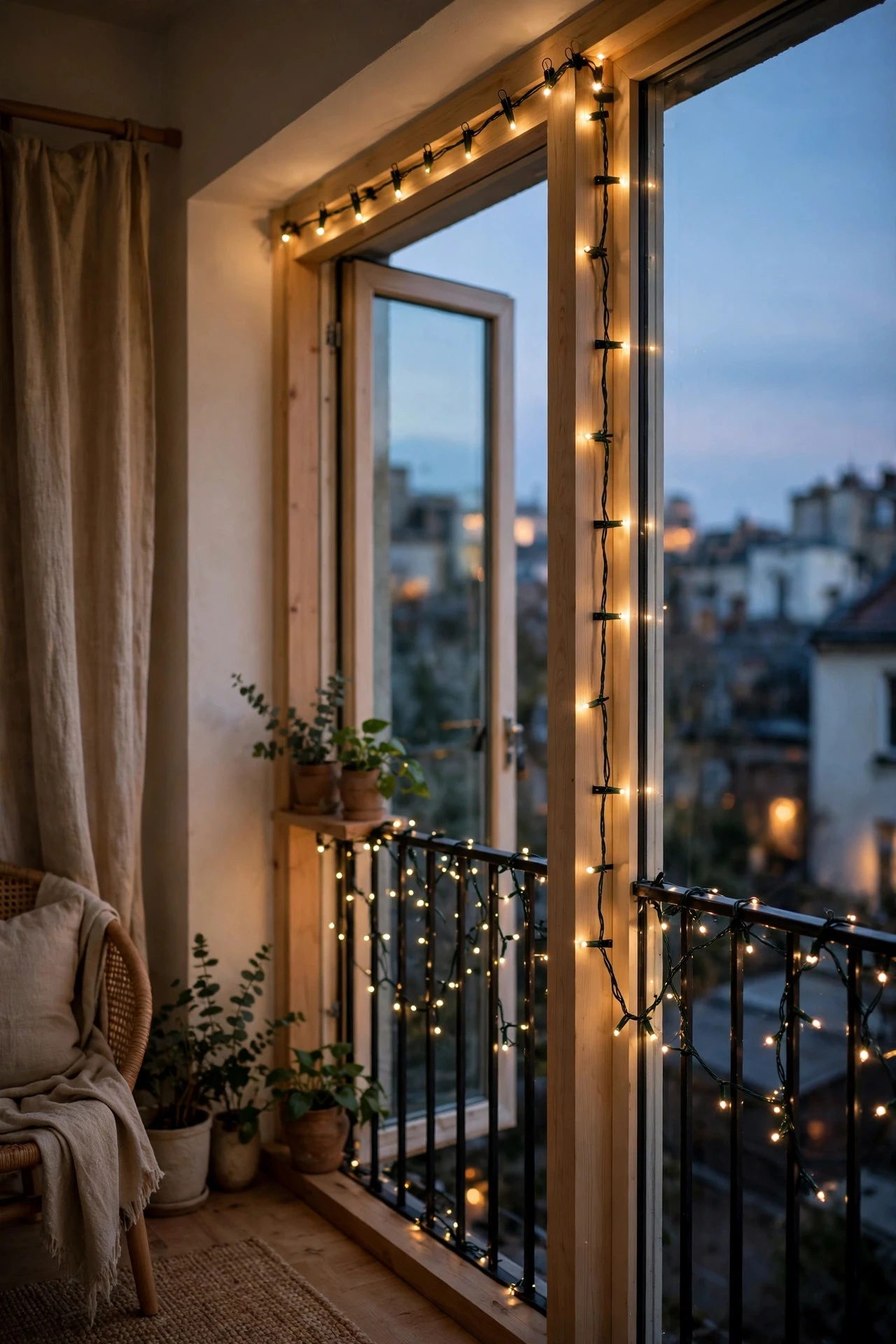
Buy lights labelled outdoor-rated or IP44 and above, with warm-white LEDs on a dark green or black wire that disappears against the railing. A 20- to 33-foot strand with 100 lights covers a standard balcony rail and door frame, and battery or solar power avoids trailing a mains lead through a doorway.
Solar strands charge in 6 to 8 hours of daylight and switch on automatically at dusk, which suits balconies with no outdoor socket. Battery strands need fresh AA batteries every two to three weeks on a 6-hour timer. Hang lights with small clips rather than nails, and keep the battery box under cover in a small waterproof pouch. A quality outdoor strand costs $12–$25. Never use indoor-only lights outside — the first rain can short them and trip a breaker.
3. How Do You Fit a Christmas Tree on a Small Balcony or Patio?

Pick one slim tree, 3 to 4 feet tall, and set it in a weighted pot or a heavy basket at the corner of the balcony, where it anchors the display without blocking the door. A potted Norfolk pine or a slim artificial pencil tree fits a 2-foot square footprint and leaves the rest of the floor free.
Weight the pot with stones or a sandbag so wind cannot topple it, and keep the tree at least 12 inches from the railing so branches do not poke through. Decorate with shatterproof ornaments only, since anything glass that falls from a balcony is a hazard below. A small potted tree costs $20–$35, and a pencil tree costs $30–$60. Avoid a tree taller than 4 feet on a balcony — it catches wind like a sail and blocks light into the room behind it.
4. How Do You Layer a Holiday Doormat on a Balcony or Patio?

Layer a flat coir doormat with a festive pattern over a slightly larger outdoor rug, leaving a 2- to 3-inch border of the rug showing on all sides. The rug underneath adds colour and softness, while the coir mat on top does the real work of scraping wet winter shoes.
Choose a coir mat 18 by 30 inches for a standard door, and an outdoor rug 2 by 3 feet beneath it, both in weatherproof materials that dry quickly after rain. A plaid, pine or simple "Merry Christmas" pattern reads festive without shouting, and the pairing costs $20–$40. Shake both layers out weekly so grit does not grind into the rug fibres. Avoid indoor rugs or fabric mats outside — they soak up rain, freeze overnight and mildew within a week.
5. How Do You Style Lanterns on a Balcony or Patio for the Holidays?

Group two or three lanterns of different heights — 8, 12 and 16 inches — beside the door or at the balcony corner, each holding a battery flameless candle. The cluster glows like a small hearth, and the varying heights look deliberate rather than lined up like soldiers.
Use metal or heavy glass lanterns rated for outdoor use, and weight them with a handful of pebbles inside so wind cannot roll them. A set of three lanterns costs $25–$45, and flameless candles with a 6-hour timer cost about $10 a set. Add a sprig of cedar or a few pinecones inside the largest lantern for texture. For more ways to carry that glow inside, these living room decor ideas show how lantern light works in a seating area too. Never use real candles in a lantern outdoors — wind blows the flame against the glass and can crack it.
6. How Do You Dress Planters for the Holidays on a Balcony?
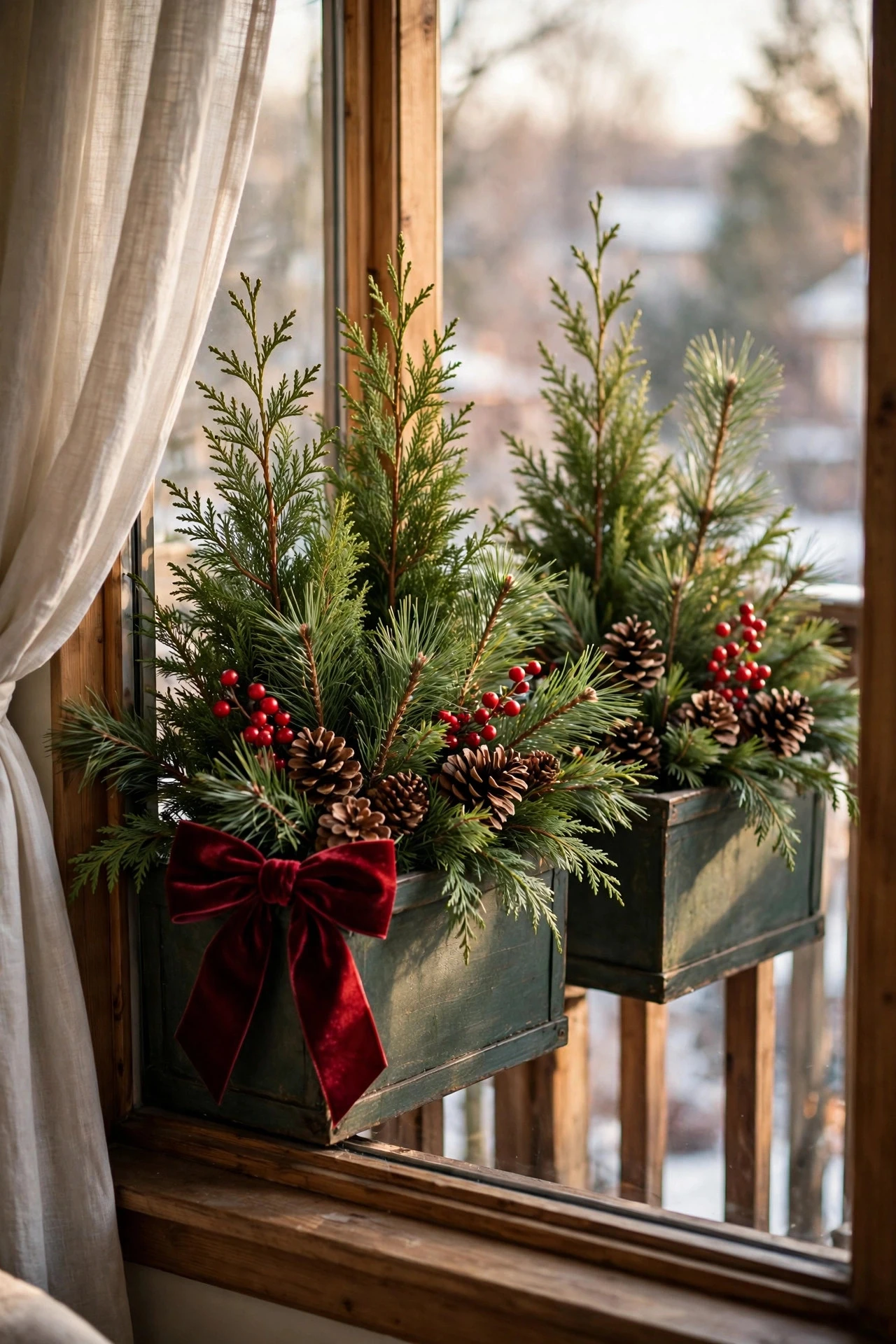
Fill existing planters with evergreen cuttings — cedar, pine and spruce — pushed upright into the soil like a small forest, then add pinecones, red berries and a velvet bow at the rim. The arrangement costs almost nothing if you already own the pots, and it turns a plain balcony planter into a holiday feature.
Cut stems 12 to 18 inches long and pack them tightly so wind cannot pull them out, watering the soil once so it freezes and holds them firm in cold climates. A bundle of fresh cuttings costs $10–$15 from a garden centre, or ask a tree lot for trimmings, which are often free. Swap summer flowers out in late November, before the first hard frost. Avoid planting anything that needs daily watering in winter — the arrangement is decorative, not a garden, and overwatering turns the pot to ice.
7. How Do You Make Balcony Seating Cozy for Cold Holiday Evenings?
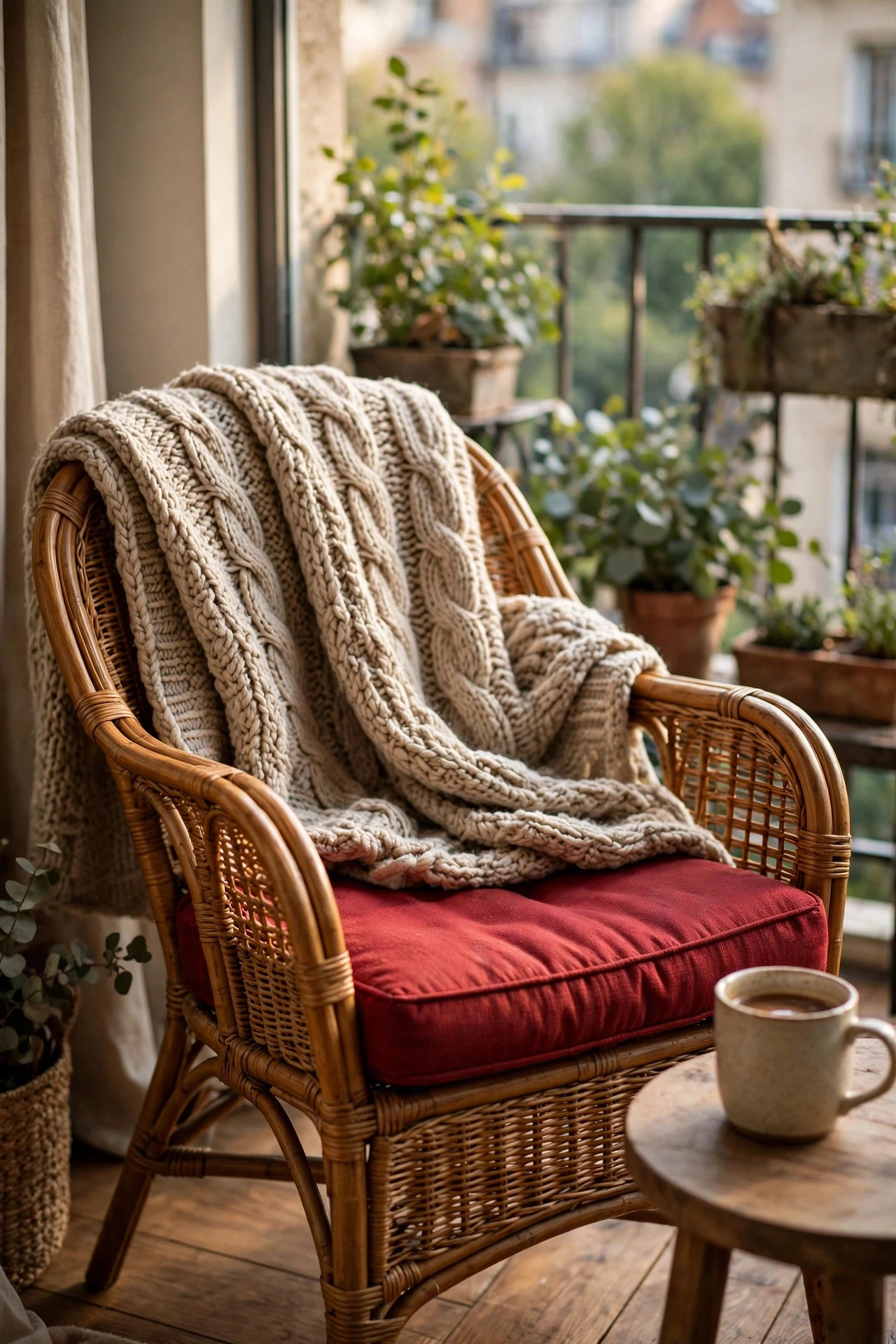
Drape one thick outdoor throw over the back of each chair and add a weatherproof cushion in deep red, forest green or cream, so the seat looks inviting even when nobody sits in it. A throw and cushion together turn a bare balcony chair into a holiday moment for under $30.
Choose throws in outdoor acrylic or polyester fleece, which shed rain and dry in a few hours, and store them in a deck box or bring them in on stormy nights. A waterproof cushion cover costs $12–$20 each, and a matching throw costs $15–$25. Fold the throw in half lengthwise so it sits neatly over the chair back instead of dragging on the floor. Avoid cotton throws and indoor cushions outside — they absorb rain, stay damp for days and develop mildew before Christmas week.
8. How Do You Protect Holiday Decor From Wind and Rain?
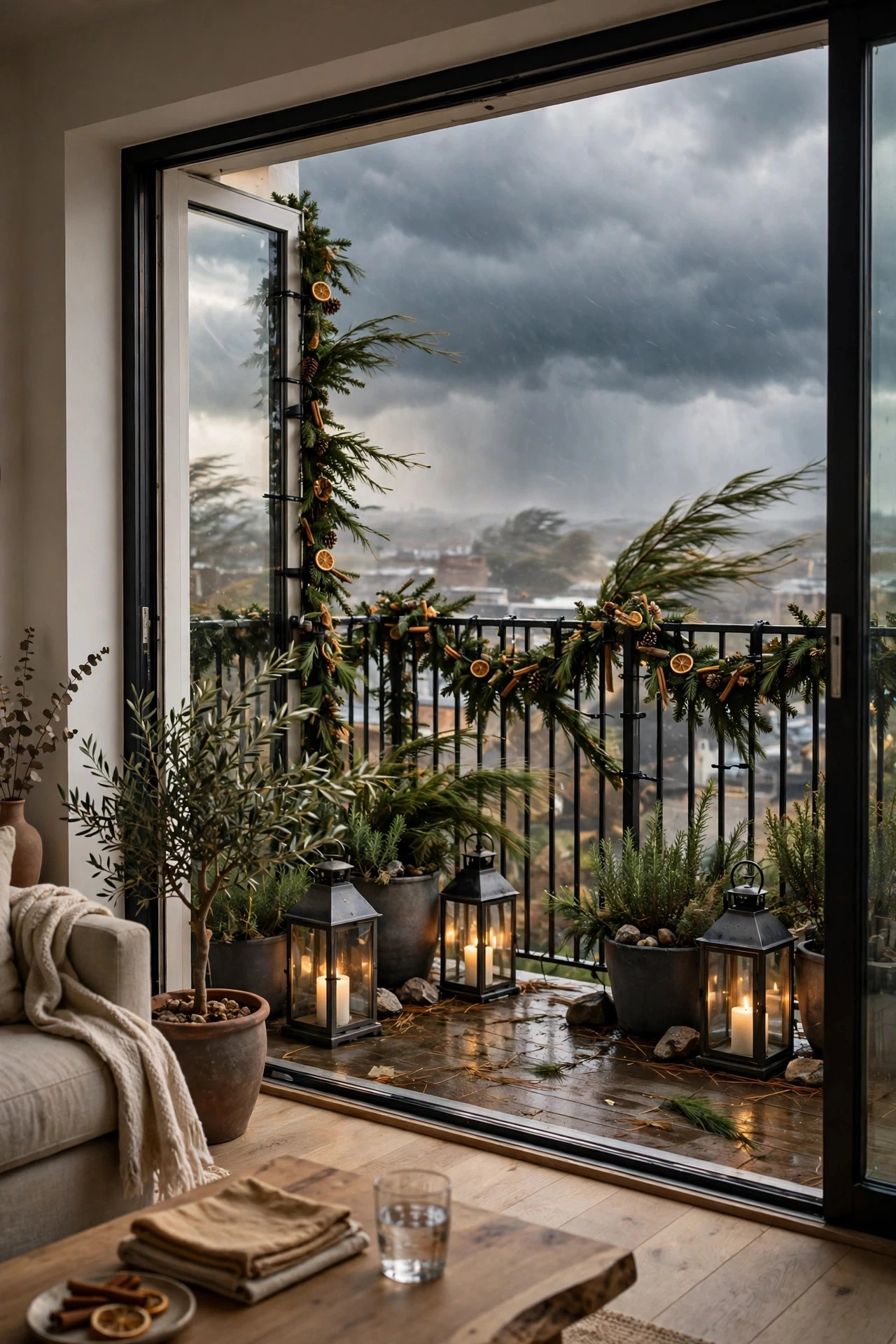
Anchor every piece before the first storm: weigh pots with stones, zip-tie garland to the railing, and choose heavy, low-profile decor that wind cannot lift. A balcony 10 floors up can see gusts twice as strong as ground level, so anything light enough to blow away will blow away.
Bring fabric pieces indoors on nights when heavy rain or snow is forecast, and keep the battery boxes for lights inside waterproof pouches or small lidded containers. Check fixings once a week, since zip ties loosen and adhesive hooks fail in cold and damp. A pack of outdoor zip ties and a few sandbags costs under $10 and saves a whole display. Avoid hanging ornaments or baubles from railings on upper floors — a falling ornament can damage cars or injure someone below, and most building rules ban it outright.
9. How Do You Hang a Wreath on a Balcony Door or Railing?

Hang one wreath, 18 to 24 inches across, on the balcony door with an over-the-door hook, or wire it to the railing's centre panel with two zip ties. A single wreath at eye level reads festive from inside the room and from the street, and it costs zero floor space.
Choose a wreath in cedar or mixed evergreen with a few pinecones and a velvet bow, and spray it lightly with water every few days if it is real, so it stays green through December. A good faux outdoor wreath costs $25–$40 and lasts for years; a fresh one costs $20–$30 and smells wonderful. Keep the wreath clear of the door handle and the lock, so it never catches when the door swings. The same hanging logic works indoors too — this guide to tension rod garland shows how to hang greenery without a single nail. Avoid nailing a wreath to a rented door or frame, since the hole costs more than the wreath to repair.
10. How Do You Light a Balcony Window for the Holidays?
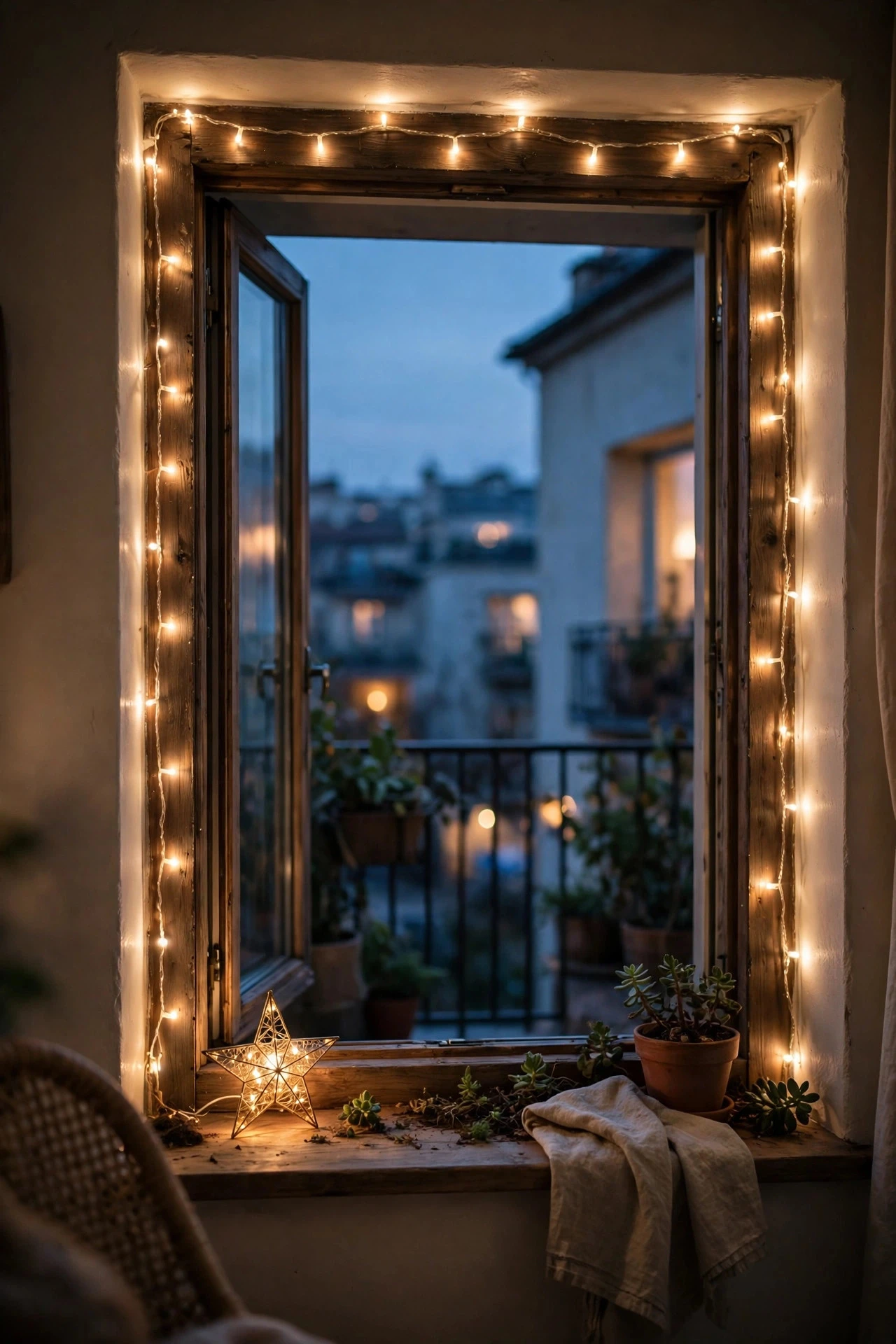
Frame the balcony window or sliding door with a warm-white light strand clipped to the frame, and add a small lit star or a pair of battery candles on the inside sill. The window becomes a glowing picture frame at dusk, visible from the street and lovely from inside the room.
Use suction-cup clips or removable adhesive hooks rated for glass, spaced every 12 inches so the strand sits straight, and run the wire down the side of the frame where it cannot trip anyone. A 16-foot window strand costs $10–$15, and a lit paper star costs $12–$20. Keep lights at least 6 inches from curtains or blinds, since even LED strands warm slightly over hours. House Beautiful's guide to outdoor Christmas lights shows how window framing pairs with rooflines and railings for a fuller look. Avoid draping lights across a door that opens outward — the strand snags and pulls down every time someone steps outside.
11. How Do You Make a Ribbon Garland for a Balcony or Patio?

Cut strips of weatherproof ribbon — outdoor polyester or wired grosgrain — in 12-inch lengths, and tie them in knots along a length of jute twine strung between two railing posts. The ribbon garland flutters in the breeze, costs under $10 in materials, and adds colour where greenery alone looks flat.
Alternate two or three colours — deep red, forest green and gold, or cream and burgundy — and space the ribbons 2 inches apart so the garland looks full without using metres of ribbon. A 6-foot twine length holds about 36 ribbons, and the whole project takes twenty minutes. Tie the twine taut with a slip knot at each end so you can take it down in seconds. Avoid paper or fabric ribbon outdoors — it fades in sun, soaks in rain and droops within days.
12. How Do You Create a Warm Glow With Battery Candles Outdoors?

Place battery flameless candles in glass hurricanes, lanterns or mason jars, grouping them in threes on a side table or along the balcony floor by the wall. The flickering LED flame reads like candlelight from the street, stays cool to the touch, and cannot blow out in wind.
Choose candles with a built-in 6-hour timer so they switch on at dusk and off before bed, and keep spare AA batteries on hand, since cold weather drains batteries faster. A set of three flameless pillars costs $12–$18, and a glass hurricane costs $8–$15. Set jars on a tray so rain does not pool underneath them, and bring the candles in during heavy downpours. For the science of why real flames and dry greenery are a bad mix, the poinsettia entry on Wikipedia is a reminder that many holiday plants and decorations need care around heat and pets. Never place a real candle outside in a breeze — the flame bends, soot coats the glass, and the wax blows out.
13. How Do You Decorate a Balcony Without Breaking Apartment or HOA Rules?

Read your lease or HOA rules first, then decorate only within them: most allow lights and garland on your own railing but ban anything that hangs over the edge, drips water, or blocks a fire escape. A quick email to the building manager before you start saves a take-down order later.
Stick to removable fixings, keep every piece inside the railing line, and avoid drilling, nailing or painting anything shared. If live trees are banned, use a potted Norfolk pine or a pencil tree, which most rules allow. Keep decor quiet after 10 p.m. — timer lights that switch off automatically keep neighbours happy. This mudroom ideas guide shows the same keep-it-contained thinking for the entry you step through on the way out. Avoid arguing with a rule you have not read — a photo of a neighbour's display is not proof that it is allowed.
14. How Do You Dress a Balcony Privacy Screen for the Holidays?
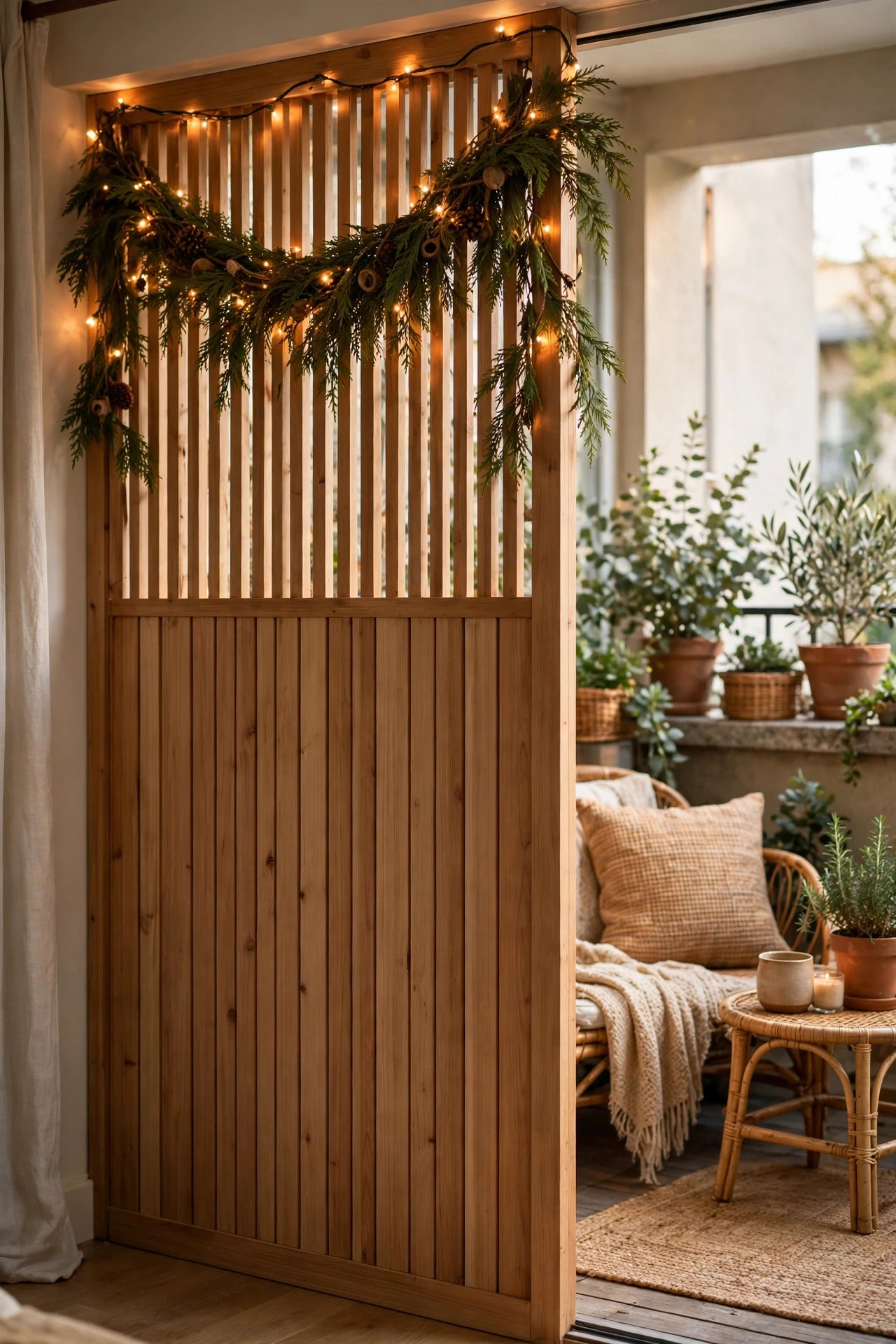
Weave a slim garland and a warm-white light strand through the top third of a balcony privacy screen, leaving the lower two-thirds plain so the screen still does its job. The decorated top edge reads like a festive valance from the street, while the screen keeps its privacy from neighbours.
Use zip ties or screen clips every 18 inches, and choose lightweight decor — greenery and micro-lights only — so the screen does not sag or pull from its fixings. A 6-foot garland and a 20-count light strand cost $30–$50 together, and both come down with the screen in January. Keep lights on the inside face of the screen so the glow falls onto your balcony, not into the neighbour's window. Avoid heavy ornaments, wreaths or a tree hung on a fabric screen — the weight tears the weave and the screen will not survive the season.
15. How Do You Choose an Outdoor Rug for a Holiday Patio?
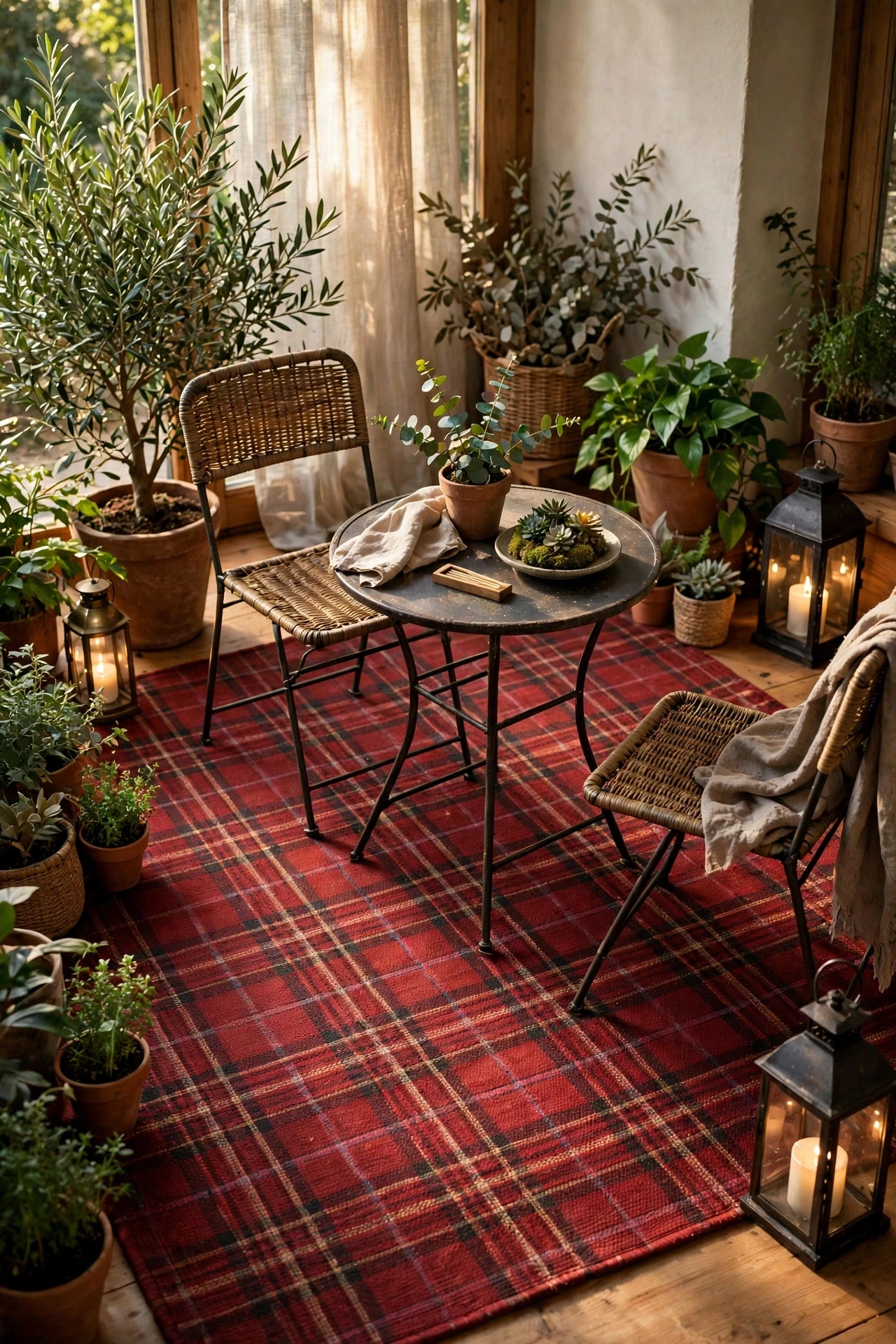
Lay a flat-weave outdoor rug in a deep red, charcoal or plaid pattern under the seating area, sized 4 by 6 feet for a small patio or 2 by 3 feet for a balcony. The rug defines the seating zone, warms bare feet, and hides winter stains on concrete or decking.
Choose polypropylene or recycled-plastic rugs, which drain, dry quickly and hose clean in spring, and weigh the corners down with furniture legs or small rug weights so wind cannot flip them. A small outdoor rug costs $25–$45, and a 4-by-6-foot rug costs $50–$90. Roll the rug up and store it dry if snow is forecast for more than a day. Avoid indoor rugs, jute or cotton outdoors — they absorb water, freeze to the floor and rot before the season ends.
16. How Do You Hang Ornaments From a Balcony Railing Safely?

Hang shatterproof ornaments from the inside face of the railing with short ribbon loops, spaced 6 inches apart and no longer than 4 inches, so they sit flat against the rail and cannot swing outward. The ornaments catch the light like jewellery without ever leaving your balcony.
Use plastic or wooden ornaments only, tied with ribbon rather than wire hooks, which rust and stain the railing. A set of 12 shatterproof ornaments costs $10–$18, and a metre of ribbon costs under $2. Hang them low, in the middle of the railing panel, where wind is weakest and they cannot be knocked from above. If your building bans anything on the outside of the railing, hang the ornaments on the inside face or on the door instead. For a matching glow inside the home, a Christmas entryway table decor display uses the same ornament-and-ribbon pairing. Never hang glass ornaments from a balcony — a single gust can send one falling onto the street below.
17. How Do You Set Up a Holiday Drinks Station on a Patio?
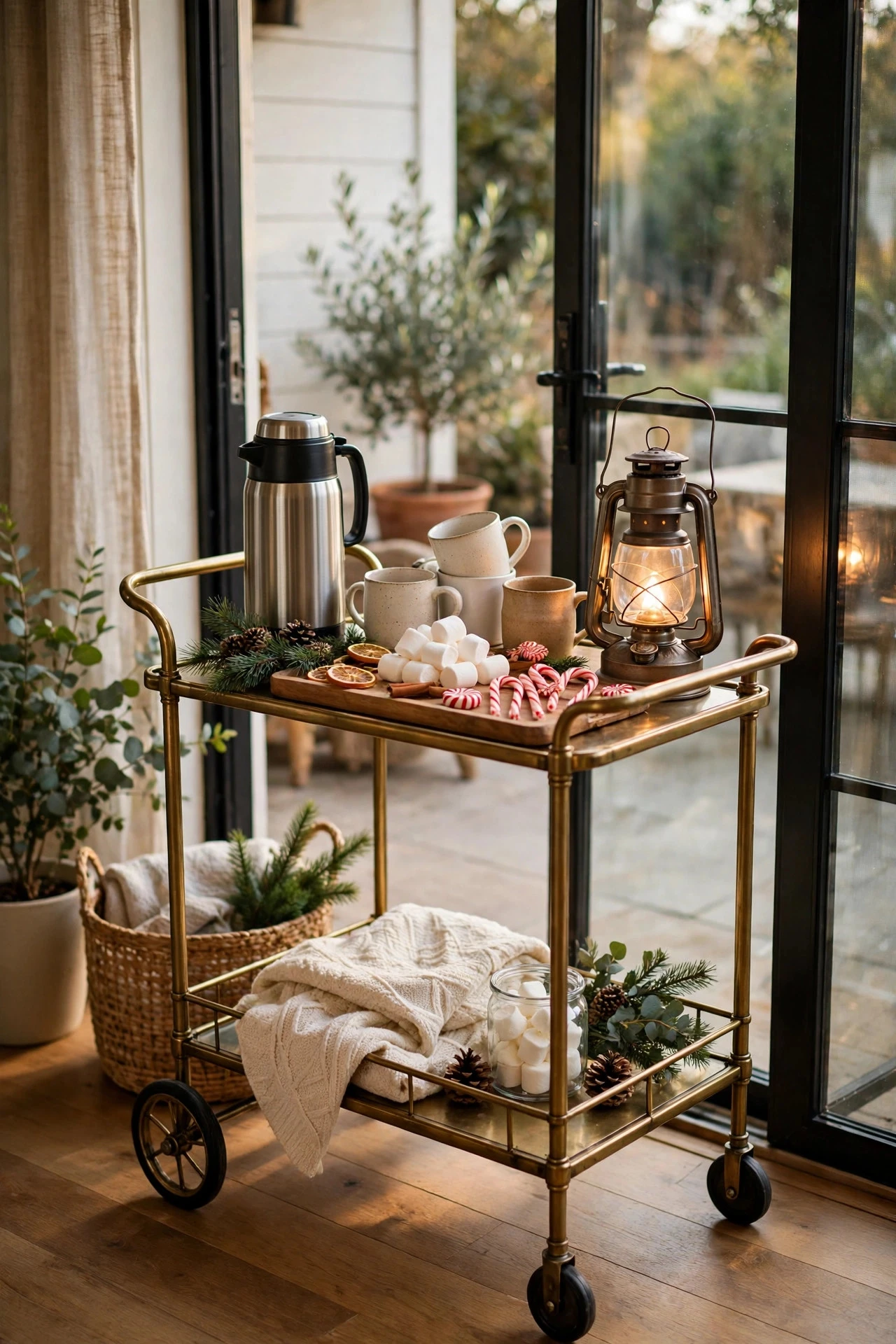
Set a small side table or a bar cart by the patio door with a thermos of cocoa, mugs, marshmallows and candy canes, all on one tray that lifts off in seconds. The station turns a cold patio into a gathering spot, and it costs under $30 if you already own the mugs and tray.
Use a tray 16 to 20 inches long with raised sides, so nothing slides off in wind, and keep the station against the wall, never at the railing edge. A lidded thermos keeps cocoa hot for four hours, and a small battery lantern on the table lights the station after dark. Bring the tray in each night — mugs left out overnight freeze and crack. The Spruce's guide to hot chocolate bars explains how to layer toppings and mugs so a small station looks generous rather than crowded. Avoid an electric kettle or a plug-in urn on the patio — the cord, steam and wet ground are a bad combination.
18. How Do You Decorate a Balcony on a Tight Budget?
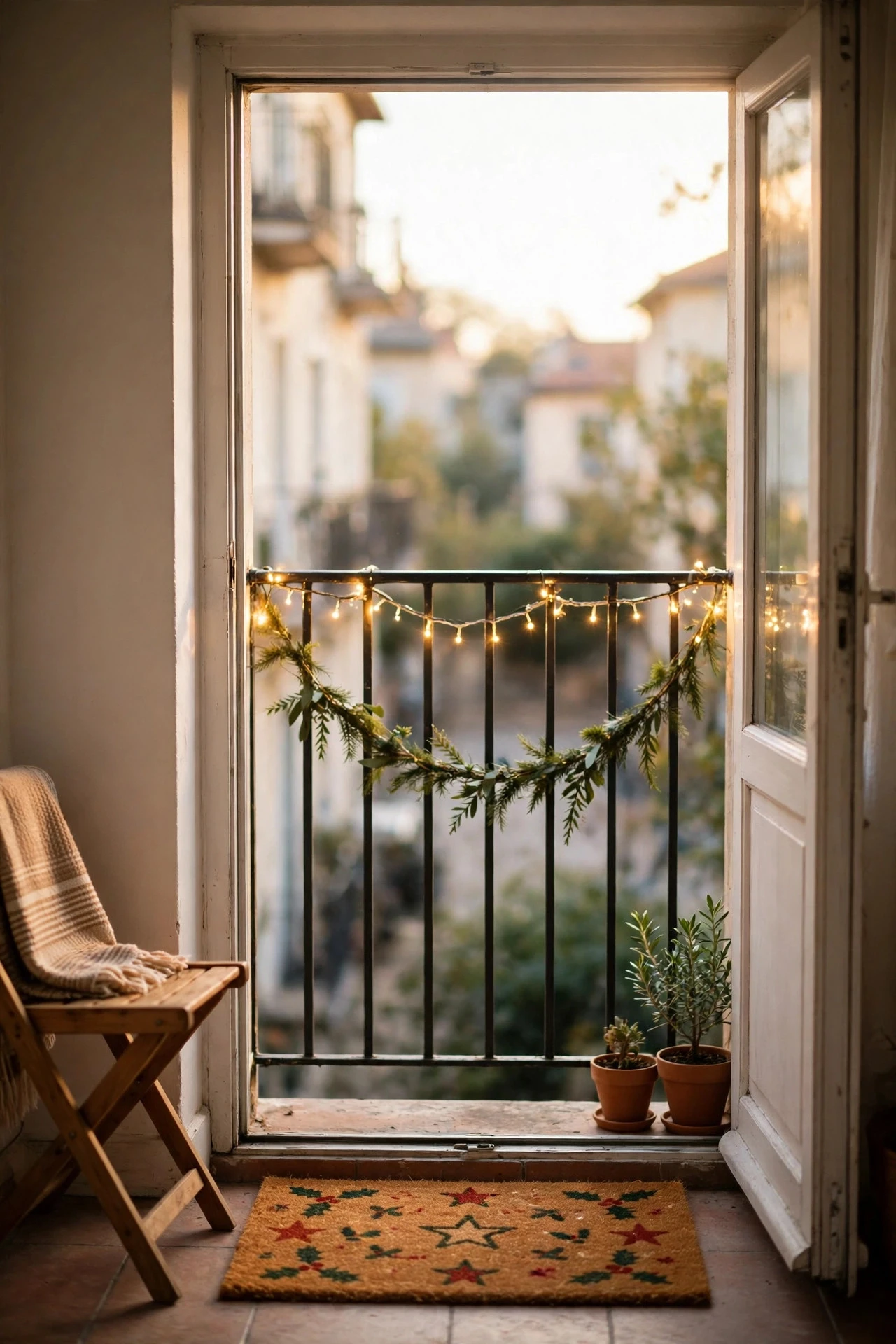
Spend $25–$50 on three things only: one outdoor light strand, one slim garland and one doormat or throw, then add free greenery cuttings from a tree lot. Those three pieces plus free foliage give a balcony the full holiday read, and everything else is optional dressing.
Borrow or reuse what you already own — a lantern from the living room, a plaid throw from the sofa, planters you already have — and buy ornaments and ribbon after Christmas, when prices drop 50 to 70 percent. A battery light strand costs $12–$25, a garland $25–$45, and a coir mat $10–$15, so the whole look lands under $50. Skip the mini tree, the tiered displays and the matching sets in year one; add one piece each December. Avoid buying the cheapest indoor lights and calling them outdoor — replacing a failed strand costs more than buying the right one once.
19. How Do You Keep a Balcony Safe in Snow and Ice?

Keep the walkway clear by decorating only the edges: garland on the railing, lights on the frame, and a tree in the corner, leaving a straight 24-inch path from the door to the railing. Shovel or sweep snow off the balcony floor before it freezes, since a thin ice sheet under decor is a fall risk.
Salt sparingly with a pet-safe de-icer, and keep it away from planters and metal railings, which corrode. Bring cushions and throws indoors before snow, and check that no decor blocks the drain — standing water freezes, expands and cracks pots and tiles. A bag of pet-safe de-icer costs $10–$15 and lasts all winter. Avoid stringing lights across the floor or the walkway, where they ice over and become a trip hazard in the dark.
20. How Do You Add a Festive Touch to a Balcony Without a Single Nail?
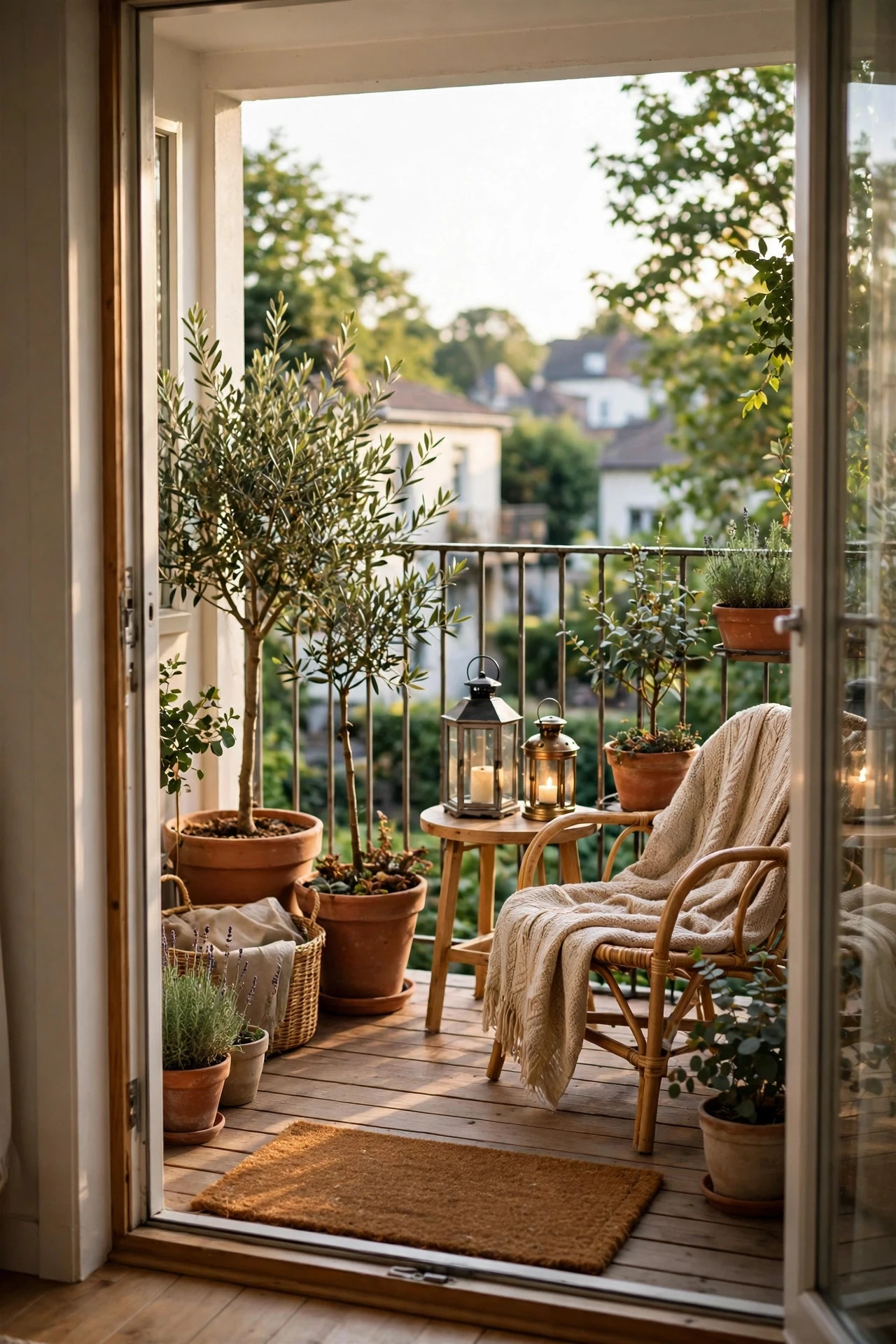
Use only freestanding and removable pieces: a potted tree in the corner, lanterns on the floor, a doormat by the door and a throw on the chair. Nothing is fixed to the building at all, so nothing can damage paint, brick or render, and the whole display lifts off in minutes.
Add one removable element — a wreath on an over-the-door hook or garland held by zip ties — only if you want height, and remove it by cutting the ties in January. This approach suits renters and listed buildings alike, and it costs no more than a fixed display, since freestanding pieces are the same ones you would buy anyway. Brick and stone facades need this care most — see these brick cottage exteriors for how to style a home's outside without drilling into it. Avoid suction cups on cold glass — they lose grip below freezing and drop whatever they hold.
21. How Do You Transition Balcony Decor From Christmas to New Year?
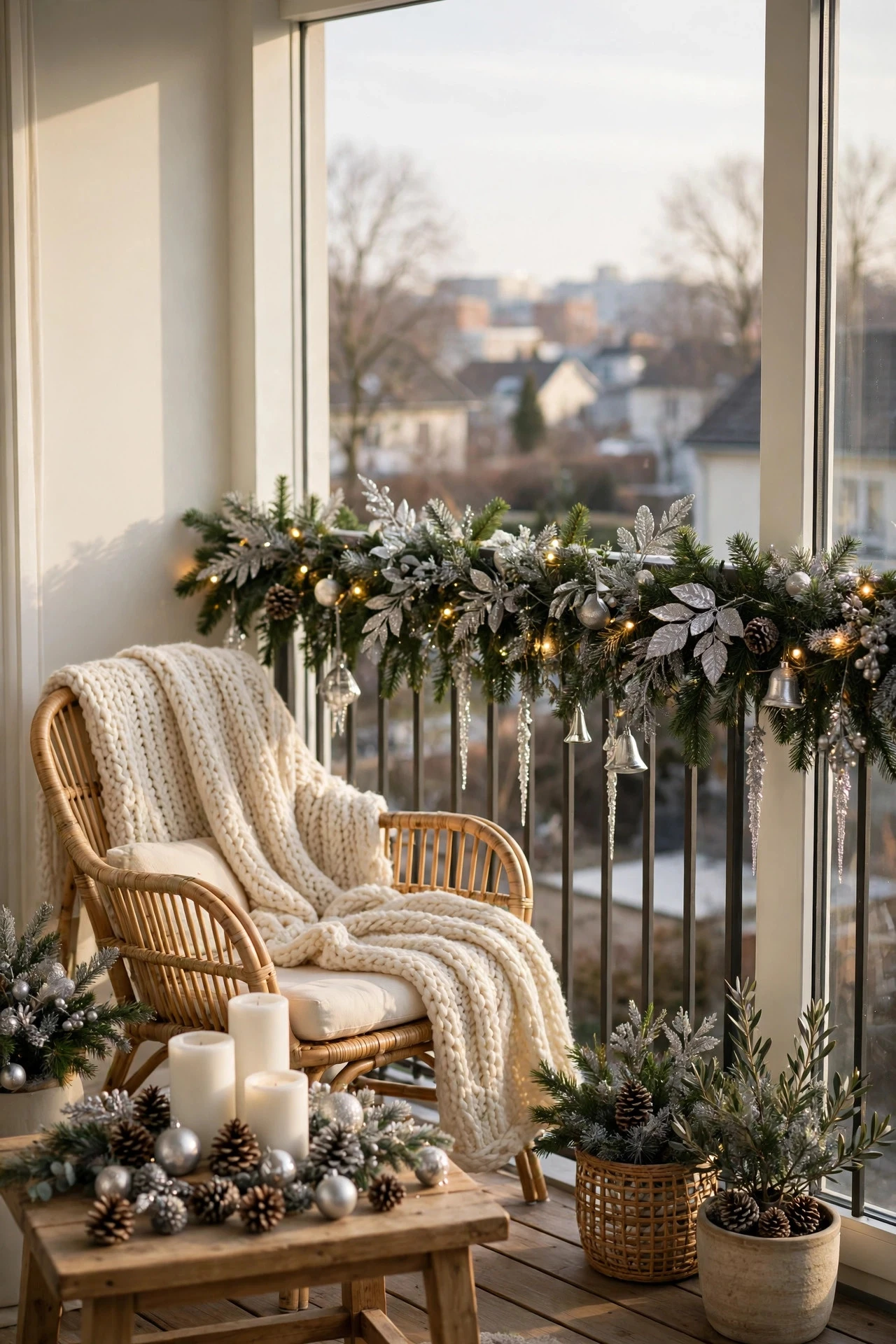
On December 26, remove the red ribbons, ornaments and any "Merry Christmas" pieces, and keep the lights, greenery and lanterns in place. Swap in silver or white accents — a cream throw, white candles, pinecones — and the same balcony reads as winter rather than Christmas, with almost no new spending.
This two-stage approach means you decorate once and enjoy the display for six weeks instead of three, and the take-down in January is half the work. Keep the tree up until the first weekend of January if it is potted, watering it lightly so it survives. A few silver ornaments or a white ribbon cost under $10 and complete the switch. Avoid leaving Christmas-specific pieces up into February — neighbours notice, and the display stops feeling festive and starts feeling forgotten.
22. How Do You Pack Away Balcony and Patio Decor for Next Year?

Take everything down on the first dry weekend of January, working from the top down: lights first, then garland, then ornaments, then pots and rugs. Coil each light strand around a piece of cardboard, wrap ornaments in tissue, and store it all in one labelled, lidded bin that stays dry indoors.
Clean the rug and cushions before storing — hose the rug, wash cushion covers, and dry everything fully so mildew cannot grow in the bin. Compost real greenery and recycle broken lights at a council collection point rather than binning them. One 30-litre bin holds a whole balcony display, and labelling it "balcony Christmas" saves a hunt next December. Houzz's guide to holiday storage shows how to pack fragile pieces so they survive a year in the loft. Avoid storing damp fabric or real greenery — both rot, smell and ruin everything else in the bin.
Practical Tips
Weatherproof everything first. Outdoor-rated lights, outdoor fabric and shatterproof ornaments are the non-negotiable base. Anything labelled indoor-only will fail after the first rain, and replacing it mid-season costs more than buying the right version once.
Budget in tiers. Under $25 buys a light strand and a doormat. Around $50–$75 adds garland, a wreath and lanterns. Over $100 buys the full layered look with a tree, rug and seating. Start small and add one piece each year.
Mind the building rules. Read the lease or HOA rules before you hang anything, keep every piece inside the railing line, and use removable fixings only. A quick email to the manager beats a take-down notice in mid-December.
Take it down dry. Pack decor away on a dry day in January, clean and dry everything first, and store it in one labelled lidded bin. A display that packs away cleanly gets used again; one that mildews in the bin gets thrown out.
Final Thoughts
A holiday balcony or patio works best when it does less, not more. One lit railing, one small tree, one warm seat — and the rest of the space left clear for the people who will actually stand out there with a mug of cocoa. Pick the three ideas that fit your space, your weather and your building's rules, set them up in an afternoon, and let the smallest room in your home do the most welcoming.
Frequently Asked Questions
How much does it cost to decorate a balcony for the holidays?
A glowing balcony with an outdoor light strand, a slim garland and a doormat costs $25–$50. A layered look with a small tree, lanterns, a rug and seating cushions runs $100–$200. Reusing planters, throws and lanterns you already own keeps the real spend at the lower end, and buying ornaments after Christmas saves 50 to 70 percent.
What holiday decor is safe to use on a balcony in rain and wind?
Use outdoor-rated lights (IP44 or above), battery flameless candles, shatterproof ornaments, outdoor fabric and weighted pots, all of which survive rain and gusts. Avoid indoor-only lights, glass ornaments, real candles and cotton fabrics outside — they short, shatter, blow out or mildew after the first storm. Anchor everything with zip ties or weights.
Can you decorate a rented balcony for the holidays?
Yes — use removable hooks, zip ties, over-the-door hangers and freestanding pieces only, and avoid nails, screws, drilling or glue on shared surfaces. Keep every piece inside the railing line and check your lease or HOA rules first. Test one adhesive hook in a hidden spot, and remove everything cleanly in January.
How do you keep holiday lights working outside all winter?
Buy outdoor-rated LED strands, keep battery boxes in waterproof pouches, and set timers for 6 hours a night so batteries last two to three weeks. Check fixings weekly, since cold and damp loosen clips and hooks. Bring strands in during heavy snow, and coil them around cardboard for storage so they never tangle.
What is the best small Christmas tree for a balcony?
A 3- to 4-foot potted Norfolk pine or a slim artificial pencil tree fits a 2-foot square corner and survives wind when weighted with stones. It costs $20–$60 and leaves the rest of the floor free. Avoid trees taller than 4 feet — they catch wind like a sail and block light into the room behind.
When should you put up and take down balcony holiday decor?
Set the balcony up in late November or the first weekend of December, once summer planters are cleared and before the first hard frost. Take it down on the first dry weekend of January, working top-down and storing everything clean and dry in one labelled bin. Keep the lights and greenery up through New Year by swapping red accents for silver or white.