How to Hang Garland with a Tension Rod
A tension rod turns garland hanging into a five-minute job with no tools, no nails and no holes in the wall. You twist the rod to fit the opening, drape the garland over it, and the pressure of the spring holds everything in place. When the season ends, the rod twists out and the wall looks exactly as it did before.
This guide covers the whole technique: choosing the right rod size and weight rating, fitting it into doorways, windows, mantels, stair rails and cabinets, and fixing the one problem everyone meets — sag in the middle. You will find real measurements, weight limits, budget tiers from under $15 to about $60, and renter-friendly methods that leave zero damage.
Looking for more inspiration? Our Nest Decorz homepage gathers the latest home decor ideas, seasonal decorating guides and room-by-room styling tips in one place — start there and explore.
Quick answers
– Pick the rod by weight, not by looks: a standard spring tension rod holds 2–5 pounds; a heavy-duty twist rod holds 10–20 pounds. Weigh your garland first. – Measure the opening, then buy: the rod must extend 1–2 inches past the opening width at rest, so the spring stays compressed when fitted. – Beat the sag: a garland heavier than 3 pounds sags on a span wider than 36 inches — add a middle support hook or use two shorter rods. – Pad the ends: a small rubber pad or a wrap of felt at each rod end stops slipping on smooth frames and protects paint. – Budget honestly: a basic rod costs $5–$10, a heavy-duty rod $12–$20, and a full doorway garland display with rod, garland and lights runs $25–$60.
1. How Do You Hang Garland in a Doorway With a Tension Rod?

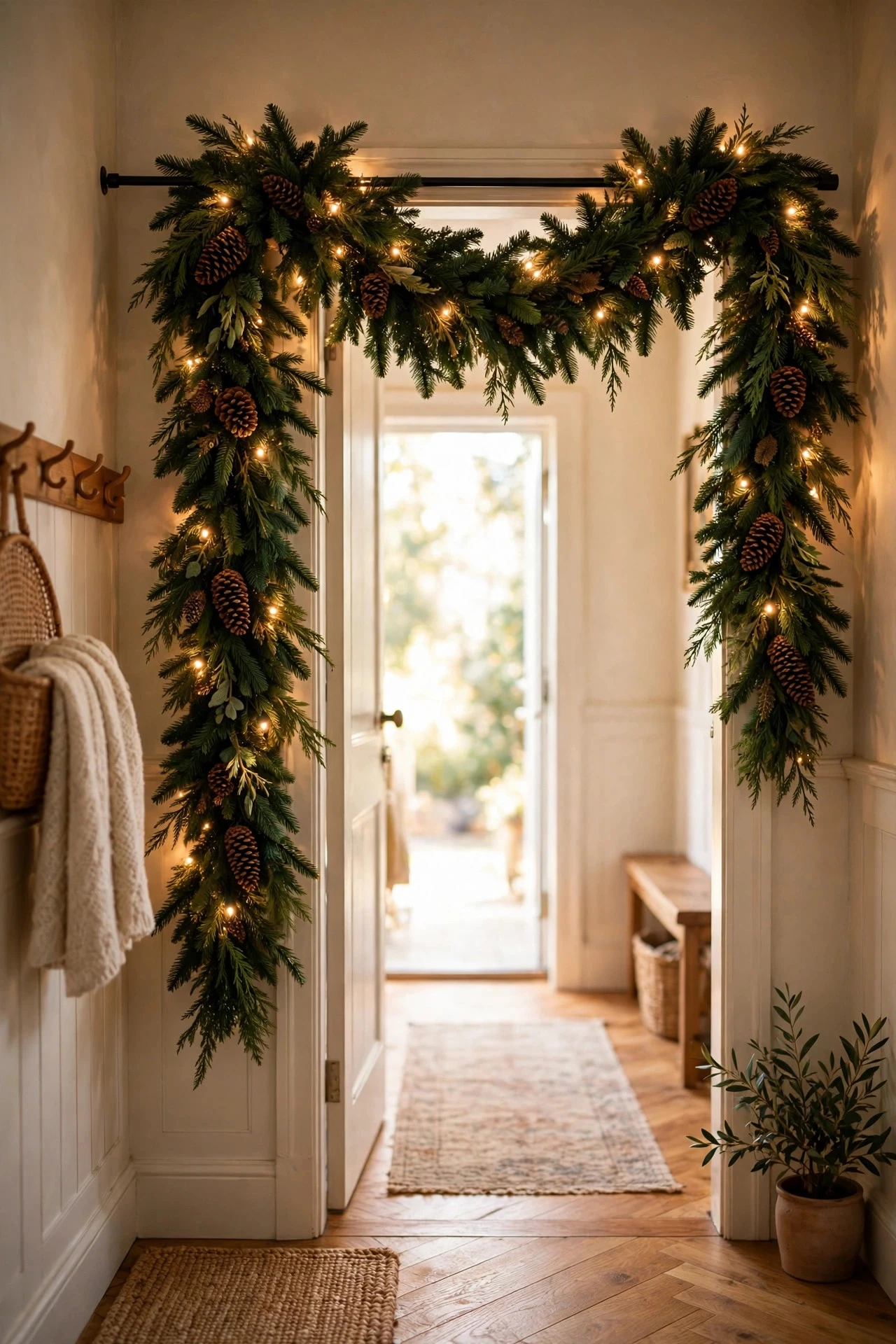
Fit the rod across the inside of the door frame, about 6 to 12 inches below the top, and let the garland drape over it like a swag. A standard interior doorway is 30 to 36 inches wide, so a rod rated for 28 to 48 inches is the right size — twist it until it is 1 to 2 inches wider than the opening, then press it into place and check it holds before you hang anything on it.
Drape the garland over the rod so it hangs evenly on both sides, with the centre dipping 8 to 12 inches below the rod for a classic swag shape. A 6-foot garland suits a single doorway; a 9-foot garland gives a fuller drape with deeper loops. For garland styles that suit a doorway swag, see these christmas garland ideas.
2. How Do You Choose the Right Tension Rod Size?

Measure the opening at three points — top, middle and bottom — because frames are rarely perfectly square, and buy for the widest measurement. A rod's stated range, for example 28 to 48 inches, is the span it covers; the rod at rest should be 1 to 2 inches longer than the opening so the internal spring stays compressed and the rod cannot slip.
Match the rod diameter to the weight: a thin 5/8-inch rod suits a light 1- to 2-pound garland, while a 1-inch rod handles 5 to 10 pounds without bowing. Heavy-duty twist rods, which lock with a screw mechanism instead of a spring, hold 10 to 20 pounds and are the right choice for garland with ornaments, lights and pinecones. Avoid a rod at the very end of its range — a 48-inch rod stretched to 47 inches has almost no spring left and will slide down.
3. How Much Weight Can a Tension Rod Hold?

A standard spring tension rod holds 2 to 5 pounds, a medium rod holds 5 to 10 pounds, and a heavy-duty twist rod holds 10 to 20 pounds — but those are the maker's numbers on a dry, smooth surface, so treat them as a ceiling, not a promise. Weigh your garland on a kitchen scale before you hang it: a plain 6-foot faux fir garland weighs 1 to 2 pounds, one with lights and baubles weighs 3 to 5 pounds, and a thick cedar garland with pinecones can reach 6 to 8 pounds.
Test the rod with the full weight before you decorate: hang the garland, step back, and watch it for 10 minutes, then give the rod a gentle downward tug. If it slips even a little, the garland is too heavy or the rod is too small — step up a size or split the garland across two rods.
4. How Do You Stop a Tension Rod Garland From Sagging?

Sag comes from two things: a span that is too wide for the rod, and a garland that is too heavy in the middle. On any span wider than 36 inches, add a support in the centre — a small clear adhesive hook on the frame above the rod, with a loop of fishing line or ribbon tying the middle of the garland to the hook, takes the weight off the rod entirely.
Another fix is to use two shorter rods instead of one long one, each spanning half the opening, with the garland draped so the join hides in the middle dip. A third fix is to wire the garland to the rod at three points — both ends and the centre — with floral wire, so the garland cannot slide toward the middle and pool there.
5. How Do You Hang Garland on a Window With a Tension Rod?

Fit the rod inside the window frame, just below the top trim, and drape the garland across it so it frames the glass like a valance. A standard window is 24 to 36 inches wide, so a 18- to 28-inch or 24- to 36-inch rod is the usual size — measure inside the frame, not across the trim, because the rod must grip the frame itself.
A window garland looks best when it is light: a thin cedar or eucalyptus garland of 1 to 2 pounds, with a strand of battery fairy lights woven through, glows in the glass after dark without blocking the view. Keep the garland 4 to 6 inches above the sill so it never sits in condensation, and keep it clear of the window lock and handle. For light ideas that pair with a window garland, see this guide to hang christmas window lights.
6. How Do You Hang Garland on a Mantel With a Tension Rod?

A mantel has no frame to grip, so the trick is to use the rod vertically: wedge two short tension rods upright between the mantel shelf and the ceiling or the underside of the chimney breast, and rest the garland across them like a bridge. This works when the gap above the mantel is 12 to 24 inches — measure it first, because a rod needs a flat surface at both ends.
A simpler mantel method is to fit a rod across the fireplace opening itself, inside the firebox surround, and hang the garland from it so it drapes across the front of the fireplace like a curtain valance. Either way, keep the garland at least 12 inches above any open flame or heat source, and use battery lights only — never mains lights near a fireplace. For mantel styling that pairs with a rod-hung garland, see these christmas fireplace decor ideas.
7. How Do You Hang Garland on a Stair Rail With a Tension Rod?
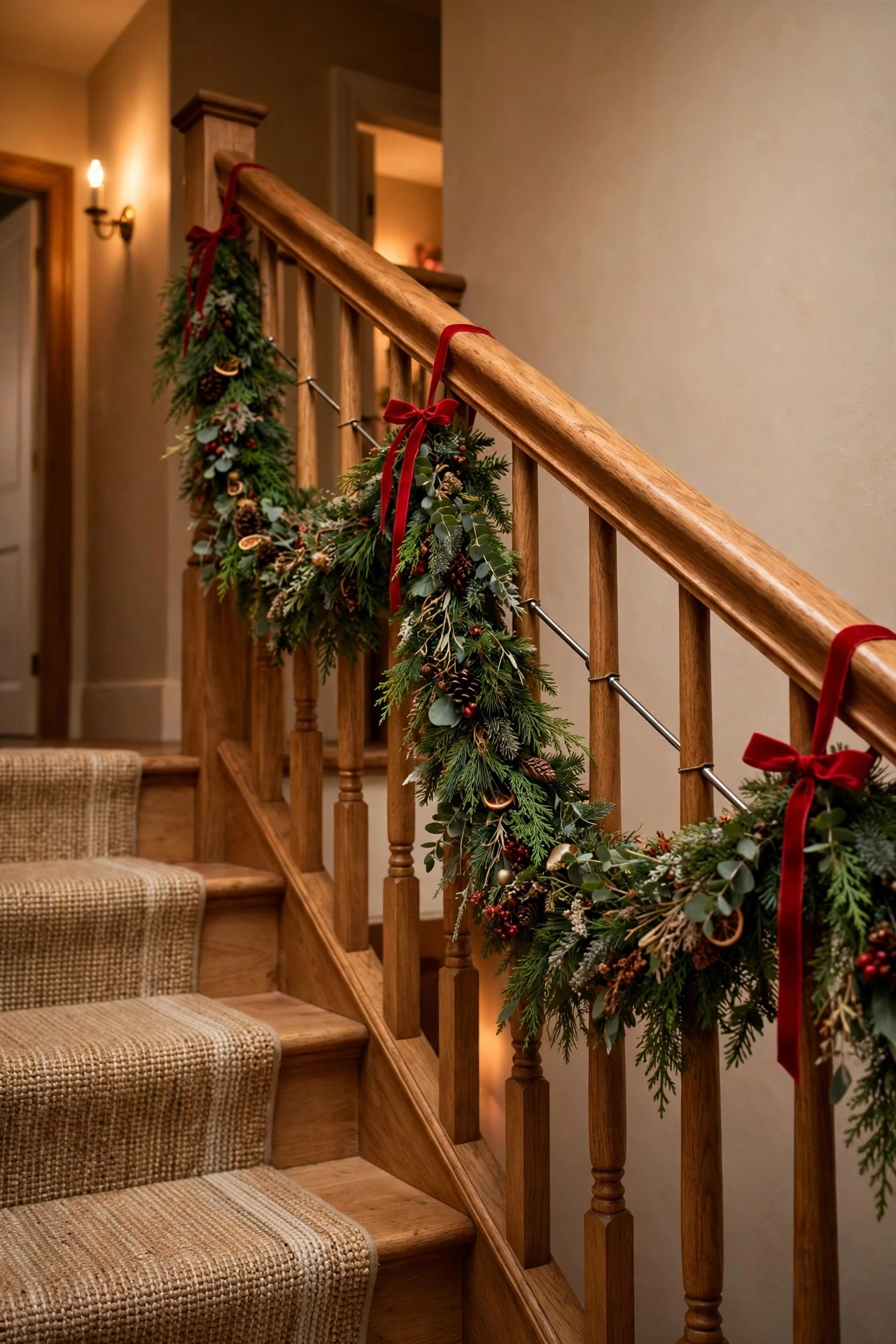
Fit short tension rods horizontally between the balusters, one rod every 24 to 36 inches along the rail, and drape the garland over the rods so it swags between them instead of sliding down the slope. A standard stair rail has balusters spaced 4 inches apart, so a 12- to 18-inch rod fits neatly between two balusters on most stairs — measure the gap between the balusters you plan to use.
Tie the garland to each rod with a short length of ribbon or twine, so the swags stay even and the garland cannot slide downhill over a week of use. A 9-foot garland covers about 6 feet of stair rail with three swags; a 12-foot garland covers a full flight.
8. How Do You Hang Garland in an Archway With a Tension Rod?

An archway has no straight top to grip, so fit the rod across the narrowest straight section of the arch, usually 12 to 18 inches below the curve's start, where the walls run parallel. Measure the width at that height — most archways are 36 to 48 inches wide there — and choose a rod that covers it with 1 to 2 inches of spring compression to spare.
Drape the garland over the rod and let it follow the curve of the arch, with the ends pinned to the wall at the sides using removable adhesive hooks so the garland hugs the arch instead of hanging straight across it. A 9-foot garland suits a 36-inch archway; a 12-foot garland suits a 48-inch one with a deeper drape. Avoid fitting the rod at the very top of the arch where the walls curve inward — the rod ends will not sit flat and the rod will twist out.
9. How Do You Hang Garland on Kitchen Cabinets With a Tension Rod?
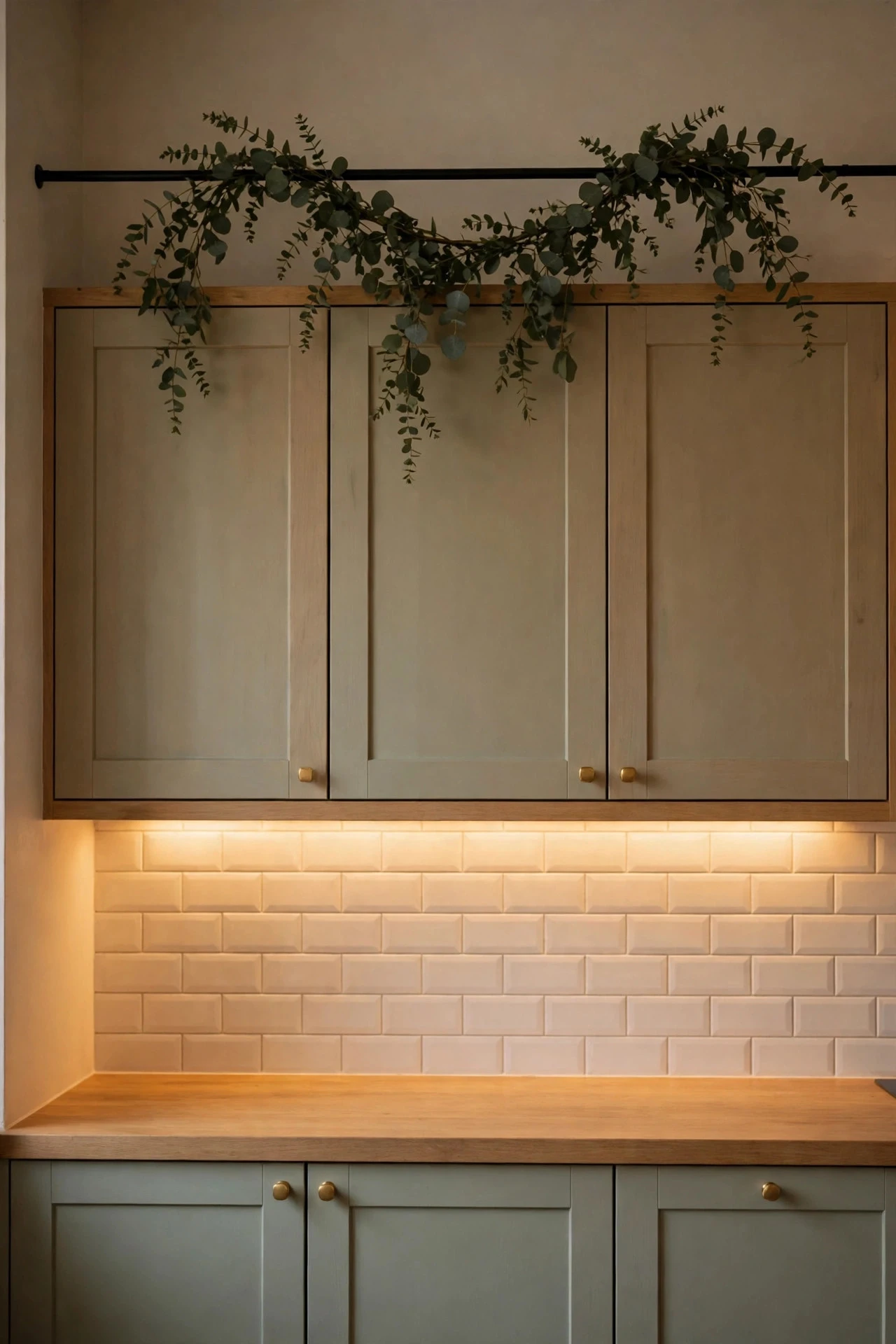
Fit a small rod inside the gap between the top of the wall cabinets and the ceiling, or across the front of an open shelf, and drape a light garland over it. The gap above most kitchen cabinets is 12 to 18 inches, so a 24- to 36-inch rod fits across a single cabinet run — measure the run first, because cabinet widths vary from 24 to 36 inches per unit.
Use a thin, light garland for a kitchen: eucalyptus or olive-leaf garland weighs under 1 pound per 6 feet and survives kitchen steam far better than faux fir, which collects grease. Keep the garland clear of the hob and any heat source, and keep it 6 inches above the cabinet tops so it does not sit in dust and cooking film. For cabinet styling that pairs with a rod-hung garland, see these kitchen christmas decor ideas. Avoid a heavy garland with baubles above a hob — heat and glass do not mix.
10. How Do You Hang Garland Around a Mirror With a Tension Rod?

Fit a rod across the top of the mirror frame — or across the wall just above the mirror — and drape the garland so it frames the top and sides of the glass. A rod works here only if the mirror sits in a recess or between two walls; on a flat wall, use two small rods wedged between the mirror frame and a side wall, or a single rod across the top of the frame if the frame is deep enough to grip.
A mirror garland should be light and slim: a 6-foot cedar garland of 1 to 2 pounds, wired to the rod at three points so it cannot slide and cover the glass. Keep the garland 2 inches clear of the mirror's edge so it frames the reflection instead of eating into it, and use battery lights so no cable crosses the glass.
11. How Do You Hang a Heavy Garland With a Tension Rod?

A heavy garland — 6 pounds or more, with pinecones, baubles and lights — needs a heavy-duty twist rod, not a spring rod. Twist rods lock with a screw mechanism and hold 10 to 20 pounds, and their ends are wider and rubberised, so they grip better on smooth frames. Measure the opening and buy a rod whose range covers it in the middle, not at the edge.
Reinforce the hold in three ways: wrap the rod ends in a layer of rubber shelf liner for grip, add a centre support hook with fishing line to carry the middle weight, and wire the garland to the rod at four points so the weight spreads along the rod instead of pooling in the centre. Test the full load for an hour before you leave it, and check it again after the first night — cold air contracts the rod slightly and can loosen the grip.
12. How Do You Hang Garland With a Tension Rod in a Rental?
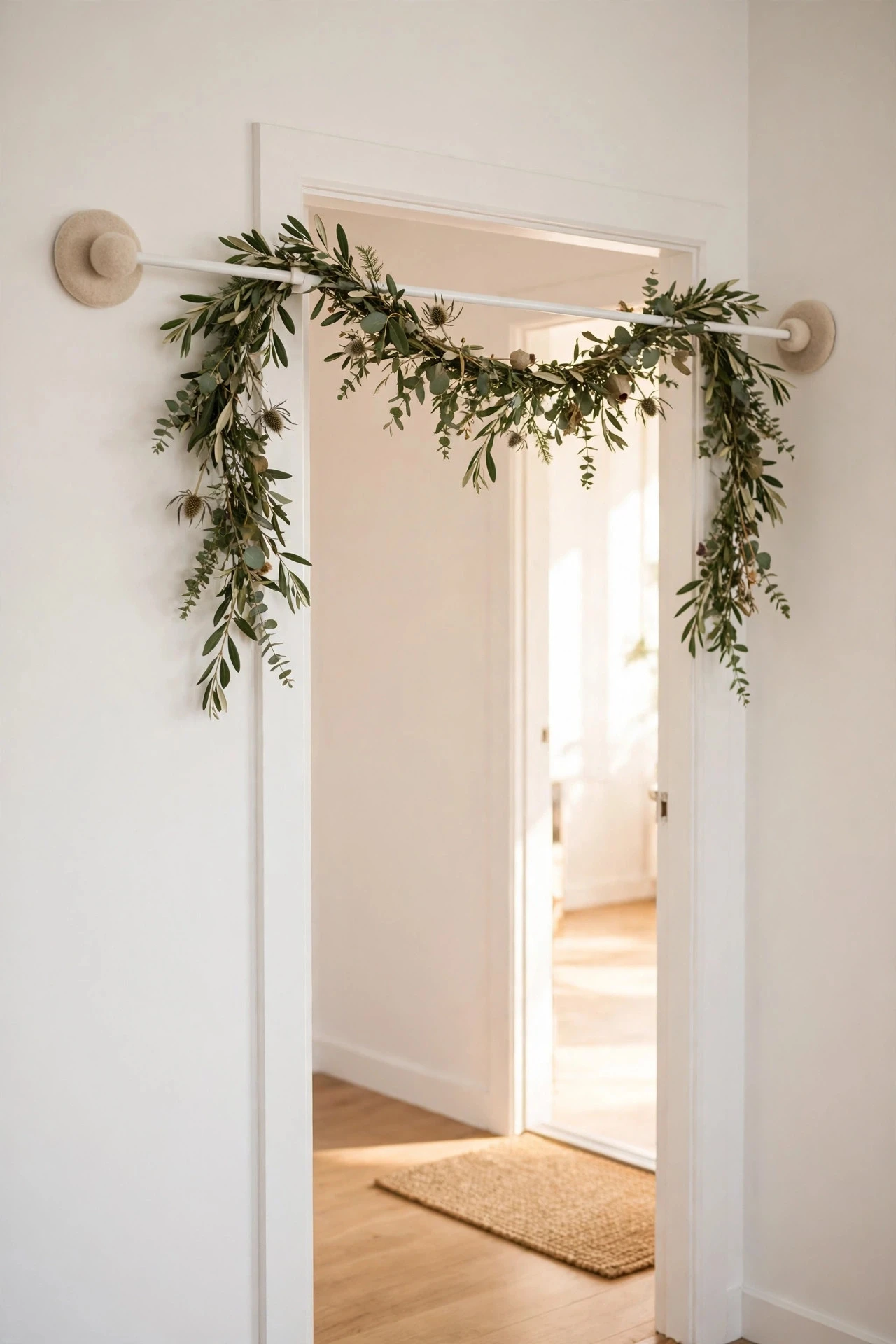
A tension rod is the most renter-friendly garland hanger there is: it leaves no holes, no adhesive residue and no marks, and it comes out in seconds. The only risk is a rod end that leaves a pressure mark on soft paint or a dent in a hollow frame — prevent that with a small felt pad or a square of rubber shelf liner between the rod end and the frame.
Photograph every frame before you fit a rod, so you can prove its condition in January, and test each rod on a hidden corner for 24 hours before you hang the garland on it. Use spring rods rather than twist rods on delicate frames, because twist rods apply more pressure and can dent soft wood.
13. How Do You Add Lights to a Tension Rod Garland?
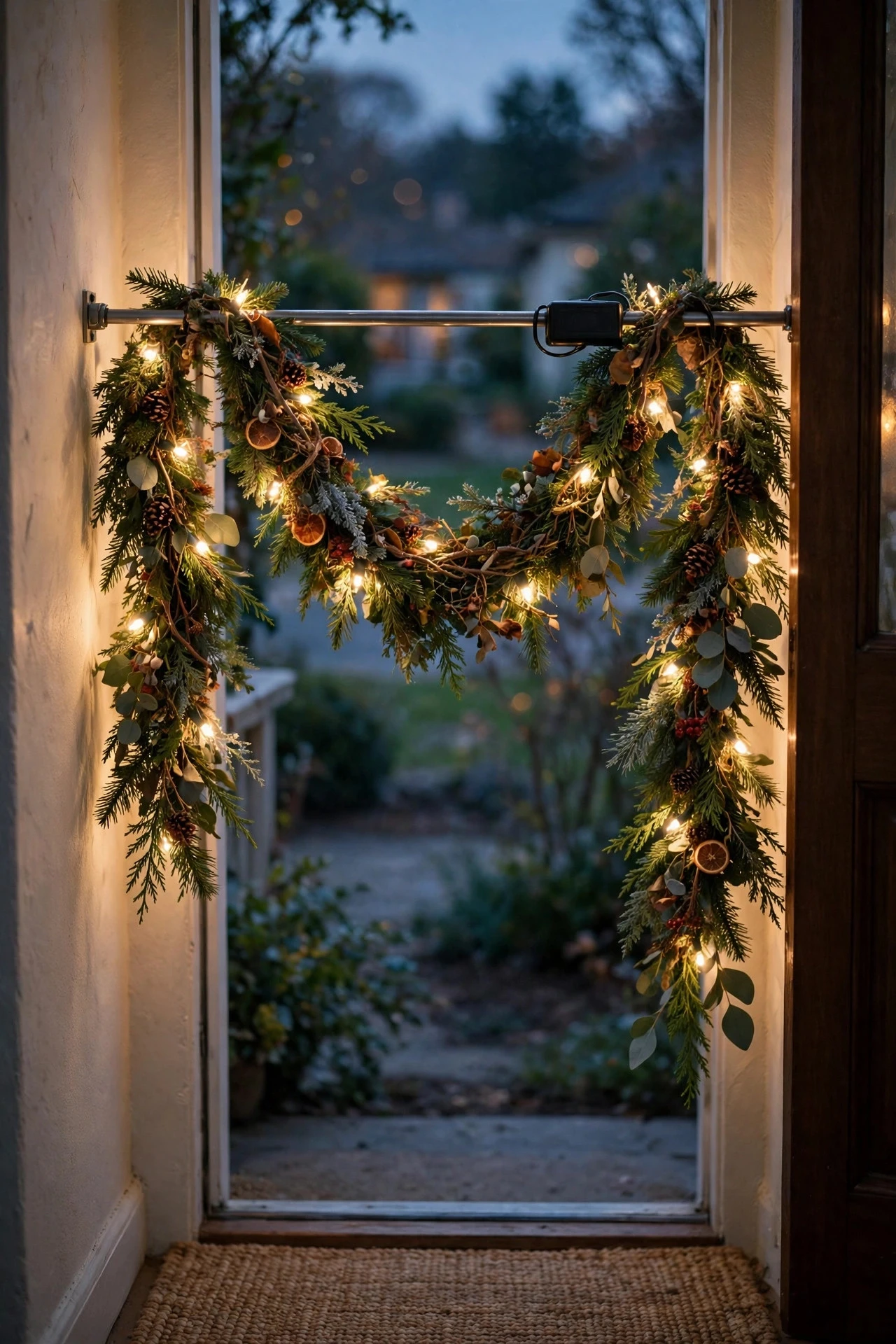
Weave a battery fairy light strand through the garland before you hang it, and the rod carries the lights as well as the greenery. A 20- to 30-count warm-white strand suits a 6-foot garland; a 50-count strand suits a 9-foot garland. Weave the wire through the back of the garland so only the bulbs show, and tuck the battery pack into the garland at one end, where it hides behind the foliage.
Add the lights to the weight budget: a battery pack and a 50-count strand add about half a pound, which can tip a borderline rod over its limit — weigh the garland with the lights fitted, not before. Set the timer for 4 p.m. to 10 p.m. so the garland lights itself every evening, and use warm white, not cool white, for a cosy glow.
14. How Do You Stop a Tension Rod From Slipping on a Smooth Frame?
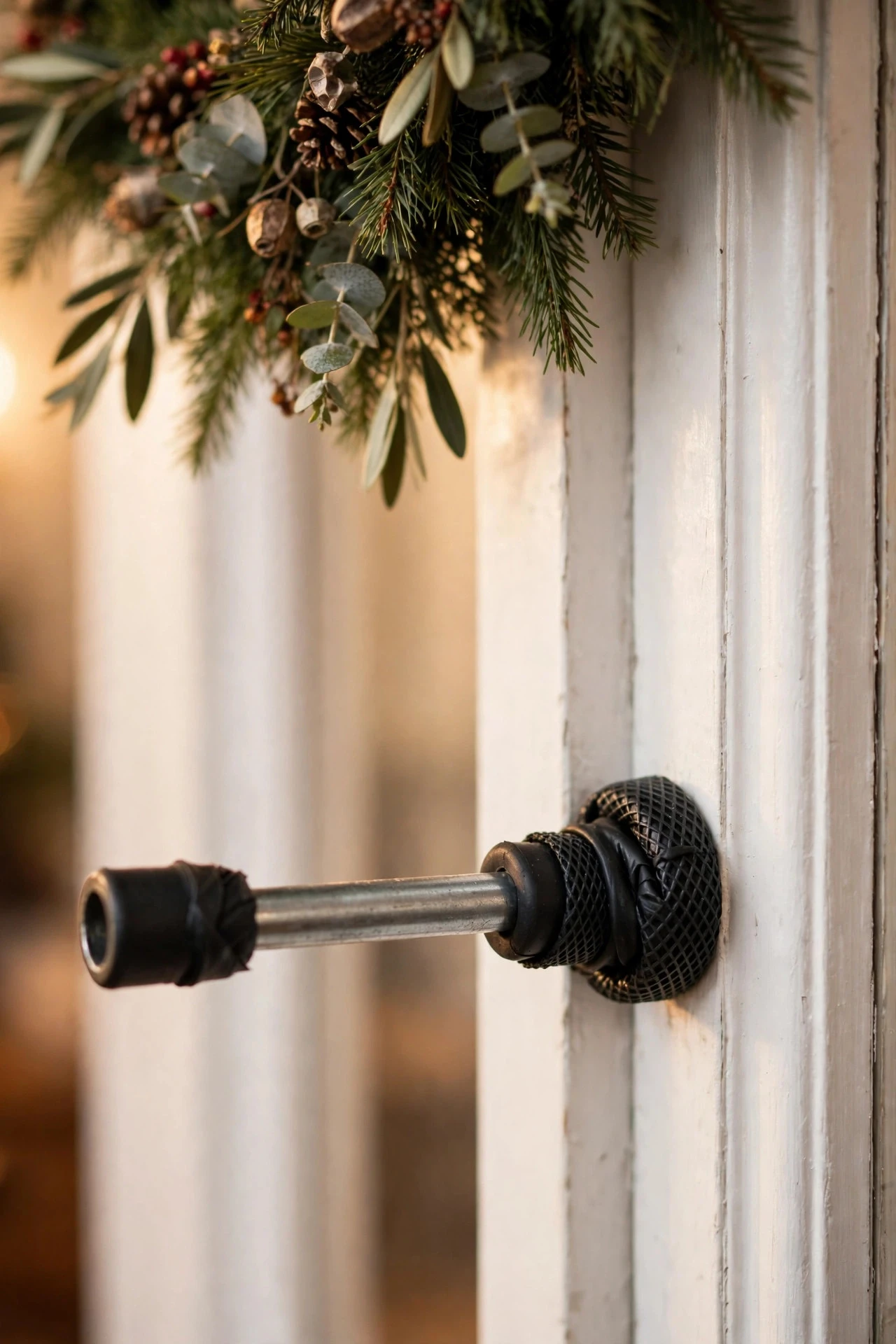
Slipping is a grip problem, and grip comes from friction at the rod ends. Wrap each rod end in a strip of rubber shelf liner or a non-slip drawer liner, which doubles the friction on painted wood, metal and vinyl frames. A small circle of felt under the rubber protects the paint while the rubber does the gripping.
If the frame is very smooth — gloss paint, metal or tile — switch to a twist rod, which applies more pressure than a spring rod and holds on surfaces a spring rod cannot. Check the rod after the first cold night, because frames contract slightly in the cold and a rod that held in a warm afternoon can loosen by morning. Avoid oiling or waxing a frame before you fit a rod; a slick surface is the opposite of what the rod needs.
15. How Do You Hang Garland With Two Tension Rods?
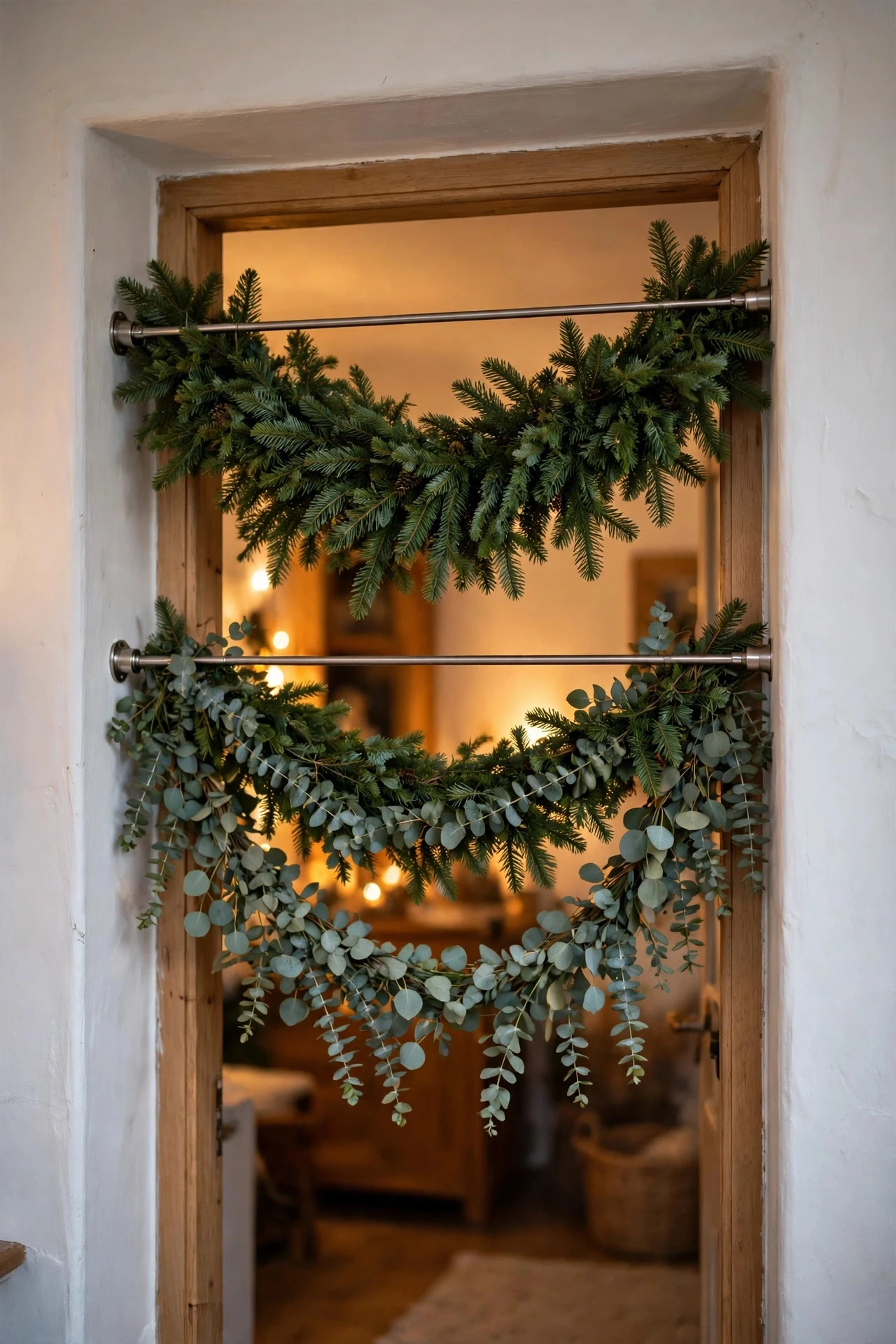
Two rods solve two problems at once: a span too wide for one rod, and a garland too heavy for one rod. Fit the first rod across the top of the opening and the second rod 6 to 8 inches below it, and drape the garland over the top rod and under the bottom rod in a gentle S-curve — the second rod carries half the weight and stops the middle from sagging.
This double-rod method also creates a layered look: hang a plain green garland on the top rod and a lighter beaded or eucalyptus garland on the bottom rod, offset by 4 inches, and the doorway reads as a designed display instead of a single swag. A pair of rods costs $10 to $20, and the pair holds roughly double the weight of one rod. Avoid spacing the rods more than 12 inches apart — the garland will hang slack between them instead of draping.
16. How Do You Hang Garland in a Wide Opening With a Tension Rod?

A wide opening — 48 to 60 inches, such as a double doorway or a wide window — is too far for a single rod to hold a garland without bowing. The fix is to split the span: fit two rods, each spanning half the opening, and meet them in the middle with a small clear adhesive hook or a short length of fishing line tying the two rod ends together so they cannot drift apart.
Another method is to fit a single heavy-duty twist rod rated for the full span, and add two centre supports — adhesive hooks above the rod at one-third and two-thirds of the span, each tied to the garland with fishing line. A 12-foot garland suits a 48-inch opening with a deep swag; a 15-foot garland suits a 60-inch opening. Avoid a single thin spring rod across a 60-inch opening — it will bow, slip, or both.
17. How Do You Hide a Tension Rod Behind Garland?

A bare rod showing above the garland ruins the look, so hide it with a fuller garland or a rod cover. Choose a garland at least 6 inches thick at its fullest, and drape it so the top edge sits 2 inches above the rod — the foliage covers the rod completely from the front and from below. Fluff the garland's branches upward at the top edge to close any gap.
If the garland is thin, wrap the rod in a matching ribbon or a strip of the same foliage before you hang the garland over it, so any peeking metal reads as part of the decoration. A rod in a colour that matches the frame — white on a white frame, black on a dark frame — disappears far better than a chrome rod on a painted frame.
18. How Do You Hang Garland on a Tension Rod Outdoors?

Outdoors, a tension rod works only in a sheltered spot — a covered porch doorway or a window under a deep overhang — because rain and wind defeat the spring grip. Fit the rod inside the porch door frame, where the roof keeps it dry, and use a rust-proof rod: stainless steel or a powder-coated rod, not a bare steel rod that will rust in a week.
Choose an outdoor-rated garland, or spray a faux garland with a fabric waterproofing spray before you hang it, and keep the garland's weight under 3 pounds so a gust cannot pull the rod down. Check the rod after the first storm, and bring the garland in if high winds are forecast — a rod that holds in calm air can twist out in a gust. For porch styling that pairs with a sheltered rod garland, see these christmas porch decorating ideas.
19. What Does a Tension Rod Garland Display Cost?

A basic doorway display costs $15 to $25: a spring rod at $5 to $10 and a 6-foot plain garland at $10 to $15. A mid-range display costs $25 to $60: a heavy-duty twist rod at $12 to $20, a 9-foot garland with lights at $20 to $30, and a few baubles or pinecones at $5 to $10. A premium display with two rods, a thick cedar garland, battery lights and real pinecones runs $60 to $100.
The rod is the reusable part — a good rod lasts for years and works for curtains, garlands and room dividers — so the yearly cost of the display drops to the garland alone once you own the rod. Buy the rod one size up from the minimum, because a rod at the edge of its range slips and a rod in the middle of its range holds.
20. How Do You Hang Garland With a Tension Rod on a Metal Frame?
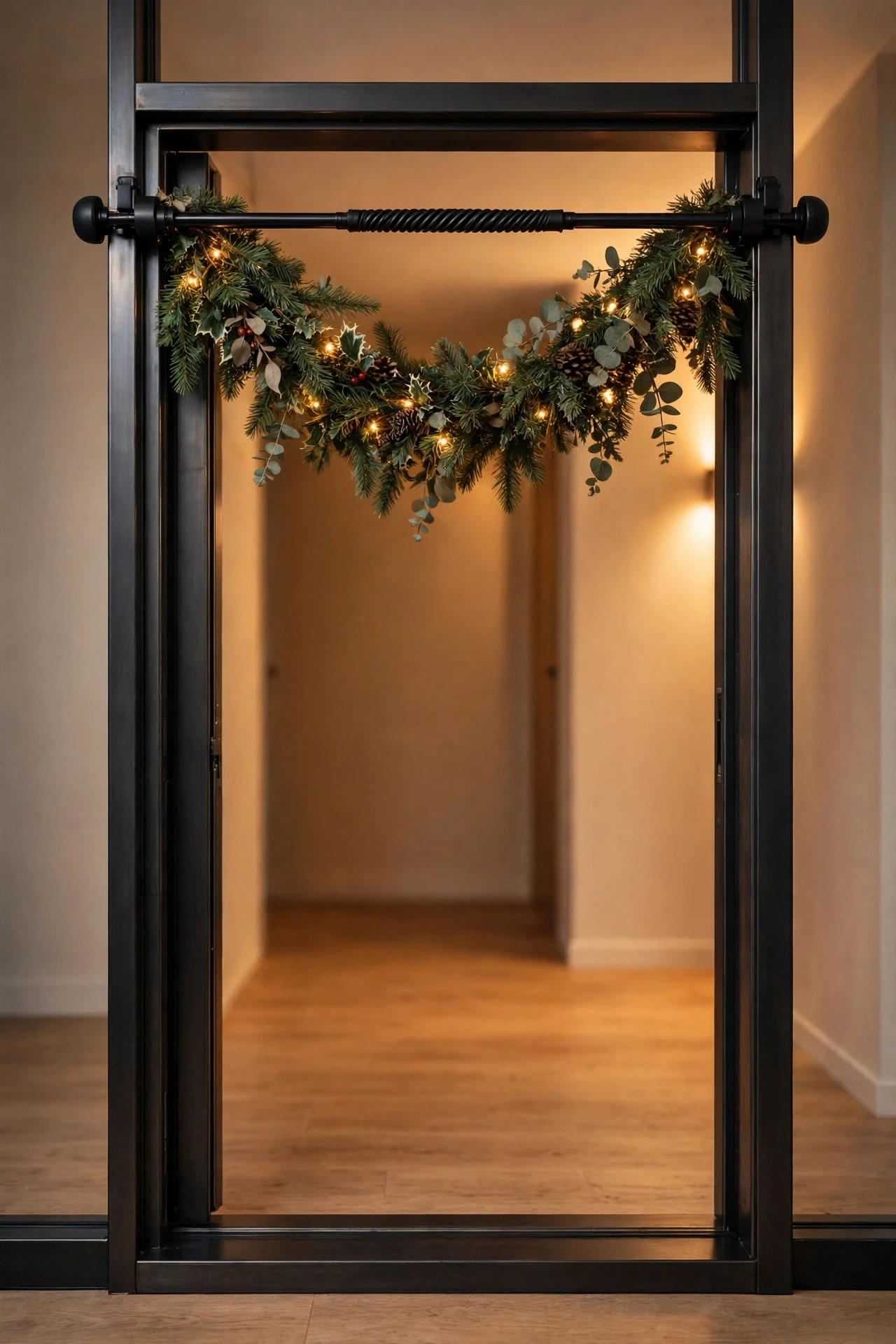
Metal frames — steel doors, aluminium window frames, metal archways — are smooth and cold, which is the hardest surface for a tension rod. Use a twist rod, not a spring rod, because the screw mechanism applies far more pressure, and wrap the rod ends in rubber shelf liner for grip. Clean the frame with a damp cloth first, because dust and grease halve the friction.
Test the rod with the full garland weight for an hour before you decorate, and check it daily for the first week — metal contracts in the cold, and a rod that held in a warm room can loosen overnight. If the frame is magnetic, a magnetic hook above the rod as a centre support adds a backup that costs nothing in damage. House Beautiful's guide to entryway decorating shows how a single strong line of decor frames a metal doorway without clutter, and the same rule works for a rod garland.
21. How Do You Take Down and Store a Tension Rod Garland?

Take the garland off the rod first, then twist the rod to shorten it and lift it out — never yank a rod out while the garland is still on it, or the rod will spring back and mark the frame. Coil the garland loosely and store it in a large bag or box, with the battery pack removed from the lights and the batteries taken out so they cannot leak over summer.
Store the rod fully shortened, with a rubber band around it so it cannot extend in the box and poke through the packaging. Label the bag with the opening it fits — "front door, 36 inches" — so next year you can fit the rod in minutes without remeasuring.
22. What Mistakes Should You Avoid With a Tension Rod Garland?
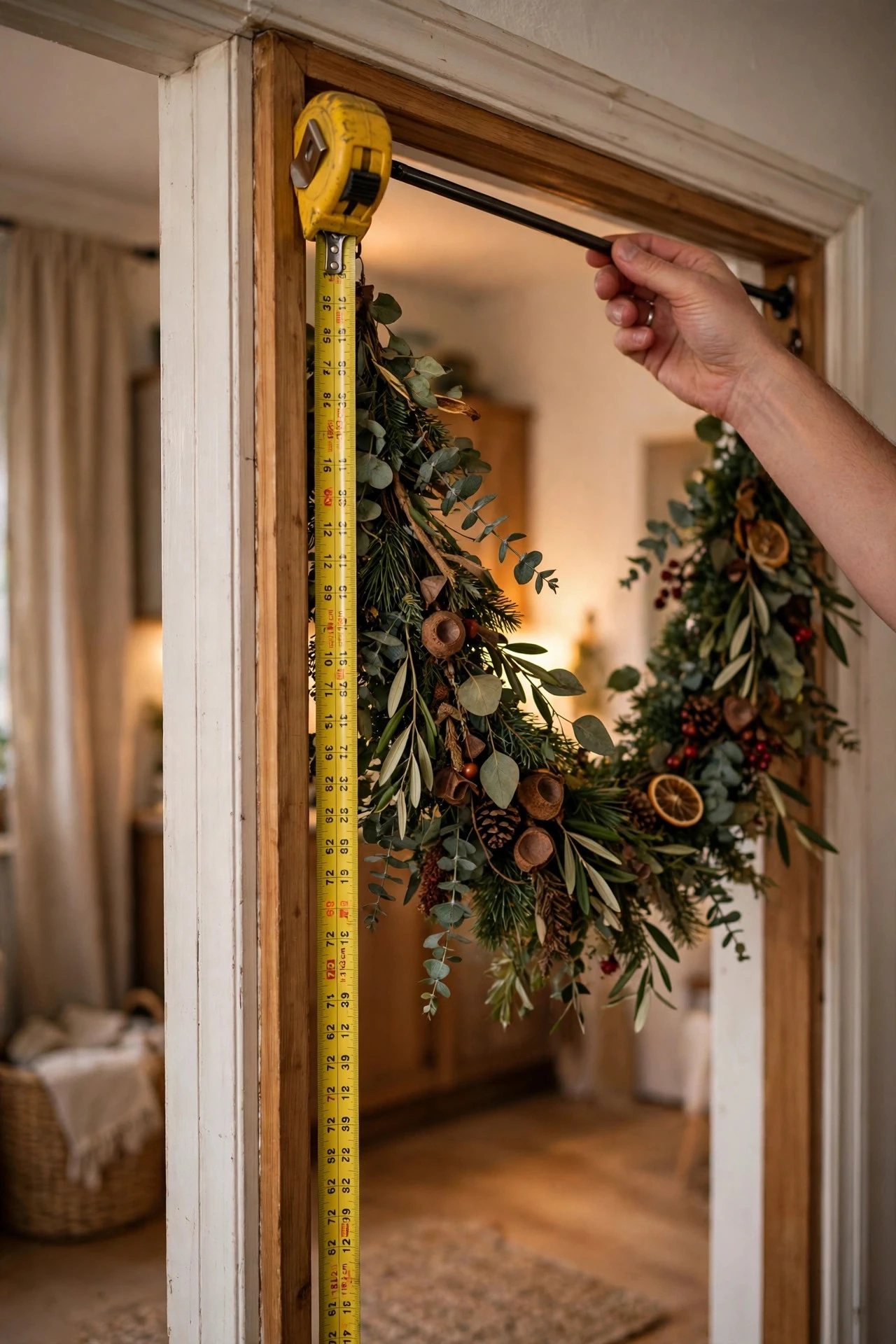
The five mistakes that ruin a tension rod garland are all avoidable. First, buying a rod at the very end of its range, so the spring has no compression left. Second, hanging a garland heavier than the rod's rating and trusting it will hold. Third, fitting the rod on a dirty or greasy frame, which halves the grip. Fourth, hanging the garland so low that people walk into it or the door catches it. Fifth, using mains lights, which pull the garland off-centre and put a cable across the doorway.
Check the rod the morning after you hang it, and again after the first cold night — a rod that slips will slip early, and catching it early means a two-minute fix instead of a garland on the floor. For a full garland guide that pairs with the rod technique, see the history and types of garland on Wikipedia. Avoid any of these five mistakes and the garland will stay up all season.
Practical Tips
Measure the opening at three points before you buy. Frames are rarely square, and a rod bought for the narrowest measurement will slip at the widest — buy for the widest, and keep the spring 1 to 2 inches compressed.
Weigh the garland with lights and ornaments fitted. A plain garland is light; a decorated garland is not. The weight that matters is the finished weight, and a kitchen scale settles it in seconds.
Pad the rod ends. A strip of rubber shelf liner or a felt square at each end doubles the grip and protects the paint — the cheapest insurance in the whole display.
Add a centre support on any span wider than 36 inches. A clear adhesive hook above the rod and a loop of fishing line take the middle weight off the rod and stop the sag before it starts.
Check the rod the morning after, and after the first cold night. Frames contract in the cold and rods loosen; a two-minute check catches a slip before the garland lands on the floor.
Final Thoughts
A tension rod garland works when the rod fits the opening with spring to spare, the garland weighs less than the rod's rating, and the middle has a support on any wide span. Get those three things right, pad the ends, keep the garland high enough to walk under, and you have a garland that hangs for the whole season with no holes, no nails and no damage — and comes down in two minutes when the season ends.
Frequently Asked Questions
How much weight can a tension rod hold for garland?
A standard spring tension rod holds 2 to 5 pounds, a medium rod holds 5 to 10 pounds, and a heavy-duty twist rod holds 10 to 20 pounds. Weigh your garland with lights and ornaments fitted, and choose a rod rated for at least twice the finished weight.
Will a tension rod damage my door frame?
No, if you pad the ends. A small felt pad or a strip of rubber shelf liner between the rod end and the frame stops pressure marks and protects paint. Avoid twist rods on very soft wood, and photograph the frame before you fit the rod in a rental.
How do I stop my garland from sagging on a tension rod?
Add a centre support on any span wider than 36 inches: a clear adhesive hook above the rod, tied to the garland's middle with fishing line. Using two shorter rods instead of one long rod, and wiring the garland to the rod at three points, also stops the middle from drooping.
What size tension rod do I need for a doorway?
A standard interior doorway is 30 to 36 inches wide, so a rod rated for 28 to 48 inches is the usual choice. Measure the opening at three points and buy for the widest measurement, keeping the rod 1 to 2 inches longer than the opening so the spring stays compressed.
Can I hang garland with a tension rod on a window?
Yes, if the garland is light. Fit the rod inside the window frame, keep the garland under 2 pounds, and keep it 4 to 6 inches above the sill so it stays clear of condensation. Heavy garlands block light and slip on smooth window frames, so save those for doorways.
Can I use a tension rod for garland outdoors?
Only in a sheltered spot, such as a covered porch doorway under a roof. Use a rust-proof stainless steel or powder-coated rod, keep the garland under 3 pounds, and check the rod after the first storm. Avoid a tension rod on an exposed doorway with no roof, because wind can twist it out.