Brick Cottage Exteriors: How to Style a Storybook Home
A brick cottage has storybook charm built into its walls. The warm clay tones, the slightly uneven courses and the compact footprint all work together to make a small house feel like a place from a fairytale. The trick is styling the exterior so that charm reads as intentional rather than accidental.
This guide covers paint and limewash, porches, doors, windows, landscaping, lighting, paths, fences and seasonal touches — all sized for a small brick home. You will find real measurements, honest budget ranges, material choices that suit masonry, and the mistakes that quietly ruin a cottage exterior.
Looking for more inspiration? Our Nest Decorz homepage gathers the latest home decor ideas, seasonal decorating guides and room-by-room styling tips in one place — start there and explore.
Quick answers
– Keep the brick visible: limewash or a breathable mineral paint preserves the texture; ordinary acrylic paint traps moisture and can peel or damage the masonry within a few years. – Scale everything down: a cottage porch, door, window box and path all need cottage proportions — oversized fixtures and wide drives overwhelm a small facade. – One accent colour is enough: a single painted door or shutter colour against warm brick and white trim gives the storybook look without turning the house into a patchwork. – Soften the base: low planting, a stone or brick path and climbing plants at the corners break the hard line where wall meets ground. – Light it warmly: 2700K lanterns at the door and along the path make brick glow after dark; cool white light makes it look grey and flat.
1. What Paint Colours Work Best on a Brick Cottage?
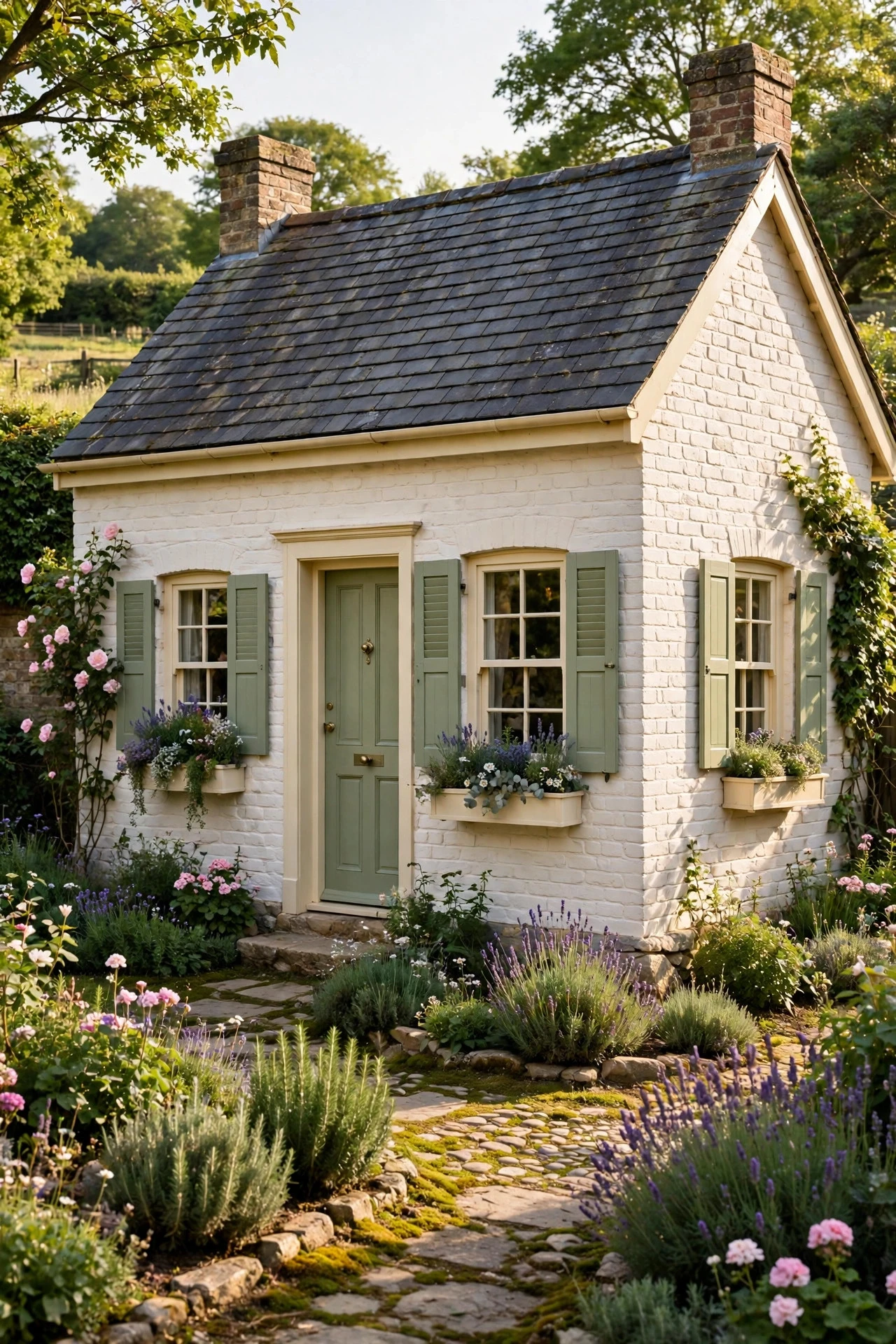
Warm whites, soft creams, pale sage and dusty blue-grey flatter brick cottages because they echo the clay tones without competing with them. A warm white such as a cream with a yellow undertone brightens the facade and makes a small cottage look larger, while sage green trim adds a garden feel. Avoid stark brilliant white, which can look clinical against aged brick, and avoid painting brick a colour darker than the roof unless you want the house to read as heavy and closed-in.
If the brick itself stays exposed, choose trim and shutter colours from its mortar and roof: a terracotta roof pairs with cream and sage, while a slate roof suits cool grey and soft blue. Always paint a test patch of at least 2 square feet and view it in morning and evening light for three days before committing. A full exterior repaint of a small cottage costs roughly $3,000–$6,000 professionally, or $400–$800 in materials for a careful DIY job.
2. Should You Limewash a Brick Cottage?

Limewash is the most forgiving way to lighten a brick cottage because it is a thin mineral coating that lets the brick breathe and allows some texture to show through. Unlike paint, it does not form a sealed film, so trapped moisture is far less of a risk — a real concern with older brick that was laid with lime mortar. A single coat gives a soft, chalky veil; two or three coats move toward a solid pale finish.
Apply limewash with a large masonry brush in a crosshatch pattern, working in sections of about 4 feet so the edges stay wet and blend. A 5-gallon bucket covers roughly 200–250 square feet at one coat and costs $60–$90. Keep in mind that limewash weathers and fades over 5–7 years, which many cottage owners love because it ages gracefully, but it means a refresh is part of the maintenance cycle rather than a one-off job.
3. How Do You Choose a Front Door Colour for a Brick Cottage?

The front door is the one place on a brick cottage where a bold colour pays off. Deep forest green, navy, dusty teal, burgundy and mustard all sit beautifully against red or brown brick, because they are saturated enough to hold their own without clashing. For painted white brick, almost any colour works, but a deep green or classic black keeps the storybook feel. For ideas that dress the door itself through the seasons, see these Christmas door decorating ideas.
Paint the door with an exterior-grade enamel in satin or semi-gloss so it resists weather and wipes clean, and add black or aged-brass hardware for contrast. A standard 36-inch door needs about one quart of paint, roughly $25–$40, and the whole job takes an afternoon including sanding and priming. Avoid glossy primary red on orange brick — the two warm reds fight each other — and avoid matching the door exactly to the shutters, which flattens the facade instead of giving it a focal point.
4. What Porch Style Suits a Small Brick Cottage?

A shallow covered porch, 4 to 6 feet deep, suits a brick cottage far better than a deep wraparound, because it shelters the door without swallowing the facade. Keep the roofline low and the posts slim — 4-inch square timber posts or simple turned columns — and choose a porch floor of brick pavers, stone flags or painted wood that matches the house. A gabled porch roof that mirrors the main roof pitch looks intentional, while a flat metal awning can feel like an afterthought.
Furnish it lightly: one or two chairs, a small side table and a doormat leave room to open the door fully. A porch this size costs $2,500–$6,000 to build, depending on materials and whether the footings are already in place. For porch styling through the festive season, these Christmas front porch ideas show how to dress a small entry without crowding it. Avoid enclosing the porch with solid walls, which turns a cottage entrance into a dark box and hides the brick.
5. How Do You Add a Storybook Arched Doorway?
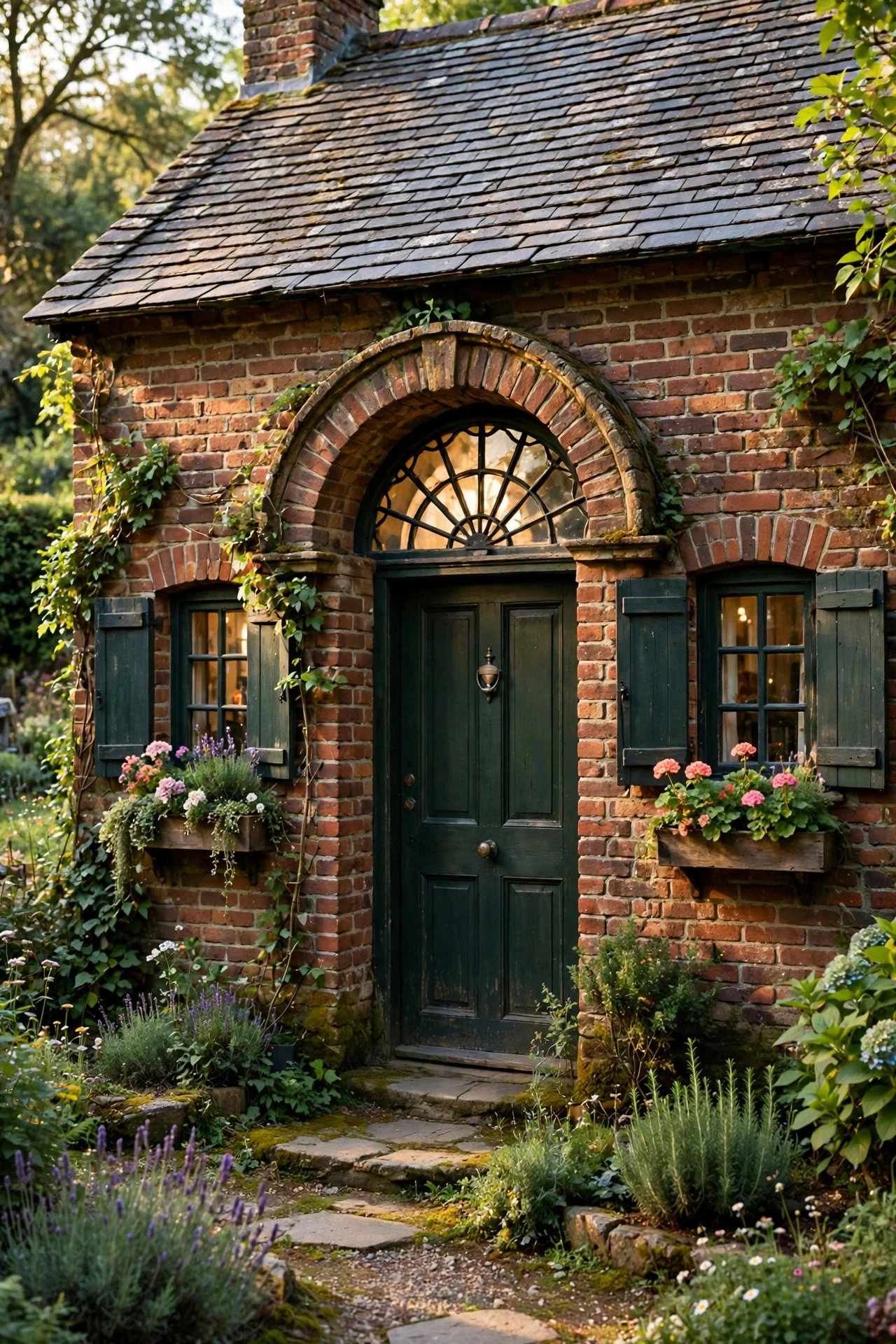
An arched doorway is the single most storybook feature you can add to a brick cottage, and it works best as a brick or stone arch over the existing rectangular door. A shallow segmental arch with a brick soldier course — bricks set on end around the curve — reads as original to the house, while a full semicircular arch suits Tudor-style cottages with steep roofs. Keep the arch's rise modest, about 6 to 8 inches over a 36-inch door, so it looks structural rather than decorative.
If rebuilding the opening is too invasive, a half-round transom window above the door gives a similar arched effect for far less money and disruption. A transom costs $300–$800 installed and floods the entry with light. A true brick arch is a mason's job, typically $1,500–$3,500, and needs a lintel that can carry the load above. Avoid a thin plastic arch trim glued onto flat brick — it reads as fake from the street and peels within a season or two.
6. Which Windows Suit a Brick Cottage Exterior?

Small-paned casement or double-hung windows with divided lights are the classic cottage choice, and they matter more than most owners expect because windows are the eyes of the facade. Six-over-six or four-over-four panes suit a cottage scale, while large undivided picture windows look wrong on a small brick face. Choose frames in white, cream or a soft sage, and keep the frame width slim so the glass area stays generous.
If replacing windows, match the new units to the existing openings rather than enlarging them — cutting brick is expensive and risks cracking the courses around the opening. A single replacement window costs $400–$900 installed. Add exterior muntins or a simple flat trim surround rather than heavy ornate casing, which overwhelms a cottage. Avoid black frames on a very small cottage unless the roof is also dark, because the contrast can make the windows look like holes in the wall.
7. How Do Shutters Change a Brick Cottage?
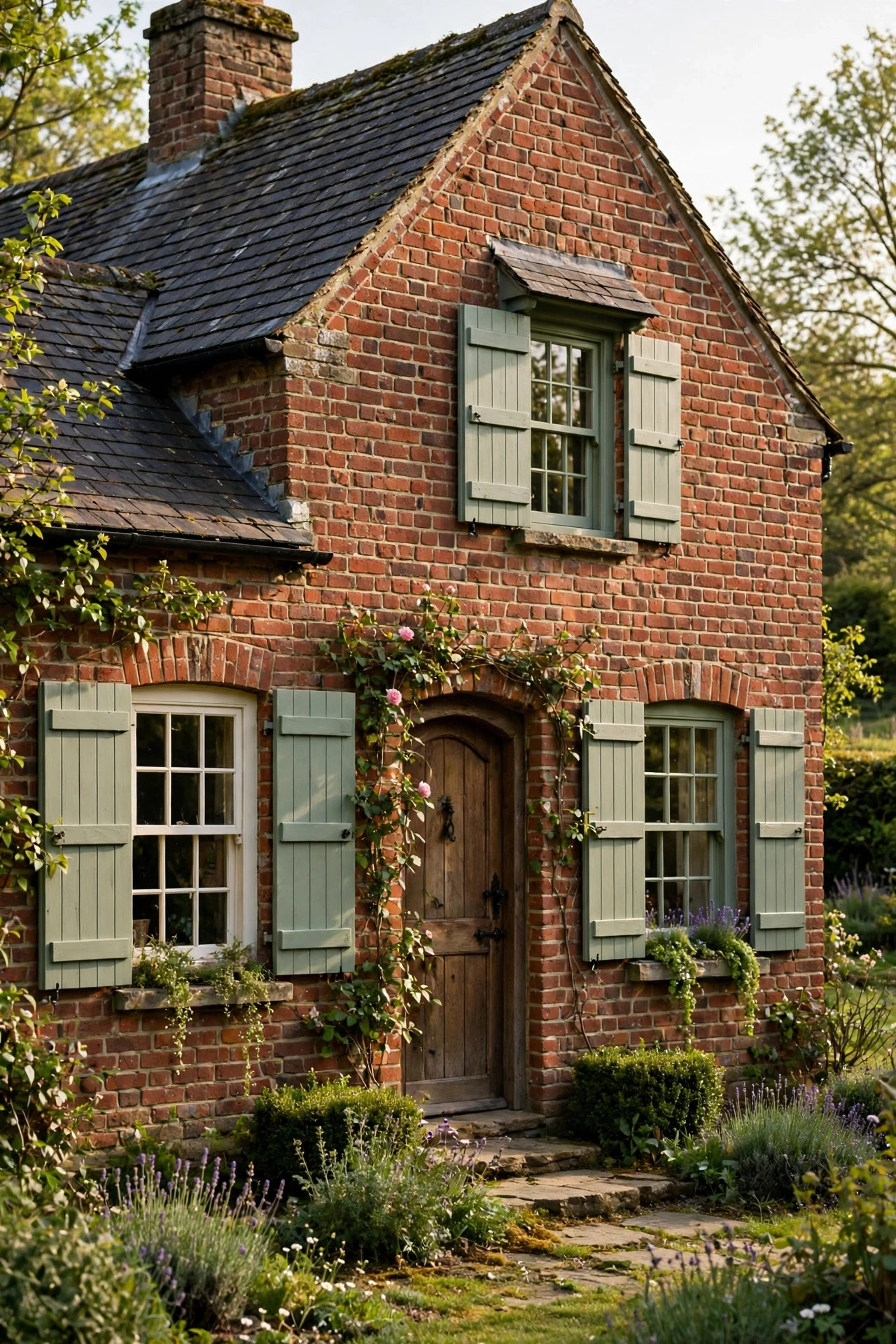
Shutters add instant cottage character, but only when they are sized as if they could actually close over the window. Each shutter should be half the window's width, so a 36-inch window needs two 18-inch shutters, and they should match the window's height. Louvred timber shutters in sage, navy or cream are the traditional choice; flat board-and-batten shutters suit a more rustic cottage.
Fix shutters with proper shutter dogs and a small gap behind them so air circulates and the brick stays dry — shutters screwed flat against brick trap moisture and stain the wall. A pair of quality timber shutters costs $150–$400, while vinyl lookalikes run $60–$150 a pair but rarely convince up close. Avoid shutters that are obviously too narrow for the window, which is the most common cottage exterior mistake and instantly cheapens the whole facade.
8. What Is the Best Way to Landscape Around Brick?
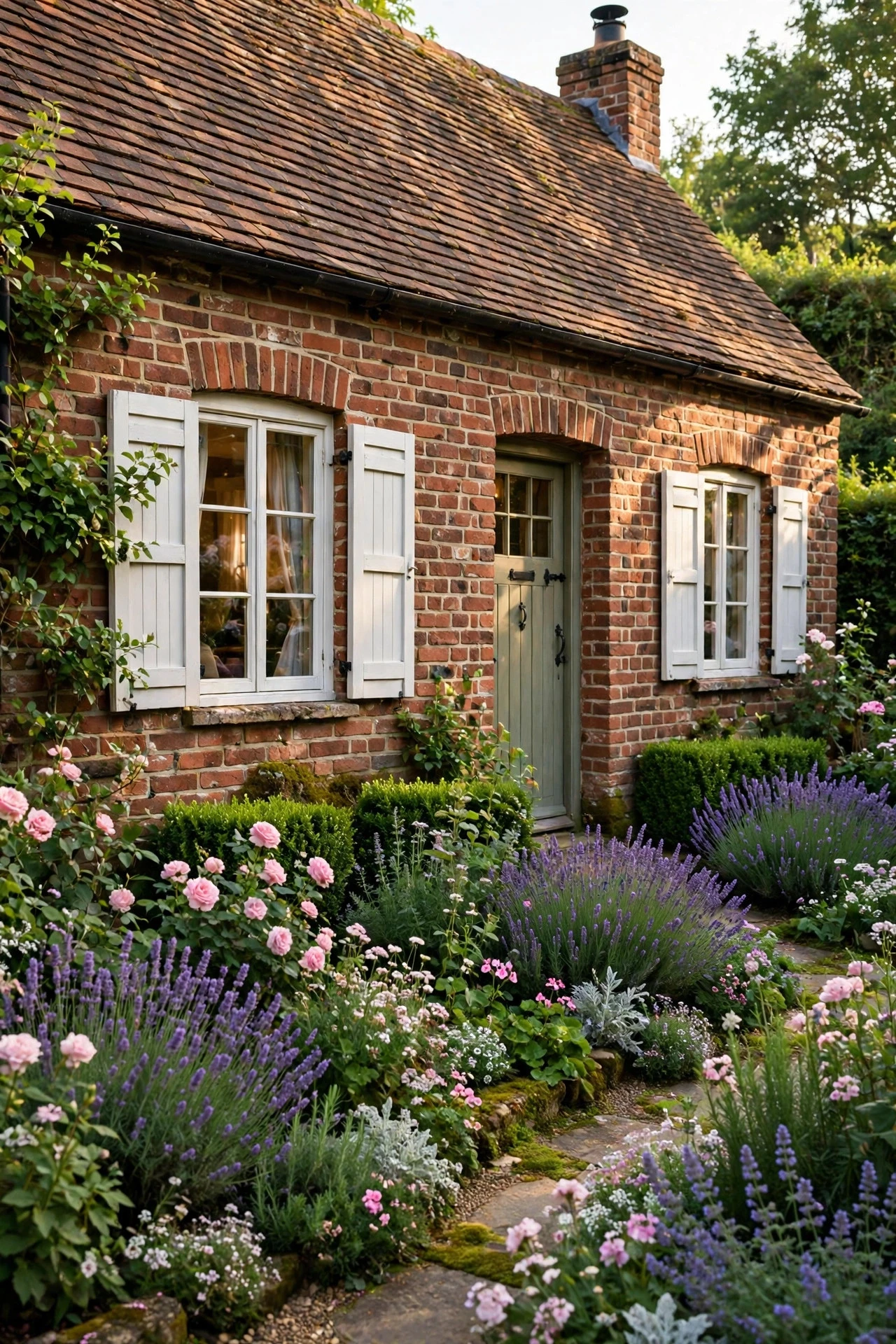
Cottage landscaping should look slightly loose and layered, not manicured like a suburban lawn. Plant in drifts rather than straight lines: low boxwood or lavender along the foundation, mid-height roses or hydrangeas behind them, and one or two taller shrubs at the corners to soften the house's edges. Keep all planting at least 12 inches from the brick wall so air flows and damp cannot sit against the masonry.
A foundation bed 2 to 3 feet deep gives enough room for two layers of planting without the shrubs touching the house. Mulch with bark or gravel in a colour that echoes the brick — warm brown bark suits red brick, while pale gravel suits whitewashed brick. A modest foundation planting costs $300–$800 in plants and mulch for a small cottage. Avoid large trees within 10 feet of the house, since roots can disturb footings and falling branches damage the roof, and avoid ivy planted directly on brick, which holds moisture and damages mortar over time.
9. How Do You Build a Cottage Garden Path?

A brick or stone path that curves gently from the gate to the door is the classic cottage approach, and it should be 3 to 4 feet wide — wide enough for two people to walk side by side, narrow enough to feel intimate. Reclaimed brick pavers laid in a herringbone or basketweave pattern echo the house walls, while irregular flagstones give a softer, older feel. Set pavers on a 4-inch compacted gravel base with sand joints so water drains rather than pooling.
Edge the path with low plants — creeping thyme between pavers, lavender or catmint along the sides — so the hard edges blur into the garden. A 20-foot path costs roughly $400–$1,200 in materials depending on the stone chosen, and a weekend of work for a confident DIYer. Avoid poured concrete slabs with a stamped brick pattern, which look fake beside real brick, and avoid a path that runs dead straight from the pavement to the door, which feels formal rather than cottage-like.
10. Which Climbing Plants Suit a Brick Cottage?

Climbing roses, clematis, honeysuckle and jasmine are the classic cottage climbers because they flower generously and stay light enough not to damage brick. Train them on a trellis or wires fixed 2 inches off the wall rather than letting them cling directly to the masonry — self-clinging plants like ivy grip the mortar and hold damp against it, which is why they damage older brick. A simple wire system costs $30–$60 and keeps the plant off the wall while giving the same romantic effect.
Plant climbers at least 18 inches from the wall and angle them toward it, so the roots stay in good soil rather than the dry strip under the eaves. Prune annually to keep growth away from gutters, rooflines and window frames. A mature climbing rose can cover 8 to 12 feet of wall in three years. Avoid wisteria on a small cottage: it is beautiful but extremely vigorous, and its thick stems can lift roof tiles and pry apart mortar joints within a decade.
11. How Do You Light a Brick Cottage Exterior?
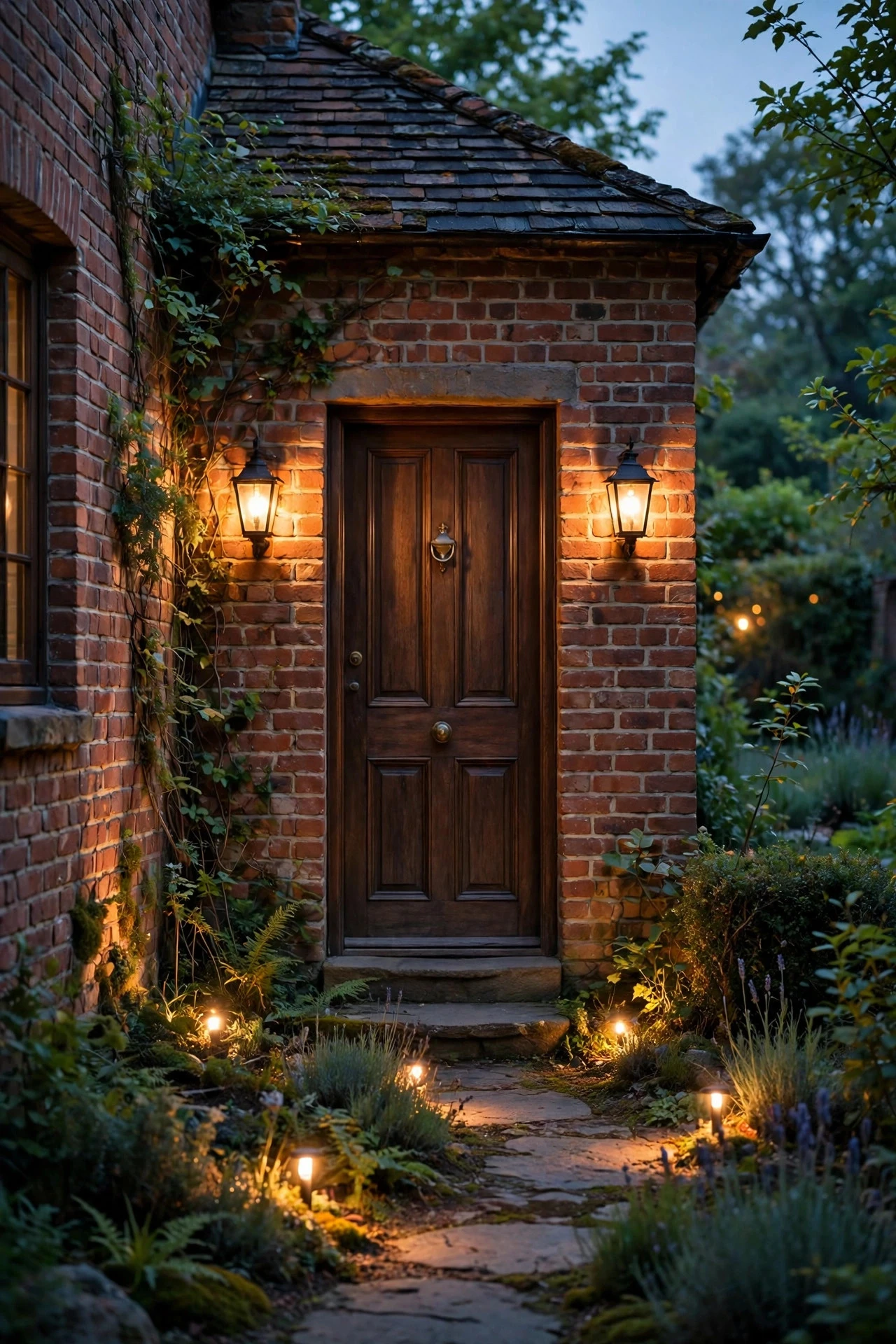
Warm light is non-negotiable on brick: 2700K bulbs make red and brown brick glow, while cool white light above 4000K turns it grey and flat. Place a lantern on each side of the front door at about 66 inches from the ground, and add low path lights every 6 to 8 feet along the walk so guests can see their footing without the garden looking like a runway. A single uplight at the base of a corner shrub or climbing rose adds depth after dark.
Choose fixtures in black iron, aged brass or copper, which age gracefully and suit cottage proportions — oversized modern fixtures look out of place on a small facade. Solar path lights cost $5–$15 each and work well in sunny spots, while wired low-voltage lighting costs $200–$600 for a small garden but is far more reliable. Avoid floodlights aimed at the facade, which wash out the brick texture and create harsh shadows, and avoid coloured bulbs, which fight the natural warmth of the masonry.
12. What Fence and Gate Suit a Brick Cottage?
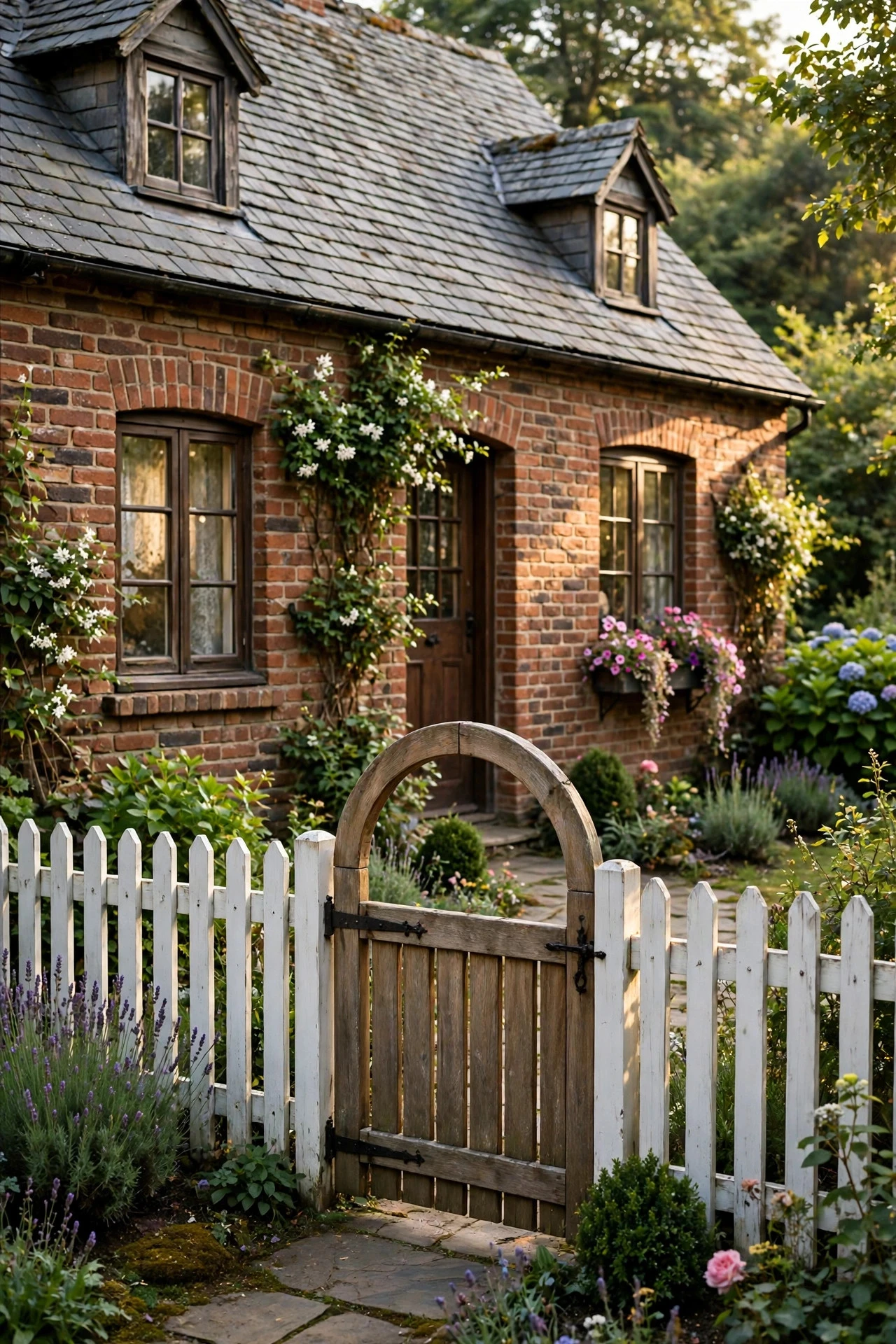
A low picket fence, 3 to 4 feet high, is the natural partner for a brick cottage because it marks the boundary without hiding the house. White or cream painted timber pickets suit painted brick, while natural cedar or a soft sage stain suits exposed red brick. Space the pickets about 2 inches apart so the garden stays visible from the street. A simple arched or flat-topped gate, 3 feet wide, with black iron hinges and a latch, completes the look.
Budget roughly $25–$45 per linear foot installed for a timber picket fence, or $15–$25 per foot for materials if you build it yourself. Keep the fence line straight and the gate level — a sagging gate is the first thing visitors notice. Avoid tall solid fences in front of a cottage, which hide the facade and make a small house feel smaller, and avoid chain-link or metal railings that clash with the soft, handmade feel of brick and timber.
13. How Do You Style a Brick Cottage Porch?
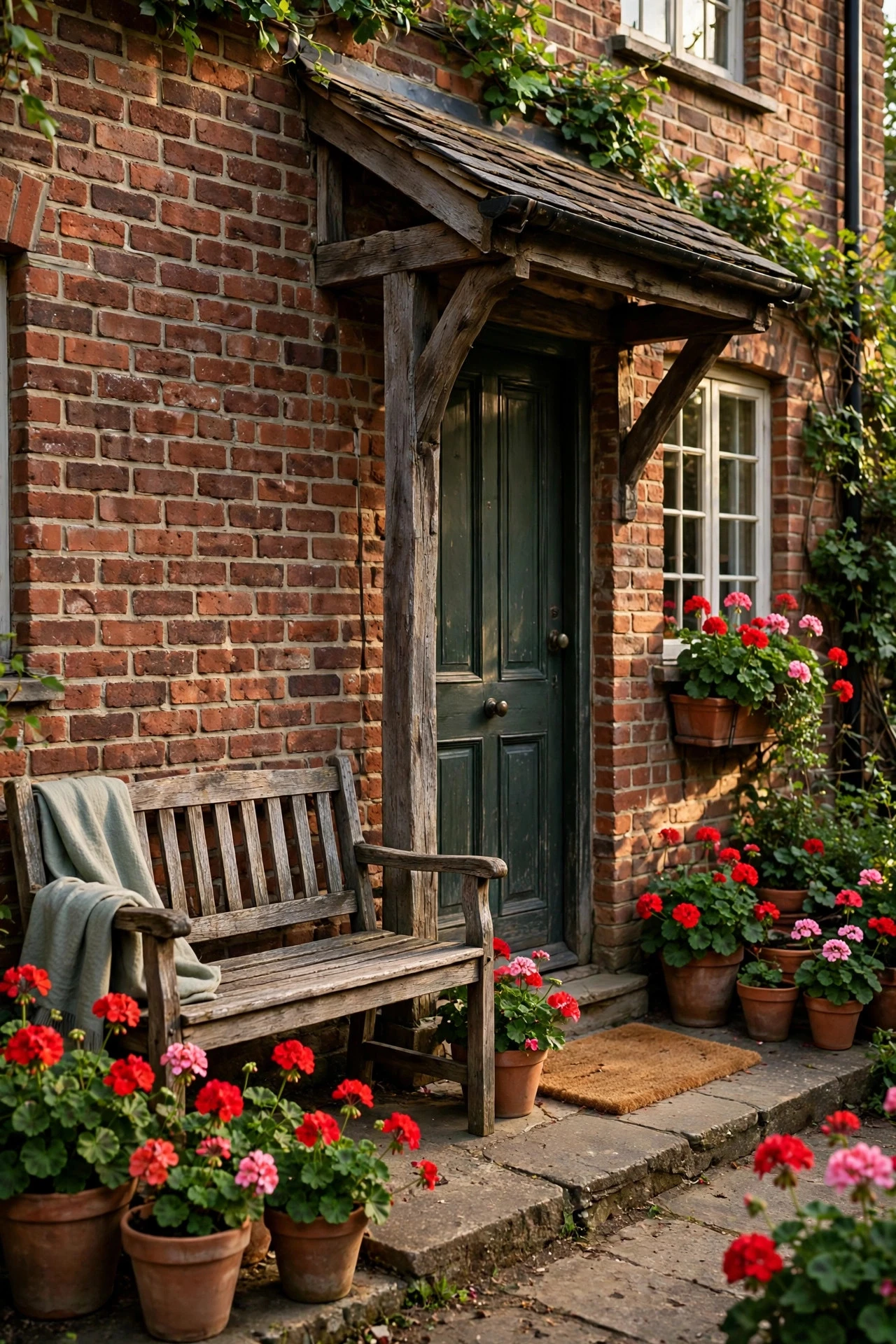
Style the porch in layers: a doormat, a pair of potted plants flanking the door, a small bench or two chairs, and one lantern or candle holder. Terracotta pots with geraniums, lavender or boxwood suit brick beautifully and cost $15–$40 each planted. A coir doormat, 18 by 30 inches, traps dirt and adds texture without competing with the brick. Add a cushion or two in a muted stripe or floral, and the porch feels lived-in rather than staged.
Keep the colour palette to three tones — the brick, the trim colour and one accent — so the porch reads as calm rather than cluttered. Swap the plants seasonally: spring bulbs, summer geraniums, autumn mums and winter evergreen sprigs keep the porch fresh all year. For more seasonal porch ideas, see these Christmas porch decorating ideas. Avoid plastic furniture and artificial flowers, which look cheap against real brick, and avoid blocking more than a third of the porch width with furniture.
14. What Roof Colours Work With Brick Cottages?
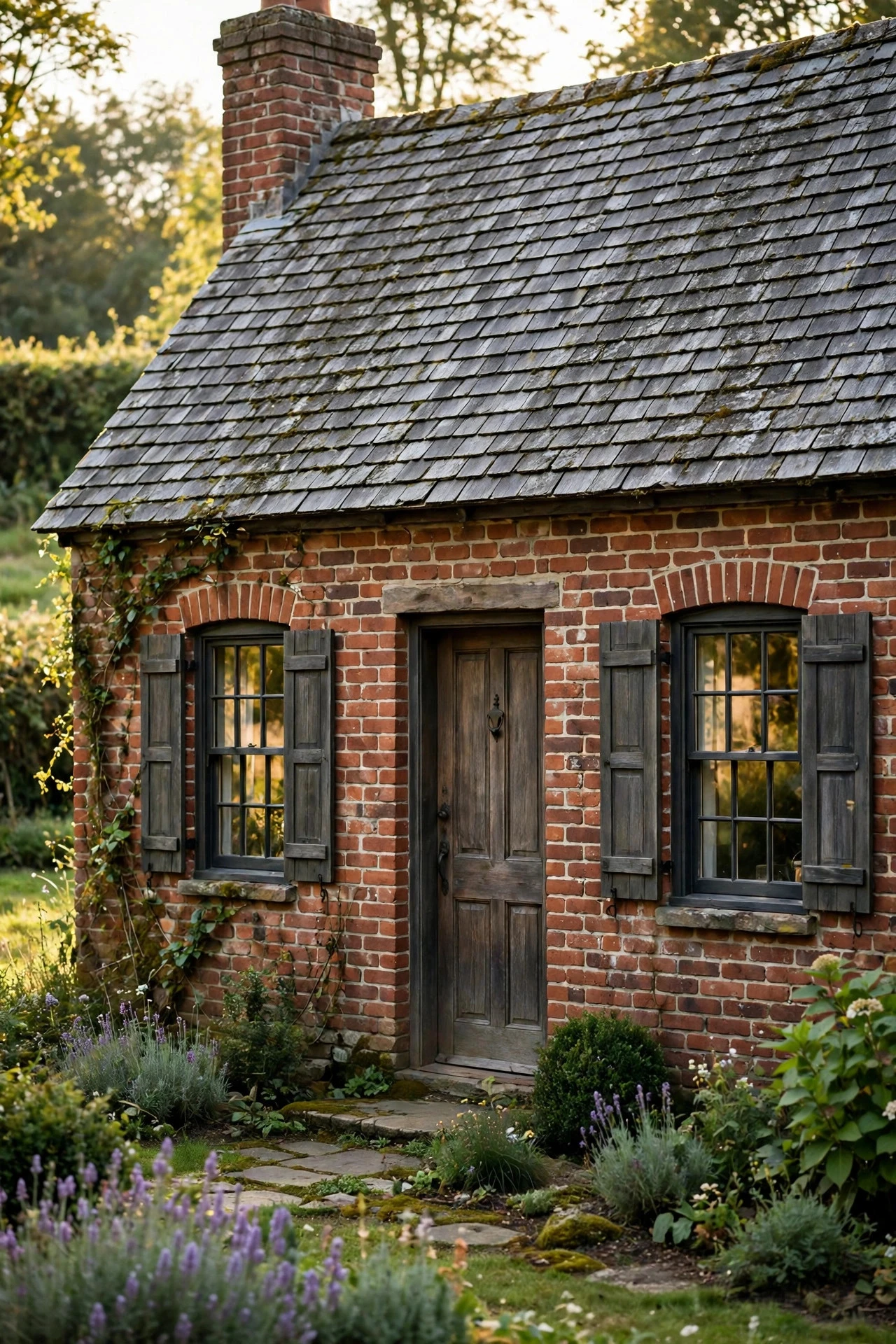
The roof is the largest single colour block on a cottage after the brick, so it sets the tone for everything else. Warm grey, weathered brown and charcoal shingles all work with red brick, while a standing-seam metal roof in muted green or dark grey suits a storybook cottage and lasts 40–50 years. Terracotta tiles are the traditional match for brick in warmer climates and age beautifully, though they are heavy and need a roof structure that can carry them.
When choosing, hold a shingle sample against the brick in daylight — a roof that looks grey on a sample board can read blue or green next to red brick. A new shingle roof on a small cottage costs $6,000–$12,000, while a metal roof runs $10,000–$18,000 but outlasts two shingle roofs. Avoid bright red or blue roofing, which competes with the brick instead of grounding it, and avoid mixing two roof materials on the main roof, which looks like a repair rather than a design choice.
15. How Do You Add Window Boxes to a Brick Cottage?

Window boxes add a burst of colour at eye level and suit cottages because they echo the cottage garden below. Choose a box that spans the window width and is 8 to 10 inches deep, made from cedar, wrought iron or painted timber, and fix it to the wall with brackets screwed into the mortar joints rather than the brick face — mortar is easier to repair if you ever remove the box. Line the box with a coconut-fibre liner and fill it with a lightweight potting mix.
Plant in three layers: trailing plants such as ivy-leaf geranium at the front, upright flowers such as petunias or pansies in the middle, and a taller filler such as lavender at the back. Water window boxes every day in summer, since they dry out fast. A filled window box costs $40–$100 including plants. Avoid plastic boxes, which fade and crack within a year, and avoid boxes wider than the window, which look top-heavy and catch wind.
16. How Do You Keep Brick Looking Its Best?
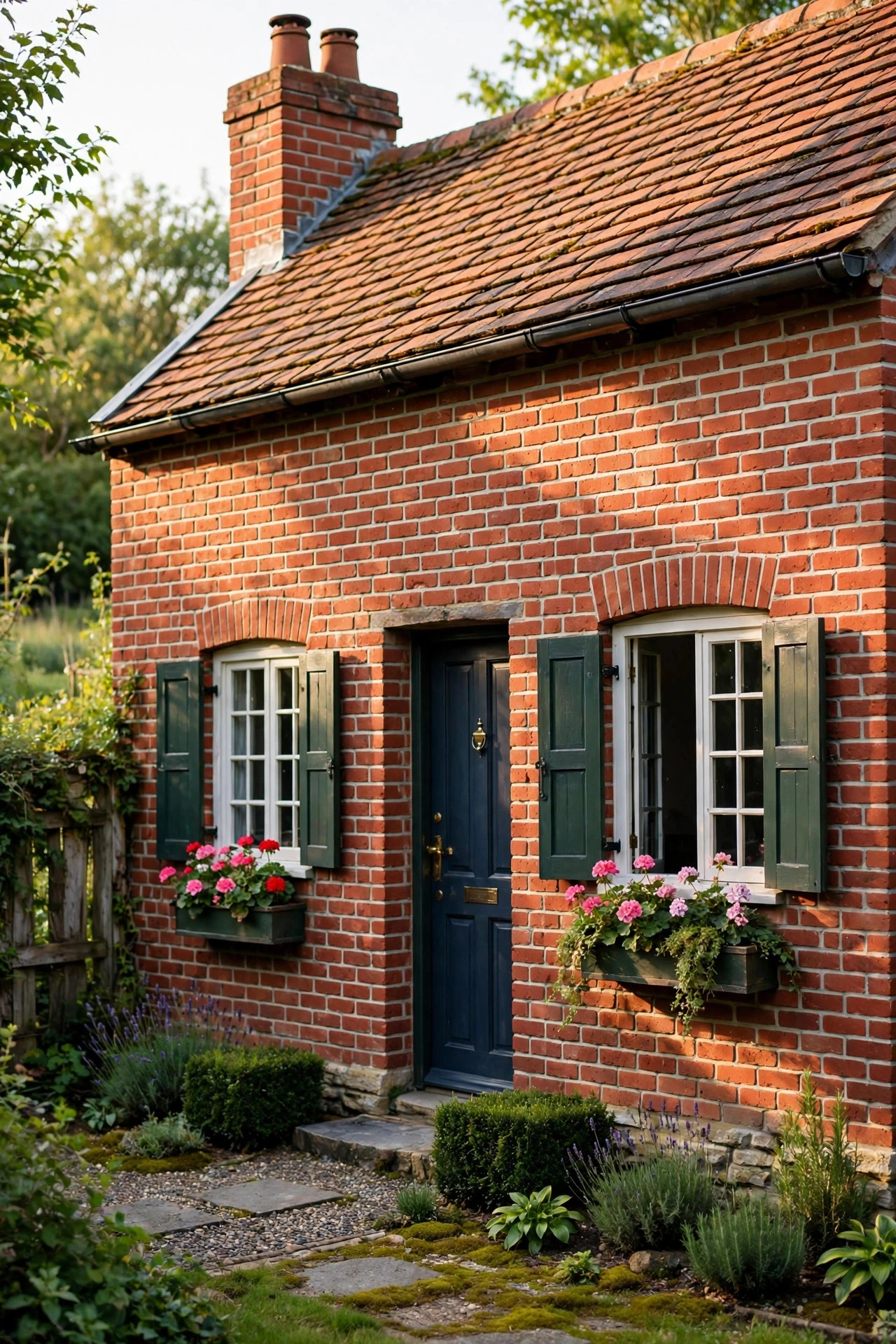
Brick needs gentle, regular care rather than aggressive cleaning. Wash the walls once a year with a soft brush and a bucket of water with a splash of mild detergent, working from the top down so dirty water does not streak across clean brick below. Repoint crumbling mortar joints promptly — a small gap lets water in, and freeze-thaw cycles widen it every winter. A bag of lime mortar costs $15–$25 and covers a surprising amount of small repairs.
Never pressure-wash old brick above 500 psi, and never use acid cleaners without professional advice, because both can strip the fired face of the brick and leave it porous and vulnerable. Check the mortar every spring and after any hard frost. For a full repointing of a small cottage, budget $1,500–$4,000 professionally. Avoid sealing brick with a waterproof coating unless a specialist recommends it for your specific brick type, since trapped moisture behind a sealant causes spalling — the brick face flakes off — which is expensive to repair.
17. How Do You Create Curb Appeal on a Budget?

The highest-impact cheap changes are a painted door, a new doormat, trimmed planting and clean brick. A $40 tin of door paint, a $25 doormat, an afternoon of pruning and a $15 brush-and-bucket wash can transform a cottage facade for under $150. Next, add two matching lanterns by the door for $60–$120 and a pair of terracotta pots for $30–$60, and the entrance looks considered rather than neglected.
Spend next on the path: re-laying loose pavers or topping up gravel costs little and removes the trip hazards that make a house feel uncared for. Save the expensive jobs — a new porch or a full repaint — until the cheap fixes are done, because they make the bigger investment look better too. For exterior ideas that dress the front of the house for the festive season on a budget, see these Christmas outdoor decor ideas. Avoid spending on decorative items before fixing peeling paint, broken gutters and cracked paths, which undermine every other improvement.
18. What Seasonal Touches Suit a Brick Cottage Year-Round?

The best cottage exteriors change with the seasons without a full redecoration each time. Keep the permanent bones — door colour, lanterns, pots, doormat — and swap only the plants and one or two small accessories: spring bulbs in the window boxes, summer geraniums on the porch, autumn pumpkins by the steps and winter evergreen sprigs in the planters. A single wreath on the door, changed four times a year, is the easiest seasonal signal and costs $20–$40 each time if you make it yourself.
Store seasonal items in one labelled box in the garage so the swap takes an hour, not a weekend. For a fuller set of festive exterior ideas when December arrives, these outdoor Christmas decor ideas cover lights, garlands and door dressing that suit a small cottage. Avoid leaving one season's decor up for months — a faded autumn wreath in February tells visitors the house is not cared for — and avoid inflatable decorations, which clash with the handmade, timeless feel of brick.
19. How Do You Mix Brick With Other Materials?

Brick pairs best with materials that share its handmade, natural character: timber, natural stone, slate and wrought iron. Use timber for the porch posts, door and shutters, stone for the path and porch floor, and iron for lanterns, railings and gate hardware. Keep the palette to three materials plus the brick, so the facade stays calm. A timber porch against brick, a stone step and iron lanterns is a complete scheme; adding render, plastic cladding and stainless steel on top of that makes it busy.
When adding an extension, match the brick as closely as possible in size, colour and mortar — a mismatched extension is the most visible mistake on a cottage. Ask the brick supplier for a sample panel before ordering, and check it against the existing wall in daylight. The Spruce's guide to exterior paint colours for brick houses explains how to test colours against brick before committing. Avoid uPVC cladding, fake stone veneer and shiny metal, which all fight the soft, matte texture of real brick.
20. How Do You Make a Small Brick Cottage Look Bigger?

A small cottage looks bigger when the eye is drawn outward and upward rather than stopped at the walls. Paint the trim and door in lighter tones than the brick, keep the planting low at the front so the facade is fully visible, and use a light-coloured path that leads the eye toward the door. A pale gravel or light stone path reads as wider than a dark one, and a low fence keeps the garden open to the street.
Inside the boundary, avoid tall hedges in front of the windows — they shrink the house visually and block light. A single small tree, such as a crabapple or amelanchier, placed 10 to 12 feet from the house gives height and shade without overwhelming the cottage. The classic cottage reference point for scale is the English country cottage, where low walls and open gardens make small houses feel generous — the history of the cottage shows how these proportions developed. Avoid dark paint on the whole facade, which makes a small house look smaller, and avoid a wide dark driveway that dominates the front garden.
21. What Details Give a Brick Cottage Its Storybook Feel?
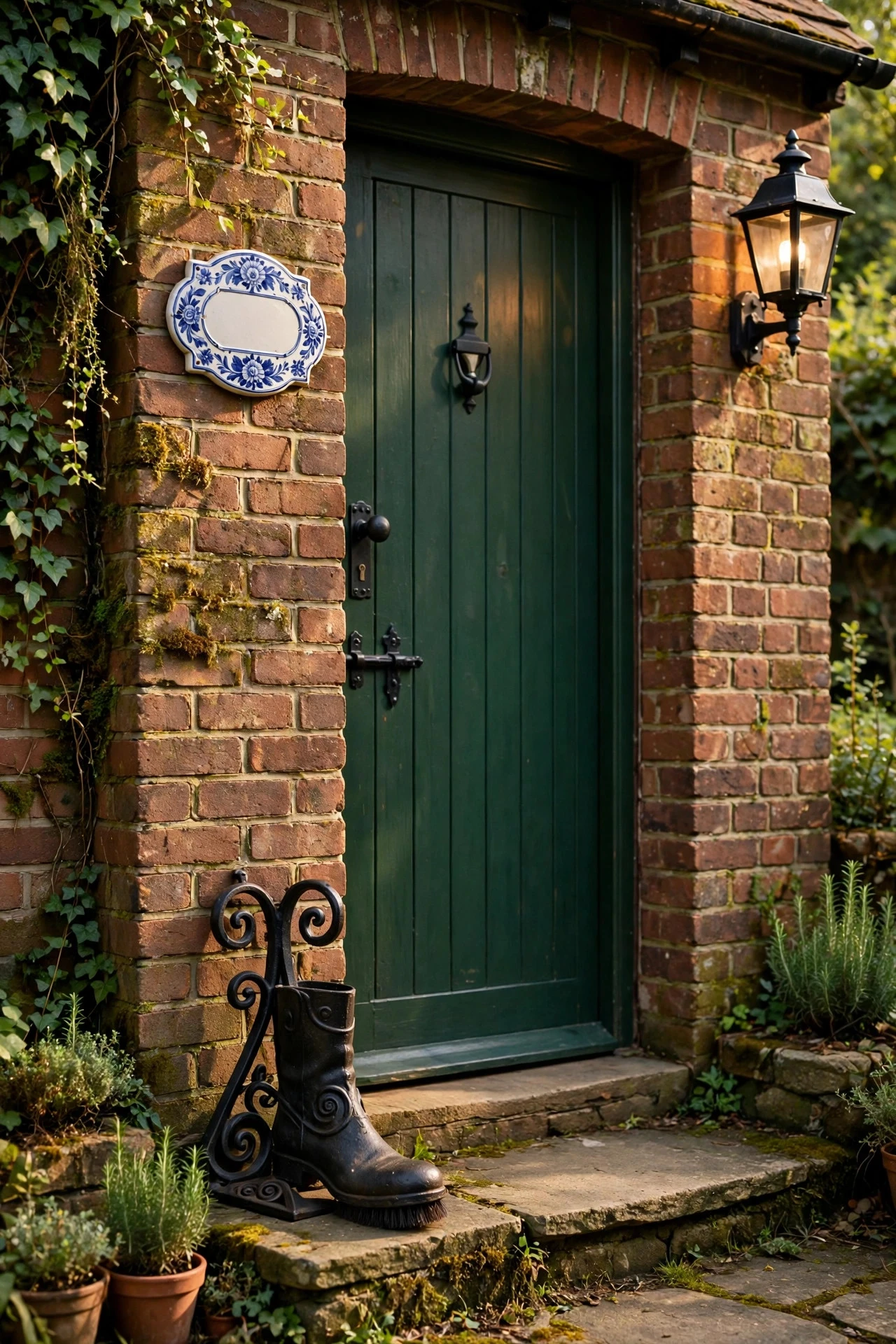
Storybook charm lives in the small details: a curved brick step, a hand-painted house number, a boot scraper by the door, a wall-mounted lantern with a flickering bulb, and a birdhouse tucked into a corner shrub. Choose one or two of these rather than all of them — a cottage with every quaint detail at once looks like a theme park. A ceramic house number plaque costs $20–$50, a cast-iron boot scraper $30–$60, and both last for decades.
Look for details with a handmade feel: hand-forged iron, glazed ceramic, carved timber. Mass-produced resin ornaments in bright colours break the illusion. Place details where the eye naturally rests — beside the door, at the end of the path, on the porch wall — rather than scattering them across the whole facade. For timeless entrance details inside the door, these vintage entryway furniture ideas carry the same storybook feeling indoors. Avoid garden gnomes and novelty signs, which turn charm into kitsch and date the house instantly.
22. How Do You Plan a Brick Cottage Exterior Makeover?
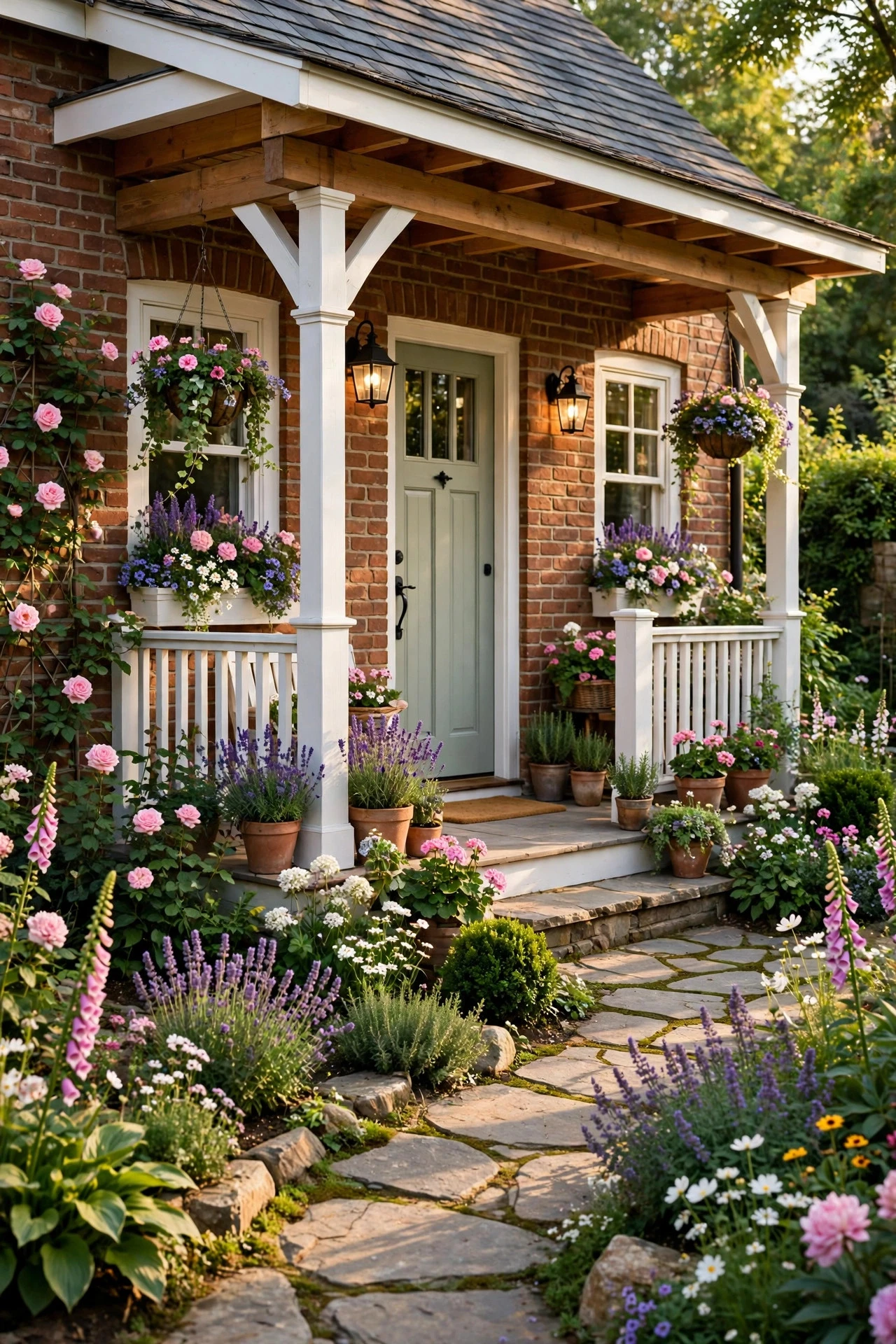
Plan the makeover in three phases so the budget stays under control and the house never looks half-finished. Phase one is repair and clean: repoint mortar, fix gutters, wash the brick and trim the planting — roughly $500–$1,500. Phase two is colour and light: paint the door, trim and shutters, add lanterns and path lights — roughly $800–$2,000. Phase three is structure and planting: the porch, path, fence and garden beds — roughly $3,000–$10,000 depending on scope.
Do the work in that order, because a new porch on top of crumbling mortar is money wasted, and fresh paint over a leaking gutter peels within a year. Get quotes for phase three before starting phase one, so the total cost is known upfront and there are no surprises. Check whether your local authority or homeowners' association requires permission for a porch, a fence over 4 feet or a change to the roofline — most cottage exteriors need no permit for paint and planting, but structural work usually does. Avoid starting with the most visible job and leaving the repairs for later, which is how makeovers stall halfway.
Practical Tips
– Budget in phases: repairs first, colour and light second, structure and planting last — never spend on decoration before fixing leaks, mortar and gutters. – Test everything in daylight: paint, roof samples and brick samples all change colour next to real brick, so test large swatches outside for at least three days. – Respect the masonry: use breathable limewash or mineral paint, repoint with lime mortar, and never pressure-wash old brick or trap moisture with sealants. – Check permissions early: porches, fences over 4 feet, roof changes and extensions often need a permit or HOA approval — ask before building, not after. – Time the work: paint and limewash in dry weather between 50°F and 85°F, plant in spring or autumn, and do masonry repairs before winter so frost cannot widen the gaps. – Keep the scale cottage-sized: slim posts, small lanterns, narrow paths and low fences — oversized elements are the fastest way to lose the storybook look.
Final Thoughts
A brick cottage exterior does not need a big budget or a grand redesign to feel like a storybook home. It needs the brick respected, the scale kept small, one confident accent colour, warm light and planting that softens the edges. Start with the cheap fixes — a painted door, a clean wash, trimmed shrubs — and build toward the porch and path when the budget allows, and the cottage will reward you every time you come home.
Frequently Asked Questions
How much does it cost to paint a brick cottage exterior?
A professional repaint of a small brick cottage typically costs $3,000–$6,000, including preparation and two coats of masonry paint. A DIY job with breathable mineral paint costs $400–$800 in materials. Limewash is cheaper still, at $60–$90 per 5-gallon bucket covering 200–250 square feet, but it needs refreshing every 5–7 years as it weathers naturally.
Is it safe to paint old brick?
It is safe only with a breathable coating such as limewash or mineral silicate paint, which lets moisture escape from the wall. Ordinary acrylic exterior paint forms a sealed film that traps moisture, and on older brick laid with lime mortar this can cause peeling, damp inside and even spalling of the brick face. Always check the brick and mortar type before painting.
What colour front door suits a red brick cottage?
Deep forest green, navy, dusty teal, burgundy and mustard all work well against red brick because they are saturated enough to stand out without clashing. A classic black door is the safest choice and suits almost any brick tone. Avoid bright primary red, which fights orange-red brick, and avoid matching the door exactly to the shutters.
How do I stop plants damaging my brick walls?
Keep climbers on a trellis or wire system fixed 2 inches off the wall instead of letting them cling directly to the masonry, and keep all planting at least 12 inches from the brick so air can circulate. Avoid ivy and wisteria on older brick: ivy holds damp against the mortar, while wisteria's thick stems can lift tiles and pry joints apart over time.
What is the cheapest way to improve a brick cottage's curb appeal?
A painted front door, a new coir doormat, trimmed planting and a bucket-and-brush wash of the brick can transform a facade for under $150. Two matching lanterns and a pair of terracotta pots add another $90–$180 and make the entrance feel considered. Fix peeling paint, broken gutters and cracked paths before buying any decoration.
Do I need planning permission to change my cottage exterior?
Painting, limewashing, planting and replacing a door in the same opening usually need no permission. A new porch, a fence over 4 feet, a roof change or an extension often does, and listed or conservation-area cottages have stricter rules. Check with your local planning authority or homeowners' association before starting structural work, since unauthorised work can be expensive to undo.