22 Cosy Living Room Ideas for a Warm, Relaxed Home
# 22 Cosy Living Room Ideas for a Warm, Relaxed Home
A cosy living room is not about a single purchase or a particular style. It is the feeling you get when you walk in after a long day and your shoulders drop: soft light at more than one height, something warm underfoot, a seat that invites you to stay a while, and colours that feel like a deep breath. Cosiness is built in layers, and every layer in this guide is practical, affordable, and easy to change when your taste moves on.
Looking for more inspiration? Our Nest Decorz homepage gathers the latest home decor ideas, seasonal decorating guides and room-by-room styling tips in one place — start there and explore.
Quick Answers
– Fastest cosy win: layer the lighting — a floor lamp, a table lamp, and dimmable overhead light on warm 2700K bulbs, so no single harsh source does all the work. – Best first purchase: a rug big enough for the front legs of every seat, at least 8 x 10 feet for a standard three-seat sofa layout. – Warmest palette: warm whites, oatmeal, camel, and one deep accent like terracotta or rust, with wood tones doing the warming work. – Budget order: rug first, then lighting, then throws and cushions, then curtains — in that order, the room changes most for the least money.
1. How Do You Layer Lighting at Three Heights?
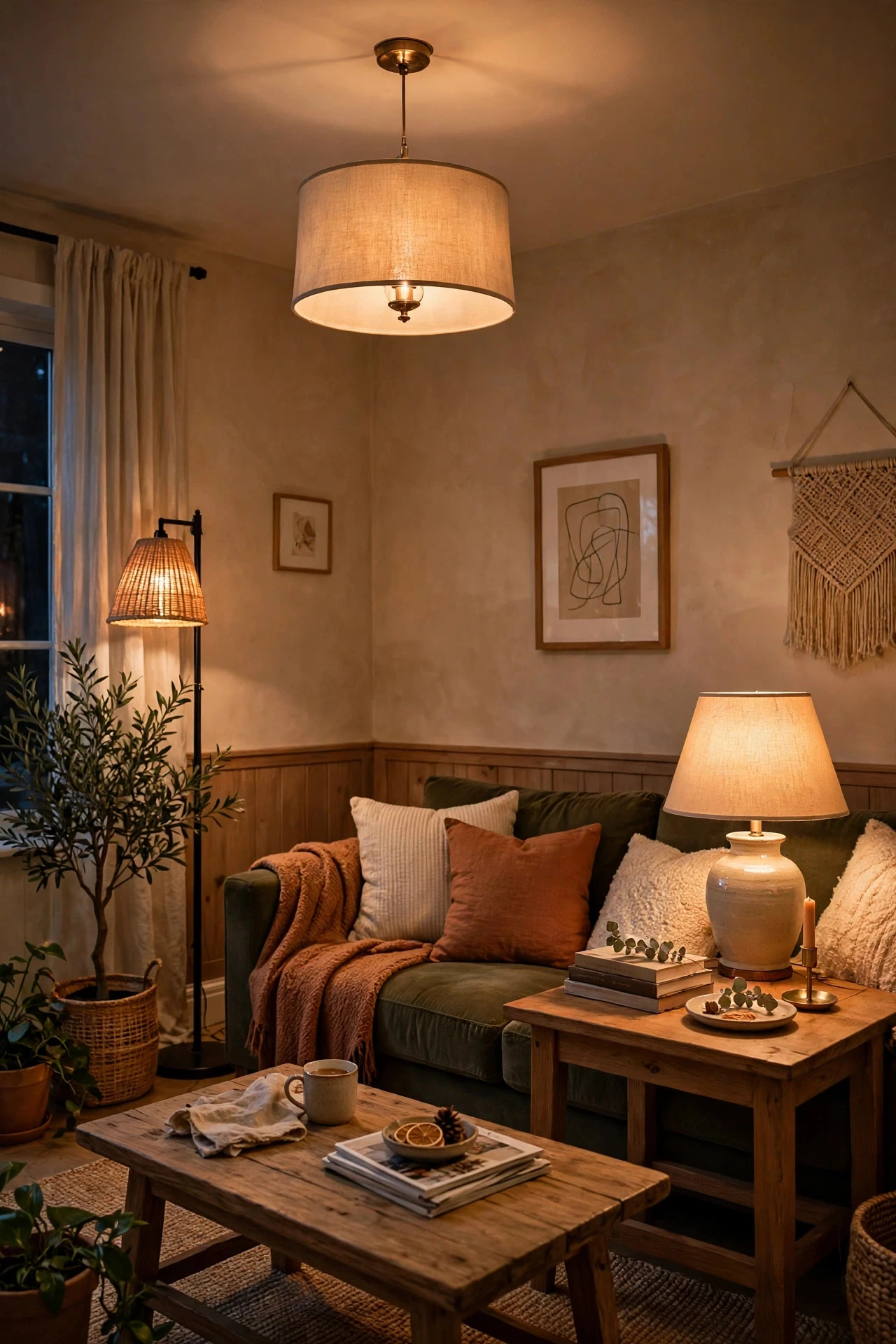
Layered lighting means having light at three heights: overhead light for brightness, a floor lamp or table lamp at sitting height for warmth, and a low glow — candles or a lamp — for evenings. Put each layer on its own switch or dimmer, so you can move from bright daytime light to an evening glow without changing a bulb.
Start with the overhead light on a dimmer, then add a floor lamp behind the sofa's reading end and a table lamp on a side table or console. Choose warm-white bulbs at 2700K — cooler bulbs make even a soft room feel stark — and keep lampshades in linen or cotton, which diffuse light gently. A 60-inch arc floor lamp suits a large room, while a slim 55-inch stick lamp fits a small one. Avoid relying on a single ceiling fitting alone: one bright source from above flattens the room and casts hard shadows, which is the opposite of cosy.
2. What Warm Neutral Palette Makes a Living Room Feel Cosy?
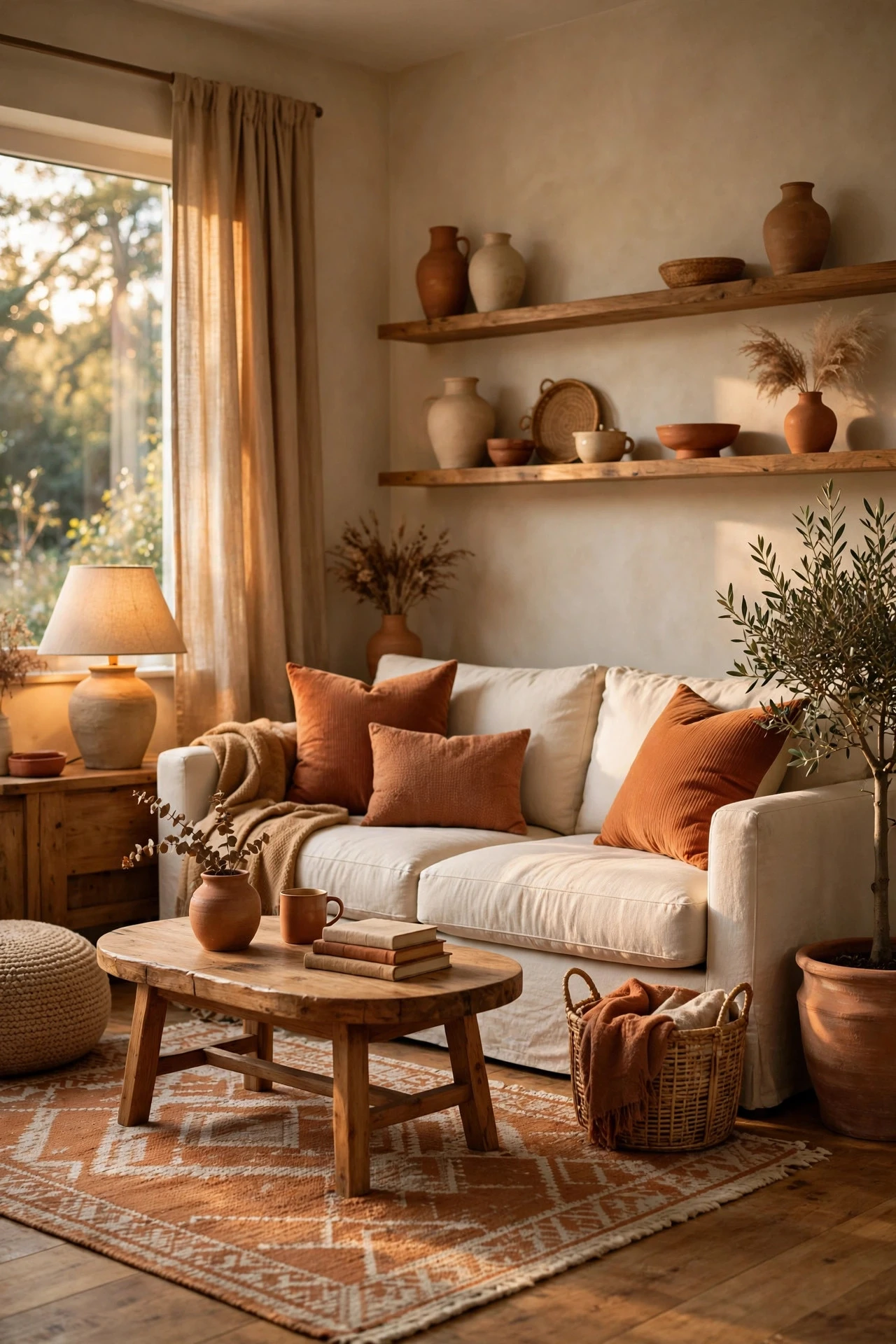
A cosy neutral palette is built on warm whites, oatmeal, camel, and soft greige, with one deep accent — terracotta, rust, or olive — to stop the room feeling washed out. Paint the walls a warm white with a yellow or pink undertone, not a blue-grey one, because the undertone decides whether the room feels sunlit or cold at 6pm.
Keep the big pieces neutral — sofa, rug, curtains — and let the accent colour live in cushions, throws, and one piece of art, so you can change the mood for under $50. A camel leather chair against an oatmeal sofa adds warmth without shouting, and a terracotta cushion pulls the whole scheme together. Our modern living room ideas that feel warm, not stark show the same warm-neutral thinking in a more modern setting, and the lesson transfers directly: warm undertones first, accent colour second, never the other way round.
3. How Do You Choose a Rug That Makes the Room Feel Warmer?
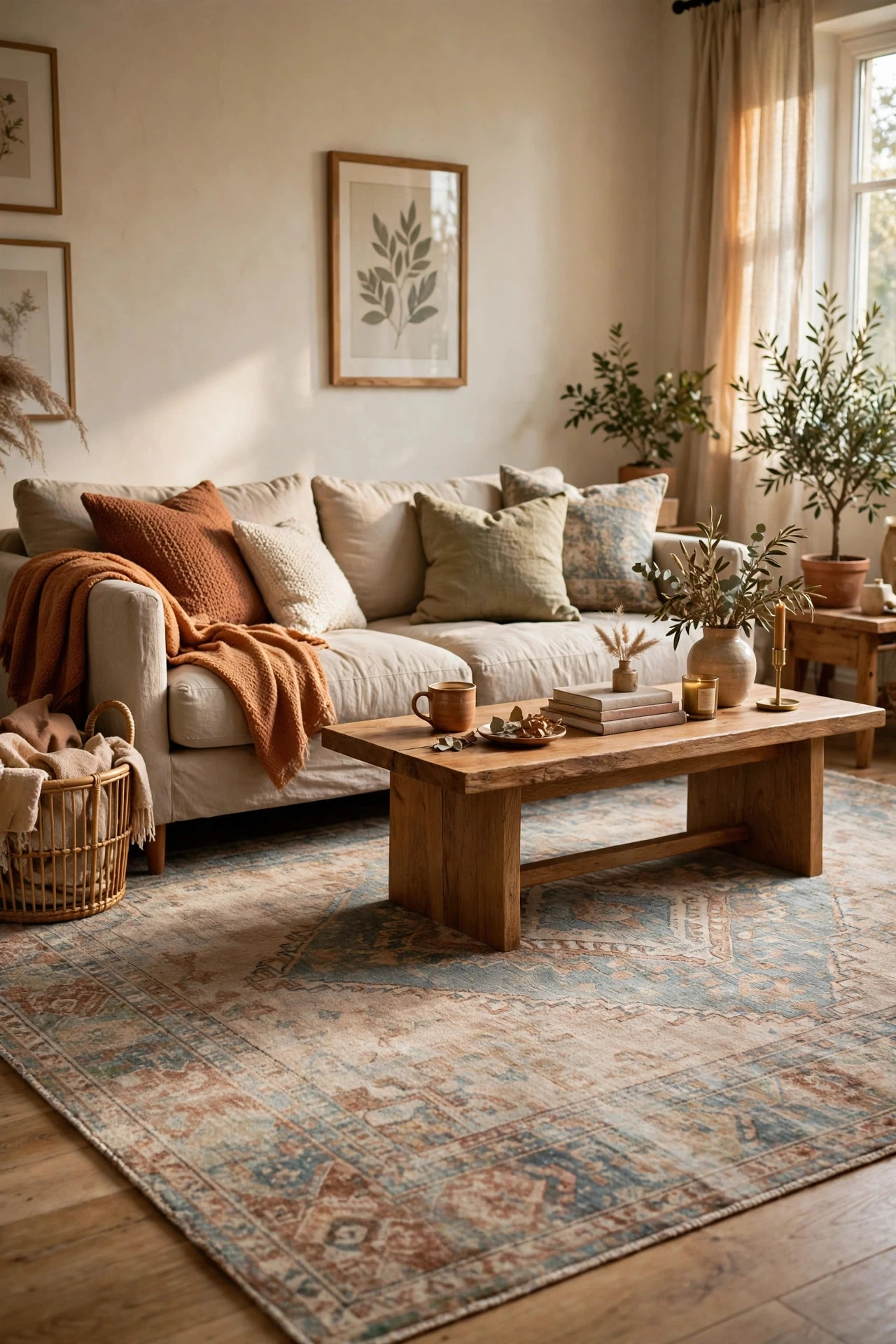
Choose a rug large enough that the front legs of every seat sit on it — at least 8 x 10 feet for a sofa with two chairs, or 9 x 12 feet for a larger room. A small rug makes the seating float and the floor feel cold, while the right size anchors the arrangement and adds softness underfoot.
Pick a low-pile wool or wool-blend rug for the main seating area: wool feels warm, resists stains better than cotton, and lasts years. A subtle pattern — a faded Persian-style design or a soft geometric — hides crumbs and pet hair far better than a plain cream rug. Leave 12 to 18 inches of bare floor between the rug edge and the wall so the room still breathes. For the full sizing rules, our living room rug ideas cover layouts for every room shape, including the awkward L-shaped rooms where one rug never seems to fit.
4. Why Does Seating Arranged for Conversation Feel Cosier?
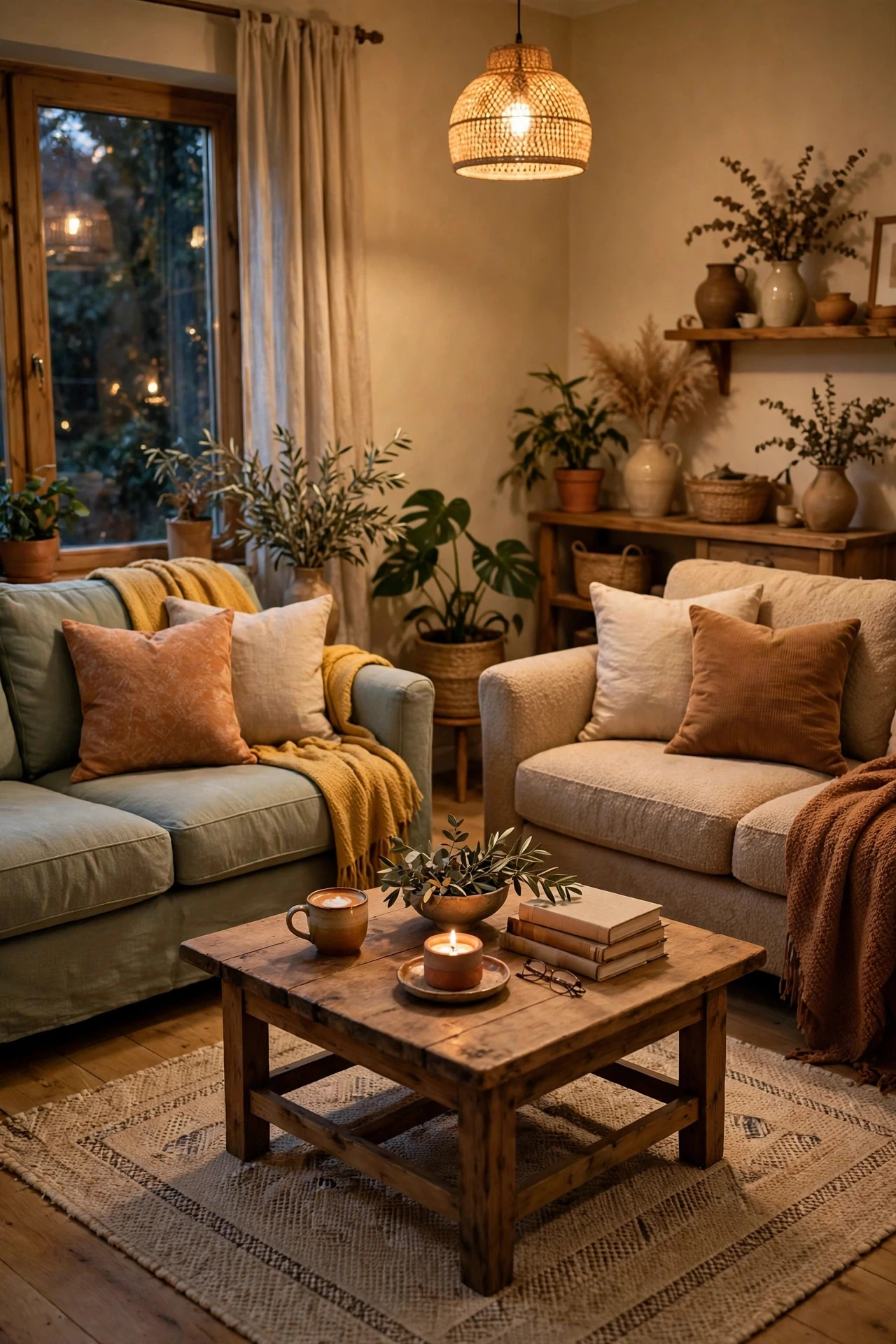
Seating arranged for conversation feels cosier because people face each other instead of facing a wall or a television. Place two sofas facing each other, or a sofa facing two chairs, with a coffee table between them and no more than 8 feet between seats — close enough to talk without raising your voice, far enough to stretch your legs.
Keep the coffee table 14 to 18 inches from the sofa edge, so drinks are within reach but knees never bump. Angle the chairs slightly inward, about 10 degrees, so the arrangement feels gathered rather than formal. If the television must share the room, put it on a side wall or a swivel mount, so the conversation layout stays the star and the screen is a guest, not the host. A room built around people always feels warmer than a room built around a screen, even when nobody is sitting in it.
5. How Do You Build a Reading Corner in a Living Room?
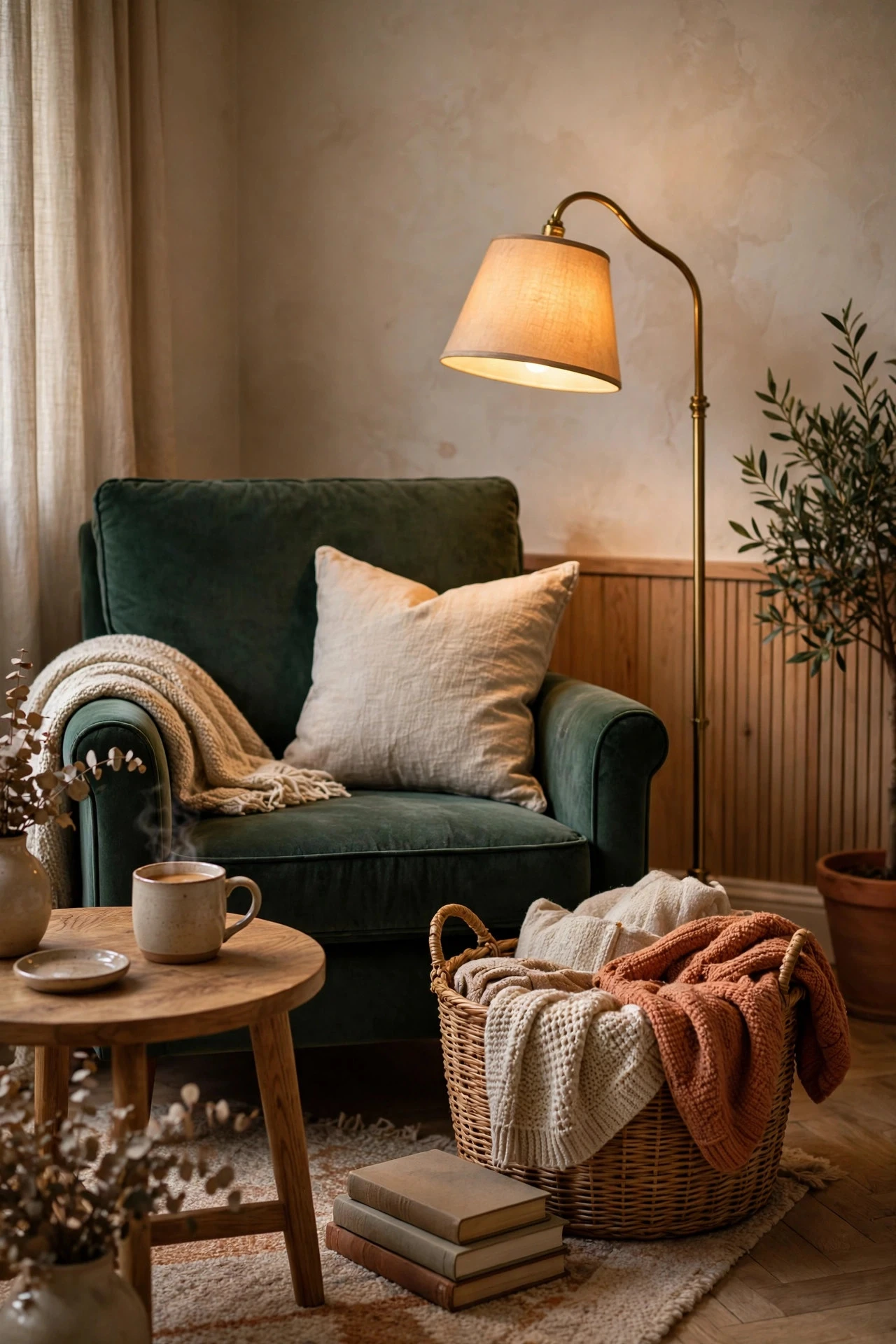
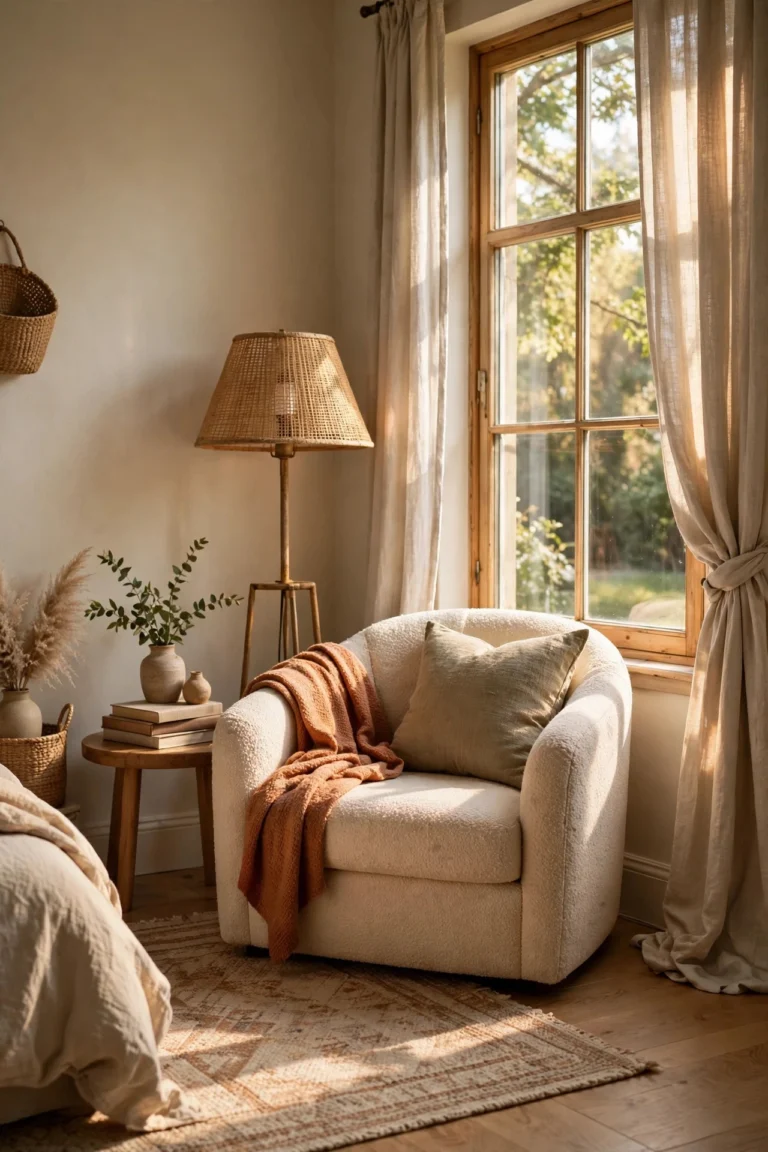
A reading corner needs four things: a comfortable armchair, light at shoulder height, a surface for a cup, and a throw within arm's reach. Tuck it into a corner near a window or beside the fireplace, and it becomes the seat everyone quietly competes for on a cold evening.
Choose an armchair with a seat height of 17 to 19 inches and a seat depth of at least 21 inches, so you can curl up with your feet tucked under you. Add a floor lamp with the bulb 48 to 55 inches from the floor, a side table 22 to 24 inches high, and a basket of two or three throws beside the chair. A small footstool or ottoman completes it — feet up is the difference between a chair and a retreat. Avoid placing the corner facing the television; the whole point is a spot that belongs to quiet time.
6. How Do You Style a Fireplace as the Cosy Focal Point?
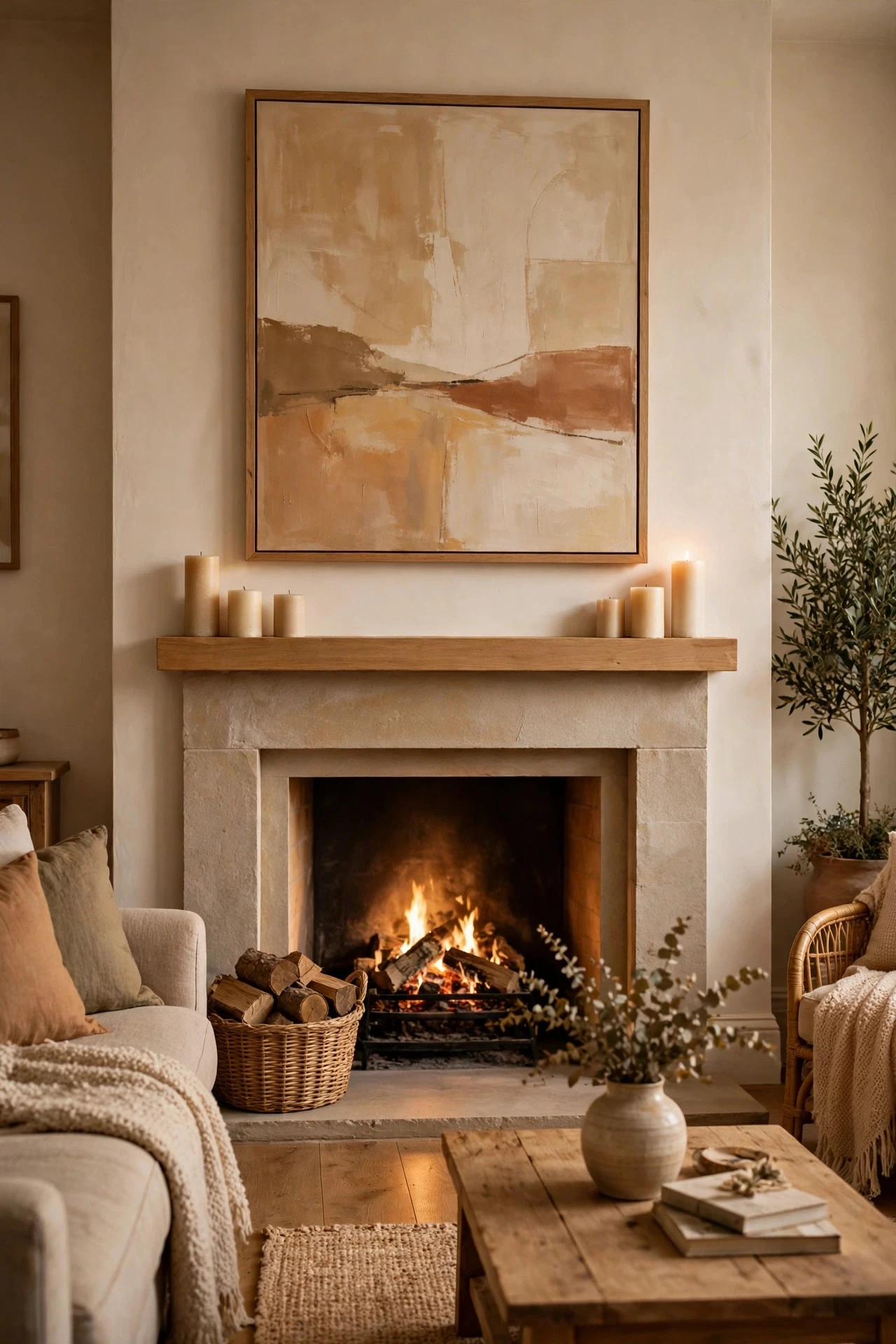
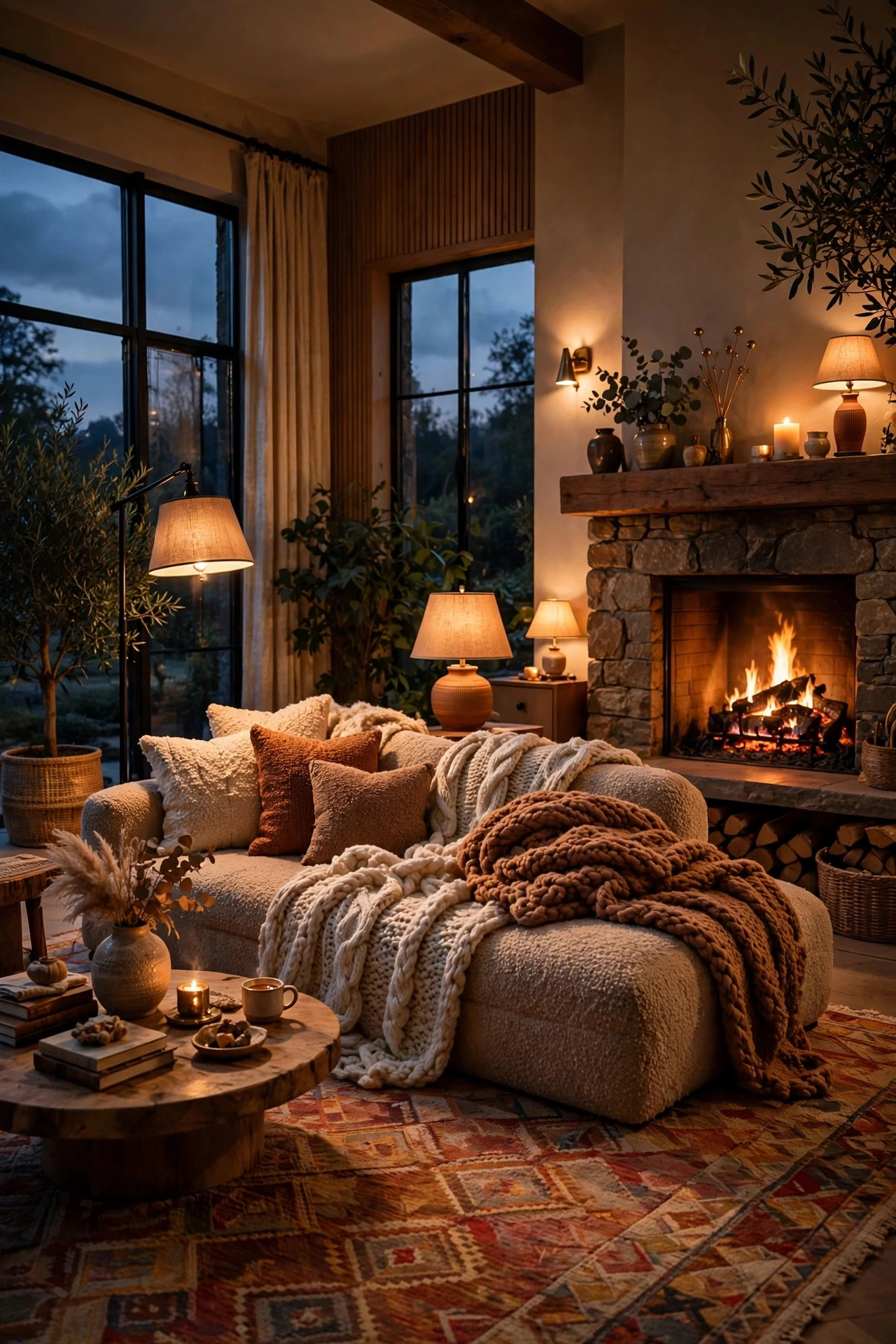
Style a fireplace as the focal point by keeping the mantel simple: one tall object on one side, a low cluster on the other, and the middle left clear. A stack of logs in a basket beside the hearth, candlesticks on the mantel, and one piece of art above it are enough — the fire itself does the decorating.
If the fireplace is electric or decorative, a row of three pillar candles in glass hurricanes gives a real flame glow without heat or smoke. Keep the hearth clear of clutter, and choose a fire screen in blackened steel or brass that matches your other metal finishes. In a home with no fireplace at all, a low media console with candles and a large piece of art above it creates the same anchoring effect. Never crowd the mantel with small objects: five small things read as clutter, while two considered pieces read as calm.
7. What Textures Make a Sofa Feel Instantly Softer?
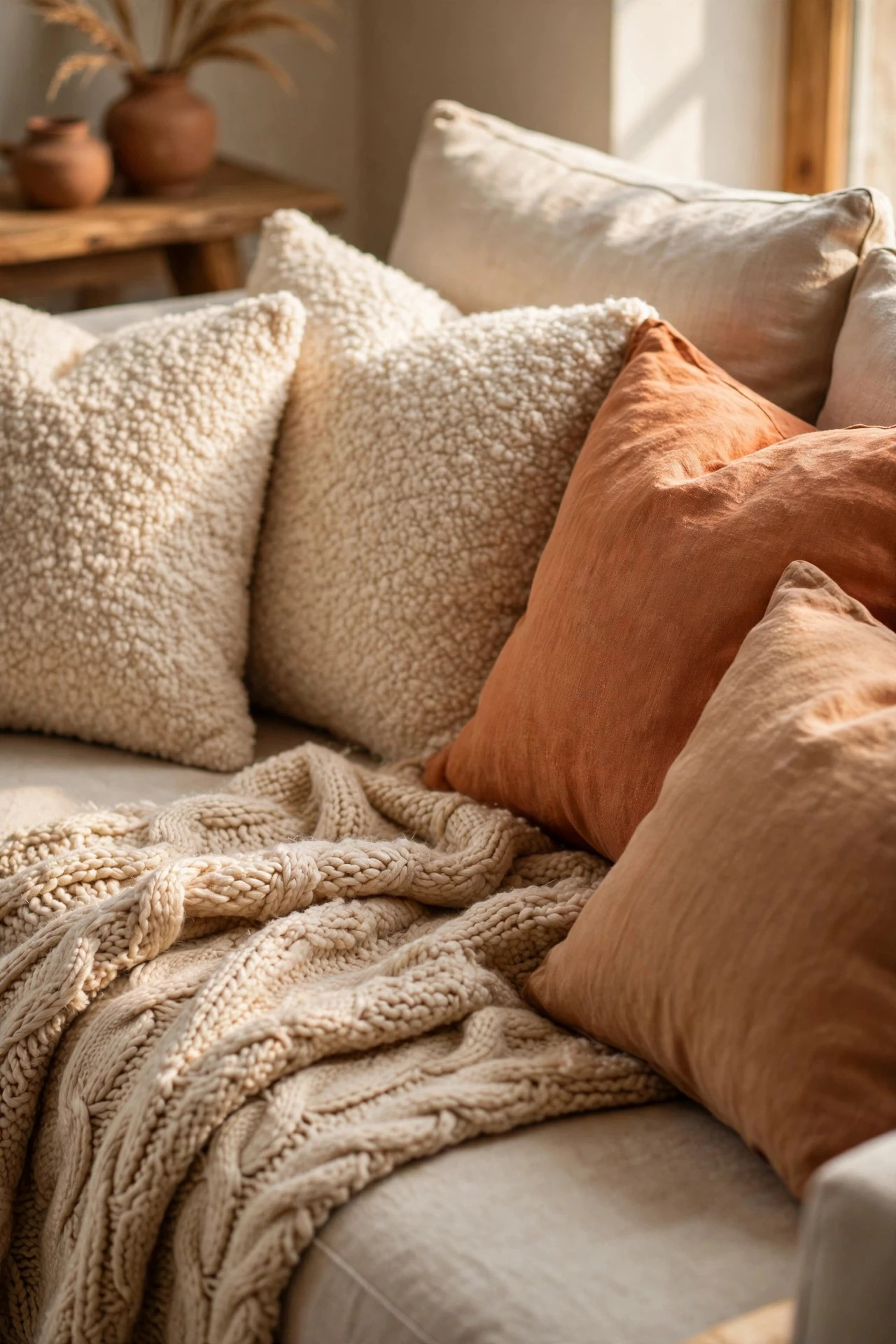
The textures that make a sofa feel instantly softer are boucle, chunky knit, washed linen, and velvet — used in layers, not all at once. Drape a chunky knit throw over one arm, add two linen cushions and one velvet cushion, and the sofa changes character without a single new piece of furniture.
Mix textures by scale: a nubby boucle cushion beside a smooth velvet one, a loosely woven throw over a tightly woven sofa fabric. Keep the palette within two or three warm tones so the mix reads as rich, not messy. Washable cushion covers are worth the extra $10 to $15 each in a house with children or pets, because a cosy sofa is a used sofa. Avoid faux fur in large quantities — one small cushion is soft and inviting, but a whole fur throw sheds, overheats, and makes the room look like a costume.
8. How High and Wide Should You Hang Curtains?
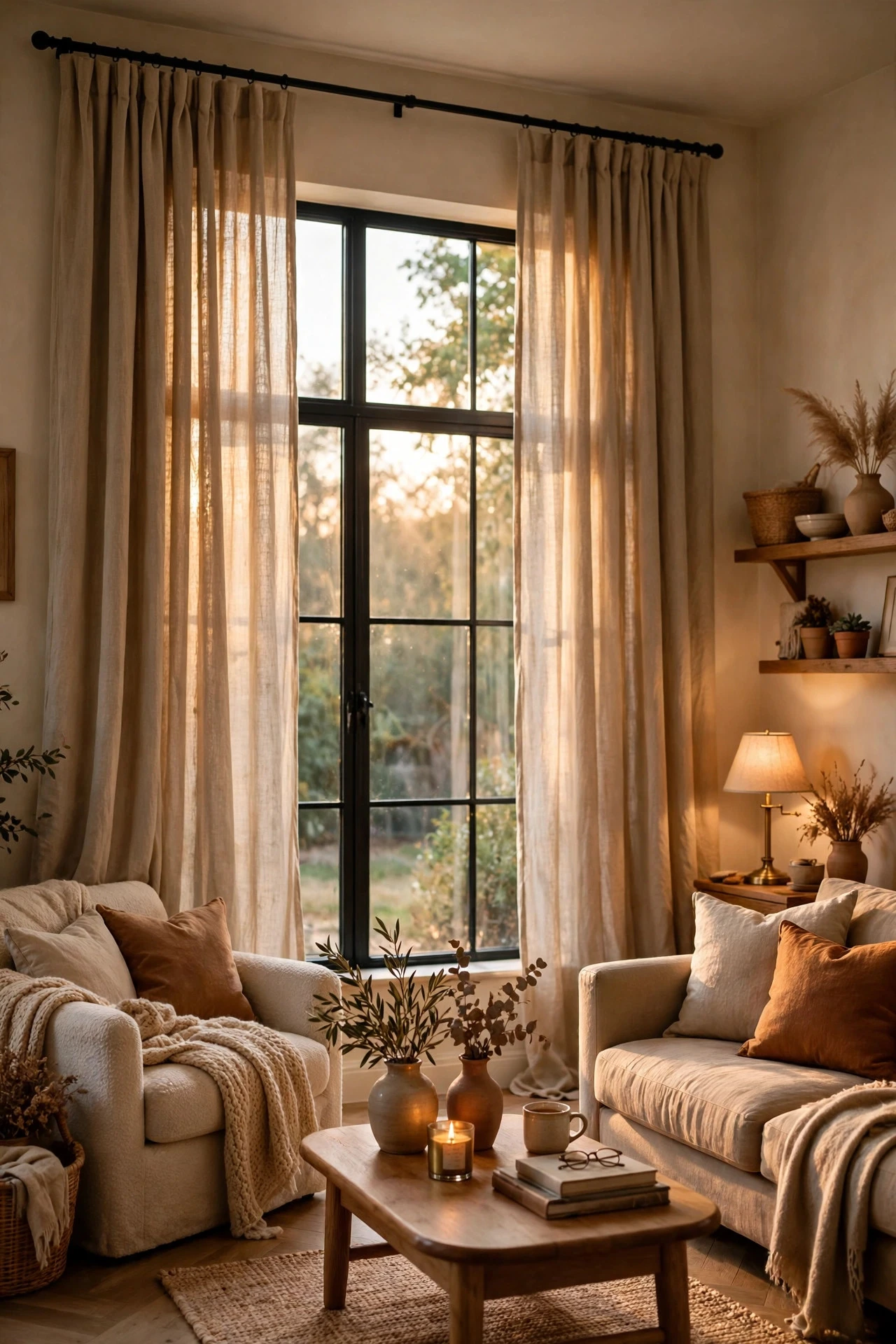
Hang curtains 4 to 6 inches above the window frame — or at the ceiling in a low room — and extend the rod 8 to 12 inches beyond the frame, so the curtains stack and the window looks larger. The hem should kiss the floor, or puddle by 1 to 2 inches for a lived-in feel.
Choose a fabric with weight: washed linen, cotton canvas, or a lined linen blend hangs in soft folds, while thin polyester hangs flat and cheap. For cosiness, pick a colour one shade deeper than the wall, so the windows feel framed rather than bare. A pair of 84-inch panels suits a standard 8-foot ceiling; 96-inch panels suit 9-foot ceilings. Our living room curtain ideas walk through fabrics, headings, and the exact measurements for bay windows and sliding doors, so measure twice and buy once.
9. How Do Plants Make a Living Room Feel Cosier?
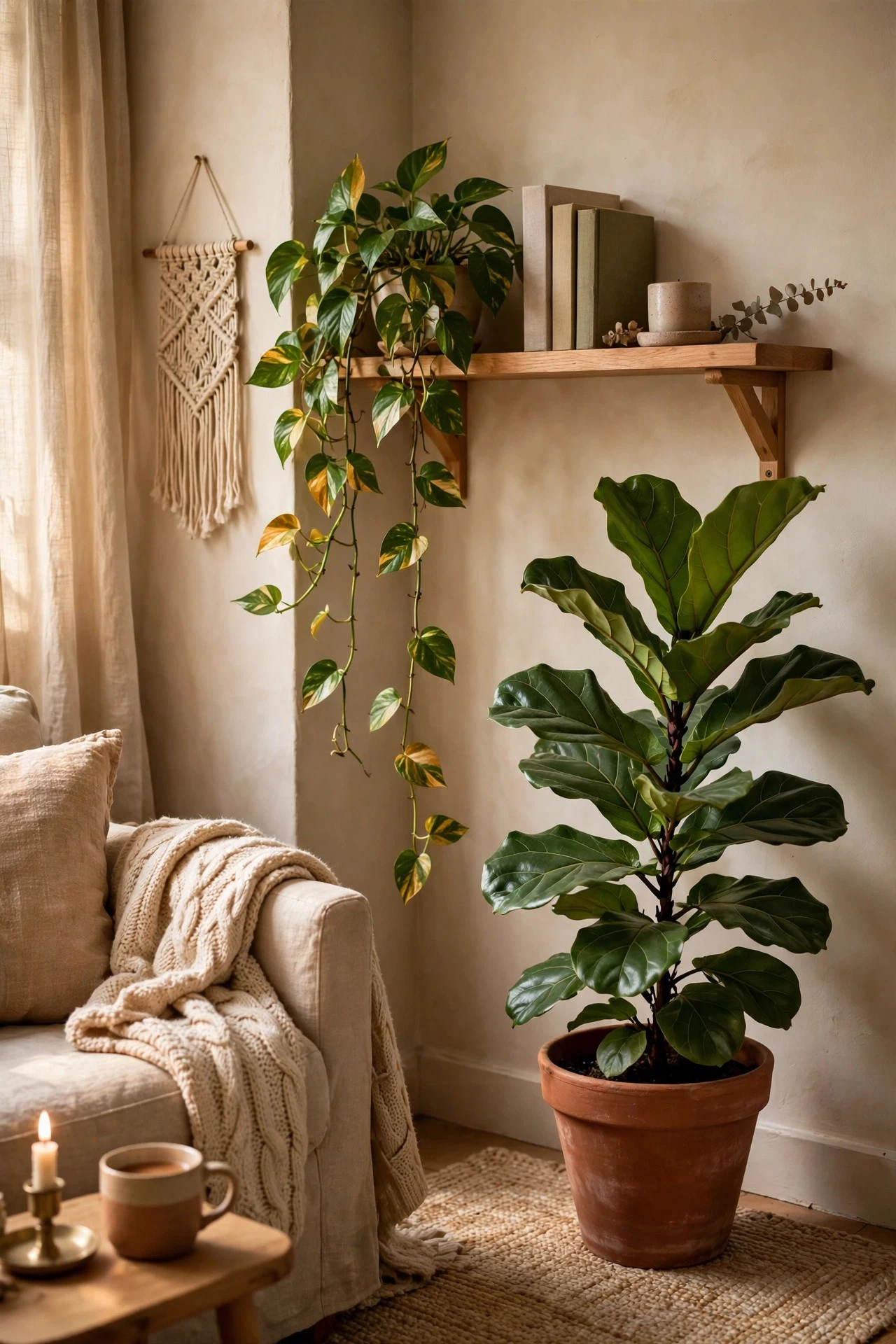
Plants make a living room feel cosier because they add life, soft shapes, and a layer of green that no paint colour can copy. One large plant — a fiddle-leaf fig, olive tree, or monstera in a 12 to 14 inch pot — in an empty corner does more for the room than three small plants scattered on shelves.
Group plants in odd numbers and vary their heights: a tall floor plant, a medium plant on a stool, and a trailing pothos on a shelf. Terracotta and woven baskets warm the look far more than white plastic pots. Choose plants you can actually keep alive — a snake plant or ZZ plant needs water only every two to three weeks — because a dead plant is the opposite of cosy. Keep leaves dusted and pruned, and never block a walkway with a floor plant: a plant you trip over stops being charming very quickly.
10. How Do You Use Throws and Cushions Without Clutter?
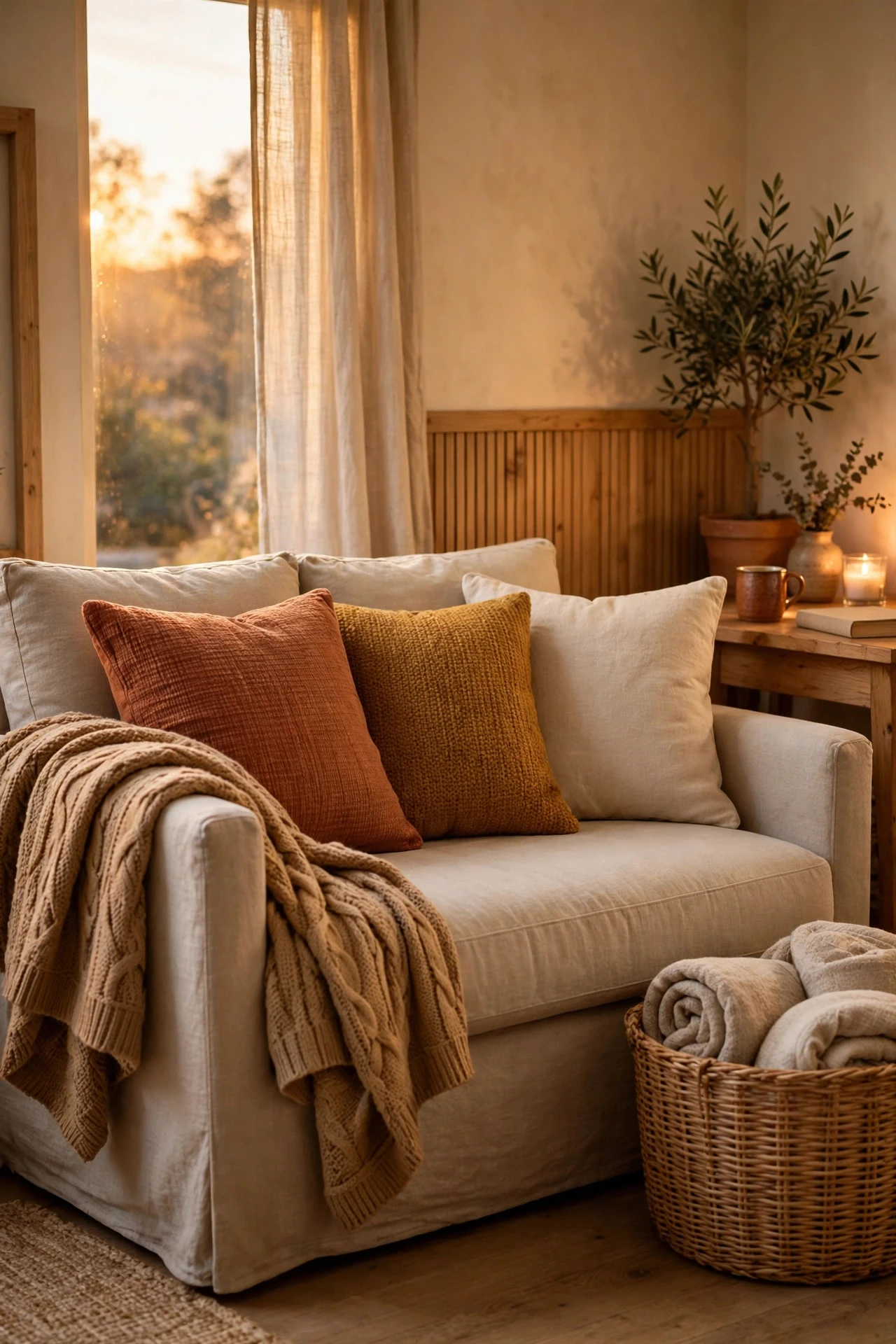
Use throws and cushions by the rule of three: one throw folded over the sofa arm, one draped across a chair, and one in a basket — never more than three visible at once. Cushions work best in odd numbers: three on a three-seat sofa, five if it is deep, with sizes stepping down from 22 inches to 18 inches.
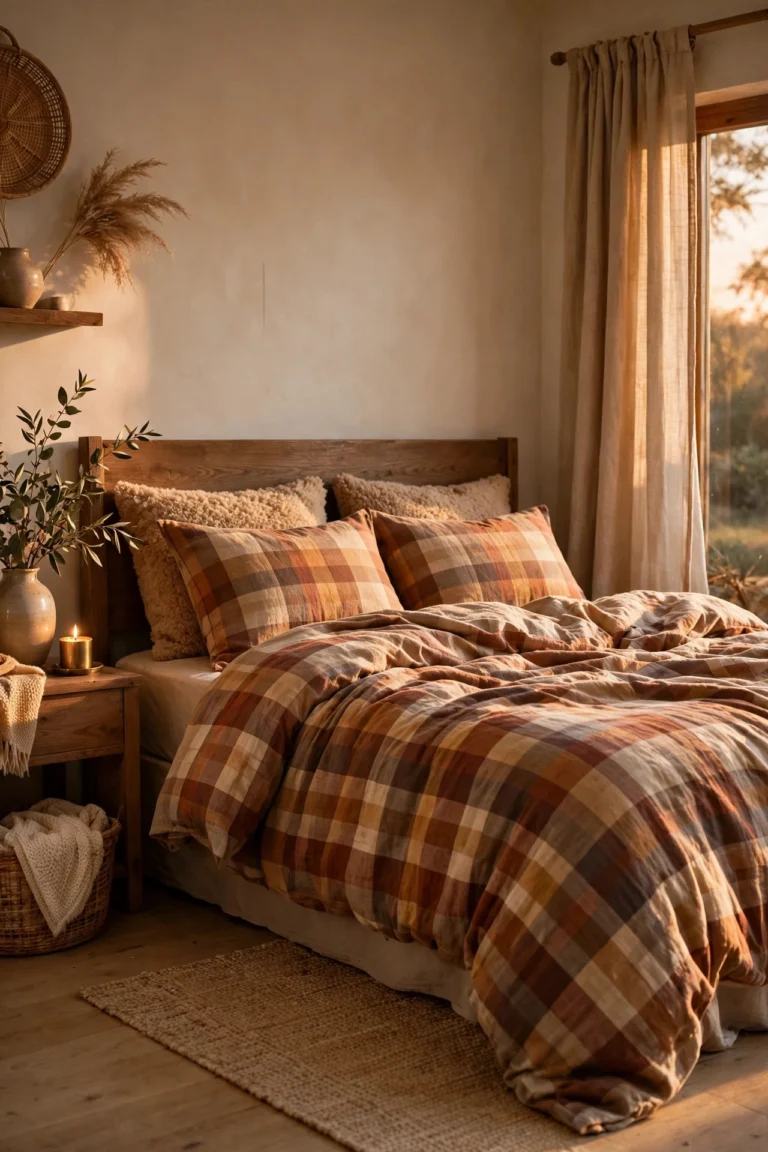
Fold throws loosely rather than ironing them flat; a slightly rumpled throw looks inviting, a perfectly pressed one looks like a display. Store the spares in a lidded basket or ottoman, so the room can be reset in two minutes when guests arrive. Rotate cushion covers seasonally — rust and ochre in autumn, sage and cream in spring — for a fresh room at the cost of two covers. Avoid matching cushion sets sold as a pack: identical cushions look like a showroom, while mixed textures in one palette look like a home.
11. What Is the Cosiest Coffee Table Setup?
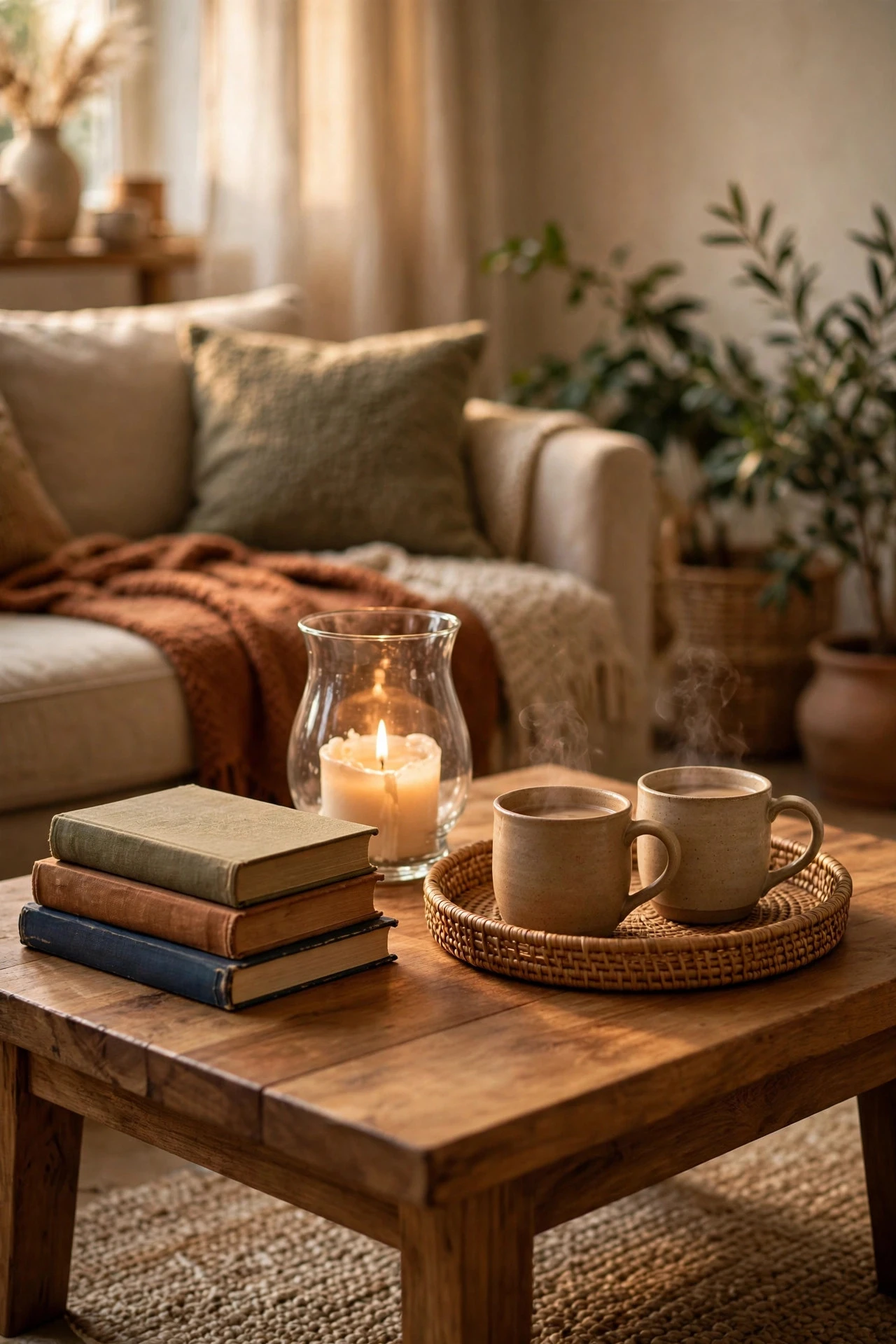
The cosiest coffee table setup is a low table with three things on it: something to read, something that glows, and something to drink from. A stack of two books, a candle in a glass hurricane, and a tray holding two mugs is the whole formula — everything else is clutter waiting to happen.
Choose a table 16 to 18 inches high, roughly two-thirds the length of the sofa, so it feels generous without blocking the walkway. A wooden top warms the room more than glass, which shows every fingerprint and feels cold to the touch. Keep one drawer or lower shelf for remotes and chargers, so the tabletop stays clear. If the table is round, a single round tray gathers the small items into one calm cluster. Never cover the whole surface: a coffee table that is half empty invites you to put your feet up and your book down.
12. How Do You Make a Small Living Room Feel Cosy, Not Cramped?
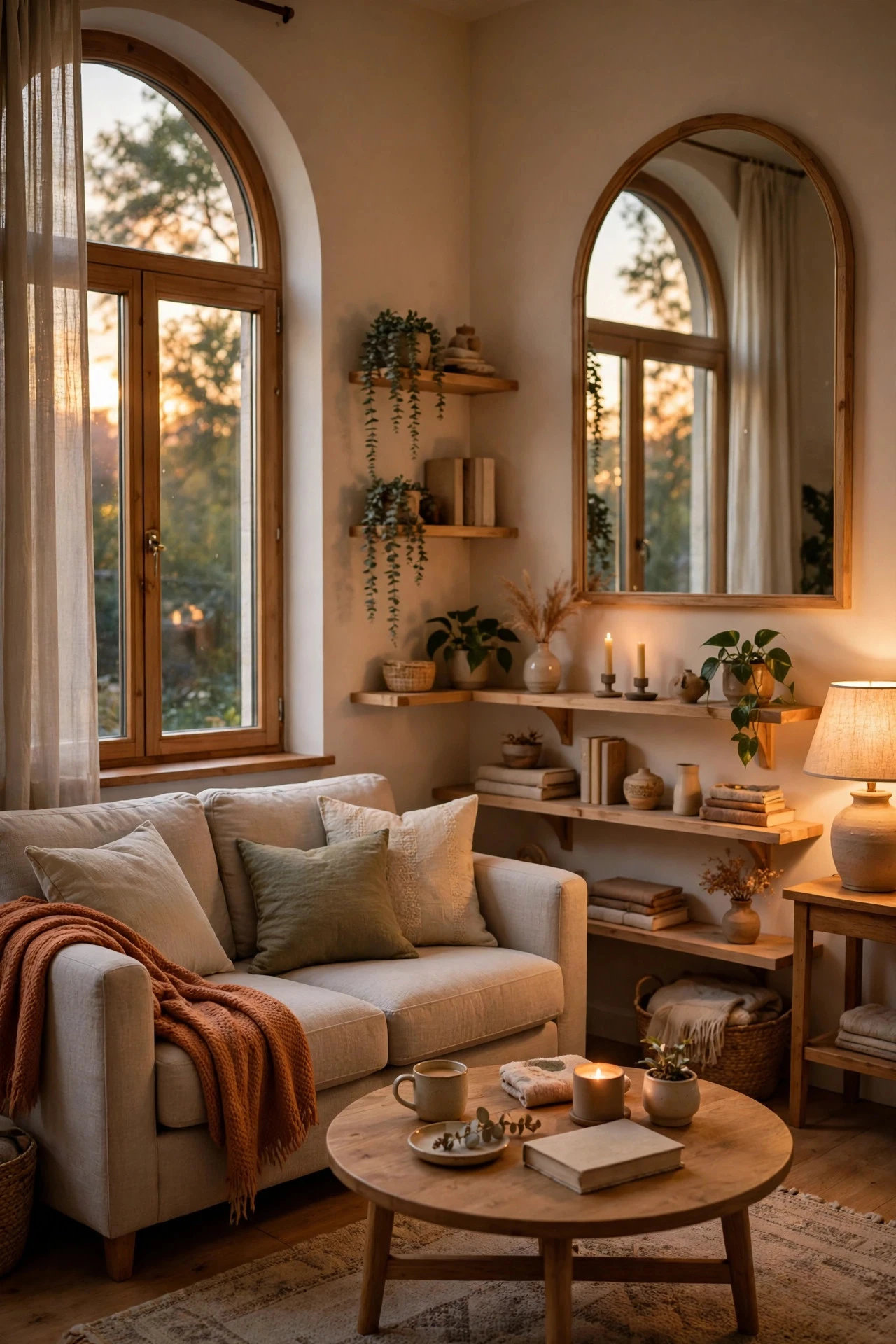
A small living room feels cosy, not cramped, when every piece earns its place and nothing blocks the light. Choose a loveseat instead of a three-seat sofa, a round coffee table instead of a rectangular one, and furniture with visible legs, so the floor shows through and the room breathes.
Push the sofa against the longest wall and keep the walkway at least 30 inches wide, so nobody has to sidestep furniture. A large mirror opposite the window doubles the daylight, and a rug in one warm tone — no busy pattern — makes the floor feel continuous. Use the walls: floating shelves hold books and plants without eating floor space. Avoid oversized recliners and bulky entertainment units; in a small room, one oversized piece swallows the cosiness whole. The goal is a room that hugs you, not one that crowds you.
13. What Renter-Friendly Swaps Add Instant Cosiness?
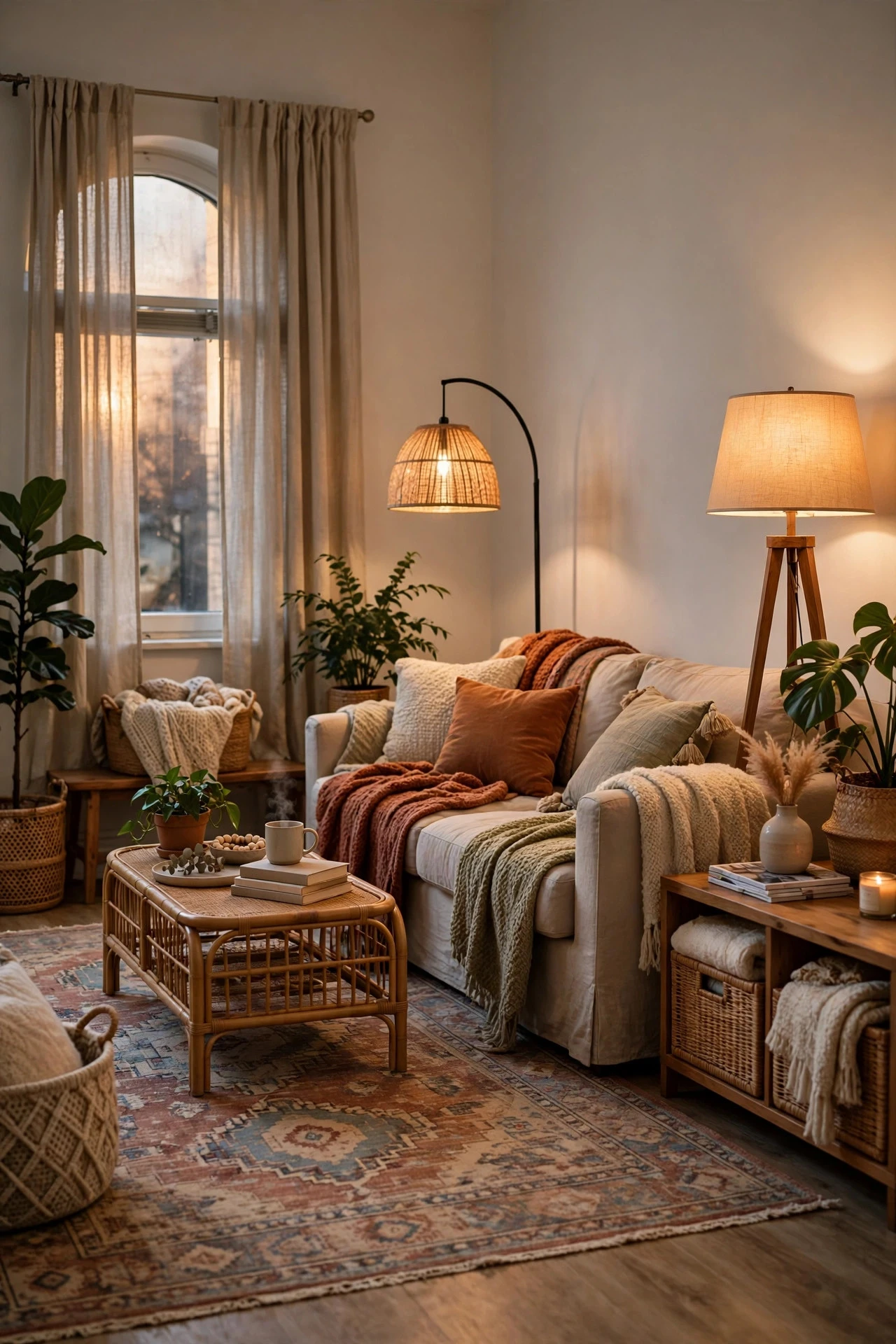
Renter-friendly cosiness starts with things that leave no holes: a large rug, floor lamps, throws, cushions, and tension-rod curtains. A rug alone can cover half a cold floor, and a floor lamp beside the sofa changes the whole evening mood — both move with you when the lease ends.
Swap harsh overhead bulbs for warm 2700K bulbs, and use battery-operated candles or plug-in fairy lights where real candles are banned. Command hooks hold lightweight art, wreaths, and curtain rods rated to their weight limit — check the packet, and never hang anything heavier than the hook is rated for. A peel-and-stick wallpaper accent wall is the boldest renter swap, and it peels off cleanly if you follow the manufacturer's removal steps. Keep the landlord's rules in mind: anything that damages paint or plaster costs more than it adds, so test every adhesive on a hidden spot first.
14. How Do You Warm Up a Room With Wood Tones?
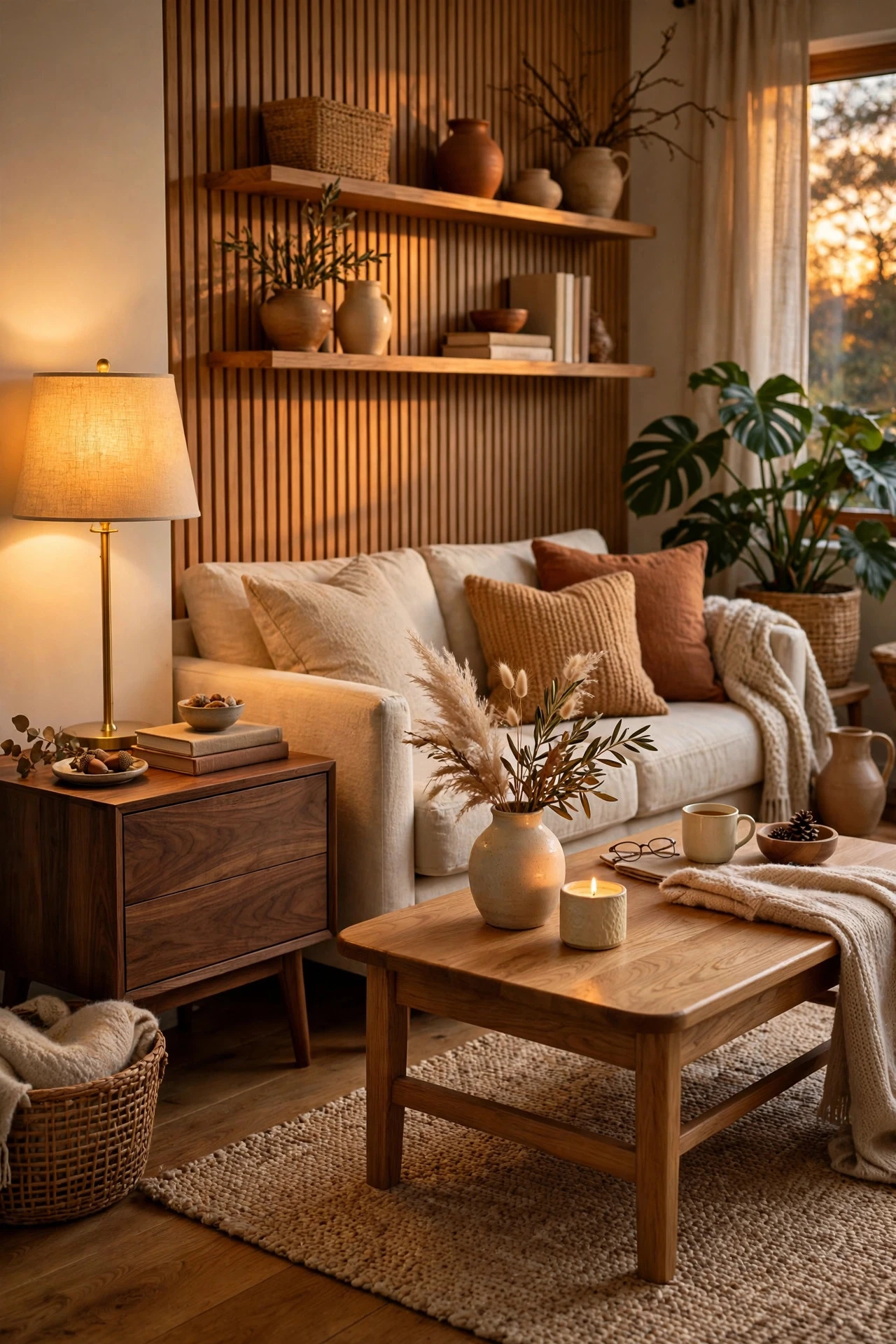
Warm a room with wood tones by mixing two or three woods rather than matching everything: a warm oak coffee table, a walnut side table, and a lighter pine picture frame can share a room happily when their undertones agree. Look for honey, amber, and chestnut undertones, and avoid mixing warm wood with cool grey-washed wood in the same sightline.
Let the largest wooden piece set the tone — usually the coffee table or media console — and repeat that tone once, in a smaller piece, so the room feels connected. A wooden tray on the coffee table, a wooden bowl on the console, or a turned-wood lamp base all count. Keep the finish matte or satin; high gloss reflects light harshly and feels less cosy. If your floors are cool grey, a warm rug and warm wood furniture together rescue the room — the rug covers the grey, and the wood warms everything above it.
15. How Do You Create a Cosy Evening Mood With Candles and Scent?
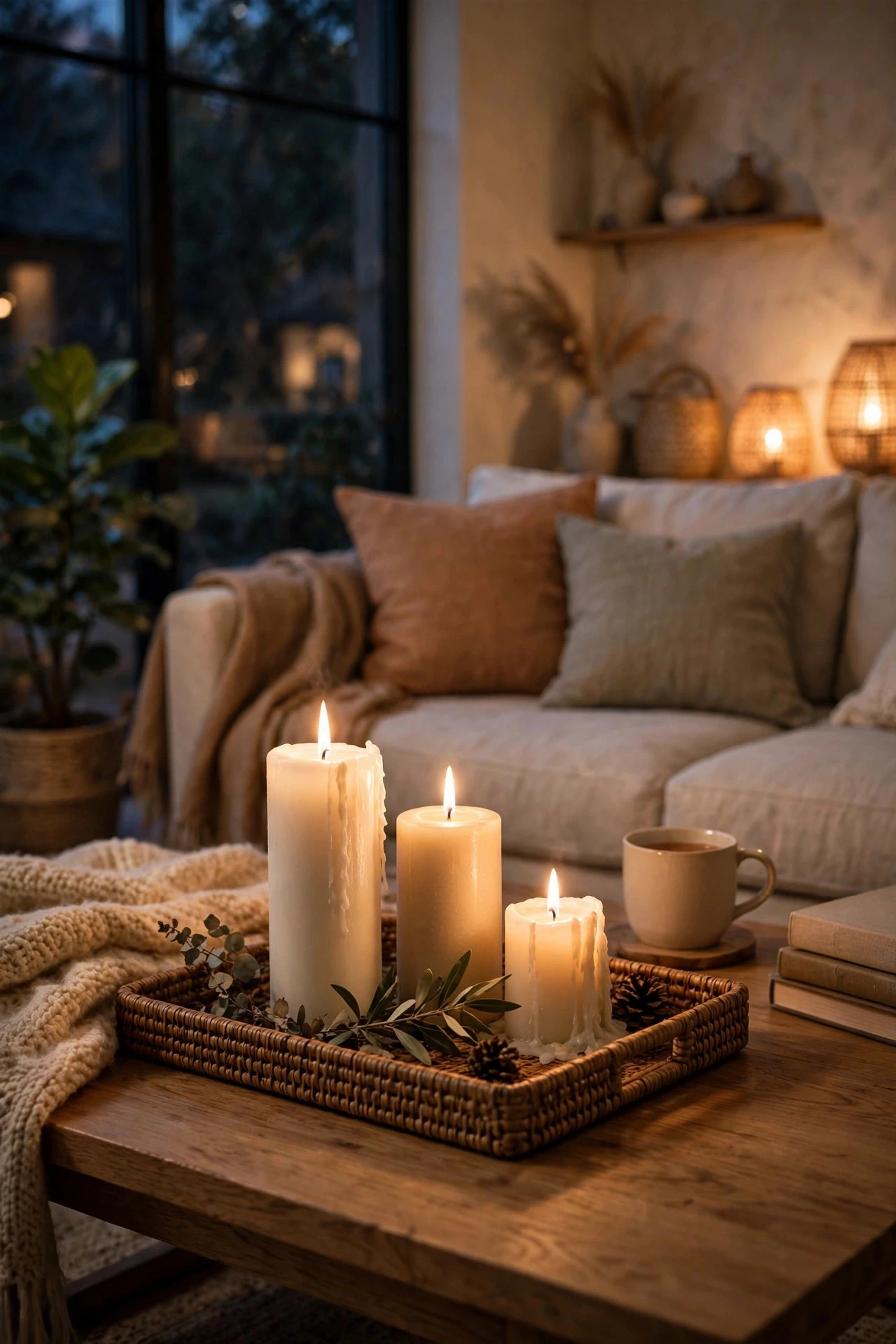
A cosy evening mood starts with candles grouped in threes at different heights — a tall taper, a medium pillar, and a small votive — on a tray, so the glow feels gathered and safe. Light them an hour before you sit down, and the room smells and looks like an evening in, not a showroom.
Choose scents that suit the season: cedar and amber in autumn and winter, fig or linen in spring and summer. One scented candle per room is enough; two competing scents smell muddled. Battery-operated LED candles with a flicker setting are a safe choice in homes with children or pets, and they look convincing inside a lantern or hurricane. Always keep real flames away from curtains, throws, and dried flowers, and never leave them burning in an empty room. The safety guidance from The Spruce on candle care is worth a read before you build a candle habit — a relaxed evening should never end with a scare.
16. What Should You Put on the Walls to Make It Feel Lived-In?
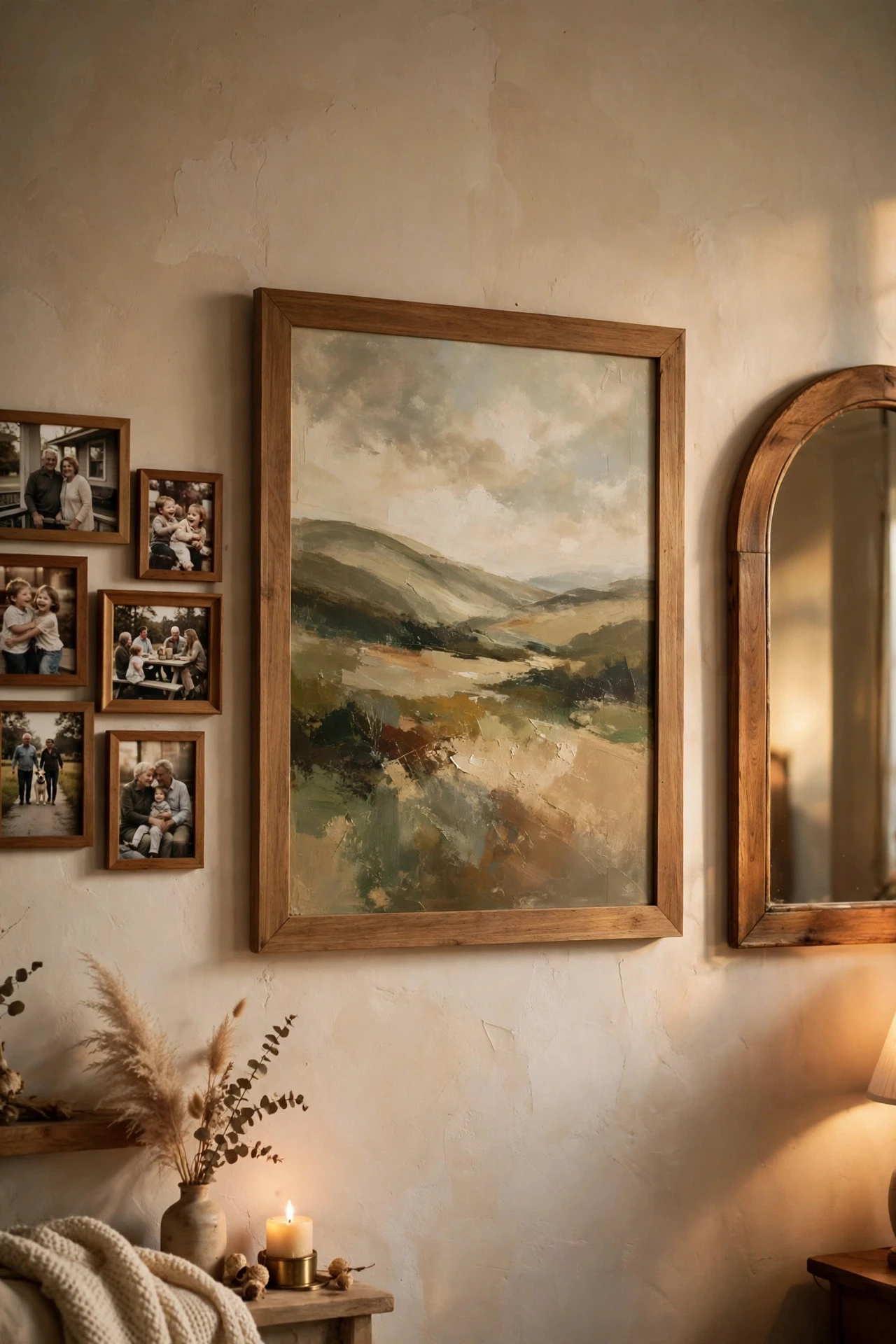
Walls feel lived-in when they show something personal: one large piece of art you love, a small gallery of family photographs, or a shelf of books and objects you collected. Hang art at eye level — the centre 57 to 60 inches from the floor — so it feels part of the room, not decoration floating above the furniture.
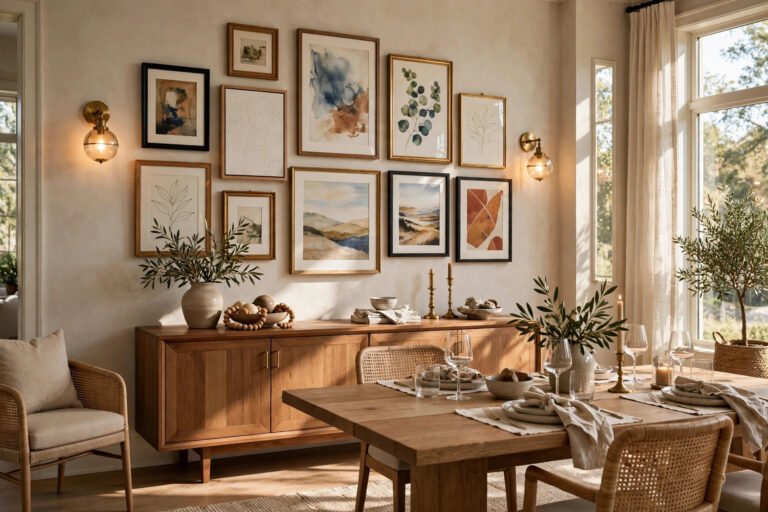
A gallery wall works best with mixed frame sizes and one consistent element, such as matching frames or a single colour repeated in every piece. Leave 2 to 3 inches between frames, and lay the arrangement on the floor first. A large mirror with a warm wood or brass frame doubles the light and the sense of space, especially opposite a window. Avoid filling every wall: one empty wall makes the decorated ones feel intentional, while four crowded walls feel like a shop. Our dream house decor ideas show how personal objects and art make a house feel like yours, not like a catalogue.
17. How Do You Arrange a TV So It Doesn't Kill the Cosiness?

A television stops killing the cosiness when it stops being the biggest, brightest object in the room. Mount it on a side wall or a low console — 20 to 24 inches high — so the screen centre sits at seated eye level, about 42 inches from the floor, and the seating can face the conversation layout instead.
Dress the wall around it: a frame-style television, a gallery of small art around a standard screen, or a low console styled with books and a lamp all soften the black rectangle. When the television is off, it should read as a dark picture frame, not a void. Keep cables hidden in a trunking channel painted the wall colour, and never mount the screen above the fireplace — the viewing angle strains necks, and the heat shortens the television's life. A room where the television is a guest, not the host, stays cosy long after the programme ends.
18. How Do You Add a Drinks Corner to a Cosy Living Room?
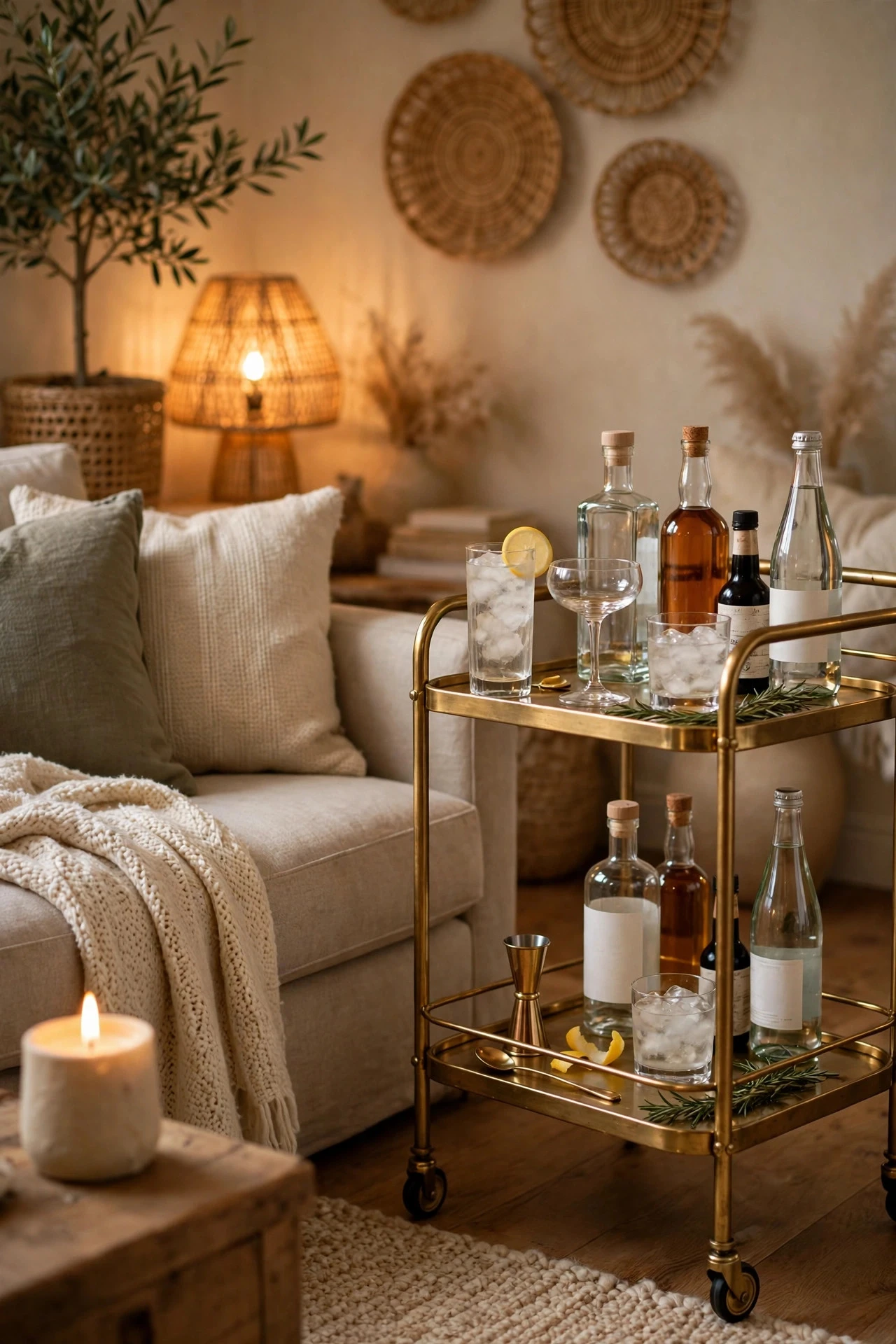
A drinks corner adds a grown-up, relaxed note to a cosy living room: a small bar cart, a tray on a side table, or a single shelf with two or three bottles, a few glasses, and a candle. It gives the room a second purpose — somewhere to mix a drink and linger — without needing a whole bar.
Style a bar cart in brass or warm wood with the bottles on the top tier, glasses on the middle, and a small plant or framed print on the bottom, so it reads as furniture, not a liquor store. Keep it near the seating but out of the main walkway, and add a cocktail book or a small wooden board for garnishes. For a fuller built-in look, our living room bar ideas cover carts, cabinets, and alcoves that blend into the room. Avoid overstocking: six bottles, four glasses, and one good tray are plenty — a crowded cart looks like a shop display.
19. How Do You Keep the Room Cosy in Summer Too?
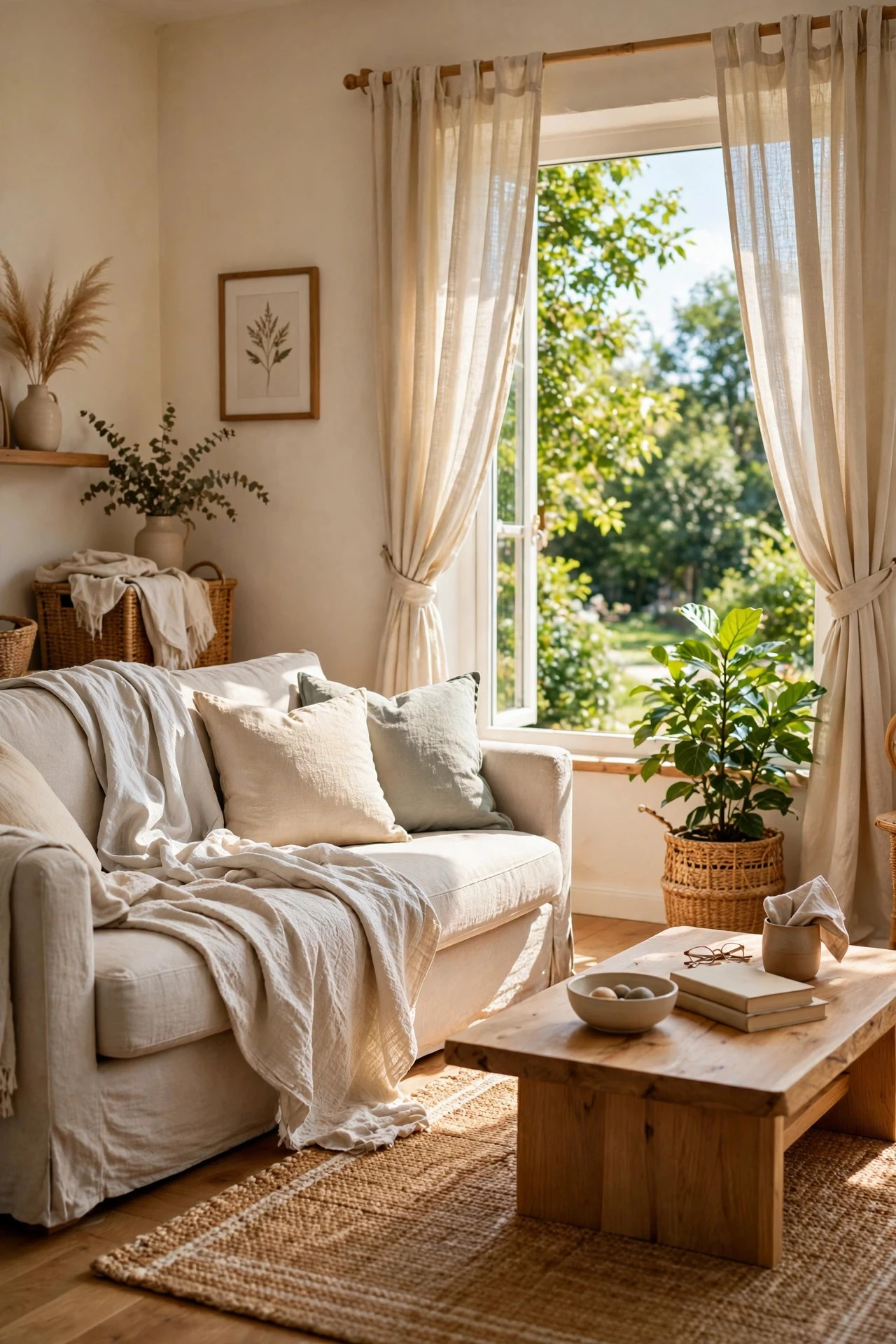
A cosy living room works in summer when you swap the heavy layers for light ones: linen throws instead of chunky knits, cotton cushion covers instead of velvet, and the rug swapped for a flat-weave cotton or jute version that feels cool underfoot. The structure — layered light, conversation seating, warm wood — stays exactly the same.
Open the curtains fully and let the daylight do the work, then add a single low lamp for evenings rather than three. Swap the candle scent to fig, citrus, or fresh linen, and move one plant closer to the window where it will thrive. Keep one throw in the basket all year: summer evenings still cool down, and a light throw on bare legs is the whole point of cosiness. Avoid dark, heavy fabrics in a hot room — they absorb heat and make the space feel airless — and never remove the rug entirely, or the room loses the softness that makes it cosy in the first place.
20. How Do You Use Colour in Small Doses for Warmth?
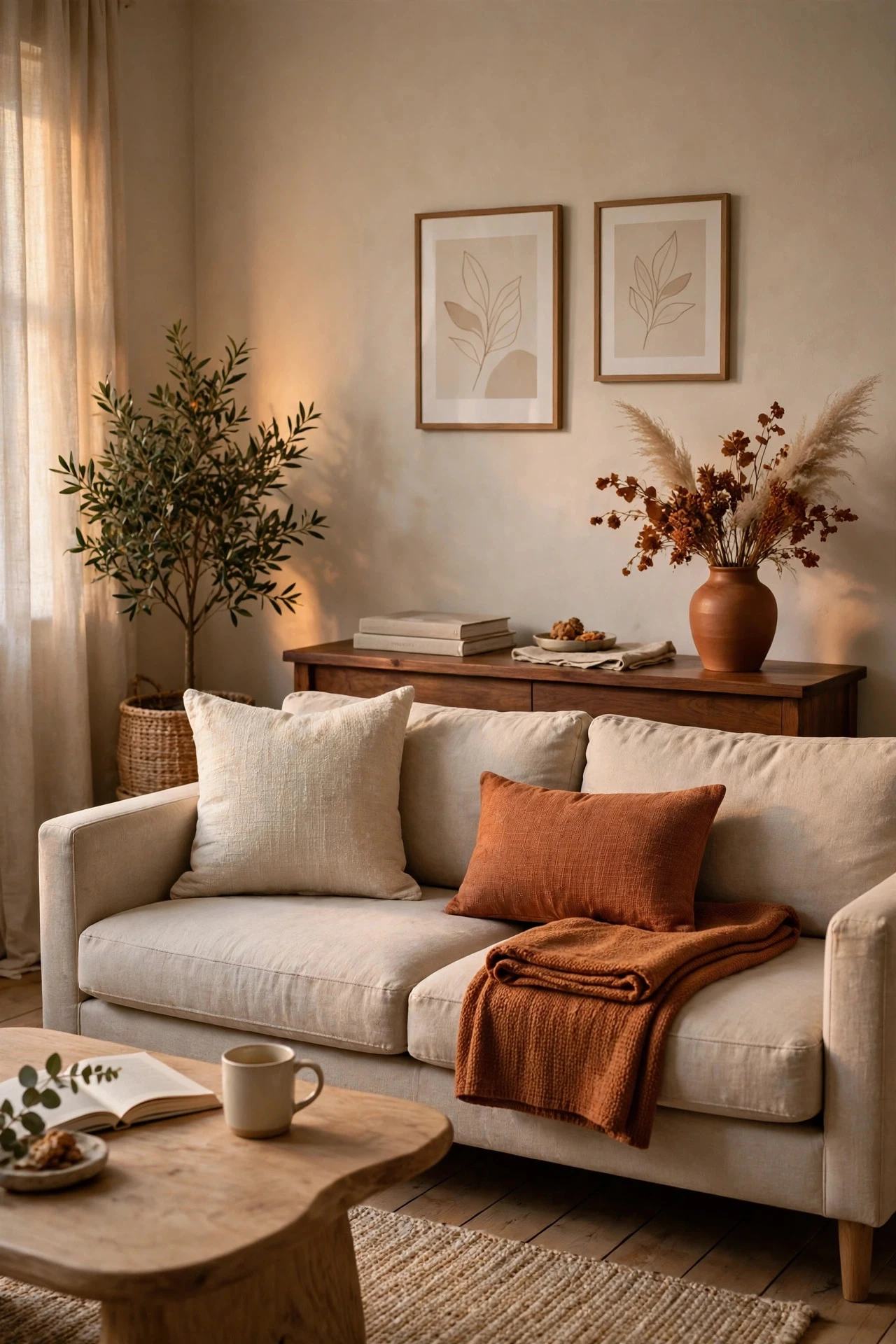
Colour warms a cosy room best in small, repeated doses: one accent colour, used three times, in three different textures. A rust cushion, a rust throw folded over the chair arm, and a rust vase on the console tie the room together without repainting a single wall.
Terracotta, rust, ochre, and deep olive all warm a neutral room; blush and sage soften it. Pick the accent from something you already own — a piece of art, a rug pattern, a book cover — so the colour feels found, not forced. Keep the accent to about 10 percent of the room's visible colour, with neutrals doing the other 90 percent. House Beautiful's cosy living room ideas show the same trick across dozens of rooms: one warm colour, repeated with discipline, beats a rainbow every time. Avoid introducing a second accent colour until the first one is settled — two accents compete, one accent sings.
21. What Order Should You Buy Cosy Upgrades on a Budget?
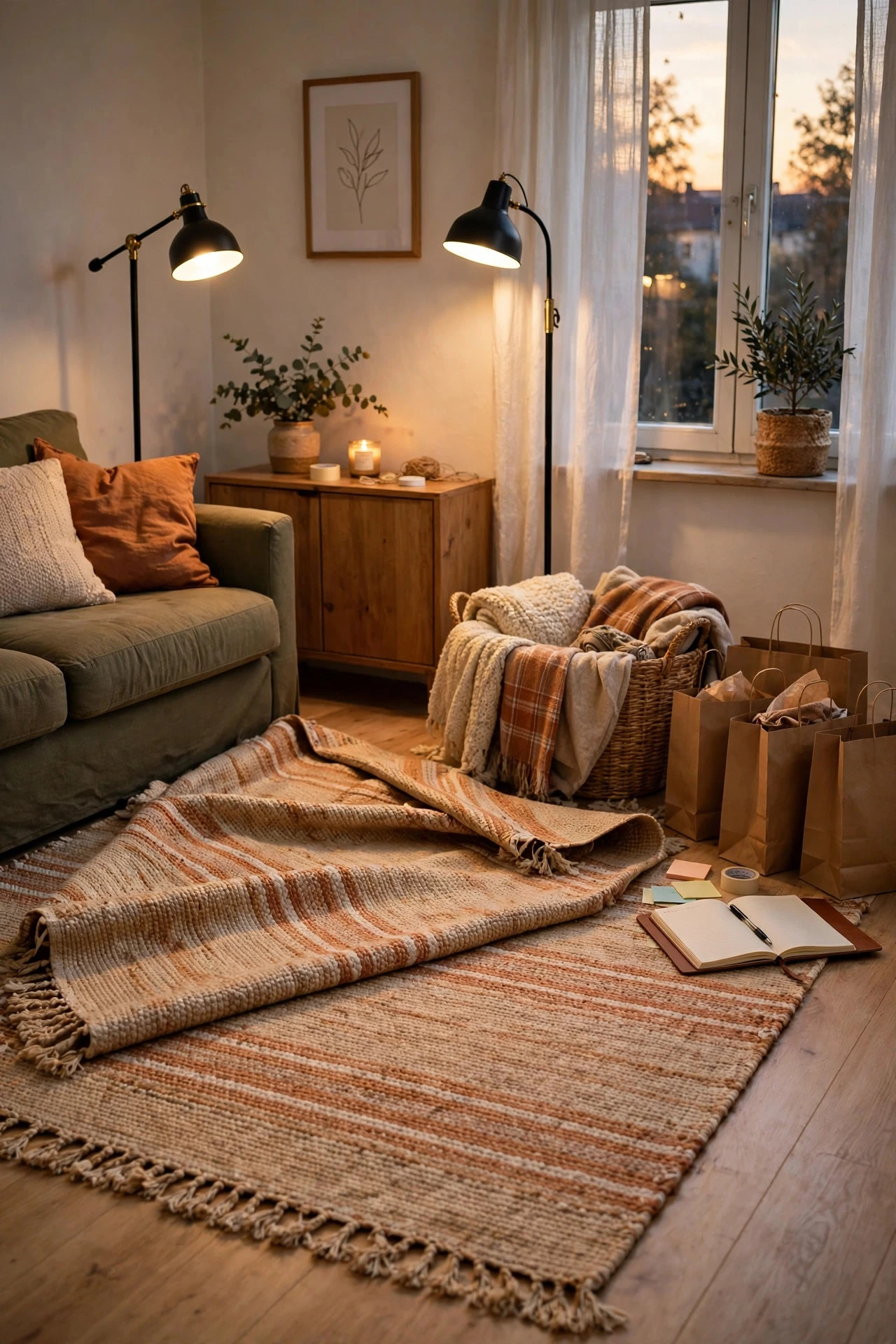
Buy cosy upgrades in this order: rug first, lighting second, throws and cushions third, curtains fourth, and art last. The rug changes the whole floor and anchors the seating, so it delivers the biggest visible change for the money — a good 8 x 10 foot wool-blend rug costs $150 to $300 and lasts a decade.
Next, lighting: a $40 floor lamp and $15 of warm bulbs transform every evening. Throws and cushions follow at $60 to $100 total, and curtains at $80 to $150 a pair. Art is last: the most personal purchase, and the easiest to find cheaply — thrift shops and prints cost little and mean more. Set a total budget of $400 to $600, spread over two or three months, buying one layer at a time so you can see each change before spending on the next. The idea that a room must be finished in one weekend is a myth: the cosiest rooms are the ones that grew slowly, one good decision at a time.
22. How Do You Keep a Cosy Living Room Tidy Every Day?
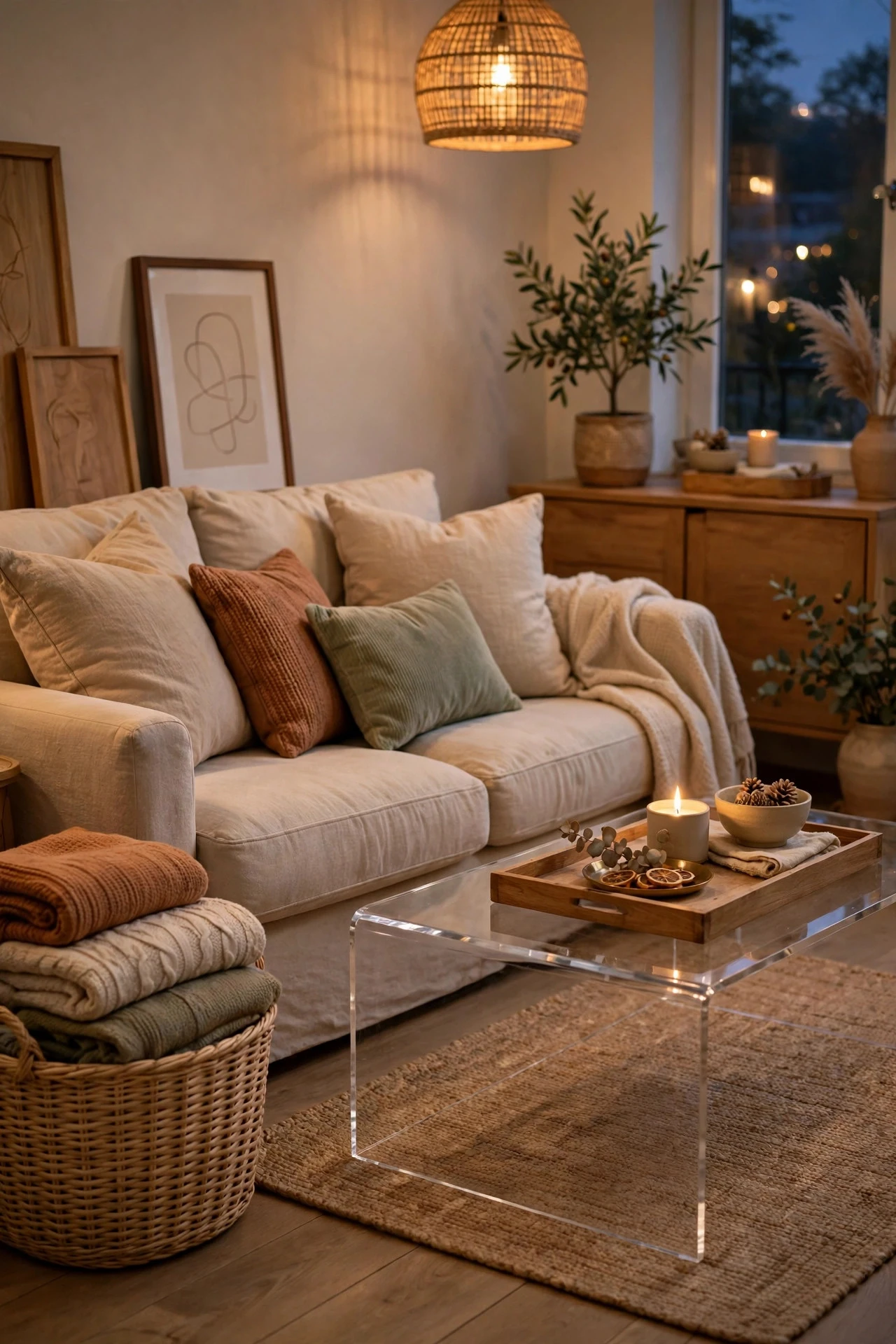
A cosy living room stays tidy with a ten-minute evening reset: throws folded into the basket, cushions plumped and straightened, mugs and books returned to the tray, and the coffee table wiped. Do it every evening, and the room greets you tidy every morning — cosiness survives clutter, but it drowns in it.
Give everything a home: a lidded basket for throws, a tray for remotes, a shelf for the books you are reading. The one-in, one-out rule works — a new cushion means an old one leaves — so the room never slowly fills up. Keep cleaning supplies in a caddy nearby, so the reset takes ten minutes instead of thirty. Avoid open storage that shows everything: a closed basket hides the mess, while a pile on the floor advertises it. The Danish idea of hygge — cosiness and contentment through simple pleasures — is well described on Wikipedia's hygge page, and its core lesson is the same: a calm, cared-for room is the cosy room.
Practical Tips
Buy the rug first, and buy it big. A rug that fits under the front legs of every seat changes the room more than any other single purchase, and it is the hardest to swap later — measure the seating area, add 12 inches on each side, and buy that size, not the one that looks right in the shop.
Keep every bulb at 2700K. Warm-white bulbs are the cheapest cosiness upgrade there is: swap every bulb in the room to 2700K, put the overhead light on a dimmer, and never mix warm and cool bulbs in the same room, or the light feels uneven and restless.
Follow the rule of three for everything soft. Three throws visible, three cushions on a loveseat, three candles grouped together — odd numbers look gathered and intentional, while even numbers look staged and symmetrical.
Size curtains for the wall, not the window. Hang the rod 4 to 6 inches above the frame and 8 to 12 inches wider on each side, and buy panels long enough to kiss the floor — short curtains make the whole room look unfinished, however good the rest is.
Reset the room every evening. Ten minutes — fold the throws, plump the cushions, clear the coffee table — keeps a cosy room cosy instead of letting it slide into clutter, and it costs nothing at all.
Final Thoughts
A cosy living room is not a style you buy, it is a feeling you build — one warm layer at a time. Start with the rug and the lighting, add soft textures and a chair that invites you to sit, then let the room grow slowly with objects you love. The best cosy rooms are never finished in a weekend; they are the ones where every piece was chosen because it felt good to live with. Begin with the biggest change, keep the palette warm, and let the room become the place everyone drifts toward at the end of the day.
Frequently Asked Questions
What makes a living room feel cosy?
A living room feels cosy when it layers warm light, soft textures, and seating built for conversation. Start with a rug big enough for every seat, add lamps at two heights on 2700K bulbs, drape throws in boucle or chunky knit, and arrange seats facing each other no more than 8 feet apart.
What colour makes a living room feel warmest?
Warm whites, oatmeal, camel, and soft greige make a living room feel warmest, with one deep accent such as terracotta or rust to stop the scheme feeling washed out. Choose paint with a yellow or pink undertone, keep large pieces neutral, and let the accent live in cushions, throws, and art.
What size rug should I buy for my living room?
Buy a rug at least 8 x 10 feet for a sofa with two chairs, or 9 x 12 feet for a larger room, so the front legs of every seat sit on it. Leave 12 to 18 inches of floor between the rug edge and the wall, and choose low-pile wool or a wool blend for warmth and durability.
How can I make my living room cosy on a budget?
Follow the budget order: rug first, then lighting, then throws and cushions, then curtains, then art. A $400 to $600 budget spread over two or three months covers a wool-blend rug, a floor lamp with warm bulbs, throws, cushions, and curtain panels, and each layer changes the room before you spend on the next.
How do I make a small living room cosy?
Choose a loveseat over a three-seat sofa, a round coffee table, and furniture with visible legs so the floor shows through. Keep walkways at least 30 inches wide, hang a large mirror opposite the window, use one warm-toned rug, and store books and plants on floating shelves instead of the floor.
Can I make a rented living room cosy without drilling?
Yes — a large rug, floor lamps, throws, cushions, and tension-rod curtains add instant cosiness with no holes at all. Swap in warm 2700K bulbs, use battery candles where real flames are banned, and hang lightweight art with Command hooks rated for the weight, testing every adhesive on a hidden spot first.