22 Dream House Decor Ideas for a Home That Feels Like You
A dream house is not the biggest house on the street or the most expensive one in the catalogue. It is the house that feels like you the moment you walk through the door — the colours calm you, the light flatters every corner, and every room tells a small part of your story. Dream house decor is less about buying more things and more about making deliberate choices: one colour story carried through the whole home, lighting layered like a recipe, and furniture that earns its place.
Looking for more inspiration? Our Nest Decorz homepage gathers the latest home decor ideas, seasonal decorating guides and room-by-room styling tips in one place — start there and explore.
Below you will find 22 dream house decor ideas covering colour stories, layered lighting, living rooms, bedrooms, kitchens, bathrooms, entryways, texture, storage and honest budgets — with exact proportions, real material names and the mistakes to avoid, so your home feels designed rather than decorated by accident. Every idea works whether you own a four-bedroom house or a small flat, and most of them cost far less than a full renovation.
Quick answers
– Pick one colour story for the whole house — a dominant neutral, a supporting mid-tone and one accent, repeated in different proportions in every room. – Layer three kinds of light in every room — ambient, task and accent — because a single ceiling light is what makes most homes feel flat and cold. – Spend on the pieces you touch every day — the sofa, the mattress, the rug under your feet — and save on the accessories you can swap in a season. – A dream house is finished when every room has one personal piece — a photo, a heirloom, a handmade object — that no shop could sell you.
1. How Do You Choose a Colour Story for Your Whole Dream House?
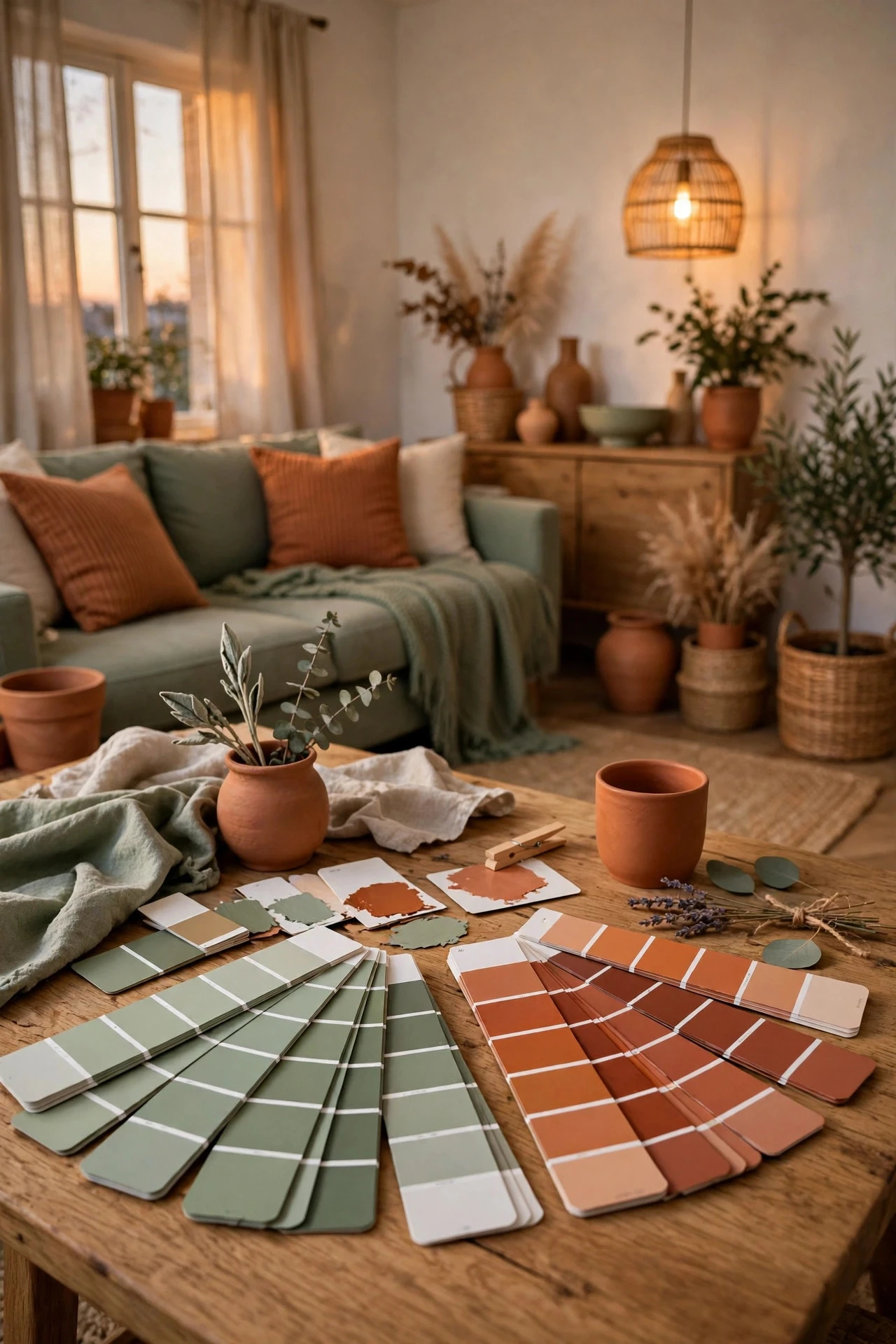
Choose one colour story for your whole dream house by picking three colours — a dominant neutral for walls and large furniture, a supporting mid-tone for upholstery and curtains, and one accent for cushions, art and small objects. A shared palette is what makes separate rooms feel like one home instead of five unrelated ones.
Start with the largest surfaces, because they set the tone: warm white, soft greige or pale sage walls, then oak, walnut or rattan wood tones, then your accent — terracotta, deep teal, mustard or dusty rose. Use the 60-30-10 rule in every room: 60 percent dominant, 30 percent supporting, 10 percent accent, so the balance feels familiar even when the furniture changes. Avoid choosing a different bold colour for every room; the eye needs a thread to follow from the hallway into the living room and beyond.
2. How Can Layered Lighting Make Every Room Feel Expensive?
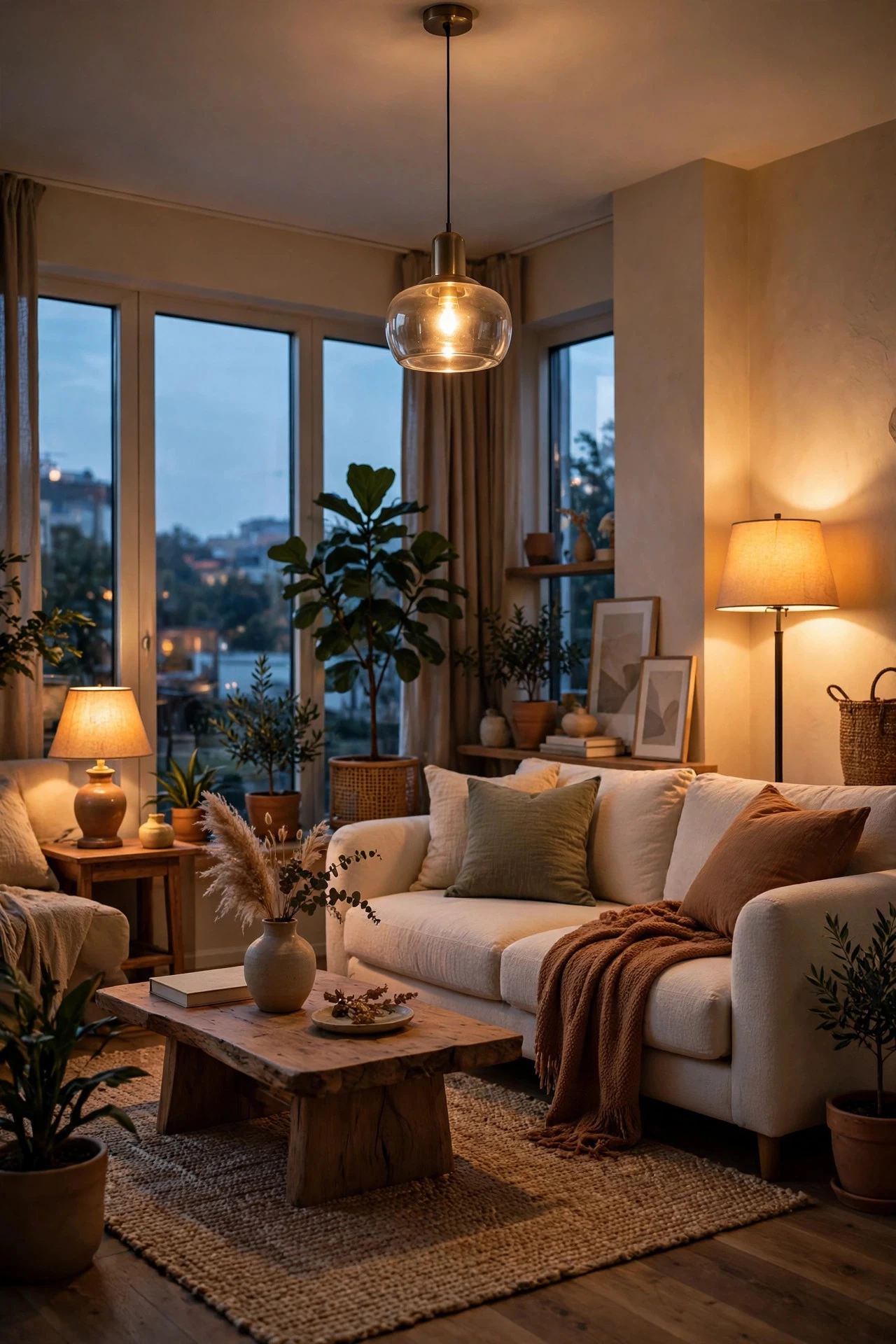
Layered lighting makes a room feel expensive because it gives you control over mood: combine ambient light from the ceiling, task light for reading and cooking, and accent light that highlights art, shelves and texture, A room lit from three heights at once looks deeper, warmer and far more considered than one lit by a single pendant.
Start with dimmable warm-white bulbs at 2700K, the colour temperature of candlelight, then add a floor lamp beside the sofa, a table lamp on the console, and picture lights or LED strips inside shelving. Interior design treats lighting as one of the core tools for shaping how a space feels, not just how bright it is. Avoid cool white bulbs in living spaces — they read as office light — and never rely on a single overhead fitting in a room where you relax.
3. How Do You Design a Living Room That Feels Like You?
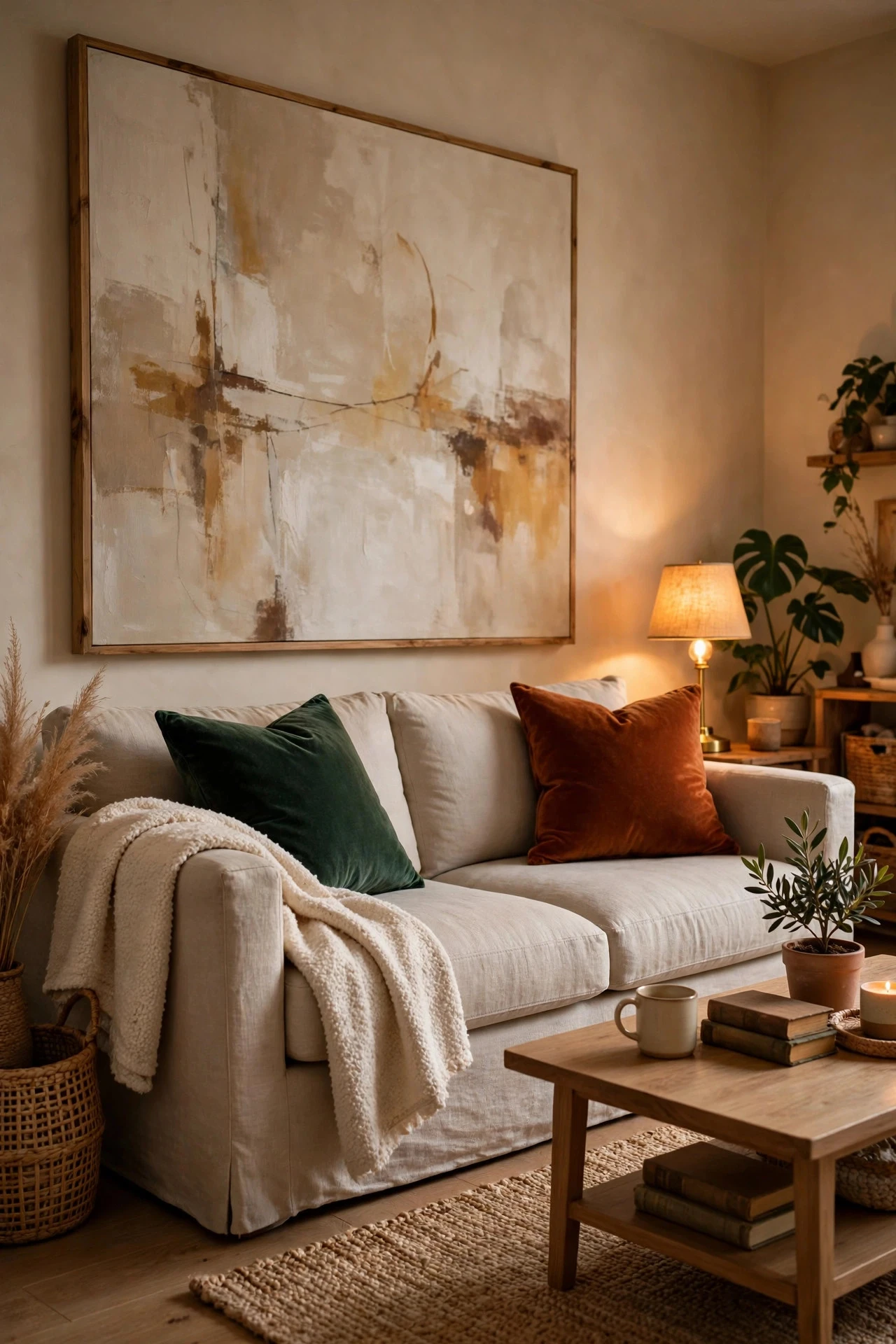
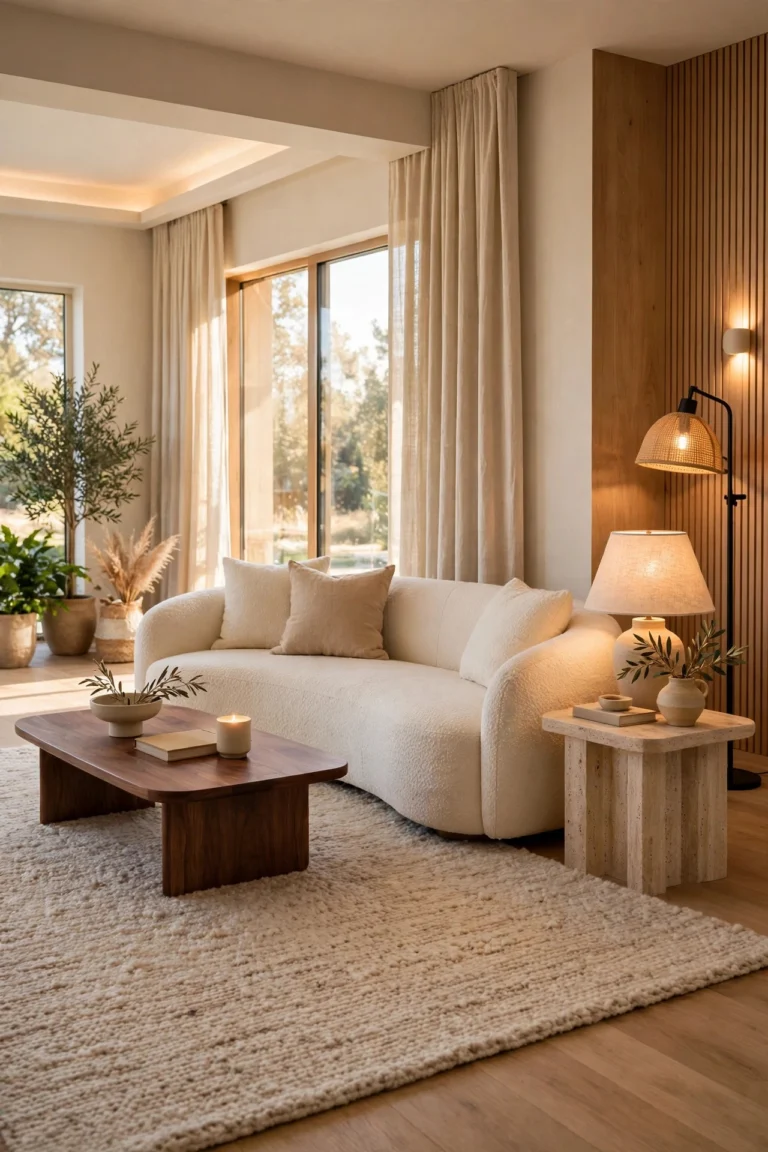
Design a living room that feels like you by starting with how you actually live in it: where you sit to read, where guests gather, where the television goes, and then arranging the furniture around those habits instead of around the walls. A living room that fits your life feels personal in a way no showroom arrangement ever can.
Place the sofa facing the room's best feature — a window, a fireplace, a view — with the coffee table 35 to 45 cm away, close enough to reach a cup but far enough to walk around. Add one statement piece that is unmistakably yours: a sculptural floor lamp, an oversized canvas, a vintage armchair re-covered in linen. For more ways to finish the room, these 22 luxury living room decor ideas for an elegant home show how to add polish without losing warmth.
4. What Makes a Bedroom Feel Like a Real Retreat?
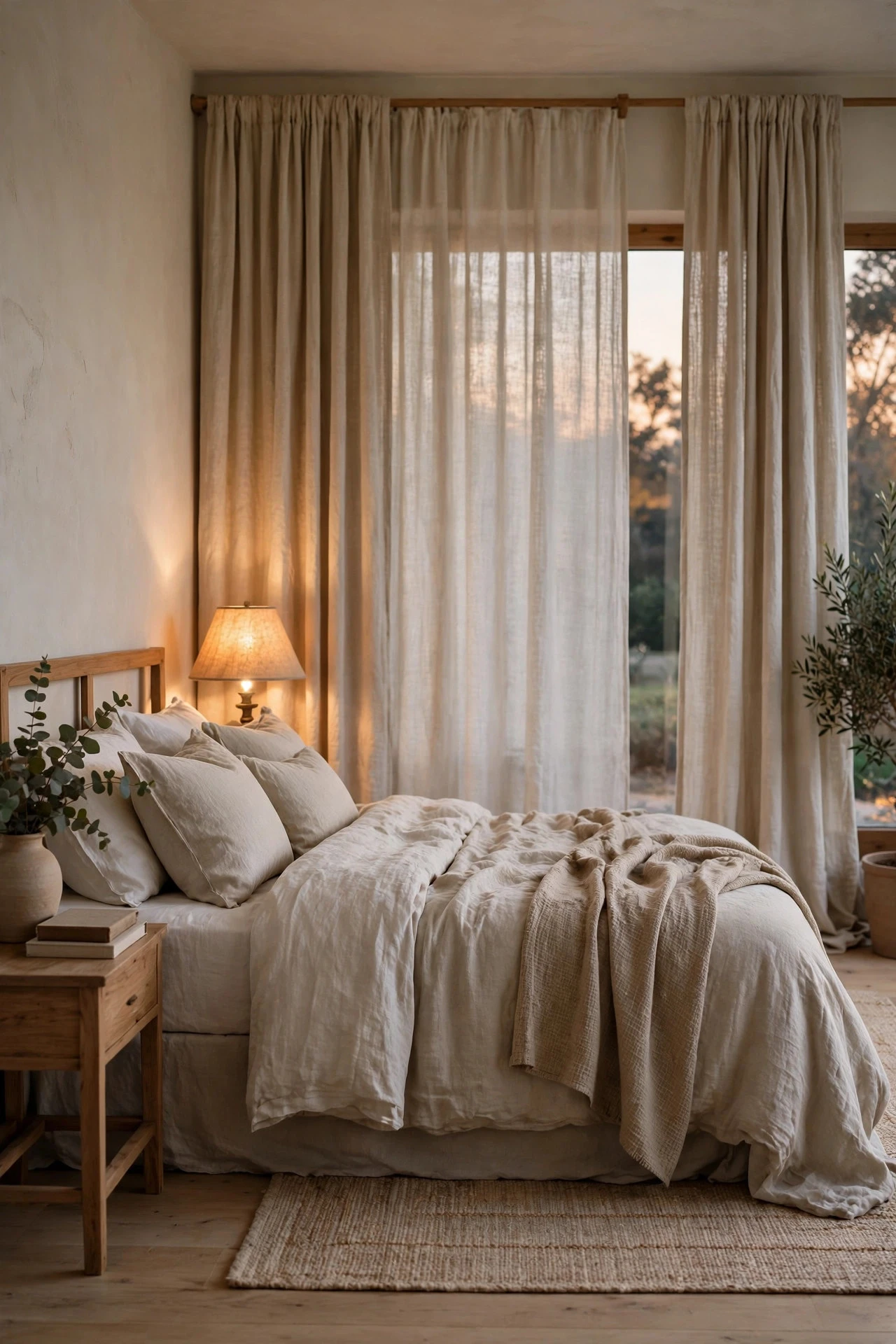
A bedroom feels like a real retreat when it removes visual noise: a calm palette, soft layered bedding, blackout curtains that actually close, and nothing in the room that belongs to work or chores. Your bedroom should lower your heart rate the moment you walk in, and that comes from subtraction as much as from decoration.
Choose bedding in natural fibres — cotton percale or washed linen — in one soft tone, then layer a textured throw and two sleeping pillows plus one lumbar cushion, no more. Hang curtains from ceiling to floor, 10 to 15 cm wider than the window on each side, so the room feels taller and the fabric pools slightly at the floor. For a full room-by-room plan, these 24 cozy bedroom design ideas to create a peaceful and stylish retreat cover layouts, colours and lighting in detail.
5. How Do You Style a Kitchen That Is Beautiful and Hardworking?
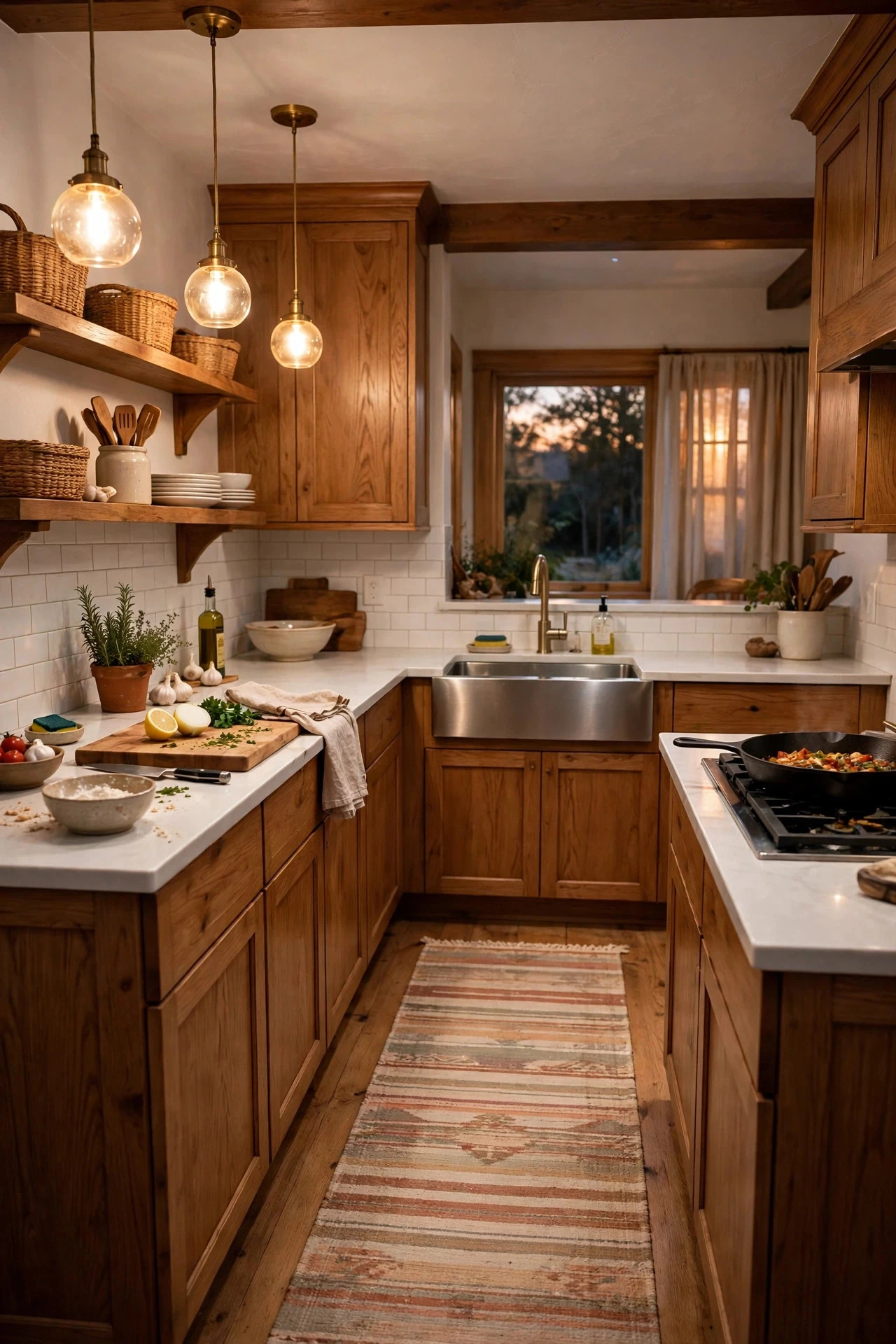
Style a kitchen that is beautiful and hardworking by choosing surfaces that forgive real life: a backsplash you can wipe clean, worktops that hide crumbs, and open shelving only where you can keep it tidy. A dream kitchen looks good at 7 a.m. on a school morning, not just in a photograph.
Pair warm wood with one cool material — white quartz, honed marble or pale stone — so the room feels balanced rather than clinical. Add pendant lights over an island or table at 75 to 90 cm above the surface, and a runner rug in a washable flatweave to soften hard floors. For the wall behind the hob and sink, these 22 kitchen backsplash ideas for a stylish easy-clean kitchen compare tiles, stone and panels that survive splashes.
6. How Can a Small Bathroom Feel Like a Luxury Spa?
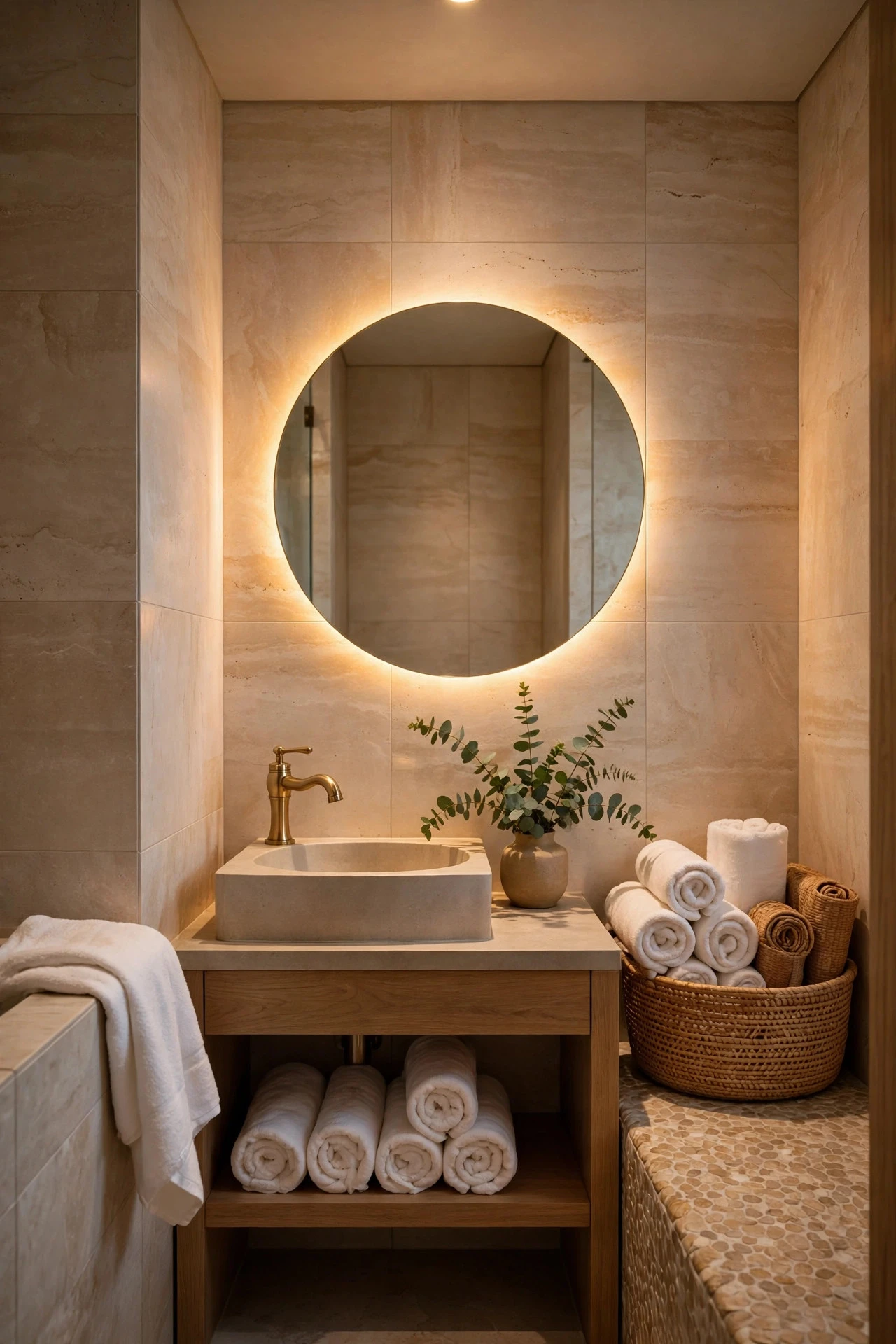
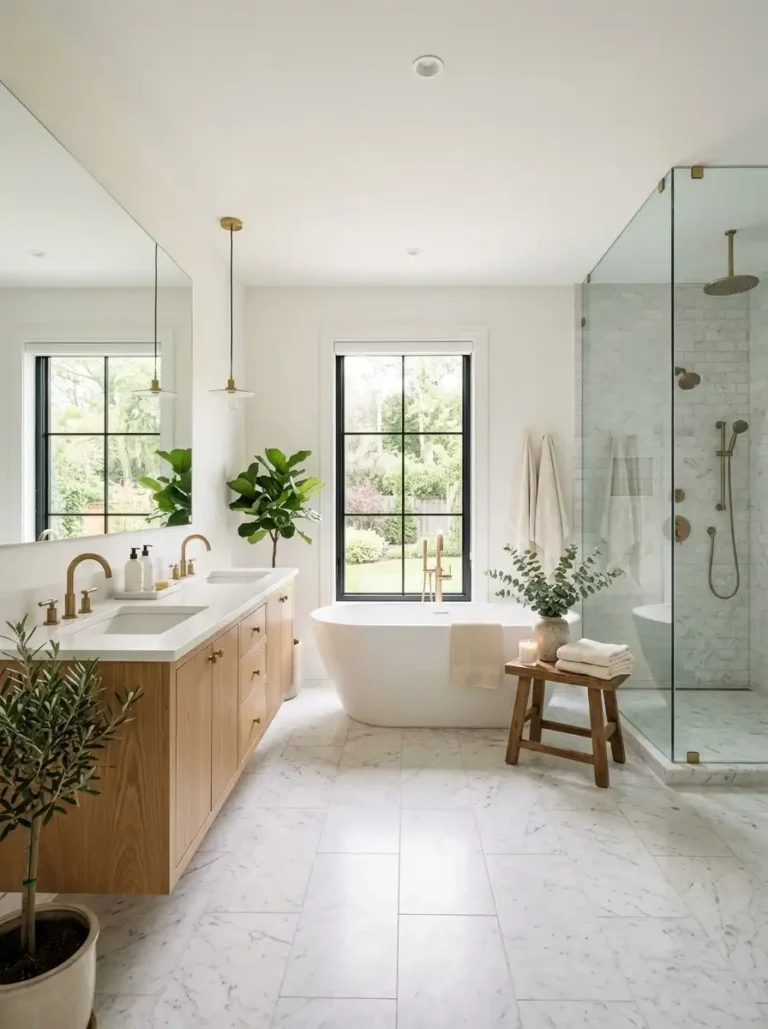
A small bathroom feels like a luxury spa when you borrow the spa's tricks: one beautiful material repeated everywhere, warm light, fluffy towels in a single colour, and nothing on the counter except soap. Spas feel calm because they edit ruthlessly, and a small bathroom benefits from the same discipline.
Choose large-format tiles — 60 by 60 cm or bigger — because fewer grout lines make a small floor look larger, and carry the same tile up one wall for a wet-room feel. Add a backlit mirror or a pair of sconces at face height, which flatter skin far better than a ceiling downlight, and swap a shower curtain for a clear glass panel to keep sightlines open. These 22 bathroom mirror ideas for a brighter bigger-looking room show which shapes and placements open up tight spaces best.
7. How Do You Make an Entryway Set the Tone for the Whole House?
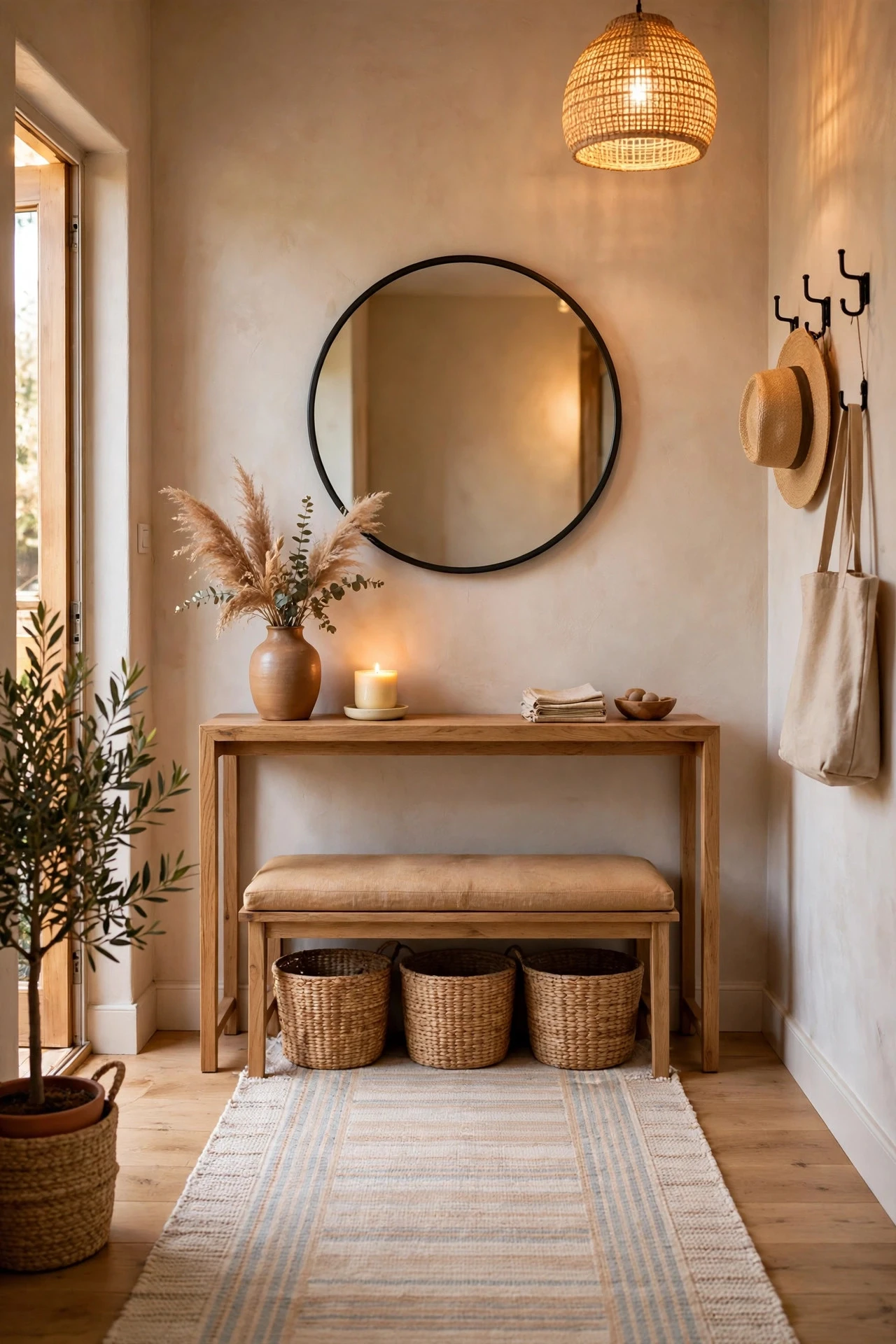
Make an entryway set the tone for the whole house by treating it as the first chapter, not a corridor: a console table or bench, a mirror, one piece of art, and a place for keys, shoes and coats that is hidden, not heaped.
Hang a mirror at eye level to bounce light from the front door into the hall, and place a small tray or bowl on the console for keys so they never migrate onto the kitchen counter. Add a bench with baskets underneath for shoes, a row of hooks at two heights — adult and child — and a washable runner in your home's accent colour to pull the palette through. Avoid a console so deep it narrows the walkway; 25 to 30 cm is enough, and anything wider turns a hallway into an obstacle course.
8. How Do You Mix Old and New Pieces Without the Clash?
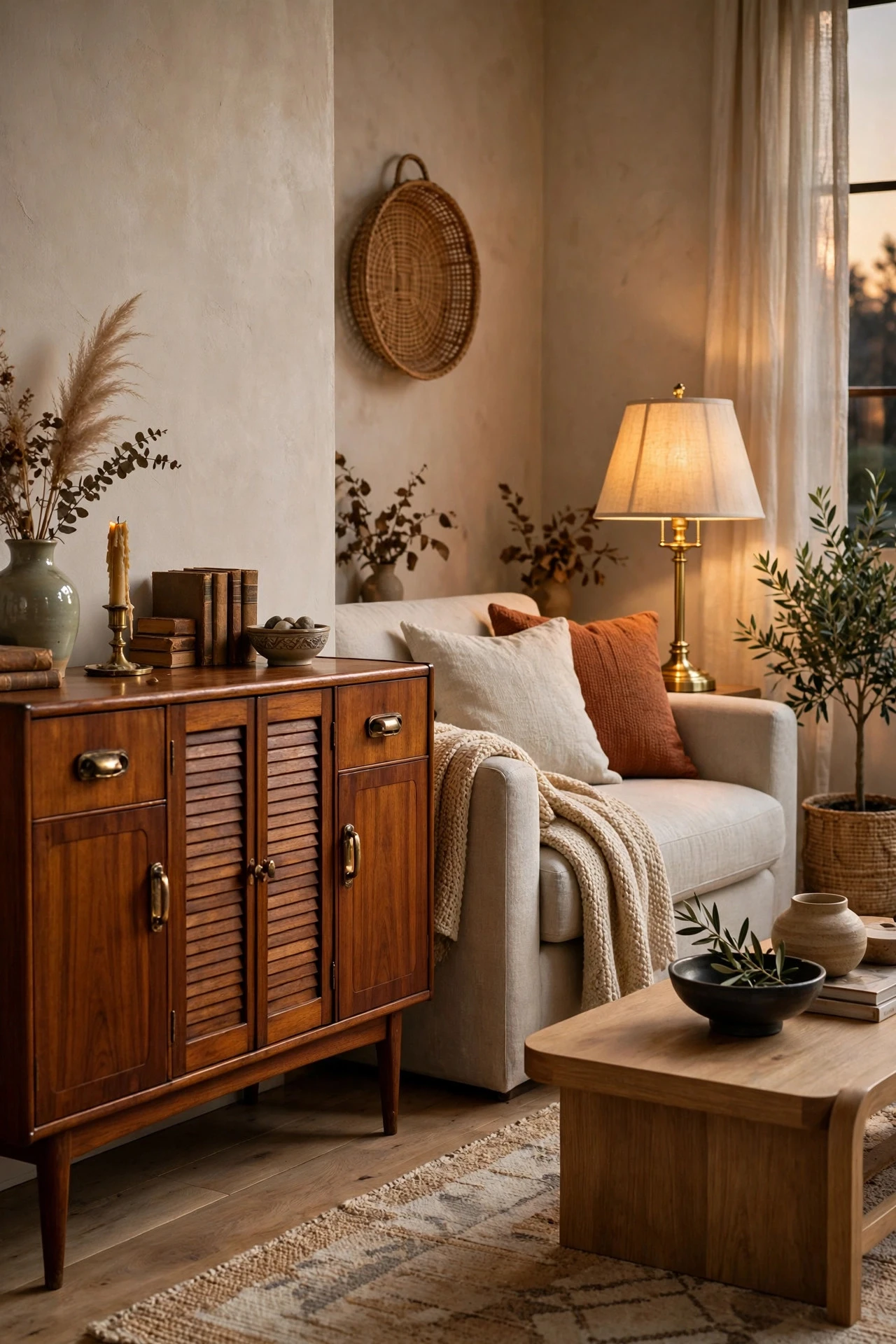
Mix old and new pieces without a clash by letting one thing connect them: a shared colour, a shared material, or a shared shape repeated across eras. A 1960s teak sideboard sits happily beside a new linen sofa when both carry the same warm wood tone,
Follow the 80-20 rule: 80 percent of the room in one era's language, 20 percent in another, so the mix reads as intentional rather than accidental. Place the oldest piece where it gets breathing room — a grandmother's chair in a quiet corner with a good lamp, not crowded between two new flat-pack items. Avoid mixing three or more eras in one small room, because the eye stops knowing where to rest, and never place two competing statement pieces side by side — let one be the star and the other support it.
9. What Is the Secret to a Rug That Grounds the Whole Room?
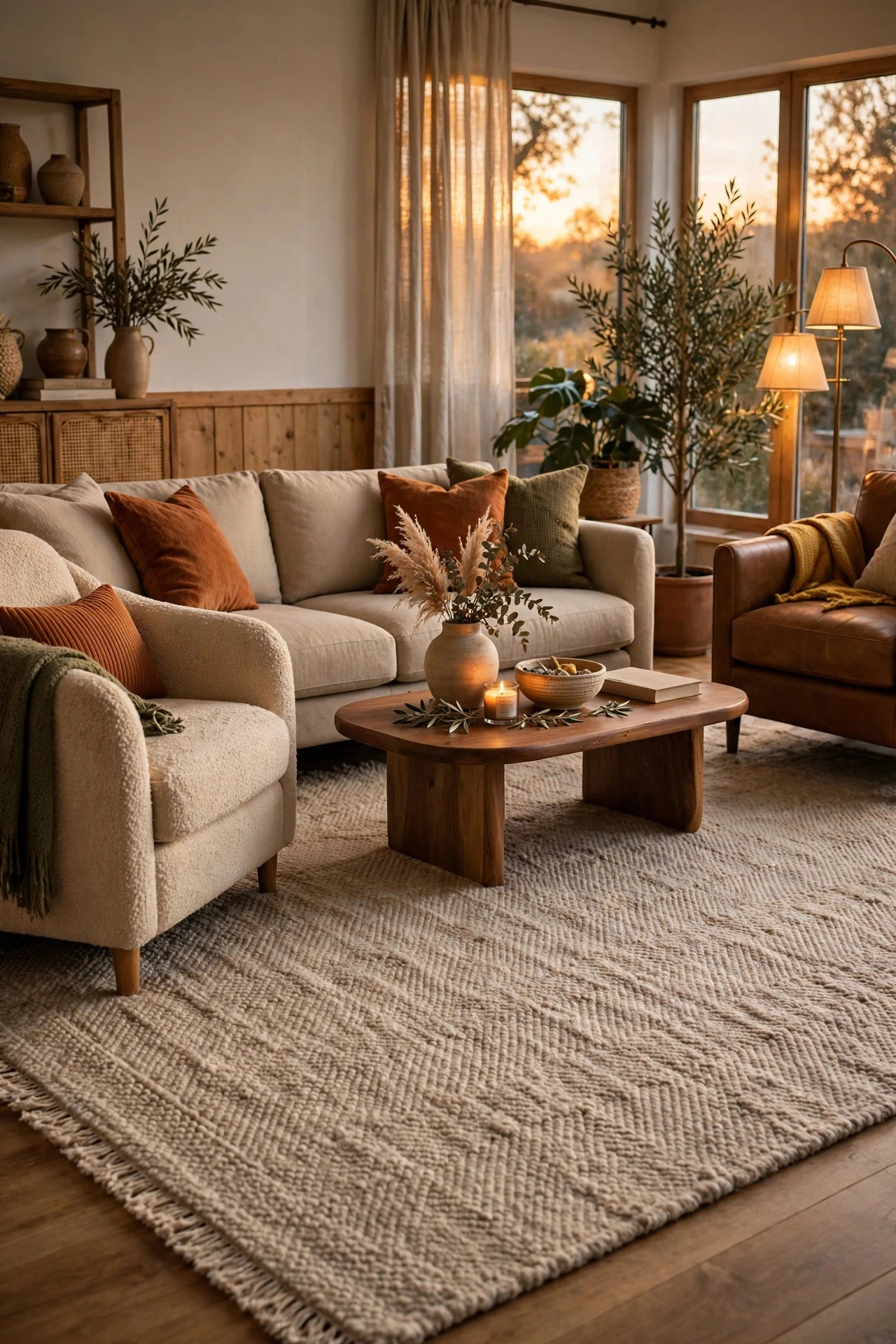
The secret to a rug that grounds a room is size: choose a rug big enough that the front legs of every seat in the group sit on it A rug that is too small makes even expensive furniture look like it is floating, while the right size pulls the whole seating group into one conversation.
Measure the seating area before you shop, not after: a three-seater sofa with two armchairs usually needs at least 240 by 300 cm, and a dining table needs a rug 60 cm wider than the table on every side so chairs stay on it when pulled out. These 22 living room rug ideas to ground your seating area show sizing, layering and pattern combinations that work in real rooms. Avoid a rug that stops halfway under the sofa; half-on reads as a mistake, while fully under or fully in front both look deliberate.
10. How Do You Add Texture So a Neutral Room Never Feels Flat?
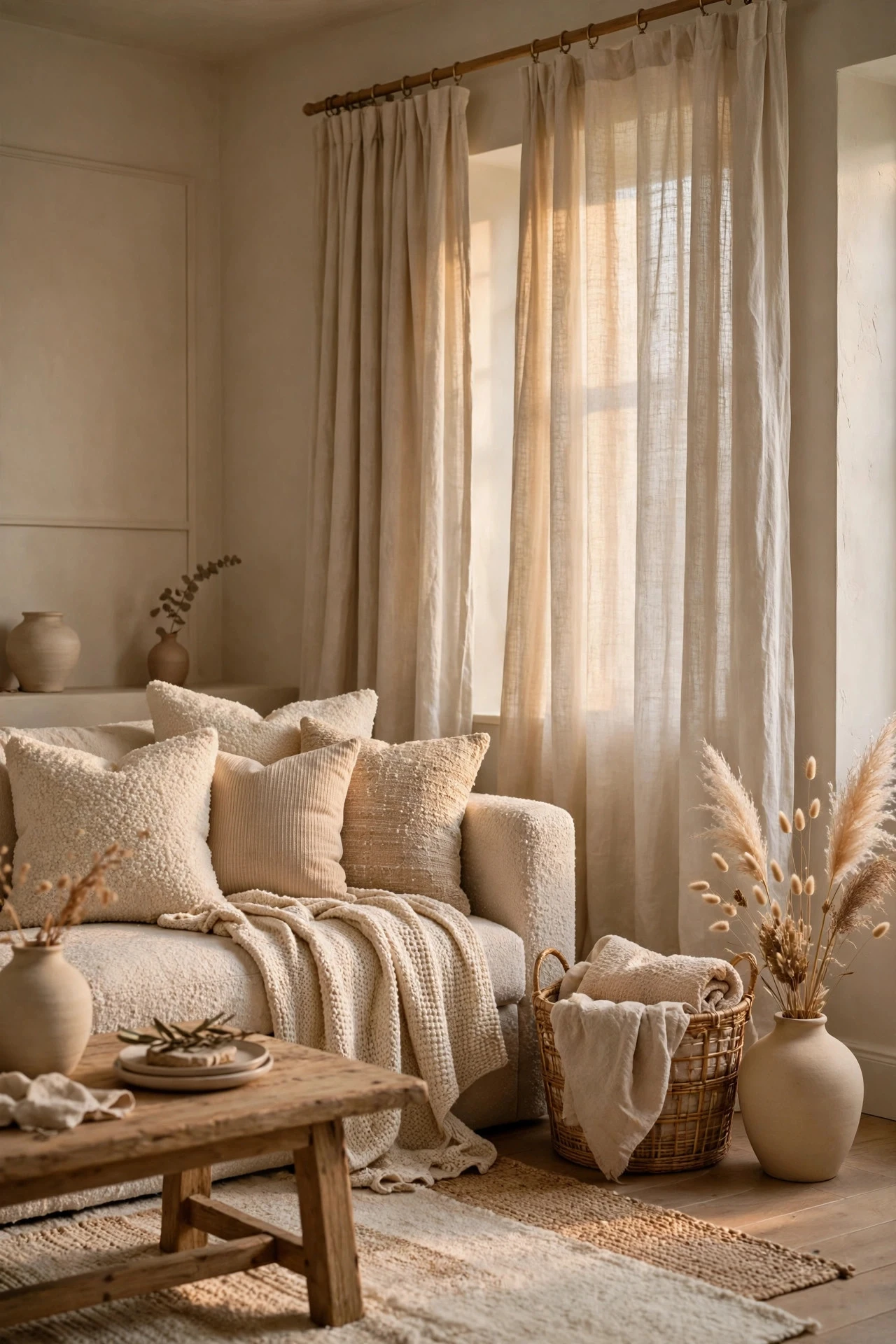
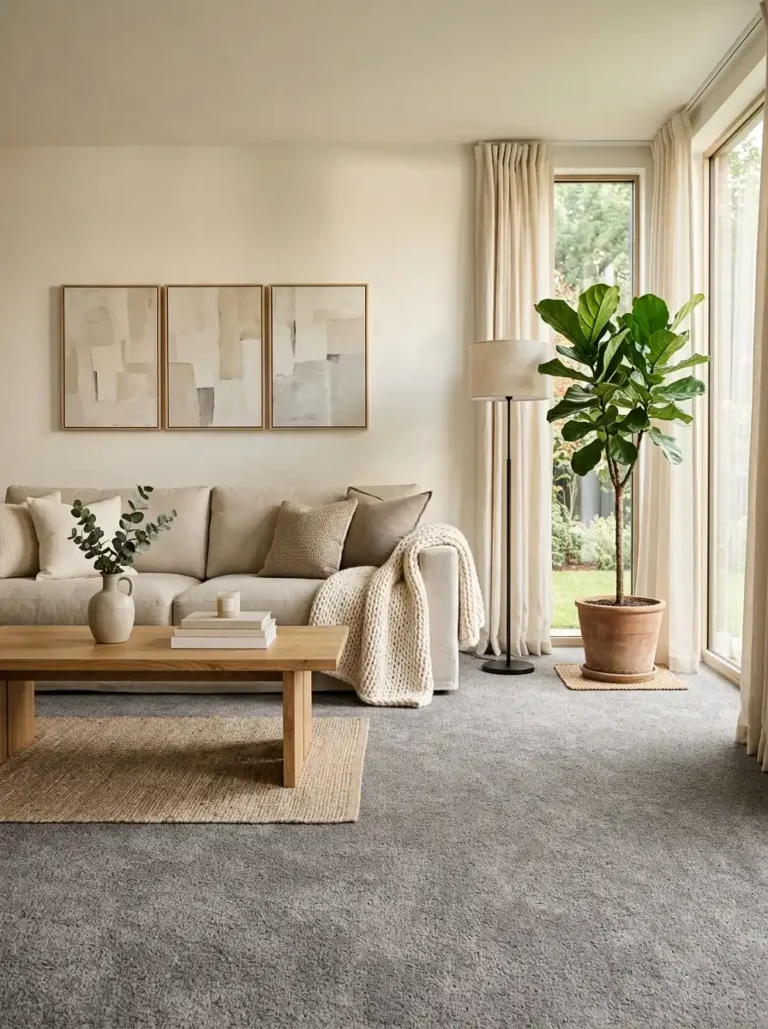
Add texture so a neutral room never feels flat by layering at least five different surfaces: smooth linen, nubby boucle, warm wood, cool stone or marble, and one metallic like brass or matte black. Texture is what the eye touches
Work from large to small: a woven rug underfoot, linen curtains at the window, a boucle or velvet cushion on the sofa, a rattan basket beside the chair, and a ceramic vase on the coffee table. Keep the palette quiet and let the materials do the talking — cream on cream works when the cream is linen, wool, plaster and oak rather than one flat paint. Avoid fake texture that photographs well but feels cheap in the hand; a real linen cushion beats three polyester ones.
11. How Do You Display Personal Pieces Without Creating Clutter?
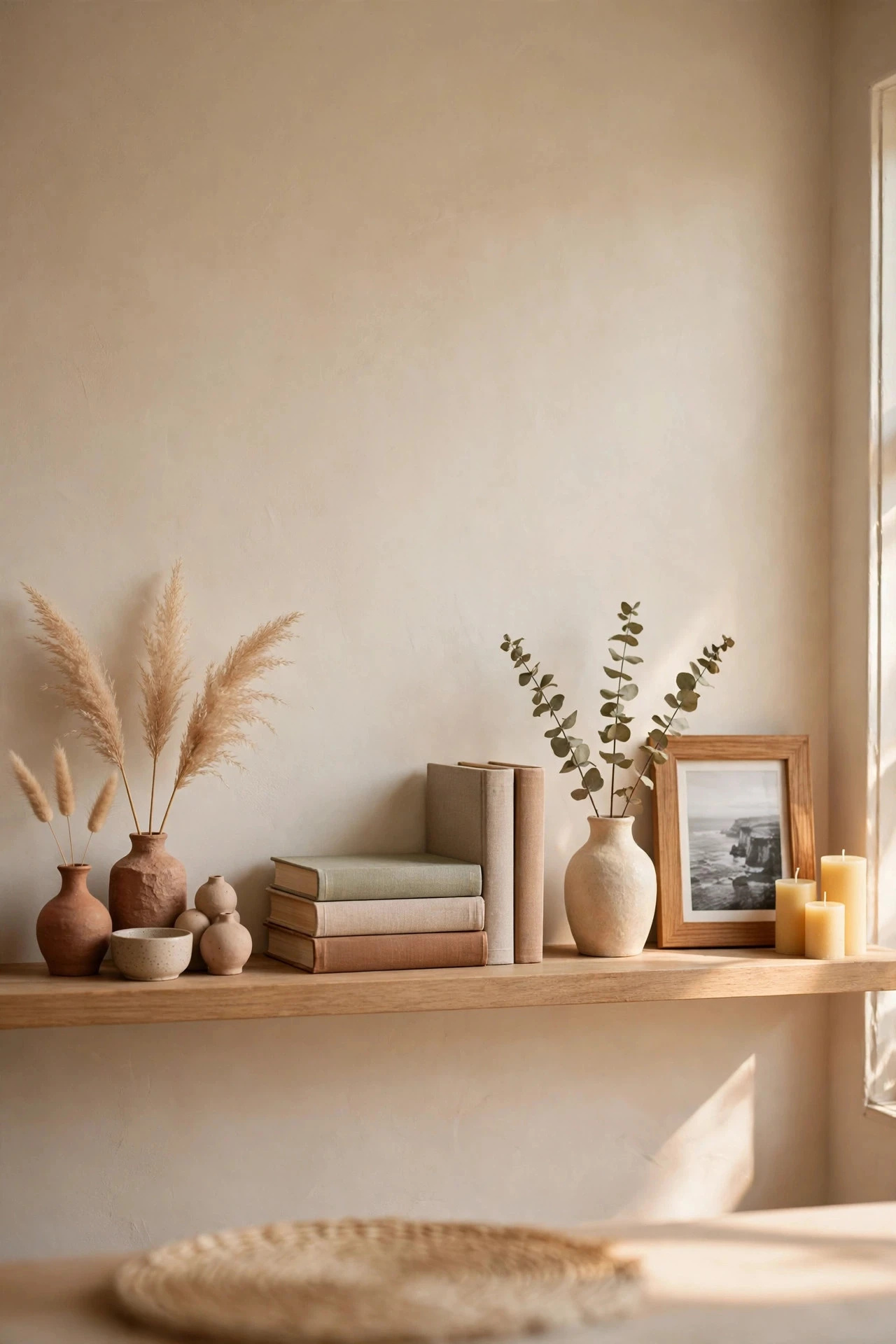
Display personal pieces without creating clutter by giving them a stage and a limit: one shelf, one wall or one tray per collection, with breathing room between objects, so each piece is seen instead of lost in a crowd. A home feels personal when its objects are curated, not when every surface is covered.
Group objects in odd numbers — threes and fives — with the tallest at the back, and leave at least a hand's width of empty shelf between groups so the eye can rest. Rotate displays seasonally: keep ten favourite pieces out and store the rest, swapping them every few months so the house feels fresh and every object gets its moment. Avoid lining objects up in a row like soldiers on a mantel; vary heights with books stacked flat as plinths.
12. How Do You Make a Small House Feel Spacious and Dreamy?
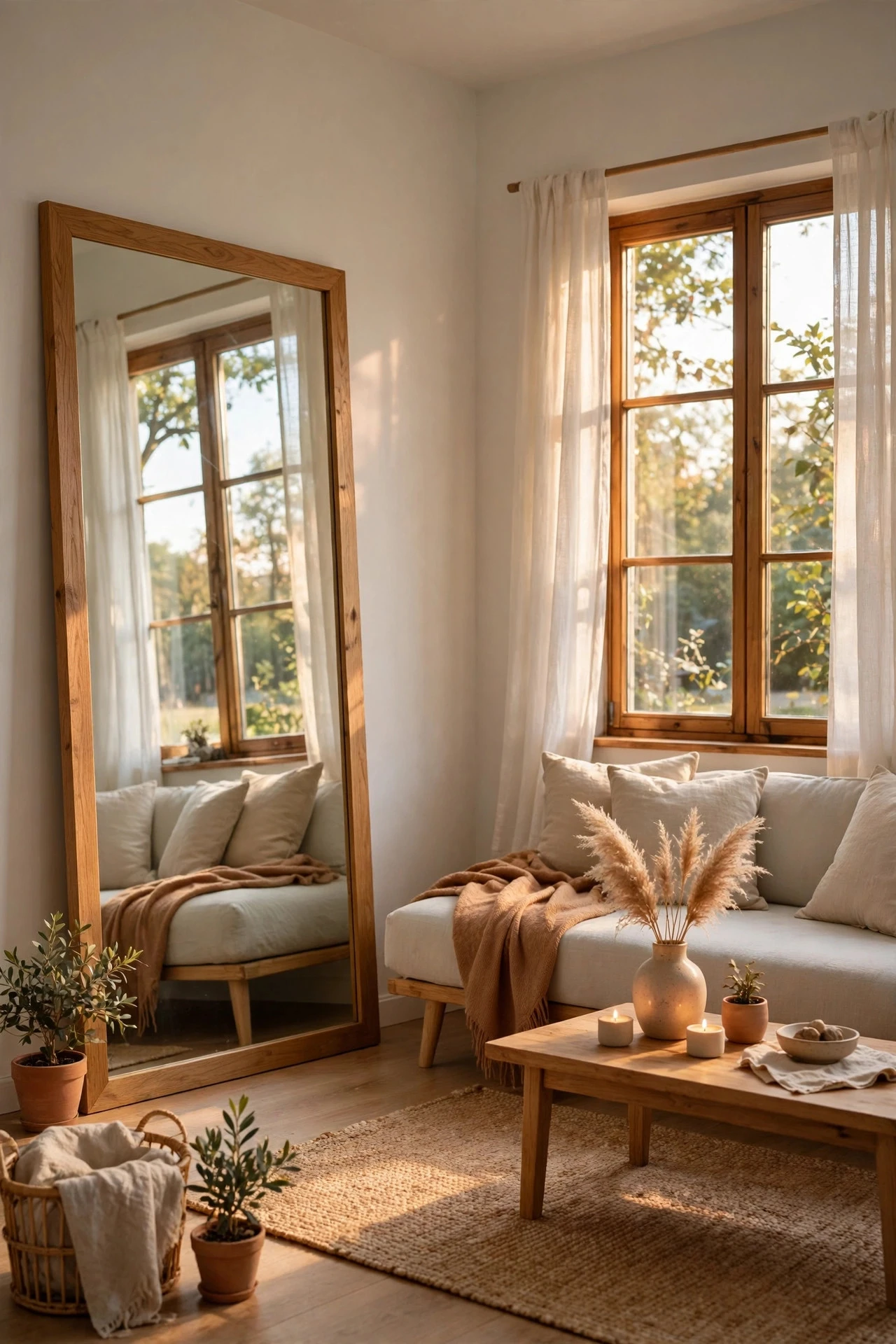
Make a small house feel spacious by keeping sightlines open: low furniture, legs visible under sofas and chairs, mirrors opposite windows, and one continuous floor finish through the main rooms. Small rooms feel cramped when furniture blocks the view, not when the floor area is small — the eye needs a clear path to the far wall.
Hang curtains high and wide, paint the ceiling a shade lighter than the walls, and use one pale neutral across adjoining rooms so the eye reads them as a single larger space. A large mirror opposite a window doubles the daylight and the sense of depth. Designers warn that a few common mistakes — a rug that is too small, furniture pushed flat against every wall, bare walls with no art — make a living room look cheap and unfinished, as these styling tricks that make a living room look done explain.
13. What Lighting Mistakes Make a Dream Home Feel Cold?
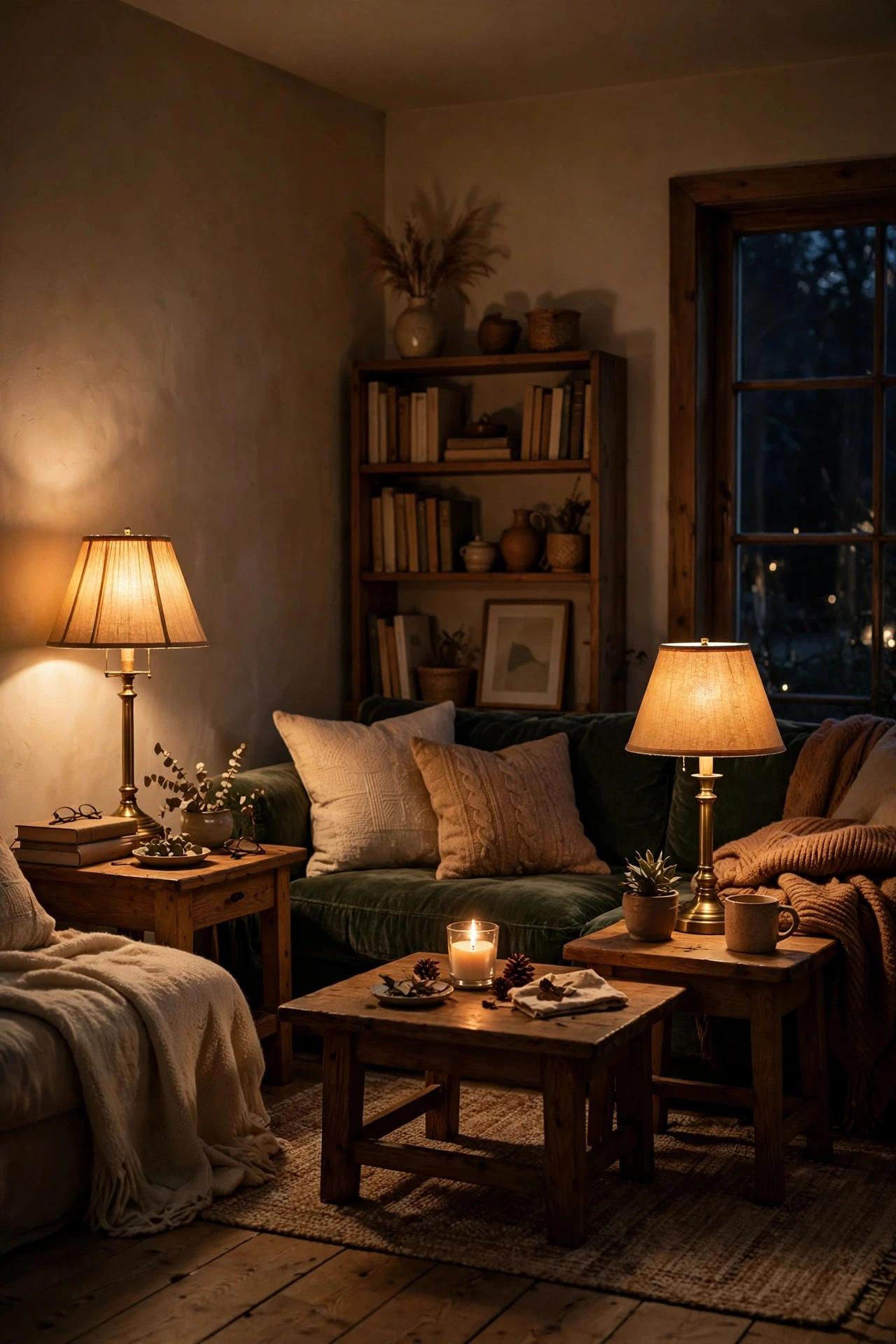
The lighting mistakes that make a dream home feel cold are a single overhead light per room, cool-white bulbs, and no light at all at eye level after dark. Cold-feeling homes are rarely cold in colour — they are cold in light, because one ceiling fitting throws shadows downward and leaves the corners dark.
Swap every bulb in living and sleeping areas to warm white at 2700K, add dimmers to the main lights, and place at least two lamps at seated eye height in every room you relax in. In the kitchen and bathroom, where you need to see clearly, use 3000K — still warm, but bright enough for tasks — and keep the coolest bulbs for the garage or utility room only. Avoid leaving the big light on in the evening; a room lit by two lamps and a candle feels like a home, while the same room under a ceiling light feels like a waiting room.
14. How Do You Style Open Shelving That Actually Stays Tidy?
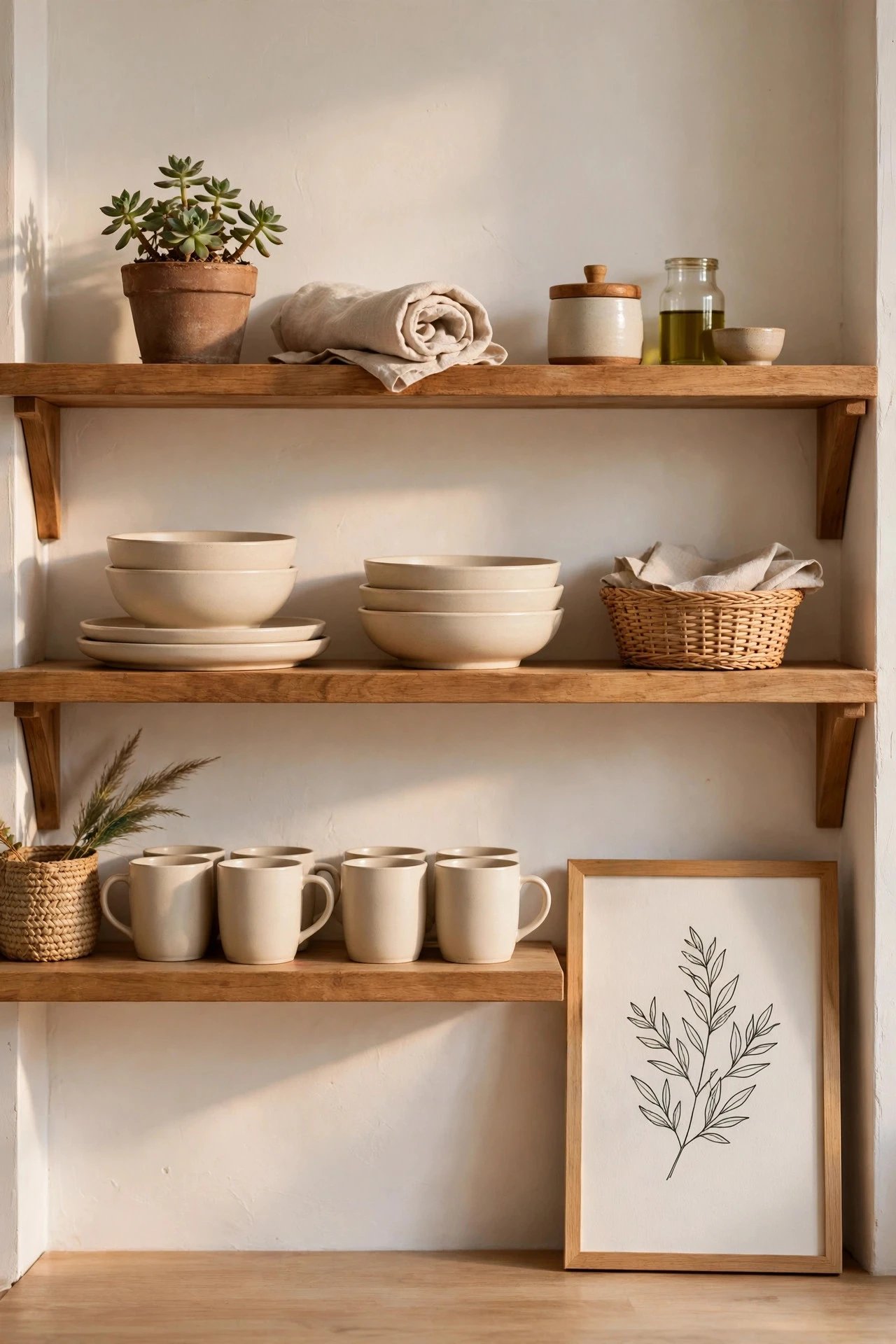
Style open shelving that stays tidy by giving every shelf a job and a limit: the top shelf for display, the middle for everyday dishes or books you reach for daily, and the bottom for baskets that hide the untidy things. Open shelves fail when they hold everything; they succeed when they hold a chosen few.
Follow the rule of three per shelf — one tall object, one medium stack, one small accent — and leave a third of each shelf empty so the arrangement breathes. Use matching dishes or glassware in one colour so the shelf reads as a set, and store mismatched extras behind closed doors. In the kitchen, keep open shelves away from the hob, where grease settles, and near the sink or dining table, where clean items are used.
15. How Can You Create a Cosy Reading Corner Anywhere?
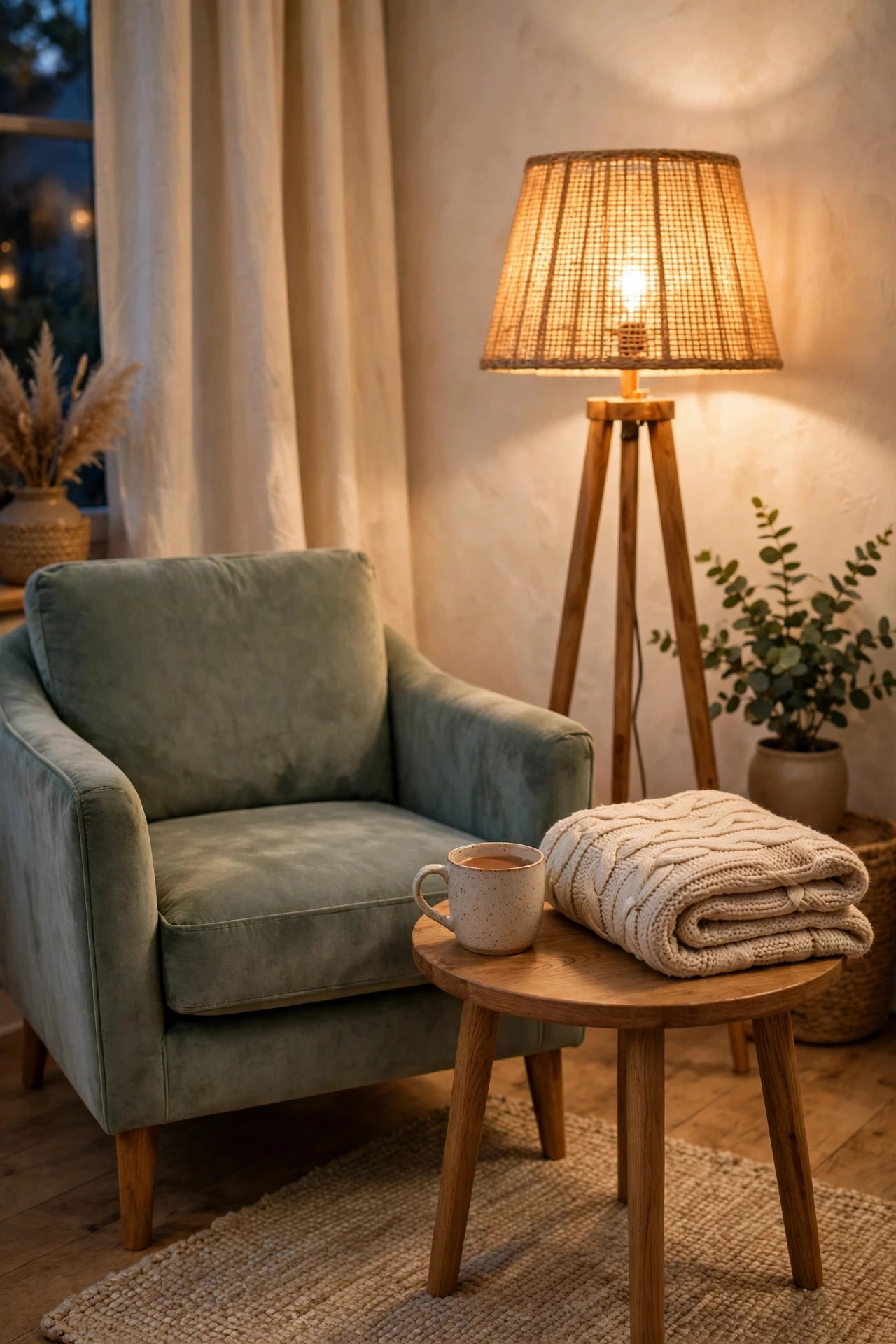
Create a cosy reading corner anywhere by combining four things in one small footprint: a comfortable chair with arms, a light at shoulder height, a surface for a cup, and something soft within reach. Any quiet corner works — a landing, a bedroom corner or the end of the living room.
Choose an armchair you can sit in for an hour without shifting — deep seat, supportive back, arms at elbow height — and angle it toward the nearest window for daylight. Add a floor lamp with a warm bulb behind the chair's shoulder, a side table just big enough for a mug and a book, and a throw folded over the arm so it is there when you want it. Avoid placing the chair facing a television or a busy doorway; a reading corner works because it turns away from the noise.
16. How Do You Bring Nature Indoors Without the Upkeep?
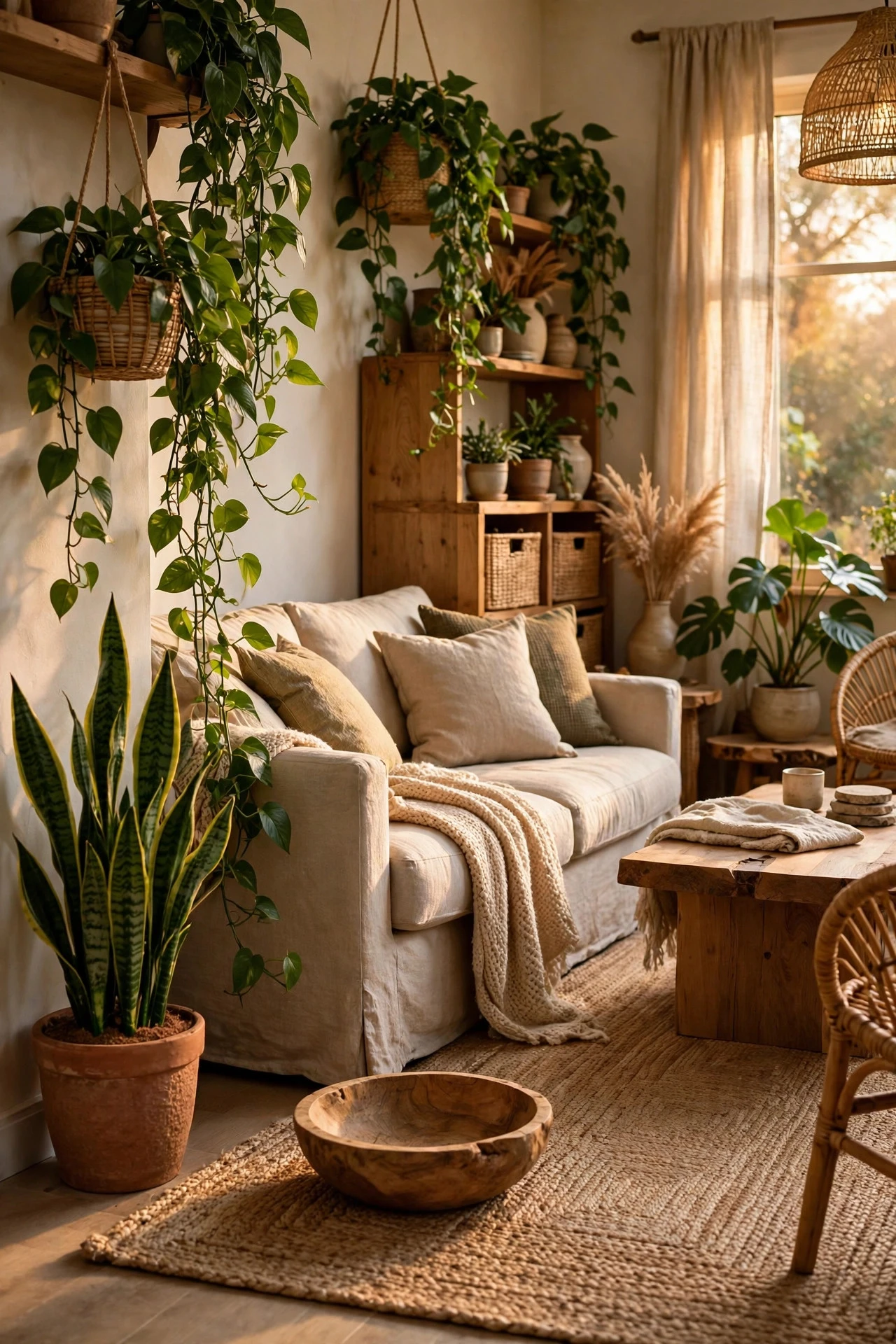
Bring nature indoors without the upkeep by choosing plants and materials that forgive neglect: a snake plant, a ZZ plant or a pothos in a beautiful pot, plus natural wood, stone and woven fibres that bring the outdoors in even when the plants are resting.
Place one large plant in a corner that needs height, a trailing pothos on a high shelf, and a small succulent on the desk or bedside table, so greenery appears at three different levels. If real plants keep dying, use dried stems — pampas grass, eucalyptus, honesty seed heads — in a tall vase; they last for months and need no water at all. Avoid filling every windowsill with small pots, which reads as a garden centre rather than a home; three well-placed plants beat twelve struggling ones.
17. How Do You Choose Art That Makes a House Feel Personal?
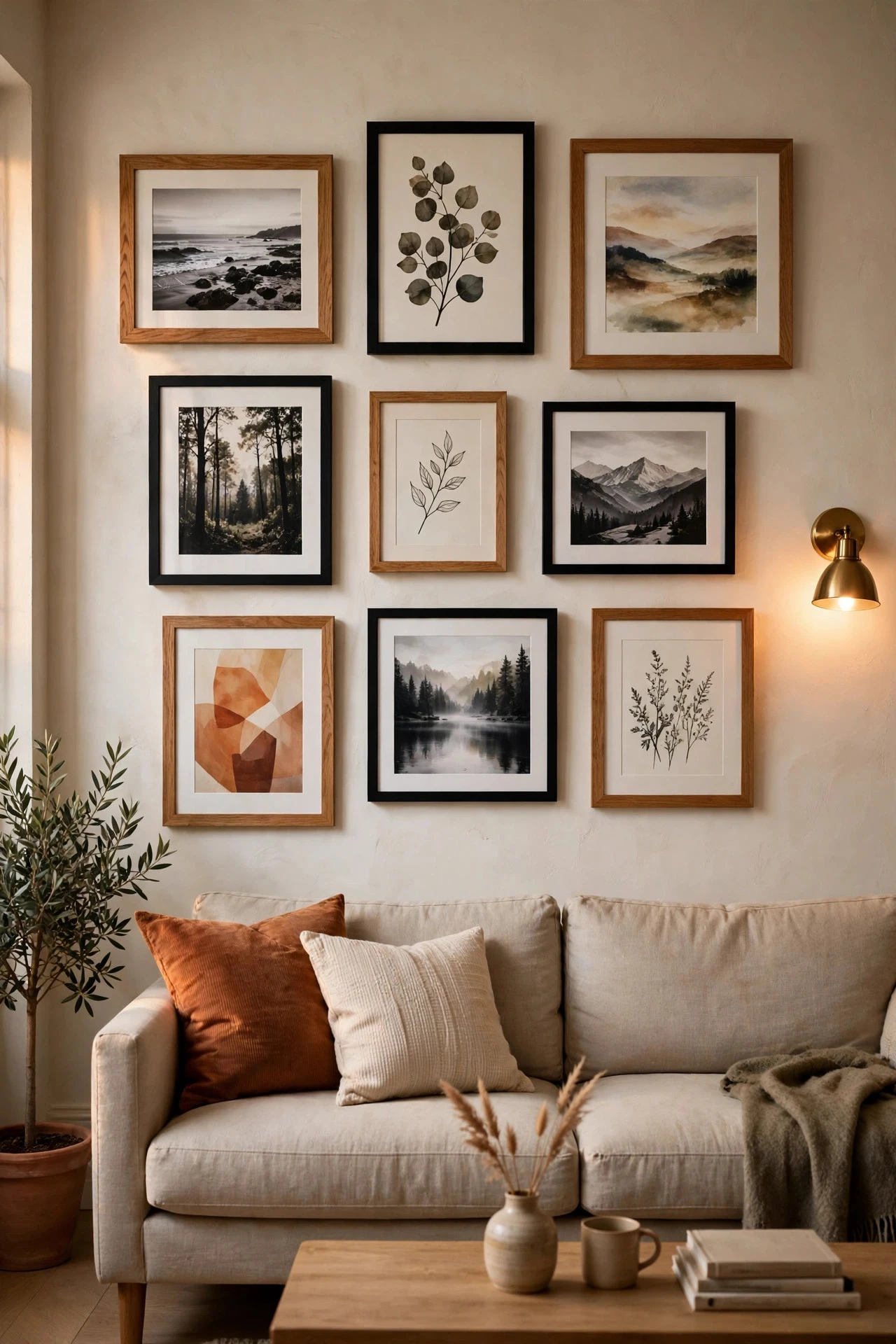
Choose art that makes a house feel personal by buying what stops you, not what matches the sofa: a print from a trip, a photograph you took, a local artist's work, a child's drawing framed properly. Art is the fastest way to make a house feel like yours
Hang art at eye level — the centre of the piece 145 to 150 cm from the floor — and size it to the furniture below it: a picture above a sofa should span two-thirds of the sofa's width, never less than half. Build a gallery wall slowly, one piece at a time, rather than buying a matching set in one afternoon; a collected wall tells a story, a boxed set tells a shopping trip. Avoid hanging art too high, the most common mistake in every home; if you have to tilt your head back to see it, it is too high.
18. How Can Smart Storage Hide the Mess and Show the Style?
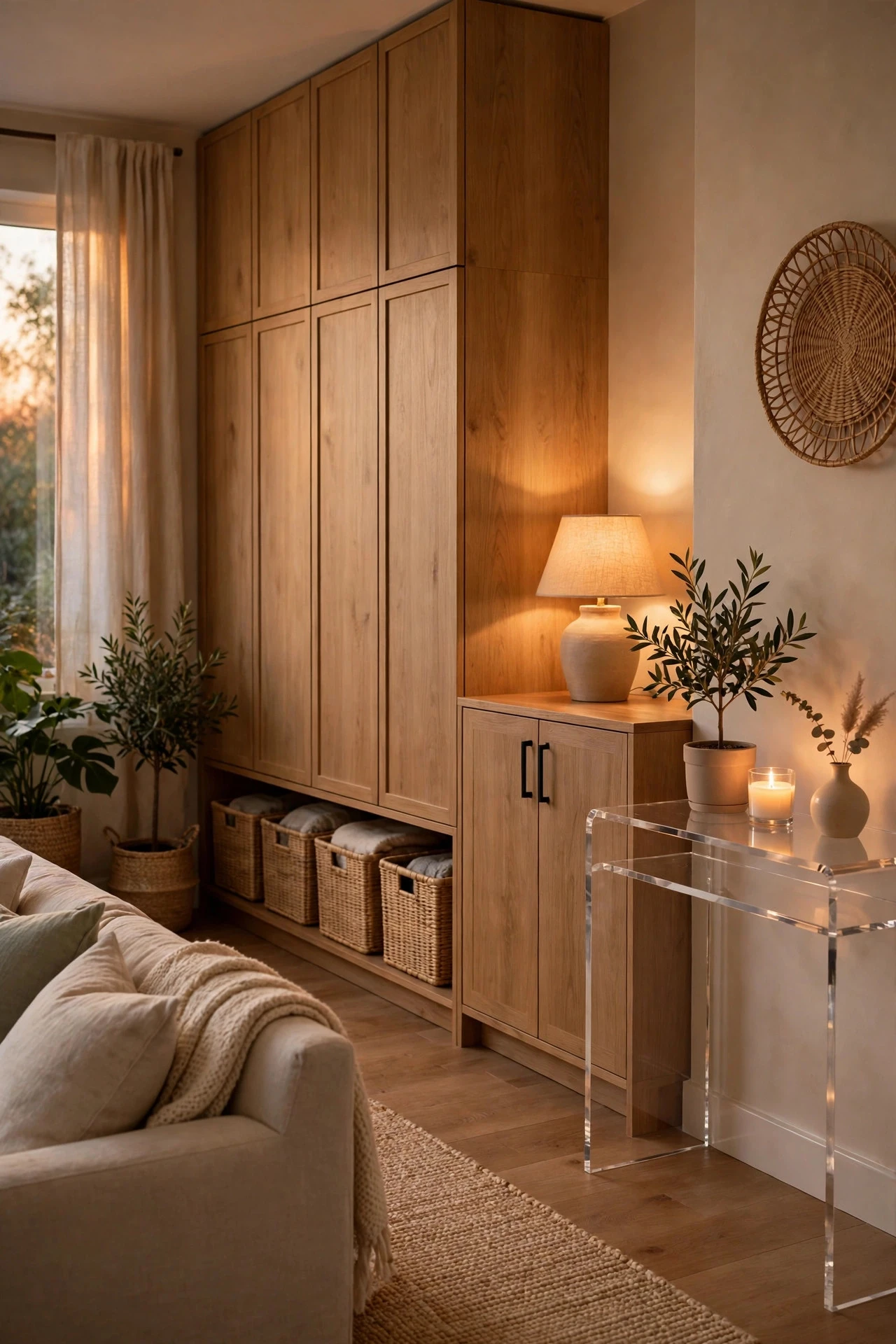
Smart storage hides the mess by giving everything a home that is easy to reach: baskets for the loose things, closed cupboards for the ugly things, and open display only for the beautiful things. A dream house looks calm because its storage works, not because its owners own less — although owning less helps more than any basket ever will.
Audit one room at a time and sort into three piles: keep in sight, keep hidden, let go. Give the hidden pile closed storage — a linen cupboard, a sideboard, a bench with a lift-up lid — and the visible pile a beautiful container, like a woven basket or a ceramic bowl. Use the space you already have: the gap under the bed for out-of-season bedding, the back of a door for a slim shoe rack, the top of a wardrobe for labelled boxes.
19. How Do You Style a Dining Space for Everyday and Guests?

Style a dining space for everyday and guests by building it in two layers: a simple everyday setting that looks good empty, and a dress-up layer you add in ten minutes when people come. A dining table that only looks right at Christmas is a wasted room for the other 364 days.
Keep the everyday layer calm: a washable tablecloth or a wooden table left bare, a low centrepiece like a bowl of fruit or a trailing plant, and chairs that are comfortable for an hour, not just a photograph. For guests, add a linen runner, candlelight at eye level — never above it, where it blinds diners — and a simple place setting with a folded napkin and a sprig of greenery. Hang the pendant light 75 to 80 cm above the table so it lights plates without blocking faces across the table.
20. How Do You Make a Dream Home Work on a Real Budget?
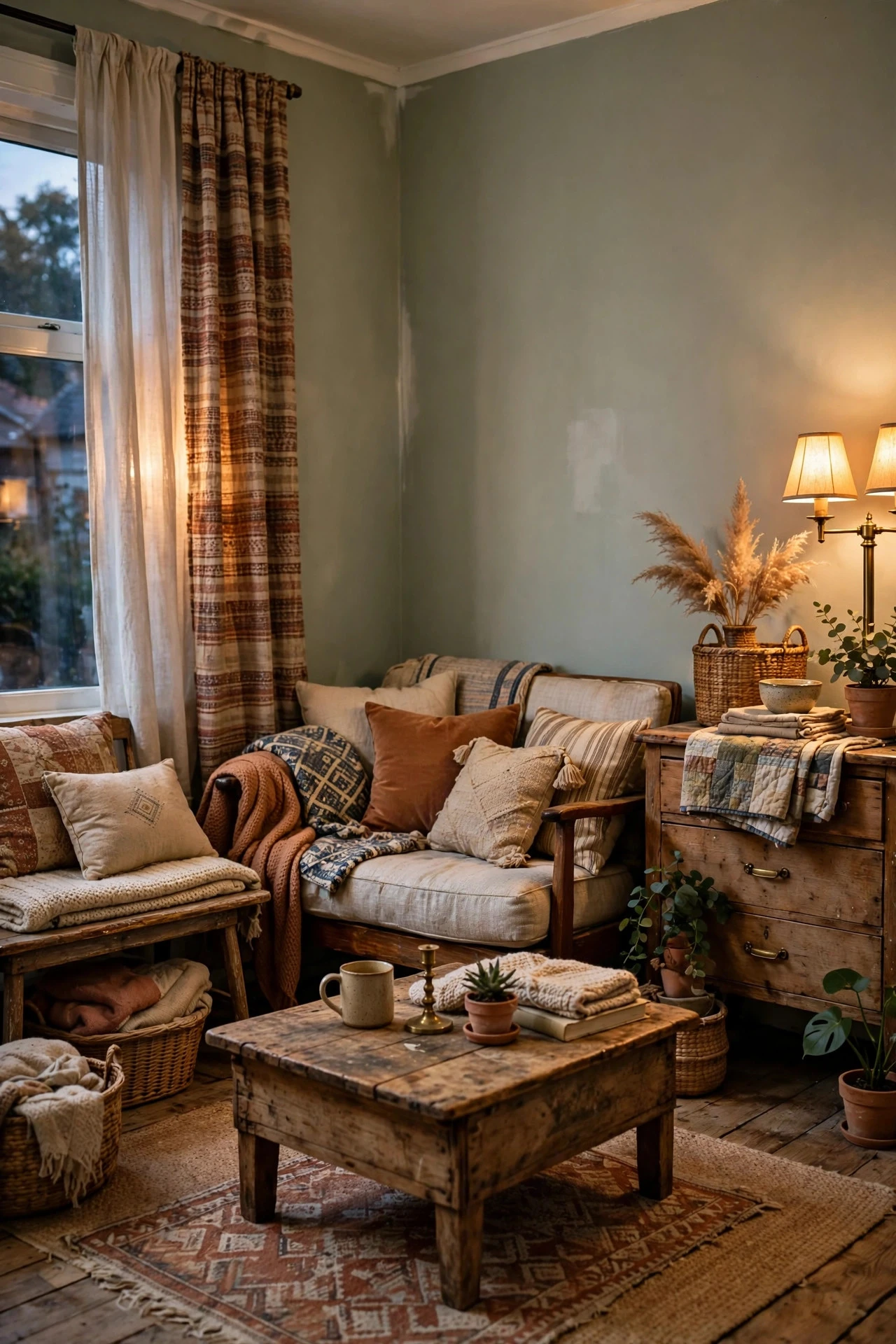
Make a dream home work on a real budget by spending where it shows and saving where it does not: invest in the sofa, the mattress and the rug, buy lighting and curtains mid-range, and save on cushions, throws, art prints and accessories that you can upgrade later. Decorate in phases, not in one weekend.
Set a room-by-room budget before you shop — for example, £800 to £1,200 for a living room refresh using paint, a rug and lighting, or £300 to £500 for a bedroom — and track it in one notebook or spreadsheet so small purchases do not quietly double it. Change one thing per room per month rather than everything at once; the house evolves, and you learn what you actually love living with. Avoid matching furniture sets, which cost more and look less designed than mixed pieces gathered over time — designers agree that a room furnished from a single store reads as one-note rather than designed, as these designer tips on living room mistakes explain.
21. How Do You Keep Every Room Connected Without Matching Everything?
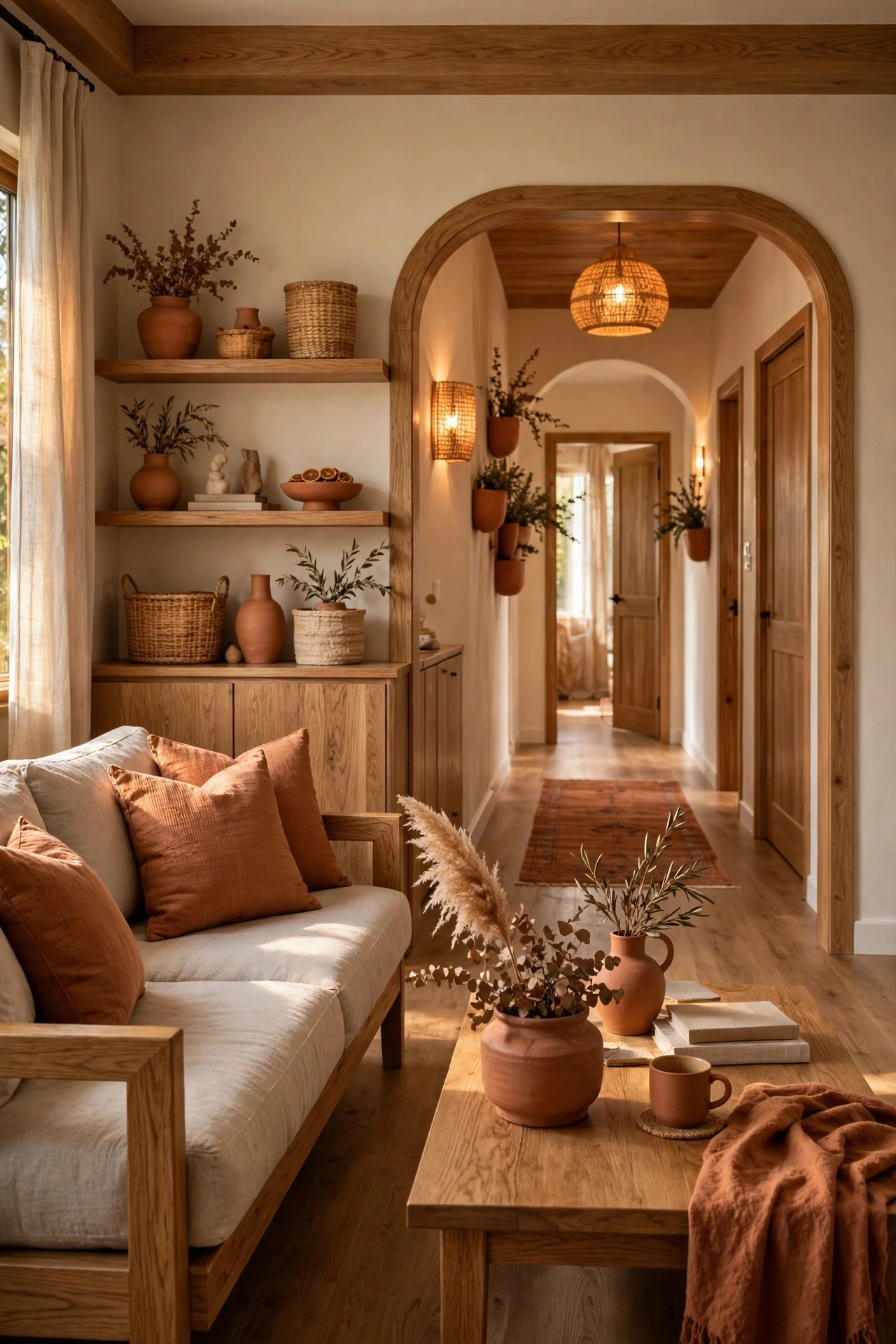
Keep every room connected without matching everything by repeating three threads through the house: one wood tone, one metal finish and one accent colour, each appearing in at least three rooms. Connection comes from repetition with variation not from buying the same cushion for every sofa.
Carry your dominant neutral wall colour into at least the hallway and one more room, so the eye travels without a jolt, and repeat your accent in small doses — a cushion here, a vase there, a runner in the hall — rather than painting a feature wall in every room. Use the same curtain fabric or the same blind style throughout, which quietly unifies windows even when the rooms differ. Avoid the matching-set trap across rooms; identical furniture in the living room, bedroom and dining room makes a house feel like a hotel. Connection should feel like a family resemblance, not a uniform.
22. How Do You Know When Your Dream House Is Actually Finished?
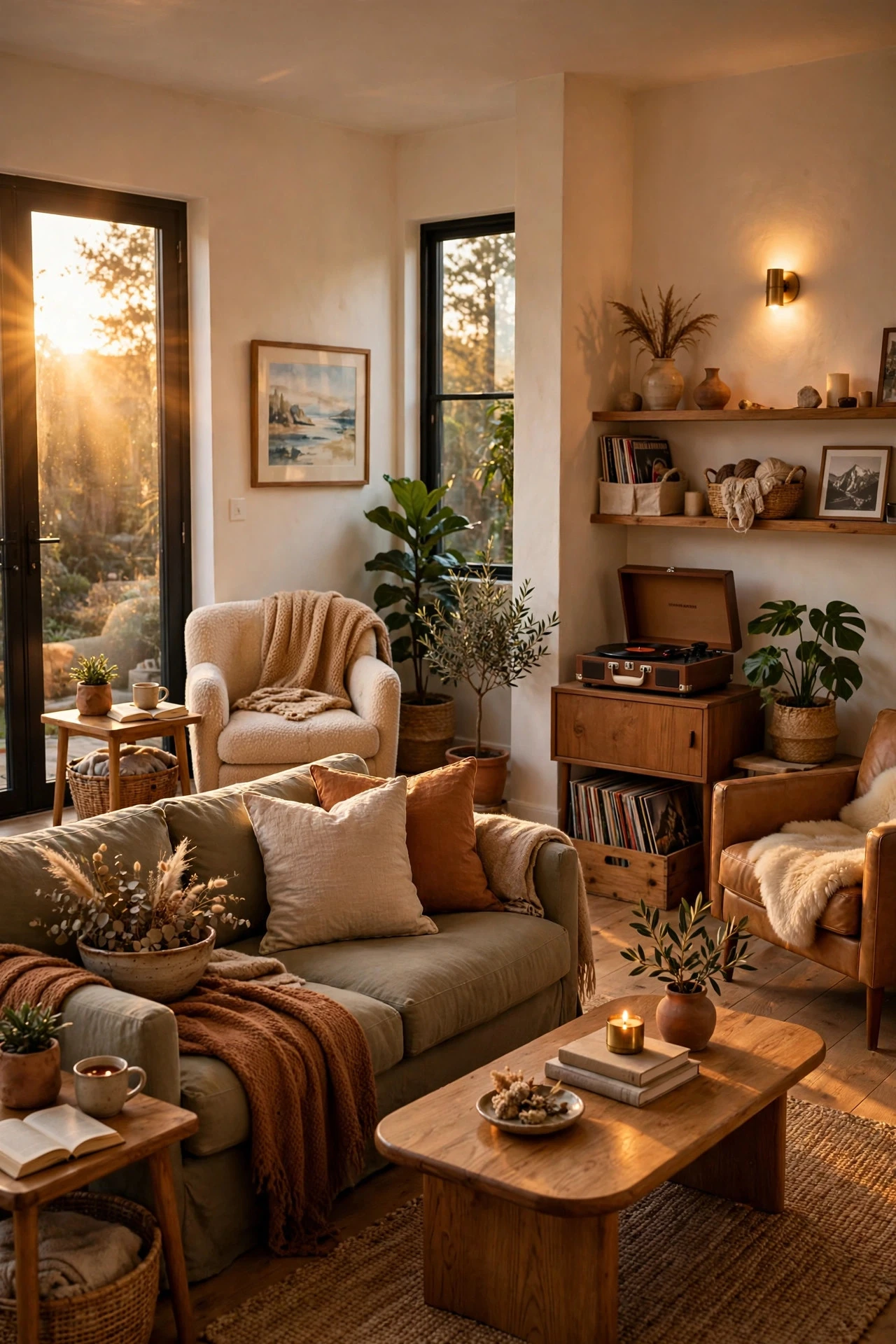
You know your dream house is finished when every room has a purpose, a personal piece and a place to sit —. A finished home is not a perfect home; it is a home where the next purchase would have to earn its place by replacing something, not by filling a gap.
Walk through the house with a notebook and list what still bothers you: a bare wall, a wobbly lamp, a chair nobody sits in. Fix those three things, then stop and live in the house for a season before buying anything else, because a home reveals what it needs only when you live in it. If a room still feels unfinished, the answer is usually one of three things: better light, one larger piece of art, or less stuff on the surfaces. A dream house is finished when it feels like you — and only you can say when that is true.
Practical Tips
Start with the room you use most — usually the living room — and finish it before you start the next one, because one finished room lifts the whole house while five half-finished rooms just feel chaotic. Paint first, then buy the rug, then the curtains, then the accessories, because paint is the cheapest decision to change and accessories are the easiest to swap. Keep a small notebook or phone album of your colour story, wood tone and metal finish, and check every purchase against it before you buy.
Buy the best version of the things you touch daily, and never buy a sofa, mattress or rug without sitting, lying or standing on it first. Measure twice, including doorways and stair turns, so a dream sofa actually fits through the front door. And keep one empty surface in every room — a clear console, an uncluttered bedside table — because a home needs breathing room as much as it needs beautiful things.
Final Thoughts
A dream house is not bought in a weekend or copied from a catalogue. It is built choice by choice — one colour story, one layer of light, one personal piece at a time — until the house stops looking like a showroom and starts feeling like you. Start with the room you love most, and let the rest follow.
You may also like: our 22 Scandinavian living room ideas for a calm cozy home show how a pale palette, natural wood and soft textiles can make any living room feel like a quiet retreat.
Frequently Asked Questions
What is the first step in decorating your dream house?
Start by choosing one colour story for the whole house — a dominant neutral, a supporting mid-tone and one accent — then walk through every room and note what already fits it. This palette guides every later purchase, stops impulse buys that clash, and makes separate rooms feel connected from the very first change you make.
How much should you budget to decorate a whole house?
A realistic whole-house refresh costs £2,000 to £5,000 when you keep existing furniture and spend on paint, rugs, lighting and accessories. A full refurnish runs £8,000 to £15,000 or more. Start with the living room, set a per-room budget, and spread the work over months so each choice has time to prove itself before you buy the next piece.
How do you pick a colour palette for the whole house?
Pick three colours using the 60-30-10 rule: 60 percent dominant neutral for walls and large furniture, 30 percent supporting mid-tone for upholstery and curtains, and 10 percent accent for cushions and art. Test paint swatches in morning and evening light, repeat the same wood tone and metal finish in every room, and avoid a different bold colour per room.
Can you decorate a dream house on a small budget?
Yes — focus on paint, lighting and textiles, which change a room for the least money, and buy solid wood furniture second-hand. Spend on the sofa, mattress and rug, save on cushions and accessories, and decorate one room at a time so a small budget still produces one finished room instead of five half-done ones.
How do you make different rooms feel connected?
Repeat three threads through the house: one wood tone, one metal finish and one accent colour, each appearing in at least three rooms. Carry the same neutral wall colour into the hallway, and repeat the accent in small doses — a cushion here, a vase there — so rooms share a family resemblance without matching exactly.
What is the biggest mistake when decorating a dream home?
The biggest mistake is buying everything at once from one store, which produces matching sets that look like a showroom. Other costly errors are a rug that is too small, a single harsh ceiling light per room, and art hung too high. Buy slowly, measure before ordering, layer light at three heights, and choose pieces you genuinely love.