22 Indoor Christmas Decor Ideas for Every Room in the House
# 22 Indoor Christmas Decor Ideas for Every Room in the House
Indoor Christmas decor works best when the whole house tells one story instead of each room shouting on its own. A tree in the living room, a garland over the doorway, a candlelit table and a sprig of greenery in the bathroom all belong to the same palette, the same lighting temperature and the same mood — and that is what makes a home feel festive rather than cluttered.
This guide walks you room by room, from the living room and entryway through the dining room, kitchen, bedroom and bathroom, then ties everything together with whole-house threads like colour, lighting, scent and storage. Every idea includes a realistic budget, sizes that actually fit real rooms, and the safety notes that matter when candles, lights and trees share a house.
Looking for more inspiration? Our Nest Decorz homepage gathers the latest home decor ideas, seasonal decorating guides and room-by-room styling tips in one place — start there and explore.
Quick Answers
– Start with one palette for the whole house — two main colours plus metallics — and repeat it in every room so the decor feels connected. – Layer three kinds of light — tree lights, candles or lanterns, and a warm overhead glow — instead of relying on one bright source. – Decorate the rooms you actually use — living room, kitchen and entryway first — and keep bedrooms and bathrooms light and simple. – Set a budget per room ($25–$75 for small rooms, $100–$200 for the living room) and reuse garlands, ornaments and ribbon year after year. – Keep trees, candles and garlands away from heat sources and switch lights off before bed or when you leave the house.
1. How Do You Choose a Christmas Tree That Fits Your Living Room?
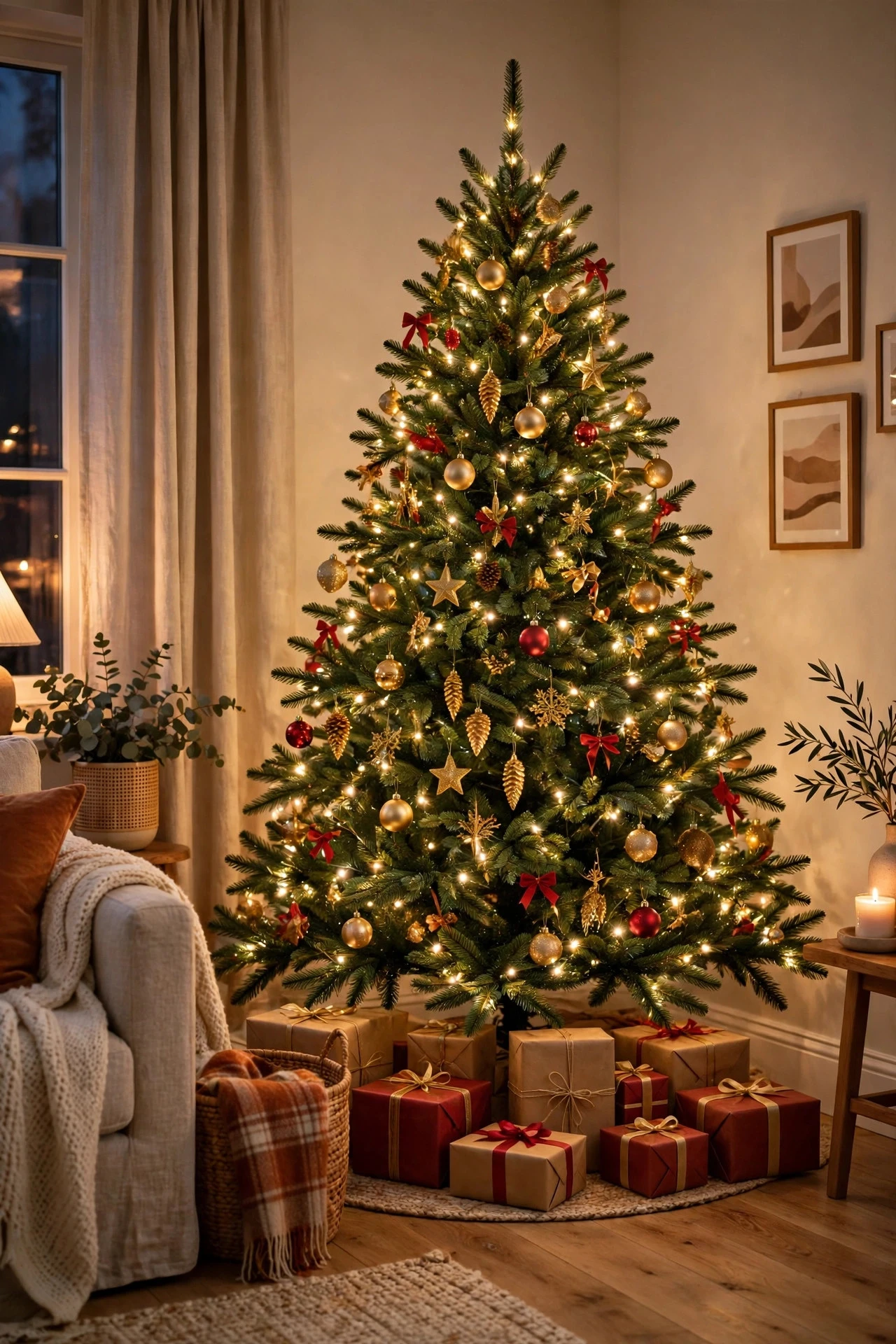
Choose a tree that leaves at least 30 cm of clear space on every side and at least 15 cm between the topper and the ceiling, so the room still feels open and the tree never brushes curtains, radiators or light fittings. A 6–7 ft tree suits most living rooms with 8–9 ft ceilings, while a 4–5 ft tree works better in flats and small lounges.
Measure the corner before you buy, not after, and check the width as well as the height — a full 7 ft tree can spread 130 cm wide. Real trees need a water-filled stand and daily watering to stay fresh and safe, while artificial trees in PE or PVC hold their shape for years. The Christmas tree has been the centrepiece of indoor holiday decorating for centuries, and the same rule still applies: scale the tree to the room, not the room to the tree. Budget $60–$250 for a good artificial tree, or $40–$90 for a real one each year.
2. What Makes a Christmas Tree Look Full and Professional?

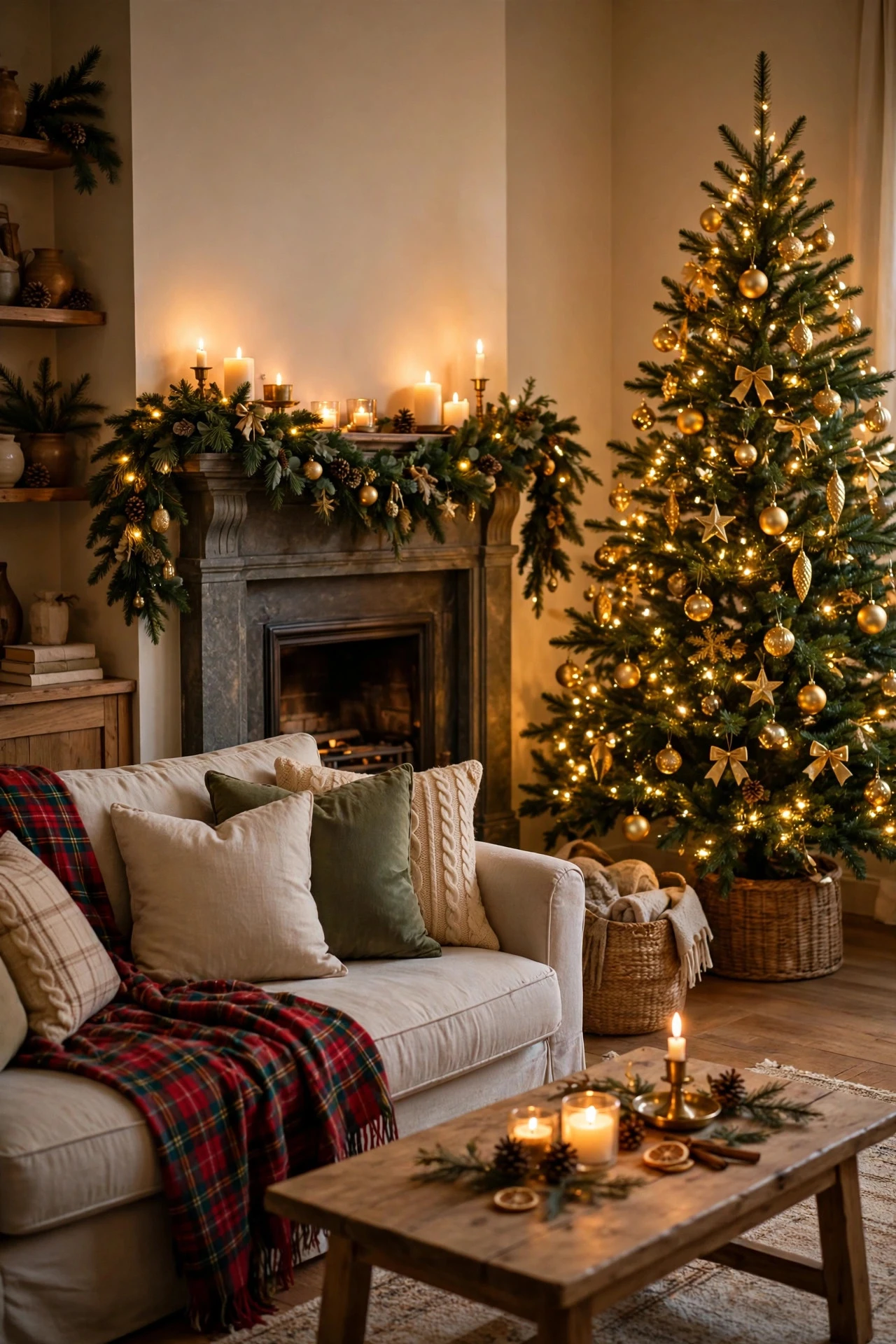
A full-looking tree comes from layering ornaments in three depths — large baubles tucked deep near the trunk, medium ornaments on the mid-branches, and small, light-catching pieces at the tips — rather than hanging everything on the outer edge. Start with lights, then ribbon or garland, then ornaments, then the topper last.
Fluff every branch before decorating, pulling tips outward and upward to hide gaps in the trunk. Use 100 lights per foot of tree as a guide, and mix matte, shiny and textured finishes in your palette so the tree reads rich rather than flat. For more living-room-specific styling, these living room Christmas decor ideas show how the tree anchors the whole seating area. Keep fragile ornaments above pet and toddler height, and place heavier pieces lower for balance. Budget $30–$80 for a fresh ornament set if you are starting from scratch.
3. How Should You Style a Christmas Mantel Without Overcrowding It?
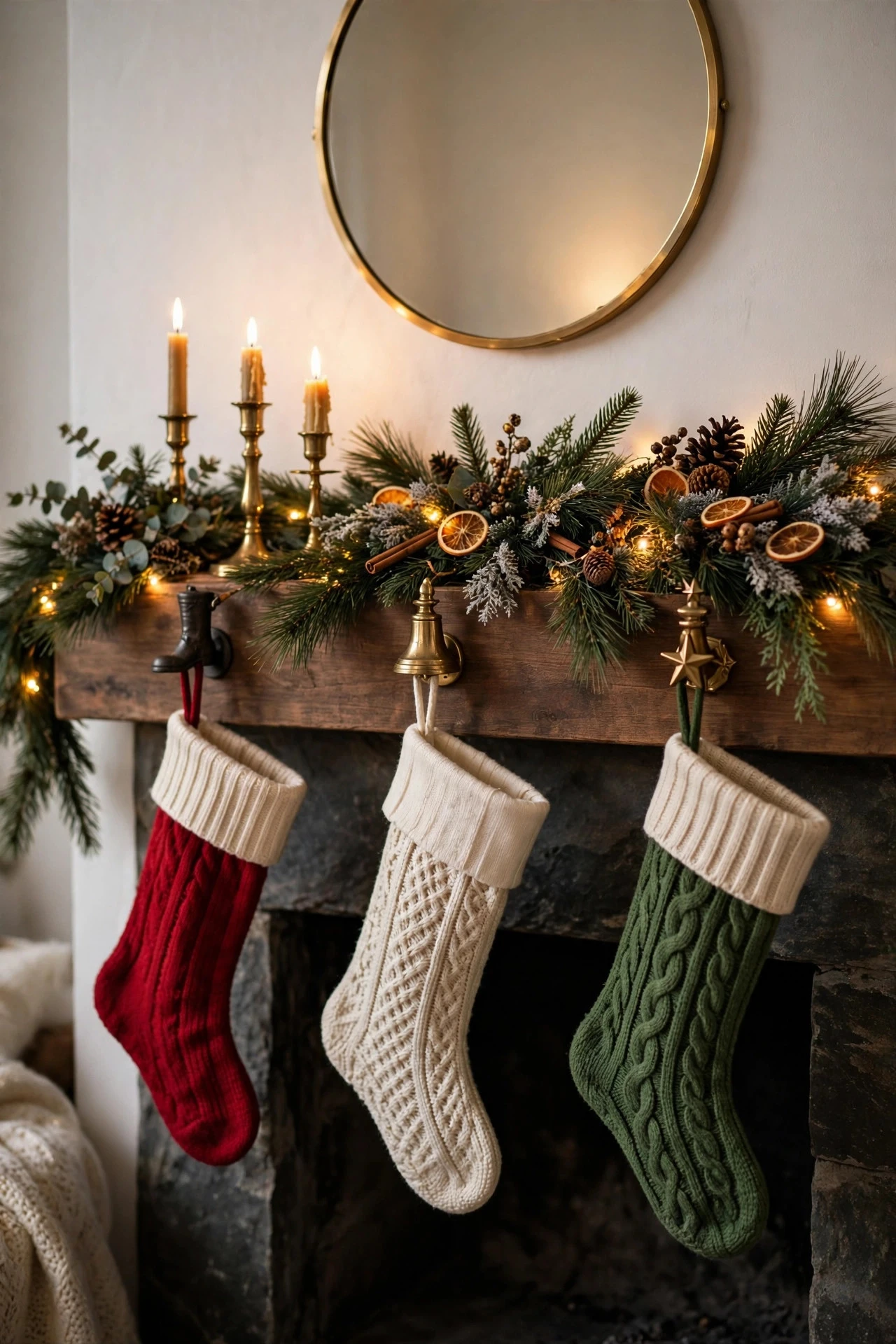
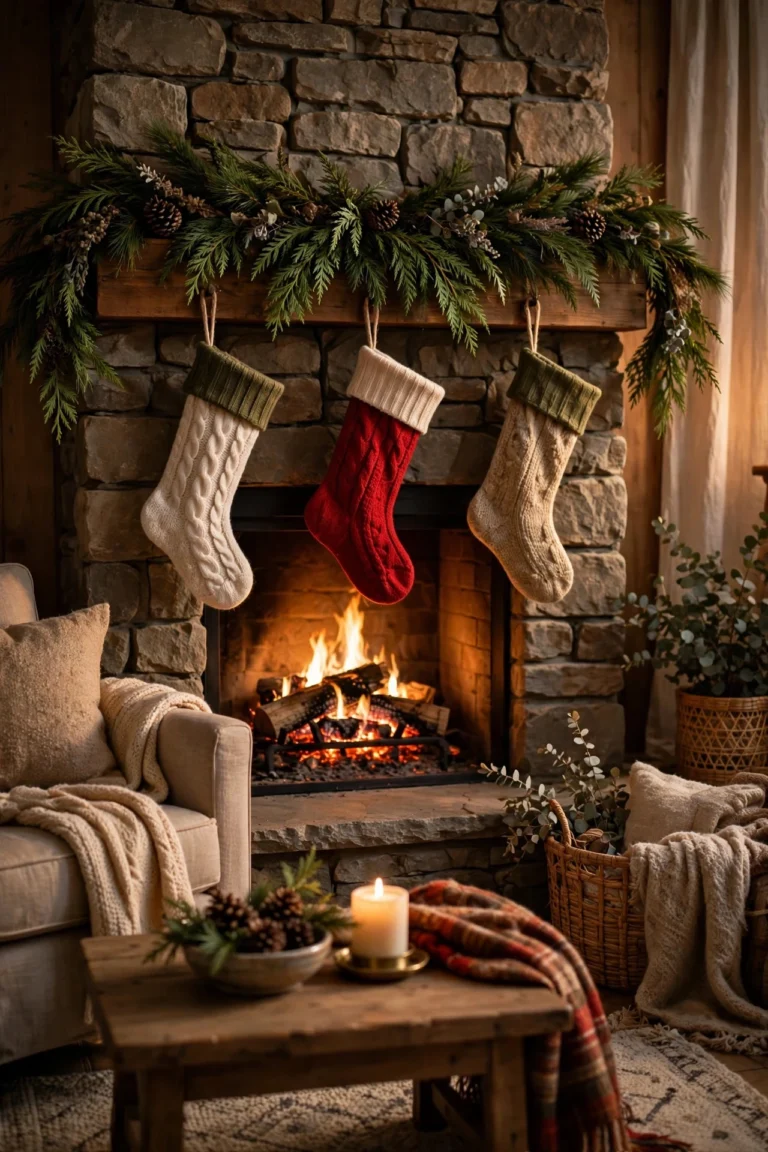
Style a mantel in odd-numbered groupings — a garland as the base, one tall anchor such as a mirror, wreath or framed print in the centre, and two or three smaller pieces like candlesticks, bottle-brush trees or stockings on either side — so the eye has a clear focal point. Leave breathing room between objects instead of filling every centimetre.
Drape the garland with a gentle swag in the middle and secure it with removable hooks, then layer fairy lights through it for evening glow. Stockings hang best from weighted holders rather than nails in the mantel shelf. If you have no fireplace, the same formula works on a console table, sideboard or shelf. Avoid real candles directly under a television or beside curtains; flameless LED candles give the same flicker with none of the risk. Budget $25–$70 for garland, holders and candles.
4. How Can You Make a Small Living Room Feel Festive Without Clutter?
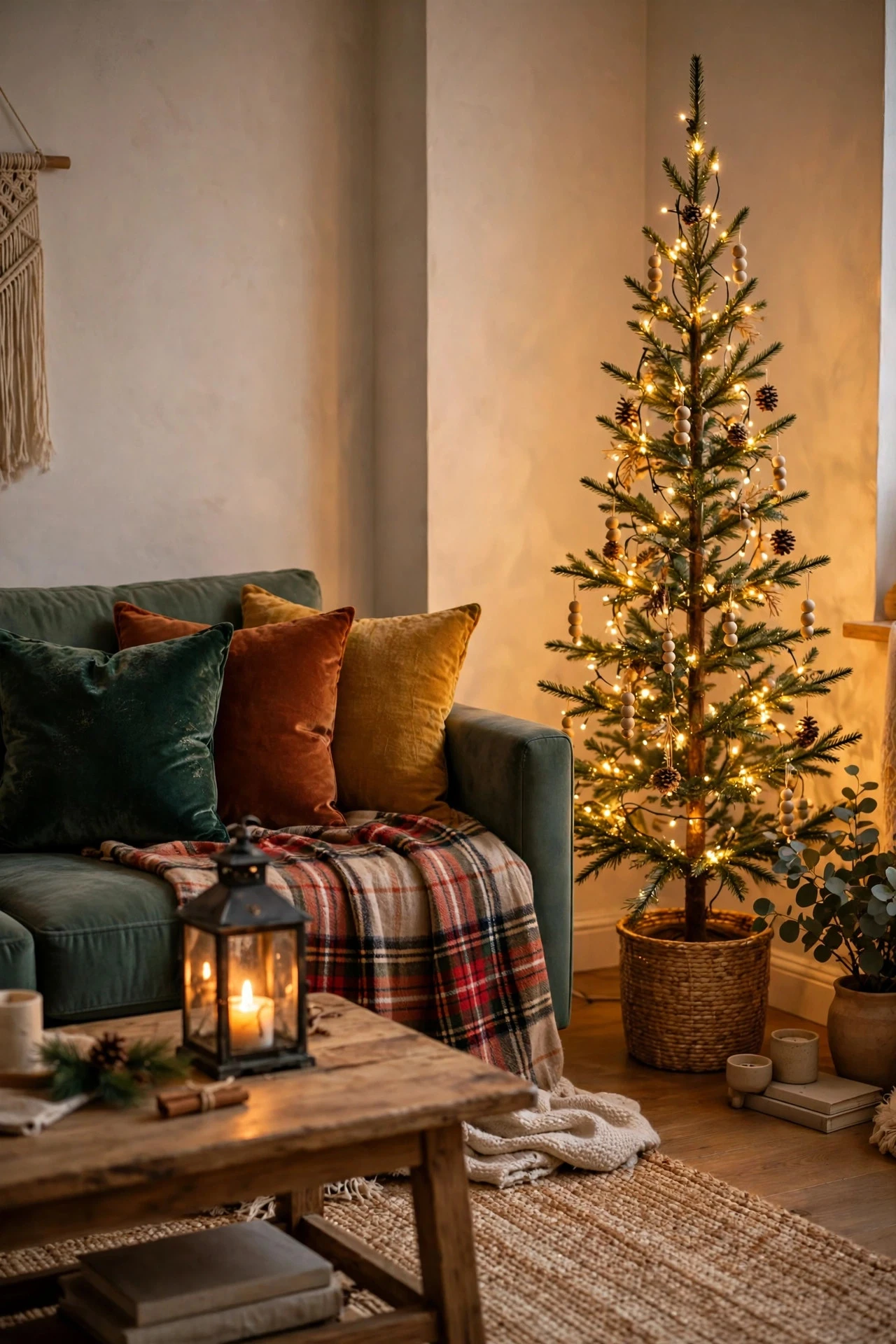
Make a small living room festive with one statement piece — a slim pencil tree, a bold wreath, or a single garland over the window — plus two or three small accents, and resist adding more. Small rooms feel Christmassy through scent, light and texture, not through the number of objects on display.
Swap cushion covers for velvet or knitted ones in your palette, fold a plaid throw over the sofa arm, and place one lantern or candle cluster on the coffee table. A slim 5–6 ft pencil tree needs only 60 cm of floor space and still holds a full ornament set. Use the vertical space: hang a wreath on the wall, drape lights along a shelf, and keep the floor clear for walking. Store everyday clutter in baskets so the seasonal pieces can breathe. Budget $40–$90 total, since restraint is the whole point.
5. What Is the Easiest Way to Decorate a Living Room Window for Christmas?
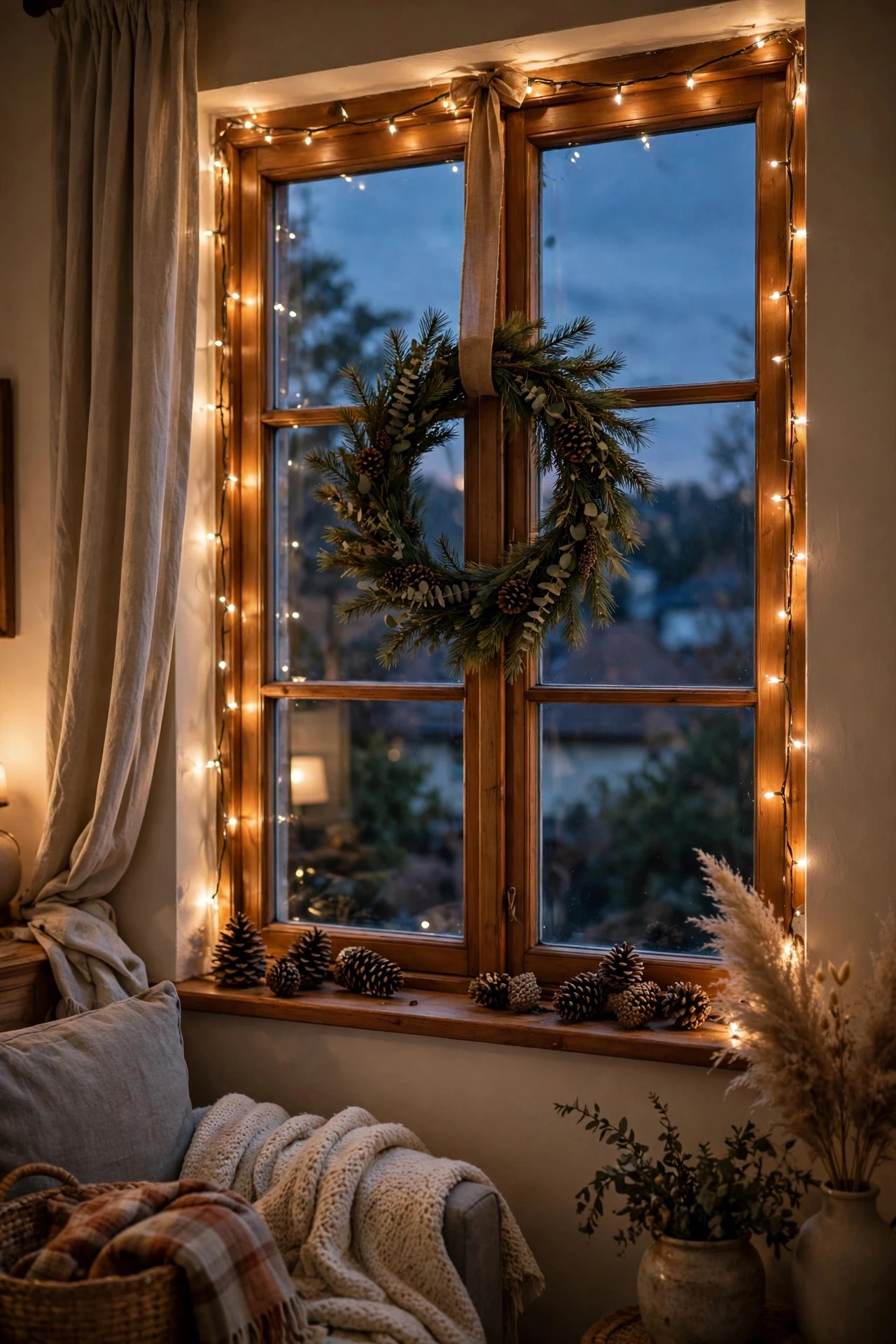
Dress a living room window with a simple wreath hung from a ribbon, a string of warm-white fairy lights along the frame, and a low arrangement of pinecones, candles or small trees on the sill, so the window glows from both inside and outside. Keep the treatment light enough that daylight still enters during the day.
Battery-operated lights with a timer avoid trailing cables across the room, and suction-cup hooks hold wreaths on glass without damage. A pair of sheer curtains in cream softens the light and hides the wire. If the window faces the street, remember the display is visible to passers-by — a tidy, symmetrical arrangement photographs beautifully and looks intentional rather than accidental. For tree styling that pairs with the window display, these Christmas tree ideas for 2026 cover shapes, palettes and toppers. Budget $20–$50.
6. How Do You Create a Welcoming Christmas Entryway?
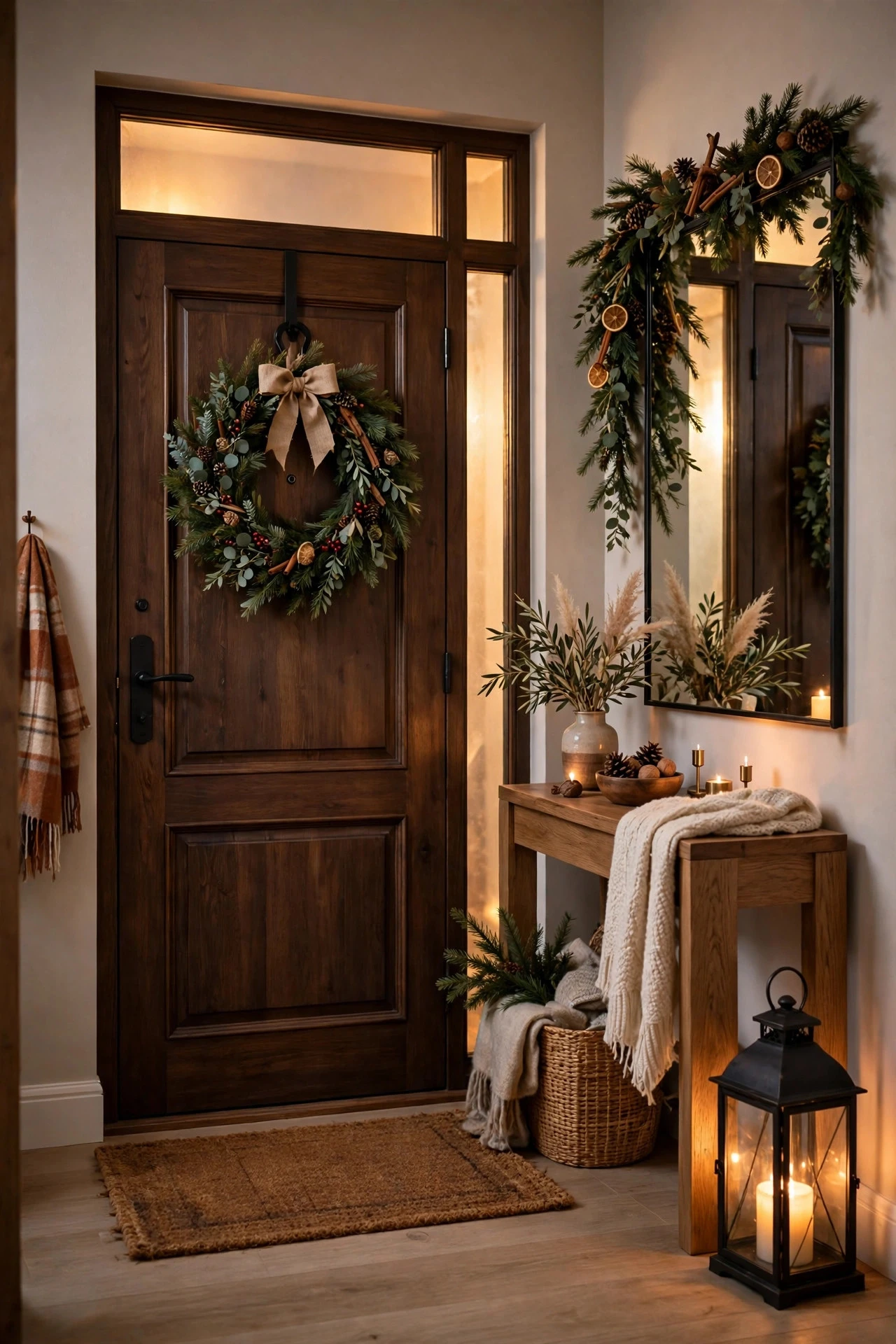
Create a welcoming entryway with a wreath on the door, a garland or swag over the console table or mirror, and one low, practical touch — a tray for keys, a basket for shoes, or a small bowl of pinecones — so the first thing guests see is festive but the space still works. The entryway sets the tone for the whole house in under ten seconds.
Keep the floor clear: a narrow console table or wall-mounted shelf holds decor without blocking the doorway. A doormat in a deep red or green, a lantern on the floor beside the door, and a scented candle on the console add warmth without taking space. If your hallway is dark, a string of fairy lights around the mirror doubles the light. For room-by-room ideas that flow from the entryway onward, this guide to Christmas room decor for every room keeps the palette consistent. Budget $30–$60.
7. What Belongs on an Entryway Console Table at Christmas?
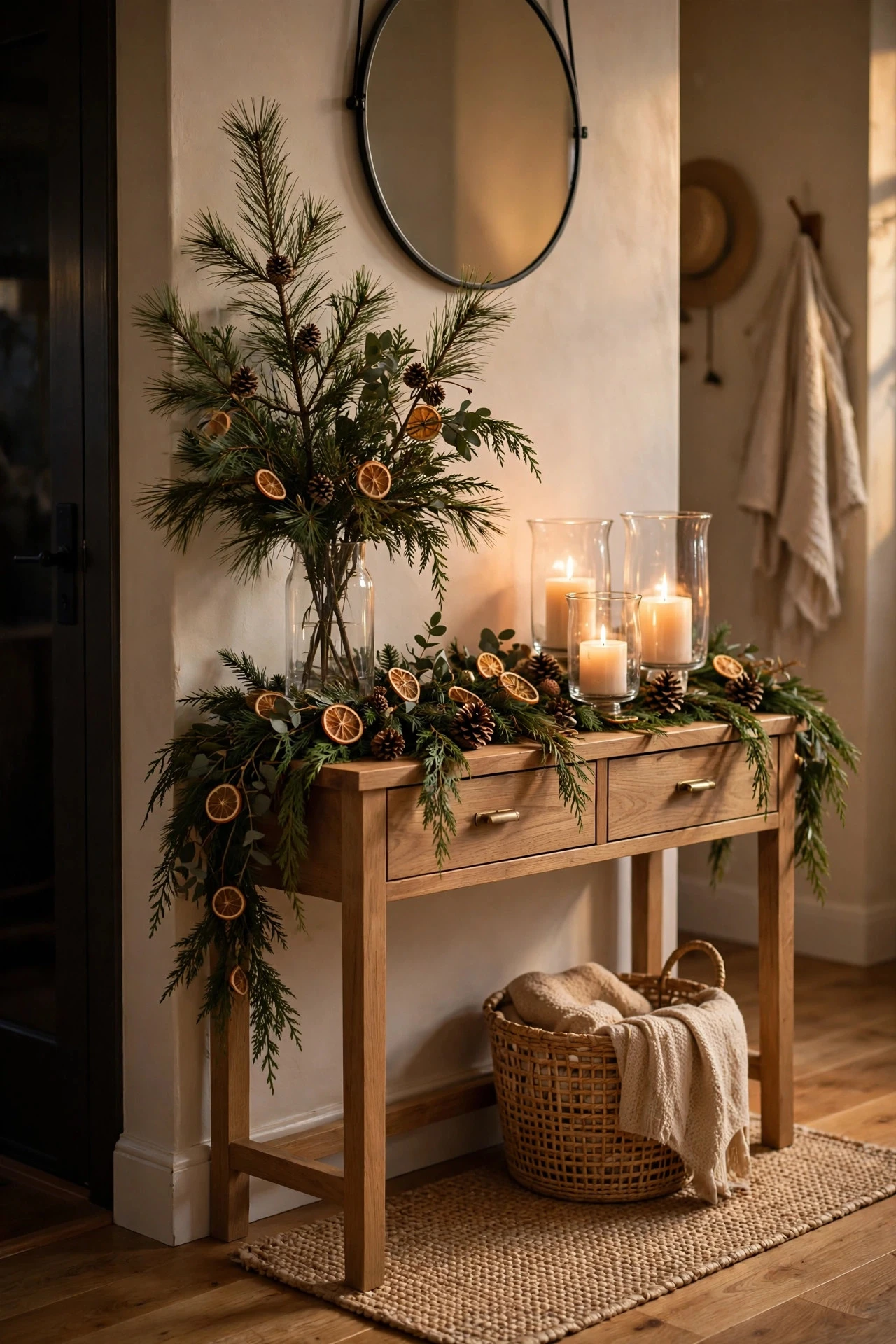
An entryway console table needs only three layers at Christmas: a garland or runner along the back, one tall piece such as a vase of branches, a lantern or a small tree, and one low cluster — candles, pinecones or a stack of wrapped books. Anything more turns a landing spot into an obstacle course.
Choose a runner in a solid colour from your palette to protect the tabletop from candle wax and pine sap. Battery candles in hurricane glass look elegant and cannot be knocked over by coats and bags. A small dish for keys and a hook rail above keep daily life running while the decor does its job. Swap the arrangement weekly if you like — fresh eucalyptus or pine sprigs cost little and keep the scent alive. Avoid glass vases at hip height in narrow hallways where bags swing. Budget $20–$45.
8. How Do You Set a Christmas Dining Table That Feels Special Every Night?
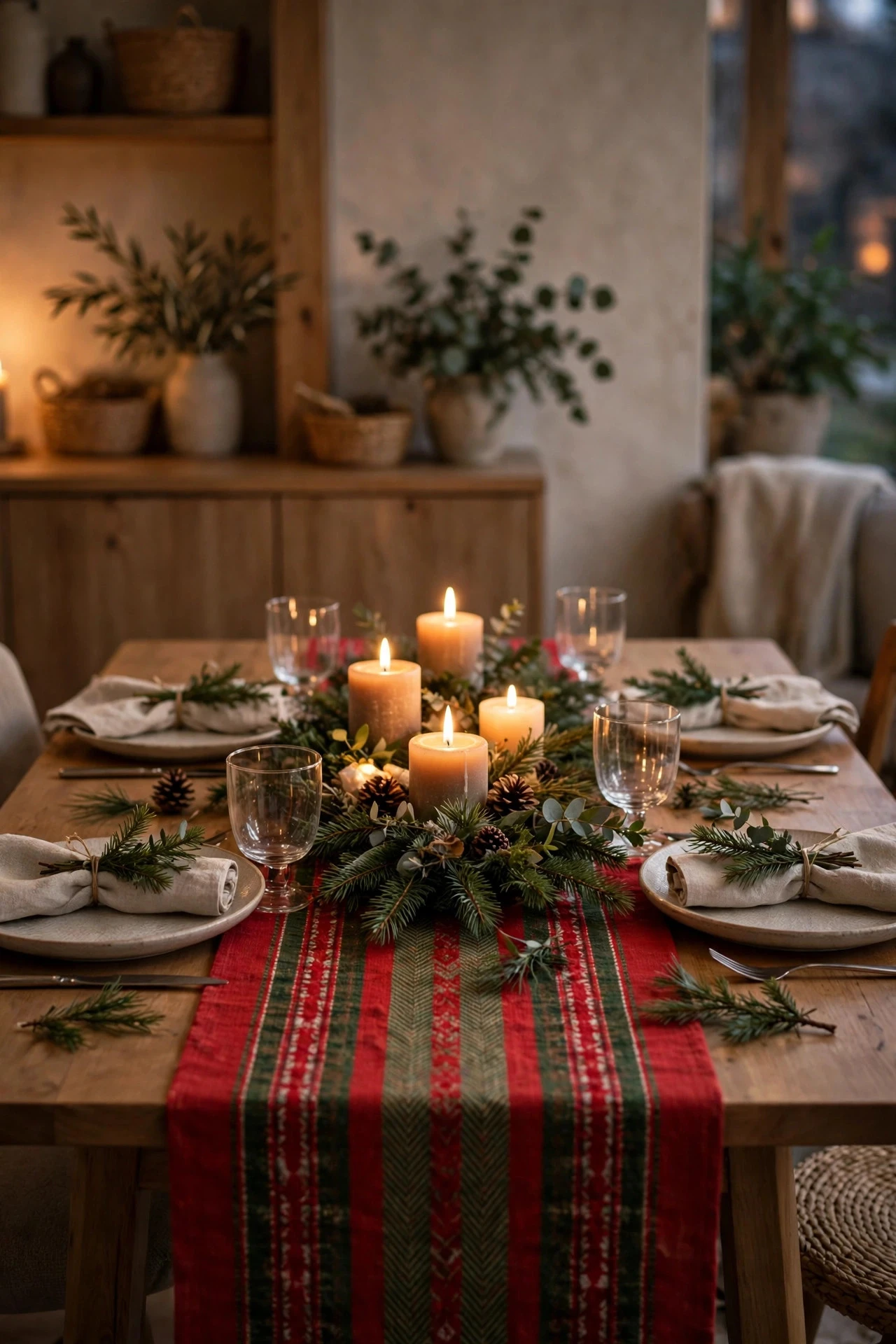
Set a Christmas dining table with a washable tablecloth or runner in your palette, a low centrepiece guests can see over, cloth napkins tied with ribbon or a sprig of greenery, and one candle cluster — and keep that base in place all season, changing only the plates for everyday meals versus dinner parties. A table that stays set feels festive every evening, not just on Christmas Day.
The centrepiece should stay under 30 cm tall so conversation flows across it: a wooden tray with three pillar candles, pine sprigs and pinecones does the job. Placemats protect the table from hot dishes, and a simple name card or a cinnamon stick on each plate adds a thoughtful touch for guests. Keep the tableware simple — white plates let the runner and greenery carry the colour. Budget $35–$80 for the runner, candles and napkin set.
9. What Centrepiece Works for a Christmas Dinner Party?
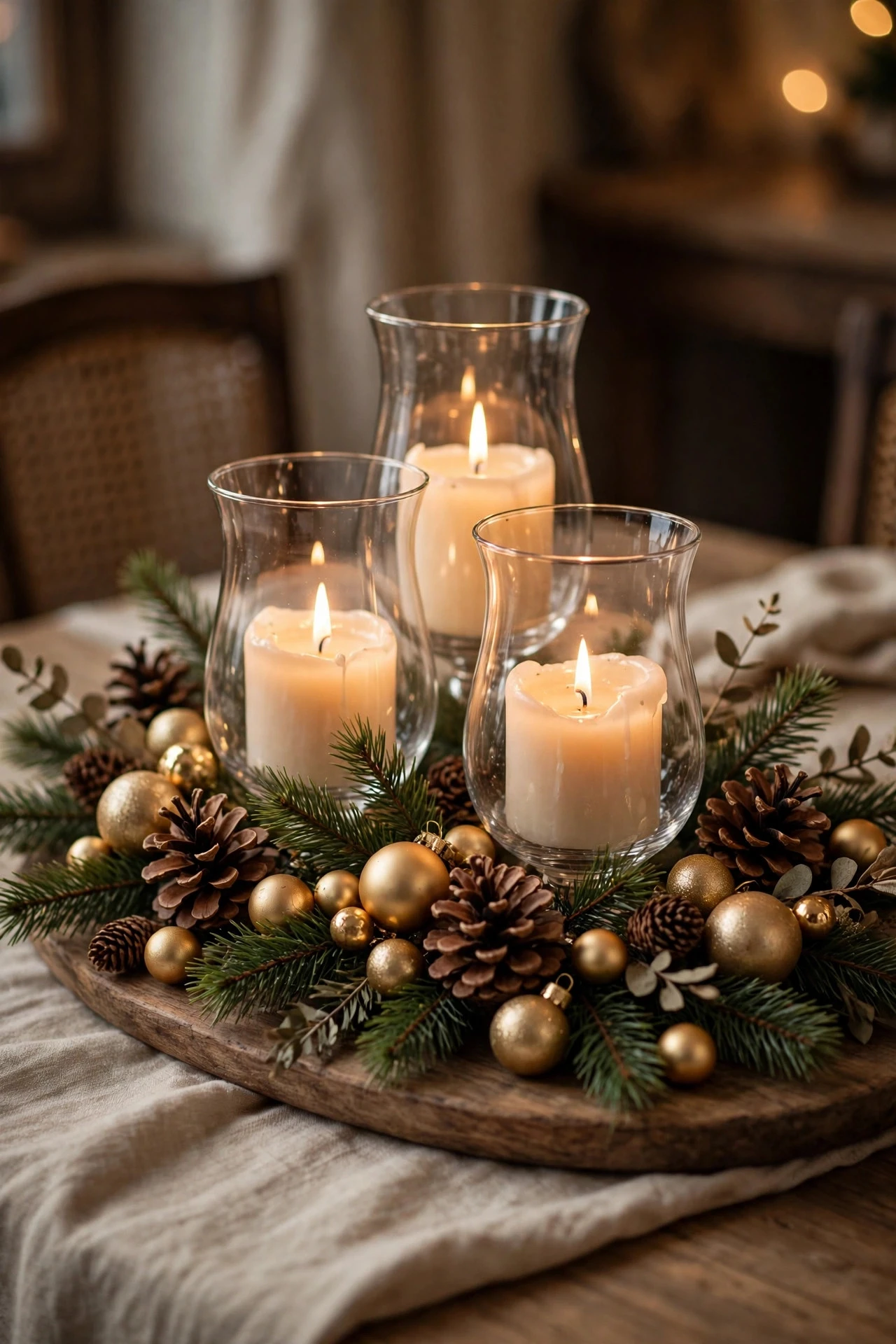
A dinner-party centrepiece should be low, stable and flame-safe: a long wooden board or tray holding pillar candles in hurricane glass, fresh pine or eucalyptus, pinecones and a few baubles, with space at each end for serving dishes. Guests should see each other, reach the food, and never worry about a sleeve catching a flame.
Build the arrangement on a tray so it lifts off in one move when the table needs clearing. Use unscented candles at the table — scented ones fight with the food — and save the cinnamon and pine fragrance for the sideboard. Fresh greenery lasts about a week indoors, so build the centrepiece the day before the party and mist it lightly. Battery-operated fairy lights woven through the greenery add sparkle without heat. Budget $25–$60, or under $15 if you forage the greenery.
10. How Can You Decorate a Dining Room Sideboard for Christmas?

Decorate a dining room sideboard as a display and a serving station in one: a garland along the back edge, a pair of candlesticks or lanterns at each end, a small framed print or wreath above, and a clear space in the middle for drinks, desserts or the carving board. The sideboard earns its place by being beautiful and useful at the same time.
A mirror or framed artwork above the sideboard reflects candlelight and doubles the glow in the evening. Keep one drawer or shelf free for table linens, serving spoons and spare candles so hosting stays easy. If the sideboard sits near a radiator, use flameless candles and keep garlands clear of the heat. A bowl of clementines, walnuts or cranberries adds colour and doubles as a snack. Budget $30–$65.
11. How Do You Add Christmas Cheer to a Working Kitchen?
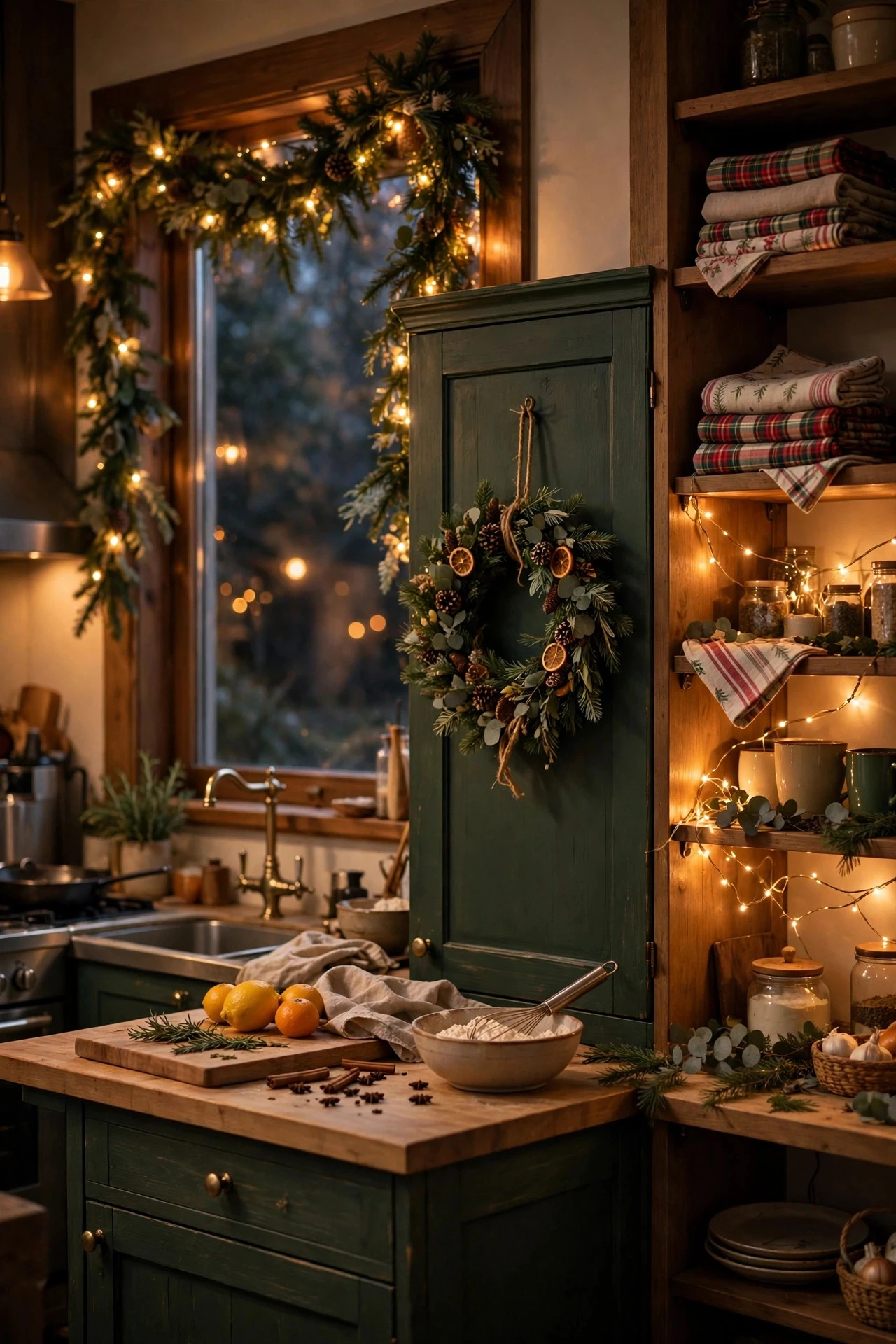
Add Christmas cheer to a working kitchen with decor that never blocks a worktop: a garland over the window or range hood, a wreath on a cabinet door, festive tea towels, and a small arrangement on the windowsill or open shelf. Kitchens need decor that survives steam, splashes and daily cooking.
Hang the wreath on the inside of a cabinet door with a removable hook so it never touches the hob. Swap in two or three seasonal touches — a red kettle, a wooden tray of pinecones, a jar of candy canes — and leave the counters clear for prep. A string of fairy lights along open shelving adds warmth in the evenings without taking a centimetre of workspace. For a full kitchen-specific plan, these kitchen Christmas decor ideas cover worktops, shelves and windows. Never hang garlands over the hob or toaster, and keep paper and fabric decor away from open flames. Budget $25–$55.
12. What Christmas Decor Works on Open Kitchen Shelves?

Open kitchen shelves take small, sturdy Christmas pieces: a row of miniature bottle-brush trees, a string of wooden bead garland, a few baubles in a bowl, and one sprig of fresh greenery in a jar. Keep everyday dishes in front and seasonal pieces at the back or on the top shelf, so nothing festive blocks the mugs and plates you reach for daily.
Group items in threes and repeat one colour from your palette on each shelf so the display feels planned. Avoid tall pieces that could topple when a shelf is bumped, and skip real candles entirely in the kitchen — steam and grease make them impractical. A small potted rosemary or pine plant doubles as decor and a cooking herb. Wipe shelves before decorating, since kitchen grease dulls ornaments fast. Budget $15–$40, often less if you reuse last year's pieces.
13. How Do You Style a Kitchen Island or Breakfast Bar for Christmas?
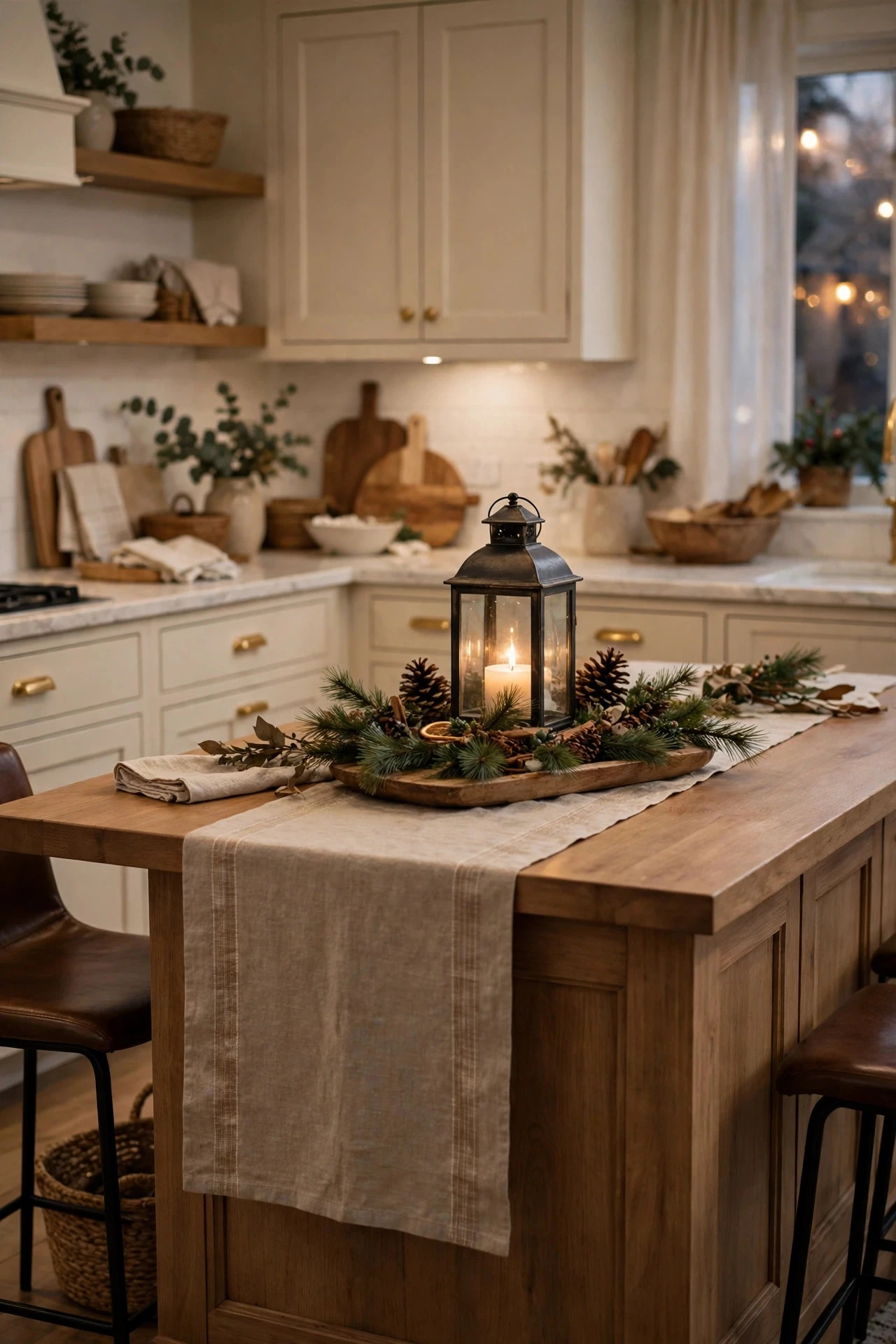
Style a kitchen island with one low centrepiece — a wooden tray with a lantern, pine sprigs and pinecones — plus a runner down the middle, and keep both ends clear for chopping boards, homework and breakfast bowls. The island is a workspace first, so the decor must lift off in seconds.
A tray is the secret: everything festive sits on it, and the whole display moves to the sideboard when you need the full surface. Add two stools with a folded throw or a cushion in your palette for softness, and hang a small wreath or a bunch of dried orange slices from a pendant light if the height allows. Keep the arrangement under 25 cm tall so it never blocks sightlines across the kitchen. Avoid glass ornaments here — one knock and the island becomes a hazard. Budget $20–$45.
14. How Do You Make a Bedroom Feel Cosy and Festive for Christmas?
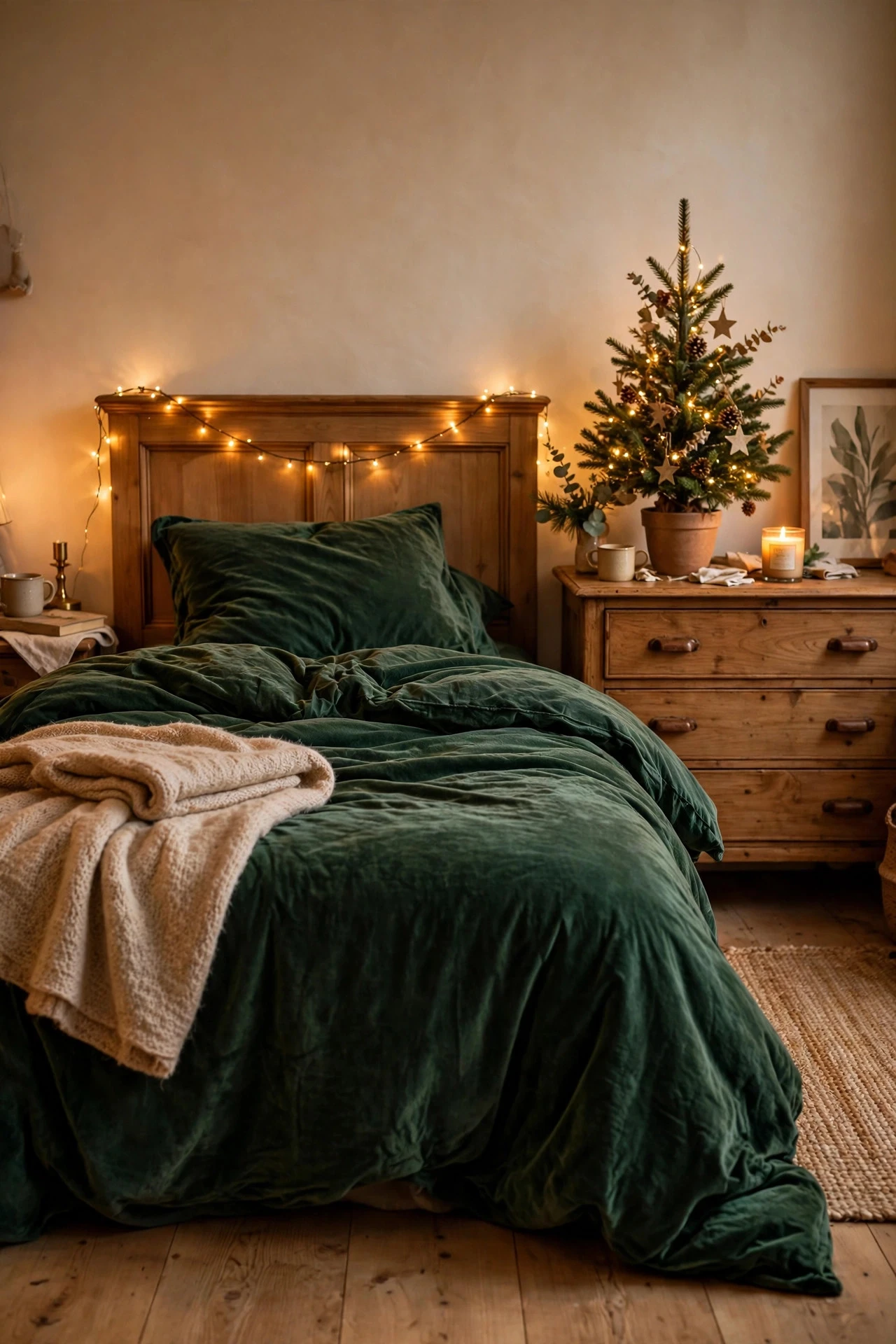
Make a bedroom festive with soft, sleep-friendly touches: a small tree or a vase of pine branches on the dresser, fairy lights along the headboard or window frame, flannel or velvet bedding in a deep seasonal colour, and one scented candle or diffuser on the bedside table. The bedroom should feel like a calm retreat, not a second living room.
Choose warm-white lights with a timer so they switch off when you fall asleep, and keep the palette quieter than the living room — cream, pine green and one metallic. A folded throw at the foot of the bed and a cushion in a festive print are enough to signal the season. These bedroom Christmas decor ideas show how to keep the look restful rather than busy. Never leave candles burning overnight, and keep lights away from bedding and curtains. Budget $30–$70.
15. What Is the Best Small Christmas Tree for a Bedroom?
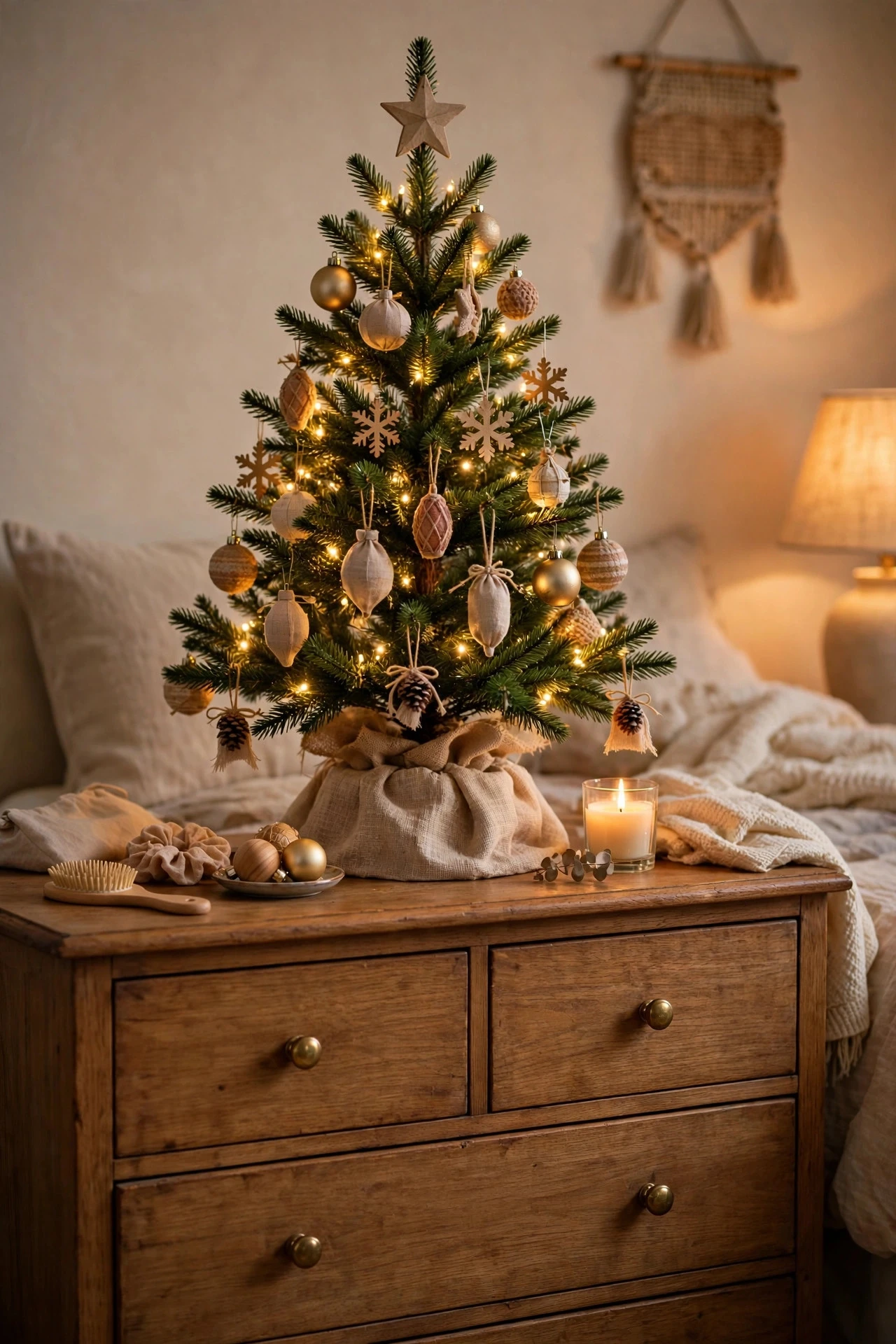
The best bedroom tree is a tabletop tree of 60–90 cm, or a slim 4 ft floor tree in a corner, decorated with lightweight shatterproof ornaments and battery-operated lights so it needs no plug socket and no daily watering. Small trees give the full Christmas feeling without taking over a room meant for rest.
Place a tabletop tree on a dresser or bedside table where it can be enjoyed from the bed, and use a basket or a fabric tree skirt as the base instead of a bulky stand. Keep the ornament count low — 15 to 25 pieces — so the tree looks intentional rather than crowded. A pre-lit tabletop tree saves time and wiring, and a timer plug or built-in timer means it never stays on all night. Avoid real trees in bedrooms if anyone has allergies; artificial greenery is the safer choice. Budget $20–$60.
16. How Can You Decorate a Bedroom Window or Headboard for the Season?
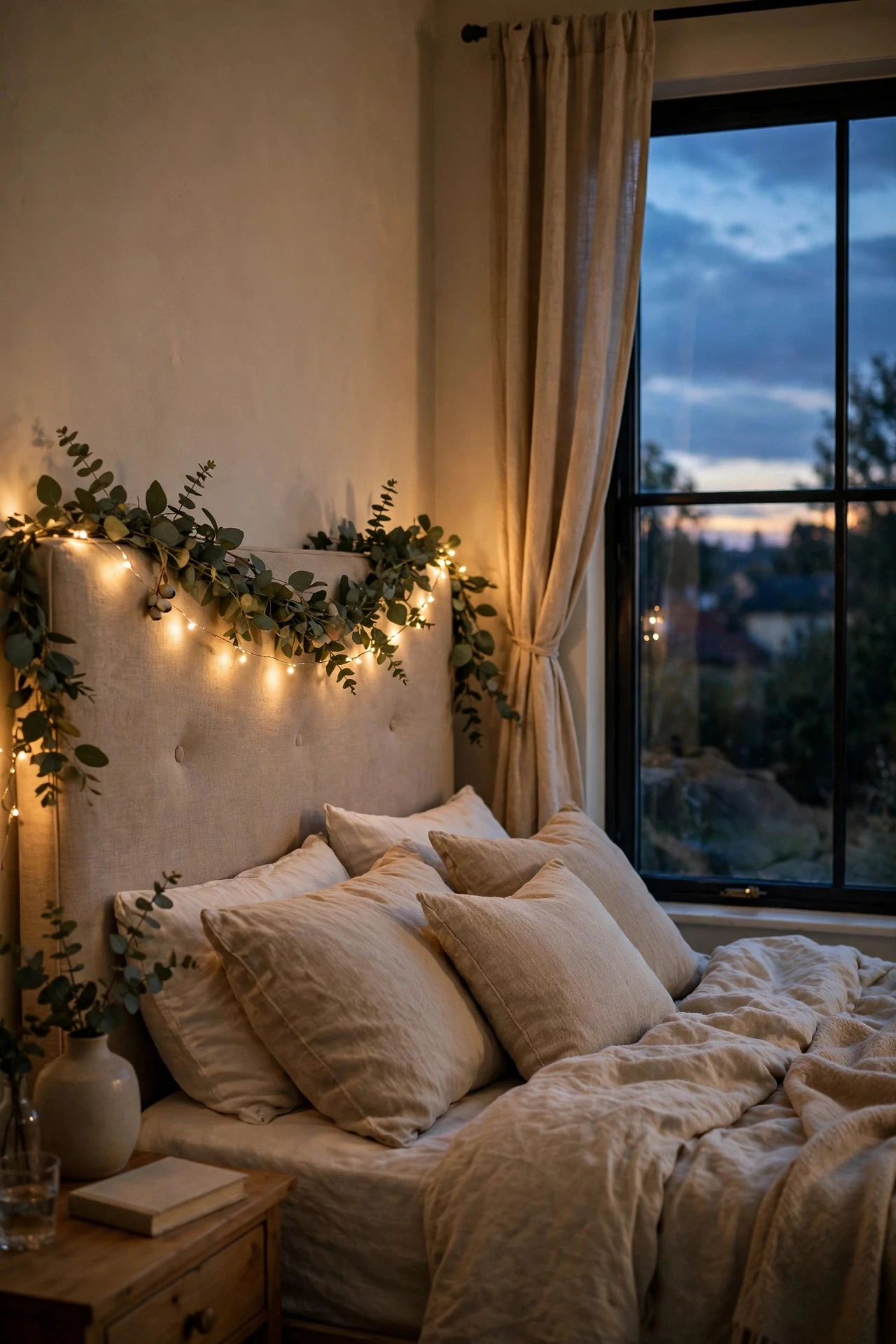
Decorate a bedroom window or headboard with a single strand of warm-white fairy lights and one natural element — a eucalyptus garland along the headboard, or a small wreath on the window — and stop there. Bedrooms reward restraint, and one glowing line of light changes the whole mood at dusk.
Use removable adhesive hooks so lights come down in January without marks on paint or wood. Drape the lights in a loose swag rather than a tight zigzag so the glow feels soft, and choose a timer setting of four to six hours. A garland of dried orange slices and cinnamon sticks adds scent without a flame, and it costs almost nothing to make. Keep lights clear of pillows, throws and curtains, and never run extension cables across the floor where feet catch them in the dark. Budget $15–$35.
17. How Do You Decorate a Bathroom for Christmas Without Damaging Anything?
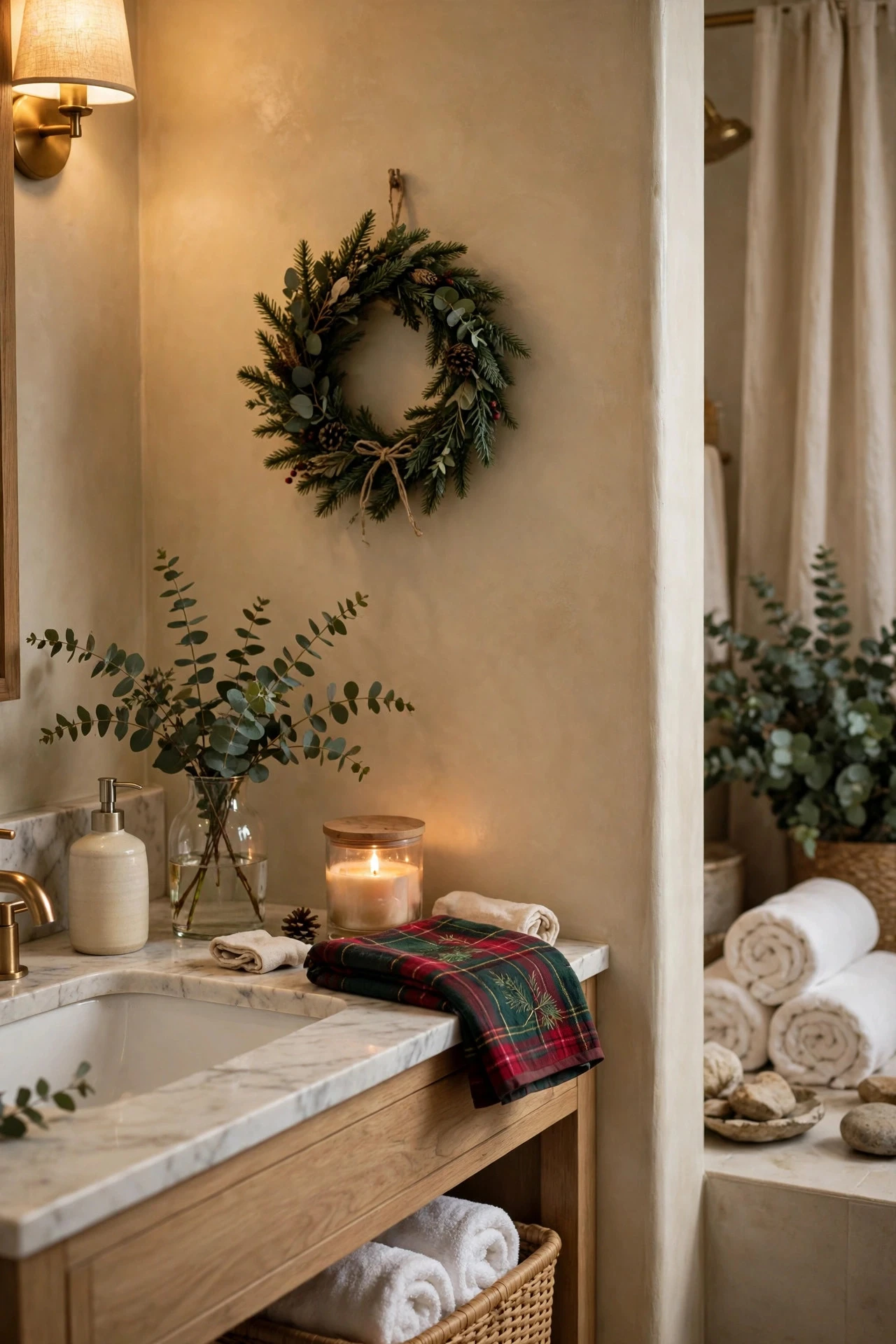
Decorate a bathroom with humidity-proof pieces: a small wreath on the wall or door, a sprig of eucalyptus in a vase, a festive hand towel, a candle in a lidded jar, and a soap dispenser or tray in your palette. Bathrooms are steamy, so paper, fabric garlands and unsealed wood will warp, fade or grow mould within days.
Hang the wreath with a suction hook or an over-door hanger rather than nails, and choose a faux wreath — real pine drops needles into sinks and baths. A sprig of fresh eucalyptus in a small vase survives the humidity and releases scent in the steam. These Christmas bathroom decor ideas show how to keep the look spa-like rather than cluttered. Keep candles away from towels and shower curtains, and never place decor on the bath edge where it can fall in. Budget $15–$35.
18. What Small Touches Make a Guest Bathroom Feel Festive?

A guest bathroom feels festive with three small touches: a folded festive hand towel on the rail, a tiny arrangement of pine sprigs and pinecones on the windowsill or shelf, and a scented candle or reed diffuser beside the sink. Guests notice the details, and three thoughtful pieces beat a crowded shelf every time.
Add a small tray to corral the candle, a spare hand towel and a bottle of hand wash so the surface stays tidy. A sprig of holly or a few cranberries in a glass of water makes a pretty, zero-cost arrangement that lasts a week. Choose a scent that matches the rest of the house — pine, cinnamon or orange — so the bathroom smells like part of the home, not a different shop. Avoid potpourri near the sink, where splashes turn it soggy. Budget $10–$25.
19. How Do You Pick One Colour Palette for the Whole House?
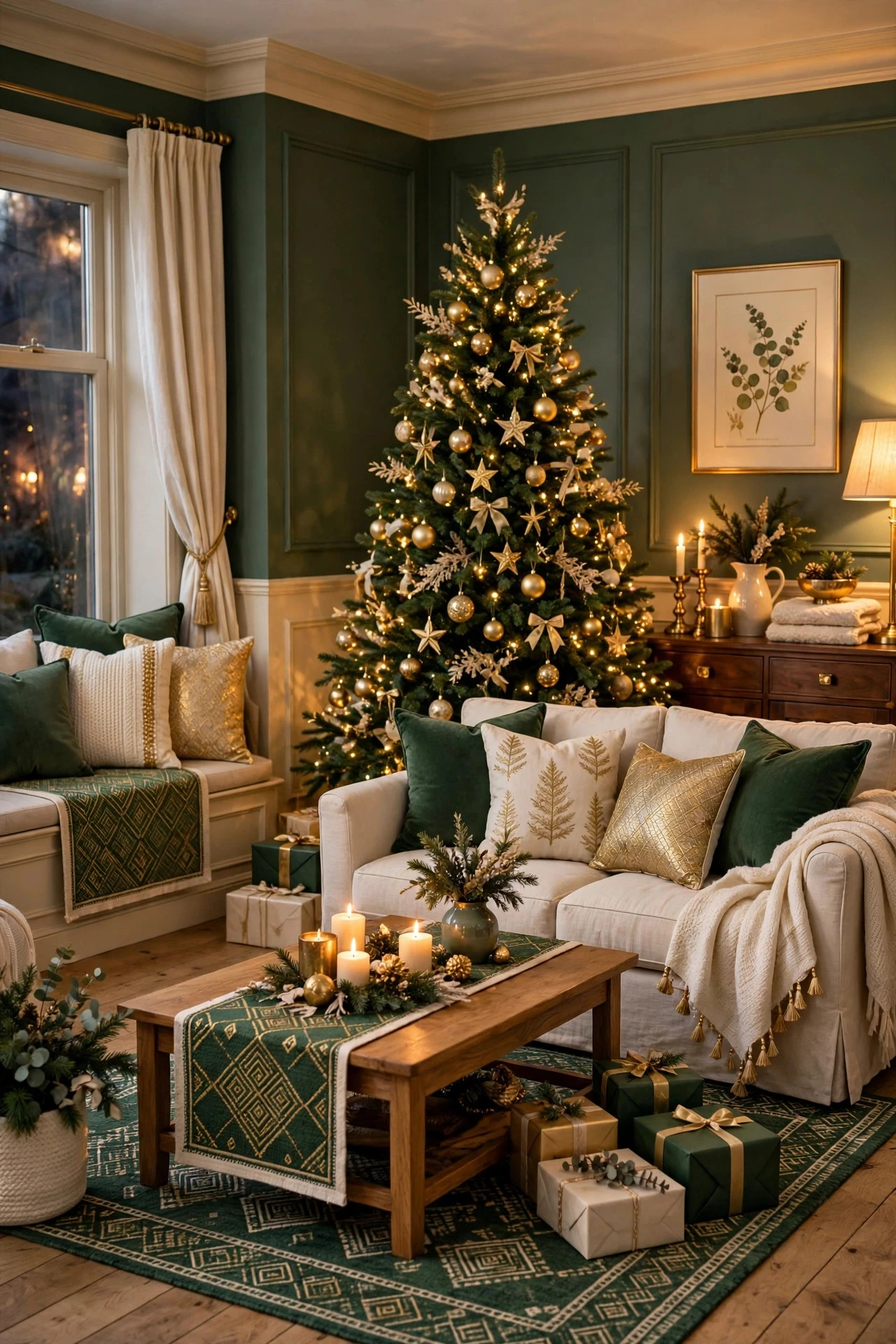
Pick one palette by choosing two main colours and one metallic, then repeat that exact combination in every room: for example, deep green and cream with gold, or burgundy and blush with copper. A single palette is what makes separate rooms feel like one decorated home instead of six unrelated displays.
Test the palette with the biggest pieces first — the tree, the sofa throw, the table runner — and let small rooms use the lighter half of the palette so they stay bright. Classic combinations that always work include red and green with gold, navy and silver with white, and all-natural green, wood and cream. Buy ribbon, candles and baubles in the same shades so the palette repeats at every scale. Budget $0 extra — a palette costs nothing, it only guides what you buy. Avoid adding a third strong colour in one room, which breaks the flow.
20. How Do You Layer Christmas Lighting So the House Glows at Night?
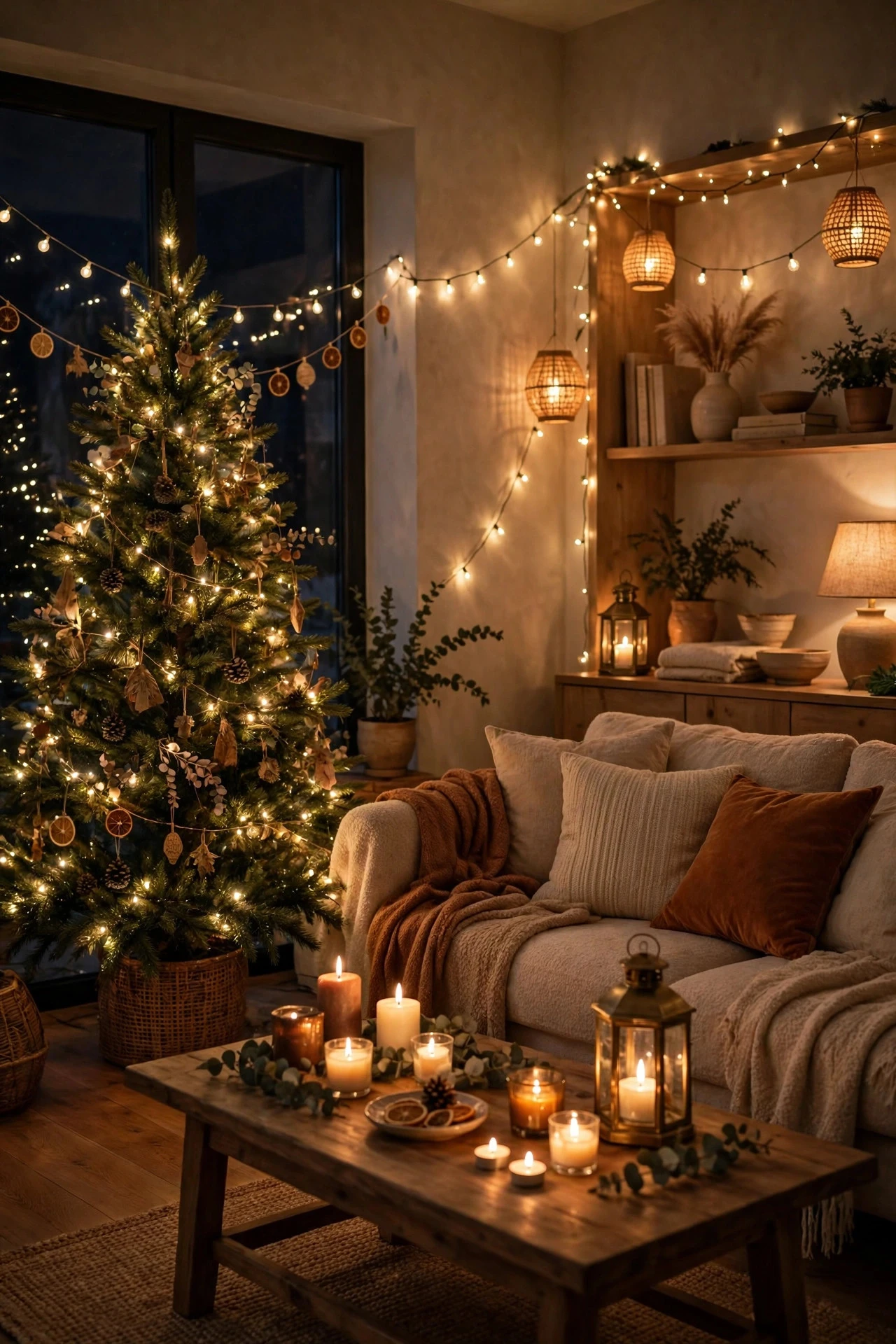
Layer Christmas lighting in three tiers: tree and garland lights as the sparkle, candles and lanterns at table and shelf height as the warmth, and dimmed overhead or lamp light as the base, so no single source dominates and every room glows evenly. One bright ceiling light flattens decor; layered low light makes it shine.
Use warm-white bulbs (2,200–2,700K) everywhere for a consistent glow, and put tree and window lights on timers so they switch on at dusk and off at bedtime. Flameless LED candles in lanterns and hurricane glass give flicker without flame, which matters in bedrooms and near curtains. The Spruce's guide to Christmas tree lights and decorating basics covers light counts and safe installation in detail. Keep plugs and extension leads off walkways, never overload a socket with multiple light sets, and switch everything off before bed. Budget $30–$80 for extra light sets and timers.
21. How Can Scent Tie Your Indoor Christmas Decor Together?
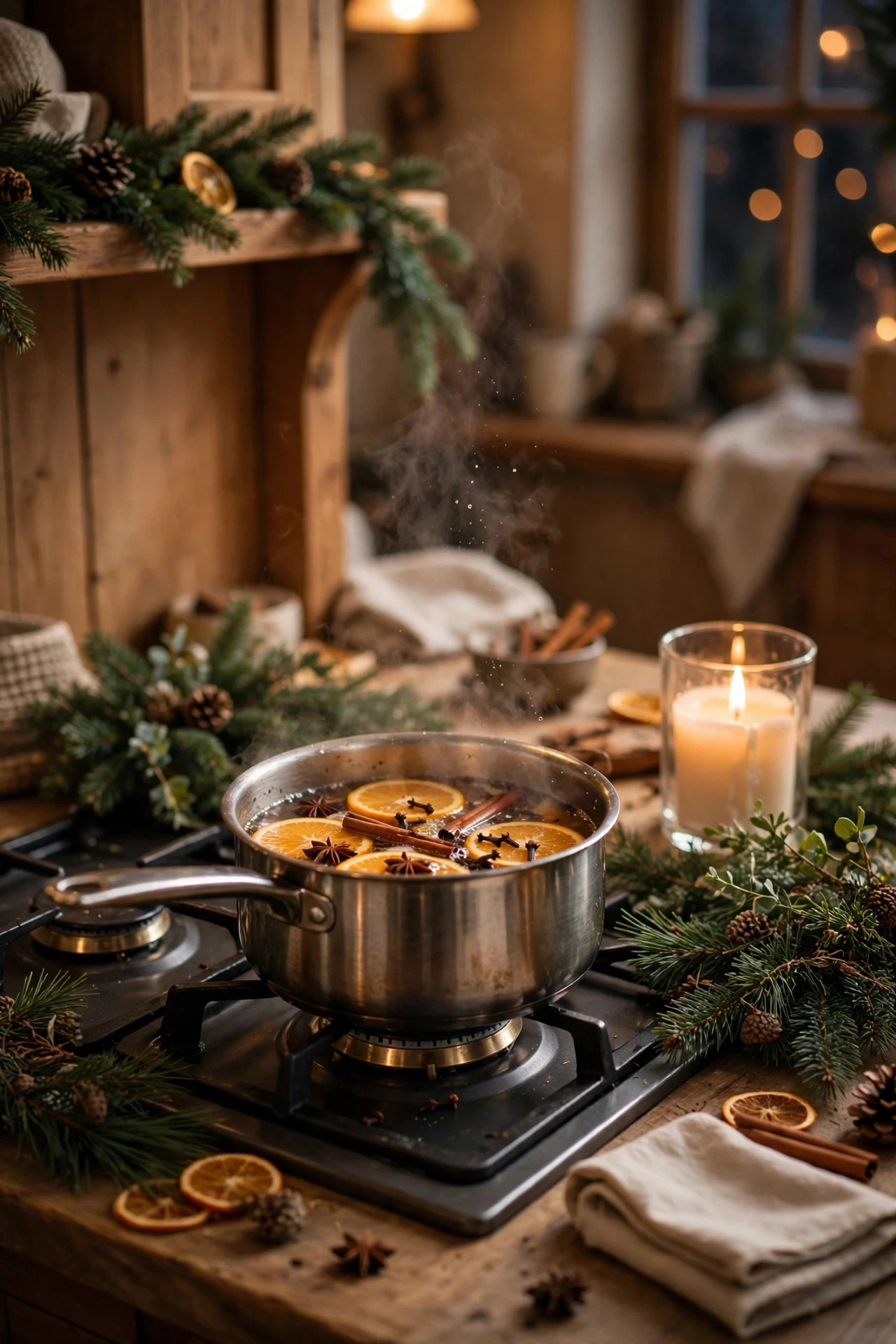
Scent ties a home together when one fragrance family — pine, cinnamon-orange, or cedarwood — appears in every room through different sources: a simmer pot or diffuser in the living room, a candle in the bedroom, fresh greenery in the entryway, and dried orange slices in the bathroom. Guests register the scent before they notice the decor, and consistency makes it feel deliberate.
Simmer orange slices, cinnamon sticks, cloves and pine sprigs in water on the hob for an hour before guests arrive — it costs pennies and scents the whole ground floor. Avoid mixing competing fragrances; one family per house is the rule, and unscented candles belong at the dining table where food is served. Reed diffusers suit bathrooms and hallways, where a flame is impractical. If anyone in the house has asthma or scent sensitivity, use fresh greenery only and skip sprays and strong candles. Budget $5–$25.
22. How Should You Store Christmas Decor So Next Year Is Easy?
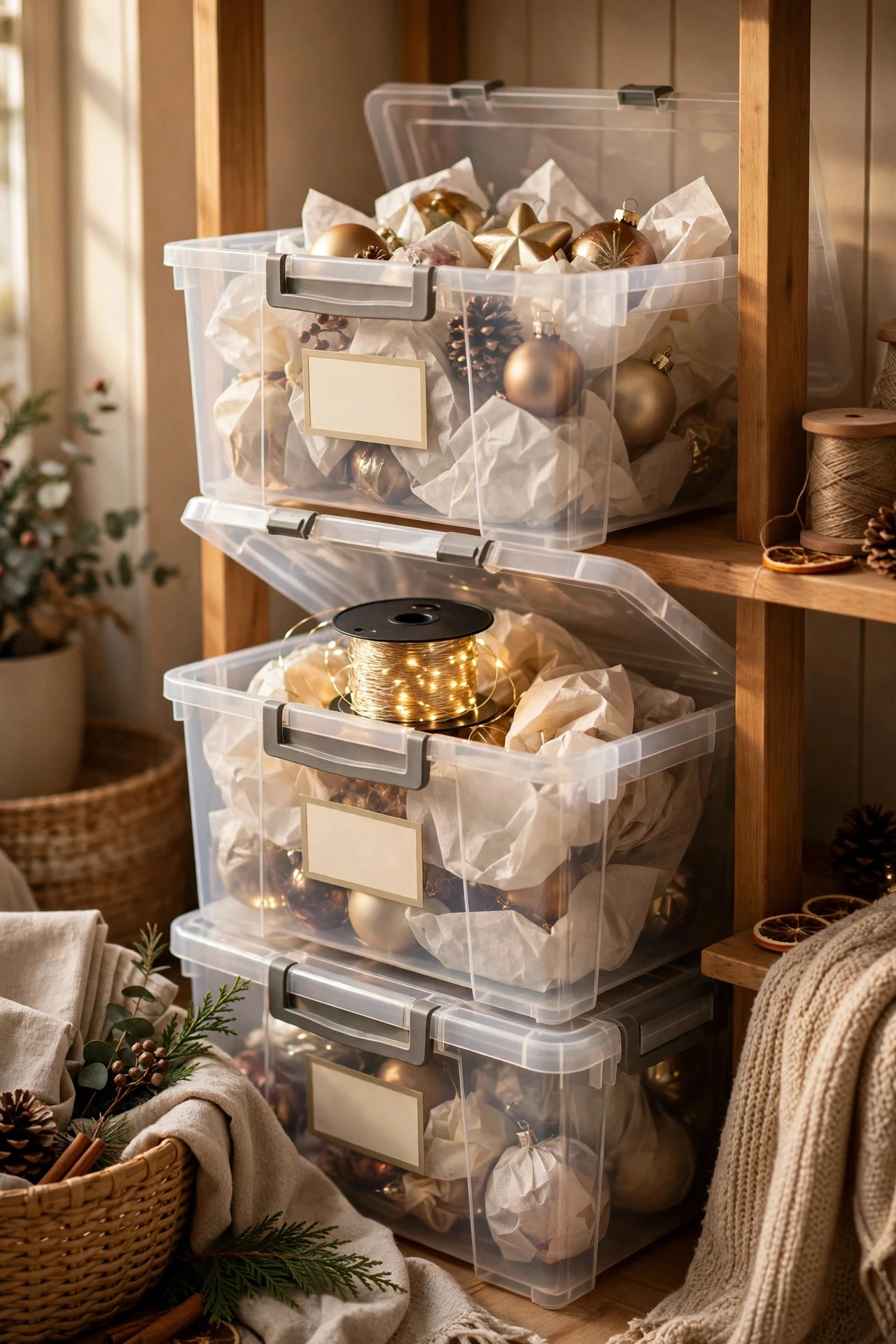
Store Christmas decor by room in labelled, stackable boxes — one box per room, ornaments wrapped in tissue, lights wound around a spool or a piece of cardboard, and a photo of each display taped inside the lid — so next December you unpack a finished look instead of a puzzle. Good storage is the difference between decorating in an afternoon and dreading it for a week.
Take a photo of the tree, mantel and table before you pack them away, and note the palette and the number of light sets on the box label. Keep fragile ornaments in divided boxes or egg cartons, and store candles upright in a cool place so they never warp. Artificial trees last longest in their original box or a tree bag, kept dry and out of the loft's damp corners. House Beautiful's seasonal storage advice in their holiday decorating guides covers labelling and care for ornaments and lights. Budget $20–$50 for boxes, or reuse sturdy shopping boxes for free.
Practical Tips
Budget by room, not by item. Give the living room $100–$200, the dining room $50–$80, and small rooms $15–$40 each, and stop when a room's budget is spent. The most expensive mistake is buying a little more in every shop visit — a list and a per-room cap prevent it.
Buy after Christmas for next year. Baubles, ribbon, garlands and lights go on sale for 50–70% off in January. Buy next year's palette then, and store it labelled by room.
Safety first, every night. Keep real trees watered daily, candles at least 30 cm from anything flammable, and lights off when you sleep or leave the house. The fire service guidance echoed by Better Homes & Gardens on candle safety is simple: never leave a burning candle unattended, and use flameless candles in bedrooms, bathrooms and homes with pets or small children.
Timing that works. Put the tree and lights up in the first week of December, add the table and guest-room touches the week before Christmas, and take everything down by early January before dust and dry greenery become a chore. Fresh greenery lasts seven to ten days indoors, so build wreaths and centrepieces close to the day they will be seen.
Store what you love, donate the rest. If a decoration stayed in its box two years running, it does not earn a third. Donate it and free the space for pieces you actually use.
Final Thoughts
A whole-home Christmas does not need more decorations — it needs one palette, three layers of light, and a few thoughtful touches in the rooms you actually live in. Start with the tree and the entryway, add the table and the kitchen, then finish with the quiet rooms, and your house will feel festive from the front door to the bedroom without a single crowded surface.
Frequently Asked Questions
How much should I budget for indoor Christmas decor for a whole house?
Budget $200–$400 for a whole house if you are starting from scratch, or $50–$100 a year if you already own a tree, lights and garlands. Spend the most on the living room and the tree, keep small rooms to $15–$40 each, and buy baubles, ribbon and lights in the January sales for the following year.
When should I put up indoor Christmas decorations?
Put the tree, wreaths and lights up in the first week of December, when the season feels early enough to enjoy but late enough that a real tree stays fresh until Christmas Day. Add table settings and guest-room touches the week before guests arrive, and take everything down by early January.
How do I keep my Christmas tree fresh and safe indoors?
Keep a real tree in a water-filled stand and top the water up daily, place it at least a metre from radiators, fireplaces and heat vents, and check the lights for damaged wires before use. A dry tree sheds needles fast and becomes a fire risk, so water it every day and remove it once the needles start dropping heavily.
What is the safest way to use candles in Christmas decor?
Use flameless LED candles in bedrooms, bathrooms and anywhere near curtains, bedding or pets, and keep real candles in sturdy holders at least 30 cm from anything flammable. Never leave a burning candle unattended, never burn one overnight, and keep matches and lighters out of children's reach at all times.
How can I decorate for Christmas in a small home?
Decorate a small home with one statement piece per room — a slim pencil tree, a wreath, or a garland — plus two or three accents, and use scent, light and texture instead of volume. Swap cushion covers and throws in your palette, hang lights vertically, and keep floors and worktops clear so the rooms feel festive rather than crowded.
Can I use the same Christmas decor in every room?
Yes, and you should — repeat one palette of two colours plus a metallic in every room, and reuse the same garlands, ribbon and baubles with different arrangements. The repetition is what makes separate rooms feel like one decorated home, while each room keeps its own focal piece, such as the tree, the table or the wreath.