How to Win a Christmas Door Decorating Contest: 22 Ideas Judges Love
A Christmas door decorating contest is won long before the judges walk the hall. The doors that take the prize are almost never the busiest ones — they are the ones with a single clear idea, done big enough to read from the far end of the corridor, with one detail that makes people stop and take a photo. Whether your door is a classroom door, an office door or your own front door, the same rules apply.
Looking for more inspiration? Our Nest Decorz homepage gathers the latest home decor ideas, seasonal decorating guides and room-by-room styling tips in one place — start there and explore.
Below you'll find 22 Christmas door decorating contest ideas covering wreaths, garlands, classroom and office doors, front-door entries, lighting, humour, budgets and the judging criteria most entries ignore — with honest costs in pounds and exact sizes, so your door looks deliberate instead of improvised. Every idea works for a contest, a hallway display or a neighbourhood competition.
Quick answers
– Pick one big idea and do it boldly — a single clear theme reads from down the hall, while five small ideas read as clutter. – Add one 3D element that pops off the door — judges remember depth, and a flat paper door rarely wins. – Use battery lights, never mains lights, on a classroom or office door — safer, and most buildings require it. – Budget £15–£40 for a winning door, and £50–£80 if you are building a full front-door display with garland and lighting.
1. How Do You Pick a Door Theme That Judges Remember?

Pick a door theme judges remember by choosing one scene, not five decorations: a Santa's workshop, a snow globe, a gingerbread house or a winter forest, carried across the whole door from top to bottom. The theme should be obvious from ten feet away, with every element pointing back to the same story.
Judges score theme first, so a door that tries to be funny, classic and elegant at once usually scores lower than a door that commits to one mood. Test your theme by describing it in one sentence — if you need two sentences, it is two themes. Write the sentence on a small card for the judges, too: a named theme with a one-line description reads as confident and organised, and it helps voters who only see a photo. Avoid themes that need explaining; the door should explain itself.
2. What Makes an Oversized Wreath Win?
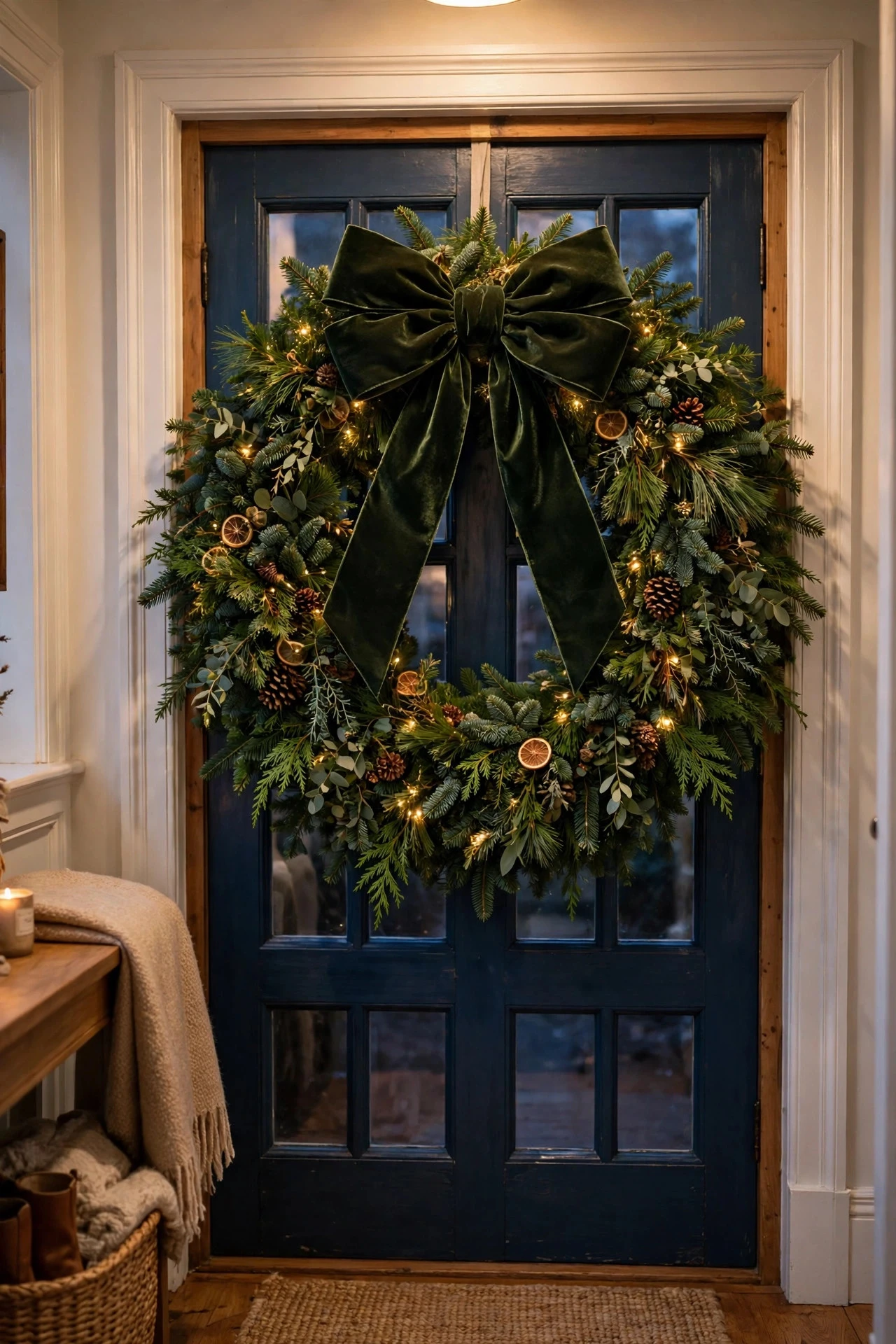
An oversized wreath wins because scale reads as confidence: choose a wreath at least 75 cm across for a standard door, hung slightly above eye level, so it fills the door instead of floating on it. A wide velvet ribbon in deep red or emerald green, tied in a full bow at the top, turns a simple evergreen wreath into a contest piece.
Build the wreath on a sturdy base — grapevine, foam or wire — and layer in pinecones, dried orange slices and a few baubles in one metallic, so the wreath has texture without turning busy. A good faux wreath costs £20–£45 and lasts for years; a fresh one runs £15–£30 but sheds needles on a heated hallway floor. Hang it from an over-door hook rated for its weight, never from a nail if the door belongs to a school or office. The wreath has been a Christmas symbol for centuries, and a big one still beats a small one in almost every contest.
3. How Do You Build a Full Garland Frame Around the Door?

Build a full garland frame by draping a thick evergreen garland around the entire door frame, securing it at the top corners and letting the sides fall straight, so the door looks dressed rather than decorated. Use a 2.7 m garland for a standard door, and add a second, thinner garland woven through it if you want real fullness.
Secure the garland with removable hooks or a tension rod so you do not damage the trim — judges notice gouged paint and peeling tape. Weave in warm-white battery fairy lights, spacing them evenly, and add ribbon loops every 30 cm for a finished look. A full faux garland costs £18–£35; fresh cedar smells wonderful but dries out within a week indoors. For garland layering techniques that keep the frame from sliding, these 22 Christmas garland ideas for mantels, stairs and doors show how to build depth on any frame.
4. Can a Santa's Workshop Door Win Every Year?

Yes — a Santa's workshop door wins year after year because it is warm, colourful and easy to read: cover the door in red paper, frame it with gold trim, add a red-and-white striped paper awning across the top, and the whole door reads as a shop front. Add a wooden plank sign reading "Santa's Workshop" and small wrapped presents at the base.
The trick is making it yours: add toy trains, teddy bears or a row of tiny stockings, each labelled with a classmate's or colleague's name, so the door feels personal rather than copied. Use kraft paper for the background — it takes paint well and hides tape marks — and keep the lettering large and neat, at least 10 cm tall, so it reads from the hall. Budget £15–£25 for paper, paint and ribbon. The mistake to avoid is adding a second scene beside the workshop; one shop front is the whole idea.
5. How Do You Make a Giant Snow Globe Door?
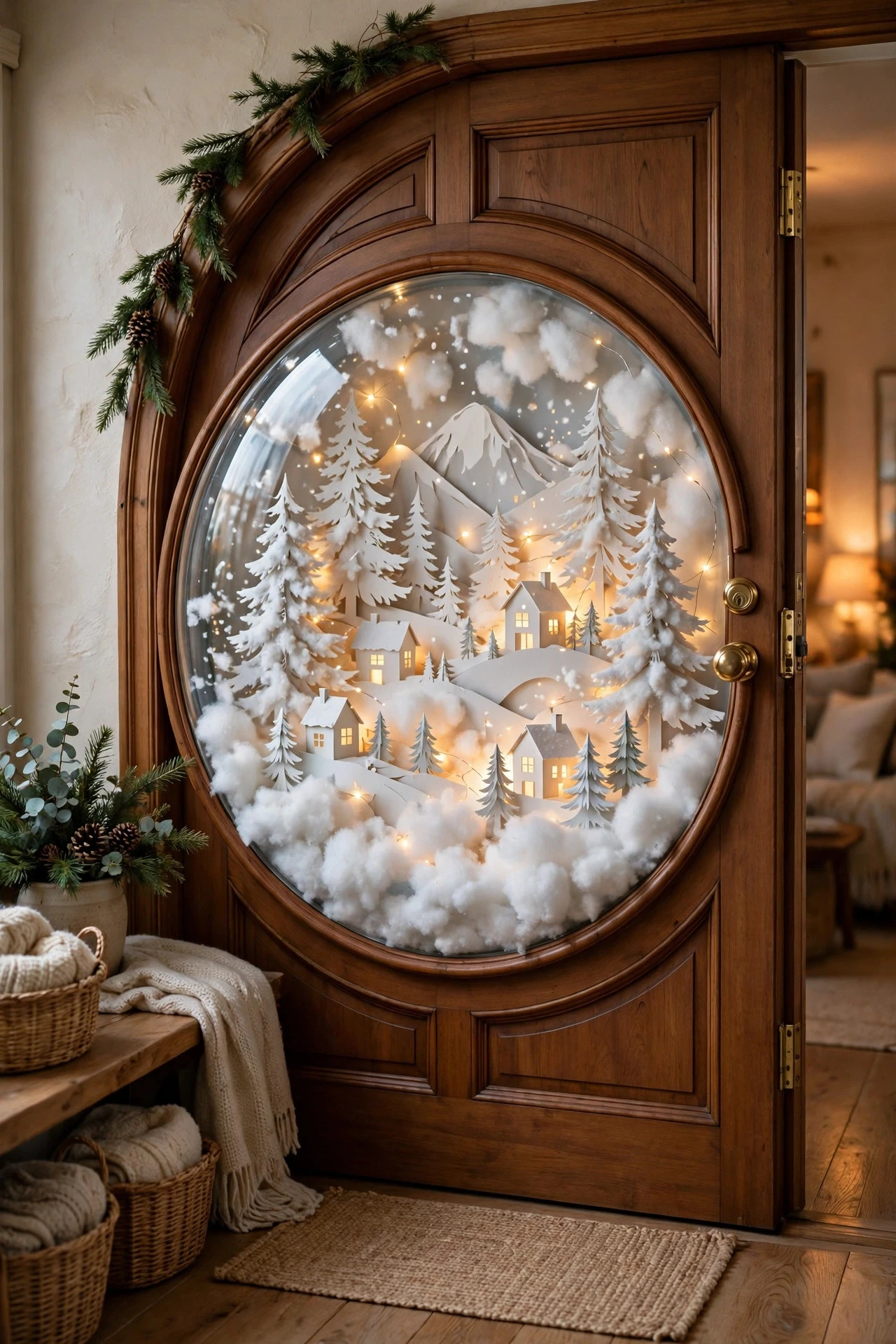
Make a giant snow globe door by painting or papering a big circle on the door, filling it with a snowy scene — paper trees, a small house, cotton batting snow — and framing the circle with a dark border so it reads as glass. Add a black base at the bottom of the circle, like a snow globe stand, and the illusion is complete.
The winning detail is a figure inside the globe: a paper snowman, a reindeer or a photo of the whole class, cut out and placed inside the scene. Use white and silver paper for the snow, with a few glitter stars, and keep the background a deep blue so the white pops. A snow globe door costs £10–£20 in paper and batting, and it photographs beautifully — which matters when voting happens online. Avoid real glitter near the floor; it tracks everywhere and annoys the caretaker.
6. What Makes a Gingerbread House Door Stand Out?
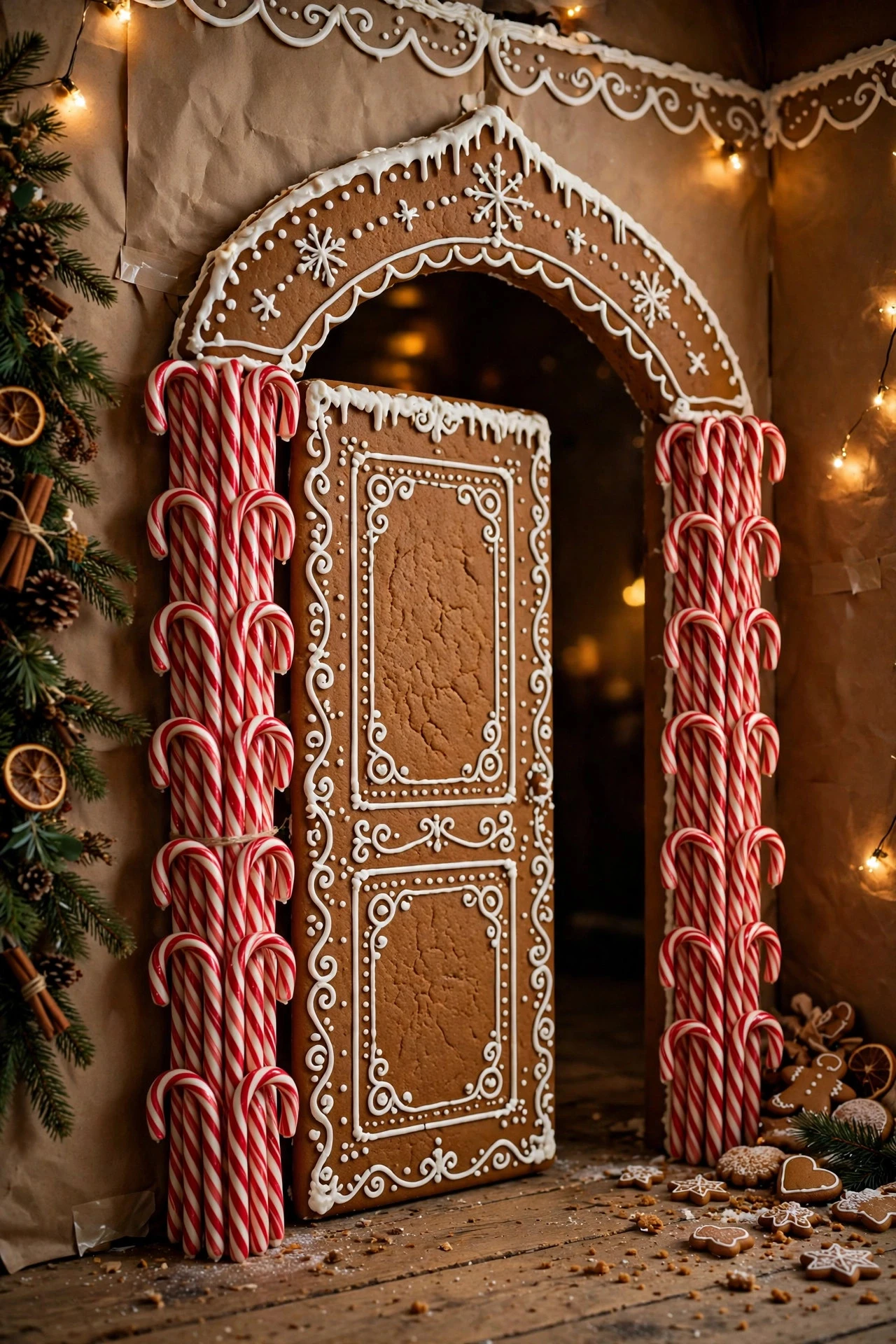
A gingerbread house door stands out when the whole door becomes the house: brown paper for the walls, white paper icing along the edges, colourful paper candies on the walls, and a snowy roofline across the top of the frame. Add candy-cane columns on either side of the door and the entry feels like the front of the bakery.
Use different browns — kraft, tan and chocolate — so the house has depth instead of one flat tone. Cut the icing as scalloped strips rather than straight lines; scallops read as piped frosting from a distance. A gingerbread door costs £12–£22 in paper and takes about two hours to build with two people. For a front door, use weatherproof materials: painted plywood panels or outdoor vinyl instead of paper, which wilts in rain. The smell of real gingerbread is optional, but a small sachet of cinnamon by the door is a nice touch judges notice.
7. How Do You Decorate a Door for a Classroom Contest?

Decorate a classroom door by giving every child one small job: each pupil makes one ornament, snowflake or paper gift, and the door becomes a display of the whole class. Judges love doors the class built together, and a door covered in thirty handmade pieces beats a door one adult decorated alone.
Choose a theme the children can all contribute to — a Christmas tree door where every child hangs one paper ornament, or a snowman family where each child decorates one snowman. Keep the layout simple: a big tree or scene in the centre, children's pieces hung at their own height, and the teacher's finishing touches at the top. Use washable paint and paper only, and keep everything flat enough that the door still opens and closes. Budget £10–£20 for the whole class if you use paper and recycled materials. Never cover the door's window, name plate or handle — safety and access come first.
8. How Do You Win an Office Door Decorating Contest?
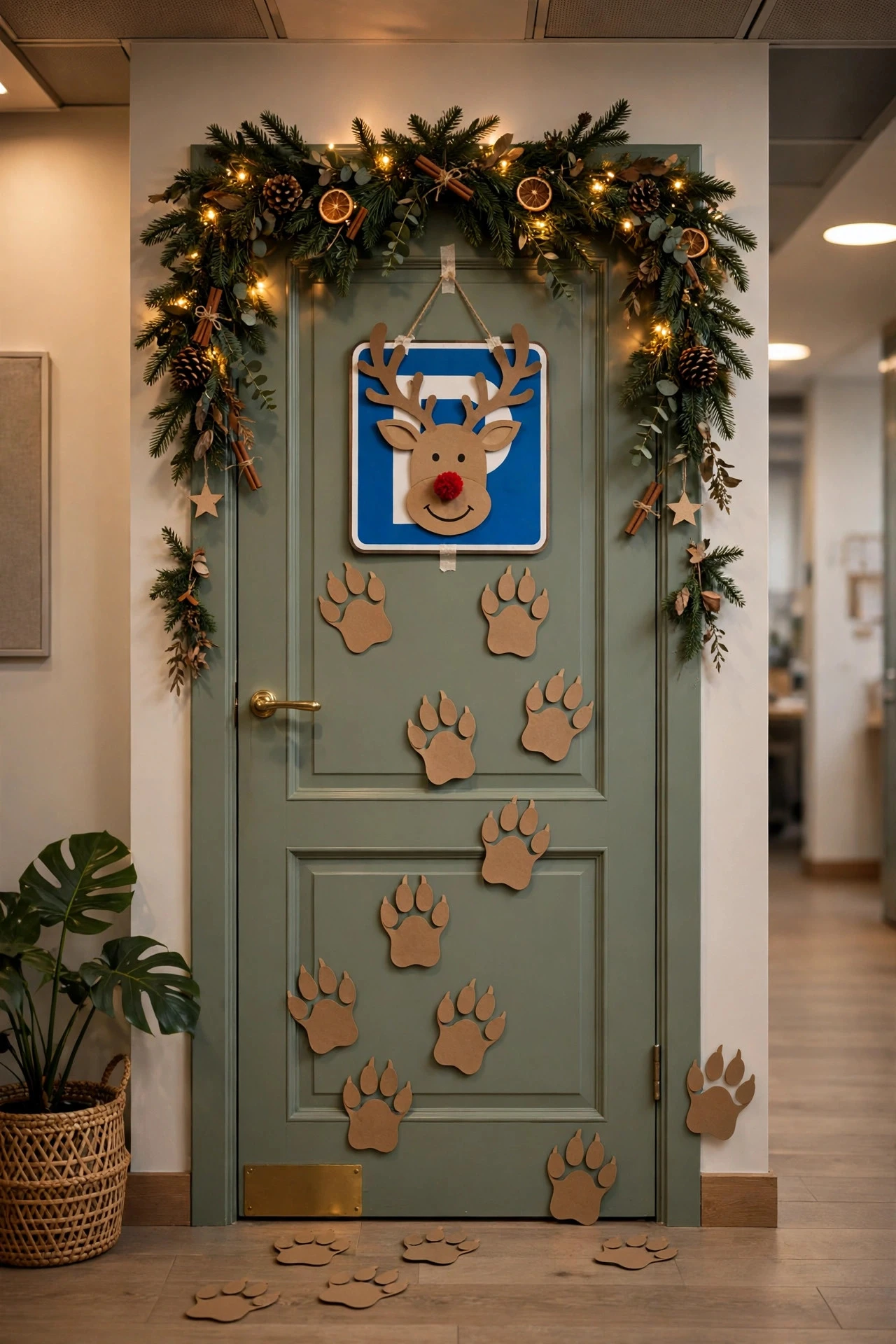
Win an office door by keeping it clever, tidy and work-safe: one witty idea, executed neatly, with no mess on the carpet and nothing blocking the hallway. Office judges reward humour and craft over size, so a door with a sharp pun and clean execution often beats a bigger, messier one.
Good office ideas include a "Reindeer Parking Only" sign with painted bays and hoofprints, a Santa stuck in the door with paper legs dangling from the top, or a team sleigh roster with every colleague's name on a reindeer. Keep it to materials the office already has — paper, tape, battery lights — and check the building rules on lights and fire exits before anyone starts. Spend £10–£25, and involve the team: a door with every name on it wins the people's vote. Avoid anything that blocks the door from opening fully or covers the fire exit sign.
9. How Do You Style a Front Door for a Neighbourhood Contest?
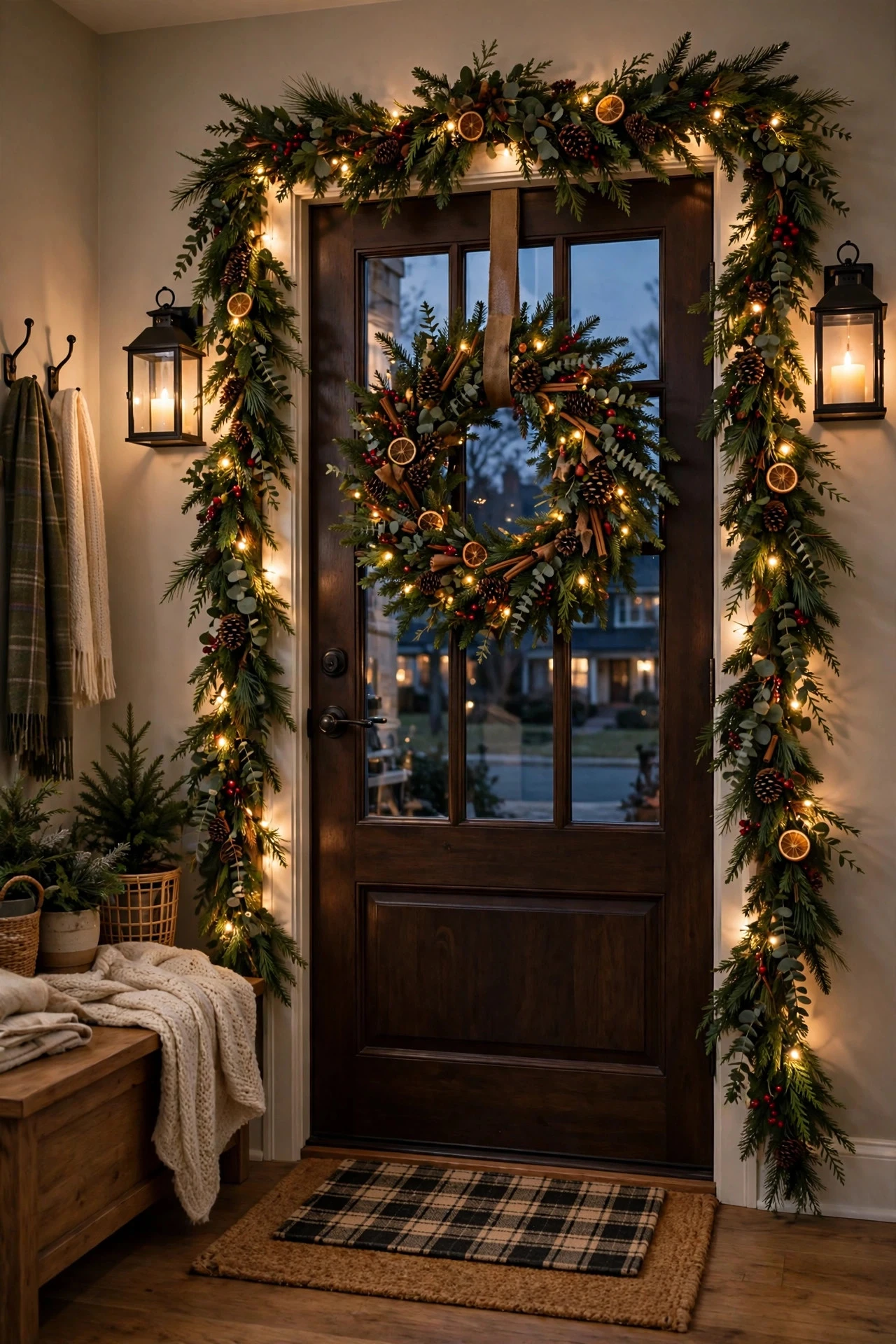
Style a front door for a neighbourhood contest by thinking like a photographer: the door must read from the street, after dark, in one glance. A big wreath, a full garland frame, two lanterns and a layered doormat give the entry four layers, and warm lights make it glow when the judges drive past in the evening.
Start with the wreath as the hero, then frame the door with garland, flank it with planters or lanterns, and finish with a festive doormat over a larger plain one. Use outdoor-rated battery lights — never mains extension leads across a wet path — and check that nothing blocks the letterbox, doorbell or house number. Budget £50–£80 for a full front-door display, or £25–£40 if you already own the lanterns and planters. For the porch around the door, these 22 Christmas porch decorating ideas for a warm welcome show how to carry the same palette across the whole entry.
10. What Is the Best Way to Add 3D Elements to a Flat Door?
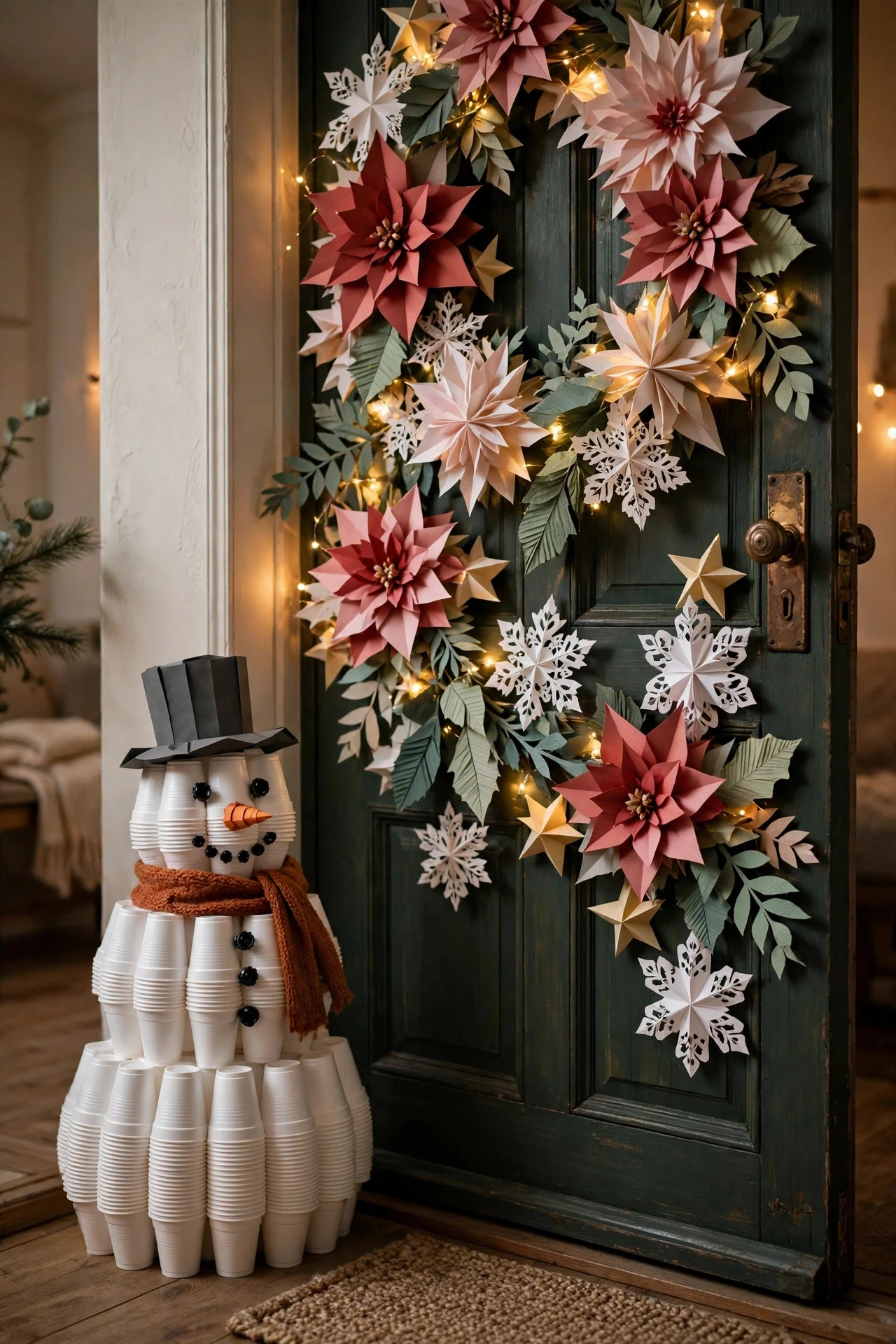
Add 3D elements by building out from the door in layers: a foam or cardboard base, then paper shapes folded to stand proud, then small objects — baubles, pinecones, fabric — attached with wire or strong tape. Even 5 cm of depth changes how a door photographs, because shadows appear and the door stops looking flat.
Easy 3D wins include a snowman built from white cups, a tree built from rolled paper cones, a Santa's belly made from a stuffed cushion, or a wreath layered over a flat paper background. Keep 3D pieces light — under 500 g each — and attach them with removable hooks or command strips rated for the weight, so nothing falls off mid-judging. Test the door by opening and closing it three times; anything that swings or rattles will not survive a day of hallway traffic. The mistake to avoid is gluing heavy objects to thin paper — they peel off and take the paper with them.
11. How Do You Use Lighting to Win After Dark?
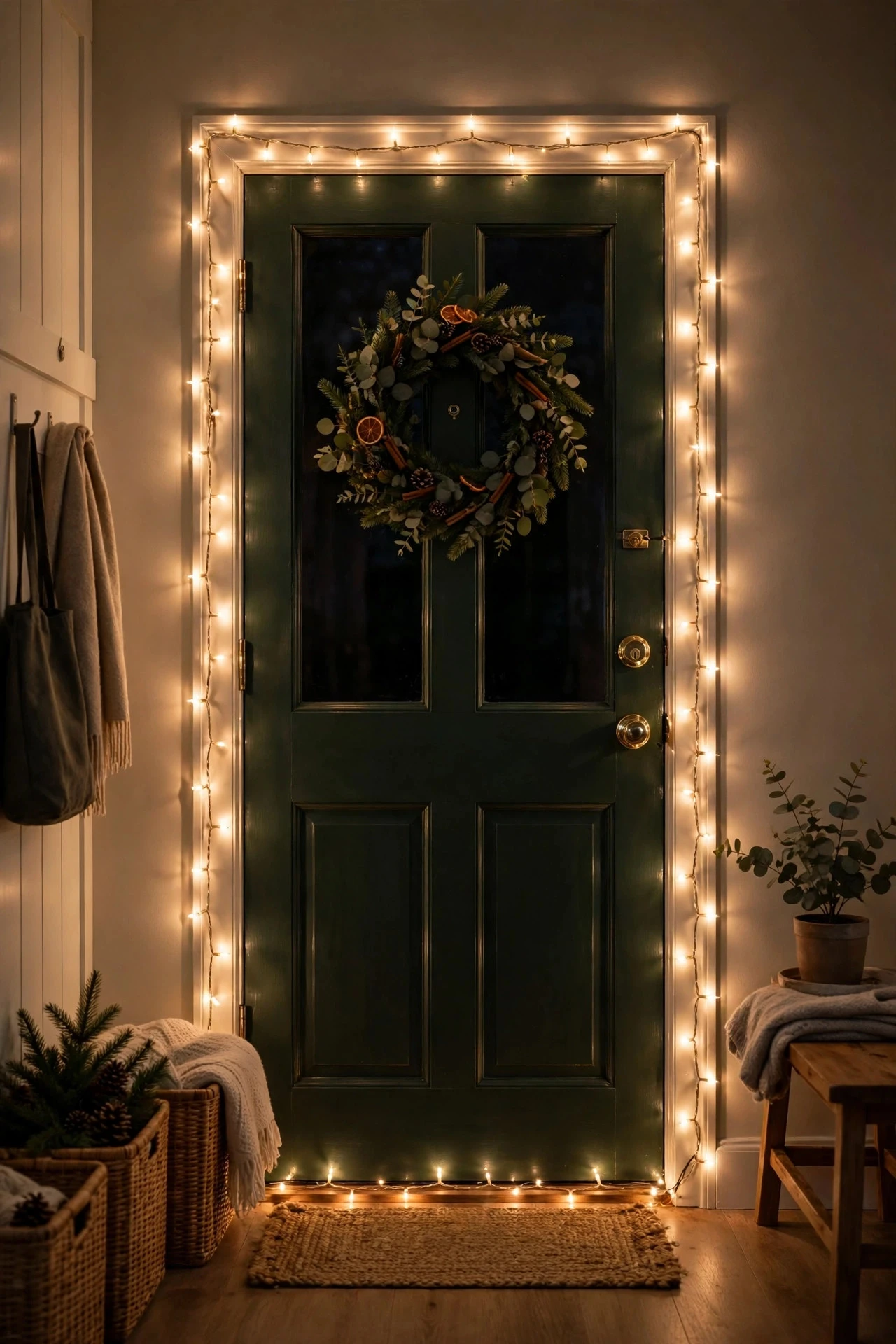
Use lighting to win after dark by putting warm-white battery fairy lights where they outline the door's shape: along the garland frame, around the wreath, and inside any 3D feature like a snow globe or lantern. Lights make a door visible to evening judges and turn a good door into a memorable one.
Choose warm white (2700K) over cool white — it reads as candlelight, not office lighting — and use battery packs with timers so the lights switch on at dusk and off at midnight. Hide the battery packs behind the garland or inside a small box at the base of the door, and tape the wires flat so nobody trips. A 3 m string of battery fairy lights costs £5–£10; two strings are usually enough for one door. Never run mains cables across a hallway or out of a front door — most contests ban them outright. For evening curb appeal beyond the door itself, these 22 outdoor Christmas decor ideas for a festive exterior show how to light the whole approach.
12. How Do You Make a Funny Door That Still Looks Good?
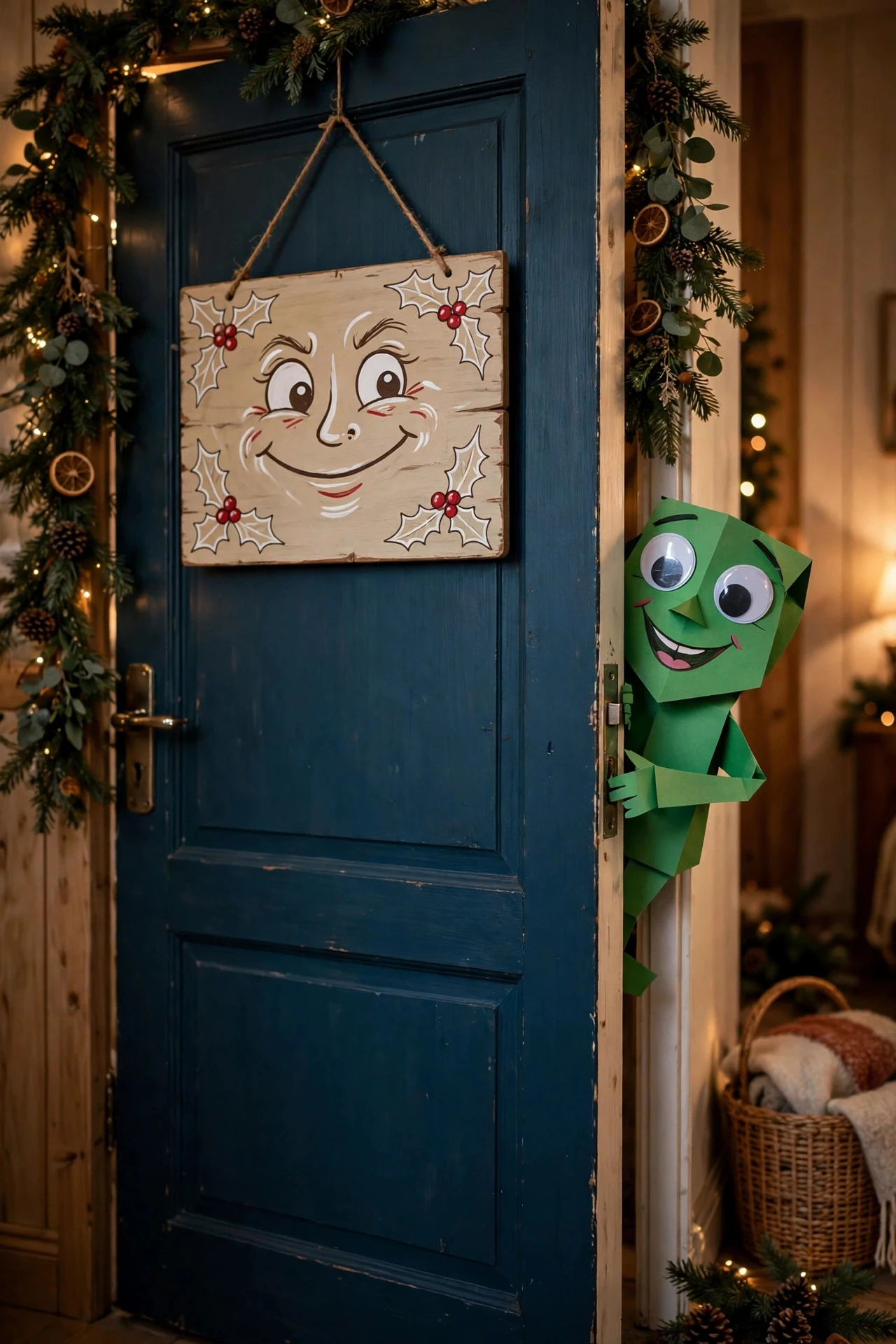
Make a funny door that still looks good by building the joke from good materials: neat lettering, a clean colour palette and one strong visual gag, instead of a joke scribbled on scrap paper. Humour wins contests, but only when the craft is good enough that the door would look good even without the joke.
Reliable funny ideas include the Grinch stealing the door, elves on strike with tiny picket signs, Santa stuck in the chimney with only his legs showing, or a "No Cheer Allowed" Grinch zone. Keep the joke to one line of text, at least 8 cm tall, and let the picture do the rest. Use the same two or three colours as a serious door — green, red and cream for a Grinch door — so the palette stays disciplined. Budget £10–£20. Avoid jokes that need a paragraph to explain, and skip anything rude; judges include teachers, managers and neighbours.
13. How Do You Build a Winter Wonderland Door on a Budget?
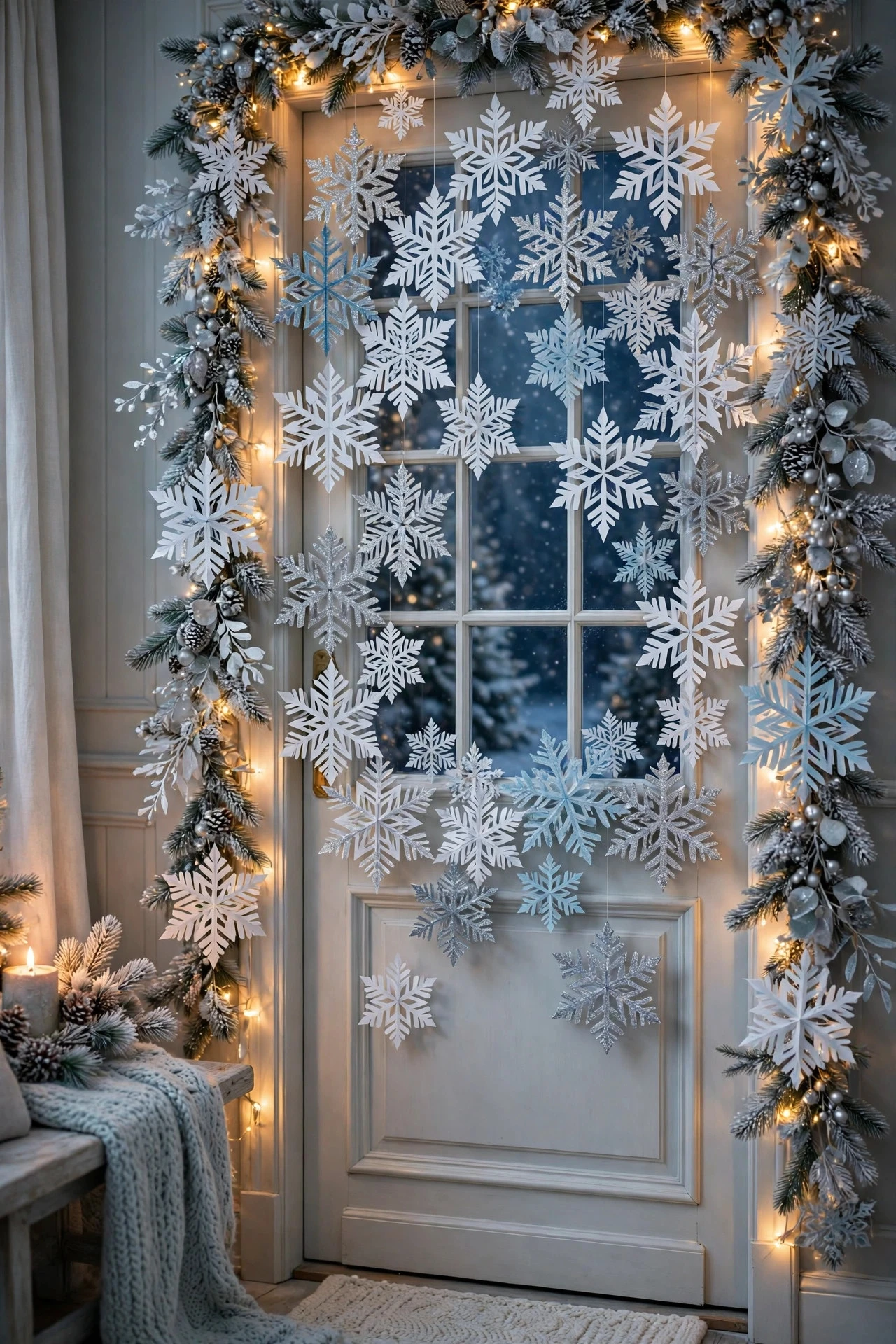
Build a winter wonderland door on a budget with white, silver and icy blue paper: a snowy background, layered paper snowflakes, glittery stars and a small winter village along the bottom. The palette does the work — three cool colours, repeated everywhere, look expensive even when the materials cost almost nothing.
Cut snowflakes from white printer paper — free if the school or office has a stack — and layer them at different sizes, largest at the bottom, smallest at the top, for a sense of falling snow. Add cotton batting along the base for snowdrifts and a few silver baubles for sparkle. A full winter wonderland door costs £8–£15, and most of it can be made in one evening. The mistake to avoid is adding red or gold "just for Christmas" — the wonderland look works because of its cool discipline, and one warm colour unravels it. Save the offcuts: the same snowflakes can dress the windows beside the door.
14. What Colours Win Christmas Door Contests?

The colours that win are the ones used with discipline: classic red, green and gold; elegant all-white with silver; or a bold two-colour scheme like red and white, or navy and gold. Judges reward a tight palette repeated at every level, because it reads as a designed display rather than a box of mixed decorations.
Pick three colours maximum — a main colour, a secondary and one metallic — and use them on the wreath, the garland, the sign and the base. Red and white is the most classic combination and photographs beautifully; all-white with silver reads expensive and suits modern front doors; navy and gold feels luxurious and stands out among a hallway of red doors. Avoid using every colour you own; a rainbow door looks like a craft cupboard exploded. For a masterclass in two-colour discipline, these 22 red and white Christmas tree ideas for a classic look use the same rule on a tree.
15. How Do You Add a Personal Touch With Photos and Names?
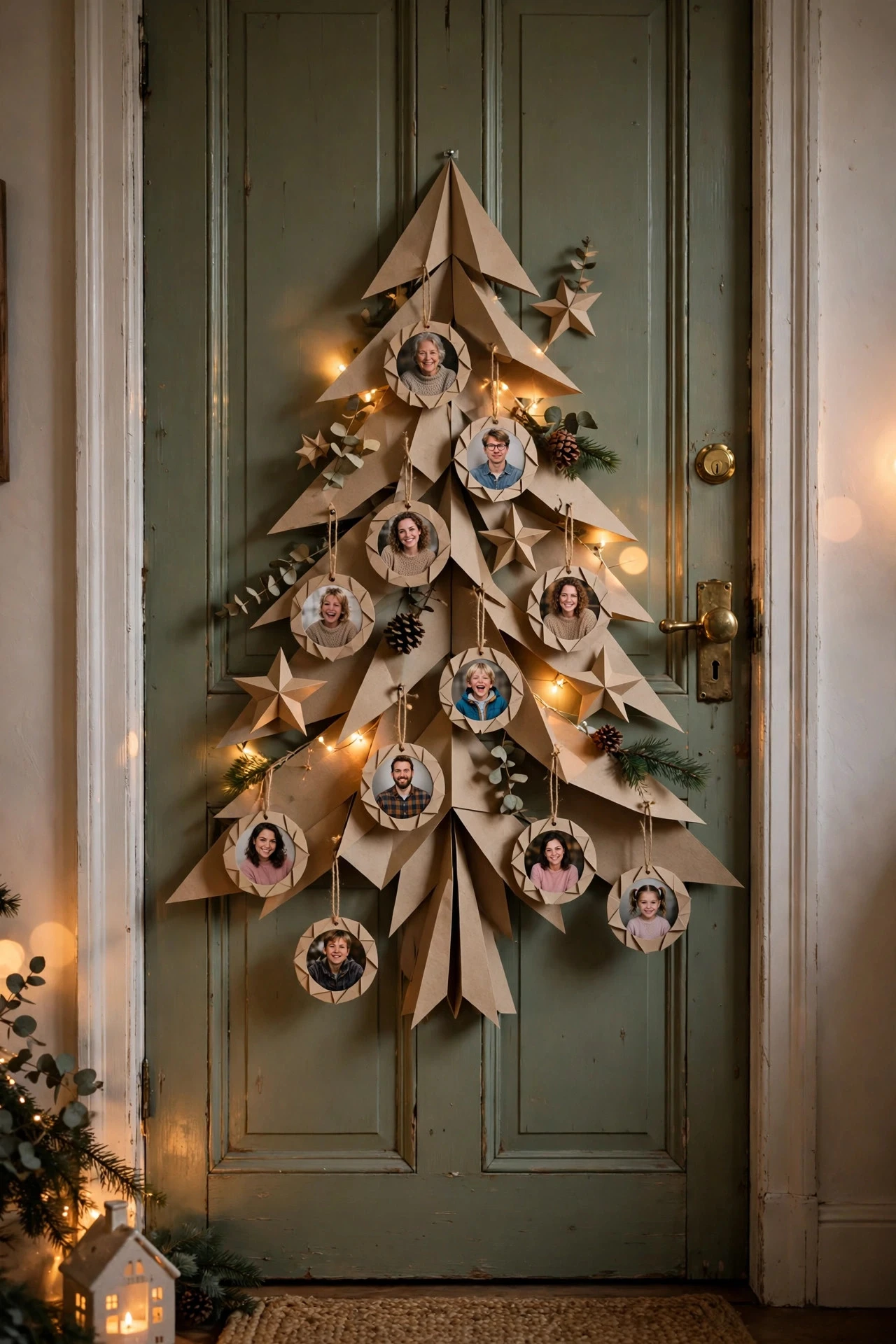
Add a personal touch by putting the people on the door: a team ornament tree where each ornament frames one person's photo, a sleigh roster with every name and job, or a row of stockings, one per person, each labelled. Judges and voters remember doors that include them, and a door with thirty names on it wins thirty votes.
Print photos small — 5 cm circles work well — and mount them on card so they do not curl. Arrange them evenly, with equal spacing, and keep the names legible from at least 2 m away. For a classroom, use first names only; for an office, add job titles for a laugh. A photo door costs £5–£15 in printing and card, and it takes about an hour to assemble once the photos are ready. Check photo permissions first — never put a child's photo on a public-facing door without a parent's agreement, and keep office photos inside the building.
16. How Do You Decorate a Door With No Damage?

Decorate a door with no damage by using only removable fixings: over-door hooks, command strips, painter's tape, magnetic hooks on a metal door, and tension rods across the frame. Never use nails, staples, hot glue or duct tape on a door you do not own — the repair bill costs more than the prize.
Test every fixing on a hidden corner first, and check the weight rating: a heavy wreath needs a hook rated for at least twice its weight. Painter's tape holds paper well and peels cleanly; command strips hold up to 3.5 kg per strip and remove without residue if you follow the pull-tab instructions. For a front door, use an over-door wreath hanger and suction hooks on glass panels. Budget £5–£10 for fixings, and remove everything the day the contest ends — tape left for a month bakes on and damages paint. The Christmas decoration tradition is old, but the no-damage rule is what keeps you welcome back next year.
17. How Do You Make a Door Interactive?

Make a door interactive by giving passers-by something to do: an advent calendar door with a pocket to open each day, a voting ballot pinned beside the door, a QR code linking to a song or video, or a "take a candy cane" holder at handle height. Interaction turns a display into an experience, and judges remember experiences.
The simplest interactive idea is a ballot box: pin a small box beside the door with paper slips, so visitors vote for their favourite door on the spot. A QR code costs nothing to print and can link to a class playlist, a team photo or a short video of the door being built. Keep the interactive element at handle height — between 90 and 120 cm — so children and wheelchair users can reach it. Budget £3–£8 for the extra materials. Avoid anything that requires touching the door itself if the door is a fire door; mount the interactive piece on the wall beside it instead.
18. What Wins: Classic, Funny or Creative?
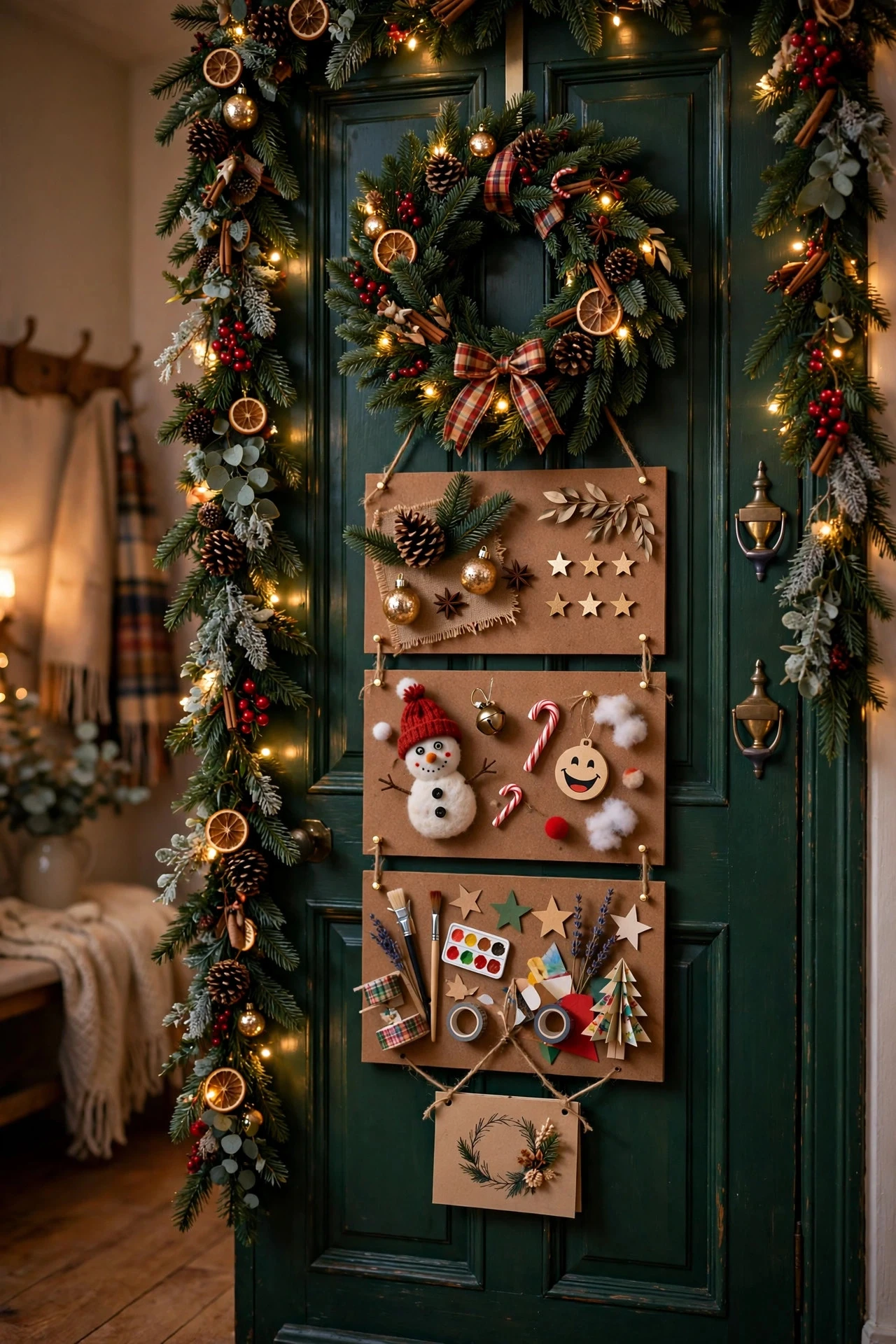
What wins depends on the judges, so read the contest before you build: classic doors win craft prizes, funny doors win the people's vote, and creative doors win "most original" — and most contests award all three. A door that is classic and funny beats a door that is only one of them, so aim for a classic idea with one funny detail.
Check whether the contest publishes its judging criteria; if it scores theme, creativity, craftsmanship and impact, weight your effort evenly across all four instead of spending everything on one. If voting is public, add the personal touch — names and photos — because voters vote for their own door. If judges are staff with clipboards, add the neat finishing: hidden wires, straight edges and a small card naming the theme. A door that scores well in every category beats a door that is perfect in one and weak in the rest. Enter the category that suits your door, and do not try to win them all with one design.
19. How Do You Style a Double Door or Wide Entry?

Style a double door by treating the two doors as one canvas: run a single scene across both, with the join in the middle becoming part of the design — a fireplace with the opening at the join, a sleigh flying across both doors, or a winter village split down the centre. The join is your friend if you plan for it, and your enemy if you ignore it.
Use a garland frame around the whole double frame rather than each door separately, and hang one large wreath in the centre of the join or two matching wreaths, one per door, for symmetry. Keep the handles clear and make sure both doors still open — a display that stops a door opening will be disqualified in most buildings. Budget £30–£60 for a double door, roughly double a single door, because you need two garlands and twice the paper. For the entry around a wide door, these Christmas front porch ideas for a warm, welcoming entry show how to dress the whole approach, not just the door.
20. How Do You Decorate a Small Apartment Door for a Contest?
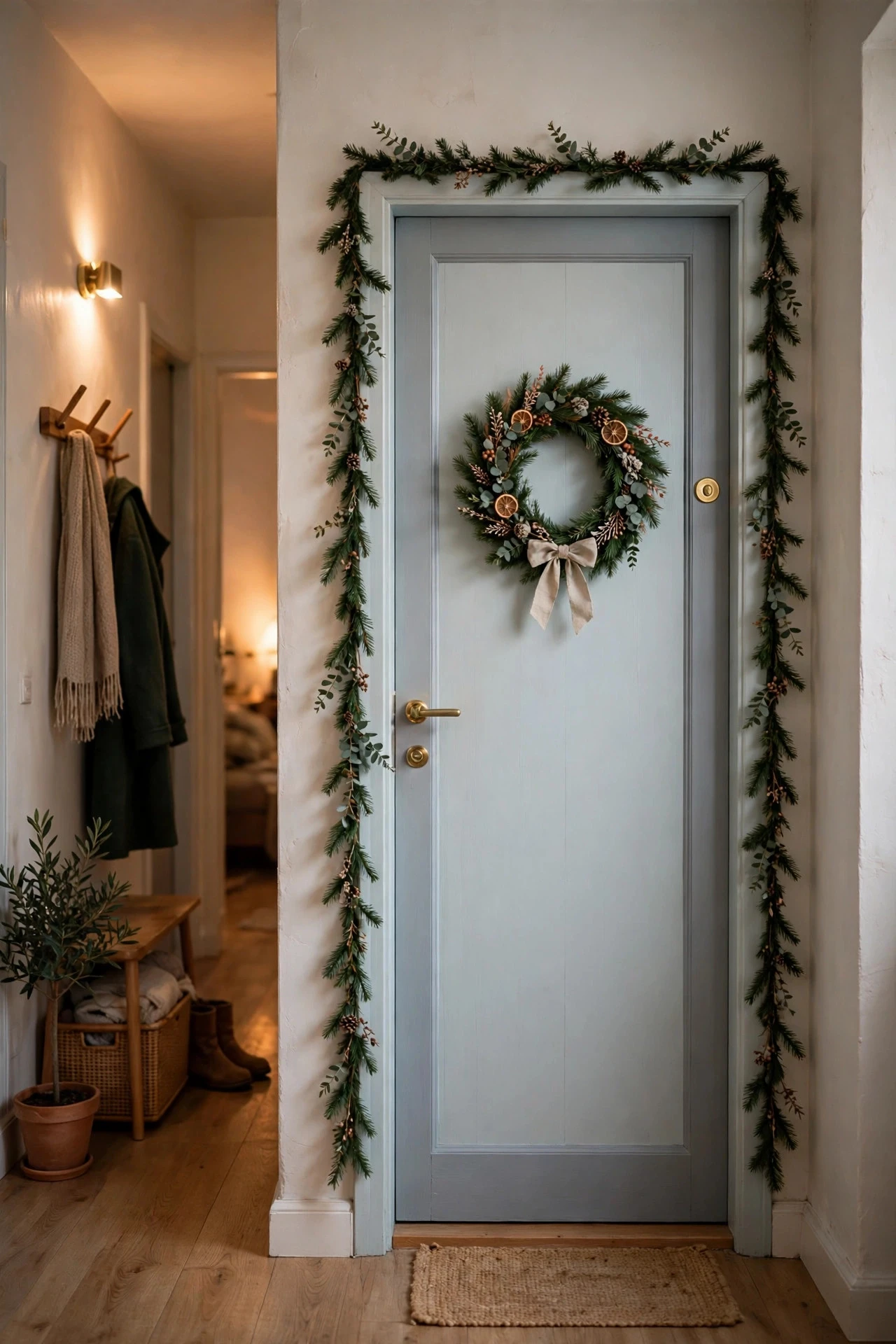
Decorate a small apartment door by going vertical and keeping the floor clear: a wreath, a garland frame, a door bow and a small sign, with nothing on the floor except a slim doormat. Small doors win when they look intentional, not when they try to copy a big house display.
Choose one hero — usually the wreath — and keep everything else slim: a thin garland, a flat paper scene, battery lights with the pack hidden behind the wreath. Use removable hooks only, because a rented door must return to its original state, and check the lease before you hang anything outside the flat. A small apartment door costs £15–£30 to dress well, and it photographs beautifully because the whole display fits in one frame. The mistake to avoid is a wreath wider than the door itself; on a narrow flat door, a 45–60 cm wreath is the right scale.
21. What Are the Rules Most Contest Doors Break?

The rules most contest doors break are the boring ones: blocking a fire exit, covering a peephole or door number, using mains lights where only battery lights are allowed, and fixing decorations with nails or hot glue. Breaking them gets a door disqualified, however beautiful it is — so check the rules before you build.
Read the contest sheet twice: it will list the door's usable area, the allowed fixings, the lighting rules and the judging date. Keep the door's window, handle, lock and number visible; keep the hallway clear of anything that sticks out more than 10 cm; and never block a fire exit sign or a fire door's closing mechanism. Take a photo of the door before you start, so you can restore it exactly afterwards. If the rules are unclear, ask the organiser — a two-minute question beats a disqualification. The best doors in any contest are the ones that follow every rule and still look brilliant.
22. How Do You Photograph Your Door for Online Voting?
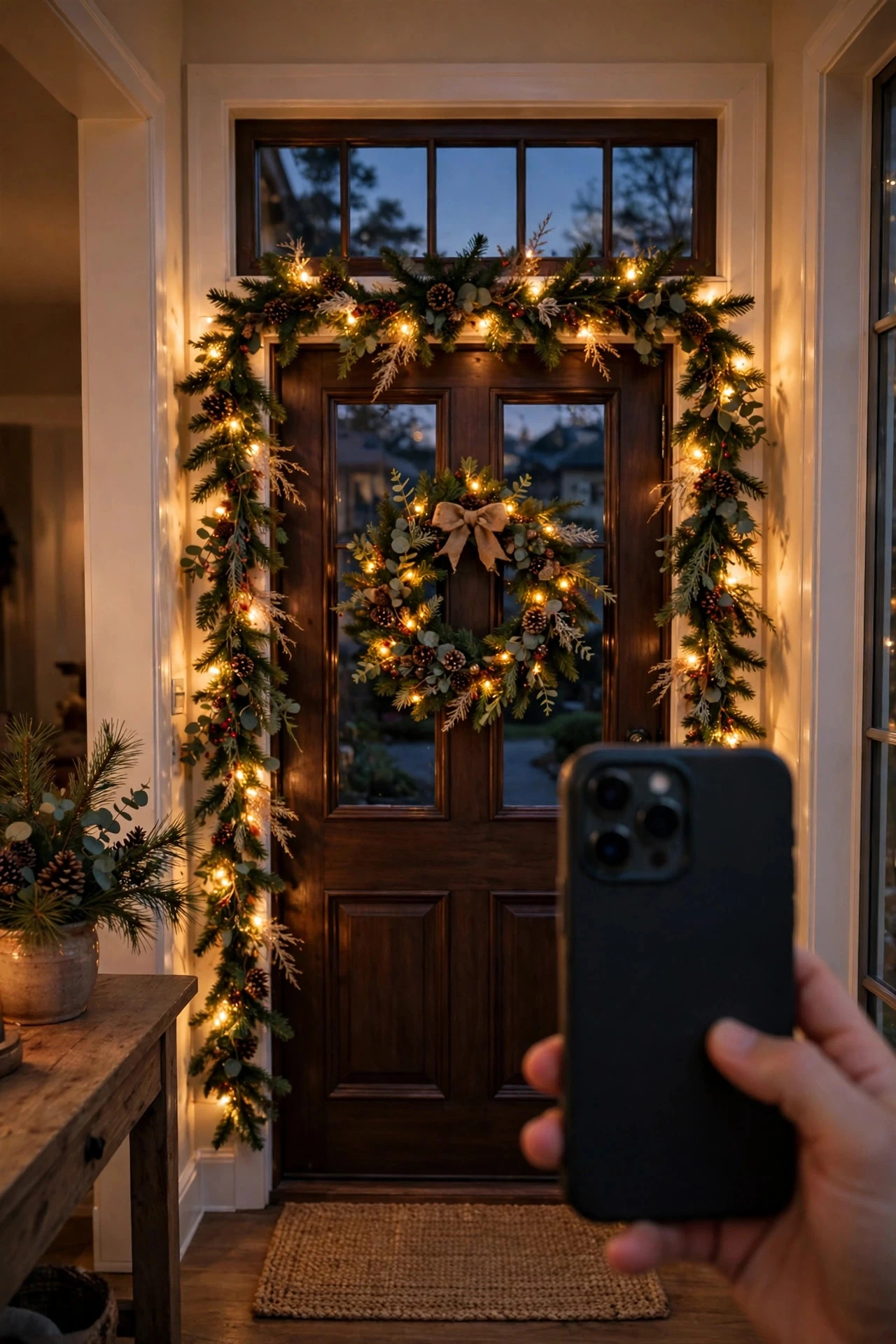
Photograph your door for online voting by shooting straight on, in daylight and again at dusk with the lights on, so voters see both versions. Stand 2–3 m back, centre the door in the frame, and include a little of the wall on each side so the door's scale is clear — a close-up hides the best work.
Clean the lens, turn off the hallway's overhead light if it casts a yellow glare, and take three shots: one straight, one from a slight angle to show the 3D depth, and one detail shot of the best element. Edit lightly — straighten the image and brighten it slightly, but do not filter the colours, because voters compare doors by their real palette. Submit the dusk shot with the lights on as the main photo; lit doors get more clicks than daylight ones. A good photo can win a contest a flat-looking door would lose, so spend ten minutes on it.
Practical Tips
Start building your contest door a week before judging day, not the night before — paper scenes take two to three hours, garland frames take an hour, and drying time for paint and glue adds another day. Buy the wreath and garland first, because they sell out, and add the small details last, when you can see what the door actually needs.
Keep a small repair kit beside the door during judging week: spare tape, a few extra baubles, a spare battery pack and a marker for touch-ups. Check the door every morning — hallway traffic knocks things loose, and a door with one fallen stocking looks neglected. For storage, keep the paper scene flat in a large box with tissue between layers, coil garlands loosely, and label the box by year so next December takes an hour, not a weekend. Set a total budget before you shop — £15–£40 covers a winning classroom or office door, £50–£80 covers a full front-door display — and stick to it.
Final Thoughts
A Christmas door decorating contest is won by a single clear idea, done big, with one 3D detail and warm light to finish it. Whether your door is a classroom, an office or a front door, the rules stay the same — commit to one theme, keep the palette tight, use removable fixings, follow the building rules, and photograph it well for the vote.
You may also like: our 22 Christmas window decorations for a bright, festive home will help you carry the same theme from the door to the windows beside it, so the whole entry feels like one thoughtful display.
Frequently Asked Questions
What do judges look for in a Christmas door decorating contest?
Judges typically score theme, creativity, craftsmanship and overall impact, with a clear cohesive theme carried through every detail. A single big idea that reads from down the hall, neat execution with no visible wires or gaps, and lighting that looks great after dark will set your door apart from the rest.
How much should you spend on a contest door?
A winning classroom or office door costs £15 to £40, covering paper, a wreath or garland, ribbon and battery lights. A full front-door display with garland, lanterns and planters runs £50 to £80. Spend on one anchor piece, usually the wreath or garland, and make the rest from paper and materials you already own.
Can you use real lights on a classroom or office door?
Use battery-operated fairy lights, never mains lights, on a classroom or office door. Most schools and offices ban mains cables across floors and doorways, and battery lights with a timer are safer around paper decorations. Choose warm white lights and hide the battery pack behind the garland or wreath.
How do you hang decorations without damaging the door?
Use over-door hooks, command strips, painter's tape or magnetic hooks on a metal door, and never use nails, staples, hot glue or duct tape on a door you do not own. Test every fixing on a hidden corner first, check the weight rating, and remove everything the day the contest ends so tape does not bake onto the paint.
How early should you start decorating a contest door?
Start a week before judging day. Paper scenes take two to three hours to build, paint and glue need a day to dry, and garland frames take about an hour to hang properly. Starting early also leaves time to fix anything that falls, and to photograph the door in daylight and at dusk before the vote.
What is the easiest Christmas door idea that still wins?
The easiest winning door is an oversized wreath with a full garland frame and warm battery lights. A wreath at least 75 cm across, a 2.7 m garland around the frame and two strings of warm-white fairy lights take about an hour to hang, cost £25 to £40, and read as a complete, deliberate display from the far end of the hall.