22 Living Room Rug Ideas to Ground Your Seating Area
A living room rug does more than soften the floor. It defines where the seating lives, pulls the sofa, chairs and coffee table into one conversation, and sets the colour and texture for everything placed on top of it. Get the size and placement right and even a modest room feels settled and intentional; get it wrong and the furniture looks as if it is floating, however expensive each piece may be.
Looking for more inspiration? Our Nest Decorz homepage gathers the latest home decor ideas, seasonal decorating guides and room-by-room styling tips in one place — start there and explore.
This guide covers 22 practical ideas, from sizing rules and durable materials to layering, colour and care. Each idea gives the measurements to check, the pile and fibre to look for, the budget range to expect, and the mistake that most often spoils an otherwise good rug.
– Start with size: an 8×10 rug suits most three-seat sofas, with front legs on the rug. – Choose wool or a wool blend for durability, jute or sisal for texture, and low pile for busy routes. – Leave 15 to 45 centimetres of bare floor around the rug so the room still breathes. – Layer a flat base rug under a smaller patterned rug only when both stay flat and safe. – Add a rug pad, rotate the rug twice a year, and keep it clear of heat and door swings.
1. Size First: 8×10 as the Starting Point

How large should a living room rug be? For most rooms with a standard three-seat sofa, start with an 8×10-foot rug, because it is large enough to sit under the front legs of the sofa and chairs while leaving a balanced border of floor around the edges. Measure the seating group first, then add 15 to 30 centimetres beyond the furniture on each side, and tape the outline on the floor with painter's tape before you order. A rug that is too small makes the seating look scattered, while an oversized rug that touches the skirting on every side can swallow the room and hide a beautiful floor. The mistake to avoid is buying for the coffee table alone, because a rug sized to the table will always look like a mat, not an anchor.
2. Front Legs On: The Placement Rule That Works

Should all the furniture legs sit on the rug, or only the front ones? The front-legs-on rule works in almost every living room: place the rug so the front legs of the sofa and armchairs rest on it, with the back legs on the bare floor, because this connects the pieces without demanding an enormous rug. Leave roughly 15 to 20 centimetres of rug in front of the sofa so feet land on softness when you sit down, and centre the coffee table on the rug with at least 15 centimetres clear on each side. This arrangement suits rented rooms and smaller budgets, because an 8×10-foot rug usually achieves it where a 9×12-foot rug would crowd the walls. The mistake to avoid is pushing the rug hard against the sofa base with no rug showing in front, because the seating then looks perched on the edge rather than grounded.
3. Large Neutral Rug That Lets Furniture Talk

What if your sofa, artwork or curtains already carry the colour? Choose a large neutral rug in warm ivory, greige, soft taupe or pale grey, because a quiet base lets patterned cushions, a velvet sofa or a gallery wall take the lead without competition. Look for subtle texture rather than a flat, featureless weave: a loop pile, a fine rib, a hand-knotted wool with slight variation, or a bordered design in a tone close to the field colour. Pair it with mid-tone wood, black metal and one warm accent, such as cognac leather or brass, to stop the palette feeling washed out. The mistake to avoid is choosing a cold, stark white rug in a north-facing room, because it can look grey and grubby in winter light instead of fresh and calm.
4. Wool Rug for Daily Durability

Is wool worth the higher price for a living room rug? Yes, for a room used every day, because wool is naturally resilient, springs back after foot traffic, resists dirt better than many synthetics, and feels warm underfoot in winter. A hand-tufted or hand-knotted wool rug, ideally 100 percent wool or a wool blend with no more than 20 percent synthetic fibre, will usually outlast a cheap polypropylene rug several times over. Expect to pay more upfront, often in the mid to high range for an 8×10-foot size, but divide that cost over eight to twelve years of use and the value becomes clear. Choose a medium pile, about 10 to 15 millimetres, for a balance of comfort and easy cleaning. The mistake to avoid is buying a very thick, loose wool shag for a main walkway, because it traps crumbs, shows traffic lanes and is far harder to keep clean.
5. Jute Base Layer Under a Patterned Rug

Can a rough natural-fibre rug work in a comfortable living room? Yes, as a base layer, because a flat jute rug adds warmth, texture and a generous footprint at a modest price, while a softer patterned rug on top supplies the colour and comfort. Choose a tightly woven jute in a natural or bleached tone, sized 9×12 feet for a large seating group, and place a smaller wool or cotton rug, around 6×9 feet, centred on top. Jute suits coastal, Scandinavian and farmhouse rooms, pairs well with light oak, linen and rattan, and hides everyday dust better than a pale flatweave. The mistake to avoid is layering two thick, loose rugs without a pad, because the edges curl, the top rug creeps, and the combination becomes a trip hazard at the sofa.
6. Layered Rugs for Depth and Flexibility

How do you layer rugs without the room looking messy? Keep one rug flat and one rug soft, with a clear size difference of at least 60 centimetres on each side, because contrast in texture and scale is what makes layering look deliberate. A large, low-pile base in jute, sisal or flatweave cotton anchors the zone, while a smaller patterned rug on top adds colour, perhaps a vintage wash, a bold geometric or a faded Persian-style print. Layering lets you change the look cheaply: swap only the top rug when you tire of a pattern, and keep the expensive base rug for years. Use a rug pad under the base layer and a non-slip gripper between layers if needed. The mistake to avoid is layering two patterned rugs of similar size and similar colours, because the patterns fight, the edges blur, and the floor looks cluttered instead of collected.
7. Geometric Rug in a Modern Room

Which pattern suits a modern living room without dating quickly? A restrained geometric rug, with clean lines, diamonds, arches or a simple grid in two or three colours, because it echoes modern furniture shapes while staying calm enough to live with for years. Choose a design with generous negative space rather than a dense, all-over motif, and keep the palette close to the room: charcoal and ivory, warm grey and rust, or navy and cream. A geometric rug pairs well with a low-profile sofa, a stone or walnut coffee table, and slim black lighting, and it helps a plain room feel designed rather than empty. For help balancing pattern with light and shadow, see these living room lighting ideas before you commit to a dark design. The mistake to avoid is matching a bold geometric rug with geometric cushions and geometric curtains at once, because the room then feels like a showroom pattern test instead of a place to relax.
8. Abstract Rug as the Room's Focal Point

Can one rug carry the whole design of a living room? Yes, when you choose an abstract rug with painterly washes, soft brush marks or flowing organic shapes, because it works like large-scale art for the floor and needs little competition above it. Keep the sofa in a solid colour, the curtains plain, and the cushions in tones pulled from the rug, perhaps one warm rust, one deep teal and one warm ivory, so the eye reads the floor first. Abstract rugs suit contemporary and eclectic rooms, hide everyday marks better than a plain pale rug, and forgive a slightly imperfect furniture layout because the eye follows the pattern. Budget for a mid to high price at 8×10 feet, since cheap printed copies often look flat and fade unevenly. The mistake to avoid is adding a busy patterned artwork directly above an abstract rug, because the two focal points compete and neither gets the attention it deserves.
9. Round Rug Under a Round Coffee Table

Does a round rug work in a square living room? Yes, beautifully, when it sits under a round coffee table and a curved or compact seating group, because the circle softens hard corners and makes conversation feel closer. Choose a round rug at least 60 centimetres wider than the table on every side, so chairs pulled up to the table still have their front legs on the rug; a 7-foot or 8-foot diameter rug suits most three-seat arrangements. Pick a low pile so the table sits level, and a pattern that reads well from above, such as a simple border, a sunburst or a subtle tonal wash. The mistake to avoid is placing a small round rug under a large rectangular sofa, because the corners of the sofa hang over empty floor and the circle looks lost.
10. Vintage and Persian-Style Rugs with Character

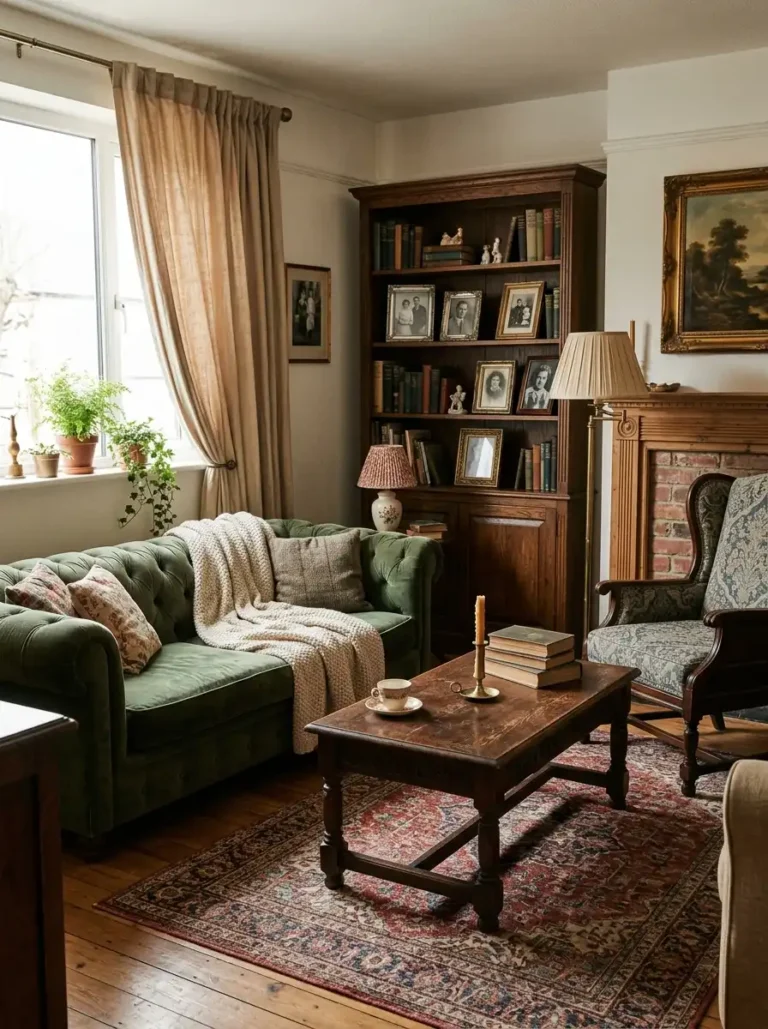
Should you choose a vintage or Persian-style rug for a modern living room? Yes, if you want instant character, because a faded, hand-knotted rug with a traditional medallion or all-over floral pattern adds history, colour and a collected feel that a new plain rug cannot imitate. Look for genuine vintage pieces in wool, with soft, worn pile and natural dyes, or for a good-quality vintage-look rug in a washed palette of rust, indigo, sage and cream. These rugs hide stains, suit leather, dark wood and brass, and work in both traditional and modern rooms because their colours are muted rather than bright. For ideas on framing the wall above a characterful rug, explore these living room wall decor ideas. The mistake to avoid is buying a very dark, heavily patterned vintage rug for a small, dim room, because it can make the floor feel heavy and shrink the seating zone.
11. High-Low Texture That Catches the Light

What gives a plain rug a luxurious feel without adding pattern? A high-low pile, where cut and looped yarns sit at different heights, because the surface catches light as you move around the room and creates subtle tone and shadow. This texture suits neutral rooms, minimalist schemes and homes that want interest without a printed design. Choose a wool or wool-blend high-low rug in ivory, warm grey or soft sage, and keep the furniture lines clean so the texture stays visible around the coffee table. High-low rugs feel rich underfoot, hide footprints better than a flat velvet pile, and photograph beautifully in warm evening light. The mistake to avoid is placing a high-low rug in a dining zone or under a chair with castors, because crumbs settle into the low areas and wheels catch the high loops and wear them unevenly.
12. Rug Colour Matched to Wall Colour
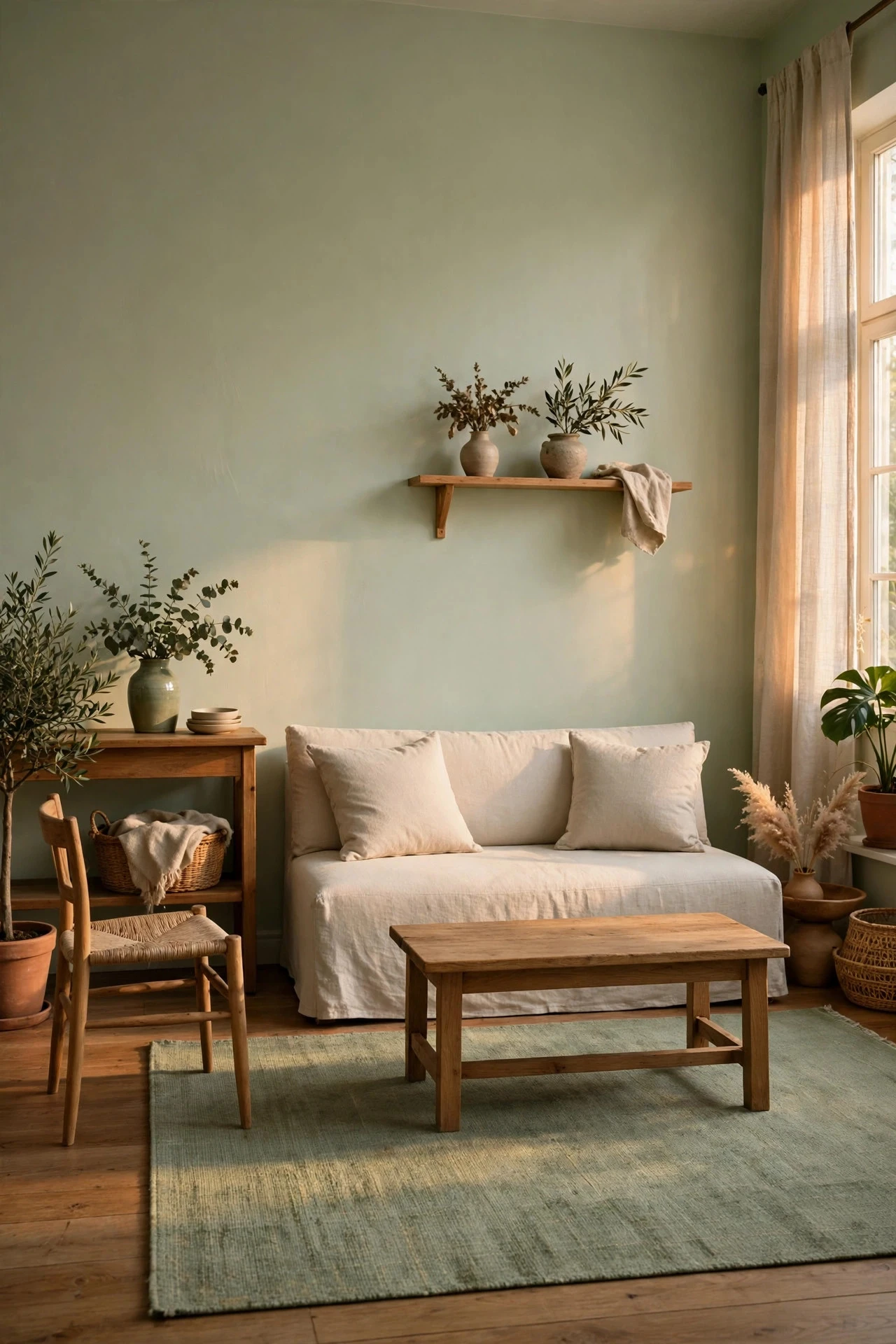
Should a rug match the wall colour? Matching the rug to the wall in a nearby tone, rather than an exact copy, creates a calm, enveloping room, because the floor and walls read as one continuous backdrop for the furniture. Try a rug two tones lighter or darker than the wall: a warm greige rug with soft white walls, a sage rug with pale green walls, or a dusty blue rug with light grey-blue walls. Keep the rug texture different from the wall finish, perhaps a woven wool against smooth plaster, so the room does not feel flat. Add contrast through wood tones, black metal or a patterned cushion. The mistake to avoid is matching rug, walls, sofa and curtains in one identical shade, because the room loses depth and every mark on the rug becomes more obvious.
13. Warm Terracotta and Rust for Cold Rooms
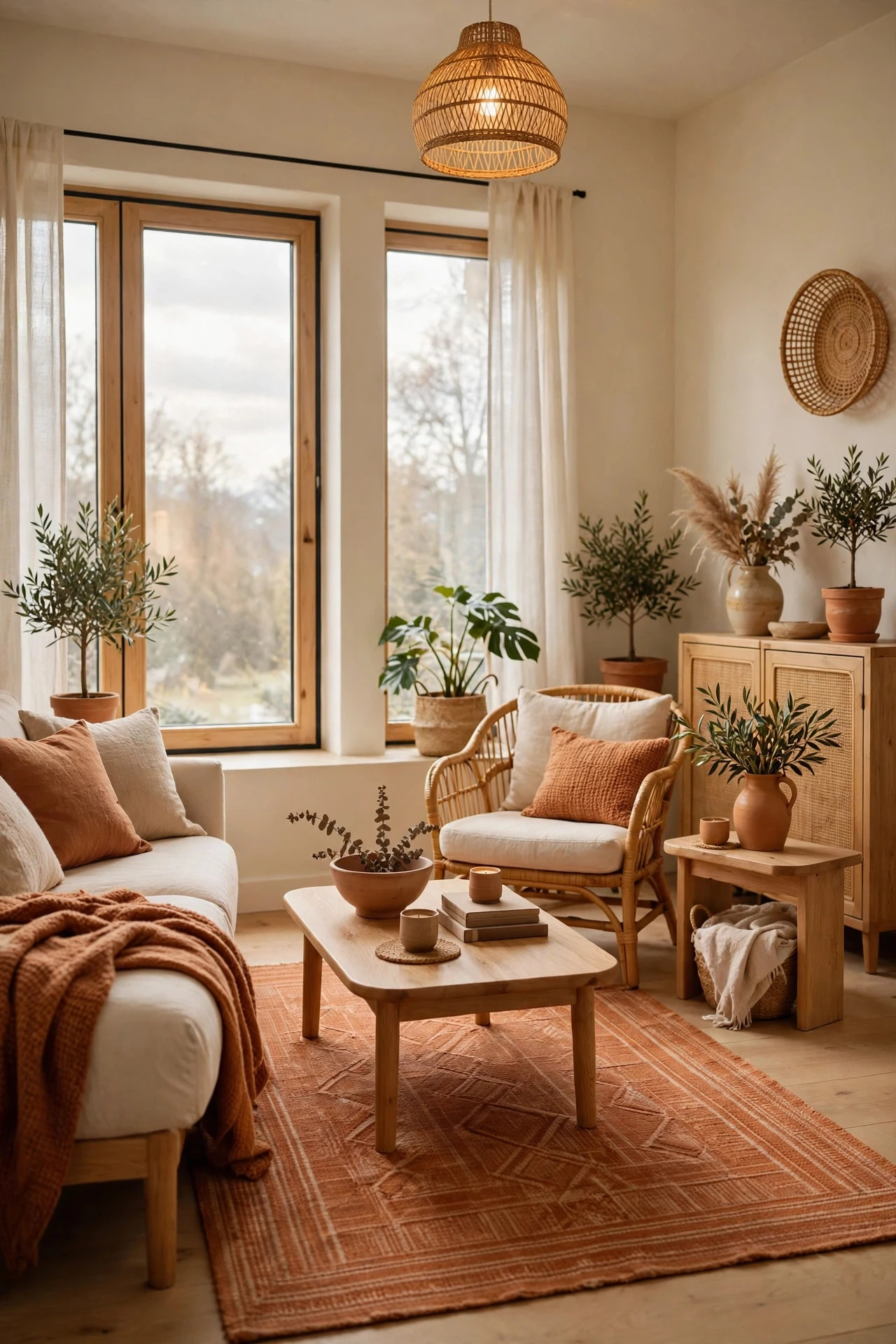
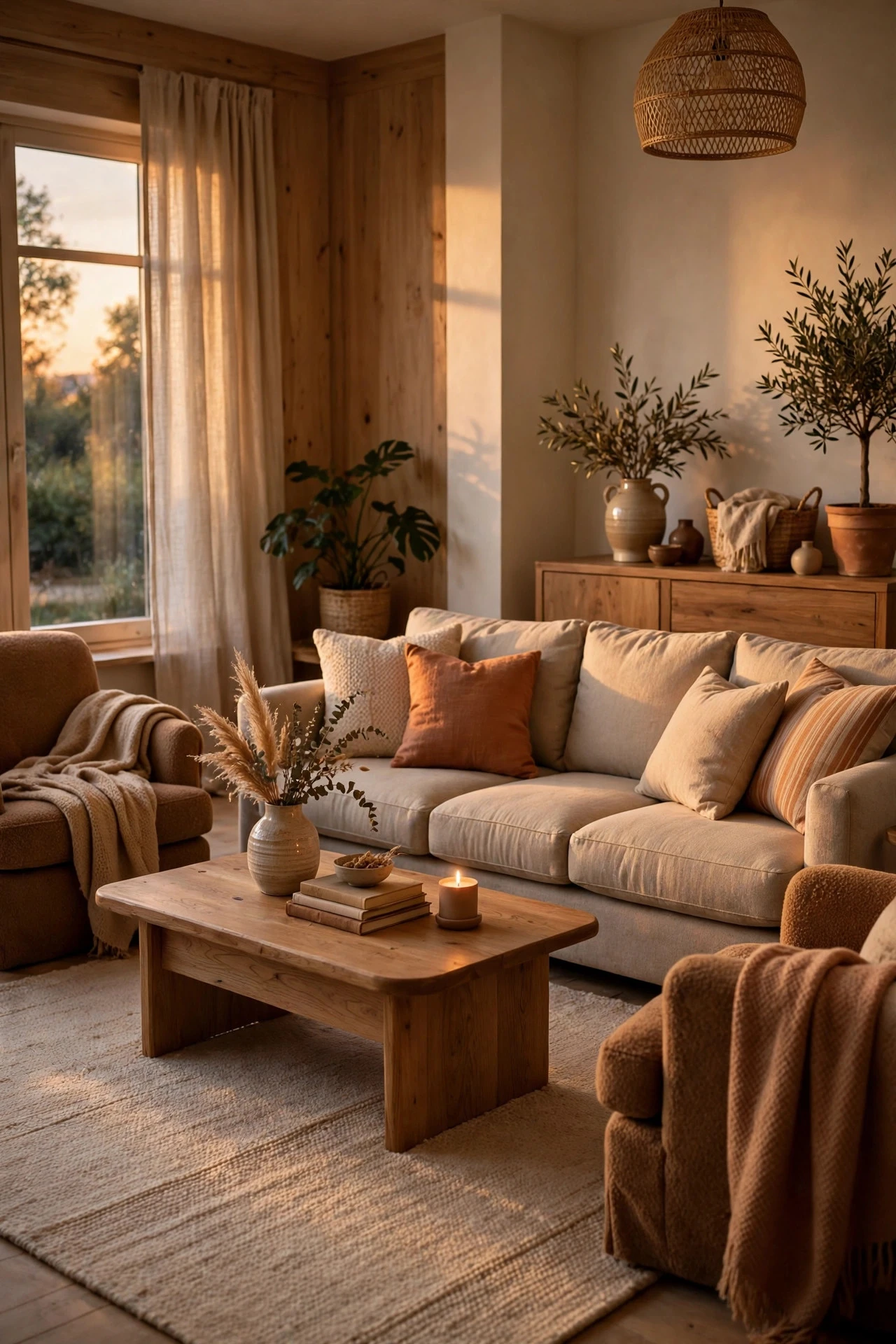
How do you warm up a north-facing or basement living room? Choose a rug in terracotta, rust, burnt orange or warm clay, because warm earth tones counteract cool, grey light and make the floor feel sunlit even on a dull day. A terracotta rug pairs naturally with cream walls, light oak, linen, rattan and aged brass, and it suits Mediterranean, farmhouse and eclectic rooms. Look for a flatweave or low-pile wool rug with a subtle border or a faded vintage pattern, so the colour feels layered rather than flat and loud. Terracotta hides everyday dust and pet hair better than pale ivory. The mistake to avoid is pairing a rust rug with cool blue-grey walls and chrome fittings, because the warm and cool undertones clash and the rug can look orange rather than warm and grounded.
14. Navy Rug Against a Grey Sofa
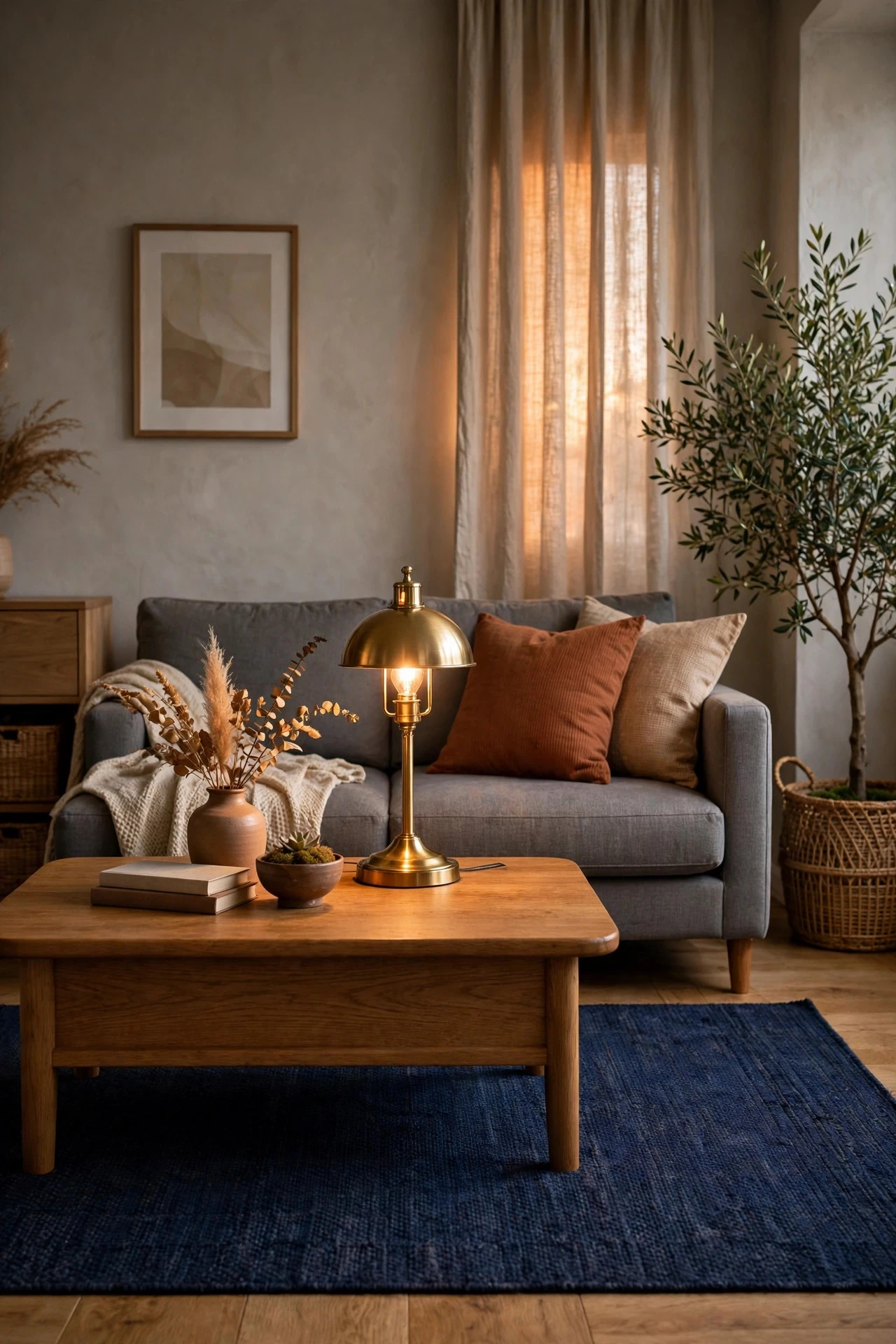
Does a navy rug work with a grey sofa? Yes, it is one of the most reliable combinations, because deep navy gives a mid-grey sofa definition and depth while staying calm enough for everyday living. Choose a navy rug in a solid colour, a subtle tonal pattern or a faded vintage wash, and add warmth through oak, brass, cognac leather or a rust cushion so the room does not feel cold. Navy suits both light and dark grey sofas, hides marks well, and works in rooms with white, cream or pale grey walls. Keep the coffee table in a warm wood or stone tone, rather than black glass, to stop the centre of the room feeling heavy. The mistake to avoid is adding navy curtains, navy cushions and a navy rug all at once, because the room becomes a single block of dark blue and loses the contrast that makes the combination work.
15. Striped Rug to Guide the Eye
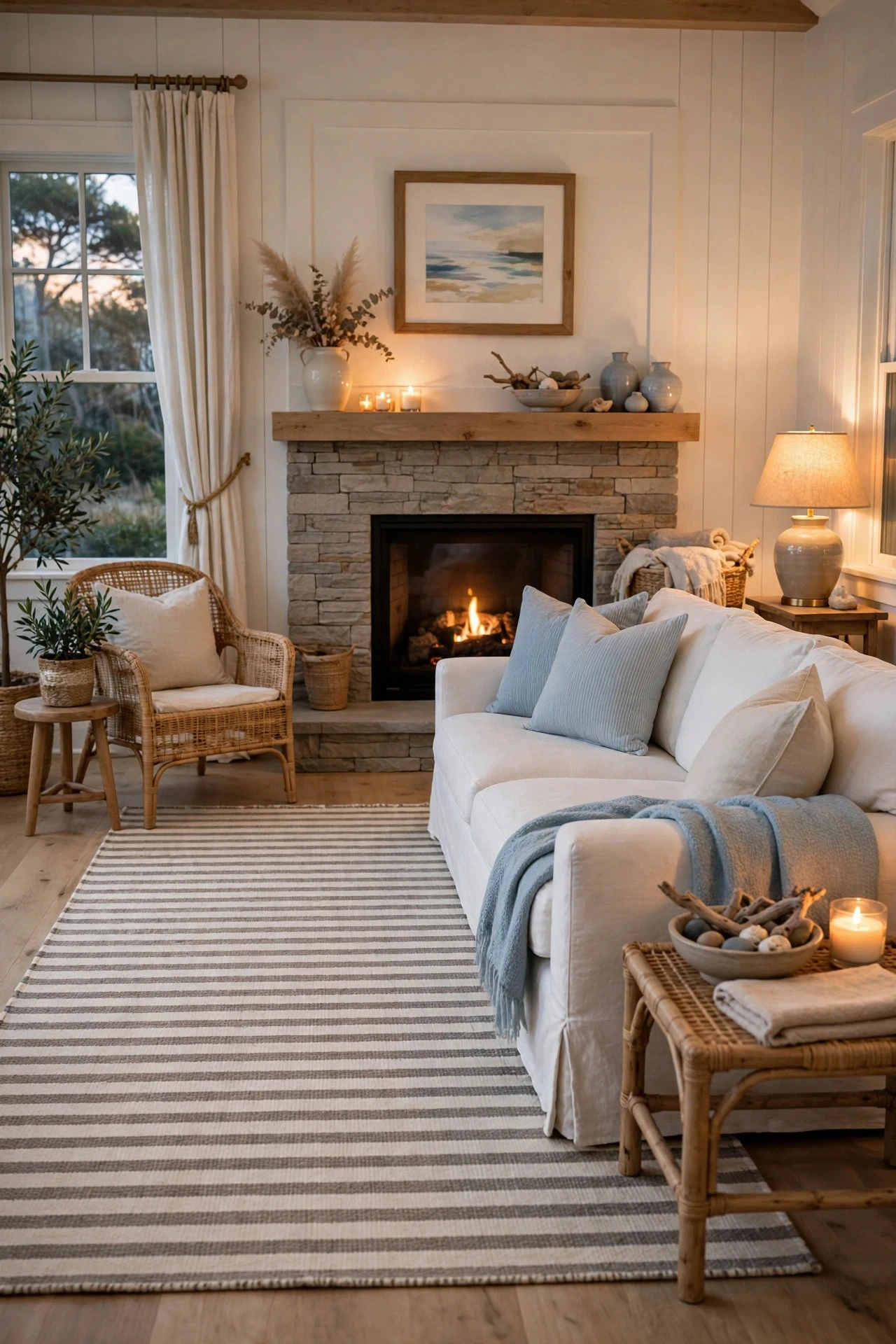
When should you choose a striped rug? Choose stripes when you want to stretch a room visually, because stripes running away from the main sofa make a narrow room feel longer, while stripes running across the room make a wide room feel broader. Keep the stripes simple: two or three tones, such as ivory and warm grey, cream and navy, or natural jute and white, with a clear, even repeat. A striped flatweave or low-pile wool rug suits coastal, Scandinavian and modern rooms, pairs well with plain upholstery, and helps a long, awkward living room feel ordered. Use the stripe direction deliberately, laying the rug so the stripes lead toward a fireplace, a window or the main view. The mistake to avoid is choosing narrow, high-contrast stripes in a room that already has striped curtains or striped cushions, because competing stripes create a dizzying effect and the rug loses its guiding purpose.
16. Shag Rug for Softness Underfoot

Is a shag rug practical in a living room, or only for bedrooms? A shag rug works in a low-traffic living zone, such as a reading corner or a seating group used mainly in the evening, because the deep pile feels luxurious under bare feet and adds instant cosiness. Choose a shag with a dense, even pile in ivory, warm grey or soft blush, ideally in a wool blend or a high-quality polypropylene that resists matting, and keep it away from the main doorway route. Shag suits relaxed, bohemian and family rooms, pairs well with a low sofa, floor cushions and a soft throw, and makes a hard floor feel warm in winter. Budget in the low to mid range for a synthetic shag, higher for wool. The mistake to avoid is placing a shag rug under a dining table or a rolling office chair, because food, wheels and constant pressure flatten the pile and create permanent worn patches.
17. Low-Pile Rug for Dining and High Traffic

Which rug survives a busy hallway route through the living room? A low-pile rug, with a pile height under 8 millimetres, because it stays flat under doors, does not trap crumbs, and allows chairs and feet to move without catching. Choose a flatweave, a loop pile or a tightly woven wool rug in a mid-tone pattern that hides traffic marks, such as a subtle geometric, a border design or a vintage wash. Low-pile rugs suit open-plan rooms where people walk through the seating zone to reach the kitchen, homes with dogs, and rooms with a robot vacuum, which moves more easily over a flat surface. Look for a rug with a sturdy backing and a good rug pad for grip. The mistake to avoid is choosing a very pale, plain low-pile rug for the busiest route in the house, because every footprint and spill will show, and the rug will look tired long before it wears out.
18. Rug for an Open-Plan Living and Dining Space

How do you use rugs to separate living and dining zones in one open room? Use two different rugs with a clear gap of bare floor between them, because the break tells the eye where one function ends and the other begins. Choose a large, soft rug for the living zone, perhaps 9×12 feet under the sofa group, and a separate low-pile rug under the dining table, sized to allow chairs to pull out while staying on the rug, usually at least 60 centimetres beyond the table on each side. Keep both rugs in warm neutrals with one shared accent. For calm, light-filled open-plan styling, see these Scandinavian living room ideas. The mistake to avoid is running one enormous rug under both the sofa and the dining table, because food and chair movement wear the dining half quickly, and the living zone never feels like a separate, restful room.
19. Small Living Room: Rug That Defines the Zone
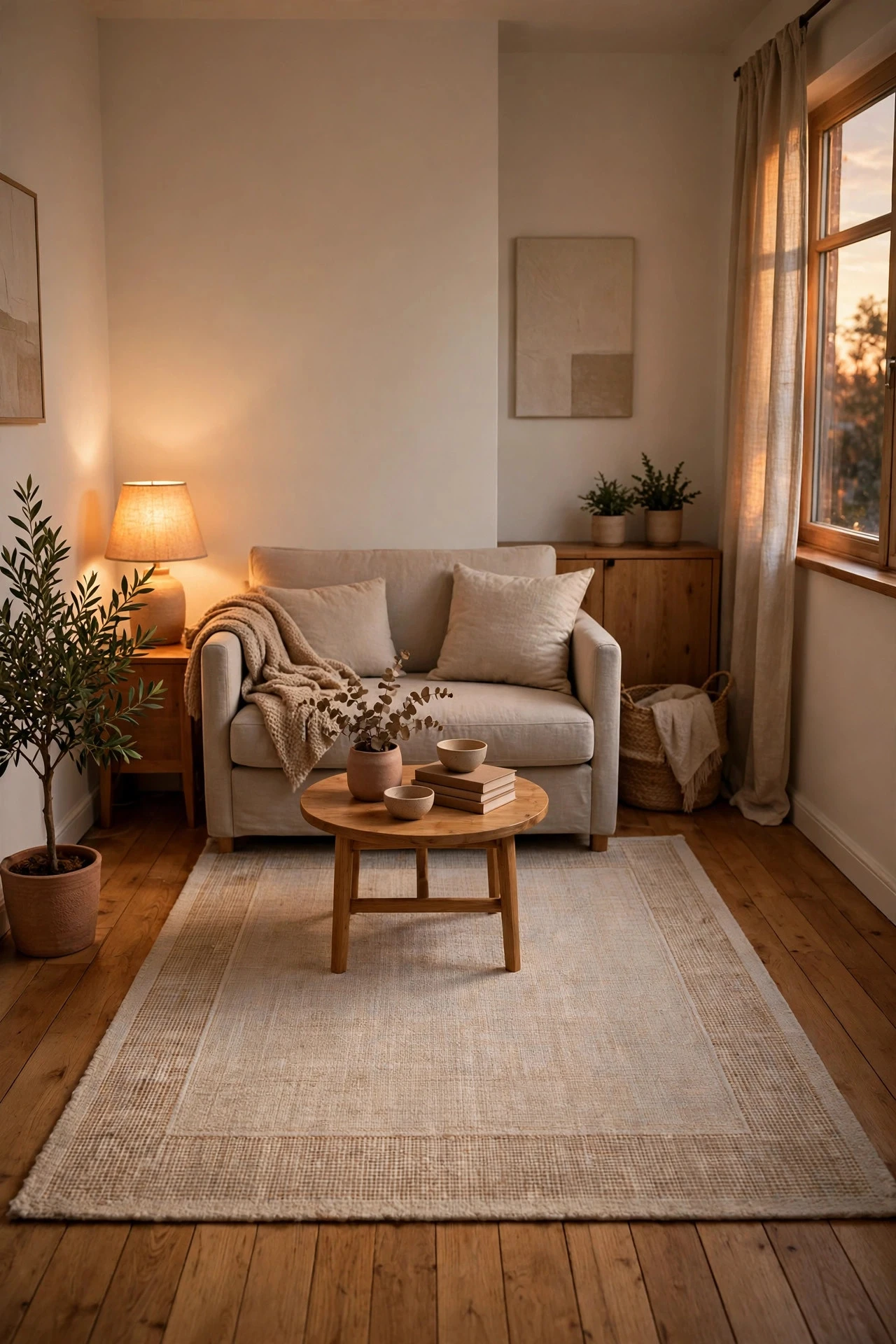
What size rug works in a small living room without overwhelming it? Choose the largest rug the room can honestly hold, usually a 5×7-foot or 6×9-foot rug, because a rug that fits under the front legs of all the seating defines the zone, while a tiny rug makes the room look smaller and more scattered. Leave a narrow, even border of floor, about 15 centimetres, around the rug, and keep the pattern simple: a solid colour, a fine border or a small-scale motif that does not fight the furniture. Light and mid tones, such as warm ivory, pale grey or soft sage, help a small room feel open, while a rug pad keeps the rug flat against the skirting and doorways. The mistake to avoid is choosing a rug that stops short of the sofa and leaves the coffee table alone in the middle, because the seating then reads as separate pieces rather than one defined living zone.
20. Renter-Friendly Rug Without Damaging Floors

Can renters use a large rug without risking the deposit? Yes, because a rug is one of the safest changes a renter can make, provided you use a good rug pad, avoid adhesive tapes on the floor, and choose a rug that does not shed dye onto light wood or carpet. Lay a felt-and-rubber rug pad, cut to 2 centimetres smaller than the rug on each side, so the rug stays put without tape, glue or grippers that leave marks. Choose a washable cotton rug or a low-pile wool rug that can be rolled up and taken to the next home, and test a corner for colour transfer on a hidden patch of floor first. The mistake to avoid is using double-sided carpet tape directly on varnished wood or vinyl, because it can lift the finish, leave sticky residue and cost more in repairs than the rug itself.
21. Rug Pad, Cleaning and Rotation Routine
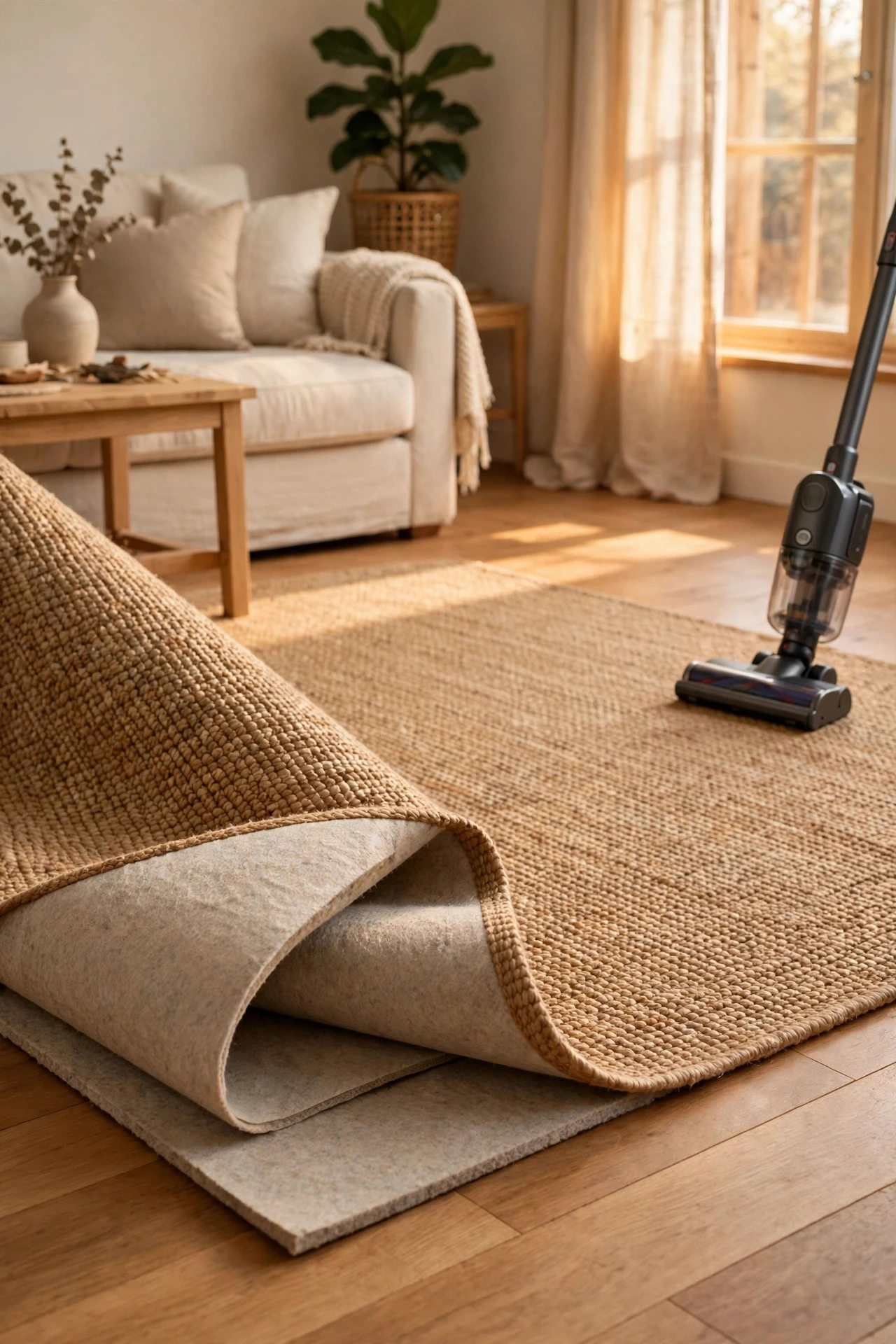
Why does a rug pad matter as much as the rug itself? A rug pad prevents slipping, cushions the pile, protects the floor beneath, and extends the life of the rug by absorbing the impact of feet and furniture. Choose a felt pad for thick wool rugs on hard floors, a felt-and-rubber pad for thinner rugs, and a rubber-only pad for rugs on carpet, trimming it 2 centimetres smaller than the rug so it never shows. Rotate the rug 180 degrees every six months so sunlight and foot traffic wear it evenly, and have a wool rug professionally cleaned every 12 to 18 months. Keep the rug clear of fireplace hearths and portable heaters, and check that doors clear the rug plus pad thickness without catching. The mistake to avoid is skipping the pad to save money, because the rug will creep, curl at the edges, wear faster and become a slipping risk.
22. Budget Rug Buys That Still Look Expensive
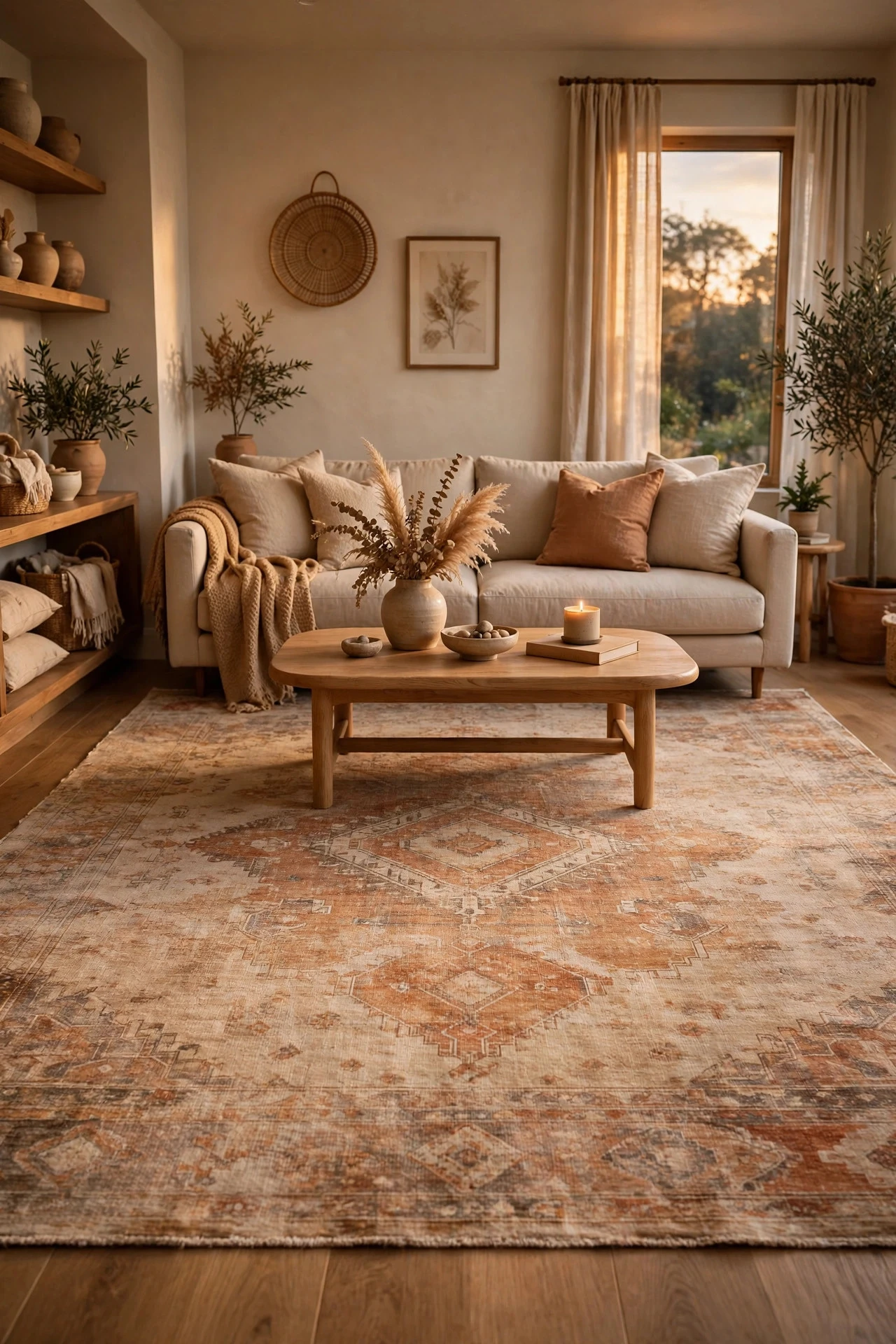
Can a budget rug look expensive? Yes, when you spend on size, texture and a restrained pattern rather than on a brand name, because a large, well-made rug in a good colour always looks more costly than a small, busy rug at the same price. Look for flatweave cotton, jute or machine-washable rugs in warm neutrals, faded vintage prints or simple geometric designs, and buy the largest size your budget allows, since scale is the clearest signal of quality. A budget rug in the low to mid price range can last three to five years in a living room if it has a good pad and regular care. The mistake to avoid is buying the cheapest rug in a bright, trend-led print, because the colour often fades unevenly, the pattern dates within a year, and replacement costs more than one better rug would have.
Practical Tips
Measure twice before you order, and use painter's tape to mark the rug outline on the floor, including the space for pulled-out chairs and open doors. Check door clearance over the rug plus pad thickness before you buy, because a door that catches the rug will scuff the edge, bunch the pile and frustrate everyone who uses it. For clear sizing and placement guidance, The Spruce offers practical room guides that help you check measurements before you commit.
Always use a rug pad to prevent slipping, even on carpet, and choose the pad type for your floor: felt for hard floors, felt-and-rubber for most living rooms, and a thin rubber gripper for a rug laid over carpet. Keep rugs clear of fireplace hearths and portable heaters, leaving a safe gap so embers, sparks and hot air cannot reach the fibres, and never place a rug so close to a fire that the edge sits on the hearth itself. For real-room examples of pads, layering and safe placement, Houzz shows thousands of living rooms with rug sizes, materials and layout notes that make it easier to brief a supplier clearly.
Set a simple care routine from the first week so the rug keeps its colour and texture. Vacuum weekly, blot spills at once, rotate the rug 180 degrees every six months for even wear, and have wool rugs professionally cleaned once a year or so in a busy household. For ongoing care and cleaning ideas, Better Homes and Gardens covers practical home maintenance in plain, room-by-room guides that suit busy households.
Final Thoughts
The right living room rug is the one that fits the seating, suits the traffic, and still looks good after a year of real life, so let size, material and placement guide the choice as much as colour and pattern. Tape the outline, test the pad, and check the doors and the hearth. Done well, this one textile will make the whole room feel calmer, warmer and more finished for years.
You May Also Like: – luxury living room decor ideas – refresh my living room ideas – stunning symmetrical living room ideas
Frequently Asked Questions
What size rug should I buy for a living room with a three-seat sofa?
For a three-seat sofa, start with an 8×10-foot rug, placed so the front legs of the sofa and chairs sit on the rug with 15 to 20 centimetres of rug showing in front of the sofa. Tape the outline first, and step down to 6×9 feet only in a compact room.
How much rug should show around the furniture?
Leave 15 to 45 centimetres of bare floor around the rug in most rooms, with at least 15 centimetres of rug clear on each side of the coffee table. Keep the rug parallel to the longest sofa, and never let it touch the skirting on every side.
Is wool or synthetic better for a living room rug?
Wool is better for a living room used every day, because it springs back after foot traffic, resists dirt, feels warm, and usually lasts eight to twelve years. A good synthetic rug costs less, cleans easily and suits a short-term or budget room, but it can flatten, show traffic lanes and need replacing sooner than wool.
Can I layer rugs in a living room safely?
Yes, layering is safe when the base rug is flat and large, the top rug is at least 60 centimetres smaller on each side, and both rugs stay flat with a suitable pad underneath. Add a gripper between layers if needed, and avoid two thick, loose rugs, which can creep and trip.
How do I stop a living room rug from slipping?
Use a rug pad cut 2 centimetres smaller than the rug on each side, choosing felt for hard floors, felt-and-rubber for most living rooms, and a thin rubber gripper over carpet. The pad prevents slipping, cushions the pile, protects the floor, and stops the rug creeping. Avoid adhesive tape directly on varnished wood or vinyl floors.
How often should I clean and rotate a living room rug?
Vacuum weekly, blot spills at once, rotate the rug 180 degrees every six months for even wear and sun exposure, and have a wool rug professionally cleaned every 12 to 18 months. Keep the rug clear of fireplace hearths and heaters, check door clearance, and re-check the pad yearly so the rug stays flat, safe and even in colour.