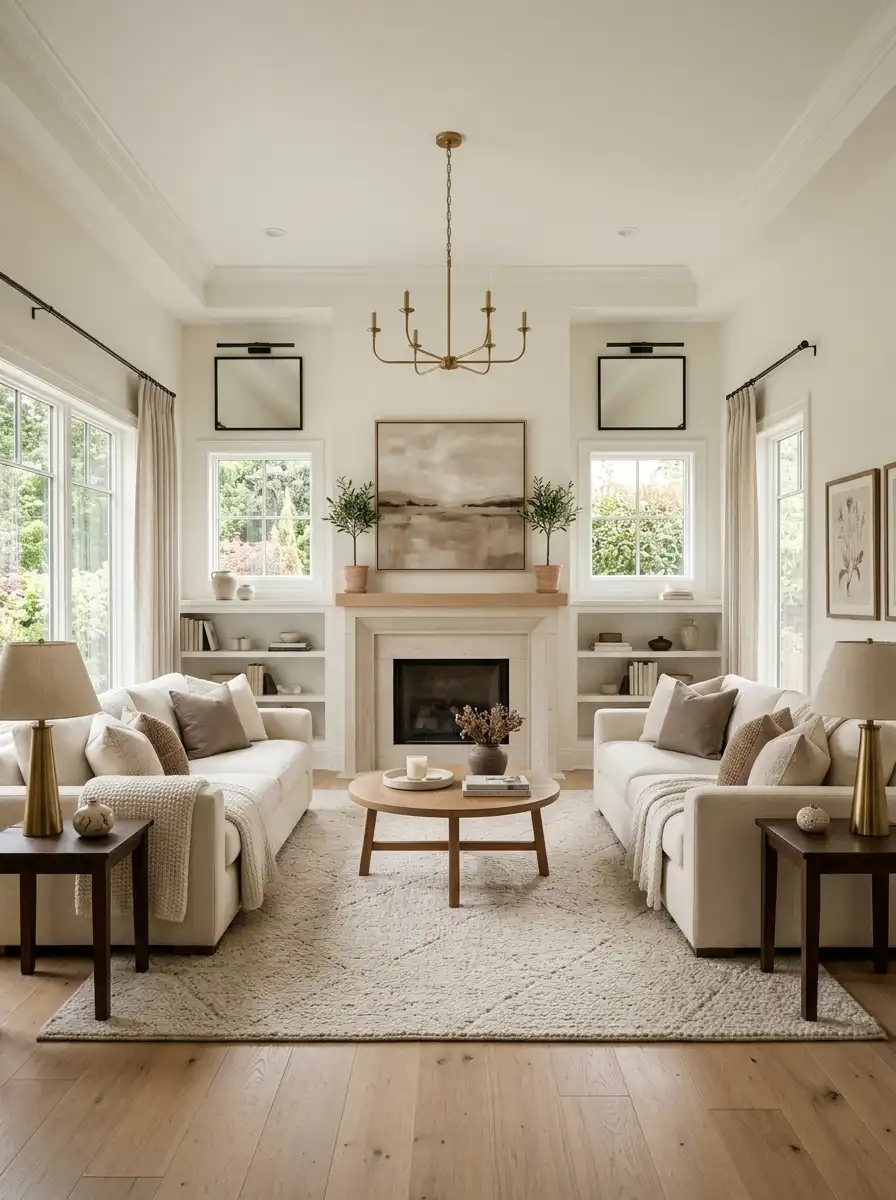
22 Stunning Symmetrical Living Room Ideas That Feel Calm, Cozy, and Perfectly Balanced
There is something naturally relaxing about a symmetrical living room. When furniture, lighting, artwork, and decorative details are arranged with a sense of balance, the entire space can feel calmer and more organized.
But creating symmetry does not mean buying two of everything. A beautiful symmetrical living room is really about proportion, spacing, repetition, and visual weight. You can repeat a color, shape, material, or furniture style without making the room look overly matched.
Whether you love modern interiors, traditional decorating, cozy spaces, or minimalist rooms, these 22 symmetrical living room ideas will give you practical ways to create a balanced space that still feels personal and inviting.
1. Create Balance with Two Sofas Facing Each Other
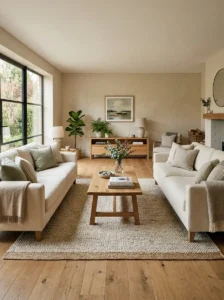
Two sofas positioned opposite one another instantly establish a symmetrical seating arrangement. This layout is especially effective in larger or rectangular living rooms where you have enough space for comfortable movement around the furniture.
Choose sofas with similar dimensions and upholstery so neither side feels visually heavier. Place a coffee table between them and use a large rug underneath to connect the seating area.
For a relaxed appearance, combine cream or beige sofas with natural wood and soft textiles. You can add slightly different cushions while keeping the overall color palette connected.
2. Frame a Coffee Table with Matching Accent Chairs
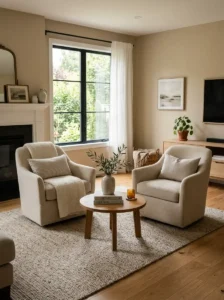
A pair of accent chairs can create symmetry without requiring a large seating arrangement.
Place two chairs opposite each other with a small coffee table or occasional table between them. Curved chairs can soften a room filled with straight furniture, while structured chairs create a more contemporary appearance.
Bouclé, linen, leather, and woven upholstery are all good options when you want the chairs to feel interesting without overwhelming the design.
3. Center the Sofa Between Two Matching Side Tables
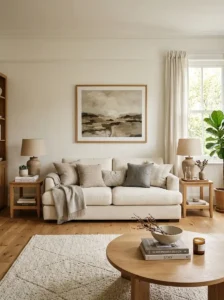
One of the easiest symmetrical living room arrangements starts with a centered sofa.
Position an identical side table at each end of the sofa. Add matching table lamps to create a clear visual frame around the seating.
You can keep the lamps identical while changing the smaller accessories. For example, one table could have a small vase while the other holds a few decorative books.
This keeps the room balanced without making every surface look copied.
4. Make the Fireplace the Center of the Room
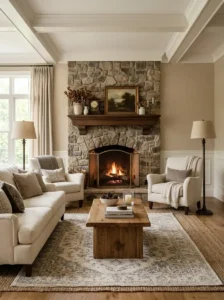
A fireplace already provides a natural center point, so use it as the foundation for your layout.
Place matching chairs, cabinets, baskets, or lamps on either side. If your fireplace has built-in shelving, repeat similar colors and shapes across both sides.
A neutral fireplace surround works beautifully with beige upholstery, wood accents, and warm lighting. In a modern room, simplify the surrounding decor so the fireplace remains the main feature.
5. Add Matching Built-Ins Around the TV
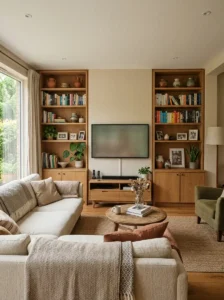
A TV can become a visually dominant element, especially when it is placed on a large empty wall. Built-in storage on both sides can restore balance.
Center the television and use matching cabinets or shelving on either side. Keep the finishes consistent and distribute books, artwork, baskets, and accessories evenly.
This approach is especially useful because it combines decorative symmetry with practical living room storage.
6. Use Matching Floor Lamps to Balance the Seating Area
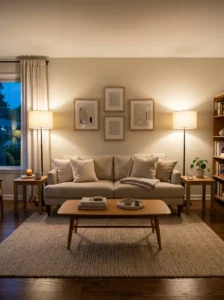
Lighting can be used as a decorating tool rather than simply a functional necessity.
Place two similar floor lamps on opposite sides of a sofa, console, or fireplace. Matching silhouettes immediately create repetition and help distribute visual weight.
Choose warm bulbs for a cozy evening atmosphere. Black metal works well in modern interiors, while brass or wood finishes can make traditional spaces feel warmer.
7. Ground Everything with a Centered Area Rug
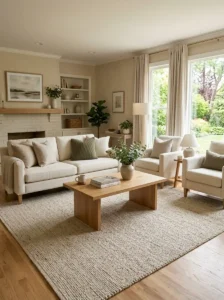
An area rug can act as the visual foundation of your symmetrical living room.
Choose a rug large enough to sit beneath at least the front legs of your main seating. Center it according to the room’s focal point rather than simply pushing it toward the sofa.
Neutral rugs are particularly versatile. A subtle geometric pattern can also reinforce the structured feeling of the room without competing with the furniture.
8. Design a Balanced Gallery Wall
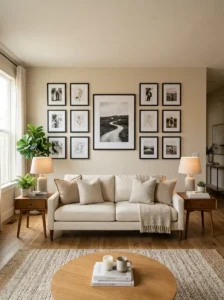
Gallery walls do not have to follow a completely random arrangement.
For a symmetrical appearance, place one larger artwork in the center and arrange smaller frames around it. Alternatively, use pairs of frames with similar dimensions.
Keep the spacing between pieces consistent and choose frames that share a finish.
The artwork itself can vary, allowing you to add personality while maintaining a visually organized composition.
9. Build a Conversation Area with Two Matching Chairs
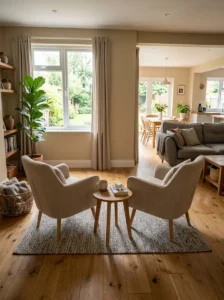
A pair of chairs can create a separate conversation area within a larger living room.
Angle both chairs toward a small table, fireplace, or central focal point. Add a small rug underneath if you want to visually separate the area from the main seating zone.
This idea works particularly well in open-plan homes because it gives an unused corner a clear purpose.
10. Add Two Matching Ottomans
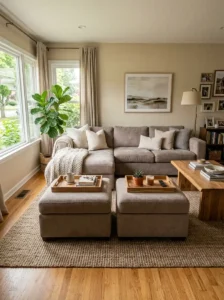
Matching ottomans are an easy way to introduce symmetry while keeping the room flexible.
Place two ottomans together in front of the sofa or position them opposite the main seating. They can function as footrests, extra seats, or temporary surfaces when topped with trays.
Choose upholstery that complements your sofa rather than necessarily matching it exactly. A subtle contrast can make the arrangement more interesting.
11. Try Two Small Coffee Tables Instead of One
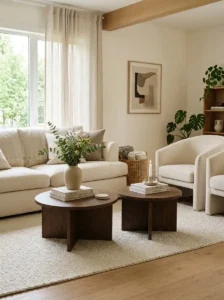
Two smaller tables can sometimes work better than one large coffee table.
Place identical tables next to each other and leave a small, even gap between them. This creates a clean geometric effect and makes it easier to move one table when you need additional floor space.
Round tables are ideal for softer interiors, while square or rectangular tables create a more architectural appearance.
12. Frame Windows with Identical Curtains
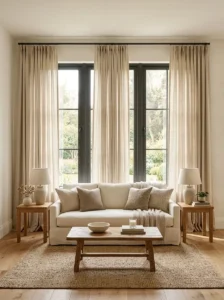
Curtains can quietly reinforce symmetry across an entire wall.
Use the same fabric, length, and hanging height on both sides of the window. Installing the curtain rod higher and extending it beyond the window can make the room appear taller and more spacious.
Linen creates a relaxed look, while heavier velvet or cotton curtains add warmth and formality.
13. Place a Large Mirror in the Center
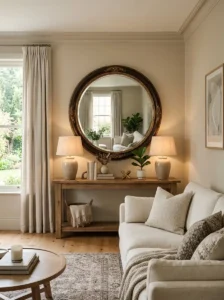
A large mirror can become the central anchor of your living room.
Hang it above a console, fireplace, or sofa and place similar decorative elements on each side. Matching sconces are particularly effective because they reinforce the vertical balance.
Mirrors also reflect light, which can help a smaller living room appear brighter and more open.
14. Highlight Artwork with Matching Wall Sconces
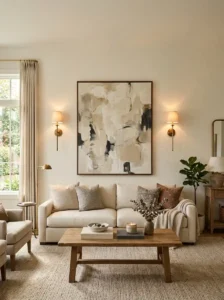
If you have a large painting, mirror, or architectural feature, frame it with two matching wall sconces.
Install both lights at the same height and maintain equal distance from the center.
This creates symmetry while giving your focal point additional depth after sunset. Warm bulbs are usually the best choice for a comfortable living room atmosphere.
15. Use Matching Bookcases on Opposite Walls
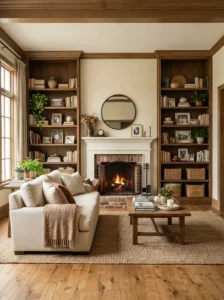
Two matching bookcases can provide storage while making the room feel more intentional.
Place them on opposite sides of a fireplace, TV, sofa, or doorway. Style them with a mixture of books, framed photographs, ceramics, plants, and baskets.
Try to distribute taller pieces evenly so one side does not appear noticeably heavier than the other.
16. Bring Symmetry into the Room with Plants
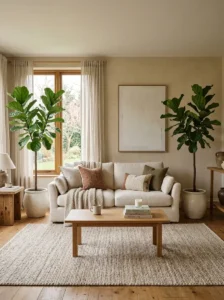
Plants are a simple way to soften the clean lines of a symmetrical room.
Place similar plants in matching planters on either side of a sofa, fireplace, console, or window.
If you cannot find identical plants, focus on similar height and overall shape. Matching pots can be enough to visually connect different varieties.
17. Hang Two Coordinated Art Prints
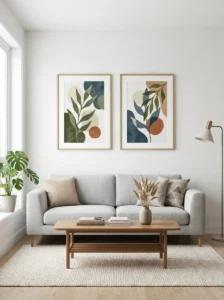
Instead of a large gallery wall, use two coordinated art prints.
Choose artwork with similar colors, frames, or themes and hang them side by side with equal spacing.
This approach is particularly effective in modern and minimalist living rooms because it adds visual interest without creating clutter.
18. Create a Symmetrical TV Entertainment Wall
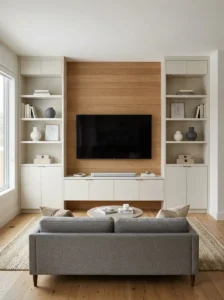
A centered entertainment unit can make a television feel like part of the room rather than an isolated black rectangle.
Use matching shelves or cabinets around the TV. Keep decorative objects relatively simple so the wall does not become visually busy.
Wood panels, neutral cabinetry, and concealed cable storage can make the entire setup feel more polished.
19. Repeat Colors on Both Sides of the Room
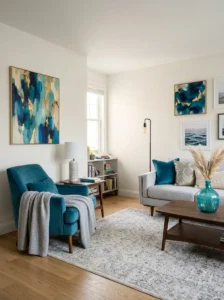
Symmetry can also be created through color.
If you use a particular accent color on one side of the room, repeat it somewhere on the other side. For example, blue cushions could be echoed through artwork, a vase, or a chair.
A limited palette of two or three accent colors keeps the room cohesive.
This technique is useful when your furniture is not perfectly matched.
20. Keep a Small Living Room Symmetrical
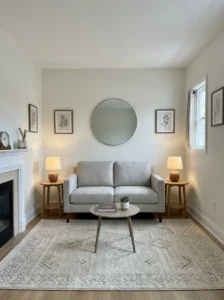
Small rooms can benefit from symmetry because a clear arrangement reduces visual clutter.
Start with the largest piece, usually the sofa, and center it around the room’s main focal point. Add two compact side tables or lamps and use a correctly sized rug to connect the pieces.
Avoid oversized furniture and too many accessories. In a small space, maintaining open floor area is just as important as matching decor.
21. Choose a Minimalist Neutral Symmetrical Design
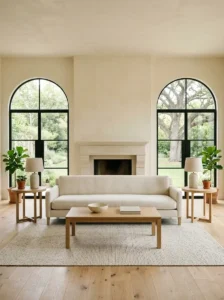
For a minimalist living room, let the architecture and furniture arrangement do most of the work.
Use a streamlined sofa, simple coffee table, matching side tables, and a limited selection of decorative pieces.
Cream, beige, warm gray, white, and natural wood create a peaceful palette. Add one or two plants to prevent the space from feeling too stark.
The fewer objects you use, the more important proportion and spacing become.
22. Combine Traditional Symmetry with Cozy Textures
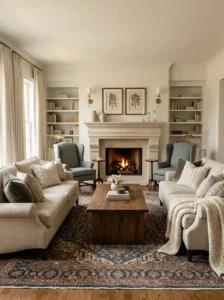
Traditional living rooms are a natural match for symmetrical decorating.
Center your main architectural feature, then arrange matching chairs, lamps, tables, or artwork around it. Once the structure is established, add layers of texture to make the room feel comfortable.
Think linen curtains, soft cushions, woven throws, patterned rugs, natural wood, and warm metallic accents.
The result is structured but not rigid—a room that feels elegant enough for guests and comfortable enough for everyday life.
How to Make Symmetry Feel Natural Instead of Too Formal
The biggest mistake with symmetrical decorating is assuming that everything must be identical.
Instead, think about visual weight.
A tall floor lamp can balance a large plant. Two different chairs can still work if they have similar proportions. A large artwork can be balanced by several smaller pieces on the opposite wall.
Try these simple rules:
- Keep major furniture pieces proportionate.
- Repeat important colors throughout the room.
- Maintain similar spacing on both sides.
- Use pairs for lamps, chairs, tables, or plants.
- Mix textures so the room does not feel repetitive.
- Leave enough negative space around furniture.
- Give the room one obvious focal point.
- Use lighting to balance darker areas.
What Furniture Works Best in a Symmetrical Living Room?
The best furniture depends on the size and shape of your room, but several pieces naturally support symmetry:
- Matching sofas
- Accent chairs
- Side tables
- Floor lamps
- Ottomans
- Bookcases
- Consoles
- Built-in cabinets
- Coffee tables
- Storage benches
You do not need all of these. Choose two or three elements that can establish the structure and build from there.
What Colors Make a Symmetrical Living Room Feel Calm?
Soft, coordinated colors usually enhance the peaceful feeling associated with symmetry.
Consider:
Warm neutral: cream, beige, taupe, and walnut
Cool neutral: white, gray, soft blue, and charcoal
Earthy: olive, tan, terracotta, and natural wood
Elegant: ivory, muted green, brown, and brass
The important thing is not the exact color combination but how consistently you repeat the colors throughout the room.
Final Thoughts
A symmetrical living room can feel calm and sophisticated because the eye naturally understands the repeated shapes, spacing, and proportions.
You can create that effect with something as simple as two matching lamps, or make a larger transformation with symmetrical sofas, built-in cabinets, a centered fireplace, or a balanced TV wall.
Remember that symmetry does not require perfection. Mixing matching pieces with complementary colors, textures, and shapes can make the room feel much more natural.
Start with one focal point, establish a balanced furniture arrangement, then add repeated details gradually. With the right combination of proportion, lighting, color, and texture, you can create a living room that feels organized, cozy, welcoming, and beautifully balanced.