22 Scandinavian Living Room Ideas for a Calm, Cozy Home
A Scandinavian living room feels calm the moment you walk in, not because it is empty, but because everything in it has a clear job. Pale surfaces, honest wood, soft textiles and gentle light work together to make a room that is easy to live in, easy to tidy and easy to rest in. This style suits busy homes especially well, because it favours washable fabrics, closed storage and furniture that can move and adapt.
Looking for more inspiration? Our Nest Decorz homepage gathers the latest home decor ideas, seasonal decorating guides and room-by-room styling tips in one place — start there and explore.
The 22 ideas below build the look step by step, from colour and wood to hygge layers, lighting, storage and small-space solutions. Use them in order if you are starting fresh, or dip into the sections that solve your biggest problem first, whether that is a cold-feeling room, clutter that never clears, or seating that does not survive family life.
1. Start With a Warm White Base
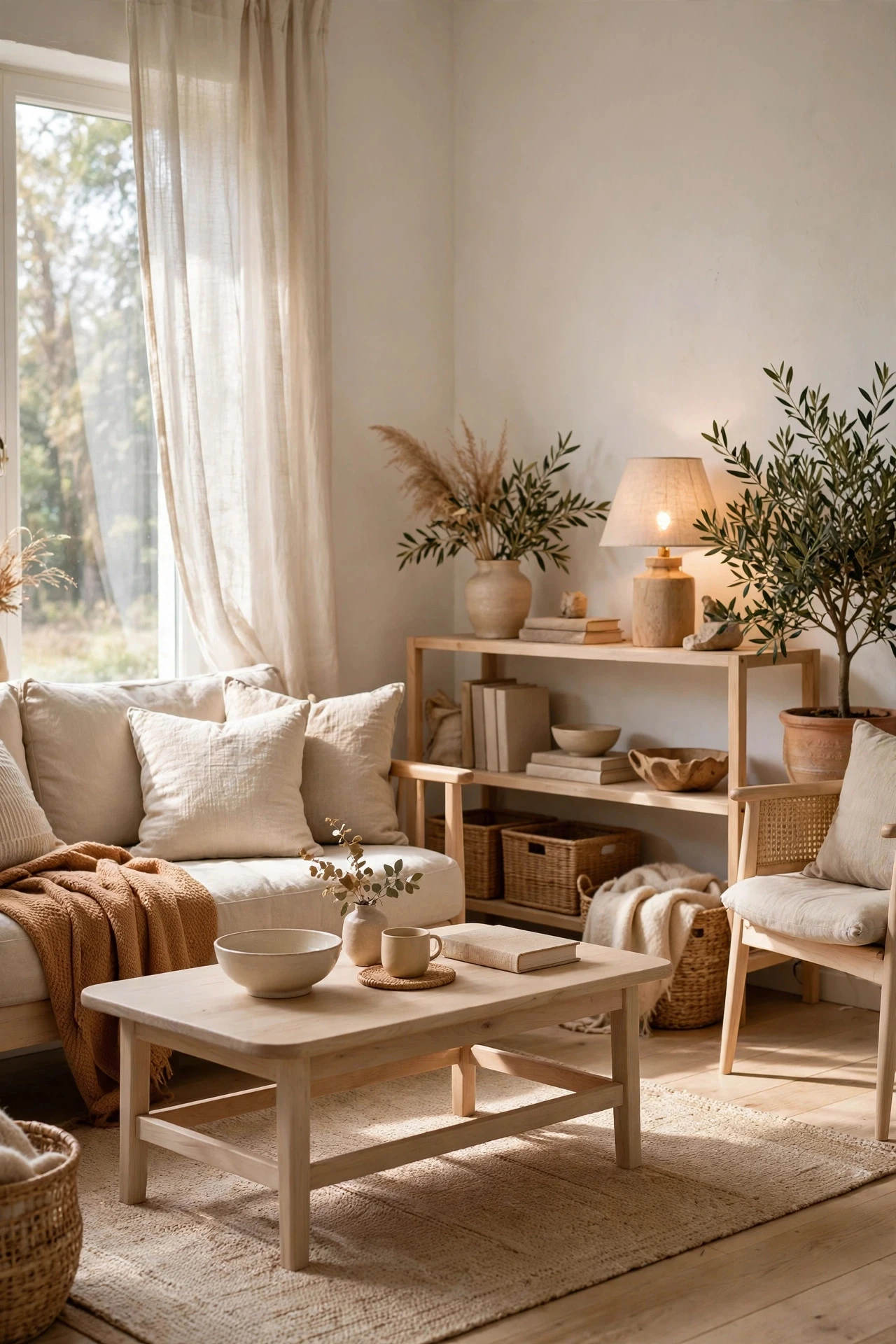
Start with warm white walls rather than brilliant white, because warm white softens daylight, flatters pale wood and stops the room feeling clinical. Choose a white with a faint yellow, pink or beige undertone, test large swatches on two walls, and check them in morning, afternoon and evening light before you commit. Pair warm white with pale floors and a soft rug so the base feels layered rather than flat. In north-facing rooms, go a touch warmer still, and keep ceilings the same warm white to avoid a hard line overhead. The mistake to avoid is choosing the whitest paint on the chart, which can look cold and blue in winter light and make every other colour feel harsh by contrast.
2. Layer Warm Greys and Soft Beige
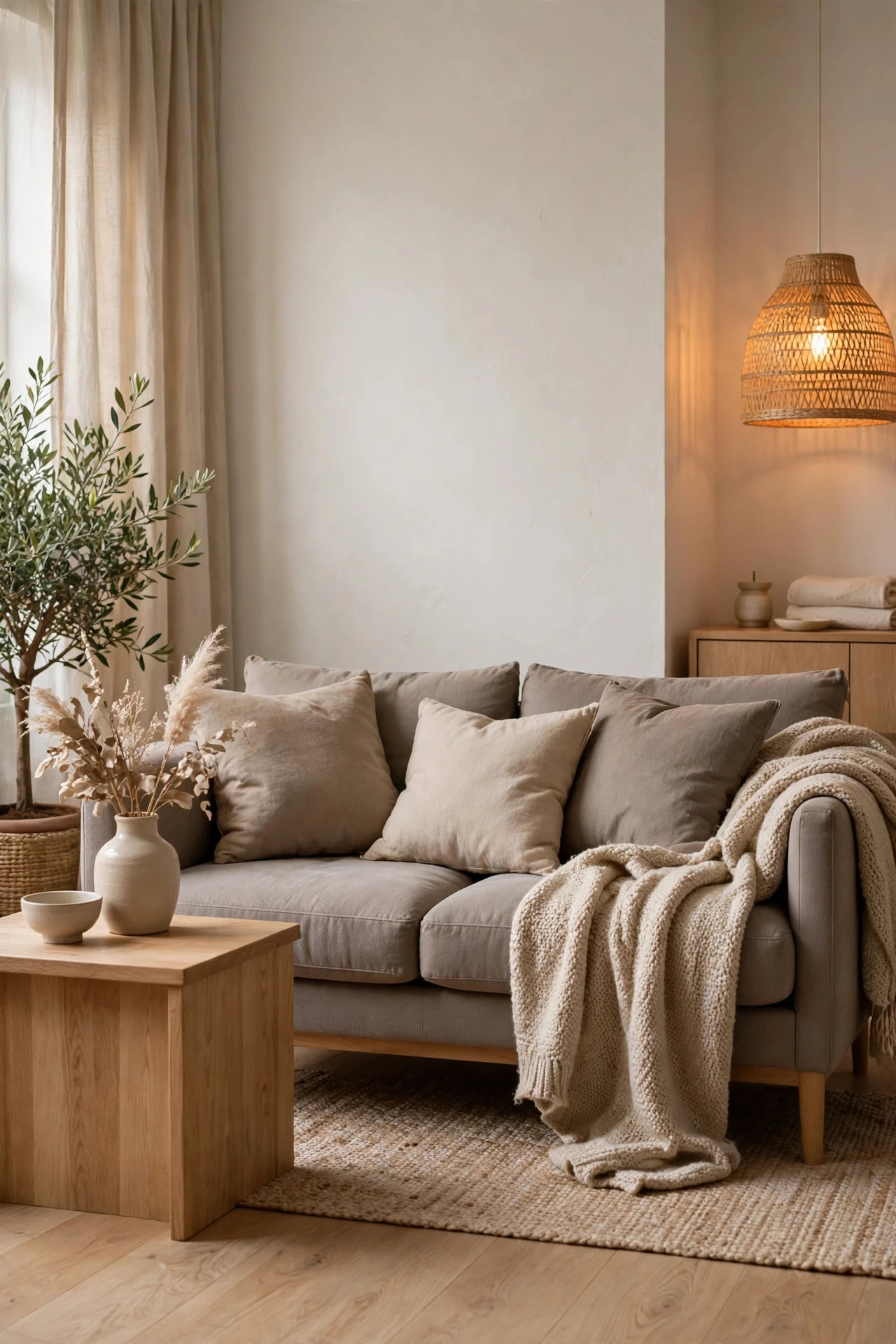
Layer warm grey and soft beige over your warm white base to give the room depth without introducing strong colour. Use greige on a sofa, mid-grey on cushions and beige on a wool throw or a linen curtain, repeating each tone at least twice so the palette feels deliberate. This approach works in open-plan rooms too, because the same tones can run from the sofa to the dining chairs and quieten the visual boundary between zones. Keep the darkest grey for small items, such as a vase, a frame or a basket, so the room stays light overall. The mistake to avoid is mixing cool blue-grey with warm beige in equal amounts, which can leave the scheme feeling muddled and neither calm nor cohesive.
3. Add Muted Blue and Sage Green Accents

Add muted blue or sage green in small, repeatable accents to bring a quiet natural note into a neutral Scandinavian room. Try sage cushions with a pale blue throw, a muted blue vase beside a green plant, or a single piece of art that holds both tones. Because these colours sit close to nature, they pair beautifully with pale oak, wool and linen, and they stop a beige scheme feeling bland without demanding attention. Limit the accent to about ten percent of the room, and keep the rest of the palette calm so the colour reads as intentional. The mistake to avoid is using bright, saturated teal or emerald everywhere, which fights the soft Nordic light and quickly overwhelms the pale wood and textiles.
4. Use Black Accents Sparingly for Definition

Use black sparingly, in thin lines and small objects, to give a pale Scandinavian room definition and prevent it looking washed out. A black picture frame, a slim floor-lamp stem, black handles on a pale cabinet, or a narrow black edge on a mirror all add structure without adding visual weight. Repeat black in three or four small places, never in one large block, so the eye moves around the room and the pale surfaces still dominate. This restraint is what keeps the look Scandinavian rather than industrial. The mistake to avoid is introducing a large black sofa, a black media wall or heavy black shelving, which can dominate the room, absorb light and undo the calm, airy feeling you have built.
5. Choose Pale Oak for Floors and Furniture

Choose pale oak for floors, coffee tables and shelving, because its light, even grain is the defining timber of Scandinavian interiors. Pale oak keeps a room bright, shows dust and marks less harshly than dark wood, and pairs with almost every neutral textile. If your floor is darker, balance it with pale oak furniture, a light rug and pale upholstery so the room still feels lifted. Keep finishes matte or satin rather than high gloss, and choose simple, clean profiles that let the grain speak. In a busy home, pick a durable lacquer or hardwax oil that can be spot-repaired. The mistake to avoid is mixing many different wood tones at once, which fragments the room and makes even a tidy space look restless.
6. Mix Ash, Birch and Pine With Care

Mix ash, birch and pine carefully alongside oak by keeping all the woods pale and letting one species lead. Ash works well for chairs and slim table legs, birch suits small stools and trays, and pale pine is ideal for painted or whitewashed pieces, shelves and children's furniture. The unifying rule is tone: if every wood stays within the same pale, honeyed range, the mix feels collected rather than chaotic. Repeat each wood at least twice, and separate different species with a textile or a gap so they do not clash side by side. The mistake to avoid is placing orange-toned pine directly beside grey-washed oak with no buffer, which highlights the difference and makes the pairing look accidental rather than considered.
7. Build Hygge With Candles and Soft Light

Build hygge with candles and soft, low light, because the Scandinavian sense of cosiness comes more from glow than from objects. Group candles of different heights on a tray, use them on the coffee table and a side table in the evening, and switch off the bright overhead light as soon as the day fades. Choose unscented or lightly scented candles, keep them away from throws and curtains, and use sturdy holders on heatproof surfaces. Battery candles in lanterns work well in homes with small children or pets. The mistake to avoid is relying on scented candles alone while the main light stays harsh and white, which leaves the room feeling like a showroom at night rather than a place to unwind.
8. Layer Throws, Cushions and a Sheepskin
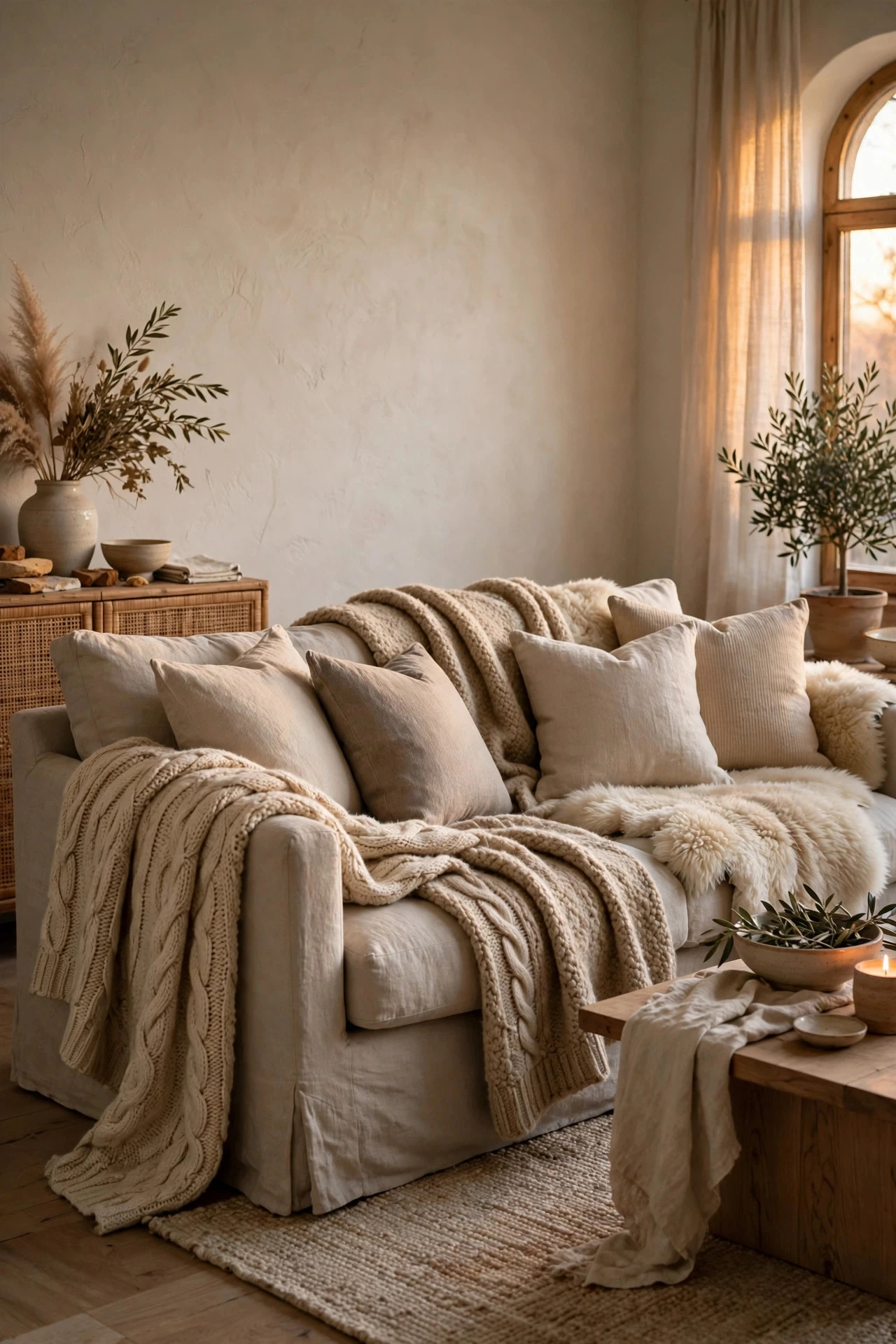
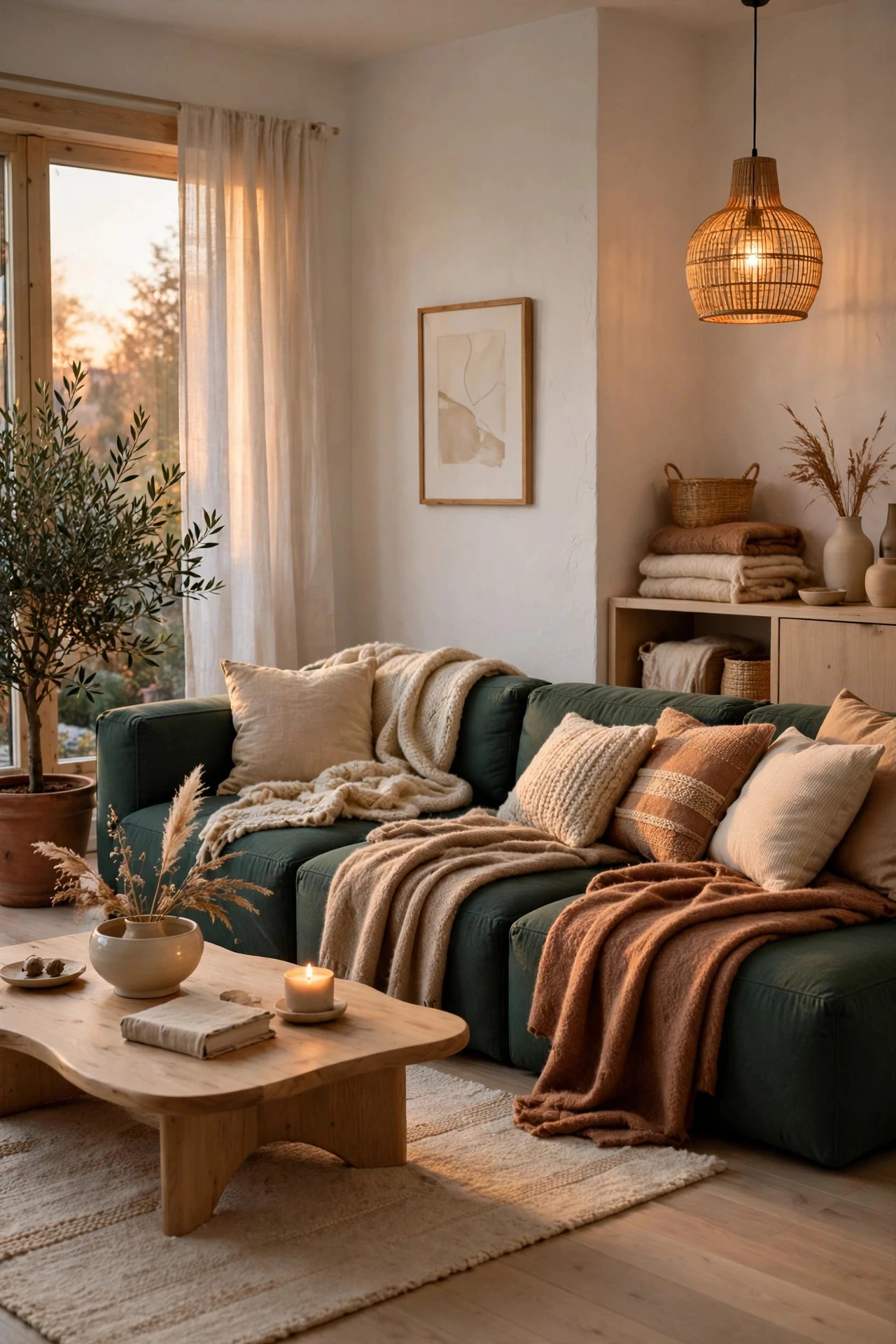
Layer throws, cushions and a sheepskin to make seating feel inviting before anyone sits down. Drape one wool throw over a sofa arm, fold a second over a chair, and add cushions in two sizes and two textures, such as linen and knitted wool, so the arrangement looks relaxed rather than arranged. A sheepskin over an armchair or a bench adds instant softness and warmth underfoot if it slips to the floor. Choose washable covers where you can, and keep the palette to two or three tones from your main scheme. The mistake to avoid is piling on so many cushions and throws that there is nowhere comfortable to sit, or choosing scratchy, delicate fabrics that look good in a photograph but feel unpleasant to use every day.
9. Keep Lighting at a Warm 2700K Glow

Keep lighting at a warm 2700K glow, layered at low and mid heights, so the room feels like late afternoon even on a dark winter evening. Use a floor lamp beside the sofa, a small table lamp on a side table, and a dimmable pendant or wall light, all on warm bulbs, and avoid a single bright ceiling light doing all the work. Dimmers are worth the small cost, because they let you shift from homework and tidying to reading and relaxing without changing a bulb. For more layered lighting inspiration, see these living room lighting ideas and adapt the layers to your room size. The mistake to avoid is mixing 2700K lamps with cool 4000K or daylight bulbs, which creates uneven, unflattering light and breaks the warm, unified glow.
10. Choose a Deep, Comfortable Modular Sofa

Choose a deep modular sofa as the anchor of the room, because Scandinavian living is built around long, comfortable sitting rather than formal perching. Look for a seat depth of at least 95 centimetres, generous back cushions, low arms and sections you can rearrange into a corner, a straight run or two facing sofas. A modular design adapts when guests arrive, when children play, or when you move house, and it lets you replace a single worn section rather than the whole sofa. Test it in person if you can, sitting as you would at home, not perched politely. The mistake to avoid is buying a shallow, upright sofa that looks sleek in a photograph but leaves everyone shifting, perching and wishing for a deeper, softer seat after twenty minutes.
11. Pick Washable Slipcovers for Real Life
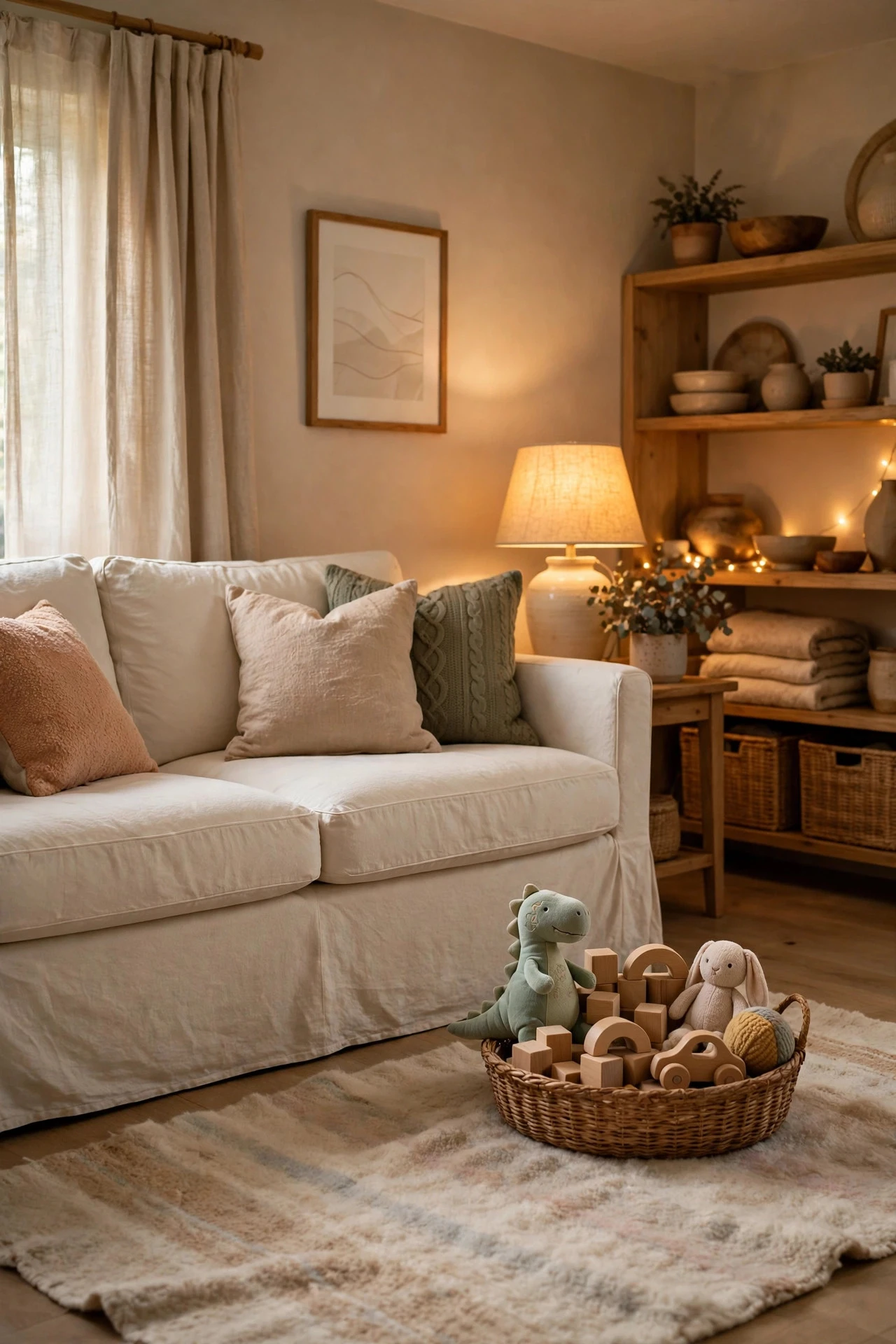
Pick washable slipcovers for real life, especially if your home includes children, pets, coffee drinkers or anyone who eats on the sofa. A well-fitted slipcover in a mid-tone linen-blend or cotton twill protects the sofa, can be removed and washed, and softens slightly with each wash in a way that suits the relaxed Scandinavian look. Keep a spare set if your budget allows, so one set can be in the wash while the other is in use. Check the washing instructions before you buy, and confirm the covers can go through a normal cycle without shrinking. The mistake to avoid is choosing a very pale, dry-clean-only fabric for a family sofa, which will show every mark, cost a fortune to maintain and make you police the room instead of enjoying it.
12. Round the Edges With Oval and Round Tables
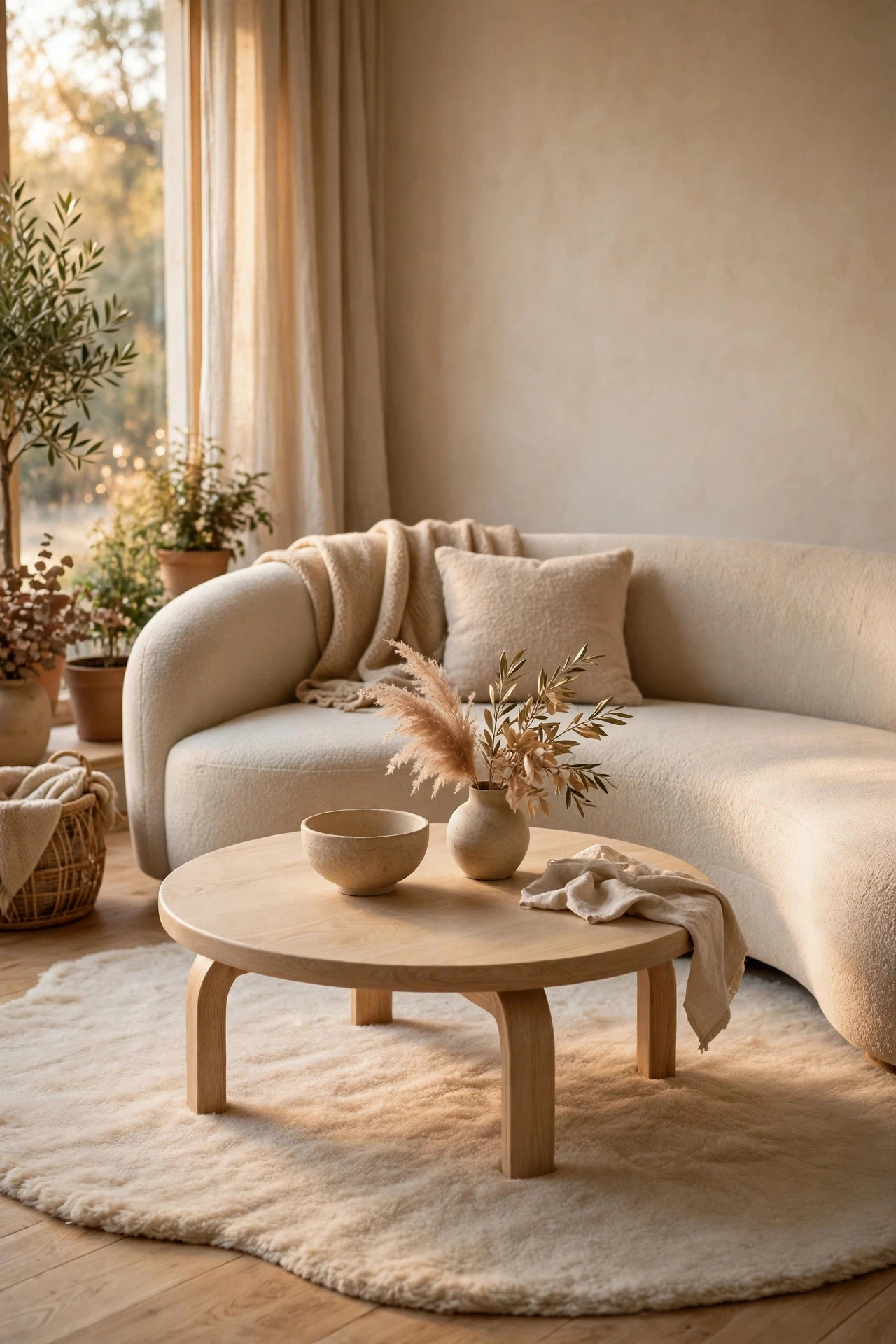
Round the edges with oval and round tables, because soft shapes suit the gentle, unhurried feeling of Scandinavian design and make movement easier in a busy room. A round coffee table removes sharp corners in a family walkway, lets more people gather comfortably, and pairs well with a curved sofa or a pair of armchairs. An oval dining table tucked at the edge of a living space works similarly, softening a rectangular room and easing circulation. Choose pale wood or a light stone top, keep the base slim, and leave enough space to walk around it without turning sideways. The mistake to avoid is pairing a large rectangular table with a bulky rectangular sofa in a small room, which creates hard corridors, awkward corners and a formal feeling the style is trying to avoid.
13. Add Nesting Tables for Flexible Living

Add nesting tables for flexible living, because Scandinavian rooms favour furniture that works hard, moves easily and disappears when it is not needed. A set of two or three pale-wood nesting tables can serve as a coffee table, a side table for a guest, a laptop stand or a plant stand, then tuck neatly together against a wall. Choose tables with the same finish as your main coffee table, keep the largest one low and stable, and avoid wobbly, top-heavy designs. They are especially useful in small rooms and open-plan spaces where the same area must serve sitting, working and eating. The mistake to avoid is buying a single heavy, immovable coffee table and then adding extra side tables around it, which clutters the floor, blocks walkways and leaves no surface free when you need one.
14. Layer Wool, Linen and Cotton Textiles
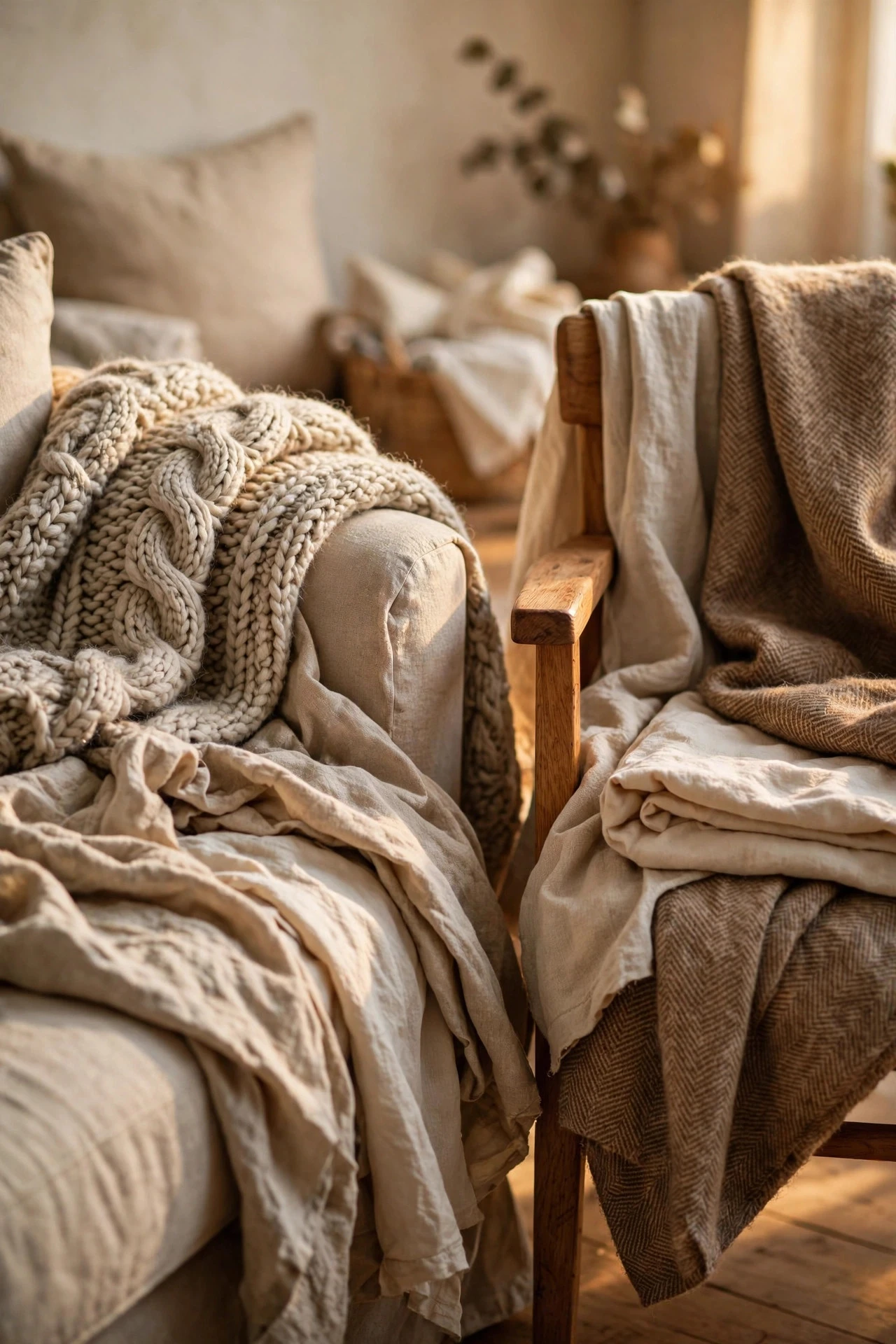
Layer wool, linen and cotton textiles so the room feels soft in different ways at different points of contact. Use wool for throws and rugs, where warmth and texture matter most, linen for cushion covers and curtains, where a relaxed drape and natural slub add character, and cotton for slipcovers and lighter throws that need frequent washing. Mixing these fibres stops a neutral room feeling flat, because each catches light differently and invites touch. Keep the colours close, vary the weave and weight, and let one bold texture, such as a chunky knit, be the star. The mistake to avoid is using only one smooth, synthetic fabric throughout, which can look flat, feel clammy and make even a well-planned room seem cold and impersonal.
15. Soften the Look With Faux Fur and Knits
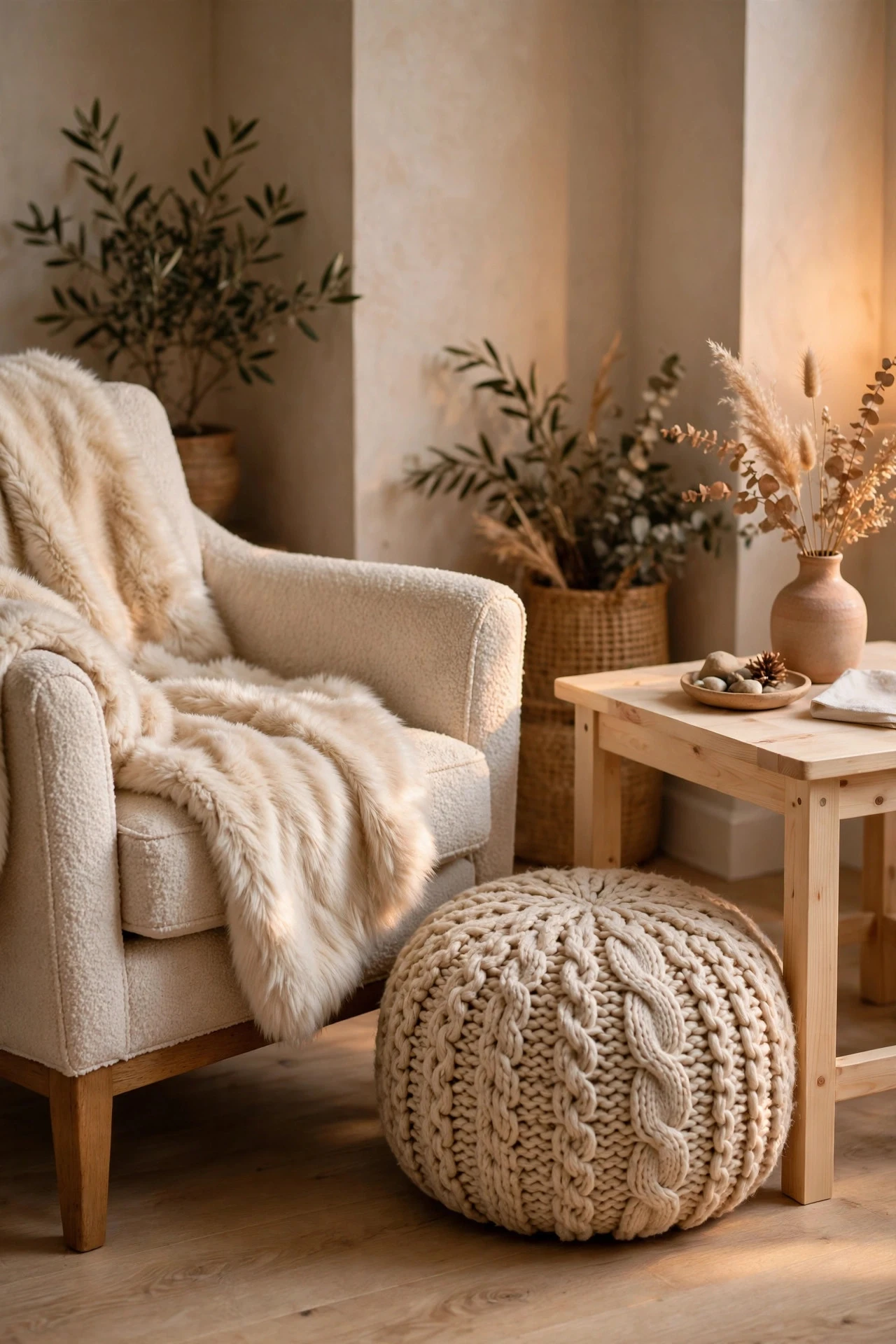
Soften the look with faux fur and chunky knits in small, deliberate doses, rather than covering every surface in fluff. A faux-fur throw on one chair, a knitted pouffe beside the sofa, or a textured cushion in a bouclé-style weave adds warmth and a tactile invitation to sit and stay. These textures work best against smooth pale wood and crisp linen, where the contrast is clear, and they are particularly welcome in winter when the light is low and the evenings are long. Choose good-quality faux fur that does not shed, and keep knits in the same tonal family as your cushions. The mistake to avoid is combining faux fur, chunky knit, shag pile and velvet all at once, which can tip the room from cosy into cluttered and make cleaning and maintenance far harder than it needs to be.
16. Maximise Natural Light With Sheers and Mirrors

Maximise natural light with sheer curtains and a well-placed mirror, because daylight is the most important ingredient in a Scandinavian room. Hang sheer linen or voile curtains from just below the ceiling to just above the floor, keep them light and unlined, and let them filter rather than block the window. Place a large mirror opposite or beside a window so it bounces light deeper into the room, and keep windowsills clear so nothing shades the glass. In a dark room, choose the palest mirror frame you can and avoid heavy pelmets. The mistake to avoid is hanging heavy, dark curtains that cover part of the window even when open, or placing a small mirror where it reflects a blank wall instead of light and a view.
17. Hide Clutter in Closed Storage and Baskets
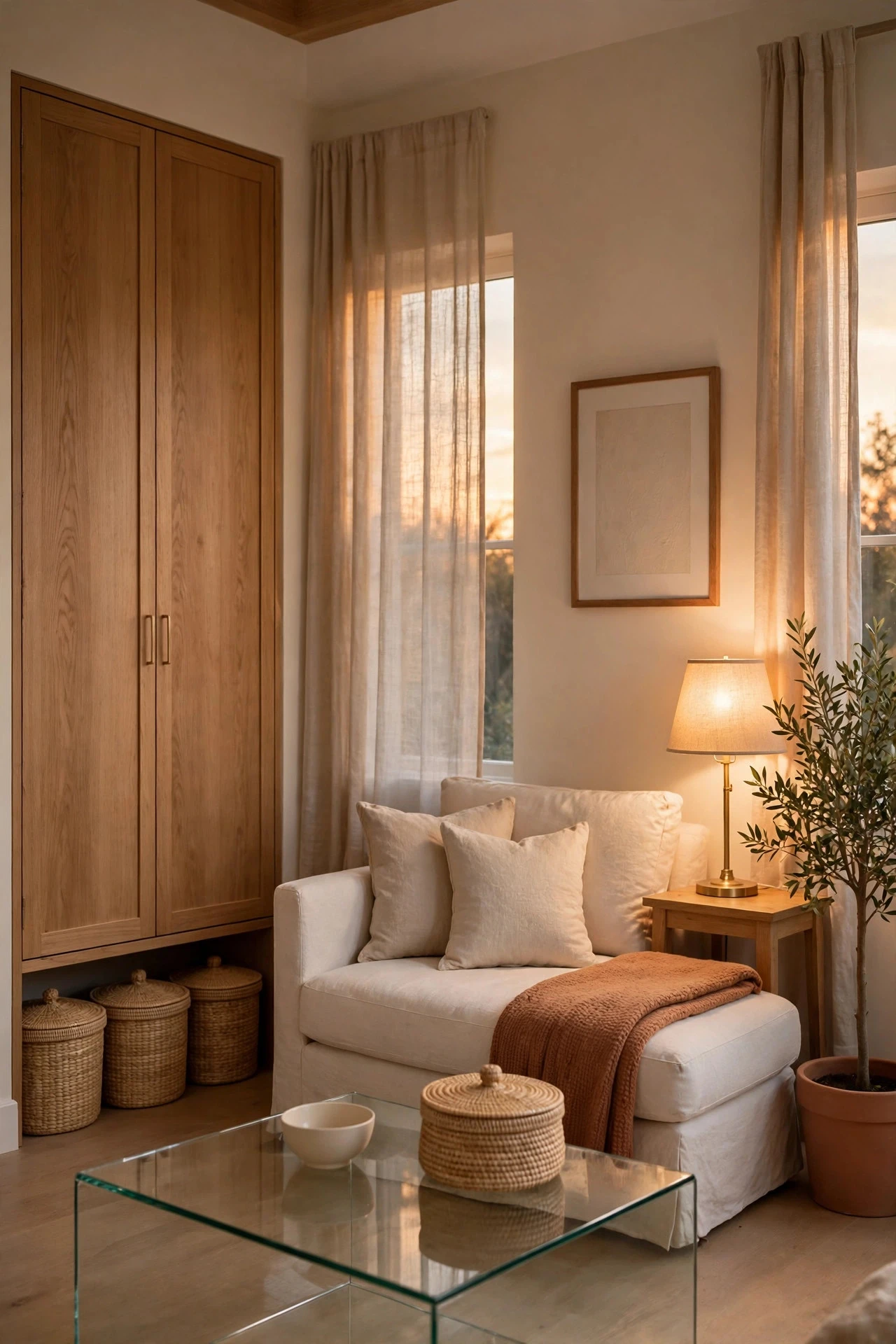
Hide clutter in closed storage and baskets, because a calm Scandinavian room depends on surfaces staying clear even when life is busy. Use a low media unit with doors, a storage ottoman, and lidded baskets in seagrass, felt or pale wood for toys, throws, chargers and remote controls. Give every everyday item a named home, keep one basket per person or per category, and return items to their homes at the end of the day in a quick five-minute reset. Closed storage is kinder than open shelving in a busy home, because it forgives imperfect tidying. The mistake to avoid is relying only on open shelves and decorative trays, which demand constant styling, show every stray object and turn a living room into a display that is exhausting to maintain.
18. Use Built-Ins to Keep Surfaces Calm

Use built-ins to keep surfaces calm in rooms where freestanding furniture leaves awkward gaps and wasted corners. A run of pale, handleless built-in shelving beside a fireplace, a window seat with storage beneath, or a low built-in bench under a window can hold books, games and media while leaving the floor clear and the walls uncluttered. Keep built-ins in the same warm white or pale wood as the room, leave some shelves partly empty, and style the rest with books, one plant and a few meaningful objects. Built-ins suit alcoves especially well. The mistake to avoid is filling every built-in shelf edge to edge with books and objects, which recreates the clutter you were trying to hide and makes the wall feel heavy instead of calm and architectural.
19. Style Art Low, Large and Personal

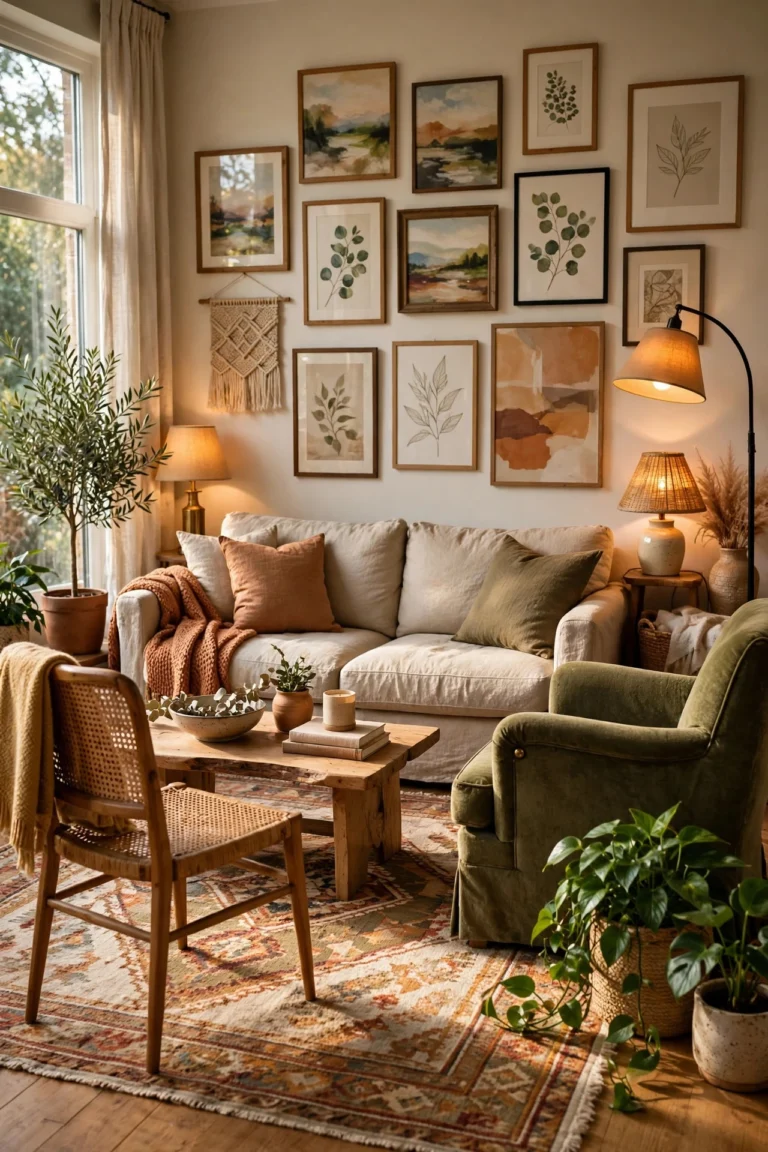
Style art low, large and personal, because Scandinavian walls favour one confident piece over a crowded gallery of small frames. Hang a single large print or painting with its centre at eye level when seated, leave generous breathing space around it, and choose work that means something to you, whether it is a landscape, an abstract in your palette, or a family photograph printed large. A slim pale-wood or black frame keeps the focus on the image, and leaning a large piece against the wall suits renters. Repeat one colour from the art in a cushion or throw. The mistake to avoid is hanging art too high, too small or in a tight grid that fills the wall, which makes the room feel like a gallery corridor rather than a place to sit, talk and relax.
20. Bring in Plants for Life and Softness
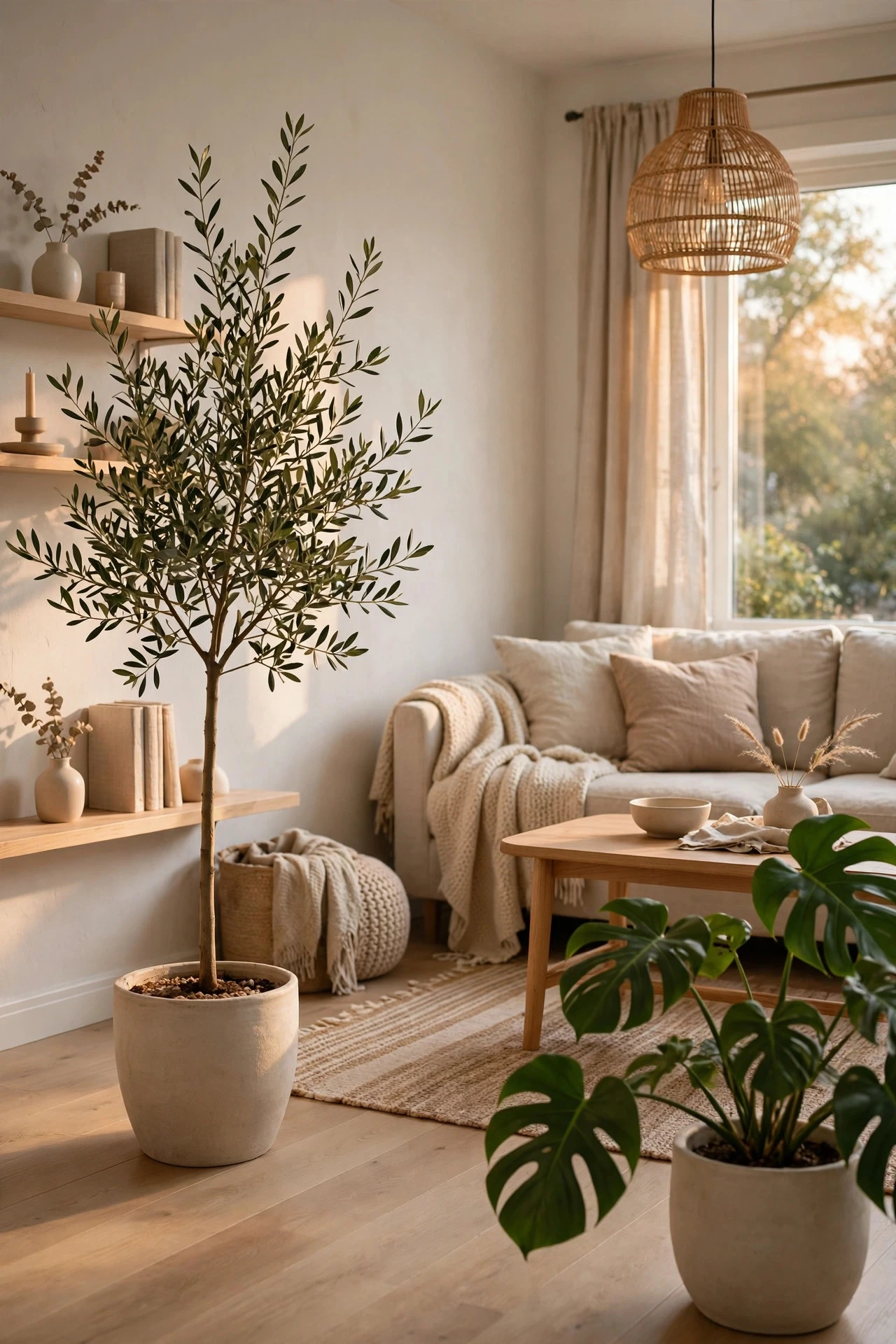
Bring in plants for life and softness, choosing a few healthy, architectural plants rather than a crowded collection that is hard to keep alive. A tall olive tree, a fiddle-leaf fig or a large monstera in a pale ceramic pot adds height and movement beside a sofa, while a trailing pothos softens a shelf and a small herb or succulent suits a coffee table. Group plants in odd numbers, vary their heights, and water on a simple weekly routine you can actually keep. Plants pair naturally with pale wood, wool and linen, and they clean the visual air of a neutral room. The mistake to avoid is filling every surface with small, struggling plants in mismatched plastic pots, which adds clutter and maintenance without the calm, sculptural effect one or two thriving plants provide.
21. Make Small Spaces and Rentals Work Harder
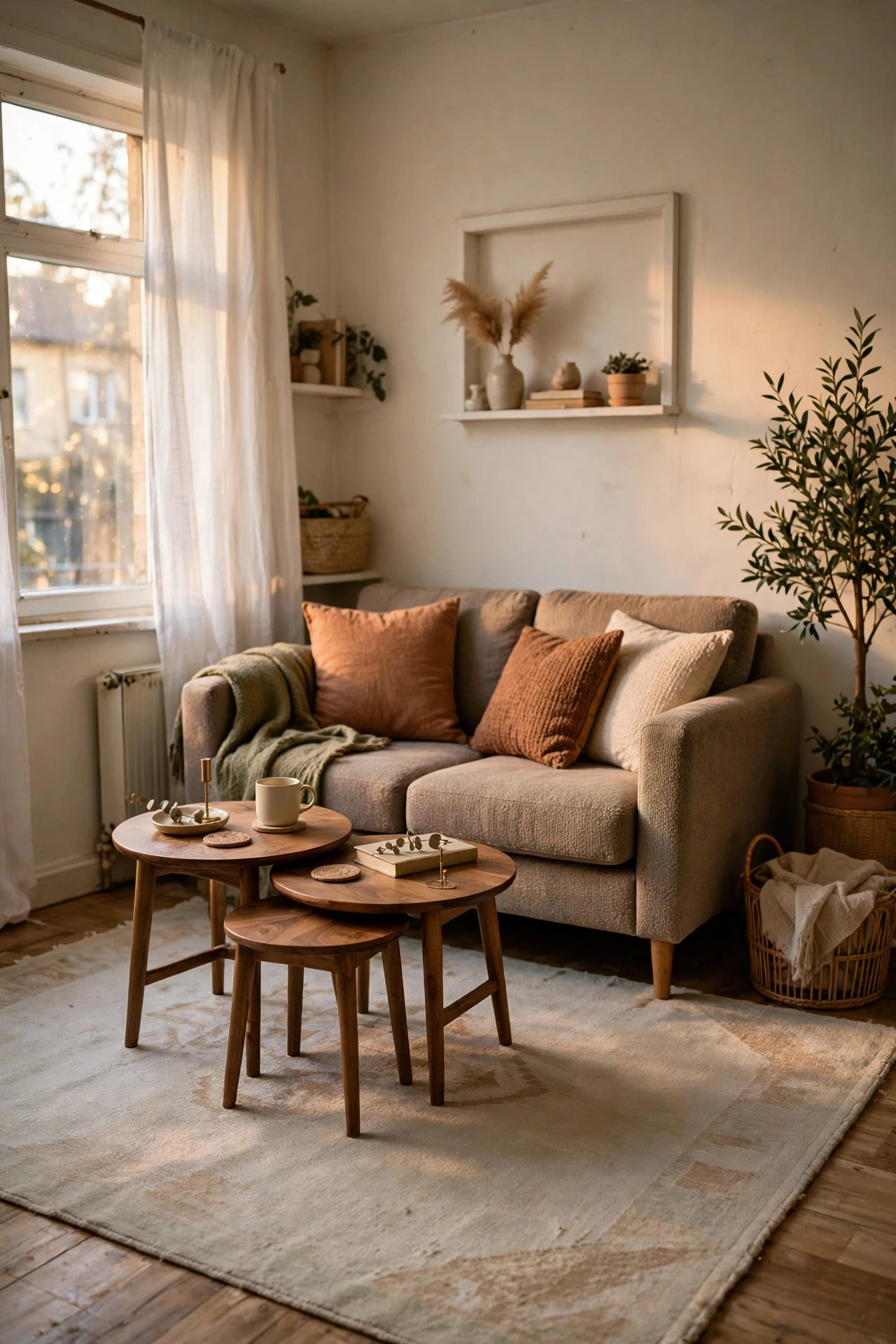
Make small spaces and rentals work harder with light colours, low furniture, multifunctional pieces and removable, landlord-friendly touches. Choose a loveseat or armless sofa, nesting tables, a storage ottoman and a large pale rug that unifies the floor, and keep walkways clear so the room feels larger than it is. Renters can add warmth without paint through slipcovers, sheer curtains on a tension rod, large framed prints leaned against walls, and freestanding pale-wood shelves. Use baskets and closed boxes to hide the overflow that small rooms always produce. The mistake to avoid is buying full-size furniture for a small room and then adding more pieces to compensate, which blocks light, shrinks the floor and makes a compact room feel cramped and difficult to move through.
22. Mix High, Low and Vintage Without Clutter

Mix high, low and vintage without clutter by spending on the pieces you touch every day and saving on the pieces that simply fill a gap. Invest in a good sofa, a solid wood table and quality lighting, then add a vintage side table, a second-hand ceramic vase or a flea-market frame for character and history. A thoughtful vintage find, like the pieces celebrated in these luxury living room decor ideas, can lift a new room without pushing it towards formality. Keep the mix edited, leave space around each special piece, and let patina and wear tell a story. The mistake to avoid is filling the room with bargain finds and matching new sets at once, which leaves no focal point, no breathing space and no sense of which pieces were chosen with care.
Practical Tips
Start with a clear budget and buy in the order that changes the room most: paint and lighting first, then the rug and sofa, then tables and storage, and finally textiles, art and plants. A realistic starting budget for a main living room often sits in the mid-range for a quality sofa and rug, with savings found in second-hand wood furniture and simple linen. Scandinavian design has a long, practical history, as this overview of Scandinavian design explains, and its emphasis on honest materials helps you judge where spending more truly lasts and where a simpler choice will do.
Order the work so paint dries, floors are protected and large furniture arrives before delicate textiles and plants come into the room. Measure doorways, lifts and stair turns before ordering a modular sofa, confirm rug size with painter's tape on the floor, and live with the layout for a week using existing pieces before you commit to new tables. If you are renting, agree any painting, shelving or picture hanging with your landlord in writing, and keep removable solutions for everything else so you can restore the room easily at the end of a tenancy.
Keep the room calm with a short, repeatable maintenance routine that suits a busy home: a five-minute evening reset, a weekly vacuum and cushion plump, a monthly wash for slipcovers and throws, and a seasonal check of plants, candles and batteries. The Danish idea of hygge is not about perfection, but about small, warm habits that make a room feel cared for, so build the routine around lighting a candle, folding a throw and clearing one surface, rather than a long weekend clean that never happens.
Final Thoughts
A Scandinavian living room works when pale light, honest wood, warm textiles and calm storage all support the way you actually live, not just the way a room photographs. Start with the base, add one layer at a time, and keep asking whether each new piece earns its place by being useful, comfortable or genuinely loved. If you do that, the room will stay calm on busy weekdays, cosy on dark evenings and welcoming whenever friends and family gather.
You May Also Like:
– living room inspo ideas – living room wall decor ideas – refresh my living room ideas
Frequently Asked Questions
What colours define a Scandinavian living room?
Warm white walls, soft greys, beige and muted blue or sage form the base, with pale wood and small black accents for definition. Keep the palette limited to three or four tones, repeat them in textiles and art, and let texture rather than strong colour create interest. Avoid pure stark white and too many competing hues.
How do I make a Scandinavian living room feel cosy, not cold?
Layer wool throws, linen cushions, a sheepskin and a soft rug, then add candles, warm 2700K lamps and natural wood. Keep seating deep and soft, leave breathing space around furniture, and add one or two plants. Avoid hard, shiny surfaces everywhere, bare windows and a single cold overhead light.
What sofa works best for a busy family home?
Choose a deep modular sofa in a mid-tone, washable fabric with removable covers, rounded arms and solid pale-wood or low-profile legs. It should seat everyone comfortably, survive spills and rearrange easily for guests or play. Avoid a very pale, delicate fabric, sharp corners and a fixed shape that cannot adapt.
How can I get Scandinavian style in a small living room?
Use pale walls, sheer curtains, a mirror opposite a window, low-profile furniture and one large rug to unify the floor. Choose nesting tables, closed storage and multifunctional pieces, and keep decor edited to a few meaningful objects. Avoid bulky furniture, dark heavy curtains and too many small accessories that fragment the room.
Can renters create a Scandinavian living room without painting?
Yes. Use removable warm-white or pale-grey wall decals sparingly, large pale rugs, light slipcovers, sheer curtains, baskets and freestanding pale-wood shelves. Add warmth with throws, candles and framed prints leaned against the wall. Avoid drilling, dark bulky furniture and permanent changes your landlord has not approved.
How do I avoid a sterile, showroom look?
Mix new pieces with vintage finds, handmade ceramics, books and personal photographs, and let textiles, wood grain and plants add imperfection. Keep one honest, lived-in touch, like a folded throw or a well-used coffee table, in every seating area. Avoid matching sets, untouched surfaces and decor chosen only because it photographs well.