22 Refresh My Living Room Ideas for an Instant New Look
A living room refresh does not need a renovation, a new sofa, or a month of disruption. The rooms that feel brand new after a weekend share one thing: a clear focal point, a rug that fits, layered light, and a handful of surfaces edited down to only what earns its place. When those four elements work together, even familiar furniture looks intentional again, and the room photographs, relaxes, and entertains better without a single wall coming down.
Looking for more inspiration? Our Nest Decorz homepage gathers the latest home decor ideas, seasonal decorating guides and room-by-room styling tips in one place — start there and explore.
Below are 22 practical ideas ordered from the biggest visual wins to the finishing details, each with materials, approximate US costs, measurements that matter, and one mistake to avoid. Work through them in order, or pick the three that bother you most, and finish with the one-day plan in idea 22. The goal is a room that feels lighter, calmer, and unmistakably yours by Sunday evening, not a showroom that nobody dares to sit in.
1. Swap the Rug to Reset the Room

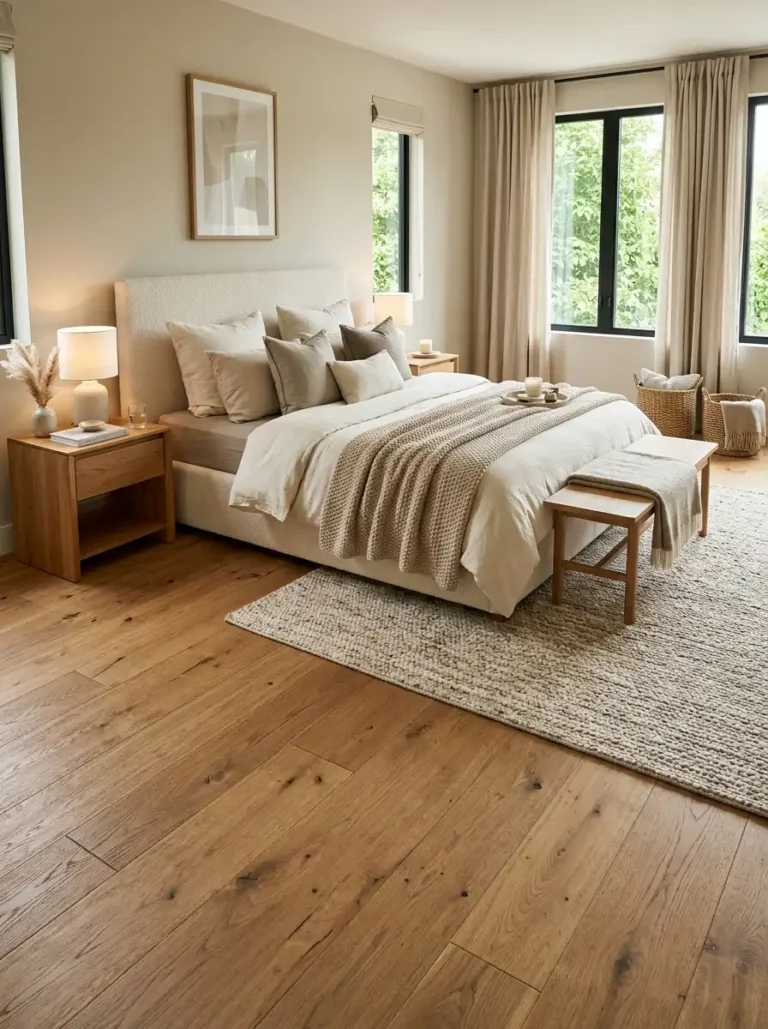
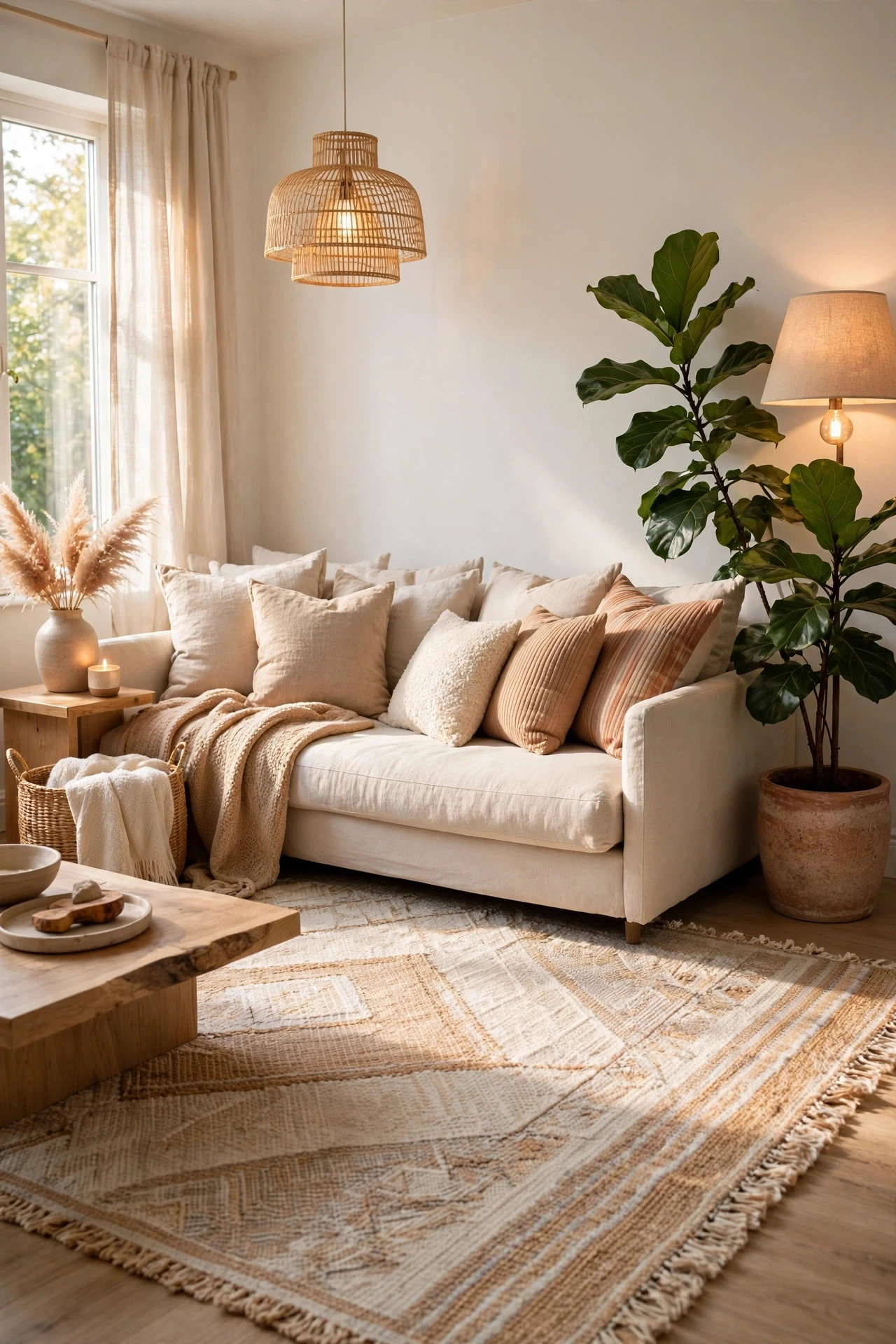
Swapping the rug is the fastest way to reset a living room because it covers the largest visible surface after the walls, and a new rug instantly redefines the seating zone, colour palette, and sense of scale. Choose a rug large enough for the front legs of the sofa and chairs to sit on it — typically 8 by 10 feet for a standard three-seat sofa, or 9 by 12 feet for a larger arrangement — and leave 12 to 18 inches of bare floor between the rug edge and the walls so the room still breathes. Flat-weave wool, washable cotton, and low-pile synthetics suit busy households, while a plush wool pile adds softness underfoot in a quieter sitting room. Expect to spend $150 to $600 for a quality 8-by-10 rug, plus $30 to $60 for a non-slip pad. The mistake to avoid is buying a small, floating rug that strands the furniture, because it makes even a generous room look cramped and disconnected.
2. Rearrange Furniture Around a New Focal Point
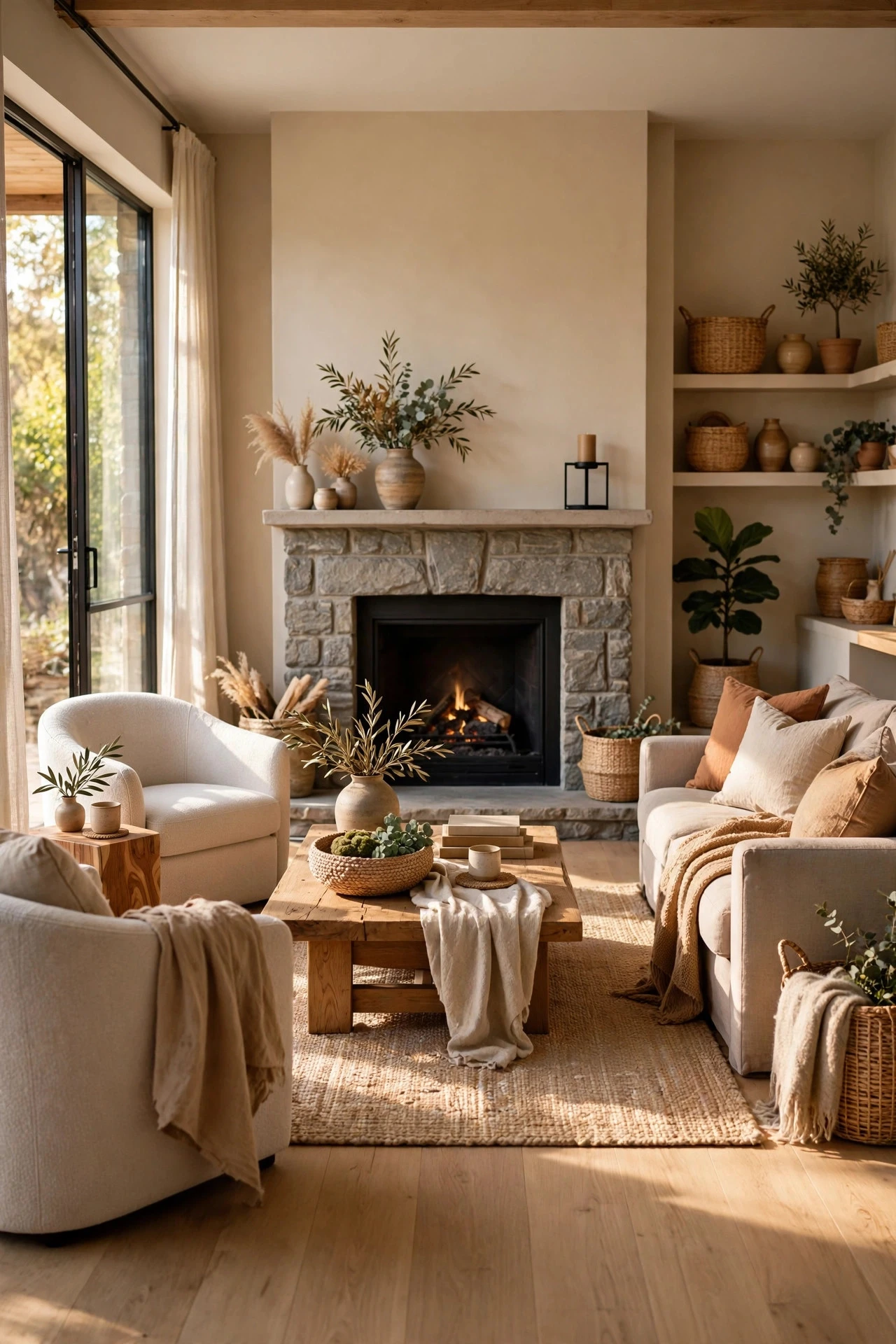
Rearranging furniture around a new focal point costs nothing and often delivers the biggest change, because most living rooms drift into a default layout that serves the television rather than conversation, light, or the room's best feature. Start by naming the focal point — a fireplace, a large window, a view, or a piece of art — then pull the sofa away from the wall, angle chairs toward it, and leave 30 to 36 inches of clear walkway behind seating so nobody has to squeeze past. Float the arrangement on the rug, keep the coffee table 14 to 18 inches from the sofa edge, and test the layout by sitting in every seat before committing. The mistake to avoid is pushing every piece flat against the walls, which leaves a hollow middle, kills conversation, and makes the room feel like a waiting area rather than a living space.
3. Layer Throw Pillows in a Fresh Palette
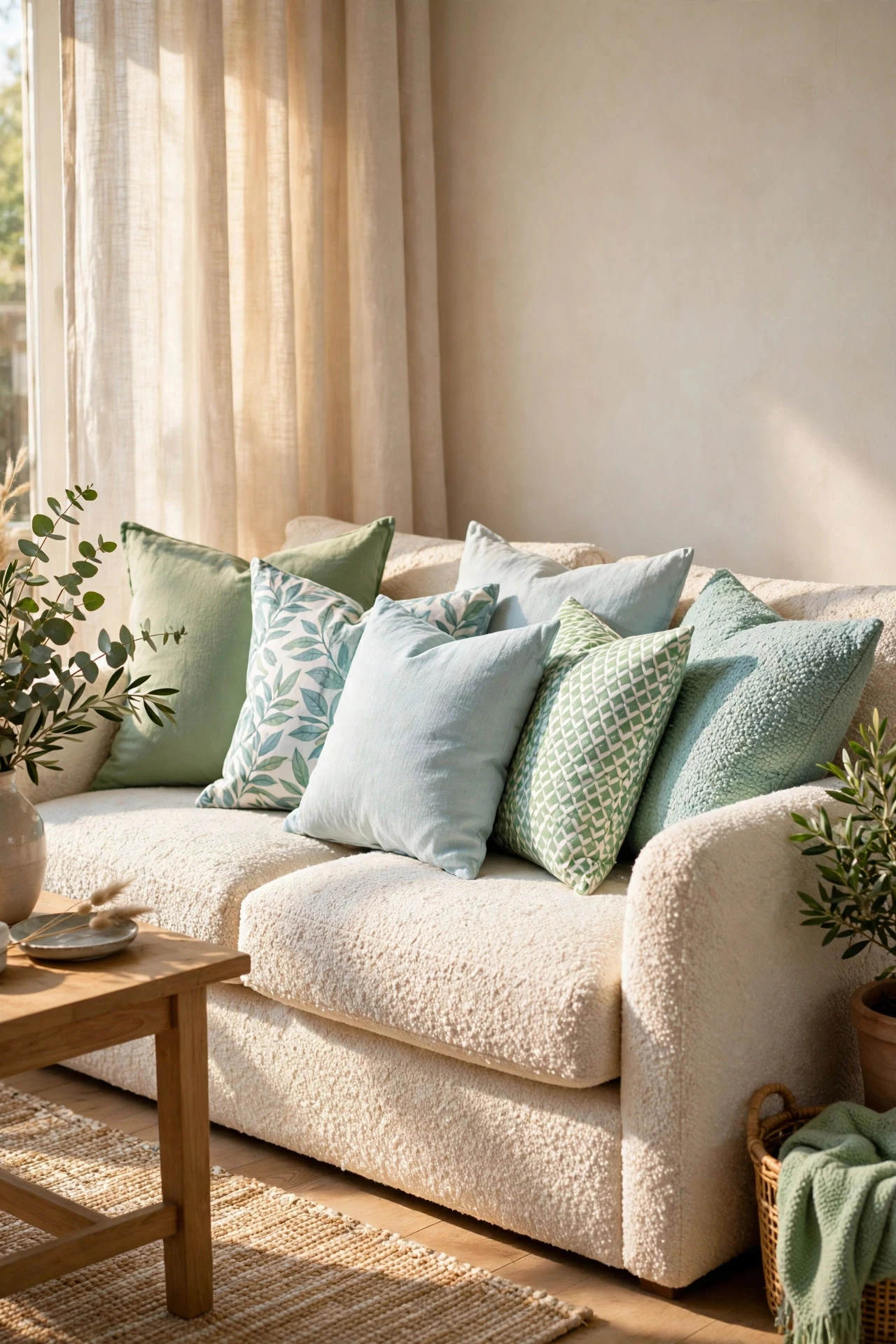
Layering throw pillows in a fresh palette refreshes a sofa in minutes, because pillows carry colour, pattern, and texture at eye level where they are noticed first. Start with two solid pillows in a base colour pulled from the rug or artwork, add one patterned pillow in a larger scale, and finish with one textured pillow in boucle, linen, or velvet for contrast, keeping odd numbers — three on a two-seat sofa, five on a three-seat — so the arrangement looks collected rather than matched. Use 20-inch squares for standard sofas, 22-inch for deeper seats, and always buy inserts two inches larger than the covers so pillows stand plump instead of slumping. Expect $20 to $60 per finished pillow, or $80 to $200 for a full set. The mistake to avoid is matching every pillow to the sofa colour, which flattens the whole arrangement and wastes the cheapest colour change in the room.
4. Add a Statement Throw Blanket
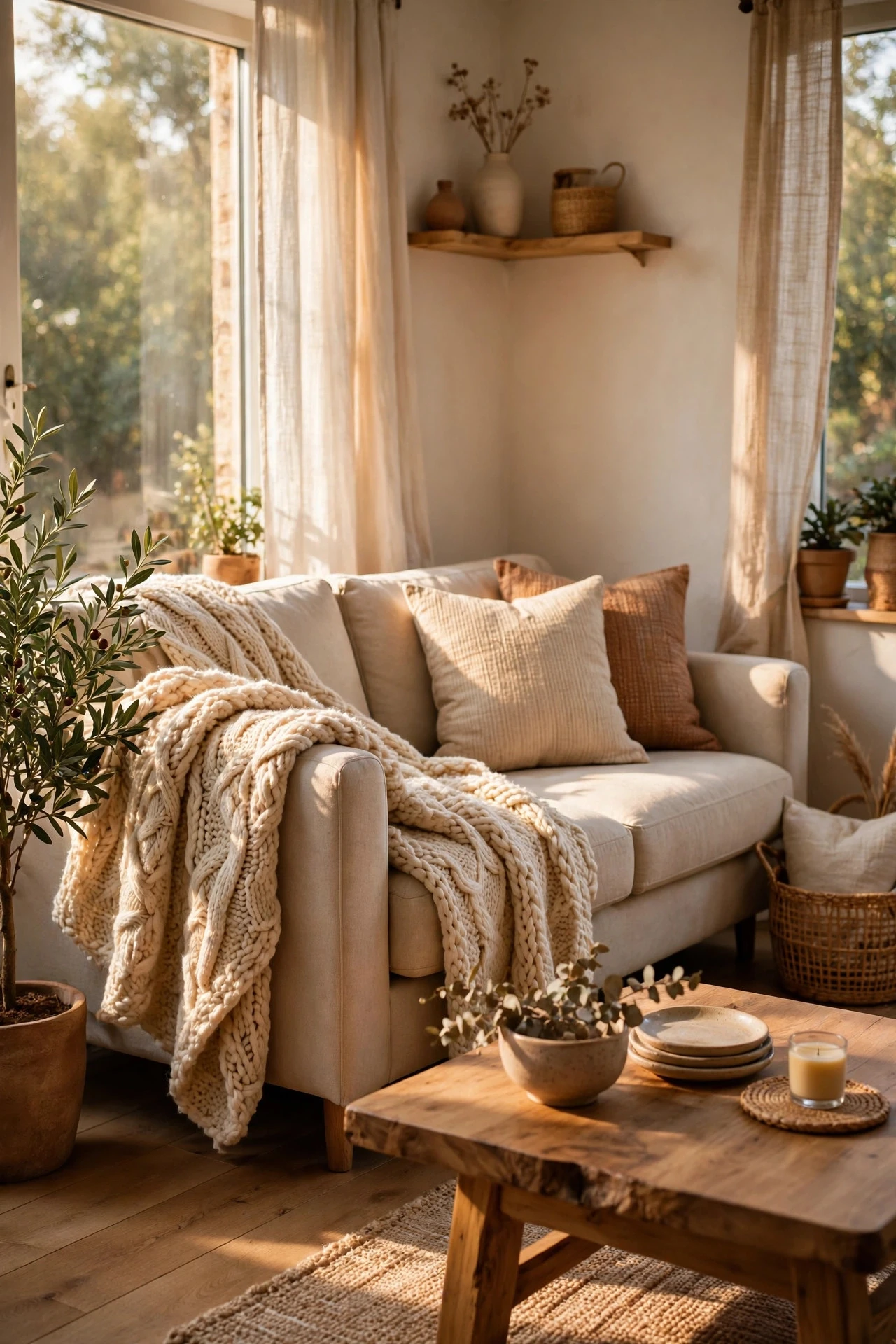
A statement throw blanket adds warmth, colour, and a soft layer that invites people to settle in, and it is one of the few decor changes that is both visual and genuinely useful on a cool evening. Drape a generously sized throw — roughly 50 by 60 inches — folded in thirds over one sofa arm, or casually folded across a corner of the sofa, in a colour or pattern that echoes the pillows without repeating them exactly. Chunky knits suit autumn and winter, lightweight linen or cotton gauze works for warmer months, and a fringed wool throw bridges both seasons in a neutral room. Budget $40 to $120 for a quality throw that will survive regular washing, and keep a second folded throw in a basket for guests. The mistake to avoid is draping a thin, wrinkled throw across the whole sofa back, where it reads as clutter and slides off the moment someone sits down.
5. Restyle the Coffee Table in Threes
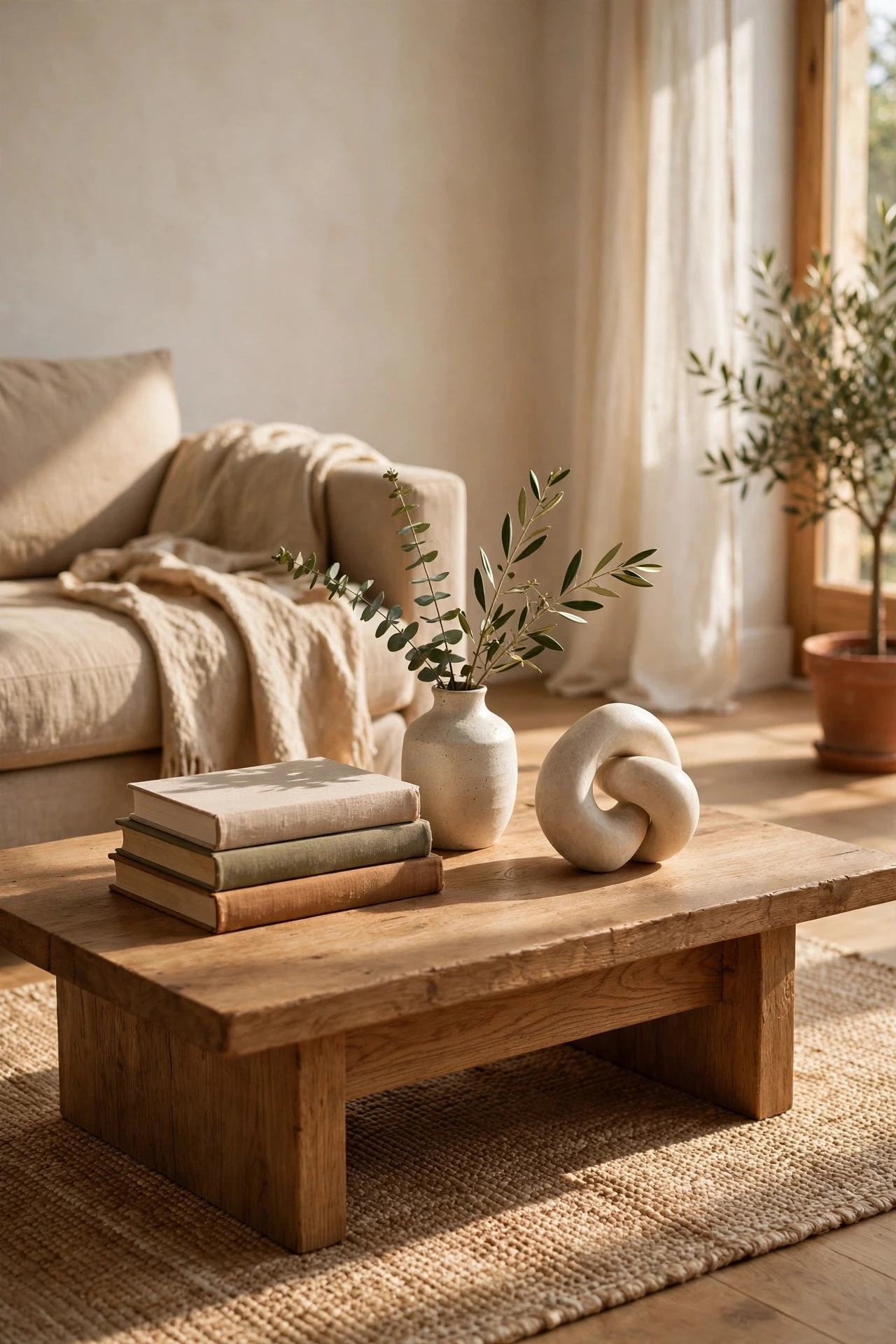
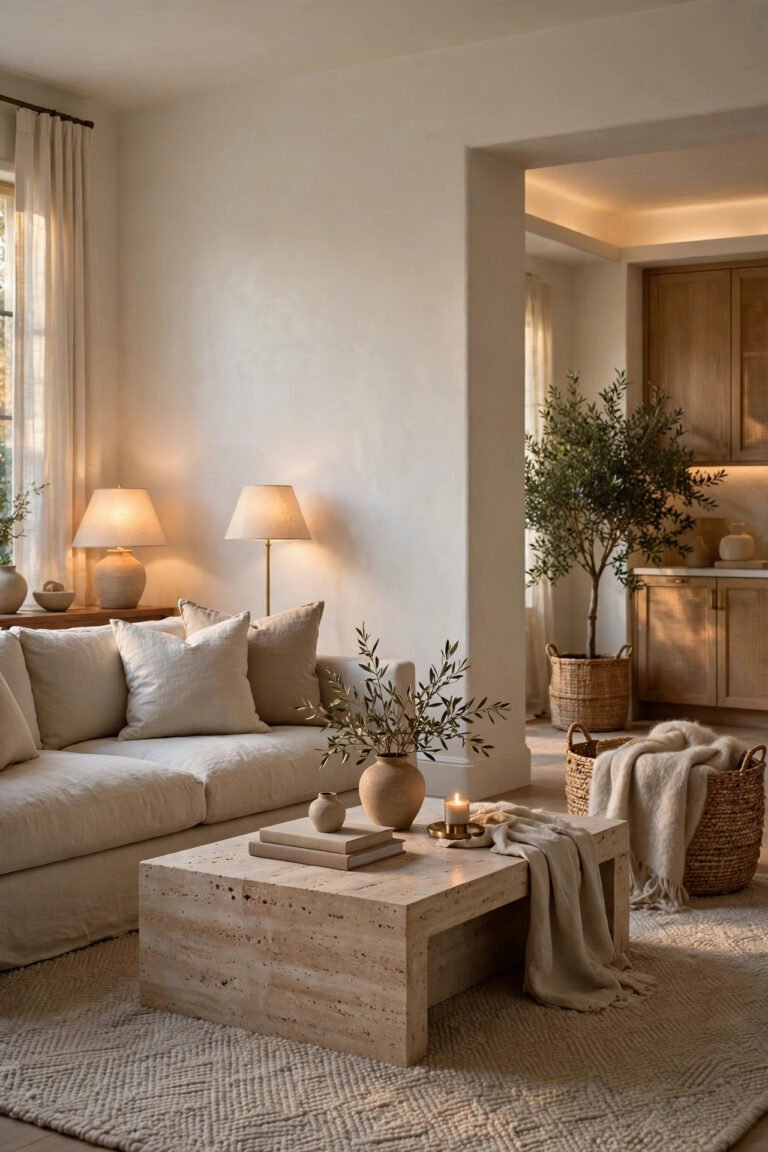
Restyling the coffee table in threes gives the centre of the room a calm, finished look without spending anything, because grouping objects in odd numbers creates visual rhythm that a single scattered item never achieves. Choose one low, wide anchor such as a stack of two books or a shallow bowl, one vertical element such as a small vase with stems or a candlestick, and one personal object such as a sculptural piece or a framed photograph, then leave at least a third of the table surface empty so drinks and remotes have a home. Keep the tallest object under 18 inches so sightlines across the table stay open, and vary materials — wood, glass, ceramic — so the group feels layered. The mistake to avoid is filling every inch with small trinkets, which turns the table into a display shelf and leaves nowhere to set down a cup.
6. Bring in a Large Houseplant
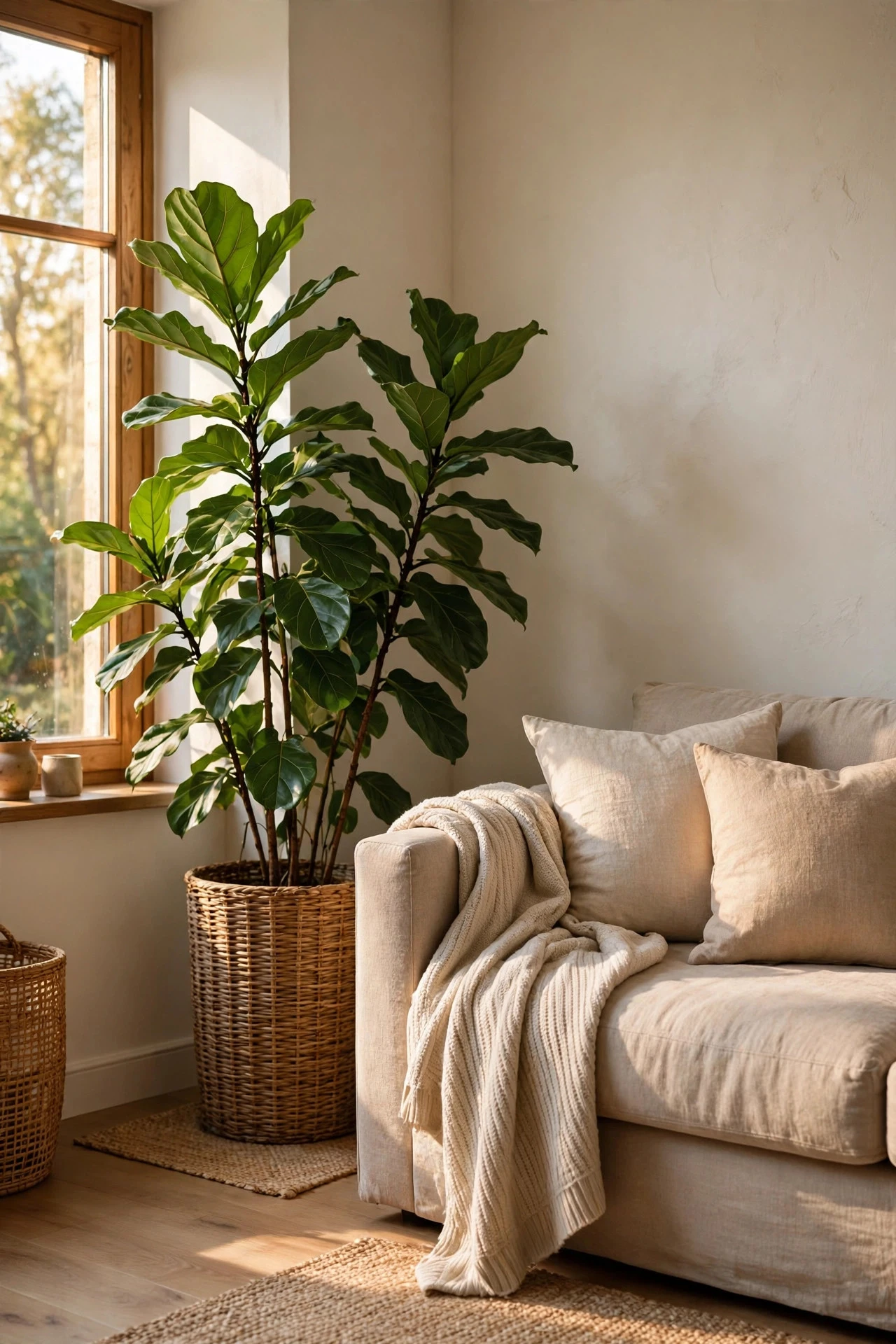
A large houseplant brings height, life, and a natural shape that softens all the straight lines of sofas, shelves, and screens, and it is often the single addition that makes a refreshed room feel finished. Choose one statement plant — a fiddle-leaf fig, olive tree, or large monstera — in a pot 14 to 18 inches wide, placed in an empty corner or beside the sofa where it gets the light its tag requires, and raise it on a small stand if the canopy needs to clear the sofa back. Budget $60 to $180 for a mature plant and a good-looking pot, plus $15 to $30 for a saucer and potting mix, and check light and watering needs honestly before buying. The mistake to avoid is scattering several small plants across every surface, which reads as clutter and guarantees at least one will be forgotten, underwatered, and quietly dying.
7. Swap Curtains for Lighter Fabric
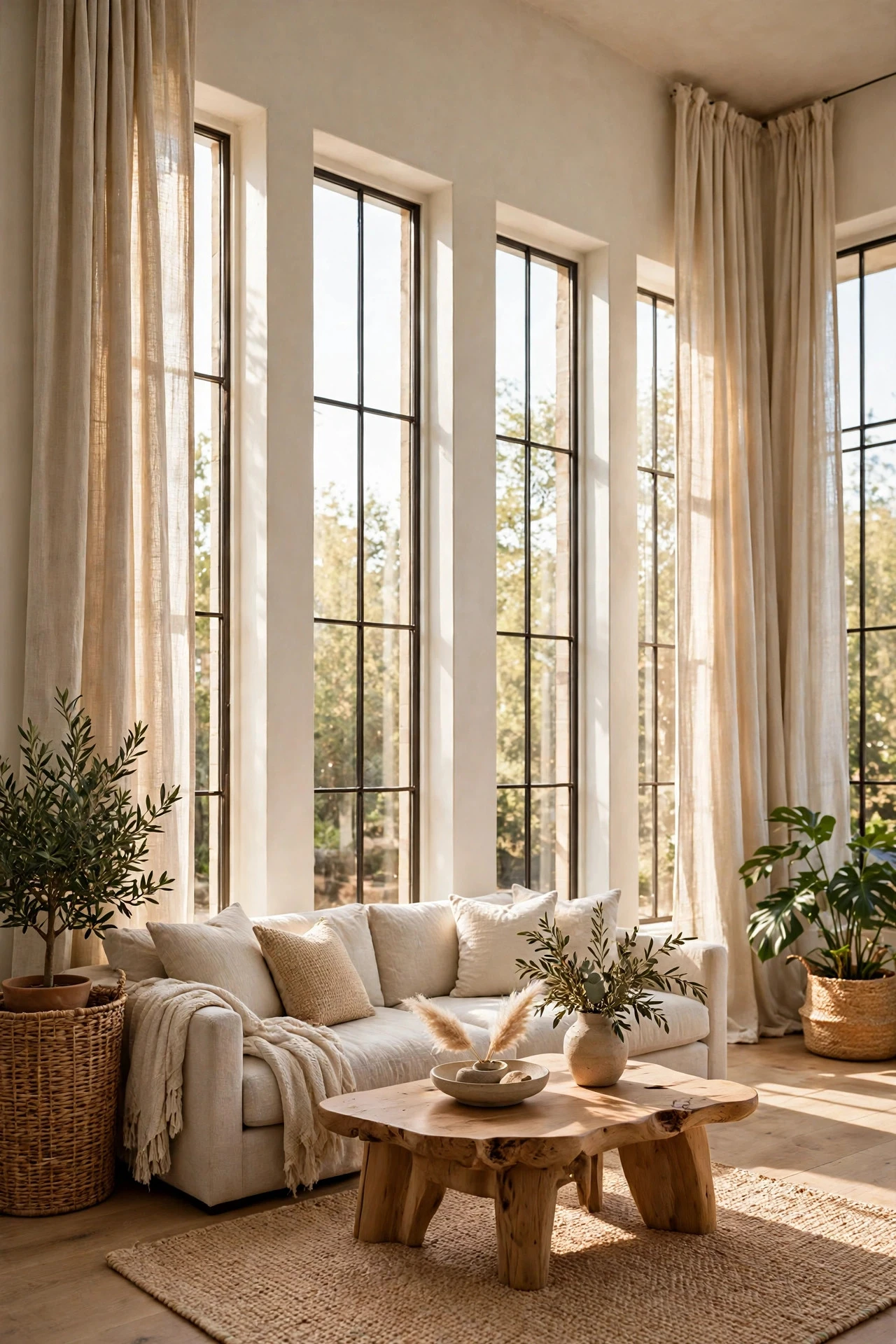
Swapping heavy curtains for a lighter fabric changes how much daylight a living room receives, and daylight is the one element no lamp can fully replace. Choose linen-look or sheer curtains hung from a rod mounted 4 to 6 inches above the window frame and 3 to 6 inches wider on each side, with panels that fall to just above the floor or pool by a single inch, so the window looks taller and wider than it is. White, warm ivory, and pale natural linen suit most rooms, while a soft sage or warm grey can echo the rug without darkening the space. Expect $40 to $120 per panel for ready-made linen-look curtains, plus $25 to $60 for a rod. The mistake to avoid is hanging short curtains that stop at the sill, which chop the window in half, make ceilings look lower, and undo the airy effect you wanted.
8. Create a Gallery Wall With What You Own
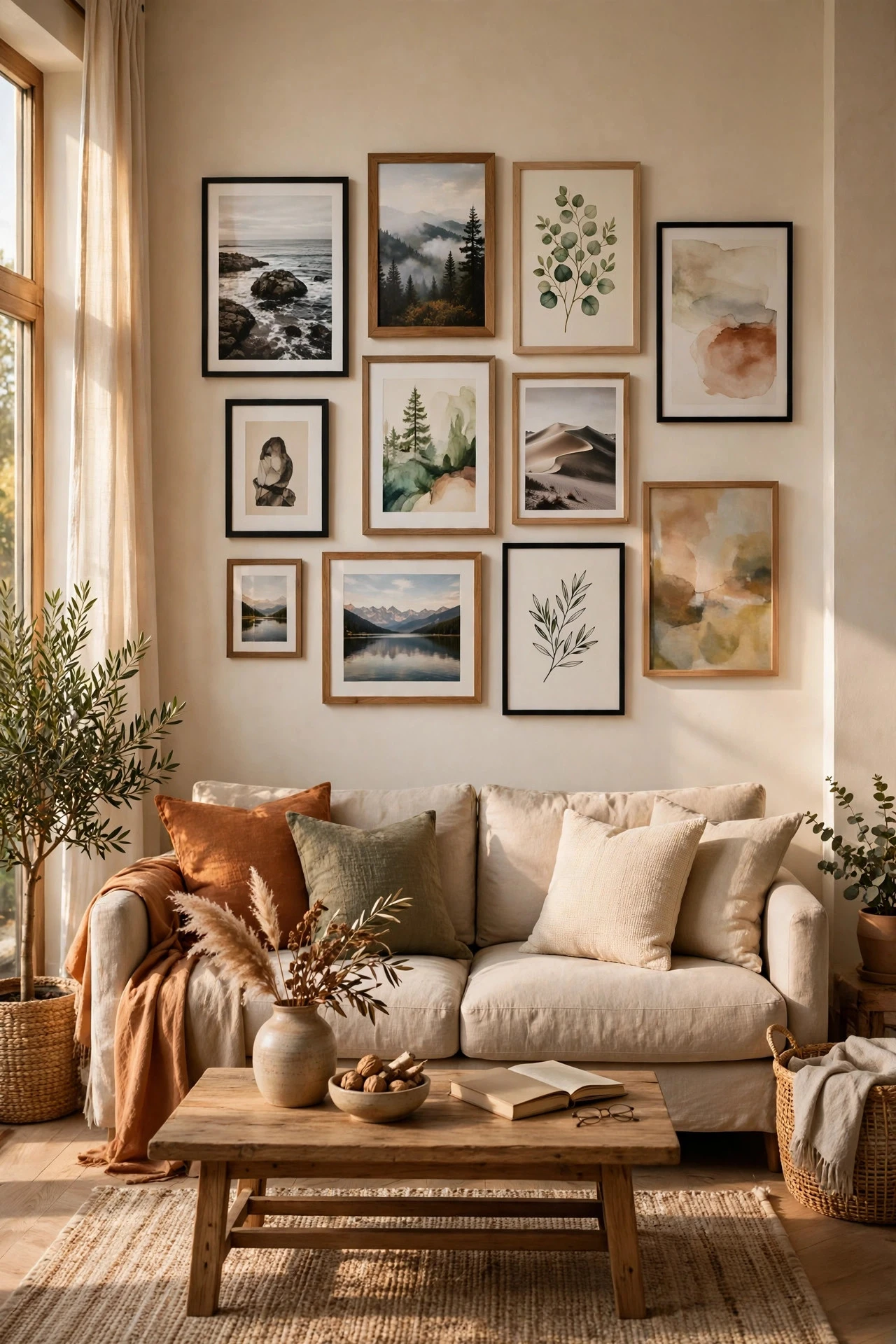
A gallery wall built from art you already own costs nothing and turns a blank wall into the room's personality, because framed photographs, prints, and small paintings gathered together tell a story no single large canvas can. Lay the arrangement on the floor first, starting with the largest piece slightly off-centre, spacing frames 2 to 3 inches apart, and keep the centre of the whole group at about 57 to 60 inches from the floor — average eye level. Mix frame finishes sparingly, repeat one metal or wood tone, and include one three-dimensional piece, such as a small woven hanging, for texture. Budget $20 to $80 for any extra frames, hanging hardware, and a paper template. The mistake to avoid is hanging frames in a straight, evenly spaced grid with no variation in size, which looks like a corporate corridor and drains the wall of any personal character.
9. Paint One Accent Wall

Painting one accent wall is the boldest low-cost refresh, because a single wall of deep, confident colour gives the room depth and makes pale furniture, art, and plants stand out. Choose the wall behind the sofa or fireplace, test three large swatches in daylight and lamplight for at least two days, and pick a colour with enough saturation to read as intentional — deep sage, warm charcoal, navy, or terracotta — rather than a timid shade that looks like a mistake. One gallon of quality paint covers about 350 to 400 square feet, costs $40 to $70, and with primer, rollers, and tape the whole job runs $80 to $160 for a standard wall. The mistake to avoid is painting the smallest or most broken-up wall, such as the one full of doors, because the colour gets chopped into fragments and reads as patchy instead of deliberate.
10. Update Lamp Shades and Bulb Warmth
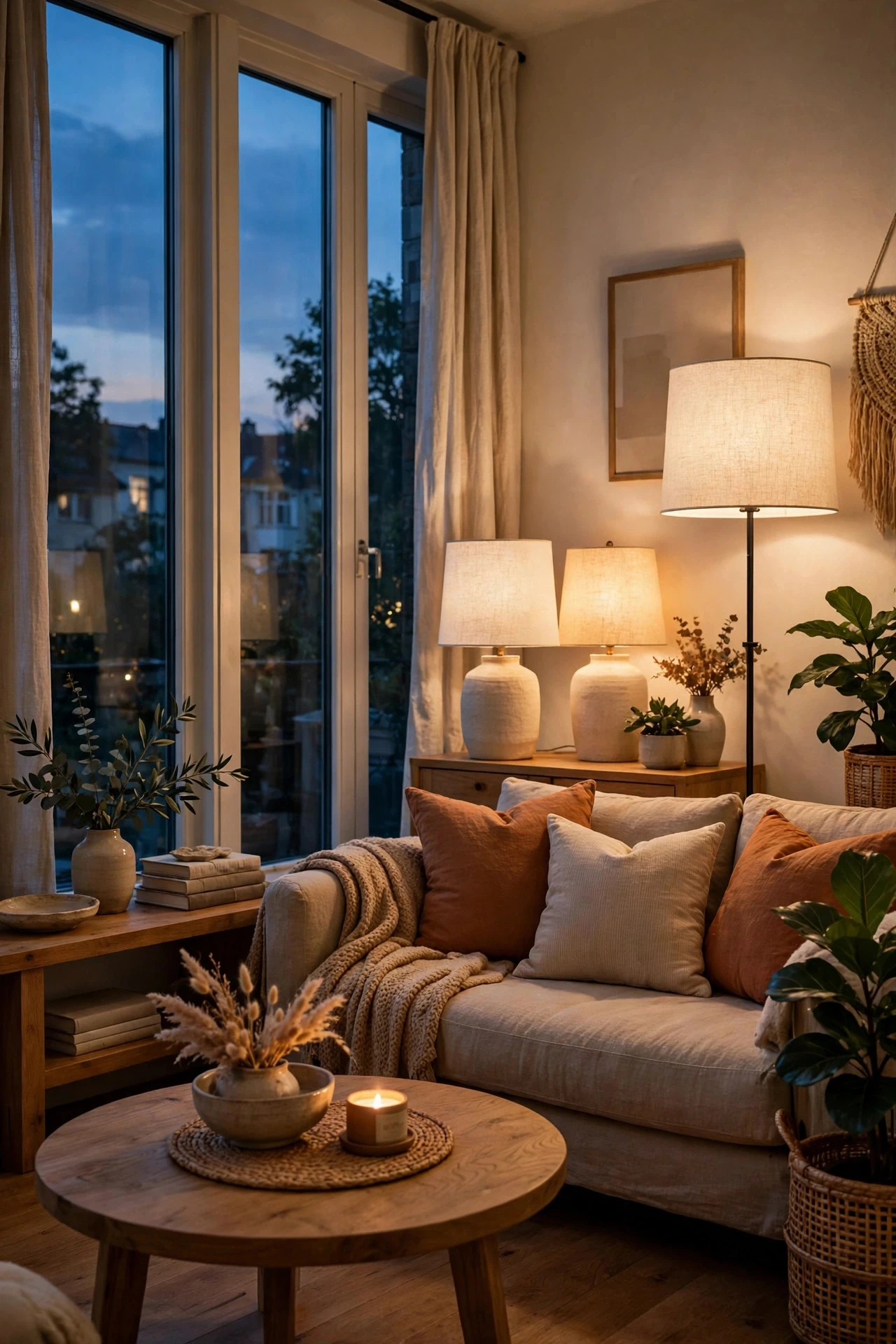
Updating lamp shades and bulb warmth transforms how a living room feels after dark, because shade shape controls the spread of light and bulb colour temperature controls whether skin, wood, and fabric look warm or washed out. Replace dated or yellowed shades with clean drum or empire shades in white linen, sized so the shade is about two-thirds the height of the lamp base and wide enough to clear the bulb by an inch on each side. Swap bulbs to dimmable LEDs at 2700K with a colour rendering index of 90 or above, which flatters warm woods and skin tones far better than cool 4000K bulbs. Budget $25 to $60 per shade and $8 to $15 per quality bulb. The mistake to avoid is mixing warm and cool bulbs in the same room, which makes one side look yellow and the other look grey, and no amount of styling can reconcile the clash.
11. Declutter Surfaces and Edit Decor
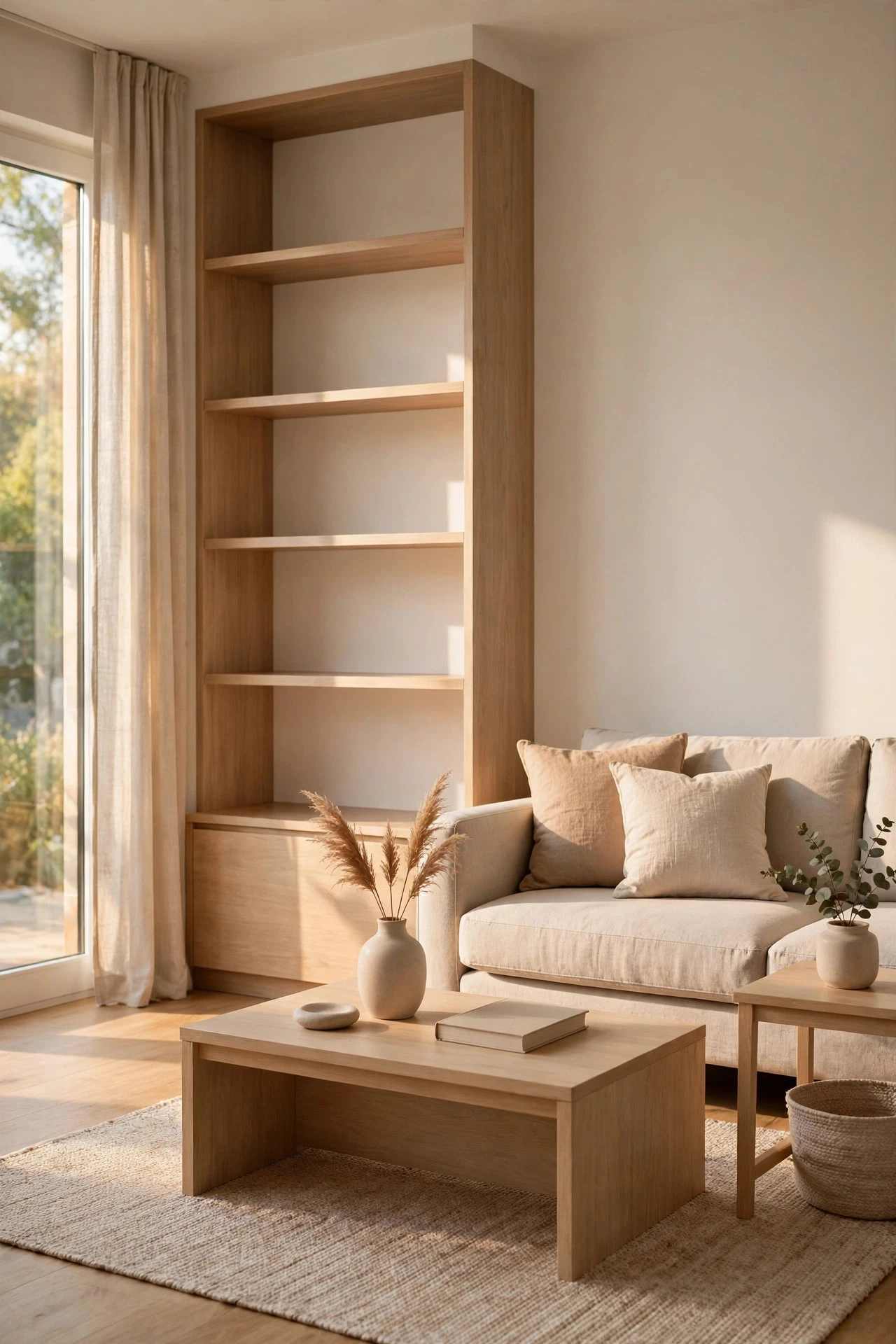
Decluttering surfaces and editing decor is the refresh that costs nothing yet changes everything, because a room with breathing space on its shelves and tables lets the pieces that remain actually be seen. Remove everything from one surface at a time, keep only objects that are useful, beautiful, or genuinely meaningful, and return the rest to storage, another room, or donation — aiming to leave at least a third of every shelf and tabletop empty. Corral the survivors into small groups, hide cables and chargers in a lidded box, and give every remaining object a clear purpose, whether holding, lighting, or telling a story. The process takes one to two hours for a typical living room and costs nothing beyond a few storage boxes at $10 to $25 each. The mistake to avoid is editing in a rush and removing the personal, lived-in pieces along with the clutter, leaving a room that looks tidy in a photograph but feels empty to live in.
12. Add a Mirror to Bounce Light
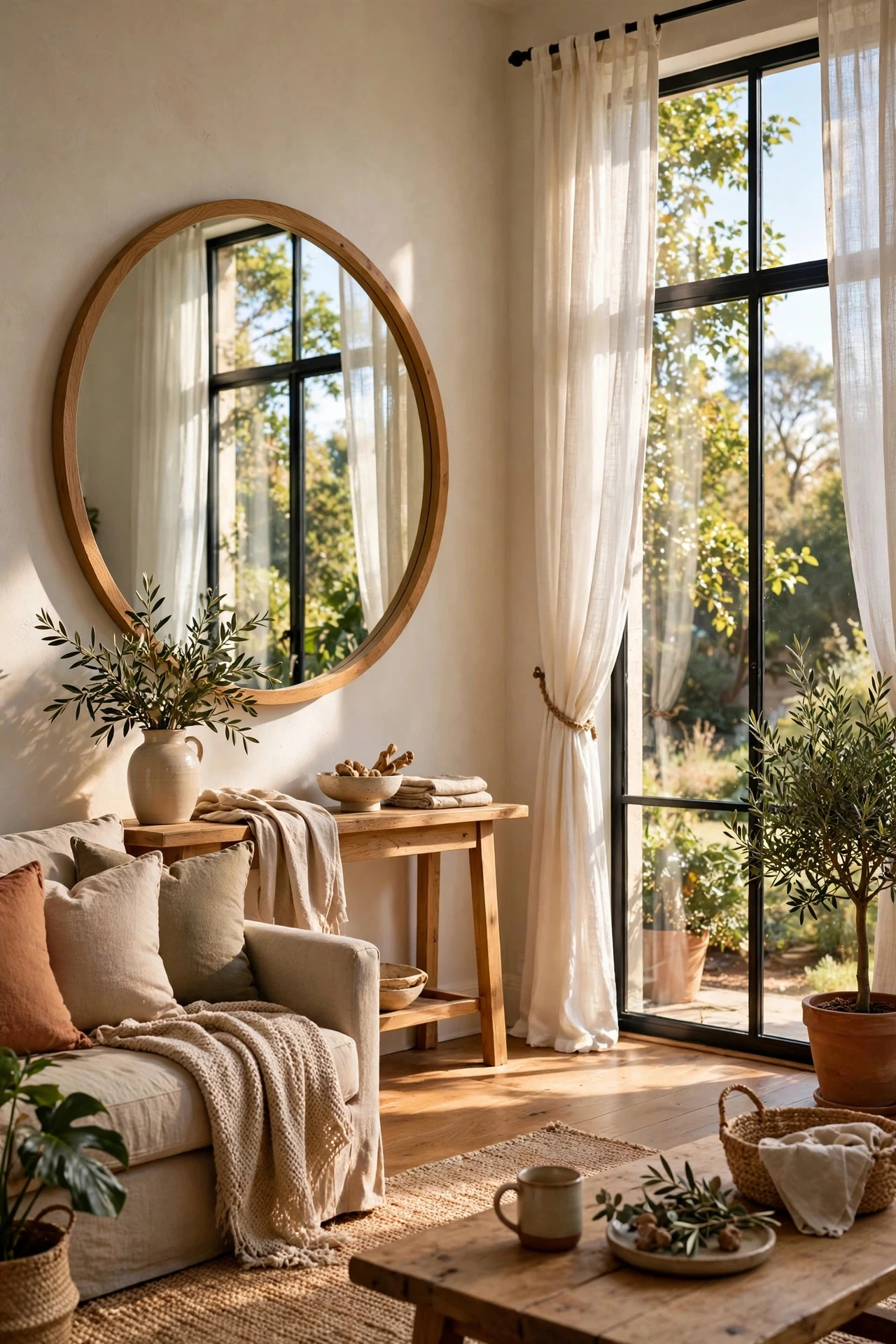
Adding a mirror to bounce light makes a living room feel larger and brighter without any structural work, because a well-placed mirror doubles daylight and reflects the room's best view back into the space. Hang a large mirror — at least 30 by 40 inches for real impact — on the wall opposite or adjacent to a window, so it catches daylight and a pleasant view rather than a blank wall or clutter, with its centre at about 60 inches from the floor. A round mirror softens a boxy room, an arched mirror echoes classic architecture, and a leaner mirror propped safely against a wall suits renters. Expect $80 to $300 for a quality framed mirror, plus $15 to $30 for proper wall anchors. The mistake to avoid is hanging a mirror directly opposite a television or a messy corner, because it faithfully doubles exactly the view you least want to see twice.
13. Rotate Art and Books Seasonally

Rotating art and books seasonally keeps a living room feeling current without buying anything new, because familiar objects regain impact when they return after an absence, and seasonal colour shifts make the room respond to the time of year. Swap two or three framed prints, turn books on a shelf so spines face a new direction or spines are grouped by colour, and replace a heavy winter textile with a lighter one, keeping the room's core palette intact. Store off-season pieces in a labelled box in a dry cupboard, photograph each arrangement you like, and limit the swap to under an hour so it stays a refresh rather than a redecoration project. The cost is effectively zero, beyond $10 to $20 for replacement hanging hardware. The mistake to avoid is rotating everything at once, which erases the room's identity and leaves it feeling like a different house, instead of the same much-loved room in a new season.
14. Refresh Upholstery With Slipcovers
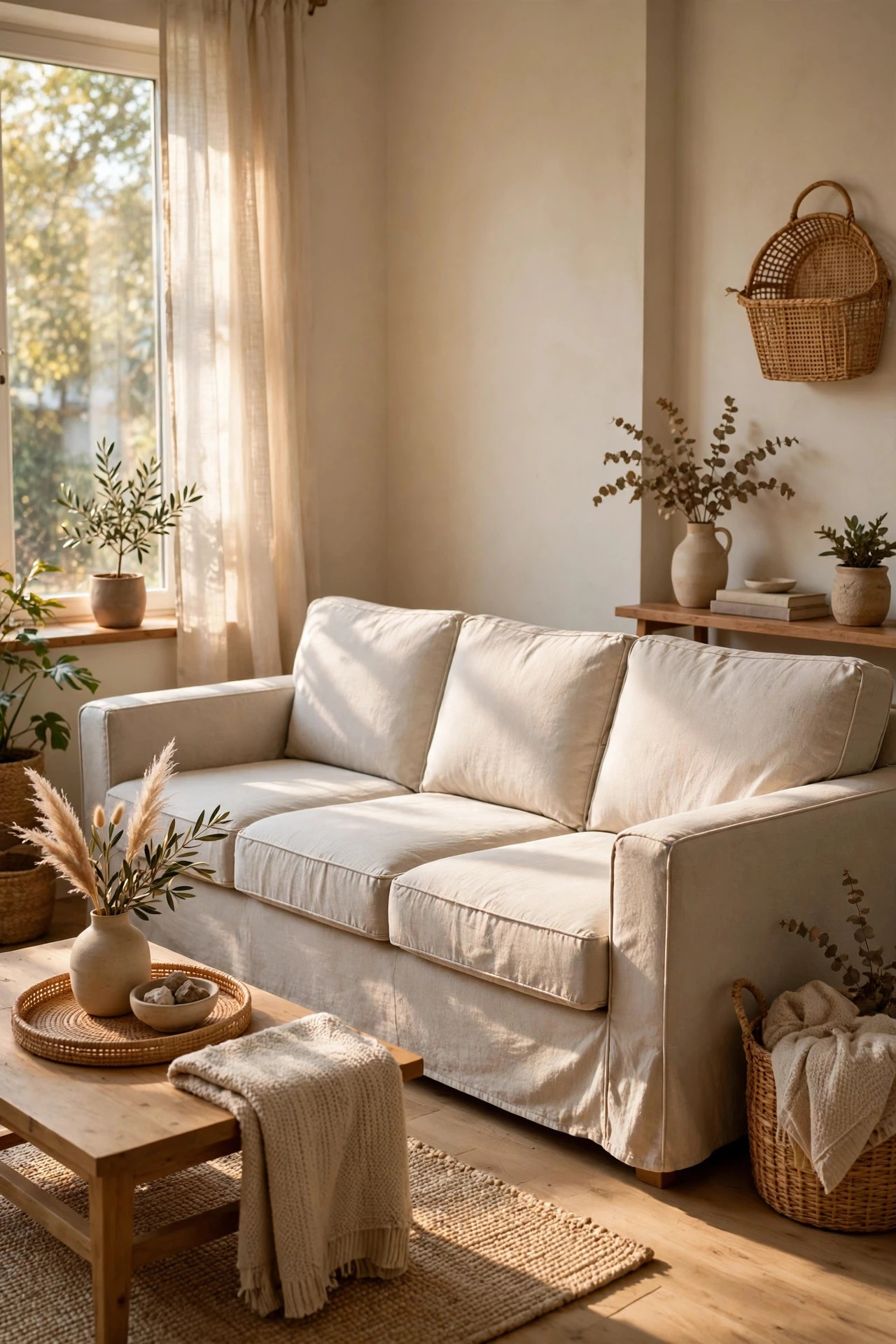
Refreshing upholstery with slipcovers rescues a structurally sound sofa whose fabric is stained, faded, or simply the wrong colour, at a fraction of the cost and waste of replacement. Choose a tailored, washable slipcover in a performance fabric — linen-look, twill, or textured weave — measured to your exact sofa dimensions, including arm height, seat depth, and back height, and order swatches first to test colour in your light and against the rug. Ready-made slipcovers cost $80 to $250 for a three-seat sofa, custom-fitted covers run $300 to $700, and both should be machine-washable if children or pets use the room. The mistake to avoid is buying a loose, one-size cover that bags, wrinkles, and constantly needs tucking, because it looks cheaper than the worn upholstery it was meant to hide and frustrates everyone who sits down.
15. Layer Lighting at Three Heights
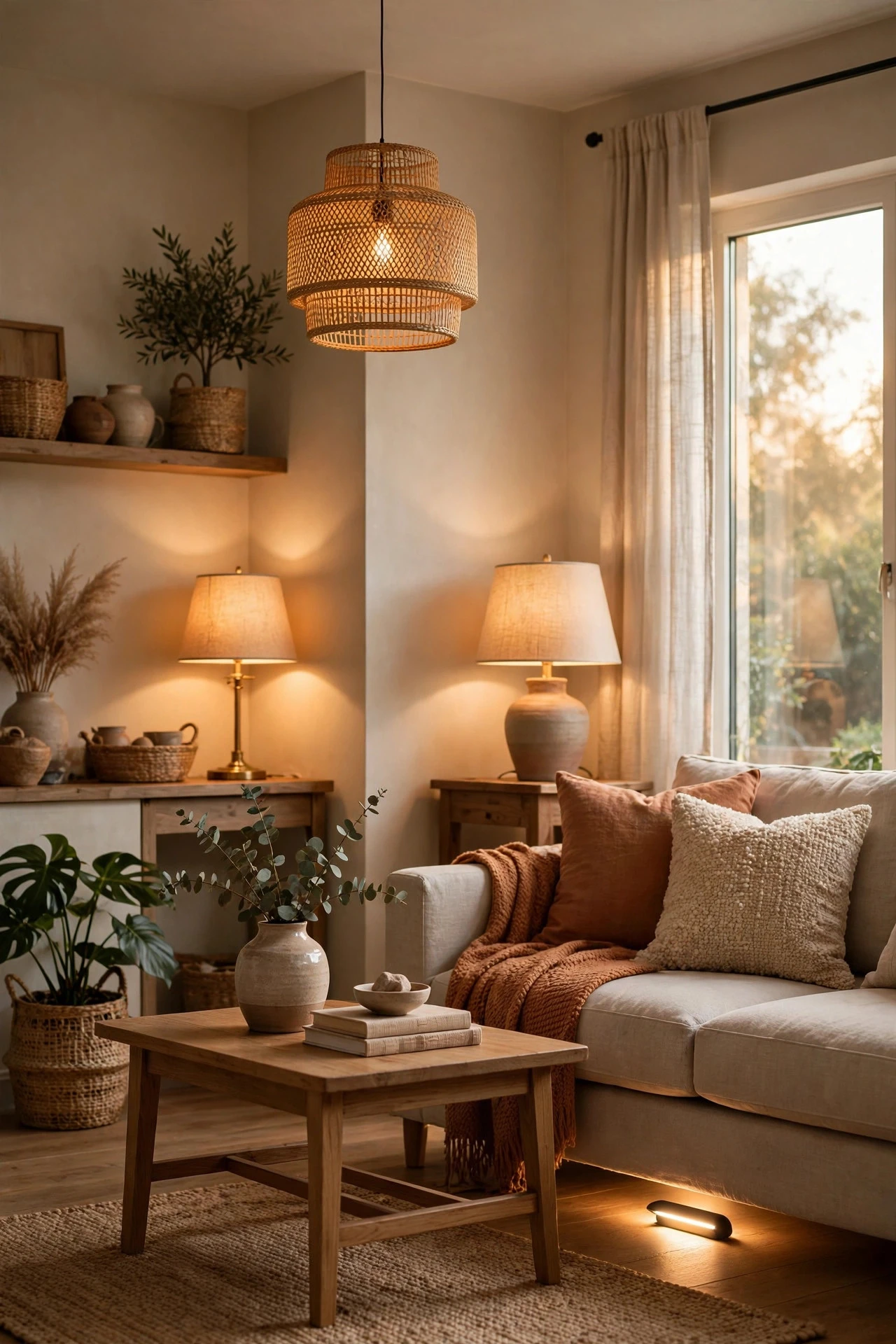
Layering lighting at three heights — overhead, mid-level, and low — is what separates a flat, gloomy living room from one that glows, because each height serves a different job and together they remove harsh shadows. Keep the ceiling fixture or pendant on a dimmer for general light, add table and floor lamps at seated eye level for reading and conversation, and finish with a low accent such as a picture light, a candle cluster, or a small uplight washing a plant or wall. Aim for five to seven light sources in a medium living room, all at 2700K, with at least two on dimmers, and budget $40 to $150 per lamp plus $25 to $60 for dimmer switches fitted by an electrician where needed. The mistake to avoid is relying on a single bright overhead light, which flattens faces, washes out colour, and makes the room feel like an office after sunset.
16. Introduce a New Texture: Boucle, Linen or Velvet

Introducing a new texture — boucle, linen, or velvet — refreshes a room through touch as much as sight, because texture gives the eye somewhere to rest and stops a neutral palette from feeling flat. Pick one hero texture and repeat it twice: boucle on two cushion covers or a single accent chair, washed linen on curtains or a throw, or velvet on one cushion pair and a small ottoman, keeping the colour close to the existing palette so texture, not colour, does the talking. Boucle cushions cost $30 to $70 each, linen curtains run $40 to $120 per panel, and velvet cushions cost $25 to $60 each, so a texture refresh can land between $80 and $250. The mistake to avoid is mixing all three textures in equal amounts across every surface, which turns a subtle sensory layer into a fabric showroom and leaves the room with no calm, quiet areas.
17. Style the Mantel or Shelves Afresh
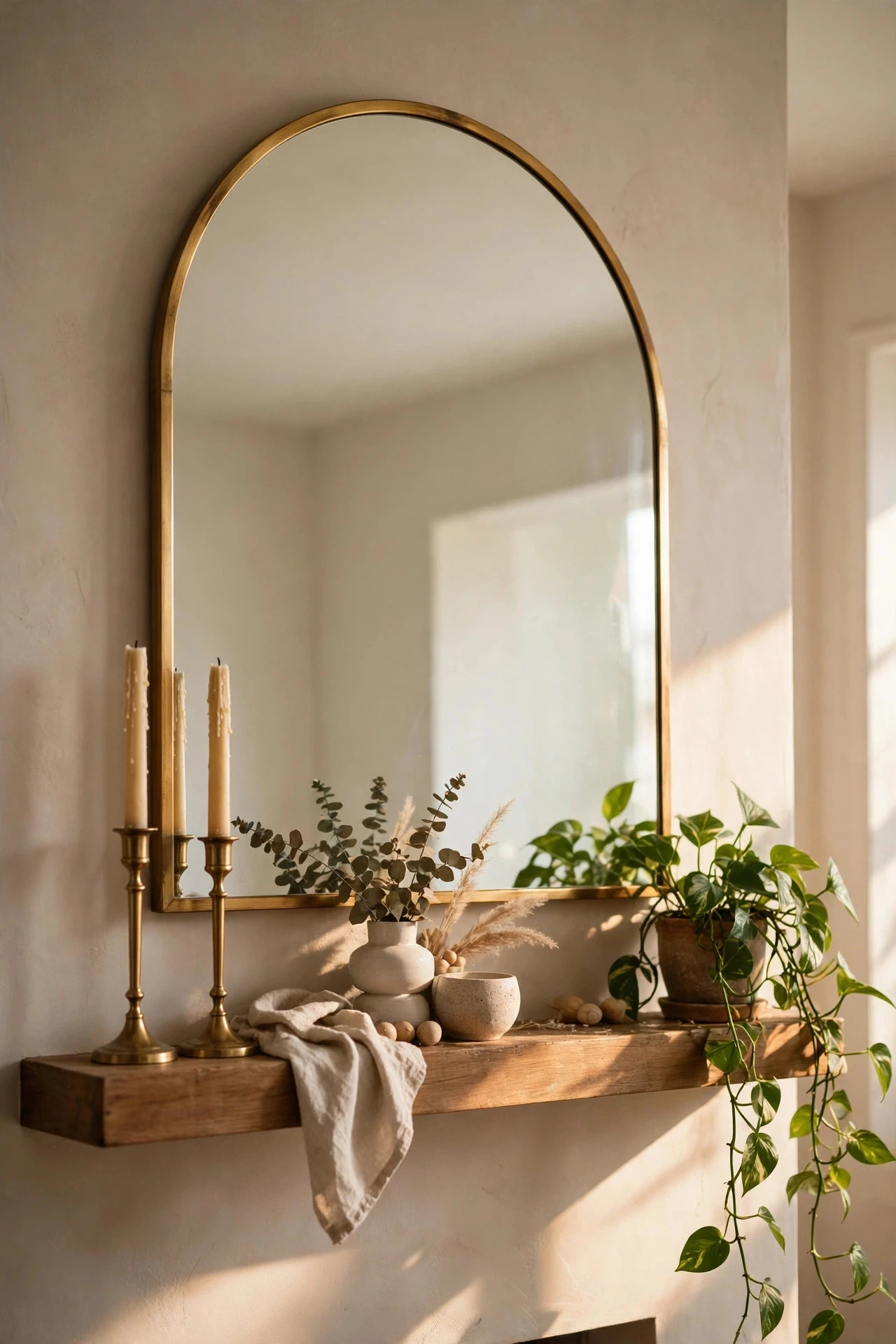
Styling the mantel or shelves afresh gives the room a new centrepiece without buying furniture, because a mantel or open shelf is read as a single composition and small changes there ripple through the whole room. Start with one anchor — a large mirror, a piece of art, or a clock — centred above the mantel, then layer in pairs of candlesticks or vases at the ends, a low stack of books or a bowl in the middle, and one trailing plant or sculptural object to break the symmetry. Keep the tallest element under two-thirds of the height to the ceiling, leave negative space between groups, and step back to check the silhouette from the doorway. Budget $0 to $120 if you shop your own home first, adding only one or two new pieces. The mistake to avoid is lining objects up in a single even row along the mantel edge, which reads as a shop display and leaves the composition feeling stiff and unconsidered.
18. Add a Tray to Corral Remotes and Clutter
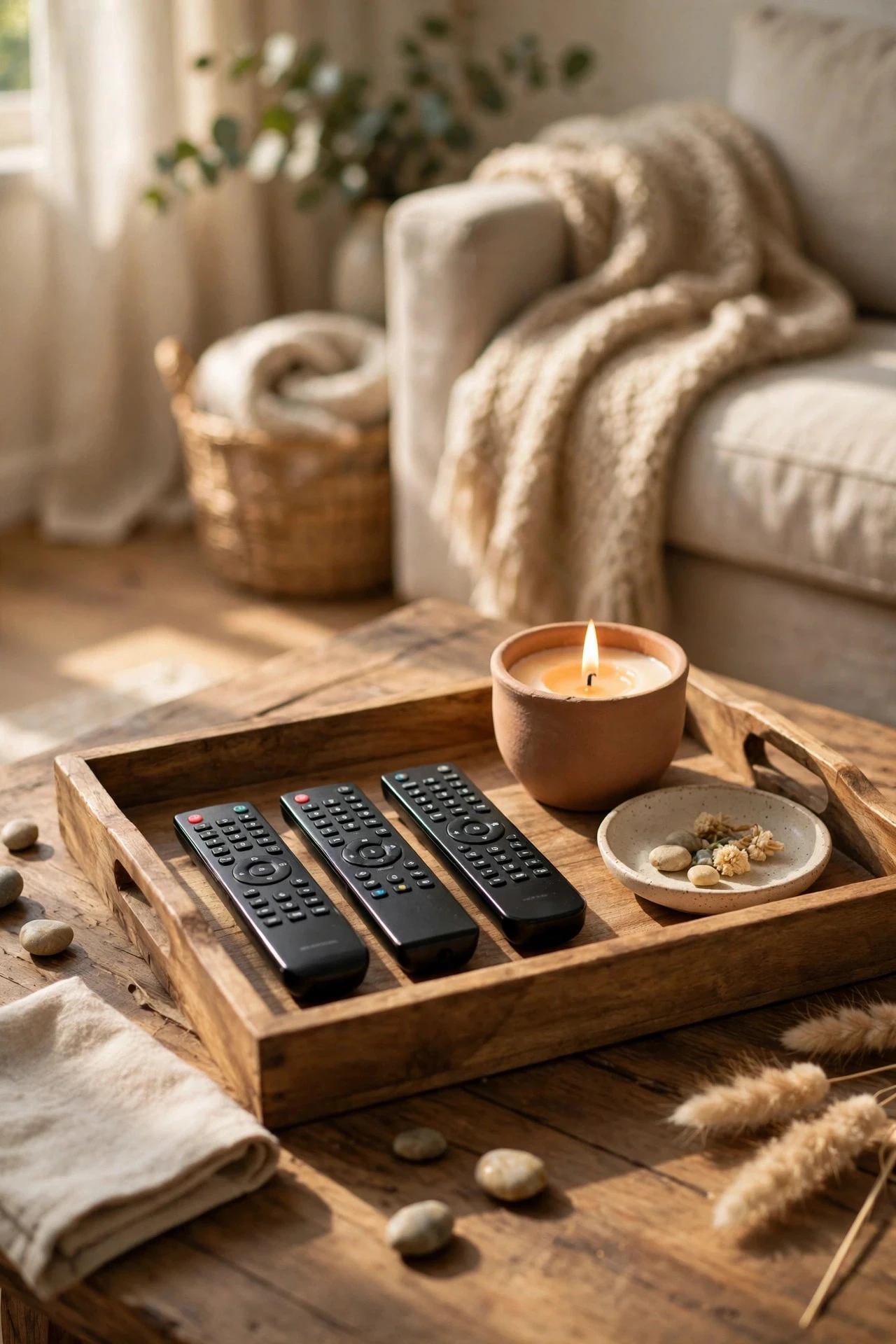
Adding a tray to corral remotes and clutter is a tiny change with an outsized effect, because a defined boundary turns scattered everyday objects into an intentional group and frees the rest of the surface. Choose a tray 14 to 18 inches long in wood, rattan, leather, or lacquer that echoes another material in the room, place it on the coffee table or side table, and give it a strict job: remotes, a candle, and one small dish for keys or coins, nothing else. A good tray costs $25 to $70, and the rule that keeps it working is ruthless — anything that does not belong in the tray lives elsewhere, and the tray itself is cleared nightly. The mistake to avoid is buying a tray and then filling it, and the table around it, with even more objects, which simply gives clutter a frame and makes the mess look deliberate instead of solved.
19. Refresh With Scent and Fresh Flowers
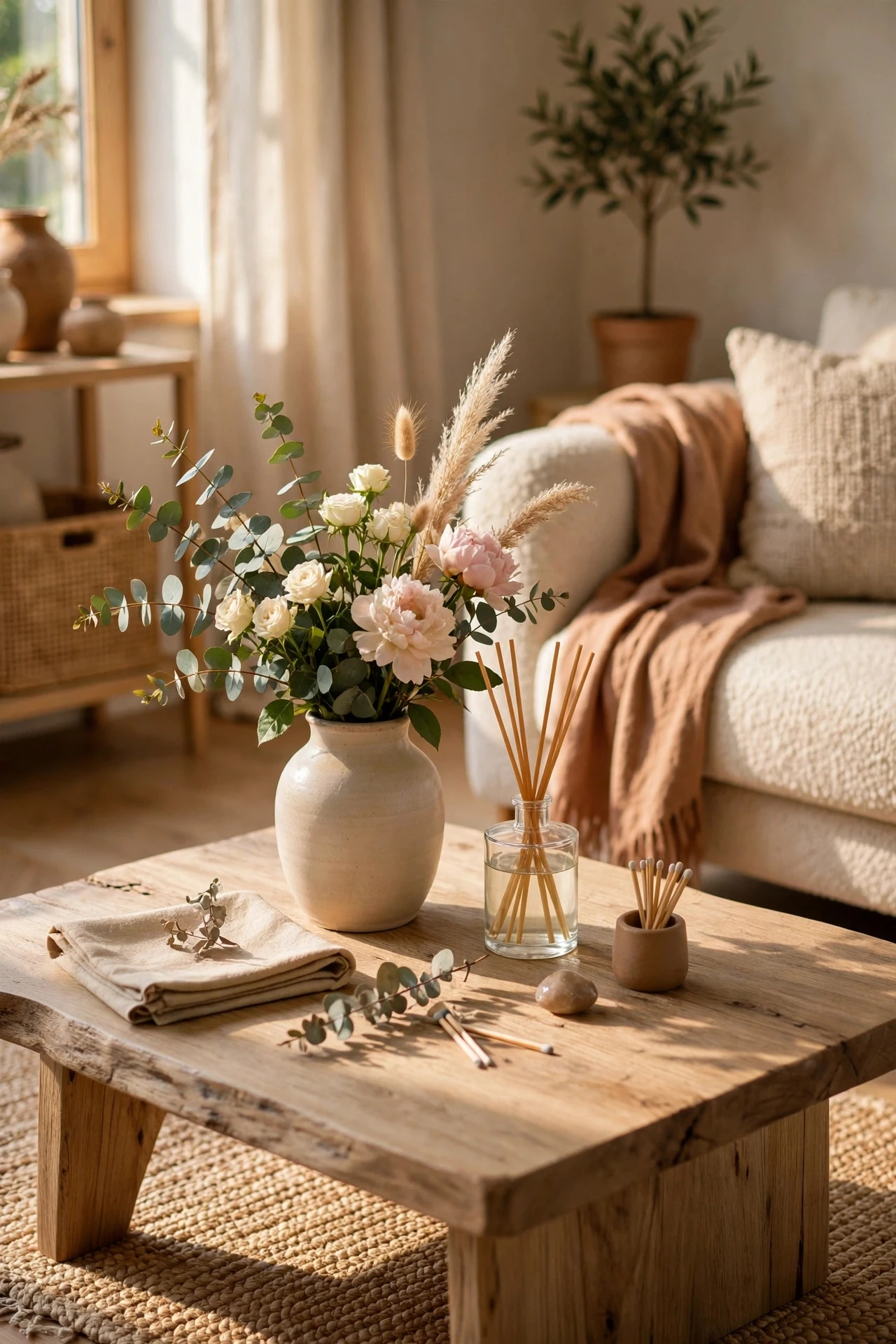
Refreshing with scent and fresh flowers engages the senses that photographs miss, and a living room that smells clean and holds one generous bunch of stems feels cared for in a way no cushion arrangement can match. Place a single vase of fresh flowers — grocery-store stems in one colour, or garden greenery with two or three blooms — on the coffee table or mantel, trimmed so the arrangement sits below eye level across the table, and refresh water every two days to extend its life. Pair it with a subtle scent layer: a reed diffuser, a single candle, or simmering citrus and herbs, keeping scent light enough that it is noticed on entering and then fades. Budget $15 to $35 per bunch and $20 to $45 for a diffuser or candle. The mistake to avoid is combining strong flowers, a scented candle, and a plug-in air freshener at once, which overwhelms the room and competes with cooking smells, coffee, and conversation.
20. Swap Hardware and Small Details
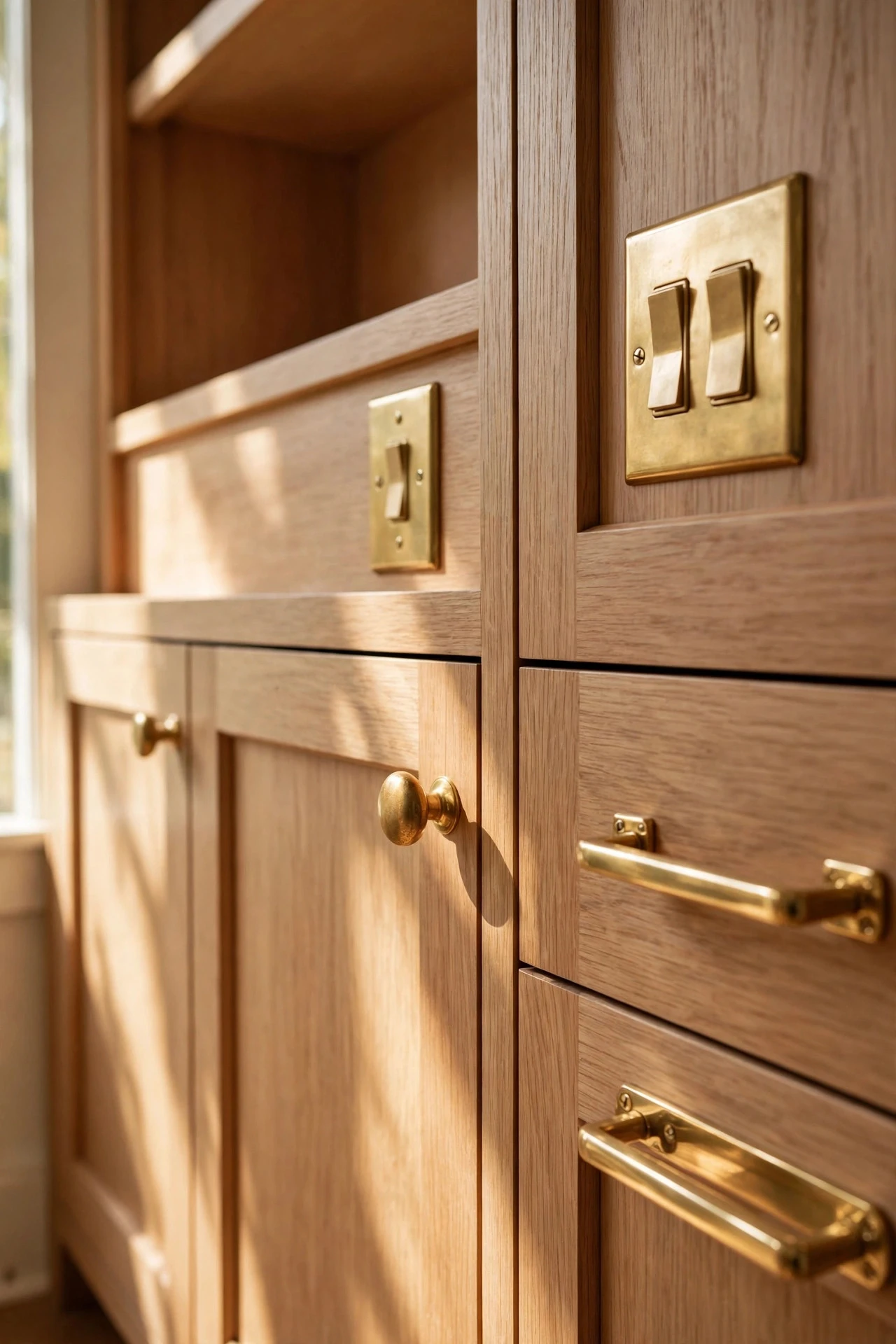
Swapping hardware and small details — cabinet knobs, switch plates, curtain finials, and lamp finials — refreshes a living room at the scale the hand notices, and these tiny metal and wood accents quietly set the room's finish language. Choose one finish and repeat it: warm brass, matte black, or polished nickel across built-in cabinetry, media-unit pulls, and curtain hardware, measuring the existing hole spacing — commonly 3.75 inches or 5 inches centre to centre — before ordering so new pulls fit without drilling. Knobs cost $6 to $18 each, pulls run $10 to $30 each, and a typical living room needs 6 to 12 pieces, bringing the total to $60 to $240 plus a screwdriver and an hour. The mistake to avoid is mixing three finishes across one wall of cabinetry, which fragments the room's metal story and makes each piece look like a leftover from a different project.
21. Create a Reading Nook in a Dead Corner
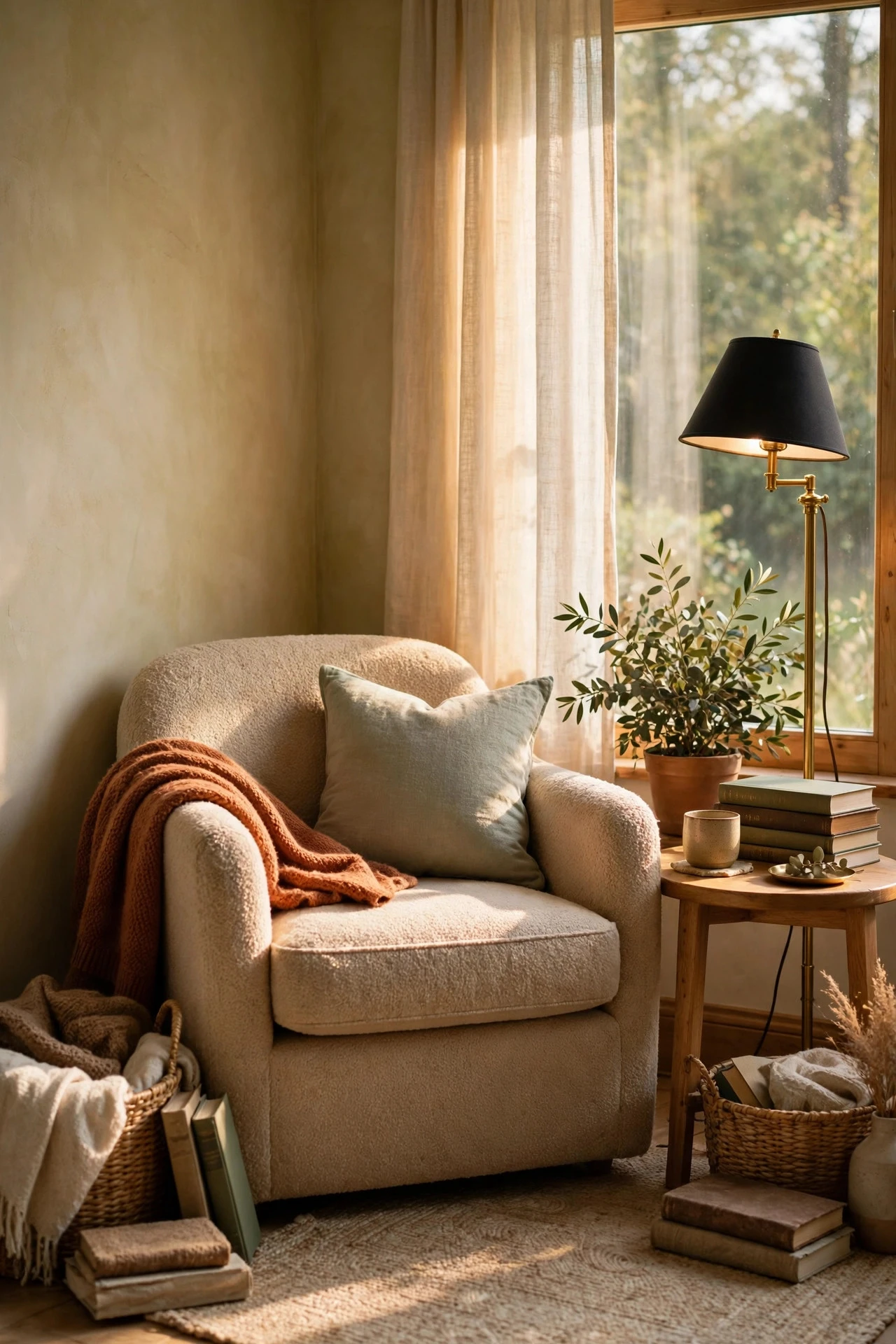
Creating a reading nook in a dead corner turns wasted floor into the room's most loved seat, because a defined, comfortable corner with its own light invites lingering in a way an open expanse never does. Place a comfortable armchair angled into the corner, add a small side table within arm's reach, a floor lamp or wall sconce at shoulder height for reading light, and a basket or shelf for three or four current books, keeping the footprint to roughly 4 by 4 feet. A good floor lamp costs $60 to $150, a side table $40 to $120, and a throw and cushion $40 to $90, though many nooks can be built entirely from pieces moved from elsewhere in the home. The mistake to avoid is cramming the nook with a desk, storage, and exercise equipment as well, which destroys its single purpose and guarantees the chair becomes a dumping ground instead of a retreat.
22. A One-Day Refresh Plan That Actually Sticks

A one-day refresh plan that actually sticks works because it sequences the work so the room never looks worse for long, and because it ends with the details that make the change feel permanent. Start at 9 a.m. by decluttering surfaces and editing decor, then rearrange furniture and swap the rug before lunch, paint the accent wall if you are doing one, and spend the afternoon layering pillows, throws, lighting, plants, and the gallery wall, finishing with the tray, flowers, and scent just before evening. Keep a single box for donations, photograph the finished room from the doorway, and write down the three changes you love most so future tweaks build on them instead of undoing them. Total cost can be $0 to $300 if you shop your own home, or $400 to $1,200 with a rug, paint, and lighting added. The mistake to avoid is starting with shopping instead of editing, which brings new objects into a room that has not yet made space for them.
Practical Tips
Start with a budget and a floor plan before you buy anything, because a refresh that begins in a shop almost always ends with a rug that is too small and pillows that fight the sofa. Measure the seating area, door swings, and window heights, sketch the layout on paper or a free room-planning app, and set three spending tiers: under $150 for textiles, plants, and styling only; $300 to $700 adding a rug, curtains, or lighting; and $1,000 or more for paint, slipcovers, and a statement mirror or chair. Photograph the room in daylight before you start, keep receipts and packaging until the room is finished, and buy the rug first, since every other colour decision follows it. For broader room-planning and material guidance, the living-room guides at The Spruce are a useful second opinion before a large purchase, and House Beautiful offers wider interior inspiration to help place a refresh within the style of the whole home.
Keep the palette disciplined by repeating three colours and no more: a dominant neutral from the walls or sofa, a secondary colour from the rug or curtains, and one accent carried by pillows, art, and a single plant pot or throw. Test paint and fabric swatches in the room at morning, midday, and evening light, because a colour that looks calm at noon can turn grey or pink under lamps, and live with large swatches taped to the wall for at least two days before committing. When you want a bolder accent wall or a patterned rug, let that one element lead and keep everything else quiet, so the room has a clear hierarchy instead of several competing statements. The same discipline applies to wall styling — the lessons in living room wall decor ideas that transform a blank wall show how one strong wall treatment beats a scatter of small frames.
Protect the refresh by building in easy maintenance from the start, so the room still looks fresh in three months rather than only on the day you finish it. Choose washable cushion covers and throws, a rug pad that stops slipping, and plants matched honestly to your light and watering habits, and schedule a ten-minute weekly reset: fluff cushions, clear the tray, wipe the coffee table, and return stray objects to their homes. Rotate flowers weekly, dust the mirror and lamp shades fortnightly, and photograph the room once a season so slow drift — extra objects creeping back onto surfaces — is easy to spot and reverse. For rooms that share the same calm, balanced language, symmetrical living room ideas that feel calm, cozy, and perfectly balanced offer a useful check on whether pairs and balance are helping or stiffening your layout.
Final Thoughts
A living room refresh succeeds when you change the largest surfaces first, edit ruthlessly, layer light and texture, and stop while the room still feels like home. Start with the rug, layout, and light, add one plant and one personal wall, and let the small details — the tray, the scent, the hardware — earn their place over the following week. The room does not need to be finished in a day to feel new; it needs to be calmer, brighter, and easier to live in than it was on Friday, and that is a standard worth keeping.
You May Also Like: – Living Room Inspo Ideas for a Fresh, Lived-In Look – Charming Vintage Living Room Ideas That Feel Cozy, Elegant, and Collected – Quiet Luxury Home Decor Ideas for an Understated, Elegant Home
Frequently Asked Questions
How can I refresh my living room on a budget?
Start with free changes first: rearrange furniture, declutter surfaces, rotate art and books, and restyle shelves with what you own. Then add one rug or set of pillow covers, a plant, and fresh flowers. A convincing refresh can cost under $150, with paint and a rug taking it to $300–$700.
How long does a living room refresh take?
A focused refresh takes one full day if you follow a sequence: declutter and rearrange in the morning, rug and paint before lunch, then pillows, lighting, plants, and styling in the afternoon. Allow paint to dry and deliveries to arrive beforehand, and keep the final hour for flowers, scent, and photographs.
What size rug should I choose for my living room?
Choose a rug large enough for the front legs of the sofa and chairs to rest on it. For most three-seat sofas that means 8 by 10 feet, and for larger seating groups 9 by 12 feet. Leave 12 to 18 inches of bare floor at the walls, and always add a non-slip pad underneath.
Can I refresh a living room without painting anything?
Yes. A rug swap, furniture rearrangement, lighter curtains, new pillows and a throw, layered lighting, a large plant, and a gallery wall can transform a room completely without paint. If you later want more drama, one accent wall is the easiest painted change to add.
How do I make a small living room feel bigger?
Use a large rug, furniture pulled slightly from the walls, lighter curtains hung high and wide, a mirror opposite a window, and lighting at three heights. Keep surfaces edited, choose leggy furniture that shows floor, and repeat one calm palette so the eye travels without interruption.
What is the cheapest way to make a living room look new?
Decluttering and rearranging cost nothing and change the room most. Next cheapest are pillow covers, a throw, a tray, fresh flowers, and a scent layer, all under $150 combined. A single large plant or a new lamp shade can then finish the look without replacing any furniture.