22 Quiet Luxury Home Decor Ideas for an Understated, Elegant Home
Quiet luxury home decor is the art of looking expensive without trying to look expensive. It favours natural materials, quiet colour, honest craftsmanship and a calm, collected feeling over logos, shine and trend-led statement pieces. Unlike cold minimalism, which can feel empty and hard, quiet luxury is warm, layered and lived in: soft linen, aged wood, weighty stone and gentle light do the work, while every object earns its place. Good interior design in this style is judged by touch and proportion as much as by sight, so a room should feel restful the moment you enter it, not impressive for a photograph and uncomfortable in real life.
Looking for more inspiration? Our Nest Decorz homepage gathers the latest home decor ideas, seasonal decorating guides and room-by-room styling tips in one place — start there and explore.
This guide works room by room, and finishes with whole-home systems that keep the look intact. Each idea names specific materials and a warm neutral palette of warm whites, greige, taupe and muted sage, gives an approximate cost in US dollars, and flags the mistake that most often spoils it. You will find two paths through the list: a refresh under 500 dollars that changes texture, light and editing alone, and a longer-term path that invests in the pieces you touch every day. Follow the investment order in the tips section, and the result will feel timeless rather than merely tidy.
1. Warm-White Limewash Walls
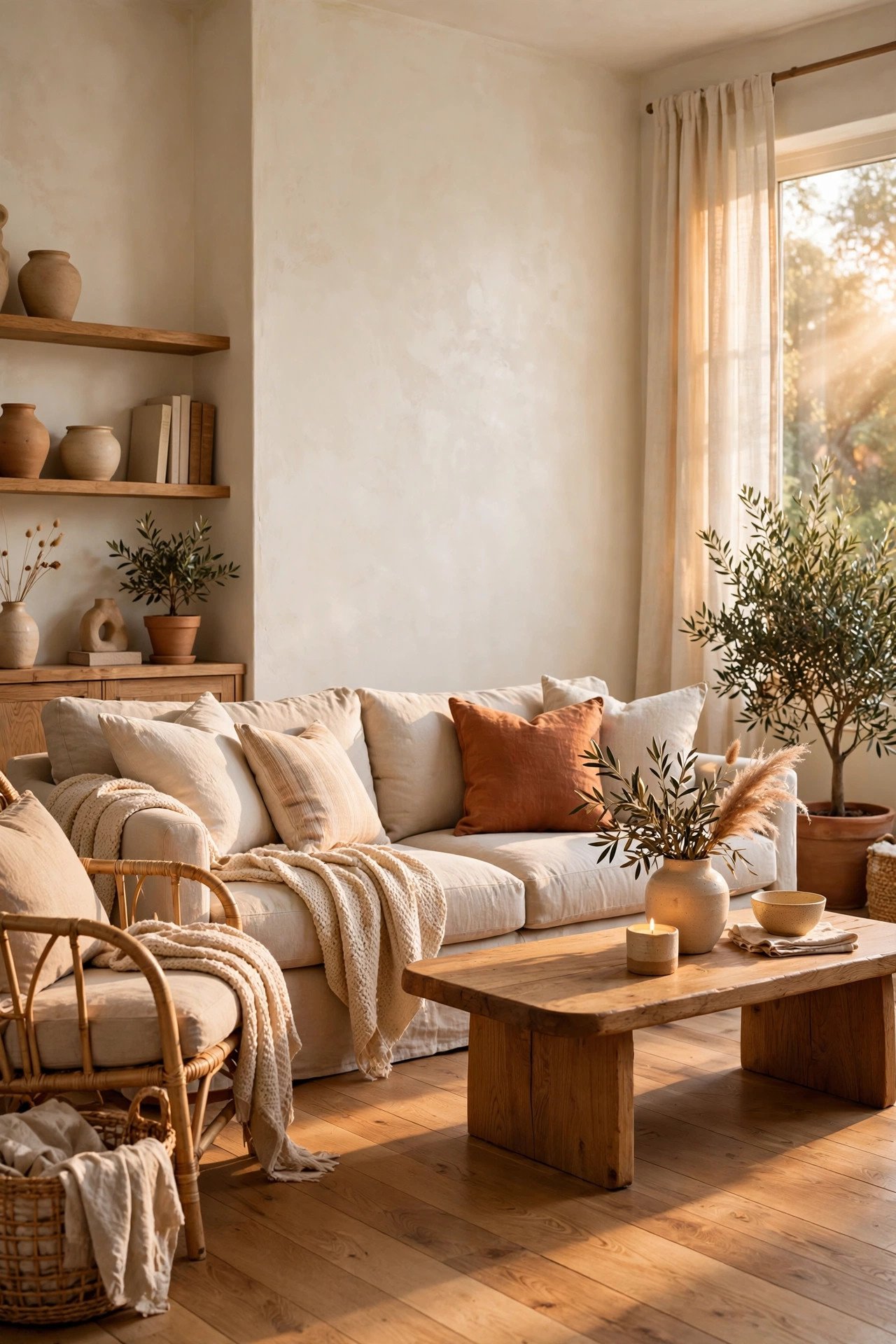
Start with warm-white limewash walls, because wall colour sets the temperature of every other choice in a quiet luxury room. Limewash gives flat paint a soft, cloudy movement that catches light gently and makes plaster, wood and linen look richer beside it. Choose a warm white with a hint of cream or greige, never a stark blue-white, and test large swatches in morning and evening light before committing. A single room costs roughly 300 to 700 dollars for paint and labour if you hire help, or 120 to 250 dollars if you paint it yourself. The mistake to avoid is pairing warm walls with cool grey furniture, which turns the whole scheme muddy and cold instead of soft and expensive. Keep window treatments and upholstery in the same warm family, and the limewash will read as a deliberate backdrop rather than a flat coat of paint.
2. Oversized Natural-Fibre Rug

An oversized natural-fibre rug is the fastest way to make a living room feel grounded, generous and calm. Choose wool, jute or a wool blend in warm ivory, oatmeal or pale taupe, and size it so the front legs of the sofa and chairs sit fully on the rug, with at least 15 centimetres of rug showing beyond the furniture. A good 2.4 by 3 metre wool rug costs about 600 to 1,400 dollars, while a jute layer underneath adds texture for 150 to 300 dollars. Avoid a rug that is too small, because it floats in the middle of the floor, breaks the furniture grouping and makes even beautiful pieces look temporary and disconnected. Choose a low pile for easy cleaning, and leave the rug edges visible so the floor border frames the seating group like a quiet stage.
3. Tailored Linen Sofa
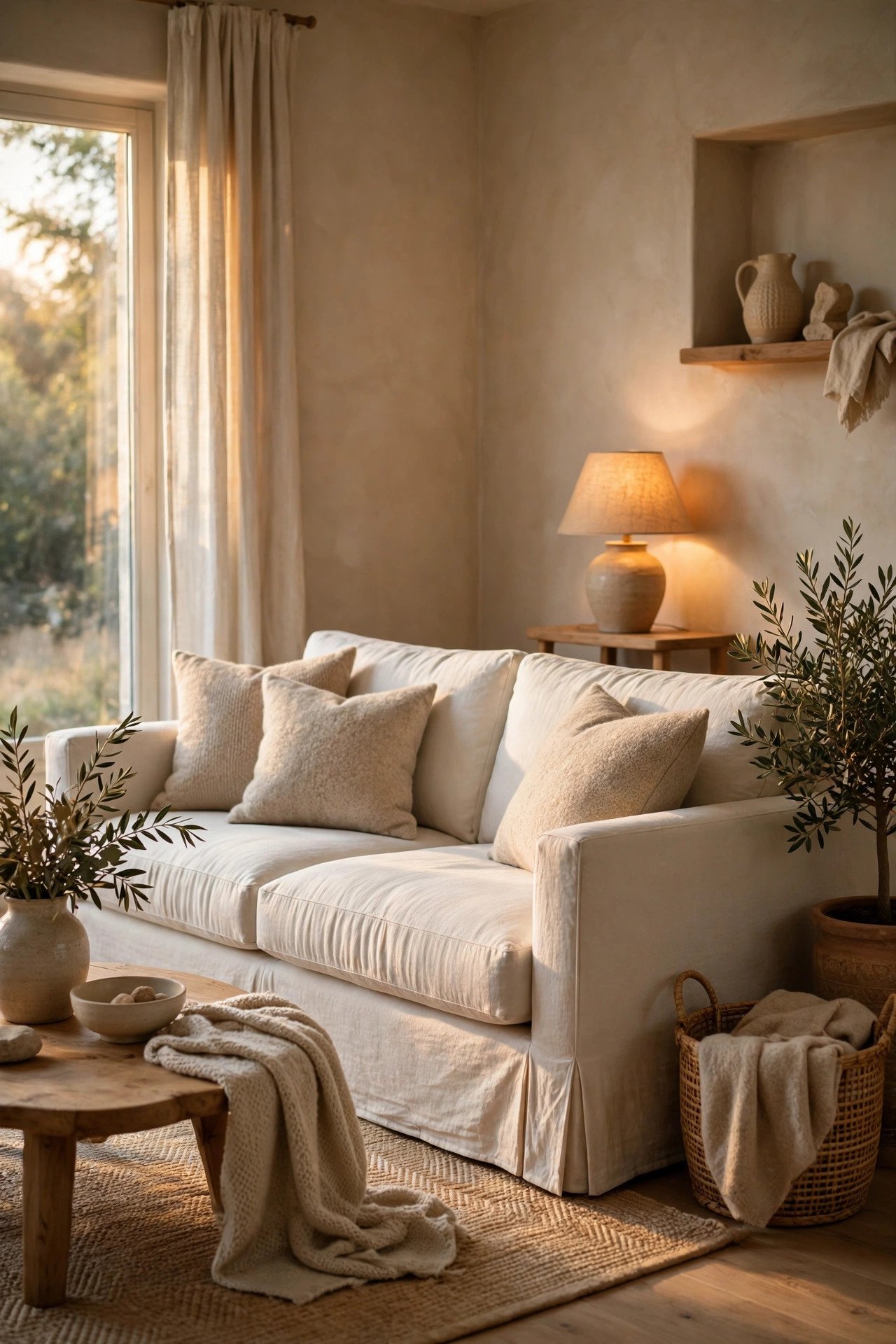
A tailored linen sofa is the anchor of quiet luxury living, because its relaxed structure and natural fabric signal comfort without fuss. Look for a clean, straight silhouette with removable washed-linen covers in warm white, stone or pale greige, a solid hardwood frame and feather-wrapped cushions that hold their shape. Expect to spend 1,800 to 3,500 dollars for a well-made three-seater that will last a decade, and choose performance linen if you have children or pets. The mistake to avoid is a shiny, over-stuffed sofa in synthetic fabric, which looks plush in a showroom but reads as cheap and dated once it starts to pill and sag. Order fabric swatches first, live with them for a week, and check how the linen softens in daylight before you commit to the full sofa.
4. Travertine Coffee Table

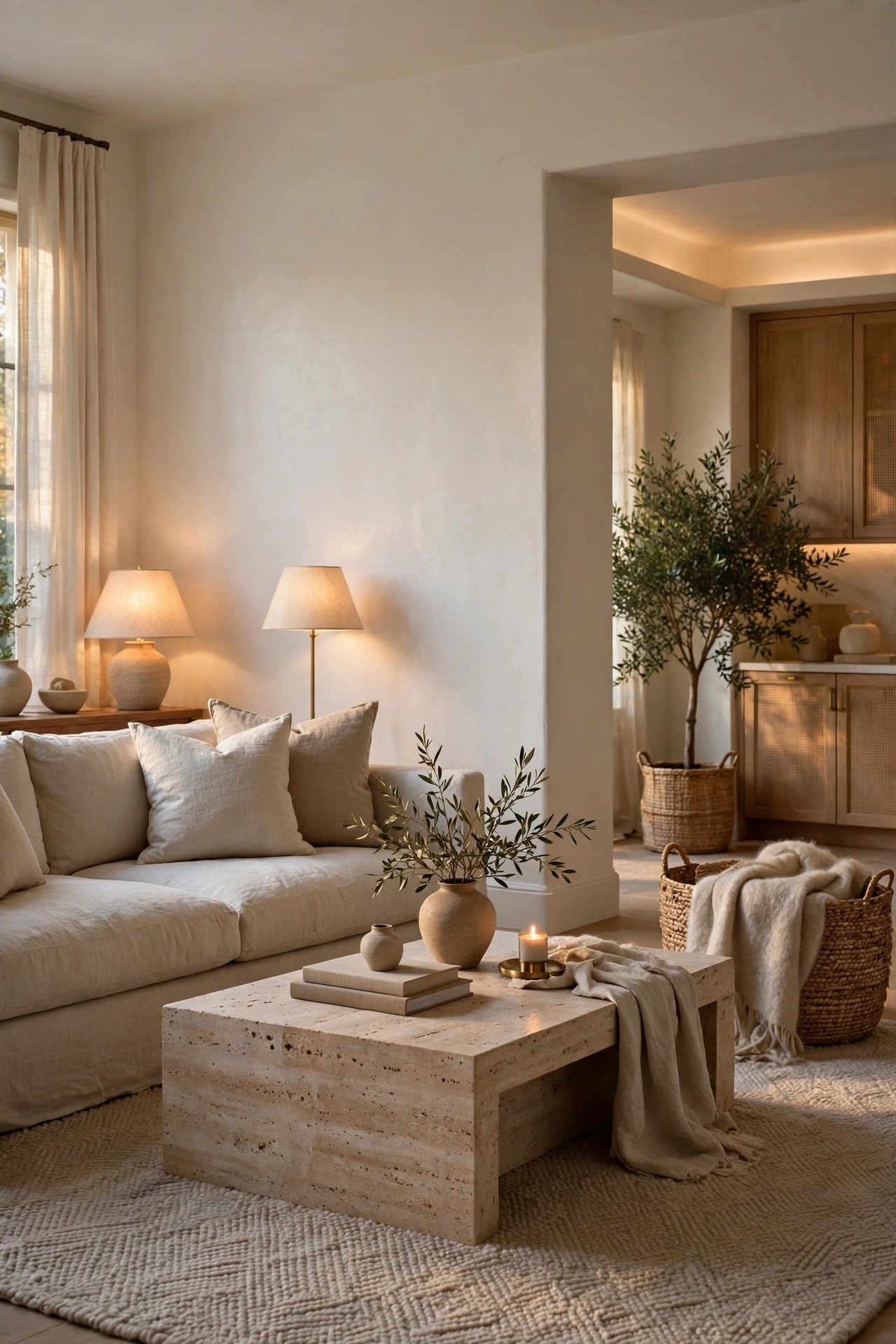
A travertine coffee table brings weight, age and natural pattern to a room without shouting for attention. Choose a honed, filled travertine top in warm cream or silver-grey, with soft, slightly irregular veining, set on a simple solid base in walnut or blackened steel. A well-proportioned table costs roughly 700 to 1,600 dollars, and sealing the stone once a year protects it from rings and spills. Style it with only two or three objects, such as a ceramic bowl and a stack of books, and leave breathing room around them. Avoid high-gloss faux-stone tops, because printed pattern and plastic shine undo the honest, tactile quality that makes real travertine feel luxurious. Check the table height against your sofa seat, aim for a top within a few centimetres, and the whole arrangement will feel calm and usable.
5. Solid Oak Dining Table
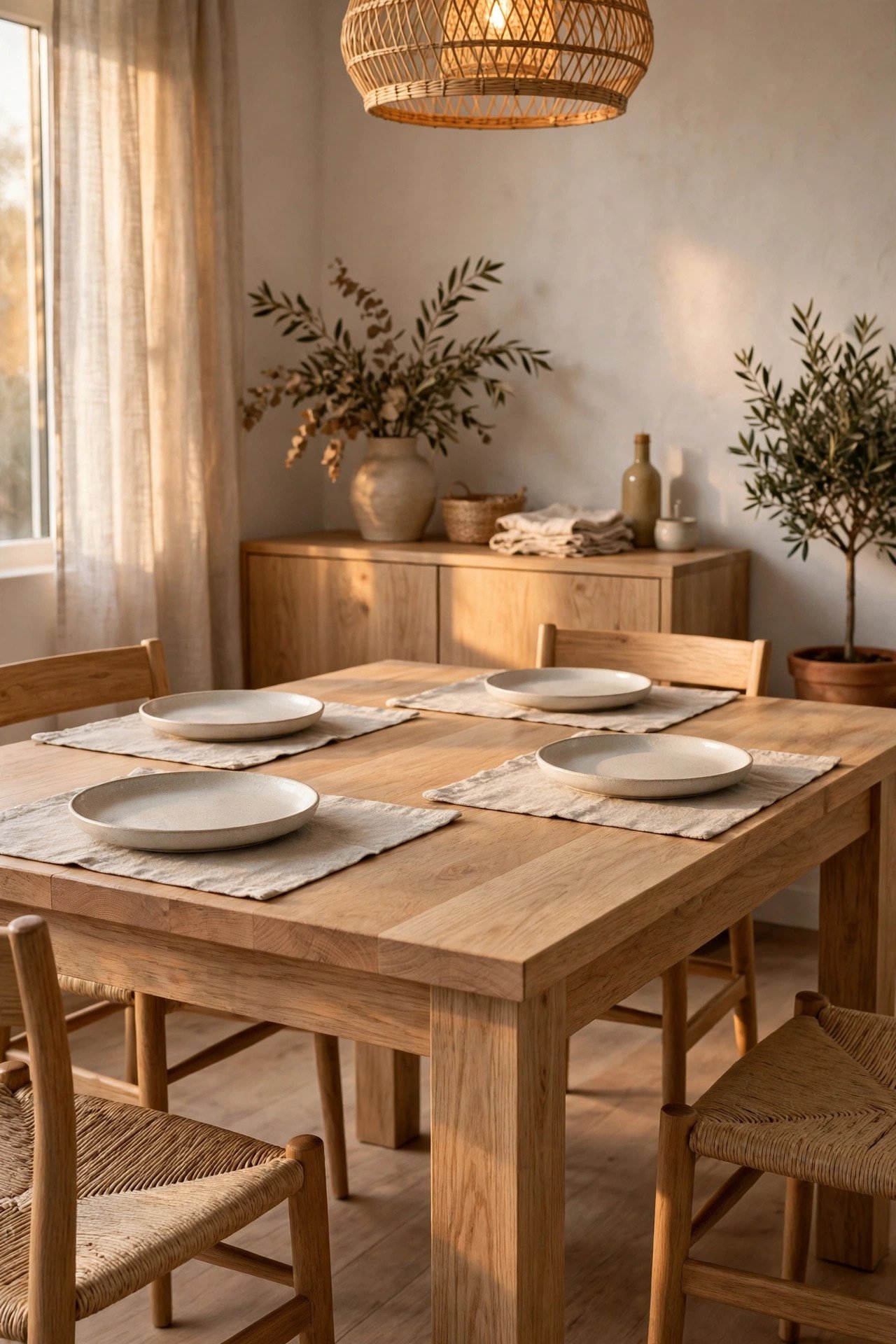
A solid oak dining table turns everyday meals into a quiet ritual and anchors the dining room for decades. Choose white oak or pale natural oak with a matte oil finish that shows the grain, a simple plank or live-edge top, and sturdy legs that leave room for chairs to tuck in fully. A table seating six costs about 1,200 to 2,800 dollars, and oiling it once a year keeps the surface warm and protected. Pair it with linen placemats and ceramic plates rather than shiny chargers and patterned runners. The mistake to avoid is a thin veneer top in a dark stain, which scratches easily, hides the grain and ages far faster than solid timber. Add a simple centrepiece of ceramic and greenery, keep chairs in the same wood tone, and the table will carry both weeknight suppers and long celebratory meals with ease.
6. Bouclé Accent Chair

A bouclé accent chair adds softness and sculpture to a living room or bedroom corner without introducing colour or pattern. Choose a curved, low-profile chair in warm ivory or oatmeal bouclé wool, with a solid frame and a seat height that invites reading rather than perching. A quality chair costs roughly 500 to 1,200 dollars, and a small oak or travertine side table beside it completes a useful reading spot. Keep the rest of the corner simple, with one floor lamp and a wool throw, so the chair reads as an intentional moment. Avoid pairing bouclé with too many other nubby textures, which can make the corner look fuzzy and shapeless instead of calm and tailored. Test the chair for at least ten minutes in the shop, check lumbar support and arm height, and choose a fabric that can be spot-cleaned without losing its soft hand.
7. Floor-Length Linen Curtains
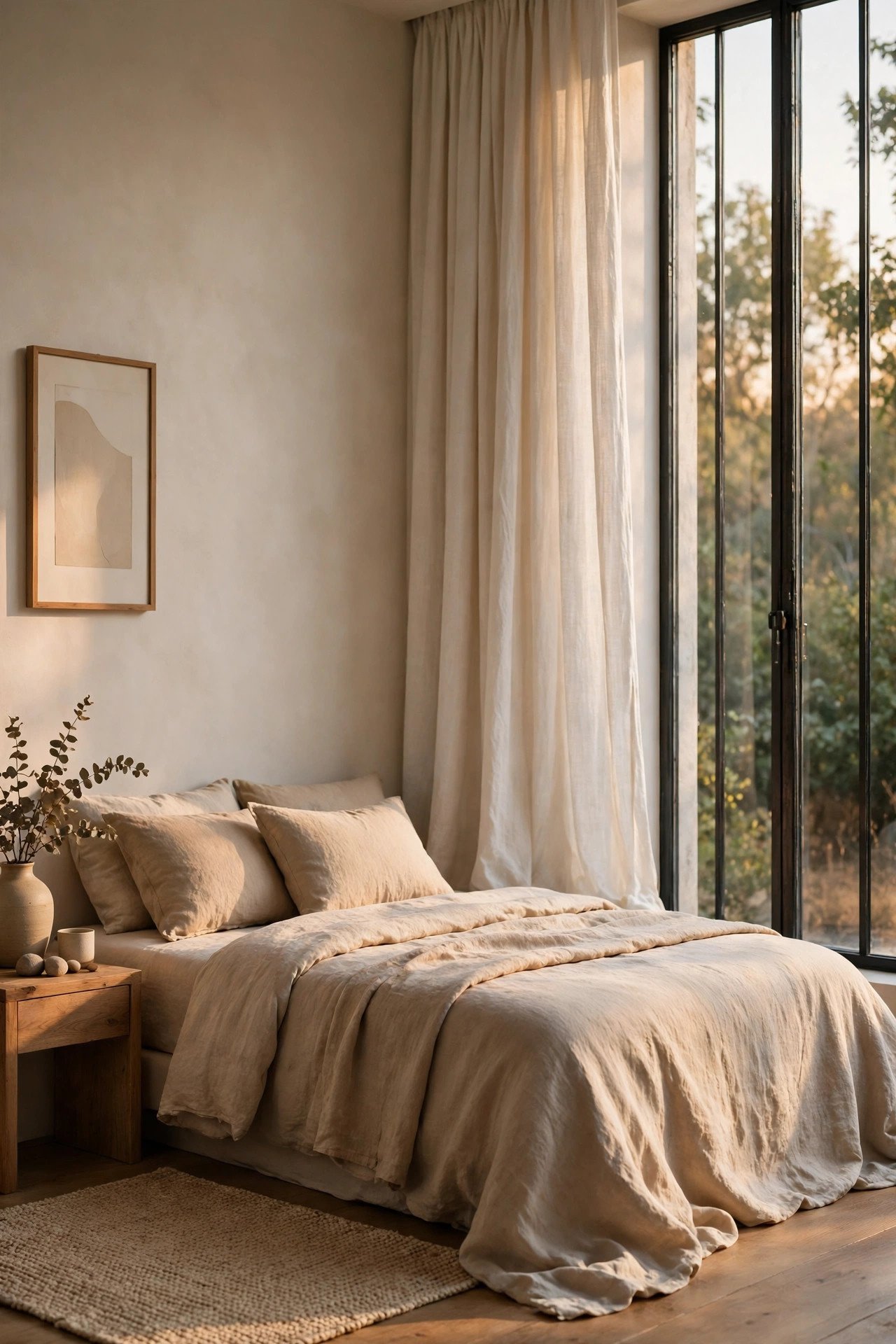
Floor-length linen curtains soften hard architecture, filter light beautifully and make ceilings feel taller, which is why they belong in almost every quiet luxury room. Hang a simple rod high, just below the ceiling, and let washed linen panels in warm white or pale flax fall to just kiss the floor, with enough width to gather softly when closed. Budget about 150 to 400 dollars per window for ready-made linen panels and hardware, or 400 to 900 dollars for made-to-measure. The mistake to avoid is short curtains that stop at the sill or hover above the floor, because they chop the wall, shrink the window and make an otherwise elegant room look unfinished. Use a double-width panel for fullness, steam the linen lightly after hanging, and the soft folds will hold their shape without looking pressed or formal.
8. Layered Lighting at 2700K
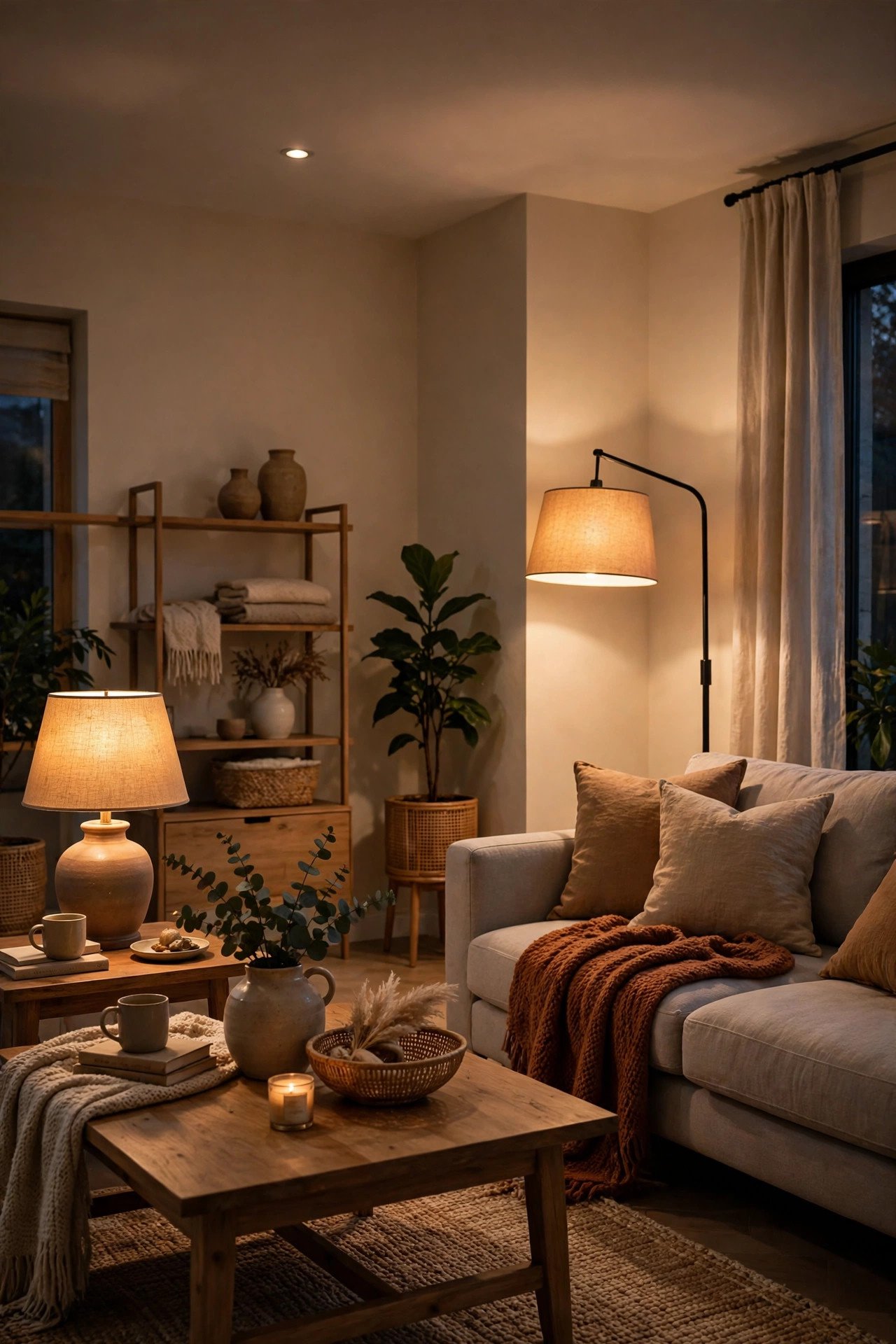
Layered lighting at 2700K is what makes a neutral home glow after dark instead of looking flat and grey. Combine three layers: soft overhead light on a dimmer, a floor or table lamp for reading, and a low accent light for art or shelves, all in warm 2700K bulbs with a high colour-rendering index. A room can be transformed for 200 to 600 dollars with good lamps, dimmers and bulbs, and dimming is essential, because full brightness flattens texture and exposes every flaw. Avoid cool daylight bulbs and a single bright ceiling fixture, which wash out warm whites, bleach wood tones and create the cold, clinical feeling quiet luxury must never have. Add a small picture light or candle glow for evenings, keep switches within easy reach, and the room will shift gracefully from bright daytime calm to intimate night-time warmth.
9. One Oversized Framed Artwork

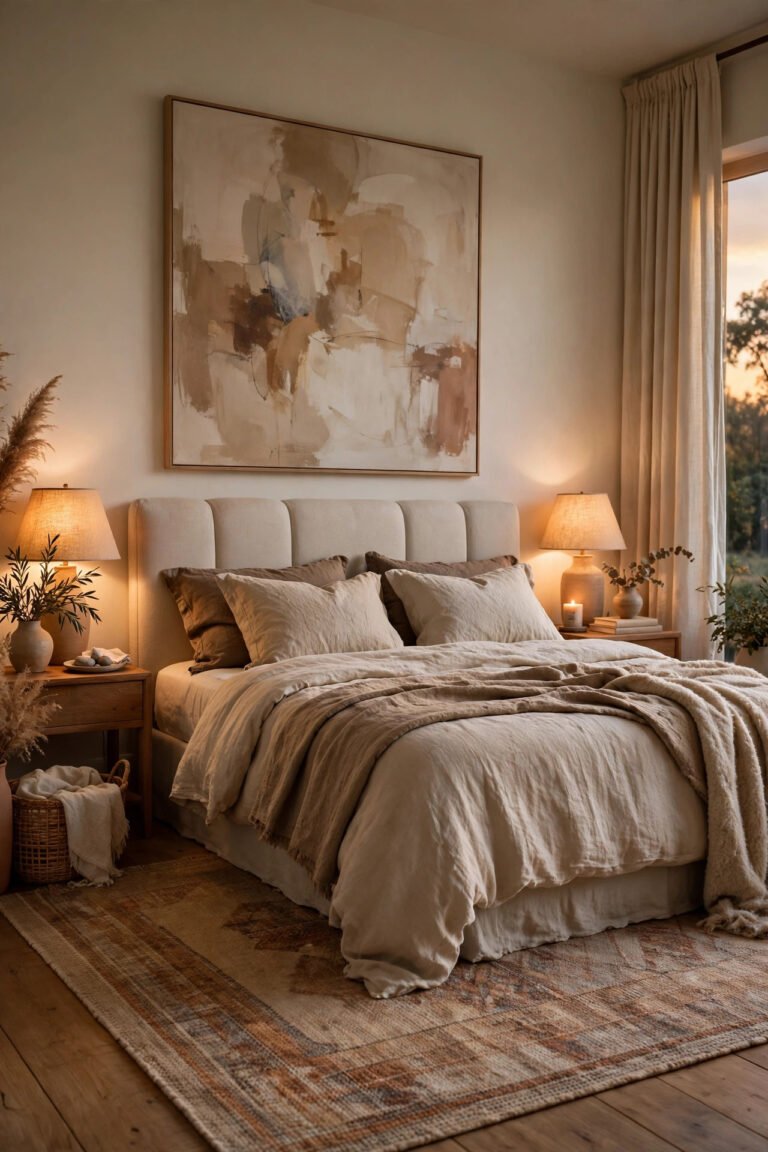
One oversized framed artwork gives a room a confident focal point and proves that restraint can be more powerful than a crowded gallery wall. Choose a single large abstract, landscape or textured piece in muted tones of cream, taupe, sage or soft black, framed simply in natural oak, walnut or slim black wood, and hang it at eye level with space around it. A framed print of this scale costs about 250 to 900 dollars, while an original work by a local artist may cost 800 dollars and more. The mistake to avoid is filling the wall with many small frames, which fragments attention, adds visual noise and dilutes the calm, collected feeling that one strong piece creates so easily. Leave at least thirty centimetres of clear wall around the frame, keep nearby furniture low, and the artwork will anchor the room without competing with lamps or textiles.
10. Sculptural Ceramic Vase
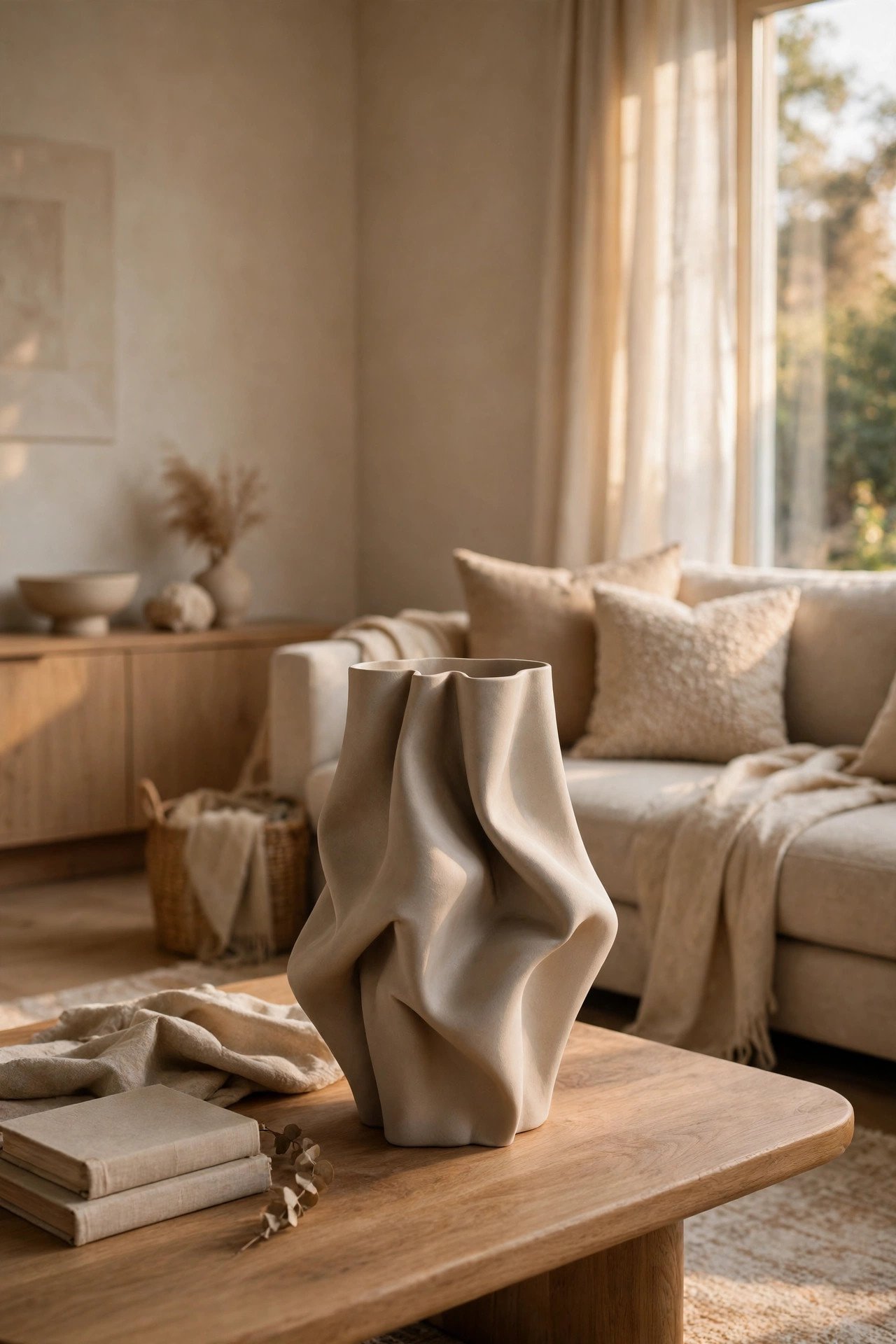
A sculptural ceramic vase adds handmade character and quiet drama to a coffee table, console or shelf without needing flowers to justify it. Choose a hand-thrown or hand-built vase in matte stoneware, cream, sand or soft sage, with an organic, slightly uneven silhouette that shows the maker's hand. A distinctive artisan vase costs roughly 60 to 220 dollars, and it works alone, with a single stem, or grouped with one smaller vessel in a related tone. Keep the surface around it clear so its shape can breathe. Avoid glossy, mass-produced vases with printed patterns or metallic finishes, because they compete with the vase's form and push the styling toward decoration rather than the honest material quality quiet luxury depends on. Rotate the vase between rooms each season, pair it once with dried grasses and once empty, and its form will stay fresh without any new purchase.
11. Wool Throws and Cushions
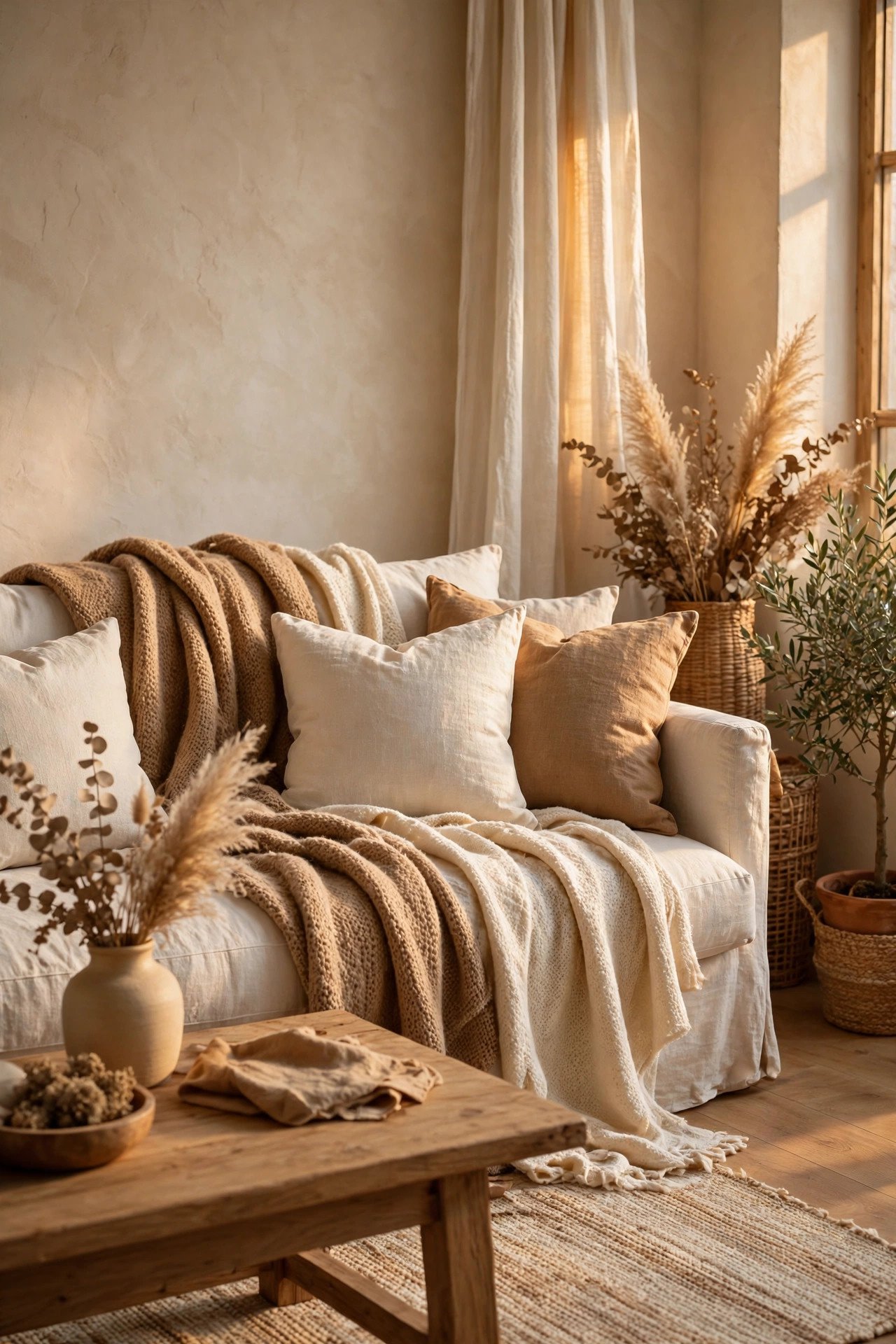
Wool throws and cushions are the layering that stops a neutral room from feeling bare, and they invite touch in a way hard surfaces cannot. Choose throws in merino or lambswool in ivory, camel, warm grey or muted sage, and cushions in linen and wool with feather inserts, mixing one smooth, one woven and one softly textured cover. A quality throw costs 90 to 220 dollars and good cushion covers cost 35 to 80 dollars each, so a sofa can be layered for 250 to 500 dollars. The mistake to avoid is buying many cheap polyester cushions in matching sets, which look flat, shed fibres and make the sofa feel like a display rather than a place to sit. Fold throws neatly over one arm only, fluff cushions daily, and keep a spare set stored clean so the sofa always looks inviting rather than over-dressed.
12. Unlacquered Brass Hardware
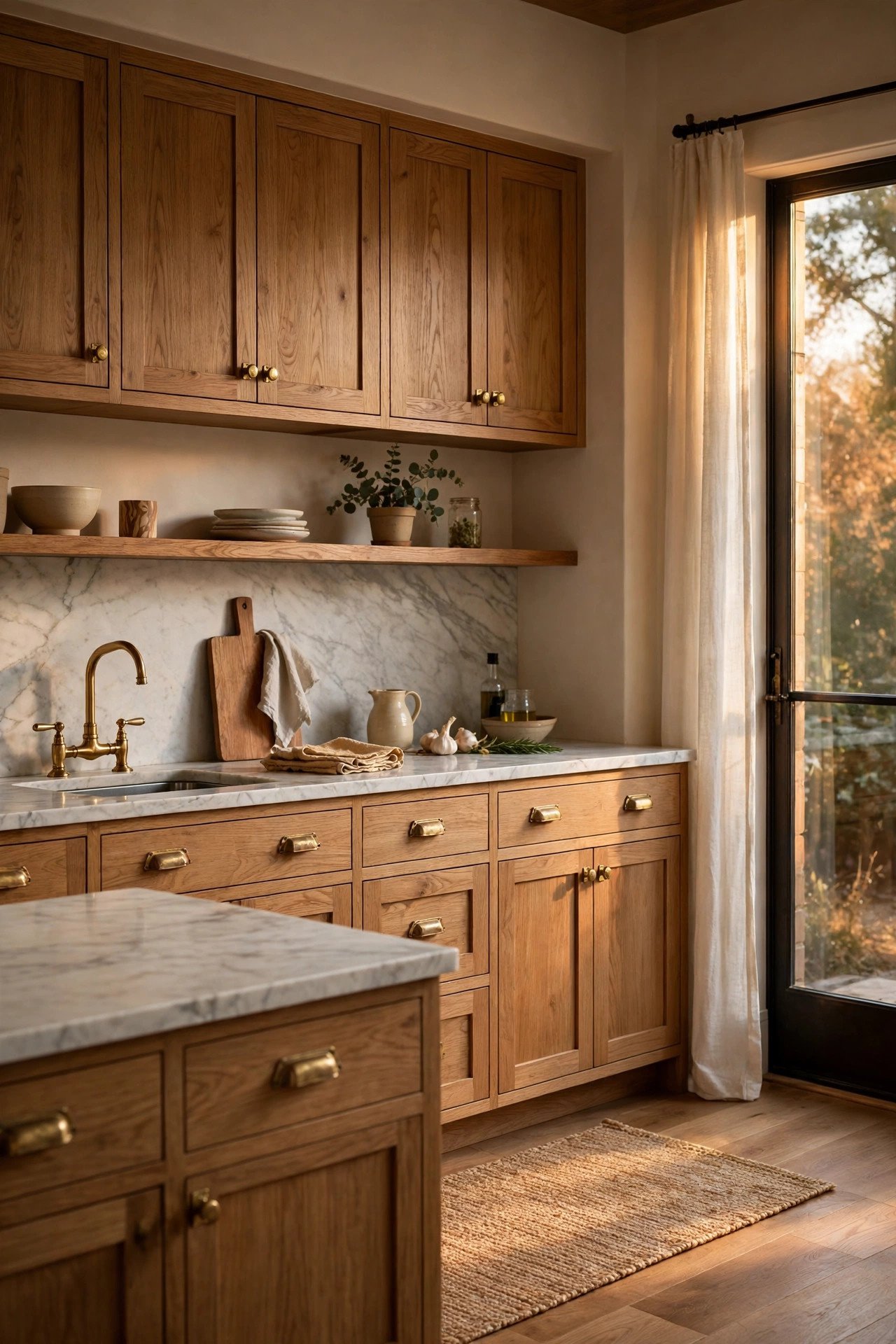
Unlacquered brass hardware is a small change with an outsized effect, because handles and taps are touched constantly and their finish is noticed up close. Choose unlacquered brass for cabinet pulls, door handles and light fittings, and let it develop a soft, lived-in patina rather than polishing it back to a bright shine. Replacing hardware in a kitchen or bathroom costs about 150 to 500 dollars depending on the number of pieces, and the warm metal pairs beautifully with oak, marble and linen. Avoid mixing too many metals in one room, because chrome, black, nickel and brass together create visual confusion, while one warm metal used consistently feels considered, calm and quietly expensive. Buy one extra pull and hinge for future repairs, keep finishes consistent across rooms, and the brass will age evenly into a soft, unified glow.
13. Plaster and Stone Kitchen Finishes

Plaster and stone finishes give a kitchen the calm, hand-finished feeling that glossy cabinets and busy worktops rarely achieve. Choose a warm plaster or limewash effect on a feature wall or range hood, pale honed marble or quartzite for worktops, and flat-front cabinetry in warm white or pale greige with unlacquered brass pulls. A plaster hood and honest stone worktops are long-term investments, often 3,000 to 8,000 dollars as part of a wider kitchen update, so plan them carefully and keep the rest simple. For related inspiration, see these white kitchen ideas before choosing cabinet colour and finish. Avoid high-gloss tiles and patterned splashbacks, which date quickly and fight the soft, tonal palette that makes a quiet luxury kitchen feel timeless. Keep open shelving minimal, hide small appliances behind closed doors, and the plaster and stone will remain the calm visual focus of the kitchen.
14. Marble Bathroom Surfaces
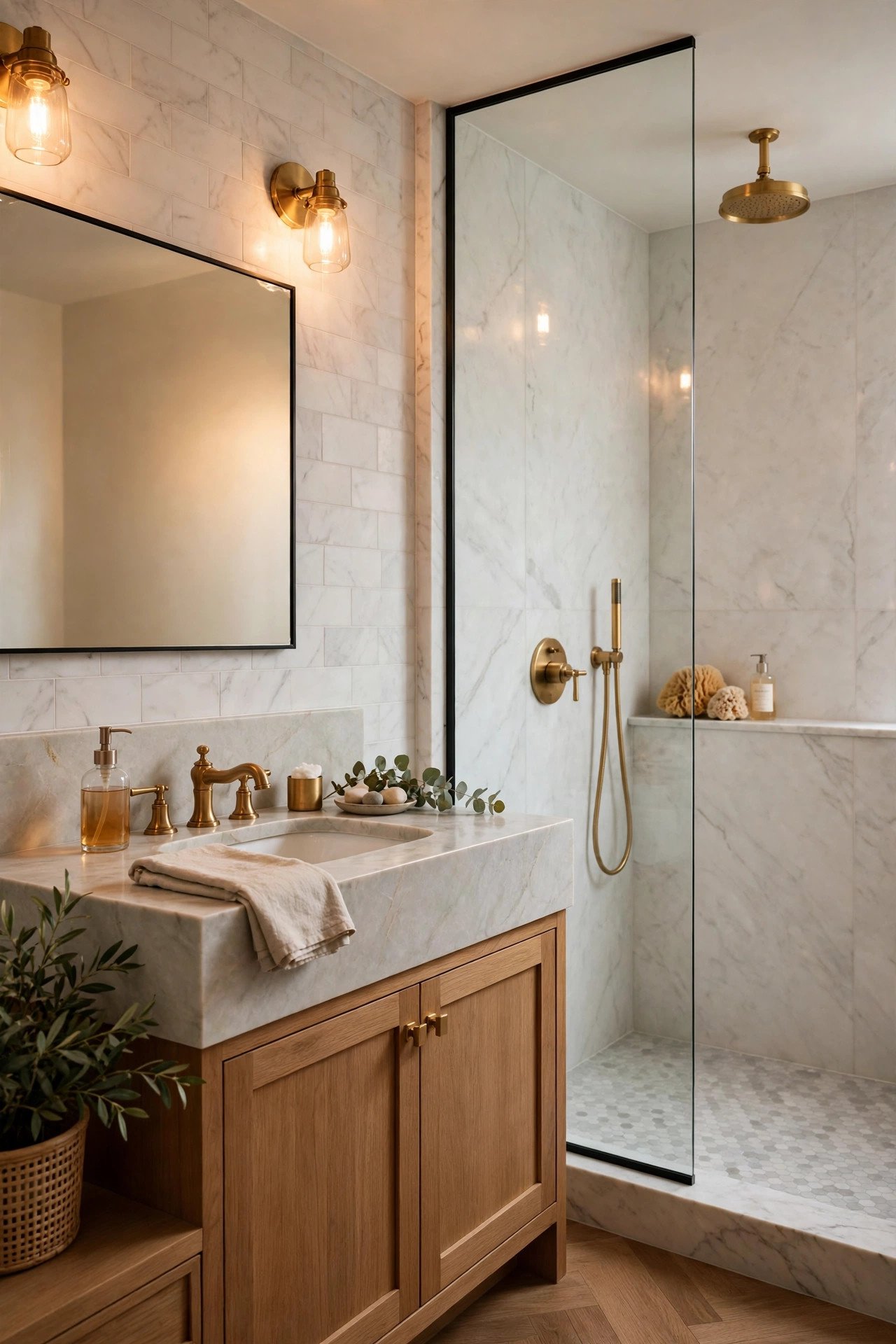
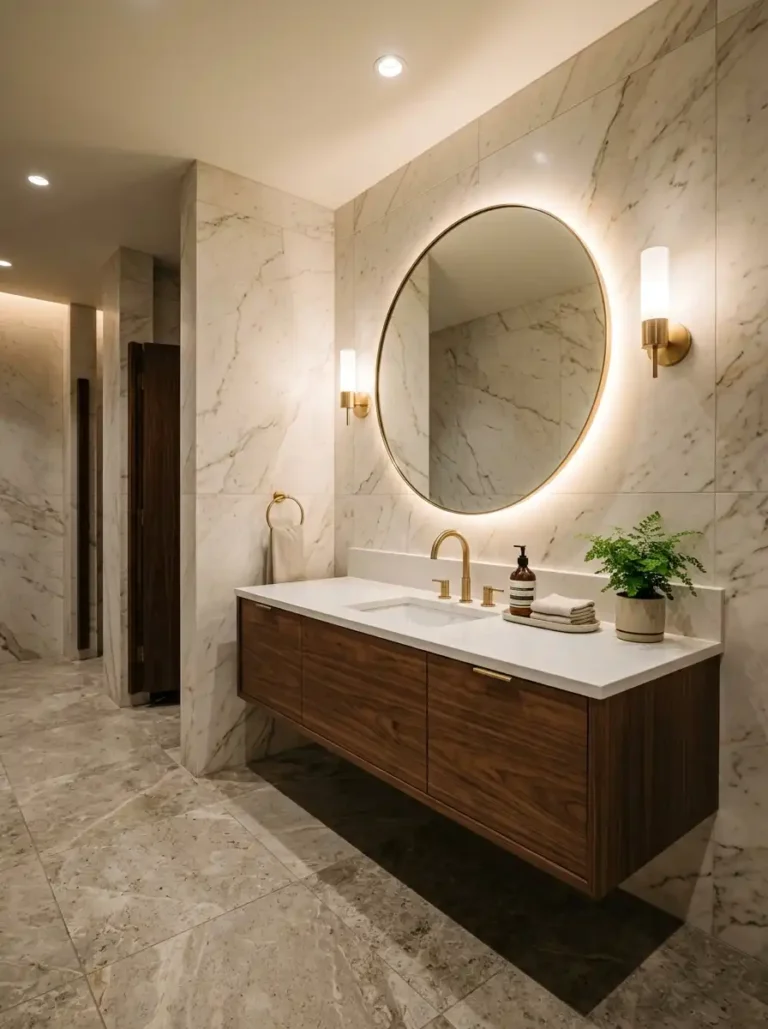
Marble bathroom surfaces turn a functional room into a calm retreat, provided the stone is chosen and cared for with restraint. Choose honed marble in soft white or warm grey for a vanity top, shower wall or floor, with simple, large-format tiles and minimal grout lines so the veining can flow quietly across the surface. A marble vanity top costs roughly 600 to 1,500 dollars, while a full marble shower wall is a larger investment of 2,000 dollars and more. Seal the stone, wipe spills promptly and use gentle, stone-safe cleaners. For more spacious schemes, browse these large bathroom ideas for layout and material pairings. Avoid polished faux marble with heavy, printed veining, because it looks flat up close and breaks the authentic, tactile spell real stone creates. Add warm wood, a linen hand towel and a small stool, and the marble will feel inviting rather than cold, even on the brightest morning.
15. Hotel-Style Layered Bedding
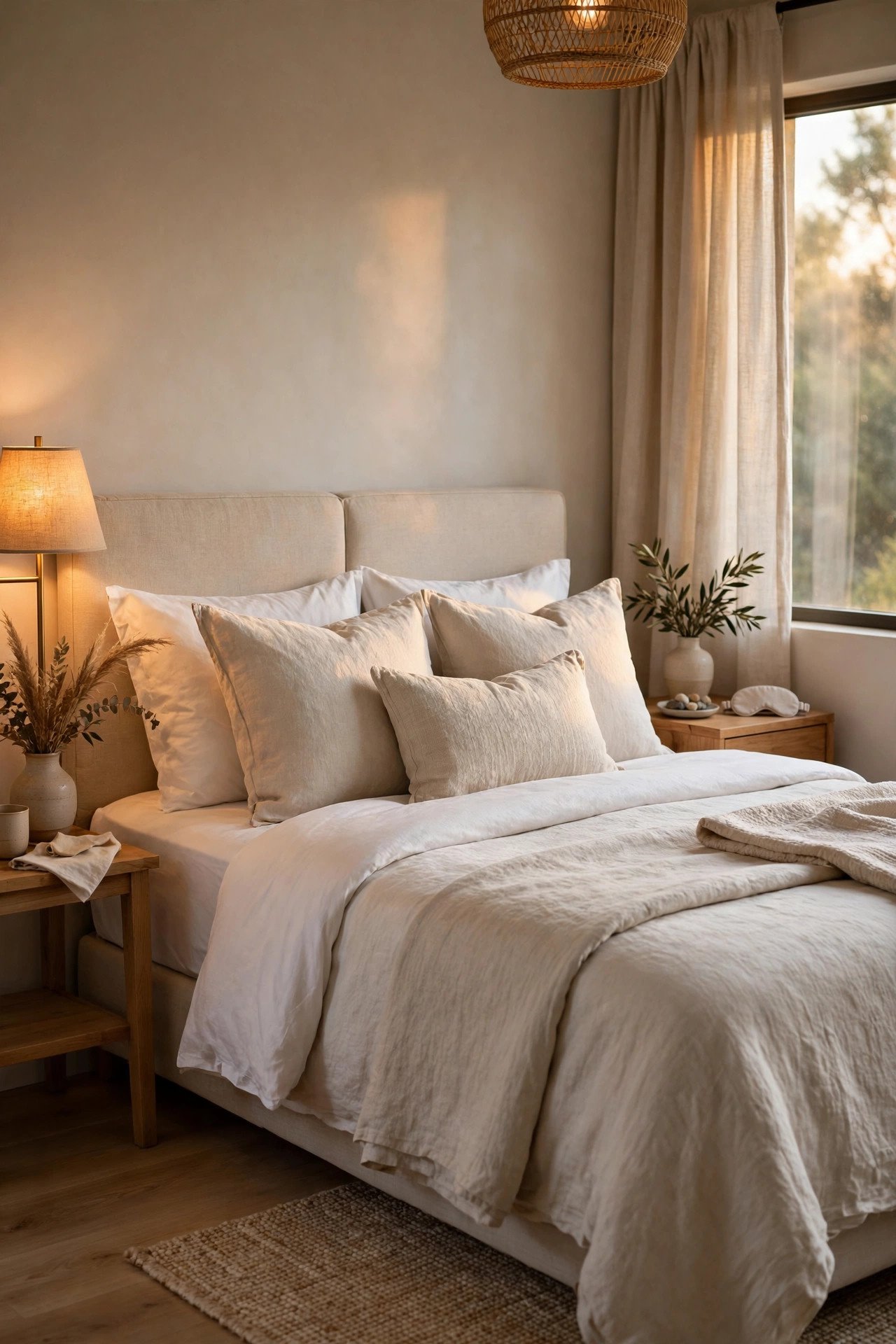
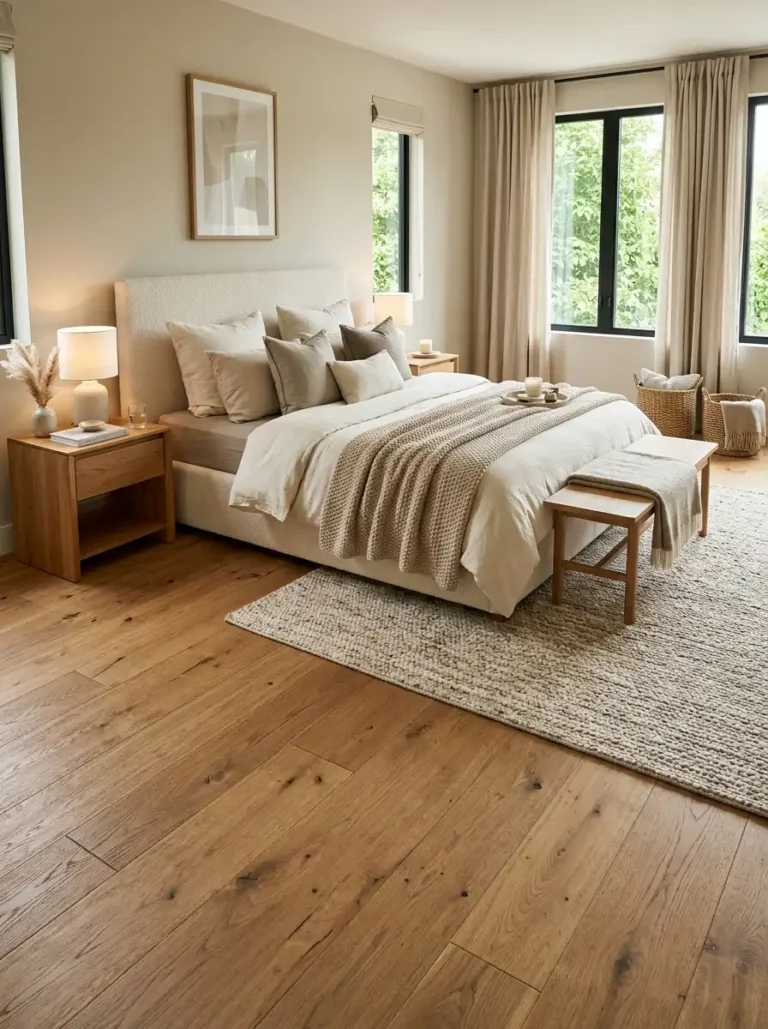
Hotel-style layered bedding makes a bedroom feel luxurious every night, not only on the day it is styled for a photograph. Start with crisp white or warm-white cotton percale sheets, add a light wool or cotton blanket, a washed linen duvet in stone or pale greige, and two sleeping pillows plus two European squares per side, all in natural fibres. A complete quality set costs about 350 to 800 dollars, and washing linen gently and line-drying when possible keeps it soft for years. The mistake to avoid is a shiny, patterned duvet set with matching curtains and cushions, which looks like a hotel package from a catalogue rather than a personal, layered bed that invites rest. Change pillowcases twice a week, air the duvet each morning, and the bed will stay fresh, crisp and welcoming without any decorative excess.
16. Entryway Console With Stone Top
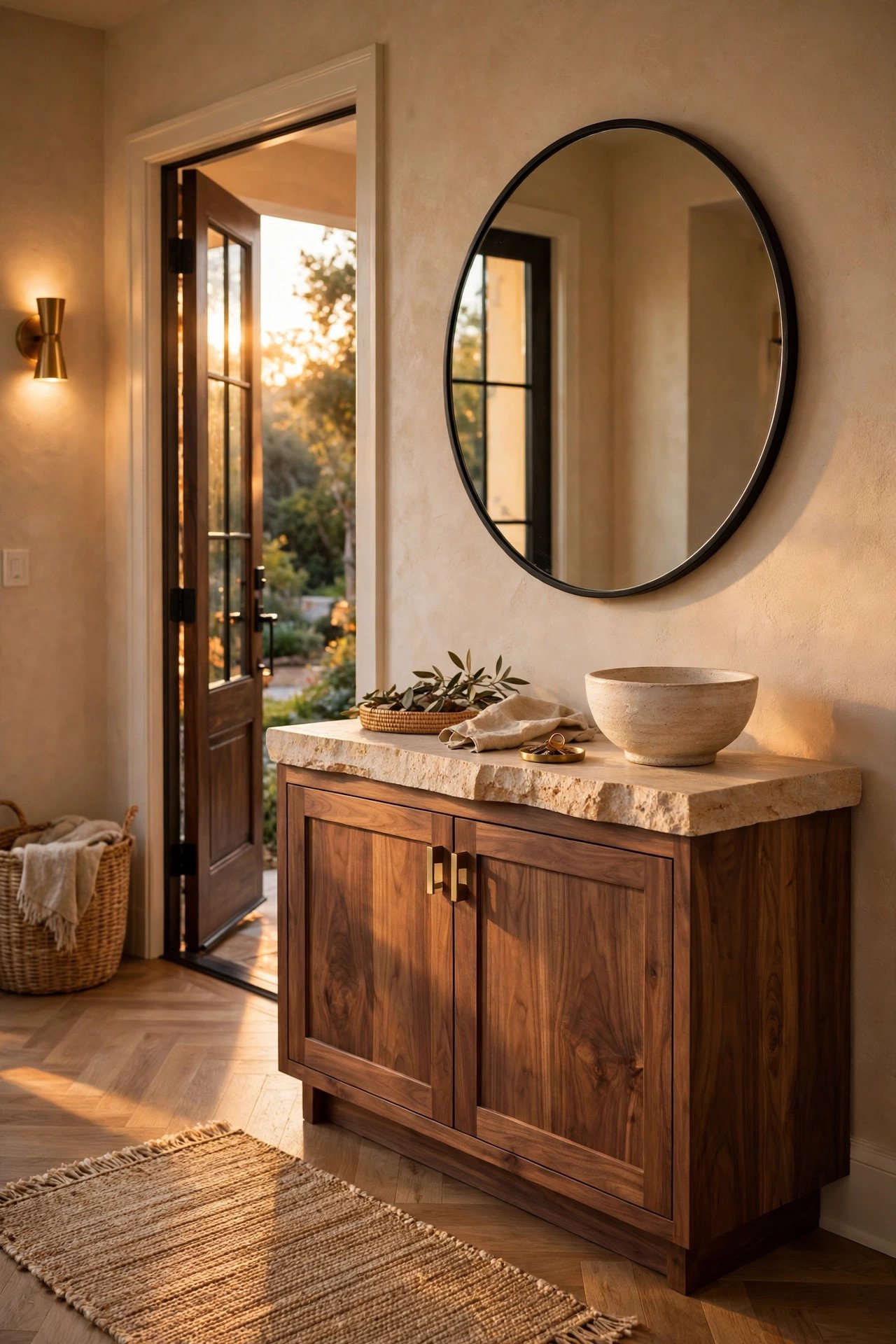
An entryway console with a stone top sets the tone for the whole home in the first few seconds after the front door opens. Choose a slim console in walnut or white oak with a travertine or marble top, a large mirror or single artwork above it, and only three objects on the surface: a ceramic bowl for keys, a small vase and one stack of books. A good console costs 400 to 1,100 dollars, and a stone top resists scratches and water marks far better than painted wood. Keep the floor clear and add one basket for shoes or umbrellas. Avoid crowding the console with coats, post, chargers and many small objects, because clutter at the entrance undoes the calm first impression the rest of the house works so hard to create. Add a soft rug or runner underfoot, keep a coat hook nearby, and the entry will feel finished, practical and welcoming for every guest who arrives.
17. Hidden Storage and a Declutter Edit

Hidden storage and a ruthless declutter edit are the invisible systems that let fewer, better pieces shine. Give every category a closed home: baskets inside cupboards, drawers for chargers and paperwork, a single tray for daily essentials, and closed storage in living and bedroom furniture so surfaces stay clear. A practical storage refresh costs 150 to 600 dollars for quality baskets, boxes and drawer organisers, plus time for the edit itself. Remove one item for every new item that enters, and question duplicates before keeping them. The mistake to avoid is buying open shelving to display everything you own, because visible clutter, tangled cables and stacked paperwork instantly break the calm, edited feeling quiet luxury depends on, however beautiful the objects themselves may be. Label baskets discreetly inside, empty the tray each evening, and the system will stay effortless because every object has one obvious place to return to.
18. Artisan Handmade Pieces
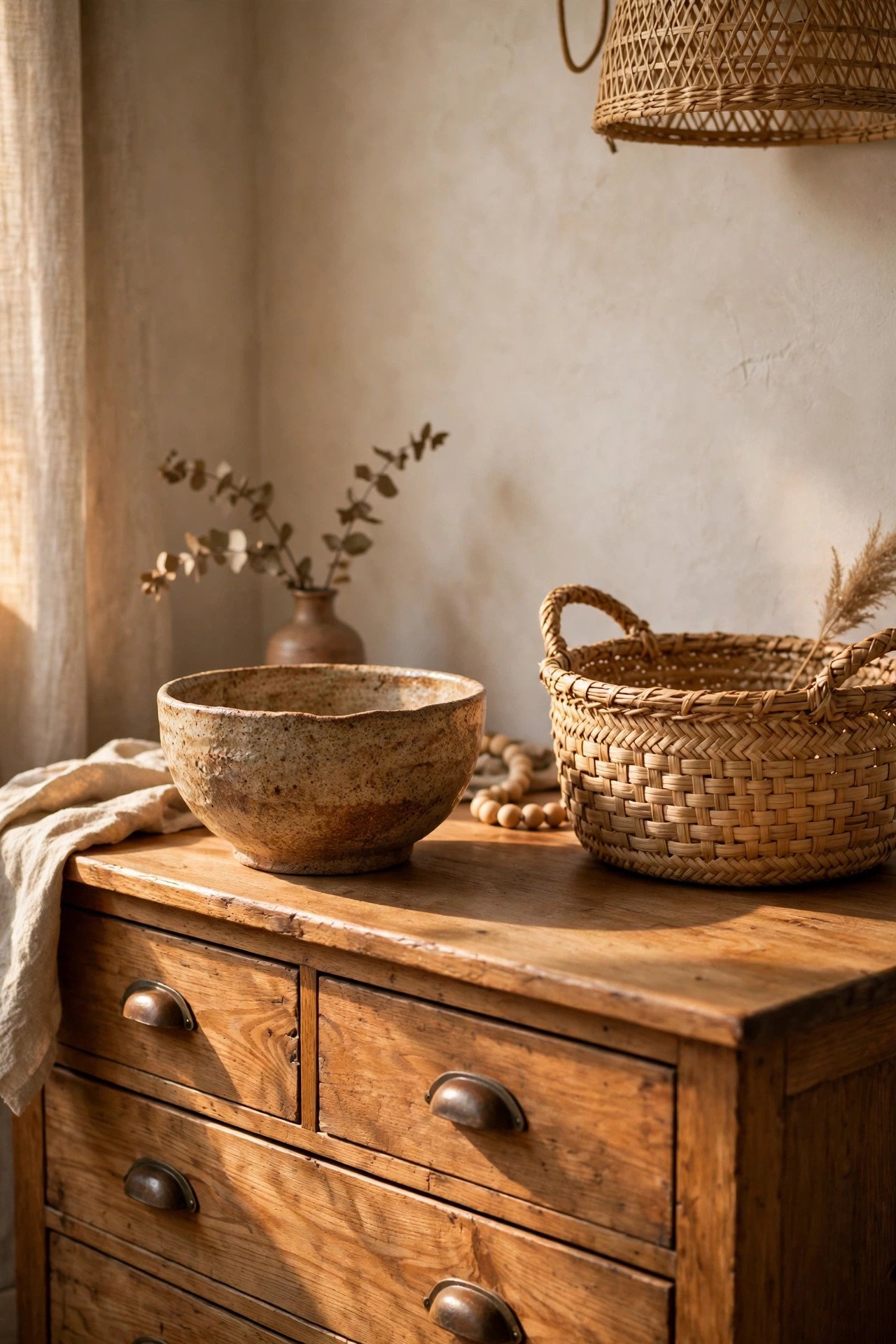
Artisan handmade pieces give a home its soul, because slight irregularities prove that a human hand, not a factory line, made the object. Choose one or two handmade items per room: a thrown ceramic bowl, a handwoven basket, a carved wooden board or a woven textile made by an independent maker, in natural tones that sit quietly with the palette. Each piece typically costs 40 to 250 dollars, and buying directly from makers or small studios supports craft while keeping the home distinctive. Display handmade pieces where they can be touched and used, not locked behind glass. Avoid filling the home with identical mass-produced items styled to look handmade, because fake distressing and printed craft effects are easy to spot and make the whole scheme feel staged rather than genuinely collected over time. Ask makers about care and origin, keep receipts and stories with each piece, and the objects will gain meaning as they are used and remembered over time.
19. Leather Details
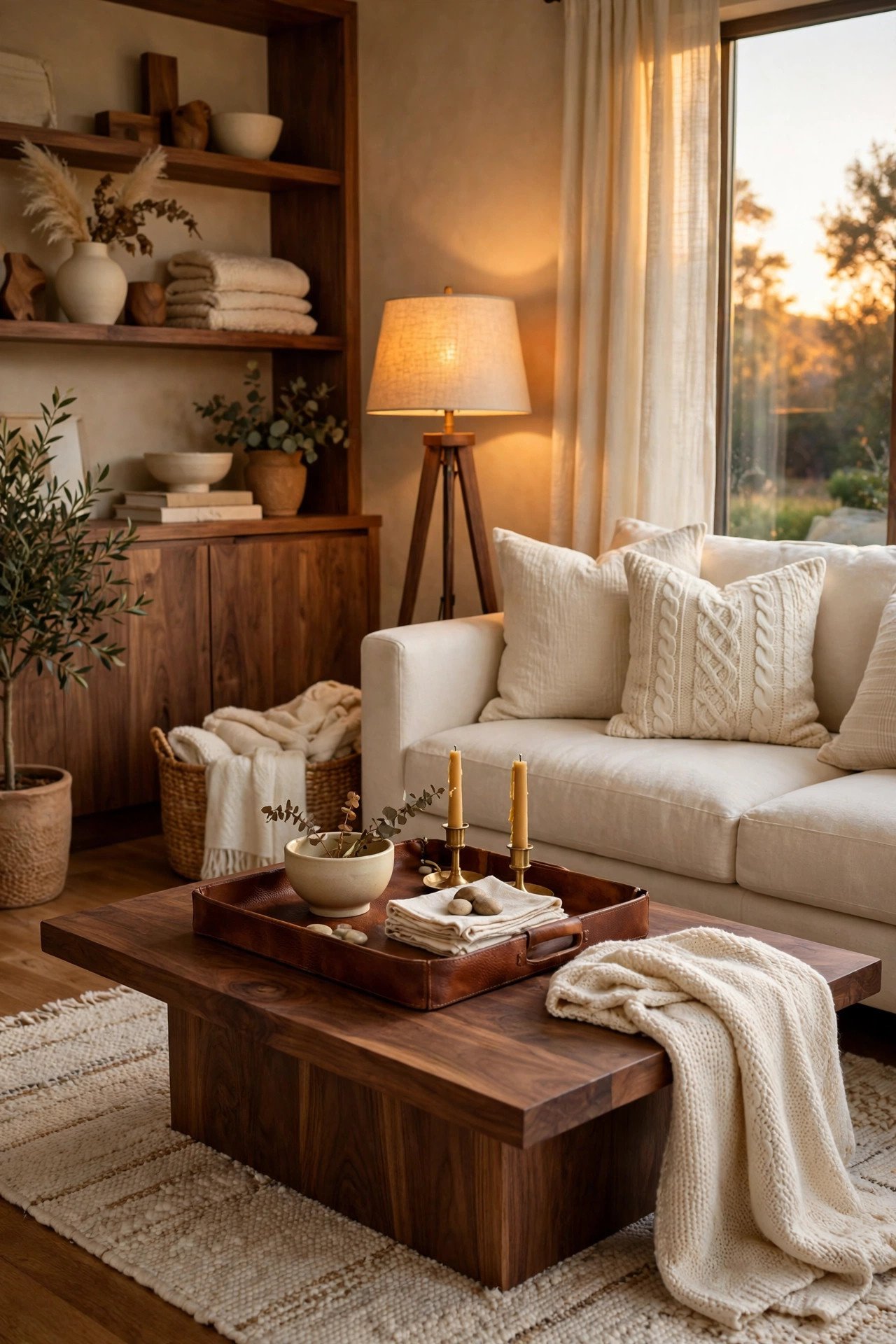
Leather details add warmth, age and a quiet masculine balance to soft linen, wool and stone. Choose full-grain leather in cognac, chestnut or deep tan for a small number of pieces: a tray, a magazine holder, drawer pulls, a bench cushion or the handles on a basket, and let the leather darken and soften with use. Quality leather accessories cost 50 to 300 dollars each, and conditioning them once or twice a year keeps them supple without shine. Use leather sparingly, so it reads as an accent rather than a theme, and pair it with warm wood and cream textiles. The mistake to avoid is shiny bonded leather or logo-embossed pieces, which peel, crack and advertise a brand instead of ageing gracefully into the patina that makes real leather feel luxurious. Keep leather away from direct sun and radiators, wipe it with a dry cloth weekly, and the surface will develop depth without cracking or fading unevenly.
20. Books as Decor
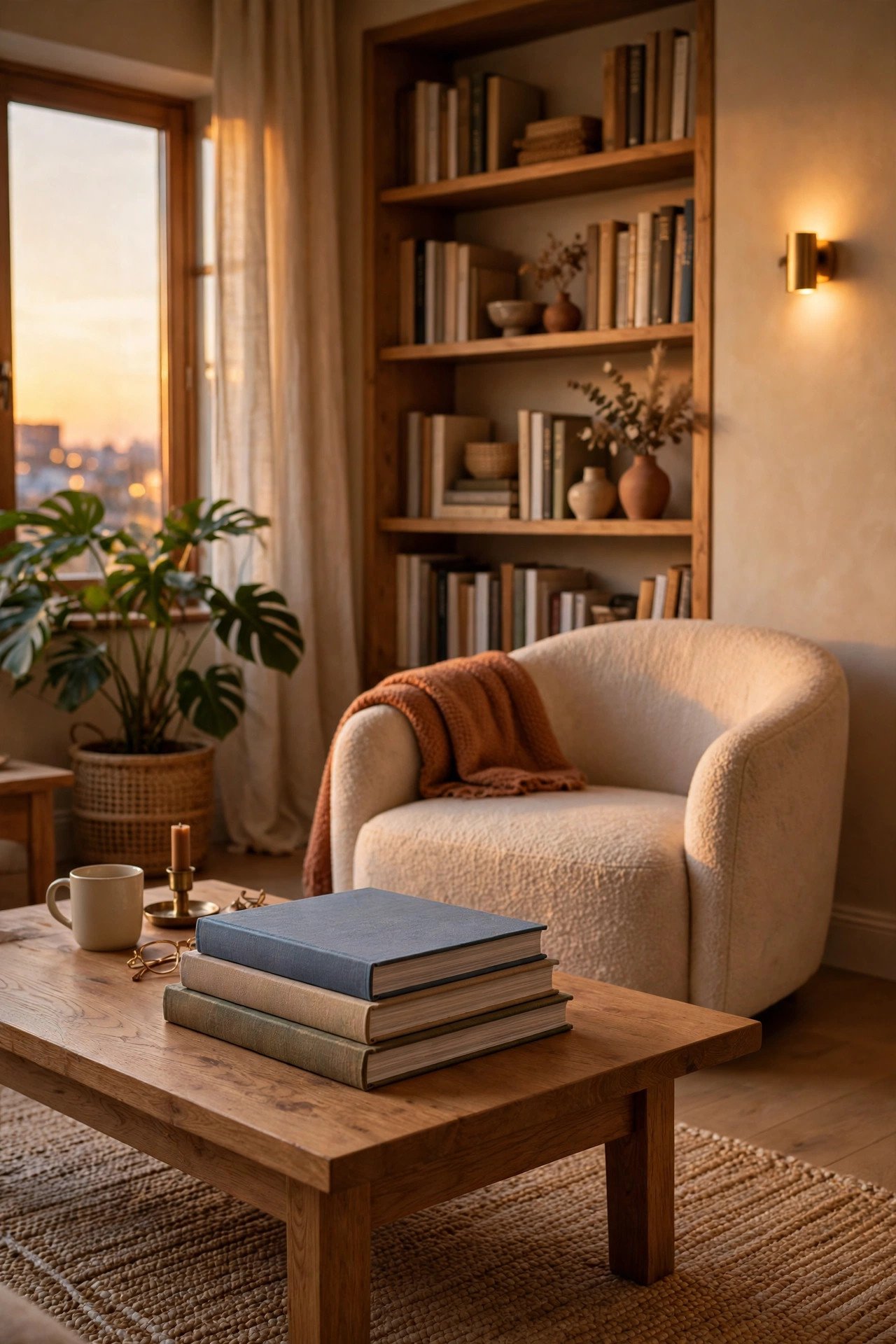
Books used as decor make a home feel intelligent, personal and collected, provided they are chosen and placed with intention. Stack two or three large art, architecture or travel books on a coffee table or console, arrange a shelf by subject or tone rather than rainbow colour, and leave space around each group so the spines and covers can breathe. Second-hand and remaindered books cost 10 to 40 dollars each, while new large-format art books cost 40 to 90 dollars, so a shelf can be built gradually and affordably. The mistake to avoid is buying books by the metre in matching colours purely as decoration, because unread, uniform rows look like a set design and miss the personal, lived-in quality that real books bring to a quiet luxury home. Add a small notebook and reading lamp nearby, rotate titles as interests change, and the corner will invite quiet reading rather than simply filling a shelf.
21. Scent and Fresh Greenery

Scent and fresh greenery are the finishing layers that make a quiet luxury home feel alive rather than merely styled. Choose one signature scent, such as cedar, fig, vetiver or neroli, in a candle, diffuser or room spray, and use it consistently so the home has a recognisable atmosphere. Add one large olive tree, fig or sculptural branch in a stone or ceramic pot, plus a small vase of fresh stems, and keep foliage healthy and dust-free. Budget about 60 to 180 dollars for a quality plant and pot, and 25 to 60 dollars for a good candle. Avoid mixing many competing scents and filling every surface with small plants, because scent overload and cluttered greenery create restlessness instead of the calm, clear air this style is built around. Open windows daily for fresh air, replace water in vases every two days, and the scent and greenery will stay light, clean and naturally refreshing.
22. The One-In, One-Out Rule

The one-in, one-out rule is the habit that protects a quiet luxury home long after the decorating is finished. For every new object, cushion, vase or throw that enters the home, one existing item must leave, whether it is donated, sold or recycled, so the total number of possessions stays stable and every addition is a considered choice. The rule costs nothing, yet it prevents the slow accumulation that turns calm rooms into crowded ones, and it forces a pause before impulse purchases. Apply it most strictly to decorative objects and textiles, where clutter gathers fastest, and review each room once a season. The mistake to avoid is treating the rule as a punishment or a purge, because a home that feels stripped and anxious is not quiet luxury; the aim is a calm, generous home where everything present is loved and used. Photograph each room after the edit, compare it a month later, and the visual record will show whether new additions truly earned their place at home.
Practical Tips
Follow a clear investment order, and quiet luxury becomes affordable rather than overwhelming. Spend first on the pieces you touch and use daily: the sofa, the bed, the rug and the lighting, because comfort and light are felt in every hour at home. Next, invest in stone, wood and hardware, which age well and are costly to replace, and save on cushions, throws, vases and seasonal greenery, which can be refreshed cheaply. Study Architectural Digest room tours before you buy. A full room refresh can start under 500 dollars with paint, curtains and lighting alone, a single-room transformation typically costs 1,500 to 4,000 dollars, and a whole-home, long-term path spreads 8,000 to 20,000 dollars across several years.
Care for natural materials simply, and they will reward you with patina instead of wear. Wash linen cool and line-dry it when you can, vacuum wool rugs weekly and blot spills at once, oil oak once a year, seal travertine and marble annually, and let unlacquered brass darken naturally rather than polishing it bright. Keep cleaning products gentle and test them in a hidden spot first, because harsh chemicals strip oil finishes, etch stone and fade natural dyes faster than daily use ever will. Store wool throws and cushions clean and dry, rotate rugs and cushions so sun and wear fall evenly, and repair a loose thread or wobbly leg promptly before a small flaw becomes a reason to replace a good piece.
Avoid the cold showroom trap by checking every room for warmth, texture and personal evidence of life. If a room feels stark, add one warm layer at a time: a wool throw, a wooden tray, a handmade vase, a floor lamp at 2700K or a single piece of art with soft, muted colour, and then stop and live with it for a week before adding more. Keep at least three textures in every room, mix matte and honed finishes rather than gloss, and let one personal object, such as a family photograph, a travel find or a well-loved book, sit visibly among the calm neutrals. Quiet luxury is not a museum; it is a home that looks understated because everything in it was chosen slowly, used daily and allowed to age with grace.
Final Thoughts
Quiet luxury is a discipline of choosing fewer, better things and then letting natural materials, warm light and honest craftsmanship do the quiet work of making a home feel elegant. Start with the walls, the rug and the light, invest slowly in the pieces you touch every day, and edit ruthlessly so that what remains can breathe. The result is a calm, warm and timeless home that feels personal and comfortable years later.
You May Also Like: – 25 Charming Vintage Living Room Ideas That Feel Cozy, Elegant, and Collected – 24 Cozy Bedroom Design Ideas to Create a Peaceful and Stylish Retreat
Frequently Asked Questions
What is quiet luxury home decor?
Quiet luxury home decor is an understated style built on natural materials, warm neutrals and craftsmanship rather than logos or trends. It uses linen, wool, oak, stone and brass, keeps colour calm and tonal, and favours fewer, better pieces that feel comfortable, timeless and quietly expensive without drawing attention to cost.
How much does quiet luxury home decor cost?
A single room refresh can cost under 500 dollars using paint, curtains, lighting and editing alone. A single-room transformation typically costs 1,500 to 4,000 dollars, while a whole-home, long-term path may spread 8,000 to 20,000 dollars across several years, prioritising the sofa, bed, rug and lighting first.
What colours work best for quiet luxury home decor?
Warm whites, greige, taupe and muted sage work best, layered tone on tone with soft black or deep walnut as a quiet contrast. Avoid stark white, cool grey and bright accent colours, which can make the scheme feel cold or busy. Test large swatches in daylight and evening light before committing to a palette.
How do I make quiet luxury feel warm instead of cold?
Use at least three textures in every room, layer wool, linen and wood, and light the room at 2700K with dimmers. Add a handmade vase, a wool throw and one personal object, keep finishes matte or honed rather than glossy, and avoid empty surfaces and single bright ceiling lights that flatten texture.
Which materials are worth splurging on?
Splurge on the sofa, mattress and bedding, a wool rug, solid wood furniture and real stone, because these are touched daily and age well when made properly. Save on cushions, throws, vases and greenery, which refresh cheaply. Avoid fake stone, bonded leather and thin veneers, which wear quickly and undermine the whole look.
Can I get the quiet luxury look on a budget under 500 dollars?
Yes, start with warm-white paint, floor-length linen curtains, 2700K bulbs and dimmers, and a strict declutter edit. Add one wool throw, a ceramic vase and fresh greenery, and remove duplicate or shiny objects. These low-cost changes in texture, light and editing deliver most of the calm, expensive feeling before any furniture is replaced.