22 Dining Room Decor Ideas for Everyday Gatherings and Special Occasions
A dining room earns its keep twice over: it hosts hurried breakfasts, homework, laptop work and weeknight suppers, and then it must transform, into a room that feels considered when guests arrive. The rooms that do both jobs well are not the most formal rooms, but the most flexible ones, with a table that fits the household on an ordinary Tuesday, seating people actually want to sit in for two hours, lighting that can dim from bright task light to a warm glow, and storage that swallows the everyday clutter in minutes. That flexibility is the thread running through these 22 dining room decor ideas, each chosen to work daily rather than only on special occasions.
Looking for more inspiration? Our Nest Decorz homepage gathers the latest home decor ideas, seasonal decorating guides and room-by-room styling tips in one place — start there and explore.
Below you will find 22 ideas covering table size and shape, seating comfort, layered lighting, low centrepieces, rugs, acoustics, storage and a quick-change system for turning an everyday room into an occasion room. Every idea includes specific measurements, materials, colours and approximate costs in US dollars, plus one mistake to avoid, whether your room is separate, a corner, or open-plan.
1. Choose an Extendable Table That Grows for Guests
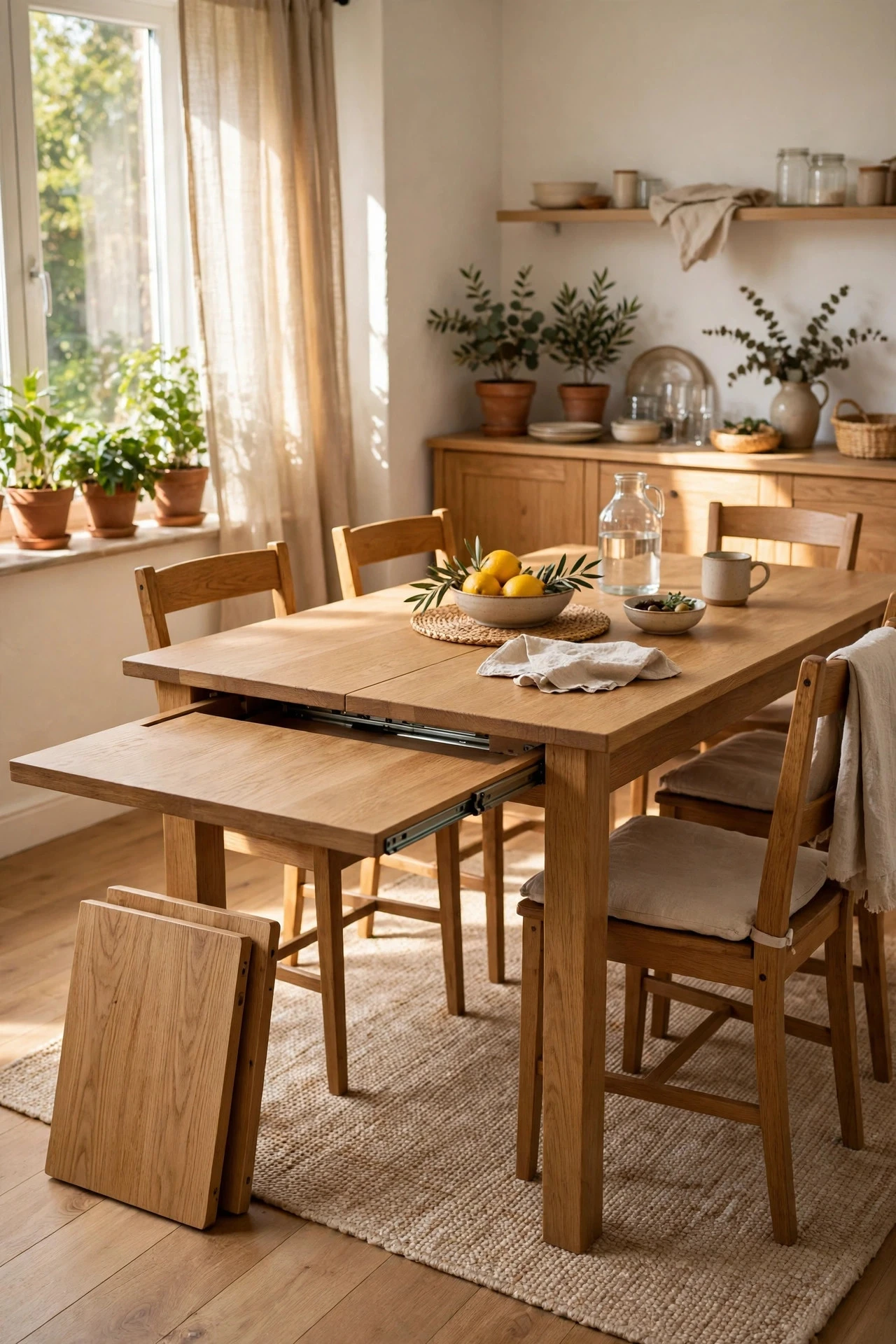
An extendable dining table is the single most practical answer to a room that must seat four every day and eight on special occasions, because it keeps the everyday footprint compact while still offering a proper place for every guest. Look for a table that extends from about 60 inches to 84 or 96 inches, with two leaves, and allow 24 inches of table width per person, . A matte or satin solid-wood top hides daily wear, and a pedestal or trestle base leaves more legroom than four corner legs when extra chairs are squeezed in. Expect $700 to $2,200 for a quality extendable table, plus leaves if sold separately. The mistake to avoid is buying a table sized for the largest gathering and living with a crowded room the other 350 days of the year.
2. Pick a Round Table to Keep Conversation Close
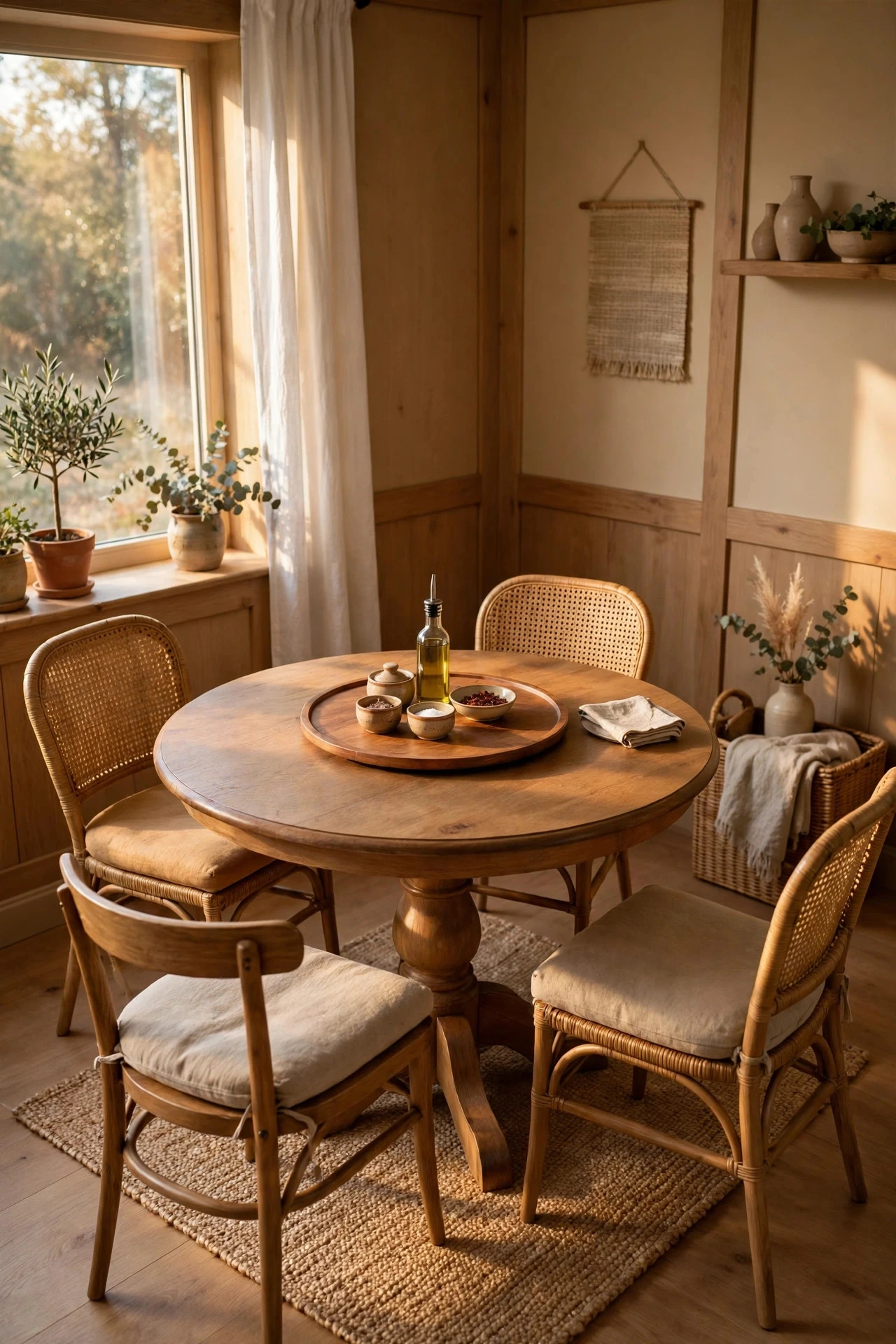
A round dining table suits everyday family life and small gatherings because everyone faces the centre, nobody is stranded at a far end, and conversation flows without anyone raising their voice. A 48-inch round table seats four comfortably and six at a pinch, a 54-inch table seats six comfortably, and a 60-inch table seats six to eight, while leaving 36 inches behind every chair. Pedestal bases work best, since they keep feet free and let chairs slide in at any angle, while a warm white, oak or walnut top anchors the room. Round tables cost $500 to $1,800; add an 18-to-24-inch lazy Susan ($30 to $80) for shared dishes. The mistake to avoid is pairing a round table with a square rug, which fights the shape and leaves awkward corners showing.
3. Size a Rectangular Table to the Room, Not the Guest List
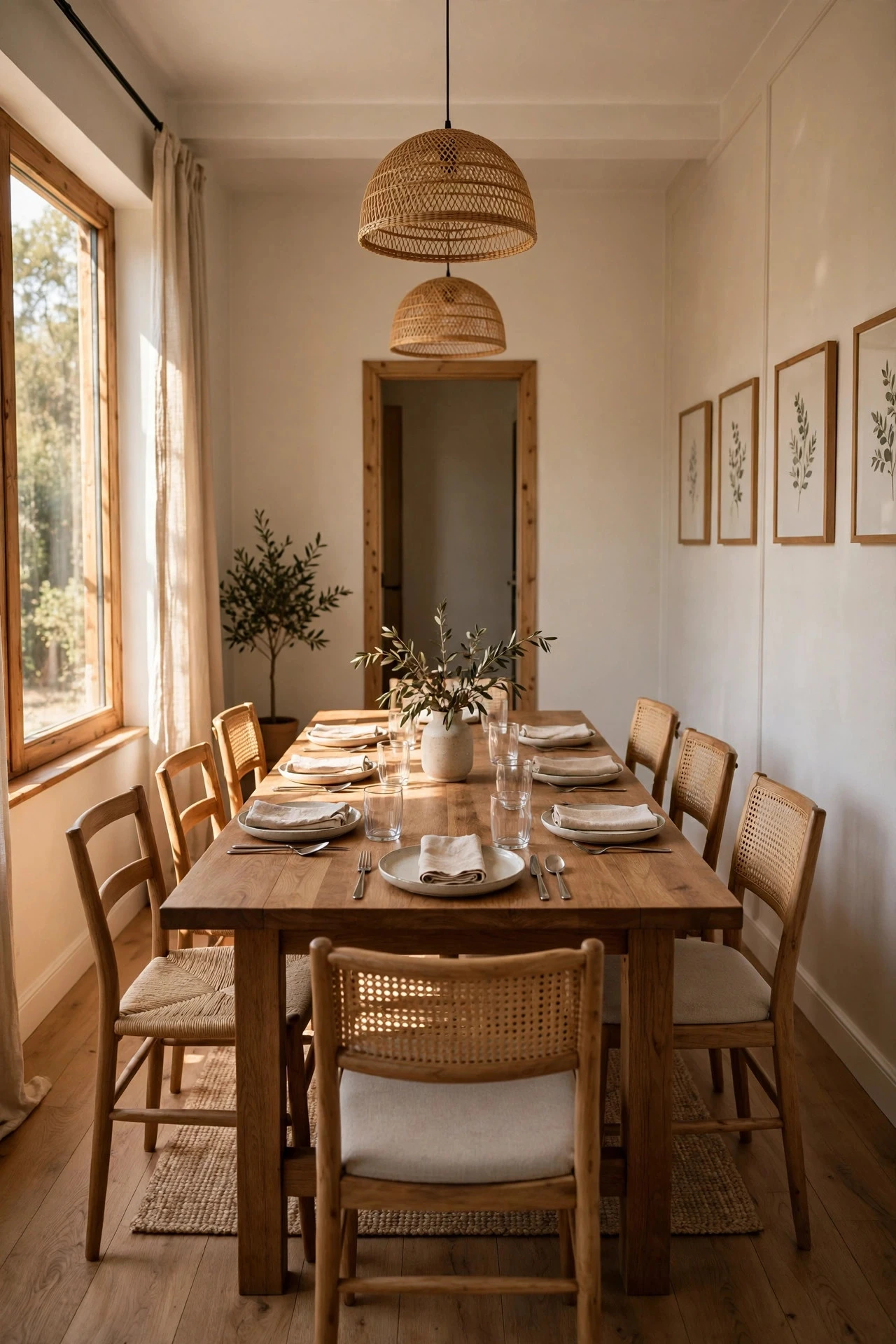
A rectangular table is the right choice for a long, narrow dining room and for households that regularly seat eight or more, provided its size is set by the room's dimensions rather than by wishful thinking about parties. Allow 24 inches per person along each side and 12 inches at each end, keep 36 inches clear on all sides, and step down one size if that clearance disappears, because a table that blocks the walkway will annoy you daily and impress nobody at dinner. A 72-inch table seats six, an 84-inch table seats eight, and a 96-inch table seats eight to ten, at 36 to 42 inches wide for serving dishes. Expect $600 to $2,500. The mistake to avoid is choosing a 42-inch-wide table for a room where serving dishes, a centrepiece and place settings must all compete for the same narrow strip.
4. Add a Bench on One Side for Flexible Everyday Seating
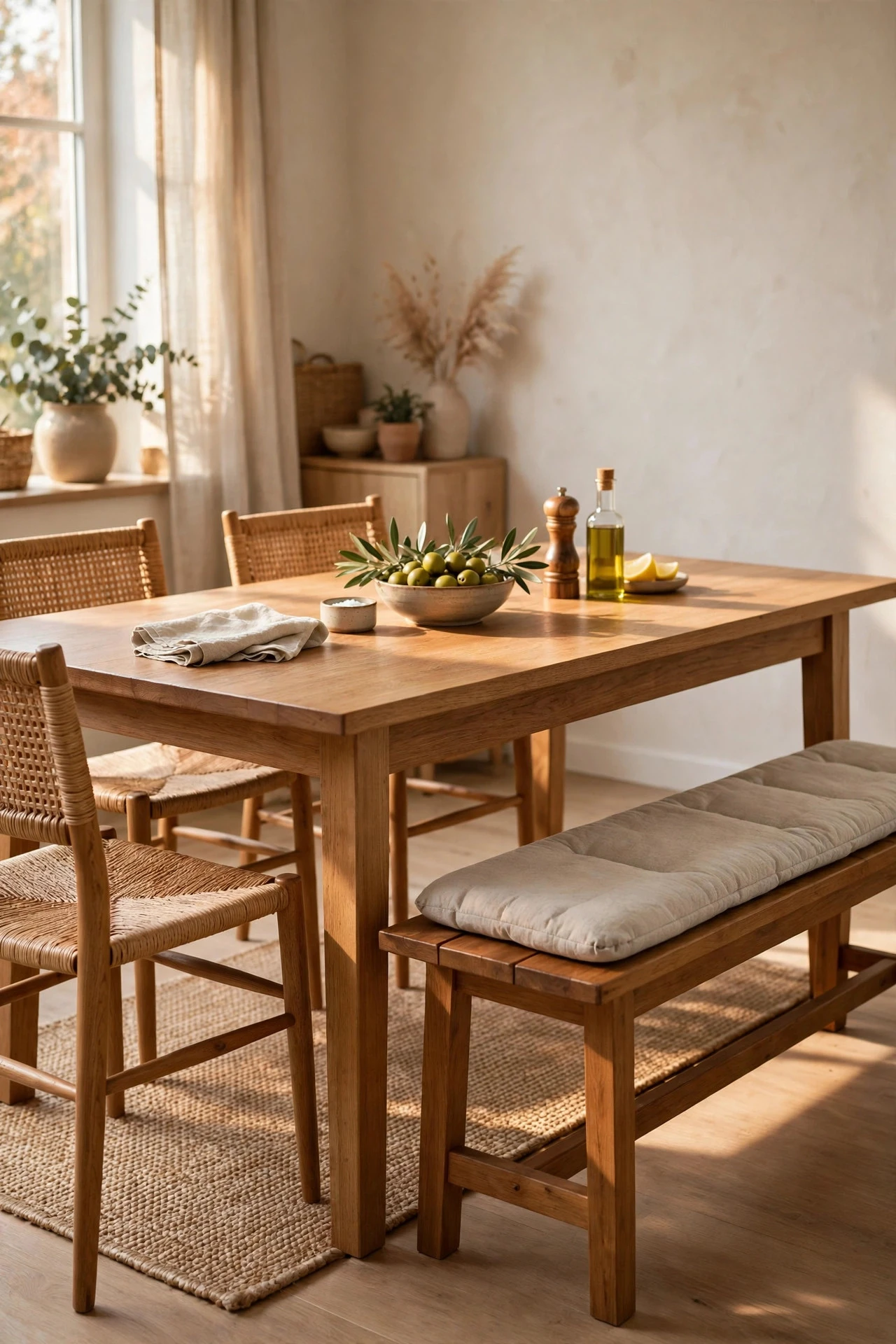
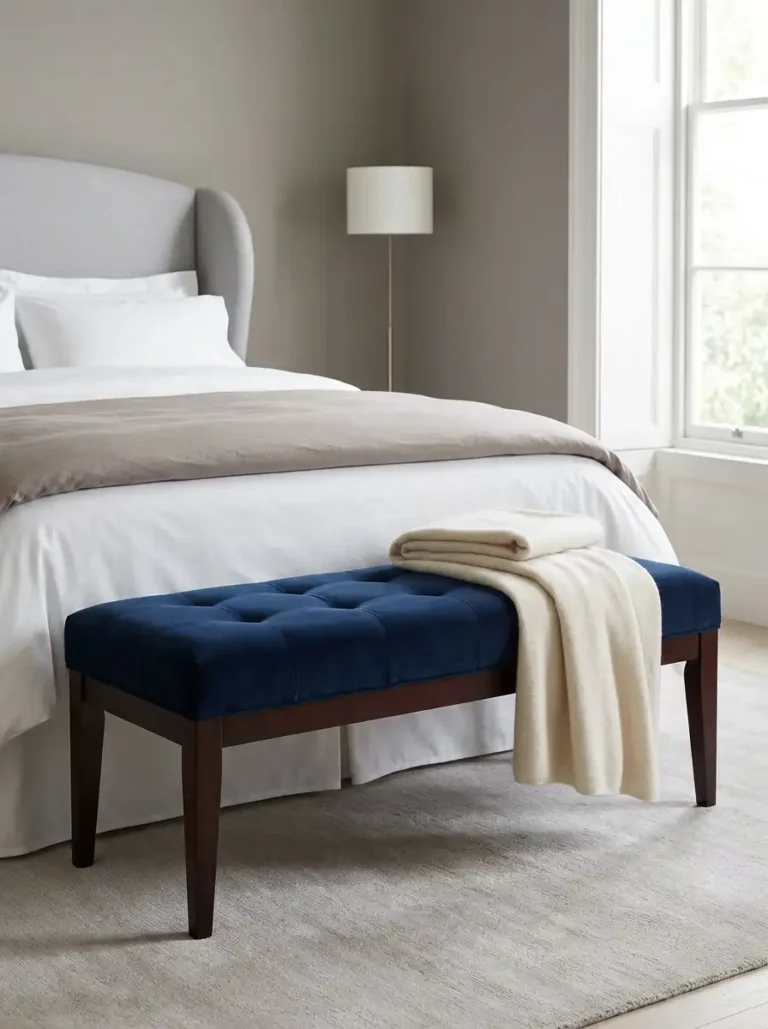
A dining bench on one long side of the table adds flexible seating that slides away neatly, suits children and extra guests, and keeps the room feeling open because it has no chair backs breaking the sightline. Choose a bench 12 to 14 inches deep and 48 to 72 inches long, in matching wood or paint, with a seat height of 18 inches to match a standard 30-inch table. A backless bench tucks fully under the table; a low-backed bench suits a wall side. Add a thin seat pad, 2 inches of high-density foam in a washable performance fabric, and expect $180 to $600 for the bench plus $40 to $100 for the pad. The mistake to avoid is buying a bench so long that nobody can slide out without asking the whole row to stand up.
5. Invest in Upholstered Chairs People Want to Linger In
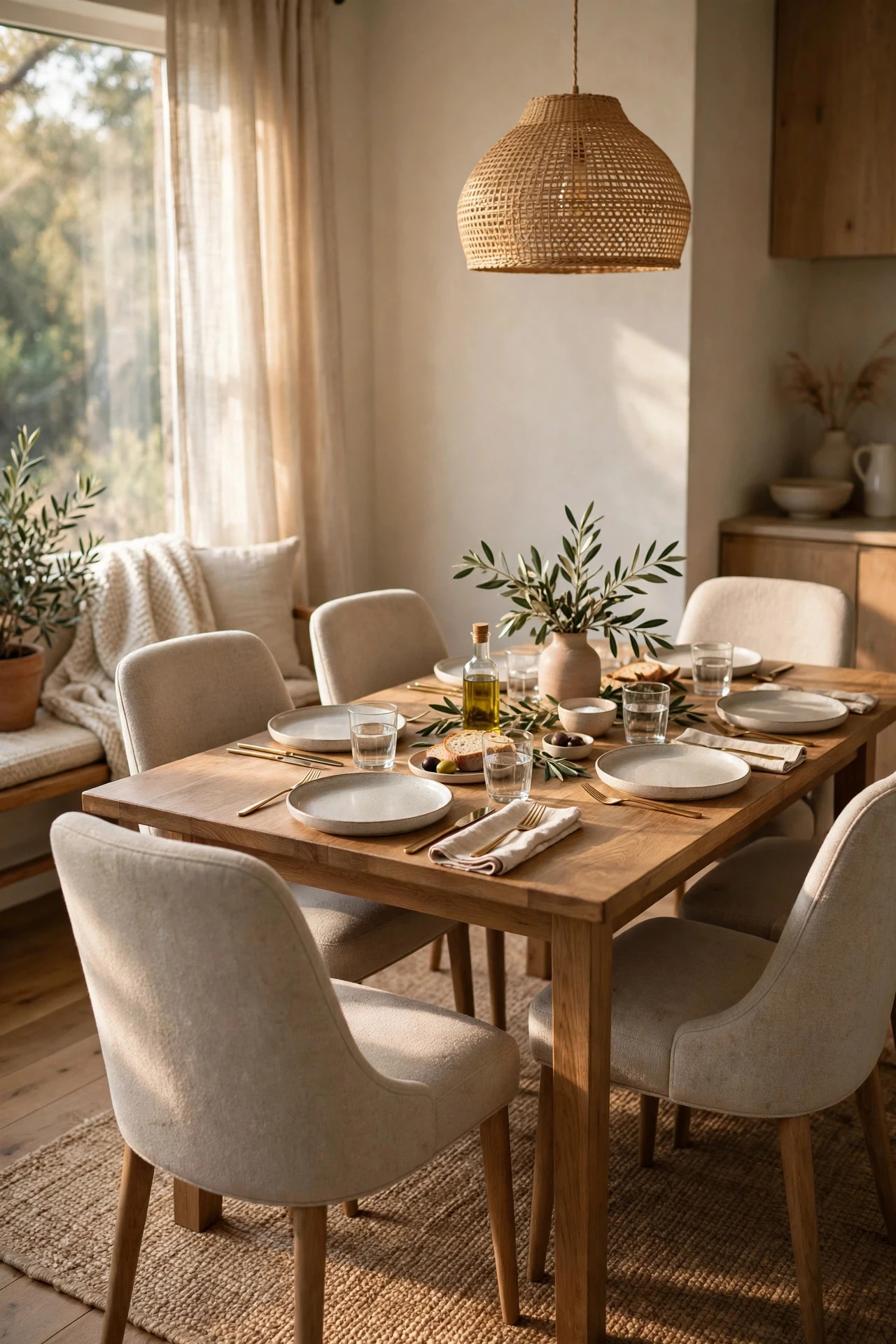
Upholstered dining chairs turn a quick meal into a lingering gathering, because padded seats and supportive backs keep guests comfortable long after hard wooden chairs would have sent them to the sofa and encourage second helpings and longer conversation. Look for a seat height of 18 to 19 inches, a seat depth of 16 to 18 inches, and a back height that supports the lower back without towering over the table, in wipeable performance fabric that survives everyday spills. Neutral upholstery in oatmeal, warm grey, sage or charcoal lets the table and centrepiece change with the occasion, while contrasting host chairs at the ends add ceremony. Expect $150 to $450 per chair, . The mistake to avoid is choosing delicate silk, pale bouclé or dry-clean-only fabric for chairs that will face everyday family meals.
6. Mix Chair Styles for a Collected, Not Matched, Look
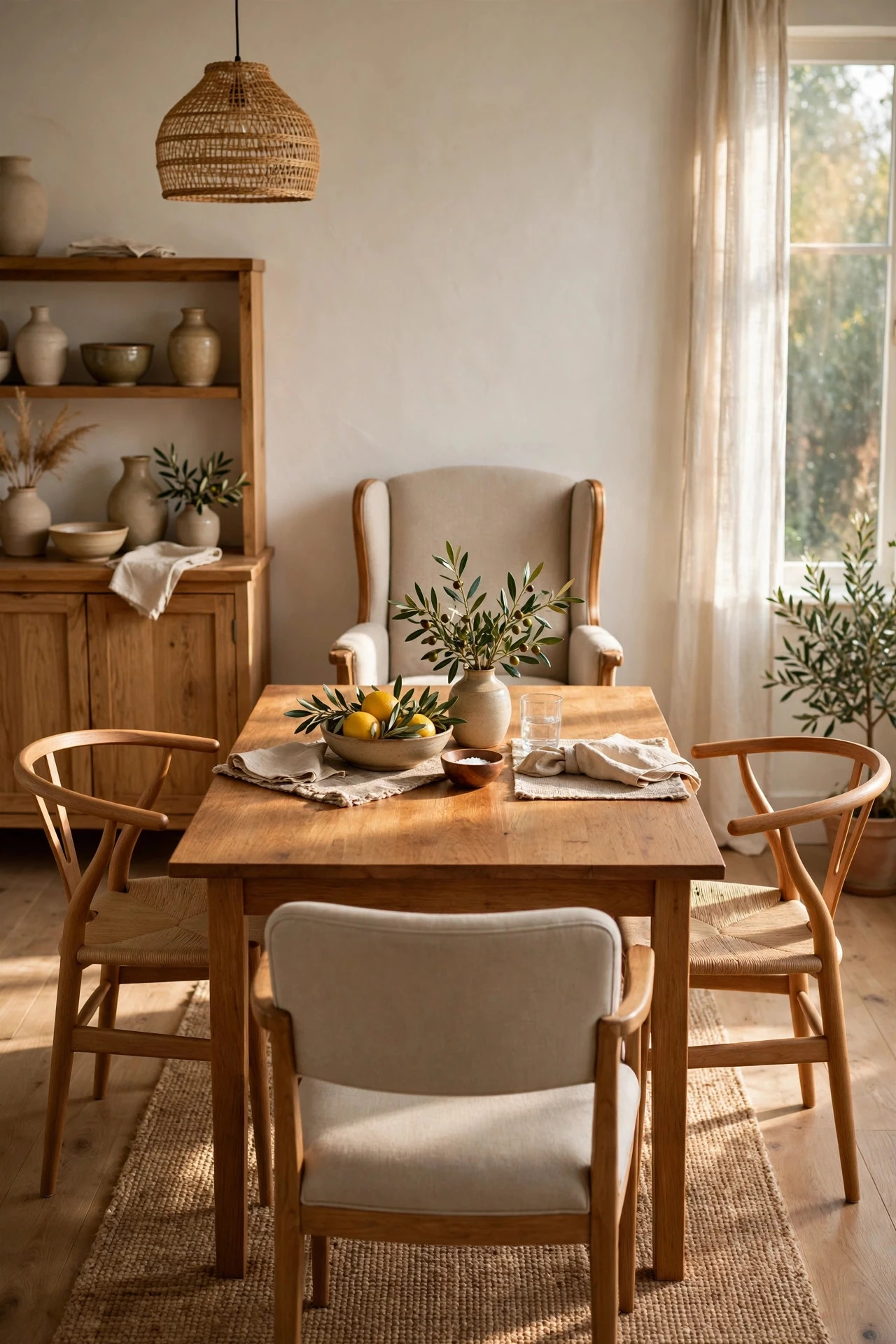
Mixing chair styles gives a dining room the collected-over-time character that a matching six-piece set rarely achieves, and it lets you solve two problems at once: comfort for everyday use and drama for special occasions. Keep one unifying element so the mix reads as intentional, such as matching leg wood, seat height or upholstery colour, then vary the form: wishbone chairs, upholstered ends, a bench. Limit the mix to two or three chair styles, repeat each style at least twice and check every chair slides under the table. Mixed chairs cost $120 to $400 each depending on form and fabric. The mistake to avoid is combining four or five unrelated chairs with different heights, woods and eras, which reads as accidental rather than curated and makes the table look like a jumble sale.
7. Hang One Statement Pendant at the Right Height
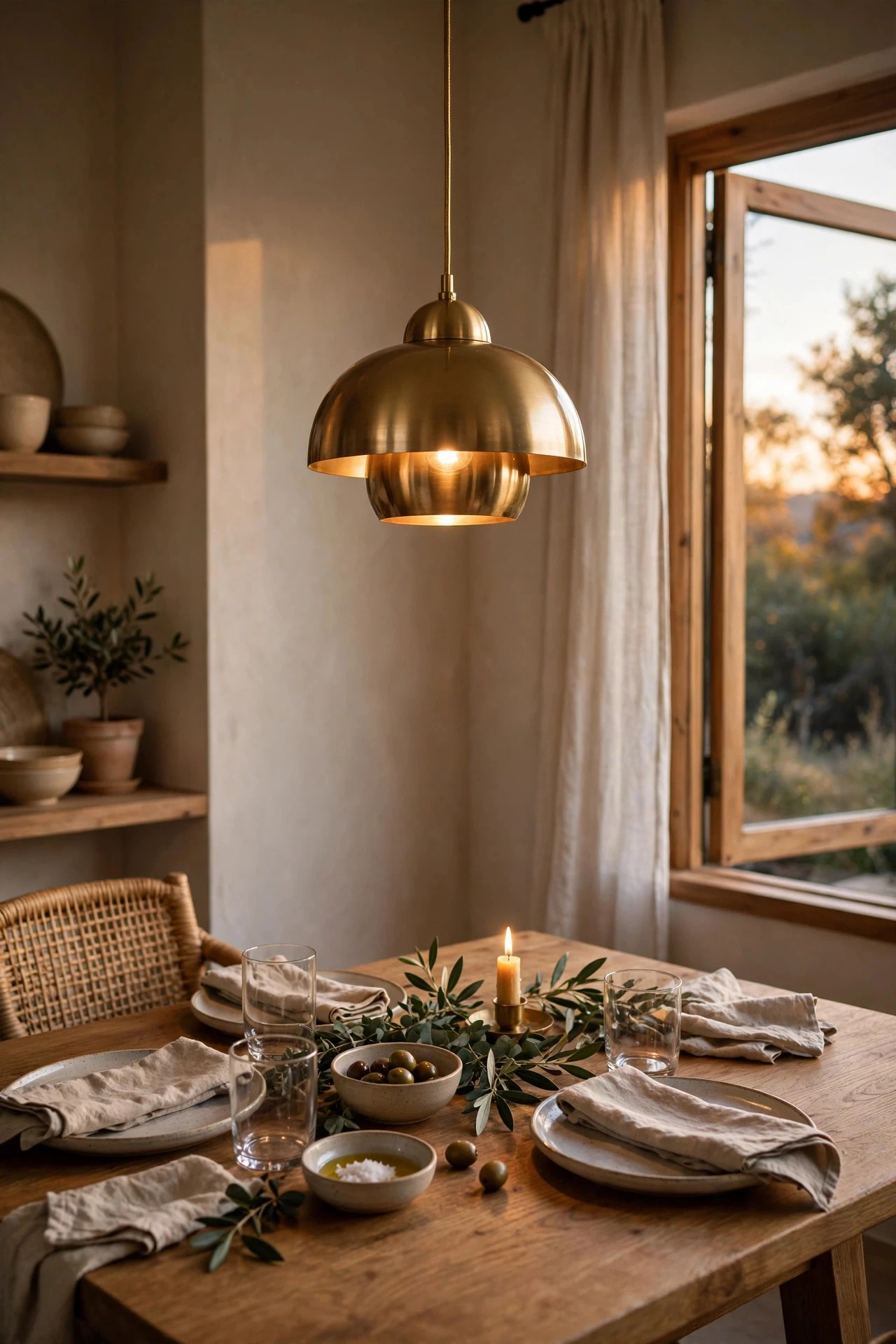
One statement pendant or chandelier over the table defines the dining zone, gives the room its focal point, but only at the right height and scale. Hang the bottom of the fixture 30 to 36 inches above the tabletop, choose a fixture one-half to two-thirds the width of the table, so a 60-inch table takes a 30- to 40-inch pendant, and fit dimmable LED bulbs at 2700K with a colour rendering index of 90 or above . A drum, rattan dome, brass ring or glass cluster suits most styles; match linear pendants to rectangular tables and round fixtures to round tables. Expect $200 to $1,200 for the fixture, plus installation if wiring moves. The mistake to avoid is hanging the pendant so high that it lights the ceiling instead of the table, or so low that tall guests cannot see across it.
8. Layer the Light With Sconces, Candles and a Dimmer
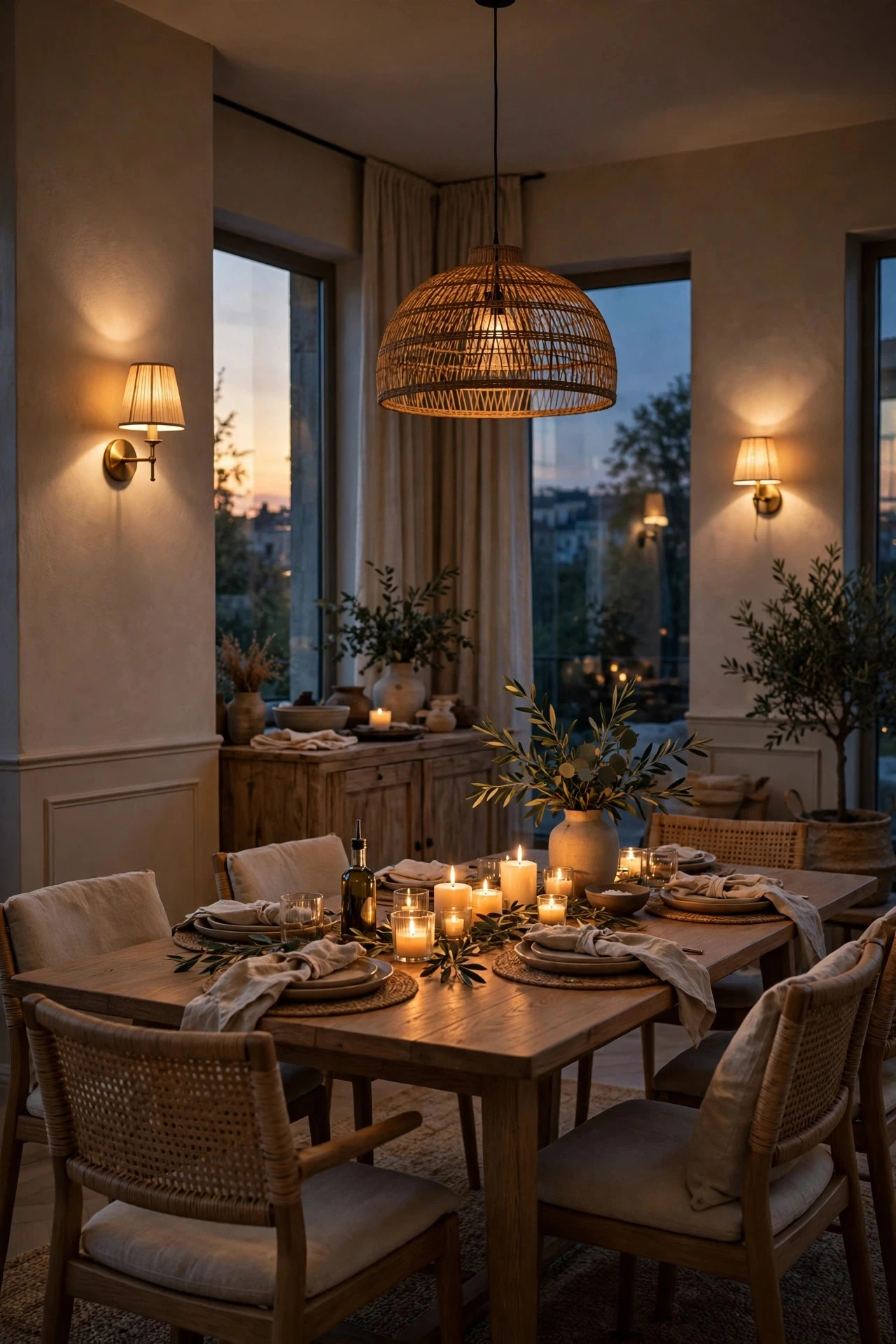
Layered lighting is what separates a dining room that feels flat at night from one that glows, because one fixture cannot flatter faces, food and table together. Add a dimmer switch to the main pendant so everyday brightness drops to a warm 20 to 30 percent for dinner, place plug-in or hardwired sconces on the side wall at 60 to 66 inches high and finish with unscented taper or pillar candles in the centre, kept low and grouped in threes. Keep all light sources at 2700K so the layers blend, use warm-white LEDs everywhere, Avoid cool daylight bulbs. A dimmer costs $25 to $60, sconces cost $80 to $300 each, and candle holders cost $15 to $60. The mistake to avoid is relying on a bright overhead light at full power for a celebration dinner, which flattens the room and makes everyone look tired.
9. Keep Centrepieces Low So Guests Can See Each Other
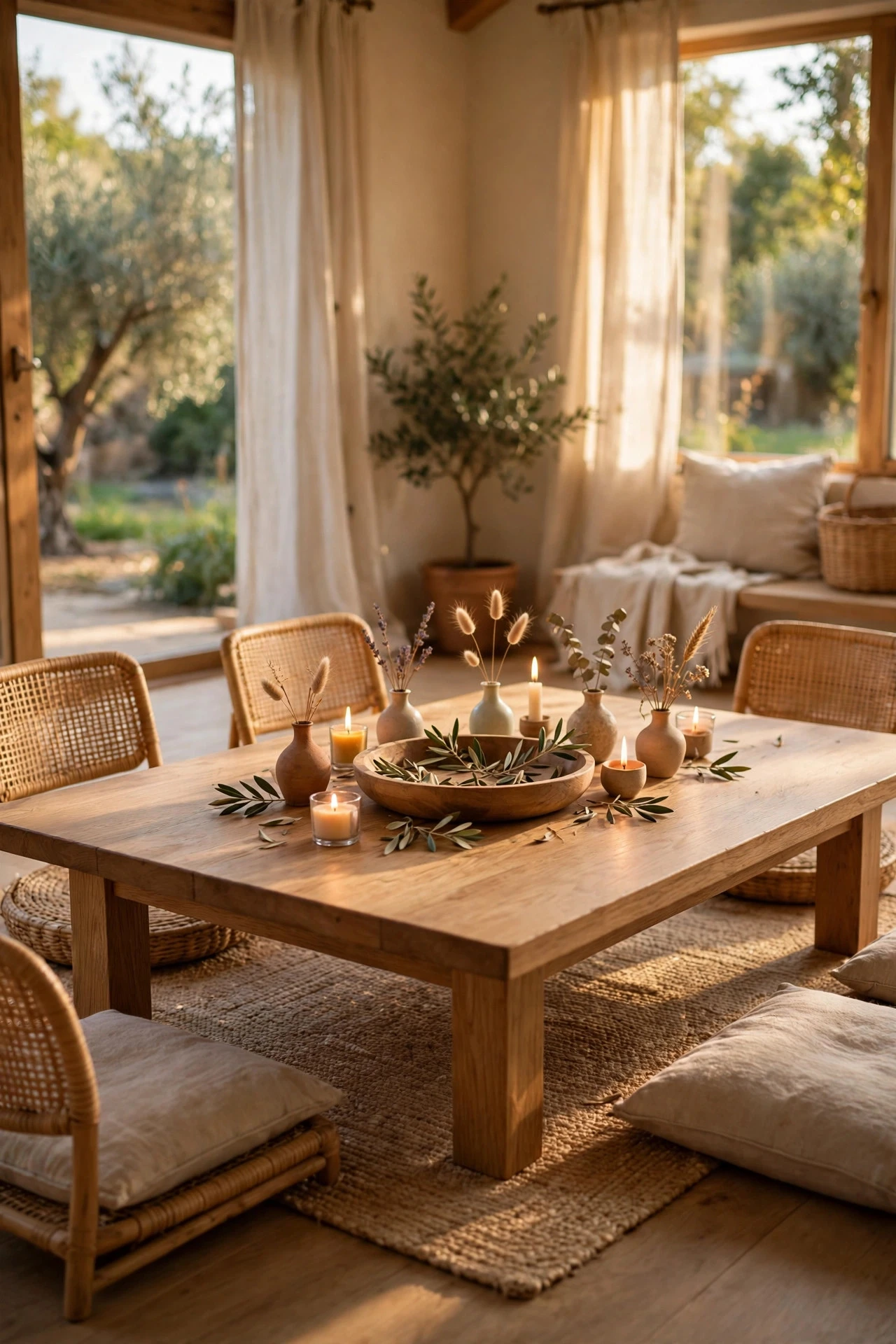
A low centrepiece is the golden rule of dining room decor, because the table is a place for conversation first and display second, and nothing kills a gathering faster than a tall arrangement guests must peer around. Keep every element below 12 inches high, or above 24 inches on a slim stand with a clear view beneath. A long, shallow wooden bowl, a low stone tray with three bud vases, or a row of small potted herbs gives the table a finished centre without blocking faces, Expect $40 to $150 for a tray or bowl and $10 to $40 for bud vases. The mistake to avoid is placing a tall, wide bouquet in the middle of a table for six, where it becomes a wall between neighbours and gets moved to the floor within minutes.
10. Layer Linens for an Everyday-to-Occasion Switch
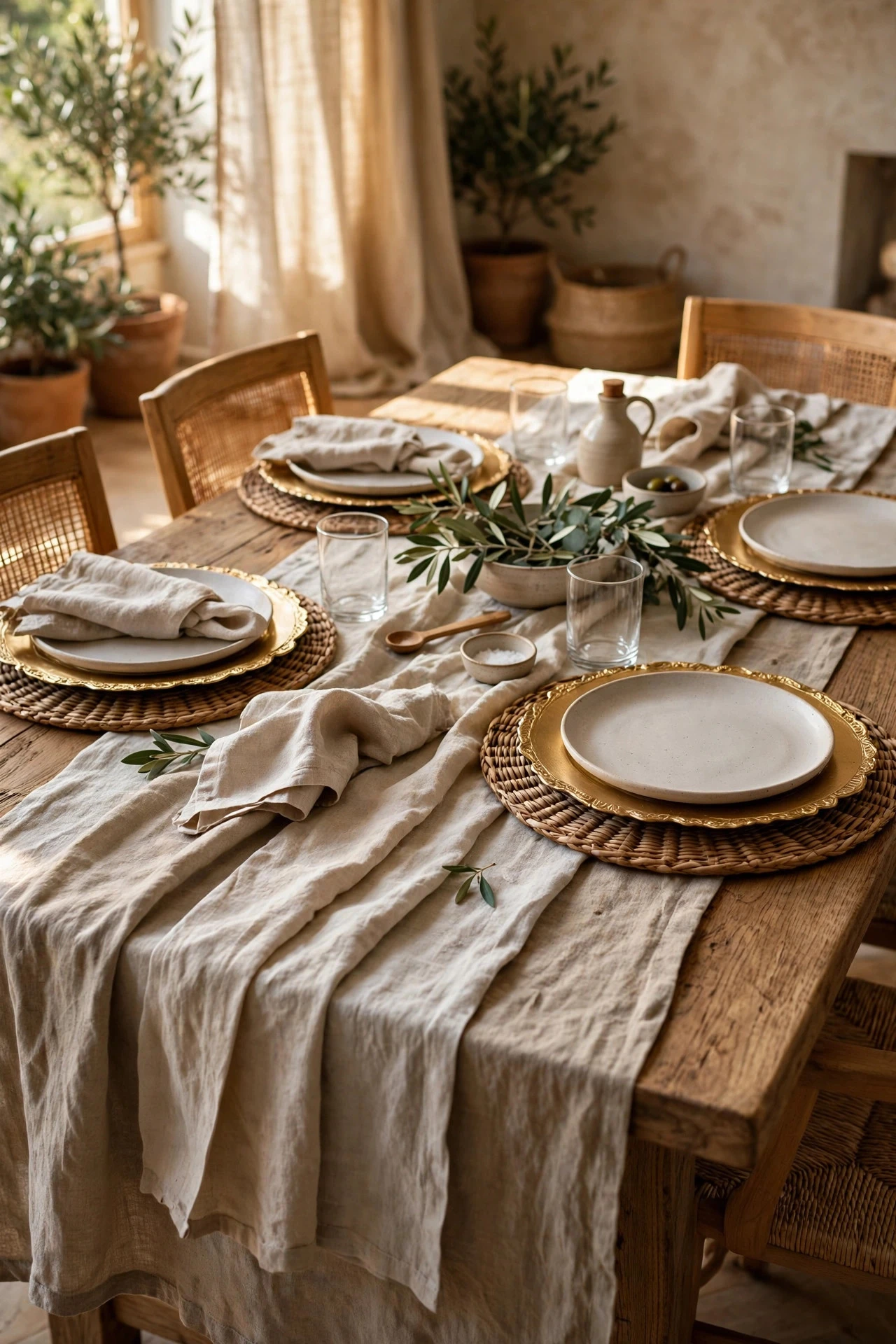
Layered linens are the fastest way to change a dining table's mood, because a table runner, placemats and napkins can be swapped in minutes while the table, chairs and lighting stay exactly as they are. Start with a washable, neutral table runner 12 to 14 inches wide, overhanging 12 inches at each end, then add woven placemats daily and fabric placemats or chargers for occasions. Keep everyday napkins in a practical cotton or linen blend in a mid-tone that hides stains; reserve white linen napkins ($8 to $20 each) for guests. A runner costs $25 to $70, placemats cost $8 to $25 each, and chargers cost $6 to $18 each. The mistake to avoid is using a full tablecloth every day, which slides, stains, needs ironing, and hides a beautiful tabletop for no good reason.
11. Use a Sideboard as Storage, Serving Station and Display
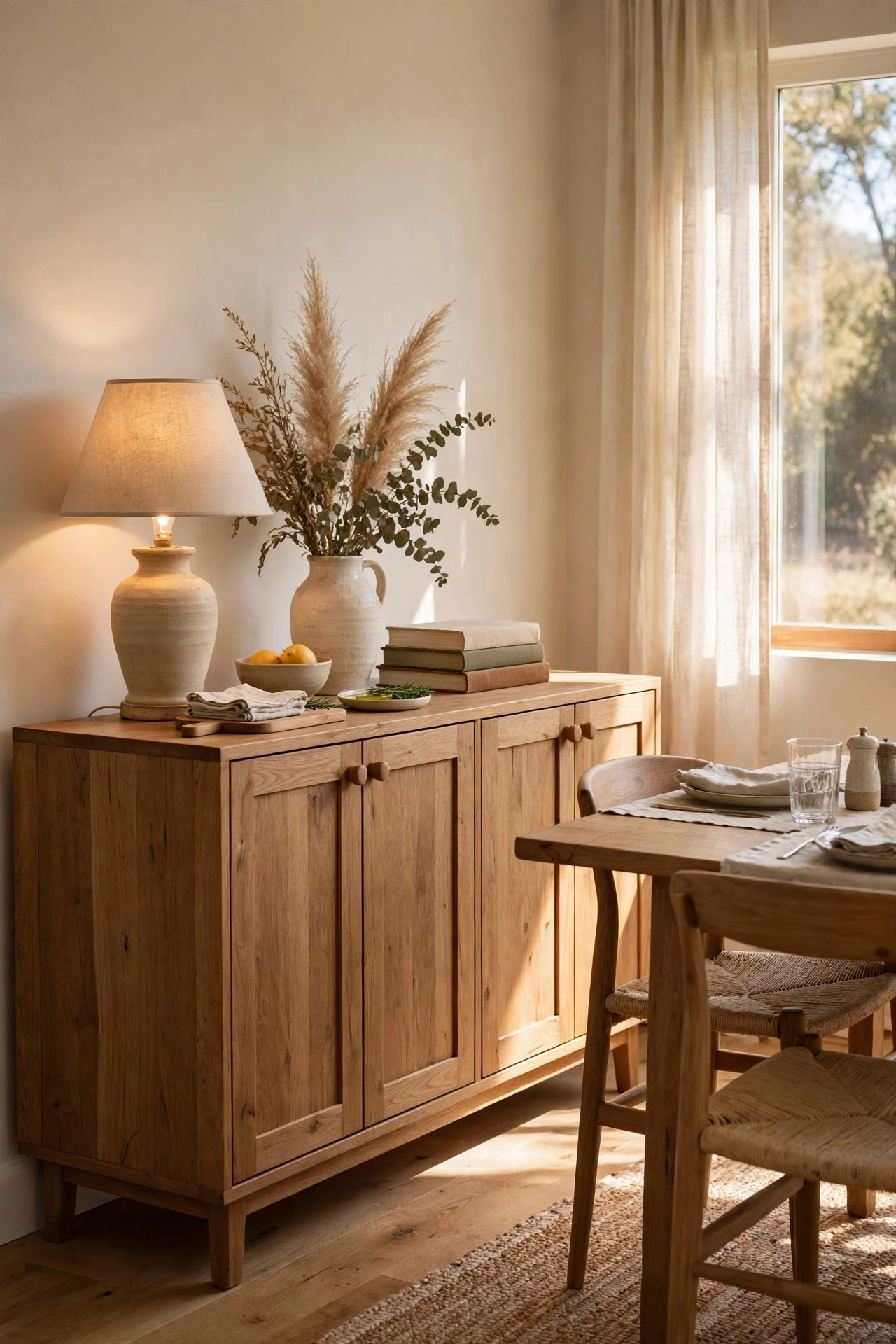
A sideboard is the hardest-working piece of dining room furniture, because it stores table linens, serving dishes and board games out of sight, serves as a buffet or drinks station when guests arrive, and displays art, lamps and seasonal objects in between. Choose a sideboard 60 to 72 inches long for a six- to eight-seat table, 18 inches deep and 32 to 36 inches high, Inside, keep adjustable shelves for plates and platters, a drawer for cutlery and napkins, and a closed cupboard for items you never want on show, while the top holds only a lamp, a vase and books. Expect $500 to $1,800 for a solid wood or veneered sideboard. The mistake to avoid is letting the sideboard top become a dumping ground for keys, mail and chargers, which defeats its purpose and makes the whole room look untidy.
12. Style a Bar Cart for Drinks, Desserts and Daily Use
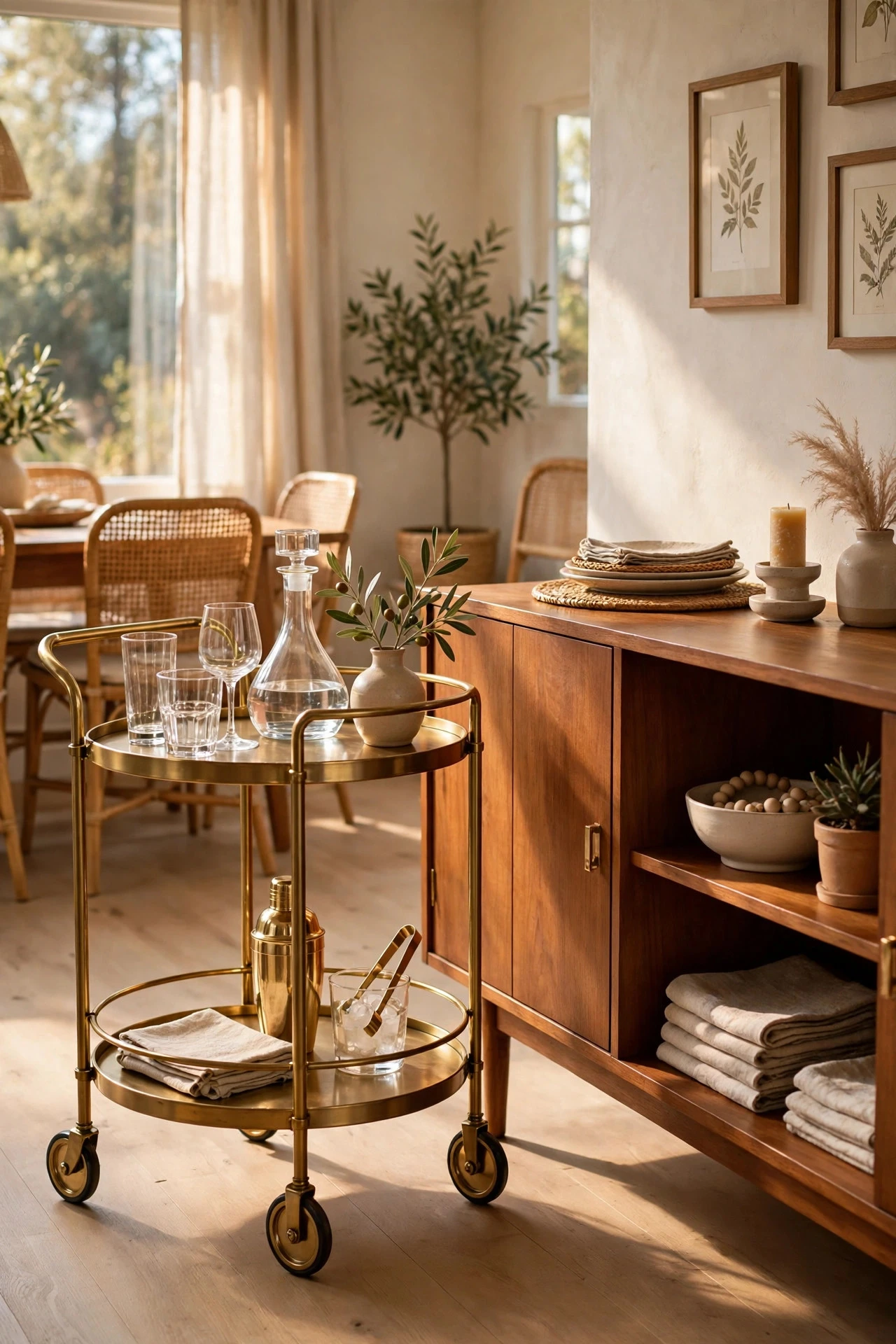
A bar cart earns its place in a dining room when it works every day, not only at parties, as a drinks, dessert or coffee station wheeled where needed. Choose a two-tier cart 24 to 30 inches wide with locking castors, a lower shelf for bottles and glasses and an upper tray for a decanter, a small vase and a candle, and park it beside the sideboard or against a short wall where it does not block the walkway. For everyday use, load it with a coffee maker or tea set, mugs and a fruit bowl, then restyle it for guests with glasses, a bottle and napkins. Expect $120 to $450 for a brass, rattan or wood cart, plus $40 to $100 for glasses and accessories. The mistake to avoid is overloading the cart until it looks like a cluttered drinks cupboard on wheels, with bottles crowded on both tiers and nothing within easy reach.
13. Choose a Rug That Fits Chairs, Not Just the Table
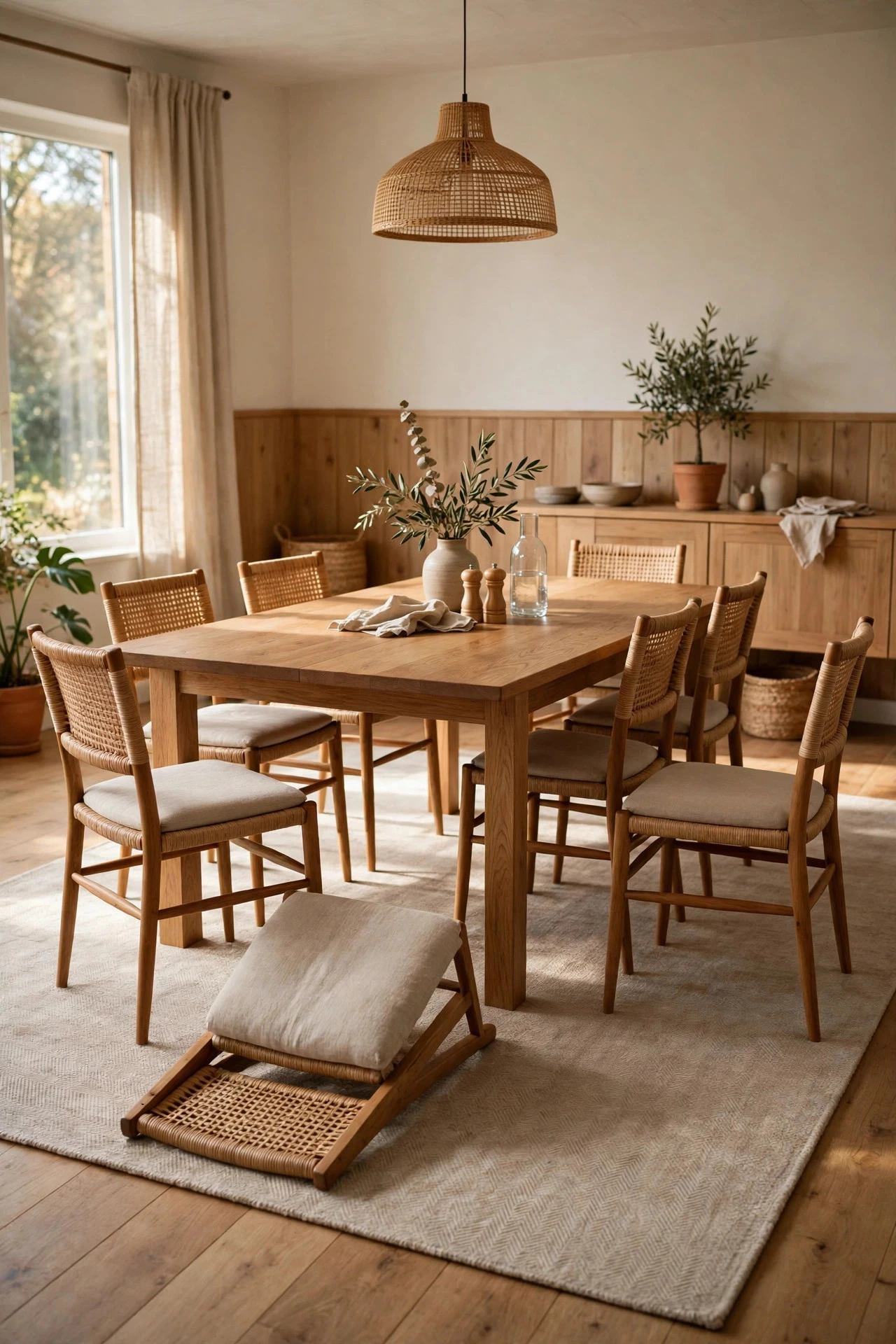
A dining rug grounds the table, softens hard floors and absorbs sound, but only when it is large enough for chairs to stay on the rug even when pulled out, which is the detail most rooms get wrong. Add 24 inches to each side of the table when sizing the rug, so a 72-by-36-inch table needs a rug at least 120 by 84 inches, and a 60-inch round table needs a round rug of at least 8 feet in diameter. Choose a low-pile, flatweave or indoor-outdoor rug in a pattern that hides crumbs, in wool blend or washable fibre, with a rug pad beneath. Expect $250 to $900 for a quality dining rug, plus $40 to $90 for a pad. The mistake to avoid is a rug that ends just past the table legs, so chairs catch and wrinkle it.
14. Add a Large Mirror to Double Light and Space
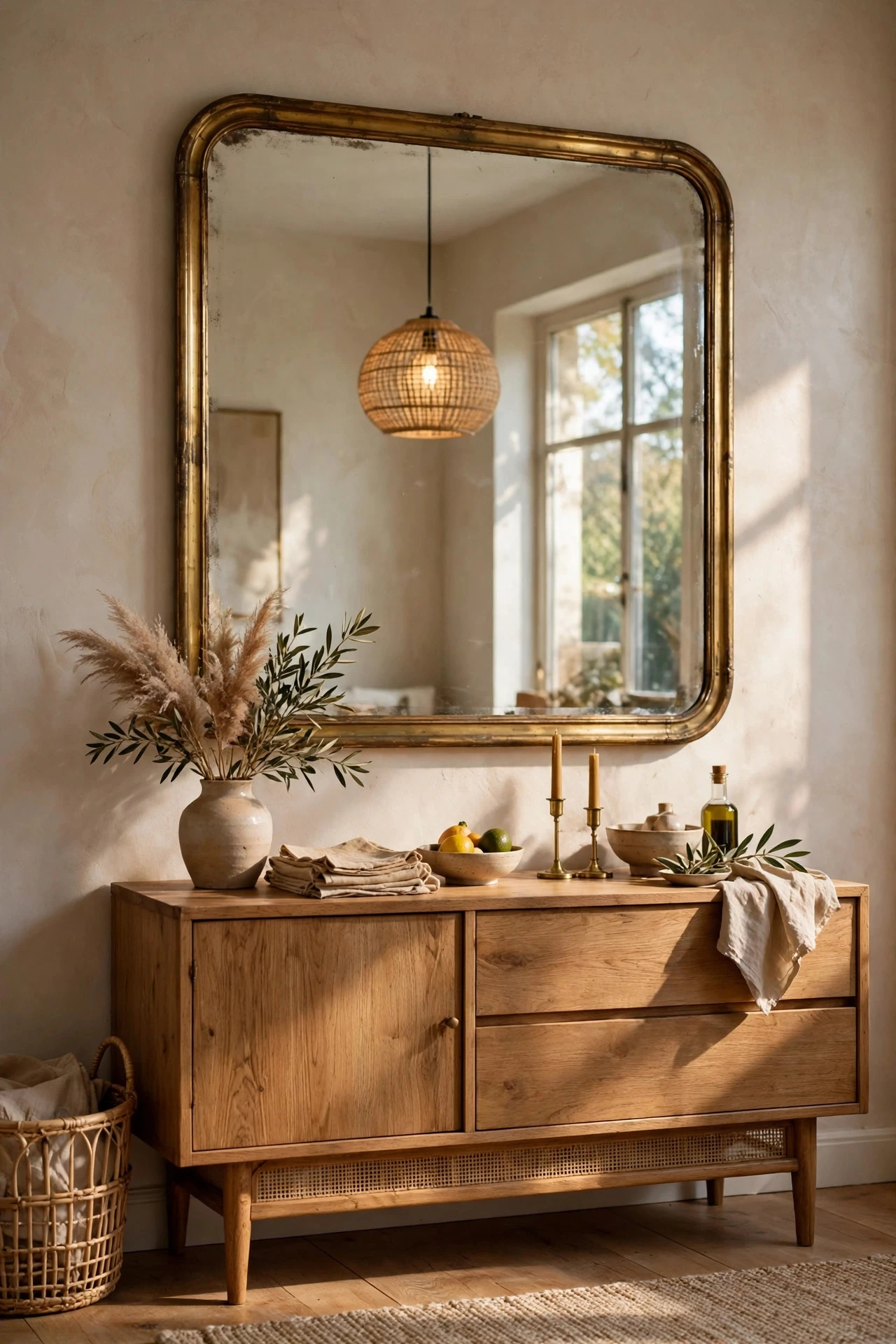
A large mirror is one of the most effective dining room ideas for a small or dark room, because it doubles the light from windows and candles, makes the table feel larger, and adds a finished, reflective layer without taking up floor space. Hang a mirror 36 to 48 inches wide above the sideboard, or one large mirror on the longest wall, with its centre at about 60 inches from the floor, and check it reflects a window, pendant or art. A simple brass, black, oak or arched frame suits most dining styles, Expect $200 to $800 for a well-made dining mirror, plus $40 to $100 for secure wall fixings. The mistake to avoid is hanging a mirror directly opposite a television or a messy open kitchen, which doubles exactly the view you least want to see while eating.
15. Paint One Wall or Add Wainscoting for Instant Character
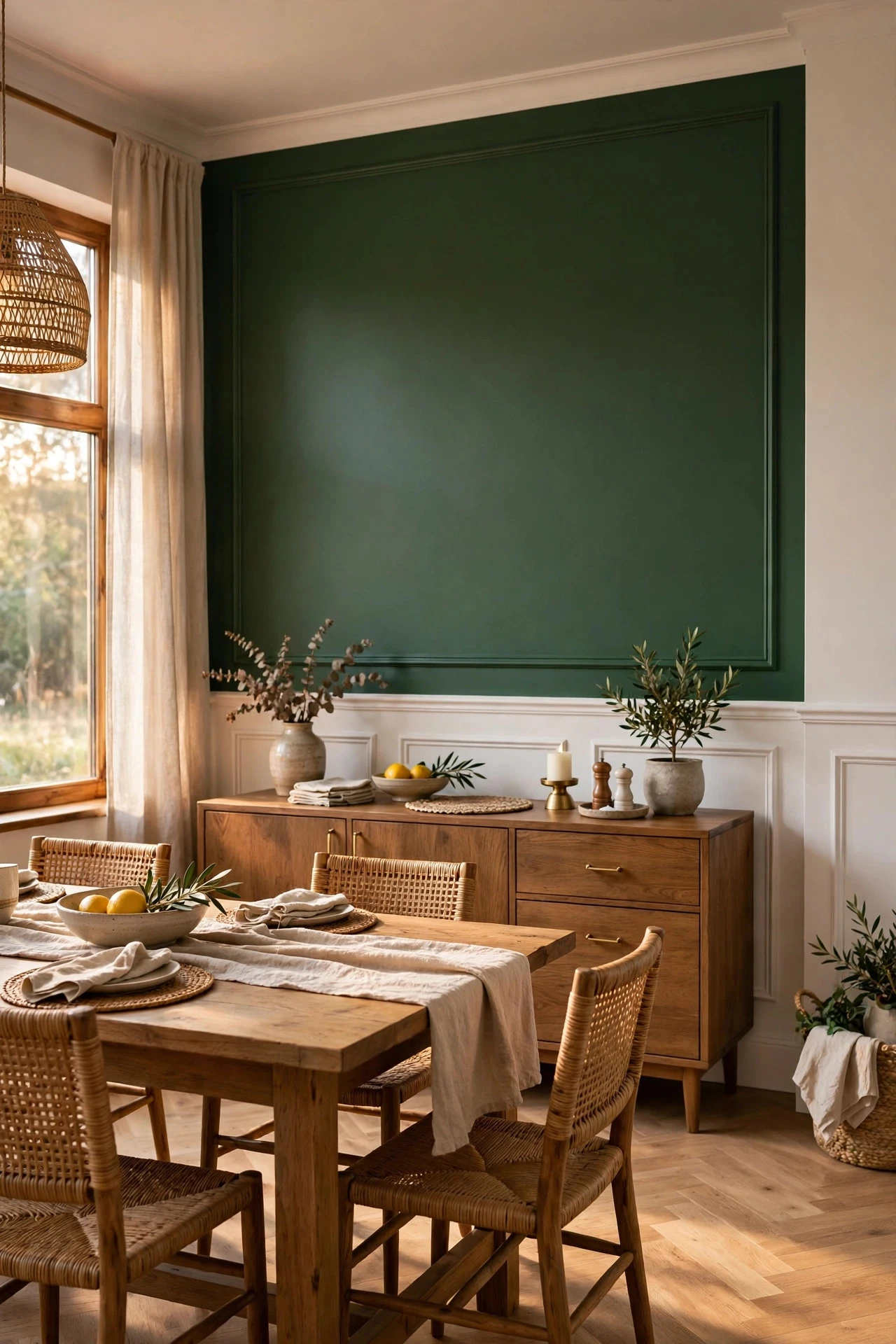
Paint and panelling give a dining room character for far less than new furniture, because one strong wall or a band of wainscoting changes the room's proportions and makes even a plain table look intentional. Paint the wall behind the sideboard in a deep, dining-friendly colour such as forest green, inky navy, warm terracotta or charcoal, in matte or eggshell finish, or add wainscoting to 36 inches, capped with a chair rail. Keep the other walls pale so the room stays bright, repeat the accent colour in napkins, art or chair upholstery, Paint costs $40 to $90 per gallon, while wainscoting costs $8 to $20 per square foot installed. The mistake to avoid is painting all four walls dark in a small, north-facing dining room, which shrinks the space and makes everyday meals feel gloomy.
16. Dress Windows With Curtains That Frame, Not Block, Light
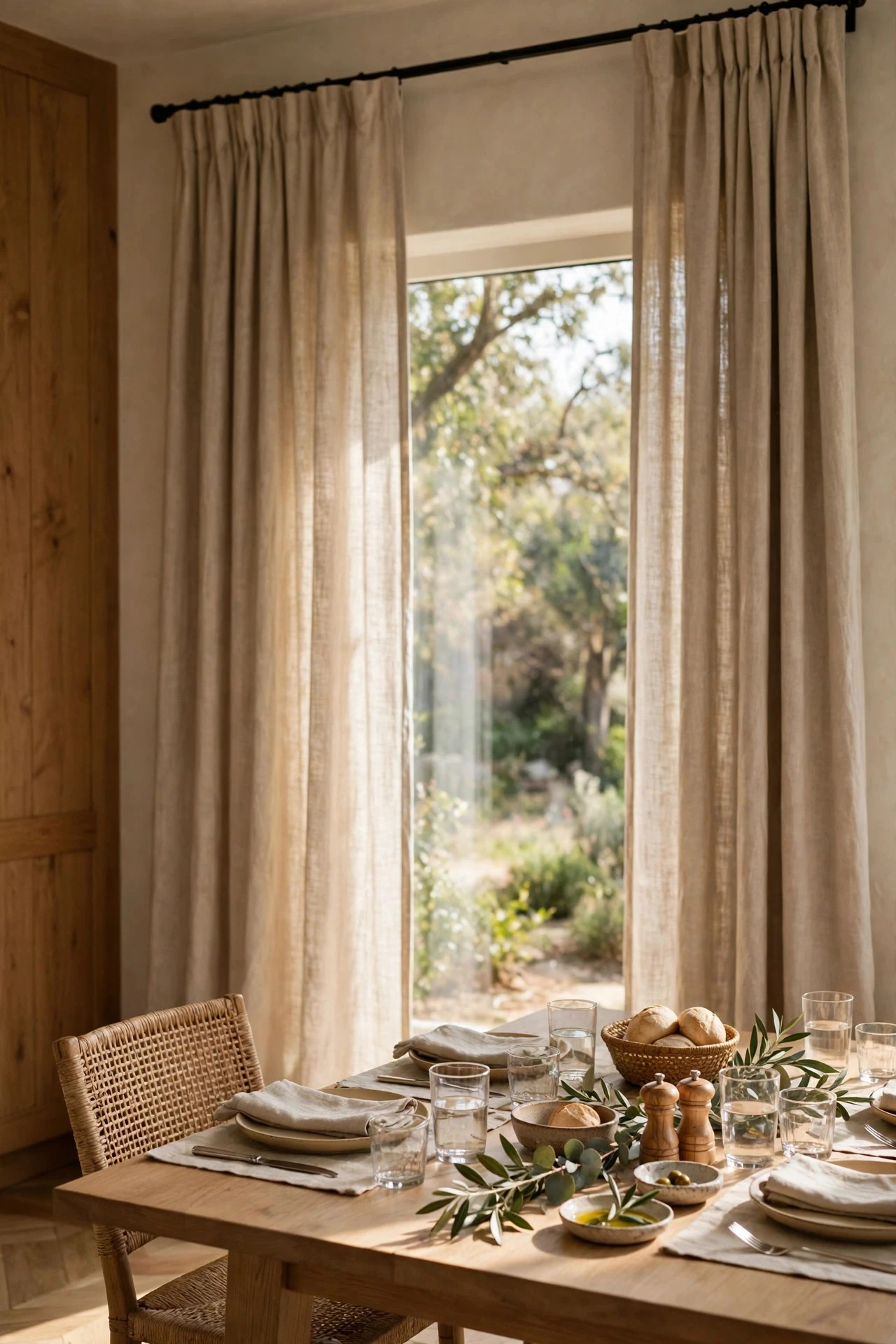
Curtains soften a dining room, absorb sound, and frame the view, provided they hang high and wide enough to make the window look larger rather than covering it up. Mount the curtain rod 4 to 6 inches above the window frame, extend it 6 to 10 inches past each side of the frame, and choose panels that reach the floor, just kissing the floor. Linen, cotton or linen-blend curtains in warm white, oatmeal or a soft pattern filter daylight beautifully, while lined curtains add insulation and evening drama. Expect $60 to $180 per panel, plus $30 to $80 for a rod and rings. The mistake to avoid is short curtains that stop at the sill or hang halfway down the wall, which cut the window in half visually and make the room feel unfinished.
17. Zone an Open-Plan Dining Area With Light and Furniture
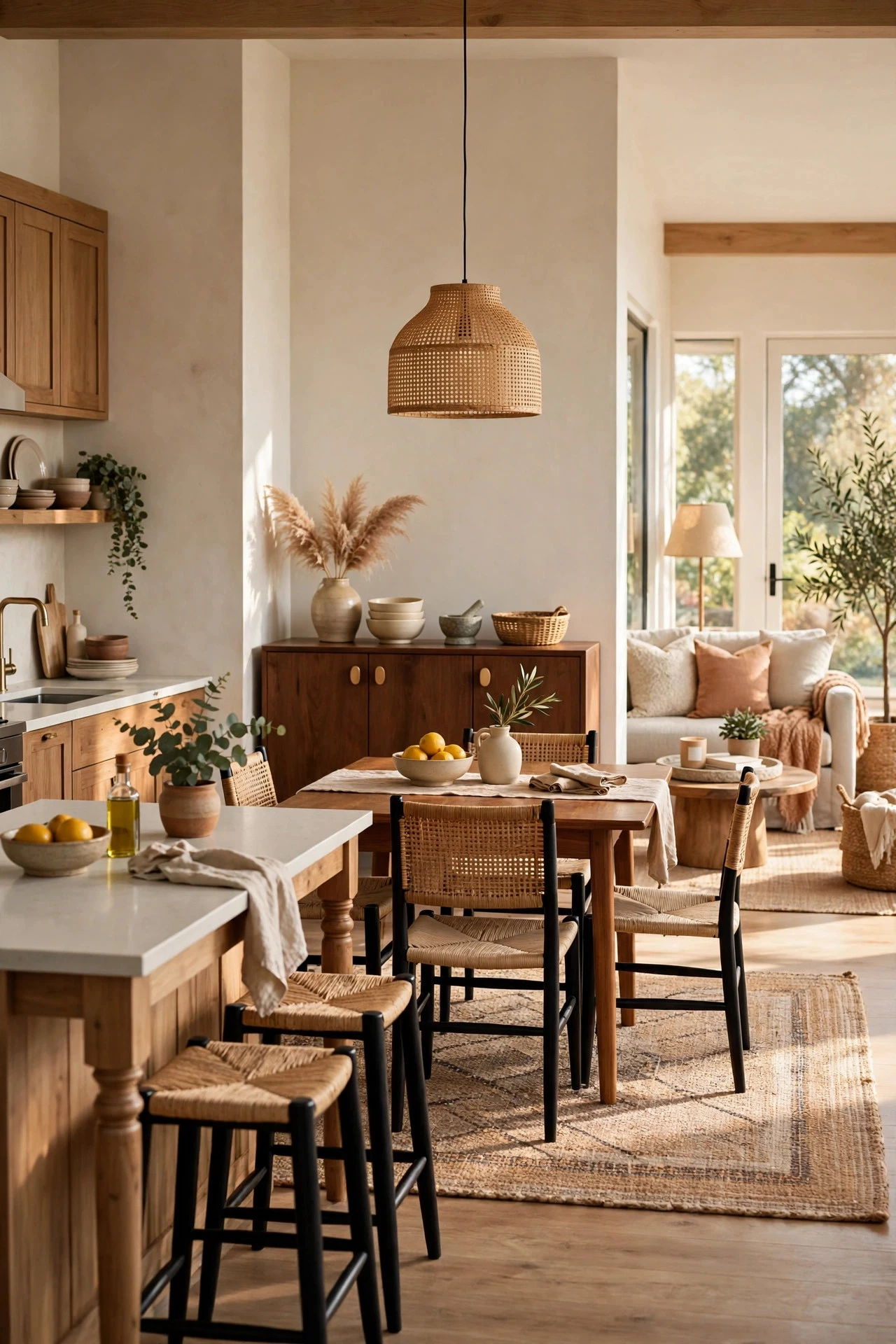
An open-plan dining area needs clear zoning, or the table drifts into a no-man's-land between kitchen and sofa, with no sense of place for either everyday meals or guests. Define the zone with a rug sized to the table plus chairs, a pendant hung directly over the table's centre, and a sideboard or low console marking one edge, Keep the walkway between kitchen and table at least 36 inches wide, align the table with the kitchen island or the living room's main axis for a calm layout, and repeat one finish, such as oak or brass, to link the zones. For wall styling in the shared space, living room wall decor ideas help the dining wall sit comfortably beside the living area. A rug, pendant and sideboard together cost $700 to $2,500. The mistake to avoid is pushing the table against a wall to save space, which strands one side and blocks conversation.
18. Soften Sound With Textiles, Upholstery and a Rug
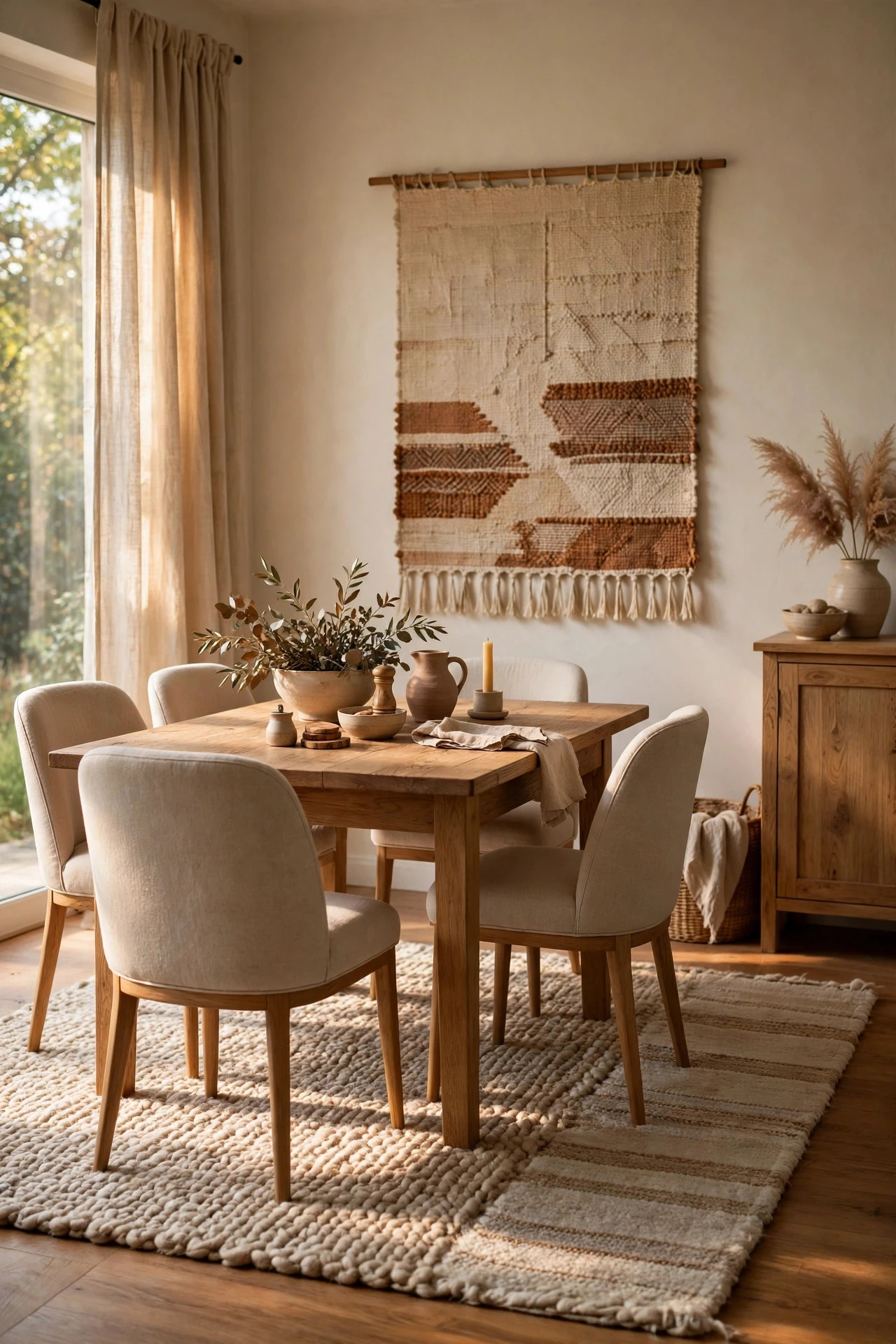
Acoustics decide whether a dining room feels calm or chaotic, because hard floors, bare walls and a glass tabletop bounce every voice, plate and chair scrape back at the diners. Soften the room with a rug under the table, upholstered chairs or seat pads, linen curtains, and a fabric or felt wall hanging, A thick rug pad, heavy curtains and a padded bench together make a noticeable difference in a room with tile or hardwood floors, and add felt pads to every chair foot. Budget $250 to $900 for the rug, $60 to $180 for curtains, and $10 to $25 for a full set of felt pads. The mistake to avoid is pairing a glass-top table, a tile floor, bare walls and six hard chairs, a combination that turns dinner into an echo chamber.
19. Build a Place-Setting System With Chargers and Tableware
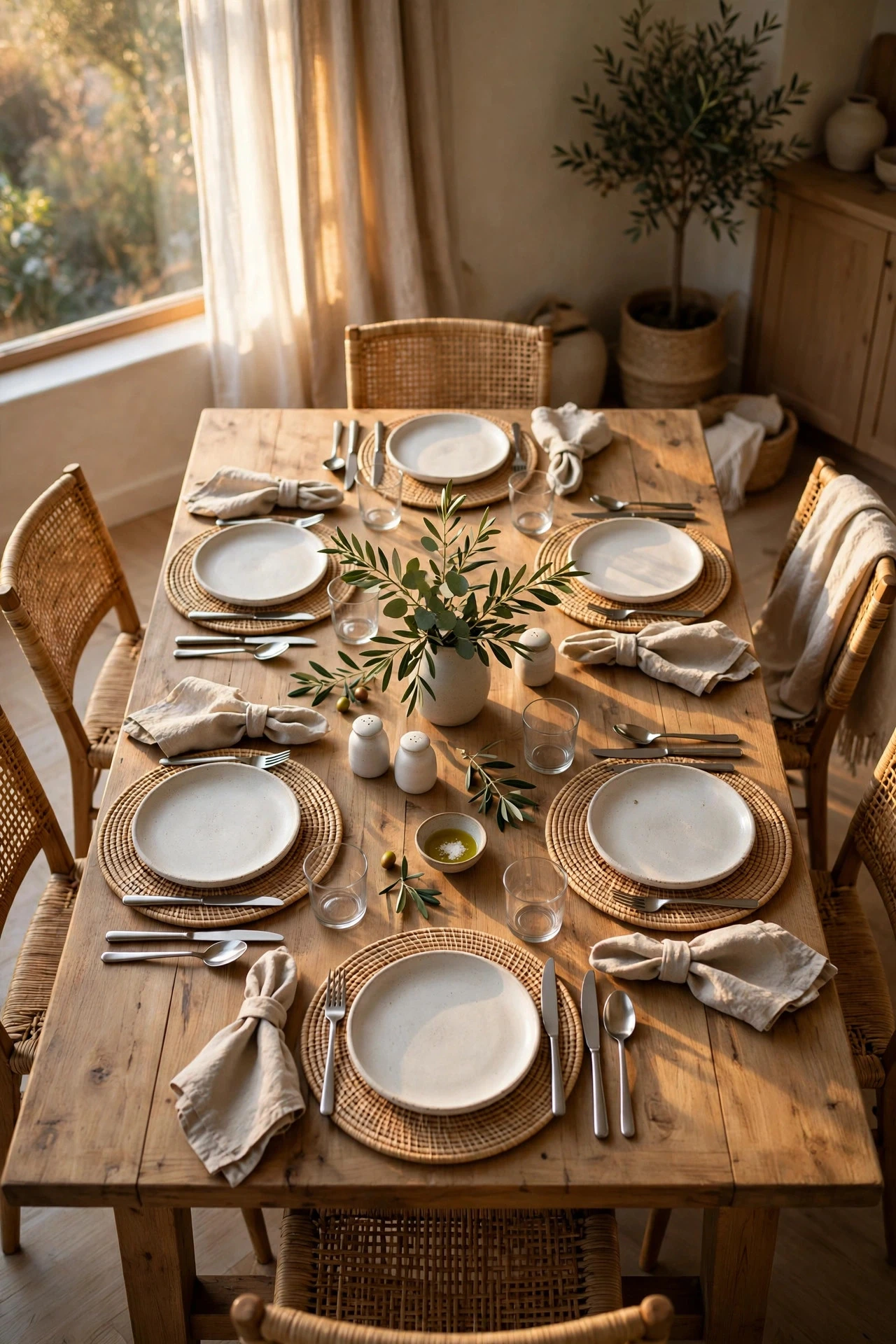
A place-setting system takes the guesswork out of setting the table, because the same base pieces work for a Tuesday supper and a celebration dinner, with only the top layer changing. Start with a charger, a large decorative plate 12 to 13 inches across, in rattan, wood, brass or ceramic, then add a dinner plate, a simple salad plate and a bowl in white or cream stoneware that suits every menu, plus cutlery in one finish. Everyday settings use the charger, dinner plate and a cloth napkin, while occasion settings add the salad plate, a water glass and a wine glass, Chargers cost $6 to $18 each, stoneware sets cost $40 to $120 for four place settings, and cutlery sets cost $60 to $180. The mistake to avoid is buying patterned, occasion-only tableware first, which clashes with everyday food.
20. Keep the Table Ready for Homework, Work and Meals
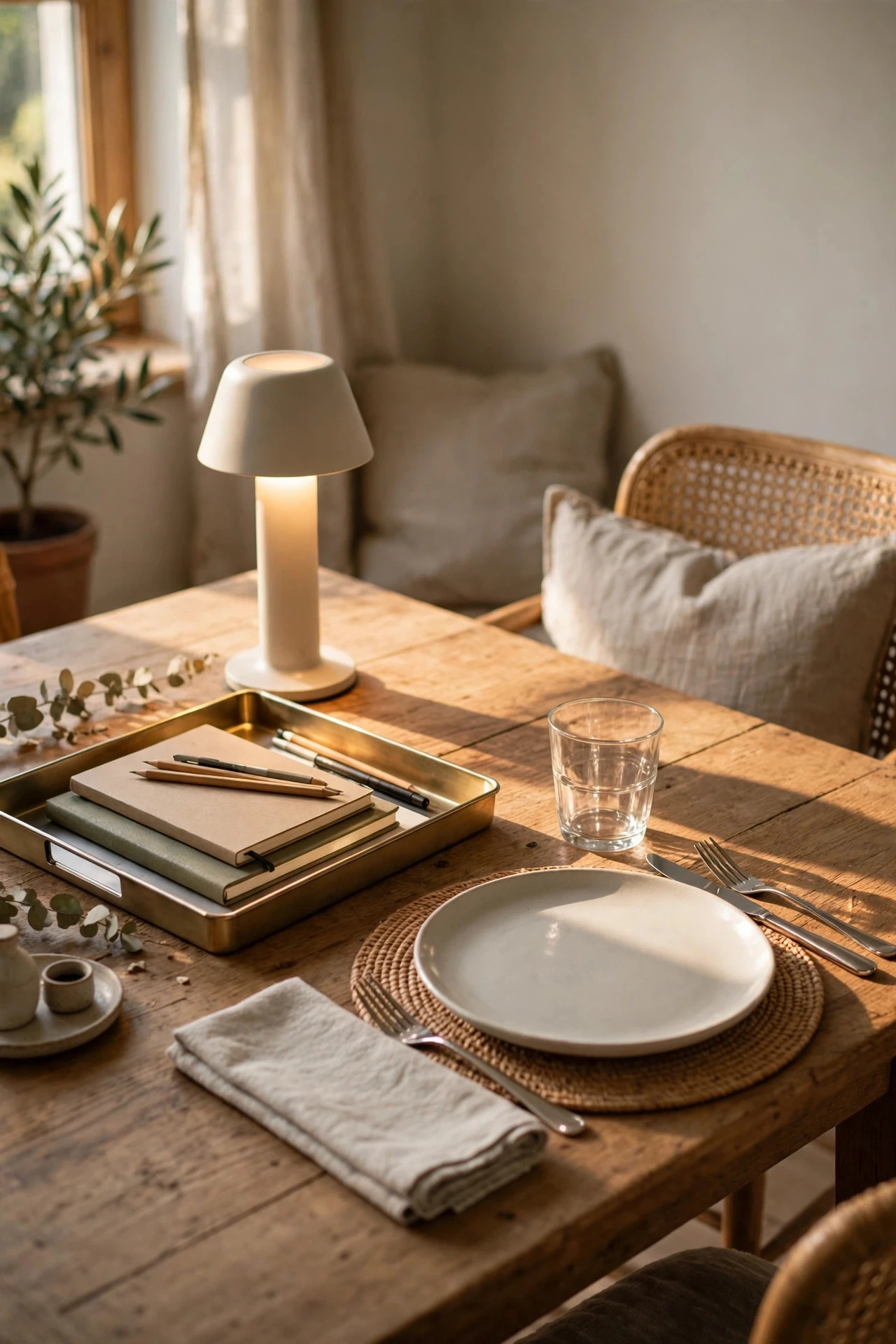
A dining table that hosts homework and laptop work as well as meals needs a daily reset system, or school papers and cables slowly take over and the room never feels ready for dinner. Give the table a single, shallow tray or basket, 16 to 20 inches long, that holds pens, chargers and notebooks during the day and keep a washable table runner or placemats down Choose a tabletop finish that wipes clean, such as sealed oak, walnut or sintered stone, keep a small desk lamp or rechargeable lamp for work hours so the pendant is not blazing all afternoon, A tray costs $25 to $60, placemats cost $8 to $25 each, and a rechargeable lamp costs $30 to $80. The mistake to avoid is letting the dining table become permanent desk storage, with monitors, printers and paperwork claiming one end and shrinking the room's real purpose.
21. Choose Durable, Wipeable Finishes for Real Family Life

Durable finishes are what keep a beautiful dining room beautiful, because children, pets and red wine test every surface far harder than a showroom ever will. Choose sealed wood or sintered stone for the tabletop, performance fabric rated at 30,000 double rubs or higher for upholstery, a washable rug or a rug that can be spot-cleaned, and paint in washable eggshell paint so scuffs wipe off. Keep a simple cleaning kit in the sideboard, wood cleaner, stain remover and white cloths, so spills are dealt with in minutes. Durable finishes add $100 to $400 to the cost of a table or chair set compared with delicate alternatives, and a washable rug costs $200 to $600. The mistake to avoid is falling for a pale, unsealed marble tabletop or dry-clean-only chairs in a house with young children, a combination that guarantees stains and anxiety.
22. Finish With One Statement Piece, Not a Crowded Display
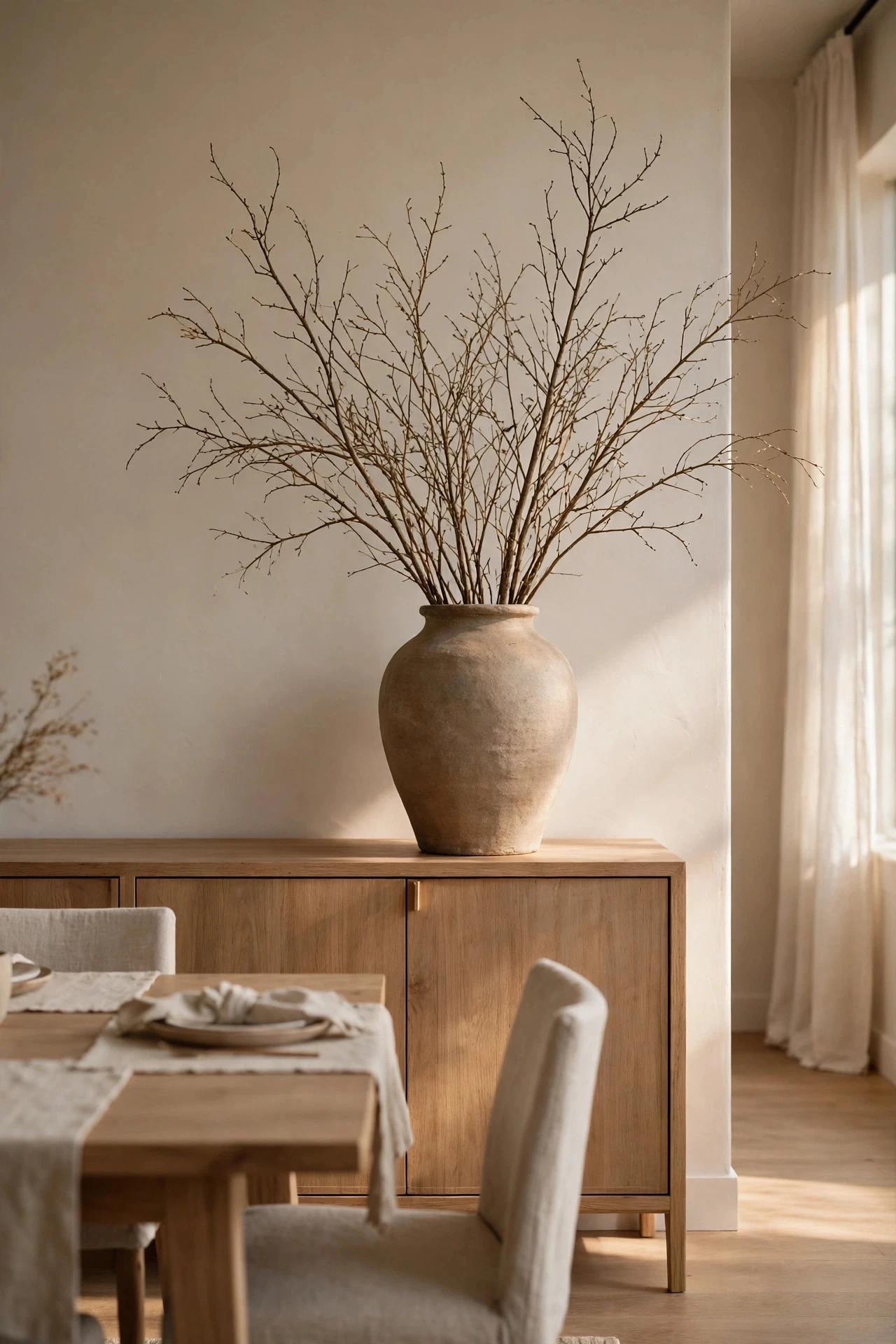
One statement piece gives a dining room a focal point and a talking point, while a crowded display of many small objects competes for attention and makes the room feel busy. Choose a single large element that suits the room's scale, such as an oversized vase with branches, a sculptural pendant, a large framed print, or a dramatic sideboard styled with one lamp and one vase, and give it breathing room. Repeat its material once elsewhere, and change only its branches, stems or candles through the year. A large vase costs $60 to $200, branches or stems cost $15 to $40, and a large framed print costs $100 to $400. See quiet luxury home decor ideas for how restraint carries a room without clutter. The mistake to avoid is adding a statement vase, a statement mirror, a statement light and a statement artwork to the same small room, which leaves the eye nowhere to rest.
Practical Tips
Plan the room in three budget tiers, and spend first on the pieces you touch and use every day rather than on decoration alone. At $300 to $700, buy a washable runner and placemats, a low centrepiece tray, felt chair pads, a rechargeable lamp and a set of cloth napkins, which together make the room feel cared for without any furniture change. At $900 to $2,000, add a rug sized for chairs, curtains hung high and wide, and a sideboard or bar cart for storage, and at $2,500 to $5,000 or more, replace the table and chairs with an extendable table and upholstered seating, add a dimmable pendant and sconces, and invest in a statement mirror or artwork. For second opinions on materials, room proportions and current styles before a large purchase, the guides at The Spruce and Houzz are useful starting points
Master the 15-minute everyday-to-occasion switch, and the room will never need a weekend overhaul before guests arrive. Clear the table to the sideboard tray, lay the runner and occasion placemats, add chargers and the reserved linen napkins, lower the centrepiece to under 12 inches and add three candles, dim the pendant to 30 percent and switch on the sconces, and put music on at a low volume so the room sounds as welcoming as it looks. Keep a labelled occasion box in the sideboard, chargers, candles, matches, name cards and a spare tablecloth, and practise the switch once so it feels easy. Room-layout inspiration for open-plan homes, including how dining zones sit beside living areas, can be found in the photo collections at House Beautiful.
Keep the room usable every day by protecting its working surfaces and giving everything a home. Wipe the table after every meal, keep the sideboard top to three to five objects, store placemats, napkins and chargers in the same drawer or cupboard so setting the table takes two minutes, and check chair felt pads and rug position once a month, since a rug that creeps or a chair that scrapes quietly undoes the room's calm. Avoid placing hot dishes directly on wood or stone without trivets, keep vases on a tray or coaster so water rings never mark the tabletop, and leave 36 inches of clear walkway around the table at all times, even when the bench or bar cart is in daily use, so the room stays welcoming rather than obstacle-strewn.
Final Thoughts
A dining room that works for everyday gatherings and special occasions is built on flexibility, not formality: an extendable or well-sized table, comfortable seating, dimmable layered light, a low centrepiece, generous storage and a rug that fits the chairs as well as the table. Start with the table and the light, add storage and textiles next, and finish with one statement piece, testing each change on an ordinary weeknight before you judge it by a celebration dinner. The best dining rooms are the ones that get used daily, cleared easily, and dressed up in fifteen minutes, because a room that only works for guests is a room that is barely lived in at all.
You May Also Like: – 24 Cozy Farmhouse Kitchen Designs That Feel Like Home – 22 Kitchen Island Decor Ideas for a Stylish, Functional Kitchen – 22 Stunning Symmetrical Living Room Ideas That Feel Calm, Cozy, and Perfectly Balanced
Frequently Asked Questions
What size dining table do I need for everyday meals and larger gatherings?
Choose a table that seats your household plus two, then extends for guests. A 60-inch table seats four daily and six at a pinch, a 72-inch table seats six, and an extendable 60-to-84-inch table seats four daily and eight for occasions. Keep 36 inches clear around the table and 24 inches of width per person.
How low should a dining room pendant hang above the table?
Hang the bottom of the pendant 30 to 36 inches above the tabletop, so it lights place settings and faces without blocking sightlines across the table. Choose a fixture one-half to two-thirds the table width, fit dimmable 2700K bulbs, and raise it slightly if very tall guests regularly sit beneath it.
What size rug should go under a dining table?
Add 24 inches to each side of the table, so chairs stay on the rug when pulled out. A 72-by-36-inch table needs at least a 120-by-84-inch rug, and a 60-inch round table needs an 8-foot round rug. Choose low-pile, washable fibre and add a rug pad to stop sliding.
How do I keep a dining room usable for homework and work without it looking messy?
Give work a single tray that moves to the sideboard at mealtimes, protect the table with a runner and placemats, and keep cables, chargers and notebooks in one basket. Clear the table before dinner, store everything in the sideboard, and use a rechargeable lamp for work hours.
How tall can a dining table centrepiece be?
Keep centrepieces below 12 inches high so guests can see and hear each other across the table, or use a tall, slim stand above 24 inches with a clear view beneath it. A low tray, shallow bowl or row of bud vases works daily, with candles added for evening occasions.
Can I decorate a dining room well on a budget of $300?
Yes. Spend $300 on a washable runner and placemats, a low centrepiece tray, cloth napkins, felt chair pads and candles, and keep the table and chairs you already own. Add a rug, curtains or a sideboard later, and use dimmable warm lighting to make inexpensive pieces look considered.