22 Retro Bathroom Decor Ideas That Bring Back the Charm
Retro bathroom decor brings back the charm of bathrooms that were designed to be enjoyed, not merely used, and it does so without asking you to live with cold water, weak lighting, or plumbing from another century. The most appealing rooms borrow from three distinct eras: the crisp black-and-white bathrooms of the 1920s, the pastel tile and chrome of the 1950s, and the bold atomic patterns and warm woods of the 1960s and 1970s. Each era has its own tile sizes, fixture shapes, colours, and materials, and knowing which details belong where is what separates a convincing retro bathroom from a room that merely looks old-fashioned.
Looking for more inspiration? Our Nest Decorz homepage gathers the latest home decor ideas, seasonal decorating guides and room-by-room styling tips in one place — start there and explore.
Below are 22 retro bathroom decor ideas organised by era and element, from checkerboard floors and pastel tile to salvaged tubs, globe lighting, and renter-friendly updates that need no drilling or retiling. Every idea gives specific materials, finishes, colours, fixture details, and approximate costs in US dollars, plus one mistake to avoid, so you can plan a full remodel or a weekend refresh with the same confidence. Mix eras carefully, repeat one metal finish and one tile language throughout, keep modern plumbing and ventilation hidden behind the vintage look, and the result will feel charming, comfortable, and genuinely usable every day.
1. A Classic Black-and-White Checkerboard Floor
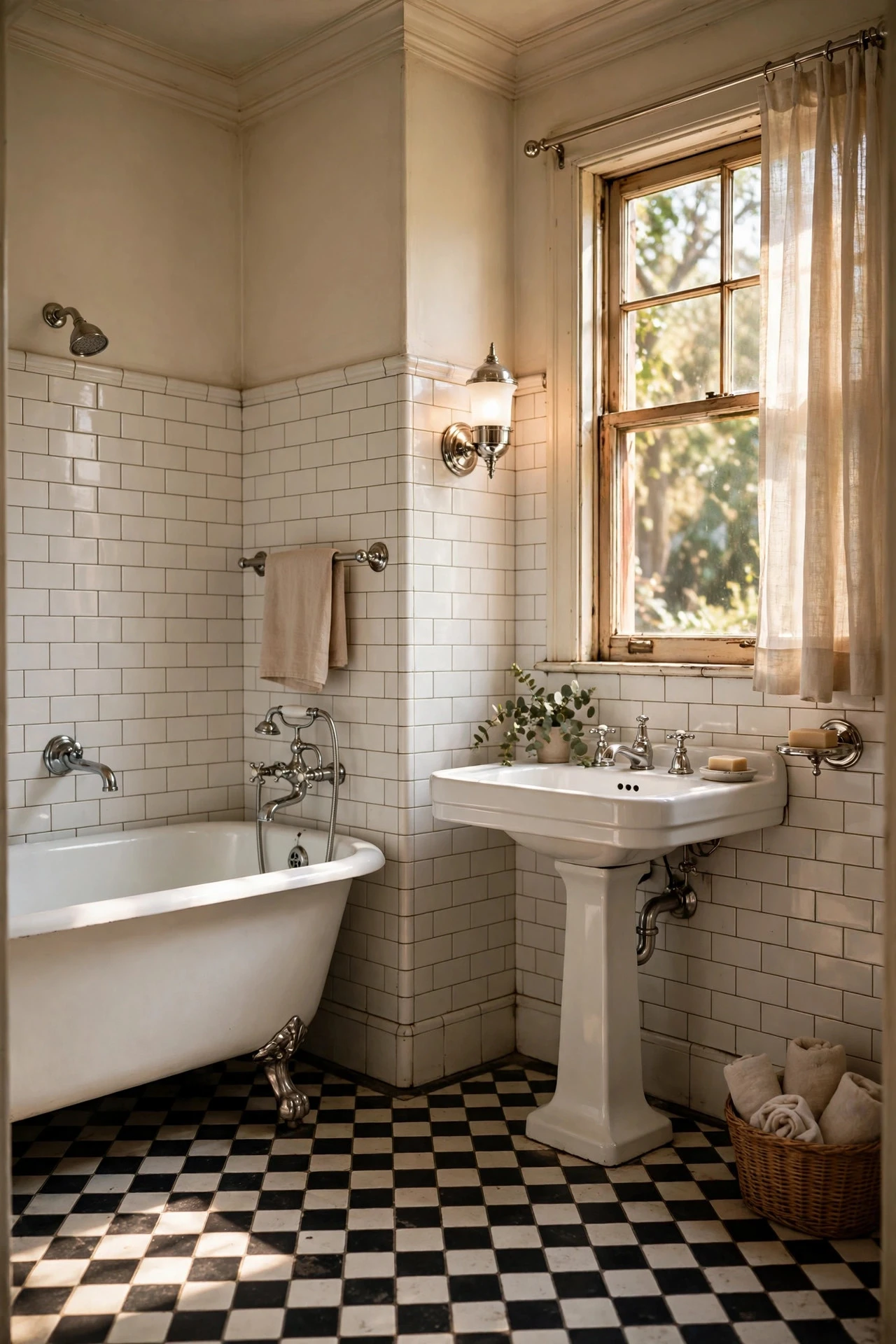
A black-and-white checkerboard floor is the fastest way to give a bathroom unmistakable 1920s character, because the bold diagonal or straight-set grid reads as retro from the doorway before any other detail registers. Use 8-inch or 12-inch matte porcelain or ceramic tiles in true black and bright white, laid in a straight grid for a crisp Jazz Age feel or on the diagonal to make a small floor look wider, with a light grey grout that keeps the pattern sharp without the harshness of pure white. Porcelain is the practical choice in a wet room: it resists stains, needs no sealing, and costs approximately $6 to $14 per square foot for tile, plus $500 to $1,200 for professional installation in an average bathroom. Pair the floor with white wall tile, chrome fixtures, and a single black accent, such as a mirror frame, so the floor stays the star. The mistake to avoid is choosing glossy black tile on a wet floor, where it shows water spots, soap film, and every footprint within hours.
2. Pastel Pink Tile in the 1950s Manner
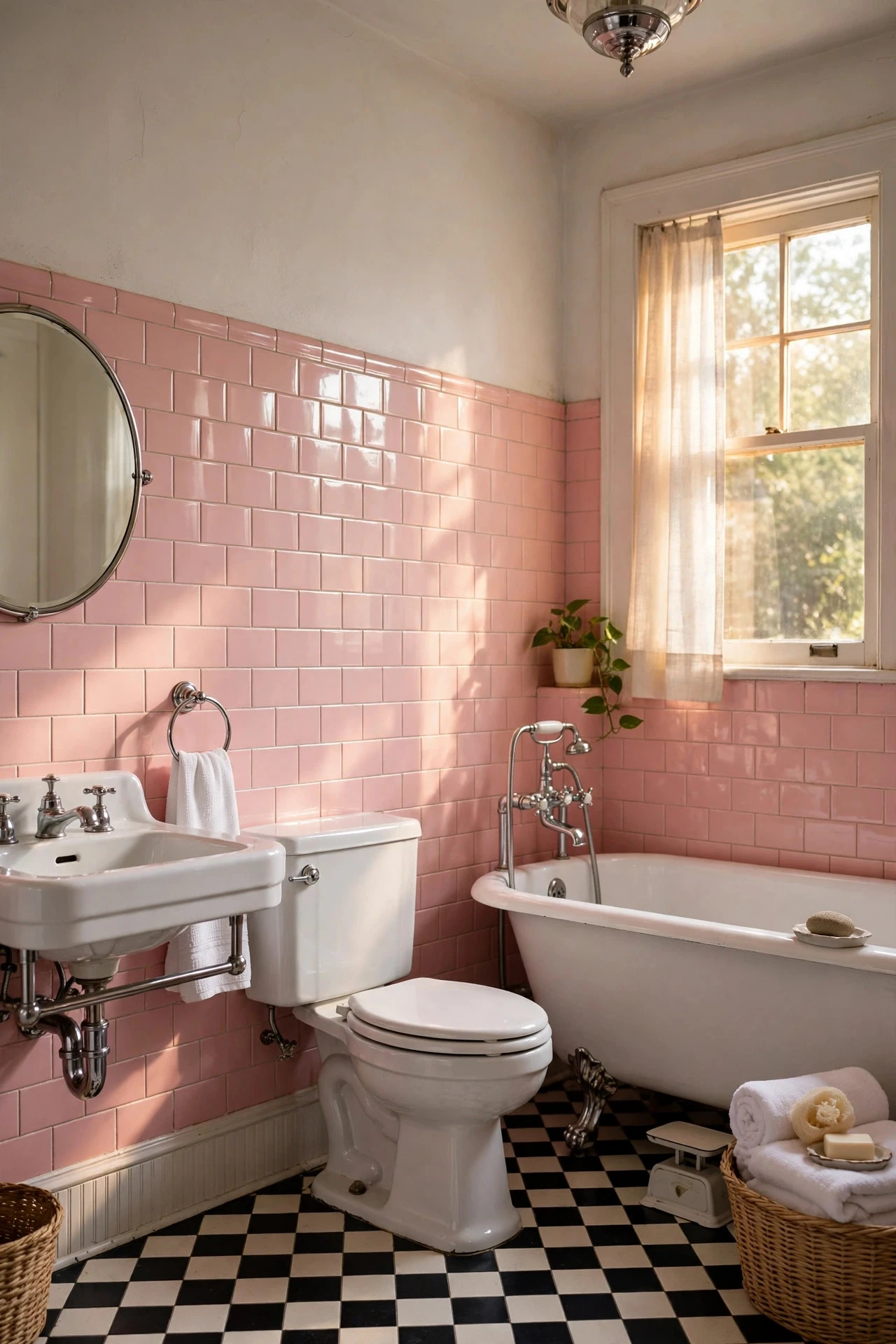
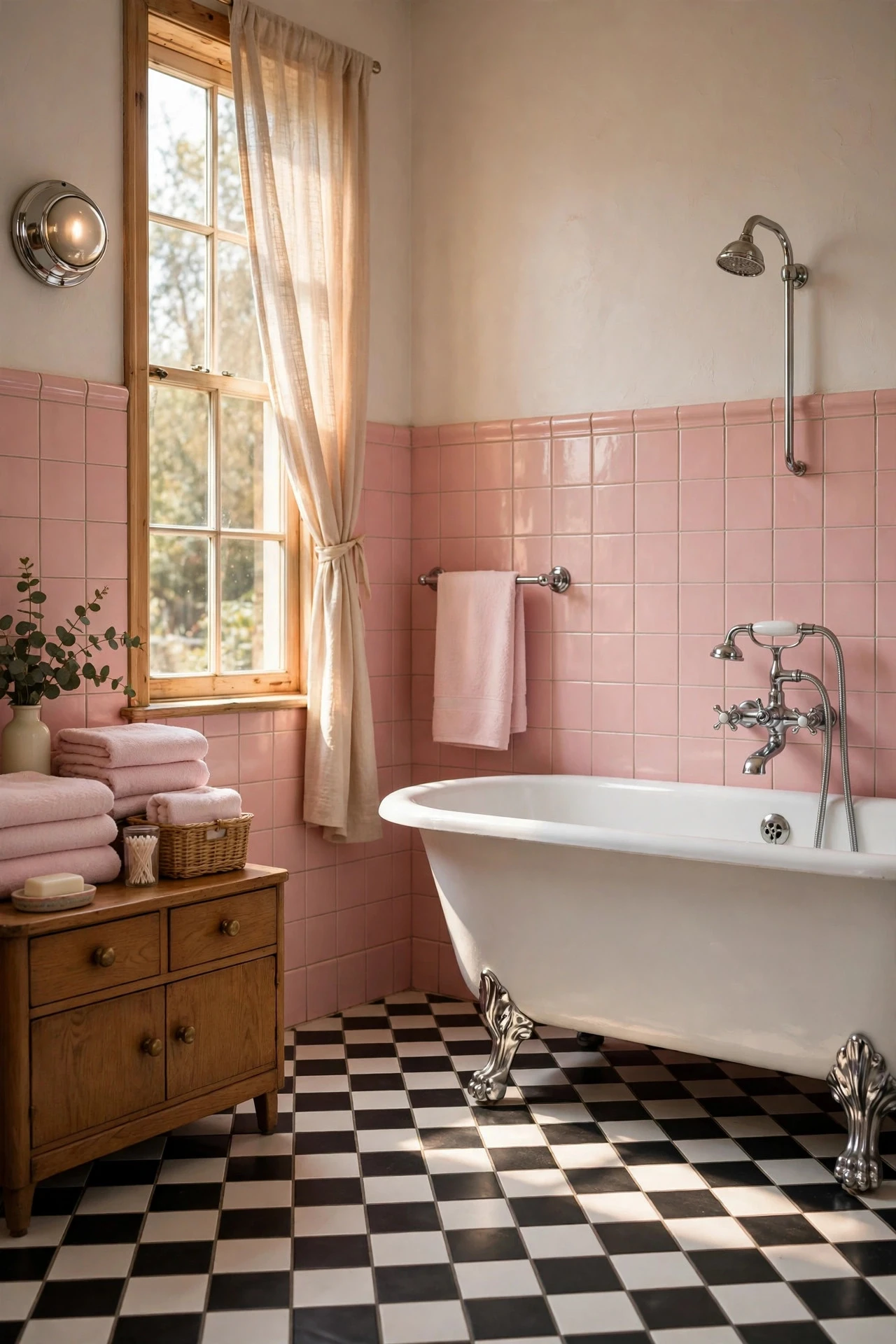
Pastel pink tile captures the optimistic heart of 1950s bathroom design, and it works best when it is treated as a complete wall treatment rather than a timid accent strip. Choose 4-by-4-inch glossy ceramic wall tile in soft shell pink, run it from floor to ceiling in the shower and to wainscot height elsewhere, and pair it with white fixtures, chrome trim, and a black or charcoal floor for the contrast that period bathrooms relied on. Genuine vintage pink tile is hard to match, so order a full batch from one production run and keep 10 percent spare, because pink varies noticeably between batches. Expect approximately $8 to $18 per square foot for tile, plus $600 to $1,500 for installation, depending on how much wall you cover. The mistake to avoid is pairing pink tile with warm brass and cream, which muddies the cool, crisp 1950s palette and makes the pink look faded instead of fresh.
3. Mint Green Tile With Chrome and White Porcelain

Mint green tile gives a retro bathroom a cool, clean freshness that pink cannot match, and it suits bathrooms that already have good natural light and white porcelain fixtures. Use 3-by-6-inch glossy subway tile or 4-by-4-inch square tile in pale mint, jade, or seafoam, keep the grout white or very pale grey, and let polished chrome faucets, towel bars, and shower trim supply the shine that defines the era. Mint pairs beautifully with black-and-white mosaic floors, white beadboard, and a simple white pedestal sink, and it flatters both warm and cool skin tones in mirror light. Budget approximately $7 to $16 per square foot for tile, plus installation, and seal grout in wet zones to prevent the pale colour from discolouring. The mistake to avoid is adding mint towels, a mint rug, and mint accessories on top of mint tile, because the room then becomes a single flat colour instead of a layered period scheme.
4. Butter Yellow Tile for a Sunny Retro Glow

Butter yellow tile brings warmth and sunlight into bathrooms that face north or have only a small window, and it is one of the most forgiving retro colours for older homes. Choose a soft, creamy yellow rather than a sharp lemon, in 4-by-4-inch glossy squares or 2-by-6-inch subway format, and balance it with bright white fixtures, polished chrome, and a floor in white, black, or pale grey so the yellow reads as cheerful rather than overwhelming. Yellow tile suits a full shower surround, a wainscot band, or a single feature wall behind the vanity, and it pairs well with warm wood, woven baskets, and white waffle towels. Expect approximately $7 to $16 per square foot for tile, plus $600 to $1,400 for installation. The mistake to avoid is using yellow tile with warm-toned lighting above 3000K, which can push the whole room toward orange and make the tile look dated rather than deliberately retro.
5. Bevelled Subway Tile With a Contrasting Dark Grout
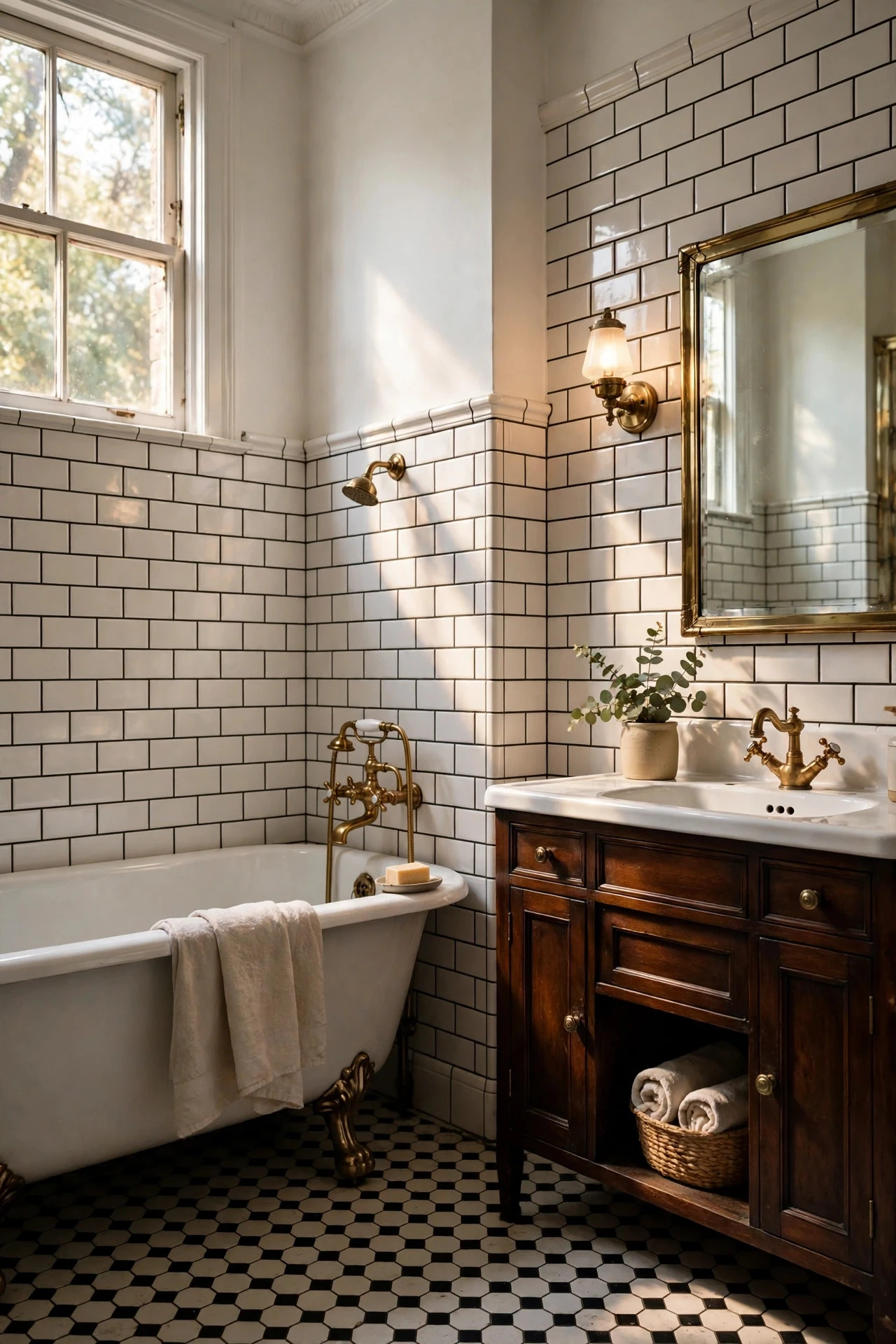
Bevelled subway tile with dark grout is a 1920s detail that adds depth and pattern to plain white walls, and it is ideal when you want period character without committing to a pastel colour. Choose 3-by-6-inch bevelled ceramic tile, laid in a running brick bond, with charcoal or dark grey grout that outlines every tile and emphasises the bevelled edges catching the light. Use an epoxy or stain-resistant grout in the shower, where dark grout otherwise shows soap and shampoo residue, and keep fixtures chrome and the floor simple so the wall pattern does the work. Tile costs approximately $5 to $12 per square foot, and dark grout adds little to the material cost but demands careful, even application. The mistake to avoid is using dark grout with handmade-look tile that has uneven edges, because the grout lines will wander visibly and the wall will look careless rather than crafted.
6. A Hexagon Mosaic Floor in Black, White, or Marble
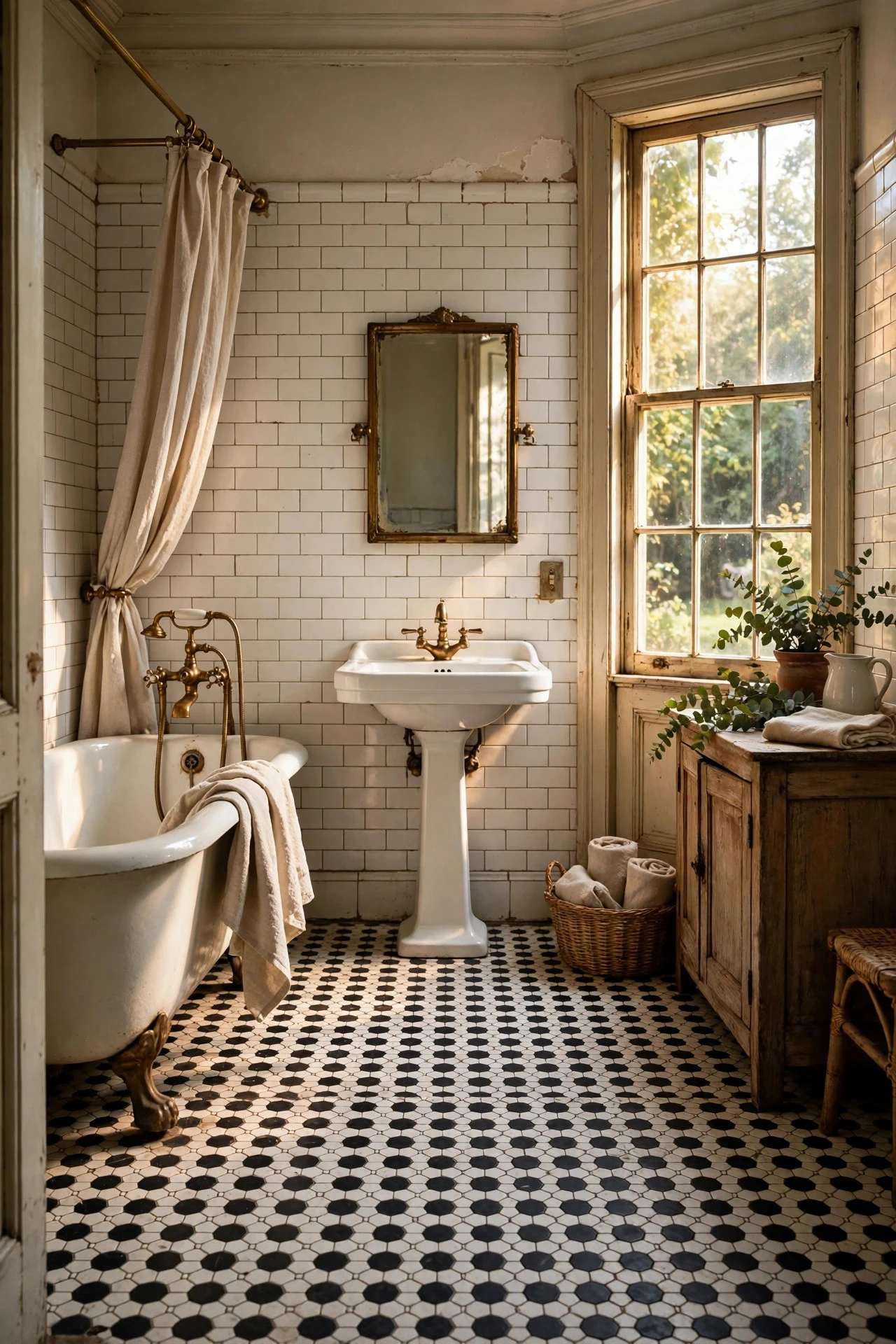
A hexagon mosaic floor is the quiet classic underneath many surviving 1920s bathrooms, and its small scale makes it both slip-resistant and forgiving on uneven older floors. Choose 1-inch or 2-inch hexagon mosaic in matte white with a black border, a black-and-white flower pattern, or honed marble hexagons for a softer, more luxurious version, and use a sheet-mounted mosaic so the pattern stays regular around drains and corners. The small tiles create many grout joints, which improve grip under wet feet, but they also need epoxy grout and regular sealing if you choose marble. Budget approximately $10 to $25 per square foot for tile, plus $700 to $1,500 for installation, because mosaic work is slower than large-format tiling. The mistake to avoid is choosing polished marble hexagons for a shower floor, where they become slippery and show etching from shampoos and cleansers far faster than honed or matte porcelain.
7. A Restored Clawfoot Tub With Modern Plumbing
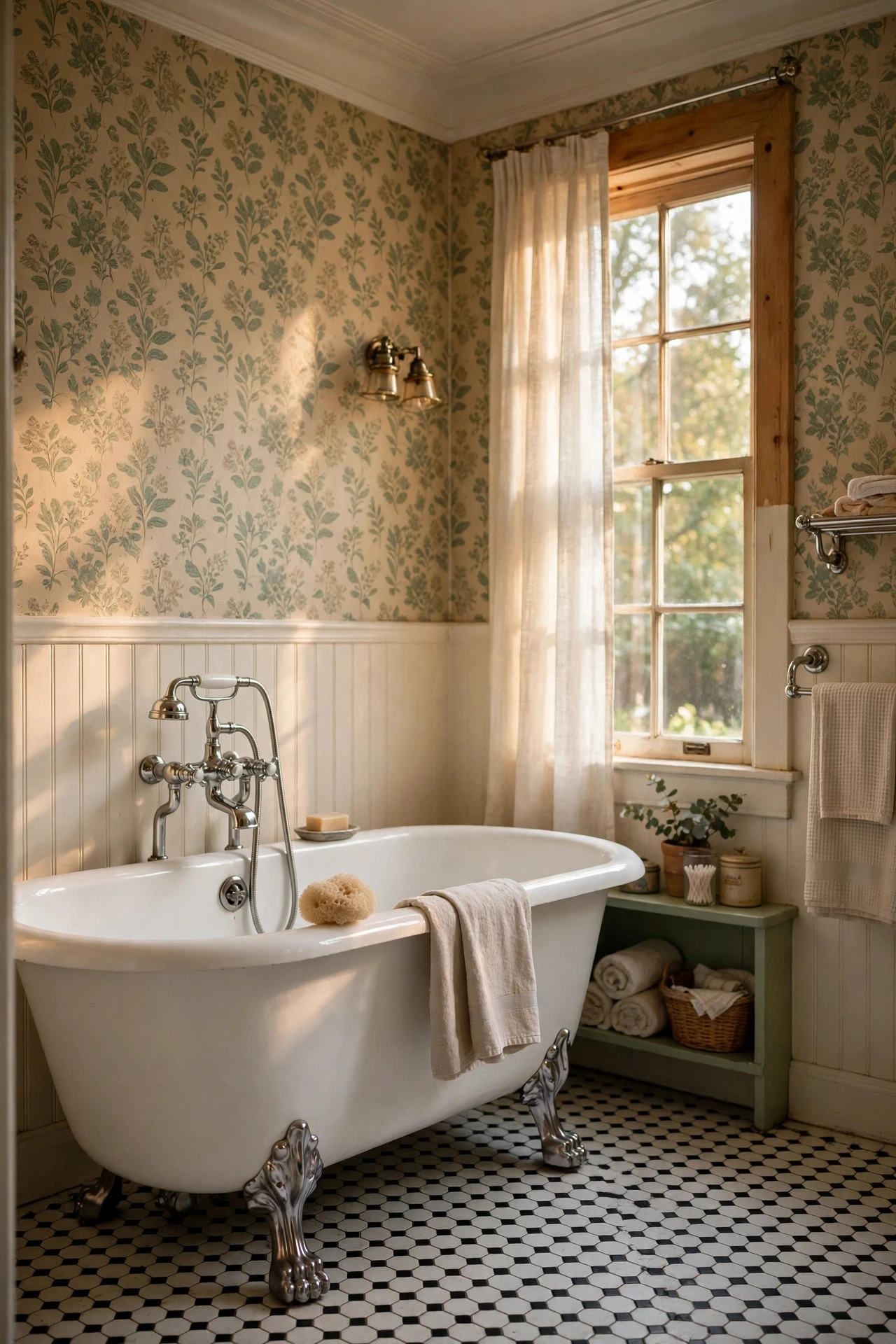
A restored clawfoot tub is the centrepiece of a vintage bathroom, provided the romance of the cast-iron tub is matched with modern plumbing, a level floor, and a shower arrangement that actually works. Choose a 60- to 66-inch cast-iron tub with ball-and-claw or paw feet, have it professionally refinished inside if the enamel is chipped, and paint the exterior in glossy white, black, or a period pastel that echoes the tile. Pair it with a freestanding telephone-style filler or a wall-mounted faucet with cross handles, modern flexible supply lines hidden behind, and a ceiling-mounted circular shower curtain ring if you need a shower. A restored tub costs approximately $800 to $2,500, refinishing adds $400 to $900, and plumbing work adds $500 to $1,500. The mistake to avoid is placing a heavy cast-iron tub on an unreinforced timber floor, which can flex, crack grout, and cause slow leaks around the drain.
8. A White Pedestal Sink With Cross-Handle Chrome Faucets
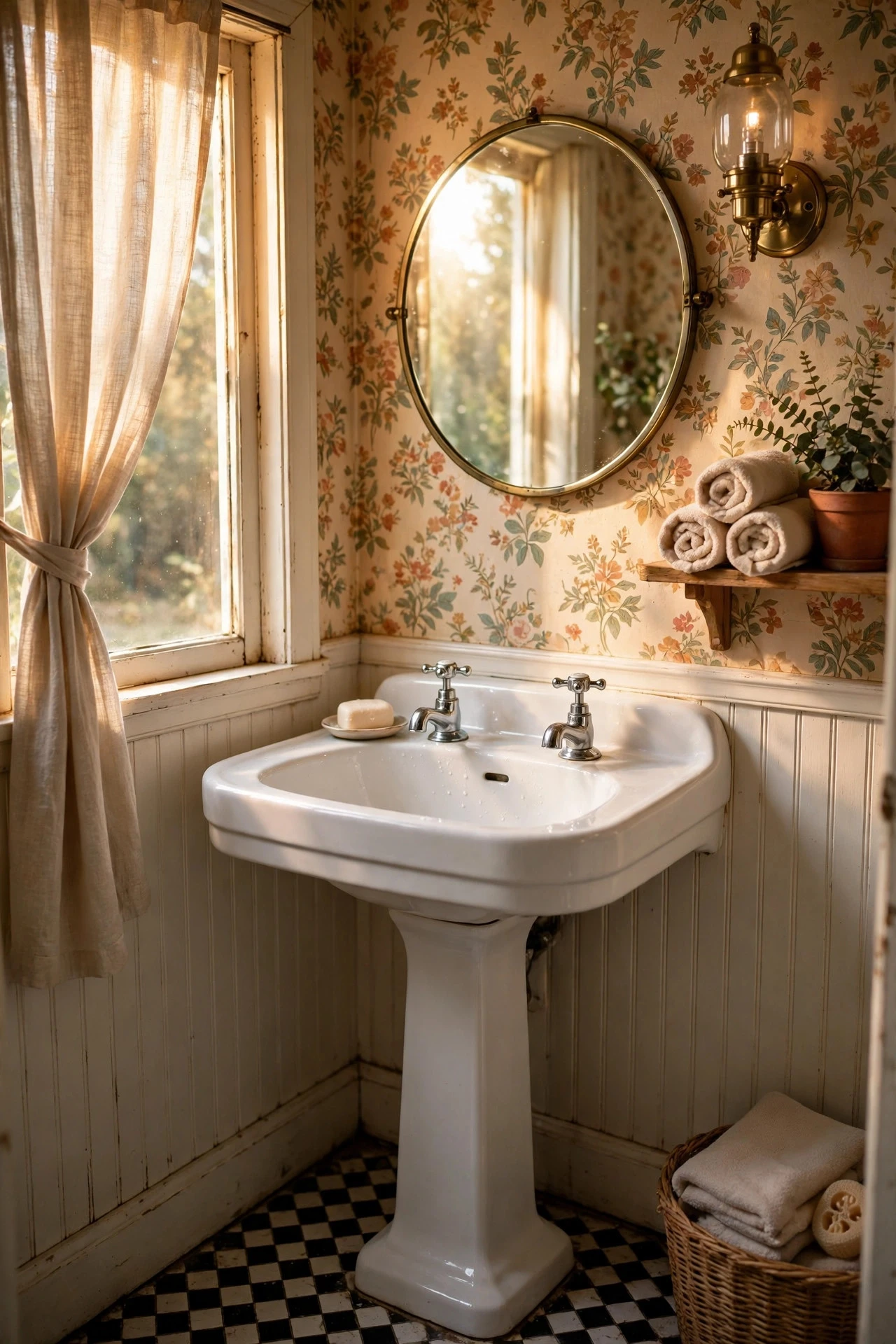
A white pedestal sink with cross-handle chrome faucets gives a small retro bathroom period authenticity and visual breathing room, because the slim pedestal leaves floor visible where a bulky vanity would crowd the room. Choose a vitreous china pedestal sink 20 to 24 inches wide, with a 4-inch or 8-inch faucet spread, and pair it with a widespread or centreset faucet that has porcelain cross handles, a high-arc spout, and a matching pop-up drain. Add a wall-mounted soap dish and toothbrush holder in the same chrome finish, keep storage in a mirrored medicine cabinet or a freestanding stool, and leave at least 30 inches of clear space in front. Expect approximately $250 to $700 for the sink, $180 to $450 for the faucet, and $200 to $500 for installation. The mistake to avoid is choosing a pedestal sink with no overflow and a shallow basin, which splashes constantly and leaves nowhere to set a glass or soap.
9. Polished Chrome Fixtures Kept Consistent Throughout

Polished chrome fixtures are the correct metal for 1920s and 1950s retro bathrooms, and consistency matters more than expense: one bright chrome finish repeated everywhere reads as intentional and period-correct. Use polished chrome for the faucet, shower trim, towel bars, robe hooks, toilet flush handle, and cabinet pulls, choosing solid brass bodies beneath the chrome plating so the finish lasts, and avoid mixing chrome with brushed nickel, which looks like a close but failed match. Chrome is easy to clean, suits pastel tile and black-and-white floors equally, and costs less than unlacquered brass or polished nickel. Budget approximately $200 to $500 for a faucet, $300 to $800 for shower trim, and $100 to $300 for accessories. The mistake to avoid is buying the cheapest chrome-plated zinc accessories, whose plating pits and peels in steam within a year and leaves the room looking tired.
10. Warm Brass and Gold Fixtures for a 1960s Glow
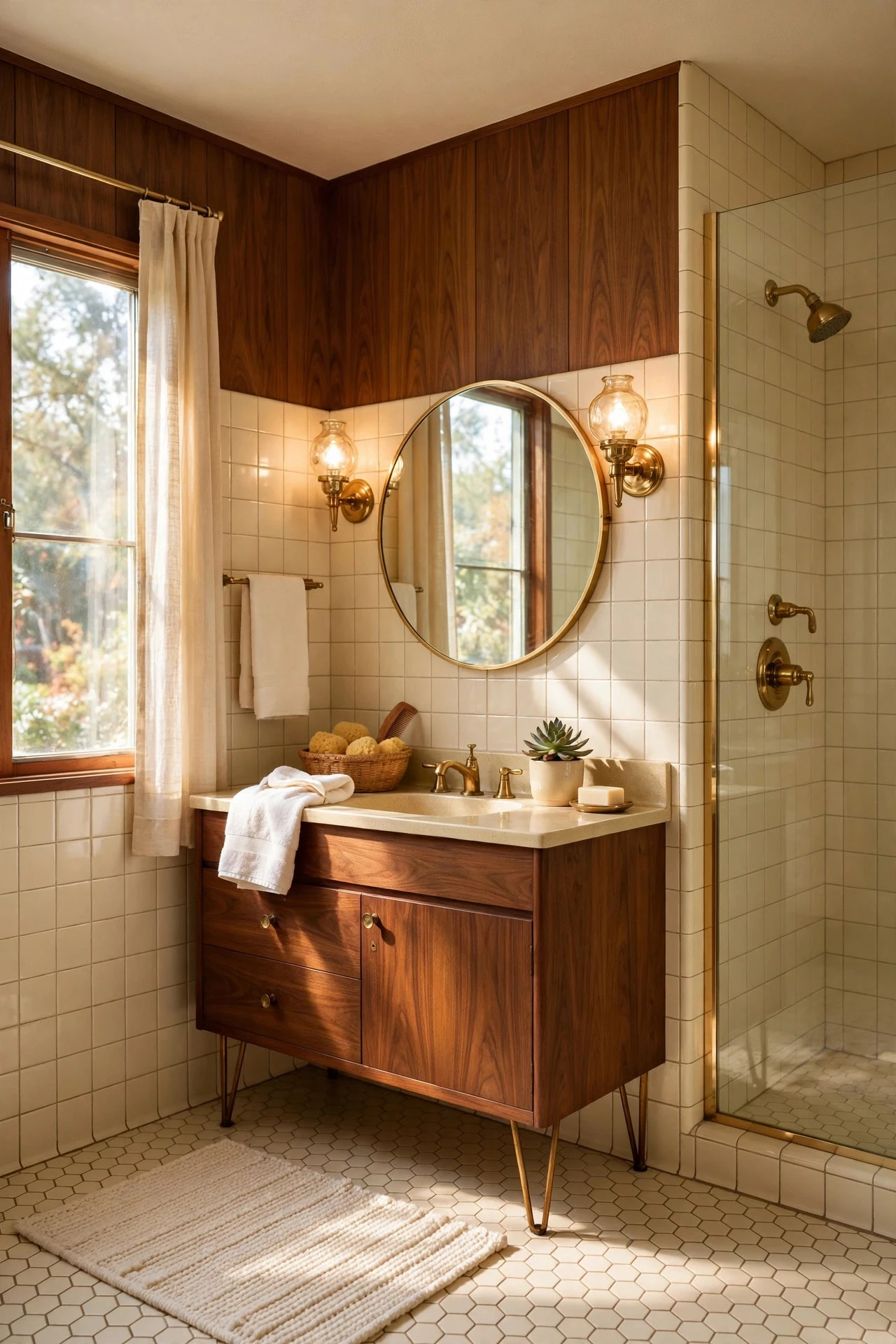
Warm brass and gold fixtures bring the glamorous side of 1960s retro style into the bathroom, and they work best when the room already has warm colours, wood, or terrazzo to answer them. Choose brushed or polished brass for the faucet, shower trim, mirror frame, and hardware, keeping one brass tone throughout, and pair it with walnut, cream tile, terrazzo, or a warm wallpaper so the metal feels rich rather than brash. Solid brass construction matters here too, because plated finishes wear first on handles and spouts, and a living unlacquered brass finish will patina unevenly if it is cleaned with harsh chemicals. Expect approximately $350 to $900 for a faucet, $400 to $1,000 for shower trim, and $150 to $400 for accessories. The mistake to avoid is mixing brass with chrome and matte black in the same small room, which fragments the scheme and makes each finish look like a leftover.
11. Terrazzo Flooring With Chips of Colour

Terrazzo flooring gives a retro bathroom a speckled, playful surface that hides dirt, tolerates water, and connects directly to mid-century public and domestic design. Choose large-format terrazzo-look porcelain tiles, 24 by 24 inches, with chips in cream, blush, sage, ochre, and charcoal on a warm white ground, or pour genuine cement terrazzo in a larger remodel where the budget allows professional installation and sealing. Terrazzo-look porcelain costs approximately $8 to $18 per square foot and needs no sealing, while poured terrazzo costs $25 to $50 per square foot installed. Pair the floor with plain wall tile, warm wood, and brass or chrome, and let the floor supply the pattern so walls can stay calm. The mistake to avoid is pairing a busy terrazzo floor with patterned wall tile and patterned wallpaper at once, which creates three competing patterns and no resting place for the eye.
12. Atomic Starburst and Boomerang Pattern Wallpaper
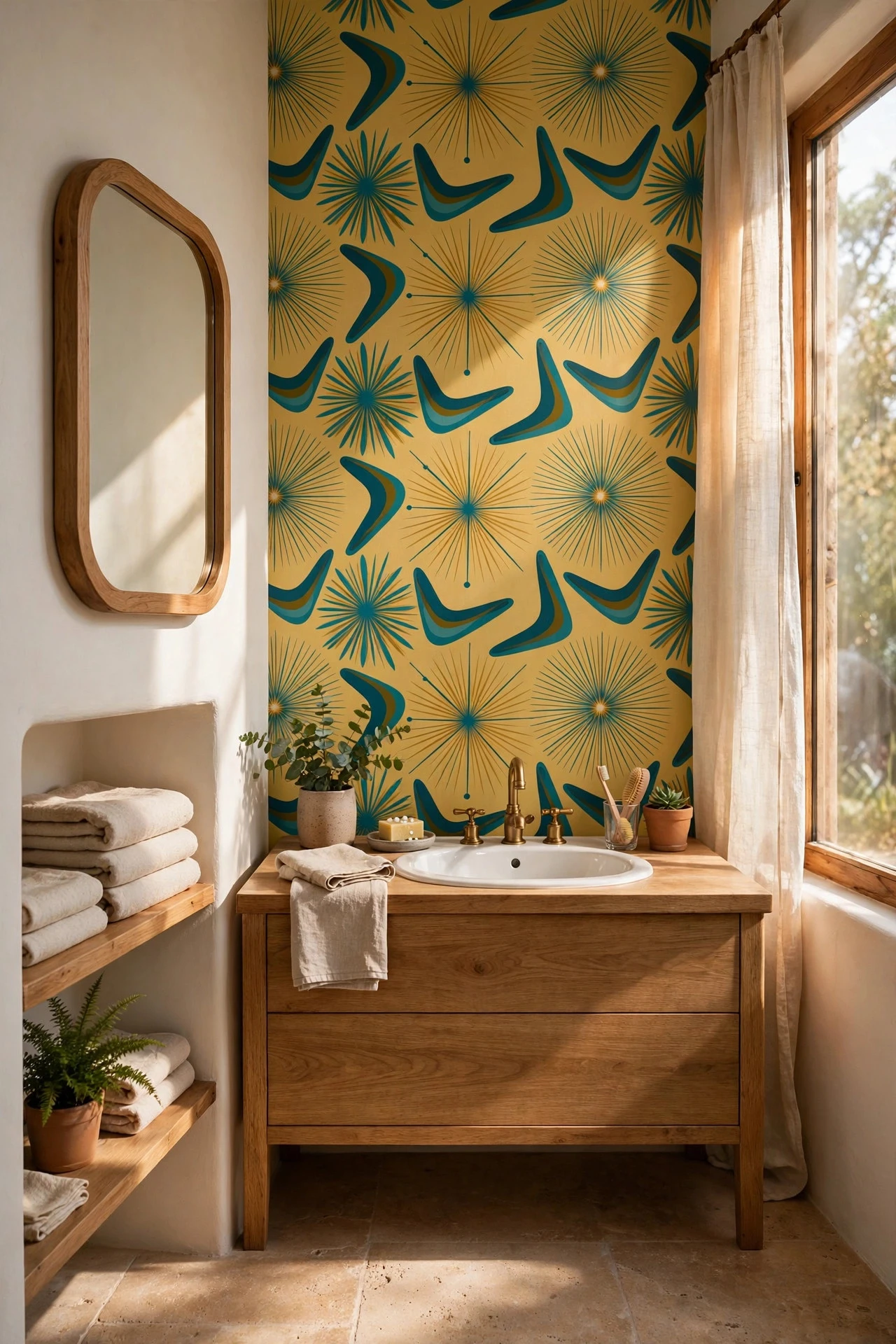
Atomic starburst and boomerang wallpaper is the boldest 1950s and 1960s retro statement, and it belongs on one feature wall where it can be enjoyed without overwhelming a wet room. Choose a vinyl or vinyl-coated wallpaper rated for humid rooms, in a starburst, boomerang, or sputnik pattern in mustard, teal, orange, or cream, and apply it to the wall behind the vanity or above the wainscot, keeping tile in the shower and around the tub. Vinyl wallpaper wipes clean, resists steam better than uncoated paper, and costs approximately $60 to $180 per roll, plus $300 to $700 for professional hanging. Repeat one colour from the paper in towels or a rug, and keep the remaining walls plain. The mistake to avoid is wallpapering inside a shower enclosure or directly beside a tub without a tile splash zone, where steam and splashes will lift seams and stain the paper within months.
13. Fluted Glass, Reeded Panels, and a Privacy Screen
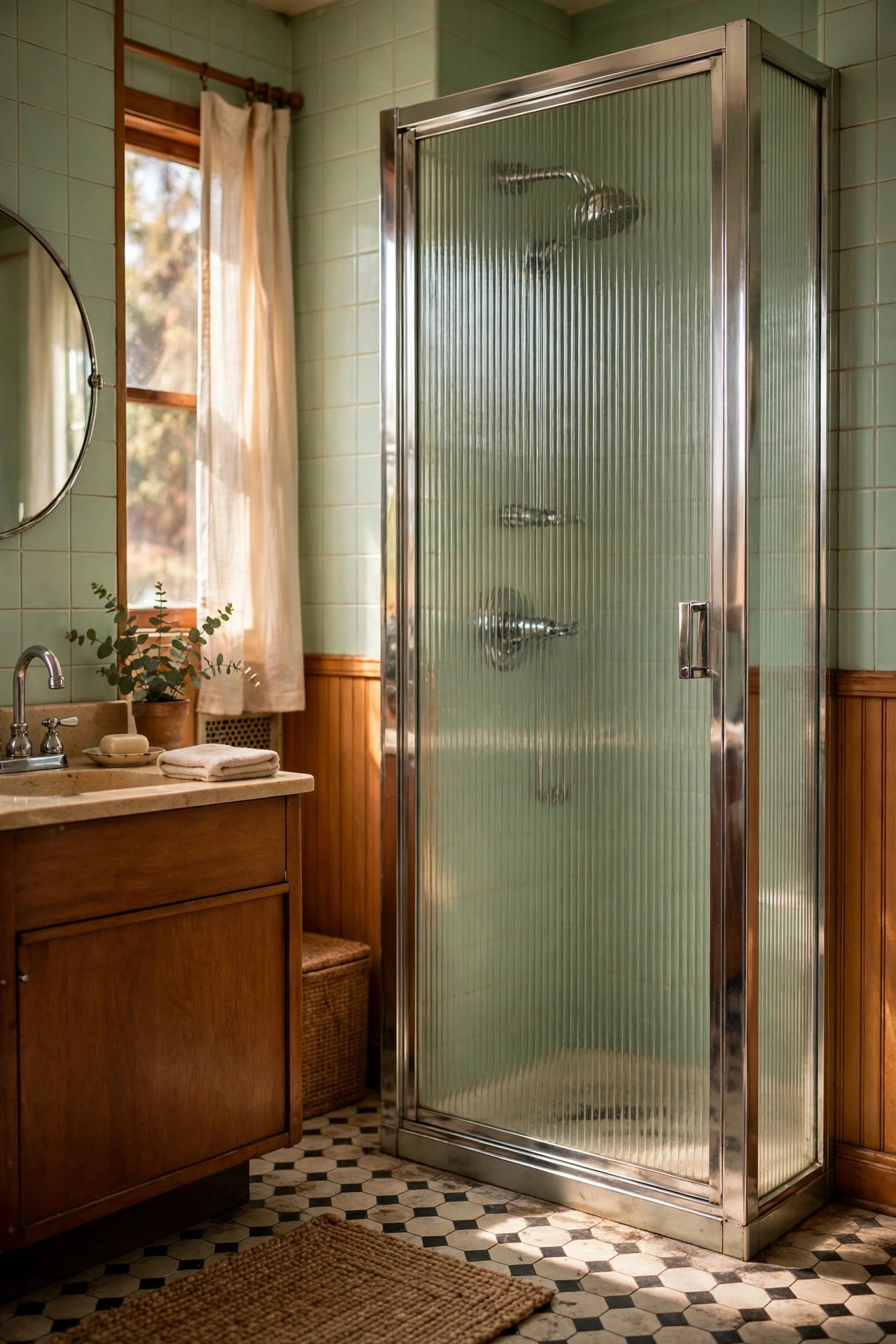
Fluted or reeded glass gives a retro bathroom privacy and period texture at the same time, softening light without blocking it the way a solid partition or heavy curtain does. Use fluted glass for a shower screen, a transom window above a door, or a cabinet door insert, choosing a 10- to 20-millimetre flute pitch in clear or lightly tinted glass, framed in chrome for a 1920s feel or brass for a 1960s feel. The vertical ribs blur shapes, diffuse daylight beautifully, and hide water spots better than flat glass, though they need a squeegee after showers to prevent mineral build-up in the grooves. A fluted shower screen costs approximately $600 to $1,400, and a fluted cabinet insert costs $100 to $300 per door. The mistake to avoid is using fluted glass for a mirror surround or a splashback behind a sink, where the ribs collect toothpaste, soap, and dust and become almost impossible to keep clean.
14. A Round or Arched Mirror in Chrome, Brass, or Walnut
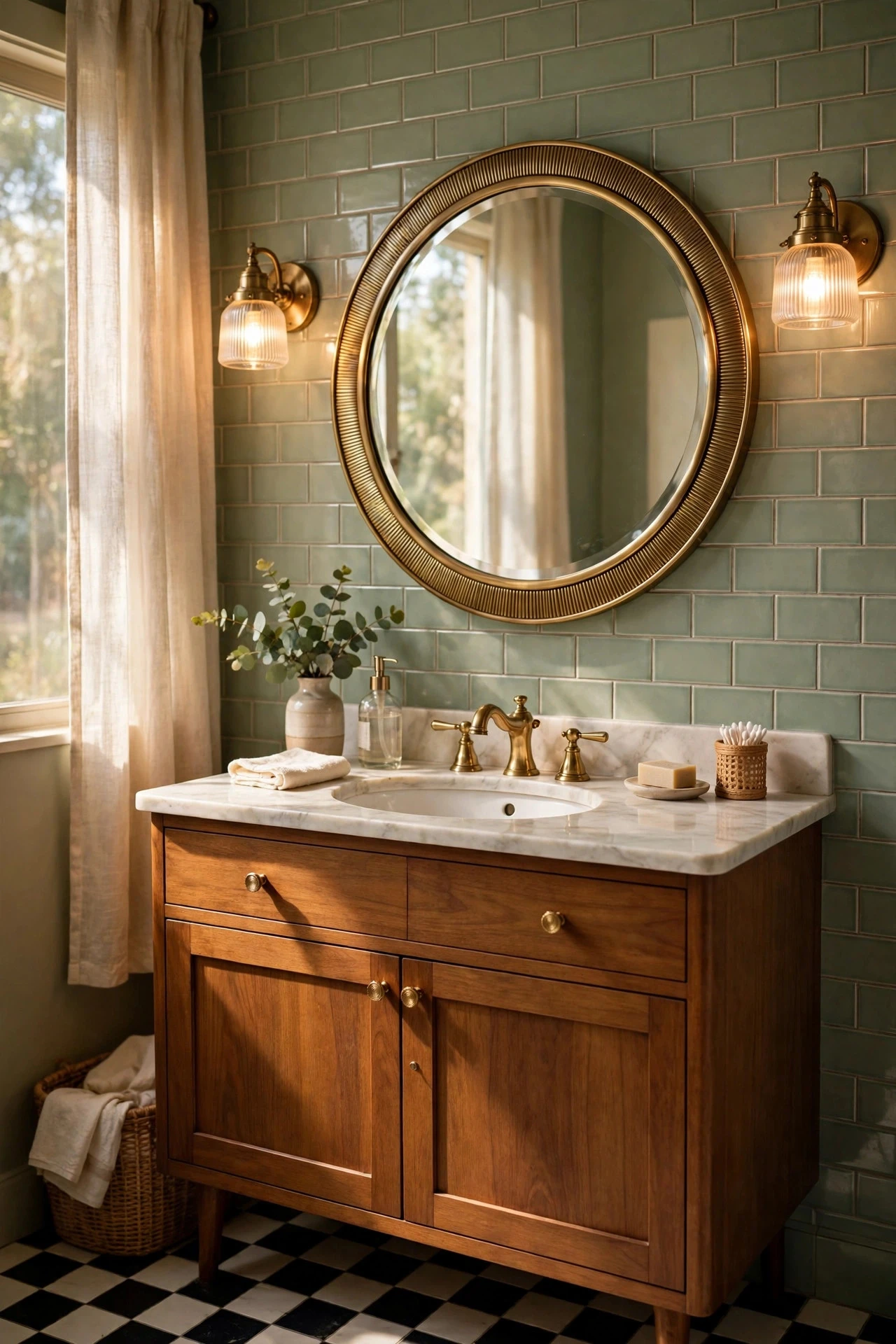
A round or arched mirror softens the hard rectangles of tile, vanity, and shower glass, and its shape alone can signal retro style even in an otherwise modern bathroom. Choose a 24- to 36-inch round mirror for a single vanity, or an arched mirror 30 to 40 inches high that echoes 1920s architecture, framed in polished chrome, brushed brass, or warm walnut to match the room's metal and wood tones. Hang the centre at about 60 inches from the floor, keep the mirror clear of direct shower spray, and pair it with sconces at eye level on either side so faces are lit evenly without shadows. Expect approximately $120 to $450 for a quality framed mirror, and $400 to $1,000 for a large custom arch. The mistake to avoid is hanging a small round mirror above a wide double vanity, which leaves the proportions unbalanced and makes the vanity look wider and emptier than it is.
15. A Recessed Vintage Medicine Cabinet With Mirrored Doors
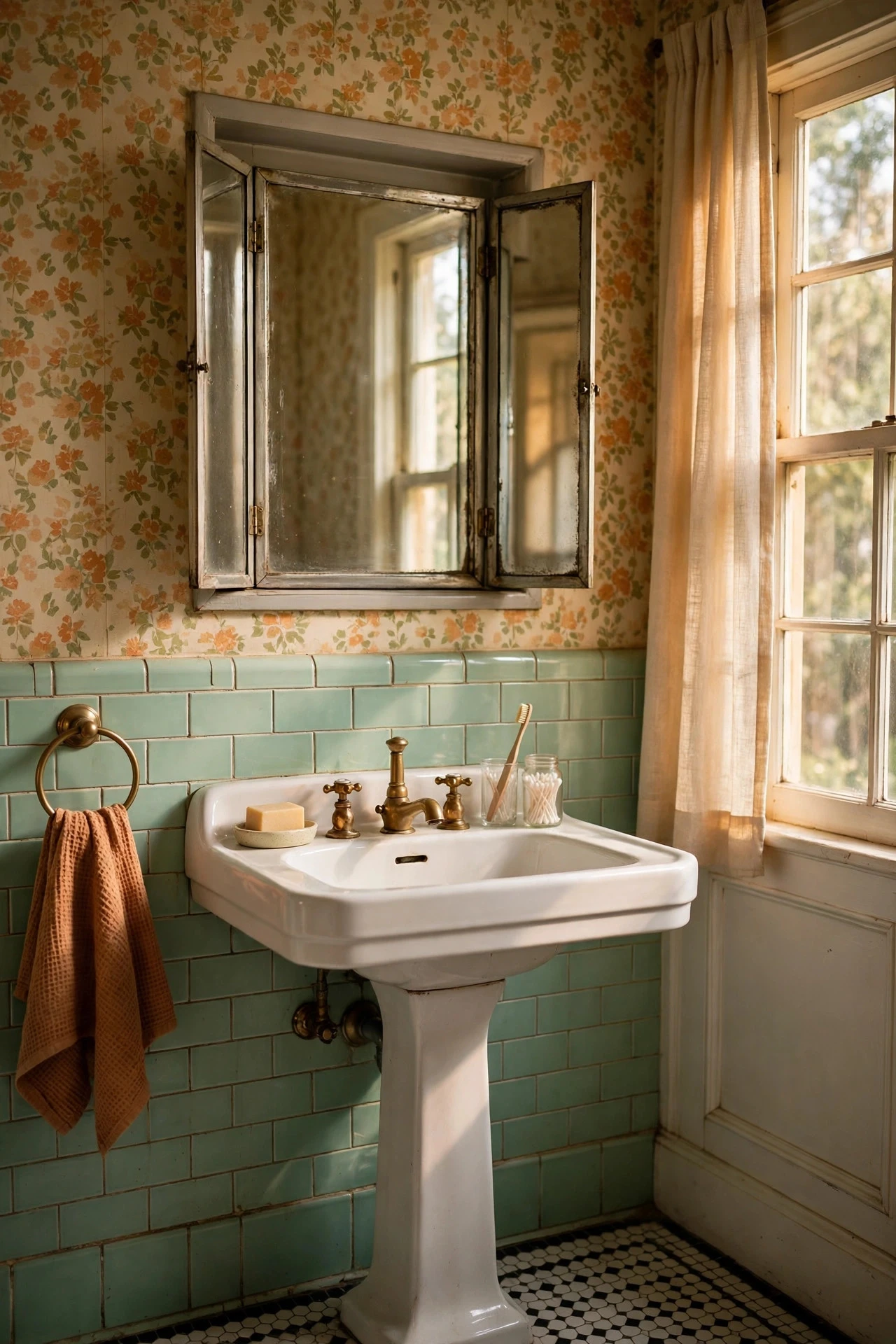
A recessed medicine cabinet with mirrored doors restores the practical storage that period bathrooms relied on, while keeping the counter clear and the retro look intact. Choose a cabinet 16 to 24 inches wide and 24 to 30 inches high, recessed between studs where possible, with bevelled or plain mirrored doors, adjustable glass shelves, and chrome or brass trim that matches the faucets. A mirrored cabinet doubles the light in a small bathroom, hides medicines and toiletries behind a period-correct front, and costs approximately $150 to $500 for the cabinet, plus $200 to $500 for recessed installation if electrical work is needed. Add a small interior light only if the wiring is straightforward and damp-rated. The mistake to avoid is surface-mounting a deep cabinet over a shallow sink, where it juts into headroom, blocks the faucet, and makes leaning over the basin uncomfortable.
16. Patterned Encaustic and Cement Tile in a Foyer-Like Floor
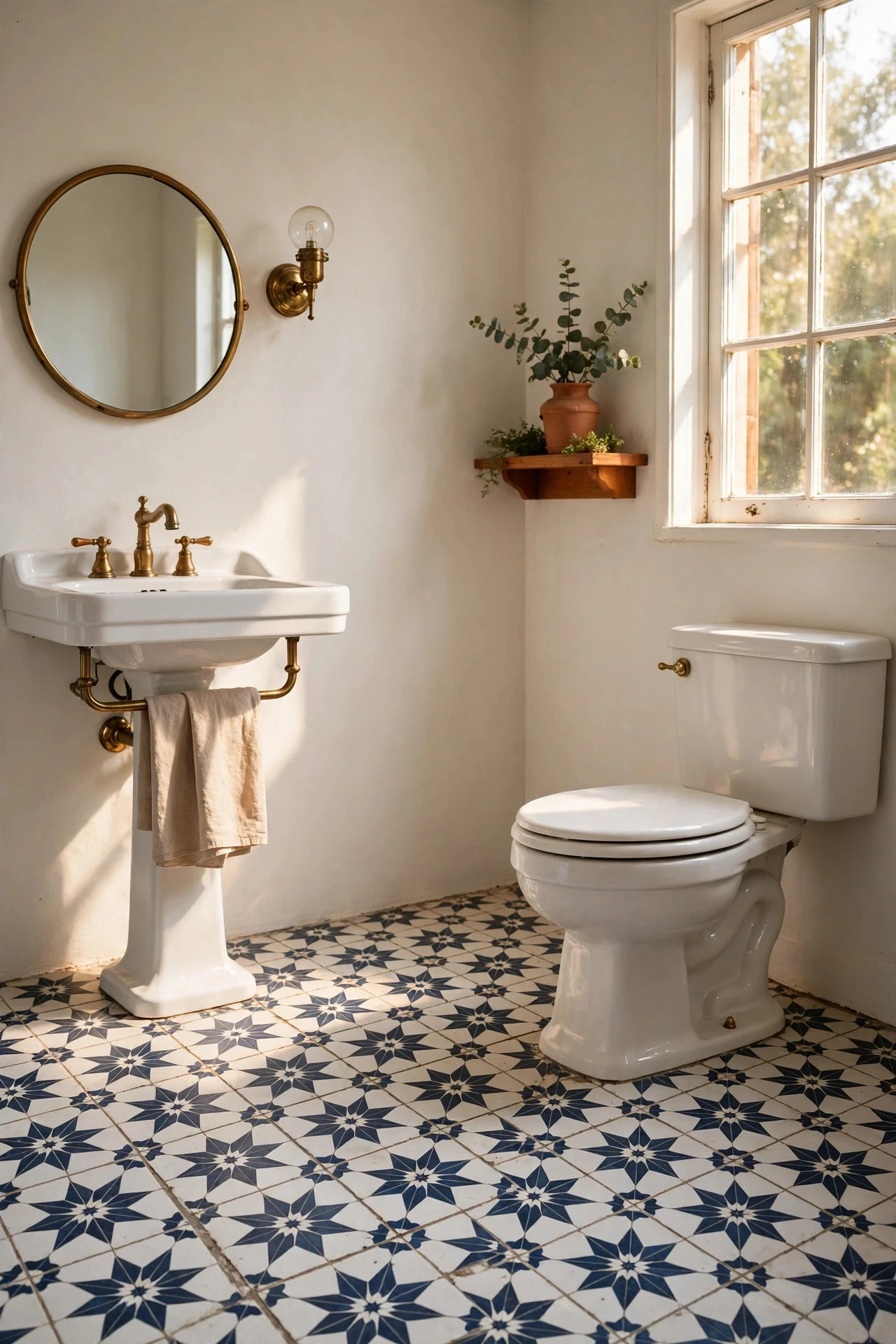
Patterned encaustic and cement tile gives a retro bathroom the look of a Mediterranean courtyard or a 1920s entry hall, and it works best as a floor pattern in a bathroom with otherwise plain walls. Choose cement tiles in a geometric, star, or floral pattern in two or three colours drawn from the room, such as navy and white, terracotta and cream, or sage and charcoal, and seal them thoroughly before and after grouting because cement tile is porous. Cement tile costs approximately $12 to $25 per square foot, plus $800 to $1,600 for installation, and it must be sealed every one to two years in a wet room. Keep wall tile plain and fixtures simple so the floor pattern remains the focus. The mistake to avoid is using unsealed cement tile in a shower or directly beside a tub, where water, shampoo, and cleansers stain and etch the pattern permanently.
17. Painted Beadboard and Wainscoting in Pastel or White
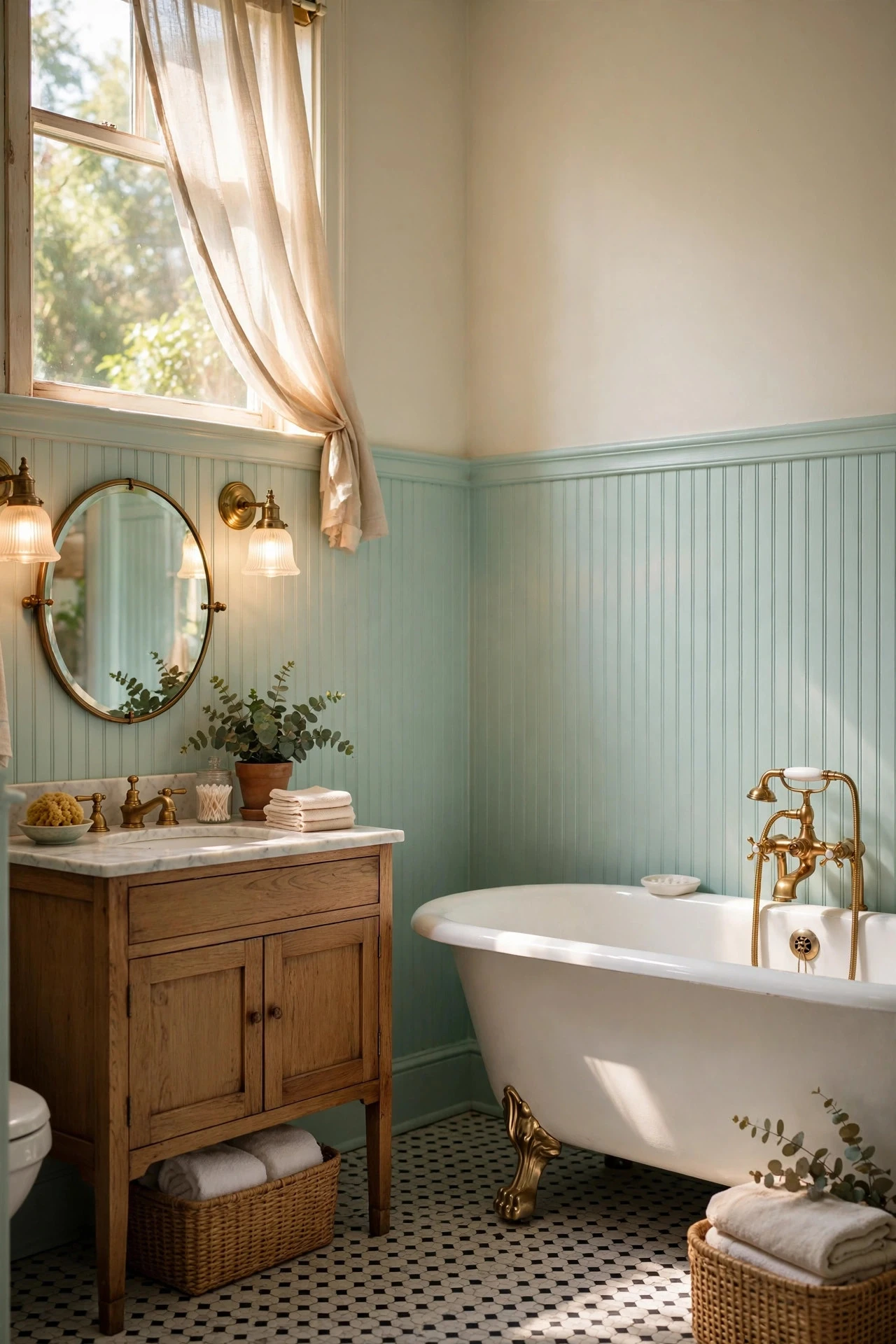
Painted beadboard and wainscoting give a retro bathroom architectural structure and a practical, wipeable wall surface below the splash zone, especially in rooms where full tile would feel cold or costly. Run moisture-resistant beadboard or tongue-and-groove panelling to 36 to 42 inches high, capped with a chair rail, painted in glossy white, mint, pale pink, or butter yellow with a moisture-resistant enamel, and tile only the shower and the wall behind the tub. Beadboard suits pedestal sinks, clawfoot tubs, and cottage-style retro schemes, and it costs approximately $4 to $10 per square foot for materials, plus $400 to $1,000 for installation and painting. Leave a small gap behind the boards for air circulation in humid rooms. The mistake to avoid is using untreated MDF beadboard in a bathroom, which swells, warps, and peels at the base within a season of steam and splashes.
18. A Console Vanity With Turned Legs and a Marble Top

A console vanity with turned legs and a marble top captures the furniture-like elegance of early twentieth-century bathrooms, while keeping the floor visible and the room feeling open. Choose a console 30 to 48 inches wide, with turned or tapered legs in chrome, brass, or painted wood, a Carrara or honed marble top with an integrated or undermount basin, and a lower towel bar or glass shelf for folded towels. The open base suits small bathrooms because it does not block light or floor pattern, but it offers little hidden storage, so pair it with a medicine cabinet and a small stool. Expect approximately $700 to $2,000 for the console and top, plus $200 to $600 for the faucet and installation. The mistake to avoid is choosing a marble top without sealing it, because marble etches from toothpaste, skincare, and acidic cleansers and will show rings within weeks.
19. A Salvaged Coloured Suite Kept as the Star

A salvaged coloured suite in pink, blue, green, or yellow is the most authentic retro statement a bathroom can make, and it is worth keeping when the porcelain is sound, the colour is consistent, and the plumbing can be updated discreetly. Inspect a salvaged tub, toilet, and basin for chips, cracks, and crazing, match the colour across all three pieces under daylight, and fit modern internal toilet parts, new supply lines, and a modern drain so the suite works reliably behind its vintage appearance. A complete salvaged suite costs approximately $300 to $1,200, plus $800 to $2,000 for transport, repair, and installation, and it pairs best with white or pale wall tile that lets the colour lead. The mistake to avoid is mixing two different shades of pink or blue from different decades, which reads as accidental damage rather than a deliberate period suite and is almost impossible to correct later.
20. Barkcloth, Gingham, and Vintage-Style Textiles

Barkcloth, gingham, and vintage-style textiles soften a tiled retro bathroom and add the pattern and warmth that hard surfaces alone cannot provide, without any permanent change to the room. Choose a shower curtain in barkcloth, a bold floral, or a gingham check in colours drawn from the tile, add matching hand towels with a woven border, and use a washable cotton rug in a flat weave that dries quickly and can be laundered often. Textiles are the easiest way to test a retro palette before committing to tile, and they can be swapped seasonally or when the pattern tires. A quality shower curtain costs $30 to $80, towels cost $15 to $40 each, and a rug costs $25 to $70. The mistake to avoid is using a heavy, non-washable curtain or a thick pile rug that stays damp, because both trap moisture, develop mildew, and undo the fresh, clean feel the retro scheme depends on.
21. Globe Sconces, Sputnik Pendants, and Warm Retro Lighting
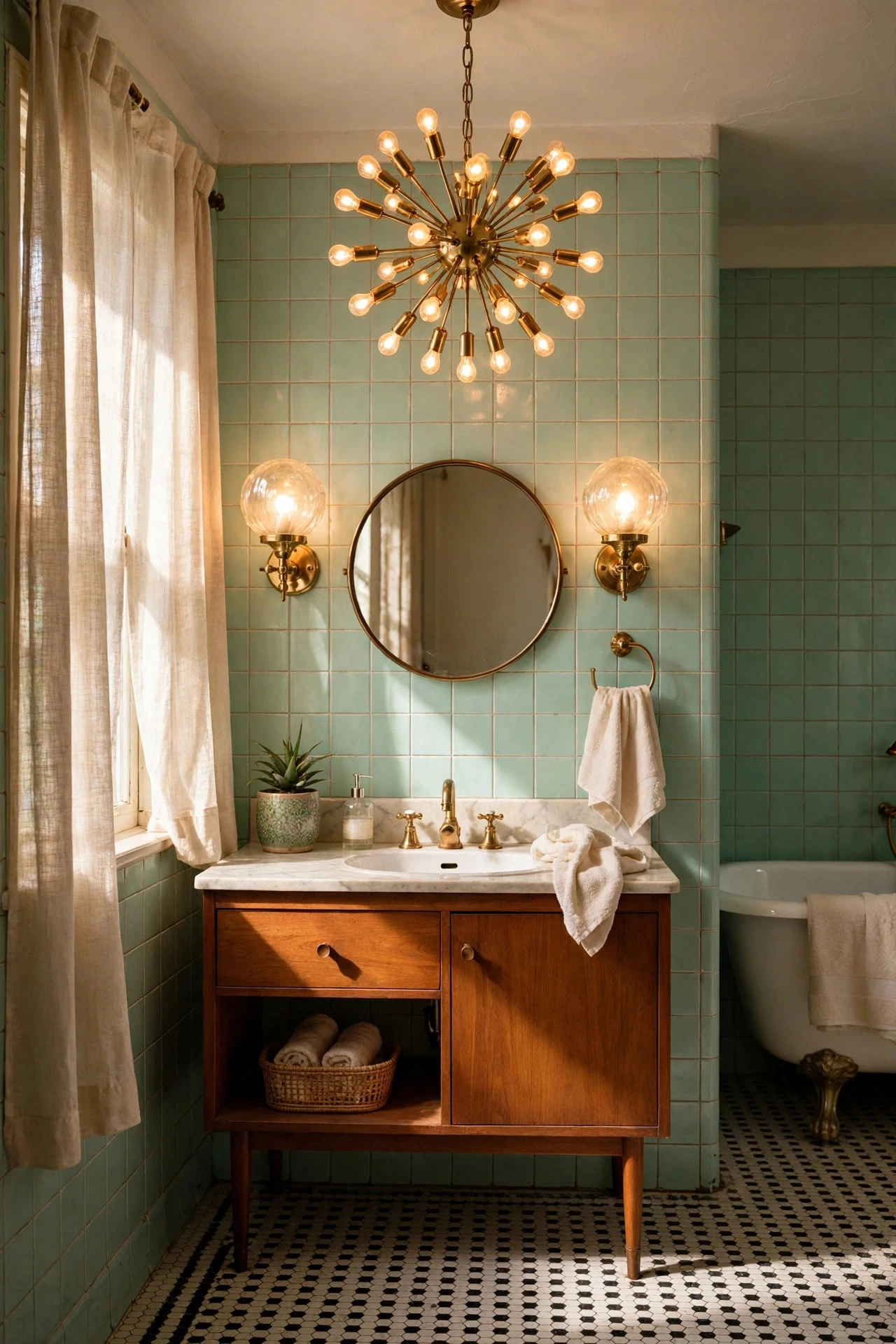
Globe sconces, sputnik pendants, and other retro lighting shapes give a bathroom its evening character, and warm, layered light is what makes pastel tile and chrome look flattering rather than clinical. Choose opal glass globe sconces at eye level on either side of the mirror, a small sputnik or starburst pendant in the centre of a larger bathroom, and dimmable LED bulbs at 2700K with a colour rendering index of 90 or above so skin tones stay natural. All fixtures near water must be damp-rated, and a pendant must hang at least 7 feet above the floor or 8 feet above a tub rim, following local electrical rules. Globe sconces cost $80 to $300 each, and a sputnik pendant costs $200 to $700. The mistake to avoid is using a single cool overhead light at 4000K or above, which flattens pastel colours, casts shadows on faces, and makes even an expensive retro remodel look stark and unwelcoming.
22. Renter-Friendly Retro With Peel-and-Stick Tile and Accessories

Renter-friendly retro updates let you enjoy checkerboard floors, pastel tile, and vintage charm without drilling, retiling, or risking your deposit, provided every change is removable and leaves no damage behind. Use peel-and-stick floor tiles over existing flooring, removable tile decals or peel-and-stick backsplash sheets on a small wall area, a tension-rod shower curtain in a retro print, and freestanding accessories such as a chrome towel stand, a vintage-style soap dispenser, and a round mirror hung from a removable hook. Test every adhesive in a hidden spot first, photograph the room before you start, and keep original fixtures and hardware to reinstall later. A full renter-friendly refresh costs approximately $100 to $350, and most of it can be packed and reused in the next home. The mistake to avoid is applying peel-and-stick tile directly to damaged, dusty, or damp floors, where it lifts within weeks and leaves adhesive residue that costs more to clean than the tile saved.
Practical Tips
Retro bathrooms work at three clear budget tiers, so start with the tier that fits your home and add the next layer only when the first one feels settled. At $100 to $400, focus on textiles, a shower curtain, towels, a mirror, globe sconces with plug-in or existing wiring, and renter-friendly peel-and-stick tile, which together change the character of the room without trade work. At $800 to $2,500, add a pedestal or console sink, chrome or brass fixtures, a medicine cabinet, and a tiled wainscot or feature wall, and at $3,000 to $10,000 or more, plan a checkerboard or hexagon floor, full pastel tile, a restored clawfoot tub, and terrazzo, getting quotes from at least two licensed contractors and checking lead times for tile and salvaged pieces before ordering. For general bathroom planning and material guidance, the room guides at The Spruce are a useful second opinion before a large purchase, and House Beautiful offers broader period interior inspiration to help you place a bathroom scheme within the rest of the home.
Tile, metal, and painted wood need different care if a retro bathroom is to stay fresh, so seal cement tile and marble on installation and re-seal on the schedule the product specifies, clean pastel ceramic with a pH-neutral cleaner and a soft cloth, and wipe chrome dry after showers to prevent water spots. Avoid abrasive powders, bleach, and ammonia on coloured tile and brass, because they dull glazes, strip patina, and etch stone, and keep a small supply of spare tile, matching grout, and touch-up enamel so chips and marks can be repaired invisibly. For white bathroom ideas that show how pale schemes stay clean, the same principles apply: light grout sealed well, surfaces dried after use, and clutter kept off the counter so cleaning takes minutes rather than an afternoon.
Ventilation, lighting, and safety protect both the decor and the people using the room, so run an extractor fan rated at least 50 cubic feet per minute for a small bathroom, leaving it on for 20 minutes after a shower, and keep humidity below the level where wallpaper seams lift and beadboard swells. Layer task light at the mirror, ambient light from a pendant or ceiling fixture on a dimmer, and a low accent glow for evening baths, all at 2700K to 3000K, and keep every fixture damp-rated with switches outside wet zones where possible. In larger rooms, the planning lessons in large bathroom ideas help with clearances around a freestanding tub, while slip-resistant mosaic floors, grab bars disguised as towel rails, and a level shower entry make a retro bathroom safer without breaking its period look.
Final Thoughts
Retro bathroom decor succeeds when one era leads, one metal finish repeats, and modern comfort stays quietly behind the vintage surface: choose a checkerboard floor or a pastel tile wall as your anchor, echo its colours in textiles and accessories, update plumbing, lighting, and ventilation to modern standards, and resist adding a second era's pattern on top. Start with the change you will see every morning, live with it for a few weeks, and add the next layer only when the room still asks for it, because a calm, well-kept retro bathroom will always charm more than a crowded room competing with itself.
You May Also Like: – 20 Attic Bathroom Ideas That Transform Small Spaces Into Beautiful Retreats – 22 Family Bathroom Ideas That Make Shared Spaces More Stylish and Functional – 22 Luxury Bathroom Decor Ideas for a Spa-Like Retreat
Frequently Asked Questions
What colours define a retro bathroom?
The defining colours depend on the era you choose. The 1920s used black and white with chrome, the 1950s used pastel pink, mint green, butter yellow, and pale blue with white fixtures, and the 1960s and 1970s added mustard, teal, orange, and warm wood tones. Pick one era palette and repeat it consistently.
Can I mix retro tile with a modern walk-in shower?
Yes, if the modern elements stay visually quiet and the retro tile leads the design. Use pastel or subway tile on the shower walls, a frameless or fluted glass screen, a simple chrome or brass shower trim, and a mosaic floor for grip. Keep niches, drains, and controls minimal so the period tile remains the focus.
How much does a retro bathroom update cost in the US?
Approximate costs range from $100 to $400 for a renter-friendly refresh, $800 to $2,500 for new fixtures, a sink, and partial tiling, and $3,000 to $10,000 or more for full tiling, a restored tub, and a new floor. Prices vary by region, tile choice, and whether plumbing or electrical work is needed.
How do I make a retro bathroom renter-friendly without damage?
Use peel-and-stick floor tiles and backsplash sheets, removable tile decals, a tension-rod shower curtain, freestanding chrome accessories, and a mirror hung from a removable hook. Test adhesives in a hidden spot, photograph the room first, keep original hardware, and avoid drilling tile or applying adhesive to damaged or damp surfaces.
Is a salvaged coloured tub or toilet worth keeping?
A salvaged coloured suite is worth keeping when the porcelain is free of cracks and crazing, the colour matches across all pieces, and modern internal parts can be fitted. Budget for transport, professional repair, and updated supply lines and drains. If colours differ between pieces or the enamel is badly damaged, replacement porcelain is usually the better choice.
How do I keep pastel tile and chrome or brass clean without damage?
Clean pastel tile with a pH-neutral cleaner and a soft cloth, wipe chrome dry after showers to prevent water spots, and avoid bleach, ammonia, and abrasive powders on tile and brass. Seal cement tile and marble as directed, re-seal grout in wet zones, and repair chips promptly with spare tile and matching grout.