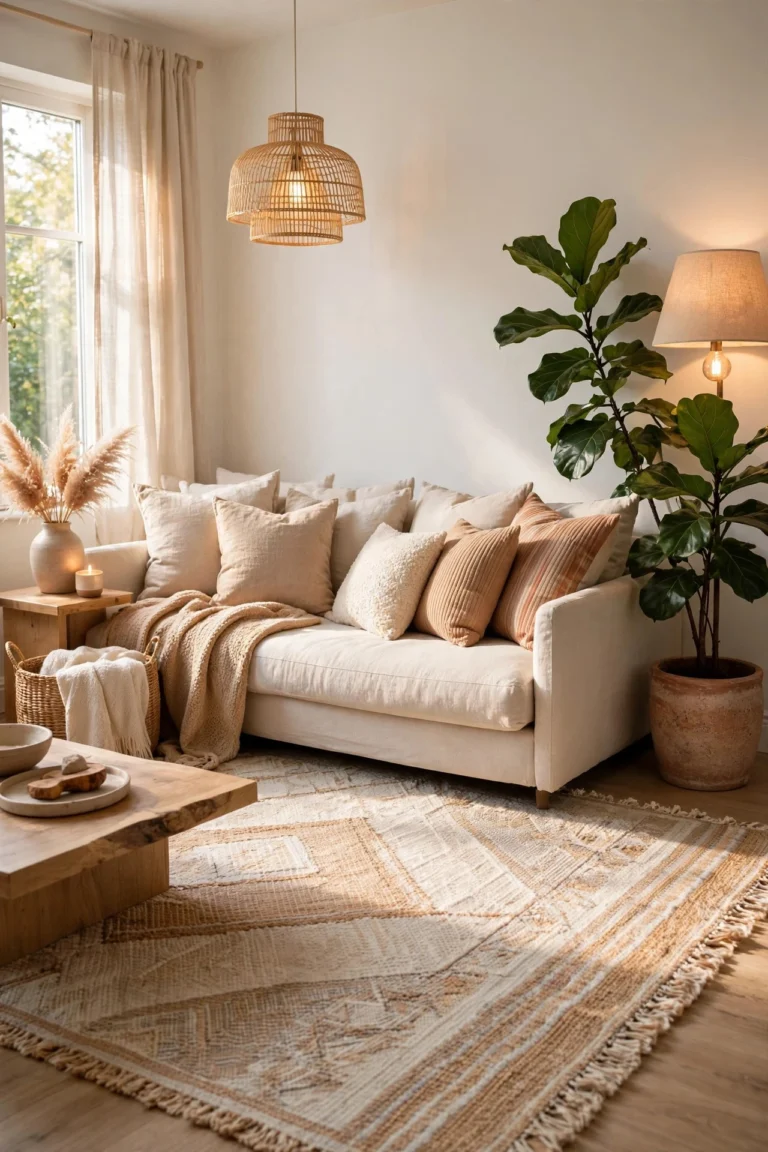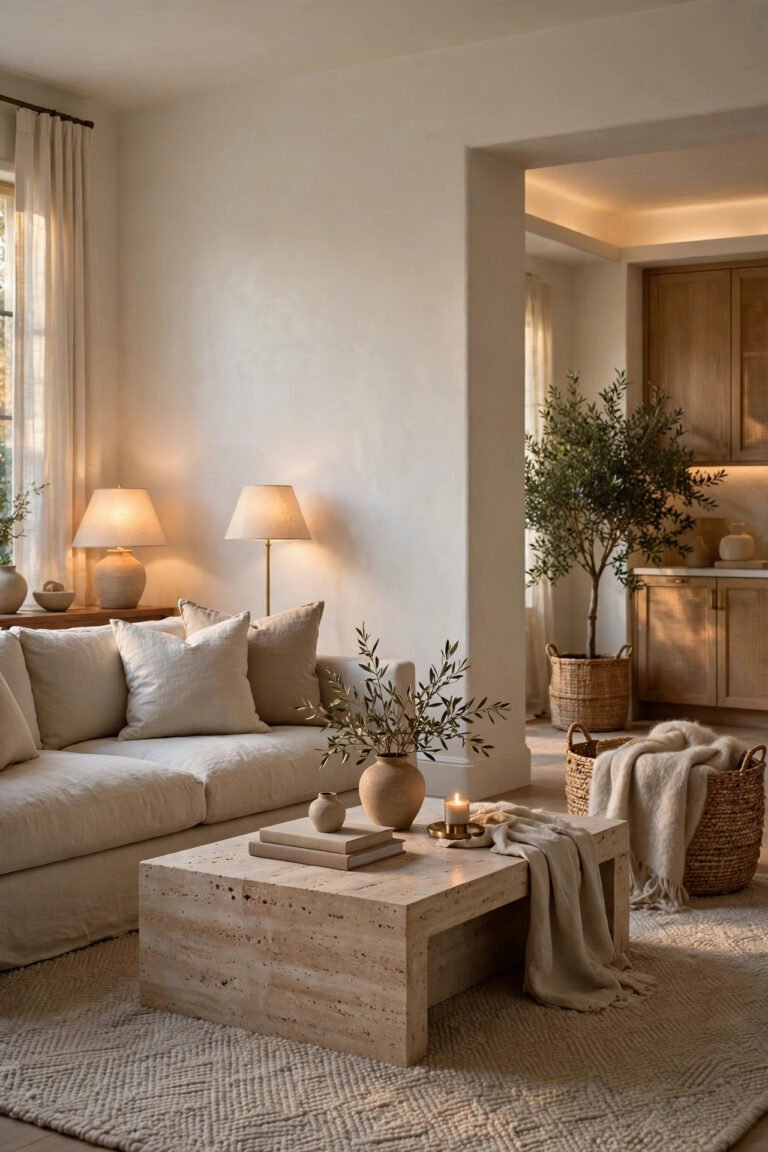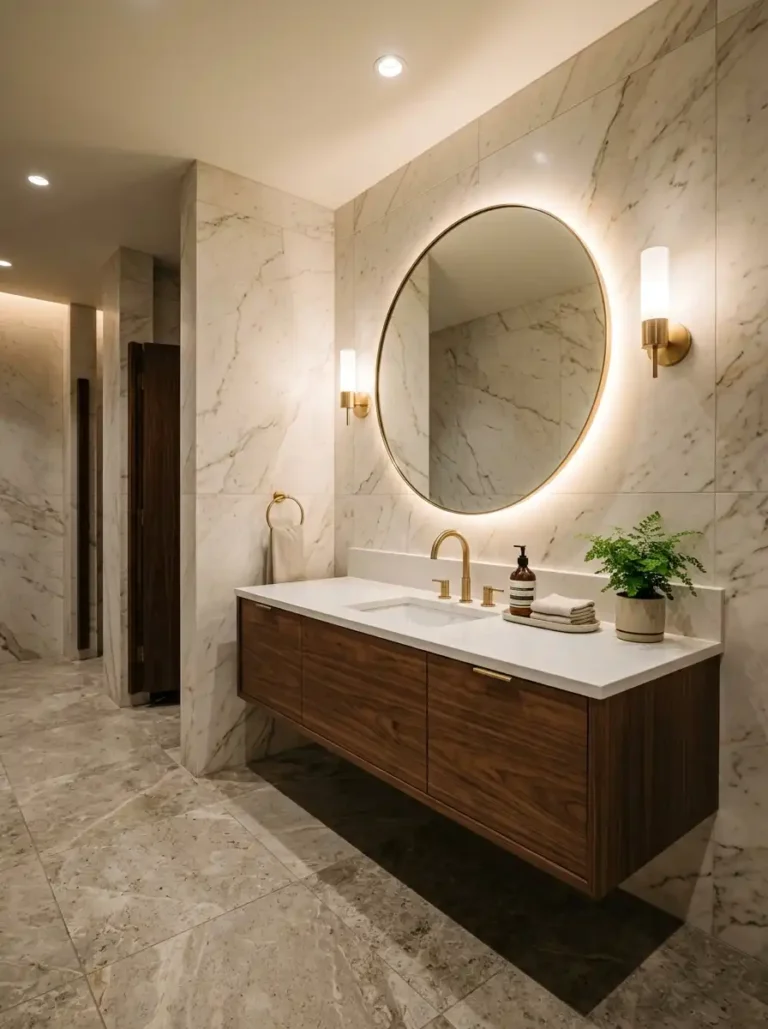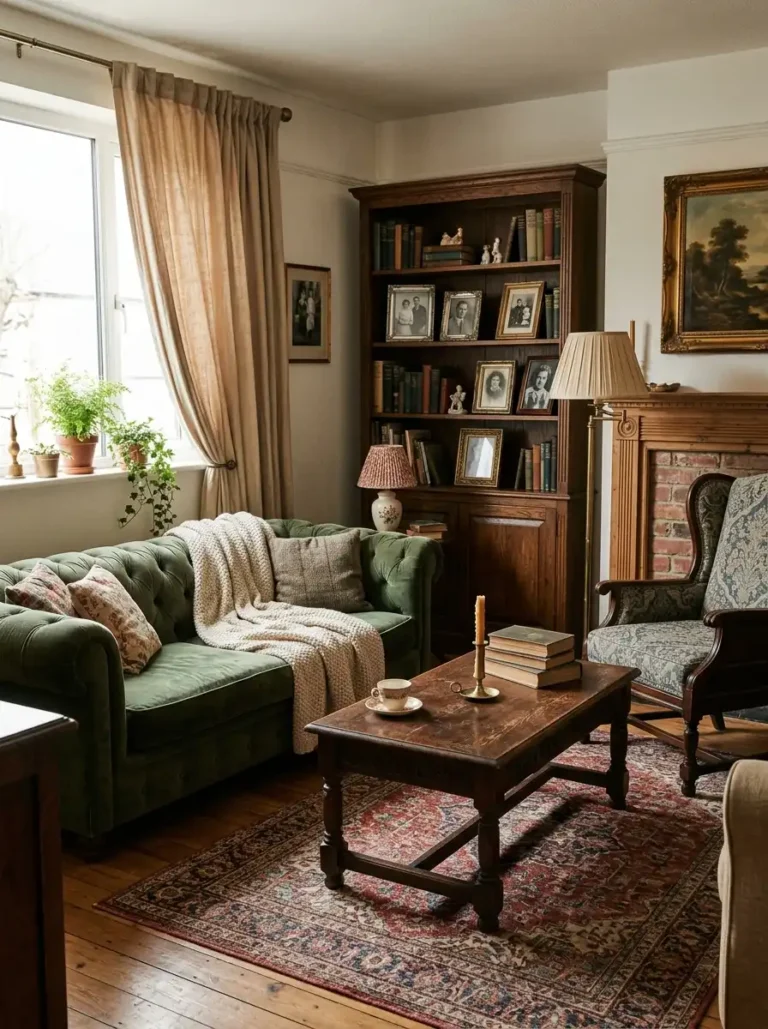

22 Kitchen Decor Ideas That Make a Hard-Working Kitchen Feel Warm
A hard-working kitchen earns its warmth honestly. It is where breakfast happens in a rush, steam rises at six in the evening, homework spreads across the counter and guests stand beside the stove. A kitchen that only looks warm in a photograph will not survive that life, so these ideas are chosen for kitchens cooked in every day. Warm wood, honest metals, layered light, washable textiles and hidden storage make the room inviting at seven in the morning and calm after dinner.
Looking for more inspiration? Our Nest Decorz homepage gathers the latest home decor ideas, seasonal decorating guides and room-by-room styling tips in one place — start there and explore.
Below are 22 kitchen decor ideas for a kitchen that works hard and still feels warm, each with materials, finishes, durability and cleaning notes, approximate costs in US dollars, and one mistake to avoid. Use them as a menu: choose three or four changes that suit how you actually cook, repeat the same wood tones and warm metals throughout, and let consistency do the work one expensive feature cannot.
1. Warm White Oak Cabinetry That Softens the Whole Room

Warm white oak cabinetry is the fastest way to make a hard-working kitchen feel warm, because wood brings grain, variation and a honeyed tone that painted cabinets and cool grey finishes simply cannot match. Choose rift-sawn white oak in a clear matte finish, which shows the grain without yellowing, with simple Shaker-style doors so the wood carries the room. Oak is a hard, dense hardwood that resists dents from pots and daily use better than pine or soft maple, and a factory-applied catalysed finish wipes clean with a damp cloth and mild soap. The same pale, warm approach shapes 25 White Kitchen Ideas That Feel Fresh, Warm & Timeless, where light cabinetry keeps a busy kitchen bright without feeling cold. Expect $300 to $600 per linear foot for semi-custom oak cabinetry. The mistake to avoid is choosing a glossy orange-toned stain, which reads dated quickly and fights every other warm material in the room.
2. Unlacquered Brass Hardware and Faucets That Age Beautifully
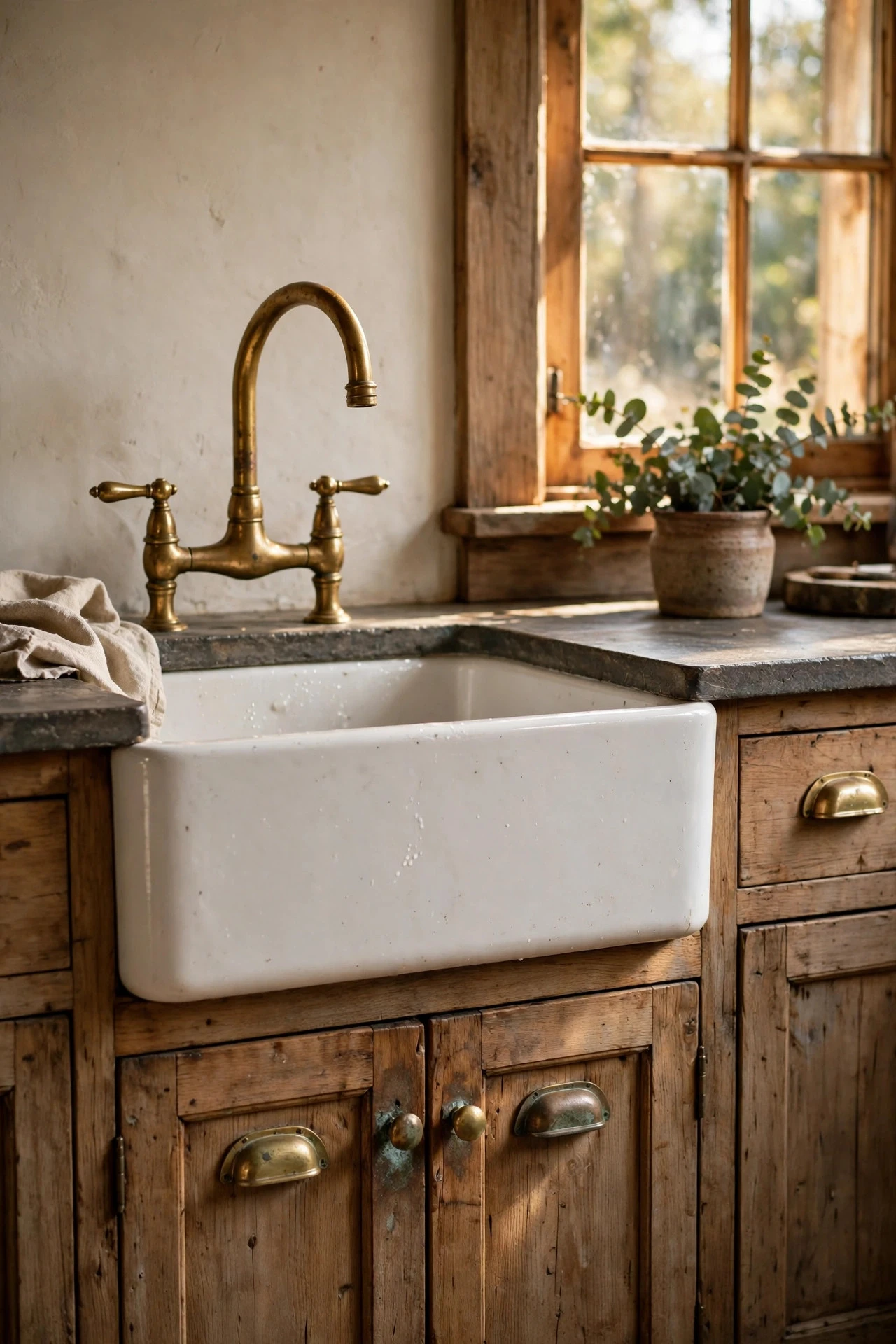
Unlacquered brass hardware and faucets add warmth that grows richer with use, because the living finish deepens, darkens and develops a soft patina instead of staying uniformly shiny like lacquered or chrome finishes. Choose solid brass pulls, knobs and a bridge faucet in the same finish, and look for forged construction rather than thin plated zinc, which wears unevenly. Brass tolerates steam, splashes and daily hand contact well, and it cleans with warm soapy water and a soft cloth, never with abrasive pads or acidic descalers that strip the patina unevenly. A faucet costs $350 to $900, pulls cost $8 to $25 each, and a full hardware set runs $250 to $600. The mistake to avoid is mixing unlacquered brass with polished chrome and matte black in one kitchen, a combination that fragments the scheme and makes each finish look accidental.
3. Layered Lighting at 2700K for Cooking, Eating and Evening

Layered lighting at 2700K is what makes a kitchen feel warm after dark, because a single bright overhead light flattens faces, food and wood alike, while three gentle layers let the room shift from cooking to gathering. Combine task lighting over worktops, pendants over an island or table at 30 to 36 inches above the surface, and dimmable under-cabinet LED strips at 2700K with a colour rendering index of 90 or above. Put each layer on its own dimmer, and add a low evening setting so the kitchen glows rather than glares once the cooking is done. Pendants cost $120 to $450 each, under-cabinet strips cost $40 to $120 per run, and dimmers cost $30 to $80 each. The mistake to avoid is installing cool 4000K bulbs throughout, which makes even warm oak and brass look cold and clinical.
4. Open Shelving That Stays Clean in a Real Cooking Kitchen
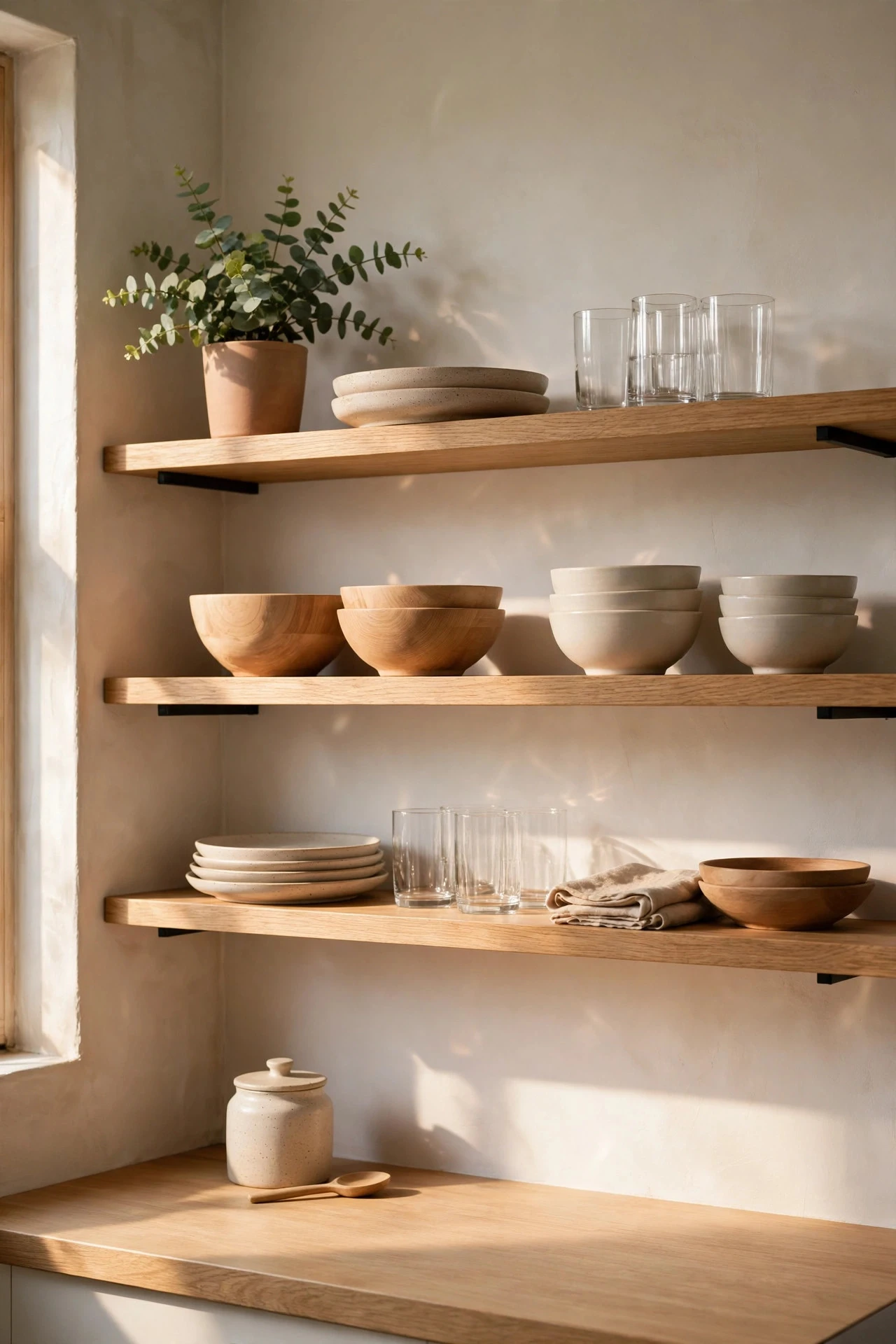
Open shelving makes a kitchen feel warm and personal, but only when it is planned for grease, steam and dust, with everyday items that are used, washed and returned rather than purely decorative objects left to gather film. Choose oak or walnut shelves, 10 to 12 inches deep, on steel brackets, and keep them to one or two runs beside the range or sink. Style each shelf with daily dishes, glasses, wooden bowls and one plant, leaving a third empty, and wipe shelves weekly to prevent grease build-up. Shelves cost $60 to $180 each, plus $40 to $100 for brackets and fitting. The mistake to avoid is placing open shelves directly above a hob with no extractor, where steam and frying oil coat everything within a week and turn a pretty display into a sticky chore.
5. A Butcher Block Worktop Section for Warmth and Daily Prep
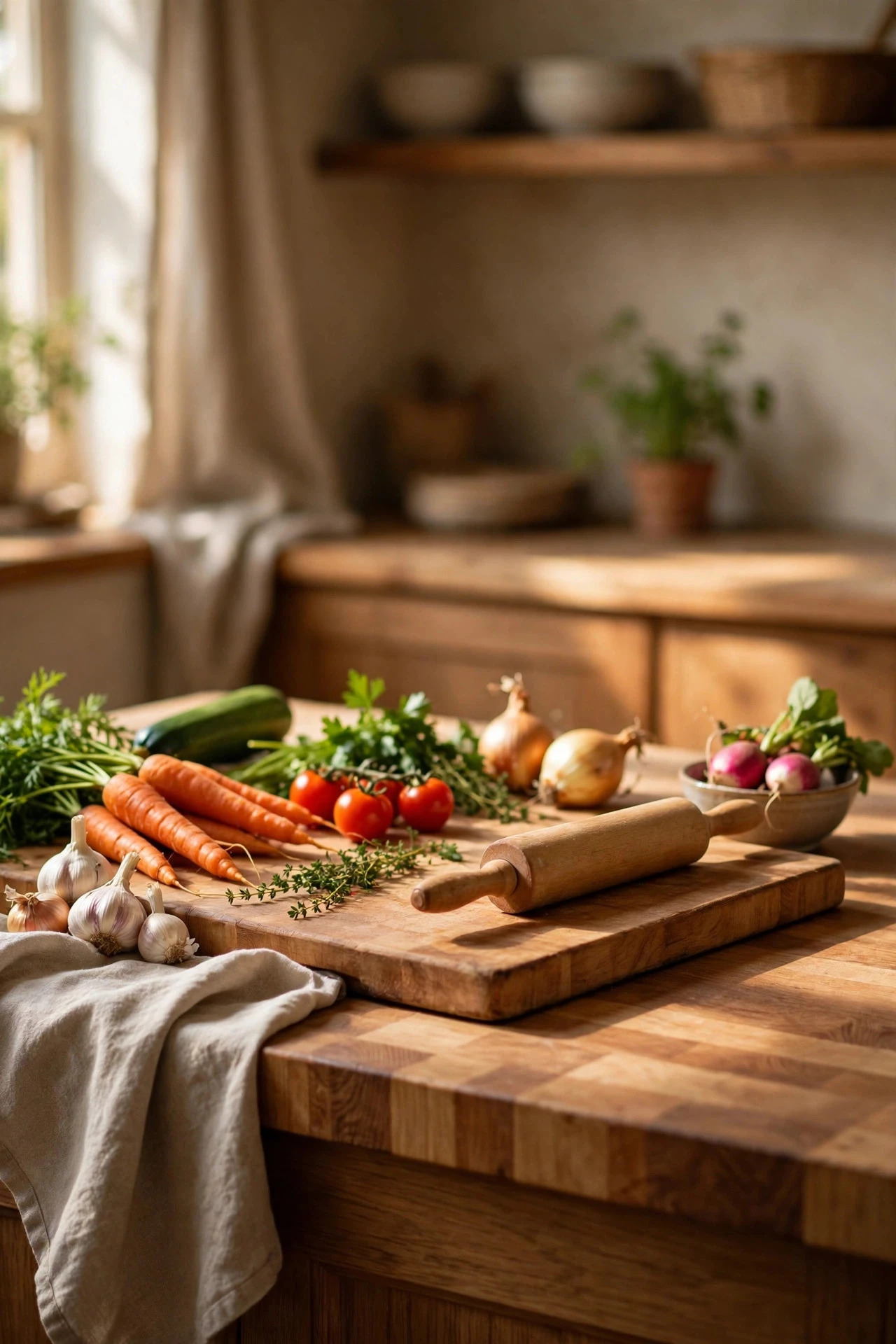
A butcher block worktop section brings instant warmth to a kitchen that works hard, because end-grain or edge-grain maple, walnut or oak feels soft under the hands, forgives knife marks, and can be sanded and re-oiled instead of replaced. Use butcher block for an island top or baking station, sealed with food-safe mineral oil and beeswax rather than a film finish that peels in heat. The surface needs oiling every four to six weeks, and must be wiped dry after washing up, never left standing in water. Butcher block costs $40 to $90 per square foot installed, against $60 to $120 for quartz. The mistake to avoid is running butcher block tight against a sink or hob with no sealing routine, where water and heat stain and warp the timber within a season.
6. Handmade Zellige Tile Backsplash in Warm White or Clay
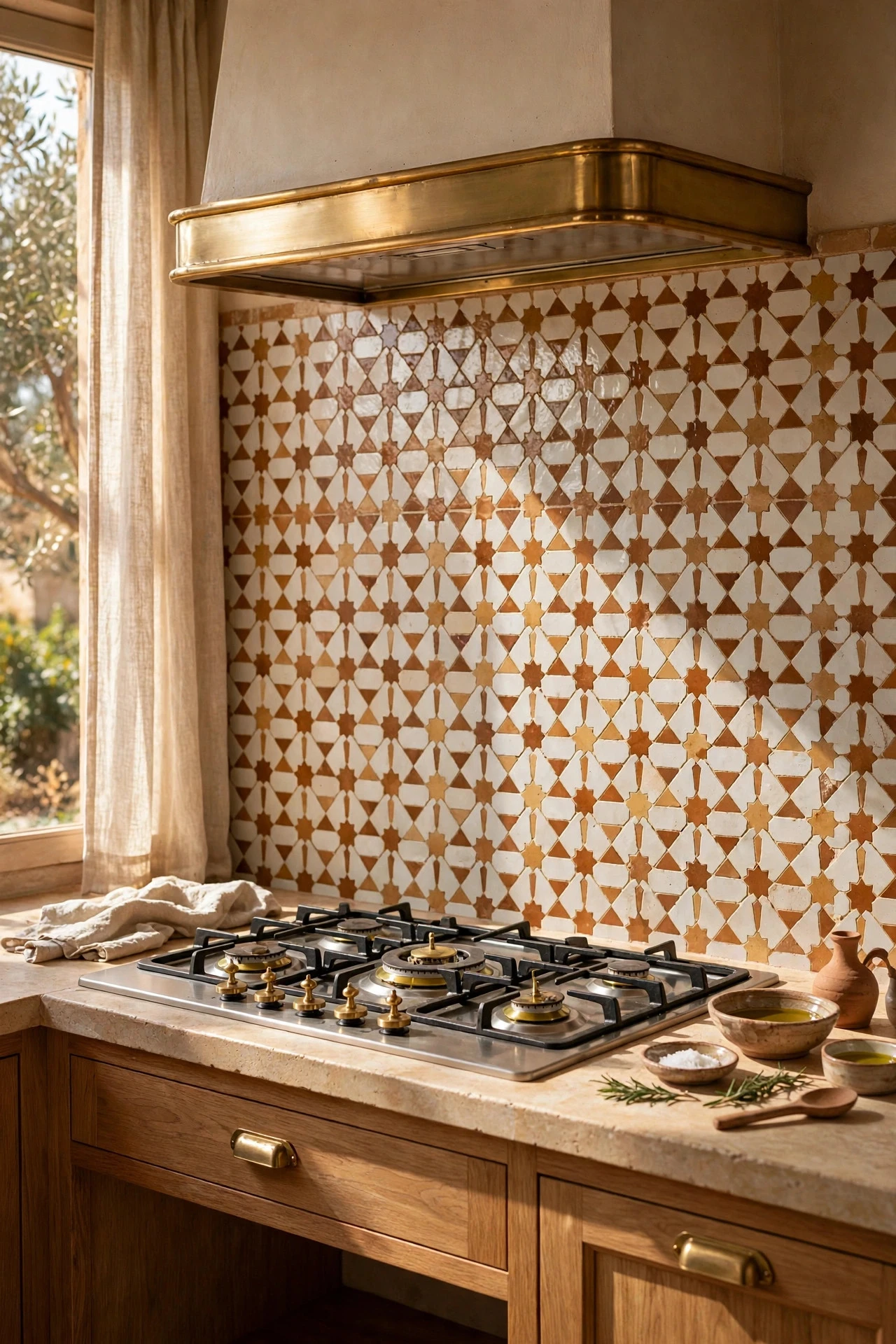
A handmade zellige tile backsplash adds warmth through imperfection, because each glazed tile varies slightly in tone, thickness and sheen, catching light differently across the wall in a way flat ceramic never does. Choose warm white, clay, sage or pale terracotta zellige in brick or square format, laid with a narrow grout joint close to the tile colour, so the variation takes centre stage. Glazed zellige resists splashes, tomato sauce and steam, and it wipes clean with a damp cloth, although the uneven surface needs a soft brush in the grout lines now and then. Order 15 percent extra for cuts and variation, and budget $15 to $30 per square foot for tile, plus $12 to $25 per square foot for installation. The mistake to avoid is pairing zellige with a dark contrasting grout, which hardens the handmade look and makes every uneven edge shout instead of glow.
7. Washable Linen and Cotton Textiles That Soften Hard Surfaces

Washable linen and cotton textiles are what stop a kitchen full of stone, tile and steel from feeling cold, because a linen cafe curtain, a woven runner and a stack of good tea towels add softness, colour and movement that hard surfaces cannot provide. Choose machine-washable linen or cotton in warm white, oatmeal, sage or muted stripe, hung as a cafe curtain, laid as a flatweave runner at the sink, and kept as tea towels in a drawer. Natural fibres absorb steam, dry quickly and survive weekly washing at 40 degrees, while synthetic fabrics hold grease smells and pill. A cafe curtain costs $40 to $120, a runner costs $60 to $180, and quality tea towels cost $10 to $25 each. The mistake to avoid is using long, puddling curtains beside a hob, where fabric catches steam, splashes and heat, and becomes a fire and hygiene risk.
8. A Breakfast Nook Banquette for Slow Mornings and Homework
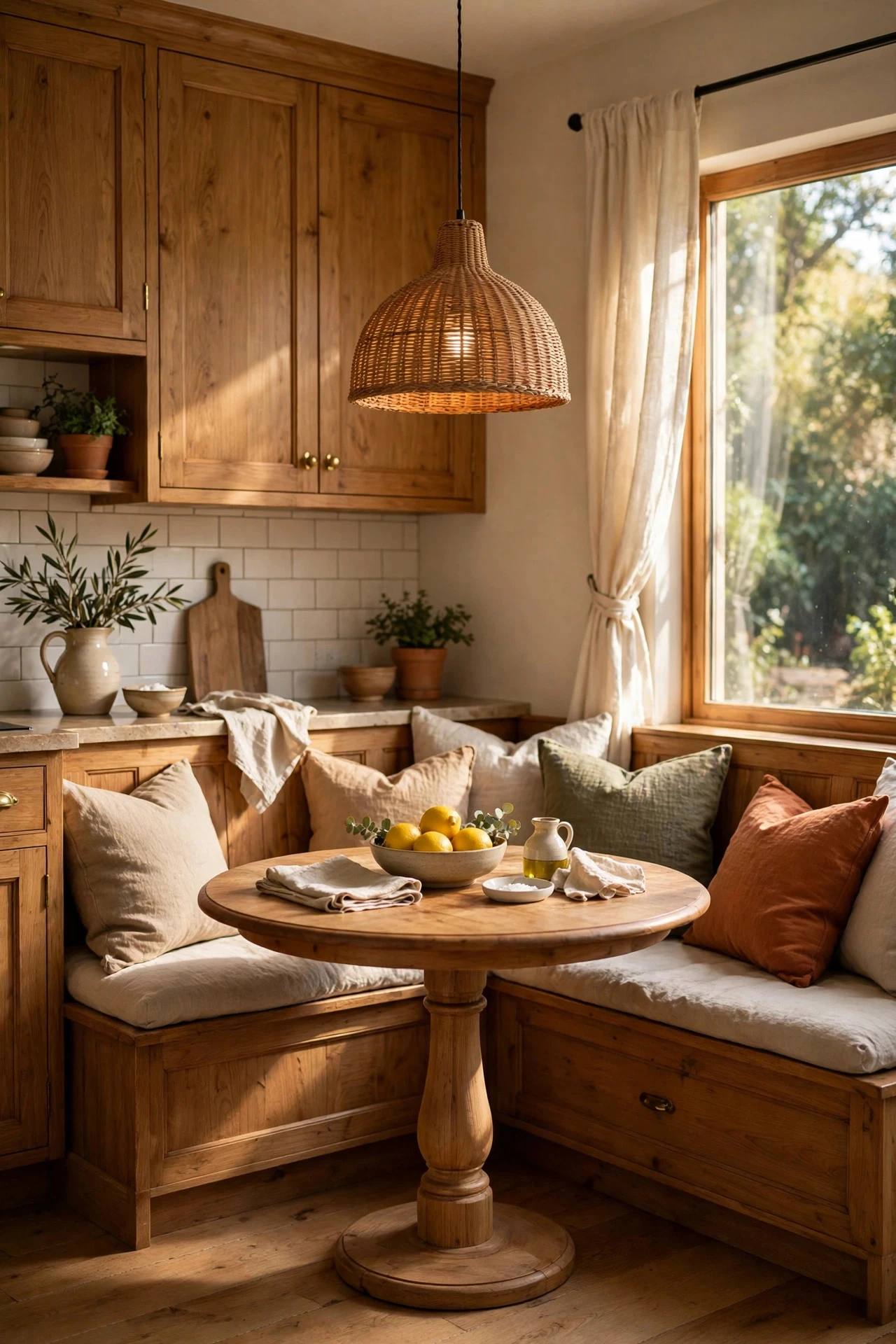
A breakfast nook banquette turns a corner of a hard-working kitchen into the warmest seat in the house, because built-in bench seating, a round pedestal table and a pendant above it invite people to linger long after the cooking is done. Build the banquette in painted wood or oak with a lift-up seat for storing linens and rarely used appliances, add 4 to 5 inch foam cushions in wipeable fabric, and keep the table 30 inches across for two or three people. A bench depth of 18 to 20 inches suits most adults, and a washable cushion cover makes jam and coffee a minor problem. A custom banquette costs $1,200 to $3,500, plus $300 to $800 for cushions. The mistake to avoid is building a banquette so deep or so tightly fitted that nobody can slide in and out easily, which leaves the prettiest seat in the kitchen unused.
9. Deep Warm Cabinet Colour on the Island or Lower Cabinets
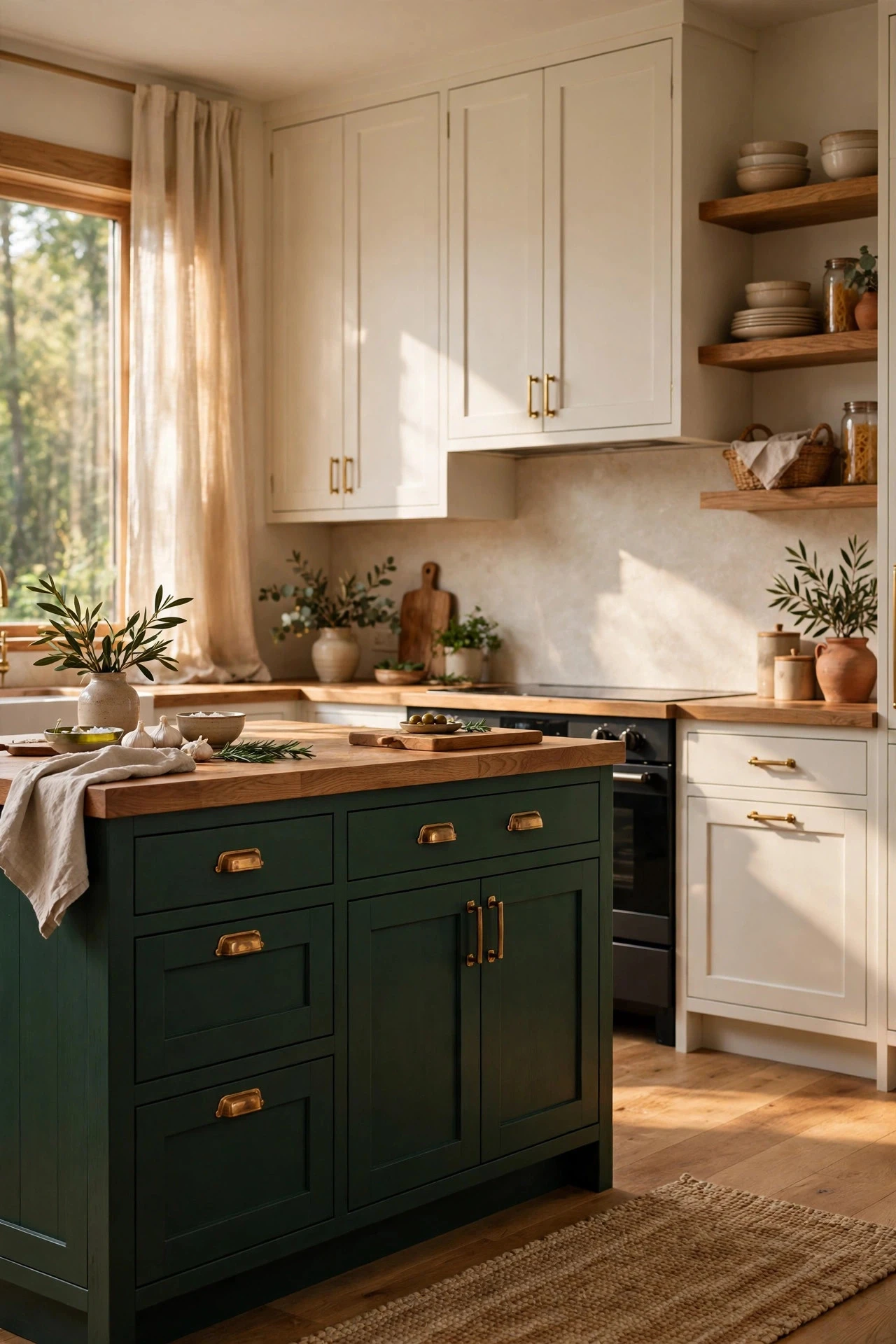
A deep warm cabinet colour on an island or lower cabinets adds cosiness without darkening the whole kitchen, because grounding the base of the room in forest green, warm charcoal, deep clay or ink navy lets pale worktops and warm wood above it glow. Paint only the island or lower run in the deep colour, using durable cabinet enamel, and keep uppers in warm white or oak so the room stays bright. Deep colours hide scuffs, fingerprints and cooking splashes better than pale paint at child and dog height, and they touch up easily with a small brush and leftover paint. Painting an island costs $400 to $900 professionally, or $80 to $200 in materials for a careful DIY job. The mistake to avoid is painting every cabinet dark in a small, north-facing kitchen, which shrinks the room and forces the lighting to work twice as hard all day.
10. Terracotta and Handmade Floor Tile Underfoot
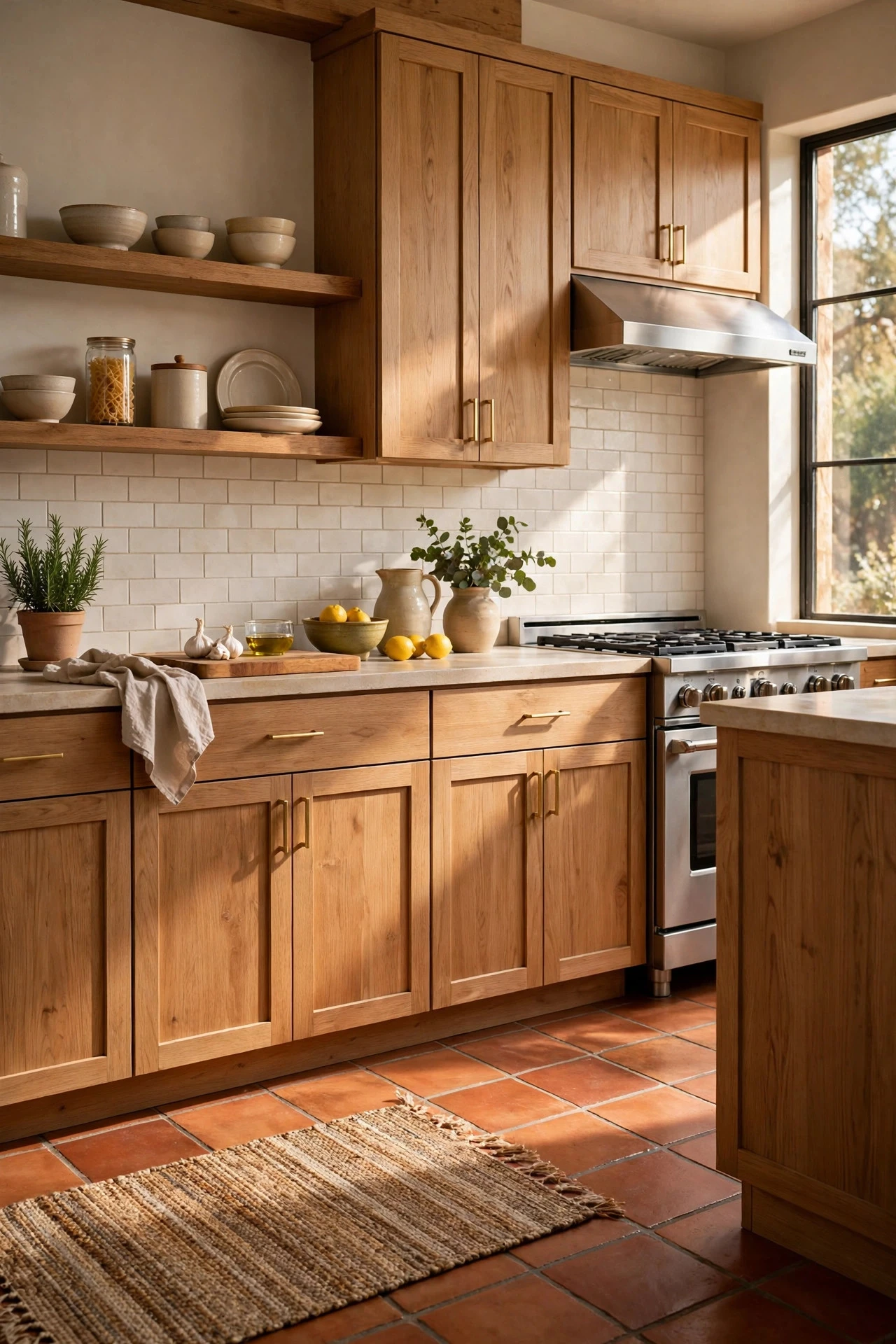
Terracotta and handmade floor tile bring warmth from the ground up, because their earthy, sun-baked tones and slight colour variation make a kitchen feel grounded and old in the best sense, even in a new-build home. Choose sealed terracotta or encaustic-look porcelain in warm rust, clay or honey tones, and seal natural terracotta on installation and every one to two years. Porcelain needs no sealing and resists stains and dropped pans, while genuine terracotta needs prompt wiping of oil and wine, which stain unsealed clay. Tile costs $8 to $20 per square foot, plus $10 to $20 per square foot for installation, and a simple brick pattern keeps labour and waste lower than herringbone. The mistake to avoid is laying unsealed terracotta in a busy cooking zone and discovering, too late, that every splash has left a permanent mark.
11. A Hanging Pot Rail and Copper Pans Within Easy Reach
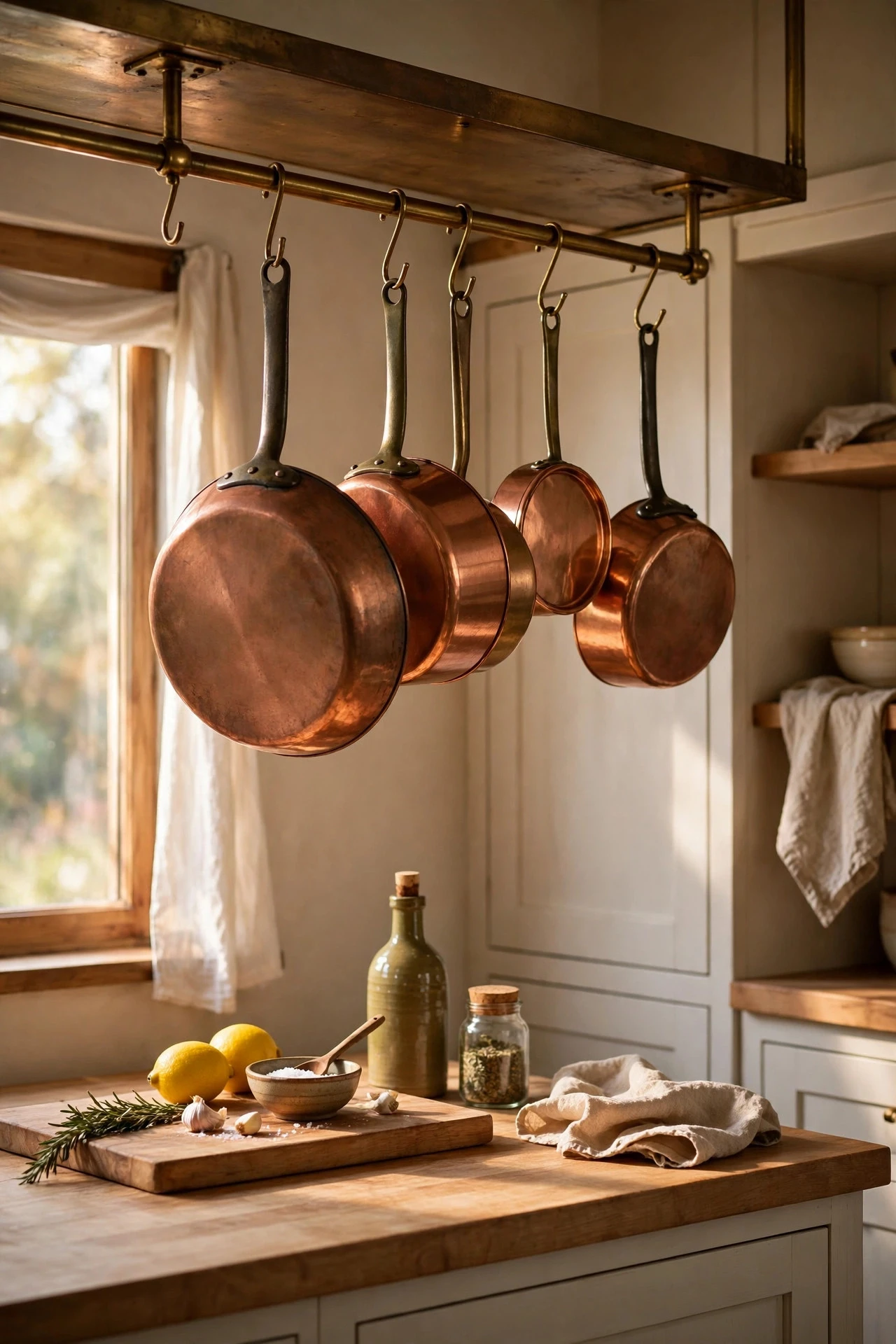
A hanging pot rail with copper or well-used stainless pans makes a working kitchen feel warm and honest, because tools that are used every day become the decoration, and a cook can reach for a pan without opening three cupboards. Mount a solid brass or blackened steel rail fixed into studs or joists, and hang only the pans you use weekly, spaced so they do not clang, with S-hooks that lift off for washing. Copper can be polished with lemon and salt, or left to darken naturally, while stainless and cast iron need drying after washing. A rail costs $60 to $200, and hooks cost $3 to $8 each. The mistake to avoid is overloading a rail fixed only into plasterboard, which sags, pulls out of the wall, and turns a charming display into a safety hazard.
12. Honed Marble or Soapstone With Warm Veining and a Lived-In Finish

Honed marble or soapstone with warm veining suits a hard-working kitchen that values character over perfection, because a matte, lived-in surface hides water marks and softens with use instead of demanding a showroom shine. Choose honed Carrara or Calacatta with warm grey-gold veining, or soapstone in charcoal-green that can be oiled to deepen its colour, accepting that marble etches faintly from lemon and vinegar while soapstone scratches sand out easily. Both stones need sealing on installation, marble every six to twelve months, and both clean with a pH-neutral cleaner and a soft cloth, never bleach or abrasive pads. Marble costs $60 to $120 per square foot installed, soapstone $70 to $110. The mistake to avoid is choosing polished marble for a busy family kitchen and then resenting every etch mark, when a honed finish would have made the same marks invisible.
13. A Pantry Wall and Pull-Out Storage That Hides the Clutter
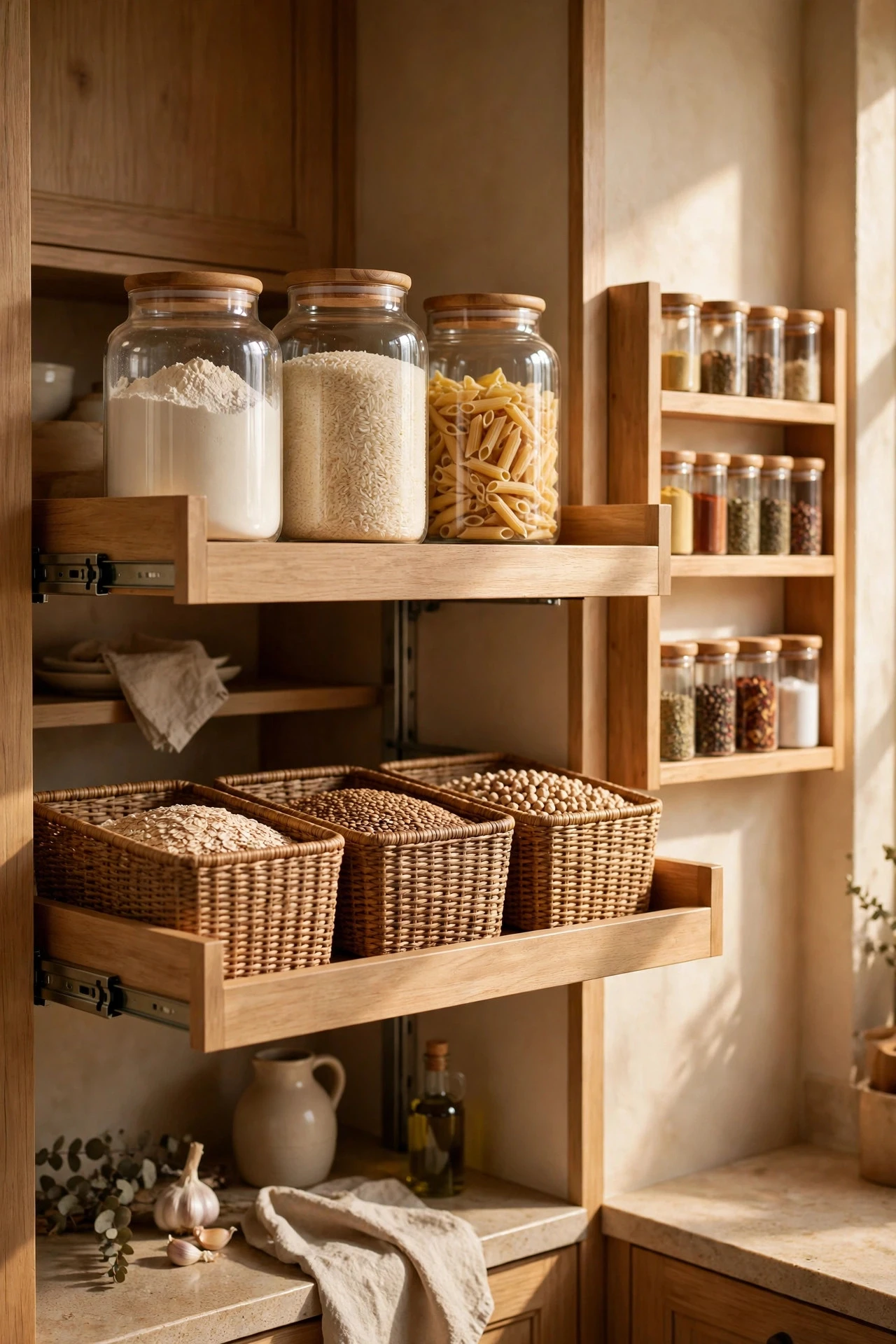
A pantry wall with pull-out storage is the warm kitchen's secret weapon, because a room feels calm and inviting only when the clutter of packets, tins, oils and appliances has a proper home behind closed doors. Fit a tall pantry cabinet with full-extension pull-out shelves, clear glass jars for flour, rice and pasta, labelled bins for snacks, and a spice rack inside a door, so everything is visible and nothing hides at the back. Full-extension runners support heavy jars without tipping, and a 12 to 16 inch depth keeps items one row deep, so nothing is swallowed at the back. A pantry cabinet costs $800 to $2,500, pull-outs cost $60 to $180 each, and jars cost $8 to $25 each. The mistake to avoid is building deep, fixed shelves with no pull-outs, where food disappears, expires unseen, and the clutter creeps back onto the worktops.
14. A Statement Range Hood in Plaster, Wood or Warm Metal
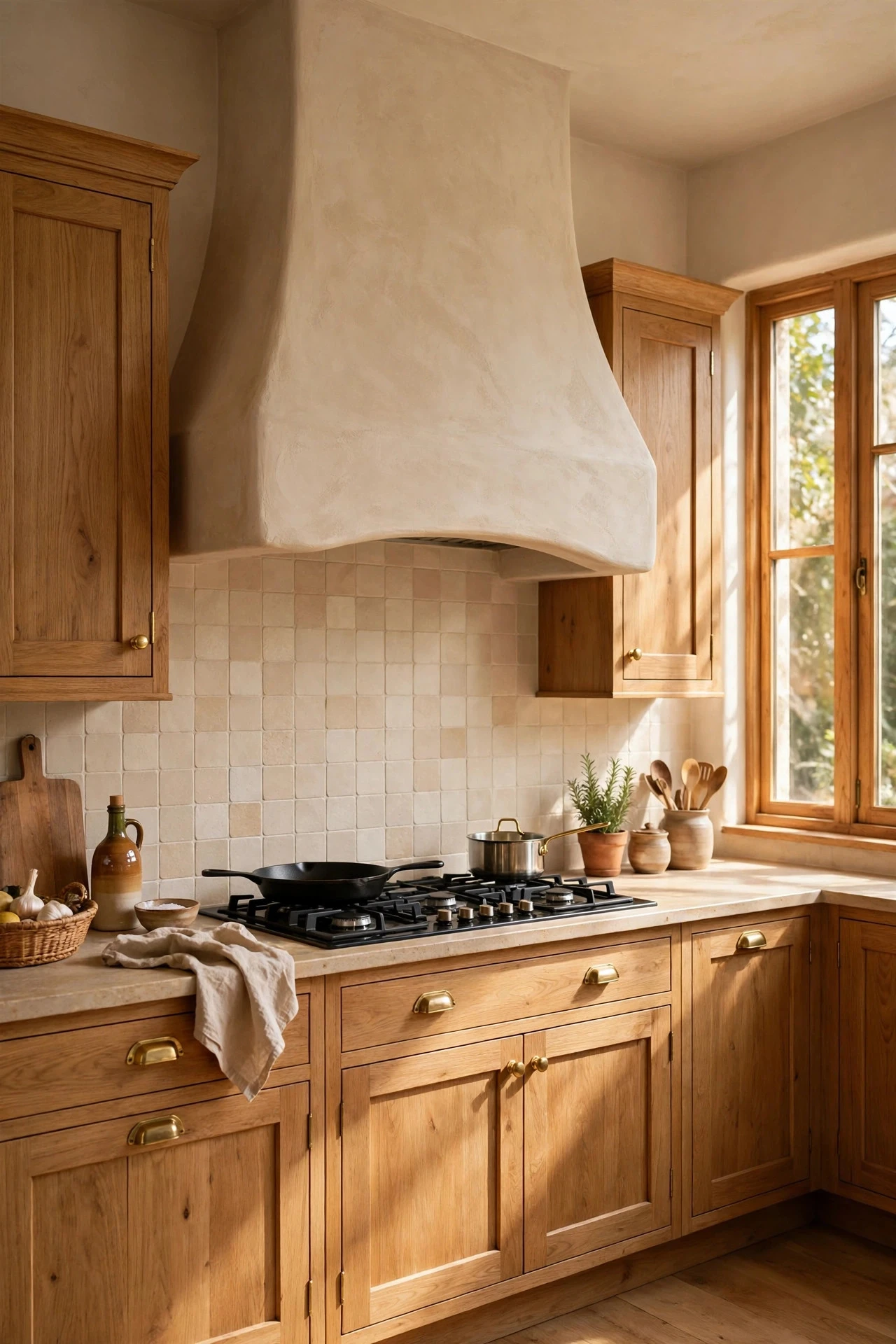
A statement range hood anchors a hard-working kitchen, because it frames the hob, draws the eye upward, and gives the room a hearth-like focal point that a small steel canopy never achieves. Choose a plaster hood with soft edges, a wood hood clad in oak, or a warm brass or copper hood, at least as wide as the hob and mounted 30 to 36 inches above it for gas, or 24 to 30 inches for induction. Behind the beauty, the extractor matters more: aim for 600 cubic feet per minute or more for serious frying and searing, ducted outside where possible, with a grease filter that removes for washing. A plaster or wood hood costs $1,500 to $4,500, plus $400 to $1,200 for the insert. The mistake to avoid is choosing a beautiful hood with a weak, recirculating fan, which leaves grease and cooking smells settling on every warm surface in the room.
15. Collected Vintage Pieces and Wooden Bowls That Tell a Story
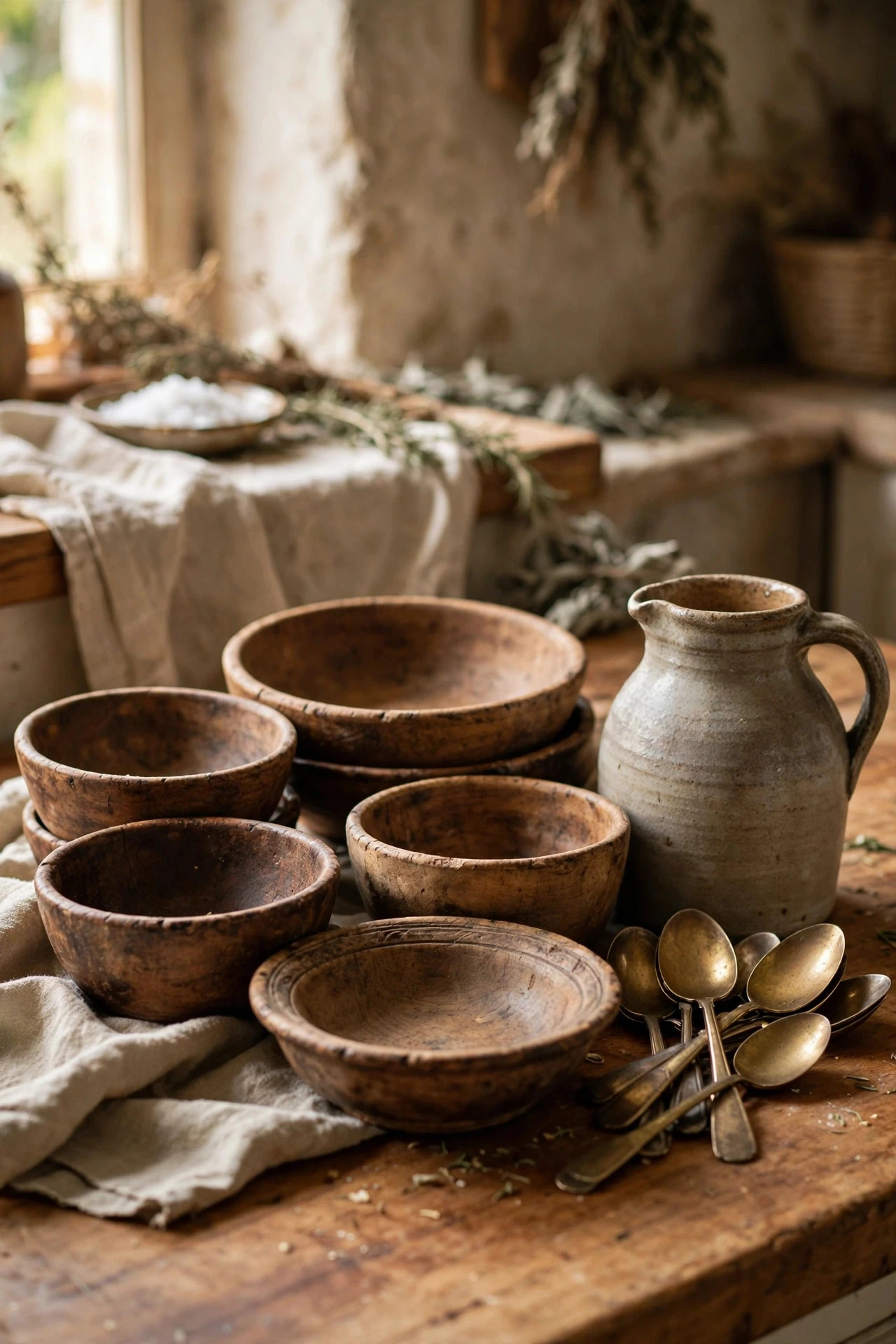
Collected vintage pieces and wooden bowls give a kitchen warmth that new accessories cannot fake, because a worn bread board, a stoneware jug, a set of mismatched brass spoons and a stack of wooden bowls carry patina, history and the evidence of real use. Source one or two genuine vintage items at a time from antique shops or family cupboards, choosing wood, stoneware, enamel and brass that can be washed and used, grouped in odd numbers on a worktop or shelf. Wooden bowls need hand-washing and occasional oiling with food-safe oil, stoneware goes in the dishwasher, and brass should be kept away from acidic foods unless it is lined. Vintage bowls cost $15 to $60 each; see 24 cozy farmhouse kitchen designs that feel like home for this collected look. The mistake to avoid is filling the kitchen with fragile, purely decorative vintage items that cannot be washed or used, which turns a working room into a museum nobody wants to cook in.
16. A Window Herb Garden and Greenery That Earns Its Place
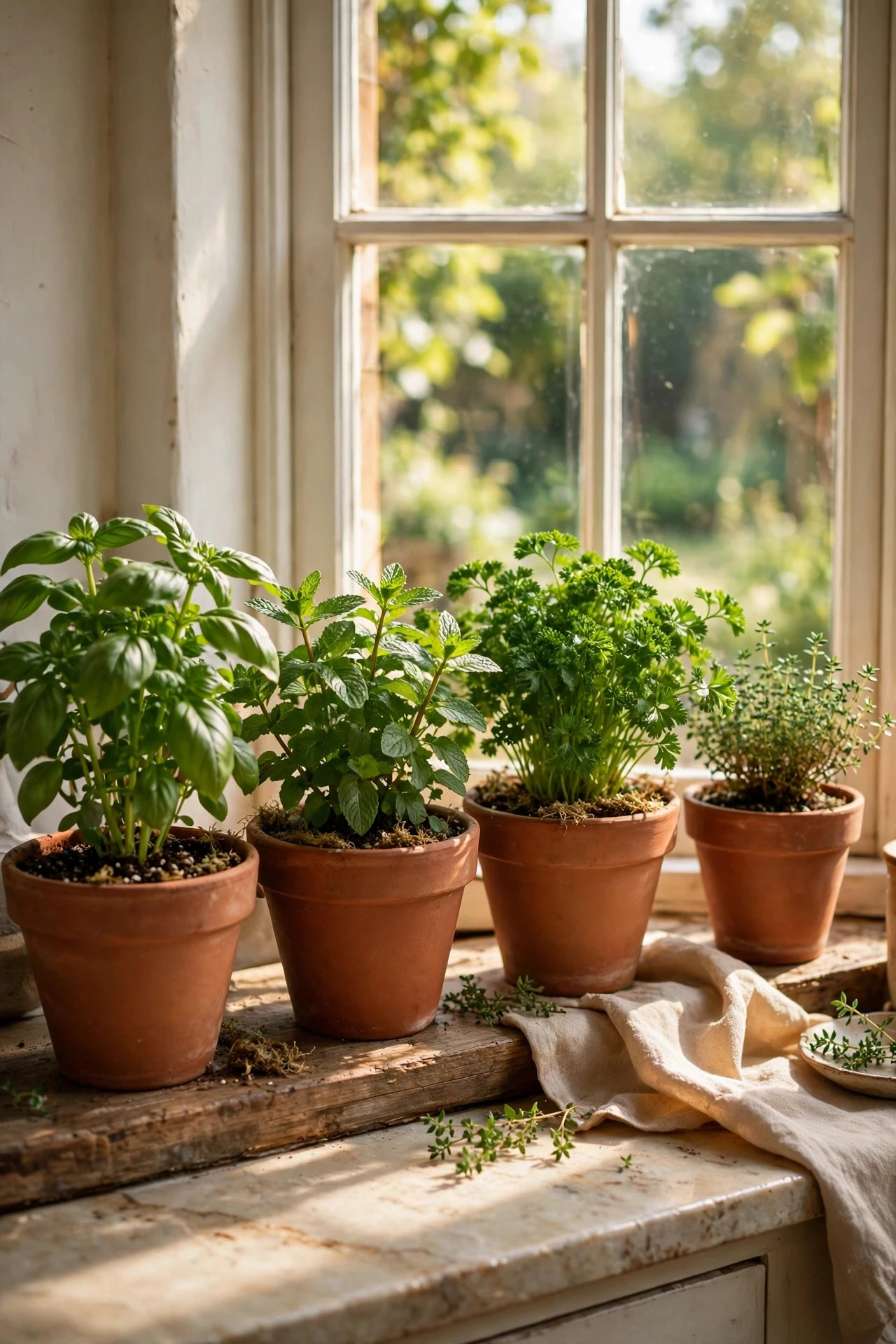
A window herb garden makes a kitchen feel alive and warm, because fresh basil, mint, parsley and thyme add green, scent and flavour at the exact spot where they are chopped and cooked. Grow herbs in terracotta pots or a wooden trough on the sunniest sill, giving most herbs six hours of light a day, watering when the top inch of soil feels dry, and harvesting regularly so plants stay bushy. Herbs thrive in free-draining compost, need a saucer or tray to protect sills and worktops, and should be kept away from direct heat above a radiator or hob, which dries them out. Pots cost $8 to $25 each, a trough $30 to $80, and herb plants $3 to $8 each. The mistake to avoid is planting herbs in pots with no drainage and watering on a fixed schedule, which rots the roots and leaves a sad, leggy display within weeks.
17. Island Seating in Wood and Upholstery That Invites Lingering

Island seating in wood and upholstery invites people to stay, because a hard, backless metal stool says perch for five minutes, while a wooden stool with a back, a footrest and a wipeable upholstered seat says settle in for coffee and conversation. Choose counter stools 24 to 26 inches high for a 36 inch island, or 28 to 30 inches for a 42 inch bar-height island, allowing 24 inches of width per person and 12 to 15 inches of knee space beneath the overhang. Oak or walnut frames with rush, leather or performance-fabric seats survive spills and daily use, and a footrest 12 inches from the floor keeps legs comfortable. Stools cost $150 to $450 each, and three stools suit most islands. The mistake to avoid is choosing stools without a footrest or with the wrong height, which leaves guests dangling, fidgeting and drifting away from the island entirely.
18. Warm Metals Layered With Restraint: Brass, Copper and Black
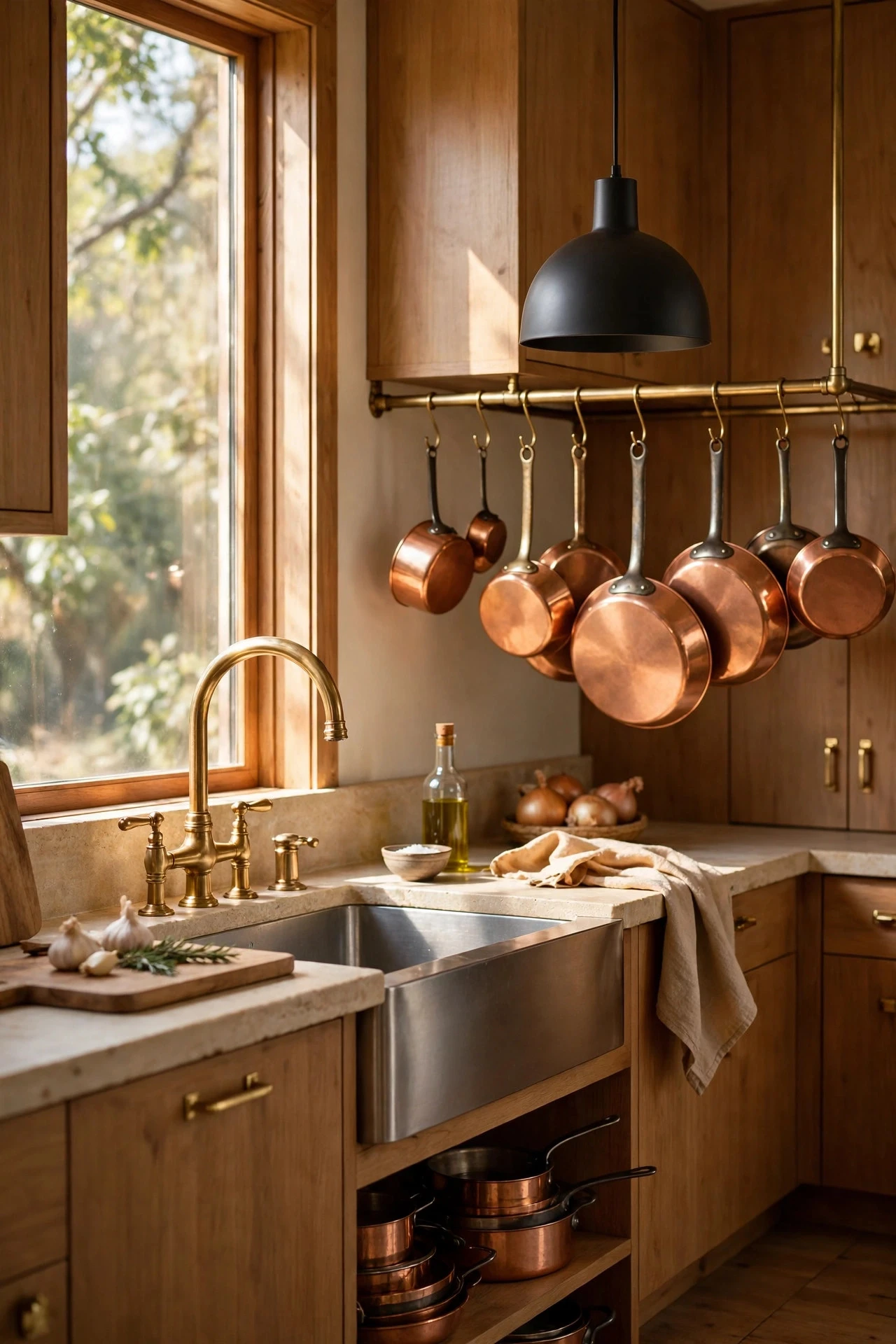
Warm metals layered with restraint give a kitchen depth without chaos, because brass, copper and a touch of matte black each catch light differently, and together they make wood and stone look richer. Use brass as the dominant metal for faucet, hardware and lighting, add copper in one place only, such as a pot rail or pans, and keep matte black to a single accent, so no metal competes for attention. Keep finishes in the same warmth family, warm brass with warm copper, and clean each with the method suited to it, soapy water for brass, lemon and salt for copper, and a damp cloth for black powder-coating. A mixed-metal scheme costs no more than a single-finish scheme if planned before ordering. The mistake to avoid is using equal amounts of brass, copper, chrome, nickel and black throughout, which reads as indecision rather than layering and makes the kitchen feel busy.
19. A Coffee and Tea Station That Warms the Morning Routine
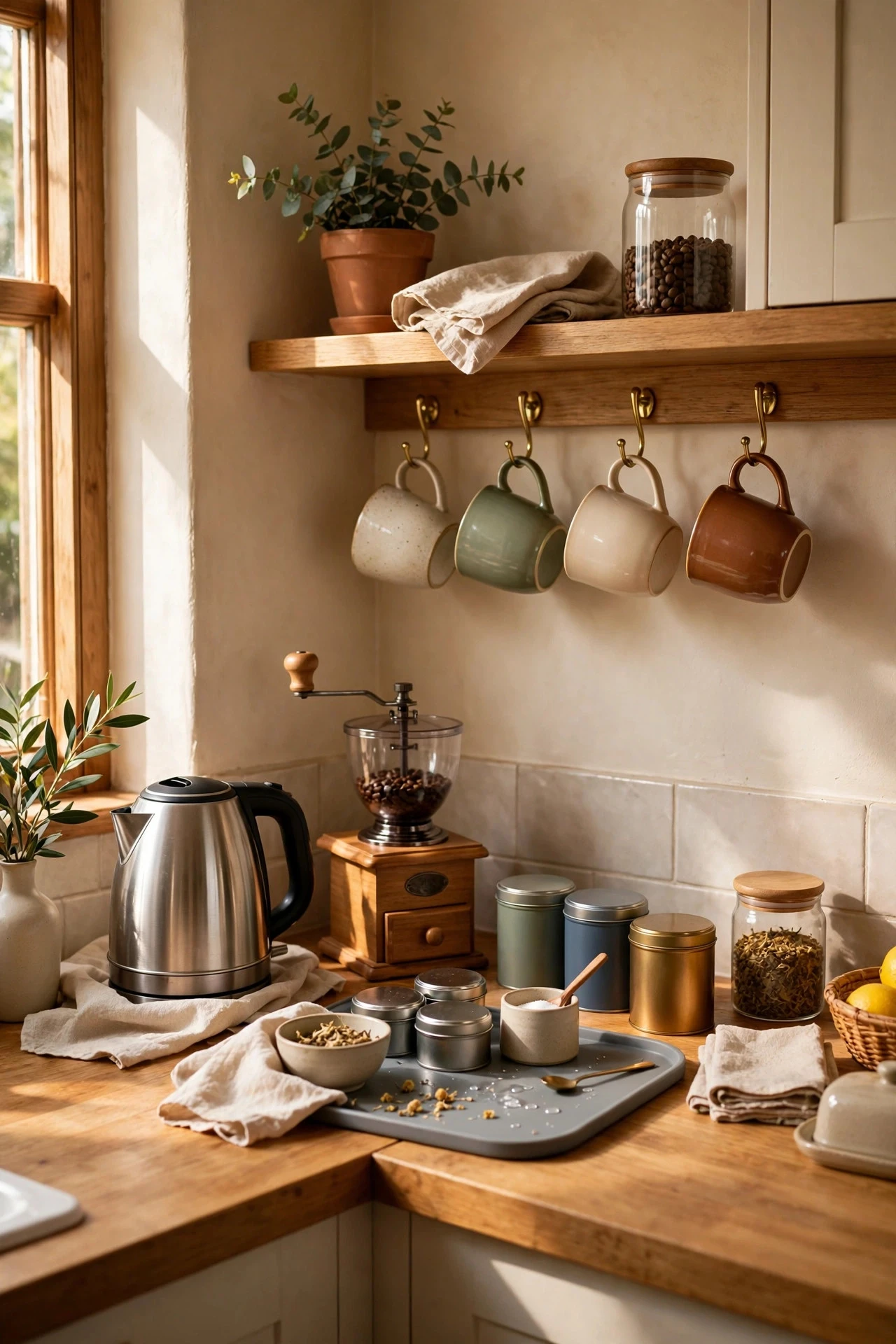
A coffee and tea station warms the morning routine, because a dedicated corner with a kettle, grinder, mugs, tea tins and a small tray turns the first ten minutes of the day into a small ritual instead of a hunt through cupboards. Set the station away from the main cooking zone, with a heat-proof mat under the kettle or machine, a jar for beans and tea, mugs on hooks above, and a wipeable tray for drips. Keep the station near the sink, and choose a machine with a removable tank and drip tray, which makes cleaning a two-minute job. A station costs $50 to $150 for trays, jars and hooks, plus $100 to $600 for a coffee machine. The mistake to avoid is placing the coffee station tight beside the hob, where steam, grease and splashes coat the machine, mugs and beans within days.
20. Durable, Easy-Clean Surfaces Chosen for Grease and Steam
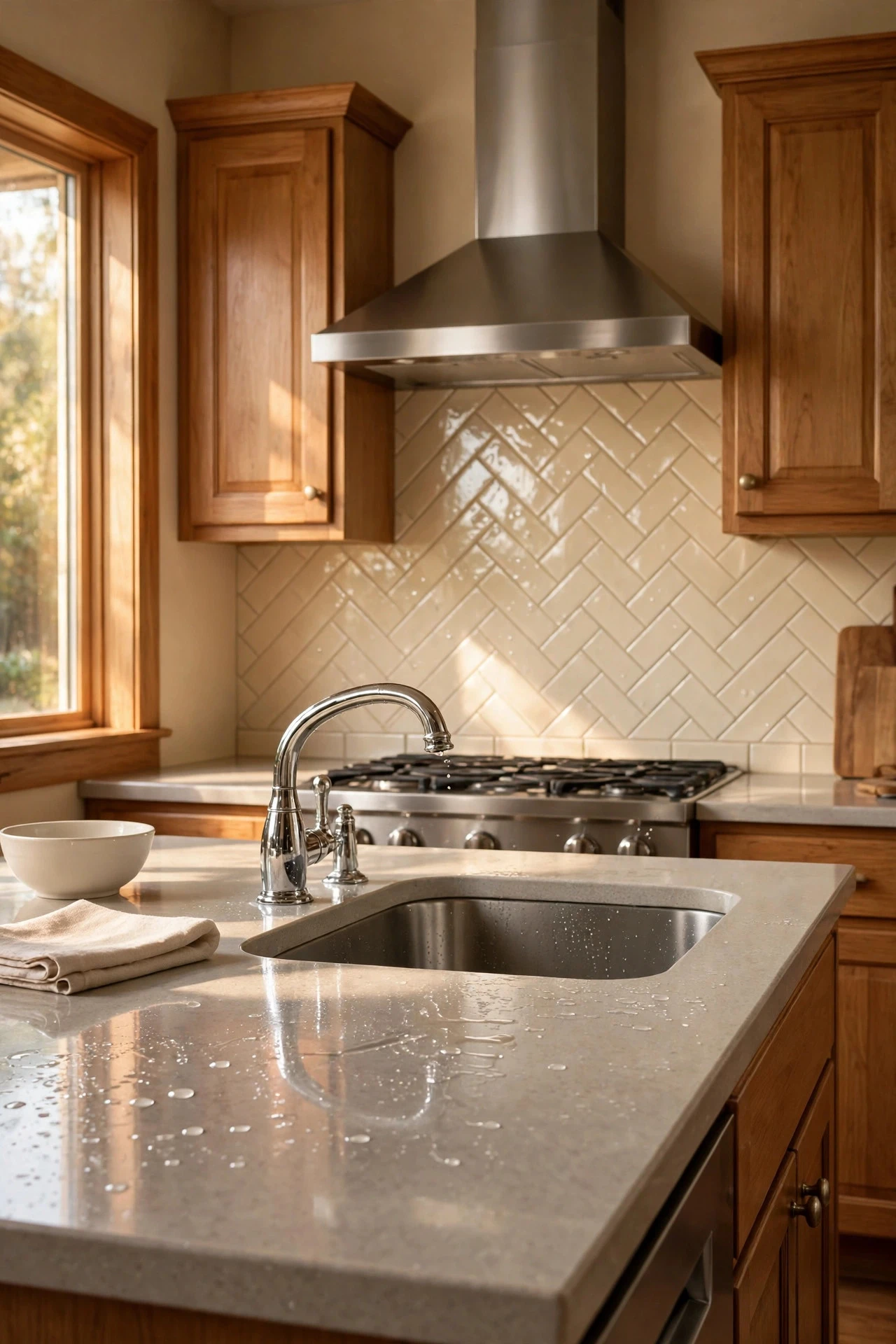
Durable, easy-clean surfaces are what keep a warm kitchen warm, because a beautiful finish that stains, chips or holds grease will soon feel tired, while quartz, sealed porcelain and wipeable paint stay calm under daily cooking. Choose quartz or porcelain worktops with a matte finish that hides fingerprints, a glazed tile backsplash that wipes clean, and washable paint on walls, so steam and oil come off with warm soapy water. For floors, choose porcelain or sealed natural stone with a textured, slip-resistant finish, and keep grout sealed and cleaned with a pH-neutral cleaner, since dark, greasy grout lines age a kitchen faster than any other detail. Quartz costs $60 to $120 per square foot, porcelain tile $8 to $20. The mistake to avoid is choosing rough, unsealed stone or open-grain wood for the splash zone behind the hob, where grease soaks in and no amount of scrubbing fully restores the finish.
21. Ventilation and Steam Control That Protects Every Warm Finish
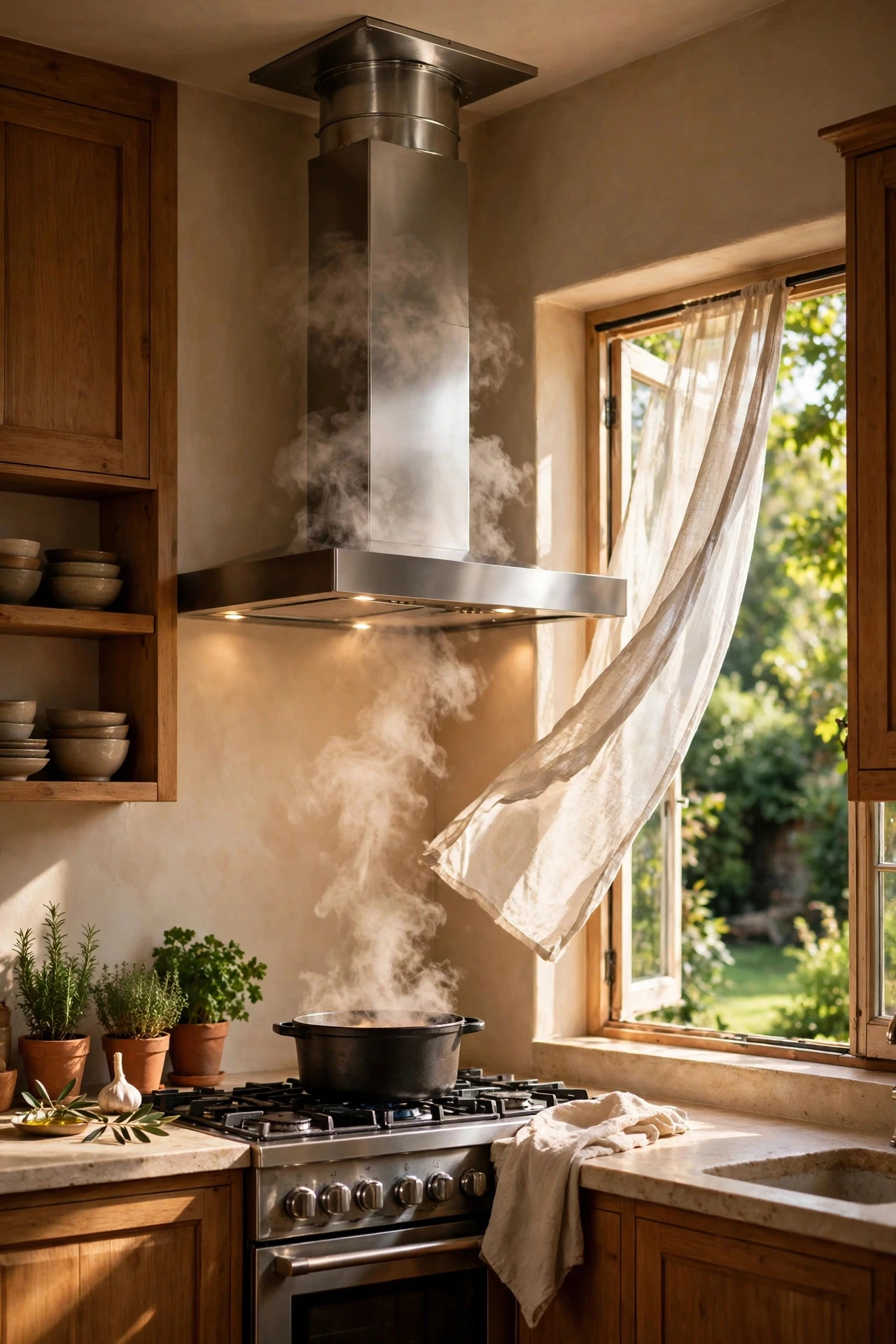
Ventilation and steam control protect every warm finish in the kitchen, because wood, brass, plaster and textiles all suffer when steam, grease and cooking smells have nowhere to go. Run a ducted extractor rated at 600 cubic feet per minute or more when frying or boiling, leave it running ten to fifteen minutes after cooking, and open a window opposite to carry steam away from cabinets and shelves. Clean or replace grease filters monthly in heavy use, wipe cabinet fronts and shelf edges weekly with a damp cloth, and keep a small dehumidifier or good airflow in a kitchen with no external window. A ducted extractor costs $400 to $1,200, filters cost $20 to $60, and a replacement filter subscription costs little. The mistake to avoid is relying on a recirculating hood with a clogged filter, which pushes greasy air back into the room and coats warm wood and brass in a sticky film that dulls them within months.
22. A Rotating Display System for a Clutter-Free, Lived-In Look
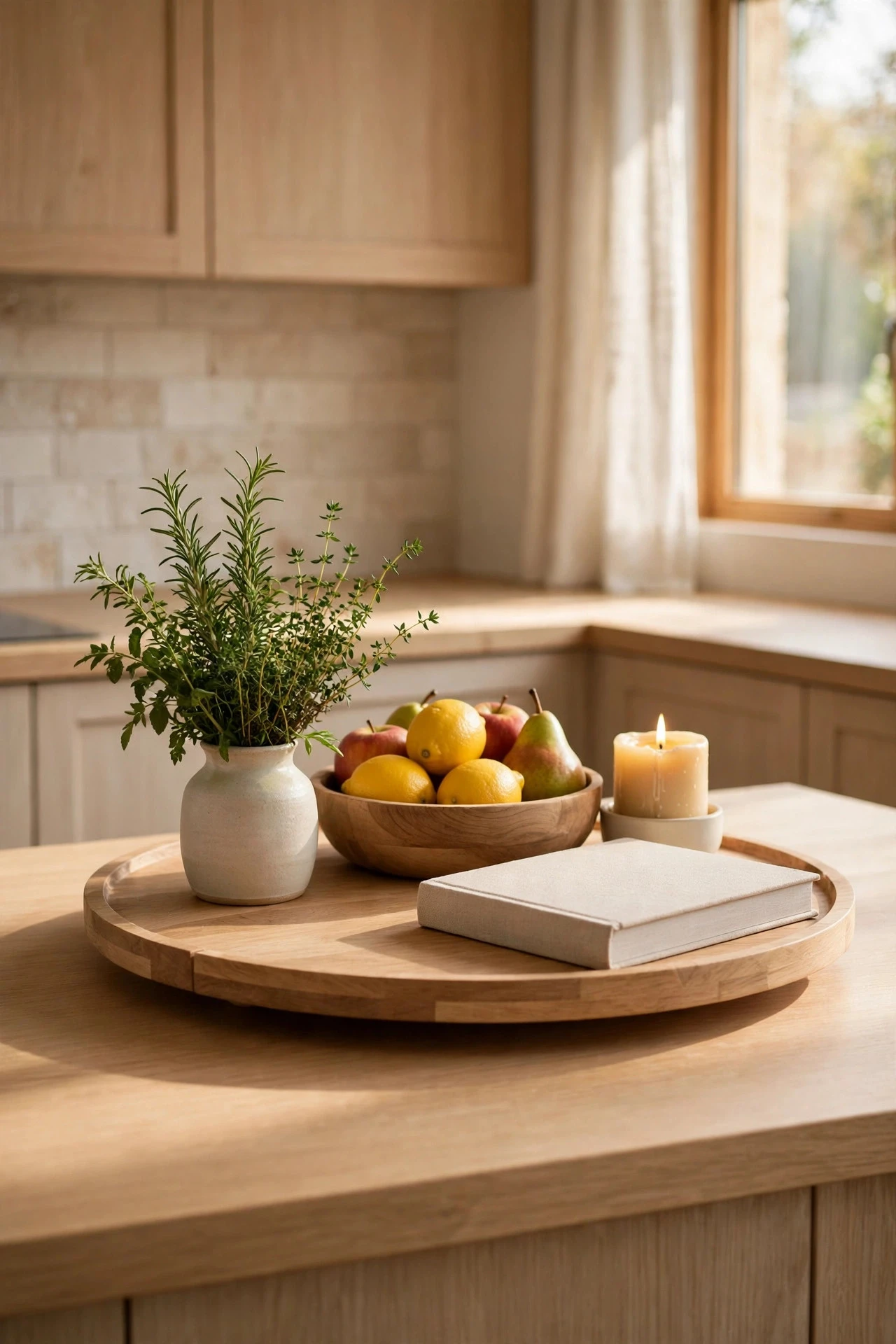
A rotating display system keeps a hard-working kitchen feeling warm and lived in without ever tipping into clutter, because a small, intentional display that changes with the week or the meal looks cared for, while a static crowd of objects slowly gathers dust and grease. Choose one shelf, tray or windowsill as the display spot, limit it to three to five items, such as herbs, a bowl of fruit, a candle and a cookbook, and swap one item each week. Everything else lives behind closed doors, in the pantry or in a drawer, so worktops stay clear for chopping, rolling and serving, and cleaning takes minutes. A tray costs $30 to $90, a vase $20 to $60, and the system itself costs nothing beyond discipline. The mistake to avoid is adding to the display without ever removing anything, which is how a charming shelf quietly becomes the cluttered surface it was meant to prevent.
Practical Tips
Budget in three clear tiers, so warmth is achievable at any spend and the kitchen improves in the right order. At $150 to $500, focus on textiles, a tray, a pot rail, herbs and warm light bulbs, which transform the feel without any trade work. At $800 to $2,500, add brass hardware, open shelving, a statement pendant or two and a coffee station, and at $5,000 to $20,000 or more, plan oak cabinetry, stone worktops, a plaster range hood and a pantry wall, getting two contractor quotes and checking lead times for oak, brass and stone. For guidance before a large purchase, the room guides at The Spruce and kitchen galleries at Houzz are useful second opinions, and House Beautiful covers warm kitchen colour and lighting.
Keeping a working kitchen clean is a daily system, not a weekend deep clean, so build habits that take minutes and protect the finishes you have invested in. Wipe worktops after every meal, run the extractor during and after cooking, put appliances away once cool, and reset the display tray in a two-minute tidy. Clean wood with a damp cloth and dry it immediately, clean brass with soapy water, clean stone with a pH-neutral cleaner, and never use bleach, ammonia or abrasive pads on any of these surfaces, since they strip finishes, etch stone and dull brass. A weekly wipe of shelf edges and cabinet fronts prevents the grease film that makes even a beautiful kitchen feel tired.
Lighting and ventilation work as a pair, so plan them together rather than treating light as decoration and the extractor as an afterthought. Layer task light over worktops at 2700K, pendant light over the island or table on a dimmer, and soft under-cabinet light for evening, keeping fittings damp-tolerant near steam, and place switches where they can be reached without crossing a hot hob. Ventilate with a ducted extractor of at least 600 cubic feet per minute for serious cooking, run it for ten to fifteen minutes after the meal, and use a window for cross-flow where possible, since dry, grease-free air lets oak stay honeyed, brass stay warm and textiles stay fresh. The same warm colour thinking shapes a whole-room palette, as the kitchen color ideas that make your space look modern, warm and expensive show.
Final Thoughts
A warm, hard-working kitchen is built not by one grand gesture, but by wood that wipes clean, brass that ages gracefully, light that flatters at every hour, textiles that wash well, and storage that hides clutter, repeated consistently. Start with three or four ideas, live with them through a week of real cooking, and add the next layer only when the room still asks for it.
You May Also Like: – 25 Black Kitchen Ideas That Look Modern, Elegant, and Timeless – 22 Kitchen Island Decor Ideas for a Stylish, Functional Kitchen
Frequently Asked Questions
How do I make a kitchen feel warm without a full remodel?
Start with light, textiles and metals, which change the feel fastest for the least money. Swap to dimmable 2700K LEDs, add a linen curtain and runner, fit brass pulls, and style one shelf with wood and greenery. These moves cost $150 to $500 and warm the room the same day.
What is the warmest cabinet colour for a hard-working kitchen?
Warm white oak is the warmest low-risk choice: its honeyed grain suits any light and hides wear well. For paint, choose warm white with a yellow undertone, or deep green or clay on the island only. Avoid cool grey and stark white, which read cold beside steel and stone.
How do I keep open shelving clean in a kitchen I cook in every day?
Keep open shelves away from the hob, use only daily items that are washed often, and wipe shelves weekly. A ducted extractor run during and after cooking stops most grease reaching them. Limit shelves to one or two runs, keep the rest closed, and leave a third empty.
Are brass fixtures practical in a kitchen that gets steamed and splashed daily?
Yes, if you choose solid brass and accept its living finish. It tolerates steam and splashes, cleans with warm soapy water, and develops a patina that hides water marks. Avoid abrasive pads and acidic descalers, which strip the finish unevenly.
What worktop survives daily cooking and still looks warm?
Quartz with a warm, lightly veined pattern is the easiest warm-looking worktop for daily cooking: it resists stains, heat and scratches and needs no sealing. Honed marble and soapstone look warmer but need sealing and accept etching. Butcher block is warmest but needs oiling every four to six weeks.
How much should I budget to warm up a hard-working kitchen?
A textile, lighting and hardware refresh costs $150 to $500, a mid-range update with shelving, pendants and a coffee station costs $800 to $2,500, and a full update with oak cabinetry and stone starts around $5,000. Spend first on light, storage and daily surfaces, then add statement pieces.