25 White Kitchen Ideas That Feel Fresh, Warm & Timeless
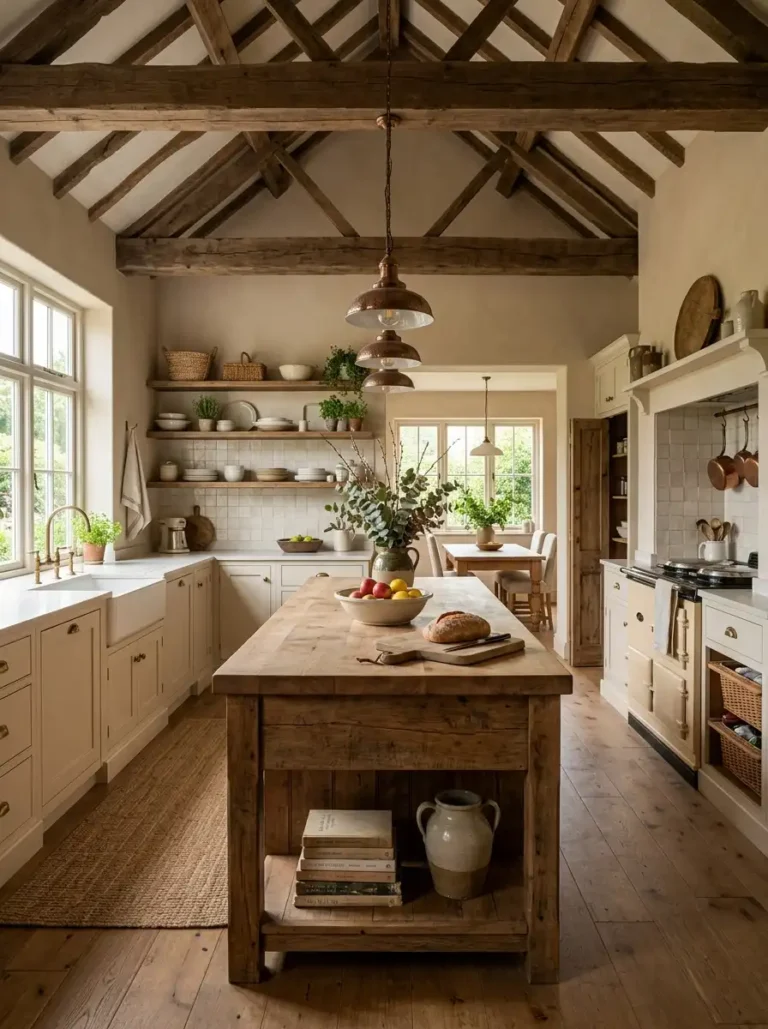
The secret is in the details. Warm wood, natural stone, contrasting hardware, textured backsplashes, thoughtful lighting, and carefully chosen finishes can give a white kitchen depth and personality.
Whether you are remodeling a large open kitchen, updating a small apartment kitchen, or simply looking for ways to make white cabinets feel more interesting, these 25 white kitchen ideas offer practical inspiration for creating a space that feels stylish and comfortable.
1. Warm White Cabinets With Natural Wood
Warm white cabinets are a great starting point if you want a kitchen that feels bright without looking stark. Unlike cool, blue-based whites, warmer shades have subtle beige or cream undertones that create a softer atmosphere.
Pair the cabinets with natural oak shelves, a wood island, or light wood flooring. The natural grain introduces texture and prevents the white cabinetry from becoming visually flat.
For countertops, choose creamy quartz, limestone-inspired surfaces, or lightly veined stone. Brushed brass hardware can add warmth, while brushed nickel creates a cleaner contemporary appearance.
This combination works particularly well in transitional, Scandinavian, farmhouse, and organic-modern kitchens.
2. White Kitchen With Marble Countertops
White cabinets and marble countertops create one of the most timeless kitchen combinations. The cabinetry provides a clean foundation while the natural veining adds movement and visual interest.
For a softer look, choose marble with subtle gray or beige veins. If you want the countertop to become the main focal point, choose a stone with more noticeable veining.
You can extend the marble or marble-look material vertically as a backsplash to create a seamless appearance behind the countertops.
Keep the cabinet hardware relatively simple so the natural stone remains the star of the room.
3. White Cabinets With Brass Hardware
Brass hardware can instantly warm up an otherwise simple white kitchen.
Use brass cabinet pulls, knobs, faucets, and pendant lights to create a consistent metallic accent. Choose brushed or aged brass if you want a softer, more sophisticated finish instead of highly polished gold.
Warm white cabinets work particularly well with brass because both have similar warm undertones.
Add natural wood or creamy stone to complete the palette. You do not need many additional colors because the brass provides enough contrast.
4. White and Light Oak Kitchen
White cabinetry paired with light oak is an excellent choice for a modern kitchen that still feels comfortable and natural.
Use white for the main cabinetry and introduce oak through an island, open shelves, flooring, or selected upper cabinets.
The pale wood adds warmth while maintaining the light appearance of the room. This combination is especially effective in Scandinavian and minimalist interiors.
Keep the backsplash simple and use neutral countertops so the relationship between the white cabinetry and oak remains easy to see.
5. White Kitchen With Matte Black Accents
For stronger contrast, combine white cabinetry with matte black details.
Black can be introduced through cabinet handles, faucets, pendant lights, bar stools, window frames, or small appliances.
The key is to distribute the black accents rather than concentrating them in one area. This creates visual balance throughout the kitchen.
Natural wood can soften the contrast, while light stone countertops keep the room from becoming too dark.
6. White-on-White Kitchen With Layered Textures
A completely white kitchen can still have plenty of character when you layer different materials and textures.
Combine smooth painted cabinets with textured backsplash tile, lightly veined countertops, plaster walls, ceramic accessories, and subtle wood details.
You can also vary the finish. Matte cabinets next to a slightly glossy backsplash create a gentle contrast even though both surfaces are white.
This approach works especially well in minimalist kitchens because texture provides interest without introducing multiple colors.
7. White Shaker Cabinets With Subway Tile
White shaker cabinets and subway tile create a classic kitchen combination that can work in both traditional and modern homes.
For a clean appearance, match white cabinets with white subway tile and light grout. For slightly more definition, use a warm gray or beige grout.
The tile layout can also change the appearance. Traditional running bond creates a familiar look, while vertical stacking feels more contemporary.
Add wood shelves or simple brass hardware if you want to keep the kitchen from feeling too uniform.
8. Modern Minimalist White Kitchen
A minimalist white kitchen relies on clean lines, simple cabinet fronts, and limited decoration.
Choose flat-panel or slab-style cabinets with integrated or discreet handles. Keep countertops mostly clear and use a restrained backsplash.
Large uninterrupted surfaces make the kitchen feel calm and organized. Built-in appliances can help create a seamless appearance.
Instead of adding many decorative objects, focus on one or two strong elements such as a sculptural pendant light, natural wood island, or statement stone countertop.
9. White Kitchen With a Natural Wood Island
If an entirely white kitchen feels too uniform, the island is one of the easiest places to introduce contrast.
Choose an island finished in natural oak, walnut, or another wood that complements the flooring and furniture.
Keep the perimeter cabinetry white so the island becomes a clear focal point without making the room feel visually busy.
A light countertop can connect the island to the surrounding cabinetry, creating a cohesive transition between the two materials.
10. White Cabinets With Soft Gray Countertops
Soft gray is an excellent companion for white cabinets when you want subtle contrast.
Choose a warm gray countertop rather than a strongly blue-gray surface if the rest of the kitchen has warm undertones.
A light gray stone countertop can also hide everyday marks more easily than an extremely bright white surface.
Add brushed nickel hardware or simple black accents depending on whether you want the kitchen to feel cooler and contemporary or slightly more dramatic.
11. White Kitchen With Gold Pendant Lights
Lighting can act as both a functional feature and a decorative element.
Install two or three gold-toned pendant lights above a kitchen island to introduce warmth and visual height. Choose simple geometric shapes for a modern kitchen or glass shades for a more traditional appearance.
Warm white bulbs are particularly effective because they prevent the white cabinetry from appearing too cold at night.
Coordinate the pendant finish with cabinet hardware or the faucet for a more intentional look.
12. Small White Kitchen That Feels Bigger
White is particularly useful in compact kitchens because lighter surfaces can reflect more available light.
Use white or warm-white cabinets, pale countertops, and a backsplash in a closely related tone to create visual continuity.
Instead of introducing many contrasting colors, add interest through light wood, subtle hardware, and texture.
Glossy surfaces can increase reflected light, although matte finishes can also work beautifully when the kitchen has strong natural or layered artificial lighting.
13. White Kitchen With Open Wood Shelving
One or two wood shelves can break up a long wall of white cabinetry while adding warmth and personality.
Use the shelves to display everyday dishes, ceramic bowls, glassware, herbs, or a few decorative objects.
Avoid overcrowding them. Leaving some open space helps the kitchen maintain an airy appearance.
Choose a wood tone that relates to the flooring or island so the shelving feels connected to the rest of the room.
14. White Cabinets With a Herringbone Backsplash
A white herringbone backsplash provides pattern without requiring a bold color.
Use white rectangular tiles arranged in a traditional herringbone pattern behind the range or across the entire backsplash wall.
The pattern becomes more noticeable when paired with slightly contrasting grout. For a softer look, use grout that closely matches the tile.
This idea is especially useful when you want a decorative element but still prefer a predominantly white kitchen.
15. White Kitchen With Warm Beige Accents
Beige can make a white kitchen feel more comfortable and less clinical.
Introduce beige through bar stools, curtains, rugs, backsplash tile, natural stone, or upholstered seating.
Warm beige works particularly well with creamier whites and natural wood.
Keep the number of accent shades limited so the kitchen remains cohesive. A few beige elements distributed throughout the room are usually more effective than one large beige feature.
16. White Kitchen With Dark Wood Flooring
Dark wood flooring can create beautiful contrast beneath white cabinetry.
The darker floor visually grounds the room while the white cabinets keep the upper portion bright.
Choose a wood finish with natural variation rather than an extremely uniform dark surface. This gives the kitchen more warmth and character.
Because the floor provides strong contrast, keep countertops and walls relatively light.
17. White Kitchen With Greenery and Natural Accents
Plants are an easy way to bring life and color into a white kitchen without changing the cabinetry.
Place fresh herbs near a sunny window, add a small potted plant to an open shelf, or use a larger leafy plant in an empty corner.
Natural wood cutting boards, woven baskets, ceramic containers, and stone accessories can reinforce the organic feeling.
Keep the greenery intentional rather than filling every available surface.
18. White Kitchen With Glass-Front Cabinets
Glass-front cabinet doors can visually break up a large wall of white cabinetry.
Use clear glass if you want an open appearance or reeded and textured glass for a softer, more decorative effect.
Inside the cabinets, arrange dishes and glassware carefully because everything remains visible.
Interior cabinet lighting can make the glass doors especially attractive in the evening while also providing a subtle ambient glow.
19. White Kitchen With Statement Pendant Lighting
A white kitchen gives you a neutral backdrop for more distinctive lighting.
Choose sculptural pendants above the island to create a focal point. Oversized paper-style shades, ribbed glass, aged metal, or simple architectural fixtures can all work depending on your style.
Keep the rest of the kitchen relatively restrained so the lighting does not compete with multiple decorative features.
Warm lighting also makes white surfaces feel more inviting after sunset.
20. White Kitchen With a Full-Height Marble Backsplash
Instead of stopping the backsplash at the bottom of the upper cabinets, continue the stone or marble-look material upward to create a full-height feature.
This creates a strong vertical surface and can make the kitchen feel more luxurious.
Choose subtle veining if you already have detailed cabinet doors or hardware. If the cabinets are very simple, stronger stone veining can become a beautiful focal point.
Pair it with minimal accessories so the backsplash remains visually dominant.
21. Modern Farmhouse White Kitchen
White cabinetry is a natural fit for farmhouse-inspired kitchens, but modern details can prevent the room from feeling dated.
Use shaker cabinets, a farmhouse-style sink, natural wood accents, simple pendant lights, and a lightly textured backsplash.
Black or aged brass hardware can provide contrast.
Avoid using too many rustic decorations. A cleaner approach with authentic wood, ceramic, and linen details creates a more current farmhouse kitchen.
22. White and Gray Two-Tone Kitchen
Two-tone cabinetry can add depth while keeping white as the dominant color.
Use white upper cabinets and soft gray lower cabinets, or reverse the arrangement depending on the kitchen layout.
The darker lower section visually anchors the room while the white upper cabinetry keeps the walls feeling lighter.
Choose a countertop that contains subtle elements of both colors to connect the two cabinet finishes.
23. White Kitchen With Black Window Frames and Fixtures
Black-framed windows can give a white kitchen strong architectural definition.
Repeat the black through cabinet hardware, faucets, pendant lights, or seating frames to create consistency.
The white cabinetry reflects light while the black framing draws attention toward the windows and provides a crisp modern outline.
Add natural wood if you want to soften the contrast and create a warmer overall atmosphere.
24. White Kitchen With Soft Blue Accents
Soft blue can add personality to a white kitchen without overwhelming the neutral foundation.
Use blue through an island, lower cabinets, bar stools, backsplash tile, or small accessories.
Muted blue-gray shades tend to feel more sophisticated and timeless than highly saturated blues.
Natural oak and brushed nickel work especially well with this palette, creating a light and relaxed kitchen with subtle coastal or classic character.
25. Timeless Luxury White Kitchen With Natural Stone
For a sophisticated white kitchen, combine warm white cabinetry with natural stone, high-quality hardware, and carefully planned lighting.
Choose stone with realistic veining for the countertops and backsplash. Add subtle brass or brushed nickel hardware and incorporate natural wood where additional warmth is needed.
Large windows, layered pendant lighting, and under-cabinet illumination can make the materials look richer throughout the day.
The most luxurious result usually comes from restraint. Instead of adding decoration everywhere, allow the quality of the stone, cabinetry, lighting, and proportions to create the visual impact.
How to Make a White Kitchen Feel Warm
The biggest concern with white kitchens is often that they can feel cold or sterile. Fortunately, this is usually easy to solve.
Start with a warmer shade of white rather than a stark blue-white. Then introduce natural materials such as oak, walnut, rattan, linen, stone, and ceramic.
Lighting also has a major influence. Warm-white bulbs and under-cabinet lighting can make the room feel considerably more comfortable in the evening.
Finally, avoid making every surface the exact same shade and finish. Small variations in texture create depth without compromising the clean appearance.
What Colors Go With a White Kitchen?
White is extremely flexible, which is one reason it remains such a popular kitchen color.
Some of the most effective combinations include:
- White + natural oak for a warm Scandinavian look
- White + brass for an elegant traditional feel
- White + black for modern contrast
- White + sage green for an organic atmosphere
- White + navy for classic depth
- White + soft gray for a contemporary neutral palette
- White + walnut for richer warmth
- White + beige for a soft and comfortable appearance
- White + pale blue for a fresh, airy kitchen
The important factor is not simply the color itself but its undertone and relationship with your existing countertops, flooring, and lighting.
How to Choose the Right White for Your Kitchen
Not every white paint or cabinet finish looks the same.
If your kitchen receives limited natural light, a warm white can prevent the room from feeling cold. If the space receives abundant warm sunlight, a neutral white may provide a cleaner balance.
Look at large color samples next to your countertop, backsplash, and flooring before making a final decision.
Also check the samples at different times of day. A white that looks perfect in bright afternoon sunlight may appear noticeably different under warm artificial lighting at night.
Final Thoughts
The best white kitchen ideas are not about covering every surface in the same shade. They are about creating contrast through materials, textures, finishes, lighting, and carefully selected accents.
Warm white cabinets can be paired with natural wood for a welcoming atmosphere, marble can introduce timeless elegance, black can create modern definition, and soft blue or green can bring subtle personality.
Whether your kitchen is large, compact, traditional, farmhouse-inspired, or contemporary, white gives you a flexible foundation that can evolve with your style.
Choose one dominant white tone, identify two or three complementary materials, and then use lighting and small accents to bring the entire design together. The result can be bright and timeless without ever feeling boring.