22 Christmas Tree Ideas 2026 for a Warm, Stylish Home
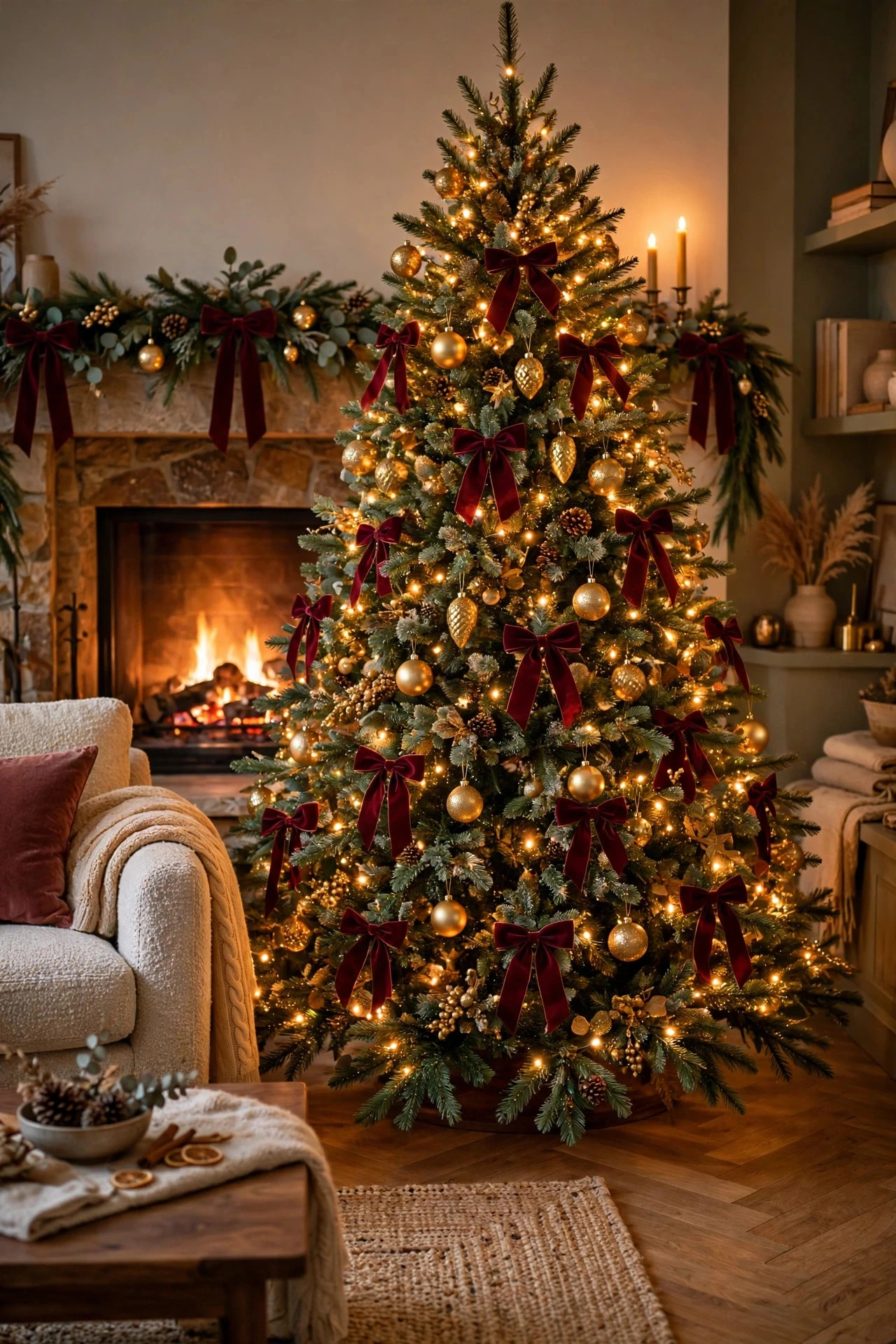
Christmas tree ideas for 2026 feel warmer, softer and more personal than the cool, perfectly matched trees of recent years. Velvet bows, deep burgundy, flocked branches, dried citrus and collected ornaments bring texture and memory back to the centre of the room, while cleaner silhouettes and warm amber light keep the whole look calm rather than cluttered. The best trees this year are not about buying everything new, but about choosing one clear palette, layering light first, and letting a few beautiful details do the talking.
Looking for more inspiration? Our Nest Decorz homepage gathers the latest home decor ideas, seasonal decorating guides and room-by-room styling tips in one place — start there and explore.
This guide brings together 22 workable ideas for real homes, from slim trees for small flats to full woodland lodge looks for larger living rooms. Each idea explains how to build the look, what sizes and quantities actually work, where to spend and where to save, and the common mistake that can spoil it. Use one idea as your whole theme, or borrow a ribbon technique from one tree and an ornament mix from another to make a tree that feels unmistakably yours.
1. Burgundy and Mocha Velvet Bow Tree
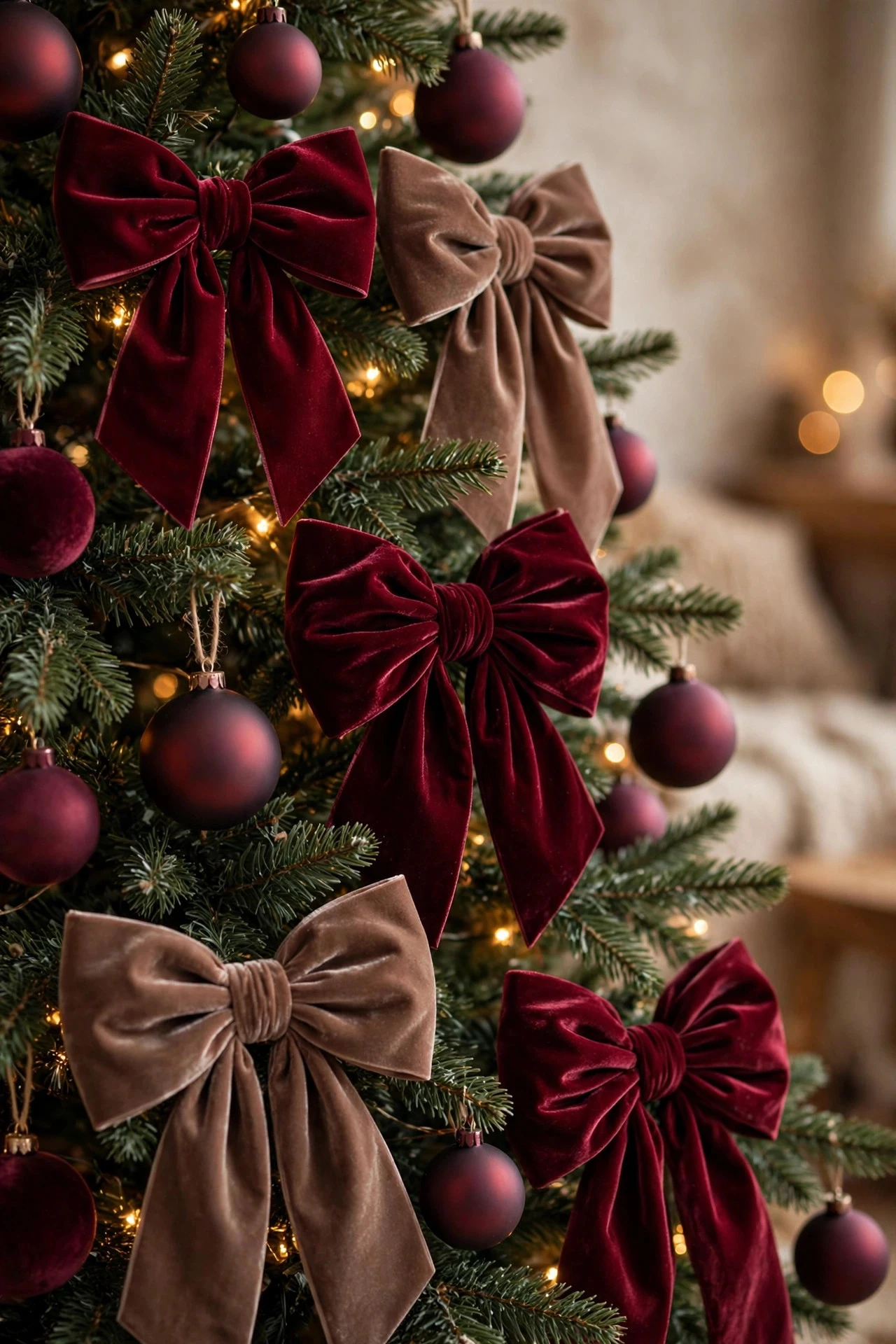
Start with a deep burgundy and mocha palette if you want a tree that feels rich without looking heavy. Choose a green or flocked tree, add warm white lights first, then place six to eight oversized velvet bows in burgundy, mocha and soft bronze, spacing them evenly from top to bottom and tucking the tails deep into the branches. Fill the gaps with matte burgundy baubles, mocha glass drops and a few cream ornaments so the dark colours have breathing room. Keep ribbon, ornaments and the tree skirt in the same warm family, and avoid bright red, which can push the look toward a traditional scheme and weaken the moody 2026 feel. The mistake to avoid is using bows that are too small, because neat little bows disappear on a full tree, while large, soft bows create the generous, layered shape this style needs.
2. Flocked Tree with Warm Amber Lights
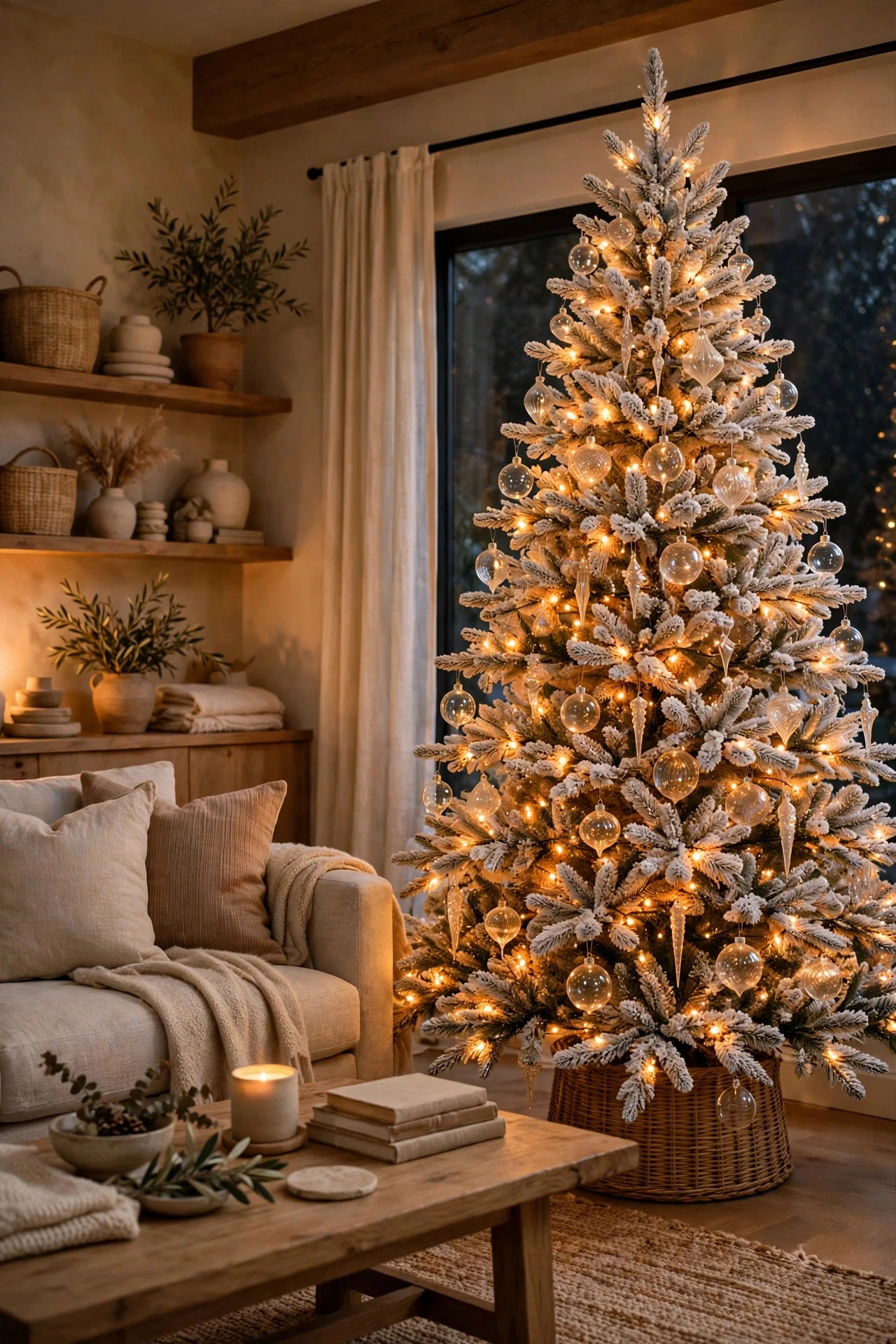
A flocked tree works best when the lights do most of the work, so choose warm amber or warm white lights at around 2700K and use at least 100 lights per foot of tree height for a full glow. On a six-foot tree that means roughly 600 lights, woven in and out of the branches in zigzag layers rather than wrapped tightly around the outside, so light shines from inside the flocking. Add clear glass, pearl and pale gold ornaments that catch the light without hiding the snowy branches, and keep coloured baubles to one soft accent, such as blush or sage. Avoid cool white lights, which can make flocking look grey and flat, and avoid heavy ornaments that bend flocked tips. Fluff every branch before lighting, because flocking settles in storage and sparse patches show most once the lights are on.
3. Ribbon Waterfall Tree
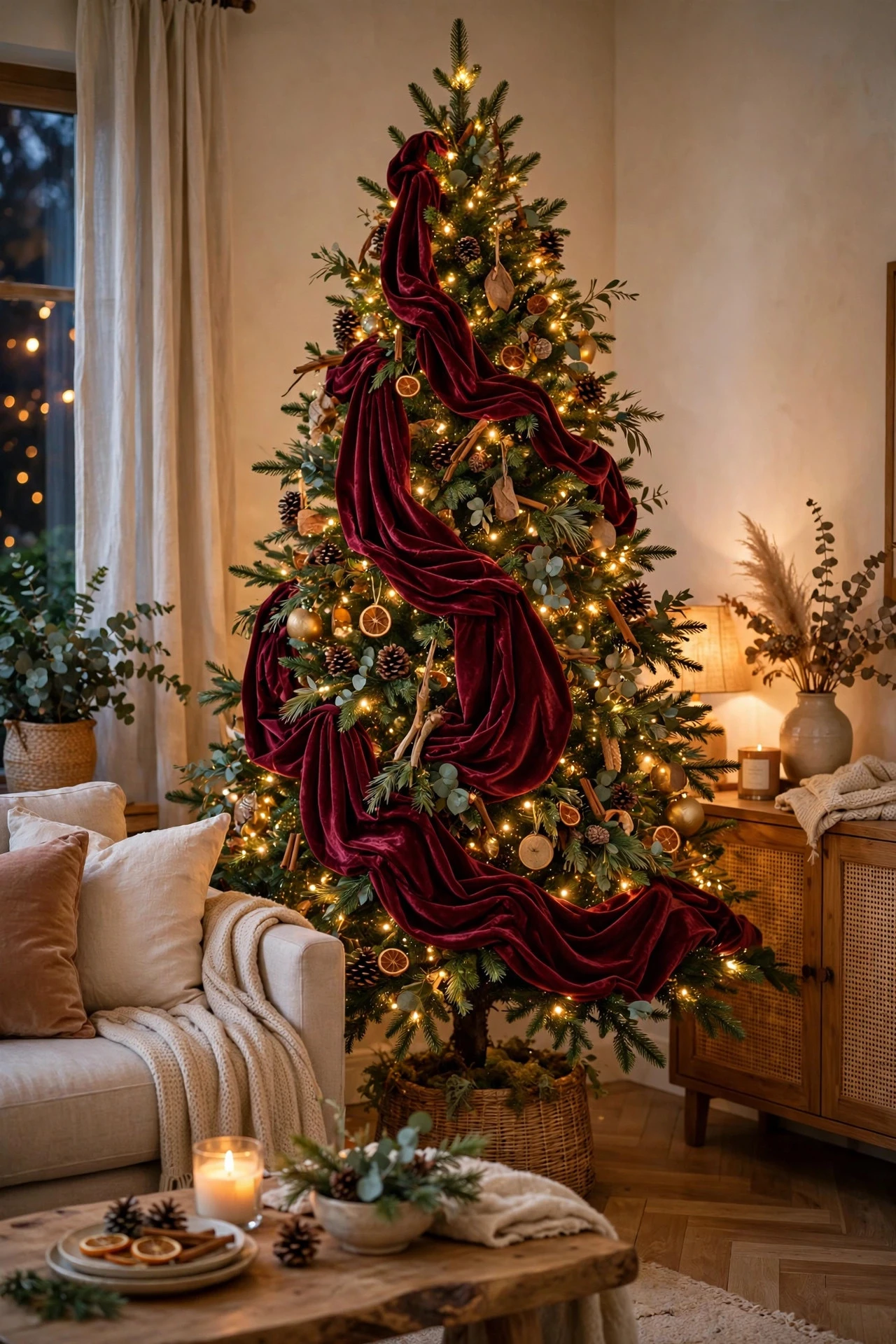
A ribbon waterfall gives instant movement and makes even a modest tree look professionally styled. Start at the top with wired ribbon at least 6 centimetres wide, anchor it just below the topper, and let long loops cascade down in gentle S-curves, tucking each loop into the branches every 25 to 30 centimetres so the ribbon looks woven through the tree rather than draped on top. Use two complementary ribbons, for example a wide burgundy velvet ribbon and a narrower gold mesh ribbon, with three to four rolls for a six-foot tree. Finish with ornaments placed on top of the ribbon lines to hold them in place. For more ribbon inspiration, see these Christmas decorations 2026 trends before you buy. The mistake to avoid is cutting the ribbon too short, because short, stiff pieces look fussy, while long, flowing lengths create the waterfall effect.
4. Jewel-Tone Glamour Tree
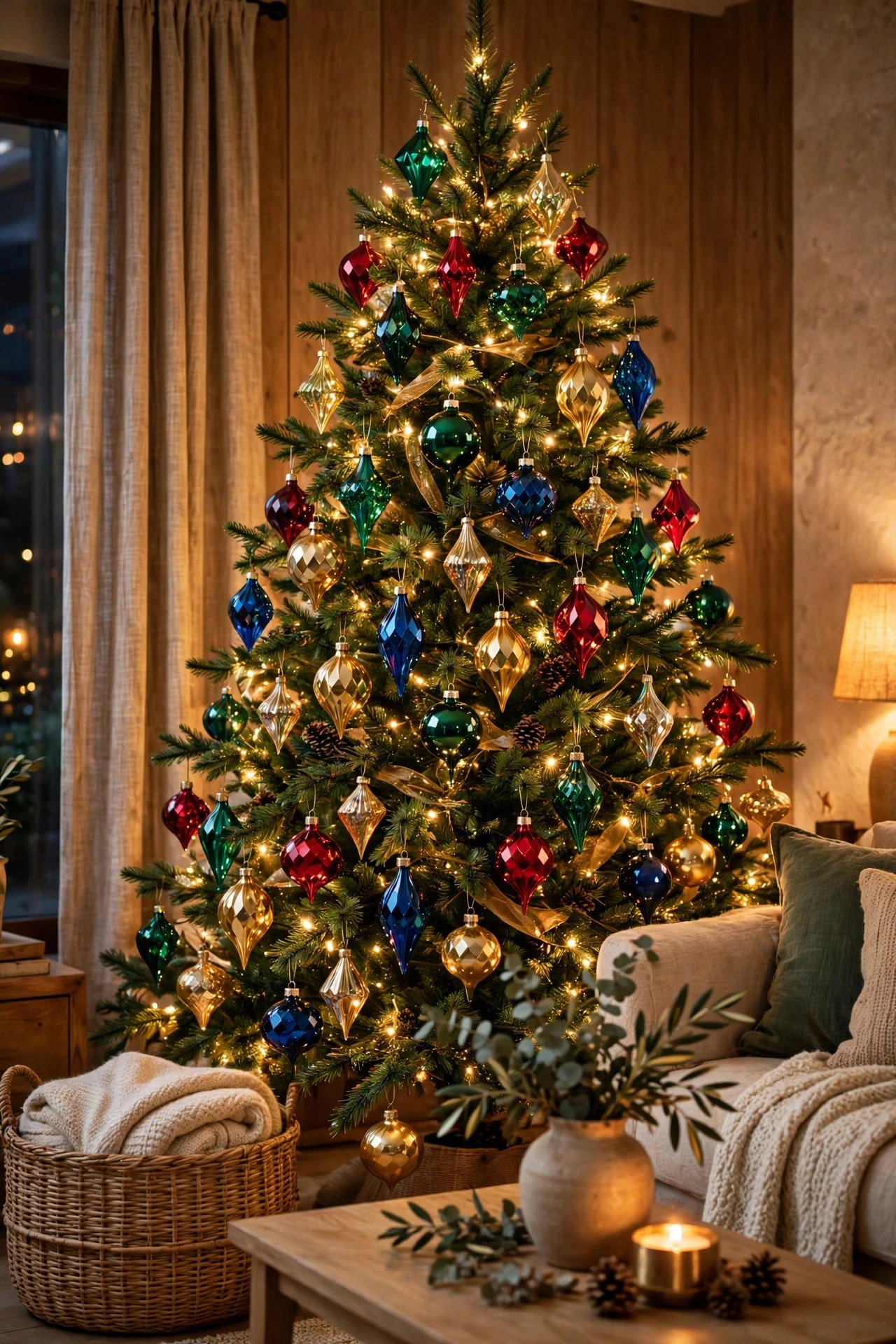
Jewel tones suit a living room that already has velvet, brass or dark wood, because the tree can echo colours already in the room. Build the look on emerald, sapphire, ruby and amethyst glass ornaments in mixed finishes, with about 60 to 80 ornaments for a six-foot tree, balanced by warm lights and a few gold or brass pieces to stop the colours feeling cold. Place the largest, darkest ornaments deep inside the branches for depth, then layer medium and small ornaments toward the tips, and add a gold star or jewelled topper that picks up the metallic thread. Keep the tree skirt simple, in charcoal, cream or gold, so it does not compete with the ornaments. Avoid using every jewel colour in equal amounts, because the result can look busy, and avoid plastic ornaments with a harsh shine, which cheapen the richer glass and velvet textures around them.
5. Woodland Lodge Tree
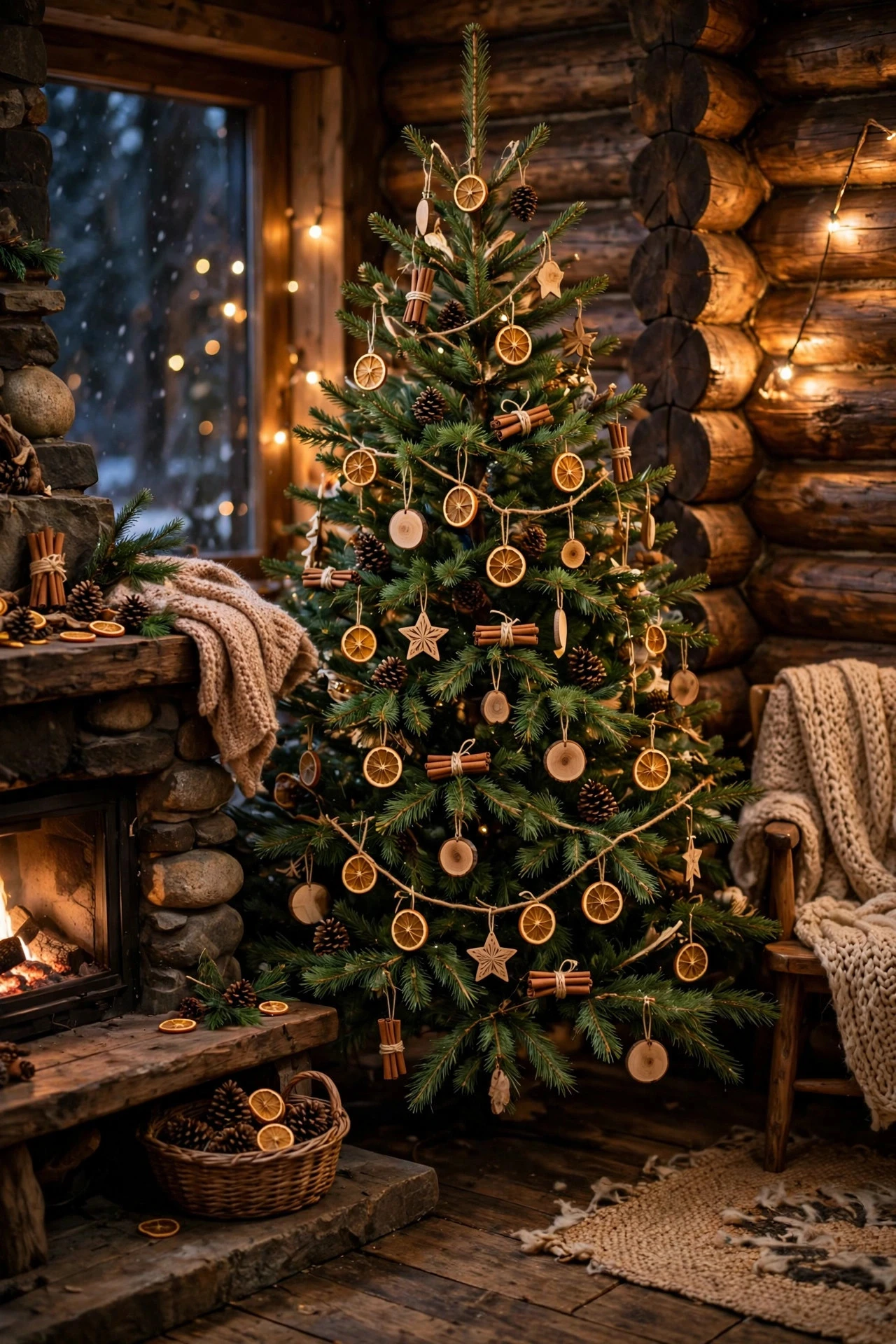
A woodland lodge tree brings the outdoors inside without needing a cabin, and it works especially well with a real fir or a realistic green artificial tree. Start with warm white lights, then add pinecones, dried orange slices, cinnamon bundles, wooden beads and small felt birds or deer, spacing natural pieces evenly so no one section looks bare. Use a palette of forest green, warm brown, cream and soft gold, with matte and wooden finishes doing most of the work and only a few glass baubles for sparkle. Add a woven basket or hessian collar at the base and a simple wooden star on top. The mistake to avoid is overloading the tree with heavy pinecones, which can drag branches down, so wire lighter cones near the tips and keep the heaviest pieces close to the trunk. Dried citrus should be fully dry before hanging, or it can mark branches and attract moisture.
6. Tinsel Revival Tree
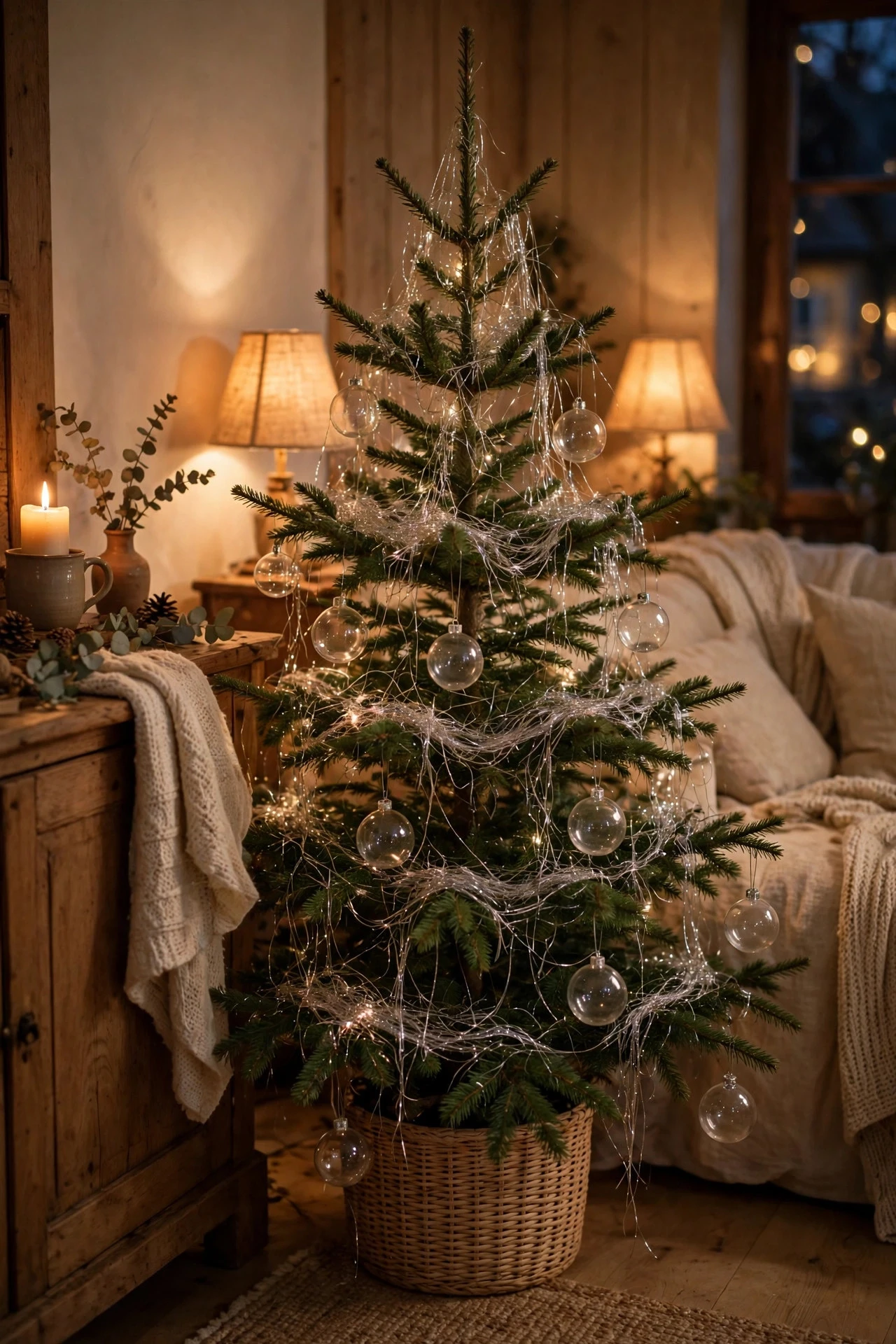
Tinsel is back for 2026, but the new version is calmer and more deliberate than the dense tinsel of decades past. Choose fine, soft tinsel in silver, gold or pale champagne and drape it in long, loose strands from the upper branches downward, using far less than you think you need, so the tree and ornaments still show through. Pair tinsel with simple glass baubles, warm lights and one clear colour accent, such as burgundy or deep green, and keep the topper light so the fine strands are not weighed down. A slim or medium tree suits tinsel best, because a very full tree can swallow the strands completely. Avoid plastic icicle tinsel in thick clumps, which tangles easily and looks messy under bright light, and avoid mixing silver and gold tinsel together, because the two metals compete and the finish loses its clean, nostalgic shine.
7. Candy Pastel Tree
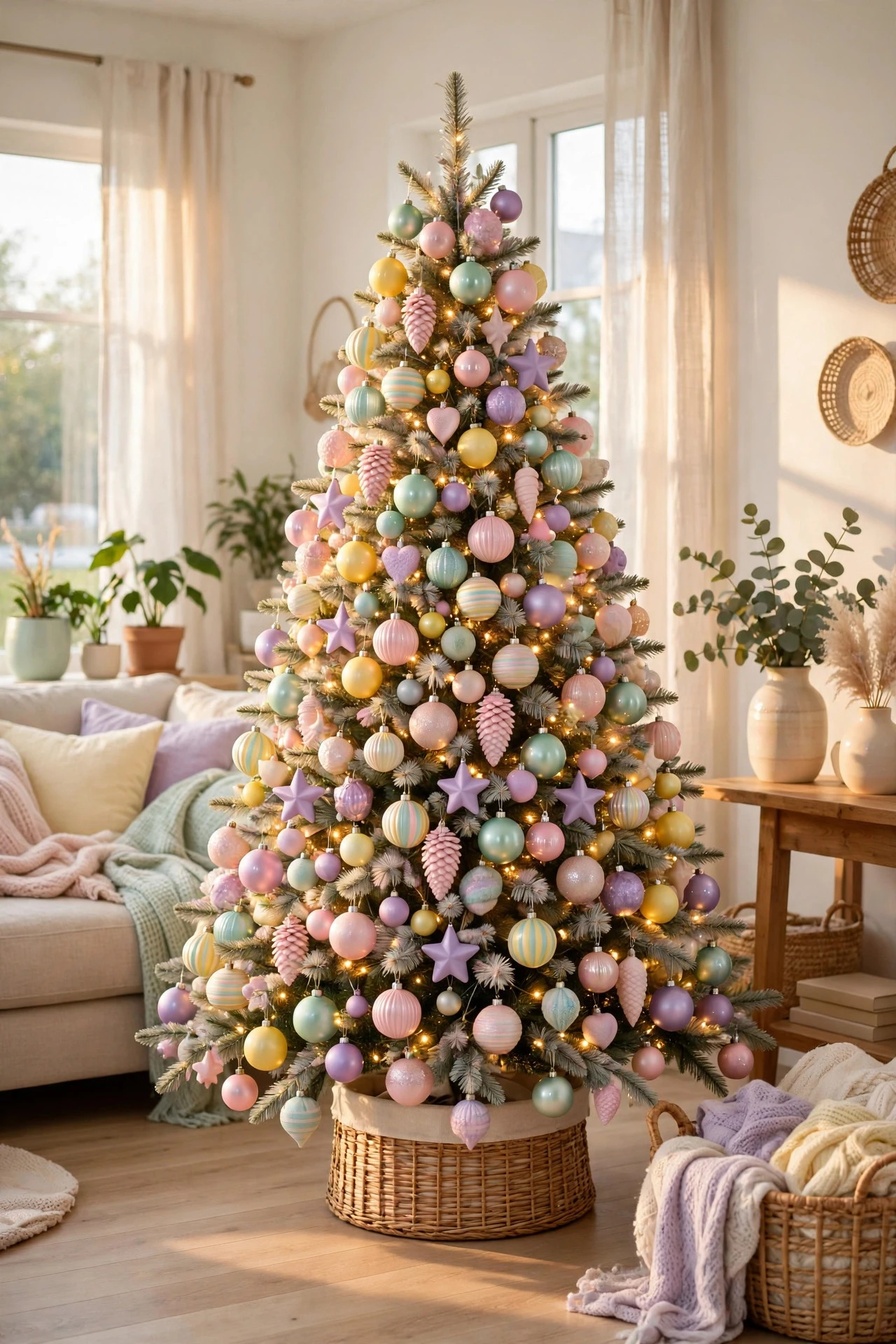
A candy pastel tree feels joyful and light, especially in a bright room with white walls, pale wood or soft pink and blue furnishings. Choose a green or white tree, add warm white lights, then layer ornaments in blush pink, mint, butter yellow, lilac and baby blue, mixing matte, gloss and glitter finishes so the pastels do not look flat. Use about 50 to 70 ornaments on a six-foot tree, plus candy canes, pastel ribbon bows and a few clear ornaments filled with faux snow or tiny beads for depth. Keep the tree skirt pale cream or white and avoid strong primary colours, which break the soft candy palette. The mistake to avoid is adding too many novelty ornaments at once, because a pastel tree needs restraint to stay elegant, so choose three or four candy-themed pieces as focal points and let the colour palette carry the rest of the look.
8. Minimalist Bare-Branch Tree
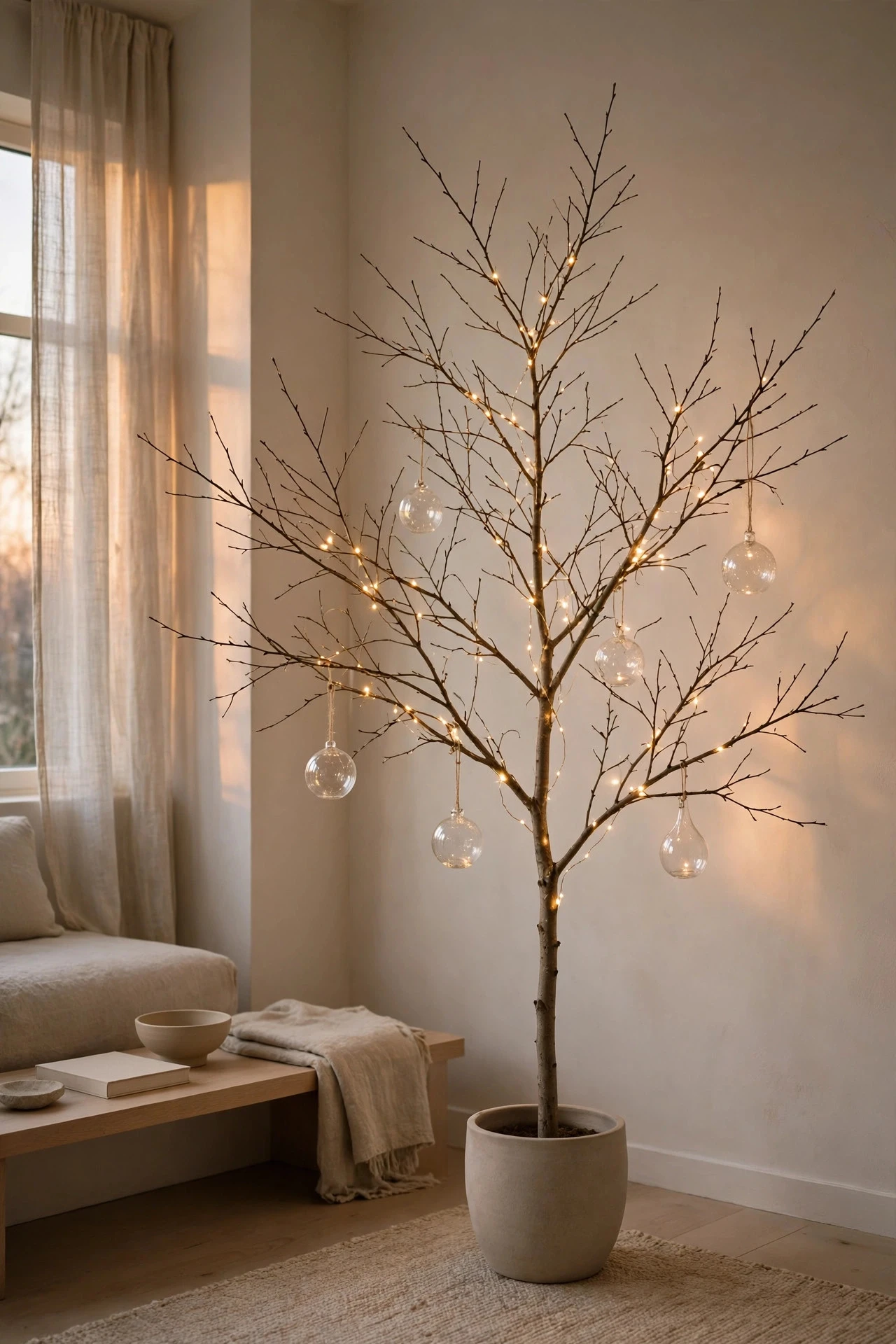
A minimalist bare-branch tree suits a calm, modern home where a full tree would feel too much, and it needs very little to look intentional. Choose a bare branch tree, a sparse artificial tree or a single large branch in a sturdy vase, and add a small number of warm fairy lights, about 50 to 100 for a five- to six-foot branch arrangement, wrapped loosely so the branch shape stays visible. Hang ten to twenty ornaments only, in one material such as clear glass, wood or brass, spaced widely apart, and leave most branches empty so the silhouette becomes the decoration. Place the tree in a simple pot or basket with no skirt, and keep gifts or a single low garland nearby rather than crowding the base. Avoid filling gaps with filler or tinsel, because the strength of this look is restraint, and avoid coloured lights, which distract from the clean lines and natural texture.
9. Classic All-Green Tree
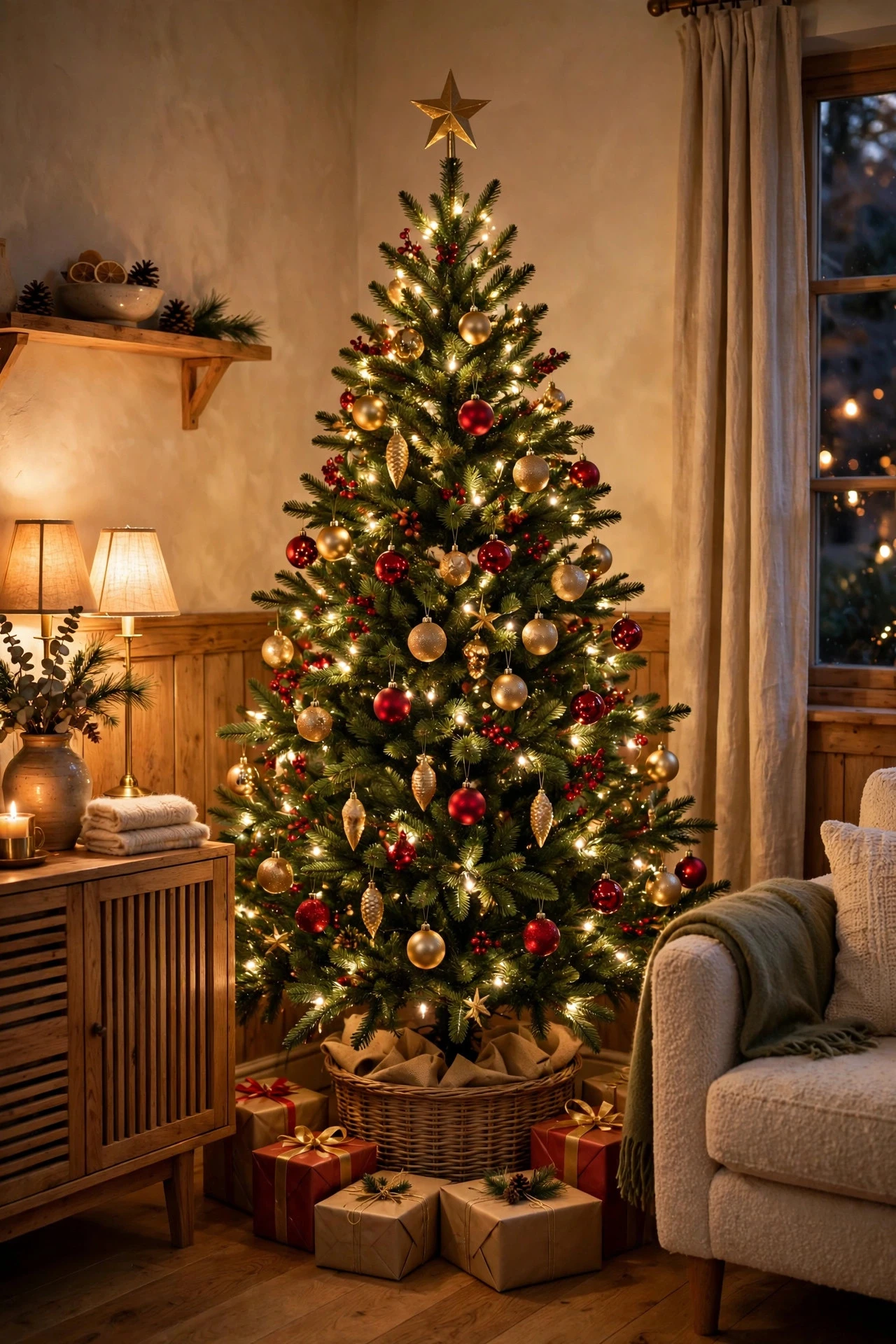
The classic all-green tree never really leaves, and for 2026 it returns with richer texture rather than new colours. Choose a full, realistic green tree with varied branch lengths, fluff it thoroughly, and light it with warm white lights before adding anything else, using about 100 lights per foot so the green glows from within. Add traditional red and gold ornaments in mixed sizes, with larger baubles near the trunk and smaller ones at the tips, plus a few treasured family pieces placed at eye level where they will be seen most. A red or gold ribbon, a classic star topper and a simple green or red skirt complete the look without extra themes. The mistake to avoid is buying ornaments all in one size, because uniform ornaments flatten a tree, while a mix of large, medium and small pieces creates the depth and fullness that make a classic tree feel abundant and welcoming.
10. Tartan Heritage Tree
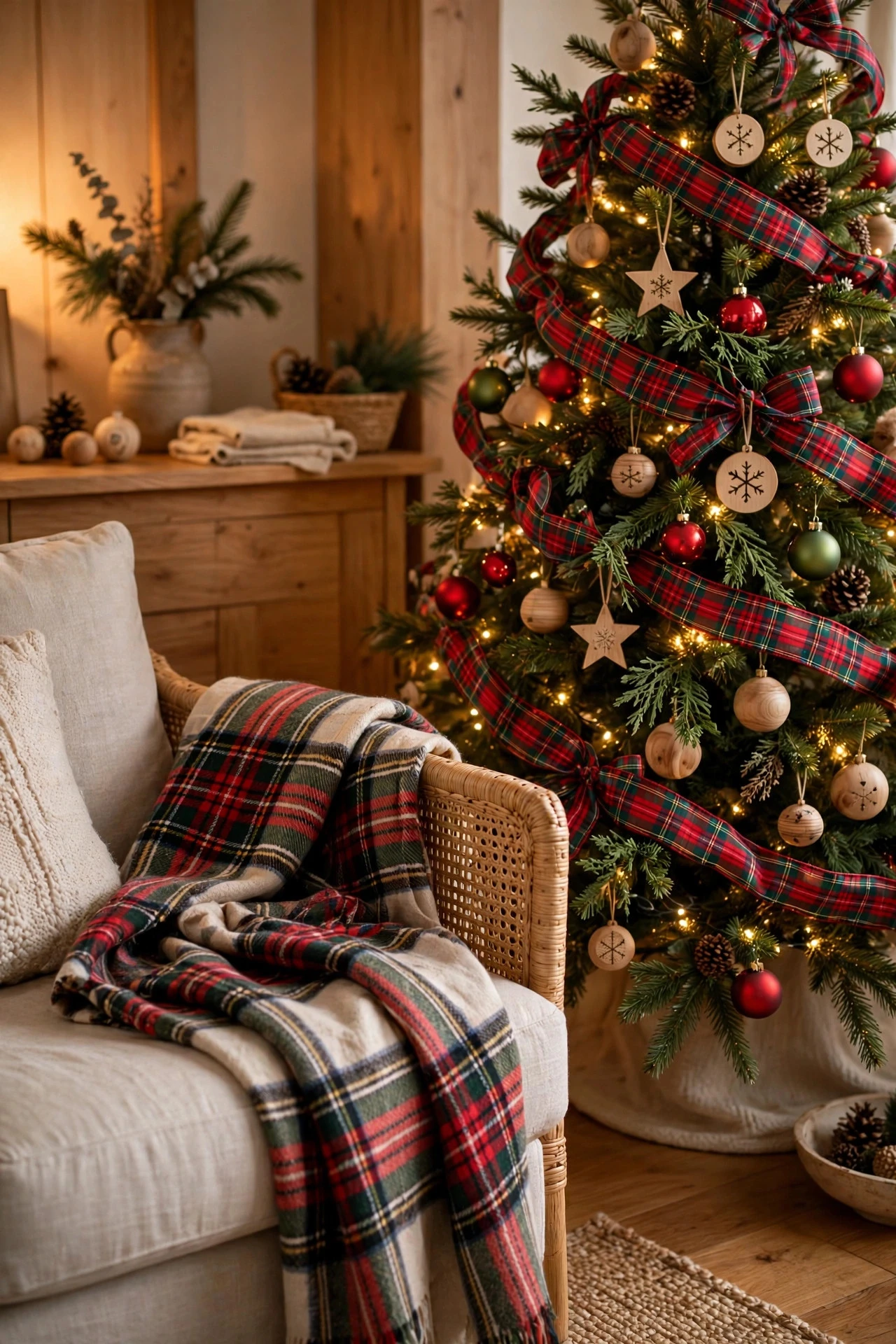
A tartan tree brings warmth and pattern to a hallway, snug or family living room, especially when the room already has plaid cushions, wool throws or wooden furniture. Choose a tartan in deep red, green and navy, or a softer black and cream check, and use it in just two places, such as a wide ribbon and a tree skirt or collar, so the pattern feels deliberate rather than overwhelming. Add warm lights, wooden ornaments, red and green glass baubles, pinecones and small tartan bows tucked into the branches, keeping the total ornament count around 60 for a six-foot tree. A simple gold or wooden star works better than a busy topper. Avoid mixing two different tartans, because competing checks clash at close range, and avoid shiny plastic tartan ribbon, which looks flat next to real wool or velvet textures. Keep the base tidy, with tartan wrapping paper in matching tones for a pulled-together finish.
11. Handmade and Collected Ornaments Tree
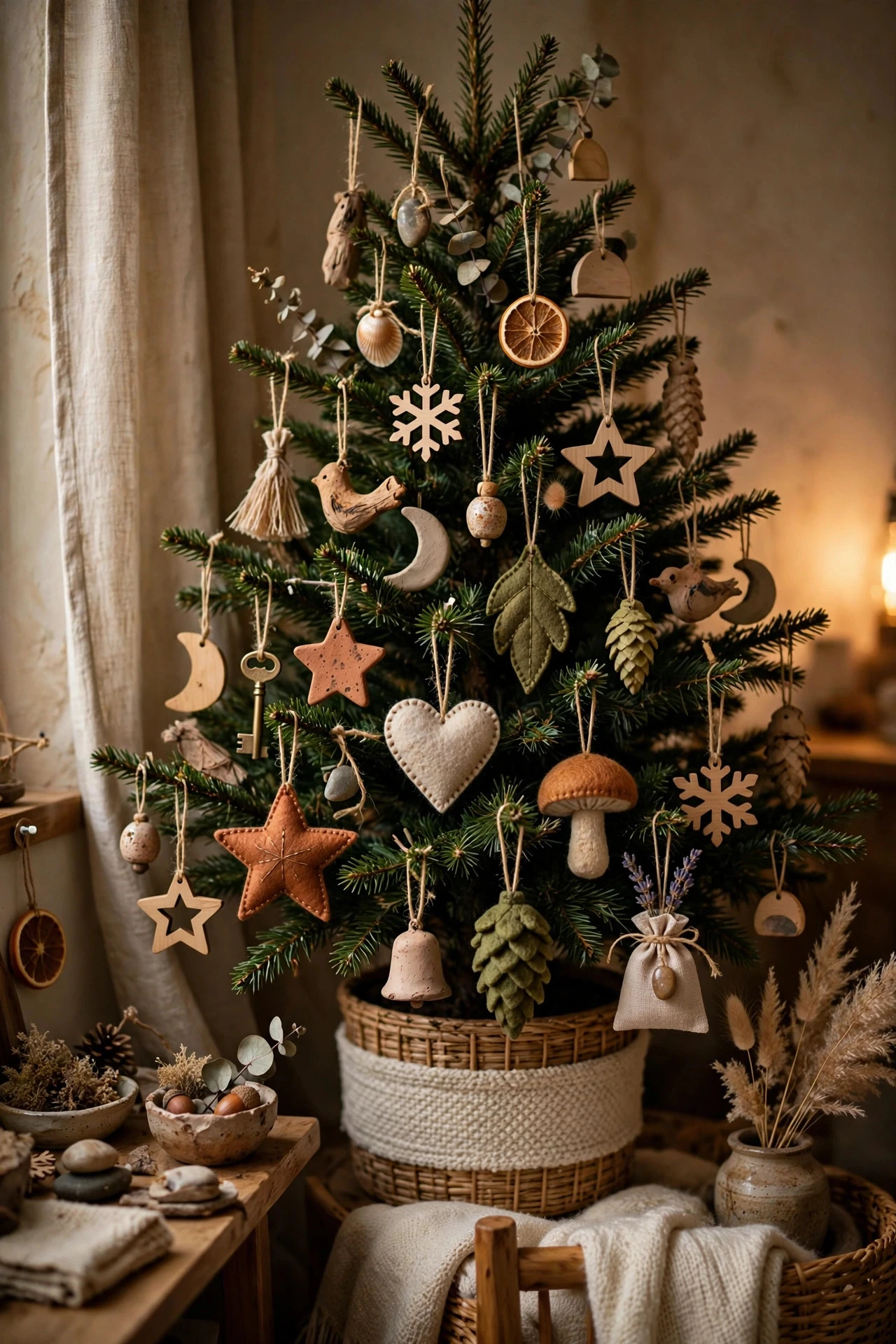
A tree decorated with handmade and collected ornaments tells a story, and it suits families who add one or two meaningful pieces each year. Start with a plain green or flocked tree and warm lights, then hang ornaments collected on travels, handmade by children, or made from felt, clay, wood and dried flowers, placing the most personal pieces at eye level and filling gaps with simple glass or wooden baubles in a limited palette. Use a soft neutral base palette, such as cream, gold and sage, so varied ornaments sit together without clashing, and add a handmade topper, such as a paper star or felt angel, to complete the personal feel. Avoid trying to force collected pieces into a strict colour theme, because the charm is in their differences, but avoid hanging everything at once, because overcrowding hides each piece. Rotate a few favourites to the front each year.
12. Mixed Metallics Tree
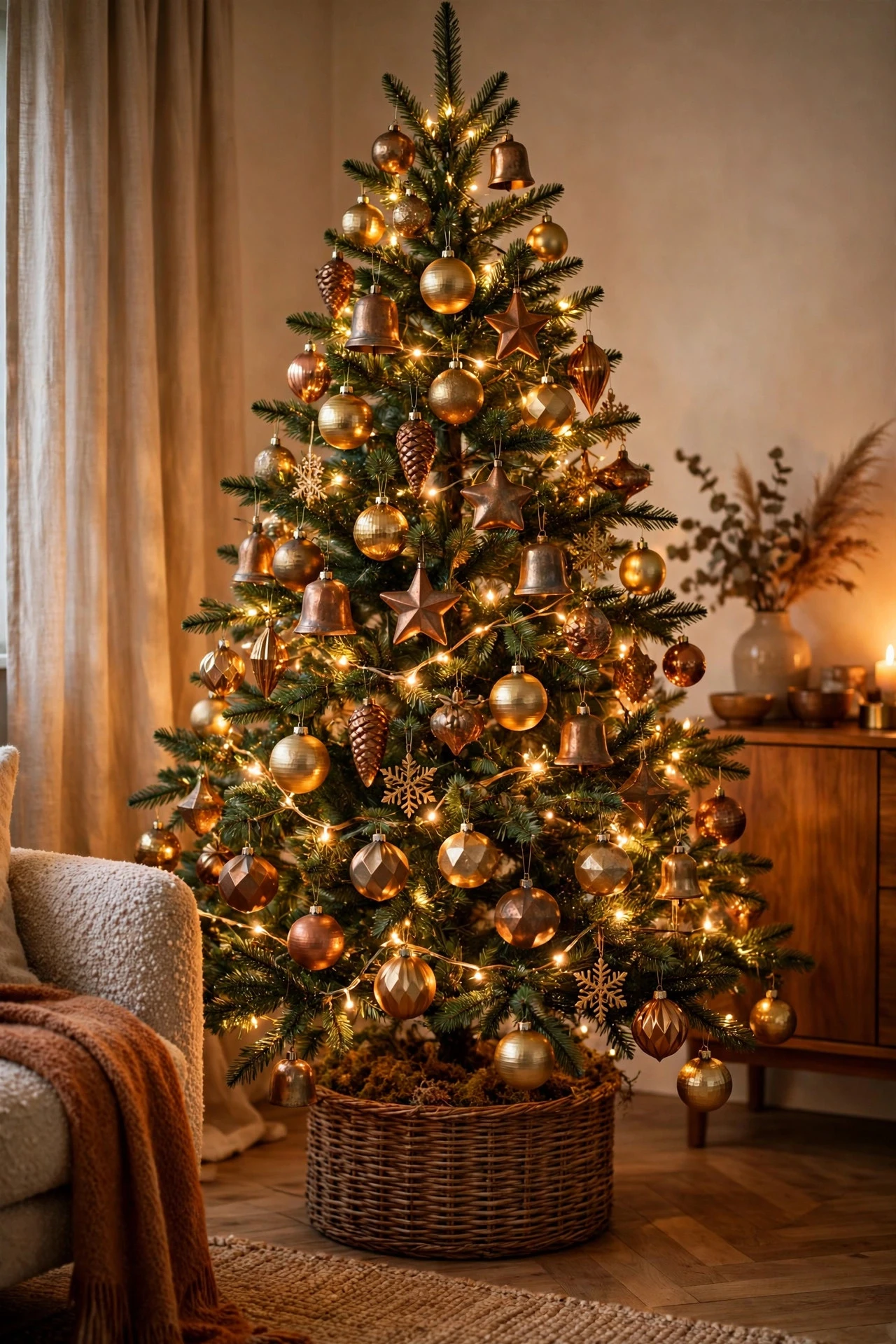
Mixed metallics work when the metals share the same warmth, so combine gold, brass, copper and bronze with warm white lights on a green or flocked tree, and leave cool silver and chrome for a different year or a different room. Use about 60 to 80 ornaments for a six-foot tree, mixing shiny, brushed and hammered finishes, with metallic ribbon or a thin gold garland woven through the branches to tie the metals together. Place the brightest metallics near the lights so they reflect the glow, and balance them with matte cream, brown or black ornaments so the tree does not become a wall of shine. A gold or brass star topper and a simple metallic collar finish the look. For a cohesive luxury feel, echo the metals in the wider room with these luxury living room decor ideas. The mistake to avoid is adding silver on top of warm metals, because the cool tone breaks the glow and makes the tree look mismatched.
13. Bell-Adorned Tree
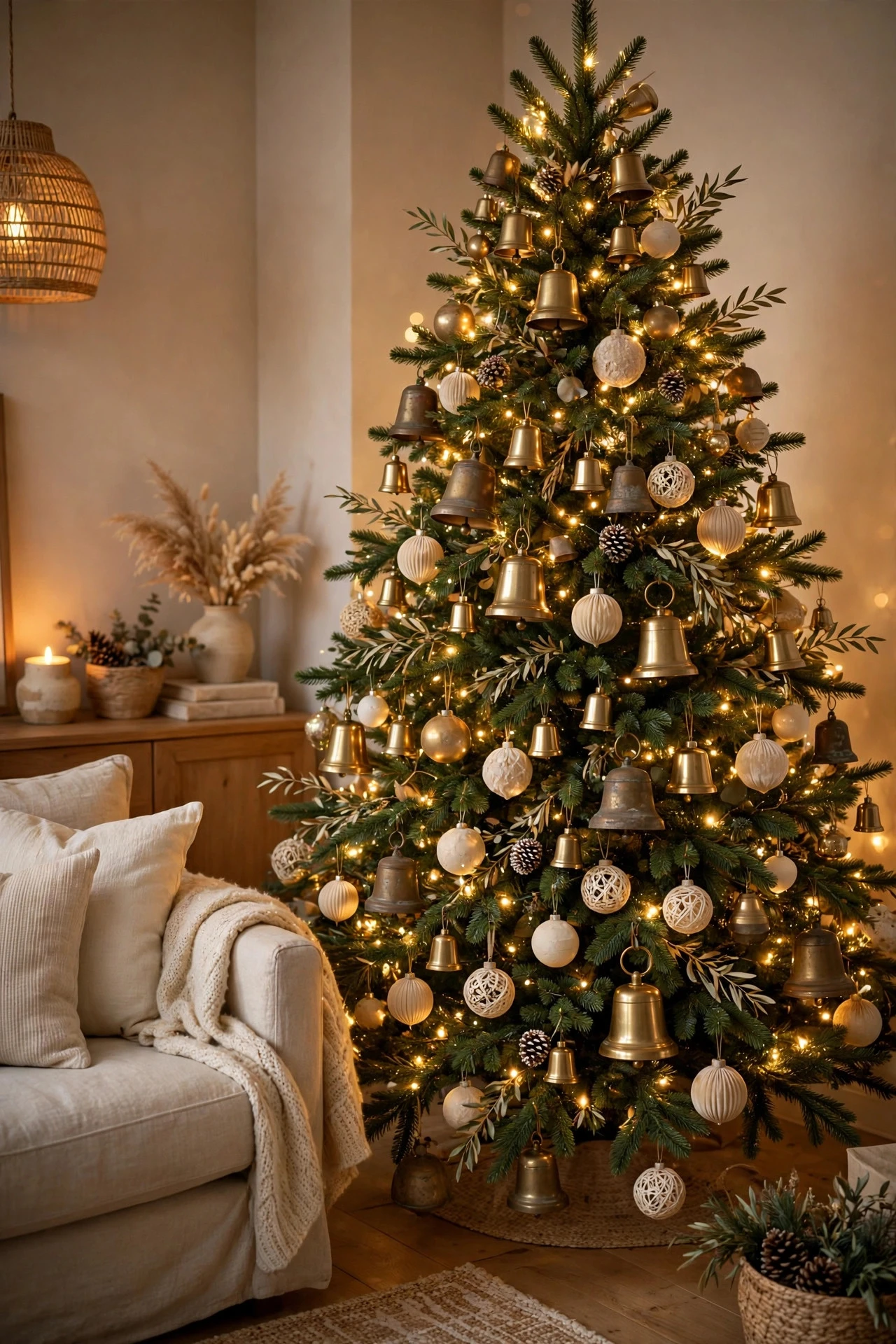
Bells add sound, movement and a traditional feel that photographs beautifully, especially on a tree near an entrance or in a room where gentle movement is welcome. Choose bells in brass, gold and aged bronze in three sizes, from small jingle bells to larger decorative bells about 8 to 10 centimetres tall, and hang about 20 to 30 bells evenly through a six-foot tree, mixing them with warm lights, cream ornaments and greenery. Wire larger bells securely to sturdy branches near the trunk, and hang smaller bells toward the tips where they can catch light and move slightly. Keep the rest of the palette quiet, with green, cream and gold doing the work, so the bells remain the focal point. Avoid hanging bells only on the front, because the back will look empty from the side, and avoid very cheap bells with a tinny finish, which can look and sound less refined than solid brass or bronze.
14. Icicle Glass and Frosted Elegance Tree
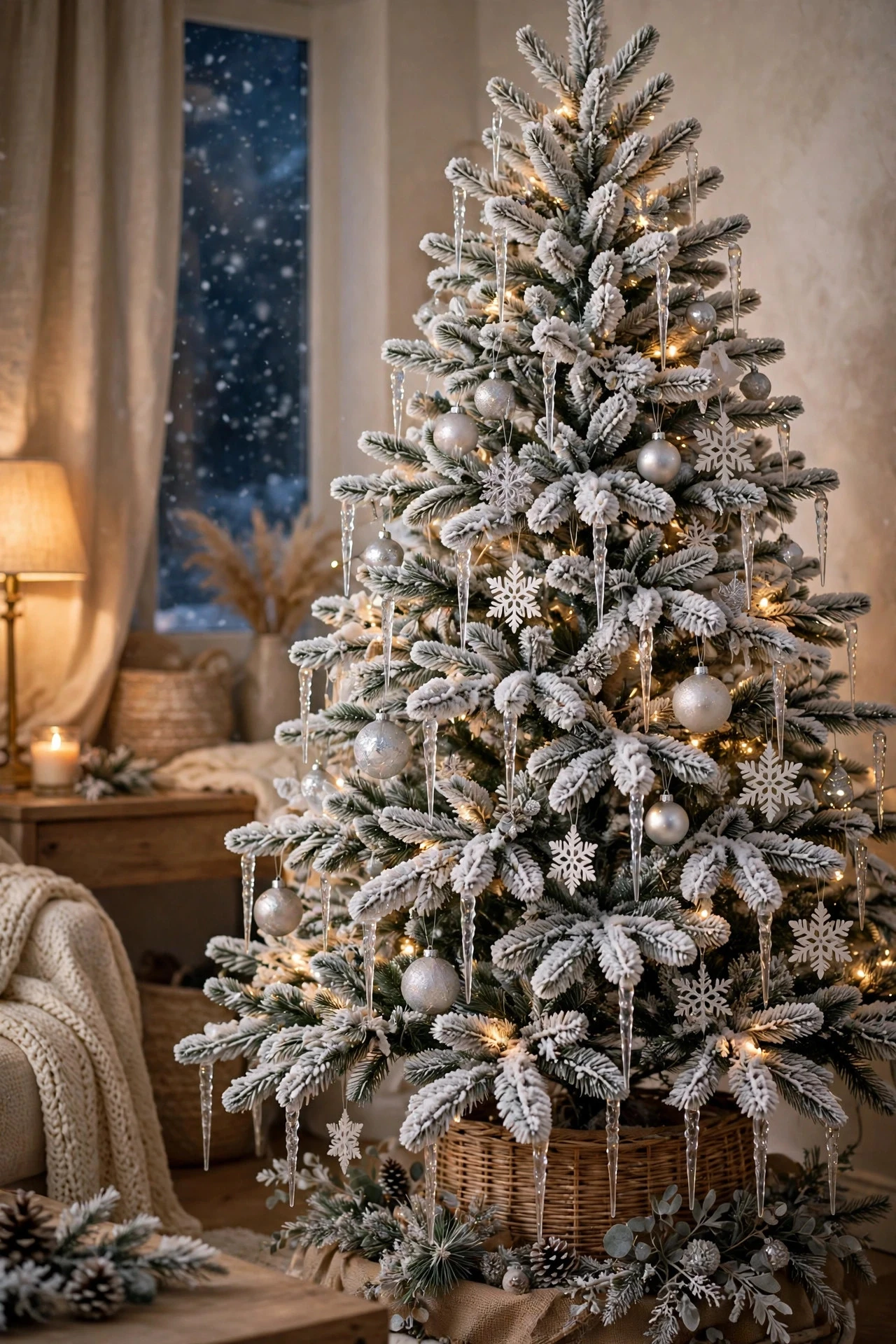
Icicle glass and frosted finishes create a quiet, wintry elegance that suits a pale, calm living room or a bedroom tree. Choose a flocked or pale green tree, add cool-leaning warm white lights, then hang clear glass icicles, frosted drops, snowflakes and pale silver ornaments, using about 50 to 70 pieces on a six-foot tree and spacing them so light can pass through the glass. Add a few white or silver ribbon loops and a crystal or glass star topper, and keep the base in white, silver or pale grey so the icy palette stays clean. Avoid coloured ornaments, which break the frosted effect, and avoid heavy glass pieces on weak outer branches, because they can slip and break. The mistake to avoid is using cool blue lights, which can make the tree feel cold and distant, while warm white lights keep the frosted glass glowing softly and invitingly.
15. Slim Pencil Tree for Small Spaces
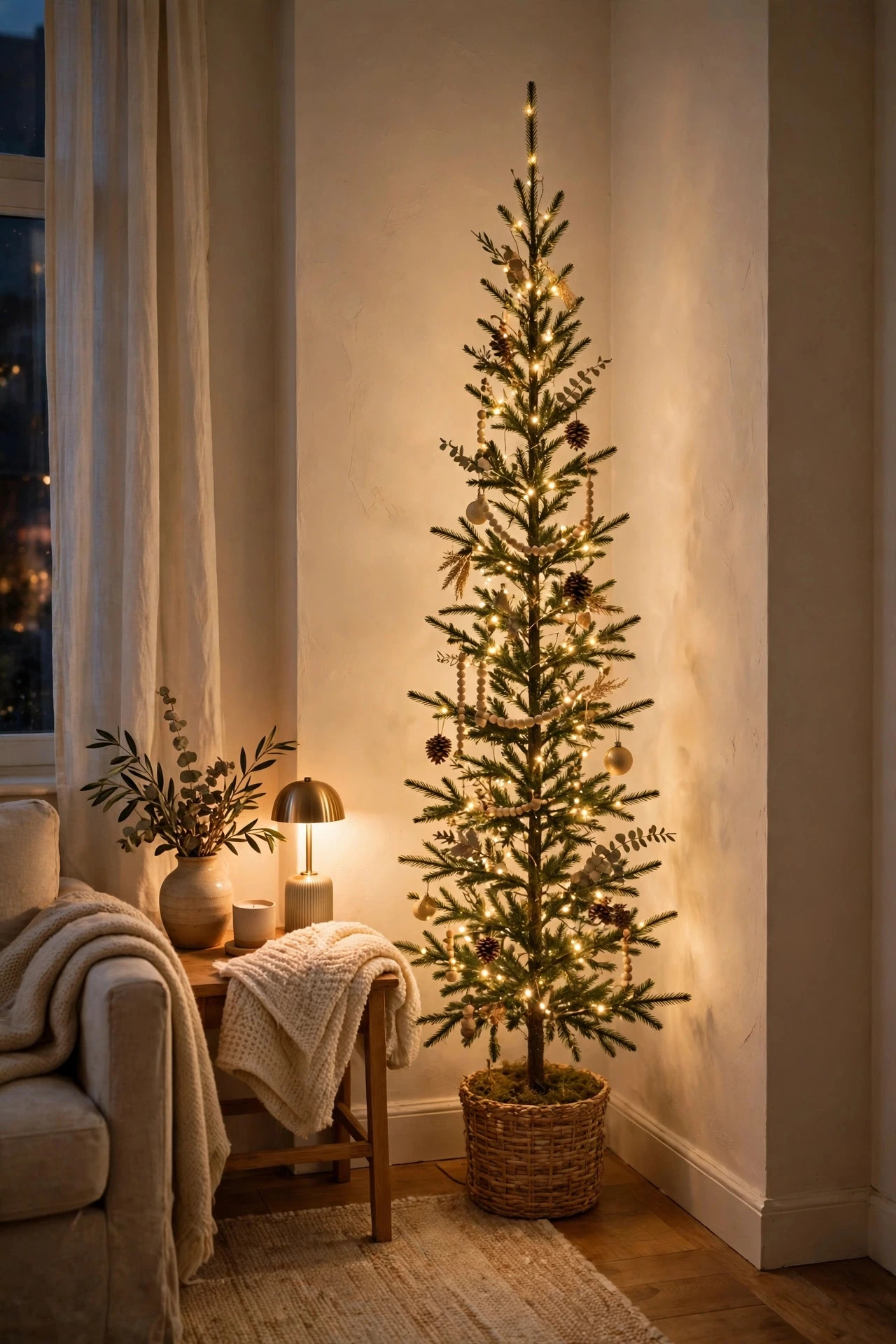
A slim pencil tree is the practical answer for a small living room, a hallway corner or a flat where a full tree would block a walkway. Choose a pencil tree between five and seven feet tall but only 60 to 80 centimetres wide, and check the footprint before buying, because some slim trees still need more floor space than expected once the branches are fluffed. Use about 300 to 400 lights, a single ribbon or a thin garland, and 40 to 50 ornaments in a limited palette, placing larger ornaments close to the trunk and smaller ones at the tips so the narrow shape stays balanced. Keep the topper light and the base in a slim basket or collar rather than a wide skirt. Avoid wide bows and bulky ornaments, which overwhelm a pencil profile, and avoid pushing the tree hard against a wall, because branches need room to open fully and the back should look finished from every angle.
16. Tabletop Tree for Bedrooms and Flats
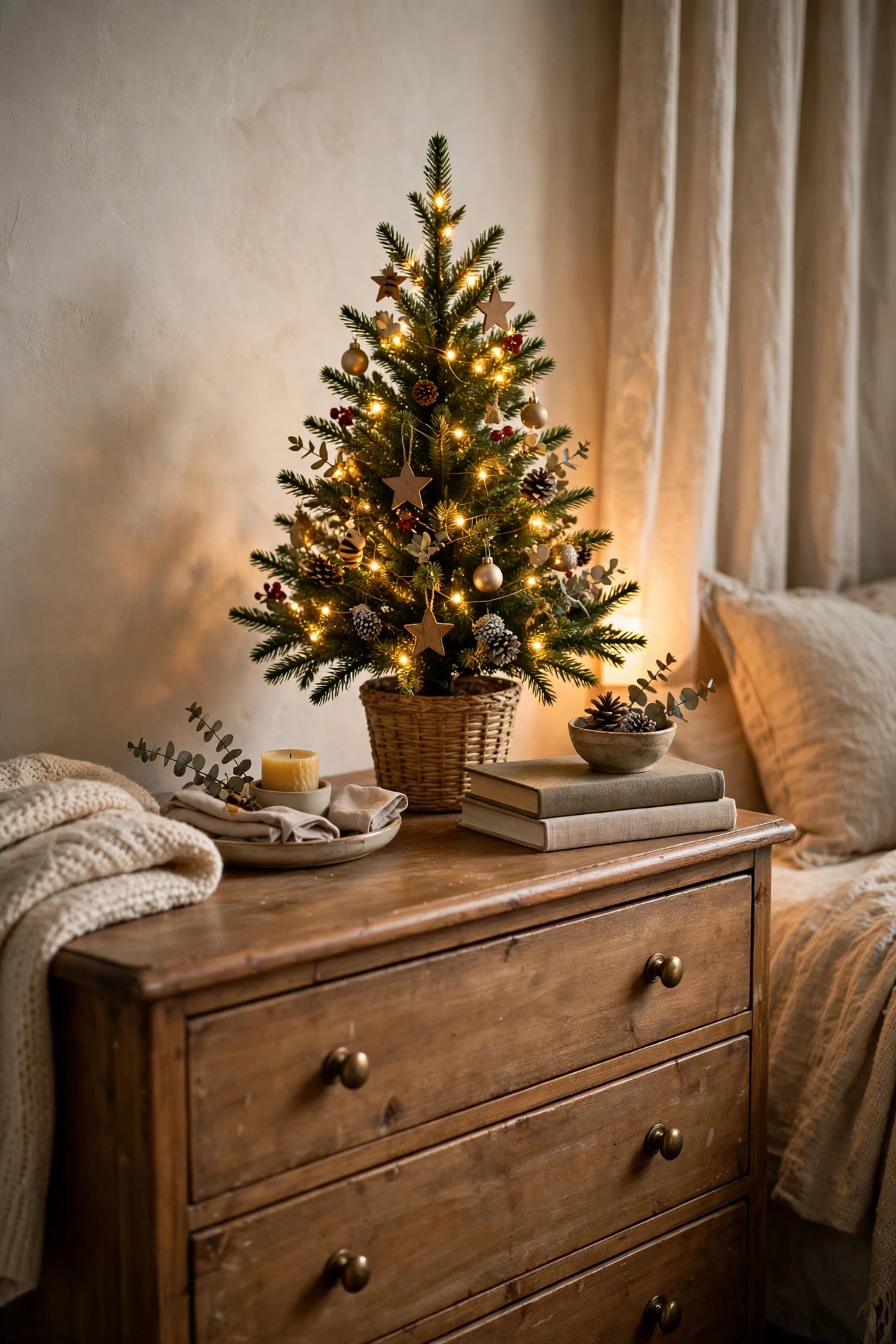
A tabletop tree brings Christmas into a bedroom, a home office or a small flat without taking over the room, and it is ideal when floor space is limited. Choose a tree between 60 centimetres and one metre tall, place it on a sturdy side table, dresser or console, and secure the base so it cannot be knocked easily, especially if the table is used daily. Use 50 to 100 fairy lights, 20 to 30 small ornaments in one palette, and a tiny topper or a single large bow, keeping the scale delicate so the tree looks finished rather than like a leftover. A small basket, a wooden crate or a folded cloth under the tree can hide the pot and add warmth. Avoid full-size ornaments, which look out of proportion and weigh down small branches, and avoid trailing lights across the table, because loose cables are a trip and spill risk in a bedroom.
17. Fresh Real Fir Tree
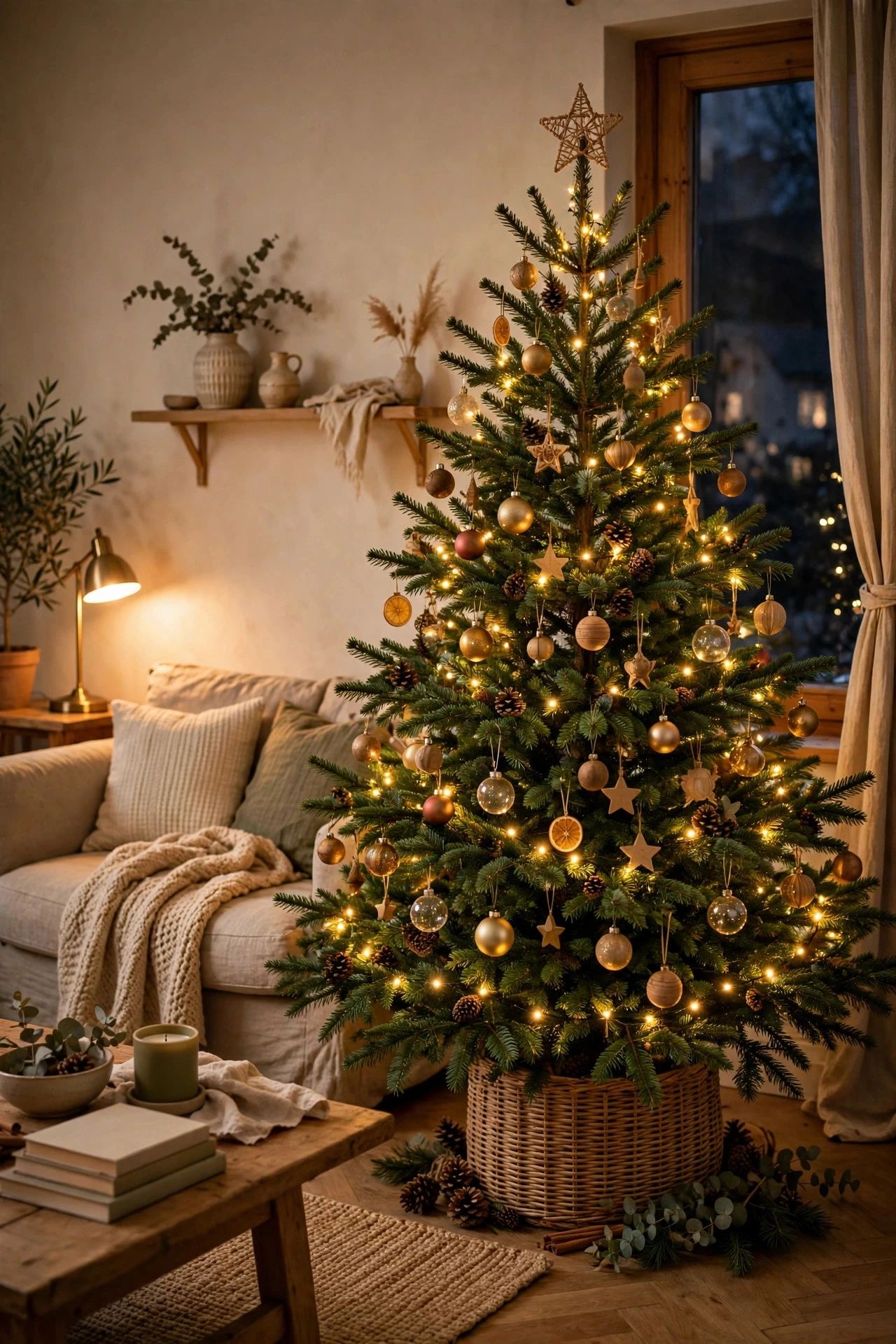
A fresh real fir brings scent, texture and a natural shape that no artificial tree fully copies, and a Nordmann fir is a good choice because it holds its needles well and has soft, full branches. Choose a tree that looks fresh, with flexible needles that do not shed when you shake a branch gently, and cut about 2 centimetres off the trunk before placing it in a water-holding stand, keeping the water topped up daily. A six-foot real tree needs about 500 to 600 lights and 60 to 80 ornaments, with heavier ornaments near the trunk where branches are strongest. Keep the tree away from radiators, fireplaces and direct sun, which dry it out quickly. The mistake to avoid is letting the stand run dry, because once a real tree dries out it sheds heavily and becomes a fire risk, so check the water every morning, especially in the first week after bringing it indoors.
18. Realistic Artificial Tree That Lasts for Years
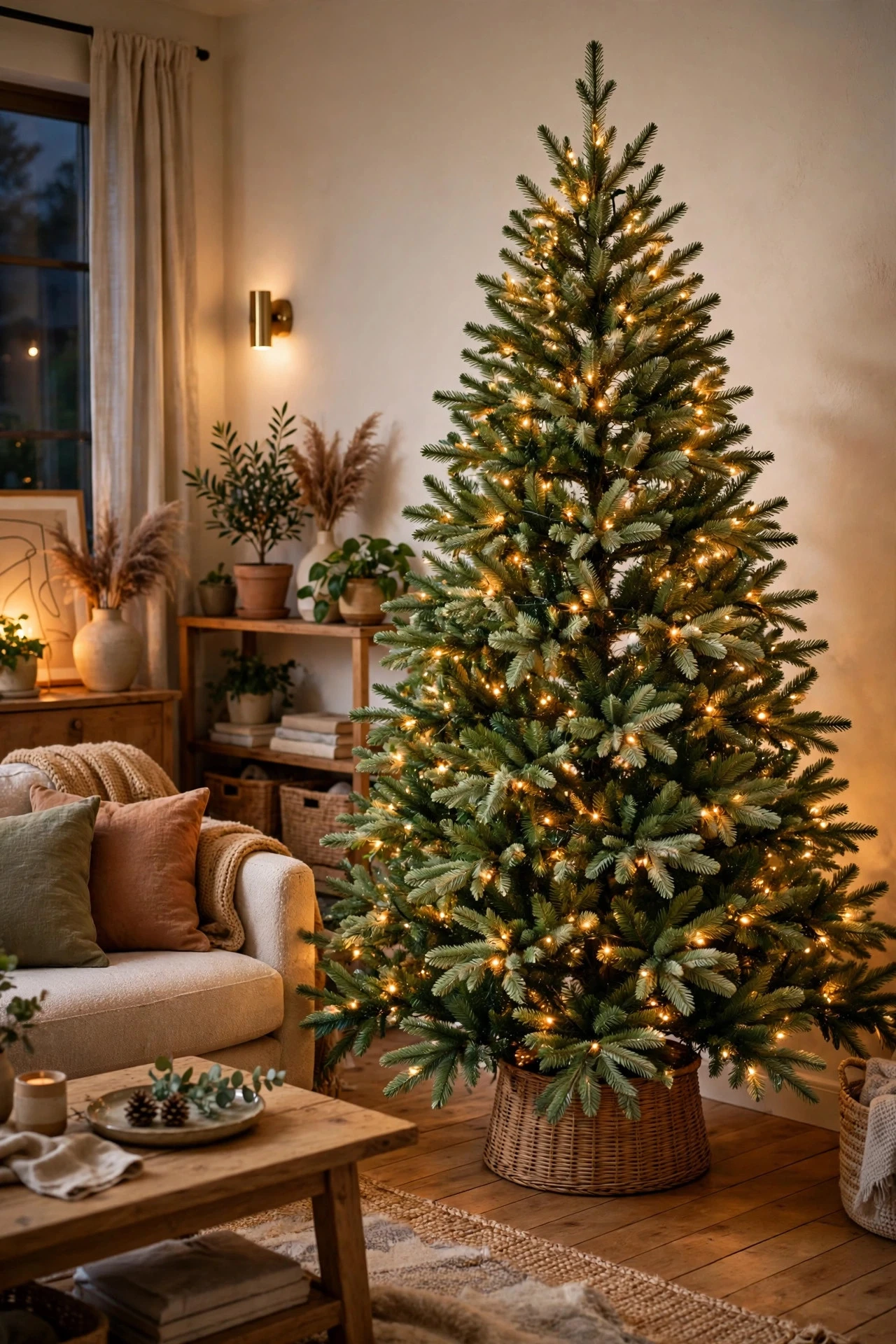
A realistic artificial tree is a sensible investment when you want the same full shape every year without needle drop or watering. Look for a tree with varied branch tips, mixed green tones and a hinged, sturdy stand, and choose a height that leaves at least 30 centimetres between the topper and the ceiling. Expect to pay more for a realistic tree, often in the range of a good-quality mid-priced tree rather than the cheapest option, but spread over five to ten years the cost per Christmas is low. Fluff every branch from the inside out, working in sections, and store the tree in its original box or a strong tree bag in a dry place. Avoid folding branches roughly or storing the tree in a damp garage, because bent tips and mould ruin realism quickly. A realistic tree also suits allergy-sensitive homes, since it sheds no pollen or sap.
19. Statement Bow Topper Tree
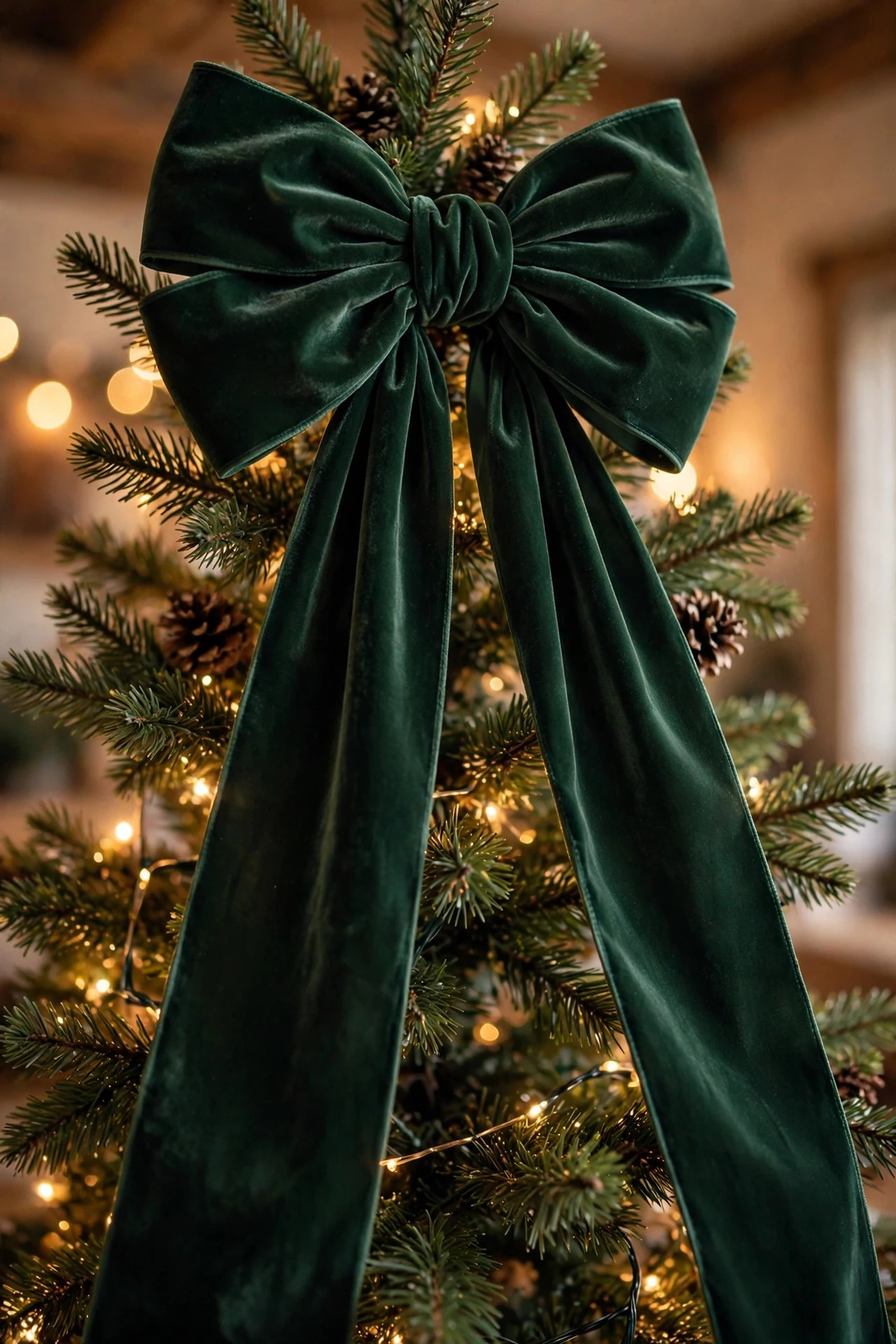
A statement bow topper replaces a star or angel with one large, soft bow, and it sets the tone for the whole tree in 2026. Make or buy a bow from wired velvet or satin ribbon at least 10 centimetres wide, with loops about 20 to 25 centimetres across and long tails that fall at least 60 centimetres down the front of the tree. Attach the bow securely to the top branch with wire, not just the ribbon tails, and arrange the loops so they look full from the front and the sides. Repeat the same ribbon in smaller bows through the tree to connect the topper to the rest of the decoration, and keep the ornament palette simple so the bow remains the hero. Avoid a bow that is too small for the tree height, because it will look like an afterthought, and avoid a top-heavy bow on a slim tree, which can lean or topple if the stand is not stable.
20. Basket, Skirt and Collar Tree Base
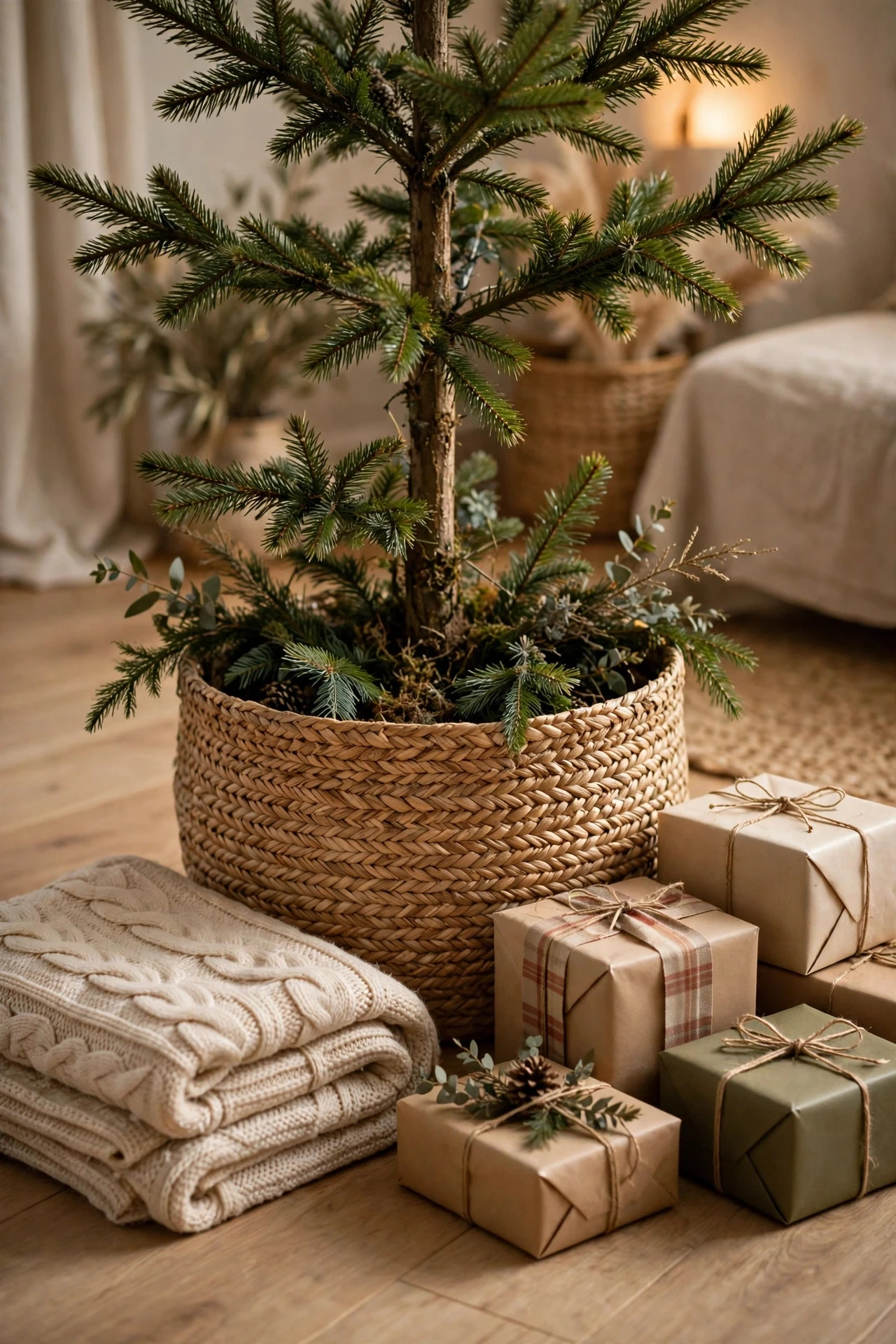
The base of a tree is often an afterthought, yet it frames the whole look and hides the stand, cables and water reservoir. A woven seagrass basket suits woodland, rustic and natural trees, a velvet skirt in burgundy, cream or green suits glamorous and classic trees, and a metal collar in brass, gold or black suits modern and minimalist trees. Choose a base that fits the stand with a little room to spare, and check the height, because a very tall collar can hide the lowest branches and make the tree look as if it is floating. Add a few wrapped gifts, a low garland or a folded throw nearby to soften the transition to the floor. Avoid a skirt that is too small, which leaves stand legs visible, and avoid a basket that wobbles, because an unstable base is a safety risk, especially with children, pets or a heavy real tree.
21. Kid- and Pet-Friendly Tree
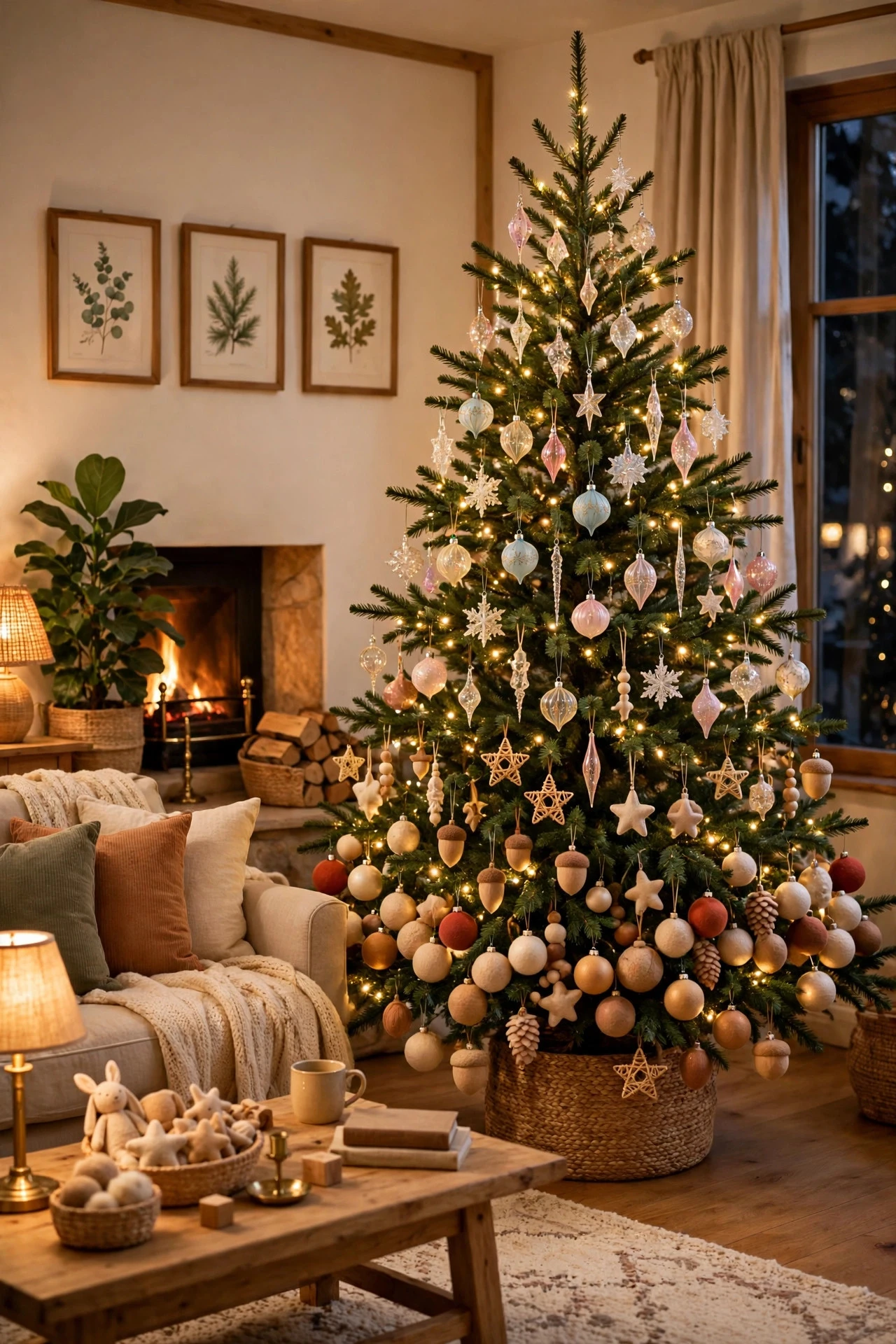
A kid- and pet-friendly tree does not need to look plain, it just needs safer choices placed thoughtfully. Use shatterproof ornaments on the lower two-thirds of the tree, keep glass, sharp and small ornaments high up and out of reach, and secure the tree to the wall or a heavy stand with a discreet anchor if toddlers or large dogs are in the home. Choose battery-operated lights for the lowest branches if cables are a chewing risk, hide all plugs and extension leads behind furniture, and avoid tinsel, small bells and wired ribbon tails at low level, because they can be pulled, chewed or swallowed. Let children hang their own safe ornaments at their height, and place treasured or fragile pieces near the top. The mistake to avoid is decorating once and forgetting the tree, because ornaments slip, lights loosen and curious hands explore, so check the lower branches daily through the season.
22. Layered Lights Tree
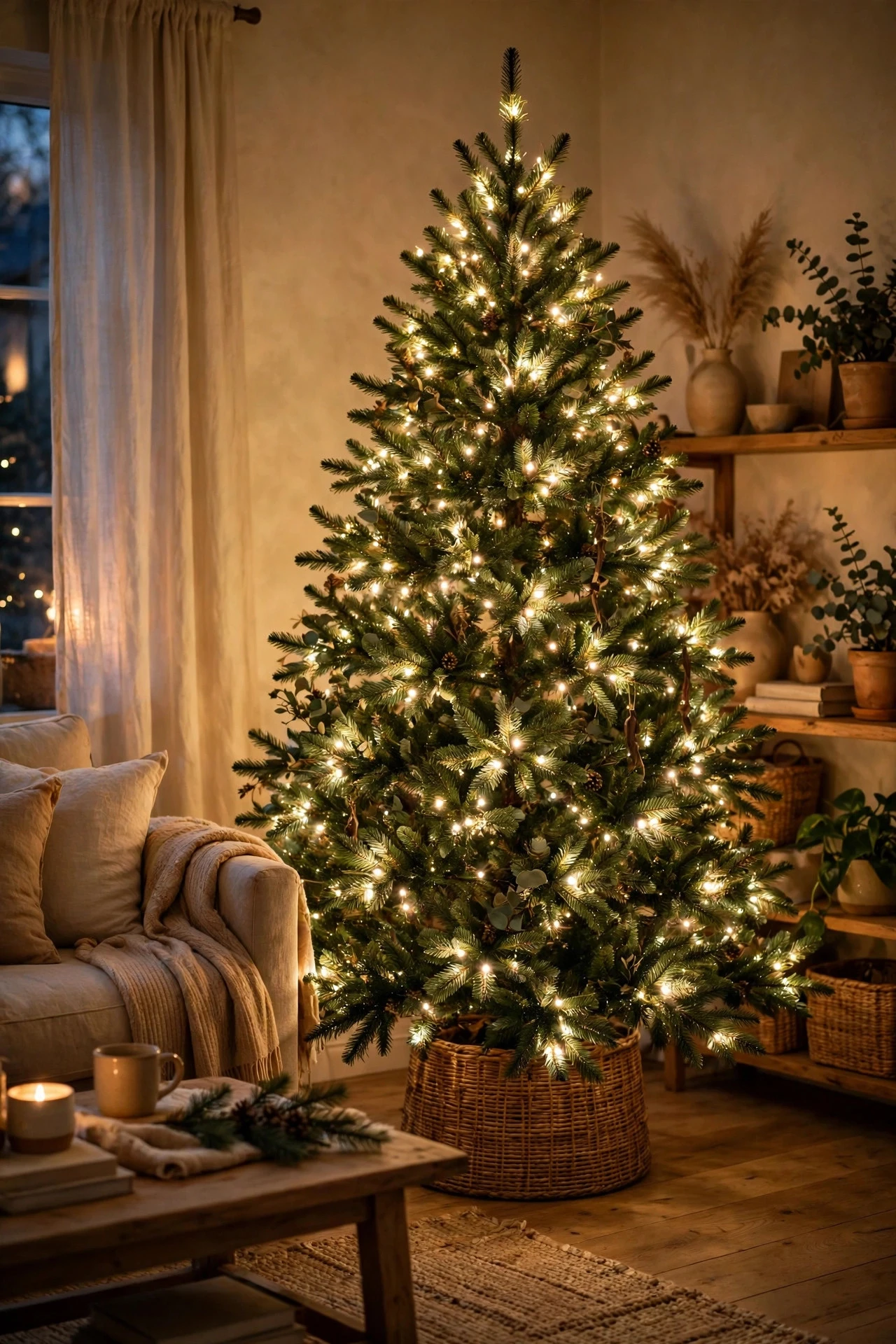
Layered lighting is the technique that makes every other idea in this guide look better, because light creates depth before ornaments are added. Start with the tree unlit and unfluffed, then add the first layer of lights deep inside the branches, close to the trunk, followed by a second layer midway out, and a final sparse layer near the tips, using warm white lights at 2700K throughout so the layers blend into one glow. For a six-foot tree, aim for 600 to 800 lights in total if you want a rich, luminous look, and use lights with a long lead so the plug reaches the socket without stretching. Test every strand before hanging, and keep spare bulbs or a spare strand ready. Avoid mixing warm and cool lights on the same tree, because the colour clash shows most in photographs, and avoid wrapping lights only around the outside, which leaves the centre dark and flat.
Practical Tips
Set a budget before you shop, and spend it in the right order: lights and the tree first, then ribbon and a topper, then ornaments, because good light and a full silhouette matter more than many ornaments. Aim for about 100 lights per foot, 10 to 12 ornaments per foot, and one roll of wide ribbon per two feet for a waterfall effect. Buy a few extra ornaments, reuse pieces that still fit the palette, and keep receipts until the tree is finished. For general guidance, The Spruce offers practical seasonal advice, and Architectural Digest covers current interior trends in depth.
Build the tree in the same order every year: secure the stand, fluff the branches, add lights from the bottom up, add ribbon or garland, place the largest ornaments first, fill with medium and small ornaments, add the topper last, and finish with the skirt, collar or basket. Step back often and view the tree from the doorway and the side, not just from the front. Use a small step stool for the top third, never stand on a chair, and unplug lights while rearranging strands. For room-by-room styling, Better Homes and Gardens has useful seasonal room guides.
Keep safety and storage in mind from the first day: keep lights away from curtains and paper decorations, switch lights off when you leave the house or go to bed, check old strands for frayed wires or cracked plugs, and keep a real tree watered and away from heat. After Christmas, remove ornaments in reverse order, wrap fragile pieces individually, and coil lights loosely rather than winding them tightly. Label boxes by room and palette, store everything dry and cool, and keep ribbon flat or loosely rolled, because damp storage damages flocking, ribbon and branches fastest.
Final Thoughts
The warmest Christmas trees for 2026 are not the most expensive ones, but the ones with a clear idea carried through with care, from the colour temperature of the lights to the ribbon at the top and the base at the bottom. Choose one palette, light generously, leave room for the pieces you love, and let the tree grow with you year by year rather than starting from scratch each December. A tree built this way will look beautiful in photographs, feel inviting in the room, and still leave space for the small, personal details that make Christmas feel like home.
You May Also Like: – whimsy Christmas decor ideas – outdoor Christmas decor ideas – living room lighting ideas
Frequently Asked Questions
How many lights do I need for a 6-foot Christmas tree?
For a 6-foot tree, use about 600 lights for a full, warm glow, based on roughly 100 lights per foot of height. Use fewer, around 400, for a sparse or minimalist tree, and up to 800 for a very full or flocked tree. Layer lights inside the branches, not just around the outside.
What colour temperature looks warmest on a Christmas tree?
Warm white lights at around 2700K look warmest and most inviting on a Christmas tree, giving a soft amber glow that suits burgundy, gold and woodland palettes. Avoid cool white lights above 4000K, which can look blue and make flocking appear grey. Keep all strands the same temperature for a consistent glow.
How do I keep a flocked tree looking fresh all season?
Fluff every branch before decorating, because flocking settles during storage and sparse patches show once lights are on. Use warm lights, avoid heavy ornaments on flocked tips, and dust gently with a soft brush if needed. Store the tree dry in a strong bag or box to protect the flocking for next year.
Are velvet bows and ribbon still on trend for 2026?
Yes, oversized velvet bows and ribbon waterfalls are a leading Christmas tree trend for 2026, especially in burgundy, mocha and bronze. Use large, soft bows spaced evenly through the tree, with long ribbon tails tucked into branches. Keep bows in one palette so the look stays rich rather than busy.
How can I decorate a Christmas tree safely with kids and pets?
Use shatterproof ornaments on the lower branches, keep glass and small ornaments high up, secure the tree to a stable stand, and hide cables and plugs behind furniture. Avoid tinsel and small bells at low level, and check the lower branches daily. Let children hang safe ornaments at their own height.
How should I store ornaments and lights after Christmas?
Remove ornaments in reverse order, wrap fragile pieces individually, and store them in labelled, stackable boxes in a dry, cool place. Coil lights loosely instead of winding them tightly, keep ribbon flat or loosely rolled, and store the tree in a dry bag or box. Good storage protects flocking, ribbon and branches for next year.