
22 Dining Room Wall Decor Ideas for a Blank, Boring Wall
Looking for more inspiration? Our Nest Decorz homepage gathers the latest home decor ideas, seasonal decorating guides and room-by-room styling tips in one place — start there and explore.
Introduction
The dining table is set, the chairs are pulled in, the light fixture is doing its best — and yet the room still feels unfinished. Chances are, it's the walls. A blank dining room wall has a way of making the whole space feel like a waiting room rather than the warm gathering place it was meant to be. The good news? You don't need a renovation or a designer budget to fix it.
This guide is packed with dining room wall decor ideas for every style and budget, from classic gallery walls and timeless wainscoting to statement mirrors, layered picture ledges, and warm wallpaper. Whether you're working with a grand dining room or a tiny eat-in nook, a forever home or a rental, you'll find dining wall decorations here that feel personal, look designer-worthy, and actually get finished in a weekend. Grab a coffee, scroll through, and pick the idea that makes you want to call the family over for dinner.
1. Build a Classic Gallery Wall Above the Sideboard

A gallery wall is the single fastest way to turn a blank dining room wall into something that feels collected and personal. Anchor the arrangement above your sideboard or buffet, keeping the center of the display at roughly 57 inches from the floor — that's gallery standard and it feels natural when you're seated at the table. Mix frame styles (thin black, warm wood, a brass one for sparkle) but repeat one element — a consistent mat color, say — so it reads as intentional rather than chaotic. Blend art prints with a small mirror, a woven piece, or even a family photo for warmth. Before hammering a single nail, lay the frames out on the floor and take a phone photo; adjust until the silhouette of the group is roughly rectangular or oval. Eight to twelve pieces fill a sideboard-width wall beautifully.
2. Hang One Oversized Statement Piece
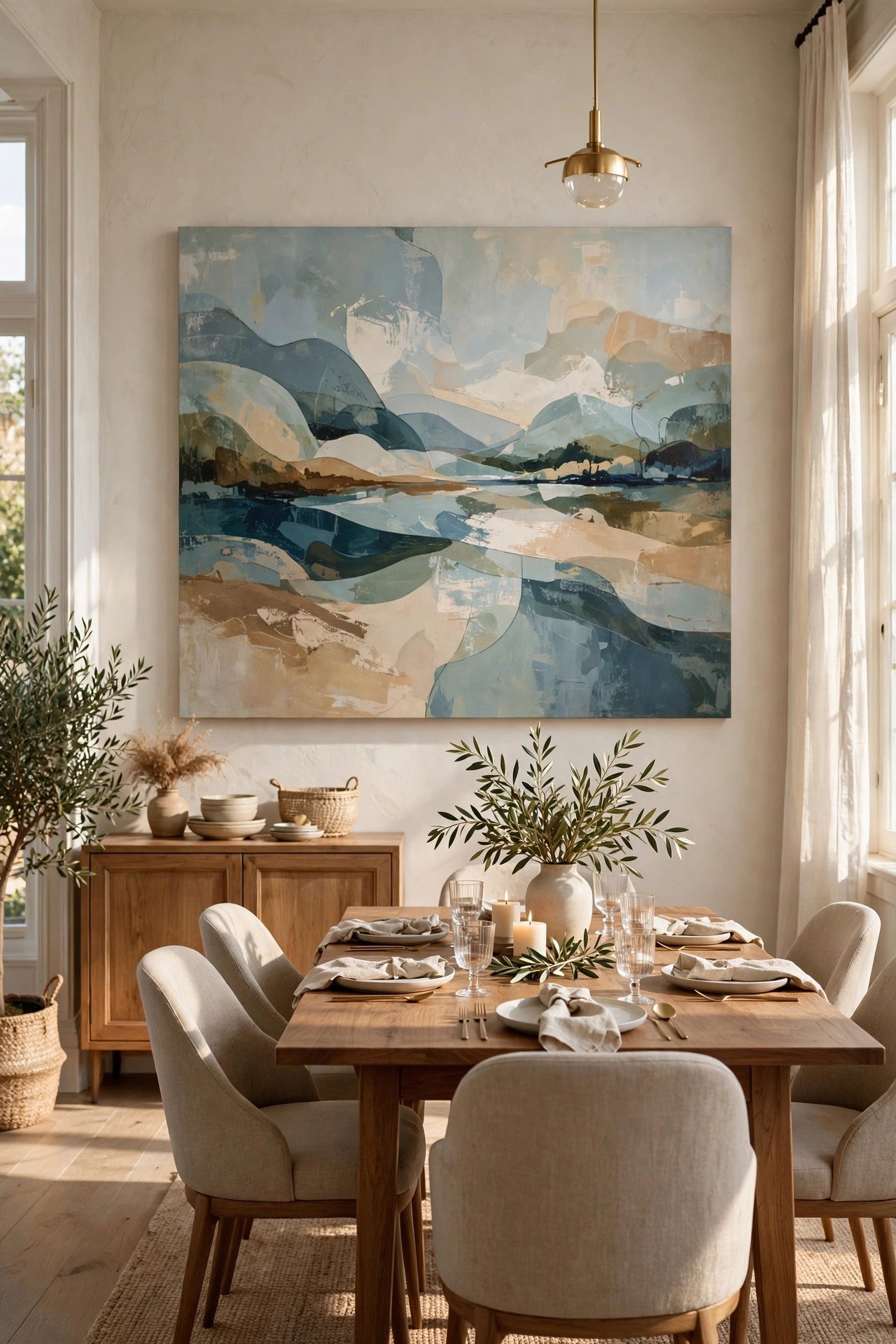
Sometimes restraint is the boldest move. A single oversized canvas or framed print — think three to four feet wide — gives a dining room the kind of gallery-like confidence that a dozen small frames never quite achieve. Scale is everything here: the art should span roughly two-thirds the width of the furniture below it, whether that's your dining table or a sideboard. Abstract landscapes in warm earthy tones work beautifully because they add color without competing with your table styling. Hang the center at eye level from a seated position, slightly lower than you'd hang in a hallway, so it feels intimate over the table. One strong piece also keeps small dining rooms feeling calm instead of cluttered, and it photographs beautifully for Pinterest-worthy results.
3. Add Wainscoting for Instant Architecture

Wainscoting is the dining room's best-kept secret: it turns a flat, forgettable wall into one with depth, shadow, and craftsmanship — and it pairs beautifully with almost any decor style. Board-and-batten gives a crisp modern-farmhouse feel, while traditional raised-panel wainscoting leans classic and formal. Paint it the same color as the walls for subtle texture, or go bold with a deep moody green, navy, or charcoal below a lighter upper wall. You don't need a carpenter; pre-cut trim kits and a brad nailer make this a genuinely doable weekend project. Cap the wainscoting with a slim ledge rail and you've got a bonus shelf for tiny leaning frames and seasonal greenery. It also protects walls from chair bumps, which is pure function hiding behind pretty form.
4. Reflect Light With a Round Statement Mirror
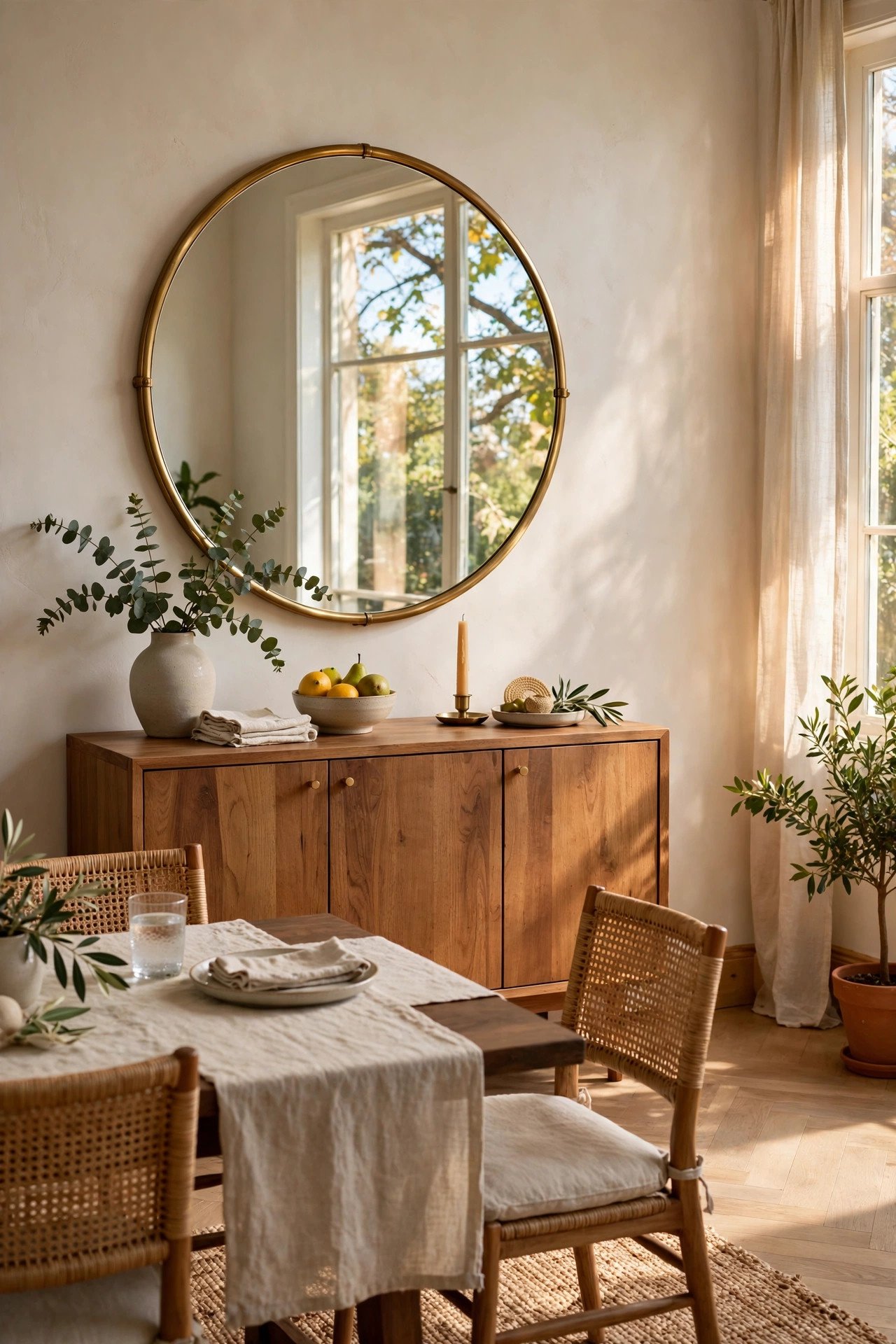
A large round mirror is practically made for dining rooms. It bounces natural light around the space, makes the room feel twice as big, and adds a soft, modern shape that contrasts beautifully with the hard rectangle of a dining table. Brass or wood-framed rounds are especially warm and on-trend. Position the mirror so it reflects something worth doubling — a window view, your chandelier, or a pretty tablescape. The reflection essentially becomes a second piece of art. Hang it centered above the sideboard with about six to eight inches of clearance so it feels connected to the furniture. In small dining rooms, a mirror is the highest-impact trick in the book: it opens the space visually without taking up a single inch of floor.
5. Go Bold With a Wallpapered Accent Wall
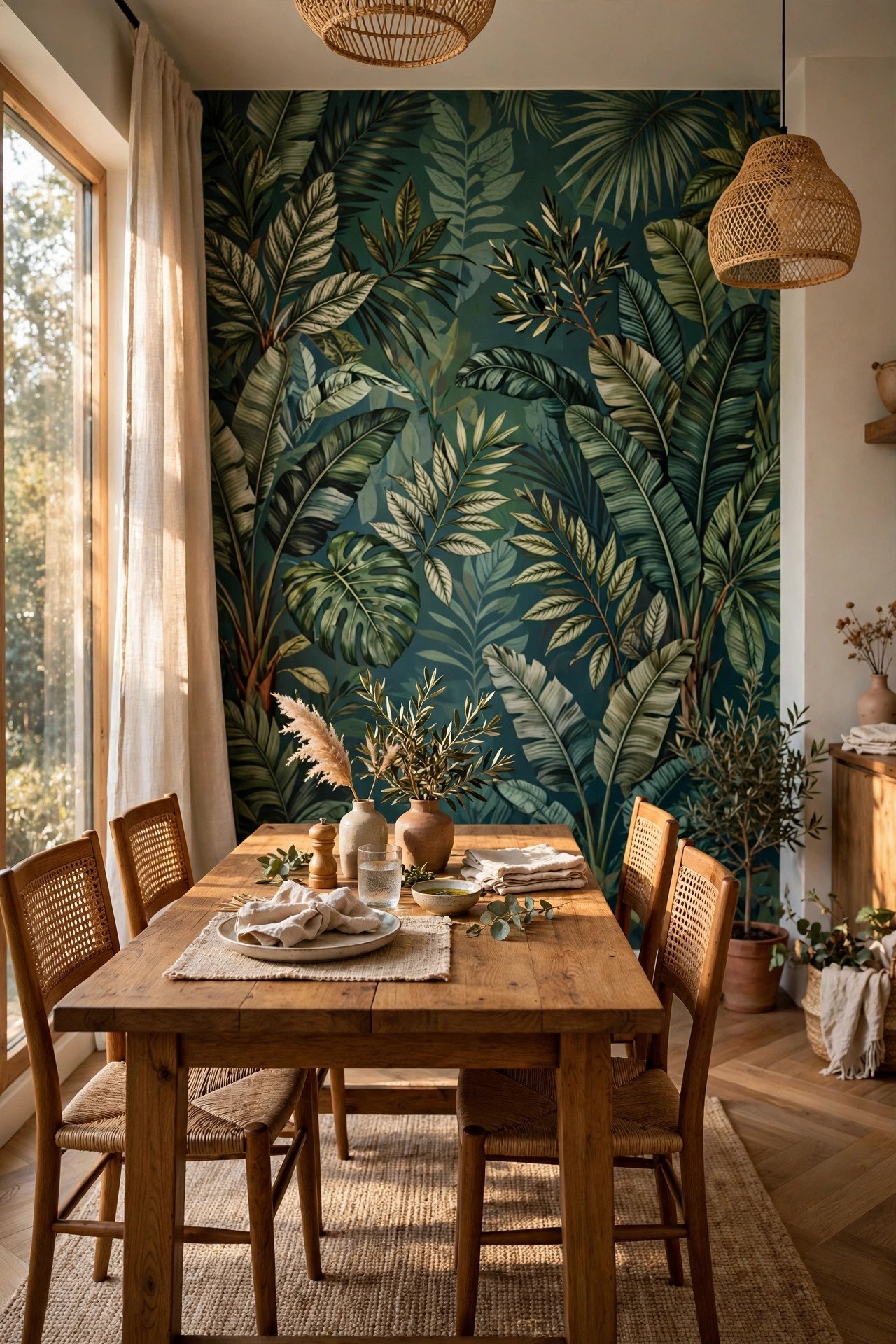
Wallpaper on one dining room wall delivers the drama of a full renovation for a fraction of the cost and commitment. Large-scale botanical prints bring the garden indoors, grasscloth adds rich natural texture that glows under candlelight, and geometric patterns can make a contemporary space feel electric. Because dining rooms are often enclosed and intimate, they can handle bolder patterns than a living room might. Renters, take heart: peel-and-stick wallpaper has become genuinely good, with thick, repositionable panels that come down cleanly. Choose a design whose colors echo your rug or upholstery so the wall feels tied in rather than random. One accent wall is plenty — let it be the backdrop for your most memorable dinners.
6. Style Floating Shelves With Curated Objects
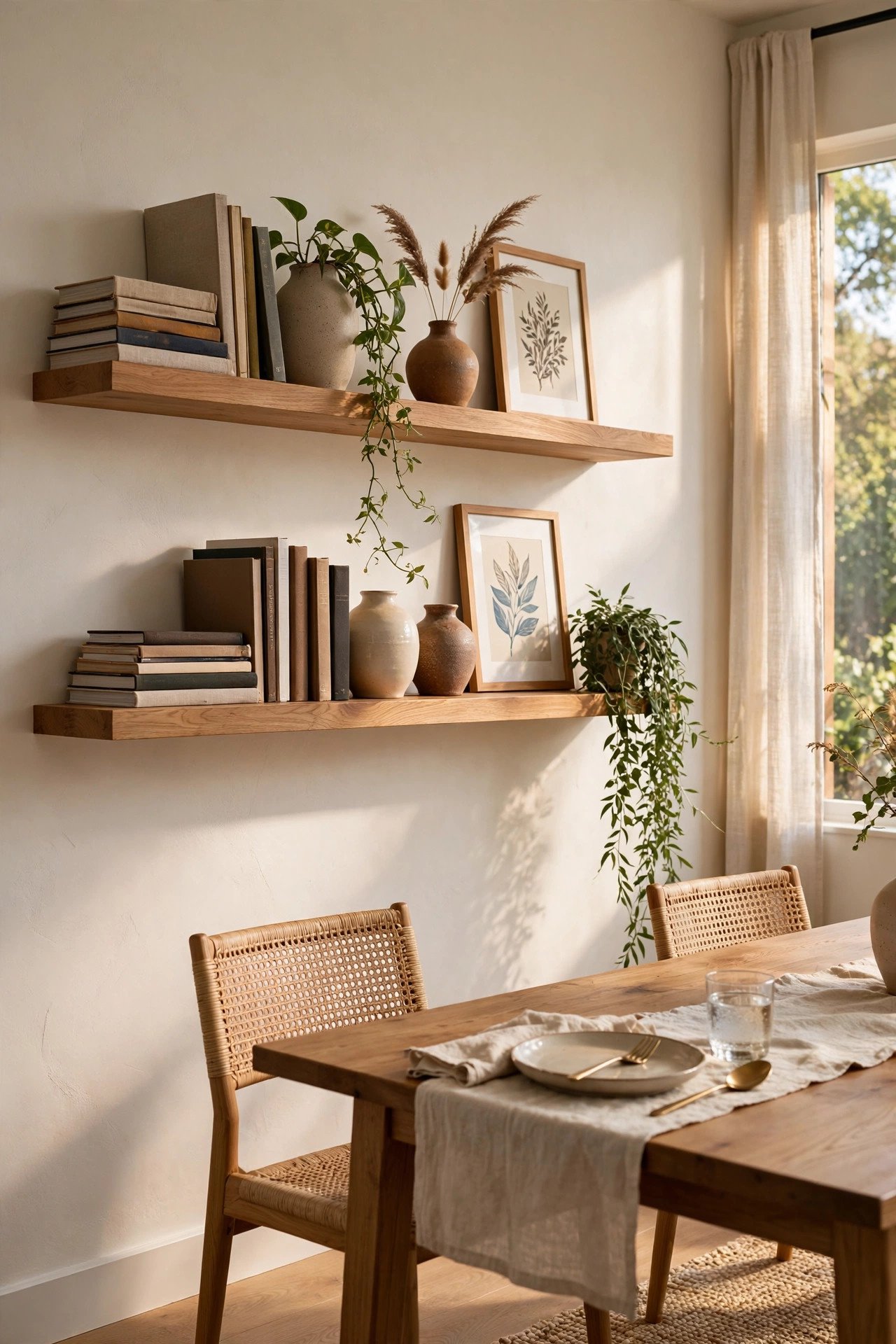
Floating shelves give you wall decor that doubles as display space — perfect for the dining room, where beautiful things deserve to be seen. Install two or three long, slim shelves on the largest blank wall and style them like a designer: stack art books, lean small framed prints, add a trailing pothos, cluster ceramic vases, and tuck in a candle or two. The trick is editing — group items in odd numbers, vary heights, and leave some breathing room so it reads curated, not cluttered. Natural wood shelves warm up a white wall; painted shelves in a matching wall color look built-in and seamless. And the best part? You can restyle them every season in twenty minutes, which keeps the dining room feeling fresh all year long.
7. Create a Vintage Plate Wall
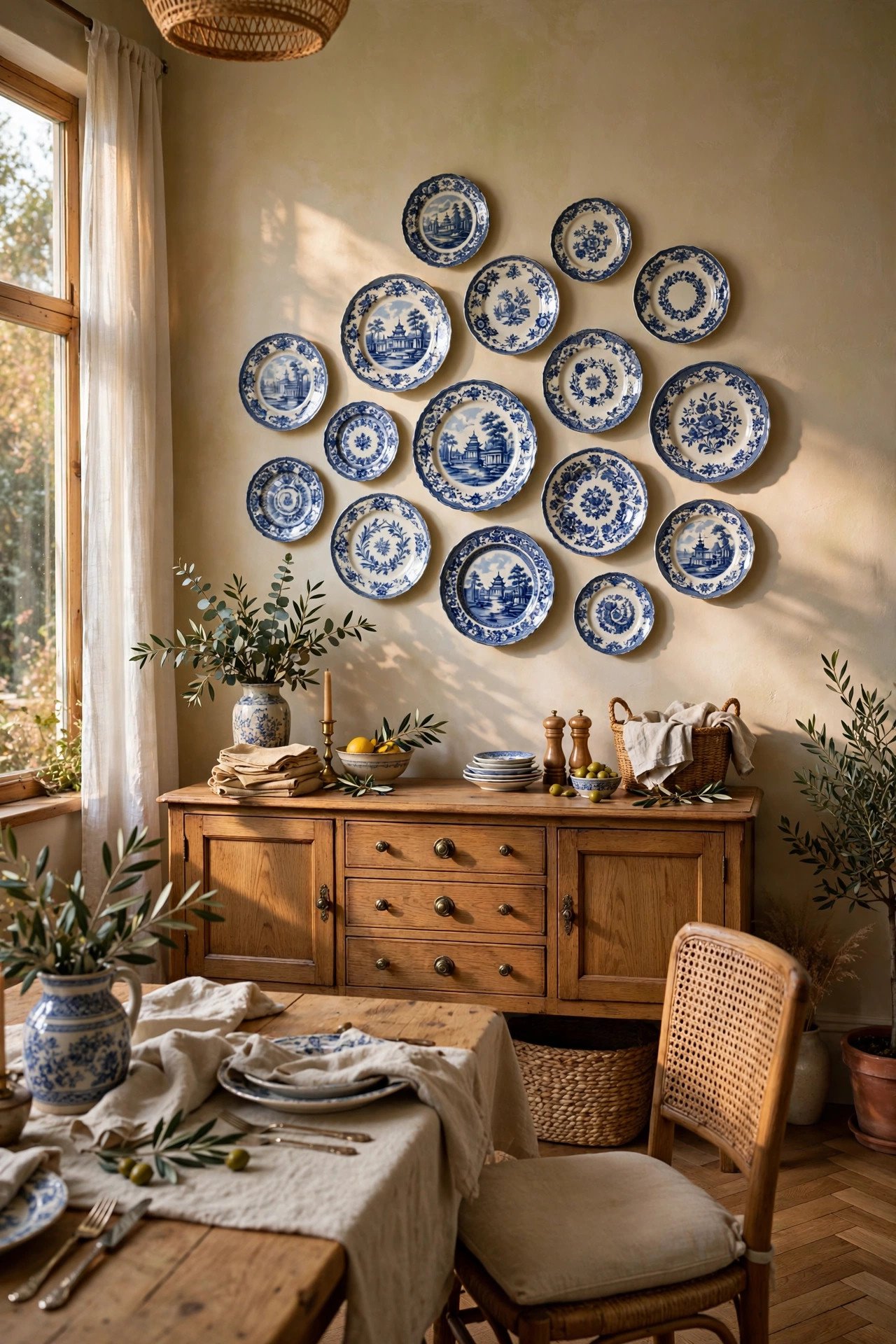
A plate wall is dining-room wall decor with a pedigree — it's been charming hosts for centuries, and it's gloriously budget-friendly. Thrift stores and flea markets are full of beautiful mismatched plates for a few dollars each; mix patterns in one color family (blue and white is timeless) or go eclectic with florals, landscapes, and transferware. Plan the arrangement on the floor first, then hang using adhesive plate hangers — no drilling into heirloom china required. An asymmetrical cluster feels organic and collected, while a tight grid of identical-size plates reads modern and graphic. Plate walls work especially well on the wall your guests face, where they become instant conversation starters. For cohesion, echo one plate color in your napkins or table runner.
8. Flank Artwork With Matching Wall Sconces
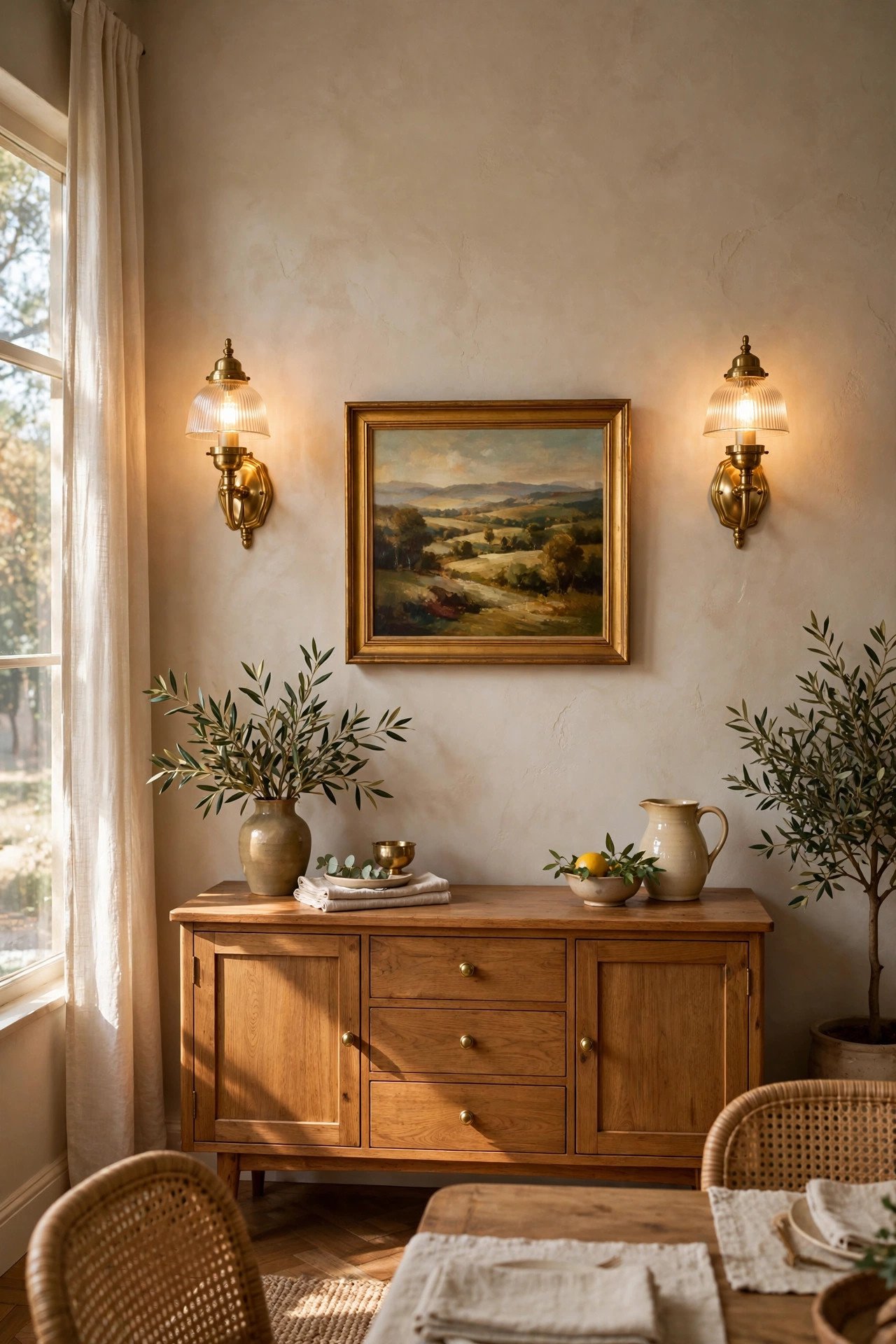
Wall sconces are the jewelry of dining room walls — they frame your art, add flattering warm light for evening meals, and free up table space that candlesticks would steal. Mount a pair symmetrically on either side of a central mirror or painting, with the shades or bulbs at about 60 to 66 inches from the floor. Brass and black are the safest finishes; smoked glass shades cast a particularly flattering glow. If you don't have wiring in place, modern battery-operated and plug-in sconces look just as good and install with a couple of screws. The warm, layered light they create makes food look better and faces look softer — which is exactly the mood a dining room should have. Symmetry here also gives the wall a calm, designer-intended feel.
9. Layer Art on a Picture Ledge

A picture ledge is the commitment-phobe's answer to a gallery wall: a long, shallow shelf that lets you lean framed art, small mirrors, and ceramics in layers, swapping pieces in and out without touching the wall again. Install one wide ledge (or two stacked ledges) above the sideboard and play with overlapping frames of different sizes — tall in back, short in front. Mix in a trailing plant or a small sculpture for dimension. Because nothing is nailed in place, you can rotate seasonal prints, holiday cards, or new finds in minutes. Paint the ledge the same color as the wall for a floating, minimalist effect, or choose a chunky wood beam for rustic warmth. It's renter-friendly, endlessly flexible, and looks effortlessly styled.
10. Try a Textured Limewash Wall
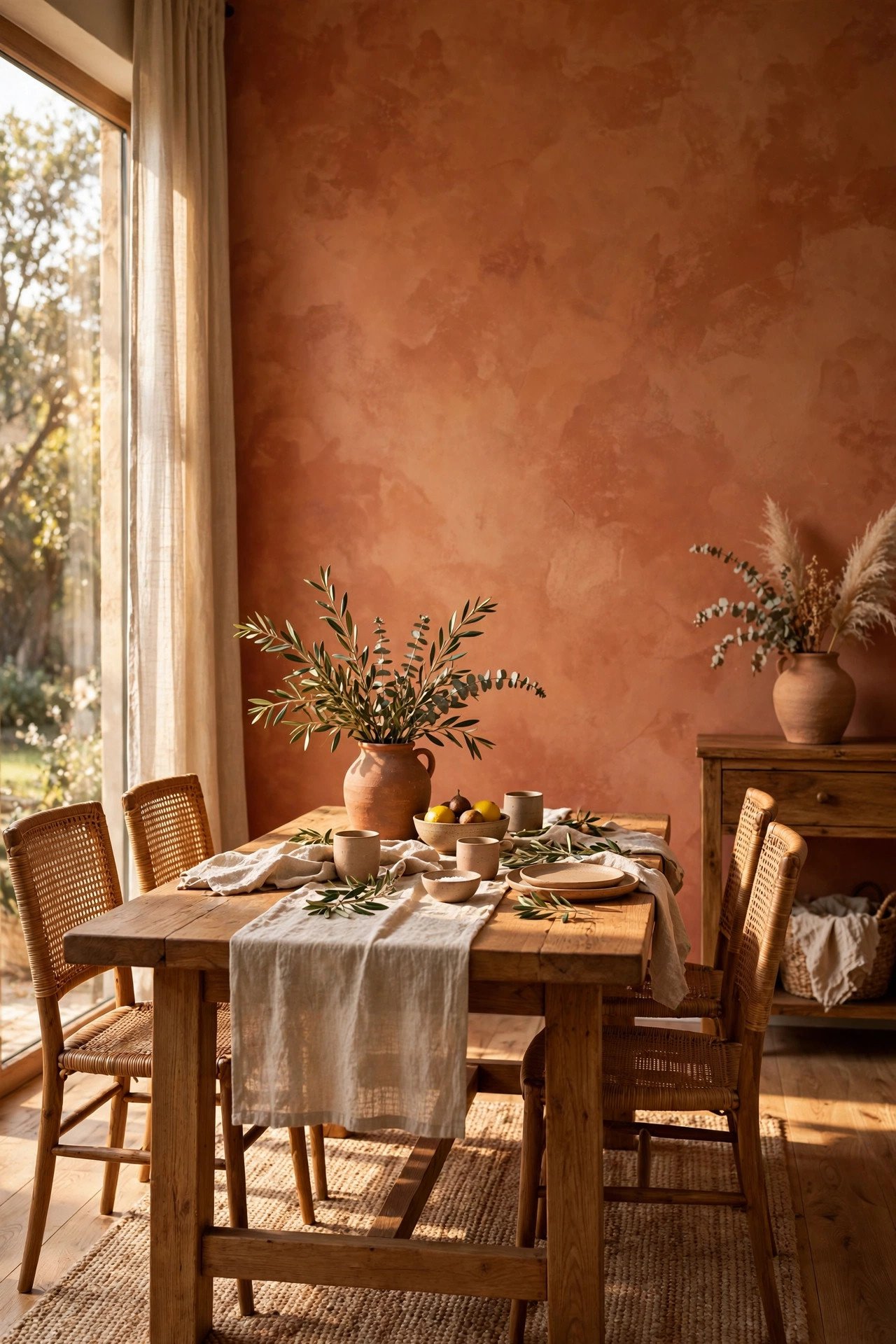
If paint feels too flat and wallpaper too busy, limewash is the beautiful middle ground. This centuries-old technique uses crushed limestone paint to create soft, cloud-like movement on the wall — texture you can see but never get tired of. It gives dining rooms a warm, European, old-world feeling that makes evening meals feel special. Application is forgiving: you brush it on in crisscross strokes with a large block brush, and the natural variation is the whole point. Choose warm neutrals — clay, mushroom, warm greige — for maximum coziness. One limewashed wall behind the dining table creates a stunning backdrop that makes even simple furniture look intentional. Seal it properly in homes with kids, and touch-ups blend invisibly.
11. Hang a Woven Textile or Tapestry

Fabric on the wall is an underused trick that instantly softens a dining room. A large woven wall hanging, vintage kilim, or simple linen tapestry adds texture, absorbs sound (dining rooms can be echoey), and brings warmth that glass and metal never will. Look for pieces with warm, earthy tones that complement your palette — a hand-knotted wool piece over a sideboard feels artisanal and soulful. Hang it from a simple wooden dowel or brass rod for a clean, unfussy look. Macramé suits boho and coastal dining rooms, while a flat-woven rug hung vertically leans modern and graphic. Keep it a few feet above the sideboard to avoid food splashes, and give it an occasional shake-out to keep it fresh.
12. Arrange a Trio of Coordinated Prints

Three matching prints in a row — or a tight triptych — is one of the simplest, most foolproof dining room wall art ideas. Choose prints that share a palette or theme: three botanical illustrations, three abstract arches in warm tones, three black-and-white landscape photographs. Identical frames and consistent spacing (two to three inches apart) create a calm, orderly rhythm that suits dining rooms beautifully. A horizontal trio stretches a narrow wall; a vertical stack makes low ceilings feel taller. Hang the group so its total width is about two-thirds the width of the furniture beneath it. This approach is affordable too — printable art from online shops plus ready-made frames gives you a designer look for under a hundred dollars.
13. Display Botanical Prints and Pressed Flowers

Botanical art brings a fresh, garden-like calm to dining rooms, and it pairs naturally with food, wood tables, and greenery. Vintage-style botanical illustrations in thin brass or black frames feel classic; real pressed flowers in floating glass frames feel delicate and modern. Group six to nine small pieces in a tight grid for maximum impact, or let one large botanical print anchor the wall. Green tones are restful, which is ideal in a room meant for lingering conversations. For a personal touch, press flowers from your own garden or a meaningful bouquet and frame them — guests always ask about them. Keep glass out of direct harsh sunlight to prevent fading, and rotate pieces occasionally to even out any light exposure.
14. Make a Statement With an Oversized Clock

A large wall clock is dining room wall decor that works as hard as it looks good — it fills a big blank wall, adds architectural interest, and keeps long dinners (happily) on schedule. Go big: thirty inches or more in diameter for a proper statement. Distressed wood faces suit farmhouse dining rooms, sleek black metal reads modern, and brass or marble faces lean luxe. Hang it centered above the sideboard or on the wall opposite the table where it's easily visible. An oversized clock also solves the common problem of one awkwardly large empty wall that would swallow small art. Pair it with a simple console vignette below — a stack of books, a small plant — so the wall feels finished from floor to ceiling.
15. Install Board-and-Batten Paneling

Board-and-batten is wainscoting's taller, bolder cousin — vertical boards with battens running all the way up the wall, or in a dramatic two-thirds treatment. It adds strong vertical lines that make ceilings feel higher and gives plain dining rooms instant architectural character. Painted in a deep, saturated color like forest green, inky navy, or warm terracotta, it becomes the room's star; painted white or cream, it adds texture without stealing the show. This is a very achievable DIY: vertical battens spaced twelve to sixteen inches apart over a flat wall, caulked and painted, look remarkably high-end. Style the finished wall simply — a mirror or a few framed prints — because the wall itself is now the decor.
16. Paint a Moody Dark Accent Wall
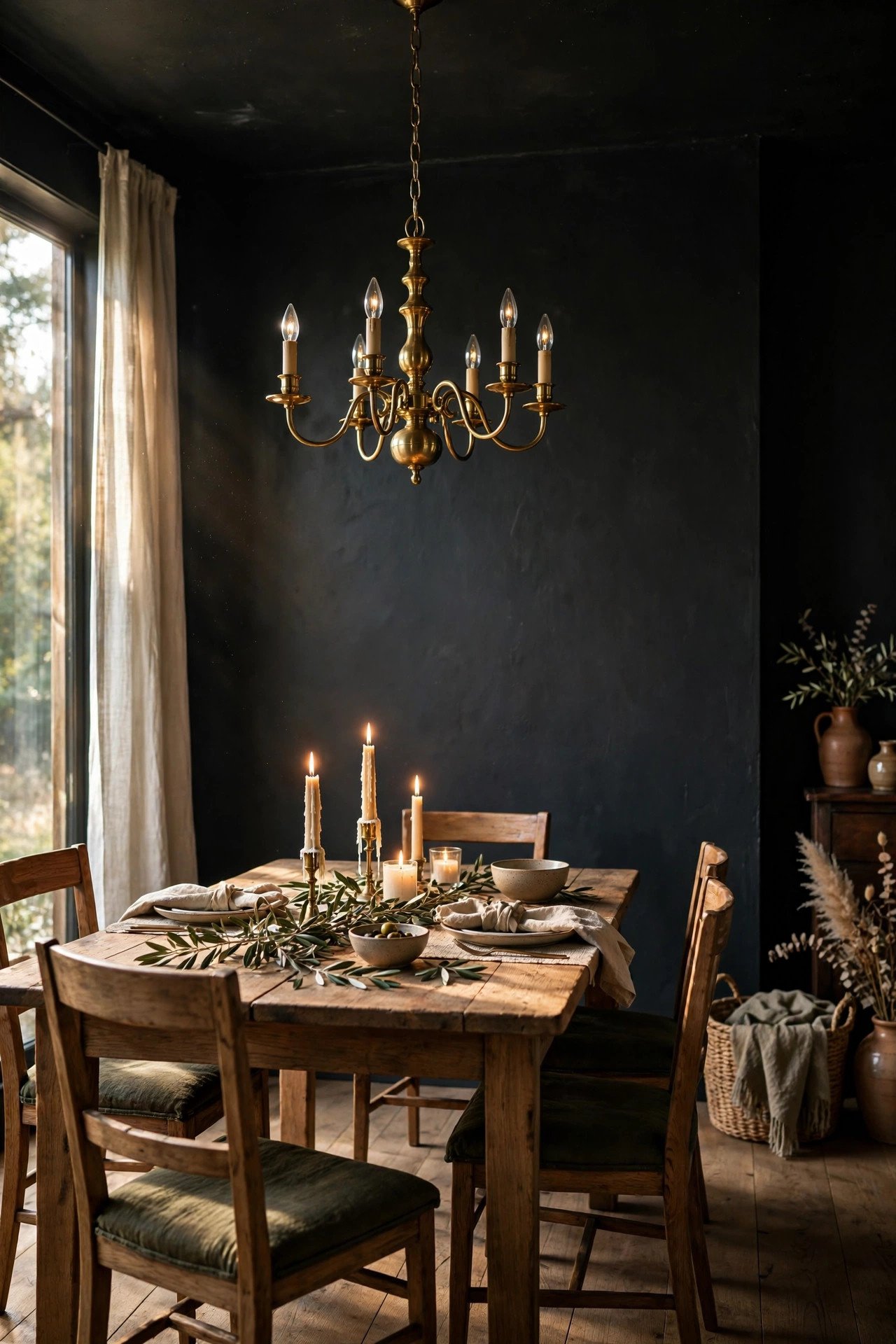
A dark accent wall in a dining room feels like a secret: intimate, dramatic, and surprisingly flattering. Deep charcoal, espresso, forest green, or aubergine absorb light in a way that makes candlelight and pendant glow feel magical — restaurants have used this trick forever. Contrary to popular belief, dark walls can make a small dining room feel cozier rather than smaller, especially when the ceiling stays light and the trim is crisp white for contrast. Choose the wall your table faces or the one behind the sideboard for maximum impact. Finish the look with brass accents, warm wood tones, and a mirror to bounce light back — the combination of dark paint and warm metallics is pure dining-room magic.
17. Curate a Black-and-White Photography Gallery

Black-and-white photography gives dining room walls a timeless, gallery-caliber feel that works with literally any color scheme. The monochrome palette keeps the wall calm and cohesive even with varied subjects — architecture, landscapes, street scenes, abstract details. Print your own travel photos for a deeply personal wall, or mix in affordable art prints. Uniform thin black frames with wide white mats are the classic formula; keep spacing tight and consistent for a polished grid. A black-and-white gallery pairs beautifully with warm wood dining tables and brass lighting, the contrast between cool art and warm materials being what makes it feel designed. Add one small color accent — a green plant, a brass frame — to keep it from feeling cold.
18. Add Warmth With a Wood Slat Accent Wall

Vertical wood slats bring natural warmth and a subtle Scandinavian-modern feel to dining room walls. The rhythmic lines add texture and movement, and the wood tones glow beautifully under warm lighting — exactly what you want around a dinner table. You can buy ready-made slat panels that install in an afternoon, or DIY with thin pine battens for a budget version. Light oak keeps the room airy; walnut or stained slats add drama. A slat wall behind the dining table creates a gorgeous backdrop for meals and photographs, and it hides imperfect walls completely. Keep the styling on a slat wall minimal — one piece of art or a small mirror — because the texture itself is doing the decorating work.
19. Mount Greenery on the Wall

Living walls aren't just for restaurants. Wall-mounted planters, hanging plant brackets, or a simple trailing pothos on a high shelf bring life and freshness to dining room walls in a way no object can. Greenery softens hard edges, improves the room's feel instantly, and connects the dining space to nature. If your thumb isn't green, high-quality faux trailing plants and preserved moss art need zero maintenance and still deliver the look. A cluster of three small wall planters with herbs — rosemary, thyme, basil — is both beautiful and functional within arm's reach of the table. Mount planters securely, use drip trays, and choose spots with at least some natural light. The result is a dining room that feels alive.
20. Showcase Architectural Salvage Pieces
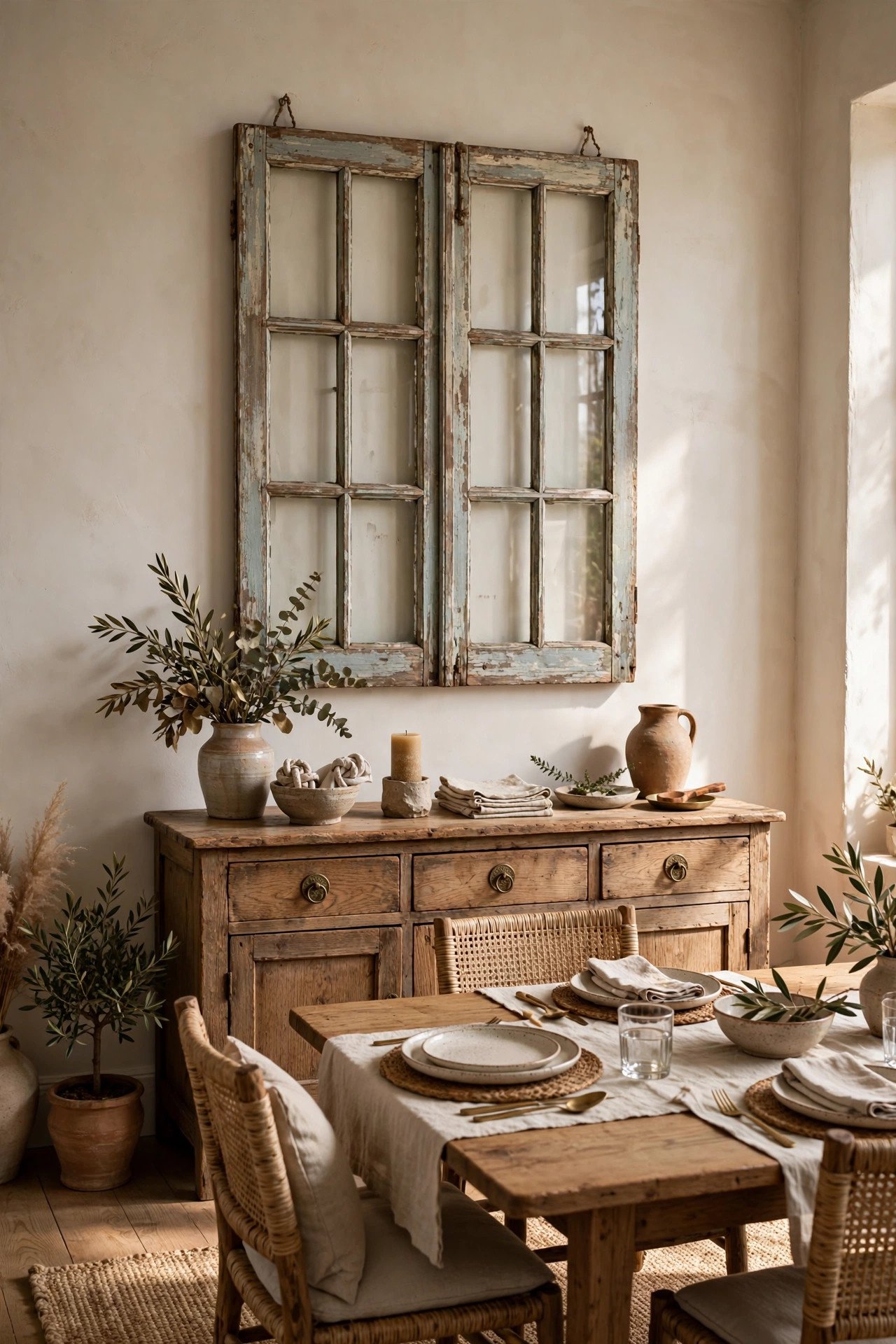
Old doors, antique window frames, vintage shutters, and reclaimed corbels give dining room walls a story no mass-produced decor can match. A weathered window frame hung as-is becomes instant art; a pair of antique shutters flanking a mirror adds symmetry and history. These pieces bring texture, patina, and character that make a dining room feel collected over time rather than decorated in a weekend. Source them from architectural salvage yards, flea markets, and estate sales — prices are often surprisingly low. Clean them well, seal rough wood if needed, and hang securely since salvage can be heavy. One substantial salvage piece beats five small ones; let it breathe and give it the wall space it deserves.
21. Style a Bar Cart Wall With Shelves and Art
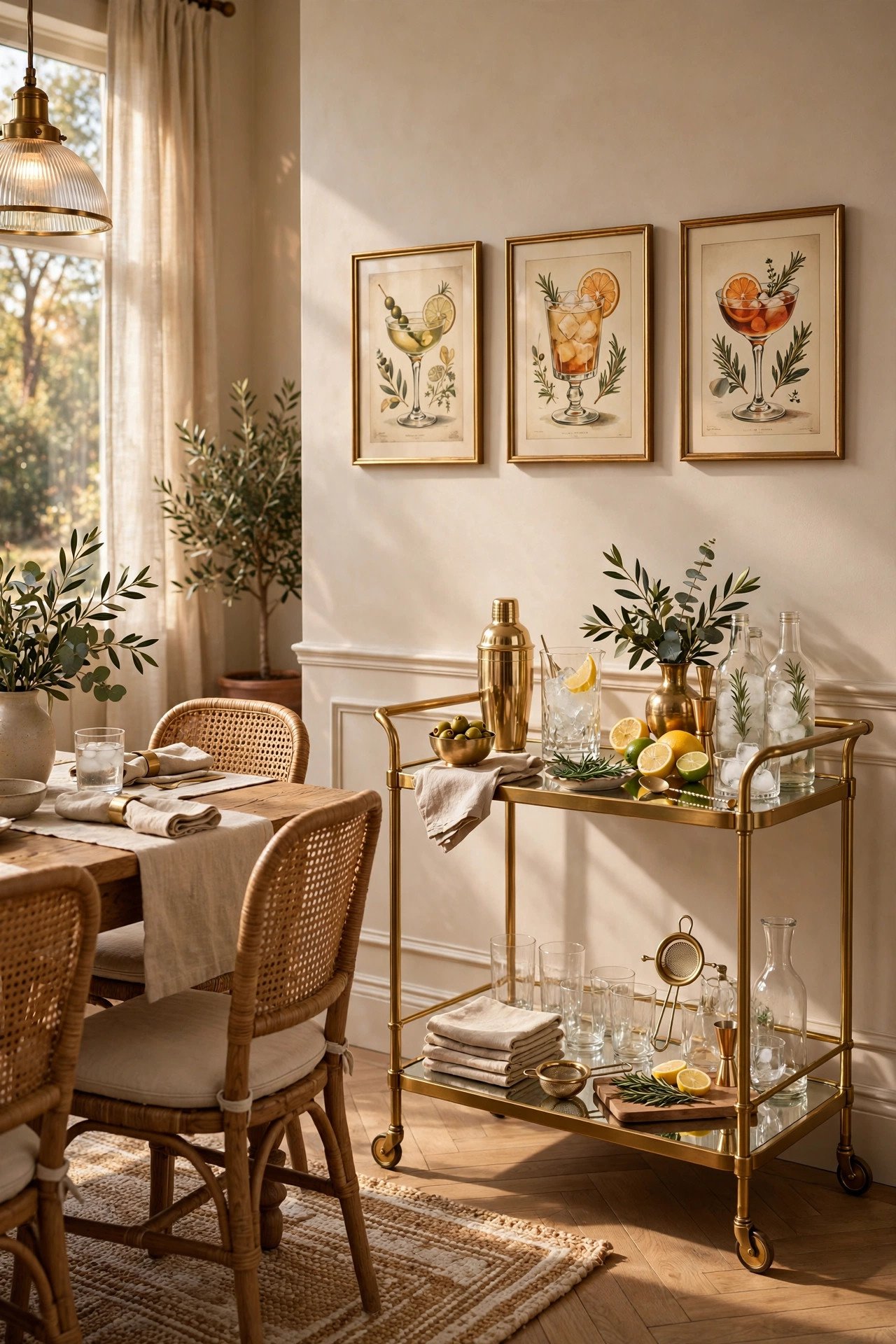
If your dining room doubles as entertaining central, dedicate one wall to a bar moment: a stylish bar cart or narrow console topped with glassware, flanked by art and lit by a small lamp or sconce. Above it, hang a mirror or a piece of art, and add a small floating shelf for bottles, decanters, and a cocktail book. A framed vintage bar print or cocktail recipe art ties the theme together. This vignette turns an unused wall into a functional, festive focal point that guests naturally gather around. Keep the palette tight — brass, glass, and one accent color — so it reads chic rather than cluttered. When the party's over, it still looks like intentional decor, not leftover mess.
22. Keep It Minimal With One Line-Art Print
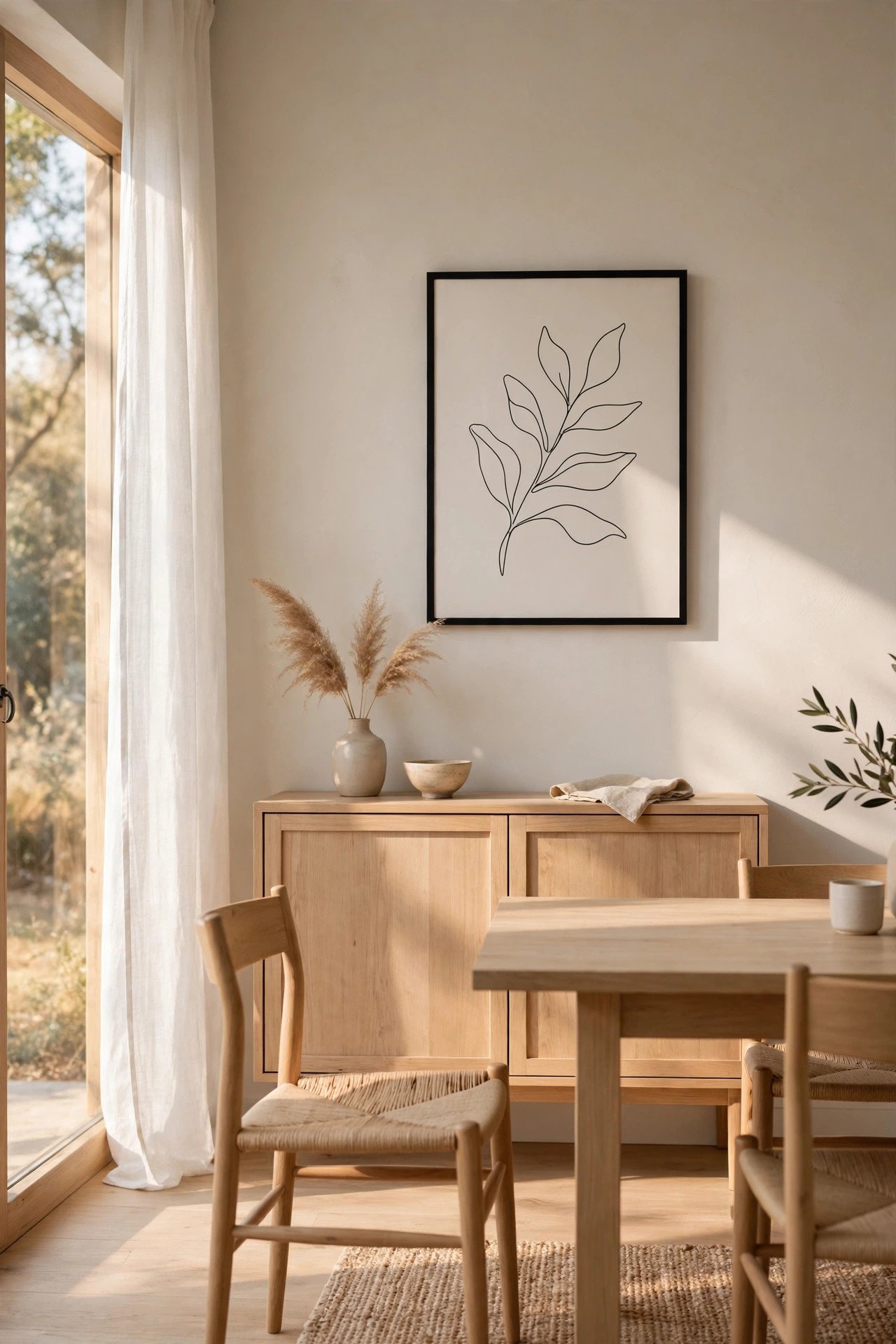
For modern and minimalist dining rooms, sometimes the quietest choice is the strongest. A single line-art print — one continuous abstract face, a simple botanical outline, a minimalist arch — in a thin black or natural wood frame adds just enough interest without visual noise. The beauty of this approach is restraint: lots of white space, one confident gesture, and a wall that feels calm and current. Hang it slightly off-center above a sideboard for an editorial, gallery feel, or center it precisely for serenity. Line art is also one of the most affordable dining room wall art ideas — downloadable prints cost a few dollars and look remarkably high-end in a good frame. In small dining rooms, this less-is-more approach keeps the space feeling open and uncluttered.
Practical Tips for Dining Room Walls
Renters, you have options. You don't need to drill to make a real impact. Lean large art against the wall on top of a sideboard — it looks intentional and takes zero holes. Picture ledges and plate rails hang with minimal fasteners. Peel-and-stick wallpaper and removable wall decals transform a wall for a year or two and come down cleanly. Adhesive hooks hold lightweight frames, woven hangings, and even small mirrors. And a tall floor mirror leaning against the wall needs no installation at all while doubling your light.
Small dining room? Think vertical and reflective. Mirrors are your best friend — one large mirror can visually double a tiny eat-in nook. Vertical arrangements (stacked trios, tall narrow art, floor-to-ceiling curtains framing the wall) draw the eye up and make ceilings feel higher. Keep the palette light and the scale of each piece generous rather than fussy; one large piece almost always looks better than five tiny ones in a small space. Floating shelves and picture ledges add decor without stealing floor space.
Get the hanging height right. The center of your art should sit around 57 inches from the floor, or six to eight inches above the top of a sideboard or console. Above a dining table, leave enough clearance that seated guests see the piece comfortably — roughly 30 to 36 inches of space between the tabletop and the bottom of the frame for large walls. When in doubt, hang it a touch lower than your instinct says; most people hang art too high.
Tie the wall to the room. The most common mistake in dining room wall decor is a wall that looks decorated in isolation. Echo one color from your rug, chairs, or table linens in the art or wallpaper. Repeat a finish — brass frames with a brass chandelier, black frames with black chair legs. A wall that shares the room's palette always looks like it belongs.
Frequently Asked Questions
### What should I hang on a dining room wall?
Start with the largest blank wall — usually above the sideboard or the wall facing the table. A gallery wall, an oversized mirror, or one large statement piece are the safest, highest-impact choices. From there, add lighting (a pair of sconces), texture (wainscoting or wallpaper), or personal touches (a plate wall, botanical prints). The best dining wall decorations combine one focal moment with simple supporting elements, rather than covering every inch.
### How big should art be above a dining room sideboard?
Aim for art (or a grouping of art) that spans roughly two-thirds the width of the sideboard. A 60-inch sideboard pairs well with a 40-inch-wide piece or arrangement. Hang it so the bottom of the frame sits six to eight inches above the sideboard's surface, with the center of the piece at about 57 inches from the floor. If your art is smaller than that ratio, add flanking elements — sconces, small shelves, or a pair of narrow prints — to fill the width.
### What are the best renter-friendly dining room wall decor ideas?
Leaning art on a sideboard, picture ledges, peel-and-stick wallpaper, adhesive hooks for lightweight frames, leaning floor mirrors, and bar-cart vignettes all require little to no drilling. Woven wall hangings on a dowel and plate walls using adhesive hangers are also renter-safe. Focus on large-scale, high-impact pieces you can take with you when you move — oversized art and mirrors are investments that work in any future dining room too.
### How do I decorate dining room walls in a small space?
Prioritize mirrors to bounce light and create depth, use vertical arrangements to lift the eye, and choose one generous statement piece over many small ones. Light colors keep the room airy; a single dark accent wall can add coziness without closing the space in if the ceiling stays light. Floating shelves and picture ledges add style without consuming floor space, and keeping the palette tight prevents visual clutter.
### Should my dining room wall decor match the living room?
They don't need to match, but they should feel related — especially in open-plan spaces where both rooms are visible at once. Repeat one or two colors, finishes, or materials across both rooms: brass frames in the dining room echoing brass lighting in the living room, or the same style of art in different subjects. This creates flow without making the rooms feel identical. In closed-off dining rooms, you have more freedom to give the space its own distinct personality.
Final Thoughts
A blank dining room wall is really a blank canvas — and now you have 22 ways to fill it. Whether you fall for the timeless charm of wainscoting, the light-doubling magic of a big round mirror, a collected plate wall, or a simple gallery of botanical prints, the best dining room wall decor is the kind that makes you want to linger a little longer at the table. Start with one idea that excites you, get the scale and hanging height right, and let the wall grow with you over time.
Looking for more ways to style your dining space? Explore our guides to small dining room decor ideas on a budget for tight spaces and tighter wallets, Christmas dining room decor ideas when the holidays roll around, and cozy living room wall ideas to keep the style flowing through the rest of your home. Your walls are waiting — pick an idea this weekend and make that blank wall the best seat in the house.